Lee’s Three Word Wednesday – 7/12/17

***

Crimson-backed Flameback-©SamindaDeSilva-Flickr

WORSHIPPED THE LORD

***


“And the man bowed down his head, and worshipped the LORD.” (Genesis 24:26 KJV)

Crimson-backed Flameback-©SamindaDeSilva-Flickr

*

UPDATE – Praise the Lord, I am back home again. After two weeks in the Rehabilitation Hospital, I was healthy and strong enough to be released. Got home late Monday. I am still regaining my strength and will have some physical training at home for several weeks. Yet, Praise, I am back home. Yeah! Thanks for all the prayer and thoughts.

More Daily Devotionals

*

What’s Good For The Goose . . . May Be Relocating (To Another Summer Home)

BARNACLE  GOOSE  BIOGEOGRAPHY:    WHAT’S GOOD FOR THE GOOSE MAY INCLUDE RELOCATING (AWAY FROM BREEDING GROUNDS TOO CLOSE TO RUSSIA’S H-BOMB TESTING SITE!)

Dr. James J. S. Johnson BarnacleGoose-3swimming.BirdArt-Kuvat-Finland

BARNACLE GOOSE trio, swimming in Finland  (photo credit: Kuvat / ArtBird)

And Solomon’s provision for one day was 30 measures of fine flour, and 60 measures of meal, 10 fat oxen, and 20 oxen out of the pastures, and 100 sheep, beside harts, and roebucks, and fallow-deer, and fatted fowl.   (1st Kings 4:22-23)

Are geese alluded to in Scripture, although not by the name “goose”? Maybe. King Solomon was famous for providing banquets on a daily basis, including “fatted fowl” – which likely included geese, according to British zookeeper-zoölogist George Cansdale:

[Consider the likely] possibility that domestic geese were the fatted fowl —  Heb. barburim —  supplied daily to Solomon’s table.  . . .  This wild goose [i.e., the Greylag Goose, mixed with all geese that hybridize with it] breeds naturally in N. and central Europe and may have first been domesticated there. It was kept, perhaps already fully domesticated, very early in Ancient Egypt and Mesopotamia, probably as a resutl of trapping some of the many winter migrants.  . . .  [Although we don’t know] when they first reached Palestine … [carved] ivories of the eleventh century B.C. from Megiddo illustrate tame geese beiogn tended, and this is the century before Solomon, so there is no doubt that they were available [to King Solomon, who procured resources from neighboring regions in Europe, Asia, and Africa].

[Quoting George S. Cansdale, ALL THE ANIMALS OF THE BIBLE LANDS (Zondervan, 1976), page ; see contextual discussion at pages 178-180.]

The mostly-migratory Barnacle Goose is a favorite of many birdwatchers in northern Europe.  It is more likley to be seen during its wintering months, unless one ventures above the Arctic Circle.  (The exception is a Barnacle Goose population residing in Baltic Sea coastlands, which appears content to dwell there year-round – see range map below.)

BarnacleGoose-RangeMap.WikipediaCommons

BARNACLE GOOSE RANGE MAP  (Cartographic credit: Wikipedia Commons)

In my sporadic wanderings, during years past, specifically on July 7th of AD2006 – I saw several Barnacle Geese (Branta leucopsis) strolling about in Kaivopuisto Park, by the Helsinki Harbor, in Finland.

BarnacleGoose-pair.Helsinki-KaivopuistoPark

BARNACLE GOOSE pair, in Kaivopuisto Park, Helsinki, Finland  (photo credit: Juha Matti / Picssr)

This migratory goose, which during the summer is common in (and near) Helsinki’s Kaivopuisto Park (where I saw some loitering and lounging on the park grass), has been described as follows:

An immaculate, sociable little goose, only slightly larger than a Mallard. Tiny bill and a white face peering out of black ‘balaclava’ diagnostic.  Unlike the much larger Canada Goose, black extends over [its] breast and body is grey (not brown). All [seasonal] plumages similar, but juvenile duller with plain, unbarred flanks. Feral or escaped [e.g., from British zoos] birds are also frequent at inland sites in England [e.g., Leeds Castle, in Kent, where I visited in AD2003], often [mixed] with Canadas [i.e., with Canada Geese].

[Quoting Chris Knightley, Steve Madge, & Dave Nurney, POCKET GUIDE TO THE BIRDS OF BRITAIN AND NORTH-WEST EUROPE (London & New Haven, Yale Univ. Press, 1998), page 31.]
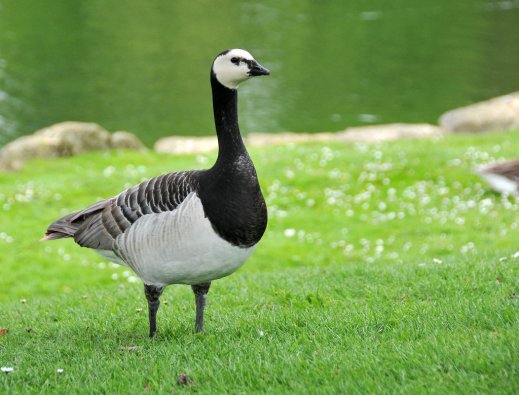
BarnacleGoose-LeedsCastle-Kent.ThomasCogley-sideview

BARNACLE GOOSE at Leeds Castle, Kent, England  (photo credit: Thomas Cogley)

Like other geese, these birds know how to use their voices:

Noisy, even when feeding, their high-pitched, yelping barks [!] reaching a crescendo as the shimmering flock rises – sounds not unlike a pack of chasing hounds.

[Quoting Knightley, Madge, & Nurney, POCKET GUIDE TO THE BIRDS OF BRITAIN AND NORTH-WEST EUROPE, page 31.]   These geese are herbivores  —  feeding mostly on grasses, leaves, roots, tubers, aquatic plants, and/or agricultural crops (such as grains grown in northern Europe’s farmlands), and their digestive processes adi  in seed dispersals.  Predators of Barnacle Geese – especially during the breeding season  —  include Peregrine Falcons, Arctic Foxes, and Polar Bears.

Besides Sweden’s (and other) Baltic coastlands, these cool-weather-loving geese habitually summer in the Arctic’s far north, including breeding grounds in Iceland, Svalbard, Greenland, and Russia’s arctic archipelago Novaya Zemla (and on the Siberian coast just south of Novaya Zemla).

Students of the Cold War can appreciate that Novaya Zemla was a scary place to be on October 30th of AD1961, when the USSR tested its RDS-220 hydrogen bomb “Ivan” (a/k/a Tsar Bomba (Russian Царь-бомба, i.e., “Tsar Bomb”), the largest man-made explosion detonated in world history.

TsarBomb.Russian-Hbomb-AD1961

Explosion of Soviet Union’sЦарь-бомба Hydrogen Bomb 
seen from 100 miles away   (public domain)

Based on migratory habits the Barnacle Gees were likely absent when the blast occurred  —  but what was it like, during the next spring, when the geese would have migrated north, to their usual breeding grounds in Novaya Zemla?  Some emigrants of the Novaya Zemla-breeding population of Barnacle Geese, however, relocated to and colonized (from their ancestral breeding grounds in Russia’s Novaya Zemla) various coastlands around the Baltic Sea’s northern shores, i.e., they now summer upon islands or coastlands of Sweden, Finland, Denmark, and Estonia (and afterwards winter within and near the Netherlands).

Meanwhile, during winter, other Barnacle Goose populations (such as those that breed in Iceland or Greenland) migrate to the much milder “Western Isles” of Scotland (i.e., the Hebrides, e.g., Islay)  — or on the western coast of Ireland  —  or in the Solway Firth region of the England-Scotland border.

BarnacleGoose-with-goslings.JoeBlossom-Arkive

BARNACLE GOOSE parent & goslings   (photo credit: Joe Blossom / Arkive.org )

Of course, many “species” of geese descend from the ancestral pairs of goose-kind that survived the Genesis Flood aboard Noah’s Ark. Consider, for example, the photograph below (by David Appleton), showing a goose standing in grass of Holkham Park (in Norfolk, England)  —  which appears to be a Barnacle Goose X Greylag Goose hybrid.
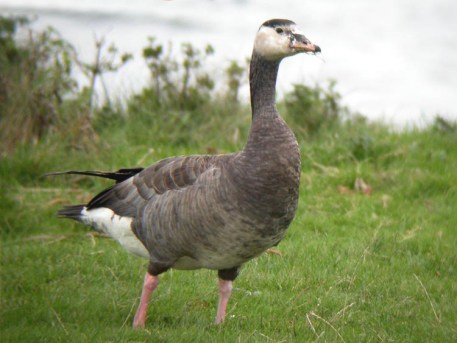
BarnacleGoose-GreylagGoose-hybrid.NorfolkEngland-DavidAppleton

Barnacle/Greylag Goose hybrid, Norfolk, England  (photo credit: David Appleton)

Meanwhile, if I was a Barnacle Goose  – and thank God that He created me to be me, instead! –  I’d prefer Helsinki’s Kaivopuisto Park as my year-round home habitat, rather than summer in Novaya Zemla.   (As far as I’m concerned, let the Arctic Ocean polar bears have that arctic archipelago!)   ><> JJSJ    profjjsj@aol.com


BarnacleGoose-flock-Islay.BirdGuides
Winter flock of Barnacle Geese, Islay, Inner Hebrides   (photo credit: Stef McElwee / Birdguides)

Lee’s One Word Monday – 7/10/17

***

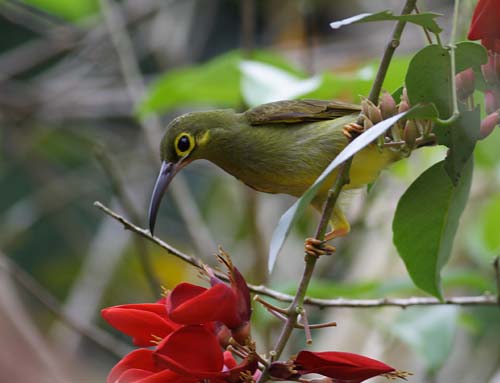
Spectacled Spiderhunter (Arachnothera flavigaster) by Peter Ericsson

EYES

***


“The statutes of the LORD are right, rejoicing the heart: the commandment of the LORD is pure, enlightening the eyes.” (Psalms 19:8 KJV)

Spectacled Spiderhunter (Arachnothera flavigaster) by Peter Ericsson

*

UPDATE – I am scheduled to be released, and heading home today. Praise the Lord and thank you all so much for your thoughts and prayers. I’ll be on a walker for awhile, but I’ll be home. :)

More Daily Devotionals

*

Lee’s Seven Word Sunday – 7/9/17

***

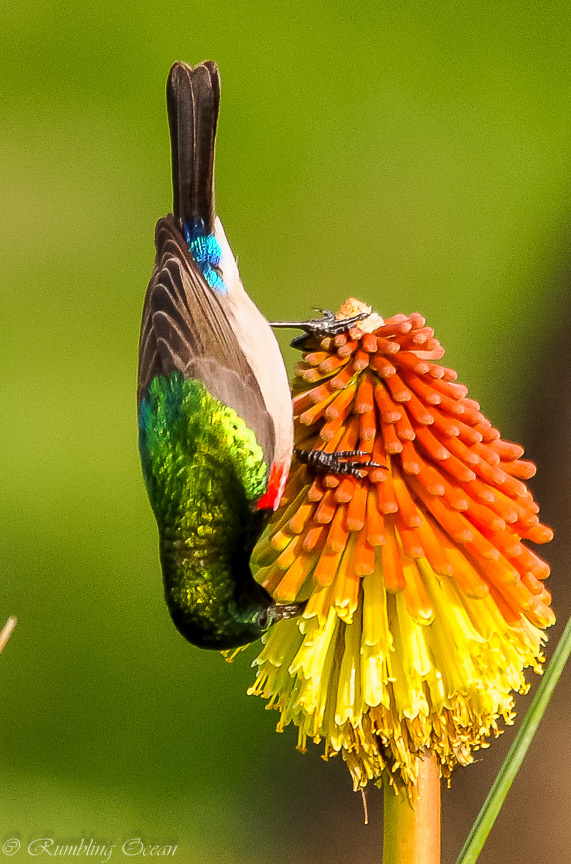
Lesser Double-collared Sunbird enjoying a Kniphofia flower ©©Rambling Ocean-Boeta.

THE LORD’S NAME

IS TO BE PRAISED

***


“From the rising of the sun unto the going down of the same the LORD’S name is to be praised.” (Psalms 113:3 KJV)

Lesser Double-collared Sunbird enjoying a Kniphofia flower ©©Rambling Ocean-Boeta.

*

More Daily Devotionals

*

Lee’s Six Word Saturday – 7/8/17

***

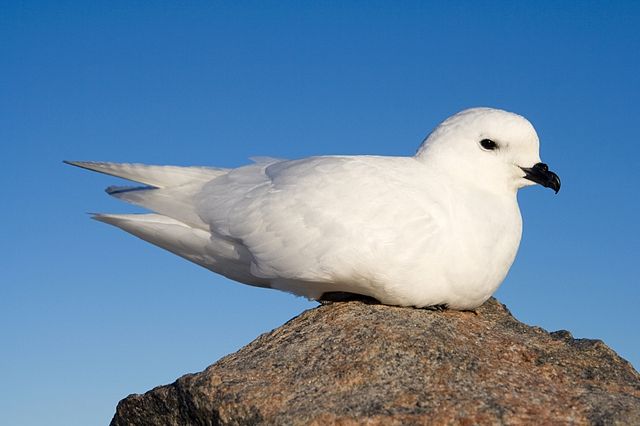
Snow Petrel (Pagodroma nivea) ©WikiC

HE SITTETH ALONE

AND KEEPETH SILENCE

***


“He sitteth alone and keepeth silence, because he hath borne it upon him.
(Lamentations 3:28 KJV)

Snow Petrel (Pagodroma nivea) ©WikiC

*

More Daily Devotionals

*

Lee’s Five Word Friday – 7/7/17

***

Roadrunner bites Rattlesnake

BEING CRAFTY, I CAUGHT YOU

***


“But be it so, I did not burden you: nevertheless, being crafty, I caught you with guile.
(2 Corinthians 12:16 KJV)

Roadrunner bites Rattlesnake ©Pinterest

*

P.S. Praise the Lord and thanks for the prayers. I am supposed to be released from the Sea Pines Rebabilitation Hospital on Monday. My back is healing and my strenght is returning to my legs daily.

More Daily Devotionals

*

Lee’s Four Word Thursday – 7/6/17

***

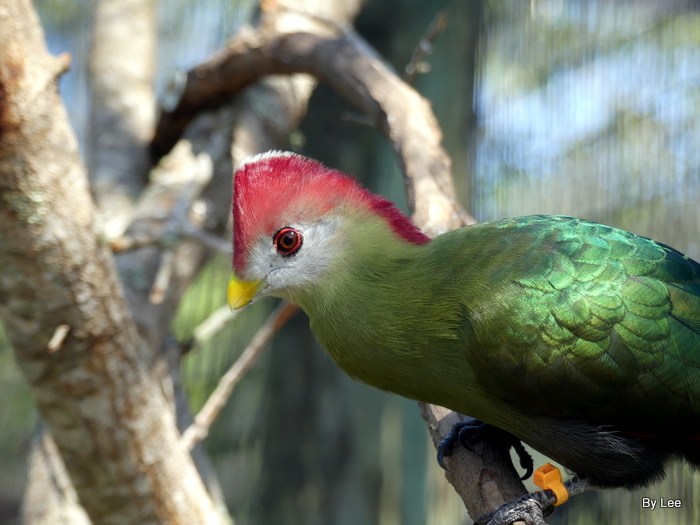
Red-crested Turaco at Brevard Zoo by Lee

NEITHER ANY GREEN THING

***


“And it was commanded them that they should not hurt the grass of the earth, neither any green thing, neither any tree; but only those men which have not the seal of God in their foreheads.” (Revelation 9:4 KJV)

Red-crested Turaco at Brevard Zoo by Lee

*

More Daily Devotionals

*

BIRDWATCHING AT COX ARBORETUM (IN OHIO)

Yea, the sparrow hath found an house, and the swallow a nest for herself, where she may lay her young, even Thine altars, O Lord of hosts, my King, and my God.  (Psalm 84:3)

Northern-Cardinal.MotherNatureNetwork

NORTHERN CARDINAL   (Mother Nature Network)

Dr. James J. S. Johnson

BIRDWATCHING AT THE ARBORETUM, AS THE HOURS HURRIED BY

Bright red, flies by, a cardinal male,

As down, we trek, a nature trail;

Here it’s wide, there it’s narrow;

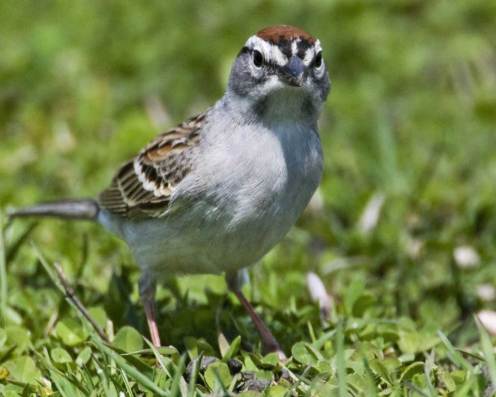
Perched nearby, a chipping sparrow;

(How quickly told is our tale.)

Chipping-Sparrow.AudubonSociety

CHIPPING SPARROW   (Audubon Field Guide)

One of Shakespeare’s plays, MACBETH, includes a cynical comment that compares the transitory experience of human mortality to a fleeting “hour upon the stage”, like a “tale” that is “told” with “sound and fury”, yet “signifying nothing” (MACBETH, Act 5, Scene 5).  It is true that this earthly lifetime is transitory and fleeting (James 4:13-15), yet this earthly life is the opposite of meaningless — unless we foolishly ignore our Maker (Ecclesiastes 12:1).  And our Maker cares so much for us — much more than He cares for little birds, like sparrows (Matthew 10:29-31),  — so much that He has provided a free redemption and abundant life in Christ, available to all who believingly receive Him as personal Savior (John 1:12 & 3:16 & 14:6).  And, thankfully, belonging to Him lasts forever!

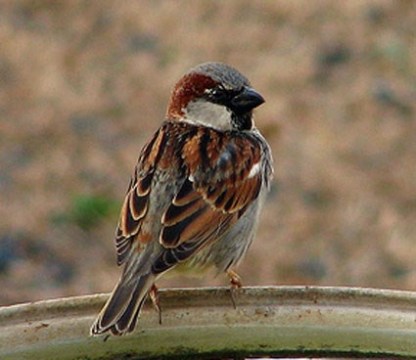
English-Sparrow.AllAboutBirds

ENGLISH SPARROW   ( allaboutbirds.org  )

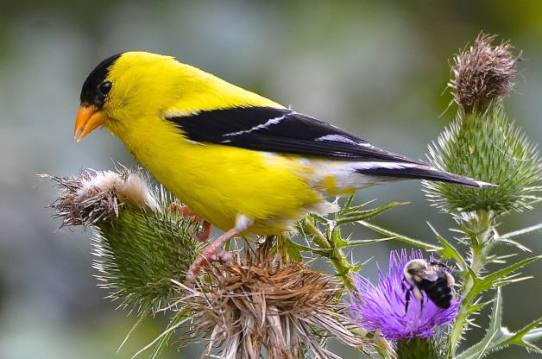
Time flies.  Time zooms by even moreso when one is experiencing a wonderful blessing, as the above limerick briefly notes in fly-by fashion.  Such a time was last Thursday (June 29th AD2017), when I was birdwatching (and butterfly-watching) with my youngest grandson, Hunter, at the Cox Arboretum in Dayton, Ohio.  At the Arboretum we saw various birds (including English Sparrow [a/k/a “House Sparrow”], American Goldfinch, Canada Goose, Mallard, Robin, Northern Cardinal, and Chipping Sparrow), butterflies (including Cabbage White, Pipevine Swallowtail, Black Swallowtail, Spicebush Swallowtail, and Orange Sulphur), other insects (bumblebees, ants, dragonflies, etc.), pond-dwelling fish, slow-moving turtles, and scampering chipmunks.  For me, the Chipping Sparrow was a special highlight — it is a summer breeder during its migrant months in Ohio.  (Hunter accurately described the Chipping Sparrow, who helpfully posed for our observations, as looking like an English Sparrow except “his head has red on it” and “there’s some white by his eyes”.)  Hunter had a one-word comment on the American Goldfinch:  WOW!

The hours of hiking went all too quickly.  It was a precious time for Farfar (Norwegian for “father’s father”) to teach a grandson something of the wonders of God’s creation, and something about the wonderfulness of God Himself.  Thankfully, neither of us fell into any of the ponds — although some inspections of turtles or fish came close to a splashing scenario.  It was a good day — albeit one that hurried by all too quickly.

American-Goldfinch.Fredric-D-Nisenholz-BirdsandBlooms

AMERICAN GOLDFINCH   (Fredric Nisenholz / Birds and Blooms )

Red-crested Turaco

Red-crested Turaco at Brevard Zoo by Lee

Red-crested Turaco at Brevard Zoo by Lee

“Thou shalt also be a crown of glory in the hand of the LORD, and a royal diadem in the hand of thy God.” (Isaiah 62:3 KJV)

While at the Brevard Zoo last week, we were able to take photos and this video of the Red-crested Turaco up close and personal. They opened up a remodeled section of the zoo. The aviary in there has several Red-crested Turacos. I have tried for years to get a good photo of a Turaco, but they have always been behind cage wires. This beautiful bird was in with the Cockatiels, Galahs, Laughing Kookaburra, and some ducks in the free-flying aviary. Many people were feeding the birds with juice, so the birds come right close. Actually, some land on the hand of the one with the juice.

Red-crested Turaco at Brevard Zoo by Lee

According to Wikipedia [with editing]: “The red-crested turaco (Tauraco erythrolophus) is a turaco from a group of African near-passerines. It is a frugivorous bird endemic to western Angola. Its call sounds somewhat like a jungle monkey.

The national bird of Angola is the striking, endemic red-crested turaco. It occurs quite commonly along the length of the Angolan escarpment and adjacent forested habitats.

Here is the video that I took of this avian wonder from Our Creator:

*

I preloaded this blog, because I wanted to use it to give an update on my surgery. My back had rods and screws placed between the S1 to L2 and L4-L2 on the other set of pedicules. I am now in a Rehabilitation Hospital trying to regain strength. I only pre-scheduled the blog though July 1st.

Not sure when next article will be released.

I am in pain, but it is getting better. My legs are very weak, but improving. The Lord has been with all the way. Your prayers and thoughts are a great comfort.

*

Red-crested Turaco at Oiseaux-birds

Red-crested Turaco – Wikipedia

*

Lee’s Six Word Saturday – 7/1/17

***

Parakeet Resting on Pen ©Wild Horse Photography

HANDLE THE PEN OF THE WRITER

***


“Out of Ephraim was there a root of them against Amalek; after thee, Benjamin, among thy people; out of Machir came down governors, and out of Zebulun they who handle the pen of the writer.” (Judges 5:14)

Parakeet Resting on Pen ©Wild Horse Photography

*

More Daily Devotionals

*

Lee’s Five Word Friday – 6/30/17

***

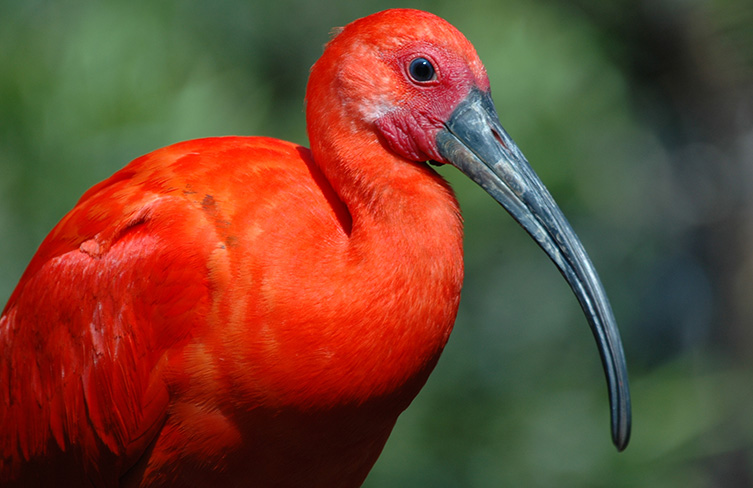
Scarlet Ibis (Eudocimus ruber) ©whm.ac.uk

THE FIRST CAME OUT RED

***


“And the first came out red, all over like a hairy garment; and they called his name Esau.”  (Genesis 25:25)

Scarlet Ibis (Eudocimus ruber) ©whm.ac.uk

*

More Daily Devotionals

*

Lee’s Four Word Thursday – 6/29/17

***

Purple-crowned Fairywren From Pinterest

THINE HEAD LIKE PURPLE

***


“Thine head upon thee is like Carmel, and the hair of thine head like purple; the king is held in the galleries.”  (Song of Solomon 7:5)

Purple-crowned Fairywren From Pinterest

*

More Daily Devotionals

*