Rhea the featherless Lovebird in a knitted sweater
“They cause the naked to lodge without clothing, that they have no covering in the cold.” (Job 24:7 KJV)
Thanks to some news articles, I heard about Rhea, a Lovebird that lost all her feathers. She has Psittacine Beak and Feather Disease (PBFD). The feathers will not grow back and has to be kept warm. That fact caused many to send little outfits to her owner to help keep Rhea warm.
“Neither is there any creature that is not manifest in his sight: but all things are naked and opened unto the eyes of him with whom we have to do.” (Hebrews 4:13 KJV)
Enjoy the articles and the video of little Rhea. If you wanted to study bird anatomy, Rhea provides some interesting things to observe. Notice her ear holds.
“There shall the great owl make her nest, and lay, and hatch, and gather under her shadow: there shall the vultures also be gathered, every one with her mate.” (Isaiah 34:15 KJV)
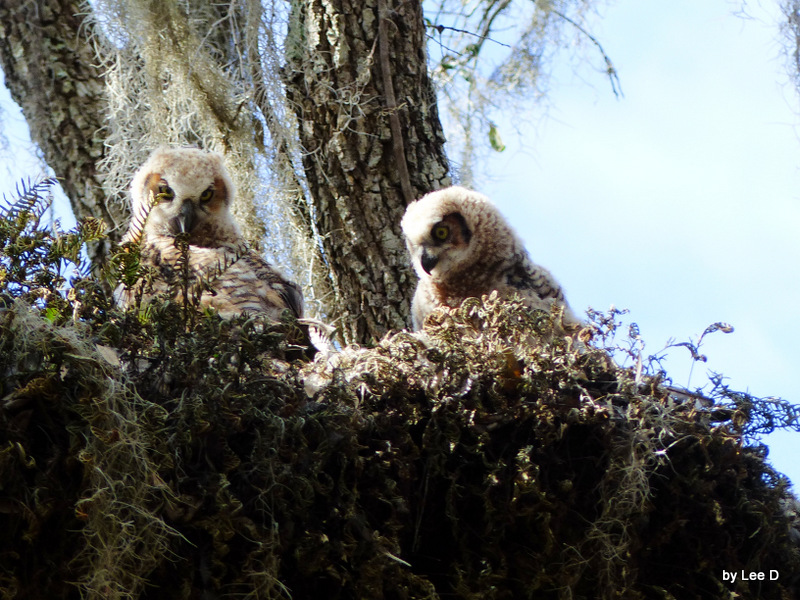
Great Horned Owl Youngsters at Circle B Bar Reserve by Lee
“O that there were such an heart in them, that they would fear me, and keep all my commandments always, that it might be well with them, and with their children for ever!” (Deuteronomy 5:29 KJV)
In all the busyness of things, the anniversary of this blog, slipped by unnoticed. The 15th of February was the 9th Anniversary of Lee’s Birdwatching Adventures Plus. Today, we are getting close to 1.7 million views since the blog was moved to WordPress in July of 2009. Am not sure how many hits were made to the original blog that started out on Blogger. But the Lord has be gracious.
We now have had visitors from 228 Countries. Wow! Who would have thought? I was excited in 2009 and I am still excited in 2017 at what the Lord had done with this blog.
I never imagined that the Lord would bless my efforts to this extent. From that start, I made a blog of my own on Blogspot.com so that I could learn how to post on the church’s blog. Once I began learning how to blog, it has been growing every since. Then in July, the blog was moved over to here at WordPress.com. This is a great place to host a blog/website (as I call it) and it is free.
Of course, Dan, my husband, has been our main photographer (Dan’s Pix), and we have been blessed with the permission to use the photos of some mighty fine photographers. Thank all of you for your expertise and permission. Check the sidebar out under Photography for links to the photographers.
Most importantly, Praise the Lord, for His blessings on this blog. Had the Lord not created everything, we would not have anything to write about, nor would we be here to write it.
When I consider thy heavens, the work of thy fingers, the moon and the stars, which thou hast ordained; What is man, that thou art mindful of him? and the son of man, that thou visitest him? … O LORD our Lord, how excellent is thy name in all the earth! (Psa 8:3,4,9 KJV)
Our pastor just reminded us of a quote by William Carey, an English Missionary to India:
Expect great things from God, attempt great things for God.
Great Blue Heron by Dan
I am not sure this was attempted as a “great thing,” but it was attempted to honor the Lord. That is a very great thing, and God has turned that attempt into a blog that has been visited over 10,000 times just since July. Many of those visits have come from around the world. Thank all of you for your visits.
Carey also said, “If I begin a thing I must go through with it!” This blog has been started and we trust we will continue to keep writing about God’s wonderful creation, especially His birds, and the joy of observing all God’s marvelous handiwork.
“And these things, brethren, I have in a figure transferred to myself and to Apollos for your sakes; that ye might learn in us not to think of men above that which is written, that no one of you be puffed up for one against another.” (1 Corinthians 4:6 KJV)
Sage Grouse (Centrocercus urophasianus) by Kent Nickel
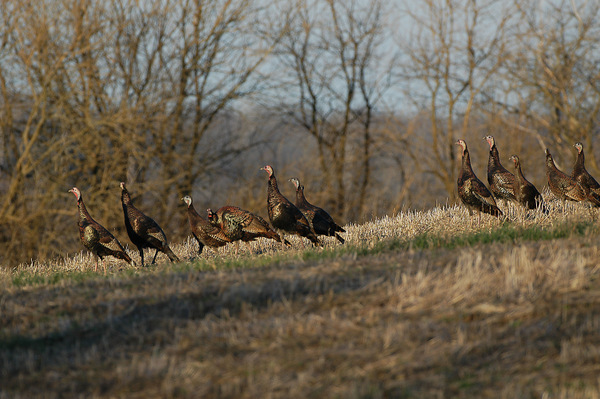
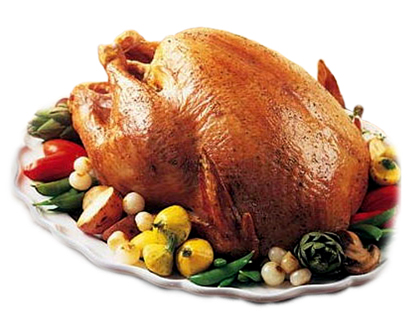
Wild Turkey (Meleagris gallopavo) by Daves BirdingPix
“But of all clean fowls ye may eat.” (Deuteronomy 14:20 KJV)
The Phasianidae Family has 183 species and is the last family in the Galliformes Order. This will take several Sunday Inspirations to cover all of these interesting birds. In Scripture, they are considered “clean fowl” and may be eaten. Here in America, many Wild Turkeys have found themselves the center of attraction on Thanksgiving Day.
Thankfully, Reginald, our Turkey Commander, and his group have avoided this result. Reginald, Turkey Commander. See the rest of Emma’s Stories of Reginald and others.
Part I begins with the first twenty one (21) members of the Phasianidae clan in ten (10) genera. There are 2 Turkeys, 12 Grouse, 2 Capercaillies, 2 Prairie Chickens and 3 Ptarmigans.
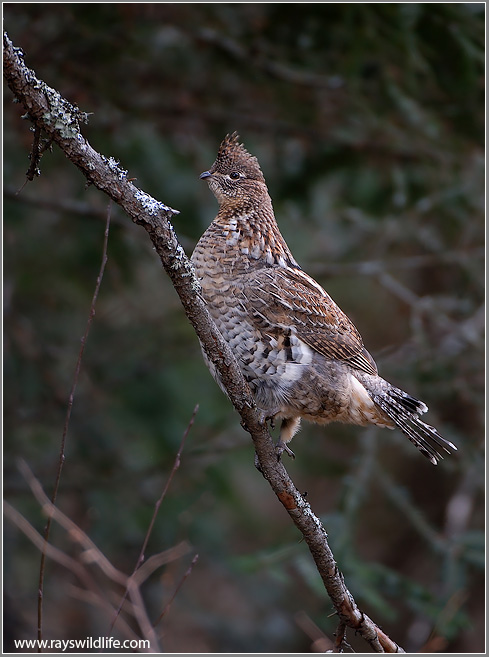
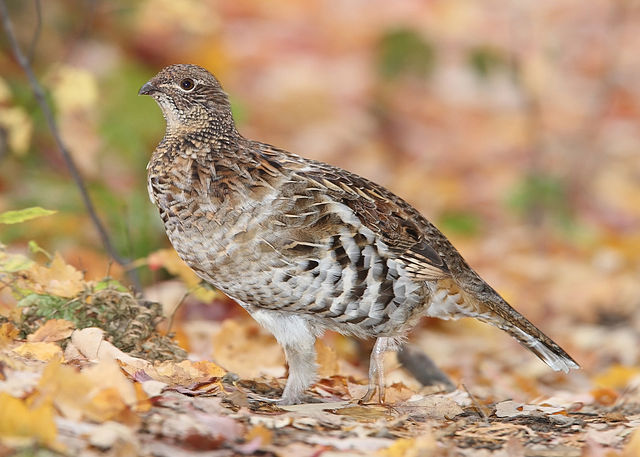
Ruffed Grouse (Bonasa umbellus) by Raymond Barlow
The Phasianidae are a family of heavy, ground-living birds which includes pheasants, partridges, junglefowl, chickens, Old World quail, and peafowl. The family includes many of the most popular gamebirds. The family is a large one, and is occasionally broken up into two subfamilies, the Phasianinae, and the Perdicinae. Sometimes, additional families and birds are treated as part of this family. For example, the American Ornithologists’ Union includes Tetraonidae (grouse), Numididae (guineafowl), and Meleagrididae (turkeys) as subfamilies in Phasianidae.
The first genus, Meleagris, has the Wild Turkey and the Ocellated Turkey. The Ocellated Turkey (Meleagris ocellata) is a species of turkey residing primarily in the Yucatán Peninsula. A relative of the Wild Turkey (Meleagris gallopavo), it was sometimes previously treated in a genus of its own (Agriocharis), but the differences between the two turkeys are currently considered too small to justify generic segregation. They relatively large birds.
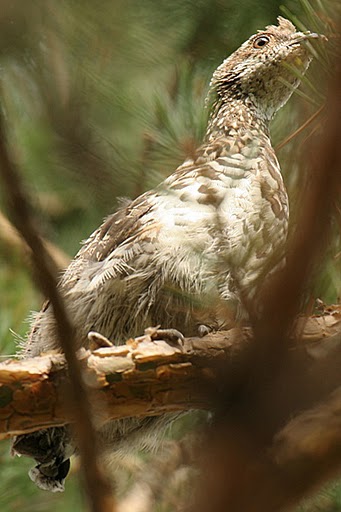
The Ruffed Grouse (Bonasa umbellus) is a medium-sized grouse occurring in forests from the Appalachian Mountains across Canada to Alaska. It is non-migratory. It is the only species in the genus Bonasa. The ruffed grouse is sometimes incorrectly referred to as a “partridge”, and is a bird of open areas rather than woodlands. The ruffed grouse is the state bird of Pennsylvania, United States.
Tetrastes is a genus of birds in the grouse subfamily. It contains the following species: Hazel grouse (Tetrastes bonasia) and Chinese grouse(Tetrastes sewerzowi). Both species live in forests with at least some conifers in cool regions of the Northern Hemisphere.
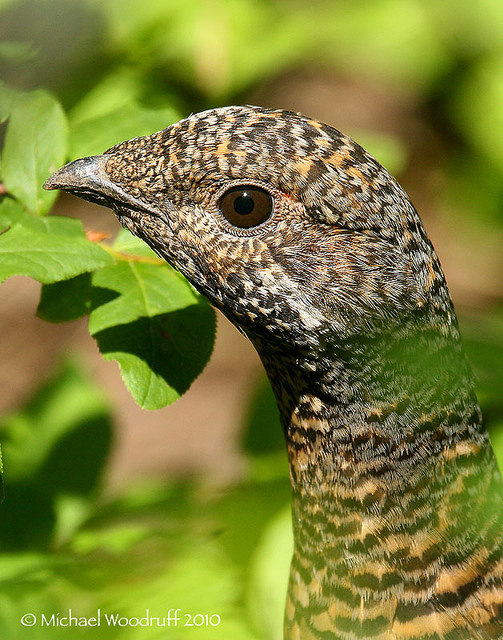
Spruce Grouse (Falcipennis canadensis) by Michael Woodruff
Falcipennis is a genus of birds in the grouse family that comprises two very similar species: Siberian grouse (Falcipennis falcipennis) and Spruce grouse (Falcipennis canadensis)
Both inhabit northern coniferous forests and live on conifer needles during the winter. Both have breeding systems with dispersed male territories, intermediate between the leks of some grouse and the monogamy of others.
The Western Capercaillie (Tetrao urogallus), also known as the wood grouse, heather cock, or just capercaillie /ˌkæpərˈkeɪli/, is the largest member of the grouse family. The species shows extreme sexual dimorphism, with the male twice the size of the female. Found across Eurasia, this ground-living forest bird is renowned for its mating display. The Black-billed Capercaillie (Tetrao urogalloides), which is just a bit smaller, is a sedentary species which breeds in the Larch taiga forests of eastern Russia as well as parts of northern Mongolia and China.
The next two, Black Grouse (Lyrurus tetrix) and Caucasian Grouse (Lyrurus mlokosiewiczi) recently split from the Tetrix above.
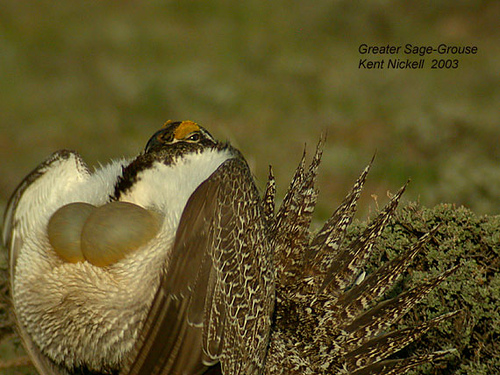
Sage Grouse (Centrocercus urophasianus) by Kent Nickel
The sage-grouse are the two species in the bird genus Centrocercus, the Sage and the Gunnison, (which is about a third smaller in size, with much thicker plumes behind the head; it also has a less elaborate courtship dance.)They are the largest grouse from temperate North America. The Sage Grouse, adult male has a yellow patch over each eye, is grayish on top with a white breast, and has a dark brown throat and a black belly; two yellowish sacs on the neck are inflated during courtship display. The adult female is mottled gray-brown with a light brown throat and dark belly. Gunnison Grouse adults have a long, pointed tail and legs with feathers to the toes. Each spring, the both species of males congregate on leks and perform a “strutting display”. Groups of females observe these displays and select the most attractive males with which to mate.
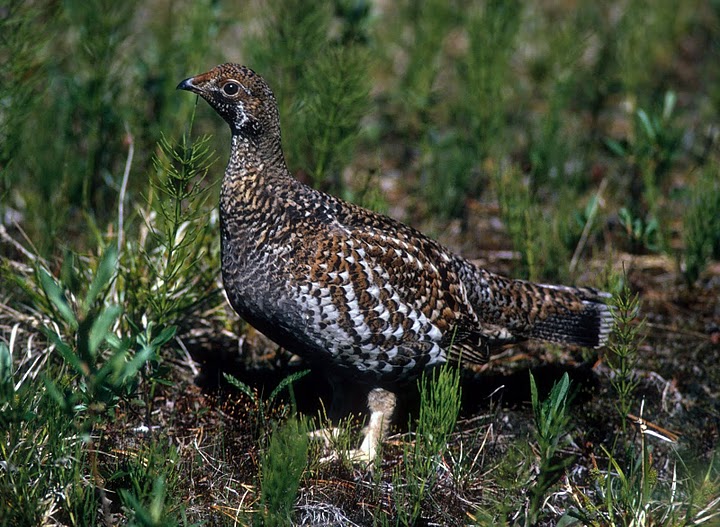
The genus Dendragapus contains two closely related species of grouse that have often been treated as a single variable taxon (blue grouse). The two species are the dusky grouse (Dendragapus obscurus) and the sooty grouse (Dendragapus fuliginosus). In addition, the spruce grouse and Siberian grouse have been considered part of this genus
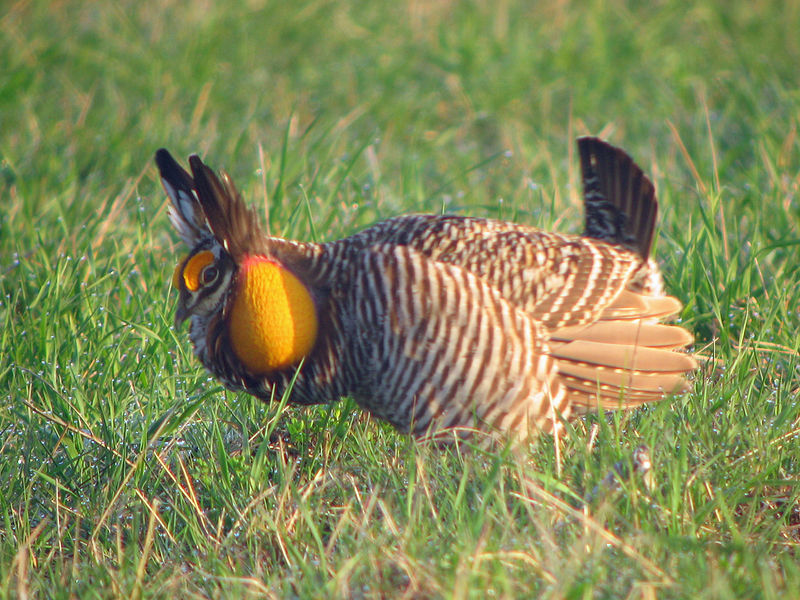
Tympanuchus is a small genus of birds in the grouse family. They are commonly referred to as prairie chickens. The genus contains three species: Sharp-tailed grous,Greater prairie-chicken, and Lesser prairie-chicken. All three are among the smaller grouse, from 40 to 43 cm (16 to 17 in) in length. They are found in North America in different types of prairies. In courtship display on leks, males make hooting sounds and dance with the head extended straight forward, the tail up, and colorful neck sacks inflated.
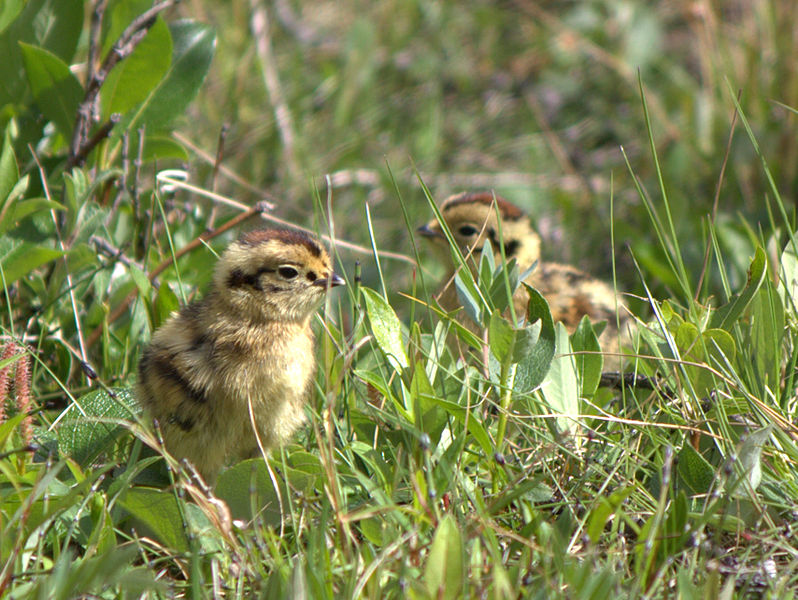
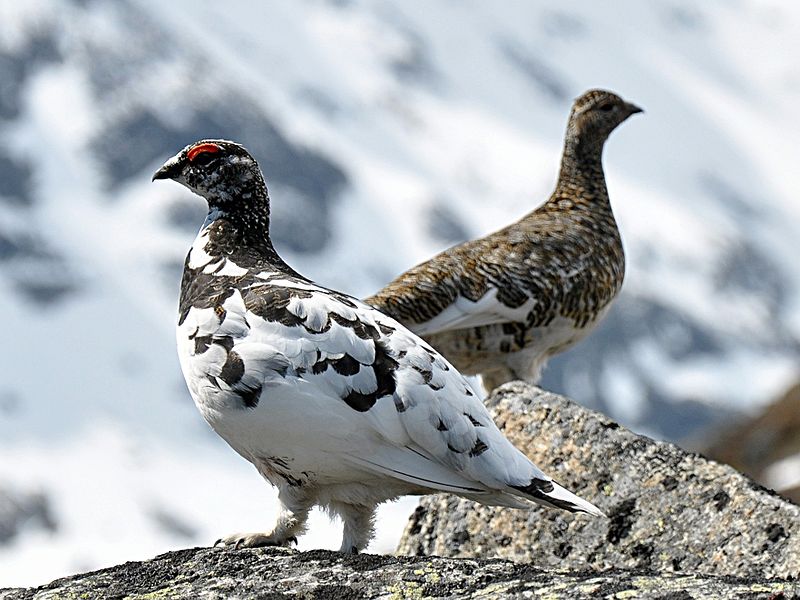
Lagopus is a small genus of birds in the grouse subfamily, commonly known as ptarmigans. The genus contains three living species with numerous described subspecies, all living in tundra or cold upland areas. The three species are all sedentary specialists of cold regions. Willow ptarmigan is a circumpolar boreal forest species, white-tailed ptarmigan is a North American alpine bird, and rock ptarmigan breeds in both Arctic and mountain habitats across Eurasia and North America. All, with the exception of the red grouse, have a white winter plumage that helps them blend into the snowy background. Even their remiges are white, while these feathers are black in almost all birds. The Lagopus grouse apparently found it easier to escape predators by not being seen than by flying away.
(Wikipedia with editing)
This slideshow requires JavaScript.
“Let the heaven and earth praise him, the seas, and every thing that moveth therein.” (Psalms 69:34 KJV)
“And he said unto them, Come ye yourselves apart into a desert place, and rest a while: for there were many coming and going, and they had no leisure so much as to eat.” (Mark 6:31 KJV)
Eurasian Hoopoe (Upupa epops) by William Kwong
Looking at his head, you wonder which way he’s going. :0)









 Lee's Birdwatching Adventures Plus