Lee’s One Word Monday – 4/25/16

***

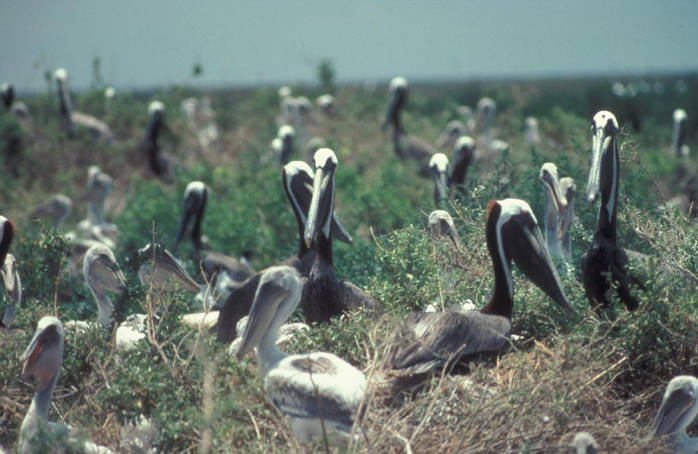
Brown Pelican (Pelecanus occidentalis) rookery ©USFWS

LONGSUFFERING

***


“But the fruit of the Spirit is love, joy, peace, longsuffering, gentleness, goodness, faith, Meekness, temperance: against such there is no law.” (Galatians 5:22-23 KJV)

Brown Pelican (Pelecanus occidentalis) rookery ©USFWS

*

More Daily Devotionals

*

“B” is for Bobwhite and Buteo: “B” Birds, Part 2

“B” is for Bobwhite and Buteo: “B” Birds, Part  2

James J. S. Johnson
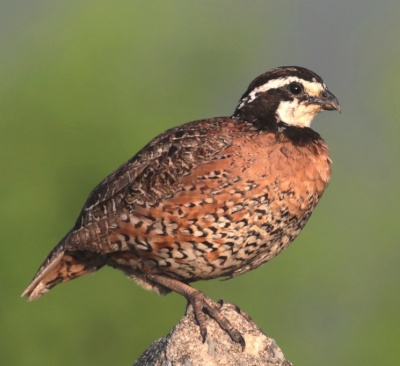
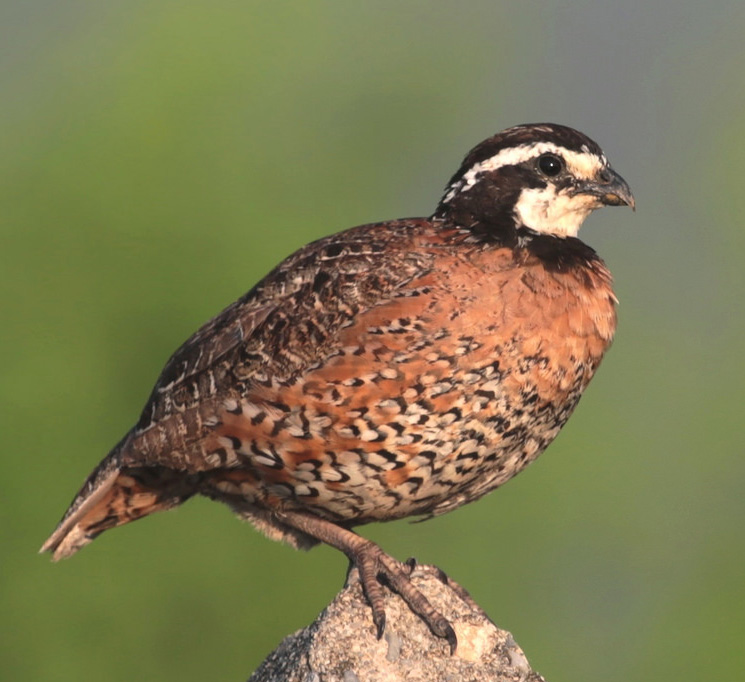
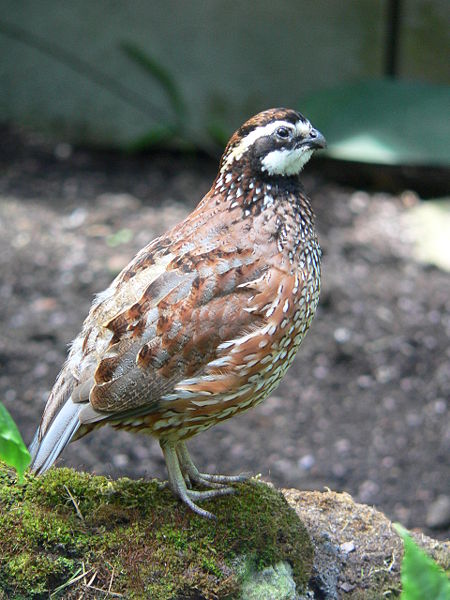
Northern Bobwhite (Colinus virginianus) ©StateSymbols

Northern Bobwhite (Colinus virginianus) ©StateSymbols

BOBWHITE QUAIL (Colinus virginianus)

In this series the “B” birds began (in Part 1) with Bluebird and Bittern. 

In this Part 2 the “B” birds will continue with Bobwhite Quail and Buteo Hawks.

Now for Bobwhite, i.e., the Bobwhite Quail — and the relevance of 1st Samuel 26:20 will be noted below.

Bobwhite is the name of a bird belonging to the New World quail family.  Other members of that quail family include the Yucatan (Black-throated) Bobwhite, the Crested Bobwhite, and the Spot-bellied Bobwhite.

Northern Bobwhite

The Bobwhite Quail (Colinus virginianus), a/k/a Northern Bobwhite and Virginia Quail, is a “New World quail”, meaning that it belongs to the group of pheasant/grouse/partridge/quail-like ground-fowl that habituate parts of North America.  In particular, the Northern Bobwhite is the only small native galliform (i.e., chicken-like ground-fowl) in the eastern region of North America.

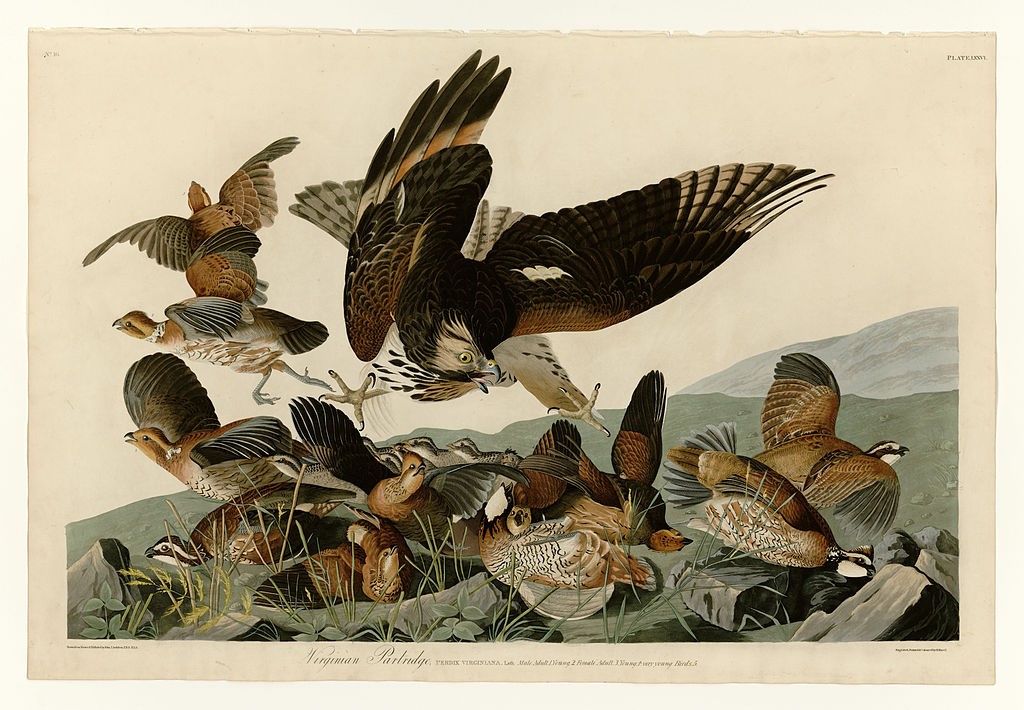
The name “bobwhite” is supposed to represent this quail’s terse two-syllable whistle-call.  The Bobwhite’s call has a lower (and slower) first syllable, followed by a sharply projected (and quicker) “whhht”.  One variety of the Northern Bobwhite, known for habituating Virginia, was formerly called the “Virginia Partridge” (e.g., by ornithologist John James Audubon) – that local variety now being called Colinus virginianus virginianus (identified by Linnaeus in AD1758).
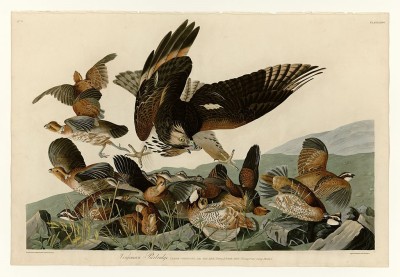
Virginia Partridge (under attack by diving hawk) depicted by John James Audubon (Public Domain)

Virginia Partridge (under attack by diving hawk) depicted by John James Audubon (Public Domain)

Bobwhite Quail, a/k/a Virginia Quail (and a/k/a Northern Bobwhite), are quail.  Accordingly, it is unsurprising to learn that they hybridize with other quail – reports indicate successful hybridizations with Blue Quail (Coturnix adansonii), Gambel’s Quail (Callipepla gambelii), California Quail (Callipepla californica), and Mountain Quail (Oreortyx pictus).

The ground-fowl lifestyle of this grouse-like ground-fowl is comparable to the Rock Partridge (Alectoris graeca) of which Israel’s king David once wrote:

Now therefore, let not my blood fall to the earth before the face of the Lord: for the king of Israel is come out to seek a flea, as when one doth hunt a partridge in the mountains.  (1st Samuel 26:20).

(See “Rock Partridges: Lessons about Hunting and Hatching”, citing 1st Samuel 26:20).

Now for the last category of “B” birds, the Buteo hawks. 

So what are the most prominent characteristics of buteo hawks?  Describing the birds of prey we call Buteo Hawks (a/k/a “buzzard hawks”), Roger Tory Peterson says:  “Large, thick-set hawks, with broad wings and wide, rounded tails.  Buteos habitually soar high in wide circles”, taking advantage of thermal air currents to lift their heavy bodies. [See Roger Tory Peterson, A FIELD GUIDE TO WESTERN BIRDS (Houghton Mifflin, 3rd ed., 1990), page 174.]  The different sexes often look similar, yet the female buteo is typically larger than her male counterpart.
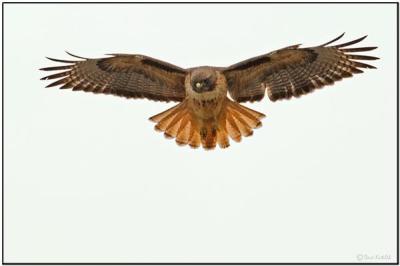
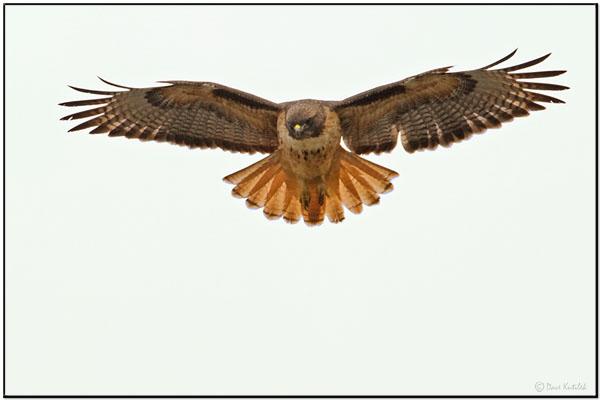
Red-tailed Hawk (Buteo jamaicensis) by Daves BirdingPix

Red-tailed Hawk (Buteo jamaicensis) by Daves BirdingPix

Buteo hawks, as a category or raptors, are routinely contrasted with the Accipiter hawks (a/k/a “bird hawks”) that were described in the previous article on A” birds (see “A” for Accipiter and Alcid: “A” Birds, Part 2, featuring Cooper’s hawk as the representative accipiter).  Hawk-like raptor birds include kites, falcons (including kestrels), harriers, eagles, Old World buzzards, vultures, osprey, and the exotic Secretary Bird.

Common Buzzard (Buteo buteo) ©WikiC

Common Buzzard (Buteo buteo) ©WikiC

Common Buzzard (Buteo buteo, of Eurasia)

The paradigmatic buteo, in Europe, would be the Common Buzzard (Buteo buteo).  However, that hawk has non-artificial range in the Western Hemisphere, so the Common Buzzard is not “common” to American birders.  Besides the Common Buzzard, there are many buteo hawks around the world, such as the Ferruginous Hawk (Buteo regalis), Grey Hawk (Buteo plagiatus), Swainson’s Hawk (Buteo swainsoni), Eastern Buzzard (Buteo japonicas), Himalayan Buzzard (Buteo burmanicus), Cape Verde Buzzard (Buteo bannermani), Short-tailed Hawk (Buteo brachyurus), and many more. For this article, however, to represent the entire group of buteos, one buteo will be reviewed, the Red-tailed Hawk (Buteo jamaicensis) of North America.

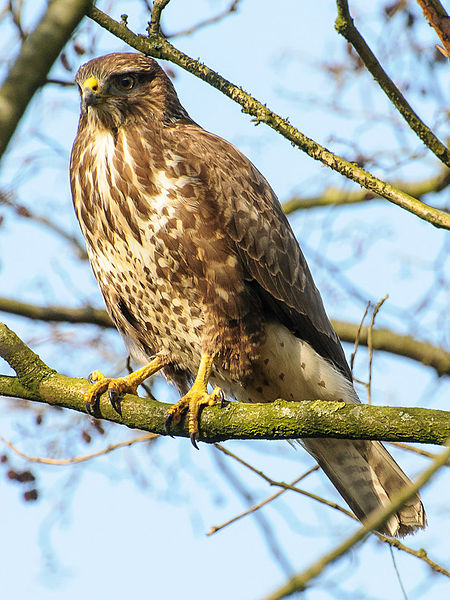
RED-TAILED HAWK  (Buteo jamaicensis).
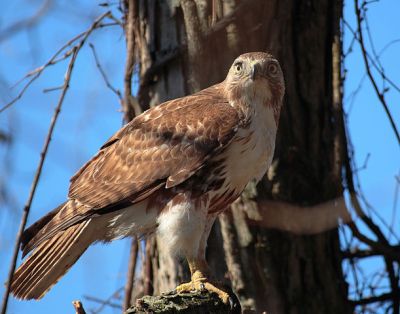
Red-tailed Hawk (Buteo jamaicensis) ©WikiC

Red-tailed Hawk (Buteo jamaicensis) ©WikiC

The Red-Tailed Hawk (Buteo jamaicensis) is described by ornithologist Mary Taylor Gray as follows: “The most abundant, widespread, and familiar hawk of he West, the Red-tailed Hawk resides year-round in Colorado [and elsewhere].  Adult birds are readily identified by their rusty-red tail[s].  Dark bars along the undersides of the leading edge of the outstretched wings, near the shoulder, are also characteristic.  We often see redtails perched on power [utility] poles or soaring in the air on broad wings, carving slow, wide arcs.  The redtail’s dramatic call fits its image as a western icon.  The down-slurred scream—Keeeer!—is often heard as a background sound in movies and television shows.”  [Quoting Mary Taylor Gray, THE GUIDE TO COLORADO BIRDS (Englewood, Colorado: Westcliffe Publishers, 1998), page 66.]

Gray’s observation – that the Red-tailed Hawk is the common buteo of America’s Great West – is illustrated by my own birding experience, even 20 years ago! – having seen redtails during AD1996 in places as divergent as Montana (eastern side of Glacier National Park, July 2nd AD1996) and South Texas (Rockport-Fulton shoreline, Aransas Bay region, March 10th AD1996).
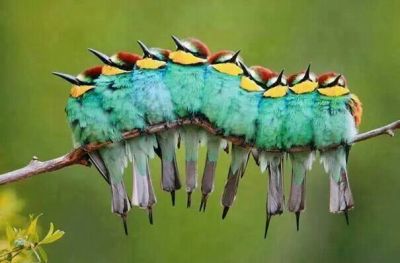
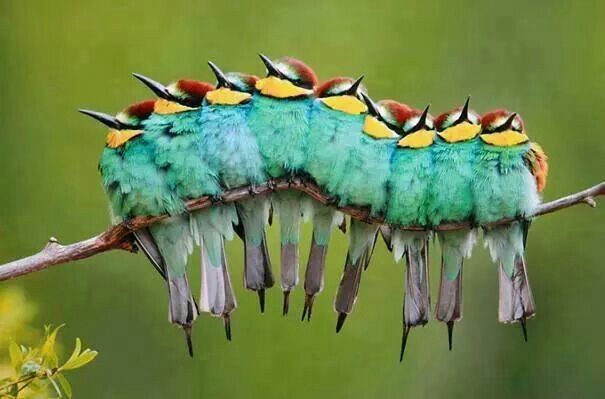
Bee-eaters From Pinterest

Bee-eaters From Pinterest

Of course, other “B” birds (such as the colorful and gregarious bee-eaters, shown above – photograph taken from Lee Dusing’s “Fellowship”,  exhibit our alphabet’s second letter – but this article is already long enough.  God willing, the next contribution to this alphabetic series will be some “C“ birds – such as Cardinal, Chicken, Coot, Cormorant, Chickadee, Caracara, Crane, Cuckoo, Curlew, and Corvid (including Crow)!  So stay tuned!    > JJSJ

*

“B” is for Bluebird and Bittern: “B” Birds, Part 1

“A” is for Avocet, Albatross: “A” Birds, Part 1

“A” is for Accipiter and Alcid: “A” Birds, Part 2

*
 

Lee’s Seven Word Sunday – 4/24/16

***

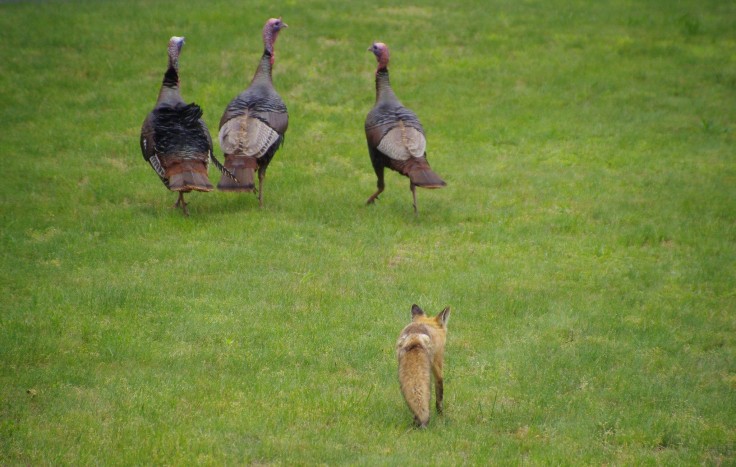
Fox following, stalking, turkeys. ©AnimalWallXYZ

THEY SHALL BE A PORTION FOR FOXES

***


“They shall fall by the sword; they shall be a portion for foxes.”  (Psalm 63:10)

Fox Following, Stalking, Turkeys. ©AnimalWallXYZ

*

More Daily Devotionals

*

Sunday Inspiration – Three Small Families

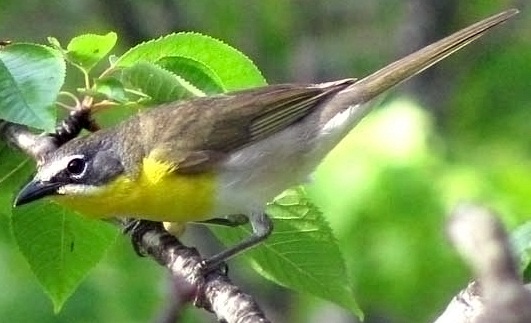
Yellow-Breasted Chat (Icteria virens) WikiC

Yellow-Breasted Chat (Icteria virens) WikiC

I know all the birds of the mountains, And the wild beasts of the field are Mine. (Psalms 50:11 NKJV)

After all these months of doing the Sunday Inspirations that have featured the Passerformes Order of birds, we are getting near the end of the list. Known as Passerines or Song Birds, there has been 125 families to tell about and show their pictures. There are seven families left, of which, three of them are small in number, so they are being grouped together in this Sunday Inspiration.

First we have group of birds in an Incertae Sedis or Uncertain Family. “Incertae sedis (Latin for ‘of uncertain placement’) is a term used for a taxonomic group where its broader relationships are unknown or undefined.” (Wikipedia)  That means they don’t know into which families to place these birds.

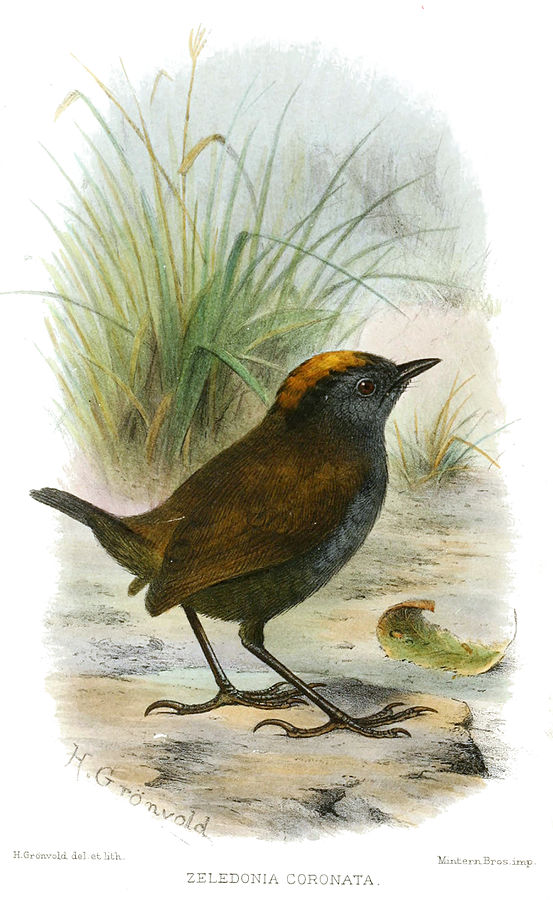
The six birds in this family currently are the Green-tailed Warbler, Yellow-headed Warbler, Oriente Warbler, Wrenthrush, Yellow-breasted Chat, and the White-winged Warbler.

Wrenthrush (Zeledonia coronata) ©Drawing WikiC

Wrenthrush (Zeledonia coronata) ©Drawing WikiC

For instance the Wrenthrush (Zeledonia coronata) is neither a wren or a thrush (and unrelated to both). No copyright free photos are available to use other than this drawing. You can see a few photos here.

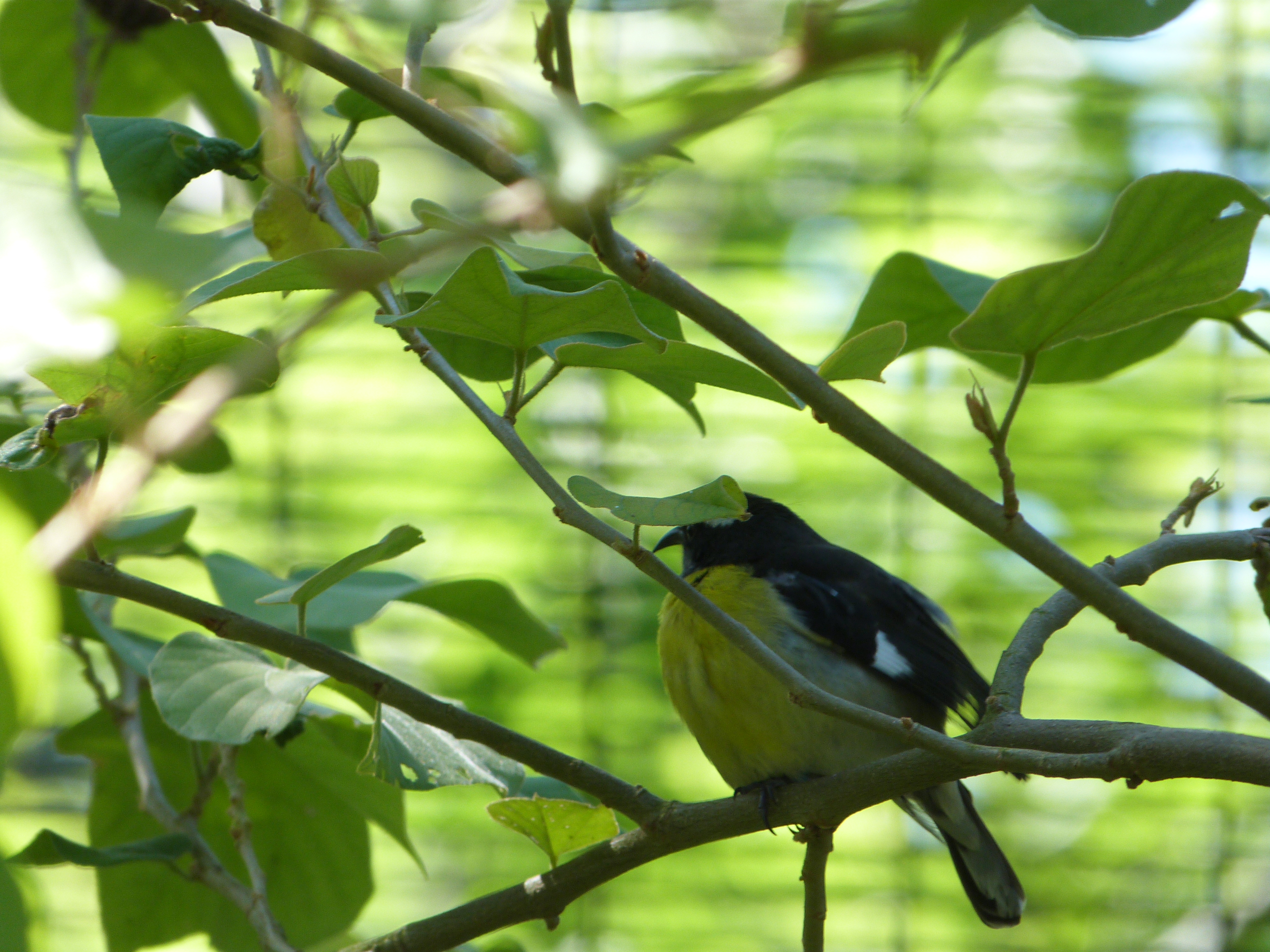
Bananaquit (Coereba flaveola) Cloud Forest by Lee

Bananaquit (Coereba flaveola) Cloud Forest by Lee

The Bananaquit belongs to the Coerebidae family. It is the only member, but there are numerous subspecies. I suspect one day they will split some of them off into separate species in the family. In fact they are suggesting three species already. We saw one down at Zoo Miami’s Cloud Forest.

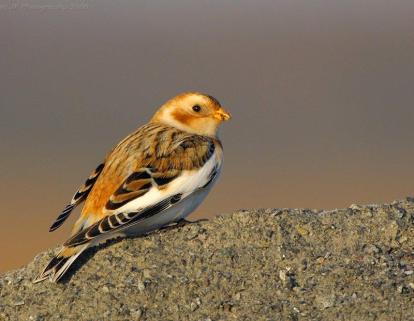
Snow Bunting (Plectrophenax nivalis) by J Fenton

Snow Bunting (Plectrophenax nivalis) by J Fenton

Our last small family this week is the Calcariidae. There are six members here also. The four Longspurs; Mccown’s, Lapland, Smith’s and Chestnut-collared; and two Buntings, the Snow and McKay’s Bunting.

These are chunky ground-feeding birds with long wings which are usually seen in open areas. Males declare ownership of a territory by singing during short flights over it. The male’s breeding plumage is much brighter than his winter plumage. These birds gather in large flocks in winter. The longspurs are all found in North America; the Lapland Longspur, or Lapland Bunting, is also found in Europe and Asia. (Wikipedia)

This slideshow requires JavaScript.

And the scripture was fulfilled which saith, Abraham believed God, and it was imputed unto him for righteousness: and he was called the Friend of God.” (James 2:23 KJV)

“I’ll Be A Friend To Jesus” – Faith Baptist Quartet

*

More Sunday Inspiration

Incertae Sedis – Uncertain – Wrenthrush and Chat Family

Calcariidae – Longspurs, Snow Buntings Family

Sharing The Gospel

*

Lee’s Six Word Saturday – 4/23/16

***

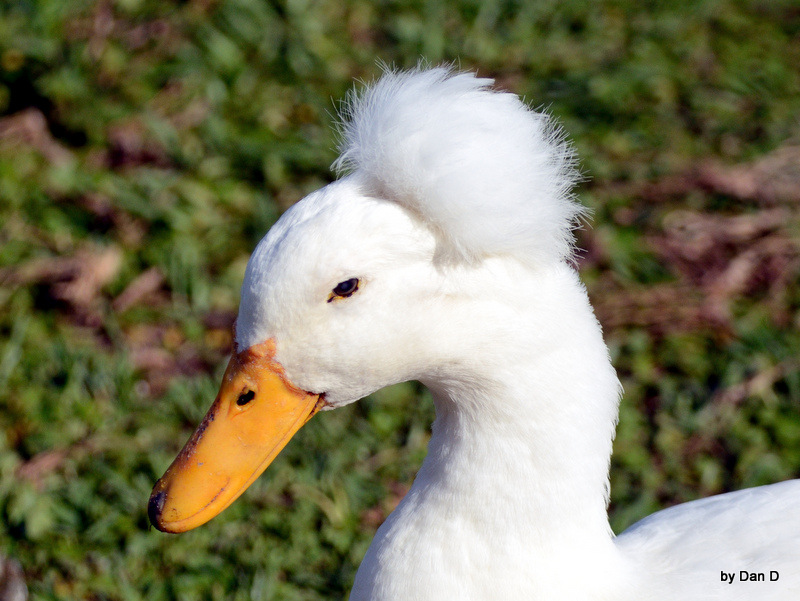
Aflac Duck Puffed Up - by Dan at Lake Morton

 KNOWLEDGE PUFFETH UP, BUT CHARITY EDIFIETH

***


Now as touching things offered unto idols, we know that we all have knowledge. Knowledge puffeth up, but charity edifieth. (1 Corinthians 8:1 KJV)

Aflac (Mallard hybrid) Duck Puffed Up – by Dan at Lake Morton

*

More Daily Devotionals

*

Lee’s Five Word Friday – 4/22/16

***

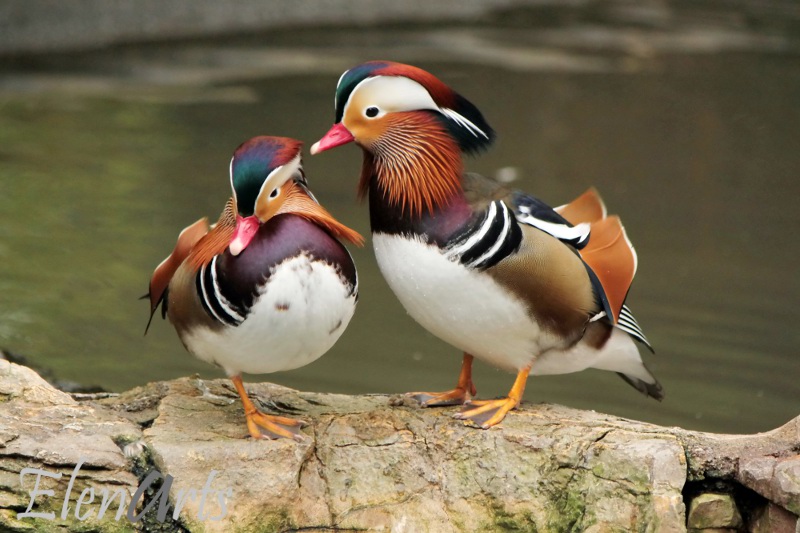
Mandarin Ducks Together ©Elenarts

I HAVE HEARD A RUMOR

***


“I have heard a rumor from the Lord, and an ambassador is sent unto the heathen, saying, Gather ye together, and come against her, and rise up to the battle.”  {Jeremiah 49:14)

Mandarin Ducks Together ©Elenarts

*

More Daily Devotionals

*

Birds of the Bible – Foundation – The Ark

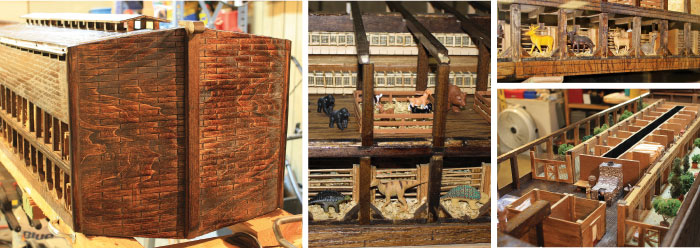
Ernesto Carrasco's Noah's Ark Model

Ernesto Carrasco’s Noah’s Ark Model –  Noah’s Ark Model

By faith Noah, being warned of God of things not seen as yet, moved with fear, prepared an ark to the saving of his house; by the which he condemned the world, and became heir of the righteousness which is by faith. (Hebrews 11:7 KJV)

We will continue on with the Birds of the Bible – Foundation series.

If you have not read the previous blogs:
Foundation #1 Updated  –  Foundation #2 Updated –  Foundation #3 Updated – Foundation #4 Updated

(These articles are being updated because they were written back in 2009 and needed a little dusting off. The Truths are the same, just updating the photos, etc.) This article about the Ark is a new one. It needs to go between #4 and #5, but I didn’t want to call it #4.5.

Ark with Animals ©CreationWiki

Ark with Animals ©CreationWiki

What this Foundation article is about, is the Ark itself. We read about the birds going into and out of the ark in the other Birds of the Bible Foundation articles. But what about the Ark?

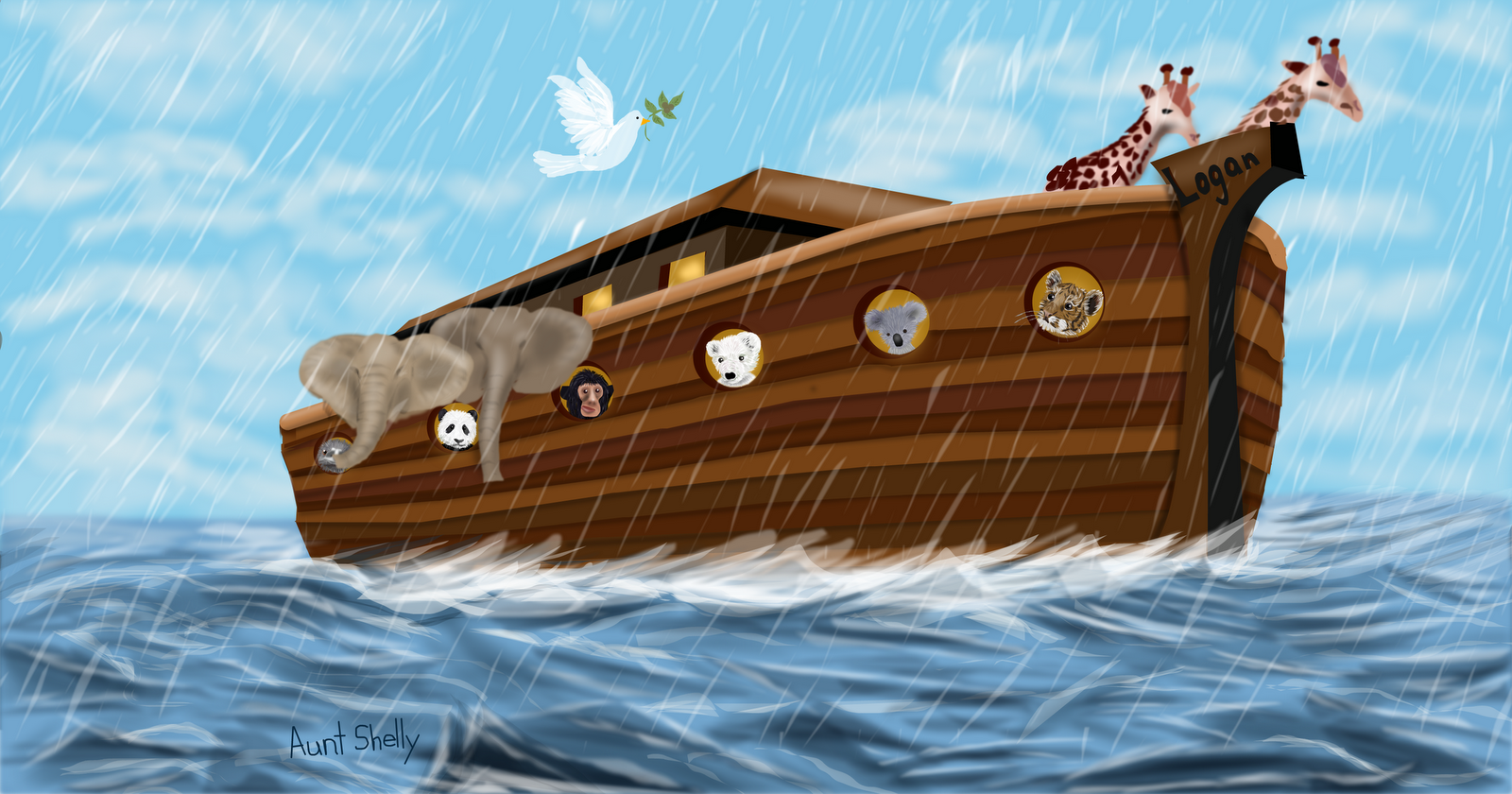
Noah's Ark © SketchPort

Noah’s Ark © SketchPort

How did Noah, his family, the animals and our birds all fit in the ark? Was it like you see depicted many times in drawings with of a small boat with a giraffe sticking his head out?

Girrafe at Lowry Park Zoo by Lee

Giraffe at Lowry Park Zoo by Lee

If it was a small ark, as some suppose, it is because they do not believe God’s Word. God said He was going to destroy all flesh except those on the Ark.

And, behold, I, even I, do bring a flood of waters upon the earth, to destroy all flesh, wherein is the breath of life, from under heaven; and every thing that is in the earth shall die. But with thee will I establish my covenant; and thou shalt come into the ark, thou, and thy sons, and thy wife, and thy sons’ wives with thee. And of every living thing of all flesh, two of every sort shalt thou bring into the ark, to keep them alive with thee; they shall be male and female. Of fowls after their kind, and of cattle after their kind, of every creeping thing of the earth after his kind, two of every sort shall come unto thee, to keep them alive. (Genesis 6:17-20 KJV) (emphasis mine)

They don’t believe those verses. They think that it was only a local flood. If it were, why did the birds have to come on board? They could have just flown off to some other part of the earth. So, for those that only believe in a partial flood, a small ark with a giraffe sticking out is sufficient.

But, did those verses not say that “flood of waters upon the earth, to destroy all flesh” and “every thing that is in the earth shall die”?  Is God a liar? The exception, of course, are those with Noah in the Ark.

Ark Model at Creation Museum ©Flickr Daniel Tuttle

Ark Model at Creation Museum ©Flickr Daniel Tuttle

And it came to pass in the six hundredth and first year, in the first month, the first day of the month, the waters were dried up from off the earth: and Noah removed the covering of the ark, and looked, and, behold, the face of the ground was dry. (Genesis 8:13 KJV)

So, we need a big Ark, one that the Giraffes and birds don’t have to hang out the windows. Right? So, how big was the Ark?

“Make yourself an ark of gopherwood; make rooms in the ark, and cover it inside and outside with pitch. And this is how you shall make it: The length of the ark shall be three hundred cubits, its width fifty cubits, and its height thirty cubits. You shall make a window for the ark, and you shall finish it to a cubit from above; and set the door of the ark in its side. You shall make it with lower, second, and third decks.” (Genesis 6:14-16 NKJV)

The reason for this article is that, today, there is construction of a life size Ark underway. It is being built by the Answers in Genesis organization. The Ark Encounter, as the location will be known as, is in Williamstown, Kentucky. The planned opening is July 7, 2016. We will be going to Indiana this summer and are planning to visit the Ark during the trip.

Here are two videos showing the ark under construction. They have all those men and great technology. Noah took 120 years. During that time he was preaching and trying to get others to join him and his family.

*

*

I trust those videos will give you a new perspective of how large the Ark actually was. There was even more room for more people to be saved, had they only believed God’s Word. We have the same issue today. John 3:16 is right before our eyes almost daily. Even ball games have banners reminding people of this promise of salvation. If they would only believe.

That whosoever believeth in him should not perish, but have eternal life. For God so loved the world, that he gave his only begotten Son, that whosoever believeth in him should not perish, but have everlasting life. For God sent not his Son into the world to condemn the world; but that the world through him might be saved. He that believeth on him is not condemned: but he that believeth not is condemned already, because he hath not believed in the name of the only begotten Son of God. And this is the condemnation, that light is come into the world, and men loved darkness rather than light, because their deeds were evil. (John 3:15-19 KJV)

If I took verse 19 and changed it thus; “And this is the condemnation, that AN ARK WAS come into the world, and men loved darkness rather than light, because their deeds were evil. (John 3:19) (My paraphrase) This is why they didn’t seek to join Noah. That is the same reason sinners refuse to be saved today.

Gospel Message

Continue to Birds of the Bible – Foundation #5 (Updated version coming soon)

Some links to some informative articles about the flood and the Ark:

Gospel Message

*

Lee’s Four Word Thursday – 4/21/16

***

Birds Eyes Basic ©Van zyl

EYE FOR AN EYE

***


Ye have heard that it hath been said, An eye for an eye, and a tooth for a tooth: Matthew 5:38

Birds Eyes Basic ©Van zyl

*

More Daily Devotionals

*

Lee’s Three Word Wednesday – 4/20/16

***

Speaking Out ©Tumblr

 WE HAVE SEEN

***


For we cannot but speak the things which we have seen and heard. Acts 4:20

Speaking Out ©Tumblr

*

More Daily Devotionals

*

Lee’s Two Word Tuesday – 4/19/16

***

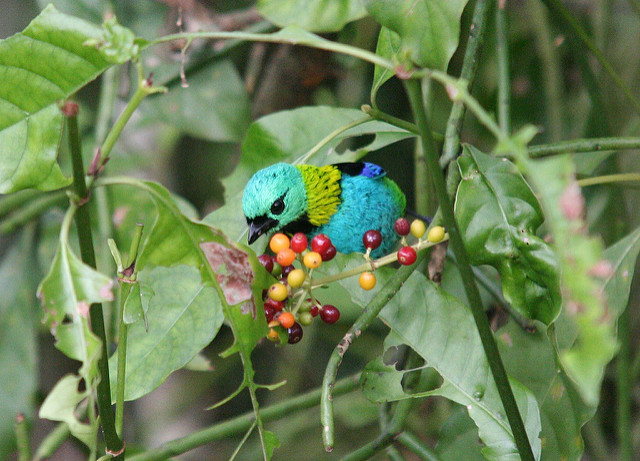
Green-headed Tanager (Tangara seledon) ©Flickr Meghan Hess

 GOOD FRUITS

***


“But the wisdom that is from above is first pure, then peaceable, gentle, and easy to be entreated, full of mercy and good fruits, without partiality, and without hypocrisy. (James 3:17)

Green-headed Tanager (Tangara seledon) ©Flickr Meghan Hess

*

More Daily Devotionals

*

Lee’s One Word Monday – 4/18/16

***

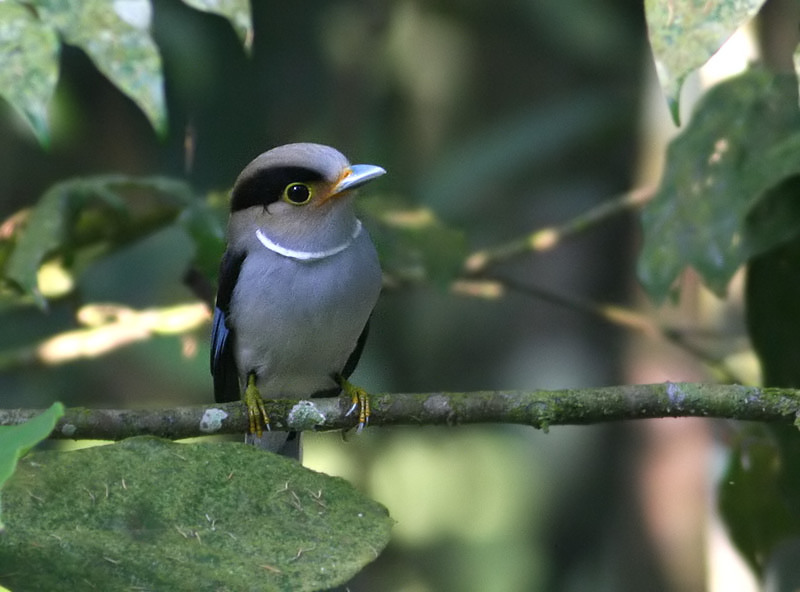
Silver-breasted Broadbill (Serilophus lunatus) by Peter Ericsson

PEACE

***


“But the fruit of the Spirit is love, joy, peace, longsuffering, gentleness, goodness, faith, Meekness, temperance: against such there is no law.” (Galatians 5:22-23 KJV)

Silver-breasted Broadbill (Serilophus lunatus) by Peter Ericsson

*

More Daily Devotionals

Love

Joy

Peace

Longsuffering

Gentleness

Faith

Meekness

Temperance

*

Lee’s Seven Word Sunday – 4/17/16

***

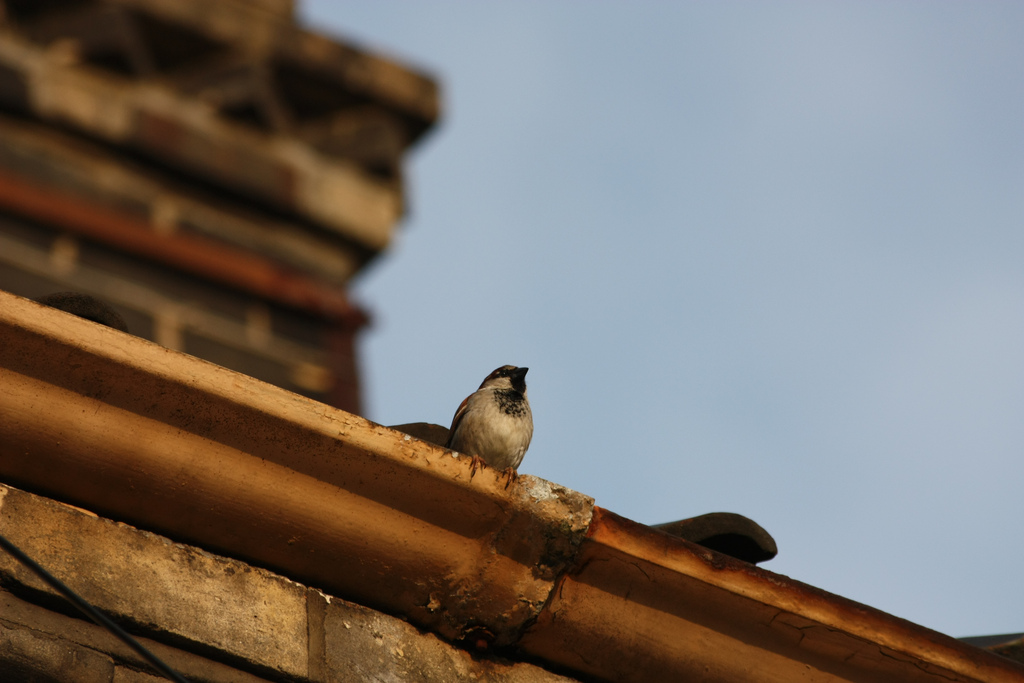
House Sparrow (Passer domesticus) on a house ©WikiC

A SPARROW ALONE UPON THE HOUSE TOP

***


“I watch, and am as a sparrow alone upon the house top.  (Psalm 102:7)

House Sparrow (Passer domesticus) on a house ©WikiC

*

More Daily Devotionals

*