“And the swan, and the pelican, and the gier eagle,” (Leviticus 11:18 KJV)
“The little owl, and the great owl, and the swan,” (Deuteronomy 14:16 KJV)
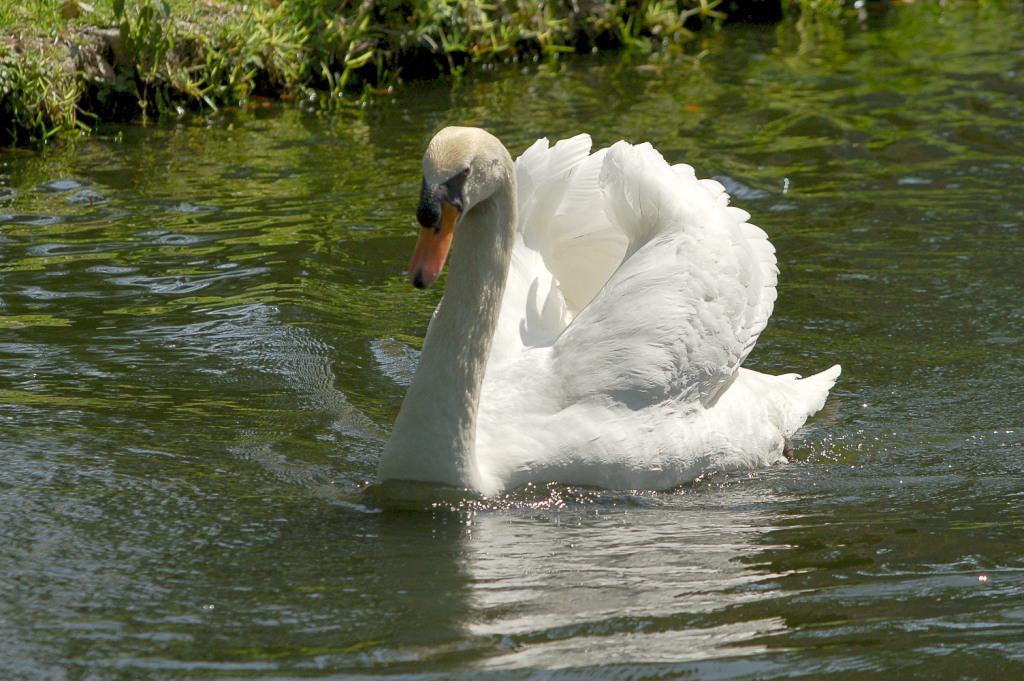
Swans are mentioned in these two verses in the KJV Bible. Some other versions list it as another bird. For now, let us learn about the beautiful Swans that the Lord created.
Both of the Swan verses above are found in the “do not eat” list that the Lord gave to the “children of the LORD your God.” Who would want to eat such great looking birds?
Swans are in the Anatidae Family which includes Ducks, Geese and Swans. There are seven species which include these:
The Trumpeter Swan has the most contour feathers of any bird. (25,216) That doesn’t count the downy feathers.
Swans can fly as fast as 60 miles per hour!
A male swan is called a cob, and a female swan is called a pen.
A baby swan is called a cygnet.
The largest species, including the mute swan, trumpeter swan, and whooper swan, can reach length of over 1.5 m (60 inches) and weigh over 15 kg (33 pounds). Their wingspans can be almost 3 m (10 ft).
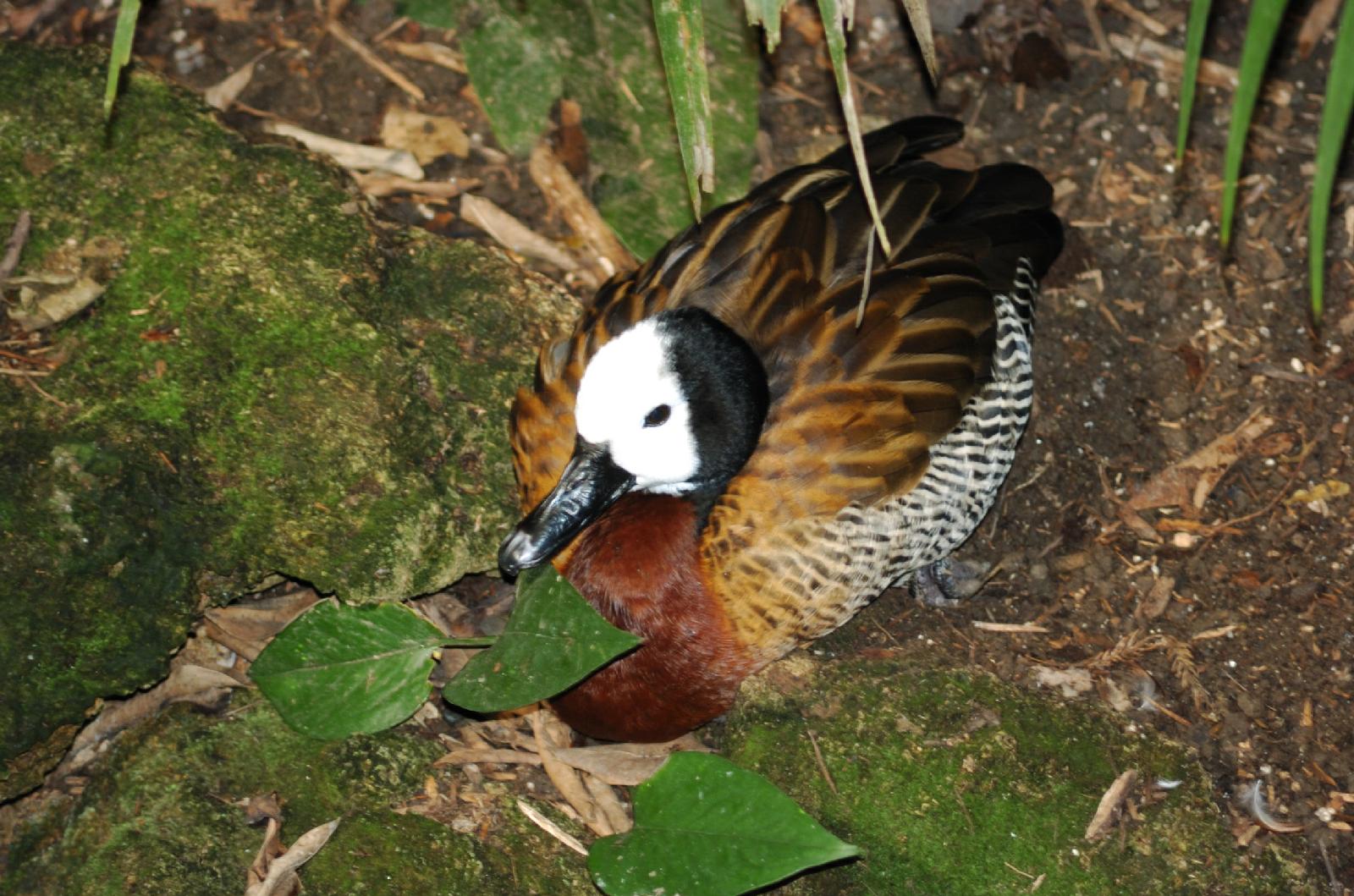
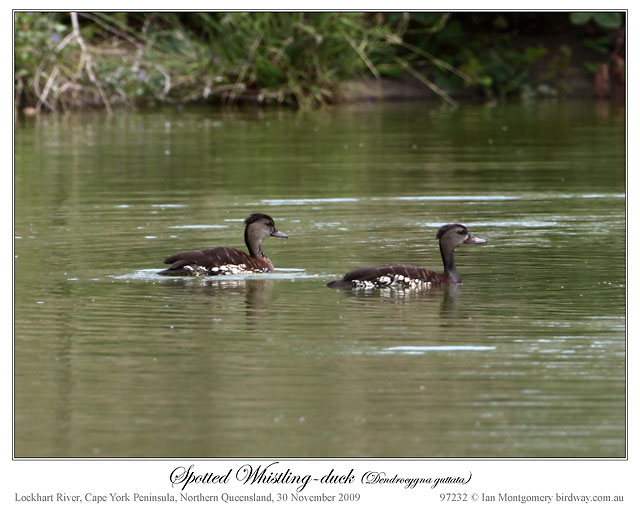
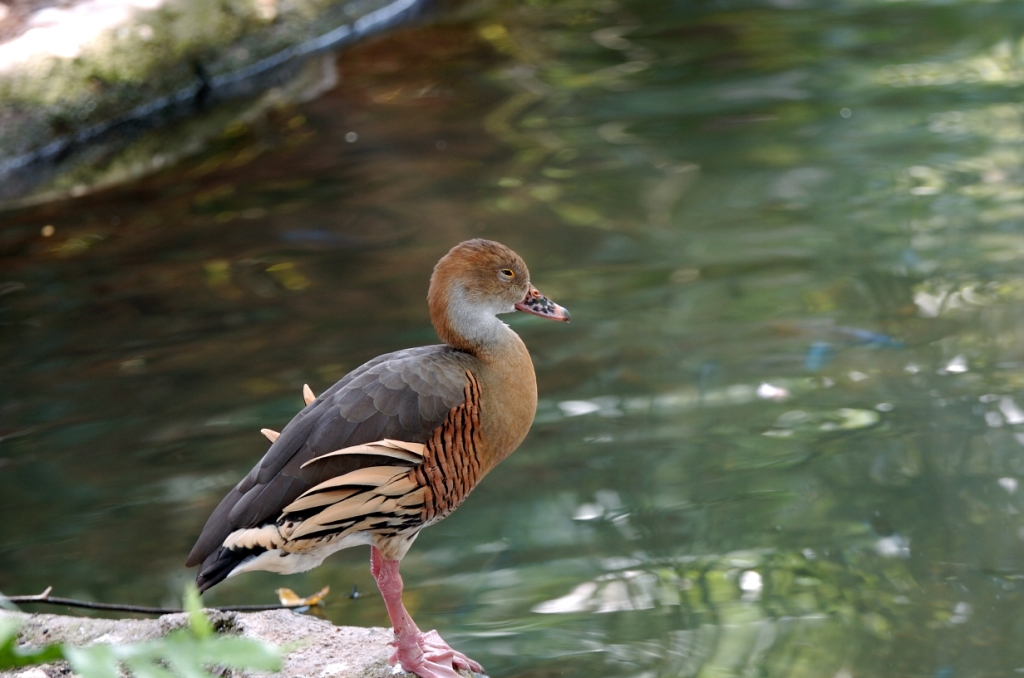
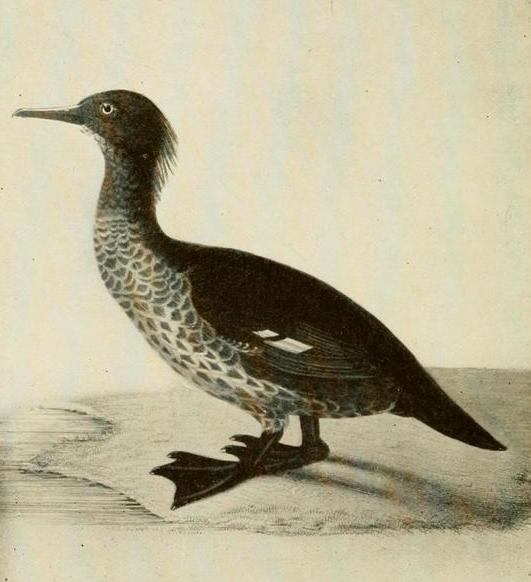
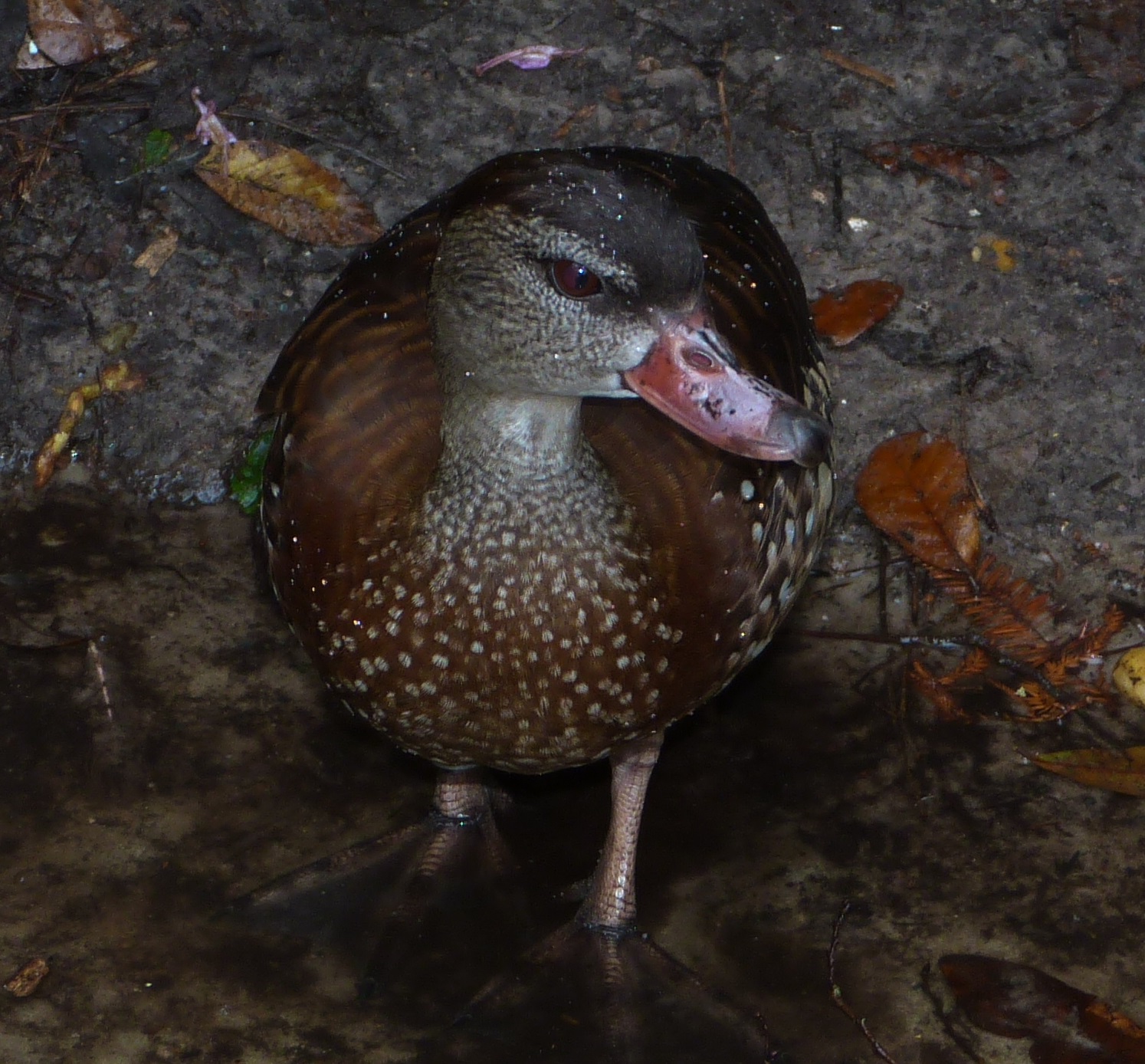
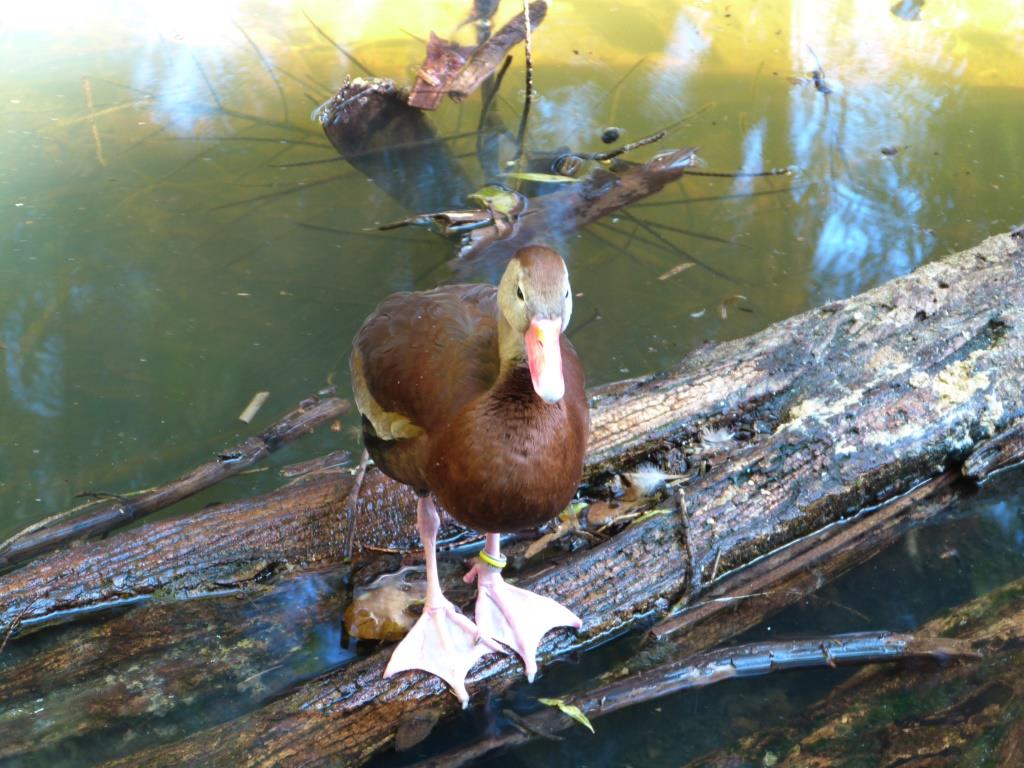
We keep encountering Whistling Ducks as we visit the zoos and as we go birdwatching, especially at Circle B Bar Reserve. There we get to see the Black-bellied Whistling Ducks quite frequently. At Palm Beach Zoo, I got tickled at the feet of the Black-bellieds. This week at Lowry Park Zoo, we took photos of their Spotted Whistling Duck which are fairly new residents.
Spotted Whistling Duck (Dendrocygna guttata) by Lee at LPZ
I checked the e-Sword Bible program and can not find any “Ducks” or “Waterfowl” in Scripture by name, only in references to all birds being created, etc. They are still neatly created birds and are a joy to watch.
Black-bellied Whistling Duck Feet by Lee at PB Zoo
There are three verses that refer to a “whistle” and in all of them it is the Lord who is doing the whistling.
He will lift up a banner to the nations from afar, And will whistle to them from the end of the earth; Surely they shall come with speed, swiftly. (Isaiah 5:26 NKJV) (For judgment)
And it shall come to pass in that day That the LORD will whistle for the fly That is in the farthest part of the rivers of Egypt, And for the bee that is in the land of Assyria. (Isaiah 7:18 NKJV) (For judgment)
I will whistle for them and gather them, For I will redeem them; And they shall increase as they once increased. (Zechariah 10:8 NKJV) (for redemption)
Whistling ducks are found in the tropics and subtropics. As their name implies, they have distinctive whistling calls. The whistling ducks have long legs and necks, and are very gregarious, flying to and from night-time roosts in large flocks. Both sexes have the same plumage, and all have a hunched appearance and black underwings in flight.
The first whistling ducks were described by Carl Linnaeus in the 10th edition of Systema Naturae in 1758: the Black-bellied Whistling Duck (then Anas autumnalis) and the West Indian Whistling Duck (then Anas arborea). In 1837, William John Swainson named the genus Dendrocygna to distinguish whistling ducks from the other waterfowl.
The whistling ducks or tree ducks are a subfamily, Dendrocygninae of the duck, goose and swan family of birds, Anatidae. They are not true ducks. In other taxonomic schemes, they are either considered a separate family Dendrocygnidae, or a tribe Dendrocygnini in the goose subfamily Anserinae. The subfamily has one genus, Dendrocygna, which contains eight living species, and one undescribed extinct species from Aitutaki of the Cook Islands.
The eight species of whistling duck are currently recognized in the genus Dendrocygna. However, Johnsgard considers the White-backed Duck (Thalassornis leuconotus) from Africa and Madagascar to be distinct ninth species, a view first proposed in 1960 and initially supported by behavioral similarities. Later, similarities in anatomy, duckling vocalizations, and feather proteins gave additional support. Molecular analysis in 2009 also suggested that the White-backed Duck was nested within the whistling duck clade. (Wikipedia with editing)
Ian’s Bird of the Week – Freckled Duck ~ by Ian Montgomery
Newsletter ~ 9/30/13
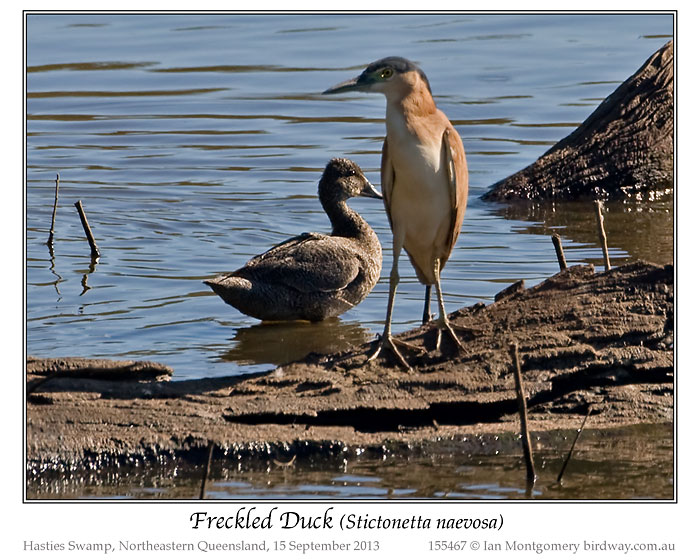
Several friends have inquired how I got on with the quest for Freckled Duck photos a fortnight ago, so here it is as bird of the week as it’s a rare and unusual duck, even if these ones didn’t want to cooperate in the portrait photo category. There were perhaps a dozen or more at the reported site of Hasties Swamp just south of Atherton town, but only two came within cooee of the hide and spent most of the day sitting on this log. Note the diagnostic ski-jump-shaped bill and the slight peak on the head of the bird on the end of the log. The duck beside this one is a Hardhead, so they’re approximately the same size.
It was a lovely day at Hasties (second photo), so it was no hardship loafing there waiting for the ducks to do something. The log the ducks liked is the farther one in this photo, but this was taken with my phone and makes it look farther away than it actually is. It’s a two storey hide, and this was taken from the upper deck, though I spent most of the time downstairs. The log was popular with various species of ducks including Pacific Blacks and Grey Teal, so the Freckled Ducks, all in non-breeding garb were easy to overlook.
Very occasionally, one of the ducks would swim over to a smaller log (hidden behind the branch in the second photo) and peck at a coot if it came too close. You can see the coot in the third photo.
Freckled Duck (Stictonetta naevosa) by Ian
Sometimes it would swim away to feed, but always on the other side of the log. In the fourth photo it is maybe contemplating such a foray, and is testing the water behind one of several Nankeen Night-Herons that came out to feed in the late afternoon – apparently they roost in the trees near the hide.
Freckled Duck (Stictonetta naevosa) by Ian
The fifth photo shows a distant pair of Freckled Ducks thirteen years ago in breeding condition at Werribee in Victoria and you can see the characteristic red colour of the male. The peaks look more conspicuous on both sexes, but I don’t know whether these feathers grow longer then or whether they are erectile.
Freckled Duck (Stictonetta naevosa) by Ian
So why is this rather drab duck so interesting to both birders and avian taxonomists? Firstly, it’s endemic to Australia and rare, particular in North Queensland. It’s main breeding range is in inland areas of New South Wales, Victoria, Southern Western Australia (an isolated population) and the channel country of Southwestern Queensland where breeding takes place in densely vegetated lakes and swamps, including lignum in more arid floodplains. When these areas dry out, the birds move to the coast, which is when they become easier to find. Presumably the birds currently in North Queensland (they’ve been reported in both Townsville and the Atherton Tableland) are from the Cooper’s Creek and Paroo River catchments.
Secondly, taxonomists find the Freckled Duck interesting because it has no close relatives. It is the only member of the genus Stictonetta and both morphological and DNA studies support placing it in own sub-family that diverged from other ducks and geese very early on. The name Stictonetta means ‘spotted duck’ in Greek and, in a case of tautological overkill, naevosa means ‘spot abundance’ in Latin.
I was going to include a Snake of the Week but this is getting rather long, so I’ll hold it over till next time.
What birdwatchers and photographers won’t go through to find those special and rare birds. Thanks, Ian, for showing us yet another interesting member of the Anatidae – Ducks, Geese & Swans Family. I am so thankful that Ian is letting me share his newsletters here on this blog. We have been introduced to numerous birds we have never have heard of, let along seen.
Here are a few more facts about this duck from Wikipedia. The Freckled Duck (Stictonetta naevosa) is a moderately large, broad-bodied duck native to southern Australia. The duck is protected by law. Dark in colour with fine off-white speckles all over, it is most easily identified by its large head with a peaked (as opposed to rounded) crown.
The Freckled Duck feeds by dabbling in shallow water, often by wading near the edge. It prefers large, well-vegetated swamps, but moves to open water after breeding or in dry periods.
In flight, it has a distinctive rapid wing beat and holds its head low, making it appear hunchbacked. It does not turn rapidly and lands clumsily.
In dry years, the ephemeral wetlands of the Murray-Darling Basin and Lake Eyre disappear and Freckled Ducks migrate to permanent water in coastal regions. This concentration in populated areas, coupled with their habit of circling repeatedly at low altitude when disturbed (even when being shot at) makes them particularly vulnerable to hunting.
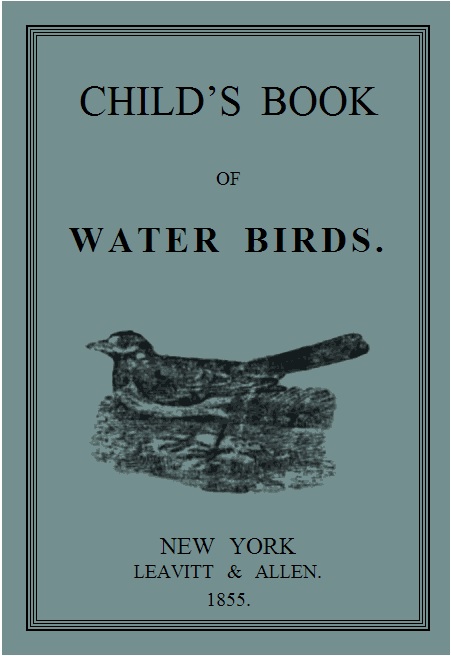
Welcome to the Updated Child’s Book of Water Birds, by Anonymous. It was written in 1855 and this is 2013. That is 158 years ago.
*
*
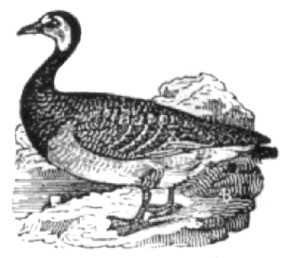
THE GOOSE.
The Goose is a very common bird. In Lincolnshire, England, enormous flocks are bred, containing from two to ten thousand each. They are subjected to the plucking of their wing-feathers periodically, in order to supply the demand for quills.
Today we use ballpoint pens and the Geese do not need to have their feathers plucked for quill pens. There are many Geese here in America and around the world. They belong to the Ducks, Geese & Swan Family. Many local parks have geese of various kinds. They are larger than Ducks, but smaller than Swans,
The female is called a “goose” and the male is the “gander.” Some of the kinds of geese are: Barnacle, Cackling, Canada, Emperor, Nene, Ross’s and the Snow Goose.
Many geese, like the Snow Goose, have their chicks in summer in the northern parts of America and then fly south in the winter. They gather in huge flocks.
*
Even the stork in the heavens knows her times, and the turtledove, swallow, and crane keep the time of their coming, but my people know not the rules of the LORD. (Jer 8:7 ESV)
Whither, ’midst falling dew
While glow the heavens with the last steps of day,
Far through their rosy depths dost thou pursue
Thy solitary way?
Vainly the fowler’s eye
Might mark thy distant flight to do thee wrong,
As, darkly painted on the crimson sky,
Thy figure floats along.
Seek’st thou the plashy brink
Of weedy lake, or marge of river wide,
Or where the rocky billows rise and sink
On the chafed ocean side.
There is a Power whose care
Teaches thy way along that pathless coast—
The desert and illimitable air—
Lone wandering, but not lost.
All day thy wings have fanned,
At that far height, the cold thin atmosphere,
Yet stoop not, weary, to the welcome land
Though the dark night is near.
And soon that toil shall end;
Soon shalt thou find a summer home, and nest,
And scream among thy fellows; reeds shall bend,
Soon o’er thy sheltered nest.
Thou’rt gone, the abyss of heaven
Hath swallowed up thy form; yet on my heart
Deeply has sunk the lesson thou hast given,
And shall not soon depart.
He who from zone to zone,
Guides through the boundless sky thy certain flight,
In the long way that I must tread alone,
Will lead my steps aright.
William Cullen Bryant.
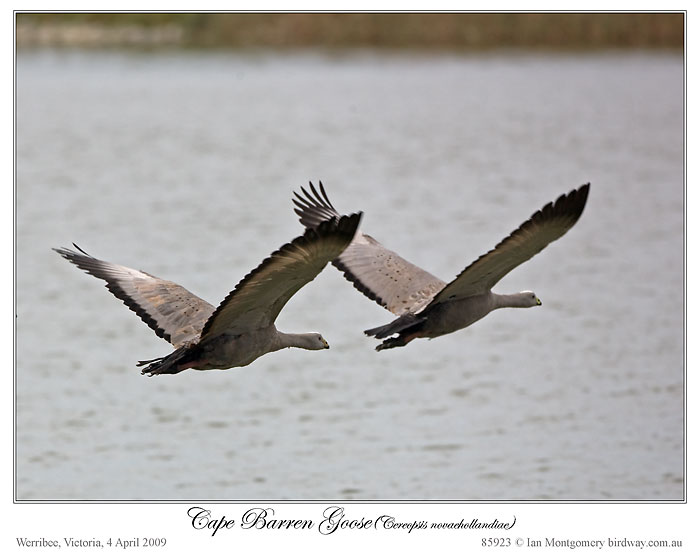
Cape Barren Goose (Cereopsis novaehollandiae) by Ian
Lee’s Addition:
Storks know when to fly south. So do doves, swifts and thrushes. But my people do not know what I require them to do. (Jeremiah 8:7 NIrV)
“But now ask the beasts, and they will teach you; And the birds of the air, and they will tell you; (Job 12:7 NKJV)
Wikipedia say this of Waterfowl They “are certain wildfowl of the order Anseriformes, especially members of the family Anatidae, which includes ducks, geese, and swans.
They are strong swimmers with medium to large bodies. They have historically been an important food source, and continue to be hunted as game, or raised as poultry for meat and eggs. The domestic duck is sometimes kept as a pet.
Some definitions of the term ‘waterfowl’ include the saltwater shorebirds or waders, gulls, pelicans, and herons, as well as seabirds such as the albatross, but ‘fowl’ especially refers to birds used by humans for game.
The above article is the first article in the monthly serial that was started in January 1897 “designed to promote Knowledge of Bird-Live.” These include Color Photography, as they call them, today they are drawings. There are at least three Volumes that have been digitized by Project Gutenberg.
Ian’s Bird of the Week – Brent/Brant Goose ~ by Ian Montgomery
Newsletter – 9-27-12
My apologies for the long delay since the past posting on the Barnacle Goose. I’m now back home in North Queensland after the unplanned trip to Ireland following the death of my brother in law Gerald and resuming my normal life.
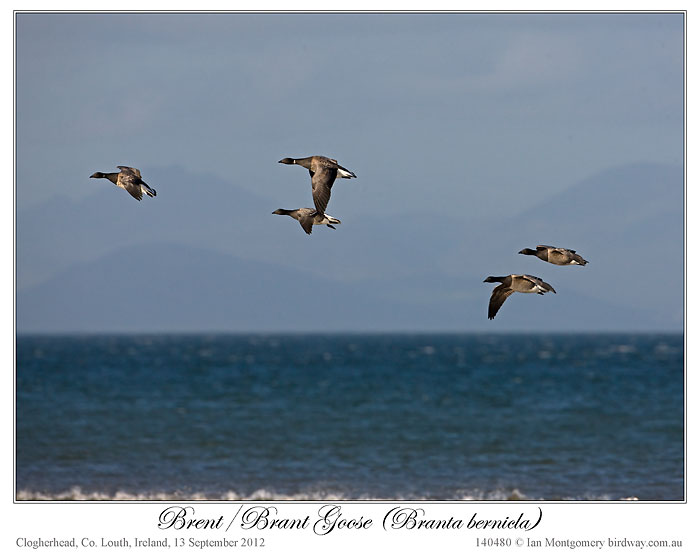
On 6 September we took the dogs for a walk along the strand at the Bull Island in Dublin Bay. As we were leaving, I was surprised to see a flock of Brent Geese, close relatives of the Barnacle Goose so early in the season. Brent Geese are common winter visitors to Ireland but do not usually arrive until much later in September or early October. A week later we visited a strand just north of Clogherhead in Co. Louth and there was another, more accessible flock there and the first photo shows three adults feeding on ‘sea lettuce’, a green alga of the genus Ulva which, along with the sea grass Zostera, often called eel grass, is the main food of Brent Geese in winter.
These are adults, recognisable by the white ‘necklaces’ and the dark, unstriped wings. Different races of Brent/Brant Geese – ‘Brent’ in the British Islands, ‘Brant’ in North America – vary mainly in the colour of the breast. These are Pale-bellied Brent Geese – race hrota – and most of these nest in Greenland and winter in Ireland, one of few species with a transatlantic migration. The nominate Dark-bellied Brent Goose (bernicla) breeds mainly in Russia and winters in northeastern Europe, including Great Britain, and is rare in Ireland. Just after seeing these birds, I read an online newspaper article about the early arrival of Brent Geese in Strangford Lough in Co. Down, Northern Ireland and the writer suggested that favourable tail winds during migration had maybe caused the birds to skip their normal stopover in Iceland, and fly straight to their wintering grounds.
Brent/Brant Goose (Branta bernicla) by Ian 2
Among the 70 or so birds in the flock, there were several juveniles including a party of 2 adults and 3 juveniles that stayed together and were maybe a family. The second photo shows three of these birds. The one on the right in the foreground is an adult with dark wings, even though its necklace is rather indistinct. The other two lack the necklace (or are just beginning to acquire one), have stripy wings and have darker mottled rather than scaly breasts. At this age, the juveniles are indistinguishable from Dark-bellied Brent Geese and I initially mistakenly identified them as Dark-bellied. The third photo shows this party coming in to land, looking for all the world like a Peter Scott painting. The mountains in the near background on the left are the Cooley Mountains in northern Co. Louth with the Mourne Mountains in Co. Down in the background.
Brent/Brant Goose (Branta bernicla) by Ian 3
With a length of 55-62cm/22-24in, these are smaller than Barnacle Geese and comparable in size to Mallard. Juvenile birds acquire the necklace and breast colour of the adult birds in late September or October, but retain the white wing stripes and are referred to as first winter birds. The fourth photo, taken a few years ago on a wintry January day, shows a first winter bird, complete with necklace and and striped wings being followed by two dark-winged adults.
Brent/Brant Goose (Branta bernicla) by Ian 4
I’ve never seen Dark-bellied Brent Geese, but in northern Alaska in June 2008 I came across the western North American race, the Black Brant (nigricans) on its breeding ground on the tundra, fifth photo. The Brent Goose breeds as far north as any bird species in the world at locations such as Ellesmere Island, the northernmost in Canada, and in Spitsbergen, only 10º or 11º from the Arctic Pole.
Brent/Brant Goose (Branta bernicla) by Ian 5
This has a very broad necklace and dark brown breast almost merging with the dark brown neck. This is easier to see in the sixth photo. This has sometimes been treated as a separate species.
Brent/Brant Goose (Branta bernicla) by Ian 6
In recent decades the populations of Brent Geese have increased greatly. There are about 115,000 Black Brants and about 40,000 Pale-bellied winter in Ireland and 90,000 Dark-bellied winter in Britain.
Best wishes
Ian
**************************************************
Ian Montgomery, Birdway Pty Ltd,
454 Forestry Road, Bluewater, Qld 4818
Tel 0411 602 737 ian@birdway.com.au
Check the latest website updates: http://www.birdway.com.au/#updates
Lee’s Addition:
And God said, “Let the waters swarm with swarms of living creatures, and let birds fly above the earth across the expanse of the heavens.” (Genesis 1:20 ESV)
Again, Ian, Our deepest sympathy over your loss. We are glad you are back safely at home.
These geese and all the information about them is very interesting and informative. See all of Ian’s Anseranatidae & Anatidae Family. He has quite a selection of them that he has photographed over time.
Red-breasted Merganser from Birds Illustrated by Color Photography
THE RED BREASTED MERGANSER.
HY this duck should be called red-breasted is not at first apparent, as at a distance the color can not be distinguished, but seen near, the reason is plain. It is a common bird in the United States in winter, where it is found in suitable localities in the months of May and June. It is also a resident of the far north, breeding abundantly in Newfoundland, Labrador, Greenland, and Iceland. It is liberally supplied with names, as Red-Breasted Goosander or Sheldrake, Garbill, Sea Robin, etc.
There is a difference in opinion as to the nesting habits of the Red-Breast, some authorities claiming that, like the Wood Duck, the nest is placed in the cavity of a tree, others that it is usually found on the ground among brushwood, surrounded with tall grasses and at a short distance from water. Davie says that most generally it is concealed by a projecting rock or other object, the nest being made of leaves and mosses, lined with feathers and down, which are plucked from the breast of the bird. The observers are all probably correct, the bird adapting itself to the situation.
Fish is the chief diet of the Merganser, for which reason its flesh is rank and unpalatable. The Bird’s appetite is insatiable, devouring its food in such quantities that it has frequently to disgorge several times before it is able to rise from the water. This Duck can swallow fishes six or seven inches in length, and will attempt to swallow those of a larger size, choking in the effort.
The term Merganser is derived from the plan of the bird’s bill, which is furnished with saw teeth fitting into each other.
The eggs of the Red-Breasted Merganser vary from six to twelve, are oval in shape, and are of a yellowish or reddish-drab, sometimes a dull buffy-green.
You may have seen pictures of this Duck, which frequently figures in dining rooms on the ornamental panels of stuffed game birds, but none which could cause you to remember its life-like appearance. You here see before you an actual Red-Breasted Merganser.
Birds Vol 2 #2 – The Red Breasted Merganser
From col. J. G. Parker, Jr.
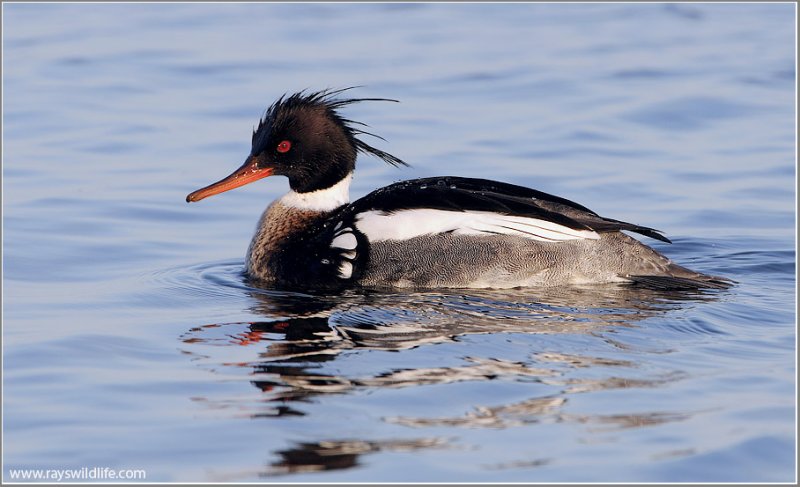
Red-breasted Merganser (Mergus serrator) by Ray
Lee’s Addition:
Out of the ground the LORD God formed every beast of the field and every bird of the air, and brought them to Adam to see what he would call them. And whatever Adam called each living creature, that was its name. (Genesis 2:19 NKJV)
The adult Red-breasted Merganser is 20–24 in (51–62 cm) long with a 28–34 in (70–86 cm) wingspan. It has a spiky crest and long thin red bill with serrated edges. The male has a dark head with a green sheen, a white neck with a rusty breast, a black back, and white underparts. Adult females have a rusty head and a greyish body. The juvenile is like the female, but lacks the white collar and has a smaller white wing patch.
The call of the female is a rasping prrak prrak, while the male gives a feeble hiccup-and-sneeze display call. (from xeno-canto)
Red-breasted Mergansers dive and swim underwater. They mainly eat small fish, but also aquatic insects, crustaceans, and frogs.
Its breeding habitat is freshwater lakes and rivers across northern North America, Greenland, Europe, and Asia. It nests in sheltered locations on the ground near water. It is migratory and many northern breeders winter in coastal waters further south.
It has been claimed to be the fastest bird in level flight, reaching speeds of 161 km/h (100 mph), but is disputed whether the White-throated Needletail is faster, reportedly flying at 170 km/h (105 mph).
Here is a video of a Common Merganser flipping his feet after diving for food that was given him at the Zoo Miami Wings of Asia Aviary – by me.
The above article is the first article in the monthly serial that was started in January 1897 “designed to promote Knowledge of Bird-Live.” These include Color Photography, as they call them, today they are drawings. There are at least three Volumes that have been digitized by Project Gutenberg.
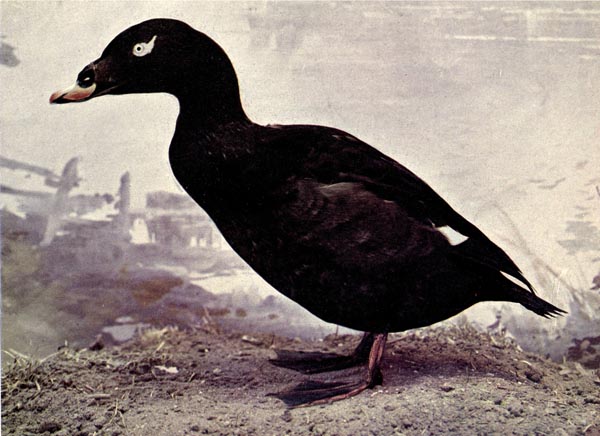
White-winged Scoter, From Birds Illustrated by Color Photography, 1897
THE AMERICAN SCOTER.
HE specimen we give of the American Scoter is one of unusual rarity and beauty of plumage. It was seen off the government pier, in Chicago, in November, 1895, and has been much admired.
The Scoter has as many names as characteristics, being called the Sea Coot, the Butter-billed, and the Hollow-billed Coot. The plumage of the full grown male is entirely black, while the female is a sooty brown, becoming paler below. She is also somewhat smaller.
This Duck is sometimes found in great numbers along the entire Atlantic coast where it feeds on small shell fish which it secures by diving. A few nest in Labrador, and in winter it is found in New Jersey, on the Great Lakes, and in California. The neighborhoods of marshes and ponds are its haunts, and in the Hudson Bay region the Scoter nests in June and July.
The nest is built on the ground near water. Coarse grass, feathers, and down are commonly used to make it comfortable, while it is well secreted in hollows in steep banks and cliffs. The eggs are from six to ten, of a dull buff color.
Prof. Cooke states that on May 2, 1883, fifty of these ducks were seen at Anna, Union county, Illinois, all busily engaged in picking up millet seed that had just been sown. If no mistake of identification was made in this case, the observation apparently reveals a new fact in the habits of the species, which has been supposed to feed exclusively in the water, and to subsist generally on fishes and other aquatic animal food.
From col. F. M. Woodruff. Summary
WHITE-WINGED SCOTER.—Oidemia deglandi. Other names: “American Velvet Scoter,” “White-winged Coot,” “Uncle Sam Coot.”
Range—Northern North America; breeding in Labrador and the fur countries; south in winter.
Nest—On the ground, beneath bushes.
Eggs—Six to ten; pale, dull buff.
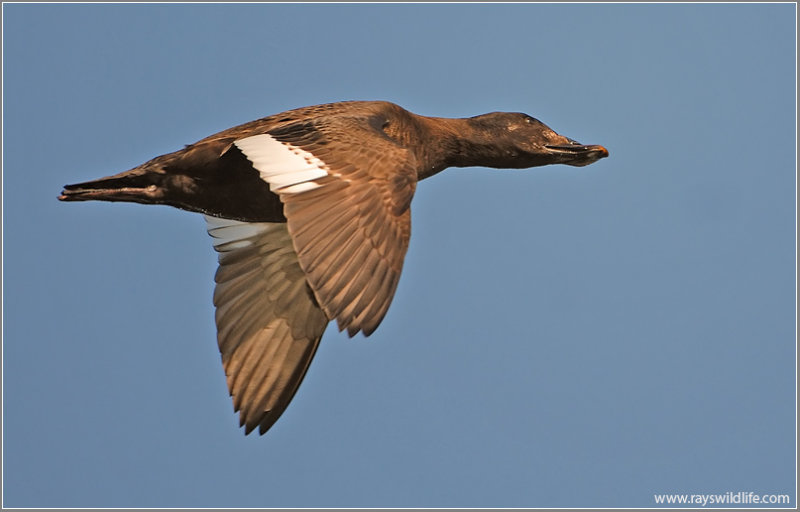
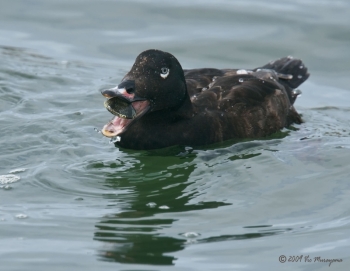
White-winged Scoter (Melanitta deglandi) by Ray
Lee’s Addition:
I have been hunted like a bird by those who were my enemies without cause; (Lamentations 3:52 ESV)
Look at the birds of the air: they neither sow nor reap nor gather into barns, and yet your heavenly Father feeds them. Are you not of more value than they? (Matthew 6:26 ESV)
The article is titled “American Scoter” but the photos and information is mostly about the “White-winged Scoter”. I have provided information on both of those Scoters. I have never seen any of the Scoters that I remember. They are in the Anatidae – Ducks, Geese & Swans family. I love those eyes of the White-winged Scoter.
The scoters are stocky seaducks in the genus Melanitta. The drakes are mostly black and have swollen bills. Females are brown.
They breed in the far north of Europe, Asia and North America, and winter further south in temperate zones of those continents. They form large flocks on suitable coastal waters. These are tightly packed, and the birds tend to take off together.
Their lined nests are built on the ground close to the sea, lakes or rivers, in woodland or tundra. These species dive for crustaceans and molluscs.
There are five species, grouped into two subgenera:
subgenus Oidemia (Black and Common Scoters)
subgenus Melanitta (Surf, Velvet and White-winged Scoters)
The presumed fossil “scoter” Melanitta ceruttii which lived in California is now placed in the genus Histrionicus.
The adult female Black or American Scoter averages about 2.1 lbs.(980 grams ) and 18 inches (45 cm) in length, while the adult male is on average 2.4 lbs. (1100 grams) and 19 inches (49 cm) in length. It is characterized by its bulky shape and large bill. The male is all black with a very bulbous bill which is mostly yellow,a good relation with the common scoter. The female is a brown bird with pale cheeks, very similar to female Common Scoter. This is America’s only black duck, although the female may have some yellow around the nostrils.
This species can be distinguished from other scoters, apart from Common, by the lack of white anywhere on the drake, and the more extensive pale areas on the female.
Black Scoter and Common Scoter have diagnostically distinct vocalisations
The lined nest is built on the ground close to the sea, lakes or rivers, in woodland or tundra. 5-7 eggs are laid. Each eggs weighs from 2-2.6 oz (60-74 grams), or 8% of the females body weight. The incubation period may range from 27 to 31 days. Females brood their young extensively for about 3 weeks, after which the still flightless young must fend for themselves.
The White-winged Scoter (Melanitta deglandi) or (Melanitta fusca deglandi) is a large sea duck.It is characterised by its bulky shape and large bill. This is the largest species of scoter. Females range from 2.1-4.2 lb (950-1950 grams) and 19-22 inches (48–56 cm), averaging 2.6 lb (1180 grams) and 21 inches (52.3 cm). She is brown with pale head patches. The male ranges from 3-4.7 lb (1360-2128 grams) and from 21-24 inches (53–60 cm), averaging 3.6 lb (1380 grams) and 22 inches (55 cm). He is all black, except for white around the eye and a white speculum. This scoter’s bill has a black base and a large knob.
The white patches are visible but not conspicuous when the wings are folded.
There are a number of differing characteristic of the Eastern Siberian race and the American race from Alaska and Canada to west of the Hudson Bay. Males of the American subspecies have browner flanks, dark yellow coloration of most of the bill and a less tall bill knob, approaching the Velvet Scoter. The Asian form has a very tall knob at the base of its mostly orange-yellow bill. Females are identical in the field.
The White-winged Scoter was named for French zoologist Dr. Côme-Damien Degland (1787–1856).
It was formerly considered to be conspecific with the Velvet Scoter, and some taxonomists still regard it as so. These two species, and the Surf Scoter, are placed in the subgenus Melanitta, distinct from the subgenus Oidemia, Black and Common Scoters.
The White-winged Scoter breeds over the far north of Asia east of the Yenisey Basin, and North America. It wintersfurther south in temperate zones, on the Great Lakes, the coasts of the northern USA and the southern coasts of Canada, and Asia as far south as China. It forms large flocks on suitable coastal waters. These are tightly packed, and the birds tend to take off together.
The above article is the first article in the monthly serial that was started in January 1897 “designed to promote Knowledge of Bird-Live.” These include Color Photography, as they call them, today they are drawings. There are at least three Volumes that have been digitized by Project Gutenberg.
A great many people think that this is the most beautiful bird of North America. It is called Wood Duck because it usually makes its nest in the hollow of a tree that overhangs the water. If it can find a squirrel’s or woodpecker’s hole in some stump or tree, there it is sure to nest.
A gentleman who delighted in watching the Wood Duck, tells about one that built her nest in the hollow of a tree that hung over the water. He was anxious to see how the little ones, when hatched, would get down.
In a few days he knew that the ducklings were out, for he could hear their pee, pee, pee. They came to the edge of the nest, one by one, and tumbled out into the water.
You know a duck can swim as soon as it comes out of the egg.
Sometimes the nest is in the hollow of a tree that is a short distance from the water.
Now how do you suppose the ducklings get there as they do?
If the nest is not far from the ground, the mother bird lets them drop from it on the dried grass and leaves under the tree. She then carries them in her bill, one by one, to the water and back to the nest.
If the nest should be far from the ground, she carries them down one by one.
This same gentleman says that he once saw a Wood Duck carry down thirteen little ones in less than ten minutes. She took them in her bill by the back of the neck or the wing.
When they are a few days old she needs only to lead the way and the little ones will follow.
The Wood Duck is also called Summer Duck. This is because it does not stay with us during the winter, as most ducks do.
It goes south to spend the winter and comes back north early in the spring.
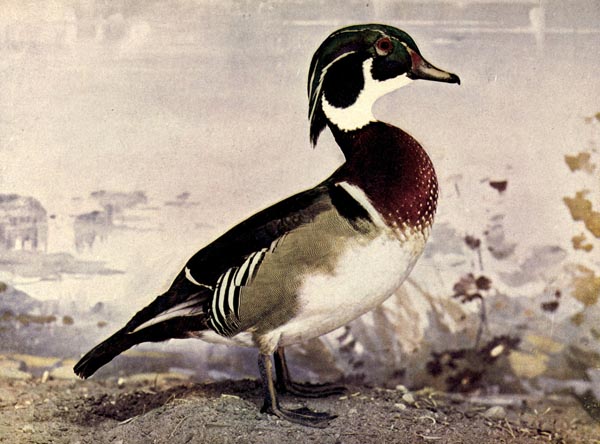
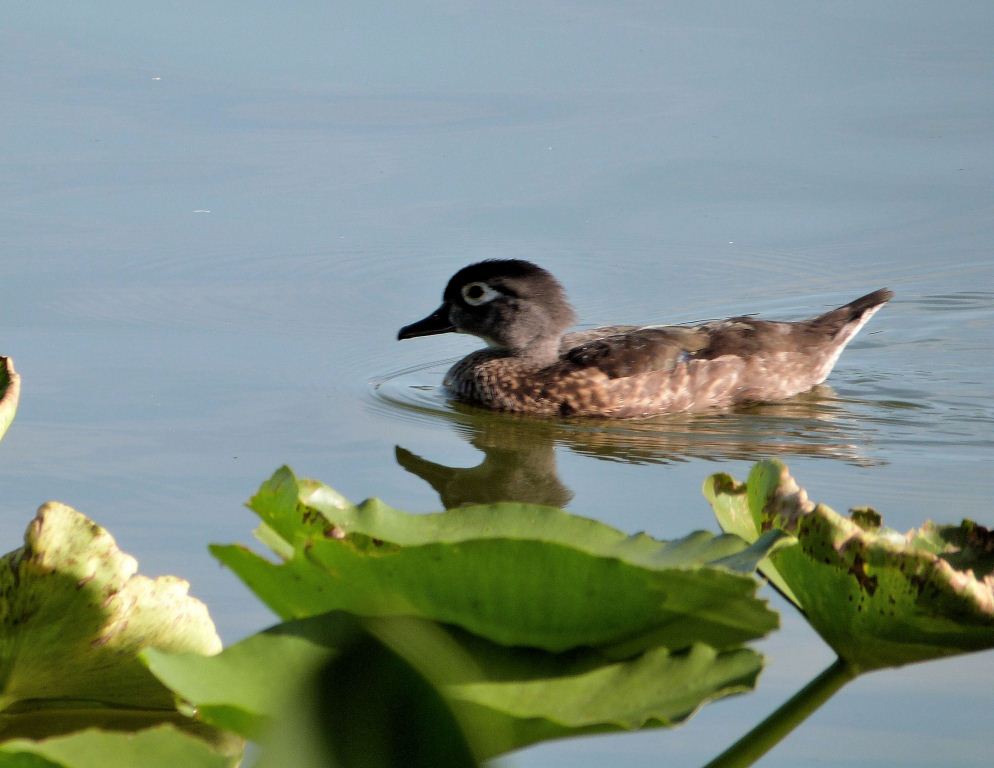
Wood Duck (Aix sponsa) by Dan
THE WOOD DUCK.
UITE the most beautiful of the native Ducks, with a a richness of plumage which gives it a bridal or festive appearance, this bird is specifically named Spousa, which means betrothed. It is also called Summer Duck, Bridal Duck, Wood Widgeon, Acorn Duck and Tree Duck.
It is a fresh water fowl, and exclusively so in the selection of its nesting haunts. It inhabits the whole of temperate North America, north to the fur countries, and is found in Cuba and sometimes in Europe. Its favorite haunts are wooded bottom-lands, where it frequents the streams and ponds, nesting in hollows of the largest trees. Sometimes a hole in a horizontal limb is chosen that seems too small to hold the Duck’s plump body, and occasionally it makes use of the hole of an Owl or Woodpecker, the entrance to which has been enlarged by decay.
Wilson visited a tree containing a nest of a Wood or Summer Duck, on the banks of Tuckahoe river, New Jersey. The tree stood on a declivity twenty yards from the water, and in its hollow and broken top, about six feet down, on the soft decayed wood were thirteen eggs covered with down from the mother’s breast. The eggs were of an exact oval shape, the surface smooth and fine grained, of a yellowish color resembling old polished ivory. This tree had been occupied by the same pair, during nesting time, for four successive years. The female had been seen to carry down from the nest thirteen young, one by one, in less than ten minutes. She caught them in her bill by the wing or back of the neck, landed them safely at the foot of the tree, and finally led them to the water. If the nest be directly over the water, the little birds as soon as hatched drop into the water, breaking their fall by extending their wings.
Many stories are told of their attachment to their nesting places. For several years one observer saw a pair of Wood Ducks make their nest in the hollow of a hickory which stood on the bank, half a dozen yards from a river. In preparing to dam the river near this point, in order to supply water to a neighboring city, the course of the river was diverted, leaving the old bed an eighth of a mile behind, notwithstanding which the ducks bred in the old place, the female undaunted by the distance which she would have to travel to lead her brood to the water.
While the females are laying, and afterwards when sitting, the male usually perches on an adjoining limb and keeps watch. The common note of the drake is peet-peet, and when standing sentinel, if apprehending danger, he makes a noise not unlike the crowing of a young cock, oe-eek. The drake does not assist in sitting on the eggs, and the female is left in the lurch in the same manner as the Partridge.
The Wood Duck has been repeatedly tamed and partially domesticated. It feeds freely on corn meal soaked in water, and as it grows, catches flies with great dexterity.
Summary
WOOD DUCK.—Aix sponsa. Coloring varied; most beautiful of ducks. Other names: “Summer Duck,” “Bridal Duck,” “Wood Widgeon,” “Tree Duck.”
Range—North America. Breeds from Florida to Hudson’s Bay; winters south.
Nest—Made of grasses, usually placed in a hole in tree or stump.
Eggs—Eight to fourteen; pale, buffy white.
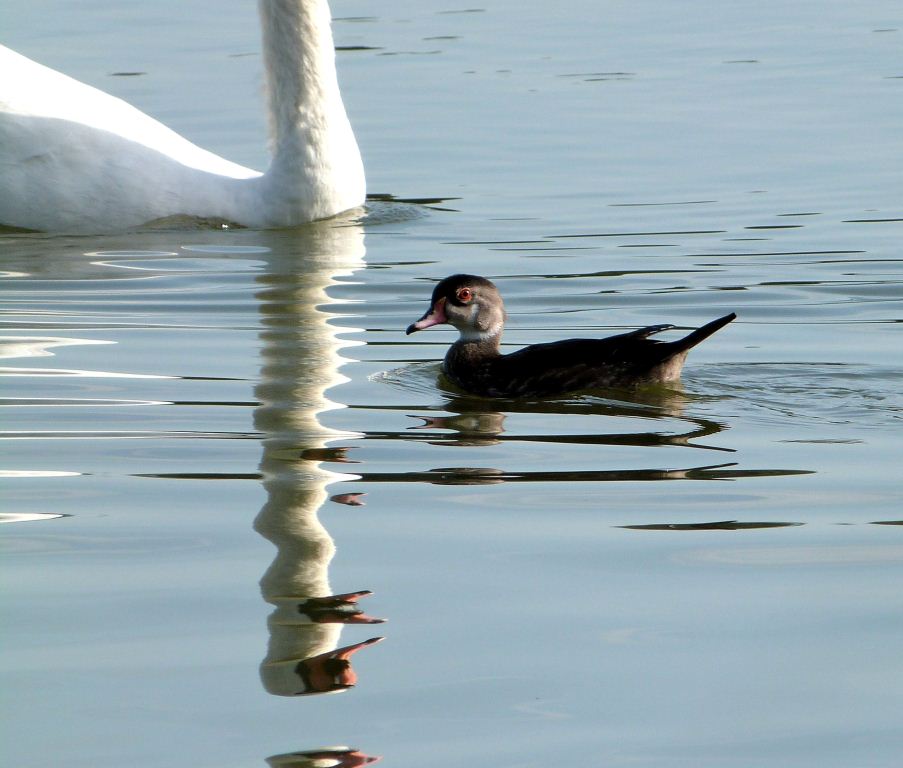
Wood Duck by Dan at Lake Hollingsworth
Lee’s Addition:
The Wood Duck is in theAnatidae – Ducks, Geese & Swans Family. The Aix genus includes the Wood Duck and also the beautifulMandarin Duck(Aix galericulata). “The adult male has distinctive multicoloured iridescent plumage and red eyes,with a distinctive white flare down the neck. The female, less colourful, has a white eye-ring and a whitish throat. Both adults have crested heads.” When the male is in non-breeding plumage the colors are more like the female, but with some differences. Here is a photo taken yesterday at Lake Morton of a male Wood Duck.
Wood Duck Male Lake Morton 8-3-12
Here is a picture of the female I also photographed yesterday.
Wood Duck Female Lake Morton 8-3-12
The male’s call is a rising whistle, “jeeeeee”; the females utter a drawn-out, rising squeal, “oo-eek,” when flushed, and a sharp “cr-r-ek, cr-e-ek” for an alarm call.
Their breeding habitat is wooded swamps, shallow lakes, marshes or ponds, and creeks in eastern North America, the west coast of the United States and western Mexico. They usually nest in cavities in trees close to water, although they will take advantage of nesting boxes in wetland locations if available. Females line their nests with feathers and other soft materials, and the elevation provides some protection from predators. Unlike most other ducks, the Wood Duck has sharp claws for perching in trees and can, in southern regions, produce two broods in a single season—the only North American duck that can do so.
The population of the Wood Duck was in serious decline in the late 19th century as a result of severe habitat loss and market hunting both for meat and plumage for the ladies’ hat market in Europe. By the beginning of the 20th century Wood Ducks had virtually disappeared from much of their former range. In response to the Migratory Bird Treaty established in 1916 and enactment of the Federal Migratory Bird Treaty Act of 1918, wood duck populations began to recover slowly. By ending unregulated hunting and taking measures to protect remaining habitat, wood duck populations began to rebound in the 1920s. The development of the artificial nesting box in the 1930s gave an additional boost to Wood Duck production.
Landowners as well as park and refuge managers can encourage Wood Ducks by building Wood Duck nest boxes near lakes, ponds, and streams. Fulda, Minnesota has adopted the Wood Duck as an unofficial mascot, and a large number of nest boxes can be found in the area.
Expanding North American Beaver populations throughout the Wood Duck’s range have also helped the population rebound as beavers create an ideal forested wetland habitat for Wood Ducks.
The above article is the first article in the monthly serial that was started in January 1897 “designed to promote Knowledge of Bird-Live.” These include Color Photography, as they call them, today they are drawings. There are at least three Volumes that have been digitized by Project Gutenberg.
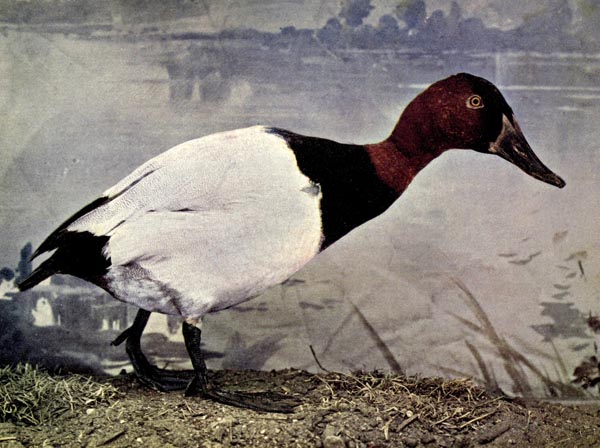
The Canvasback Duck, Birds Illustrated by Color Photography, 1897
THE CANVAS-BACK DUCK.
HITE-BACK, Canard Cheval, (New Orleans,) Bull-Neck, and Red-Headed Bull-Neck, are common names of the famous Canvas-Back, which nests from the northern states, northward to Alaska. Its range is throughout nearly all of North America, wintering from the Chesapeake southward to Guatemala.
“The biography of this duck,” says Mabel Osgood Wright, “belongs rather to the cook-book than to a bird list,” even its most learned biographers referring mainly to its “eatable qualities,” Dr. Coues even taking away its character in that respect when he says “there is little reason for squealing in barbaric joy over this over-rated and generally under-done bird; not one person in ten thousand can tell it from any other duck on the table, and only then under the celery circumstances,” referring to the particular flavor of its flesh, when at certain seasons it feeds on vallisneria, or “water celery,” which won its fame. This is really not celery at all, but an eel-grass, not always found through the range of the Canvas-Back. When this is scarce it eats frogs, lizards, tadpoles, fish, etc., so that, says Mrs. Osgood, “a certificate of residence should be sold with every pair, to insure the inspiring flavor.”
The opinion held as to the edible qualities of this species varies greatly in different parts of the country. No where has it so high a reputation as in the vicinity of Chesapeake Bay, where the alleged superiority of its flesh is ascribed to the abundance of “water celery.” That this notion is erroneous is evident from the fact that the same plant grows in far more abundance in the upper Mississippi Valley, where also the Canvas-Back feeds on it. Hence it is highly probable that fashion and imagination, or perhaps a superior style of cooking and serving, play a very important part in the case. In California, however, where the “water celery” does not grow, the Canvas-Back is considered a very inferior bird for the table.
It has been hunted on Chesapeake Bay and its tributaries with such inconsiderate greed that its numbers have been greatly reduced, and many have been driven to more southern waters.
In and about Baltimore, the Canvas-Back, like the famous terrapin, is in as high favor for his culinary excellence, as are the women for beauty and hospitality. To gratify the healthy appetite of the human animal this bird was doubtless sent by a kind Providence, none the less mindful of the creature comforts and necessities of mankind than of the purely aesthetic senses.
Summary
CANVAS-BACK.—Aythya vallisneria. Other names: “White-Back,” “Bull-Neck,” “Red-Headed Bull-Neck.”
Range—North America. Breeds only in the interior, from northwestern states to the Arctic circle; south in winter to Guatemala.
Nest—On the ground, in marshy lakesides.
Eggs—Six to ten; buffy white, with bluish tinge.
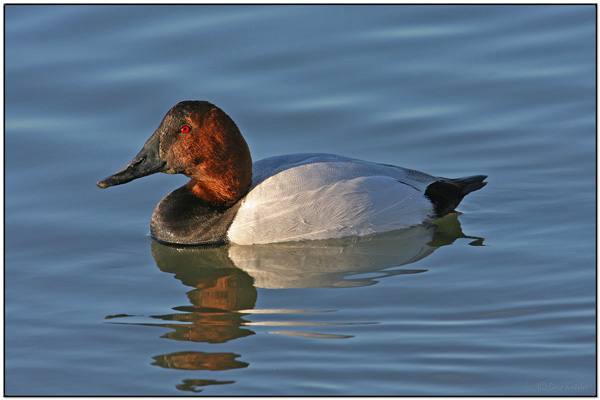
Canvasback (Aythya valisineria) by Daves BirdingPix
Lee’s Addition:
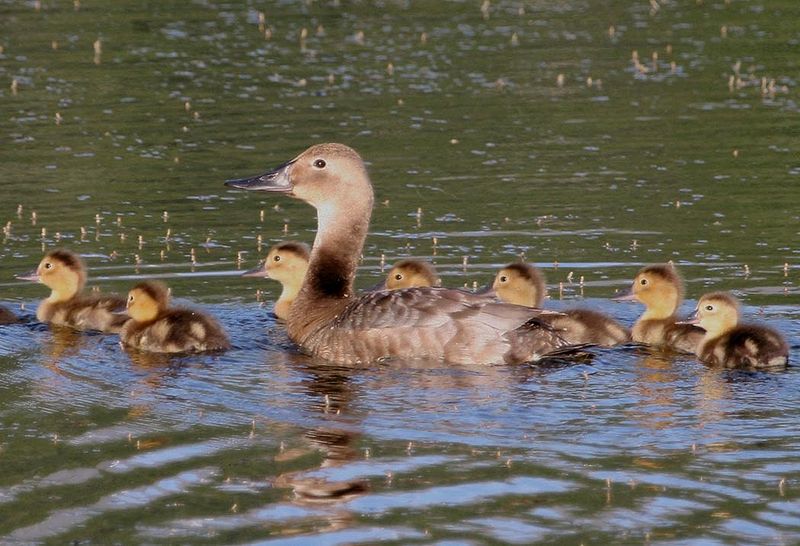
The Canvas-Back Duck is now the Canvasback (Aythya valisineria). Wikipedia (with editing) says The Canvasback is the largest of the North American diving ducks, that ranges from between 19–22 in (48–56 centimetres) long and weighs approximately 1.90–3.50 lbs (862–1,588 gram), with a wingspan of 31–35 in (79–89 centimetres). The canvasback has a distinctive wedge-shaped head and long graceful neck. The adult male (drake) has a black bill, a chestnut red head and neck, a black breast, a grayish back, black rump, and a blackish brown tail. The drake’s sides, back, and belly are white with fine vermiculation resembling the weave of a canvas, which gave rise to the bird’s common name. The bill is blackish and the legs and feet are bluish-gray. The iris is bright red in the spring, but duller in the winter. The adult female (hen) also has a black bill, a light brown head and neck, grading into a darker brown chest and foreback. The sides, flanks, and back are grayish brown. The bill is blackish and the legs and feet are bluish-gray. Its sloping profile distinguishes it from other ducks.
The breeding habitat of the Canvasback is in North America prairie potholes. The bulky nest is built from vegetation in a marsh and lined with down. Loss of nesting habitat has caused populations to decline. (That and apparently the killing of them per the article.) It prefers to nest over water on permanent prairie marshes surrounded by emergent vegetation, such as cattail and bulrushes, which provide protective cover. Other important breeding areas are the subarctic river deltas in Saskatchewan and the interior of Alaska.
It has a clutch size of approximately 5-11 eggs that are a greenish drab. The chicks are covered in down at hatching and able to leave the nest soon after. The Canvasback sometimes lays its eggs in other Canvasback nests and Redheads often parasitize Canvasback nests.
In the early 1950s it was estimated that there were 225,000 Canvasbacks wintering in the Chesapeake Bay; this represented one-half of the entire North American population. By 1985, there were only 50,000 ducks wintering there, or one-tenth of the population. Canvasbacks were extensively hunted around the turn of the 19th to 20th century, but federal hunting regulations restrict their harvest, so hunting was ruled out as a cause for the decline. Scientists have now concluded that the decline in duck populations was due to the decline in submerged aquatic vegetation acreage. Today the population has stabilized and is even increasing slightly, although it is nowhere near previous levels.
The above article is the first article in the monthly serial that was started in January 1897 “designed to promote Knowledge of Bird-Live.” These include Color Photography, as they call them, today they are drawings. There are at least three Volumes that have been digitized by Project Gutenberg.















 Lee's Birdwatching Adventures Plus