Avian and Attributes – Shepherd

Mute Swan

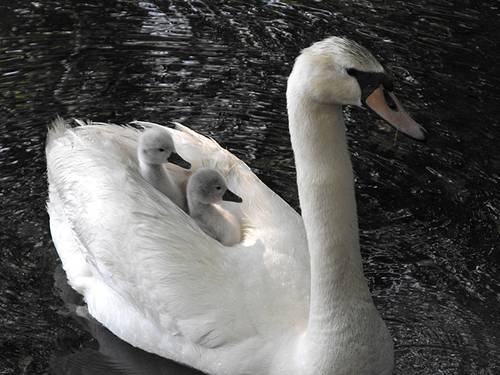
Mute Swan with Young

“A Psalm of David. The LORD is my shepherd; I shall not want.” (Psalms 23:1 KJV)

“Then saith Jesus unto them, All ye shall be offended because of me this night: for it is written, I will smite the shepherd, and the sheep of the flock shall be scattered abroad.” (Matthew 26:31 KJV)

“I am the good shepherd, and know my sheep, and am known of mine.” (John 10:14 KJV)

Now the God of peace, that brought again from the dead our Lord Jesus, that great shepherd of the sheep, through the blood of the everlasting covenant,” (Hebrews 13:20 KJV)


Avian and Attributes – Shepherd

SHEP’HERD, n.

1. A man employed in tending, feeding and guarding sheep in the pasture.
2. A swain; a rural lover.
3. The pastor of a parish, church or congregation; a minister of the gospel who superintends a church or parish, and gives (gived) instruction in spiritual things. God and Christ are in Scripture denominated (dinominated) Shepherds, as they lead, protect and govern their people, and provide for their welfare. (edited)
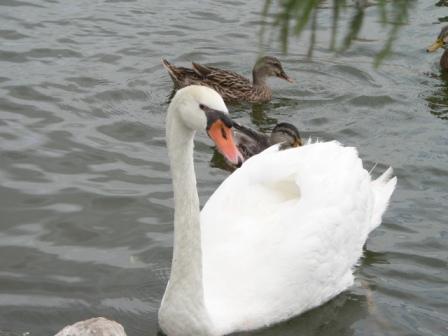

Mute Swan by Lee at Lake Morton

Mute Swan

The Mute Swan (Cygnus olor) is a species of swan and a member of the waterfowl family Anatidae. It is native to much of Eurasia, and (as a rare winter visitor) the far north of Africa. It is an introduced species in North America, Australasia, and southern Africa. The name ‘mute’ derives from it being less vocal than other swan species.[2][3][4] Measuring 125 to 170 cm (49 to 67 in) in length, this large swan is wholly white in plumage with an orange beak bordered with black. It is recognizable by its pronounced knob atop the beak, which is larger in males.

The mute swan is less vocal than the noisy whooper and Bewick’s swans; they do, however, make a variety of grunting, hoarse whistling, and snorting noises, especially in communicating with their cygnets, and usually hiss at competitors or intruders trying to enter their territory.

(Anatidae – Ducks, Swan – Family)


More Avian and Attributes

Birds whose last name start with “S”

Birds of the Bible – Swan

Anatidae – Wikipedia

Good News

*
[Definitions from Webster’s Dictionary of American English (1828), unless noted. Bird info from Wikipedia plus.]
Avian and Attributes – Redeemer

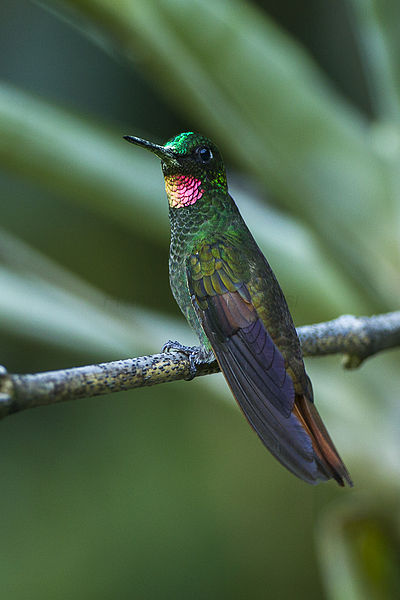
Brazilian Ruby (Clytolaema rubricauda) ©WikiC

“For I know that my redeemer liveth, and that he shall stand at the latter day upon the earth:” (Job 19:25 KJV)

“Let the words of my mouth, and the meditation of my heart, be acceptable in thy sight, O LORD, my strength, and my redeemer.”
(Psalms 19:14 KJV)


Avian and Attributes – Redeemer

(1): (n.) One who redeems.
(2): (n.) Specifically, the Savior of the world, Jesus Christ.

Redeem

(1): (v. t.) Hence, to rescue and deliver from the bondage of sin and the penalties of God’s violated law.
(2): (v. t.) To recall, as an estate, or to regain, as mortgaged property, by paying what may be due by force of the mortgage.
(3): (v. t.) To purchase back; to regain possession of by payment of a stipulated price; to repurchase.
(4): (v. t.) To pay the penalty of; to make amends for; to serve as an equivalent or offset for; to atone for; to compensate; as, to redeem an error.
(5): (v. t.) To make good by performing fully; to fulfill; as, to redeem one’s promises.
(6): (v. t.) To ransom, liberate, or rescue from captivity or bondage, or from any obligation or liability to suffer or to be forfeited, by paying a price or ransom; to ransom; to rescue; to recover; as, to redeem a captive, a pledge, and the like.


Brazilian Ruby (Clytolaema rubricauda) by Dario Sanches

Brazilian Ruby

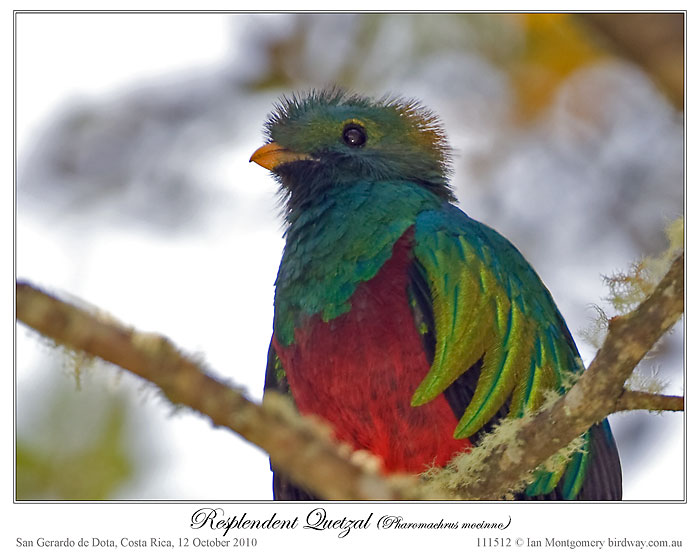
The Brazilian Ruby (Clytolaema rubricauda). As its vernacular name suggests, this species is endemic to Brazil, where it generally occurs from Minas Gerais south to Rio Grande do Sul, and it occurs in wooded areas of all types in the Atlantic Forest region, to at least 2000 m.  It is a species of hummingbird found in forest edge, second growth, gardens and parks in eastern Brazil. It is monotypic within the genus Clytolaema. It is common and among the species regularly seen at hummingbird feeders within its range. It is a relatively large hummingbird. The male is overall green with a coppery back and rump, a coppery-rufous tail and, as suggested by its common name, a highly iridescent ruby throat that can appear black from some angles. Females are green above and cinnamon below. Both sexes have a white post-ocular spot and a straight black bill. (Trochilidae – Hummingbirds Family)

Brazilian Ruby (Clytolaema rubricauda) Female ©WikiC


More Avian and Attributes

Birds whose last name start with “R”

Brazilian Ruby – Wikipedia

Good News

*
[Definitions from Webster’s Dictionary of American English (1828), unless noted. Bird info from Wikipedia plus.]
Avian and Attributes – Quickens


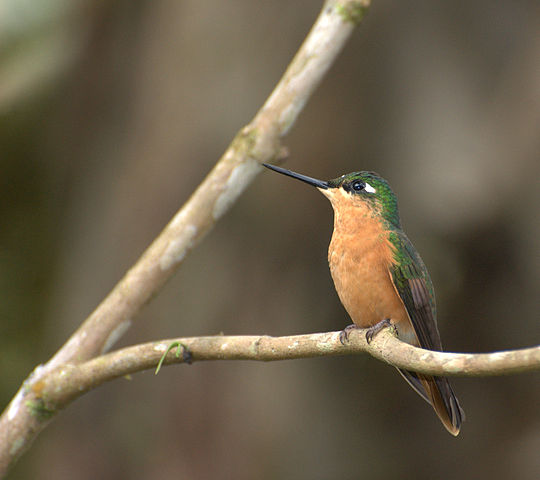
Resplendent Quetzal (Pharomachrus mocinno) by Ian

Resplendent Quetzal (Pharomachrus mocinno) by Ian

 Avian and Attributes – Quickens

“Plead my cause, and deliver me: quicken me according to thy word.” (Psalms 119:154 KJV)

“Great are thy tender mercies, O LORD: quicken me according to thy judgments.” (Psalms 119:156 KJV)

“Consider how I love thy precepts: quicken me, O LORD, according to thy lovingkindness.” (Psalms 119:159 KJV)

“For the word of God is quick, and powerful, and sharper than any twoedged sword, piercing even to the dividing asunder of soul and spirit, and of the joints and marrow, and is a discerner of the thoughts and intents of the heart.” (Hebrews 4:12 KJV)


Avian and Attributes – Quickens

(1): (a.) To make lively, active, or sprightly; to impart additional energy to; to stimulate; to make quick or rapid; to hasten; to accelerate; as, to quicken one’s steps or thoughts; to quicken one’s departure or speed.
(2): (v. i.) To move with rapidity or activity; to become accelerated; as, his pulse quickened.
(3): (a.) To shorten the radius of (a curve); to make (a curve) sharper; as, to quicken the sheer, that is, to make its curve more pronounced.
(4): (v. i.) To come to life; to become alive; to become vivified or enlivened; hence, to exhibit signs of life; to move, as the fetus in the womb.
(5): (a.) To make alive; to vivify; to revive or resuscitate, as from death or an inanimate state; hence, to excite; to, stimulate; to incite.


Quetzal

Quetzal (/kɛtsˈɑːl/ or /ˈkɛtsəl/) are strikingly colored birds in the trogon family.

They are found in forests and woodlands, especially in humid highlands, with the five species from the genus Pharomachrus being exclusively Neotropical, while the single Euptilotis species is found in Mexico and very locally in the southern United States. They are fairly large (all over 32 cm or 13 inches long), slightly bigger than other trogon species.

Quetzals have iridescent green or golden-green wing coverts, back, chest and head, with a red belly. They are strongly sexually dimorphic, and parts of the females’ plumage are brown or grey. These largely solitary birds feed on fruits, berries, insects and small vertebrates (such as frogs). Even with their famous bright plumage, they can be hard to see in their natural wooded habitats. (Trogonidae – Trogons Family)


More Avian and Attributes

Birds whose last name start with “Q”

Birds Vol 1 #1 – The Resplendent Trogon (Quetzal)

Ian’s Bird of the Week – Resplendent Quetzal

1,300-Year Old Recording Discovered? – Re-post

Good News

*
[Definitions from Webster’s Dictionary of American English (1828), unless noted. Bird info from Wikipedia plus.]
Avian and Attributes – Providence of God

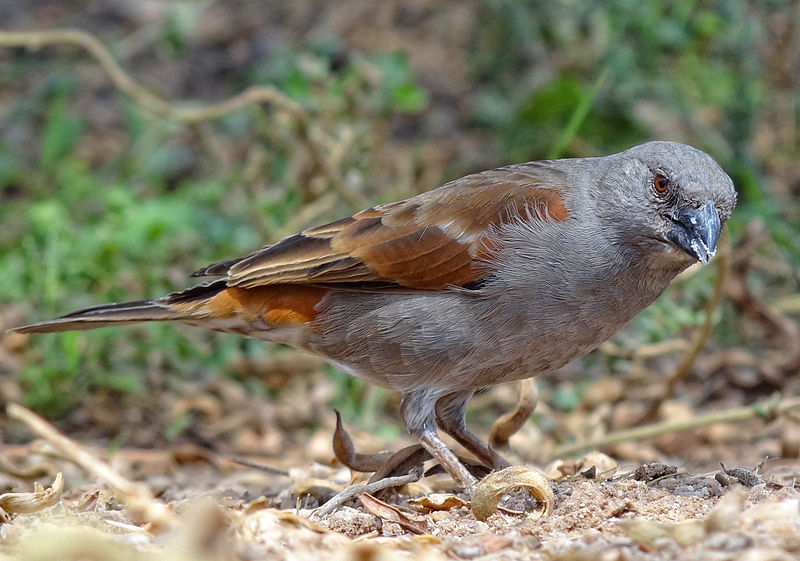
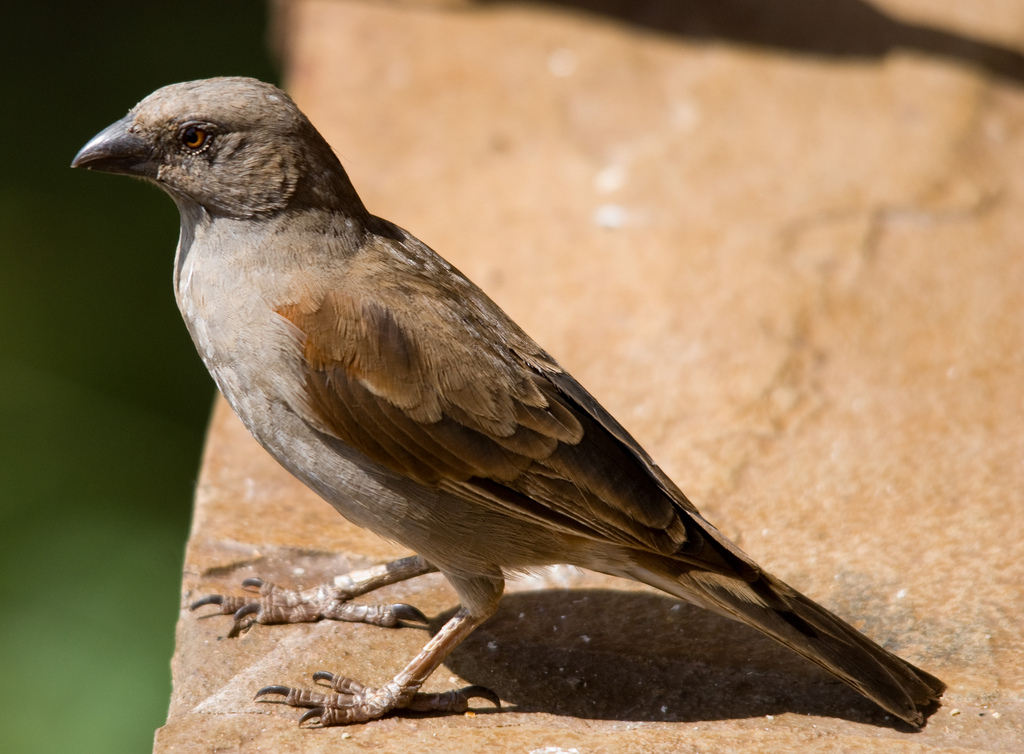
Parrot-billed Sparrow (Passer gongonensis)

Parrot-billed Sparrow (Passer gongonensis)

“Are not two sparrows sold for a farthing? and one of them shall not fall on the ground without your Father.” (Matthew 10:29 KJV)

In whom also we have obtained an inheritance, being predestinated according to the purpose of him who worketh all things after the counsel of his own will:” (Ephesians 1:11 KJV)

For it is God which worketh in you both to will and to do of his good pleasure.” (Philippians 2:13 KJV)


Avian and Attributes – Providence of God

The word “providence” comes from the Latin providentia (Gk. pronoia [provnoia]) and means essentially foresight or making provision beforehand. On the human plane it may be used positively, as when Tertullus praised Felix by saying, “Your foresight has brought about reforms in this nation” ( Acts 24:2 ), or negatively, as when Paul admonishes us to “make no provision for the flesh, to gratify its desires” ( Rom 13:14, ; RSV ). When applied to God the idea takes on a vastly larger dimension because God not only looks ahead and attempts to make provision for his goals, but infallibly accomplishes what he sets out to do. And because it is God’s governance that is in view, it encompasses everything in the universe, from the creation of the world to its consummation, inclusive of every aspect of human existence and destiny. Providence, then, is the sovereign, divine superintendence of all things, guiding them toward their divinely predetermined end in a way that is consistent with their created nature, all to the glory and praise of God. This divine, sovereign, and benevolent control of all things by God is the underlying premise of everything that is taught in the Scriptures. (Baker’s Evangelical Dictionary)


Parrot-billed Sparrow (Passer gongonensis) ©Flickr Carol Foll

Parrot-billed Sparrow

The Parrot-billed Sparrow (Passer gongonensis) is found in the arid lowlands of eastern Africa. At 18 centimeters (7.1 in) and 42 grams (1.5 oz), it is largest of the sparrows of the family Passeridae. It is often considered a subspecies of the grey-headed sparrow.  Lives in extreme SE Sudan to S Ethiopia, S Somalia, Kenya and NE Tanzania. Habitats: Deserts and Xeric Shrublands; Tropical and Subtropical Moist Broadleaf Forests:
Tropical and subtropical grasslands, savannas, and shrublands. (Passeridae Family)


More Avian and Attributes

Birds whose first name start with “P”

Birds of the Bible – More Value

Birds of the Bible – Little Brown Jobs

Good News

*
[Definitions from Webster’s Dictionary of American English (1828), unless noted. Bird info from Wikipedia plus.]

Avian and Attributes – Omnipotent

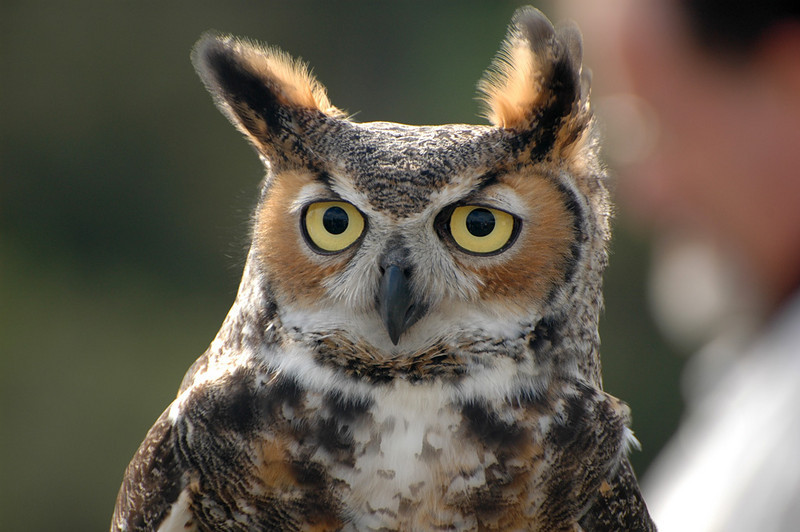
Great Horned Owl by Phil Kwong Galleries

Great Horned Owl by Phil Kwong Galleries

“And I heard as it were the voice of a great multitude, and as the voice of many waters, and as the voice of mighty thunderings, saying, Alleluia: for the Lord God omnipotent reigneth.” (Revelation 19:6 KJV)


Avian and Attributes – Omnipotent

OMNIP’OTENT, a. [supra.]

1. Almighty; possessing unlimited power; all powerful. The being that can create worlds must be omnipotent.

2. Having unlimited power of a particular kind; as omnipotent love.


Great Horned Owl (Bubo virginianus) by Bob-Nan

Great Horned Owl (Bubo virginianus) by Bob-Nan

Great Horned Owl

The Great Horned Owl (Bubo virginianus), also known as the tiger owl (originally derived from early naturalists’ description as the “winged tiger” or “tiger of the air”) or the hoot owl, is a large owl native to the Americas. It is an extremely adaptable bird with a vast range and is the most widely distributed true owl in the Americas. The great horned owl is one of the earliest nesting birds in North America, often laying eggs weeks or even months before other raptorial birds.

All great horned owls have a facial disc. This can be reddish, brown or gray in color (depending on geographical and racial variation) and is demarked by a dark rim culminating in bold, blackish side brackets. This species’ “horns” are tufts of feathers, called plumicorns. The purpose of plumicorns is not fully understood, but the theory that they serve as a visual cue in territorial and socio-sexual interactions with other owls is generally accepted.


More Avian and Attributes

Birds whose last name start with “O”

Birds of the Bible – Owls

Good News

*
[Definitions from Webster’s Dictionary of American English (1828), unless noted. Bird info from Wikipedia plus.]

Avian and Attributes – Name Above All Names

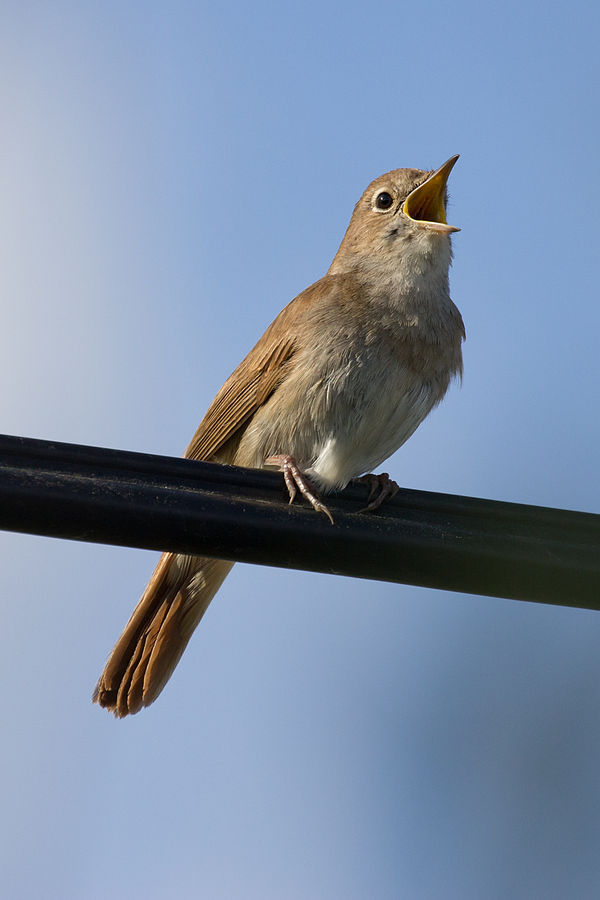
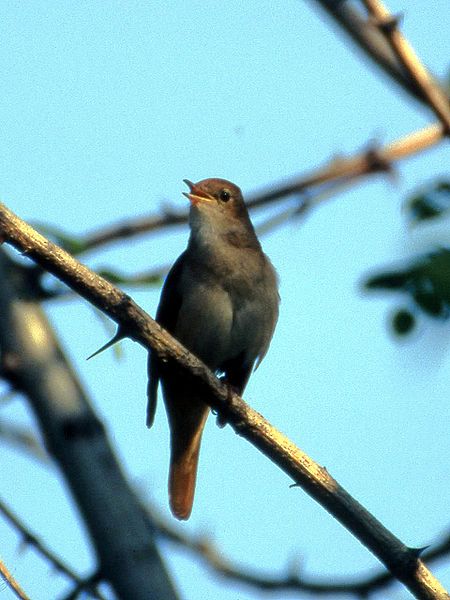
Common Nightingale (Luscinia megarhynchos) ©WikiC

“Wherefore God also hath highly exalted him, and given him a name which is above every name:” (Philippians 2:9 KJV)

“Let them praise the name of the LORD: for his name alone is excellent; his glory is above the earth and heaven.” (Psalms 148:13 KJV)

O LORD our Lord, how excellent is thy name in all the earth! who hast set thy glory above the heavens.” (Psalms 8:1 KJV)


Avian and Attributes – Name Above All Names

Names – These are often expressive of character or of relationship. God was revealed to Abraham, Isaac and Jacob, as GOD ALMIGHTY, which indicates the character in which God was pleased to be known by them: He was not known to them as JEHOVAH. Exo_6:3. This does not mean that they had not heard of the name, but that it did not express the character of His relationship with them. To Moses, He said, “I am JEHOVAH,” and by this name He was known to Israel: it formed the basis of their relationship with God. When power was committed to the Gentiles under the headship of Nebuchadnezzar it was said, “THE GOD OF HEAVEN hath given thee a kingdom, power, and strength, and glory.” Dan_2:37. In Christianity God is made known under the name of FATHER. Joh_20:17. Much is involved in the various names by which God has been pleased to make Himself known. So the Lord Jesus has various names: Son of God, Immanuel, Son of man, &c.: they all designate one Person, but each has its own import. Throughout the N. T., HIS NAME is the center of all blessing. Isa_9:6 Php_2:9-11. (Concise Bible Dictionary)


Common Nightingale (Luscinia megarhynchos) ©WikiC

Common Nightingale

The Common Nightingale or simply nightingale (Luscinia megarhynchos), also known as Rufous Nightingale, is a small passerine bird best known for its powerful and beautiful song. It was formerly classed as a member of the thrush family Turdidae, but is now more generally considered to be an Old World flycatcher, Muscicapidae.[2] It belongs to a group of more terrestrial species, often called chats.

It is a migratory insectivorous species breeding in forest and scrub in Europe and south-west Asia, and wintering in sub-Saharan Africa. It is not found naturally in the Americas. The distribution is more southerly than the very closely related thrush nightingale Luscinia luscinia. It nests on or near the ground in dense vegetation. Research in Germany found that favored breeding habitat of nightingales was defined by a number of geographical factors.   Muscicapidae Family


More Avian and Attributes

Birds whose last name start with “N”

Old World Flycatcher – Wikipedia

Good News

*
[Definitions from Webster’s Dictionary of American English (1828), unless noted. Bird info from Wikipedia plus.]
Avian and Attributes – Love

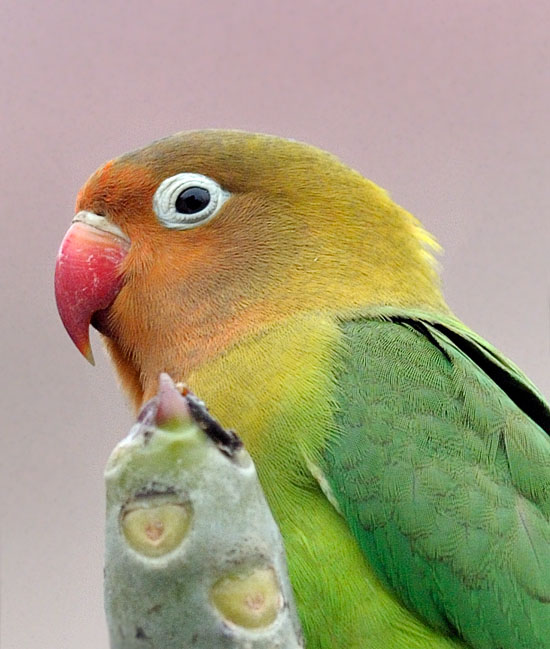
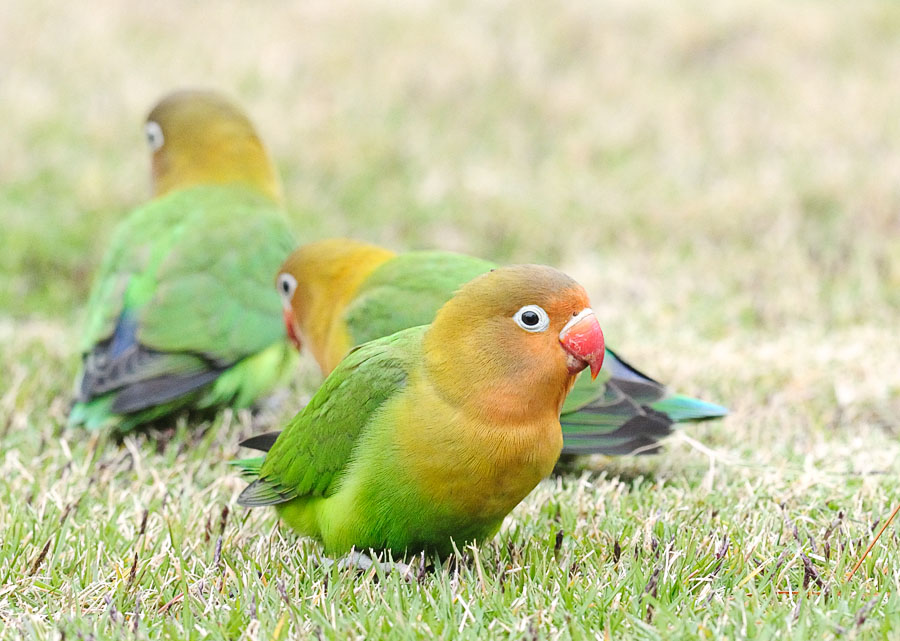
Fischer’s Lovebird (Agapornis fischeri) by W Kwong

“He that loveth not knoweth not God; for God is love.” (1 John 4:8 KJV)

“For God so loved the world, that he gave his only begotten Son, that whosoever believeth in him should not perish, but have everlasting life.” (John 3:16 KJV)


Divine Love

The love that God has for the sinful human race originates solely in his sovereign will. He loves people because he chooses to love them, not because they in any way deserve his love (Deu_7:7-8; Jer_31:3; Rom_5:8; Eph_1:4; Eph_2:4-5; 1Jn_3:1; 1Jn_4:10).

This was seen clearly in Jesus Christ, who throughout his life helped those in need and by his death saved helpless sinners. Salvation originates in the love of God, and that love found its fullest expression in the cross of Jesus Christ (Mat_14:14; Mar_10:21; Luk_7:13; Joh_3:16; Joh_15:13; Gal_2:20; Eph_2:4-7; Eph_5:25; 1Jn_4:9; see also MERCY). Jesus Christ could perfectly express God’s love, because he and the Father are bound together in a perfect unity in which each loves the other (Joh_3:35; Joh_10:30; Joh_14:31; Joh_15:9; Joh_17:24).

So much is love the dominating characteristic of the divine nature that the Bible declares that God is love. Everything that God says or does is in some way an expression of his love (1Jn_4:8; 1Jn_4:16). (Bridgeway Bible Dictionary)


Fischer’s Lovebird (Agapornis fischeri) by W Kwong

Fischer’s Lovebird

The Fischer’s Lovebird (Agapornis fischeri) is a small parrot species of the Agapornis genus. They were originally discovered in the late 19th century. They are named after German explorer Gustav Fischer.

Fischer’s Lovebird are native to a small area of east-central Africa, south and southeast of Lake Victoria in northern Tanzania. In drought years, some birds move west into Rwanda and Burundi seeking moister conditions. They live at elevations of 1,100-2,200m in small flocks. They live in isolated clumps of trees with grass plains between them.

Lovebirds are 13 to 17 cm (5 to 7 in) in length and 40 to 60 g (1 12 to 2 oz) in weight. They are among the smallest parrots, characterized by a stocky build, a short blunt tail, and a relatively large, sharp beak. Wildtype lovebirds are mostly green with a variety of colors on their upper body, depending on the species. The Fischer’s Lovebird, Black-cheeked Lovebird, and the Masked Lovebird have a prominent white ring around their eyes.  – Family Psittaculidae


More Avian and Attributes

Birds whose last name start with “L”

Fischer’s Lovebird – Wikipedia

Good News

*
[Definitions from Webster’s Dictionary of American English (1828), unless noted. Bird info from Wikipedia plus.]
Avian and Attributes – Justifier

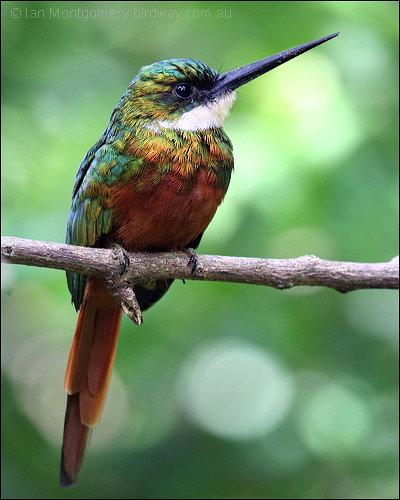
Rufous-tailed Jacamar (Galbula ruficauda) Male by Ian

“To declare, I say, at this time his righteousness: that he might be just, and the justifier of him which believeth in Jesus.” (Romans 3:26 KJV)


Justifier

JUST’IFIER, n. One who justifies; one who vindicates, supports or defends.

1. He who pardons and absolves from guilt and punishment.

That he might be just, and the justifier of him who believeth in Jesus. Rom 3.


Rufous-tailed Jacamar

The Rufous-tailed Jacamar (Galbula ruficauda) is a near-passerine bird which breeds in the tropical New World in southern Mexico, Central America and South America as far south as southern Brazil and Ecuador.

The jacamars are elegant brightly coloured birds with long bills and tails. The Rufous-tailed Jacamar is typically 25 centimetres (10 in) long with a 5 centimetres (2 in) long black bill. This bird is metallic green above, and the underparts are mainly orange, including the undertail, but there is a green breast band.

This insectivore hunts from a perch, sitting with its bill tilted up, then flying out to catch flying insects.


More Avian and Attributes

Birds whose last name start with “J”

Galbulidae – Jacamars

Good News

*
[Definitions from Webster’s Dictionary of American English (1828), unless noted. Bird info from Wikipedia plus.]