Cedar Waxwing – Fruit Passer…

Cedar Waxwing (Bombycilla cedrorum) by J Fenton

Cedar Waxwing (Bombycilla cedrorum) by J Fenton

Cedar Waxwing – Fruit passer… ~ by a j mithra

As for the living bird, he shall take it, and the cedar wood, and the scarlet, and the hyssop, and shall dip them and the living bird in the blood of the bird that was killed over the running water: (Leviticus 14:6)

Historians say that the cross that Jesus carried was made from Cedar wood. Of all the trees why did Jesus choose the cedar? The verse above which says about two birds, the cedar wood, the scarlet and the Hyssop does clearly reflects the crucifixion of Jesus on the cross. The two birds reflect Jesus and Barabas. One bird was sacrificed and the other was let free. Jesus was crucified and Barabas freed. The Cedar wood reflects the cross which Jesus carried. The scarlet reflects our sins. The hyssop reflects of how vinegar was soaked in a sponge and stuck in hyssop’s branch and offered to Jesus, when He said that He was thirsty.

Now there was set a vessel full of vinegar: and they filled a sponge with vinegar, and put it upon hyssop, and put it to his mouth. (John 19:29)

And they stripped him, and put on him a scarlet robe. (Mathew 27:28)

Twigs of Cedar placed with lingerie and kept in cupboards containing fur can keep away moth. The cross has the power to keep away all evil from our lives.

The Cedar is used to build the skeleton of the canoe. The cross has the power to take us through flood, fire and wilderness.

The most valuable constituent of Cedar oil is thujone. Native Americans of the eastern United States and Canada used thujone for generations to treat menstrual problems, headaches, and heart ailments. Loggers drank tea made from white cedar twigs to relieve rheumatism. During the seventeenth century, some people called the eastern white cedar the “tree of life,” because they believed that its sap had healing powers. In the late 1800s, the US Pharmacopoeia (the US compendium of quality control test and information on drugs) listed thujone as a treatment to stimulate the uterus and as a diuretic to increase urine flow. The leaves have the power to heal rheumatic, pulmonary, burns and prevent paralytic movement. It is also used as dye.

This tree is called the “Tree of Life”. Is that the reason Jesus, the life chose to carry a Cedar cross.. It was on the Cedar cross that Jesus, took the stripes to heal us from all disease.

For he shall grow up before him as a tender plant, and as a root out of a dry ground: he hath no form nor comeliness; and when we shall see him, there is no beauty that we should desire him.

He is despised and rejected of men; a man of sorrows, and acquainted with grief: and we hid as it were our faces from him; he was despised, and we esteemed him not.

Surely he hath borne our griefs, and carried our sorrows: yet we did esteem him stricken, smitten of God, and afflicted.

But he was wounded for our transgressions, he was bruised for our iniquities: the chastisement of our peace was upon him; and with his stripes we are healed. (Isaiah 53:2-5)

Cedar Waxwing Eating by Steve Slayton

Cedar Waxwing Eating by Steve Slayton

The Cedar waxwing may have been inspired by the qualities of Cedar from where it has borrowed its name. There is so much to read about this bird in this interesting website. But, one interesting quality of this bird stands apart. These birds are communal feeders. As we all know, the Cedar Waxwing eats berries and sugary fruit year-round, with insects becoming an important part of the diet in the breeding season. Its fondness for the small cones of the Eastern Redcedar (a kind of juniper) gave this bird its common name.

When the end of a twig holds a supply of berries that only one bird at a time can reach, members of a flock may line up along the twig and pass berries beak to beak down the line so that each bird gets a chance to eat. This reminds us of how we need pronounce the love of Jesus to the others so that they too may taste and see that the Lord is good..

Cedar Waxwing (Bombycilla cedrorum) by Daves BirdingPix

Cedar Waxwing (Bombycilla cedrorum) by Daves BirdingPix

But, the sad part is we have never thought of doing this, spreading the gospel to the unreached. If only we all had done this, by this time our churches would be overflowing. If only we carry the cross…..?

At least on this Good Friday, the day which denotes the sacrifice of Jesus on the cross for you and me, shall we make up our mind to do what we haven’t done for the Lord all these years? Shall we pass the fruit of the Holy spirit, so that those who haven’t tasted the Lord yet, may taste the goodness and mercy of our Lord?

These birds share the fruits, but, we call ourselves as Christians, borrowing the name from Christ, but when are we going to share the fruit of the Holy Spirit?

O taste and see that the LORD is good: blessed is the man that trusteth in him. (Psalm 34:8)

Have an awesome day at the feet of Jesus on the cross…

Your’s in YESHUA,
a j mithra

please visit us at:
Crosstree
ajmithra21

To see more of a j mithra’s articles – Click Here
*

Formed By Him – “Sword and Piercer” Birds

Two Edges by wrdpico

When Jesus was taken to the temple for His dedication, Simeon met Mary and Joseph and told Mary:

And Simeon blessed them, and said unto Mary his mother, Behold, this child is set for the fall and rising again of many in Israel; and for a sign which shall be spoken against; (Yea, a sword shall pierce through thy own soul also,) that the thoughts of many hearts may be revealed. (Luke 2:34-35 KJV)

When Judas came to betray Christ in the garden, Peter took out his sword and cut of the right ear of one of them, but Jesus touched his ear and healed it.

And while he yet spake, lo, Judas, one of the twelve, came, and with him a great multitude with swords and staves, from the chief priests and elders of the people… And one of them smote the servant of the high priest, and cut off his right ear. And Jesus answered and said, Suffer ye thus far. And he touched his ear, and healed him. (Luke 22:47, 50-51 KJV)

Most know the facts about the death of Christ on the cross. It was prophesied before the Lord ever came to earth that He would die on the cross. Then:

When Jesus therefore had received the vinegar, he said, It is finished: and he bowed his head, and gave up the ghost. The Jews therefore, because it was the preparation, that the bodies should not remain upon the cross on the sabbath day, (for that sabbath day was an high day,) besought Pilate that their legs might be broken, and that they might be taken away. Then came the soldiers, and brake the legs of the first, and of the other which was crucified with him. But when they came to Jesus, and saw that he was dead already, they brake not his legs: But one of the soldiers with a spear pierced his side, and forthwith came there out blood and water. And he that saw it bare record, and his record is true: and he knoweth that he saith true, that ye might believe. For these things were done, that the scripture should be fulfilled, A bone of him shall not be broken. And again another scripture saith, They shall look on him whom they pierced. (John 19:30-37 KJV)

Throughout this week, the Scripture has been presented that tells of the events that were unfolding during the week of Christ’s sacrifice on the Cross. We have come to the “sword” and the fact that Christ’s side was “pierced,” as was Mary’s heart. Any mother’s heart would be pierced to see their son crucified, but Jesus was no ordinary son. She had the privilege of being His earthly mother, by way of the virgin birth, BUT, His Father was God, and He was, as the centurion stated:

Now when the centurion, and they that were with him, watching Jesus, saw the earthquake, and those things that were done, they feared greatly, saying, Truly this was the Son of God. (Matthew 27:54 KJV)

Sword-billed Hummingbird (Ensifera ensifera) by Robert Scanlon

Sword-billed Hummingbird (Ensifera ensifera) by Robert Scanlon

If you have been following along this week, the “Palm” Birds, “Whip” Birds, and the “Thorn” Birds have been presented along with the events of Christ’s crucifixion. Now it is the “Sword” Birds and the “Piercer” Birds. A connection between the events and the names of the birds is being made to help us remember the Lord Jesus Christ. What love He has shown to us by laying down His life to purchase our salvation.

He created and loves the birds so, that when the little sparrow falls, He knows all about it. How much do you think He cares about me and you?

Are not two sparrows sold for a farthing? and one of them shall not fall on the ground without your Father. But the very hairs of your head are all numbered. Fear ye not therefore, ye are of more value than many sparrows. Whosoever therefore shall confess me before men, him will I confess also before my Father which is in heaven. But whosoever shall deny me before men, him will I also deny before my Father which is in heaven. (Matthew 10:29-33 KJV)

Birds with “Sword” in their name:

There is only one bird in the list used here that has “sword” in its name, the Sword-billed Hummingbird. We have done an article on it already in – Formed By Him – Sword-billed Hummingbird.

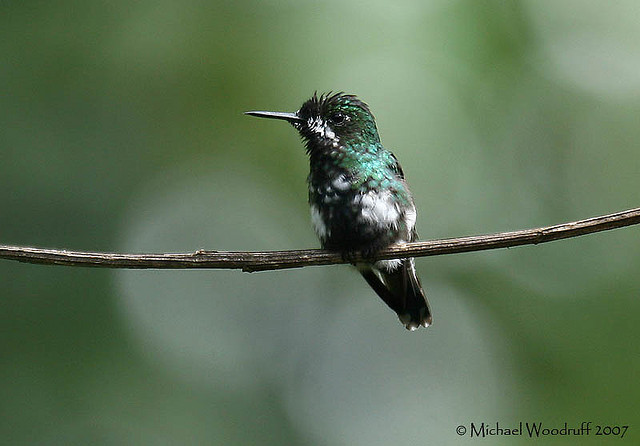
Sword-billed Hummingbird (Ensifera ensifera) by Michael Woodruff

Birds with “Piercer” in their name:

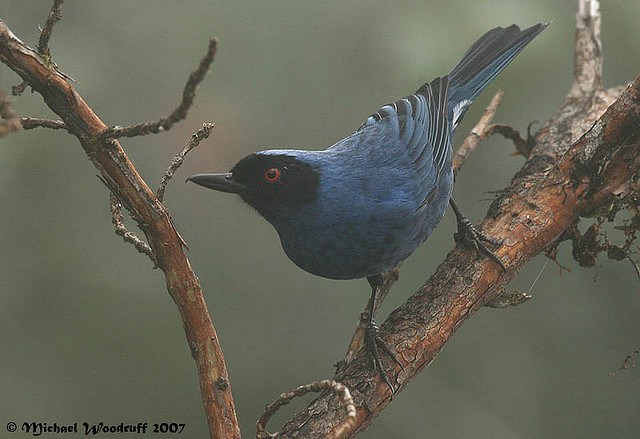
Masked Flowerpiercer (Diglossa cyanea) by Michael Woodruff

Masked Flowerpiercer (Diglossa cyanea) by Michael Woodruff

The Tanagers and Allies – Thraupidae has a Genus of Flowerpiercers, called Diglossa. The Lord has created another facinating bird. The Flowerpiercer’s  common name refers to their habit of piercing the base of flowers to access nectar that otherwise would be out of reach. This is done with their highly created bills, although this is less obvious in the Bluish Flowerpiercer, which has an almost “normal” bill. Most flowerpiercers are restricted to highlands, especially the Andes, in South America, but two species occur in Central America.

Genus Diglossa
Cinnamon-bellied Flowerpiercer (Diglossa baritula)
Slaty Flowerpiercer (Diglossa plumbea)
Rusty Flowerpiercer (Diglossa sittoides)
Chestnut-bellied Flowerpiercer (Diglossa gloriosissima)
Glossy Flowerpiercer (Diglossa lafresnayii)
Moustached Flowerpiercer (Diglossa mystacalis)
Merida Flowerpiercer (Diglossa gloriosa)
Black Flowerpiercer (Diglossa humeralis)
Black-throated Flowerpiercer (Diglossa brunneiventris)
Grey-bellied Flowerpiercer (Diglossa carbonaria)
Venezuelan Flowerpiercer (Diglossa venezuelensis)
White-sided Flowerpiercer (Diglossa albilatera)
Scaled Flowerpiercer (Diglossa duidae)
Greater Flowerpiercer (Diglossa major)
Indigo Flowerpiercer (Diglossa indigotica)
Golden-eyed Flowerpiercer (Diglossa glauca)
Bluish Flowerpiercer (Diglossa caerulescens)
Masked Flowerpiercer (Diglossa cyanea)

Black Flowerpiercer by Keith Blomerley of a bird moving around in a bush.


I trust you are enjoying and being blessed by the “Formed by Him” series this week. To see more  articles – Click Here

See:

The Gospel Message and the Wordless Birds

*

Formed By Him – “Thorn” Birds

Mountain Thornbill (Acanthiza katherina) by Ian

Mountain Thornbill (Acanthiza katherina) by Ian

Thorns are mentioned many times throughout the Bible and in the Gospels it is presented in several applications:

For every tree is known by his own fruit. For of thorns men do not gather figs, nor of a bramble bush gather they grapes. A good man out of the good treasure of his heart bringeth forth that which is good; and an evil man out of the evil treasure of his heart bringeth forth that which is evil: for of the abundance of the heart his mouth speaketh. (Luke 6:44-45 KJV)

Again thorns were mentioned in a parable in reference to the receiving of the Word of God:

And some fell among thorns; and the thorns sprang up with it, and choked it. And other fell on good ground, and sprang up, and bare fruit an hundredfold. And when he had said these things, he cried, He that hath ears to hear, let him hear. (Luke 8:7-8 KJV)
And that which fell among thorns are they, which, when they have heard, go forth, and are choked with cares and riches and pleasures of this life, and bring no fruit to perfection. (Luk 8:14 KJV)

The next references to thorns has to do with the “crown of thorns” they plaited or twisted together of thorny branches. If you think they just placed that crown of those thorns gently on His head, you are mistaken. With as much mockery and hatred they were showing to Christ, they would have crammed that crown on his head, thus, driving those spiked thorns as deep as they could.

And they clothed him with purple, and platted a crown of thorns, and put it about his head, And began to salute him, Hail, King of the Jews! And they smote him on the head with a reed, and did spit upon him, and bowing their knees worshipped him. And when they had mocked him, they took off the purple from him, and put his own clothes on him, and led him out to crucify him. (Mark 15:17-20 KJV)

Pilate therefore went forth again, and saith unto them, Behold, I bring him forth to you, that ye may know that I find no fault in him. Then came Jesus forth, wearing the crown of thorns, and the purple robe. And Pilate saith unto them, Behold the man!
(John 19:4-5 KJV)

Green Thorntail (Discosura conversii) by Michael Woodruff

Green Thorntail (Discosura conversii) by Michael Woodruff

Today it is obvious that “thorns” are the theme of this blog. The last two days, the “Palm” Birds and the “Whip” Birds were written about and shown. When you see the “Thorn” Birds, maybe the “crown of thorns” will come to mind and you will praise the Lord for His death on the cross which paid for our salvation.

For then must he often have suffered since the foundation of the world: but now once in the end of the world hath he appeared to put away sin by the sacrifice of himself. And as it is appointed unto men once to die, but after this the judgment: So Christ was once offered to bear the sins of many; and unto them that look for him shall he appear the second time without sin unto salvation. (Hebrews 9:26-28 KJV)

There are three families that have birds with Thorn in their name. the Hummingbird family has either Thornbills or Thorntails. The Ovenbird family has actual Thornbirds and one Thorn-tailed Rayadito. One whole Genus of birds in the Australian Warbler family are called Thornbills. As you look at the bills of most of these birds observe how the shape resembles thorns. Their Creator, the Lord Jesus Christ, not only designed their bill to assist in their eating and habitat, He knew that one day that “thorns” would be driven into His head.

Birds with “Thorn” in their name:

Hummingbird – Trochilidae Family

Black-backed Thornbill (Ramphomicron dorsale)
Black-bellied Thorntail (Discosura langsdorffi)
Blue-mantled Thornbill (Chalcostigma stanleyi) – Video by Keith Blomerley
Bronze-tailed Thornbill (Chalcostigma heteropogon)
Green Thorntail (Discosura conversii) by Michael Woodruff
Letitia’s Thorntail (Discosura letitiae)
Olivaceous Thornbill (Chalcostigma olivaceum)
Purple-backed Thornbill (Ramphomicron microrhynchum) – Video

Rainbow-bearded Thornbill (Chalcostigma herrani)
Rufous-capped Thornbill (Chalcostigma ruficeps)
Wire-crested Thorntail (Discosura popelairii) –  Video by Keith Blomerley

Plain Thornbird (Phacellodomus inornatus) ©©barloventomagico

Plain Thornbird (Phacellodomus inornatus) ©©

Ovenbird – Furnariidae Family

Chestnut-backed Thornbird (Phacellodomus dorsalis)
Freckle-breasted Thornbird (Phacellodomus striaticollis)
Greater Thornbird (Phacellodomus ruber)
Little Thornbird (Phacellodomus sibilatrix)
Orange-breasted Thornbird (Phacellodomus ferrugineigula)
Orange-eyed Thornbird (Phacellodomus erythrophthalmus)
Plain Thornbird (Phacellodomus inornatus) ©©
Rufous-fronted Thornbird (Phacellodomus rufifrons)
Spot-breasted Thornbird (Phacellodomus maculipectus)
Streak-fronted Thornbird (Phacellodomus striaticeps)
Thorn-tailed Rayadito (Aphrastura spinicauda)

Chestnut-rumped Thornbill (Acanthiza uropygialis) by Ian

Chestnut-rumped Thornbill (Acanthiza uropygialis) by Ian

Acanthizidae – Australasian Warblers

Acanthiza Genus
Inland Thornbill (Acanthiza apicalis)
Brown Thornbill (Acanthiza pusilla)
Buff-rumped Thornbill (Acanthiza reguloides)
Chestnut-rumped Thornbill (Acanthiza uropygialis) by Ian
Mountain Thornbill (Acanthiza katherina) by Ian
New Guinea Thornbill (Acanthiza murina)
Slaty-backed Thornbill (Acanthiza robustirostris)
Slender-billed Thornbill (Acanthiza iredalei)
Striated Thornbill (Acanthiza lineata)
Tasmanian Thornbill (Acanthiza ewingii)
Western Thornbill (Acanthiza inornata)
Yellow Thornbill (Acanthiza nana) by Ian
Yellow-rumped Thornbill (Acanthiza chrysorrhoa)

See also:

Wordless Birds

*
Formed By Him – “Palm” Birds

Palm Tanager (Thraupis palmarum) by Ia

Palm Tanager (Thraupis palmarum) by Ia

Yesterday was the traditionally known day of “Palm Sunday.” Many this week celebrate and remember the last week of the Lord Jesus Christ before His sacrifice on the cross for the sins of mankind. Thought it might be interesting to look at the birds that have “Palm” in their names.

In Leviticus the Bible tells of a celebration they had with palm leaves.

And ye shall take you on the first day the boughs of goodly trees, branches of palm trees, and the boughs of thick trees, and willows of the brook; and ye shall rejoice before the LORD your God seven days. (Leviticus 23:40 KJV)

From Gill’s Commentary, we learn – “branches of palm trees: which were very common in the land of Judea, and especially about Jericho; see John 12:13; the Targums of Jonathan and Jerusalem call them “lulabs”, which is the name the Jews give to the whole bundle they carried in their hands on this day:”

Palmchat (Dulus dominicus) ©SevenSeas of Rhye

Palmchat (Dulus dominicus) ©SevenSeas of Rhye

Palm trees, branches or leaves are mentioned in Exodus 15:17, Leviticus 23:40; Numbers 39:9; Deut. 34:3 – Jericho is called the city of palm trees; Judges 3:13 and 4:5; I Kings 6:29, 32, 35, 7:36; 2 Chronicles 3:5, 28:15, Nehemiah 8:15; Psalm 92:15; Song of Solomon 7:7, 8; Ezekial 40:16-37, 41:18-26; Joel 1:12; and in John 12:13.

The next day a great multitude that had come to the feast, when they heard that Jesus was coming to Jerusalem, took branches of palm trees and went out to meet Him, and cried out: “Hosanna! ‘BLESSED IS HE WHO COMES IN THE NAME OF THE LORD!’ The King of Israel!” Then Jesus, when He had found a young donkey, sat on it; as it is written: “FEAR NOT, DAUGHTER OF ZION; BEHOLD, YOUR KING IS COMING, SITTING ON A DONKEY’S COLT.”
(John 12:12-15 NKJV)

The people were excited and were strawing the road with the palm branches. They were celebrating what they thought was their King who would take them out of the control of their current rulers. By weeks end, they will have changed their “Hosanna!”s into “Crucify Him!”s.

I realize that the birds have been named by various people, beginning with Adam until the current namers. Many of the birds that have Palm in their names do associate with Palm trees in one aspect or another. Maybe the next time you observe the “Palm” birds that were “Formed By Him,” our Creator and Savior, you will remember the day He rode into Jerusalem on a “palm road” Maybe He gave these birds the desire to use the Palm Trees so that when we see them we will not forget the prophecies that were fulfilled that day.

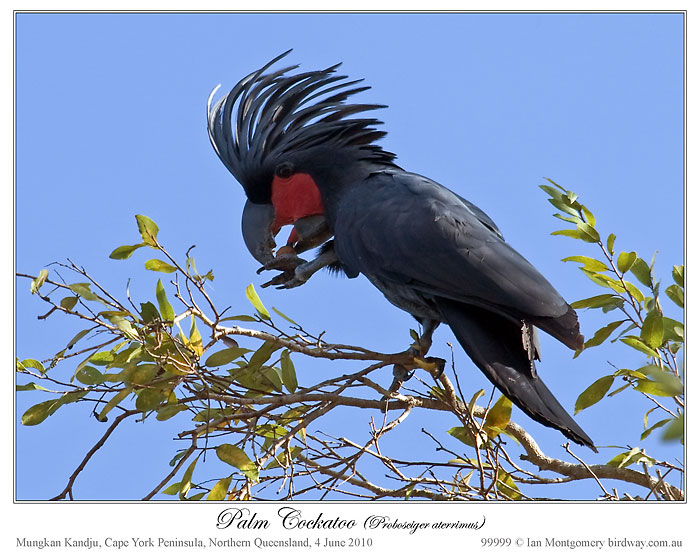
Palm Cockatoo (Probosciger aterrimus) by Ian

Palm Cockatoo (Probosciger aterrimus) by Ian

Birds with “Palm” in their name:

Palm-nut Vulture (Gypohierax angolensis)
“feeds mainly on the fruit of the oil-palm”
Palm Cockatoo (Probosciger aterrimus)
“they have been observed eating the seeds of the kanari and black bean trees, and the fruits of the nonda tree and Pandanus palms.”
Palm Lorikeet (Charmosyna palmarum)
“Its natural habitats are subtropical or tropical moist lowland forests, subtropical or tropical moist montanes, and plantations”
African Palm Swift (Cypsiurus parvus)
The down and feather nest is glued to the underside of a palm leaf with saliva, which is also used to secure the usually two eggs. This is a fast flying bird of open country, which is strongly associated with Oil Palms. (applies to other palm swifts)”
Antillean Palm Swift (Tachornis phoenicobia)
Asian Palm Swift (Cypsiurus balasiensis)
Neotropical Palm Swift (Tachornis squamata)
Pygmy Palm Swift (Tachornis furcata)
“observed them near mature cultivated palms, which represented nesting and roosting substrates”
Point-tailed Palmcreeper (Berlepschia rikeri)
“found in tropical and subtropical dry forests, mostly in palm groves”

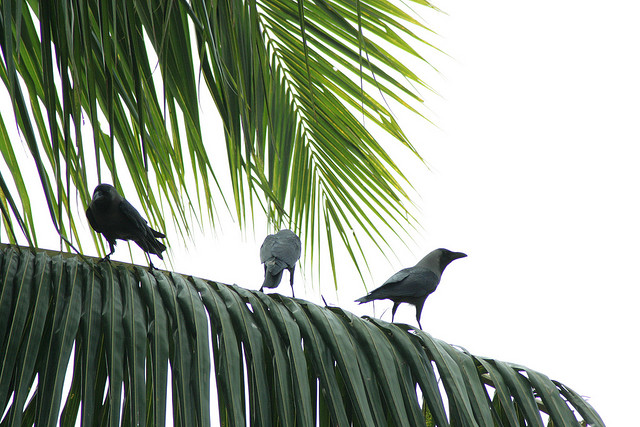
Palm Crows on Palm ©SwamiStream

Palm Crows on Palm ©SwamiStream

Cuban Palm Crow (Corvus minutus)
“Nests are located in stands of tall palms with breeding from April-July or possibly earlier”
Hispaniolan Palm Crow (Corvus palmarum)
“The nest is made of sticks and placed among tree branches or in a palm tree.”
Palmchat (Dulus dominicus)
Collared Palm Thrush (Cichladusa arquata)
“Dry palm savanna and moist palm shrubland.”
Rufous-tailed Palm Thrush (Cichladusa ruficauda)
Spotted Palm Thrush (Cichladusa guttata)
Golden Palm Weaver (Ploceus bojeri)
Palm Warbler (Dendroica palmarum)
Palm Tanager (Thraupis palmarum)
“seems to like habitat with palms on which it feeds”

Information from various internet websites.

See:

The Gospel Message

Wordless Birds

*

Birds of the Bible – Ospreys in the Storm

Western Osprey (Pandion haliaetus) ©©Mike Bowler

Western Osprey (Pandion haliaetus) ©©Mike Bowler

Yesterday we had very heavy rain and wind. We were under Tornado Warnings most of the day. In the afternoon, it turned very bad as a tornado was being tracked just south of our house. Our flagpole went down as well as the concrete sign at the entrance to our community. There were plenty of trees and branches strewn around and planes tossed around at the Fun n Sun festival in Lakeland, Florida.

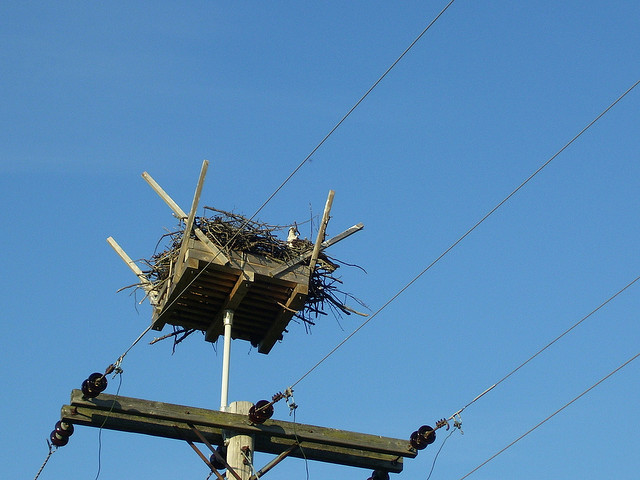
We went down to Bartow this afternoon and took the Old Bartow road, that I have renamed, the “Osprey Road.” There are many Osprey nest in the power lines down through there and also the electric companies have placed platforms for the Osprey to raise their babies.

One of the main food source for the Osprey is fish. We have had several very cold snaps these last two winters and many of the fish were killed off. Without a good source of food to raise their young, the numbers of Osprey have decreased in this area.

Osprey Road by Dan - (Old Bartow Road)

Osprey Road by Dan – (Old Bartow Road) 2007

This year we had already seen fewer Osprey’s raising their young. Now many of those nests were destroyed or left bedraggled by the storm yesterday. What a shame. Then again, had there been lots of active nest, there would have been more killed or injured birds.

We are reminded through Scripture that:

Are not two sparrows sold for a farthing? and one of them shall not fall on the ground without your Father. (Matthew 10:29 KJV)

They were not Sparrows, but I know that promise applied to them also. God, the Father, knows all about what happened to them. He is not so busy that He doesn’t take notice of such things. That is why that passage is so special, because, it goes on to say:

Fear ye not therefore, ye are of more value than many sparrows. Whosoever therefore shall confess me before men, him will I confess also before my Father which is in heaven. (Matthew 10:31-32 KJV)

Osprey with Fish by Jim Fenton

Osprey with Fish by Jim Fenton

Another thing about Ospreys as well as the other birds is that they were commanded to “multiply and fill the earth.” What I haven’t mentioned is that on the way down and back we saw four different sets of birds mating. I imagine that they lost their young and are busy planning the next clutch of birds to raise. Birds have emotions, and I am sure they feel the loss, but they have picked themselves back up and have begun repairing nests and starting new families.

May we be reminded that the Lord knows all about the things that happen to us. Sometimes the events aren’t so much “fun.” How do we handle situations when this happens. Do we keep our eyes on the Lord and trust Him to see us through it, or do we blame Him and become angry and miserable?
___
Ospreys are in the Pandionidae Family of the Accipitriformes Order. There is an Eastern Osprey (Pandion cristatus) and a Western Osprey (Pandion haliaetus).

See also:

Birds of the Bible – Osprey
Birds of the Bible – Osprey II
Birds of the Bible – Osprey III

*

Birds in Hymns – Being His

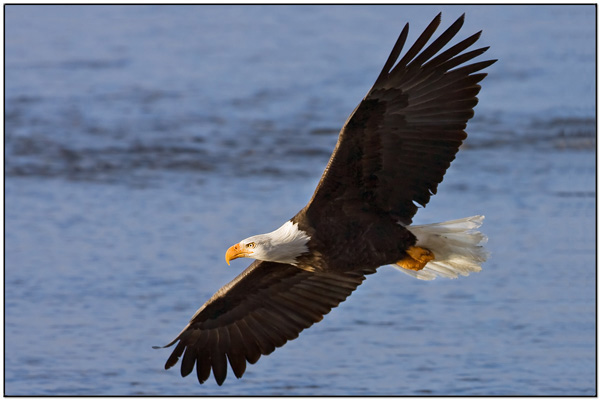
Bald Eagle flying by Dave's BirdingPix

Bald Eagle flying by Dave's BirdingPix

Based on:

Now therefore, if ye will obey my voice indeed, and keep my covenant, then ye shall be a peculiar treasure unto me above all people: for all the earth is mine: (Exodus 19:5 KJV)

Words by Neil Bar­ham, 2005. (1962-)

Music – Pro­tect­ion – from A Com­pil­a­tion of Gen­u­ine Church Mu­sic, by Jo­seph Funk (Win­ches­ter, Vir­gin­ia: J. W. Holl­is, 1832)

Alternate Tune – St. Den­io, by John Ro­berts, 1839

Being His

His oceans all rumble and batter His shore,
But He will be new when its waves are no more.
His mountains reach skyward to touch His sweet face;
His forests burst forth as He showers their place.

The mighty Leviathan leaps in His seas,
The eagle mounts up on the joy of His breeze.
The creatures of earth borrow life from His hand,
Their days are all numbered by His firm command.

Eternity springs from His Infinite Mind—
All time and all space from His fingers unwind,
His intricate, limitless, unbounded skill
Spins threads of His sovereign, inscrutable will.

The thunder of Sinai resounds in our ears,
The judgment of God stirs the deepest of fears!
But, awesome and wondrous—more staggering still—
The flashes of lightning from Calvary’s hill!

But O! How mighty, how perfect, how free,
How blessèd, how precious, how lovely is He!
And O! How grand, and how sweet to behold
The trophies of grace He has won from of old!

A radiant triumph illumines His face!
He strides to His throne, the Colossus of Grace!
He sits, and His Father proclaims Him True Son!
His strife is now over; His battle is done.

We bow, we adore, we fall down at His throne,
He gathers us into His arms as His own!
He seats us in glory beside Him above,
To crown His achievement with splendors of love!

_____
What a great old hymn that tells of the Lord’s grace to us and the Worship that is due Him.

Neil Barham grew up in Lou­i­si­a­na and has lived all over the south­ern Unit­ed States. He was trained as a Pres­by­ter­i­an pas­tor and served as a teach­er in Christ­ian schools in Georg­ia, Ten­nes­see, and Lou­i­si­a­na. As of 2005, he lived in Mi­a­mi, Flor­i­da, where he, his wife Ju­lie, and his child­ren Han­nah, Seth, and Le­ah are mem­bers of the Ken­dall Pres­by­ter­i­an Church.

Inspired by the ex­am­ple of Will­iam Cow­per, Neil be­gan writ­ing hymns to com­bat spir­it­u­al de­press­ion. He has 19 hymns on Cyber Hymnal.

For an article about Neil Barham – Click Here

More Birds in Hymns

*

Bible Conference and Birds in South Carolina

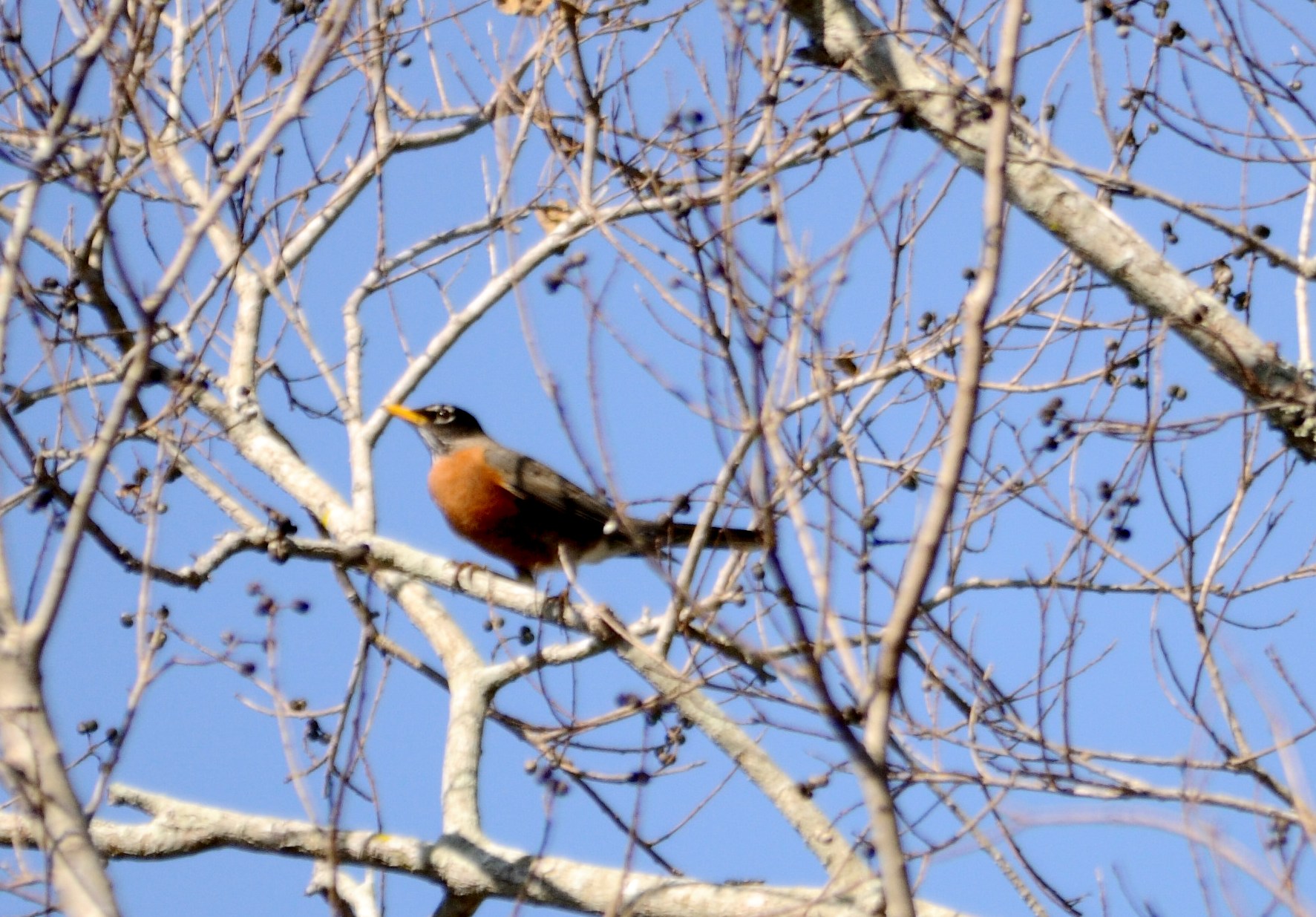
American Robin by Dan

American Robin by Dan

All scripture is given by inspiration of God, and is profitable for doctrine, for reproof, for correction, for instruction in righteousness: (2Ti 3:16)

An American Robin, two Cardinals and a Mockingbird greeted us here in South Carolina. We also saw a Red-tailed Hawk circling over the campus of Bob Jones University (our Alma mater) and a Red-shouldered Hawk sitting in a tree. Spring is blooming out all around.

We came up here for the Bible Conference and have thoroughly enjoyed and received blessings from all five messages we were able to attend. We are now headed home and will arrive back in Florida soon.

Dr. Sam Horn, from Wisconsin, challenged us to “cast all our cares on the Lord” and to remember that, “we have a Father that knows our need.” His other message was to challenge us to “right living” through the “Divine enablement from God.”

Dr. David Innes, from California, taught on the “Greatness of God.” Two quotes I liked were; “All genuine ministry of life is the overflow of our walk with Christ.” and “God is uniquely Uncreated, Infinite, Triune, and Holy.” His second message was about the “Greatness of God’s Word.”

Dr. Bruce Compton, from Michigan, spoke on the “Relationship between a living faith and God’s Word.

It is good to sit under the ministry of Godly men who teach the Word of God in a concentrated time period, like a Bible Conference. Sometimes it is hard to get away to one, but it is worth the effort. Your soul will be refreshed and challenged.

It was also good to travel to a different state to try to get a glimpse of the birds that they have there. Didn’t see too many, but it was a very profitable trip. The Lord is always gracious.

This trip is why there has not been many articles from me lately. I will soon be back at the keyboard after I get the binoculars out to spot some more birds to write about.

*

Birds of the Bible – Thrushes II

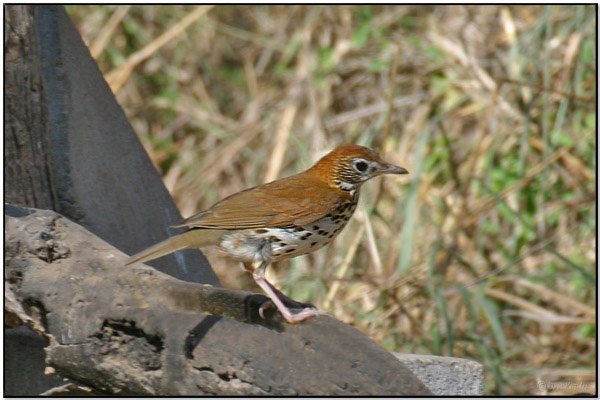
Wood Thrush (Hylocichla mustelina) by Daves BirdingPix

Wood Thrush (Hylocichla mustelina) by Daves BirdingPix

Storks, doves, swallows, and thrushes all know when it’s time to fly away for the winter and when to come back. But you, my people, don’t know what I demand. (Jeremiah 8:7 CEV)

I recently added the Birds of the Bible – Thrushes page. It now appears in the Sidebar and in the Birds of the Bible List. While comparing the Scripture on Jeremiah 8:7, I decided that the Thrushes deserved to be a Bird of the Bible on this blog. As you know, all birds are “Birds of the Bible,” because the Lord created them all. Mainly the ones named in particular have been given their own page. Since Jeremiah 8:7 is translated “thrush” in six Bible versions, it now has its own page.

So God created great sea creatures and every living thing that moves, with which the waters abounded, according to their kind, and every winged bird according to its kind. And God saw that it was good. (Genesis 1:21 NKJV)

Here is part of the new Birds of the Bible – Thrushes page:


CLASS – AVES, Order – PASSERIFORMES, Family:

Turdidae – Thrushes

Muscicapidaehas Palm & Rock Thrushes

Other Families with Thrushes:

Formicariidae – Antthrushes – Antthrushes

Pachycephalidae – Whistlers and Allies – Shrikethrushes

Psophodidae – Whipbirds, Jewel-babblers, quail-thrushes – Quail-thrushes


Not all versions of the Bible list the Thrush in this verse, but because so many versions do, the Thrush is being added to the Birds of the Bible. The following versions and the verse are listed below:

(CEV) Storks, doves, swallows, and thrushes all know when it’s time to fly away for the winter and when to come back. But you, my people, don’t know what I demand.
(ERV) Even the birds in the sky know the right time to do things. The storks, doves, swifts, and thrushes know when it is time to fly to a new home. But my people don’t know what the LORD wants them to do.
(GNB) Even storks know when it is time to return; doves, swallows, and thrushes know when it is time to migrate. But, my people, you do not know the laws by which I rule you.
(LITV) Also the stork in the heavens knows her seasons, and the turtledove and the swallow and the thrush observe the time of their coming. But My people do not know the judgment of Jehovah.
(NAS77) “Even the stork in the sky Knows her seasons; And the turtledove and the swift and the thrush Observe the time of their migration; But My people do not know The ordinance of the LORD.
(NASB) “Even the stork in the sky Knows her seasons; And the turtledove and the swift and the thrush Observe the time of their migration; But My people do not know The ordinance of the LORD.

See also the following articles:

Birds of the Bible – The Thrush

Birds of the Bible – Thrushes II (this article)

Birds in Hymns – How Great Thou Art

Birds in Hymns – The Bird With The Broken Wing

When The Robins Came by Dorothy Belle Malcolm

Return of the Robins by Dorothy Belle Malcolm

Ian’s Bird of the Week – Bassian Thrush

The Mountain Bluebird – The Zealous Bridegroom.. by a j mithra


A video by Nick Talbot of a Song Thrush singing.

*

Interesting Things – Mantis’s Hearing

SmileyCentral.com

Incline your ear, and come unto me: hear, and your soul shall live; and I will make an everlasting covenant with you, even the sure mercies of David. (Isaiah 55:3 KJV)

All insects that hear, except one, have two ears. Some insects have ears on their legs, thorax or abdomen. However, they all follow the same principle. Their ears are separated so that they can locate the source of the sound – except in one insect.

European Mantis (Mantis Religiosa) ©©Reini68

European Mantis (Mantis Religiosa) ©©Reini68

Scientists always thought the praying mantis was deaf. The 1,700 species of mantises have no structure that looks like an ear. Only after a long process of detailed study and testing did scientists finally discover that the mantis can hear. Further investigation finally led to the discovery of one of the most bizarre methods of hearing anywhere in the animal kingdom.

The mantis’s hearing organ is difficult to call an ear. Unlike any other insect, the mantis has only one hearing organ, located in a groove underneath its thorax. The teardrop shaped groove has a thinner cuticle than other parts of the body. Beneath the cuticle there is a relatively large air sac on each side of the groove. These sacs are connected to the insect’s respiratory system. Near the top of the sac are the nerves that carry the sensation of sound to the nervous system. Scientists say that this hearing organ senses ultrasonic frequencies. When researchers played a bat like sound to a mantis in flight, it immediately took an evasive flight path to escape the bat it thought it heard.

There is no limit to God’s creativity or His ability to make whatever He can imagine. We should keep this in mind, especially when some human authority tells us the Bible has made a mistake.

Prayer:
I marvel and praise You, dear Lord, as I consider the creation around me. Even as some would use the creation to deny Your existence, help me to more clearly see the excellence of all that You do, both materially and spiritually. Amen.
Notes:
Miller, Julie Ann. 1986. “Sensory surprises in platypus, mantis.” Science News, v. 129. p. 104.

From Creation Moments – Cyclops Ear ©3/10/11

More – Interesting Things
*

Formed By Him – Rock Birds and The Rock – I

Waves on Rocks - Point Lobos State Reserve by Daves BP

Waves on Rocks – Point Lobos State Reserve by Daves BP

The LORD is my rock, and my fortress, and my deliverer; my God, my strength, in whom I will trust; my buckler, and the horn of my salvation, and my high tower. (Psalms 18:2 KJV)

When the Lord created the world and all that is therein, He created the rocks and hills and the birds that He created were well adapted to live in those places. Birdwatchers through the years have observed them in this habitat of rocks, stones, cliffs, and other high rocky places. Just as Adam named the first birds, ornithologists (bird people) are still naming birds.

Searching through the latest IOC 2.7 List of Birds, I found 50 birds with “Rock” in their names. Searching the Bible for the word “Rock”, I found around 130 verses referring to a “rock” or “The Rock.” Here is a blend of the birds and some of the Scriptures verses that show the mighty Hand of God at work and the neat “Rock Birds” Formed by Him.

Here is a list of the first 25 birds with “Rock” in their name in taxonomic order with a few words about them :

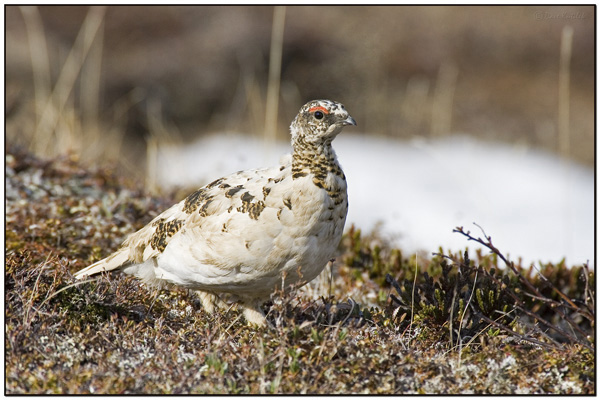
Rock Ptarmigan (Lagopus muta) by Daves BirdingPix

Rock Ptarmigan (Lagopus muta) by Daves BirdingPix

Rock Ptarmigan (Lagopus muta) – It is a sedentary species which breeds across arctic and subarctic Eurasia and North America (including Greenland) on rocky mountainsides and tundra.
Rock Partridge (Alectoris graeca)©AGrosset  – This is a resident breeder in dry, open and often hilly country. It nests in a scantily lined ground scrape laying 5-21 eggs. The Rock Partridge takes a wide variety of seeds and some insect food.

The LORD liveth; and blessed be my rock; and let the God of my salvation be exalted. (Psalms 18:46 KJV)

strong>Rock Bush Quail (Perdicula argoondah)© – is a species of quail found in parts of peninsular India.  They are found in small coveys and are often detected only suddenly, when they burst out into flight en masse from under vegetation.

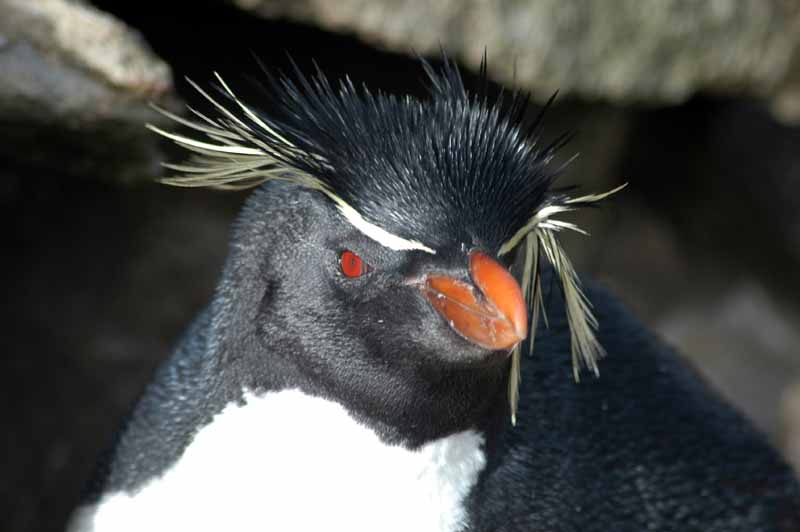
Southern Rockhopper Penguin (Eudyptes chrysocome) by Bob-Nan

Southern (Western) Rockhopper Penguin (Eudyptes chrysocome) by Dave’sBirdingPix- Their common name refers to the fact that, unlike many other penguins which get around obstacles by sliding on their bellies or by awkward climbing using their flipper-like wings as aid, Rockhoppers will try to jump over boulders and across cracks. This behaviour is by no means unique to this species however – at least the other “crested” penguins of the genus Eudyptes hop around rocks too. But the Rockhopper’s congeners occur on remote islands in the New Zealand region, whereas the rockhopper penguins are found in places that were visited by explorers and whalers since the Early Modern era. Hence, it is this particular species in which this behavior was first noted.
Northern Rockhopper Penguin (Eudyptes moseleyi)© – Same as above

Rock Shag (Phalacrocorax magellanicus) by Daves BirdingPix

Rock Shag (Phalacrocorax magellanicus) by Daves BirdingPix

Rock Shag (Phalacrocorax magellanicus) – The Rock Shag usually nests on ledges on steep, bare, rocky cliffs. It normally lays 3 eggs, though nests of from 2 to 5 eggs have been seen. Nesting colonies range is size from 5 pairs to nearly 400.

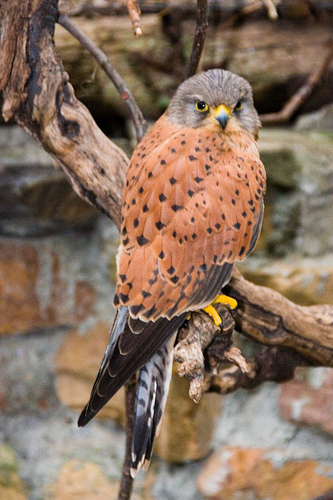
Rock Kestrel (Falco rupicolus) ©©SteveCrane

Rock Kestrel (Falco rupicolus) – It does not require woodland to be present as long as there are alternate perching and nesting sites like rocks or buildings. It will thrive in treeless steppe where there are abundant herbaceous plants and shrubs to support a population of prey animals.

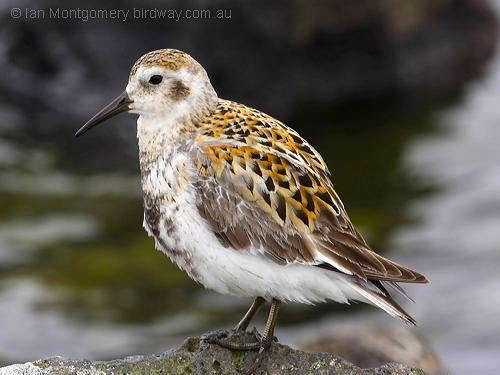
Rock Sandpiper (Calidris ptilocnemis) by Ian

Rock Sandpiper (Calidris ptilocnemis) – They nest on the ground either elevated on rocks or in lower damp location. The males makes several scrapes; the female choose one and lays 4 eggs. Both the male and female take the responsibility for incubation. Birds migrate south to rocky ice-free Pacific coasts in winter.

Now Rizpah the daughter of Aiah took sackcloth and spread it for herself on the rock, from the beginning of harvest until the late rains poured on them from heaven. And she did not allow the birds of the air to rest on them by day nor the beasts of the field by night. (2 Samuel 21:10 NKJV)

Rock Pratincole (Glareola nuchalis) – This species shows a preference for exposed emergent rocks in large rivers and streams, sometimes also frequenting mud and sandbars by lagoons. Eggs are laid directly into shallow depressions, cracks, and on the flat tops of bare rocks surrounded by deep and sometimes fast-flowing water, or on rock ledges and under overhangings. Most nests are found within a metre or two of the water level. (Bird Life)

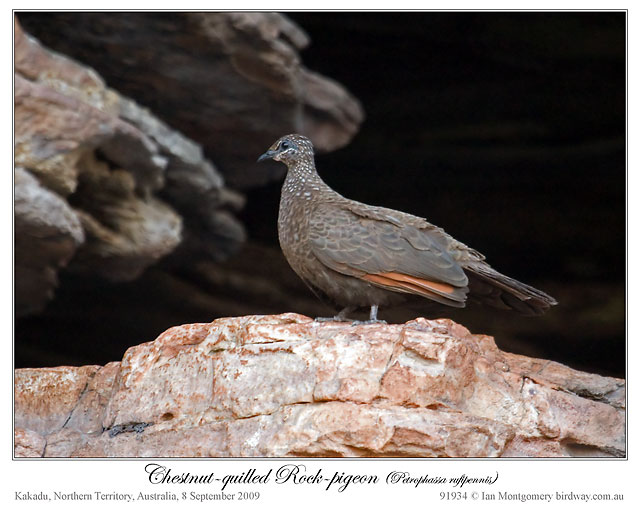
Chestnut-quilled Rock Pigeon (Petrophassa rufipennis) by Ian

Chestnut-quilled Rock Pigeon (Petrophassa rufipennis)by Ian  – found in deep sandstone gorges, rocky gullies & cliffs in the area from the Katherine Gorge to Oenpelli in the Northern Territory of Australia. – See Ian’s Bird of the Week
White-quilled Rock Pigeon (Petrophassa albipennis)by Ian  – Found only among the cliffs, gorges & boulder strewn sloped regions of the Kimberley Division of Western Australia & adjacent Northern Territory east to the Flora River & Stokes Range.

Rock Parrot (Neophema petrophila) by Ian

Rock Parrot (Neophema petrophila) by Ian- Rocky islands and coastal dune areas are the preferred habitats for this species, which is found from Robe, South Australia westwards across coastal South and Western Australia to Shark Bay.

New Zealand Rockwren (Xenicus gilviventris) ©WikiC

New Zealand Rockwren (Xenicus gilviventris) by KentNickell – it is a poor flier, rarely flying more than two metres off the ground or for distances or more than 30 m. It is highly terrestrial, feeding in low scrub and open scree and rockfalls in alpine areas. 

There is none holy as the LORD: for there is none beside thee: neither is there any rock like our God. (1 Samuel 2:2 KJV)

Rock Earthcreeper (Ochetorhynchus andaecola)© – It is found in Argentina, Bolivia, and Chile. Its natural habitats are subtropical or tropical high-altitude shrubland and subtropical or tropical high-altitude grassland.

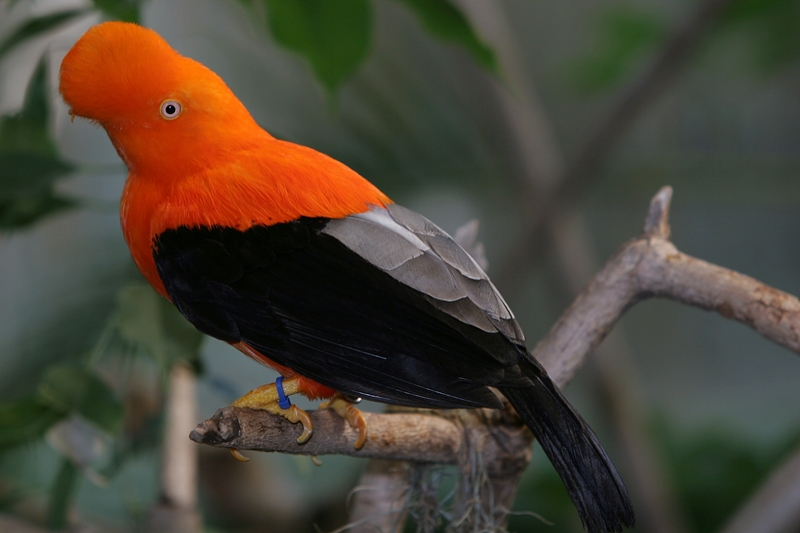
Andean Cock-of-the-rock (Rupicola peruvianus) by SanDiegoZoo

Guianan Cock-of-the-rock (Rupicola rupicola)©©lolodoc – They are found in tropical and subtropical rainforests close to rocky areas, where they build their nests.
Andean Cock-of-the-rock (Rupicola peruvianus) by SanDiegoZoo – Same as above

Rockwarbler (Origma solitaria)by Ian- Nest©©nimpitja – The Rockwarbler is 14 cm in length. It is usually seen hopping erratically over rocks whilst flicking its tail. Its preferred habitat is woodlands with sandstone or limestone. Its distribution is central eastern New South Wales.

The LORD liveth; and blessed be my rock; and let the God of my salvation be exalted. (Psalms 18:46 KJV)

White-necked Rockfowl (Picathartes gymnocephalus)© – They have unfeathered heads, and feed on insects and invertebrates picked from damp rocky areas. Both species are totally non-migratory, being dependent on a specialised rocky jungle habitat. White-necked, also known as the White-necked Picathartes, is found in rocky forest areas at higher altitudes from Sierra Leone to Ghana. It has grey upperparts, white underparts and a yellow head with a black patch on each side.
Grey-necked Rockfowl (Picathartes oreas)© – Same as above, plus, It nests in caves and on rock cliffs and needs specific habitat requirements, such as overhanging rock for protection from the elements and often it needs a seasonal river below to protect from predators.

Cape Rockjumper (Chaetops frenatus) ©WikiC

Cape Rockjumper (Chaetops frenatus)©WikiC – These are small birds with mostly brown and red plumage. Both species have long, white tipped black tails, black throats, broad white submoustachial lines, rufous or orange bellies and rumps and grey and black patterned backs and wings.[1] The iris is red and the bills and legs are black. Their wings are very small and they do not fly very often. They spend most of their lives running and jumping among rocks and grasses while hunting insects. A range of insects are taken, including caterpillars, moths, grasshoppers, beetles and flies. In addition to insects other prey include lizards and geckos, amphibians, scorpions, annelid worms and spiders.
Drakensberg Rockjumper (Chaetops aurantius)©WikiC – Same as above

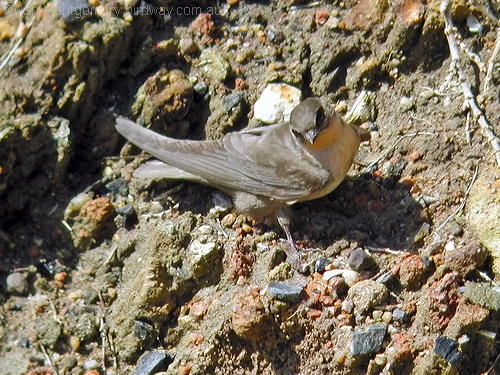
Rock Martin (Ptyonoprogne fuligula) by Ian

Rock Martin (Ptyonoprogne fuligula)by Ian  – The Rock Martin (Ptyonoprogne fuligula) is a small passerine bird in the swallow family that is resident in Africa, and in southwestern Asia east to Pakistan. It breeds mainly in the mountains, but also at lower altitudes, especially in rocky areas and around towns, and, unlike most swallows, it is often found far from water. It is 12–15 cm (4.7–5.9 in) long, with mainly brown plumage, paler-toned on the upper breast and underwing coverts, and with white “windows” on the spread tail in flight. The sexes are similar in appearance, but juveniles have pale fringes to the upperparts and flight feathers. The northern subspecies are smaller, paler, and whiter-throated than southern African forms, and are sometimes split as a separate species, the “Pale Crag Martin”. The Rock Martin hunts along cliff faces for flying insects using a slow flight with much gliding. Its call is a soft twitter.

This martin builds a deep bowl nest on a sheltered horizontal surface, or a neat quarter-sphere against a vertical rock face or wall. The nest is constructed with mud pellets and lined with grass or feathers, and may be built on natural sites under cliff overhangs or on man-made structures such as buildings, dam walls, culverts and bridges. It is often reused for subsequent broods or in later years. This species is a solitary breeder, and is not gregarious, but small groups may breed close together in suitable locations. The two or three eggs of a typical clutch are white with brown and grey blotches, and are incubated by both adults for 16–19 days prior to hatching. Both parents then feed the chicks. Fledging takes another 22–24 days, but the young birds will return to the nest to roost for a few days after the first flight.

From the end of the earth will I cry unto thee, when my heart is overwhelmed: lead me to the rock that is higher than I. (Psalms 61:2 KJV)

The article is quite long so I am breaking it into two Parts. To see the second half – CLICK HERE

Information mostly from Wikipedia, but other internet sources quoted also.

Birds in Hymns – The Fish in Wave, The Bird on Wing

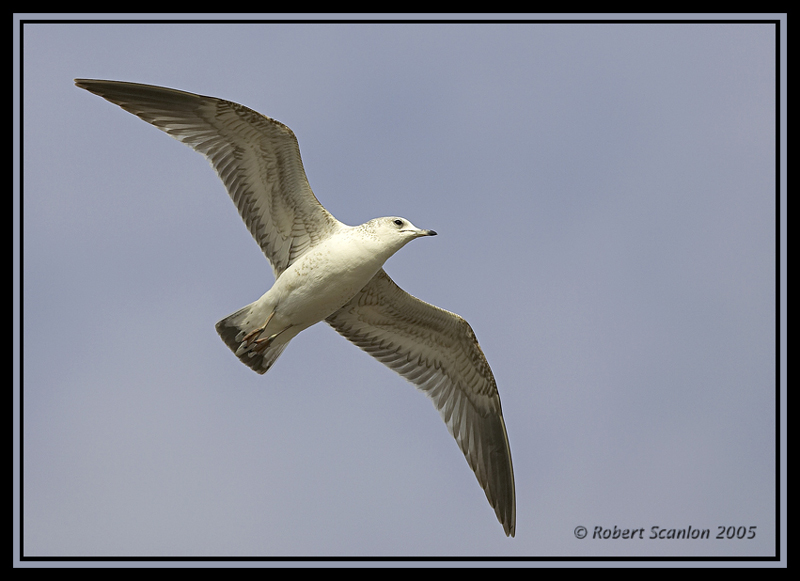
Common Gull (Larus canus) by Robert Scanlon

Common Gull (Larus canus) by Robert Scanlon

And God said, Let the waters bring forth abundantly the moving creature that hath life, and fowl that may fly above the earth in the open firmament of heaven. (Genesis 1:20 KJV)

Words: Charles Cof­fin, Par­is Bre­vi­a­ry, 1736 (Iis­dem cre­a­ti fluc­ti­bus); trans­lat­ed from La­tin to Eng­lish by John Chand­ler and the com­pil­ers of Hymns An­cient and Mo­dern.

Music: St. Fla­vi­an, Day’s Psal­ter, 1563

The Fish in Wave, The Bird on Wing


The fish in wave, the bird on wing,
God bade the waters bear;
Each for our mortal body’s food
His gracious hands prepare.

But other food, of richer cost,
The immortal spirit needs;
By faith it lives on every word
That from His mouth proceeds.

Faith springing from the blood of Christ,
Has flowed o’er every land;
And sinners through the vanquished world
Bow down to its command.

Its light the joy of Heav’n reveals
To hearts made pure within;
And bids them seek by worthy deeds
Eternal crowns to win.

By faith the saints of old were strong
The lion’s wrath to tame;
By faith they spurned the tyrant’s threats,
And scorned the raging flame.

Lord, grant that we the path may tread
Whereon its light doth shine;
And gather, as we onward go,
The fruits of love divine.

O praise the Father; praise the Son,
On Whose most precious blood
Rests all our faith; and praise to Him
Who with Them both is God.

Most information from The Cyber Hymnal

Another great hymn from the past.

*****

See more Birds in Hymns

*

Birds of the Bible – Bird Catcher

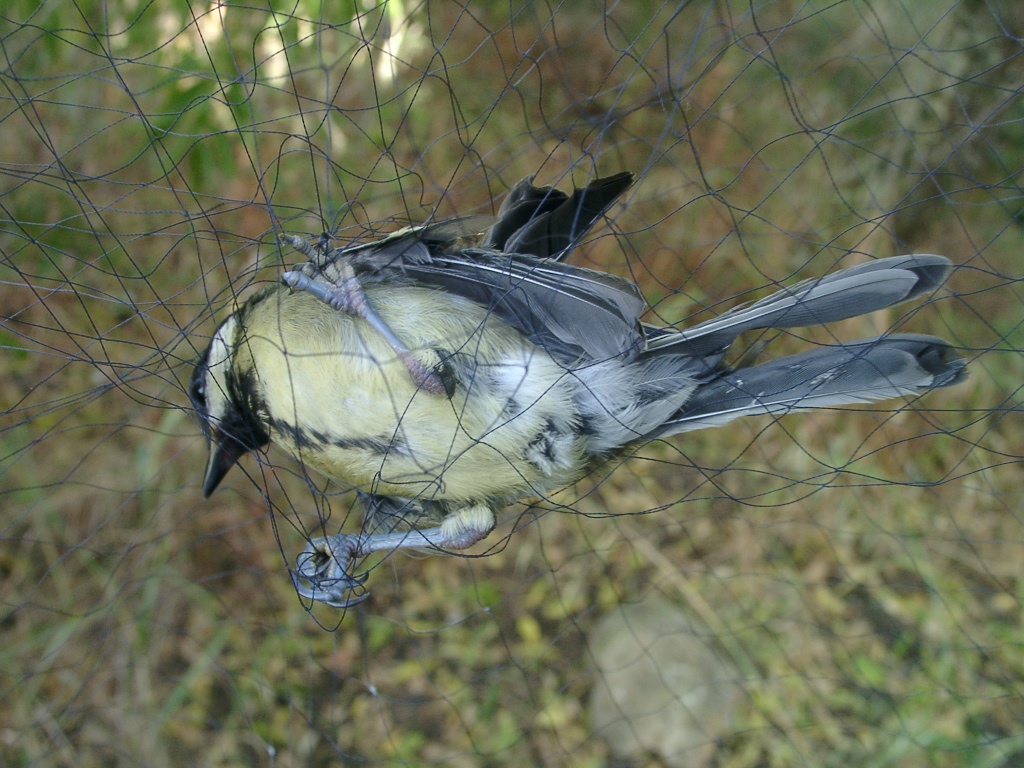
Bird Caught in a Net ©WikiC

Bird Caught in a Net ©WikiC

Fowler

“foul´ẽr (יקשׁ, yōḳēsh): A professional birdcatcher. In the days previous to firearms, birds were captured with nets spread on the ground, in traps and snares. There was a method of taking young birds from a nest, raising them by hand, and when they had become very tame, they were confined in hidden cages so that their voices would call others of their kind to the spot and they could be killed by arrows of concealed bowmen or the use of the throw-stick (Ecclesiasticus 11:30) This was a stick 1 1/2 feet in length and 1/2 inches in diameter, hurled with a rotary motion at the legs of the birds and was very effective when thrown into flocks of ground birds, such as partridge or quail, especially if the birds were running up hill. There was also a practice of sewing a captured bird’s eyelids together and confining it so that its cries would call large numbers of birds through curiosity and they could then be taken in the several ways mentioned. The fowlers supplied the demand for doves and other birds used for caged pets, and furnished the market with wild pigeons and doves for sacrifice and such small birds as were used for food.

For he will deliver thee from the snare of the fowler. And from the deadly pestilence. (Psalms:91:3)

This is David’s promise that the Almighty will deliver us from the evil plans laid to ruin us, as a bird sometimes in its struggles slips the hair and escapes from the “snare” (which see) set for it.

(Here is a video of a modern day “fowler” by patriotledger.)

Our soul is escaped as a bird out of the snare of the fowlers: The snare is broken, and we are escaped. (Psalms 124:7)

Here is the fulfillment of the former promise in a cry of rejoicing. Sometimes the snare held fast, sometimes it broke; then the joy in the heart of a freed man was like the wild exultation in the heart of the escaping bird.

Deliver thyself as a roe from the hands. of the hunter. And as a bird from the hand of the fowler. (Proverbs 6:5)


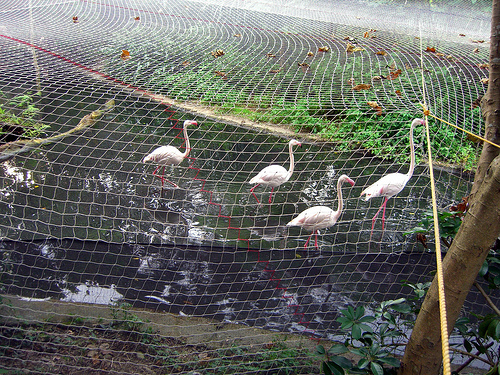
Flamingos Caught in a net©Flickr

Flamingos Caught in a net©Flickr

With methods so primitive as these for taking birds, it must have occurred frequently that a stunned, wounded or entrapped bird slipped even from the hand that held it and made good its escape.

For among my people are found wicked men: they watch, as fowlers lie in wait; they set a trap, they catch men. (Jeremiah 5:26)

Here is the plain comparison strongly drawn between wicked men entrapping their fellows and fowlers taking unsuspecting birds.
The last reference is in Hosea 9:8:

Ephraim was a watchman with my God: as for the prophet, a fowler’s snare is in all his ways, and enmity in the house of his God.

Wherever he goes, the prophet is in danger of being trapped.”

* * *

This article was quoted from:

The International Standard Bible Encyclopedia (1915) is a public domain Biblical encyclopedia. This encyclopedia was published by Wm. B. Eerdmans Publishing Co. It contains articles by nearly 200 scholars about archaeological discoveries, the language and literature of Bible lands, customs, family life, occupations, and the historical and religious environments of Bible people.

In addition there is a newer version which should not be confused with the public domain 1915 edition that can be found freely available at various sites.

Photos and Video added and article layout by Lee

*