Birds of the Bible – Shelter in the Storm

Under His Wings - ( Male Pink-necked Green Pigeon by Rik Seet)

Under His Wings – ( Male Pink-necked Green Pigeon by Rik Seet)

Be merciful to me, O God, be merciful to me! For my soul trusts in You; And in the shadow of Your wings I will make my refuge, Until these calamities have passed by. (Psalms 57:1 NKJV)

In our devotions this morning, we read Psalm 57. The first verse caught my attention because of the shelter from the wings of a bird. Also, I just received again the above picture in an e-mail. Only about the 30th time I have received it. Apparently it is as precious to others as it is to me.

With the Hurricane – Superstorm Sandy just passing by the last few days, this is a good time to remember to put and keep our trust in the Lord.

The beginning of that verse has this title attached: “To the Chief Musician. Set to “Do Not Destroy.” a Michtam of David When He Fled from Saul into the Cave.” David was trying to hide from Saul, just as those up north have been trying to hide from that storm.

“David took refuge under the shelter of God’s wings. He stood “steadfast,” a term indicating firmness, certainty, and determination (v.7). His faith was not blown about by the wind. He clung tenaciously to God. That is why today’s psalm spends more time on the character off God than on the writer’s circumstances.’ (Today in the Word, Day 16, Psalms)

My heart is steadfast, O God, my heart is steadfast; I will sing and give praise. (Psalms 57:7 NKJV)

Another quote, “the prayer (vv 1-4) emphasizes God’s character. He is merciful, protecting, caring, just, and faithful. The enemy may be “ravenous beasts,” but the psalmist can hide beneath His wings as a chick hides beneath a mother bird.”

Be merciful to me, O God, be merciful to me! For my soul trusts in You; And in the shadow of Your wings I will make my refuge, Until these calamities have passed by. I will cry out to God Most High, To God who performs all things for me. He shall send from heaven and save me; He reproaches the one who would swallow me up. Selah. God shall send forth His mercy and His truth. My soul is among lions; I lie among the sons of men Who are set on fire, Whose teeth are spears and arrows, And their tongue a sharp sword.  (Psalms 57:1-4 NKJV)
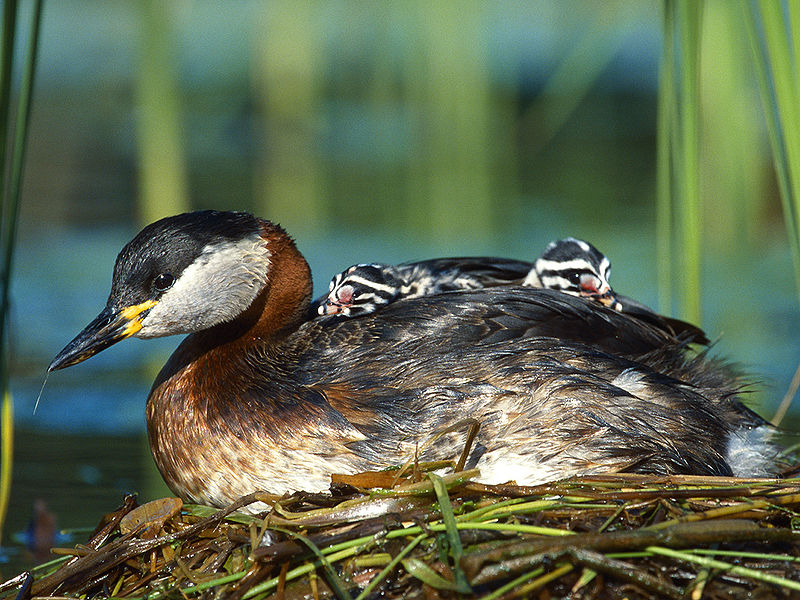
Great Crested Grebe (Podiceps cristatus) babies ©WikiC (Lukasz_Lukasik)

Great Crested Grebe (Podiceps cristatus) babies ©WikiC (Lukasz_Lukasik)

Verses 5 and 11 “focuses our attention on God’s chief attribute–His glory and worthiness to be worshiped”

Be exalted, O God, above the heavens; Let Your glory be above all the earth. (Psalms 57:5 NKJV)

Our prayers and thoughts are with those going through this storm. We have been there in the midst of hurricanes before (Andrew, Charlie, Jean, Frances and those that passed near) and we know it is hard, but there is always a peace that only the Lord can give to get you through. Look to Him.

Wordless Birds

Birds of the Bible

*

Birds of the Bible – Sorry For Their Creation?

Rose-Crowned Fruit-Dove by Birdway

Rose-Crowned Fruit-Dove by Birdway

Then the LORD saw that the wickedness of man was great in the earth, and that every intent of the thoughts of his heart was only evil continually. And the LORD was sorry that He had made man on the earth, and He was grieved in His heart. So the LORD said, “I will destroy man whom I have created from the face of the earth, both man and beast, creeping thing and birds of the air, for I am sorry that I have made them.” But Noah found grace in the eyes of the LORD. (Genesis 6:5-8 NKJV)

Now that is an interesting passage from Scripture. Does God change His Mind? I don’t believe He does, but let’s look see what some of the Commentary writers have to say. The bolding mine.

White-fronted Bee-eater (Merops bullockoides) by Africaddict

White-fronted Bee-eater (Merops bullockoides) by Africaddict

(Believer’s Bible Commentary) – “6:6, 7 The Lord’s sorrow does not indicate an arbitrary change of mind, though it seems that way to man. Rather, it indicates a different attitude on God’s part in response to some change in man’s behavior. Because He is holy, He must react against sin.”

(Barnes – this is long but interesting) – Gen_6:7 – I will wipe away man from the face of the soil. – The resolve is made to sweep away the existing race of man. Heretofore, individuals had departed this life. Adam himself had long since paid the debt of nature. These solemn testimonies to the universal doom had not made any salutary or lasting impression on the survivors. But now a general and violent destruction is to overtake the whole race – a standing monument of the divine wrath against sin, to all future generations of the only family saved.
From man to cattle, creeper and fowl of the sky. – These classes of animated nature being mingled up with man are involved in the same ruin with him. This is of a piece with the curse laid upon the serpent, which was the unconscious organ of the tempter. It is an instance of a law which runs through the whole course of nature, as we observe that it is the method of the divine government to allow for the time the suffering inflicted on an inferior animal, or even on a fellow-creature, by selfish passion. It has an appearance to some minds of harshness and unfairness. But we must remember that these animated creatures are not moral, and, therefore, the violent termination of their organic life is not a punishment; that the pain incidental to this, being apart from guilt, is in itself a beneficial provision for the conservation of life; and that it was not intended that the life of animals should be perpetual. The return of the land to a state of desolation by the destruction of animal and vegetable life, however, has its lesson for man, for whom ultimately all of this beauty and fertility were designed, and from whom it is now withdrawn, along with all the glories it foreshadows, as part of the punishment of his guilt. The tenant has become unworthy of the tabernacle, and accordingly he is dispossessed, and it is taken down and removed.

Anna's Hummingbird (Calypte anna) by S Slayton

Anna’s Hummingbird (Calypte anna) by S Slayton

(Jamieson, Fausset, & Brown) – Genesis 6:5-6 – God saw it … repented … grieved — God cannot change (Malachi_3:6; James_1:17); but, by language suited to our nature and experience, He is described as about to alter His visible procedure towards mankind – from being merciful and long-suffering, He was about to show Himself a God of judgment; and, as that impious race had filled up the measure of their iniquities, He was about to introduce a terrible display of His justice (Ecc_8:11).

(Matthew Henry) – 4. Even the brute-creatures were to be involved in this destruction – Beasts, and creeping things, and the fowls of the air. These were made for man, and therefore must be destroyed with man; for it follows: It repenteth me that I have made them; for the end of their creation also was frustrated. They were made that man might serve and honour God with them; and therefore were destroyed because he had served his lusts with them, and made them subject to vanity. 5. God took up this resolution concerning man after his Spirit had been long striving with him in vain. None are ruined by the justice of God but those that hate to be reformed by the grace of God.

Lilac-breasted Roller (Coracias caudatus) by Africaddict

Lilac-breasted Roller (Coracias caudatus) by Africaddict

(Guzik) – “b. The Lord was sorry that He had made man . . . He was grieved in His heart: God’s sorrow at man, and the grief in His heart, are striking. This does not mean that creation was out of control, nor does it mean that God hoped for something better but was unable to achieve it. God knew all along that this was how things would turn out, but our text tells us loud and clear that as God sees His plan for the ages unfold, it affects Him. God is not unfeeling in the face of human sin and rebellion.”

(Wesley) – “Genesis 6:7 – I will destroy man – The original word is very significant. I will wipe off man from off the earth; as dirt is wiped off from a place which should be clean, and thrown to the dunghill. Or, I will blot out man from the earth, as those lines are blotted out of a book which displease the author, or as the name of a citizen is blotted out of the rolls of the freemen when he is disfranchised. Both man and beast the creeping thing, and the fowls of the air – These were made for man, and therefore must be destroyed with man. It repenteth me that I have made them – For the end of their creation also was frustrated: they were made that man might serve and honour God with them and therefore were destroyed, because he had served his lusts with them, and made them subject to vanity.

Horned Grebe (Podiceps auritus) w young ©USFWS

Horned Grebe (Podiceps auritus) w young ©USFWS

These are just some of the remarks from the Commentaries that I have on my e-Sword program, which I use often. My understanding is that God had created both man and beasts/birds. They were suppose to serve Him and use the birds in His service also. After the fall, (Genesis 3) that is when things changed. Man continued sinned more and more until it was continually night and day – “24/7”. Apparently, they even used the creatures and birds in evil ways. Enough was enough and God had reached the end of his long suffering and had to use justice. Because of His Love, he could not let things continue. Gospel Presentation

Now we see such beautiful birds and wonder how much impressive were they like in their unfallen state. I am so thankful that God saved Noah’s family and at least 2 of each animal and 7 pairs of each of the birds. We see some glimpse of what they must have been like. We also, unfortunately, see the results of the curse on many of our avian friends.

More Birds of the Bible

*

Birds of the Bible – The Common Ostrich


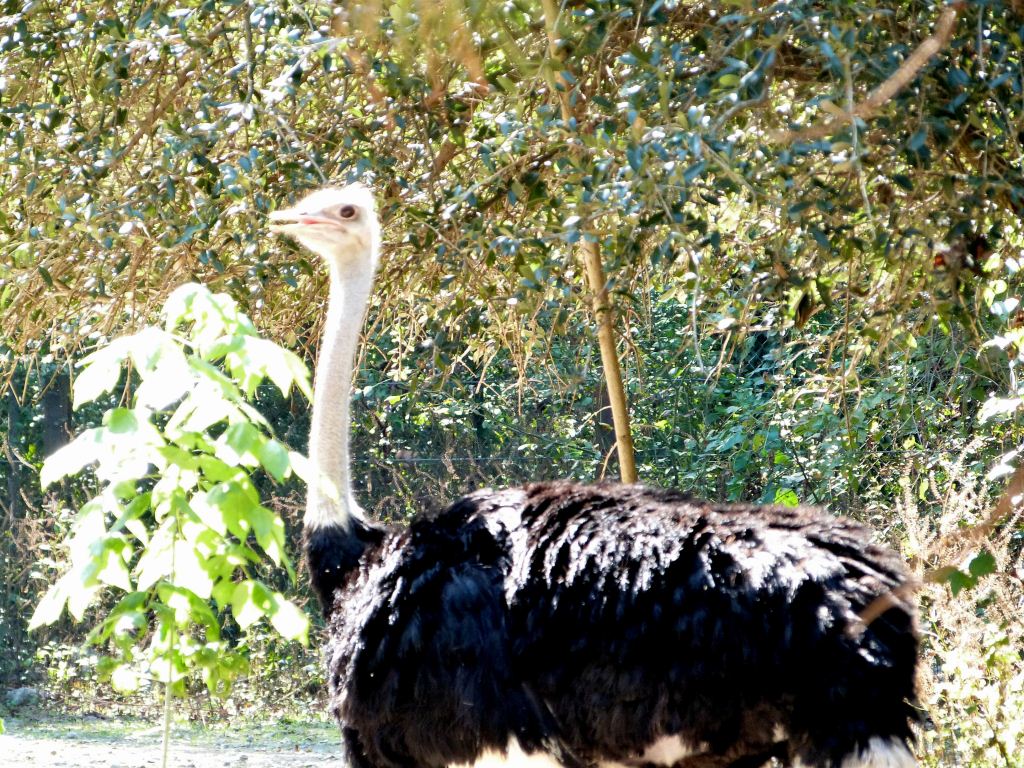
Common Ostrich (Struthio camelus) at Riverbanks Zoo SC by Lee

Common Ostrich (Struthio camelus) at Riverbanks Zoo SC by Lee

Dan and I just recently were on vacation and stopped by the Riverbanks Zoo and Gardens in Columbia, SC. I have see Ostriches before, but it has been awhile. We see the Emus at Zoo Tampa often, but they are not nearly as tall as the Ostrich. I had forgotten that the Lord had created such a huge bird.

The wings of the ostrich wave proudly, But are her wings and pinions like the kindly stork’s? For she leaves her eggs on the ground, And warms them in the dust; She forgets that a foot may crush them, Or that a wild beast may break them. She treats her young harshly, as though they were not hers; Her labor is in vain, without concern, Because God deprived her of wisdom, And did not endow her with understanding. When she lifts herself on high, She scorns the horse and its rider. (Job 39:13-18 NKJV)

The Ostrich does belong to the Struthionidae Family. Currently there are two; the Common Ostrich (Struthio camelus) and the Somali Ostrich (Struthio molybdophanes). The one we saw was the Common. The Ostrich is the largest bird in the world! They are omnivorous flightless birds but make up for their inability to fly with the powerful legs they possess. These birds were built for speed. That is why the reference to the horse and rider. Ostriches can give a horse competition for at least a burst of speed.

Common Ostrich (Struthio camelus) Foot at Riverbanks Zoo SC by Lee

Common Ostrich (Struthio camelus) Foot back at Riverbanks Zoo SC by Lee

“Ostriches usually weigh from 140–320 lb (63 to 145 kilograms), Ostriches of the East African race (S. c. massaicus) averaged 250 lb (115 kg) in males and 220 lb (100 kg) in females, while the nominate subspecies was found to average 240 lb (111 kg) in unsexed adults. At sexual maturity (two to four years), male ostriches can be from 6 ft 11 in to 9 ft 2 in (2.1 to 2.8 m) in height, while female ostriches range from 5 ft 7 in to 6 ft 7 in (1.7 to 2 m) tall. New chicks are fawn with dark brown spots. During the first year of life, chicks grow about 10 in (25 cm) per month. At one year of age, ostriches weigh around 100 lb (45 kilograms). Their lifespan is up to 40 or 45 years.” (Wikipedia with editing)

Common Ostrich (Struthio camelus) Foot at Riverbanks Zoo SC by Lee

Common Ostrich (Struthio camelus) Foot front at Riverbanks Zoo SC by Lee

I am not sure how tall these were, but they had to be close to 8 feet. As I was observing them, I was trying to remember all that the verses said about them. That is one reason I took pictures of their feet. I knew that their feet and legs helped  them run, but also that those same feet were a danger to their young ones. They do have big feet and with an interesting shape as you can see from the photos.

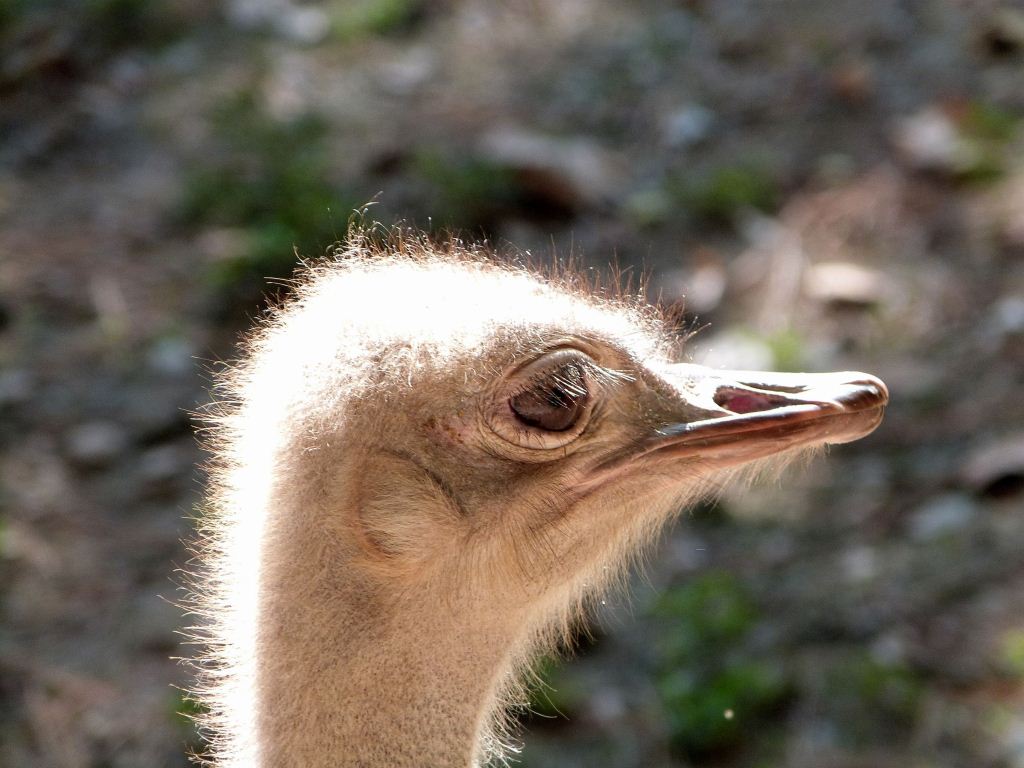
If you notice the size of their head to their body, maybe that is how the Lord “did not endow her with understanding.” The head is interesting though because they are one of the few birds that have eyelashes. They have acute eyesight and hearing, the long neck and legs keep their head up to 9 ft (2.8 m) above the ground, and their eyes are said to be the largest of any land vertebrate – 2.0 in (50 mm) in diameter; they can therefore perceive predators at a great distance. The eyes are shaded from sun light falling from above. However, the head and bill are relatively small for the birds’ huge size”

Common Ostrich (Struthio camelus) Head at Riverbanks Zoo SC by Lee

Common Ostrich (Struthio camelus) Head at Riverbanks Zoo SC by Lee

Oh, sing to the LORD a new song! Sing to the LORD, all the earth. Sing to the LORD, bless His name; Proclaim the good news of His salvation from day to day. Declare His glory among the nations, His wonders among all peoples. For the LORD is great and greatly to be praised; He is to be feared above all gods. (Psalms 96:1-4 NKJV)

Links:

Birds of the Bible – Ostrich

Bible Birds – Ostrich

Struthionidae – Ostriches

Ostrich – Creation Wiki

Ostrich – Wikipedia

Ostrich – The Largest Bird with the Biggest Eyes

*

Ian’s Bird of the Week – European Honey Buzzard

Ian’s Bird of the Week – European Honey Buzzard ~ by Ian Montgomery

Newsletter – 10-14-12

I had a welcome email a couple of weeks ago pointing out an identification error on the Birdway website, thank you Tom of Luxembourg, pointing out that the photos I’d taken of a Buzzard in Alderney in the Channel Islands in 2005 was not a mere Common Buzzard but a much more interesting juvenile European Honey Buzzard. By way of excuses, they do look rather similar and at the time I had Common Buzzards on the brain as I had just been trying unsuccessfully to photograph Common Buzzards in Ireland.

Honey Buzzards are very rare nesting birds in Britain (30-50 pairs) but reasonably common in continental Europe. They are summer visitors, wintering in sub-Saharan Africa and often seen on passage and I was in Alderney in September, a good site for migrating birds including raptors. Both species have very variable plumage, but the Honey Buzzard is slightly larger, longer-necked, longer-tailed and has a slim neck and holds it head forward giving the bird a more cuckoo-like silhouette. It also supposed to hold its wings differently when gliding, second photo, but the subtlety of soaring on ‘smoothly down-curved flattish wings lacking an obvious bend at the carpal joints’ rather evades me.

They get their name from their preferred food, the larvae of bees and (mainly) wasps though they eat a more varied diet when these are not available. The specific name apivorus means ‘bee-eating’ – more accurate than ‘honey’ – and has the same Latin roots as the ‘vore’ part of carnivore and the ‘api’ part of apiarist. The generic Pernis comes from the Greek for ‘hawk’, but taxonomists are not too neurotic about combining different languages.

I saw very few raptors in Finland this year, but I did see several Honey Buzzards including this distant, slightly moth-eaten adult in the third photo. At least I identified this one correctly, though I was unjustifiably pleased in thinking I’d photographed a new species.

Back home in North Queensland, I’m working on the final revisions to the photographs for the digital version of the Pizzey and Knight Field Guide to the Birds of Australia which should be published soon – you may have seen the full page advertisement for it from Gibbon Multimedia Australia http://www.gibbonmm.com.au in the September issue of Birdlife Australia. I’ve recently received the mobile version of the equivalent South African product Roberts VII Multimedia Birds of Southern Africa http://www.sabirding.co.za. It’s a splendid product, a veritable encylopaedia, brilliantly organised and available across many platforms (iPad, iPhone, Android, Windows) so don’t go to Southern Africa without it. It augurs very well for the Australian product, but naturally I keep you posted on its progress.

Best wishes

Ian

******************************

********************
Ian Montgomery, Birdway Pty Ltd,
454 Forestry Road, Bluewater, Qld 4818
Tel 0411 602 737 ian@birdway.com.au
Check the latest website updates:
http://www.birdway.com.au/#updates


Lee’s Addition:

After some time, when he returned to get her, he turned aside to see the carcass of the lion. And behold, a swarm of bees and honey were in the carcass of the lion. (Jdg 14:8)

Thanks, Ian, for the correction. Most of us have not seen either bird, so were upset by correction. It is also good to know that even you, whom I consider an expert, makes mistakes. Makes us feel better.

That aside, that is an neat looking bird. I like the third photo showing up under its wings. These Buzzards are part of the Accipitridae – Kites, Hawks and Eagles Family. There are six Honey Buzzards; the European, plus the Long-tailed, Black, Crested, Barred and Philippine.

See Ian’s Buzzards at his:

Accipitridae Family

European Honey Buzzard

Oriental Honey Buzzard

Also:

Accipitridae – Kites, Hawks and Eagles Family

European Honey Buzzard – Wikipedia

*

Birds of the Bible – Trees and Birds

Eagle in Tree on a windy day by Dan

These were the visions of my head while on my bed: I was looking, and behold, A tree in the midst of the earth, And its height was great. The tree grew and became strong; Its height reached to the heavens, And it could be seen to the ends of all the earth. Its leaves were lovely, Its fruit abundant, And in it was food for all. The beasts of the field found shade under it, The birds of the heavens dwelt in its branches, And all flesh was fed from it. (Daniel 4:10-12 NKJV)

What an interesting passage. Actually, this was part of the vision or dream that Nebuchadnezzar had and he is revealing it to Daniel. He is looking for an explanation for it. (See Daniel 4:19 + for the interpretation)

Daniel gives him the interpretation in the rest of the Chapter 4, but I want to concentrate on the tree and the birds. I have seen so many photos and witnessed birds enjoying themselves in the trees. The Lord created them all and provides for the tree, the beast, the birds, and us.

The trees provide food (fruit and seeds), leaves give shade for the animals and birds, the limbs provide a resting place, especially for birds, but I have seen a few leopards and koalas resting on them also.

Verse like:

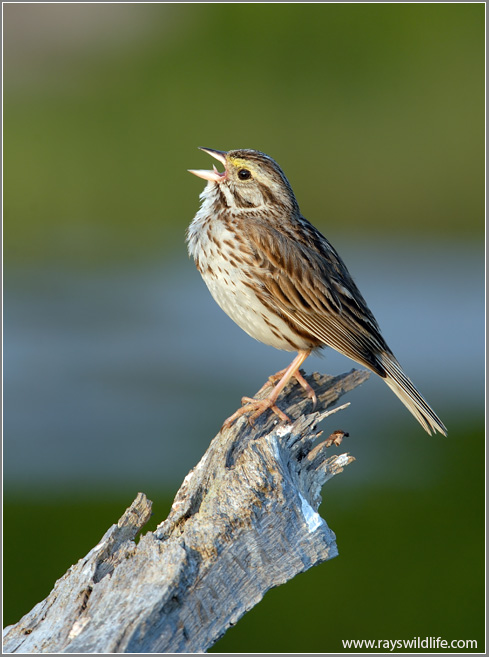
Savannah Sparrow singing by Ray

Savannah Sparrow singing by Ray

By them the birds of the heavens have their home; They sing among the branches. (Psalms 104:12 NKJV)

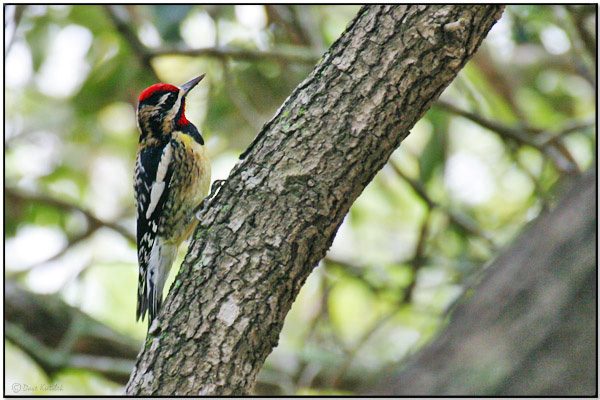
Yellow-bellied Sapsucker (Sphyrapicus varius) by Daves BirdingPix

Yellow-bellied Sapsucker (Sphyrapicus varius) by Daves BirdingPix

The trees of the LORD are full of sap, The cedars of Lebanon which He planted, (Psalms 104:16 NKJV) (Many birds like the sap – Sapsuckers for one)

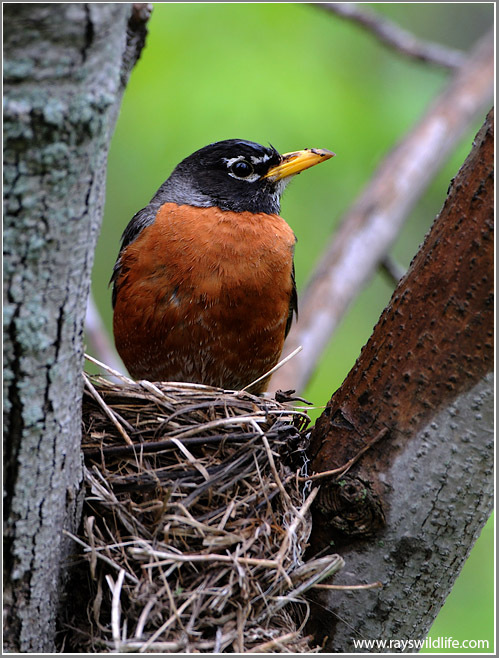
American Robin (Turdus migratorius) in nest by Ray

American Robin (Turdus migratorius) in nest by Ray

Where the birds make their nests; The stork has her home in the fir trees. (Psalms 104:17 NKJV)

And Jesus said to him, “Foxes have holes and birds of the air have nests, but the Son of Man has nowhere to lay His head.” (Matthew 8:20 NKJV)

Another parable He put forth to them, saying: “The kingdom of heaven is like a mustard seed, which a man took and sowed in his field, which indeed is the least of all the seeds; but when it is grown it is greater than the herbs and becomes a tree, so that the birds of the air come and nest in its branches.” (Matthew 13:31-32 NKJV)

Cedar Waxwing on Cedar Tree at Birdwatchers Digest.

Also he spoke of trees, from the cedar tree of Lebanon even to the hyssop that springs out of the wall; he spoke also of animals, of birds, of creeping things, and of fish. (1 Kings 4:33 NKJV)

*

Our Great Creator has wonderfully designed so many things to work together to provide for each other. Birds need trees and trees need birds. He is worthy of our praise and thanksgiving. And don’t you just enjoy watching the birds in the trees?

For His merciful kindness is great toward us, And the truth of the LORD endures forever. Praise the LORD! (Psalms 117:2 NKJV)

Yes, they shall sing of the ways of the LORD, For great is the glory of the LORD. (Psalms 138:5 NKJV)

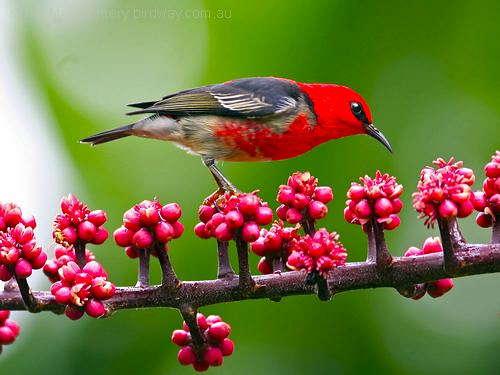
Scarlet Myzomela (Myzomela sanguinolenta) by Ian

Scarlet Myzomela (Myzomela sanguinolenta) by Ian

Great is our Lord, and mighty in power; His understanding is infinite. (Psalms 147:5 NKJV)

For the LORD your God is God of gods and Lord of lords, the great God, mighty and awesome, who shows no partiality nor takes a bribe. (Deuteronomy 10:17 NKJV)

*

Birds of the Bible – Where Did They Go?

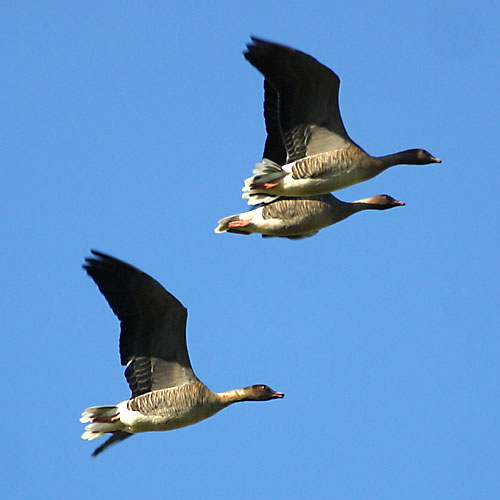
Pink-footed Goose (Anser brachyrhynchus) ©Arthur Grosset

Pink-footed Goose (Anser brachyrhynchus) ©Arthur Grosset

Where did they go? I was wondering that a little over a week ago when we drove 50 miles to Orlando. I keep a small notebook and write down the birds we see as Dan drives. As cross into each county, I start my list for that county by drawing a line, putting the time, temperature if I know it, and what the sky looks like. Other than a Turkey Vulture or Black Vulture in each county, nothing was flying. We saw a few grackles, a Mockingbird, and a few Fish Crows. Coming back, one county I wrote “none” on my notebook. Normally here in Central Florida, we see birds around the ponds and lake. Nothing that day.

The next day, we drove 50 the other direction to Tampa to go to the Lowry Park Zoo. I knew those birds would be there. They are captive. I had the same results. One or two birds, but nothing flying. When I attended church the next day, I had several people tell me that they hadn’t seen any birds at their feeders and wondered if I knew why. I didn’t and don’t have a clue.

I am curious if it is that way up north when the birds start their migrations. You see them one day and then not the next. Our summer birds seem to be here year-round, or at least I thought so.

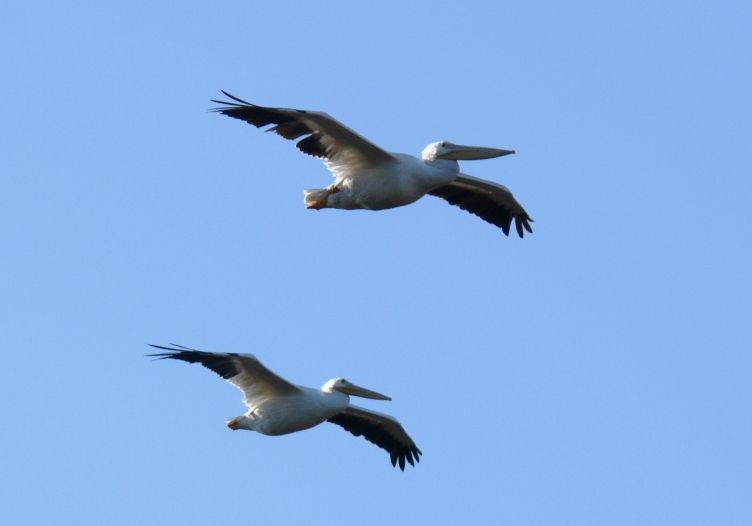
American White Pelican (Pelecanus erythrorhynchos) by Lee

American White Pelican (Pelecanus erythrorhynchos) by Lee

All of that reminded me of the verses in Jeremiah:

I beheld, and indeed there was no man, And all the birds of the heavens had fled. (Jeremiah 4:25 NKJV)

I will take up a weeping and wailing for the mountains, And for the dwelling places of the wilderness a lamentation, Because they are burned up, So that no one can pass through; Nor can men hear the voice of the cattle. Both the birds of the heavens and the beasts have fled; They are gone. (Jeremiah 9:10 NKJV)

That also caused me to think about this past summer. Where did it go? Where did those days and hours go that I had so many plans for. I especially thought I would work on this blog while the birds were gone north for the summer. Well, guess what? Here it is Autumn and it didn’t happen. In fact I am busier now than before they left. I was putting out about one article a day and now struggle to get one out every few days.

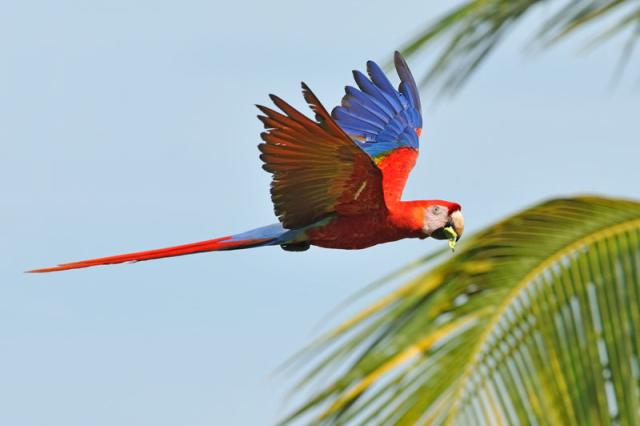
Scarlet Macaw (Ara macao) Reinier Munguia

Scarlet Macaw (Ara macao) Reinier Munguia

Do these verses cause you also to consider where time goes?

Indeed, You have made my days as handbreadths, And my age is as nothing before You; Certainly every man at his best state is but vapor. Selah (Psalms 39:5 NKJV)

Come now, you who say, “Today or tomorrow we will go to such and such a city, spend a year there, buy and sell, and make a profit”; whereas you do not know what will happen tomorrow. For what is your life? It is even a vapor that appears for a little time and then vanishes away. Instead you ought to say, “If the Lord wills, we shall live and do this or that.” (James 4:13-15 NKJV)

This post is just a “rambling” post, but I’m sure most of those who visit here that have blogs have felt the same way at times. I don’t want to just put a post up just for the sake of putting one up. I prefer for it to mean, instill or teach something.

ActiveLink

ActiveLink for today

Seems like lately, everything vies for my time. I have been on Weight Watchers since January (lost 30 lbs so far) and now even they are after my time. They recently released “ActiveLink” which monitors our movements. Sitting at a computer for hours, does not movement make. So now I have to get up and, ugh, exercise every so often or at least walk around. It will be worth it, but it takes “TIME.” That isn’t the only thing I have added lately. I am in new Ladies Bible Study and now I have “homework.” Time, time, time, where does it go?

Can you relate to any of this? I would venture to say many of you can. Oh, but isn’t the Lord great? When we do get time to see his fantastic creation, especially His birds, don’t they bring joy to you?

See also:

Birds of the Bible

Birds of the Bible – Birds of the Air

Wordless Birds

*

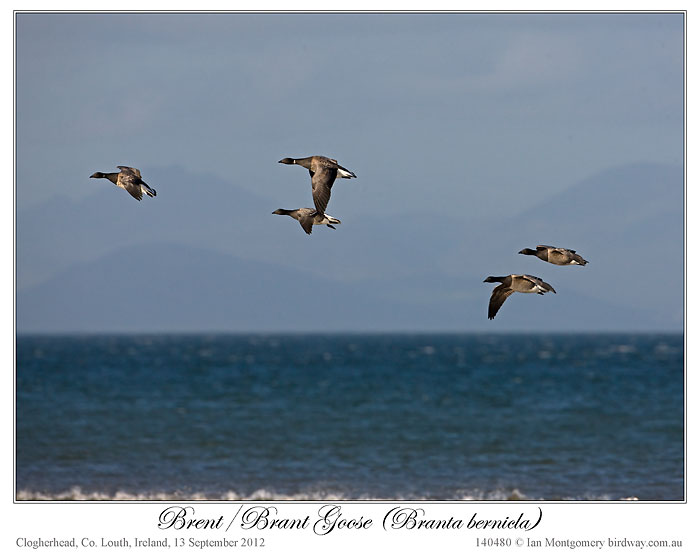
Ian’s Bird of the Week – Brent/Brant Goose

Brent/Brant Goose (Branta bernicla) by Ian 1

Brent/Brant Goose (Branta bernicla) by Ian 1

Ian’s Bird of the Week – Brent/Brant Goose ~ by Ian Montgomery

Newsletter – 9-27-12

My apologies for the long delay since the past posting on the Barnacle Goose. I’m now back home in North Queensland after the unplanned trip to Ireland following the death of my brother in law Gerald and resuming my normal life.

On 6 September we took the dogs for a walk along the strand at the Bull Island in Dublin Bay. As we were leaving, I was surprised to see a flock of Brent Geese, close relatives of the Barnacle Goose so early in the season. Brent Geese are common winter visitors to Ireland but do not usually arrive until much later in September or early October. A week later we visited a strand just north of Clogherhead in Co. Louth and there was another, more accessible flock there and the first photo shows three adults feeding on ‘sea lettuce’, a green alga of the genus Ulva which, along with the sea grass Zostera, often called eel grass, is the main food of Brent Geese in winter.

These are adults, recognisable by the white ‘necklaces’ and the dark, unstriped wings. Different races of Brent/Brant Geese – ‘Brent’ in the British Islands, ‘Brant’ in North America – vary mainly in the colour of the breast. These are Pale-bellied Brent Geese – race hrota – and most of these nest in Greenland and winter in Ireland, one of few species with a transatlantic migration. The nominate Dark-bellied Brent Goose (bernicla) breeds mainly in Russia and winters in northeastern Europe, including Great Britain, and is rare in Ireland. Just after seeing these birds, I read an online newspaper article about the early arrival of Brent Geese in Strangford Lough in Co. Down, Northern Ireland and the writer suggested that favourable tail winds during migration had maybe caused the birds to skip their normal stopover in Iceland, and fly straight to their wintering grounds.

Brent/Brant Goose (Branta bernicla) by Ian 2

Brent/Brant Goose (Branta bernicla) by Ian 2

Among the 70 or so birds in the flock, there were several juveniles including a party of 2 adults and 3 juveniles that stayed together and were maybe a family. The second photo shows three of these birds. The one on the right in the foreground is an adult with dark wings, even though its necklace is rather indistinct. The other two lack the necklace (or are just beginning to acquire one), have stripy wings and have darker mottled rather than scaly breasts. At this age, the juveniles are indistinguishable from Dark-bellied Brent Geese and I initially mistakenly identified them as Dark-bellied. The third photo shows this party coming in to land, looking for all the world like a Peter Scott painting. The mountains in the near background on the left are the Cooley Mountains in northern Co. Louth with the Mourne Mountains in Co. Down in the background.

Brent/Brant Goose (Branta bernicla) by Ian 3

Brent/Brant Goose (Branta bernicla) by Ian 3

With a length of 55-62cm/22-24in, these are smaller than Barnacle Geese and comparable in size to Mallard. Juvenile birds acquire the necklace and breast colour of the adult birds in late September or October, but retain the white wing stripes and are referred to as first winter birds. The fourth photo, taken a few years ago on a wintry January day, shows a first winter bird, complete with necklace and and striped wings being followed by two dark-winged adults.

Brent/Brant Goose (Branta bernicla) by Ian 4

Brent/Brant Goose (Branta bernicla) by Ian 4

I’ve never seen Dark-bellied Brent Geese, but in northern Alaska in June 2008 I came across the western North American race, the Black Brant (nigricans) on its breeding ground on the tundra, fifth photo. The Brent Goose breeds as far north as any bird species in the world at locations such as Ellesmere Island, the northernmost in Canada, and in Spitsbergen, only 10º or 11º from the Arctic Pole.

Brent/Brant Goose (Branta bernicla) by Ian 5

Brent/Brant Goose (Branta bernicla) by Ian 5

This has a very broad necklace and dark brown breast almost merging with the dark brown neck. This is easier to see in the sixth photo. This has sometimes been treated as a separate species.

Brent/Brant Goose (Branta bernicla) by Ian 6

Brent/Brant Goose (Branta bernicla) by Ian 6

In recent decades the populations of Brent Geese have increased greatly. There are about 115,000 Black Brants and about 40,000 Pale-bellied winter in Ireland and 90,000 Dark-bellied winter in Britain.

Best wishes
Ian

**************************************************
Ian Montgomery, Birdway Pty Ltd,
454 Forestry Road, Bluewater, Qld 4818
Tel 0411 602 737 ian@birdway.com.au
Check the latest website updates:
http://www.birdway.com.au/#updates


Lee’s Addition:

And God said, “Let the waters swarm with swarms of living creatures, and let birds fly above the earth across the expanse of the heavens.” (Genesis 1:20 ESV)

Again, Ian, Our deepest sympathy over your loss. We are glad you are back safely at home.

These geese and all the information about them is very interesting and informative. See all of Ian’s Anseranatidae & Anatidae Family. He has quite a selection of them that he has photographed over time.

See also the Anatidae Family here.

*
Birds of the Bible – Smith’s Sparrow

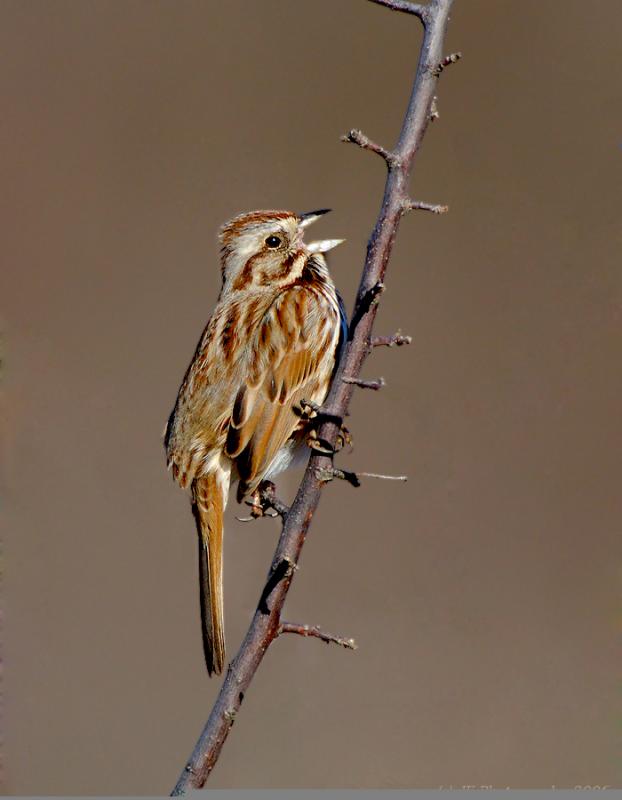
Song Sparrow (Melospiza melodia) by J Fenton

Song Sparrow (Melospiza melodia) by J Fenton

While looking up the word “birds” in the Dictionary section of my e-Sword program, there is an “i” symbol that shows on the tab of the name of a dictionary. That “i” indicates that there is information about your search word. The Smith’s Bible Dictionary had an “i” so I investigated it. This is what I saw:

Birds
        Birds. See Sparrow.

So when I went there, this interesting definition of “sparrow” was found and I wanted to share it with you.

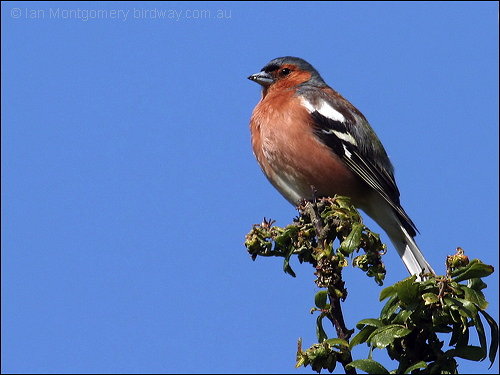
Eurasian Chaffinch (Fringilla coelebs) by Ian

Eurasian Chaffinch (Fringilla coelebs) by Ian

Sparrow

Sparrow. (Hebrew, tzippor, from a root signifying to “chirp” or “twitter”, which appears to be a phonetic representation of the call-note of any passerine (sparrow-like) bird). This Hebrew word occurs upwards of forty times in the Old Testament. In all passages, except two, it is rendered by the Authorized Version indifferently as “bird” or “fowl,” and denotes any small bird, both of the sparrow-like species and such as the starling, chaffinch, greenfinch, linnet, goldfinch, corn-bunting, pipits, blackbird, song-thrush, etc. In Psalm 84:3, and Psalm 102:7, it is rendered “sparrow.”

Corn Bunting (Emberiza calandra) ©WikiC

Corn Bunting (Emberiza calandra) ©WikiC

Yea, the sparrow hath found an house, and the swallow a nest for herself, where she may lay her young, even thine altars, O LORD of hosts, my King, and my God. (Psalms 84:3 KJV)

I watch, and am as a sparrow alone upon the house top. (Psalms 102:7 KJV)

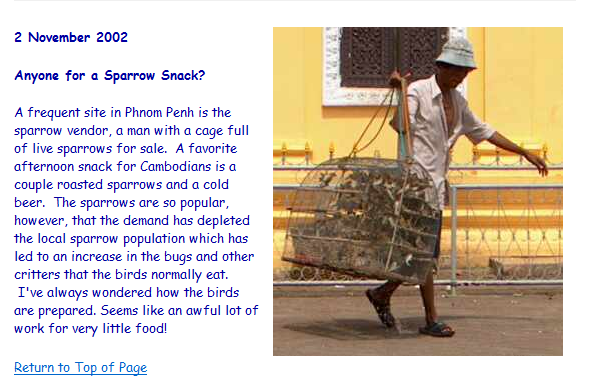
Anyone for a Sparrow Snack?

The Greek, stauthion, (Authorized Version, “sparrow”), occurs twice in the New Testament, Matthew 10:29; Luke 12:6-7. (The birds above mentioned are found in great numbers in Palestine, and are of very little value, selling for the merest trifle, and are, thus, strikingly used by our Saviour, Matthew 10:20, as an illustration of our Father’s care for his children. — Editor).

Are not two sparrows sold for a farthing? and one of them shall not fall on the ground without your Father. (Matthew 10:29 KJV)

Are not five sparrows sold for two farthings, and not one of them is forgotten before God? But even the very hairs of your head are all numbered. Fear not therefore: ye are of more value than many sparrows. (Luke 12:6-7 KJV)

Blue Rock Thrush (Monticola solitarius) by Nikhil Devasar

Blue Rock Thrush (Monticola solitarius) by Nikhil Devasar

The blue thrush, (Petrocossyphus cyaneus), is probably the bird to which the psalmist alludes in Psa_102:7, as “the sparrow that sitteth alone upon the house-top.” It is a solitary bird, eschewing the society of its own species, and rarely more than a pair are seen together. The English tree-sparrow, (Passer montanus), is also very common, and may be seen in numbers on Mount Olivet, and also about the sacred enclosure of the mosque of Omar. This is, perhaps, the exact species referred to in Psalm 84:3.

Yea, the sparrow hath found an house, and the swallow a nest for herself, where she may lay her young, even thine altars, O LORD of hosts, my King, and my God. (Psalms 84:3 KJV)

House Sparrows visiting National Aviary Parrot Show by Lee

House Sparrows visiting NA Parrot Show Outside

Dr. Thompson, in speaking of the great numbers of the house-sparrows and field-sparrows in troublesome and impertinent generation, and nestle just where you do not want them. “They stop your stove — and water-pipes with their rubbish, build in the windows and under the beams of the roof, and would stuff your hat full of stubble in half a day, if they found it hanging in a place to suit them.”

(I added the verses to make it easier and also the “blue thrush, (Petrocossyphus cyaneus)” could not be found. Photos also inserted.)

The Blue Rock Thrush (Monticola solitarius) is a species of chat. This thrush-like Old World flycatcher was formerly placed in the family Turdidae. It is now found in the Muscicapidae family.

Sparrows are found in two families today. The Family – Emberizidae – Buntings, New World Sparrows & Allies and the Family – Passeridae – Old World Sparrows, Snowfinches.

*
Smith’s Bible Dictionary, originally named A Dictionary of the Bible, was a 19th century Bible dictionary containing upwards of four thousand entries that became named after its editor, William Smith. Its popularity was such that condensed dictionaries appropriated the title, “Smith’s Bible Dictionary”.

The original dictionary was published as a three volume set in 1863, in London and Boston, USA. This first edition was followed in 1893 by an expanded four volume version which was published in the United States as A dictionary of the Bible comprising its antiquities, biography, geography, and natural history, edited by Smith and J. M. Fuller.

The original publications are now in the public domain; some derivative, commercial versions are still in copyright.

*

Ian’s Bird of the Week – Barnacle Goose

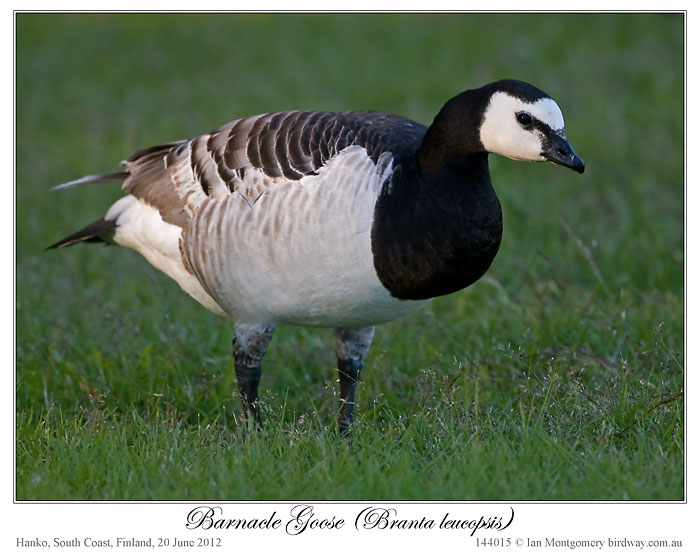
Barnacle Goose (Branta leucopsis) by Ian 1

Barnacle Goose (Branta leucopsis) by Ian 1

Ian’s Bird of the Week – Barnacle Goose ~ by Ian Montgomery

Newsletter – 9-10-12

I’m back in Dublin after the sad and sudden death of my brother-in-law Gerald, so I’ve chosen a soberly dressed and elegant bird with, for me, an Irish connection, the Barnacle Goose. Barnacle Goose nest in the arctic and winter the more remote areas in Western Europe including the West of Ireland. During a particular severe winter in the 1960s I once saw a flock on the Bull Island in Dublin Bay, a place better known for as a winter haunt of the closely related Brent (British Isles) or Brant (North America) Goose.

On the last day of my trip to Finland in June, I came across a flock grazing near the beach in Hanko on the south east coast. I assumed that it was a feral flock as they were very approachable and I discovered only later that Barnacle Geese have been nesting on islands in the Baltic for the past 40 years.

They are relatively small with a length of 55-70cm/22-28in and, I think, very beautiful. The specific name leucopsis means ‘white-faced’ and the genus Branta comprises the mainly black and white geese including the Brant/Brent and the Canadian.

Barnacle Goose (Branta leucopsis) by Ian 2

Barnacle Goose (Branta leucopsis) by Ian 2

The name ‘Barnacle’ was originally applied to the goose not the crustacean and the two are linked by a strange myth that developed in the middle ages when the nesting sites of the goose were unknown and the nature of bird migration was not understood. To explain the mysterious appearance of these geese, it was proposed that they hatched from the goose-liked stalk barnacles Lepas anserifera (‘goose-bearing’) which grows on drift wood. The confusion was confounded by the notion that the goose barnacle was actually a plant and sometimes called the goose tree, below, reproduced from Wikipedia.

Barnacle Goose (Branta leucopsis) by Ian 3

Barnacle Goose (Branta leucopsis) by Ian 3

The myth naturally had religious consequences as it was argued that the Barnacle Geese were not of animal origin or not really fowl. So, eating the goose on meat-less fast days was considered by some Christians to be acceptable. The Jewish faith took a different approach and ruled that they were kosher and must be slaughtered appropriately.

Best wishes
Ian

**************************************************
Ian Montgomery, Birdway Pty Ltd,
454 Forestry Road, Bluewater, Qld 4818
Tel 0411 602 737 ian@birdway.com.au
Check the latest website updates:
http://www.birdway.com.au/#updates


Lee’s Addition:

and the peace of God, which surpasses all understanding, will guard your hearts and minds through Christ Jesus. (Philippians 4:7 NKJV)

Thanks, Ian. Sorry to hear about Gerald. We will keep you and your sister’s family in our prayers. That is an interesting myth.

See more of Ian’s Bird of the Week.

Ian’s Birdway – Ducks & Allies.

*

The Eider – The Cushion Maker.. ~ Nuggets Plus

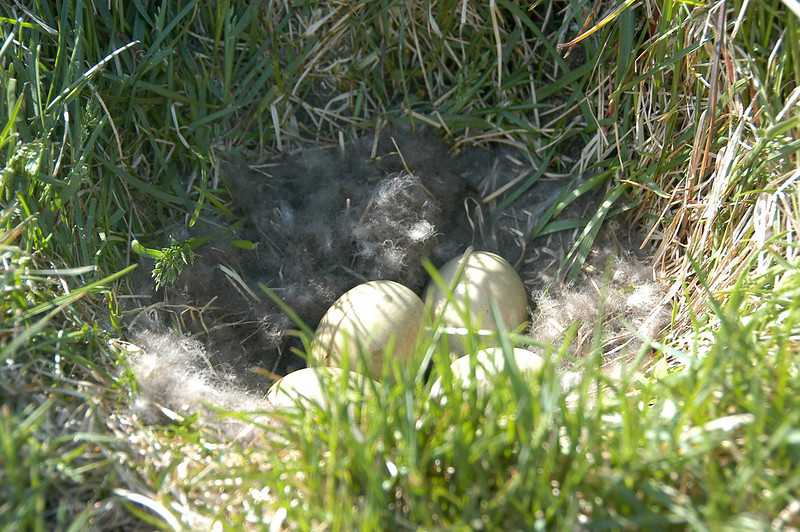
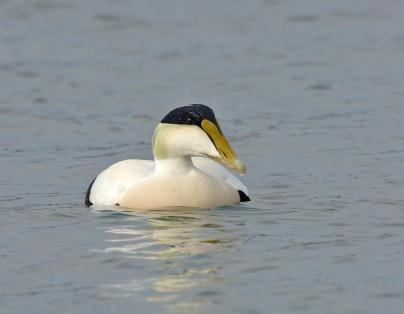
Common Eider (Somateria mollissima) nest by Bob-Nan

Common Eider (Somateria mollissima) nest by Bob-Nan

The Eider Duck – The cushion maker.. ~ by a j mithra
When constructing her nest,
a Female Eider Duck will line it
with soft down feathers
that she plucks from her own breast.
This gives the eggs
the best possible cushioning and insulation.

Nuggets Plus

Nuggets Plus

Jesus didn’t pluck His down feathers,
but, plucked Himself from heaven
and came down to give His whole life
to cushion and insulate our lives..
So that we may hatch to become
more like Him to do His will
in our lives on earth as it is in heaven..

I will both lay me down in peace, and sleep: for thou, LORD, only makest me dwell in safety. (Psalm 4:8)

Yours in YESHUA,
a j mithra

Please visit us at:

Crosstree

ajmithra21

*


Common Eider (Somateria mollissima) by J Fenton M

Common Eider (Somateria mollissima) by J Fenton M

Lee’s Addition:

Thanks, a j, for another very thoughtful article.

*

Birds of the Bible – Patient Herons

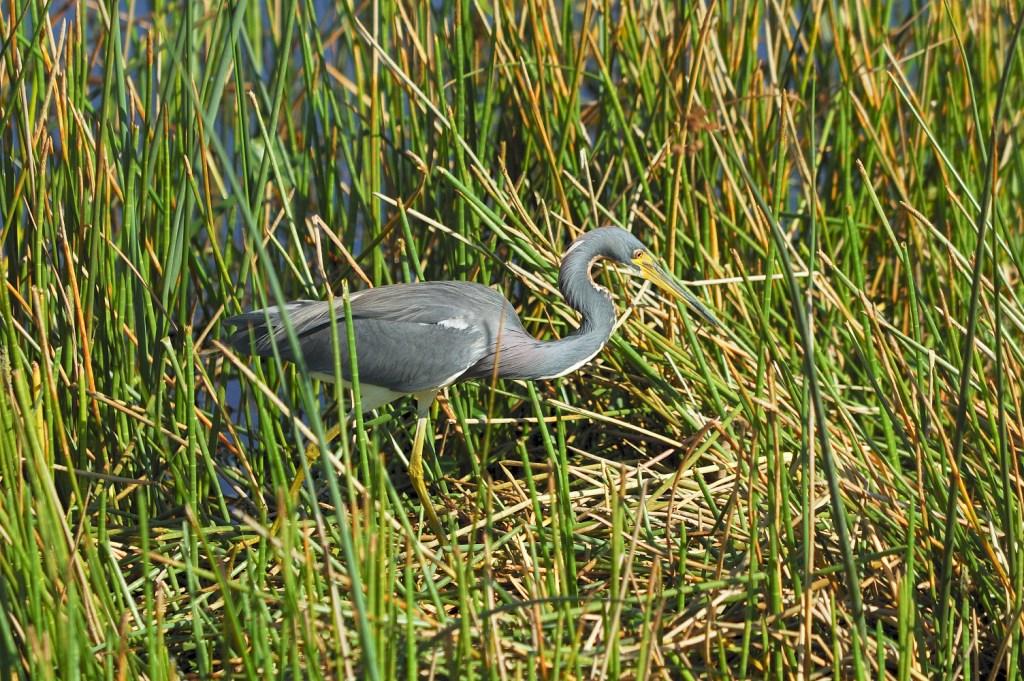
Tricolored Heron at Vierra Wetlands, Vierra, FL

Tricolored Heron at Vierra Wetlands, Vierra, FL

I watch Great Blue Herons, Great Egrets, Cattle Egrets, Little Blue Herons, Tricolored Herons and Green Herons which are quite common in our area. They are all in the same family and all seem to have a characteristic of being very patient. Have you just sat and watched them? When you are out birdwatching it is a habit of those in the Ardeidae – Herons, Bitterns Family to stand very still and wait for some food to swim by or to lean over and strike a pose. They freeze other than a side-to-side movement of their neck.

Herons are mentioned twice in the Bible, and only in a list of unclean birds to not eat. Leviticus 11:19 and Deuteronomy 14:18.

the stork, the heron after its kind, the hoopoe, and the bat. (Leviticus 11:19 NKJV)

the stork, the heron after its kind, and the hoopoe and the bat. (Deuteronomy 14:18 NKJV)

Here is a video of a Great Egret at Lake Parker looking for something in a tree. I strung three short videos together. Taken back in 2008.

The Herons are so patient it reminds me that I need to be more patient. So, here are some of the verses in Scripture that tell us to be patient or to wait:

Rest in the LORD, and wait patiently for Him; Do not fret because of him who prospers in his way, Because of the man who brings wicked schemes to pass. (Psalms 37:7 NKJV)

…I waited patiently for the LORD; And He inclined to me, And heard my cry. (Psalms 40:1 NKJV)

The end of a thing is better than its beginning; The patient in spirit is better than the proud in spirit. (Ecclesiastes 7:8 NKJV)

And a servant of the Lord must not quarrel but be gentle to all, able to teach, patient, (2 Timothy 2:24 NKJV)

Black-crowned Night Heron (Nycticorax nycticorax) ©WikiC

Black-crowned Night Heron (Nycticorax nycticorax) ©WikiC

Here’s a good one for us and the heron when he catches his fish:

And so, after he had patiently endured, he obtained the promise. (Hebrews 6:15 NKJV)

And then one of my favorite passages that has to with waiting, even though the Eagle is mentioned instead of the Heron.

Have you not known? Have you not heard? The everlasting God, the LORD, The Creator of the ends of the earth, Neither faints nor is weary. His understanding is unsearchable. He gives power to the weak, And to those who have no might He increases strength. Even the youths shall faint and be weary, And the young men shall utterly fall, But those who wait on the LORD Shall renew their strength; They shall mount up with wings like eagles, They shall run and not be weary, They shall walk and not faint. (Isaiah 40:28-31 NKJV)

Other links:

Birds of the Bible 

Birds of the Bible – Herons

Ardeidae – Herons, Bitterns Family

*

Bible Birds – Dove, Turtledove and Pigeon’s Introduction

Common Pigeon -aka Rock(Columba livia) by Daves BirdingPix

Common Pigeon -aka Rock(Columba livia) by Daves BirdingPix

Bible Birds – Dove, Turtledove and Pigeon’s Introduction

Doves are in the Columbidae Family of the Columbiformes Order

They are walking birds, feeding both on the ground and in trees; bill slender, grooved, nostrils opening in a fleshy membrane; tail variable, short and square, or long and pointed; feet stout, often reddish. Color usually grayish brown. Call-notes a characteristic cooing.

Sound from xeno-canto.

Mourning Dove (Zenaida macroura) 2 Neal Addy Gallery

Mourning Dove (Zenaida macroura) 2 Neal Addy Gallery

Family Columbidae includes some 310 species. In general the terms “dove” and “pigeon” are used somewhat interchangeably. In ornithological practice, there is a tendency for “dove” to be used for smaller species and “pigeon” for larger ones, but this is in no way consistently applied, and historically the common names for these birds involve a great deal of variation between the terms “dove” and “pigeon.” This family occurs worldwide, but the greatest variety is in Indomalaya and Australasia. Young doves and pigeons are called “squabs.”

Pigeons and doves are stout-bodied birds with short necks, and have short slender bills with a fleshy cere. The species commonly referred to just as “pigeon” is the Feral Rock Pigeon, common in many cities.

Doves and pigeons build relatively flimsy nests from sticks and other debris, which may be placed in trees, on ledges or on the ground, depending on species. They lay one or two eggs, and both parents care for the young, which leave the nest after 7 to 28 days. Doves feed on seeds, fruit and plants. Unlike most other birds, the doves and pigeons produce “crop milk”, which is secreted by a sloughing of fluid-filled cells from the lining of the crop. Both parents produce this highly nutritious substance to feed to the young.

Victoria Crowned Pigeon (Goura victoria) by Lee at Zoo Miami

Victoria Crowned Pigeon (Goura victoria) by Lee at Zoo Miami

Pigeons and doves exhibit considerable variations in size. The largest species is the crowned pigeon of New Guinea, which is nearly turkey-sized, at a weight of 4.4-8.8 lb (2-4 kg) The smallest is the New World ground-dove of the genus Columbina, which is the same size as a House Sparrow and weighs as little as 22 g. With a total length of more than 19 in (50 cm) and weight of almost 2 lb (1 kg), the largest arboreal species is the Marquesan Imperial Pigeon, while the Dwarf Fruit Dove, which may measure as little as 5.1 in (13 cm), has a marginally smaller total length than any other species from this family. Smaller species tend to be known as doves, while larger species as pigeons.

Overall, the Columbidae tend to have short bills and legs, and small heads on large compact bodies. They have a habit of head bobbing was shown to be due to their natural desire to keep their vision constant. The wings are large and have low wing loadings; pigeons have strong wing muscles (wing muscles comprise 31–44% of their body weight) and are amongst the strongest fliers of all birds. They are also highly maneuverable in flight.

Superb Fruit Dove (Ptilinopus superbus) by Ian

Superb Fruit Dove (Ptilinopus superbus) by Ian

The plumage (feathers and colors) of the family is variable. Granivorous (seed eater) species tend to have dull plumage, with a few exceptions, whereas the frugivorous (fruit eater) species have brightly-coloured plumage. The Ptilinopus fruit doves are some of the brightest coloured pigeons, with the three endemic species of Fiji and the Indian Ocean Alectroenas being amongst the brightest coloured. In addition to bright colours pigeons may sport crests or other ornamentation.

Seeds and fruit form the major component of the diet of pigeons and doves. In fact, the family can be divided into the seed-eating or granivorous species (subfamily Columbinae) and the fruit-eating or frugivorous species (the other four subfamilies). The granivorous typically feed on seed found on the ground, whereas the species that feed on fruit and mast tend to feed in trees.

Now when the days of her purification according to the law of Moses were completed, they brought Him to Jerusalem to present Him to the Lord (as it is written in the law of the Lord, “EVERY MALE WHO OPENS THE WOMB SHALL BE CALLED HOLY TO THE LORD” ), and to offer a sacrifice according to what is said in the law of the Lord, “A PAIR OF TURTLEDOVES OR TWO YOUNG PIGEONS.” (Luke 2:22-24 NKJV)

In the Bible (Old Testament), doves or young pigeons were acceptable burnt offerings for those who couldn’t afford a more expensive animal. In the book of Genesis, Noah sent out a dove after the great flood in order to determine how far the floodwaters had receded. Dove is also a term of endearment in the Song of Songs and elsewhere.

When He had been baptized, Jesus came up immediately from the water; and behold, the heavens were opened to Him, and He saw the Spirit of God descending like a dove and alighting upon Him. (Matthew 3:16 NKJV)

Jesus’ parents sacrificed doves on his behalf after his circumcision (Luke 2:24). Later the Holy Spirit descended upon Jesus at his baptism like a dove (Matthew 3:16), and subsequently, the “peace dove” became a common Christian symbol of the Holy Spirit.

(Information from Wikipedia and other internet sources.)

See:

Bible Birds

Bible Birds – Doves and Pigeons

Columbidae Family

Wordless Birds

*