Bible Birds – Heron’s Introduction

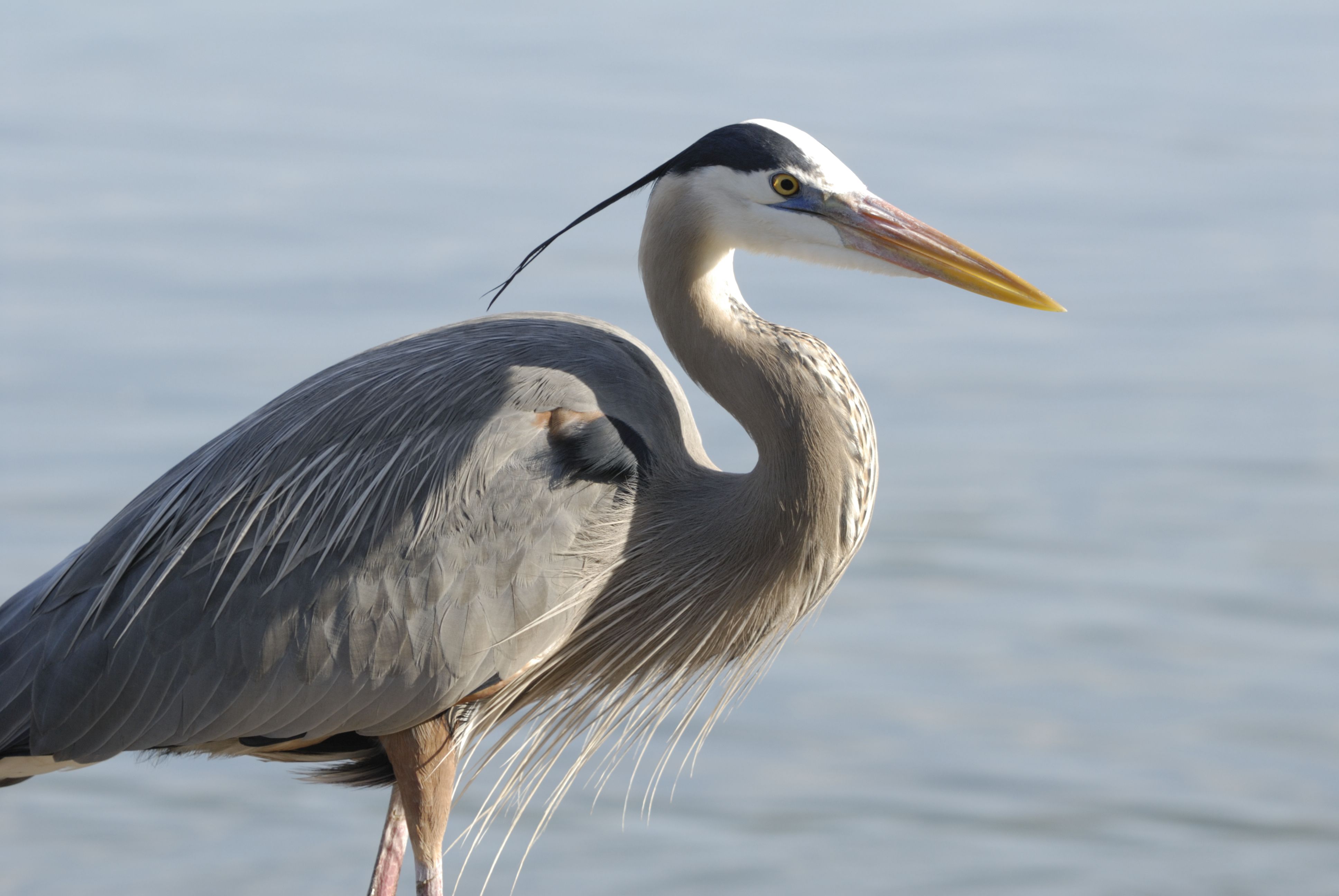
Great Blue Heron by Dan

Great Blue Heron by Dan

Bible Birds – Heron’s Introduction

And the stork, the heron after her kind, and the lapwing, and the bat. (Leviticus 11:19)

Herons belong to the Family of Herons, Bitterns and Egrets called Ardeidae. There are 72 different types of Bitterns and Egrets, but most the species are the Herons. When the Bible says “after her kind” they are referring to that whole family of birds.

The herons are long-legged freshwater and coastal birds in the family Ardeidae, (some are called “egrets” or “bitterns” instead of “heron”). Within Ardeidae, all members of the genera Botaurus and Ixobrychus are referred to as “bitterns”, and Zigzag Heron or Zigzag Bittern. However, egrets are not a separate group from the herons, and tend to be named differently because they are mainly white and/or have decorative plumes. Although egrets have the same build as the larger herons, they tend to be smaller.

Although herons look like birds in some other families, such as the storks, ibises, spoonbills and cranes, they differ from these in flying with their necks retracted, not outstretched.

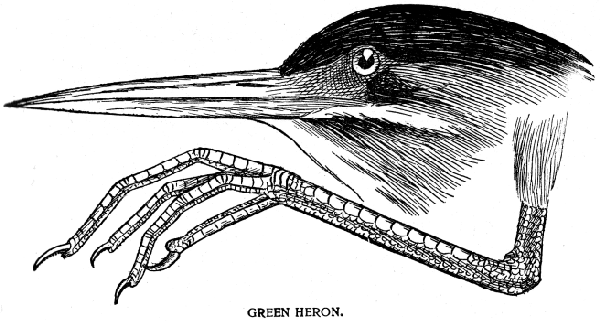
Green Heron - From Color Key

Green Heron – From Color Key

HERONS, EGRETS, AND BITTERNS. Ardeidæ.

Bill usually straight and sharply pointed; lores naked; head feathered; tarsus with transverse scales; middle toe-nail pectinate or with a comblike edge. (From Color Key to North American Birds, by Frank M. Chapman)

The herons are medium to large sized birds with long legs and necks. The smallest species is usually considered the Little Bittern, which can measure under 12 in (30 cm) in length, although all the species in the Ixobrychus genus are small and many broadly overlap in size. The largest species of heron is the Goliath Heron, which stand up to 60 in (152 cm) tall. The necks are able to kink in an s-shape, due to the modified shape of the sixth vertebrae. The neck is able to retract and extend, and is retracted during flight, unlike most other long-necked birds. The neck is longer in the day herons than the night herons and bitterns. The legs are long and strong and in almost every species are unfeathered. In flight the legs and feet are held backward. The feet of herons have long thin toes, with three forward pointing ones and one going backward.

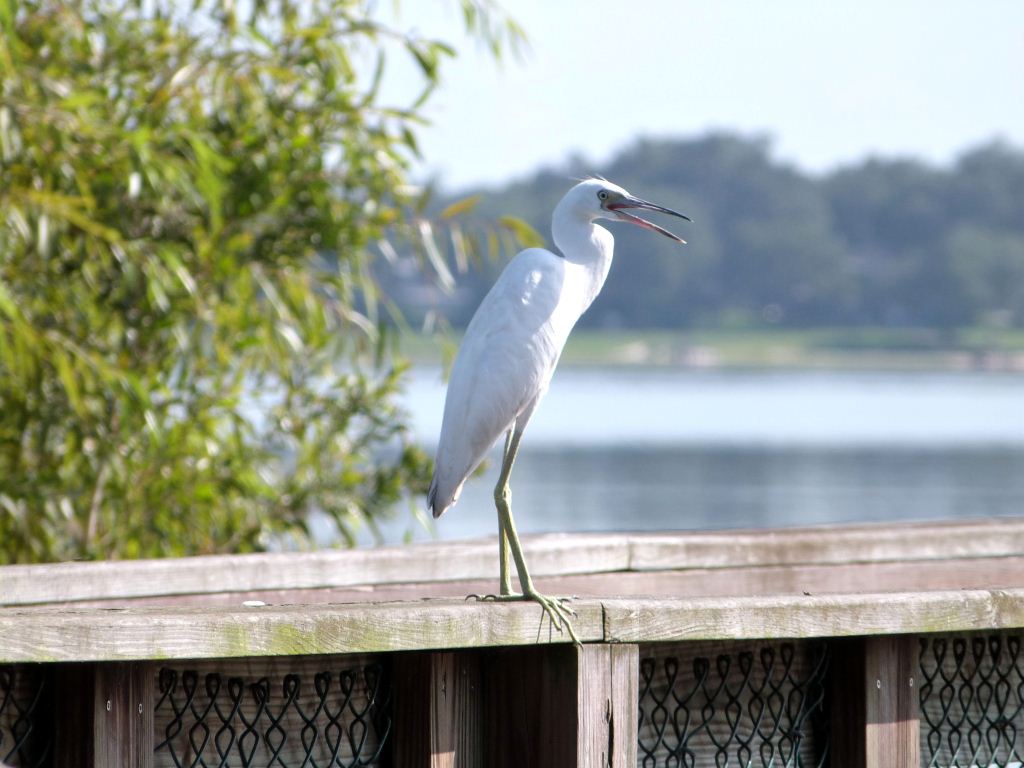
Tricolored Heron Immature Lake Morton 8-3-12

Tricolored Heron Immature Lake Morton 8-3-12

The bill is generally long and harpoon like. It can vary from extremely fine, as in the Agami Heron, to thick as in the Grey Heron. The most atypical bill is owned by the Boat-billed Heron

Boat-billed Heron (Cochlearius cochlearius) Lowry Park Zoo 9-15-12

Boat-billed Heron (Cochlearius cochlearius) Lowry Park Zoo 9-15-12

which has a broad thick bill. The bill, as well as other bare parts of the body, is usually yellow, black or brown coloured, although this colour can vary during the breeding season. The wings are broad and long, with 10-11 primaries primaries feathers (the Boat-billed Heron has only nine), 15-20 secondaries and 12 rectrices (10 in the bitterns). The feathers of the herons are soft and the plumage is usually blue, black, brown, grey or white, and can often be strikingly complex.

the stork, the heron of any kind; the hoopoe and the bat. (Deuteronomy 14:18 ESV)

The Herons listed in Leviticus 11 and Deuteronomy 14 were on a list of birds that were not to be eaten.
*

More Bible Birds

Bible Birds – Herons

Wordless Birds
*

Birdwatching – South Lake Howard Nature Park 7-28-12

Black-Crowned Night Heron at S Lk Howard

Black-Crowned Night-Heron at S Lk Howard

We spent about 25 minutes at the South Lake Howard Nature Park seeing what was around. I was trying to learn how to take photos “right-eyed” (See Anniversary and Other Things). Dan can shut one eye or the other, winking, but I can’t. I only can close the right eye. When I try to wink with the left eye, both eyes go shut. Oh, well, no one is perfect. Glad we stopped by the park to practice my new “technique.”

Little Blue Heron immature

Little Blue Heron immature

We were walking on the boardwalk on the Lake Howard side and spotted a Tricolored Heron and an immature Little Blue Heron. Just as we pulled up the cameras, a Black-crowned Night-Heron popped up on the rail between us and them. Wow! He was very close and we were able to get its photo. Dan kept getting closer to get better shots and the Heron just stayed there until I got too close. Most times we see a Night-Heron, they are hidden in the grass or not really visible. After he left, another Little Blue hopped up on the rail. An Anhinga was in a tree and one of the birds flew to a tree.

Red-winged Blackbird female

Red-winged Blackbird female

When we crossed the road to the pond side, we spotted a Great Blue Heron perched on a tree. The Osprey was up on the Tower checking out the normal Bald Eagles’s domain. I am including the 17 species that I turned in to the eBird.org listing service. It is a nice way to keep track of your birdwatching adventures here in America. It is only for our birds. Not sure if other countries have something like it or not.

Trust in the LORD, and do good; so shalt thou dwell in the land, and verily thou shalt be fed. Delight thyself also in the LORD; and he shall give thee the desires of thine heart. (Psalms 37:3-4 KJV)

Enjoy the Slideshow.

This slideshow requires JavaScript.

South Lake Howard Nature Park, Polk, US-FL
Jul 28, 2012 9:00 AM – 9:25 AM
Protocol: Traveling
0.5 mile(s)
17 species (+1 other taxa)
Muscovy Duck (Domestic type) 3
Great Blue Heron 1
Great Egret 3
Little Blue Heron 2
Tricolored Heron 1 Juvenile 1
Black-crowned Night-Heron 1
White Ibis 5
Black Vulture 1
Osprey 1
Common Gallinule 3
Limpkin 1
Mourning Dove 2
Monk Parakeet 4
Blue Jay 2
Fish Crow 1
Northern Mockingbird 1
Red-winged Blackbird 3
Boat-tailed Grackle 2
*

Colorful Gapes…

Yellow Gape of a Starling Fledgeling ©WikiC

Yellow Gape of a Starling Fledgeling ©WikiC

Colorful Gapes…   ~ by a j mithra

Orni-Theology

Orni-Theology

Hey Kids,
Welcome to the colorful world of Bird.
I know you guys and gals love birds
and that too colorful birds..
But, I wonder how many really know
why God gave colorful gapes for chicks?
May be some of you would love to know the reason, right?
Here we go… Check this out..

Merlin (Falco columbarius) chick in nest ©USFWS

Merlin (Falco columbarius) chick with Red Gape ©USFWS

The mother bird understands
whether her chicks need food or not
from the colors of their gapes.
Similarly, the chick recognises its mother in this way
and understands that the food has arrived.
As seen in these examples in nature,
living beings need to know the meaning of colors
in order to survive.
They also need to possess proper systems of perception..
As kids you too should know the meaning of colors..
Whenever you see RED,
think of the blood that Jesus shed for you and me
on the cross of Calvary..
Whenever you see WHITE,
Think of the Holy Spirit who is willing
to intercede for us..
Whenever you see YELLOW,
think of the golden lanes of heaven,
where you and I would walk with our Lord Jesus…
When you see ORANGE,
think of the eternal fire in hell,
that would consume all sinner..

Though ye have lien among the pots, yet shall ye be as the wings of a dove covered with silver, and her feathers with yellow gold (Psalm 68:13)

Yours in YESHUA,
a j mithra

*

More Birdwatching Terms

More Orni-Theology

*

Ian’s Bird of the Week – Little Grebe

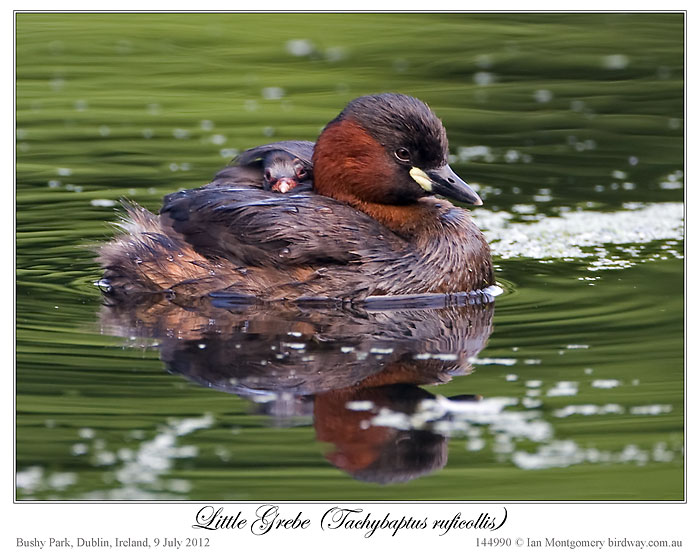
Little Grebe (Tachybaptus ruficollis) by Ian 1

Little Grebe (Tachybaptus ruficollis) by Ian 1

Ian’s Bird of the Week – Little Grebe ~ by Ian Montgomery

Newsletter – 7/22/12

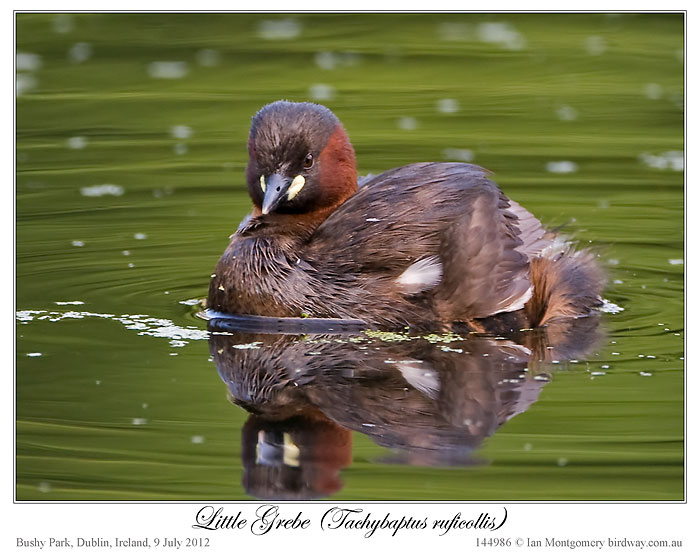
When I was in Dublin – I’m now back home in North Queensland – and we were waiting for the arrival of my niece’s baby, we used to take the dogs for a walk in nearby Bushy Park along the River Dodder. In the park, there is a large artificial pond with an island and I soon found this Little Grebe or ‘Dabchick’ patiently incubating eggs on her nest.

Grebes are usually fairly shy, so a nesting one is a good photo opportunity as they build their floating nests in the open in shallow water. The nest is anchored to submerged vegetation and branches and the fact that it is floating gives it some protection from changing water levels after rain, for example. The second photo was taken on the 26 June, the day when my niece’s daughter finally arrived.

Little Grebe (Tachybaptus ruficollis) by Ian 2

Little Grebe (Tachybaptus ruficollis) by Ian 2

It was a while before I could check the progress of the Little Grebe again and when we returned on the 9th June, third photo, the nest had vanished and, as there had been some bad weather in the meantime, I feared the worst. Both adults were still present but there was no obvious sign of any chicks. However, if you look carefully at this bird, you’ll see that the left wing is slightly raised and not folded flat.

Little Grebe (Tachybaptus ruficollis) by Ian 3

Little Grebe (Tachybaptus ruficollis) by Ian 3

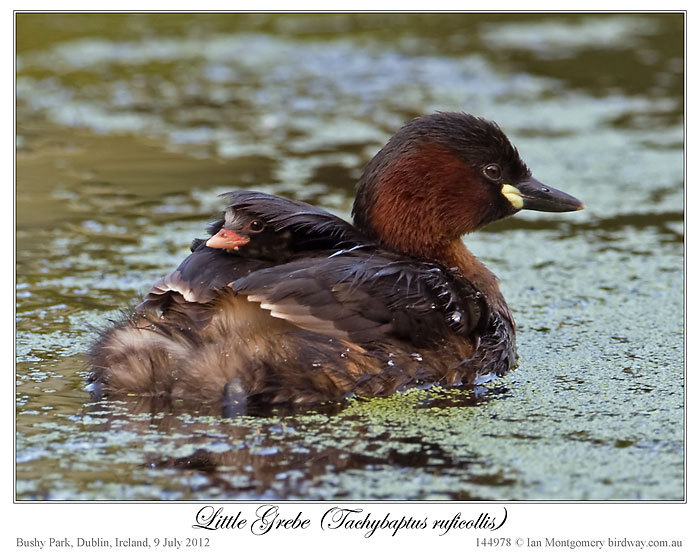
The reason for this became clear when the bird turned around, revealing a chick carefully tucked away under the wing.

Little Grebe (Tachybaptus ruficollis) by Ian 4 with chick

Little Grebe (Tachybaptus ruficollis) by Ian 4

The fourth photo was taken on the same day. We returned again 4 days later and I saw only the one adult and no chick but there is plenty of cover around the island and I may have missed it.

Little Grebe (Tachybaptus ruficollis) by Ian 5 with chick

Little Grebe (Tachybaptus ruficollis) by Ian 5

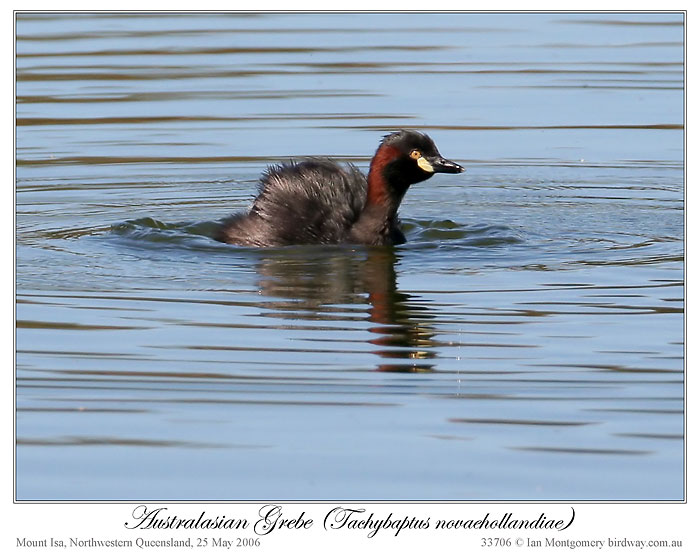
Any Australian birders would immediately notice the similarity between the Eurasian Little Grebe and the Australasian Grebe. They can be distinguished in breeding plumage by the amount of rufous on the neck, throat and breast. These are rufous in the Little Grebe (hence the specific name ruficollis) but the throat and breast of the Australasian Grebe are black as in the fifth photo. Other distinguishing field marks are the yellow, rather than reddish-brown, iris and the greater amount of white under the tail of the Australasian Grebe, though the latter is not evident in this photo.

Australasian Grebe (Tachybaptus novaehollandiae) by Ian

Australasian Grebe (Tachybaptus novaehollandiae) by Ian

These are fairly trivial differences and for a long time the two were treated as conspecific. However, the ranges of the two overlap in New Guinea (are ‘sympatric’) and it is usual to treat them as separate species with the Little Grebe being widespread throughout Eurasia and Africa and the Australasian Grebe occurring in New Guinea, Australia and New Zealand.

Best wishes

Ian
**************************************************
Ian Montgomery, Birdway Pty Ltd,
454 Forestry Road, Bluewater, Qld 4818
Tel 0411 602 737 ian@birdway.com.au
Check the latest website updates:
http://www.birdway.com.au/#updates
**************************************************


Lee’s Addition:

I love the photos of the little one riding under the wing of the parent. Of course that brings to mind several verses.

Keep me as the apple of the eye, hide me under the shadow of thy wings, (Psalms 17:8 KJV)

How excellent is thy lovingkindness, O God! therefore the children of men put their trust under the shadow of thy wings. (Psalms 36:7 KJV)

He shall cover you with His feathers, And under His wings you shall take refuge; His truth shall be your shield and buckler. (Psalms 91:4 NKJV)

We see the Pied-billed Grebe and the Horned Grebe here. It would be neat to see those two that Ian had the privilege of seeing. The Grebes belong to the Podicipedidae family. There are 23 Grebes worldwide.

See more:

Ian’s Bird of the Week articles.

Podicipedidae – Grebes Family

*

Nuggets Plus – Bleeding Mom Pelican..

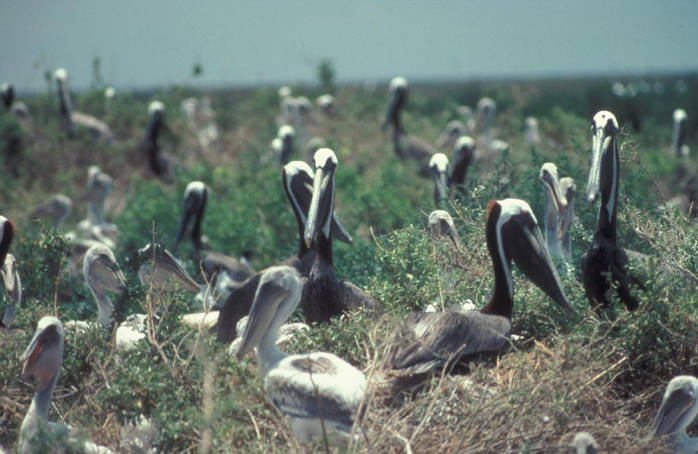
Brown Pelican (Pelecanus occidentalis) rookery ©USFWS

Brown Pelican (Pelecanus occidentalis) rookery ©USFWS

Bleeding Mom Pelican.. ~ by a j mithra

The Mom pelican
regurgitates food for her babies,
and in doing so,

Nuggets Plus

Nuggets Plus

blood from the macerated fish
spots her snowy white breast –
hence giving the impression
of piercing her own chest
to let blood as food for her young…
Do you know that our Lord Jesus
doesn’t give us regurgitated food.
But, let Him to be pierced
on the cross and shed His blood..
to give Himself as the Living bread…

“I am the living bread which came down from heaven: if any man eat of this bread, he shall live for ever: and the bread that I will give is my flesh, which I will give for the life of the world.” John 6:51

Yours in YESHUA,

a j mithra

Please visit us at:

Crosstree

ajmithra21

See More Nuggets Plus

*

Birds of the Bible – Descending Like A Dove

When I have my devotions, I sit in a chair by the window that faces the bird feeders. So while reading, I notice the birds busily getting their daily quota of my seed. I have been reading currently through the Gospels and keep coming upon when Jesus was baptized and the “Spirit of God descended like a dove?” That phrase is in all four Gospels; Matthew 3:16; Mark 1:10, Luke 3:22 and in John 1:32.

I have 3 or 4 Mourning Doves and a group of 9-11 Eurasian Collared Doves that come to eat quite frequently at about the time I am reading. So I have been noticing them more lately. They sort of flutter down to the feeders. The Red-winged Blackbirds and the Boat-tailed Grackles seem to sail in and then put on their brakes to land. The few House Sparrows don’t seem to flutter like the Doves either.

When He had been baptized, Jesus came up immediately from the water; and behold, the heavens were opened to Him, and He saw the Spirit of God descending like a dove and alighting upon Him. (Matthew 3:16 NKJV)

Barnes says – “The Spirit of God – See Mat_3:11. This was the third person of the Trinity, descending upon him in the form of a dove, Luk_3:22. The dove, among the Jews, was the symbol of purity of heart, harmlessness, and gentleness, Mat_10:16; compare Psa_55:6-7. The form chosen here was doubtless an emblem of the innocence, meekness, and tenderness of the Saviour. The gift of the Holy Spirit, in this manner, was the public approbation of Jesus Joh_1:33, and a sign of his being set apart to the office of the Messiah. We are not to suppose that there was any change done in the moral character of Jesus, but only that he was publicly set apart to his work, and solemnly approved by God in the office to which he was appointed.”

Pulpit Commentary – “The dove-Spirit on Christ. “Descending like a dove, and lighting upon him.” Comparing the accounts given by the evangelists, it still remains uncertain whether what was seen by John actually had the form of a dove, or hovered or brooded as a descending bird does. But for our fixed associations, and the familiar comments, we should be more willing to see that the brooding, resting, abiding of the Spirit on Jesus, is the thing intended to be set prominently before us by the figure. It will be safer, perhaps, to fix attention on both the explanations.”

Doves in Israel

Doves in Israel ©©

And immediately, coming up from the water, He saw the heavens parting and the Spirit descending upon Him like a dove. (Mark 1:10 NKJV)

Matthew Henry – “(2.) He saw the Spirit like a dove descending upon him. Note, Then we may see heaven opened to us, when we perceive the Spirit descending and working upon us. God’s good work in us is the surest evidence of his good will towards us, and his preparations for us. Justin Martyr says, that when Christ was baptized, a fire was kindled in Jordan: and it is an ancient tradition, that a great light shone round the place; for the Spirit brings both light and heat.”

Bible Knowledge Comm. – “Second, He saw the Spirit descending on Him like a dove, in a visible dovelike form, not in a dovelike way (cf. Luk_3:22). The dove imagery probably symbolized the Spirit’s creative activity (cf. Gen_1:2). In Old Testament times the Spirit came on certain people to empower them for service (e.g., Exo_31:3; Jdg_3:10; Jdg_11:29; 1Sa_19:20, 1Sa_19:23). The coming of the Spirit on Jesus empowered Him for His messianic mission (cf. Act_10:38) and the task of baptizing others with the Spirit, as John predicted (Mar_1:8).”

J Vernon McGee – “Mark 1:10-11 – Here we see the Trinity brought together in a very definite way. We see the Lord Jesus, the second Person of the Godhead; the Spirit of God who descends like a dove upon Him—the Spirit is the third Person of the Godhead; and the voice from heaven saying, “Thou art my beloved Son” is that of the Father, the first Person of the Godhead. So the Trinity is brought to our attention. And this, by the way, is heaven’s seal upon the Person and dedication of Jesus.   You will notice that things are happening very fast here. He is the Servant. John the Baptist is the one who introduces Him, and then God the Father identifies Him and puts His seal upon Him. Next the temptation will initiate Him.”

Mourning Dove (Zenaida macroura) by Quy Tran

Mourning Dove (Zenaida macroura) by Quy Tran

And the Holy Spirit descended in bodily form like a dove upon Him, and a voice came from heaven which said, “You are My beloved Son; in You I am well pleased.” (Luke 3:22 NKJV)

Life Application Study Bible – “Luke 3:21-22 – Theologians have long been troubled by Jesus’ allowing himself to be baptized by John. After all, this baptism was for sinners. Why, then, did Jesus do it? He did it because he is both God and human—he underwent baptism and even death as only a human could; he lived a sinless life and rose from the dead as only God could. This baptism by John in the Jordan River was another step in his identification with us sinful people; and the arrival of the dove signifies God’s approval. Now Jesus would officially begin his ministry as God’s beloved Son walking the dusty roads of Israel. When you are hurting, depressed, broken, remember: You have a Savior who understands your humanity. When you sin, remember: He has paid the price for your disobedience.

This is one of several places in Scripture where all the members of the Trinity are mentioned—Father, Son, and Holy Spirit. In the traditional words of the church, the one God exists in three persons but one substance, coeternal and coequal. No explanation can adequately portray the power and intricacy of this unique relationship. There are no perfect analogies in nature because there is no other relationship like the Trinity.

Gill – “like a dove upon him; either in the form of a dove, or this corporeal form, whatever it was, descended and hovered on him as a dove does:”

I did not know Him; but that He should be revealed to Israel, therefore I came baptizing with water.” And John bore witness, saying, “I saw the Spirit descending from heaven like a dove, and He remained upon Him. I did not know Him, but He who sent me to baptize with water said to me, ‘Upon whom you see the Spirit descending, and remaining on Him, this is He who baptizes with the Holy Spirit.’ And I have seen and testified that this is the Son of God.” (John 1:31-34 NKJV)

Ironside – “Then John says, “This is he of whom I said, After me cometh a man which is preferred before me: for he was before me. And I knew him not” (vv. 30-31a). Evidently he had been out in company where Jesus was, but he did not understand that this was the Messiah until now. He “knew him not: but that he should be made manifest to Israel, therefore am I come baptizing with water. And John bare record, saying, I saw the Spirit descending from heaven like a dove”-you see this event takes place after the baptism, which is not referred to here, but is mentioned in other Gospels-”I saw the Spirit descending from heaven like a dove, and it abode upon him. And I knew him not: but he that sent me to baptize with water, the same said unto me, Upon whom thou shalt see the Spirit descending, and remaining upon him, the same is he which baptizeth with the Holy Ghost” (vv. 31-33). The great work that John was sent to do was nearing an end. Now here is the climax: “I saw and bare record that this is the Son of God.” Did John really know that? Yes, he did-“I saw, and bare record that this is the Son of God” (v. 34). Do you know that, dear friend? Have you trusted Him for yourself? Oh, if you have never trusted Him before, won’t you come to God, owning your sin? “Behold the Lamb of God, which taketh away the sin of the world.”

*** From the above remarks from the different commentaries and the four verses, it seems that the Dove descending on Christ and resting there is for several reason. John the Baptist had been told to look for that sign so that he would know who the Messiah was. Also, the verse help reveal the work of the Trinity, especially the Holy Spirit (our Dove). And most important of all, those verse point to Our Savior or “the Lamb of God, which taketh away the sin of the world.” I trust you know Him as your personal Savior.

The next time I watch a Dove landing, I am sure what I have just gleaned from these writers and my reading of the Bible will bring to mind Jesus’ baptism and the how the Holy Spirit descended like a Dove and God speaking from heaven, confirming that He is the Son of God.

Quotes are from my e-Sword program.

See ~ Birds of the Bible – Doves

Sharing The Gospel

*

Video by  CherokeePhoenix

*

I know these are not Doves, but Gulls, but they remind me of the Dove’s landings at my feeders.

*

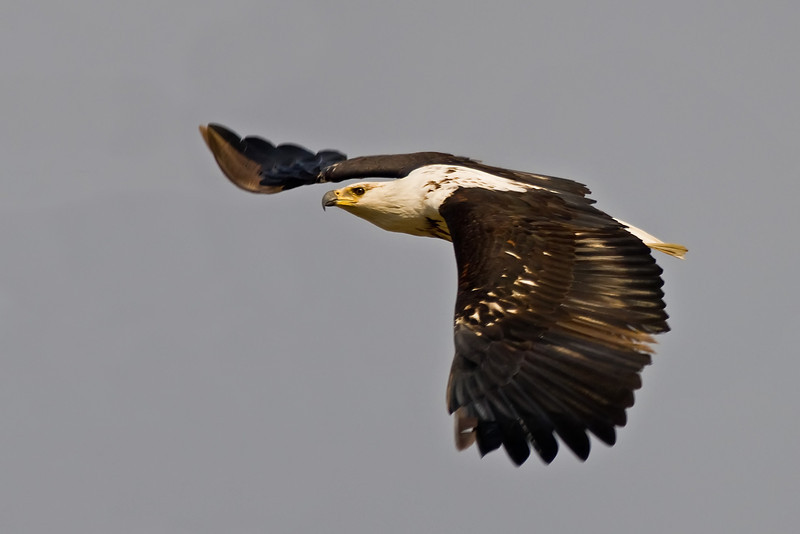
Ms. Theresa’s Thoughts – Eagles’ Wings

African Fish Eagle (Haliaeetus vocifer) by Africaddict

Ms. Theresa’s Thoughts – Eagles’ Wings

You have seen what I did to the Egyptians, and how I bore you on eagles’ wings and brought you to Myself. (Exodus 19:4 NKJV)

How sweet and loving is God that takes such good care of not only the birds but us as well. But the only way we are brought to God is accepting Him as our Lord and Savior.

*

Wordless Birds

*

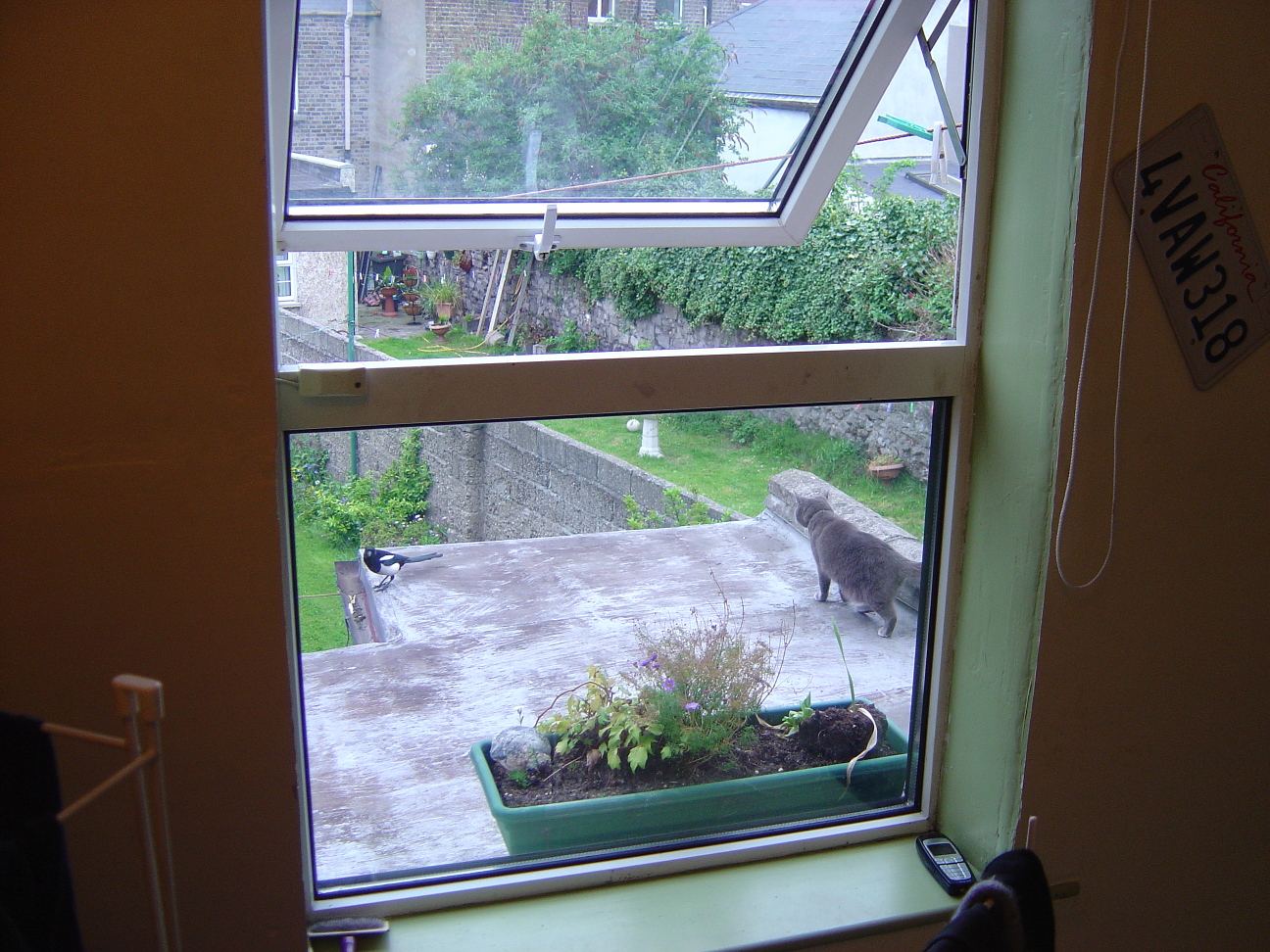
I Just Happened ~ by Dottie Malcolm

Outside A Window ©©jmason

I Just Happened ~ by Dorothy Belle Malcolm

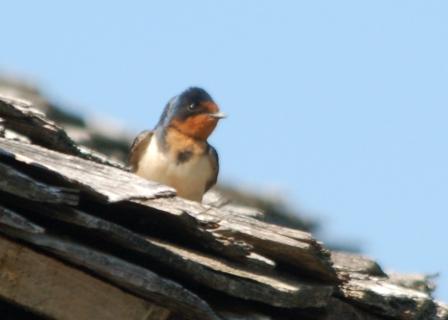
How many times have I said either out loud or to myself – “I just happened.” That seems to say it all for me when certain things occur. For instance, this spring I just happened to be looking out the family room window and saw the most beautiful bird. The colors were bright blue, red, and orange. In less than a minute it was gone. I had never seen one like it all the 30 plus years in Florida. Looking it up in a bird book the colors were described as blue-black, cinnamon belly and a reddish-brown chin. Well, yes, better than I described it. It was a Barn Swallow which I have not seen again.

Barn Swallow in Cades Cove by Dan

Barn Swallow in Cades Cove by Dan

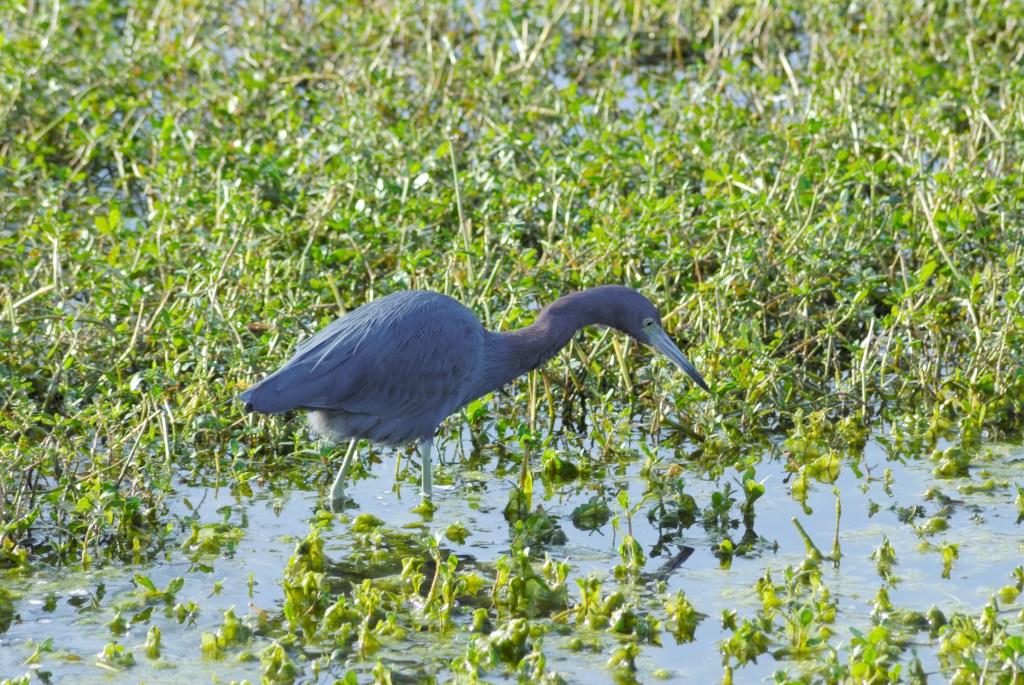
Also I had a first time visit from a non-breeding adult Little Blue Heron. Of course it was a result of “I just happened” to be looking out the same window and also had to look it up in a book.

Little Blue Heron at Lake Howard, Winter Haven, FL

Now that I think about it, maybe this particular window is proving to be a real winner for the “just happen” events. Come to think further about it, I recall seeing a pair of Orioles once.

The only thing is none of these birds have ever been seen by me again. Oh well, as long as I have the window, the book and the “I just happened,” perhaps ……

You will show me the path of life; In Your presence is fullness of joy; At Your right hand are pleasures forevermore. (Psalms 16:11 NKJV)

Other articles by Dottie:

*

How Birds Are Named

American Robin (Turdus migratorius) eating by Jim Fenton

American Robin (Turdus migratorius) eating by Jim Fenton

HOW BIRDS ARE NAMED

From ~ Color Key to North American Birds, by Frank M. Chapman

Birds have two kinds of names. One is a common, vernacular, or popular name; the other is a technical or scientific name. The first is usually given to the living bird by the people of the country it inhabits. The second is applied to specimens of birds by ornithologists who classify them.

Common names in their origin and use know no law. Technical names are bestowed under the system of nomenclature established by Linnæus and their formation and application are governed by certain definite, generally accepted rules. The Linnæan system, as it is now employed by most American ornithologists, provides that a bird, in addition to being grouped in a certain Class, Order, Family, etc., shall have a generic and specific name which, together, shall not be applied to any other animal.

Our Robin, therefore, is classified and named as follows:

CLASS AVES, Birds.

ORDER PASSERES, Perching Birds.

Suborder Oscines, Singing Perching Birds.

Family –Turdidæ Thrushes.

Subfamily Turdinæ Thrushes.

Genus, Turdus Thrushes.

Species, migratorius American Robin.

The Robin’s distinctive scientific name, therefore, which it alone possesses, is Turdus migratorius. There are numerous other members of the genus Turdus, but not one of them is called migratorius and this combination of names, therefore, applied to only one bird.

The questions Why use all these Latin terms? Why not call the bird “Robin” and be done with it? are easily answered. Widely distributed birds frequently have different names in different parts of their range. The Northern Flicker (Colaptes auratus), for instance, has over one hundred common or vernacular names. Again, the same name is often applied to wholly different birds. Our Robin (Turdus migratorius) is not even a member of the same family as the European Robin (Erithacus rubecola.) If, therefore, we should write of birds or attempt to classify them only by their common names, we should be dealing with such unfixed quantities that the result would be inaccurate and misleading. But by using one name in a language known to educated people of all countries, a writer may indicate, without danger of being misunderstood, the particular animal to which he refers. Among people speaking the same tongue, where a definite list of vernacular names of animals has been established, they can of course be used instead of the scientific names.
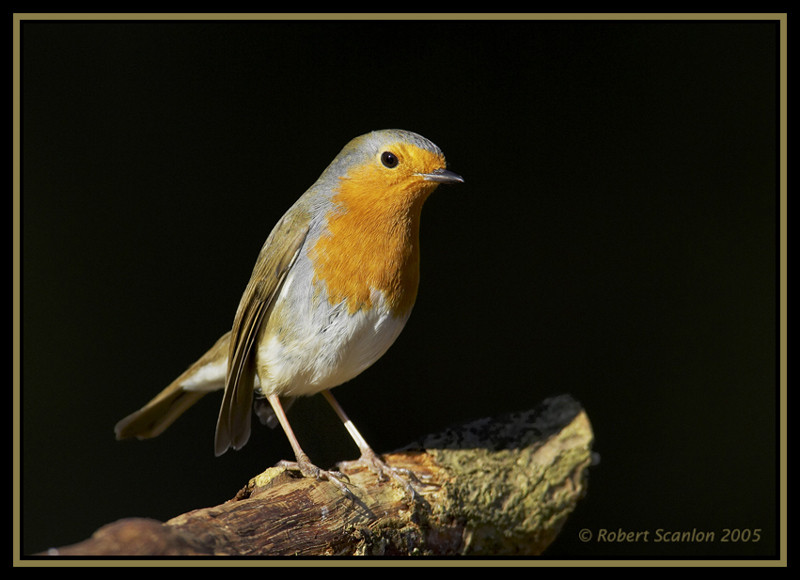
European Robin (Erithacus rubecula) by Robert Scanlon

European Robin (Erithacus rubecula) by Robert Scanlon

Such a list of North American birds has been prepared by the American Ornithologists’ Union. It furnishes a common as well as scientific name for each of our birds, and is the recognized standard of nomenclature among American ornithologists. The names and numbers of birds employed in this Color Key are those of the American Ornithologists’ Union’s ‘Check-List of North American Birds.’

It will be observed that in this ‘Check-List,’ and consequently in the following pages, many birds have three scientific names, a generic, specific, and subspecific. The Western Robin, for example, appears as Turdus migratorius propinquus. What is the significance of this third name?

In the days of Linnæus, and for many years after, it was supposed that a species was a distinct creation whose characters never varied. But in comparatively recent years, as specimens have been gathered from throughout the country inhabited by a species, comparison frequently shows that specimens from one part of its range differ from those taken in another part of its range. At intervening localities, however, intermediate specimens will be found connecting the extremes.

Generally, these geographical variations, as they are called, are the result of climatic conditions. For instance, in regions of heavy rainfall a bird’s colors are usually much darker than they are where the rainfall is light. Song Sparrows, for example, are palest in the desert region of Arizona, where the annual rainfall may not reach eight inches, and darkest on the coast of British Columbia and Alaska, where the annual rainfall may be over one hundred inches. In going from one region, however, to the other the gradual changes in climate are accompanied by gradual changes in the colors of the Song Sparrows, and the wide differences between Arizona and Alaska Song Sparrows are therefore bridged by a series of intermediates.

Variations of this kind are spoken of as geographic, racial, or subspecific and the birds exhibiting them are termed subspecies. In naming them a third name, or trinomial is employed, and the possession of such a name indicates at once that a bird is a geographic or racial representative of a species, with one or more representatives of which it intergrades.

Returning now to the Robin. Our eastern Robins always have the outer pair of tail-feathers tipped with white and, in adults, the back is blotched with black; while Robins from the Rocky Mountains and westward have little or no white on the outer tail-feathers, and the back is dark gray, without black blotches. These extremes are connected by intermediate specimens sharing the characters; of both eastern and western birds. We do not, therefore, treat the latter as a species, but as a subspecies, and consequently, apply to it a subspecific name or trinomial, Turdus migratorius propinquus, (propinquus, meaning nearly related.)

A further study of our eastern Robin shows that in the southern parts of its breeding range (the Carolinas and Georgia), it varies from the northern type in being smaller in size and much paler and duller in color; and to this second geographical variety is applied the name Turdus migratorius achrusterus, (achrusterus, meaning less highly colored).

After the recognition of western and southern races of the Robin under three names (trinomial) it would obviously be inconsistent to apply only two names (binomial) to our eastern bird, the former being no more subspecies of the latter than the latter is of the former. In other words, to continue to apply only generic and specific names to the Eastern Robin would imply that it was a full species, while the use of a trinomial for the Western or the Southern Robin shows them to be subspecies. As a matter of fact we know that there is but one species of true Robin in the United States, consequently in accordance with the logical and now generally accepted method, we apply to that species the name Turdus migratorius, and this is equally applicable to Robins from east, south or west. When, however, we learn that the Eastern Robin is not a species but a subspecies, we repeat the specific name by which it was made known and call it Turdus migratorius migratorius.

It may be asked, Why give names to these geographical races? Why not call Eastern, Western and Southern Robins by one name, Turdus migratorius, without regard to their climatic variations?

In reply, two excellent reasons may be given for the recognition of subspecies by name; first, because in some cases they differ from one another far more than do many species, when it would clearly be inadvisable to apply the same name to what are obviously different creatures. For example, it has lately been discovered by Mr. E. W. Nelson that the small, black-throated, brown-breasted, Quails or Bob-whites of southern Mexico, through a long series of intermediates inhabiting the intervening region, intergrade with the large, white-throated, black-and-white breasted, Bob-white of our northern states. It would be absurd to call such wholly unlike birds by the same name, nor could we give a full specific name to the Mexican Bob-white since at no place can we draw a line definitely separating it from the northern Bob-white. Furthermore, the use of only two names would conceal the remarkable fact of the intergradation of two such strikingly different birds; a fact of the first importance to students of the changing within species.

For much the same reason we should name those birds which show less pronounced variations, such as are exhibited by the Robin. Here we have a species in the making, and in tracing the relation between cause and effect, we learn something of the influences which create species. Thus, climate has been definitely proven so to alter a species, both in size and color that, as we have seen in the case of the Song Sparrows, marked climate changes are accompanied by correspondingly marked changes in the appearance of certain animals. In naming these animals we are, in effect, giving a ‘handle to the fact’ of their speciation by environment.

Bring out with you every living thing of all flesh that is with you: birds and cattle and every creeping thing that creeps on the earth, so that they may abound on the earth, and be fruitful and multiply on the earth.” So Noah went out, and his sons and his wife and his sons’ wives with him. Every animal, every creeping thing, every bird, and whatever creeps on the earth, according to their families, went out of the ark. (Genesis 8:17-19 NKJV)

Since it is evident that a bird may vary much or little, according to the governing conditions and its tendency to respond to them, no fixed rule can be laid down which shall decide just what degree of difference are deserving a name. It follows, therefore, that in some cases ornithologists do not agree upon a bird’s claim to subspecific rank.

In North America, however, questions of this kind are referred to a committee of seven experts of the American Ornithologists’ Union, and their decision establishes a nomenclature, which is accepted as the standard by other American ornithologists and which has been adopted in this volume.

Spotted Redshank (Tringa erythropus) by W Kwong

Spotted Redshank (Tringa erythropus) by W Kwong – Listed as a Recent Sighting – NARBA

Foreign birds of wholly accidental occurrence, most of which have been found in North America but once or twice, are included in the systematic list of North American birds, but are not described or figured in the body of the book, where their presence would tend to convey an erroneous impression of their North American status. Furthermore, records of the presence of birds so rare as these can be properly based on only the capture of specimens.

In the preparation of the following pages both author and artist have had full access to the collections of the American Museum of Natural History, and they are also glad to acknowledge their indebtedness to William Brewster of Cambridge, Massachusetts, to Robert Ridgway, Curator of Birds in the United States National Museum, and to C. Hart Merriam, Chief of the Biologic Survey, for the loan of specimens for description and illustration.

(Some editing to correct a few names and wording. Bolding is mine.)

Today, the I.O.C, which I use here on the blog, is now the International Ornithologist Union. They are trying to standardize an English Name and a Scientific Names for all the birds of the world.

The article is a little technical, but helps explain the naming process. As I have said previously, Adam had it a little easier. There were less species and subspecies. Now there are over 10,400 species and at present, 20,989 subspecies. God commanded the birds to multiply and they have been obeying. Now we have the challenge of trying to put names on all of them. Every time they grow a different colored feather, I think they name it either a new species or a subspecies. :o)

See:

Birds of the World

Birds of the Bible

Leaving the Ark

Seven by Seven

*
How To Learn A Bird’s Name

Topography of a Bird - Bluebird

Topography of a Bird – Bluebird – Color Key to NA Birds, 1912

INTRODUCTION

HOW TO LEARN A BIRD’S NAME

Out of the ground the LORD God formed every beast of the field and every bird of the air, and brought them to Adam to see what he would call them. And whatever Adam called each living creature, that was its name. (Genesis 2:19 NKJV)

“How can I learn to know the birds?” is the first question of the seeker after bird-lore. The scientist’s reply, “By shooting them and studying their structure and markings in detail,” may do for the few who, like himself, desire to know the birds scientifically; but it is emphatically not the answer to give the ninety and nine who, while they desire to secure an intimate, accurate knowledge of birds, will not gain it at the sacrifice of bird-life.

In the present volume, therefore, an attempt has been made so to group, figure, and describe our birds that any species may be named which has been definitely seen. The birds are kept in their systematic Orders, a natural arrangement, readily comprehended, but, further than this, accepted classifications have been abandoned and the birds have been grouped according to color and markings.

A key to the Orders gives the more prominent characters on which they are based; telling for example, the external differences between a Duck and a Grebe. In comparatively few instances, however, will the beginner have much difficulty in deciding to what Order a bird belongs. Probably eight times, out of ten the unknown bird will belong to the Order Passeres, or Perching Birds, when one has only to select the color section in which it should be placed, choose from among the colored figures the bird whose identity is sought, and verify one’s selection by reading the description of the bird’s characteristics and the outline of its range.

In the case of closely related species, and particularly subspecies, the subjects of range and season are of the utmost importance. Most subspecies resemble their nearest allies too closely to be identified in life by color alone, and in such cases a bird’s name is to be learned by its color in connection with its distribution and the season in which it is seen.

During the breeding period, unless one chance to be in a region where two races intergrade, subspecific names may be applied to the bird in nature with some certainty, for it is a law that only one subspecies of a species can nest in the same area; but during migrations and in the winter, when several subspecies of one species may be found associated, it is frequently impossible to name them with accuracy.

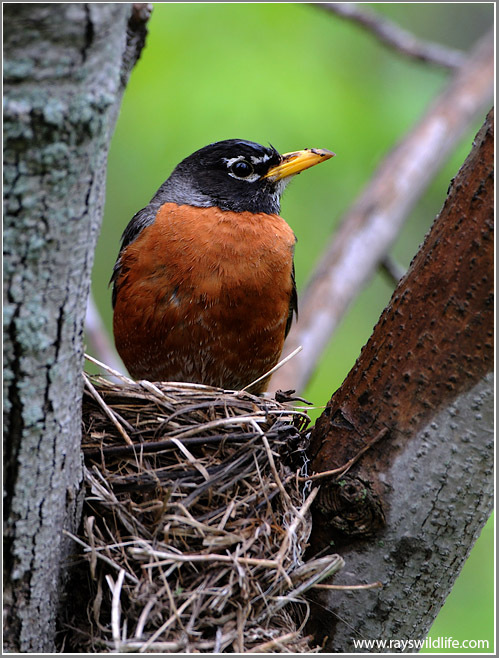
American Robin (Turdus migratorius) in nest by Ray

American Robin (Turdus migratorius) in nest by Ray

For example, during the summer one need have no hesitancy in calling the Robins of the lowlands of South Carolina the Southern Robin (Turdus migratorius achrusterus) but later, when the Northern Robins (Turdus migratorius migratorius) begin to appear, it would be difficult, if not impossible, to distinguish them in life from the resident birds.

If it were possible to impress the student, who proposes to name the bird in the bush, with the absolute necessity for careful, definite observation he would be saved many disappointing and discouraging experiences.

It is not possible to examine your bird too thoroughly. Never be satisfied with a superficial view and a general impression. Look at your bird, if you can, from several points of view; study its appearance in detail, its size, bill, crown, back, tail, wings, throat, breast, etc., and AT ONCE enter what you see in a note-book kept for that purpose. In this way, and this way alone, can you expect to compete with those who use the gun.

It does not follow, however, that because one does not collect specimens of birds one cannot study them scientifically. While the student may not be interested in the classification of birds purely from the standpoint of the systematist, he is strongly urged to acquaint himself with at least the arrangement of the Orders and Families of our birds and their leading structural characters.

To the student who desires to prepare himself for his work afield such a study may well come before he attempts to name the birds. But where the chief end in view is to learn a bird’s name, the more technical side of the subject may be deferred. In any event, it should not be neglected. This orderly arrangement of knowledge will not only be practical benefit in one’s future labors but it will bring with it that sense of satisfaction which accompanies the assurance that we know what we know.

Eastern Bluebird (Sialia sialis) by S Slayton

Eastern Bluebird (Sialia sialis) by S Slayton

As one learns to recognize bird after bird it is an admirable plan to classify systematically one’s list of bird acquaintances under their proper Orders and Families. These may be learned at once from the systematic table at the end of the book, where the numbers which precede each species are arranged serially, and hence systematically.

In some instances, as an aid to identification in the field, descriptions of birds’ notes have been included. It is not supposed that these descriptions will convey an adequate idea of a bird’s song to a person who has never heard it, but it is hoped that they may occasionally lead to the recognition of calls or songs when they are heard.

An adequate method of transcribing bird’s notes has as yet to be devised and the author realizes only too well how unsatisfactory the data here presented will appear to the student. It is hoped, however, that they may sometimes prove of assistance in naming birds in life.

As has been said before, the aim of this volume is to help students to learn the names of our birds in their haunts. But we should be doing scant justice to the possibilities of bird study if, even by silence, we should imply that they ended with the learning to know the bird. This is only the beginning of the quest which may bring us into close intimacy with the secrets of nature. The birds’ haunts and food, their seasons and times of coming and going; their songs and habits during courtship, their nest-building, egg-laying, incubating and care of their young, these and a hundred other subjects connected with their lives may claim our attention and by increasing our knowledge of bird-life, add to our love of birds.

***

The above is from the Color Key To North American Birds, 1912. Some of that information is going to be incorporated into various articles, especially the Birdwatching and Birds of the World sections.

*

Ms. Theresa’s Thoughts – Nests

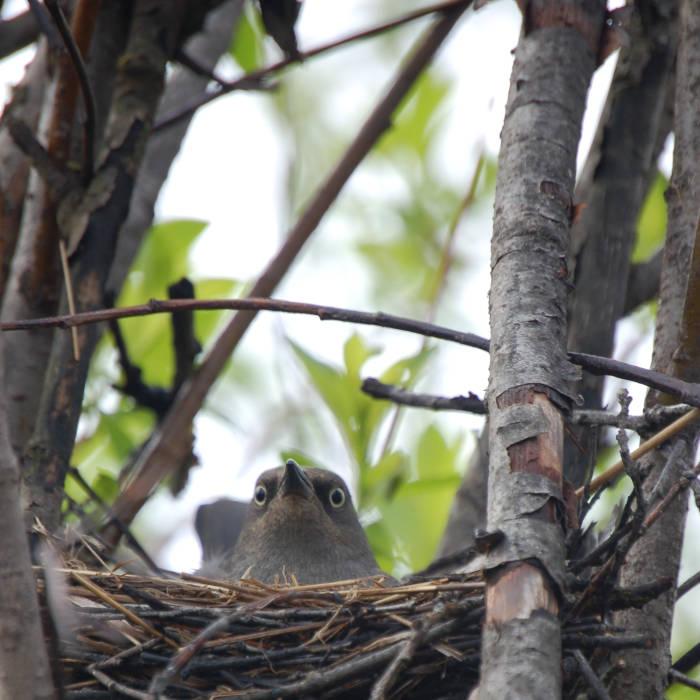
Rusty Blackbird (Euphagus carolinus) on nest ©USFWS

Rusty Blackbird (Euphagus carolinus) on nest ©USFWS

Ms. Theresa’s Thoughts – Nests

Where the birds make their nests; The stork has her home in the fir trees. (Psalms 104:17 NKJV)

How unique the wisdom God gave the birds to make their nests out of small twigs and such sort of reminds me of the Three Little Pigs Fable.

One of them built out of wood, one built out of straw and the wise one built out of bricks. Only the bricks withstood the Big Bad Wolf.

As the bird’s nest withstands all kinds of fowl (bad) weather (no pun intended), her nest stays there till her young are raised and ready to go on their own.

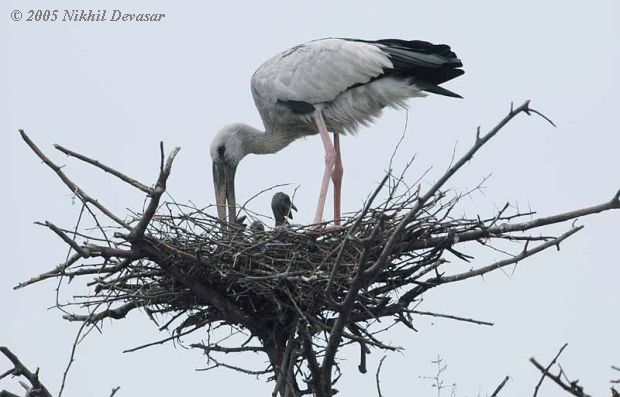
Asian Openbill (Anastomus oscitans) on nest by Nikhil Devasar

Asian Openbill (Anastomus oscitans) on nest by Nikhil Devasar

*

Wordless Birds

*