National Aviary – Hospital, Breeding, and Kitchen Areas

Gracie the retired Chestnut-mandibled Toucan (Ramphastos swainsonii)

Gracie the retired Chestnut-mandibled Toucan (Ramphastos swainsonii)

One of the special privileges at the National Aviary was the behind the scenes places we were allowed to visit. Sarah, the “Bird Nurse” (Head Keeper of Hospital Care), that we had met the day before, and Steven, the Director of Animal Programs, gave us a grand tour. (See Introduction)

Gracie the retired Chestnut-mandibled Toucan (Ramphastos swainsonii)

Gracie the retired Chestnut-mandibled Toucan petted by Lee

We started off by visiting the “Geriatric Hospital” where the retired or aging bird’s care is provided. We met, Jamie, the Vetenarian Technician, who works with the birds also. We met “Skippy”, the 23 year old Black-necked Stilt. There were other birds there like, “Gracie”, a Chestnut-mandibled Toucan, which I got to scratch her head. She had performed well over the years, but now is retired. Other retirees were “Smiley”, the White-tailed Trogan; “Stevie”, the Boat-billed Heron;  “Hermie”, the Montezuma Oropendola; a  Blue-naped Mousebird, Sudan Golden Sparrow, Black-naped Oriole, Goldie’s Lorikeet, Spangled Cotinga, Superb Starling, Collared Kingfisher and one or two others that I missed writing down. My excitement was way up there.

National Aviary Hospital X-ray and Surgery

National Aviary Hospital X-ray and Surgery

Down in the basement also was their hospital area where they do any surgery and take x-rays. It was quite well equipped and the physical needs of all the aves that live at the National Aviary are well provided for.

Steven, the Director, then met us and took up to the 2nd floor where his “pride and joy” are housed. That is where the breeding birds were kept. As you may know, many of the zoos and aviaries goal is to help preserve species that are endangered or close to extinction. Not all the birds being bred there were in those categories. The were pairs of Blue-fronted Amazon Parrots, Green Aracaris, Grossbeak Starlings, Cape Thicknees, Palm Cockatoos, Turquoise-fronted Amazons, Golden-crested Mynas, Bali Mynas and Rainbow Lorikeets. Wow! Saw all of them close up. What a thrill.

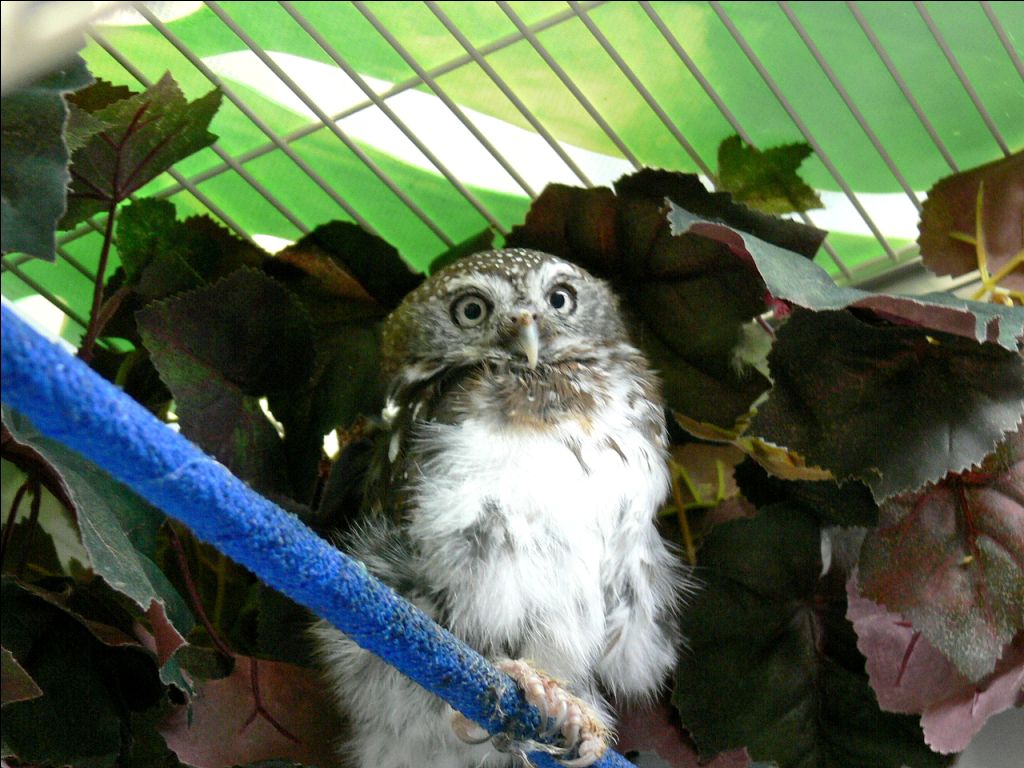
Pearl-spotted Owlet (Glaucidium perlatum) Breeding Room by Lee

Pearl-spotted Owlet (Glaucidium perlatum) Breeding Room by Lee

During that day and the next, we also visited the regular aviary hospital and some more “behind the scenes” places. At the Hospital, Sarah showed us some of her current patients like the Black-headed Woodpecker, Pearl-sided Owlet, Call Duck (broken wing), Runner Duck (broken hip), Rhinoceros Hornbill, Micronesian Kingfisher, White-crested Laughingthrush, and a Silkie Chicken.

Who gives food to all flesh, For His lovingkindness is everlasting. (Psalms 136:25 NASB)

All of these birds and the one mammal (2-toed Sloth) need to eat. Do they ever eat well! In the Kitchen area they were preparing the next meal for them. Wow! What great looking fresh fruits and vegetables were being prepared. Of course, there are different kinds of bird foods and seeds. We were shown the different crickets, worms and “Super Worms” which are the “worm of choice” by many of the avian eaters. The fresh and frozen “meat” (mouse, chicken, fish, etc.) are kept in walk-in coolers and freezer. These feathered critters are well supplied with their daily bounty.
What an amazing place and honor to be shown so many areas of the National Aviary. Our hearty thanks to Steven, Sarah, Jamie, and all the trainers and staff that made our visit “super special.” Thank you! Thank you! Thank you!

He also spoke 3,000 proverbs, and his songs were 1,005. He spoke of trees, from the cedar that is in Lebanon even to the hyssop that grows on the wall; he spoke also of animals and birds and creeping things and fish. Men came from all peoples to hear the wisdom of Solomon, from all the kings of the earth who had heard of his wisdom. (1 Kings 4:32-34 NASB)

Praise Him for His mighty deeds; Praise Him according to His excellent greatness. (Psalms 150:2 NASB)

Hope you enjoy the slide show below. Not all the photos are great, but they will give you an idea of what the visit was like. FABULOUS!
See Also:

National Aviary, Pittsburgh, PA

Happy Birthday – Skippy at National Aviary

Birdwatching at the National Aviary – Introduction

National Aviary – Penguin Encounter

Birds of the Bible – At the National Aviary

Birdwatching the National Aviary – Grasslands

Birdwatching the National Aviary – Tropical Forest

*

This slideshow requires JavaScript.

*

Ian’s Bird of the Week – Wilson’s Warbler

Wilson's Warbler (Wilsonia pusilla) by Ian

Wilson's Warbler (Wilsonia pusilla) by Ian

Ian’s Bird of the Week – Wilson’s Warbler ~ by Ian Montgomery

Newsletter – 09-21-10

Here is the attractive Wlson’s Warbler one of the New World Wood-Warblers (family Parulidae) that is quite common in Canada and the western United States. We encountered this one at Point Reyes, an pleasant coastal area and good birding spot just north of San Francisco. With a length of only 12cm/4.75in, the specific name pusilla (small) given to it by Alexander Wilson in 1811 is appropriate.

The Wood-Warblers, so named to distinguish them from the unrelated Old World Warblers, are justifiably popular with American birders, particular during the spring and fall migrations. They come in a wide variety of shapes and colours, with over 50 species (out of a family total of near 120) occurring in North America. Most species spend the winter in Central and South America, a few in the warmer southern states such as California and Florida and during the migration, many birders are on the lookout for Warblers occurring outside their breeding range.

Wilson's Warbler (Wilsonia pusilla) by Ian

Wilson's Warbler (Wilsonia pusilla) by Ian

Alexander Wilson moved from Scotland to Pennsylvania in 1794 at the age of 28, became interested in ornithology in 1801 and decided in 1802 to publish a book illustrating all the North America birds. This appeared as the nine volume American Ornithology between 1808 and 1814, though Wilson died in 1813 and the ninth volume was completed by his friend George Ord. He met John James Audubon in 1810 and probably inspired him to publish his own book of illustrations, even though Audubon’s reaction to Wilson is described as ‘decidedly ambiguous’. (He declined to subscribe to American Ornithology, felt his own illustrations were much better and, in 1820, decided to publish the ‘greatest bird book ever’.) Seven species of birds are name after Wilson, including two on the Australian list, Wilson’s Phalarope and Wilson’s Storm-Petrel.

I have had a report of a list member having trouble accessing the Birdway website. If you have encountered any such difficulties recently, I’d like to hear from you. Recent additions to the website include:

Black Turnstone
Cassin’s Auklet
Rhinoceros Auklet
Sora
Virginia Rail

Best wishes,
Ian

Ian Montgomery, Birdway Pty Ltd,
454 Forestry Road, Bluewater, Qld 4818
Phone: +61-7 4751 3115
Preferred Email: ian@birdway.com.au
Website: http://birdway.com.au


Lee’s Addition:

Another winner for Ian. What a pretty little warbler. I like that black cap it is wearing. As he said, they are in the Parulidae Family. You can see his photos of the Parulidaes and then check out the whole family here at the Parulidae Family. There are 120 members in the family at this time.

By them the birds of the heavens have their home; They sing among the branches. (Psalms 104:12 NKJV)

Updating Life List of All Birds We Have Seen

Golden-breasted Starling (Lamprotornis regius) at NA by Lee

Golden-breasted Starling (Lamprotornis regius) by Lee

I have been busy behind the scene working on the “Life List of All Birds We Have Seen” page. It is a work in progress. Decided to list all the birds we have seen in person, whether they were in the wild, seen at zoos or in an aviary.

When the Lord created them, He declared them very good. So why should we not have pleasure in keeping track of them, whether they are free or confined. Many in aviaries at zoos or the National Aviary are being very well taken care of and provided for. Many are being bred to preserve their species.

Praise the LORD! I will praise the LORD with my whole heart, …. The works of the LORD are great, Studied by all who have pleasure in them. His work is honorable and glorious, And His righteousness endures forever. He has made His wonderful works to be remembered; The LORD is gracious and full of compassion. (Psalms 111:1-4 NKJV)

I have put them in taxonomic order and used the I.O.C. list of names. (2.5 Version). Searching through old photos and current ones, I am trying to find as many pictures of the birds we have seen as possible. Some of the photos are what I would call a “proof shot,” which means, it’s not great, but you can tell which bird it is. Some are from scanned photos and our first digital cameras. But all links to photos on the page were taken by either Dan or I.

Demoiselle Crane (Anthropoides virgo) at MetroZoo 1989-Photo

I also contacted the Miami Metro Zoo, which had the fabulous Wings of Asia aviary before Hurricane Andrew blew it away. (Rebuilt in 2003) We had an annual pass back then and visited it quite often. That was about the time I really became a birdwatcher. They sent me a list of the birds that were in the aviary just before the hurricane. I am using those birds also on my list. I only have a few photos from there because most were taken on slides which were lost.

Anyway, the page will be updated quite frequently as photos are found and linked to the page. Hope you enjoy them and that you keep better list of the birds you have seen than I did.

See: “Life List of All Birds We Have Seen

Birds of the Bible – Birds of Prey from the Mountains

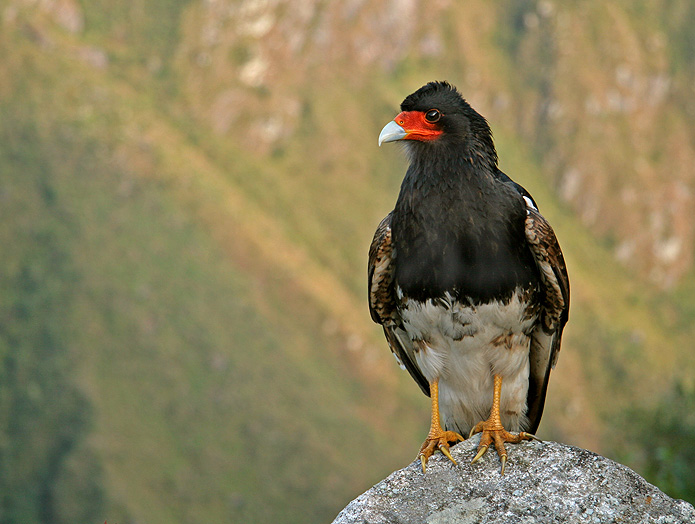
Mountain Caracara (Phalcoboenus megalopterus) ©WikiC

Mountain Caracara (Phalcoboenus megalopterus) ©WikiC

Last week the Birds of the Bible article was an introduction to the Birds of Prey. This week, the Birds of Prey from the mountains will be covered. So begins a challenge of finding birds that are not listed that way in most books or the internet.

First, let’s look at the verse in the Bible that refers to the “birds of prey of the mountains” and how the various translations translate the verse.

They shall all of them be left to the birds of prey of the mountains and to the beasts of the earth. And the birds of prey will summer on them, and all the beasts of the earth will winter on them. (Isaiah 18:6 ESV)

Mountain Pygmy Owl (Glaucidium gnoma) ©WikiC

Mountain Pygmy Owl (Glaucidium gnoma) ©WikiC

ravenous birds of the mountains – ASV, RV,JPS
birds of the mountains -BBE, MKJV
fowls of the mountains – KJV, Webster
mountain buzzards – CEV
mountain birds of prey – Darby, NAS77, NASB, NKJV
birds of prey of(on) the mountains – ESV, GW
ravenous fowl of the mountains – YLT
birds – GNB,

Other than the GNB (Good News ), they all mention that the birds are from the mountains.

The birds of prey from the mountains are coming to a feast of dead bodies that is going to last through the summer and the winter or for approximately a year. It appears that there was to be a judgment and the corpses left for the birds.

For before the harvest, when the blossom is over, and the flower becomes a ripening grape, he cuts off the shoots with pruning hooks, and the spreading branches he lops off and clears away. (Isaiah 18:5 ESV)

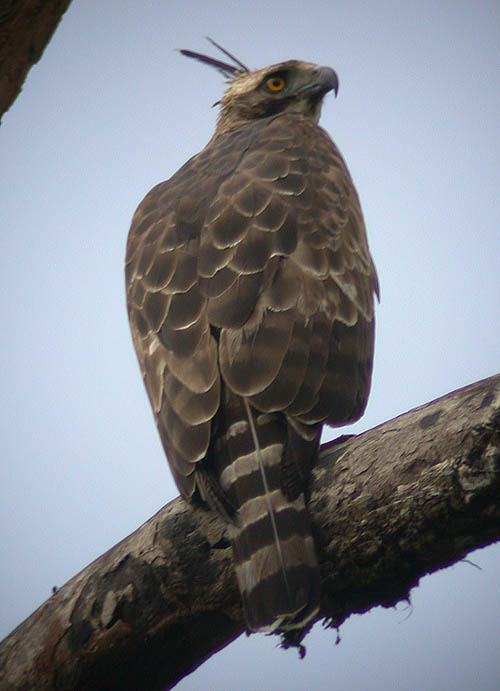
Mountain Hawk-Eagle (Nisaetus nipalensis) by Peter Ericsson

Mountain Hawk-Eagle (Nisaetus nipalensis) by Peter Ericsson

John Gill’s Exposition – “he shall both cut off the sprigs with pruning hooks, and take away and cut down the branches; as the vinedresser; or rather as one that has no good will to the vine, cuts it with pruning hooks, not to make it better, but worse, and cuts off, not the dead withered and useless parts of it, but the sprigs that have buds and flowers, or unripe grapes, upon them, and even whole branches that have clusters on them, and takes them and casts them away, to be trodden under foot, or cast into the fire; so the Lord, or the king of Assyria, the instrument in the hand of God, should cut off the Ethiopians, or the Egyptians, with the sword, both small and great, when their enterprise should fail, and their promised success: or this is to be understood of the destruction of Sennacherib’s army by the angel, when he was full of expectation of taking Jerusalem, and plundering that rich city. Jarchi and Kimchi interpret it of the destruction of the armies of Gog and Magog. The Targum is, and he shall kill the princes of the people with the sword, and their mighty ones he shall remove and cause to pass over.”

Mountain Buzzard (Buteo oreophilus)©WikiC

Mountain Buzzard (Buteo oreophilus)©WikiC

K & D – “The words of Jehovah concerning Himself have here passed imperceptibly into words of the prophet concerning Jehovah. The ripening grapes, as Isaiah 18:6 now explains, are the Assyrians, who were not far from the summit of their power; the fruit-branches that are cut off and nipped in pieces are their corpses, which are now through both summer and winter the food of swarms of summer birds, as well as of beasts of prey that remain the whole winter through. This is the act of divine judgment, to which the approaching exaltation of the banner, and the approaching blast of trumpets, is to call the attention of the people of Ethiopia.”

Now the birds are brought to this judgmental feast, but what are mountain birds of prey? I tried to find Eagles, Hawks, Owls, Vultures, or whatever birds I could that live in the mountains or at high elevations. Here are a few that I found with “mountain” in their name:

From the Accipitriformes OrderAccipitridae Family:

Mountain Serpent Eagle (Spilornis kinabaluensis) Found in northern Borneo, Sabah, Sarawak and Kalimantan. It inhabits submontane and montane evergreen rainforests. It prefers forests with height of 1,000-2,900 meters (3,220- 9514 feet) above sea level.
Mountain Buzzard (Buteo oreophilus) – Lives in montane forests in East Africa (Ethiopia, Kenya, Tanzania, Uganda, Rwanda, Burundi and extreme eastern DR Congo) and forests and plantations in South Africa. The latter population is sometimes considered a separate species, the Forest Buzzard (B. trizonatus).
Mountain Hawk-Eagle (Nisaetus nipalensis) It is a bird of mountain woodland, which builds a stick nest in a tree and lays usually a single egg. It breeds in southern Asia from Pakistan, India and Sri Lanka to China, Taiwan and Japan.

From the Falconiformes OrderFalconidae Family:
Mountain Caracara (Phalcoboenus megalopterus) a species of bird of prey in the Falconidae family. It is found in puna and páramo in the Andes, ranging from southern Ecuador, through Peru and Bolivia, to northern Argentina and Chile. It is generally uncommon to fairly common. A highly opportunistic bird commonly seen walking on the ground, it will feed on both carrion and virtually any small animal it can catch. It resembles the closely related Carunculated Caracara and White-throated Caracara, but unlike those species its chest is uniform black. Juveniles are far less distinctive than the red-faced pied adults, being overall brown with dull pinkish-grey facial skin.

From the Strigiformes OrderStrigidae Family:
Mountain Scops Owl (Otus spilocephalus) sometimes referred to as the spotted scops owl. It is locally common in its main habitat which covers some parts of Asia, mostly Bhutan and Taiwan. It has a short high-pitched call similar to the sound a radar makes.
Mountain Pygmy Owl/Northern Pygmy-Owl (Glaucidium gnoma) Their breeding habitat includes open to semi-open woodlands of foothills and mountains in western North America. In Oregon and Washington they are known to nest and forage in the center of dense, continuous forests, near streams.[2] An example of their habitat is Forest Park in Portland, Oregon. Males will regularly perch at the top of the tallest available conifer trees to issue their territorial call…

There are many more numerous Birds of Prey which live in the mountains and high forests, but time prevents finding and listing them all. The birds presented here are just to whet your appetite to find more of them and to further study the passage of Scripture. There are also many interpretations of Isaiah 18:6.

Study to shew thyself approved unto God, a workman that needeth not to be ashamed, rightly dividing the word of truth. (2 Timothy 2:15 KJV)

*

Information about the birds from Wikipedia

*

Using Whatever Talent the Lord Has Given You

Thought I would share an article that I wrote for our church blog (The Fountain).

As many of you know, around Faith Baptist, I am known as the “Bird Lady.” Also many have read the “Birds of the Bible” articles of the past. How did this come about?

When I was 16 years old (1960) I accepted the Lord as my Saviour and thus began my journey with the Lord. The Lord allowed me to attend Bob Jones University through the War Orphans Fund (my father died as a result of the war and my mother died when I was 13). Not being from an educational family (D+ average in high school), I struggled academically, but the desire to finish was strong. I finished my degree 16 years after I started with a Bible major. I had tried many majors, but never found what I wanted.

While we were on vacation this summer, we attended a friend’s church and they were questioning things that became a turning point in our lives. There were various testimonies given and then I remembered one that changed me. In 1979, Dan and I purchased our first computer, a Radio Shack Model I. I spent hours teaching myself all about it and learning to program. That computer and the many since gave me a direction and a niche for me to fill. I always told the Lord that I just didn’t have any talents to offer Him. Long story short, I became a computer teacher and ended up even getting a Masters degree in Computer Education.

Sunbittern at Lowry Park Zoo by Dan

In the late 80’s I became a birdwatcher. A naturalist at our local park became my mentor. I had always loved the out of doors and enjoyed watching God’s creation, but could not put many names on what I saw. Birds are just so beautiful and show the Lord’s creative hand so much. I am just amazed and love watching them. Another niche!

Now there were three important parts to my life; the Lord, computers and birds. (Of course Dan is there also) My desire and prayers were that the Lord would let me blend those three things into some sort of ministry for Him. It began by doing five-minute presentations to a junior Sunday School class each week. When we moved up here to Faith, I couldn’t find an outlet to do my bird presentations until the Lord, through Stephen, let me start doing the “Birds of the Bible” on the blog here.

I started my own blog to learn how to do the articles. Now, the Lord is blessing my blog by letting the “Birds of the Bible” and many other Christian birdwatching articles be read by people all over the world. And, now, I am the “Bird Lady” and I thank the Lord for His Love and Grace to let me be called by that name.

Call unto me, and I will answer thee, and shew thee great and mighty things, which thou knowest not. (Jeremiah 33:3 KJV)

My prayer and challenge for the readers is that you also will let the Lord use what ever talent or gift you have for Him. Maybe you love bugs, flowers, music, or whatever. Maybe you are an encourager, good cook, child sitter, nursery worker, like to visit the sick, etc. We all have something that the Lord has given us. Let the Lord use what you have for Him so that we can help reach others with the Gospel and God’s Love.

Gospel Message

Wordless Birds

*

Birds – The Engineers..

Birds – The Engineers.. ~ by a j mithra

Birds are capable of grand engineering feats. But are they engineers?  Not in the way you might think. Just as birds know how to fly, they know how to build a nest without instructions or apprenticeship. It’s a matter of instinct. Birds craft their nests without consciously thinking about it. How then did some species of birds develop such well-engineered, elaborate nests?

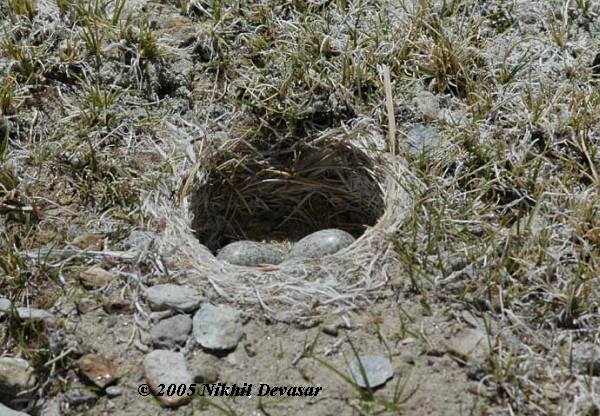
Horned Lark (Eremophila alpestris) Nest w/eggs by Nikhil Devasar

Horned Lark (Eremophila alpestris) Nest w/eggs by Nikhil Devasar

Horned Larks nests showed a significant northern bias in orientation angle and were 49% shaded in the early afternoon, the hottest part of the day. A northern nest orientation ensures maximal shading by the grass tuft to the south, may protect nests from cool evening winds, and provides increased daytime ventilation of the nest through exposure to prevailing winds. In addition, shade may also help conceal nests from predators.

  • From where did these birds learn to choose the location to build their nests?
  • Have we ever thought about the direction in which we need to have the front door of our house?
  • Is our choice based on location or direction of the house?

When JESUS becomes our direction, HE gives the best location..

I am the door: by me if any man enter in, he shall be saved, and shall go in and out, and find pasture. (John 10:9)

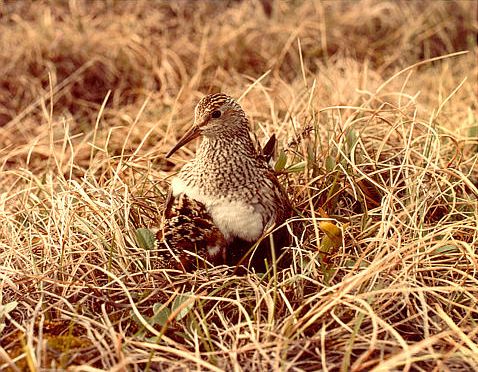
Pectoral Sandpiper (Calidris melanotos) ©WikiC

Pectoral Sandpiper (Calidris melanotos) ©WikiC

Pectoral Sandpipers nest on the arctic tundra, often near water. The nest is lined with grass, moss and lichens. They do not use lining materials according to local availability. Instead, relative use was correlated with a material’s insulative quality when wet and they therefore use lining materials appropriate to minimizing heat loss given their damp breeding environment.

And he shall be like a tree planted by the rivers of water, that bringeth forth his fruit in his season; his leaf also shall not wither; and whatsoever he doeth shall prosper. (Psalm 1:3)

Blue Tit (Parus caeruleus) by Robert Scanlon

Blue Tit (Parus caeruleus) by Robert Scanlon

Female Blue Tits gather lavender, yarrow, curry, mint and other scented plants for their nests shortly after laying eggs, and continue to do so until the chicks leave home. They are real botanists and do a great job exploiting their environment to protect their chicks. The birds make a pot-pourri of 10 aromatic plants from the 250 species in their habitat. Many of the chemicals in these plants ward off bacteria,
viruses, parasites, fungi and insects.

Our nest is covered by the blood of JESUS and no harm shall enter…

And the blood shall be to you for a token upon the houses where ye are: and when I see the blood, I will pass over you, and the plague shall not be upon you to destroy you, when I smite the land of Egypt. (Exodus 12:13)

Common Waxbill (Estrilda astrild) by Daves BirdingPix

Common Waxbill (Estrilda astrild) by Daves BirdingPix

Common Waxbills are small African finches select carnivore scat as a material to include in, on, and around their nests to reduce predation risk…

A South American Ovenbird may take months to fashion one nest from clay or mud mixed with bits of straw, hair, and fibers. The tropical sun bakes the walls brick-hard.

Bald Eagles, which use sticks, some two inches thick and several feet long, to make nests sturdy enough to support a human adult.

Chimney Swift using saliva as glue to help support its nest.


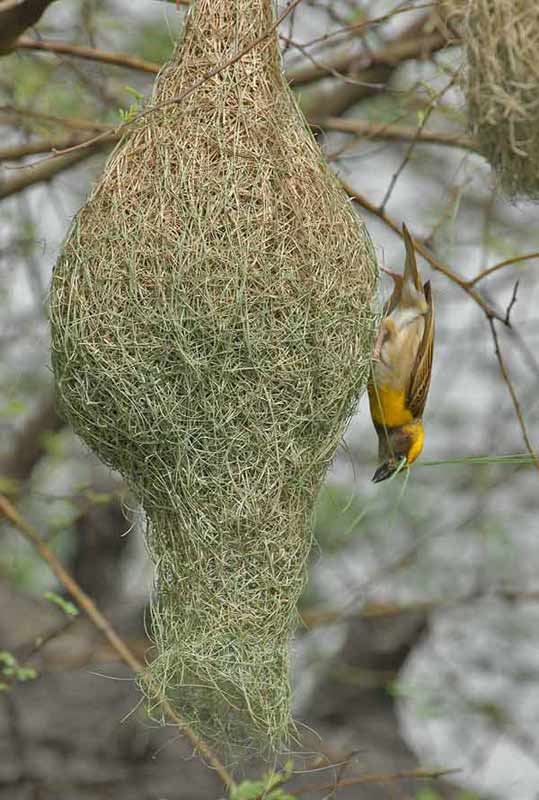
Baya Weaver (Ploceus philippinus) by Nikhil Devasar

Baya Weaver (Ploceus philippinus) by Nikhil Devasar

Baya Weaver nests in colonies of up to 20-30 pairs, usually in trees near freshwater and open ground. Their nests hang from a branch and look like an upside-down flask. A long tube leads to a side entrance,  making it difficult even for snakes to enter the nest. Nests are made entirely out of strips of grass
that the birds collect by cutting a notch in some tall grass, then stripping off a 30-60 cm long piece. A newly-made nest is green with fresh grass and turns brown as the grass dries. A bird may make up to 500 trips to complete a nest.

  • GOD has given us a home and a family with a purpose….
  • Most of us are trying hard to be like others and to live like others…
  • HE loves us as we are so; let us live the way HE wants us to live…

Sparrows never try to live like Eagles. Do they? If we are a sparrow, so be it and if we are an Eagle, so be it. After all, a sparrow cannot live like an Eagle and an Eagle cannot live like a Sparrow…

I will make a man more precious than fine gold; even a man than the golden wedge of Ophir. (Isaiah 13:12)

Bird nests vary from a simple accumulation of materials on the ground to elaborate refuges in or on secluded and elevated substrates. Nest construction and placement are correlated with flight ability. Some birds create a simple depression in the ground to harbor their incubating eggs. The progression of nest complexity moves from cryptic ground nests to simple elevated nests. Birds which construct elevated nests in a bush or tree or on a cliff or rock ledge tend to be better fliers than simple ground nesters.

  • You may be wondering why GOD has placed you as a ground nester while you desire to be an elevated nester…
  • You may be wondering why you have not got a place you feel that you deserve…
  • May be GOD feels that you would get hurt if you are an elevated nester..
  • Or maybe HE feels that you are not best equipped to be in a higher place…

Humble yourselves therefore under the mighty hand of God, that he may exalt you in due time: (1Peter 5:6)

  • GOD had HIS nest in heaven and because HE loved us so much,
  • HE stirred up HIS nest and wandered without a nest to be crucified for our sins…
  • So that HE may nest in us…
  • HE needs a nest that is why HE is knocking at the door of your heart….
  • Do you have a place for HIM to nest?

Please do not forget that HE is building an eternal nest for us live with HIM forever and ever.

Behold, I stand at the door, and knock: if any man hear my voice, and open the door, I will come in to him, and will sup with him, and he with me. (Revelation 3:2)

Have a blessed day!

Your’s in YESHUA,
a j mithra

Please visit us at: Crosstree


See:
Gospel Message

Wordless Birds

Birds of the Bible – Nests

*

Birdwatching the National Aviary – Tropical Forest

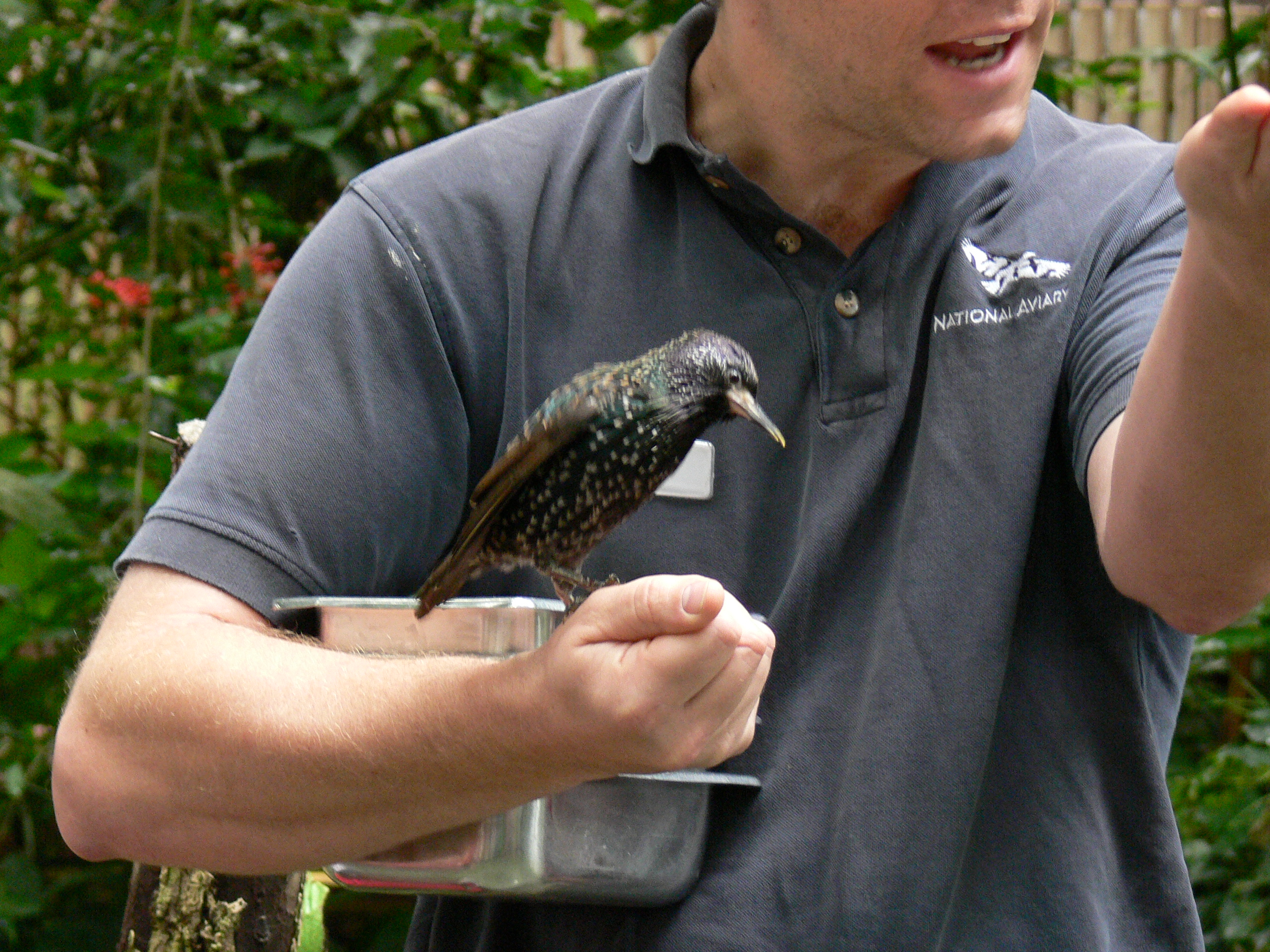
Common Starling (Sturnus vulgaris) by Lee NA Feeding

Common Starling (Sturnus vulgaris) by Lee NA Feeding

This article is about the numerous birds found in the Tropical Forest Free-flight section at the National Aviary in Pittsburgh, PA. It has taken awhile to find the names of the birds in the pictures we took while we were there. My enthusiastically taken 600 photos has turned into a real challenge. That, and I do have a life.

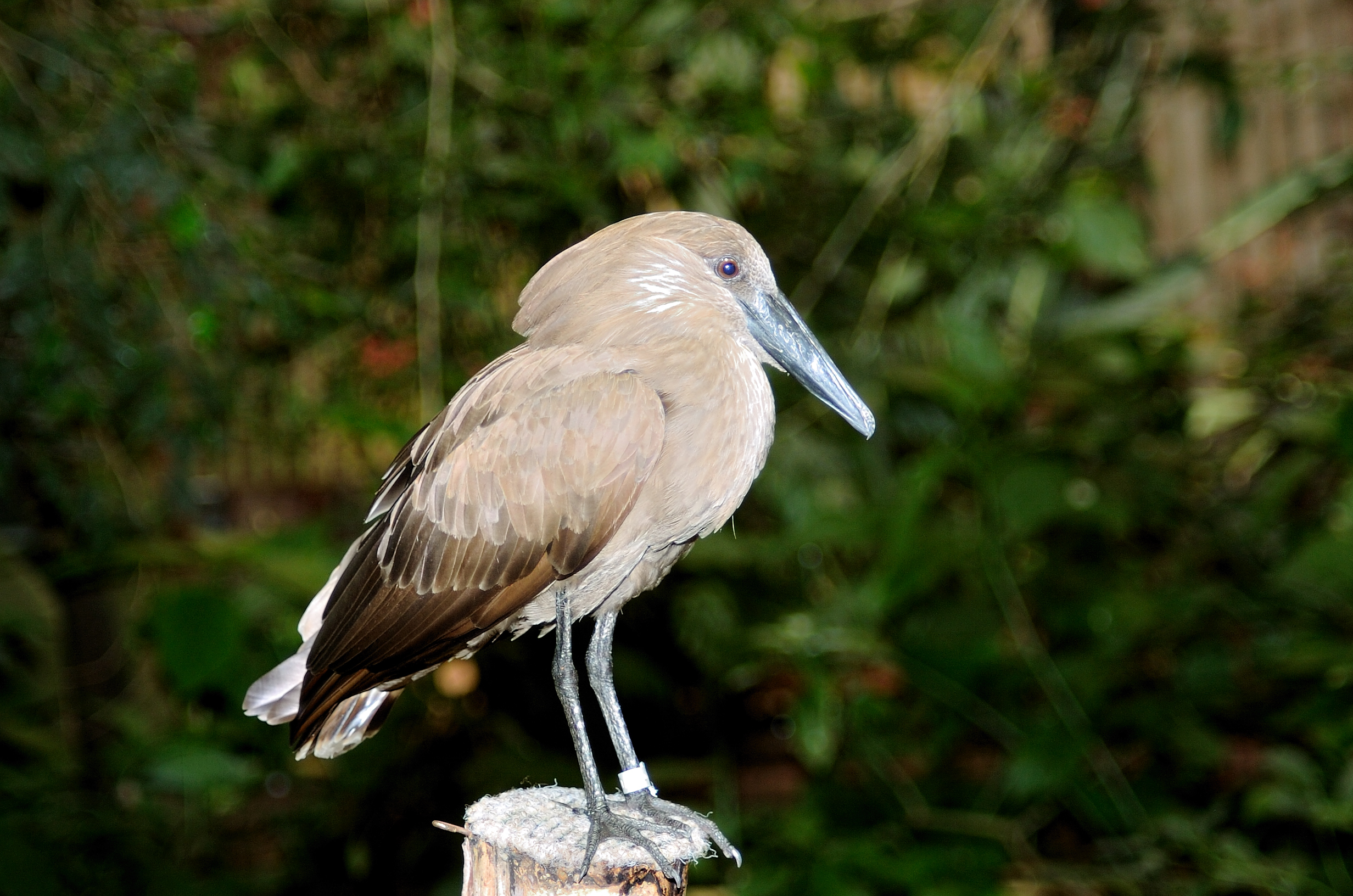
Hamerkop (Scopus umbretta) at NA by Dan

Hamerkop (Scopus umbretta) at NA by Dan

The Tropical Forest section has some really interesting birds that I had read about or seen in photos. It was great to be able to get so close to the birds. About the time we arrived there, they were getting ready to do one of the feedings. This really brought the birds out of the trees. Some, the Common Starling, landed right on the bin with the food and started helping himself. My favorite bird there was the Hammerkop, who many got to feed by hand and a close second was the Blue Rollers. They seemed right personable. Of course, I enjoyed all of them and was thrilled to get to watch them.

Blue-bellied Roller (Coracias cyanogaster) at NA by Lee

Blue-bellied Roller (Coracias cyanogaster) by Lee

Probably one of the most colorful birds in the Tropical Forest was the Golden-breasted Starling who was nothing like the Common Starling above. The feathers are iridescent and just shine.

Golden-breasted Starling (Lamprotornis regius) at NA by Lee

Golden-breasted Starling (Lamprotornis regius) by Lee

I am adding a Slide collection of the birds in the Tropical Forest. They are not of everything, but the ones that turned out good enough to show.

This slideshow requires JavaScript.

*

Ian’s Bird of the Week – American Bittern

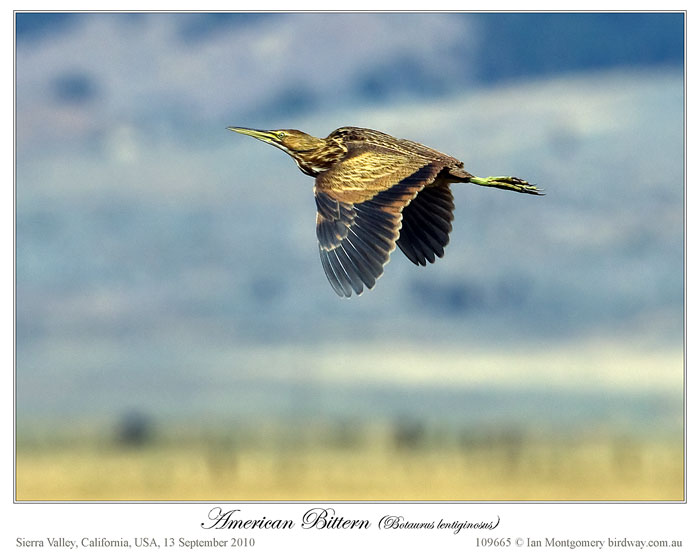
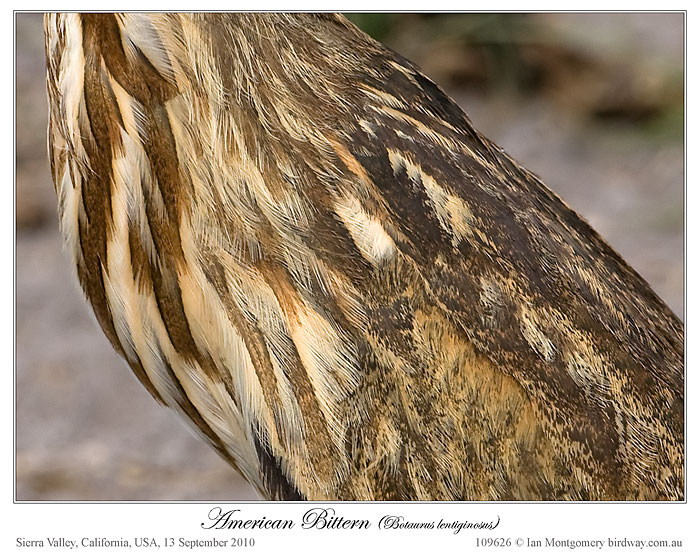
American Bittern (Botaurus lentiginosus) by Ian Montgomery

American Bittern (Botaurus lentiginosus) by Ian Montgomery

Ian’s Bird of the Week – American Bittern ~ by Ian Montgomery

Newsletter – 9/14/2010

Lightning, they say, doesn’t strike the same place twice. Luck, in bird photography, is rather similar: a missed opportunity usually remains just that. High on my list of American targets was the American Bittern, a cryptic and elusive bird of inaccessible reed beds that had successfully eluded me since I first did some serious birding in the USA exactly forty years ago. Imagine my delight and disappointment when I finally flushed one from reeds on the Feather River at Lake Almanor in NE California last Sunday but wasn’t quick enough to get a photo of it as if flew off. I found it in the viewfinder okay, but the autofocus didn’t as often happens when it gets distracted by a complex background.

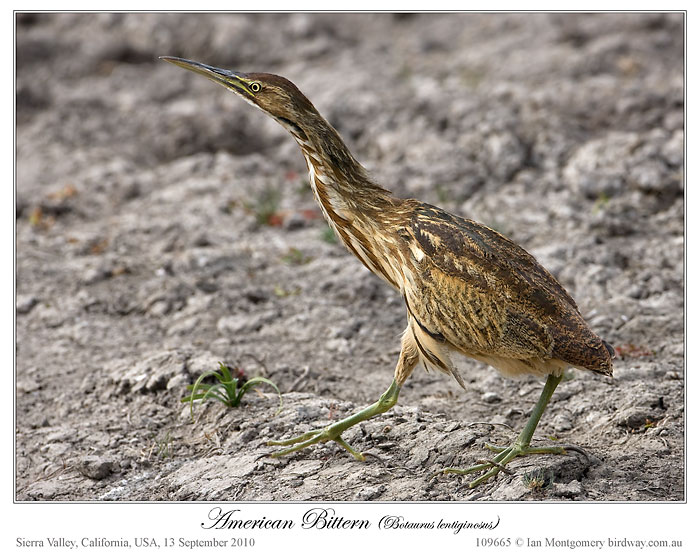
American Bittern (Botaurus lentiginosus) by Ian Montgomery

American Bittern (Botaurus lentiginosus) by Ian Montgomery

Yesterday, two days later, at Sierra Valley in the Sierra Nevada (‘Snowy Mountains’) I saw a large bird flying towards and past me across more reeds and decided to photograph it even before I realized that it was another Bittern, see the first photo. Shortly later, another more distant one flew past and then I found a couple more lurking in the dwindling area of wetland remaining at the end of a dry summer. Eventually, I startled one in a ditch beside the road which froze in indecision (if in doubt, freeze, is a Bittern maxim) frustratingly close but on the other side of an unpicturesque barbed wire fence.

American Bittern (Botaurus lentiginosus) by Ian Montgomery

American Bittern (Botaurus lentiginosus) by Ian Montgomery

Then started a waiting game with an endlessly patient opponent that I was bound to loose. Eventually, I moved along the road away from it in the hope that it would come through the fence to regain the sanctuary of the ditch. In time, it did just that and quite stealthily, second photo. Bitterns are bizarre birds in appearance and behaviour, with extraordinarily effective camouflage and very beautiful plumage. When it had entered a small patch of reeds not much bigger than itself, it vanished, and search as I could with binoculars from a short distant, I never saw it again.

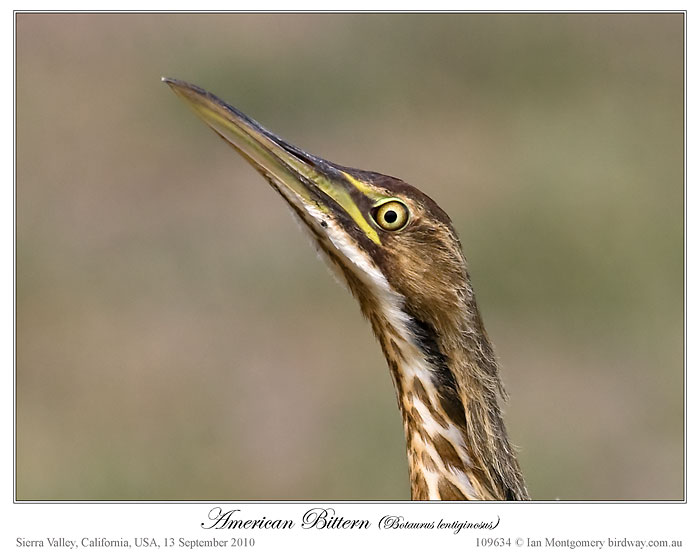
To do the plumage justice, I’ve included cropped enlargements of a couple of photos taken when the bird was behind the barbed wire. The fourth photo shows the gorgeous long neck feathers that drape over the breast and the exquisitely patterned feathers of the wing coverts.

American Bittern (Botaurus lentiginosus) by Ian Montgomery

American Bittern (Botaurus lentiginosus) by Ian Montgomery

Worldwide, there are four closely-related species of large Bitterns, one in North America, one in South America, one in Eurasia and Africa and one in Australasia. All have declined in population, but only the Australasian one is classed as endangered. All live in reed beds, all are mainly nocturnal, skulkers and easier to hear than see, particularly in the breeding season when they emit far-carrying booming sounds: presumably, they find each other easier to hear than see.

Links including recent additions:
Australiasian Bittern
Wrentit
White-breasted Nuthatch
Red-breasted Nuthatch
Red-shouldered Hawk
Sharp-shinned Hawk
Chestnut-backed Chickadee
Black-footed Albatross

On an almost totally unrelated subject, Birds Australian North Queensland has had a request from an Australian, Carolyne Hepi, living in a remote area of Papua New Guinea to support the local school by buying their 2011 Birds of Papua calendar, price 20 Australian Dollars. I think it is a great idea. Her email is carolyne_jon@hotmail.com and, if you want more information, I’ll make a copy of the pdf she sent us (size 3.8MB) available on the Birdway website.

Best wishes,
Iab

Ian Montgomery, Birdway Pty Ltd,
454 Forestry Road, Bluewater, Qld 4818
Phone: +61-7 4751 3115
Preferred Email: ian@birdway.com.au
Website: http://birdway.com.au


Lee’s Addition:

Thanks, Ian, for another great birdwatching adventure for us to read about. Saw an American Bittern in Texas in early 2000 and they are hard to capture in binoculars let alone get a decent photo of them. Great job!

Bitterns are in the Ardeidae- Herons, Bitterns Family which has 14 species world-wide. Also check out Ian’s Ardeidae family photos. The Bitterns are part of the Pelicaniformes Order and are mentioned as a Bird of the Bible.

I will also make it a possession for the bittern, and pools of water: and I will sweep it with the besom(broom) of destruction, saith the LORD of hosts. (Isa 14:23)


Family#26 – Ardeidae
*

Humming Birds – The Believing Believers… by a j mithra

a j mithra has produced another video using a hummingbird video with his thoughts and music.

We had previously done this as an article, then a j turned it in to a video. Absolutely amazing.

The Hummingbird – The Believing Believer…

The Bible says,”But ask now the beasts, and they shall teach thee; and the fowls of the air, and they shall tell thee: (Job12:7)

He says:

Here are some of the many things that we can learn from these small little wonderful Humming Birds…

Trust you enjoy watching this video.

*

YouTube’s  NATURE | Behind the Scenes of “Hummingbirds” | PBS is where the video came from (I think) and tells how the shots of the Hummingbirds were taken.

*

Birds of the Bible – Birds of Prey Introduction

The following is from Wikipedia’s article on “Bird of Prey” and has good information to precede thoughts on the Birds of Prey mentioned in the Bible. (Their quotes, my links)

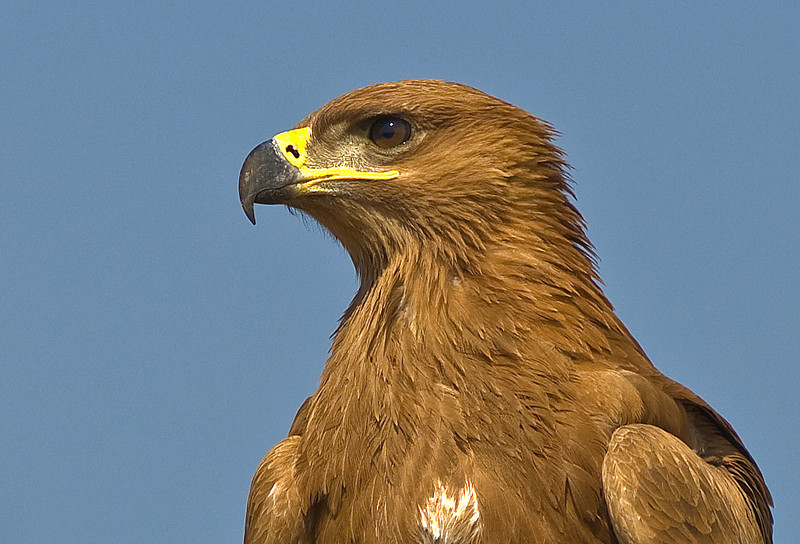
Tawny Eagle by Africaddict

Tawny Eagle by Africaddict

“Birds of prey are birds that hunt for food primarily on the wing, using their keen senses, especially vision. They are defined as birds that primarily hunt vertebrates, including other birds. Their talons and beaks tend to be relatively large, powerful and adapted for tearing and/or piercing flesh. In most cases, the females are considerably larger than the males. The term “raptor” is derived from the Latin word “rapere” (meaning to seize or take by force) and may refer informally to all birds of prey, or specifically to the diurnal group. Because of their overall large size and predatory lifestyle, they face distinct conservation concerns.

Formal Classification

The diurnal birds of prey are formally classified into five families (traditionally of the order Falconiformes, a classification currently[vague] in flux): [IOC has them mostly in the Accipitriformes Order-Lee]

* Accipitridae: hawks, eagles, buzzards, harriers, kites and Old World vultures
* Pandionidae: the Osprey (sometimes classified as subfamily Pandioninae of the previous family)
* Sagittariidae: the Secretary Bird
* Falconidae: falcons and caracaras
* Cathartidae: New World vultures including condors.

The nocturnal birds of prey – the owls – are classified separately as members of two extant families of the order Strigiformes:

* Strigidae: (typical owls)
* Tytonidae: (barn and bay owls).

Red-shouldered Hawk by Dan

The observation that otherwise unrelated bird groups may perform similar ecological roles and bear striking morphological similarities to one another is explained is because [they were created by the Lord and are all going to be called on to perform a similar task in the future. (See later)]

The common names for various birds of prey are based on structure but many of the traditional names do not reflect the evolutionary relationships between the groups.
Variations in shape and size
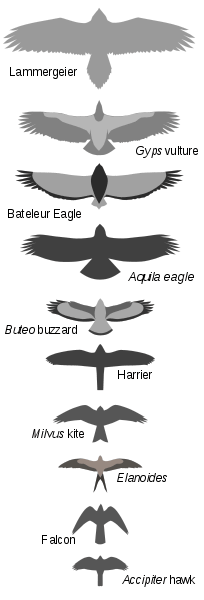
Birds of Prey - Raptorial Silhouettes ©Wikipedia

Birds of Prey – Raptorial Silhouettes ©Wikipedia

* Eagles tend to be large birds with long, broad wings and massive feet. Booted Eagles have legs and feet feathered to the toes and build very large stick nests.
* Ospreys, a single species found worldwide that specializes in catching fish, and builds large stick nests.
* Kites have long wings and relatively weak legs. They spend much of their time soaring. They will take live vertebrate prey but mostly feed on insects or even carrion.
* The true Hawks are medium-sized birds of prey that usually belong to the genus Accipiter (see below). They are mainly woodland birds that hunt by sudden dashes from a concealed perch. They usually have long tails for tight steering.
* Buzzards are medium-large raptors with robust bodies and broad wings, or, alternatively, any bird of the genus Buteo (also commonly known as “hawks” in North America).
* Harriers are large, slender hawk-like birds with long tails and long thin legs. Most use a combination of keen eyesight and hearing to hunt small vertebrates, gliding on their long broad wings and circling low over grasslands and marshes.
* Vultures are carrion-eating raptors of two distinct biological families, each occurring in only the Eastern Hemisphere (Accipitridae) or the Western (Cathartidae). Members of both groups have heads either partly or fully devoid of feathers.
* Falcons are small to medium-size birds of prey with long pointed wings. Unlike most other raptors, they belong to the Falconidae, rather than the Accipitridae. Many are particularly swift flyers. Instead of building their own nests, falcons appropriate old nests of other birds, but sometimes they lay their eggs on cliff ledges or in tree hollows. Caracaras are a distinct subgroup of the Falconidae unique to the New World, and most common in the Neotropics – their broad wings, naked faces and appetites of a generalist suggest some level of convergence with either the Buteos or the vulturine birds, or both.
* Owls are variable-sized, typically night-specialized hunting birds. They fly with extremely little audible turbulance due to special feather structure and have particularly acute hearing.”

Did you notice the list of the “birds of prey”? It is almost identical to the list of birds on the unclean lists of birds in Deuteronomy 14:11-18 and Leviticus 11:13-20. There are a few that are not Birds of Prey, but all the birds of prey are listed there either by name or implied by “their kind.”

Searching the Scriptures, these are called “bird(s) of prey” in 7 verses in the GW; 6 verses in the ESV, Darby, 5 verses in the NASV, NAS77; 4 verses in the JPS; 3 verses in the NKJV, MKJV, RV, ; none in the KJV, Webster, YLT. Why the differences. Let’s look at the 7 verses and compare how they translate the bird.

H5861 is used in most of the translations.

עיט

ayit – ah’-yit ; from H5860a; a hawk or other bird of prey: – bird,  fowl, ravenous (bird)

And when birds of prey came down on the carcasses, Abram drove them away. (Genesis 15:11 ESV)

birds of prey – ASV,  Darby, ESV,  GW, JPS,  MKJV, ,  NAS77, NASB, RV
birds – CEV
fowls – KJV, Webster
vultures – GNB, NKJV
ravenous birds – YLT

That path no bird of prey knows, and the falcon’s eye has not seen it. (Job 28:7 ESV)

birds of prey – ASV, Darby, ESV, GW, JPS, NAS77, NASB, RV
bird – BBE, MKJV, NKJV
hawk – GNB, Webster
fowl – KJV
ravenous fowl – YLT
The second part of the verse about the falcon’s eye is translated falcon’s, hawk’s, vulture’s and kite’s eye.

Does your understanding make a bird of prey fly and spread its wings toward the south? (Job 39:26 GW)

bird of prey – GW
hawk(s) – ASV, BBE, CEV, Darby, ESV, GNB, JPS, KJV, MKJV, NKJV, NAS77, NASB, RV, Webster, YLT

They shall all of them be left to the birds of prey of the mountains and to the beasts of the earth. And the birds of prey will summer on them, and all the beasts of the earth will winter on them. (Isaiah 18:6 ESV)

ravenous birds of the mountains – ASV, RV
birds of the mountains -BBE, MKJV
fowls of the mountains – KJV, Webster
mountain buzzards – CEV
mountain birds of prey – Darby, NAS77, NASB, NKJV
birds of prey of(on) the mountains – ESV, GW
ravenous birds of the mountains – JPS
ravenous birds of the mountains – YLT
birds – GNB,

calling a bird of prey from the east, the man of my counsel from a far country. I have spoken, and I will bring it to pass; I have purposed, and I will do it. (Isaiah 46:11 ESV)

ravenous bird from the east – ASV, KJV, RV, Webster, YLT
bird of strong flight from the east – BBE
like a hawk swooping down – CEV, GNB
bird of prey from the east – Darby, ESV, GW, JPS, MKJV, NAS77, NASB, NKJV
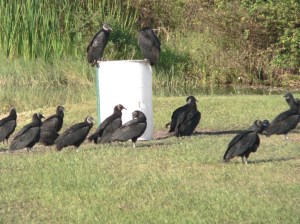
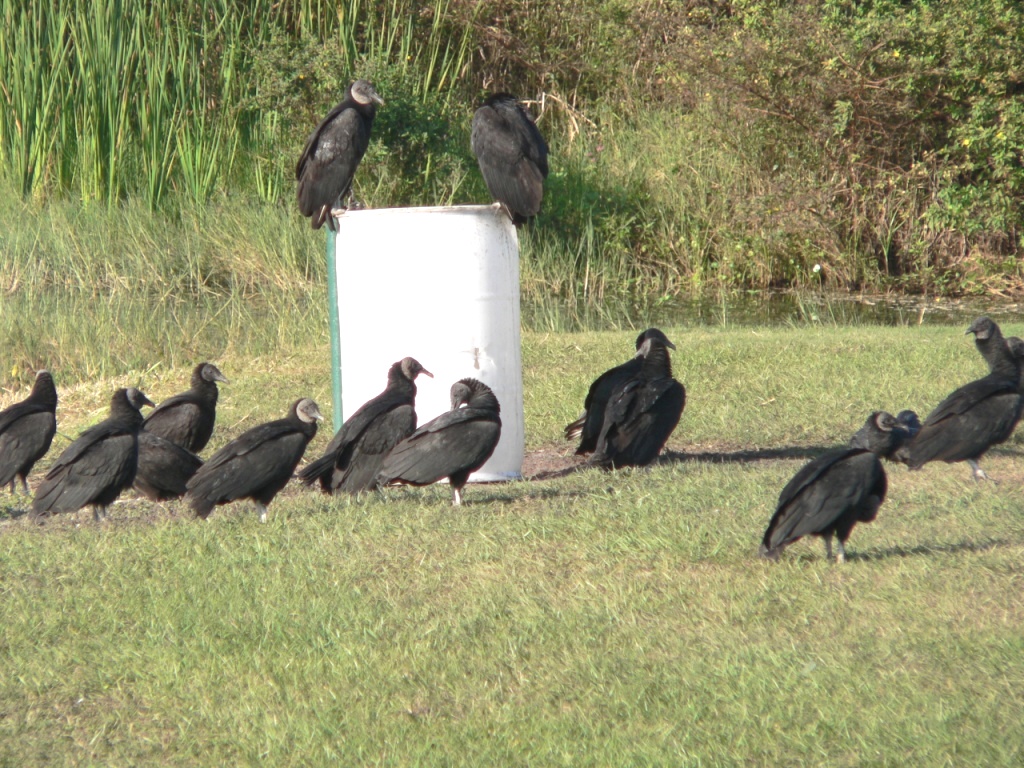
Black Vultures at Saddle Creek 12-07-07 by Lee

Is my heritage unto me as a speckled bird of prey? are the birds of prey against her round about? go ye, assemble all the beasts of the field, bring them to devour. . (Jeremiah 12:9 ASV)
speckled bird of prey and birds of prey- ASV, Darby, JPS, NAS77, NASB, RV
speckled bird and birds – KJV, MKJV, Webster
speckled vulture and vultures – NKJV
speckled fowl and fowl – YLT
coloured bird and cruel birds – BBE
colorful bird of prey and birds of prey – GW
hawk and hawks – CEV
bird and hawks – GNB
hyena’s lair and birds of prey – ESV

You shall fall on the mountains of Israel, you and all your hordes and the peoples who are with you. I will give you to birds of prey of every sort and to the beasts of the field to be devoured. (Ezekiel 39:4 ESV)

ravenous birds of every sort -ASV, JPS, KJV, RV, Webster
ravenous fowl–a bird of every wing – YLT
cruel birds of every sort – BBE
birds – CEV, GNB
birds of prey of every wing – Darby
birds of prey of every sort – ESV, NKJV
birds of prey of every kind – MKJV
every bird of prey – GW
every kind of predatory bird – NAS77, NASB

This is the foundation or introduction to the Birds of Prey. Future articles will build on these verses. There is a lot of activity going on with each verse which needs more in-depth study. Look for more Birds of Prey articles in the future.

See also:

Birds of the Bible – Clean vs. Unclean

Deuteronomy 14:11-18 Visualized

Birds of the Bible – Speckled Birds

These are the Bible translations that I have loaded on my e-Sword Bible program (most are free).

ASV-American Standard Version , BBE-Bible in Basic English, CEV-Contemporary English Version, Darby-Darby Bible, EMTV, ESV-English Standard Version, GNB-Good News Translation, GW-GOD’S WORD, ISV-International Standard Version, JPS-Jewish Publication Society Old Testament, KJV-King James Version, MKJV-Modern King James Version, Murdock-James Murdock New Testament, NAS77 & NASB-New American Standard Bible Study Set(paid), NKJV-New King James Version(paid), RV-Revised Version, Webster-Webster Bible, WNT-Weymouth New Testament, YLT-Young’s Literal Translation,

*

Ian’s Bird of the Week – Buller’s Shearwater

Buller's Shearwater (Puffinus bulleri) by Ian

Buller's Shearwater (Puffinus bulleri) by Ian

Ian’s Bird of the Week – Buller’s Shearwater ~ by Ian Montgomery

Newsletter – 09-07-10

Buller's Shearwater (Puffinus bulleri) by Ian

Buller's Shearwater (Puffinus bulleri) by Ian

I went on a pelagic boat trip from Monterey shortly after my arrival in California. Buller’s Shearwater was one of three species of Shearwater that we encountered in quite large numbers. The others were the Sooty and the Pink-footed. All three are on the Australian list, though the Pink-footed, which breeds off the coast of Chile, is extremely rare in Australia. Buller’s breeds on islands off New Zealand and both it and the Sooty (breeds in New Zealand, the Falklands and Tierra del Fuego) are regular visitors to both Australia and California in the their annual circuit around the Pacific. Having myself just endured a flight – with considerable artificial aid – across the Ocean, I couldn’t help but be very impressed.

Buller's Shearwater (Puffinus bulleri) by Ian

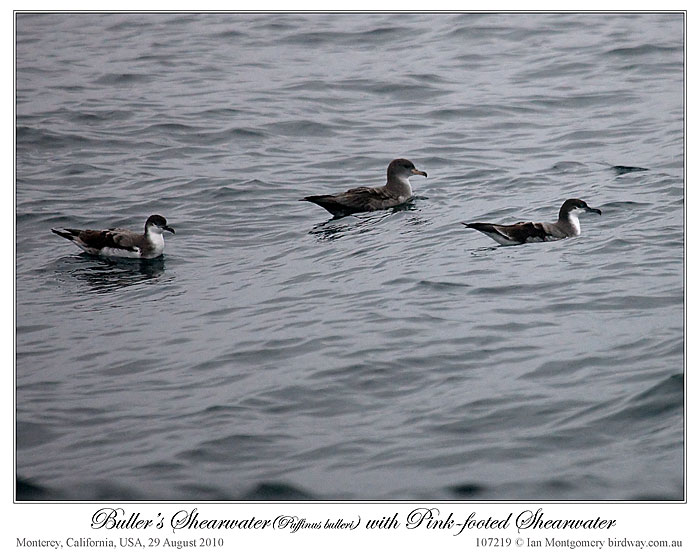
Buller's Shearwater (Puffinus bulleri) and Pink-footed Shearwater (Puffinus creatopus) by Ian

I’ve chosen Buller’s as it is the most elegant and distinctive of the three with very white underparts (first photo), a well-defined black cap, and M-shaped dark markings on the otherwise grey upper surface of the wings (second photo). With a length of 46cm/18in and a wingspan of 100cm/40in it is intermediate in size between the smaller Sooty and the slightly larger Pink-footed. Incidentally, Buller’s Shearwater is the 600th Australian species to be included in the website.

We encountered all three mainly in flight, but also swimming on the surface in mixed flocks. The third photo shows two Buller’s and a Pink-footed. The Pink-footed also has a pale body, but the contrast is less marked and, in flight, the dorsal surface of the wings are relatively uniform in colour. The Sooty, is dark all over except for paler underwing patches.

Buller's Shearwater (Puffinus bulleri) and Black-footed Albatross (Phoebastria nigripes) by Ian

Buller's Shearwater (Puffinus bulleri) and Black-footed Albatross (Phoebastria nigripes) by Ian

Another common bird on the trip was the Black-footed Albatross, which nests on islands off Hawaii. The fourth photo shows one flying alongside a Buller’s Shearwater and it has about double the wingspan – around 2m/80in – and is comparable in size to the Australian Mollymawks such as the Shy Albatross.

Relatively calm seas with a 2m/6ft swell were ideal for the trip, but it was overcast and rather gloomy for photography. Photo of the day wasn’t a bird but a Pacific White-sided Dolphin, fifth photo, which obligingly soared out of the water when I was idly following it underwater in the viewfinder of the camera. Whales were very much in evidence with Hump-backed, Fin and Blue Whales and a few days later I photographed Grey Whales farther up the coast. Consequently, I’ve added a section on Cetaceans to the Other Wildlife part of the website.

Links:

Buller’s Shearwater
Pink-footed Shearwater
Sooty Shearwater

Pacific White-sided Dolphin by Ian

Pacific White-sided Dolphin by Ian

Cetaceans

Blue Whale
Fin Whale
Humpbacked Whale
Grey Whale
White-sided Dolphin

Best wishes,
Ian

Ian Montgomery, Birdway Pty Ltd,
454 Forestry Road, Bluewater, Qld 4818
Phone: +61-7 4751 3115
Preferred Email: ian@birdway.com.au
Website: http://birdway.com.au


Lee’s Addition:

Another great adventure for Ian and what a shot of that Dolphin! Perfect timing. Great bird shots also.

The Buller’s Shearwater is in the Procellariidae – Petrels, Shearwaters Family. At present there are 86 species in the family including the Petrels, Shearwaters, Fulmars, and Prions. They are part of the Procelliiformes Order which also includes the Albatrosses – Diomedeidae Family which has 21 species.

And he looked on the Kenites, and took up his parable, and said, Strong is thy dwellingplace, and thou puttest thy nest in a rock. (Numbers 24:21 KJV)

Most procellariids’ nests are in burrows or on the surface on open ground, with a smaller number nesting under the cover of vegetation (such as in a forest). All the fulmarine petrels bar the Snow Petrel nest in the open, the Snow Petrel instead nesting inside natural crevices. Of the rest of the procellariids the majority nest in burrows or crevices, with a few tropical species nesting in the open. There are several reasons for these differences. The fulmarine petrels are probably precluded from burrowing by their large size (the crevice-nesting Snow Petrel is the smallest fulmarine petrel) and the high latitudes they breed in, where frozen ground is difficult to burrow into. The smaller size of the other species, and their lack of agility on land, mean that even on islands free from mammal predators they are still vulnerable to skuas,[28] gulls and other avian predators, something the aggressive oil-spitting fulmars are not. The chicks of all species are vulnerable to predation, but the chicks of fulmarine petrels can defend themselves in a similar fashion to their parents. In the higher latitudes there are thermal advantages to burrow nesting, as the temperature is more stable than on the surface, and there is no wind-chill to contend with.

Red-billed Leiothrix – The Rain Seeker…

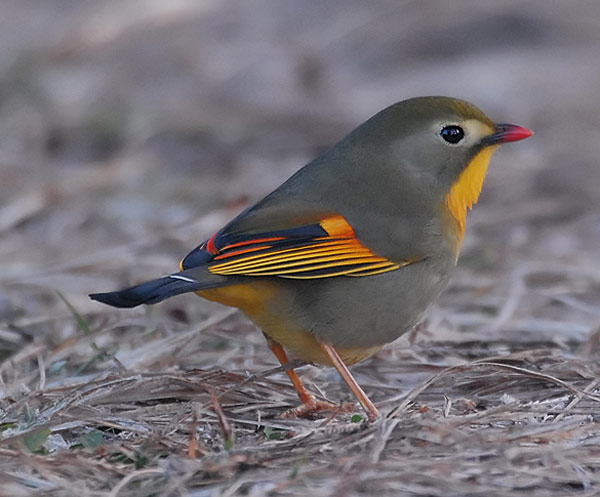
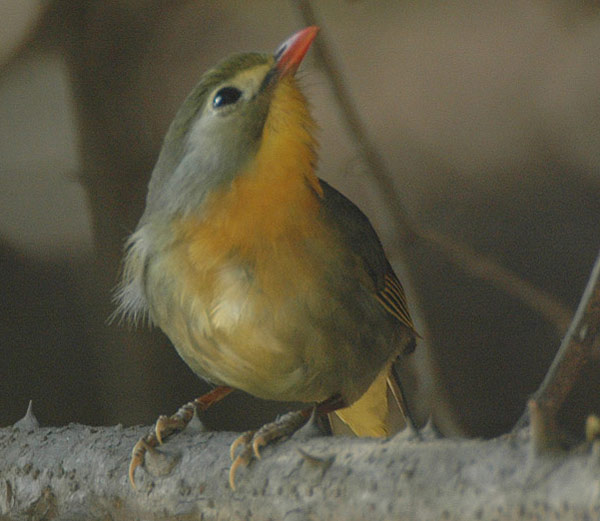
Red-billed Leiothrix (Leiothrix lutea) by Dan's Pix. at National Aviary

Red-billed Leiothrix – The Rain Seeker… ~ by a j mithra

Red-billed Leiothrix are native to Southern Asia ranging from central Himalayas in India and Nepal, eastwards to Burma and Vietnam. Leiothrix prefer to inhabit underbrush at all elevations with a cover of dense vegetation near the ground. These birds are found at elevations 700 m to 2000 m in winters and 1500 m to 2700 m in summers. Flocks of Leiothrix’s have been known to fly up to elevations of 4500 m for a short period of time.

These birds favor areas with at least 40 inches of rain.

  • We go to church, pray and give offering, but still, many of us are dry in spirit.. Why?
  • These birds have a thirst to stay in places where there is abundant rain…
  • God pours out His spirit according to our thirst…

He has promised to pour His spirit on all flesh…

For I will pour water upon him that is thirsty, and floods upon the dry ground: I will pour my spirit upon thy seed, and my blessing upon thine offspring: (Isaiah 44:3)

Red-billed Leiothrix (Leiothrix lutea) by Nikhil Devasar

Red-billed Leiothrix (Leiothrix lutea) by Nikhil Devasar

The leiothrix can usually be found in a group of about ten to thirty birds during the non-breeding season; however, during the breeding season the birds break off into pairs and become territorial.

  • We as believers, do we congregate often or just on Sundays?
  • The word of God encourages us to have corporate worship…
  • Jericho came down through corporate worship..
  • Battle was won through corporate worship…
  • Jesus too had promised to be in the midst of those who unite in His name in twos and threes…

The presence of the Lord flows like a river during corporate worship..

A Song of degrees of David. Behold, how good and how pleasant it is for brethren to dwell together in unity! It is like the precious ointment upon the head, that ran down upon the beard, even Aaron’s beard: that went down to the skirts of his garments; As the dew of Hermon, and as the dew that descended upon the mountains of Zion: for  there the LORD commanded the blessing, even life for evermore. (Psalm 133)

Though we need to dwell together in unity, at times, like these birds who break off into pairs, we need to have an intimate and personal relationship with our Saviour..

  • Jesus set Himself as an example by spending time alone in prayer..
  • How much time do we spend on our knees?

But thou, when thou prayest, enter into thy closet, and when thou hast shut thy door, pray to thy Father which is in secret; and thy Father which seeth in secret shall reward thee openly. (Mathew 6:6)

Red-billed Leiothrix (Leiothrix lutea) by Nikhil Devasar

Red-billed Leiothrix (Leiothrix lutea) by Nikhil Devasar

These birds seem to teach us about the importance of Praise and Prayer isn’t it? These birds have a song which consists of short powerful notes that are repeated continuously throughout the year but it is more persistent during the breeding season… This period usually lasts from early April until September and they are usually found around well watered areas.

Above it stood the seraphims: each one had six wings; with twain he covered his face, and with twain he covered his feet, and with twain he did fly.

And one cried unto another, and said, Holy, holy, holy, is the LORD of hosts: the whole earth is full of his glory. (Isaiah 6:2,30)

  • The Seraphins has been singing the same phrase since creation…
  • But, they don’t seem to feel bored at all…
  • But, most of us feel bored when the church sings the same song over and over again. Why?

The males also sing long complex songs with a wide array of syllables to attempt to attract the female…

  • Do you know how the power of worship?
  • Our worship will not let the Creator of the Universe sit in His throne..
  • It is that powerful..
  • So, sing and don’t let the King sit in His throne forever….

All the ends of the world shall remember and turn unto the LORD: and all the kindreds of the nations shall worship before thee. (Psalm 22:27)

Have a blessed day!

Your’s in YESHUA,
a j mithra

Please visit us at: Crosstree


Lee’s Addition:

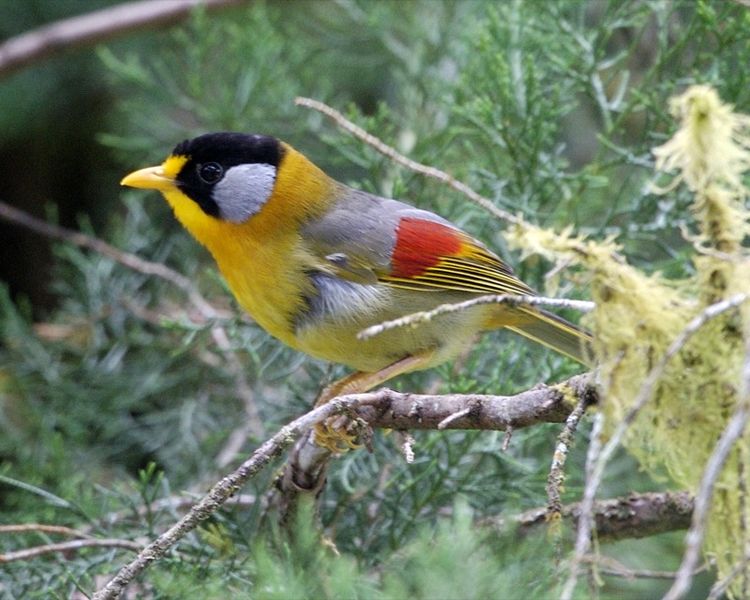
The Leiothrix is in the Timaliidae Family of Babblers and Parrotbills which are in Passeriformes Order. There are two Leiothrix in the family, the other being a Silver-eared Leiothrix. Both are very colorful birds. Maybe because they seek rain, the Lord gave them colors that are bright like the rainbow.

*