“So we are always confident, knowing that while we are at home in the body we are absent from the Lord. For we walk by faith, not by sight. We are confident, yes, well pleased rather to be absent from the body and to be present with the Lord.” (2 Corinthians 5:6-8 NKJV)
Dr. Jim and Sherry Johnson
Dr. James J. S. Johnson, “Dr. Jim” as I always refer to has been a regular writer here on the blog. He “joined his Lord in heaven on the night of July 19, 2025. ” We will dearly miss him here on the blog. He has posted many articles about birds which came from his love of birdwatching.
We, Dan and I, first met Dr. Jim, in person, when he came to our church and presented one of his presentations about Creation. He was writing articles here on the blog before that visit. He found this blog, Lee’s Birdwatching Adventures Plus, while looking for one of the articles he had written about birds. I had seen it, and with permission had copied and posted it here. That incident started our friendship and him posting many birdwatching articles here. He has been writing articles here at least since 2013.
“We are confident, yes, well pleased rather to be absent from the body and to be present with the Lord. Therefore we make it our aim, whether present or absent, to be well pleasing to Him. For we must all appear before the judgment seat of Christ, that each one may receive the things done in the body, according to what he has done, whether good or bad.”
(2 Corinthians 5:8-10 NKJV)
Links to many of Dr. James Johnson’s post here:
I have to admit that these pages are not totally up to date. Search under these links to find many of Dr. Jim’s articles:
But if any provide not for his own, and specially for those of his own house, he hath denied the faith, and is worse than an infidel. (1st Timothy 5:8)
There she was, that shameful sneak! An unmotherly and irresponsible female Brown-headed Cowbird!
Cowbird egg deposited into “foster home” nest (National Audubon Society photo credit)
Why do I say “sneak”? Because the female Brown-headed Cowbird is the most prominent example of a “brood parasite” in North America. Cowbird mothers refuse to raise their own young; they use deceit to “dump” their kids on other mothers (and fathers) to raise. Shame on them! In fact, about half of America’s Lower 48 states are year-round residence range for these brood-parasitic icterids.
RANGE of Brown-headed Cowbird, with green = year-round resident (Wikipedia image credit)
In other words, the mother cowbirds sneakily deposit their eggs into the nests of other bird mothers – so that the involuntary “foster mothers” are left with the responsibility of raising the cowbird hatchlings. The ornithologists at Cornell University describe the cowbird mother’s habits:
The Brown-headed Cowbird is North America’s most common “brood parasite.” A female cowbird makes no nest of her own, but instead lays her eggs in the nests of other bird species, who then raise the young cowbirds. …
Brown-headed Cowbird lay eggs in the nests of more than 220 species of birds. Recent genetic analyses have shown that most individual females specialize on one particular host species. …
Cowbird eggs hatch faster than other species eggs, giving cowbird nestlings a head start in getting food from the parents. Young cowbirds also develop at a faster pace than their nest mates, and they sometimes toss out eggs and young nestlings or smother them in the bottom of the nest. [Quoting “Brown-headed Cowbird: overview”, posted on Cornell Lab’s AllAboutBirds.org website]
1 Cowbird egg inserted into a Phoebe nest (Wikipedia photo credit)
In other words, unlike the noble stepparent, who intentionally and unselfishly accepts the child-rearing responsibility for a (typically ungrateful) child who was procreated by someone else, avian “foster parents” who raise undocumented alien offspring (of Brown-headed Cowbirds) do so unawares.
Of course, not all nest-managing birds are fooled by brood parasite birds — regarding Australia’s Superb Fairywren, who uses a parental “password” to vet her nestlings for legitimacy, see “Pushy Parasites and Parental Passwords“, posted at http://www.icr.org/article/pushy-parasites-parental-passwords .
Also, the statistical prospects for cowbird babies is unimpressive: out of about 40 eggs laid/abandoned per year, by cowbird mothers, only about 2 or 3 survive to adult maturity. [See Donald Stokes & Lillian Stokes, “Brown-headed Cowbird”, A GUIDE TO BIRD BEHAVIOR, Volume II (Boston, MA: Little, Brown, & Company), page 213.)
Earlier this month, enjoying fair weather, I went birdwatching with my son, in some suburban parks of Dayton (Ohio).
COX ARBORETUM park in Dayton, Ohio (TripAdvisor photo credit)
The above-noted birdwatching experience was enhanced by my son’s smart-phone’s usage of an “app” called MERLIN (Merlin Bird ID, by Cornell Lab: https://merlin.allaboutbirds.org ) which identifies (by name) bird calls, plus provides a color photograph, when a bird’s calls are recognized by the app. Most of the recognized birdsongs were from American Robins or various sparrows (e.g., Chipping Sparrow, English Sparrow, etc.), but more than once the songbird was a female Brown-headed Cowbird.
Of course, male Brown-headed Cowbirds are easy to recognize, as shown below.
Brown-headed Cowbird MALE (Wikipedia photo credit)
However, female Brown-headed Cowbirds are much less conspicuous in plumage, because the soft-brown-hued females do not have shiny iridescent plumage that make males so easily recognizable.
The Cornell Lab’s Merlin app also identifies birds visually – you just “zoom [in] until your bird fills the box” (on your smart-phone), then the Merlin app identifies the bird, plus it supplies some basic information about the bird that you are photographing on your smart-phone. Nice!
Brown-headed Cowbird: female (L) & male (R) Wikipedia photo credit
There’s even more features to the Merlin app – but this is enough to suggest its usage. In other words, the main point (of this blogpost) is simple enough: get out there, and appreciate God’s Creatorship as you do some birding!
According to Birds and Bloom magazine site, there are Birds of the Month.
“You’ve probably heard of birth month gemstones and birth month flowers, but have you heard of birth month birds? It might come as a surprise to learn every month of the year has not only a representative jewel and flower, but also a bird. From owls to ravens, here are the birds that represent everyone’s birthdays.”
Perhaps it’s fitting that the bird for the month of Peeps candy is the canary. Some canaries live in the wild, but others, such as the domestic canary, are kept as pets. They’re not all yellow, either; some are red, while others are yellow and black. As part of the finch family, they are cheerful birds with a delightful song. To find them in the wild, you’d need to go to the Canary, Madeira or Azores Islands.
When I consider thy heavens, the work of thy fingers, the moon and the stars, which thou hast ordained; What is man, that thou art mindful of him? and the son of man, that thou visitest him? For thou hast made him a little lower than the angels, and hast crowned him with glory and honour. Thou madest him to have dominion over the works of thy hands; thou hast put all things under his feet: All sheep and oxen, yea, and the beasts of the field; The fowl of the air, and the fish of the sea, and whatsoever passeth through the paths of the seas. O LORD our Lord, how excellent is thy name in all the earth! (Psalms 8:3-9 KJV)
“And the stork, the heron after her kind, and the lapwing, and the bat.” (Leviticus 11:19)
This is just a quick note, from my part of Texas, to report seeing some white egrets lately.
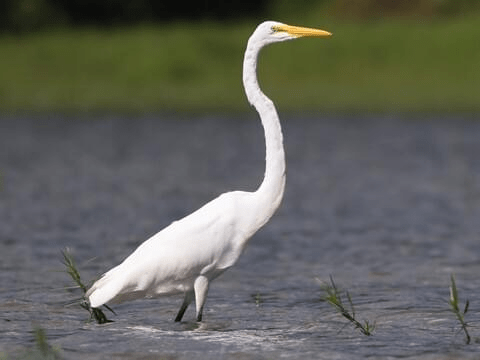
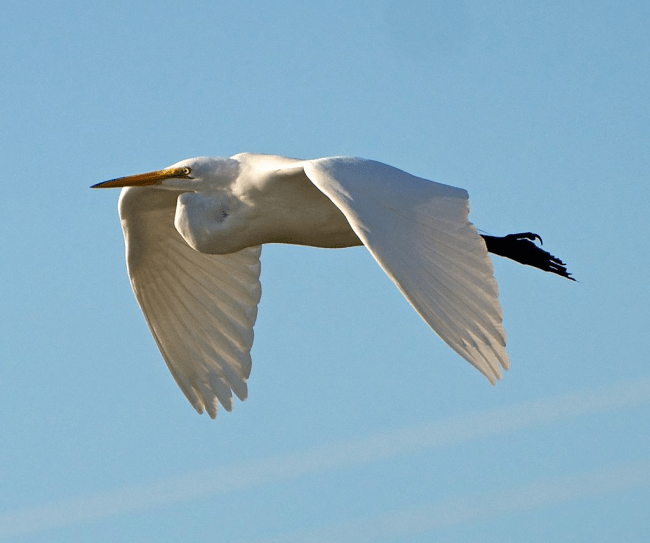
GREAT WHITE EGRET, wading in pond-water (Cornell Lab of Ornithology photo credit)
So much of (our part of) Texas is urbanizing–and suburbanizing. So, frequenting a rural area, where birdwatching is convenient, is like hunting for an endangered species.
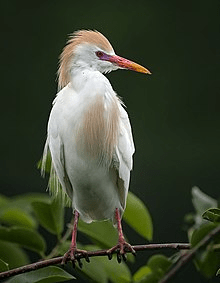
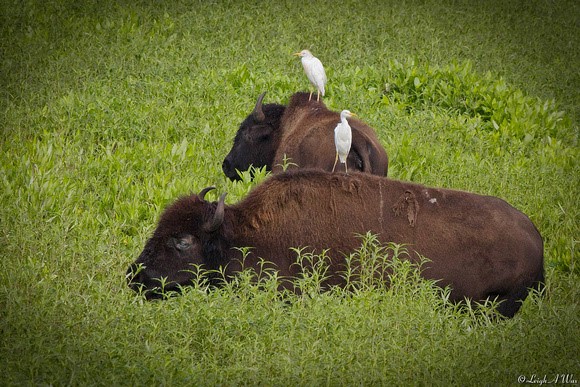
Last Sunday, in a journey that included driving through parts of Denton County and Tarrant County (Texas), my wife drove our car, as I looked out my car window–for birds in pastures and ponds. Ponds attract heron-like birds, such as foraging Great White Egrets (a/k/a “Great White Heron”). Likewise, pastures (with bovine cattle grazing), attract foraging Cattle Egrets.
GREAT WHITE EGRET in flight (Wikipedia photo credit)
Thankfully, I saw several kinds of birds, from place to place, in field and trees, and besides ponds and drainage ditches. Among those birds, observed that day, were two kinds of heron-like wading birds–Great White Egret and Cattle Egret. Which led to composing this limerick:
GREAT WHITE & CATTLE EGRETS, OBSERVED WHILE TRAVELLING
Cute critters—some are wild, some are pets;
Yesterday, I observed white egrets!
Standing, beside a pond;
Others, in grass beyond …
Go birding—you’ll have no regrets!
It’s good to know that, so far, there are still some pastures and ponds, where we can still view egrets.
Yes, we can all thank the Lord for making and sustaining these oft-ignored (yet magnificent) wild white wonders (Job 9:10).
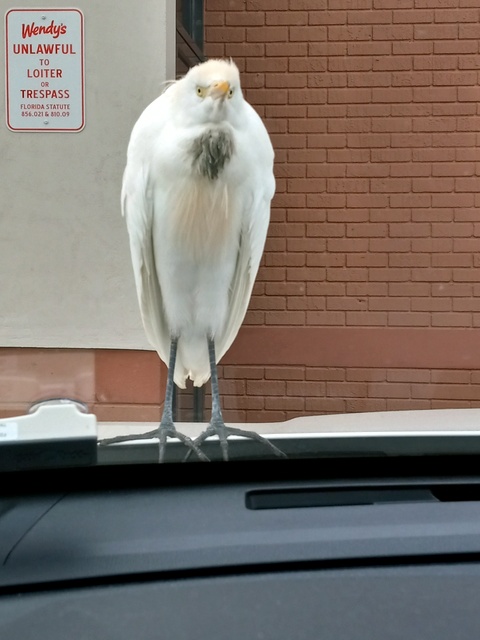
Adventurous Cattle Egret outside Wendy’s. When I pulled up to go into Wendy’s yesterday, this adventurous Cattle Egret decided to check my window. Later, as we were leaving, I noticed him riding on a man’s truck as he drove off. When the driver sped up, he finally hopped off.
If you notice the sign on the wall behind him/or her, it is Loitering.
Egret on Car in front of Wendy’s – no trespassing
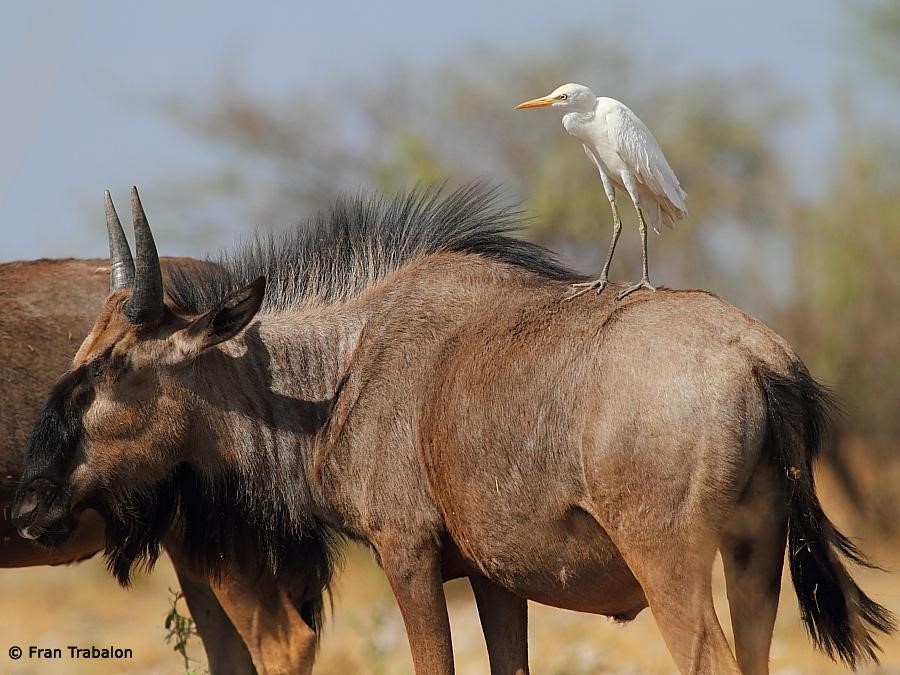
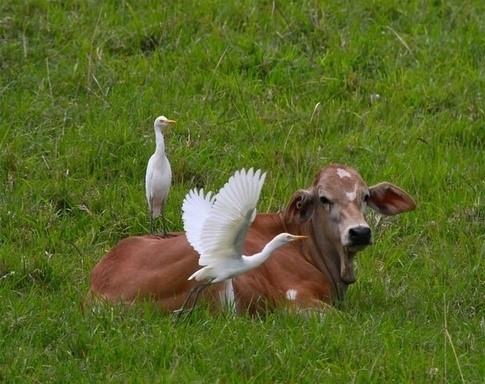
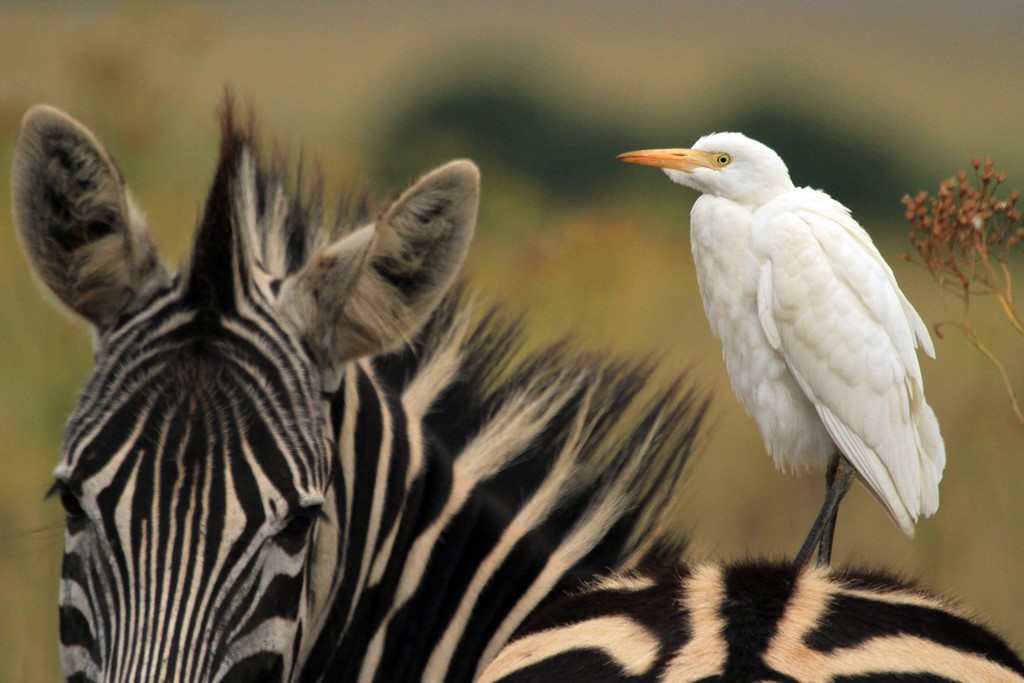
We have written about these Cattle Egrets before, but this was a very close encounter. They love to ride on cattle or whatever critter they can catch a ride on and try to find food. Here are a few of previous photos of Cattle Egrets.
“Look at the birds of the air, for they neither sow nor reap nor gather into barns; yet your heavenly Father feeds them. Are you not of more value than they?” (Matthew 6:26 NKJV)
When this blog began in 2008 its purpose was to introduce the Birds of the Bible. Now, it’s time to look at these verses and birds again. New birdwatchers and Christians may wonder about God’s avian wonders mentioned in scripture. Or we may like to review. I personally have seen and learned more about birds since back then and am still amazed by their behavior and beauty.
So, come along as we look at the Birdwatching Thru the Bible now. This new series will have us looking at the Birds of the Bible again, but from a little different perspective.
***
“In the beginning God created the heavens and the earth. (Genesis 1:1)
On day one of creation, God created light and darkness which were called Day and Night (Gen 1:5)
On day two the heavens were created and the firmament in the midst of the waters divided. (Gen 1:7)
On day three the waters were gathered together and the dry land appeared. Then the grass, herbs that has seeds, fruit trees were created. (Gen 1:8-13)
On day four the stars, moon, etc. were added for signs, seasons, day and night with the sun and moon. (Gen 1:14-19)
Then on day five:
(20) Then God said, “Let the waters abound with an abundance of living creatures, and let birds fly above the earth across the face of the firmament of the heavens.” (21) So God created great sea creatures and every living thing that moves, with which the waters abounded, according to their kind, and every winged bird according to its kind. And God saw that it was good. (22) And God blessed them, saying, “Be fruitful and multiply, and fill the waters in the seas, and let birds multiply on the earth.” (23) So the evening and the morning were the fifth day.” (Genesis 1:20-23 NKJV)
WOW! What a Creator!! Did you notice how God had everything planned out? Each day provided more to make the earth livable for the creatures, and then us on the sixth day.
A few Birds of the Bible post about the beginning:
” O LORD, our Lord, How excellent is Your name in all the earth, Who have set Your glory above the heavens! Out of the mouth of babes and nursing infants You have ordained strength, Because of Your enemies, That You may silence the enemy and the avenger. When I consider Your heavens, the work of Your fingers, The moon and the stars, which You have ordained, What is man that You are mindful of him, And the son of man that You visit him? (5) For You have made him a little lower than the angels, And You have crowned him with glory and honor. (6) You have made him to have dominion over the works of Your hands; You have put all things under his feet, All sheep and oxen—Even the beasts of the field, The birds of the air, And the fish of the sea That pass through the paths of the seas. O LORD, our Lord, How excellent is Your name in all the earth!
When I was asked to do some articles about birds, way back in 2008, I never imagined that today, Lee’s Birdwatching Adventures (now with WordPress) would have:
2,513,166 visits as of today
3,857 articles posted
The Lord has truly blessed these efforts. But now? After prayer and much thought, A decision has been made!!
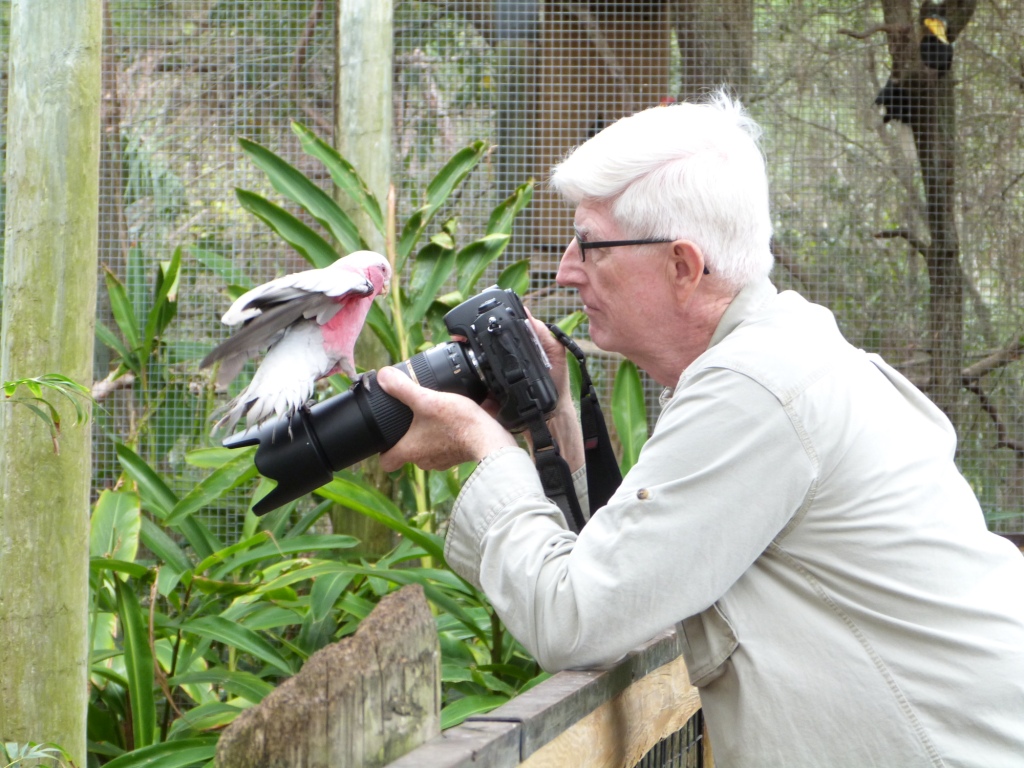
Galah (Eolophus roseicapilla) Hopping on Dan’s camera
LET’S CONTINE ON!!!!
I’ve paid the fees to continue. The Lord is about to allow me to turn 81 in a little over a week. Thank You Lord. We already have several great writers and photographer that can still add new articles here. The wealth of articles makes great resources for those seeking information about birds, especially home school students and others.
Golden Eagle and Dr Jim – Circle B by Lee
Dr. James J.S. Johnson from Institute for Creation Research,
William Wise a great photographer and writer, and
Golden Eagle, a.k.a. Dr. Baron Brown, are still birding.
ME?? I am planning to review and repost many of the great series of previous posts. I’ll check for broken link and missing photos.
In fact, tomorrow, the Heaven’s New Jerusalem and Birds – Foundation Stones series will begin. It’s one of my favorites.
Thank you for all the visits over the years and trust you’ll continue checking out these “oldies but goodies.” At my age, I forget things. :)
Praise the Lord for all these blessings that He has allowed us the share.
“And Haman answered the king, “For the man whom the king delights to honor, let a royal robe be brought which the king has worn, and a horse on which the king has ridden, which has a royal crest placed on its head.” (Esther 6:7-8 NKJV)
There are various Latin/scientific names for the “Crested” birds. The birds featured here use the term “christus” and we may check out more Crested birds in another article. Most are really gorgeous when the display that crest. What a Creator! Enjoy!
Here are the rest of these beautiful Avian Wonders “Crested” cristatus birds. They are in the order that the Birds of the World site lists them when you enter “crisstatus”:
“For You meet him with the blessings of goodness; You set a crown of pure gold upon his head.” (Psalms 21:3 NKJV)
Coronata is our Scientific/Latin word today. When I saw this name for birds, without looking up the word, I thought it had to have something to with a coronation, a king, or maybe a crown.
Crested Treeswift (Hemiprocne coronata)
Crested treeswift (Hemiprocne coronata) Male and Female Photographs by Shantanu Kuveskar – Wikipedia
This Myrtle Warbler seems to have the “crown” a little misplaced. Just an observation :)
I trust you are enjoying the Avian Wonders from the Lord from their Scientific/Latin names. We are just beginning. There are so many varieties of words that I doubt we will ever discover/introduce all of them. Also, the naming of birds keep changing from time to time. See The I.O.C World Bird List 14.1
Previous articles that have mentioned some of the birds:
The IOC World Bird List 14.1 contains 11032 extant species (and 162 extinct species) classified in 44 Orders, 253 Families and 2,384 Genera. The list also includes 19,802 subspecies, their ranges and authors.
Before we can dig into these Latin/scientific names of birds, it is best to update the number of birds now listed by the I.O.C. Our last update here, which is out of date, was the List 9.2:
At the time those articles were written there were 10,758 living species. Now it contains 11,032. That doesn’t include all the subspecies. Not sure how much we will update this site, but I will refer to the new names and subspecies as we investigate the scientific/Latin names of birds.
Sumatran Laughingthrush (Garrulax bicolor) by Dan at Wing of Asia ZM
Here is a listing, with of all the current Birds of the World which is better than any list we could produce here.
The last few articles have been to lay the foundation for investigating some of these Scientific/Latin names for birds. Below are links to the experts in keeping track of the Avian Wonders:
We considered a series on the State Birds, but as I have searched more about this topic, there are already many great sites to visit. So, I’ve decided to share links to those great websites, and then find another bird series to investigate.
All 50 states and the District of Columbia have official birds. To become a state bird, it helped to be familiar, colorful, and have a punchy song. The Northern Cardinal perches as state bird in seven eastern states, the Western Meadowlark in six western states. Bluebirds – like this Western Bluebird – and goldfinches are mascots of another seven. The country’s most insistent songster, the Northern Mockingbird, holds down five states. And Washington, DC’s official bird? The shy Wood Thrush! Find out which bird is your state bird. Learn more about these state birds at Cornell’s All About Birds.
Oh, by the way, we are orginally from Indiana and the Northern Cardinal is their state bird.
“Consider the ravens, for they neither sow nor reap, which have neither storehouse nor barn; and God feeds them. Of how much more value are you than the birds?” (Luke 12:24 NKJV)
Here’s an interesting video of a friendly crow in Denmark who has befriended a youngster. Trust you will enjoy watching the interactions between them.
“For every kind of beast and bird, of reptile and creature of the sea, is tamed and has been tamed by mankind.” (James 3:7 NKJV)
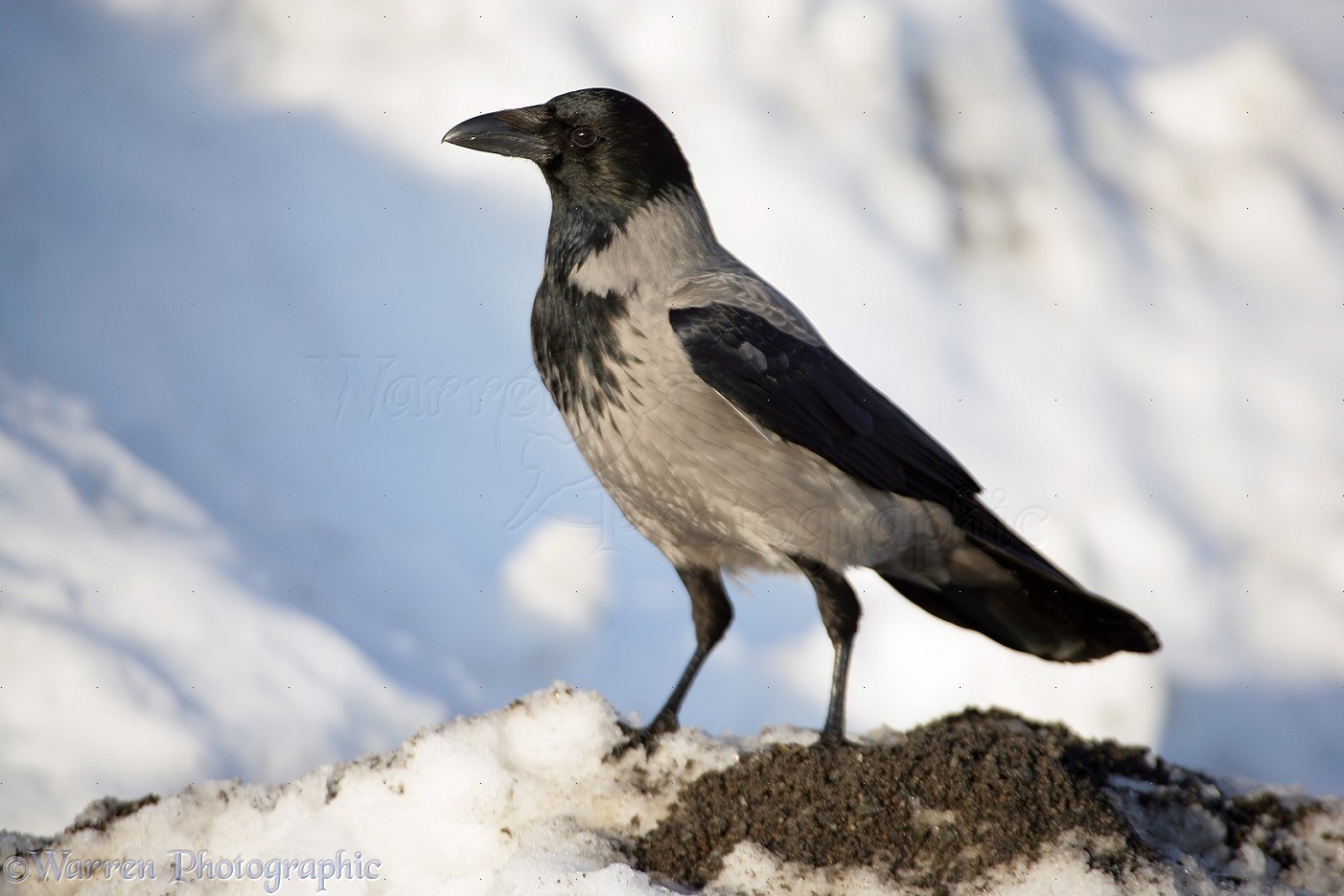
I believe this is a Hooded Crow.
Hooded Crow. Warren Photographic
The Hooded Crow, also called the scald-crow or hoodie, is a Eurasian bird species in the genus Corvus. Widely distributed, it is found across Northern, Eastern, and Southeastern Europe, as well as parts of the Middle East. It is an ashy grey bird with black head, throat, wings, tail, and thigh feathers, as well as a black bill, eyes, and feet. Like other corvids, it is an omnivorous and opportunistic forager and feeder. Wikipedia
Dr. “Jim” (James J. S. Johnson) shared this with me and asked me (Lee) to post it. He’s tied up in a conference.








 Lee's Birdwatching Adventures Plus