Birdwatching at Lake Hollingsworth 05-28-09

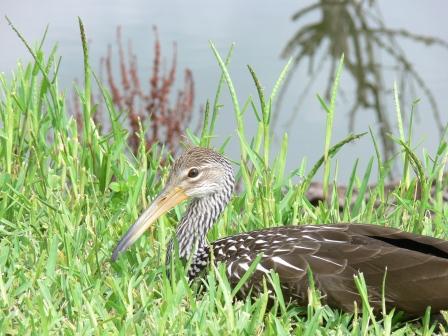
Immature Limpkin

Immature Limpkin

Instruct those who are rich in this present world not to be conceited or to fix their hope on the uncertainty of riches, but on God, who richly supplies us with all things to enjoy. (1 Timothy 6:17 NASB)

Well, today we finally got to go birdwatching for the first time in almost two months. With me being sick for almost a month and having rain for the last two weeks, we made a short visit today to Lake Hollingsworth in Lakeland. I am definitely not complaining about the rain. We have been in drought conditions here in central Florida. We have had 9 1/2 inches in our yard in the last two weeks. Our grass is finally green. The rain has refilled the lakes around here also. The picture I use at the top of the blog was taken at South Lake Howard Nature Park. Until the rains began, that stream was about 2 feet wide. It now looks like the picture again. Praise the Lord for the rain.

Here is a list of the birds we spotted today. On the drive to the lake we saw Ospreys, Cattle Egrets, 4 Wood Storks, a duck (mallard I think) with at least 10 babies in tow, a Great Egret, 10 Rock Pigeons and some Starlings.

Baby Geese by Dan

Baby Geese by Dan

At the lake, I had to feed the local beggars, which I enjoy doing. And then I checked out the local birds which included – White Ibises, Osprey, Wood Ducks, Great Egret, Great Blue Heron, Anhingas, 5 Limpkins, Boat-tailed Grackles, Geese and their babies, Mallards and their babies, Common Moorhens and their babies, Fish Crow, Muscovys, Purple Gallinule and a Pied-billed Grebe. As we knew, all our winter visiting birds have all gone back north to raise their young and enjoy their summer. Lord willing, I’ll be awaiting them in the fall.

This video is of an Anhinga and then I zoomed in on the Limpkin. Just testing out the video part of my camera.


Birds of the Bible – For His Pleasure

Thou art worthy, O Lord, to receive glory and honor and power: for thou hast created all things, and for thy pleasure they are and were created. (Revelation 4:11)

The Lord has created some fantastically beautiful birds amongst His Creation. This blog is just to show you some of those birds. As you watch the photos, realize that they are under a curse, (“For we know that the whole creation groaneth and travaileth in pain together until now.” Romans 8:22) and yet they are so neat. What must the first birds have been like when they were created? The Lord must have the neatest Paint Brush!

These photos were chosen to show colors and markings. In another blog, I’ll feature another of God’s Creative Handiwork.

All of these photos are copyrighted © by the photographers and used with their permission. Please honor their copyrights. Visit their galleries (see sidebar Photography).

*

This slideshow requires JavaScript.

*

Birds of the Bible – Osprey III

But these are they of which ye shall not eat: the eagle, and the ossifrage, and the osprey, (Deuteronomy 14:12 KJV)
“But these are the ones which you shall not eat: the eagle and the vulture and the buzzard, (Deuteronomy 14:12 NASB)

Osprey Family by Phillip Simmons

Osprey Family by Phillip Simmons

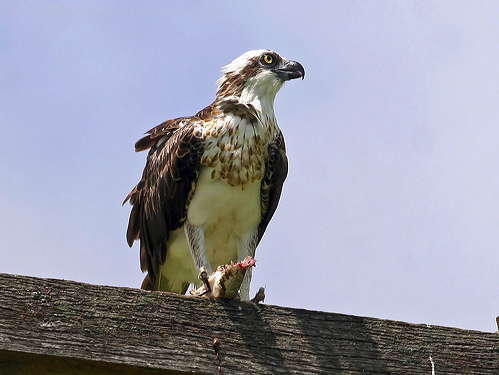
I decided to revisit the Osprey because they have been actively nesting in the area the last few months and also have some new photos to share. The photo to the right is neat in that both are working to feed the little ones. They usually mate for life. Normally the male does the fishing while the female guards the nest. The Ospreys were greatly endangered with DDT, but they are making a great recovery. For the first “Birds of the Bible – Osprey,” CLICK HERE

While preparing (with e-Sword) the above verse, I again reminded that not all the translations use “osprey or ospray”. Some use “vulture” (ESV, NASB, NKJV & others) and Darby uses “sea-eagle.” This was investigated in “Birds of the Bible – Osprey II.”

The research that is being done with the DNA of birds is changing the classification of several birds. The Osprey is being affected by these changes also. They were with the New World Vultures and now that is being rethought.

There are four subspecies of Osprey (Pandionidae):

Eastern Osprey Stamp-Australia

Eastern Osprey Stamp-Australia

Australia and New Guinea have an Pandion cristatus – Eastern Osprey  (non-migratory) They even have stamps with their photos. The smallest subspecies.

North America – halietus carolinensis (migratory)

Eurasia – P.h. haliaetus

P.h. ridgwayi in the Caribbean; “Caribbean subspecies Pandion haliaetus ridgwayi. Known for their very pale head and breast plumage.”

“Poole (1994) points to an interesting fact: despite its long history, Osprey has not evolved into different species.” I can believe that.

The typical lifespan is 20-25 years.

See the Osprey Page for more links, plus photos and videos. Osprey Photos

Osprey Ridgwayi from Rutland Ospreys

.

Eastern Osprey by Birdway

Eastern Osprey by Birdway

New Photographer Added

Great Egret by Quy Tran

Great Egret by Quy Tran

We have a new photographer who has given permission to use some of his photos. Quy Tran is an amazing photographer. He has quite an eye for capturing his subjects. Quy is fantastic in his compositions. Check out his Gallery at Quy Tran Galleries. Not only does he have wildlife photos, but his closeups are amazing.

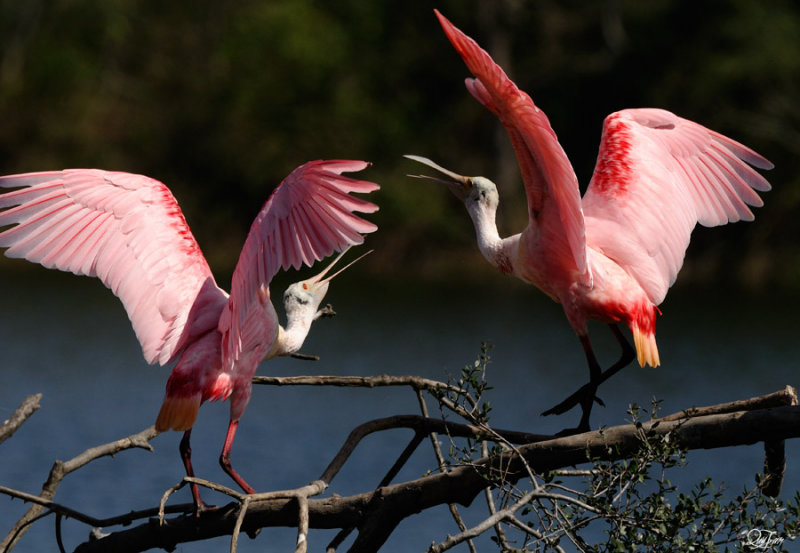
Roseate Spoonbill by Quy Tran

Roseate Spoonbill by Quy Tran

Thank you Quy for your permission to use some of your photos. All his photos are Copyright © Quy Tran and are being use with his permission.

Bambi by Quy

Bambi by QuyButterfly by QuyButterfly by Quy

Butterfly by Quy

Butterfly by Quy

Birds in Hymns – Jesus, Holy, Undefiled

For such a high priest became us, who is holy, harmless, undefiled, separate from sinners, and made higher than the heavens; (Hebrews 7:26)

Words: Em­i­ly M. Shap­cole, Hymns for In­fant Child­ren (Mas­ters: 1852).

Music: Ferr­i­er, John B. Dykes, 1862

Jesus, Holy, Undefiled


Jesus, holy, undefiled,
Listen to a little child;
Thou hast sent the glorious light,
Chasing far the silent night.

House Sparrow by Raymond Barlow

House Sparrow by Raymond Barlow

Thou hast sent the sun to shine,
O’er this glorious world of Thine;
Warmth to give and pleasant glow,
On each tender flow’r below.

Now the little birds arise,
Chirping gaily in the skies;
Thee their tiny voices praise,
In the early songs they raise.

Thou, by Whom the birds are fed,
Give to me my daily bread;
And Thy holy Spirit give,
Without Whom I cannot live.

Also released As Birds Their Infant Brood Protect by William Cowper, today.

Most information from The Cyber Hymnal

See ~ Wordless Birds

More ~ Birds in Hymns

*

Home again, Home again!

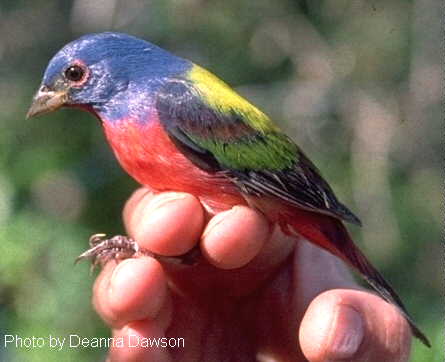
Painted BuntingPraise the the Lord, I am home again after a 5 day stay in the hospital. Thank all of you who have been praying for me while I have been fighting this infection. I have a viral respiratory infection (severe bronchitis) and it has to run it’s course. Could be several more months, so they tell me. With all their agressive treatments, I am much improved, but not well yet. At least they helped keep it from turning into pneumonia.

So, it’s back to try to do the “construction” I started some time back.

Thanks again for all your prayers. They were felt and appreciated.

Lee

Birds of the Bible – Solomon’s Birds

And God gave Solomon wisdom and exceedingly great understanding, and largeness of heart like the sand on the seashore. He spoke three thousand proverbs, and his songs were one thousand and five. Also he spoke of trees, from the cedar tree of Lebanon even to the hyssop that springs out of the wall; he spoke also of animals, of birds, of creeping things, and of fish. And men of all nations, from all the kings of the earth who had heard of his wisdom, came to hear the wisdom of Solomon. (1 Kings 4:29, 30,32-34)

While reading these verses lately, I began wondering what HAD Solomon written about the birds. Here is what I have found so far.

∞∞∞∞

Surely, in vain the net is spread In the sight of any bird; (Proverbs 1:17 NKJV)

From John Wesley’s Explanatory Notes “In vain – The fowler who spreads, his net in the sight of the bird looseth his labour. But these, are more foolish than the silly birds, and though they are not ignorant of the mischief which these evil courses will bring upon themselves, yet they will not take warning.”

∞∞∞∞

Deliver yourself like a gazelle from the hand of the hunter, And like a bird from the hand of the fowler. (Proverbs 6:5)
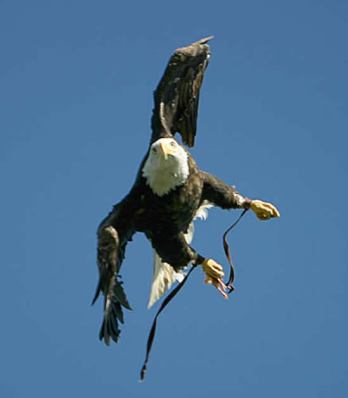
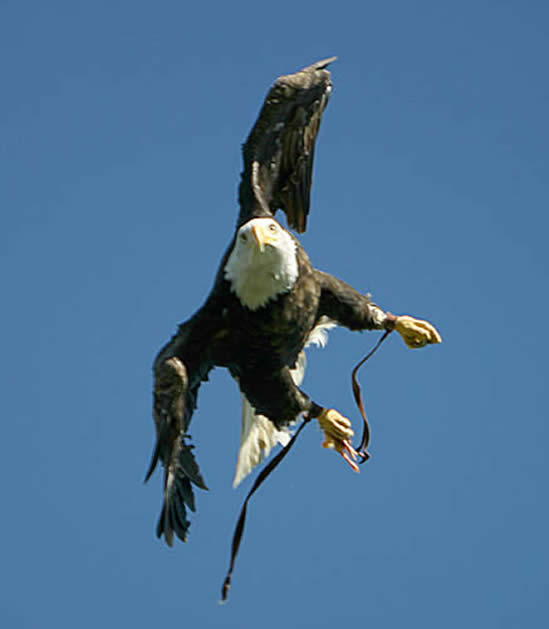
captive-eagleIf you get caught in a snare, struggle like the gazelle or bird to get free. Like Dave Ramsey said last evening on “Town Hall for Hope,” if things get bad get moving and exercise every effort to fix the problem. Don’t just wait for someone else to solve your problem. Don’t stay in the net of no hope.

∞∞∞∞

Till an arrow struck his liver. As a bird hastens to the snare, He did not know it would cost his life. (Proverbs 7:23)

This verse which tells of a bird being enticed into a trap, not knowing that it will kill it, comes in an illustration of a man enticed by an immoral woman. How many lives have been ruined this way. How many families have been lost.

∞∞∞∞

Like a bird that wanders from its nest Is a man who wanders from his place. (Proverbs 27:8)

This seems to almost go along with the verse above.

∞∞∞∞

Do not curse the king, even in your thought; Do not curse the rich, even in your bedroom; For a bird of the air may carry your voice, And a bird in flight may tell the matter. (Ecclesiastes 10:20 NKJV)

Now that is an interesting case of, “the little birdie told me so.”

∞∞∞∞

I returned and saw under the sun that– The race is not to the swift, Nor the battle to the strong, Nor bread to the wise, Nor riches to men of understanding, Nor favor to men of skill; But time and chance happen to them all. For man also does not know his time: Like fish taken in a cruel net, Like birds caught in a snare, So the sons of men are snared in an evil time, When it falls suddenly upon them. (Ecclesiastes 9:11-12)

Solomon in Ecclesiates changes to more of a “all is vanity” mode. I take this verse to mean that no matter whether you are strong, wise, rich, skillful, or otherwise, that things happen to all of us unexpectedly. All of us can get caught by a tornado, hurricane, flood, tsunami, and your status makes no difference to that circumstance. Even with the best preparations, things happen that are out of our control, but not God’s.

∞∞∞∞

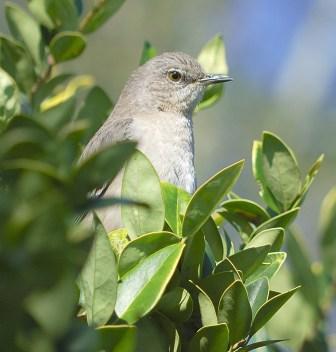
Northern Mockingbird by Dan

Northern Mockingbird by Dan

Remember now your Creator in the days of your youth, Before the difficult days come, And the years draw near when you say, “I have no pleasure in them”: While the sun and the light, The moon and the stars, Are not darkened, And the clouds do not return after the rain; In the day when the keepers of the house tremble, And the strong men bow down; When the grinders cease because they are few, And those that look through the windows grow dim; When the doors are shut in the streets, And the sound of grinding is low; When one rises up at the sound of a bird, And all the daughters of music are brought low. Also they are afraid of height, And of terrors in the way; When the almond tree blossoms, The grasshopper is a burden, And desire fails. For man goes to his eternal home, And the mourners go about the streets. Remember your Creator before the silver cord is loosed, Or the golden bowl is broken, Or the pitcher shattered at the fountain, Or the wheel broken at the well. Then the dust will return to the earth as it was, And the spirit will return to God who gave it. (Ecclesiastes 12:1-7)

These verses remind us to “Remember now your Creator.” While we are young accept the Lord the Creator and learn of Him. One day you will be old, and things slow down, and you wake early at a birds singing (most likely a Mockingbird because they sing really early) while others that are young get a full nights rest. Or, it could be that a person is so afraid that even a bird’s song frightens them awake. Solomon is reminding us to keep the Creator foremost because one day we will return to dust.

All quotes are from NKJV.
Weaver Birds

And God blessed them, saying, Be fruitful, and multiply, and fill the waters in the seas, and let fowl multiply in the earth. (Genesis 1:22)

The Weaver Bird from Creation Moments

Speke's Weaver

Speke's Weaver

Weaver bird name for the Ploceidae, a family of Old World seed-eating birds closely resembling finches (hence the alternate name weaver finch). It includes a number of so-called goldfinches and waxbill finches that are actually weaver birds, rather than true finches of the family Fringillidae. The weavers are named for the highly complex woven nests built by many species, though others build only crude nests, and the parasitic widow weavers build no nests at all. Most weavers are sedentary, noisy, gregarious, and polygynous, with elaborate courtship rituals. Most weavers use grasses for the weaving of the nests which have an entry at the bottom.

The weaver group is divided into the buffalo, sparrow, typical, and widow weavers.

Buffalo-weavers -The African buffalo weavers are black-and-brown birds 8 to 10 in. (20.3-25.4 cm) long, that travel in small flocks and build bulky compartmented nests with separate chambers for two or more pairs.
Red-billed Buffalo-weaver
White-billed Buffalo-weaver
White-headed Buffalo Weaver

Red-billed Quelea

Red-billed Quelea

Sparrow-weavers – Of the 35 sparrow weavers the best known, and in fact one of the most widely distributed and familiar small birds in the world, is the English sparrow native to Europe, W Asia, and N Africa. It is the most successful town and city dweller among birds, and has followed European civilization wherever it has gone; it was introduced to North America in 1852. As common in Asia is the Eurasian tree sparrow (also introduced in the United States), a nuisance in rice fields and sold in great quantities for food. These birds build untidy domed nests with side entrances. Most specialized of the sparrow weavers is the
White-browed Sparrow-weaver
Chestnet-crowned Sparrow-weaver
Chestnut-backed Sparrow-weaver
Donaldson-Smith’s Sparrow-weaver

Social-weaver of Africa, famous for its apartment-house nest, in which 100 to 300 pairs have separate flask-shaped chambers entered by tubes at the bottom. They build these structures, which may be 10 ft (3 m) high and 15 ft (4.5 m) across, high in a sturdy tree, beginning with a roof of straw thatch. Of the 100 or more African and Asian typical weavers, the small quelea, only 5 in. (12.7 cm) long, sometimes causes huge crop losses in Africa by feeding on grain in flocks numbering as many as one million birds.
Grey-headed Social-weaver
Black-capped Social-weaver

Widow-weavers – The African widow weavers (named for the long, drooping black tail plumes of the breeding male), or whydahs, are notable for their selective parasitic nesting habits; they lay their eggs in the nests of waxbills, and their eggs are white, as are those of the waxbill, rather than spotted, as are those of all other weavers.

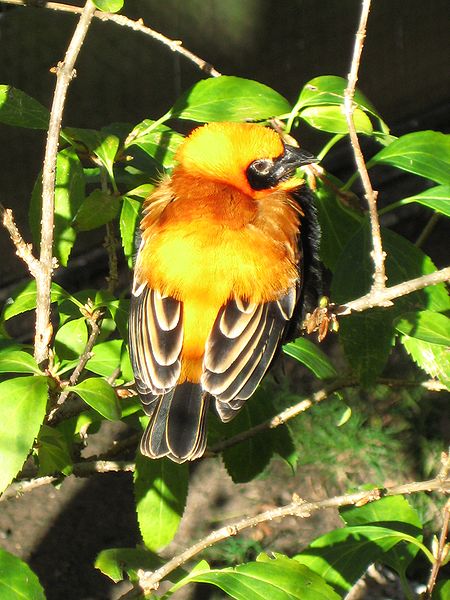
Black-winged Red Bishop

Black-winged Red Bishop

Fan-tailed Widowbird
Yellow-shouldered Widowbird
Red-collared Widowbird
Marsh Widowbird
Buff-shouldered Widowbird
Long-tailed Widowbird

Jackson’s Widowbird

Many of the weaver family are kept as cage birds, especially the colorful waxbills (e.g., the Java sparrow, mannikin, munia, grenadier, cutthroat, and cordon-bleu, locust, parrot, Gouldian, and fire finches). Weaver birds are classified in the phylum Chordata , subphylum Vertebrata, class Aves, order Passeriformes.

Other Weaver Bird families are the:
Just plain Weavers, the Malimbe family, Quelea family, Fody family, and the Bishop family

From:
The Columbia Encyclopedia, Sixth Edition. 2008. Encyclopedia.com. 21 Apr. 2009, Answers.com Ploceidae,   and other internet sources.

Check out the Weaver Bird Videos

Birds of the Bible – Foundation #3

We will continue on with the Birds of the Bible – Foundation series.

If you have not read the previous blogs:
Foundation #1
Foundation #2

In the last blog the “Fall” of Adam and Eve was mentioned and because of that, the “Curse” is now on them and all of God’s creation. Death comes on the scene, mankind now has sinned and now each person is born as a sinner. The ground is cursed and thorns and thistle now appear.

By Genesis Chapter 6, God has had it with the sins of man.

And GOD saw that the wickedness of man was great in the earth, and that every imagination of the thoughts of his heart was only evil continually. And it repented the LORD that he had made man on the earth, and it grieved him at his heart. And the LORD said, I will destroy man whom I have created from the face of the earth; both man, and beast, and the creeping thing, and the fowls of the air; for it repenteth me that I have made them. (Genesis 6:5-7 KJV)

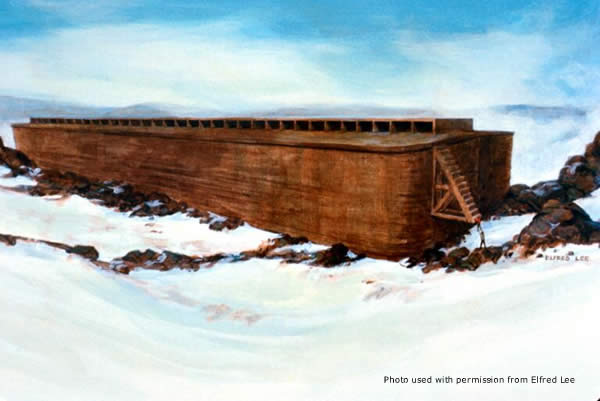
The Ark by Elfred Lee

The Ark by Elfred Lee

All is not lost because, “But Noah found grace in the eyes of the LORD.” (Genesis 6:8 KJV) Because of the grace found by Noah, the LORD gives him instructions about how to build an ark including the size, materials to use, who and what will be on board, and why the ark will be needed. God makes a covenant with Noah and tells him to come in with his wife and his sons and his son’s wives.

And of every living thing of all flesh, two of every sort shalt thou bring into the ark, to keep them alive with thee; they shall be male and female. Of fowls after their kind, and of cattle after their kind, of every creeping thing of the earth after his kind, two of every sort shall come unto thee, to keep them alive. (Genesis 6:19-20 KJV)

He was also to provide food for all of them. And Noah obeyed all that he was told. Noah spent over 100 years preparing the ark and trying to warn others of the coming judgment. There was plenty of room on the ark for more than the 8 people who boarded the ark. The others refused to repent.

When we get to Chapter 7, the boarding of the ark takes place and the rain and flood begins. “And the LORD said unto Noah, Come thou and all thy house into the ark; for thee have I seen righteous before me in this generation. Of every clean beast thou shalt take to thee by sevens, the male and his female: and of beasts that are not clean by two, the male and his female. Of fowls also of the air by sevens, the male and the female; to keep seed alive upon the face of all the earth. For yet seven days, and I will cause it to rain upon the earth forty days and forty nights; and every living substance that I have made will I destroy from off the face of the earth. And Noah did according unto all that the LORD commanded him.” (Genesis 7:1-5)

Noah did not have to round up the animals, they came to him. Because not every animal we see today came on board but the main kinds (for instance the “bird kinds” may have had a “warbler kind” but not have black and white warblers,yellow-rumped warblers, hooded warbler, etc.), which ever ones they were, there was plenty of room for them. I have an idea that because the LORD sent the animals, birds, and critters, that their DNA’s were of the highest quality. (That is my opinion)

Dove in Israel

Doves in Israel

If you read the rest of Genesis 7, you will see that the global flood came and covered everything and only those who were in the ark survived, plus some of those that live in the water.

And all flesh died that moved upon the earth, both of fowl, and of cattle, and of beast, and of every creeping thing that creepeth upon the earth, and every man: All in whose nostrils was the breath of life, of all that was in the dry land, died. And every living substance was destroyed which was upon the face of the ground, both man, and cattle, and the creeping things, and the fowl of the heaven; and they were destroyed from the earth: and Noah only remained alive, and they that were with him in the ark. (Genesis 7:21-23)

In Foundation #4 we will find out about what the birds go through as they come off the ark and after.

Peterson Field Guide – Videos

Ring-necked Duck at Lake Morton by Dan

Ring-necked Duck at Lake Morton by Dan

I finally got all the current “Peterson Field Guide” – Videos posted and they are all indexed on the following page. I trust you will watch them and some of the additional links provided here on this site.

The Videos are very good and you can learn much from them. Hopefully, they will be producing more. If so, they will also be added to this blog. Again, Peterson Field Guides has recently begun producing short videos on YouTube. Birdwatching was advanced greatly because of Roger Tory Peterson. I have several of the Peterson Field Guides and use them very frequently.

Peterson Field Guide Video Series

“Peterson Field Guide” Videos is from petersonfieldguides at YouTube