And one cried unto another, and said, Holy, holy, holy, is the LORD of hosts: the whole earth is full of his glory. (Isaiah 6:3 KJV)
Words by Ann T. Gilbert (1782-1852), 1827 (originally, “Spared to Another Spring”).
This hymn appeared, unattributed, in the American School Hymn Book, by Asa Fitz, 1854, and is sometimes incorrectly ascribed to Fitz. The version below was published in the 1882 Collection by Godfrey Thring.
Music: Swabia by Johann M. Spiess (1715-1772) – arranged by William H. Havergal, 1847
Great Giver of All Good
Great Giver of All Good,
To Thee our thanks we yield
For all the beauties of the wood,
Of hill, and dale, and field.
Ten thousand various flowers
To Thee sweet offerings bear, And joyous birds in woodlands bowers
Sing forth Thy tender care.
The fields on every side
The trees on every hill,
The glorious sun, the rolling tide,
Proclaim Thy wonders still.
But trees, and fields, and skies
Still praise a God unknown;
For gratitude and love can rise
From living hearts alone.
These living hearts of ours
Thy holy Name would bless;
The blossoms of the thousand flowers
Would please the Savior less.
While earth itself decays,
Our souls can never die;
O tune them all to sing Thy praise
In better songs on high.
By them shall the fowls of the heaven have their habitation, which sing among the branches. (Psalms 104:12 KJV)
Ann T. Gilbert was the daughter of Isaac Taylor, who at the time of her birth was a London engraver. Her father subsequently became a Congregational minister, living first at Colchester, then at Ongar. In 1813, she married the Rev. Joseph Gilbert, classical and mathematical tutor at the Congregational College, Masborough (near Rotherham), Yorkshire. From Masborough they moved to Hull, and later Nottingham.
Johann M. Spiess taught music at the Gymnasium in Heidelberg, Germany, and played the organ at St. Peter’s Church and (1746-1772) at Berne Cathedral.
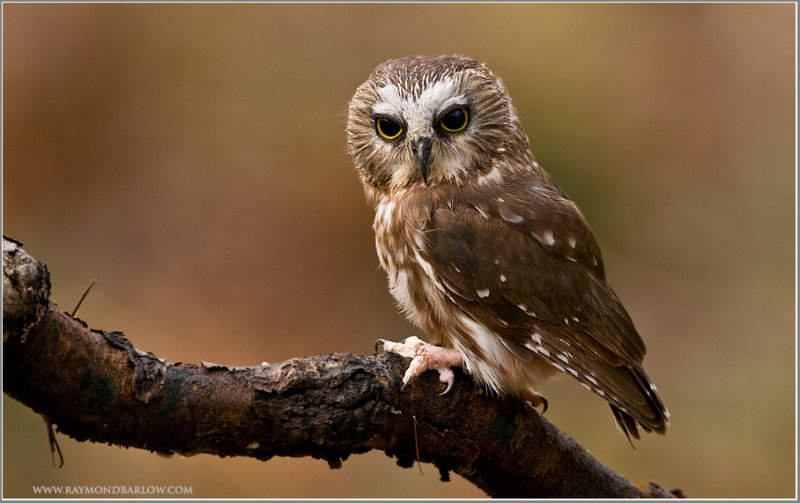
Northern Saw-whet Owl (Aegolius acadicus) (captive) by Raymond Barlow
When I did the first Birds of the Bible – Owls back in March of 2008, this blog was only a month old. Wow! I have always enjoyed the video that I included in it and have placed it here for those who have not seen it. The Burrowing Owls would definitely qualify as Little Owls. Since that article, we have added great photographers, videographers and writers. Trust this article on just the “Little Owls” will be helpful and a blessing as we look into the Birds of the Bible.
The Little Owl is mentioned in Leviticus 11:17 and again in Deuteronomy 14:16. As you can see by the following list of verses, that it is translated as “little” in many of them. These two verses are from the list of unclean birds that the Israelites were not to eat. See Birds of the Bible – Clean vs. Unclean
And the little owl, and the cormorant, and the great owl, (Leviticus 11:17 KJV)
little owl,H3563… (Leviticus 11:17 KJV+)
H3563 gives this definition: כּוס, kôs, koce
From an unused root meaning to hold together; a cup (as a container), often figuratively a lot (as if a potion); also some unclean bird, probably an owl (perhaps from the cup like cavity of its eye): – cup, (small) owl. Compare H3599. (Strong’s Hebrew and Greek Dictionaries)
The little owl, and the great owl, and the swan, (Deuteronomy 14:16 KJV)
The little owl,H3563… (Deuteronomy 14:16 KJV+) Same word used again.
Here are the results of searchs in e-Sword looking for “owl” or “owls” to find which ones used “little owl.” These are the different translations and only those two verses used “little owl.”
Leviticus 11:17
and the little owl, and the cormorant, and the great owl, (ASV)
And the little owl, and the cormorant, and the great owl, (AKJV)
And the little owl and the cormorant and the great owl; (BBE)
the little owl, the cormorant, the short-eared owl, (ESV)
little owls, cormorants, great owls, (GW)
and the little owl, and the cormorant, and the great owl; (JPS)
And the little owl, and the cormorant, and the great owl, (KJV)
and the little owl, and the cormorant, and the eared owl; (LITV)
and the little owl, and the cormorant, and the eared owl; (MKJV)
and the little owl and the cormorant and the great owl, (NAS77)
and the little owl and the cormorant and the great owl, (NASB)
the little owl, the fisher owl, and the screech owl; (NKJV)
and the little owl, and the cormorant, and the great owl; (RV)
And the little owl, and the cormorant, and the great owl, (Webster)
and the little owl, and the cormorant, and the great owl, (YLT)
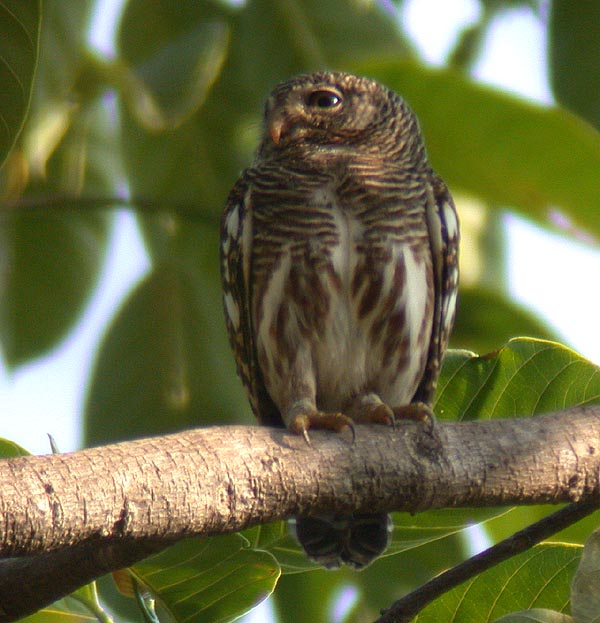
Asian Barred Owlet (Glaucidium cuculoides) by Peter Ericsson
Deuteronomy 14:16
The little owl, the great owl, the horned owl, (AMP)
the little owl, and the great owl, and the horned owl, (ACV)
The little owl, and the great owl, and the swan, (AKJV)
The little owl and the great owl and the water-hen; (BBE)
little owls, great owls, white owls, (ERV)
the little owl and the short-eared owl, the barn owl (ESV)
little owls, great owls, barn owls, (GW)
he little owl, the great owl, the horned owl, (ISV)
the little owl, and the great owl, and the horned owl; (JPS)
The little owl, and the great owl, and the swan, (KJV)
the little owl, and the eared owl, and the barn owl, (LITV)
the little owl, and the great owl, and the swan, (MKJV)
the little owl, the great owl, the white owl, (NAS77)
the little owl, the great owl, the white owl, (NASB)
the little owl, the screech owl, the white owl, (NKJV)
the little owl, and the great owl, and the horned owl; (RV)
The little owl, and the great owl, and the swan, (Webster)
the little owl, and the great owl, and the swan, (YLT)
Now that it is established that the “Little Owl” is a Bird of the Bible, what are some of the Little Owls that we can see today? What Order and Family do they belong? Let’s see what can be discovered.
To begin with, there are two Families of Owls in the Strigiformes Order. The Barn Owls, which are mentioned in the Bible, are in the Tytonidae Family and the rest of the Owls are in the Strigidae Family. That is where we will go to find the “little owls.” There are presently 206 species in the family, and they range from smallest (the smallest owls in the world; the Northern Pygmy Owl and the Elf Owl) to the largest Great Grey Owl (61 to 84 cm (24 to 33 in), averaging 72 cm (27 in) for females and 67 cm (26 in) for males.)
Little Owl (Athene noctua) by Nikhil Devasar
The Northern Pygmy Owl (Glaucidium californicum) and the Elf Owl (Micrathene whitneyi) would both be considered “little owls.”
There actually is a Little Owl (Athene noctua) which is resident in much of the temperate and warmer parts of Europe, Asia east to Korea, and north Africa. It is not native to Great Britain, but was first introduced in 1842,and is now naturalised there. It was also successfully introduced to the South Island of New Zealand in the early 20th century. The Little Owl is a small owl, 9-10.8 in (23-27.5 cm) in length. The adult Little Owl of the most widespread form, is white-speckled brown above, and brown-streaked white below. It has a large head, long legs, and yellow eyes, and its white “eyebrows” give it a stern expression. This species has a bounding flight like a woodpecker. The call is a querulous kee-ik. (Wikipedia)
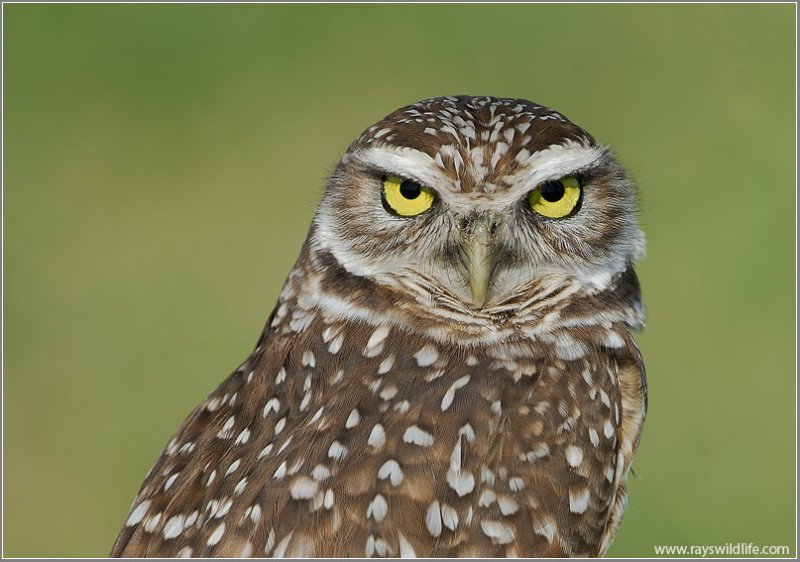
Burrowing Owl (Athene cunicularia) by Raymond Barlow
Our Burrowing Owl (Athene cunicularia), seen here in Florida, is 10 in tall and can be quite comical as this video shows. Their necks are quite limber.
The Elf Owl lives the cactus in a desert. The elf owl migrates to Arizona and New Mexico in the spring and summer. In the winter, it is found in central and southern Mexico. Elf Owls feed mainly on insects and therefore occupy habitats with a ready supply of these. Agaves and ocotillos are ideal places for foraging as moths and other insects may sleep in their flowers. Elf owls are known to eat scorpions, somehow managing to cut off the stinger. They are often seen chasing after flying insects.
The Northern Pigmy Owl is native to Canada, the United States, Mexico, Guatemala and Honduras. Pygmy owls are purportedly “sit-and-wait” predators, though they in fact hunt somewhat actively, moving from perch to perch with short flights, and pursuing prey at all levels of forest structure. They swoop down on prey; they may also catch insects in flight. They eat small mammals, birds and large insects, and may take a variety of other vertebrates and invertebrates. Mountain Pygmy Owls occasionally take prey species the same size or larger than themselves.
The other owl in the Athene genus are the Spotted Owlet (Athene brama). The Forest Owlet (Heteroglaux blewitti) is 9 in/23 cm.
Costa Rican Pygmy Owl (Glaucidium costaricanum) by Michael Woodruff
These are mostly small owls, and some of the species are called “owlets”. Most pygmy owl species are nocturnal and hunt mainly large insects and other small prey.
Little Owls in other genera are:
Long-whiskered Owlet (Xenoglaux loweryi)
Boreal Owl (Aegolius funereus) Northern Saw-whet Owl (Aegolius acadicus) by Ray
Unspotted Saw-whet Owl (Aegolius ridgwayi)
Buff-fronted Owl (Aegolius harrisii)
The beast of the field shall honour me, the dragons and the owls: because I give waters in the wilderness, and rivers in the desert, to give drink to my people, my chosen. This people have I formed for myself; they shall shew forth my praise. (Isaiah 43:20-21 KJV)
We should all praise the Lord for the fantastic way He has created His birds.
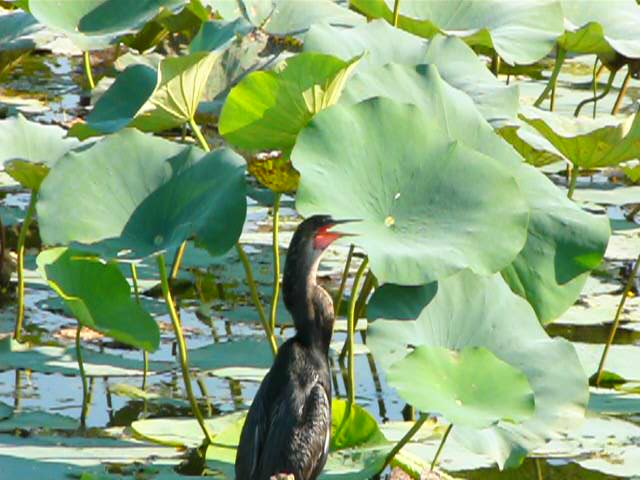
Anhinga (Anhinga anhinga) at Lake Hollingsworth by Lee
Birds were created with many fantastic abilities. Many like to compare those capabilities with human characteristics, but God has given unique and different ways to the many orders of animals, plants, birds, fish, humans, etc. There are somethings a bird cannot do, that we as humans can.
Formed By Him
Birds don’t sweat! There are no sweat glands located in birds. We can perspire though through the skin to help reduce their our heat. Our avian friends have core body temperatures that exceed most mammals for their size. Their body temperatures range from 104-111 degrees F (40-44 degrees C).
All flesh is not the same flesh, but there is one kind of flesh of men, another flesh of animals, another of fish, and another of birds. (1 Corinthians 15:39 NKJV)
Here is a video I recently took of an Osprey cooling off. We were at Lake Hollingsworth in Lakeland, FL.
“In warm weather, a bird gets rid of excess body heat through its respiratory (breathing) system, which collects warm, moist air from its internal overheated tissues and expels it through its lungs… In stepping up its breathing rate from ordinary breathing to panting, a bird increases the flow of air over the most surfaces of its mouth, pharynx, bronchi, and possibly its air sacs.” (Encyclopedia of North American Birds)
But now ask the beasts, and they will teach you; And the birds of the air, and they will tell you; (Job 12:7 NKJV)
The Lord created the animals and birds and then gave man dominion over them. That “dominion” includes learning about them so we can better understand all about their abilities, traits, behaviors, etc. This helps us protect them where possible and to appreciate the Creative Hand of the Lord. I sit back amazed at the omnipotence and omniscience of the Lord. When we observe the birds and learn about them, there is no way they “just happened.”
As for us? The same applies:
I will praise thee; for I am fearfully and wonderfully made: marvellous are thy works; and that my soul knoweth right well. (Psalms 139:14 KJV)
While working on the update to the IOC Version 2.10, I noticed that of the 233 pages for the Families of Birds of the World, I do not have a photo for the top of the Family page of the Hyliota – Hyliotas Family. I have written all of my great photographers and videographers to see if they have a photo. So far, none has sent me one that I can use with permission. I have written several others who have photos on the internet, but so far no permission there either. (Update 11/5/11 Just got permission from Dave Appleton to use his Southern Hyliota. The Family page now has a picture at the top. Thanks Dave.)
I can link to photos on other sites, but to put that photo here, I need permission.
If this bird is so rare, then what is it? My curiosity has taken over and while awaiting a photo, decided to find out about those 4 birds. Here are some of those findings:
Genus Hyliota – hyliotas. Basal Passerida with no known relatives, perhaps somewhat closer to Promeropidae (sugarbirds) (from Internet)
None of the books I own, which cover birds around the world, mention the Hyliota. Humm!
This is the total of Wikipedia’s articles on the family:
“Hyliota is a genus of passerine bird. Formerly regarded as Old World warblers in the Sylviidae family, they are now often regarded as a family in their own right, the Hyliotidae.” Humm! Not much there.
Let’s see what it says about the individual birds in the family:
The Southern Hyliota (Hyliota australis) is a species of Old World warbler in the Sylviidae family. It is found in Angola, Cameroon, Democratic Republic of the Congo, Kenya, Malawi, Mozambique, South Africa, Tanzania, Uganda, Zambia, and Zimbabwe. Its natural habitats are subtropical or tropical dry forests and dry savanna. (No photo)
The Yellow-Bellied Hyliota (Hyliota flavigaster) is a species of Old World warbler in the Sylviidae family. It is found in Angola, Burkina Faso, Burundi, Cameroon, Central African Republic, Republic of the Congo, Democratic Republic of the Congo, Ivory Coast, Ethiopia, Gabon, Gambia, Ghana, Guinea, Guinea-Bissau, Kenya, Malawi, Mali, Mozambique, Nigeria, Rwanda, Senegal, Sierra Leone, Sudan, Tanzania, Togo, Uganda, and Zambia. Its natural habitat is subtropical or tropical dry forests. (No photo)
The Usambara Hyliota (Hyliota usambara) is a species of Old World warbler in the Sylviidae family. It is found only in Tanzania.
Its natural habitats are subtropical or tropical moist lowland forests, subtropical or tropical moist montanes, and plantations. It is threatened by habitat loss. (No Photo)
The Violet-Backed Hyliota (Hyliota violacea) is a species of Old World warbler in the Sylviidae family. It is found in Benin, Cameroon, Central African Republic, Republic of the Congo, Democratic Republic of the Congo, Ivory Coast, Equatorial Guinea, Gabon, Ghana, Guinea, Liberia, Nigeria, Rwanda, Sierra Leone, and Togo. Its natural habitats are subtropical or tropical dry forests and subtropical or tropical moist lowland forests. (No photo, but they have a drawing. Aha!)
According to the IOC Worldbirdnames.org website, where the IOC Version 2.10 comes from:
“Move Hyliotas from the Sylviidae to their own family Hyliotidae, a basal lineage of the Passerida without known modern relatives ”
From the Internet Bird Collection (IBC), which still has the Hyliotas in the Sylviidae Family,:
“Genus has in the past been placed variously with the Old World flycatchers (in family Muscicapidae), with the monarch-flycatchers (Monarchidae) or with the batises and wattle-eyes (Platysteiridae); although plumage resembles that of some muscicapid flycatchers of genus Ficedula, and nest is like that of platysteirids, the nestling mouth spots, the unspotted juvenile plumage and behaviour are all typical of present family. Proposed race marginalis (S Tanzania and Mozambique) considered inseparable from barbozae. Two subspecies recognized.” That quote was put by all four species of Hyliotas. Seems no one knows exactly where they belong.
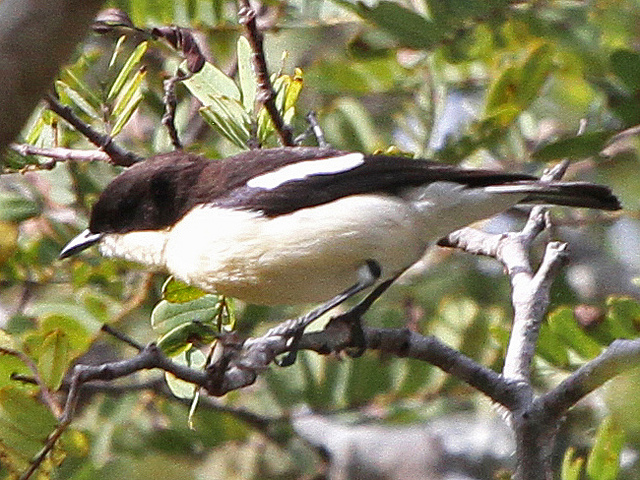
Here is the best photo on the internet that I can find of the Southern Hyliota.
Seems to be a bit of a mystery bird. So little is said about it on the internet and so few pictures of them are available. When their DNA was tested after trying to figure out where to place it, here is the abstract from the US National Library of Medicine – National Institutes of Health:
“Abstract
The African genus Hyliota includes three or four species of warbler-like birds of uncertain phylogenetic affinities, as it has historically been placed in different avian families that are now known to represent unrelated lineages: Malaconotidae (bush-shrikes), Platysteiridae (batises and wattle-eyes), Muscicapidae (Old World flycatchers) and Sylviidae (Old-World Warblers). To assess the affinities of Hyliota we sequenced a mitochondrial protein-coding gene (ND2, 1018bp) and a nuclear intron (myoglobin intron-2, 685bp). Our analyses suggest that all previous hypotheses concerning the affinities of Hyliota are erroneous. Instead, Hyliota represents a basal branch in the Passerida radiation with no close relatives. Our results, which also include analyses of relationships among other of other atypical songbird genera, lend support to an African origin of the Passerida songbird radiation.” (Italics mine)
One thing is for sure, the Lord knows all about them since He created them. Maybe they are a “kind” of their own.
So God created great sea creatures and every living thing that moves, with which the waters abounded, according to their kind, and every winged bird according to its kind. And God saw that it was good. (Genesis 1:21 NKJV)
I know all the birds of the mountains, And the wild beasts of the field are Mine. (Psalms 50:11 NKJV)
*
This page will be updated, if and when photos are made available. If anyone has a photo of any of these birds and would be willing to give permission for it to be used, please leave a comment.
While working on the new updates for the IOC 2.10 Version, I kept noticing the word “color” in the scientific names as I sorted and resorted the Excel spreadsheet. This is a second of the “color” articles. There are concolor, bicolor, tricolor, unicolor, quadricolor, versicolor, decolor, sitticolor, nocticolor, etc. Those will come later. For now, let’s see what the “discolor” birds are.
Also – discolor – lose color or turn colorless; cause to lose or change color; change color, often in an undesired manner Webster’s Revised Unabridged Dictionary, published 1913 by C. & G. Merriam Co.
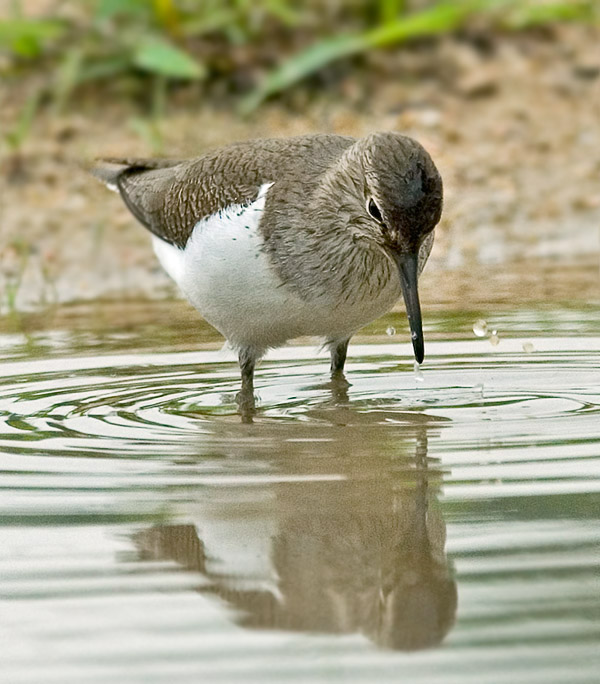
As you can see by most of these birds with “discolor” in their name, have a sort of “washed-out” look. Not a very distinct color. I am sure that the Lord created them this way to help them blend in with their surroundings. Protection is important. These thoughts sort of remind me of several verses:
Ye are the salt of the earth: but if the salt have lost his savour, wherewith shall it be salted? it is thenceforth good for nothing, but to be cast out, and to be trodden under foot of men. (Matthew 5:13 KJV)
And when the chief Shepherd shall appear, ye shall receive a crown of glory that fadeth not away. (1 Peter 5:4 KJV)
“A bird — most often but not always a beautiful male cardinal attaclks a window day after day and won’t stop. Invariably …people worry about it injuring itself. Rarely does a serious physical injury result but it is a possibility. Psychological injury is another matter: the bird is clearly frustrated.
Nuggets Plus
This is territorial behavior. Male birds establish personal homelands, in the case of songbirds one to ten acres in size. Then they spend much of their time announcing their hegemony, inviting in willing female partners through song and coincidentally defending their yard against other males.
Ornithologists who study territorial behavior find that they can plot the borders of these small kingdoms with great accuracy. Males in adjacent bailiwicks know their mutual borders as though a fence separated them.
The window the bird is attacking serves as a mirror and the bird, not schooled in physics, doesn’t understand that its anatiomorphic image the other side of that glass isn’t real. (That technical word means the same size and shape but reversed like two gloves. Mirrors do that. The only time you see an exact copy of yourself is when you look into two mirrors that meet at right angles.)” (Edited) From the July 7, 2003 issue of The Buffalo News
We look in the mirror to check our appearance.
What do we observe?
As a Christian, are we seeing a new creation or
Do we still look like we did before accepting the Lord?
For if anyone is a hearer of the word and not a doer, he is like a man observing his natural face in a mirror; for he observes himself, goes away, and immediately forgets what kind of man he was. But he who looks into the perfect law of liberty and continues in it, and is not a forgetful hearer but a doer of the work, this one will be blessed in what he does.
(James 1:23-25 NKJV)
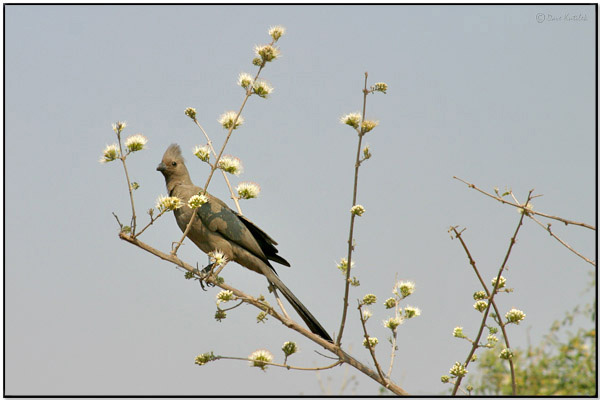
Grey Go-away-bird (Corythaixoides concolor) by Daves BirdingPix
While working on the new updates for the IOC 2.10 Version, I kept noticing the word “color” in the scientific names as I sorted and resorted the Excel spreadsheet. This is a first of the “color” articles. There are bicolor, tricolor, unicolor, quadricolor, versicolor, decolor, sitticolor, nocticolor, etc. Those will come later. For now, let’s see what the “concolor” birds are.
For every beast of the woodland is mine, and the cattle on a thousand hills. I see all the birds of the mountains, and the beasts of the field are mine. If I had need of food, I would not give you word of it; for the earth is mine and all its wealth. (Psalms 50:10-12 BBE)
Other than the Indochinese Green Magpie, the “concolor” makes sense in that the birds are pretty well just plain birds with very little color variation. As the definition above said they are of the same or uniform color. Even though we may think these “concolor” birds are a bit dull or plain, their Creator knows all about them and cares for them. How about us?
Look at the birds of the air, for they neither sow nor reap nor gather into barns; yet your heavenly Father feeds them. Are you not of more value than they? (Matthew 6:26 NKJV)
Hen (Northern) Harrier (Circus cyaneus) by J Fenton
On October 18, 2011, the IOC released the Version 2.10 list of World Bird Names. I have been busy behind the scene again updating all the Birds of the World pages here to reflect that change. It is now complete.
The IOC World Bird List 2.10 contains 10,466 species classified in 40 Orders, 233 Families (including 5 Incertae Sedis) and 2234 Genera. They added 18 species, changed the name of 23 birds and made 28 changes to the taxonomy.
The birds, mostly from splits, added were:
Sira Curassow (Pauxi koepckeae)
Northern Harrier (Circus hudsonius)
Cape Verde Buzzard (Buteo bannermani)
Oberholser’s Fruit Dove (Ptilinopus epius)
Sula Fruit Dove Ptilinopus mangoliensis
Everett’s Scops Owl Otus everetti
Negros Scops Owl (Otus nigrorum)
Mexican Barred Owl (Strix sartorii)
Salim Ali’s Swift (Apus salimalii)
Blyth’s Swift (Apus leuconyx)
Cook’s Swift (Apus cooki)
Magdalena Antbird Myrmeciza palliata
Urrao Antpitta (Grallaria urraoensis)
Tablas Drongo (Dicrurus menagei)
Moheli Bulbul (Hypsipetes moheliensis)
Saipan Reed Warbler (Acrocephalus hiwae)
Pagan Reed Warbler (Acrocephalus yamashinae)
Bornean Spiderhunter (Arachnothera everetti )
The Northern Harrier – Hen Harrier above is one of those splits. When J Fenton took the photo it was called a Northern Harrier (Circus cyaneus). Now the Hen Harrier has taken the Circus cyaneus Scientific name and the subspecies (Circus hudsonius) is now the Northern Harrier (Circus hudsonius). Confused? Don’t feel bad. I have no idea whether that photo is of a Hen or Northern Harrier. Which ever it is, Jim or James took a great photo of a Hen or Northern Harrier.
Such is the naming of the birds today. I have to update my pages every time the IOC releases another Version. As I have said many times on this blog, Adam had it a lot easier and got “first dibs” at naming them after their Creator presented them to Adam.
Out of the ground the LORD God formed every beast of the field and every bird of the air, and brought them to Adam to see what he would call them. And whatever Adam called each living creature, that was its name. So Adam gave names to all cattle, to the birds of the air, and to every beast of the field. But for Adam there was not found a helper comparable to him. (Genesis 2:19-20 NKJV)
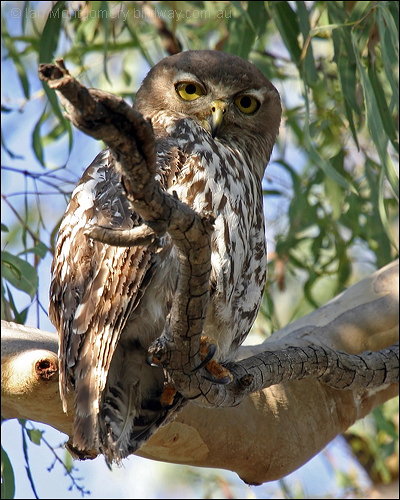
Barking Owl (Barking Boobook) (Ninox connivens) by Ian
Lesser Masked Weaver (Ploceus intermedius) by Bob-Nan
And God blessed them, and God said unto them, Be fruitful, and multiply, and replenish the earth, and subdue it: and have dominion over the fish of the sea, and over the fowl of the air, and over every living thing that moveth upon the earth. (Genesis 1:28)
Intelligence – as much as is needed and no more – is generously found throughout the creation. So we cannot say that intelligence alone makes humans special.
Consider the weaverbird. The weaverbird nest consists of woven strips of fiber and grass. Using beak and feet, the male weaverbird uses both loops and knots to weave his hanging nest. Then the nest must be inspected by a prospective mate. If she doesn’t like the nest’s construction, she will turn down the hopeful mate. The male must then tear down his work and start over. Some males have been observed constructing and tearing down their nests two dozen times before finding a prospective mate who is satisfied with his work. Some weaverbirds actually build huge cities of nests protected by a woven roof. One roof over a weaverbird city was 15 feet across!
Human intelligence spans much more than animal intelligence. However, what sets us apart from animals is the fact that our Creator made us to have a special relationship with Him. And even when Adam and Eve placed their will above God’s Word, He still loved us enough to pay the highest price to restore us to Himself. Jesus Christ lived in perfect obedience to God for us and then suffered the penalty of our disobedience against God. In His resurrection from the dead, all those who embrace Christ in faith receive the promise of being made new creations again – beginning right here in this life! That’s the wide gulf between humans and animals!
Prayer:
Dear Father, I thank You that You have given me being and life, and that when I was lost in sin, You still sought me out with Your gospel. Help me to truly live as Your new creation in Christ. For His sake. Amen.
Notes:
Science Digest, Aug. 1983. p. 73.
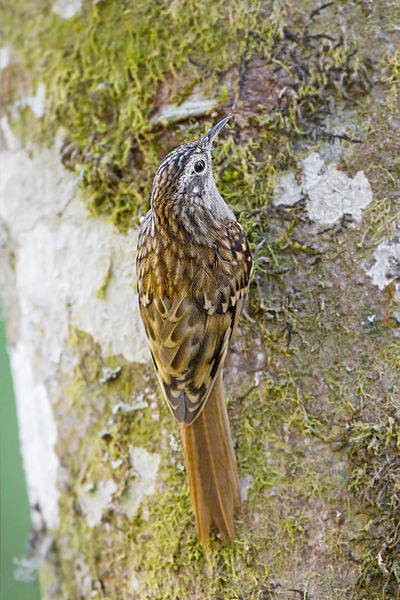
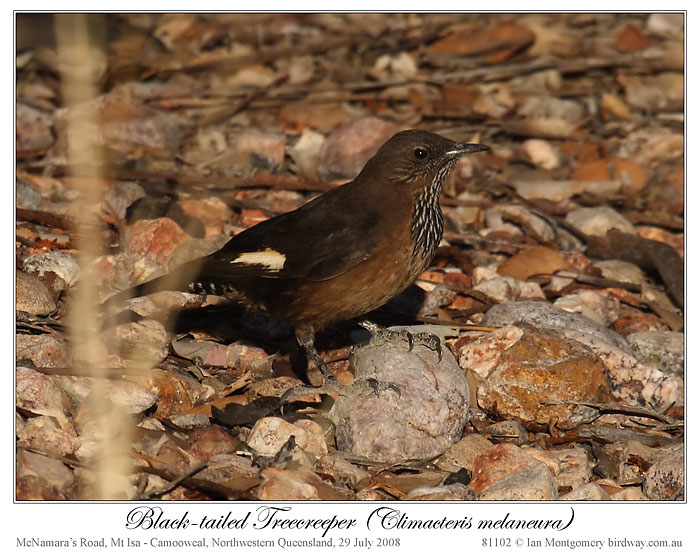
Black-tailed Treecreeper (Climacteris melanurus) by Ian
Ian’s Bird of the Week – Black-tailed Treecreeper ~ by Ian Montgomery
Newsletter – 10/28/11
I hope you like albatrosses and penguins as I leave in less than 2 weeks for a boat-trip to the so-called Sub-Antarctic island south of New Zealand and Australia and seabirds will, I hope, dominate the bird of the week for some time to come. In the meantime, here is a real landlubber, the Black-tailed Treecreeper, from northwestern Australia. It’s range extends from northwestern Queensland (Cloncurry district) through the Top End of the Northern Territory to the Kimberley region of northern Western Australia, with an isolated population of a paler race slightly farther south in the Pilbara region.
Black-tailed Treecreeper (Climacteris melanurus) by Ian
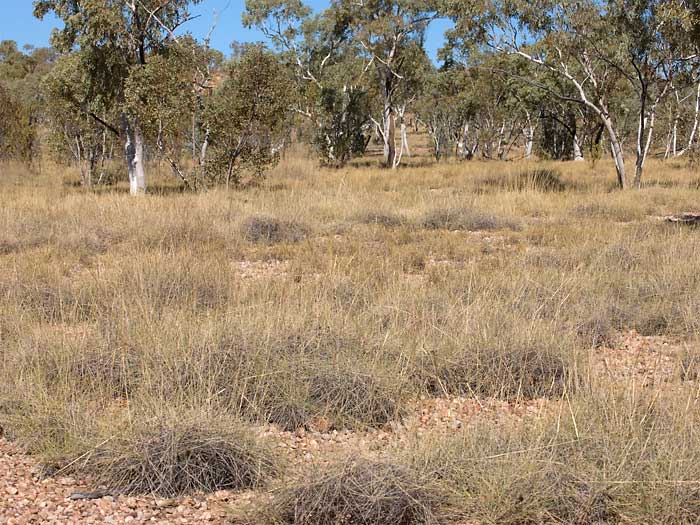
This bird is a male with a black throat with white streaks and the photo shows well the huge rear claws that it uses to climb trees. The photo also shows that Australo-Papuan Treecreepers (Climacteridae Family) usually don’t rely on their tails as a prop, unlike the unrelated Northern Hemisphere Treecreepers (Certhiidae) and Woodpeckers (Picidae). This photo was taken in tropical forest in Kakadu but this species also occurs in much more arid country with only scattered trees and it will feed on the ground, as in the second photo, taken at McNamara’s Road between Mount Isa and Camooweal. This bird is also a male: females have pale throats, but I haven’t got a good photo of one.
McNamaras Road by Ian
The main ground cover here is a prickly grass usually called spinifex (Triodia) and this site, third photo, is famous for its Carpentarian Grasswrens, but I remember it better for a hard night’s camping with a punctured airbed on this fourth-failed and final foray here in search of these elusive grasswrens – final because I was shown the grasswrens at another site two days later by Brian Venables who has much better hearing than I have! (Carpentarian Grasswren)
I am glad Ian is the one camping in an area like that last photo. That prickly grass doesn’t look too inviting. Those neat photos of the Treecreeper are worth it though. Thanks for sacrificing your airbed for them.
In them the birds build their nests; the stork has her home in the fir trees. (Psalms 104:17 ESV)
Being and Doing as God Enables – By A.W. Tozer (Guest Writer from the Past)
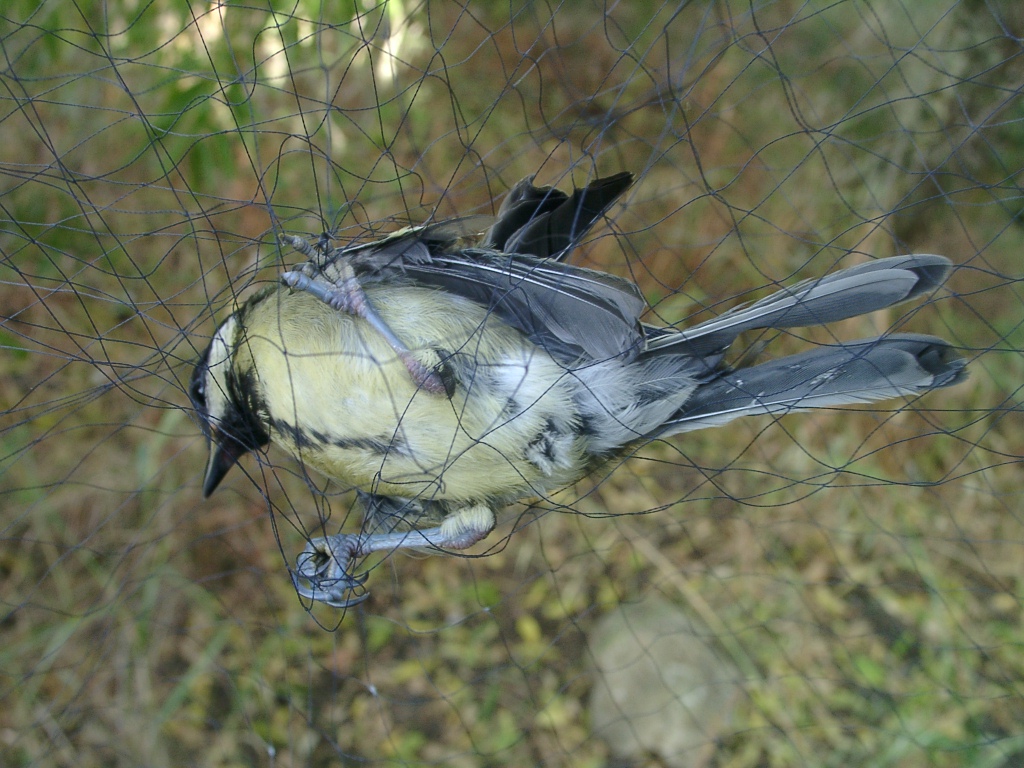
Surely in vain the net is spread in the sight of any bird. (Proverbs 1:17 KJV)
Failing to get ready in time for eternity, and failing to get ready now for the great then that lies out yonder, is a trap in plain sight. There is an odd saying in the Old Testament, “How useless to spread a net in full view of all the birds” (Proverbs 1:17).
When the man of God wrote that, he gave the birds a little credit. It would be silly for a bird watching me set the trap to conveniently fly down and get into it. Yet there are people doing that all the time. People who have to live for eternity fall into that trap set for them in plain sight. It is folly to put off to a tomorrow because you may never see the things that you should do now. It is an act of inexcusable folly to count on help that will never come. It is foolish to ignore God’s help now offered us. Many are guilty of ignoring the help that is presently being extended to them, all the while waiting for help that will never come from others. There is not much that can be said in favor of lazy or careless Christians. God never told anyone to do anything that he or she could not do. Jesus said to the man with the paralyzed arm that hung at his side like a limp piece of flesh, “Stretch out your hand” (Matthew 12:13a). And the man, believing that Jesus was the Christ, stretched out his hand and was healed instantly. God has never asked anyone yet to do anything that He was not enabling the person to do.
A 20th-century prophet” they called him even in his lifetime. For 31 years he was pastor of Southside Alliance Church in Chicago, where his reputation as a man of God was citywide. Concurrently he became editor of Alliance Life, a responsibility he fulfilled until his death in 1963.
His greatest legacy to the Christian world has been his 30 books. Because A.W. Tozer lived in the presence of God he saw clearly and he spoke as a prophet to the church. He sought for God’s honor with the zeal of Elijah and mourned with Jeremiah at the apostasy of God’s people.
But he was not a prophet of despair. His writings are messages of concern. They expose the weaknesses of the church and denounce compromise. They warn and exhort. But they are messages of hope as well, for God is always there, ever faithful to restore and to fulfill His Word to those who hear and obey.
Why is Your apparel red, And Your garments like one who treads in the winepress? (Isaiah 63:2 NKJV)
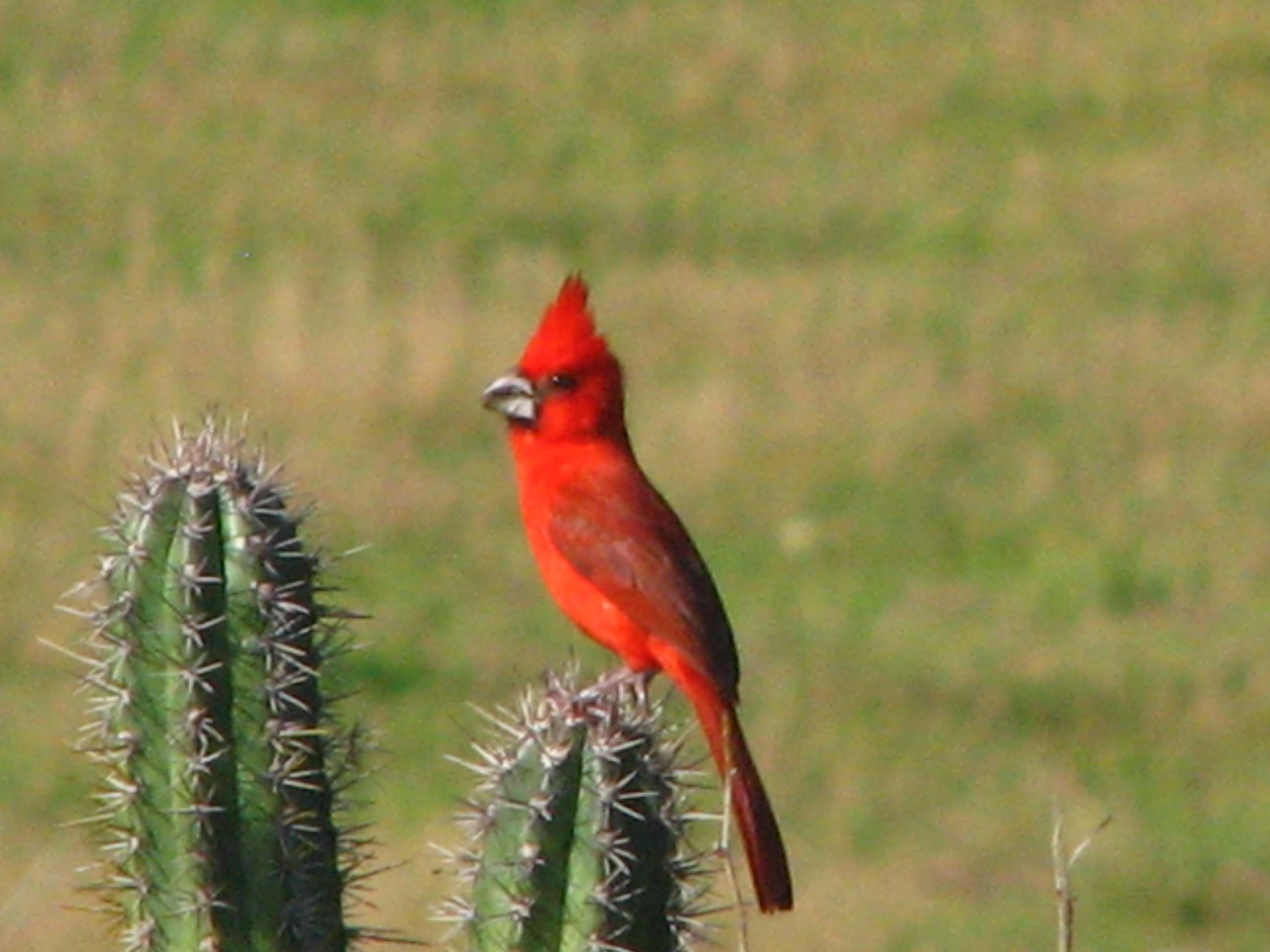
The Cardinalis genus of the Cardinalidae – Grosbeaks, Saltators & Allies Family includes three species. Oswaldtanager of YouTube caught a great video of the Vermilion Cardinal (Cardinalis phoeniceus) and I wanted to share it. These are only found in Colombia and Venezuela.
*
*
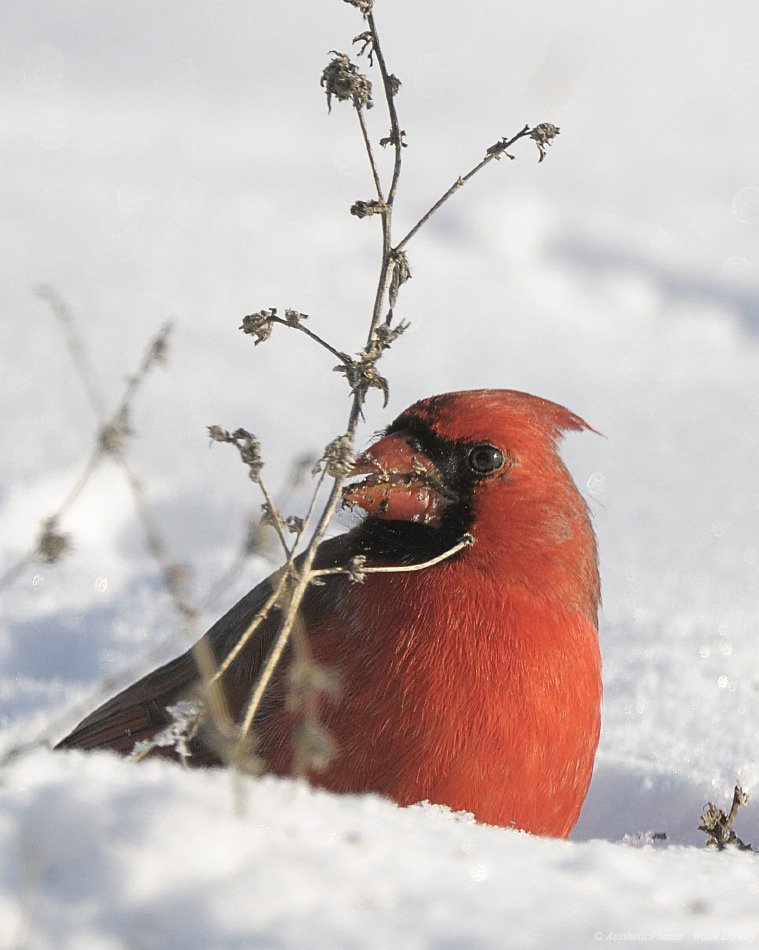
Here in the United States, we get to see the Northern Cardinal (Cardinalis cardinalis)
Northern Cardinal (Cardinalis cardinalis) by Aestheticphotos
and the Pyrrhuloxia (Cardinalis sinuatus). These are the other two genus members.
These are robust, seed-eating birds with strong bills. They are typically associated with open woodland. The sexes usually have distinctive appearances; the family is named for the red plumage (colored cardinal like the color of a Catholic cardinal’s vestments) of males of the type species, the Northern Cardinal.
The Cardinals or Cardinalidae are a family of passerine birds found in North and South America. The South American cardinals in the genus Paroaria are placed in another family, the Emberizidae.




 s-k
s-k l
l
 r)
r)










 Lee's Birdwatching Adventures Plus