The Space sharing seed storing Redpoll…

The Space sharing seed storing Redpoll… ~ by a j mithra
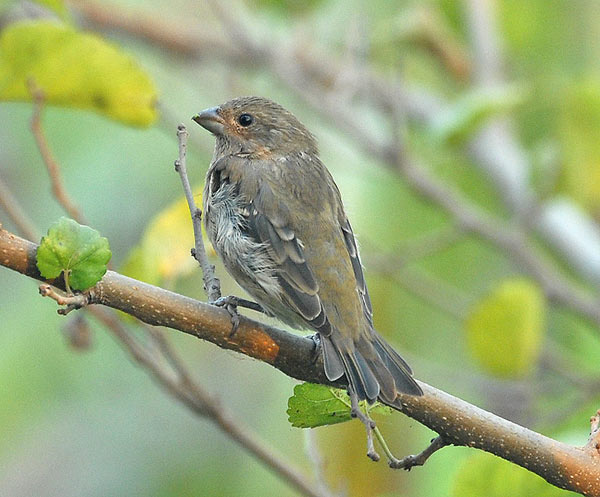
Common Rosefinch (Carpodacus erythrinus) by Nikhil Devasar

Common Rosefinch (Carpodacus erythrinus) by Nikhil Devasar

Common Redpolls live year round in open boreal and tundra habitats near the Arctic circle and throughout northern Canada and Alaska. While only the northernmost populations migrate, this species does have periodic irruptions that takes it as far south as northern  Montana, Minnesota, Wisconsin, North Dakota, Michigan, New York and the northern New England states.

Common Redpolls have a similar distribution throughout northern Europe and Asia, and they have also been introduced to New Zealand, where they can be commonly found. Breeds in open subarctic coniferous forest and scrub and avoids dense forests. Winters in open woodland and scrub, weedy fields, and suburban and urban areas. They form flocks throughout the year, and they flock even during the nesting season…

Unlike many small birds, Common Redpolls are not aggressive and easily share space with other small bird species…

Do we flock together as one?

The Bible says,

And if one prevail against him, two shall withstand him; and a threefold cord is not quickly broken (Eccleciastes 4:12)

These birds seem to know the secret of staying together. They not only flock together but also share space with the other small birds…

Do we share the blessings which God has showered upon us? We cannot resemble Christ unless we share like how He shared His everything on the cross..

And whosoever shall give to drink unto one of these little ones a cup of cold water only in the name of a disciple, verily I say unto you, he shall in no wise lose his reward. (Mathew 10:42)

Redpolls have throat pouches for temporarily storing seeds. They may fill their pouches with seeds quickly then fly away to swallow the seeds in a more protected, warmer spot.

Do we fill our hearts everyday with the word of God and store them? The kingdom of God is like a seed? How can we sow, if we have not stored enough seeds in our lives? Do you know that the devil also can quote the word of God to deceive us?

Please read Mathew 4:1-11 to know how Jesus was tempted by the devil and how He spoke the word of God to overcome the devil…

When you are pushed into the dark, the word will give you light..

Thy word is a lamp unto my feet, and a light unto my path. (Psalm119:105)

When you are sick, the word will heal you. He sent his word, and healed them, and delivered them from their destructions. (Psalm 107:20)

Now get filled with His Word for Jesus is the Word…
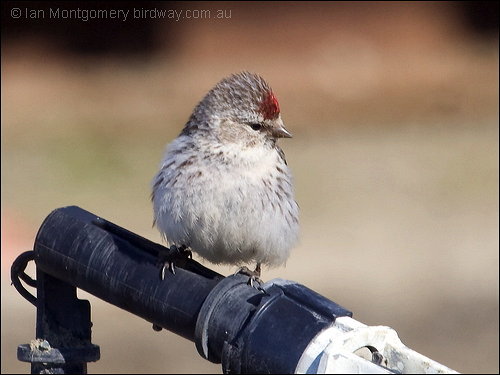
Hoary Redpoll (Carduelis hornemanni) by Ian

Hoary Redpoll (Carduelis hornemanni) by Ian

The Hoary Redpoll has very fluffy body feathers that help it stay warm in extremely cold temperatures. It has feathers on areas of its body that are bare in most other birds. If temperatures get too warm, it may pluck out some of its body feathers. These feathers will grow back in a few days.

God has given each one of a unique identity to show how special we are.. But, sometimes we may have to get rid of our identity to be elevated to a higher place…

Joseph was the overseer of the household of Potiphar, an officer of Pharaoh… But, when his master’s wife held his garment and asked him to lie with her, Joseph left behind his garment got rid of his identity and ran away… That was the turning point and the launching pad which lifted Joseph to become The Prime Minister of Egypt…

Please read Genesis 39:1to13

Redpolls eat their favorite niger seed or sunflower seeds, seeds of trees such as birch, and of grasses and other plants. On their breeding grounds redpolls also feast on the explosion of buzzing insects that emerge, seemingly without respite in the Arctic summer….

Redpolls feed on small branches, often hanging upside down and uses its feet to hold food items….

A Redpoll finch, or (Common Redpoll – carduelis flammea, bearing a ring with Chinese inscriptions has made a “sensational” trip all the way to Sweden.. The bird, a small finch with a red crown and black chin weighing about 10.5 grams (0.37 ounces), was found on December 29 west of  Stockholm, some 6,670 kilometers (4,144.5 miles) from where it was marked in China… While this is the first time a bird marked in China has been found in Sweden, a Redpoll bearing Chinese markings was found in neighboring Norway in 2003 and three birds of the same species marked in Europe have turned up in China.

“This shows that there is some kind of pattern here and that this bird didn’t just happen to fly astray …

If God can take these 10.5 gramme birds as far as 4,114.5miles, will He not carry you to greater heights? When people look at your life they would wonder what kind of pattern did God use, to lift you? Remember, you are much more precious than these birds….

He brought me up also out of an horrible pit, out of the miry clay, and set my feet upon a rock, and established my goings. (Psalm 40:2)

Have a blessed day!

Your’s in YESHUA,
a j mithra

Please visit us at: Crosstree


Redpolls are in the Fringillidae Family of Passeriformes (Song Birds). That family has at present 207 members.

Interesting Things – “Darwin’s Finches” – No Proof of Evolution

SmileyCentral.com

“Darwin’s Finches” – No Proof of Evolution

Genesis 1:21 So God created… every winged bird according to its kind. And God saw that it was good.

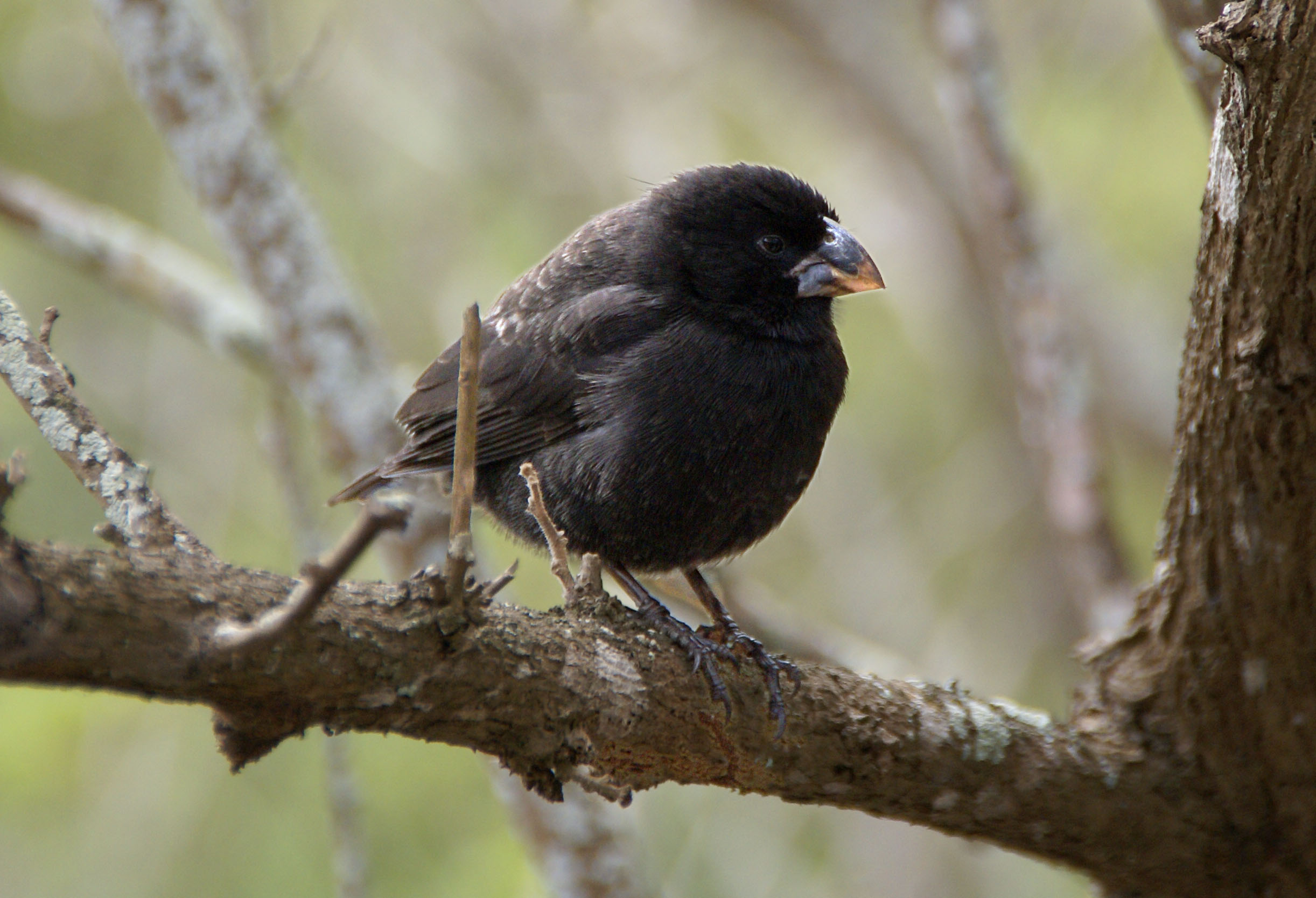
Medium Ground Finch (Geospiza fortis) by ©Wiki

Medium Ground Finch (Geospiza fortis) by ©Wiki

During his visit to the Galapagos Islands, Charles Darwin saw that each island was populated by a little finch. These birds were all very similar; yet, from one island to another there were some differences in the size and shape of the beak. Darwin reasonably concluded that in the distant past a pair of these birds had been blown 600 miles from the mainland and had since multiplied and spread. The environment on each island was slightly different, and the birds had developed specialized beaks to exploit the different food sources. It seemed to Darwin that here was a unique example of evolution in action where 13 different species had arisen from just one mating pair. A species is defined by the ability to reproduce; thus, a sterility barrier separates one species from another. Textbooks use Darwin’s finches to claim that new species have been produced, demonstrating evolution in action. However, the facts are that at least six of these different birds are known to interbreed and thus by definition are not new species at all but simply varieties within a single species. Moreover, DNA studies reveal very little difference between any of these birds, and there is no evidence of new genetic material, which is essential if evolution actually took place. Darwin’s finches offer no support for evolution. However, they do support the Bible when it teaches that, like every other creature, the birds have simply reproduced “after their own kind.” God has so designed His Creation that while it is possible for creatures to adapt perfectly to individual environments, there is still stability of the basic “kind.”

Prayer:
Dear Father, I thank You for Your Word that tells me of salvation. Amen.
Notes:
Creation Matters, (CRS), pp. 5-6, “Quiz.”
Copyright (C) 2010 Creation Moments, Inc


“Darwins Finches” are part of the Tanagers and Allies-Thraupidae Family in the Passeriformes Order.

See also:

Galapagos: Showcase for Creation

*

Birds of the Bible – Cranes II

Sandhill Crane (Grus canadensis) with 2 juveniles by Lee

Sandhill Crane (Grus canadensis) at Lake Ashton by Lee

Last evening we were with our friends at Lake Ashton in Winter Haven, FL and they gave us a tour of the wildlife there. This time of the year there are numerous Sandhill Crane families around. We saw several young Sandhills as we were being shown around. We took some photos and also got video of two adult Sandhill Cranes giving a duet. Thought that sounded like a good topic for this weeks Birds of the Bible.

The crane is mentioned twice in the Bible and one has to do its migration.

Yea, the stork in the heaven knoweth her appointed times; and the turtle and the crane and the swallow observe the time of their coming; but my people know not the judgment of the LORD. (Jeremiah 8:7 KJV)

The second mention of the Crane has to do with its voice.

Like a crane or a swallow, so did I chatter: I did mourn as a dove: mine eyes fail with looking upward: O LORD, I am oppressed; undertake for me. (Isaiah 38:14 KJV)

As you will see and hear by the video I took of the two cranes doing their duet, you can hear a bit of “chatter.”

We are lucky here in Central Florida to see the Sandhill Cranes quite frequently and occasionally a Whooping Crane.

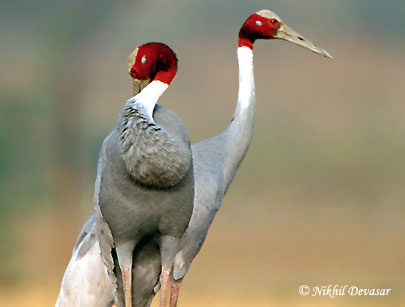
Sarus Crane (Grus antigone) by Nikhil Devasar

Sarus Crane (Grus antigone) by Nikhil Devasar

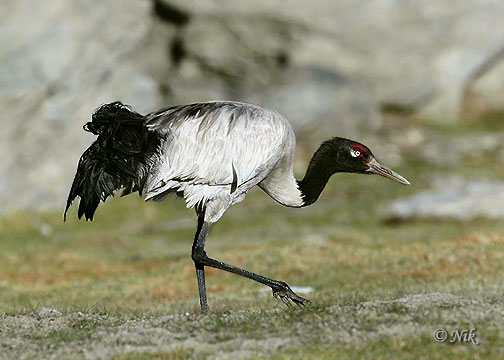
Around the world there are 15 crane species in the Gruidae Family of the order Gruiformes. The cranes are the Grey Crowned, Black Crowned, Demoiselle, Blue, Wattled, Siberian, Sandhill, Sarus, Brolga, White-naped, Common, Hooded, Whooping, Black-necked, and Red-crowned.

Cranes are large, long-legged and long-necked birds  Unlike the similar-looking but unrelated herons, cranes fly with necks outstretched, not pulled back. Cranes live on all continents except Antarctica and South America.

They are opportunistic feeders that change their diet according to the season and their own nutrient requirements. They eat a range of items from suitably sized small rodents, fish, amphibians, and insects, to grain, berries, and plants.

Black-necked Crane (Grus nigricollis) by Nikhil Devasar

Black-necked Crane (Grus nigricollis) by Nikhil Devasar

Most have elaborate and noisy courting displays or “dances”. While folklore often states that cranes mate for life, recent scientific research indicates that these birds do change mates over the course of their lifetimes (Hayes 2005), which may last several decades. Cranes construct platform nests in shallow water, and typically lay two eggs at a time. Both parents help to rear the young, which remain with them until the next breeding season.

Some species and populations of cranes migrate over long distances; others do not migrate at all. Cranes are gregarious, forming large flocks where their numbers are sufficient.

See:

Birds of the Bible – Cranes
Birds of the Bible – Cranes I
Birds of the Bible – Demoiselle Crane
Wordless Birds

*


Louisiana Weeps….

Louisiana Weeps…  – Video by a j mithra

With all the oil that is leaking into the Gulf of Mexico, at this point, Louisiana is taking a direct hit. a j mithra, who lives in India and has seen the destruction of their birds has made the following video. He told me he wept while making the video. Since he is one of our writers, I am posting it here also.

It is hard to watch not only the birds, but all of the wildlife and the people who are being harmed by this oil spill. Our hearts and prayers go out to those whose lives are being so greatly affected. Unfortunately, we are all under the curse and this is just one more example of it. One this is certain, this oil spill did not catch God by surprise.

For I reckon that the sufferings of this present time are not worthy to be compared with the glory which shall be revealed in us. For the earnest expectation of the creature waiteth for the manifestation of the sons of God. For the creature was made subject to vanity, not willingly, but by reason of him who hath subjected the same in hope, Because the creature itself also shall be delivered from the bondage of corruption into the glorious liberty of the children of God. For we know that the whole creation groaneth and travaileth in pain together until now. And not only they, but ourselves also, which have the firstfruits of the Spirit, even we ourselves groan within ourselves, waiting for the adoption, to wit, the redemption of our body. (Romans 8:18-23 KJV)

*

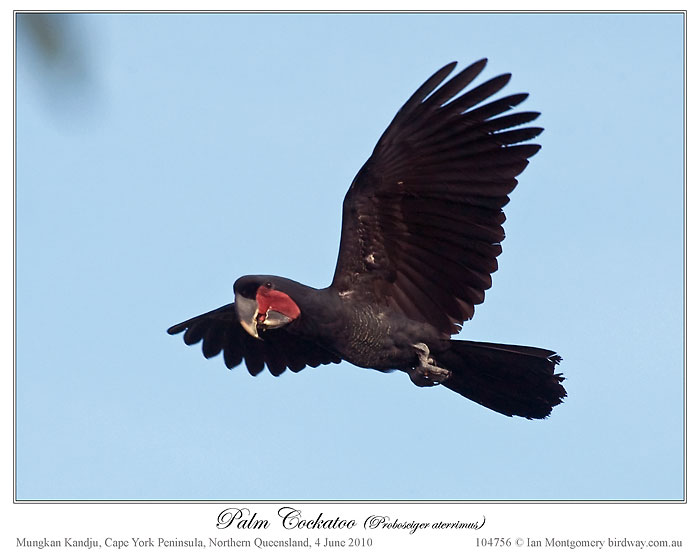
Ian’s Bird of the Week – Palm Cockatoo

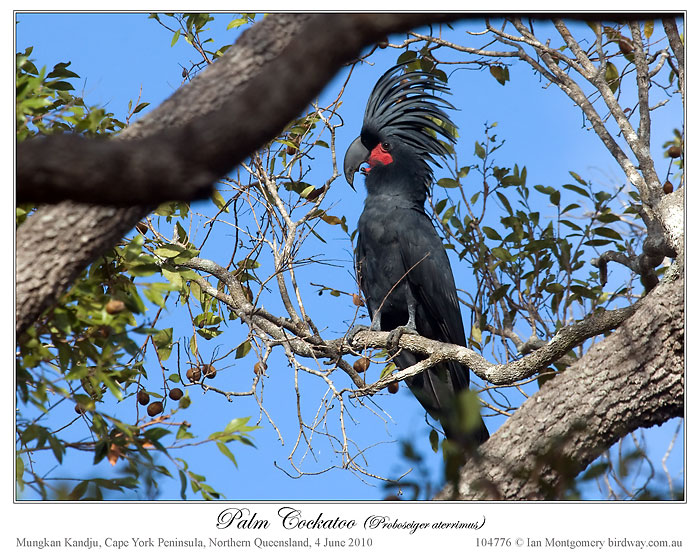
Palm Cockatoo (Probosciger aterrimus) by Ian

Palm Cockatoo (Probosciger aterrimus) by Ian Montgomery

Ian’s Bird of the Week – Palm Cockatoo ~ Ian Montgomery

I’ve just returned from Mungkan Kandju National Park between Coen and Weipa on Cape York Peninsula where I took part in the second of a series of Qld Parks and Wildlife surveys to measure the effect of feral animals on the park. It wasn’t all hard work, though, and during one of the surveys I got the opportunity to photograph a couple of Palm Cockatoos, my most ‘wanted’ bird on the Peninsula since I took some poor photos of them in early 2004 and again during the first Mungkan Kandju survey last November.

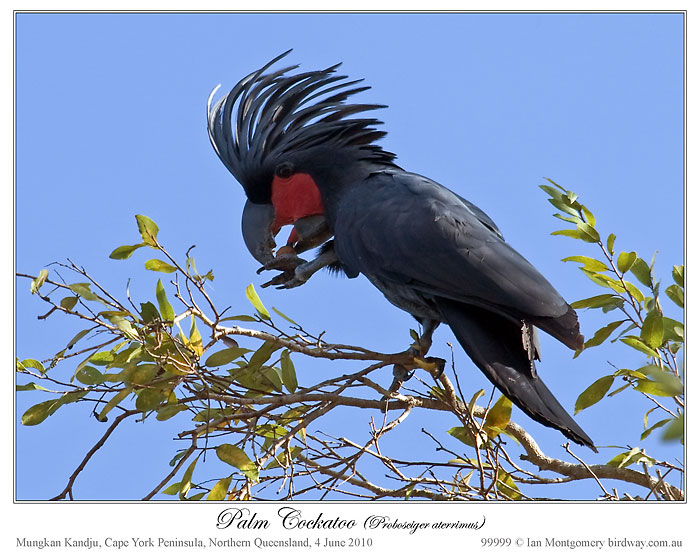
Palm Cockatoo (Probosciger aterrimus) by Ian

Palm Cockatoo (Probosciger aterrimus) by Ian

The first two photos show an adult Palm Cockatoo in a fruiting tree (Nonda Plum). Previously I’d found these birds rather shy, but the adult bird was prepared to tolerate me below the tree while it had breakfast. Palm Cockatoos are spectacular birds by any criterion,up to 64cm/24in in length, and unlike some cockatoos are not at all coy about displaying their huge crests. They have massive bills and in the second photo you can see the bird has evolved to be a huge nutcracker with wings. The lower bill is broad to prevent the fruit rolling out sideways while the upper bill has a big notch to hold the fruit in place and is slim and sharp like a blade. The tongue has a pad on the end used to manipulate the fruit, and if that isn’t enough the bird balances casually on one foot to leave the other free to use as a hand.

Palm Cockatoo (Probosciger aterrimus) by Ian

Palm Cockatoo (Probosciger aterrimus) by Ian

The third photos shows the other bird in flight. This is an immature bird, distinguishable by the barring on the chest, so I suppose that the adult bird was one of its parents. The young bird flew away when we approached and wasn’t seen again, but the adult seemed to think food was more important than parental care. Very young birds have a greyish rather than red face, so this one was old enough to look after itself.

Palm Cockatoos occur in Papua New Guinea and the Aru Islands but in Australia their range is restricted to the northern part of Cape York south to the Archer and Coen Rivers and Princess Charlotte Bay, so Mungkan Kandju is at the southern limit of their distribution. Within this range they are reasonably common on the edges of rainforest and in eucalyptus forest and they call loudly in flight.

I’m just about to post other photos of these birds to the website, so you can check them out at http://www.birdway.com.au/cacatuinae/palm_cockatoo/index.htm .

Best wishes,
Ian

Ian Montgomery, Birdway Pty Ltd,
454 Forestry Road, Bluewater, Qld 4818
Phone: +61-7 4751 3115
Preferred Email: ian@birdway.com.au
Website: http://birdway.com.au


Lee’s Addition:
The Palm Cockatoo is part of the Cockatoos & Allies – Cacatuidae Family in the Psittaciformes Order. This Order includes not only the Cockatoos, but also the New Zealand Parrot (Strigopidae) and Parrot (Psittacidae) families.

What magnificent birds the Lord has created in this Order.  Many of these have been captured and tamed, but is is nice to see these photos of the birds out in the wild.

For every kind of beasts, and of birds, and of serpents, and of things in the sea, is tamed, and hath been tamed of mankind: (James 3:7 KJV)

*

Interesting Things – Birds With a Memory to Envy

Birds With a Memory to Envy

Who provideth for the raven his food? when his young ones cry unto God, they wander for lack of meat. (Job 38:41)

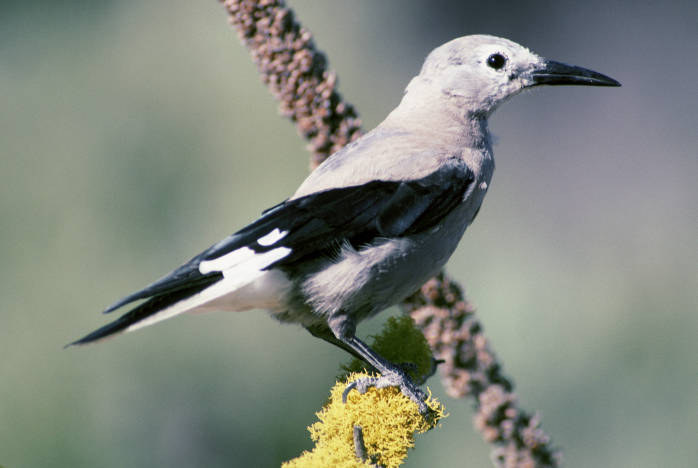
Clark's Nutcracker (Nucifraga columbiana) ©USFWS

Clark's Nutcracker (Nucifraga columbiana) ©USFWS

The shy bird, called Clark’s nutcracker, collects food during the growing season and stores it for the cold winter months. In one year, a bird will store between 22,000 and 33,000 seeds in as many as 2,500 locations, which can be more than ten miles apart. But does the little bird remember where he put all those seeds?

Biologists tracked the activity of Clark’s nutcrackers in the San Francisco Peaks in northern Arizona. A small army of researchers tracked the birds’ seed gathering and storing activities. One of the first things they discovered was that the birds quickly figured out that they were being observed. Some refused to store food when researchers were watching them. Others faked storing seeds when they were watched. Back in the lab, researchers studied the storing activity of Eurasian nutcrackers. After the birds stored seeds in a large sand floor, the birds were removed. Then the seeds they stored were dug up. When the birds were allowed to return, they quickly discovered that their seeds had been stolen, so they refused to store any more seeds. In the end, researchers concluded that the nutcrackers recover as many as two-thirds of their stored seeds within 13 months.

The remarkable memory of these little birds is their gift from God that enables them to be fed all year around.

Prayer: Father, I thank You because You are gracious and generous, not just to the birds, but also to me. Amen.

From Creation Moments©2010 – References: Science News, 2/14: 2004, pp. 103-105, Susan Milius, “Where’d I Put That?”


The Clarke’s and Eurasian Nutcrackers are part of the Corvidae Family of Crows, Jays, and Allies. The Passeriformes Order they are in has at present 123 Families (IOC 2.4).

Wordless Birds

*

The Blue-footed Booby – The Stupid Fellas

The Blue-footed Booby – The stupid fellas  ~  by a j mithra

Blue-footed Booby (Sula nebouxii) by Bob-Nan

Blue-footed Booby (Sula nebouxii) by Bob-Nan

The Blue-footed Booby (Sula nebouxii) is a bird in the Sulidae family which comprises species of long-winged sea birds… The natural breeding habitat of the Blue-footed Booby is tropical and subtropical islands off the Pacific Ocean most famously, the Galapagos Ecuador…

Blue-footed Boobies are distributed among the continental coasts of the eastern Pacific to the Galapagos Islands and California…

Blue-footed boobies are possibly one of the world’s most fearless birds! Indeed, lacking any instincts for fear and being quite clumsy on land make them easy prey for other animals. When Spanish settlers first encountered blue-footed boobies, they were amused by how easy it was to hunt these birds…

This is because the Blue-footed Booby is clumsy on the land. To make their point clear, Spanish settlers named this bird “bobo” which means “stupid fellows.”

If people call you “stupid”, just praise the Lord… For, God chooses the fools and the weak instead of the wise and the strong…

But God hath chosen the foolish things of the world to confound the wise; and God hath chosen the weak things of the world to confound the things which are mighty; (1Corinthians 1:27)

The booby’s eyes are placed on either side of their bill and oriented towards the front. They have excellent binocular vision. The Blue-footed Booby has permanently closed nostrils specialized for diving. They breathe through the corners of their mouths. When God created these birds, He knew that they need to dive deep for survival.. That is the reason that He took so much care in placing the eye at the right place and the closed nostrils , so that it does not drown…  Close up of a Blue-Footed Booby

Each one of us are different in size and structure and shortcomings.. But, when God created us, He had a definite plan.. Do you think that God would’ve chosen Moses if he was not stammering? Do you think God would’ve chose Rahab if she was not a harlot?

God changed their shortcomings into their strength to glorify His name… That is because their trust was in God.. If we trust God, He can change our weakness into our strength…

And he said unto me, My grace is sufficient for thee: for my strength is made perfect in weakness. Most gladly therefore will I rather glory in my infirmities, that the power of Christ may rest upon me. (2 Corinthians 12:9)

Blue-footed Booby (Sula nebouxii) by Bob-Nan

Blue-footed Booby (Sula nebouxii) by Bob-Nan

When blue-footed boobies are ready to breed, they carry out many interesting rituals. First, a male blue-footed booby parades around his nest area. The parade is anything but ordinary – just in case a female blue-footed booby fails to notice how attractive he is, the male blue-footed booby raises each of his blue feet in a slow, deliberate stepping motion.  Alternatively, if he is flying over his territory and encounters a potential mate, he flashes his blue feet at her as he lands. These male birds show off their blue feet to attract their female mates..

But, our Lord Jesus Christ turned ugly on the cross to show how much He loves us.. Can you not see His nail-pierced bleeding feet which came in search of us? So many time His presence has hovered over us, but, how much have we felt it?

For he shall grow up before him as a tender plant, and as a root out of a dry ground: he hath no form nor comeliness; and when we shall see him, there is no beauty that we should desire him. (Isaiah 53:2)

Then, both male and female blue-footed boobies point their long beaks toward the sky, tilt their wings around, and give their mating calls. The male blue-footed booby also makes a high-piping whistle noise.

During the courtship, they also pick up small stones or twigs as building materials for their nests, but, strangely, they undo their nests later on just about the time that the female blue-footed booby is ready to lay eggs. They are not a seasonally reproducing species but are opportunistic in their breeding..

The Blue-footed Booby is a monogamous animal although they do have the potential to be bigamous. They reunite at their breeding grounds…

We too are going to unite soon with the Lord…  Jesus is on His way to take His bride and to live with her forever and ever…  Is the bride ready for takeoff?

For now we see through a glass, darkly; but then face to face: now I know in part; but then shall I know even as also I am known. (1 Corinthians 13:12)

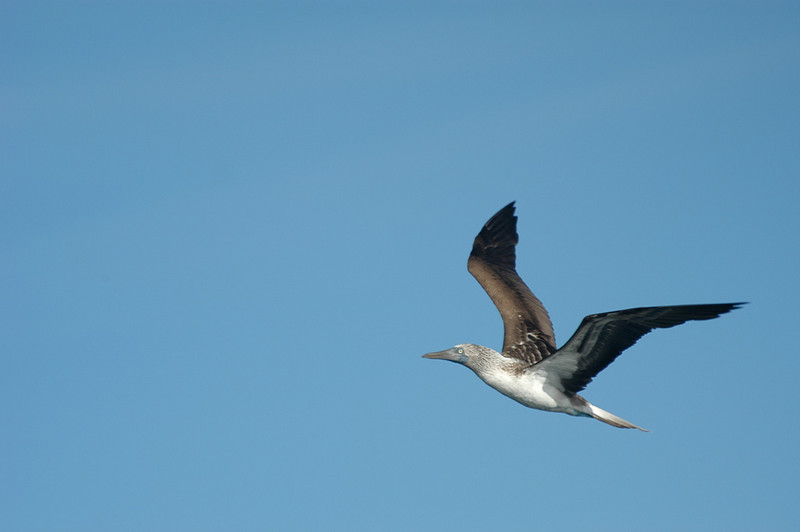
Blue-footed Booby (Sula nebouxii) by Ian

Blue-footed Booby (Sula nebouxii) by Ian

The Blue-footed Booby is strictly a marine bird and their only need for land is to breed, which they do along rocky coasts. They nest on bare black lava in a small dip in the ground. The female will turn to face the sun throughout the day so the nest is surrounded by excretion. The female Blue-footed Booby lays two or three eggs. Both male and female take turns incubating the eggs, while the non-sitting bird keeps a watch.

Since the Blue-footed Booby does not have a brooding patch, a patch of bare skin on the underbelly, it uses its feet to keep the eggs warm. Blue-foots are one of only two species of booby that raise more than one chick.

You may think that you do not have resources, like other to realize your dreams… But, all things are possible with God..

These female birds do not have a brooding patch, but still, they raise chicks with their feet and that too they raise more than one chick…

You may feel that you do not have beauty or talent or riches or influence to make your dreams happen…  When you have Jesus as your everything, nothing is impossible….

And he said, The things which are impossible with men are possible with God. (Luke18:27)

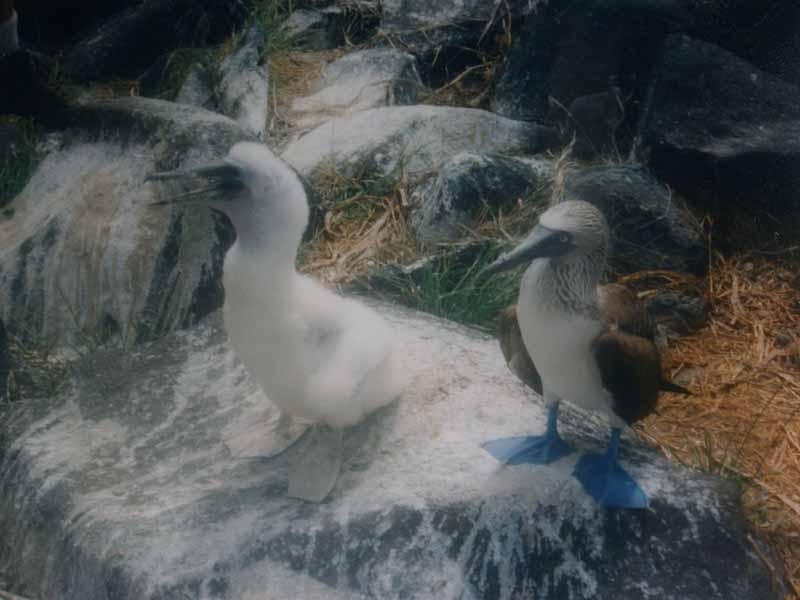
Blue-footed Booby (Sula nebouxii) larger chick by Bob-Nan

Blue-footed Booby (Sula nebouxii) larger chick by Bob-Nan

Blue-foots are one of only two species of booby that raise more than one chick. The males is specialized in diving in shallow waters. They must be fed frequently, so the adults constantly hunt for fish. The chicks feed off the regurgitated fish in the adult’s mouth. If the parent Blue-footed Booby does not have enough food for all of the chicks, it will only feed the biggest chick, ensuring that at least one will survive.

Blue-footed Boobies are specialized fish eaters feeding on school fish like sardines, anchovies, mackerel, flying fish, squid and offal. It dives into the ocean, sometimes from a great height, and swims underwater in pursuit of its prey. It hunts singly, in pairs or in larger flocks. They travel in parties of 12 or so to areas of water with large schools of small fish. When the lead bird sees a fish shoal in the water, it will signal the rest of the group and they will all dive together to catch the fish.

Like these birds, we as believers and church builders need to learn to dive together into the Living water..

These birds signals to the rest of the group when it sees a shoal of fish..

How many of us signal our co-workers when we see a blessing?

Please read 1 Kings Chapter 7, verse from 3…

You will know how God used four lepers to deliver his people from the enemies… How they shared the good news and signaled the others about the blessing which God had kept in store for them…

Surprisingly, individuals do not eat with the hunting group, preferring to eat on their own, usually in the early morning or late afternoon. They will point their bodies down like an arrow and dive into the water. Plunge diving can be done from heights of 33–100 ft and even up to 330 ft (100 m). These birds hit the water around 60 mph (97 km/h) and can go to depths of 82 ft (25 m) below the water surface. The prey is usually eaten while the bird is still under water. Males and females fish differently which could contribute to the reasons that blue foots, unlike other boobies raise more than one young.

The male is smaller and the tail is larger for its body which enables the male to fish in shallow areas instead of just deep waters. The tail can flatten out easier enabling him to change direction in the shallow water. The female is larger and can carry more food. The food is then regurgitated to the young. The males feed the young for the first part of the incubation period. This is done because the males can bring back food quicker than the female. When the demand for more food takes over the female provides the food to the young… These female birds are larger and carry more food…

Even our bridegroom Jesus Christ wants us to do more than what He had done… That is why He says,

Verily, verily, I say unto you, He that believeth on me, the works that I do shall he do also; and greater works than these shall he do; because I go unto my Father. (John 14:12)

Now never ever say that you can’t do this or can’t do that… We have been called to say that I can do all things through Christ that strengthens me, and also to do greater things than what Jesus did…

HALLELUJAH!!!!!!

Have a blessed day!

Your’s in YESHUA,
a j mithra

Please visit us at: Crosstree


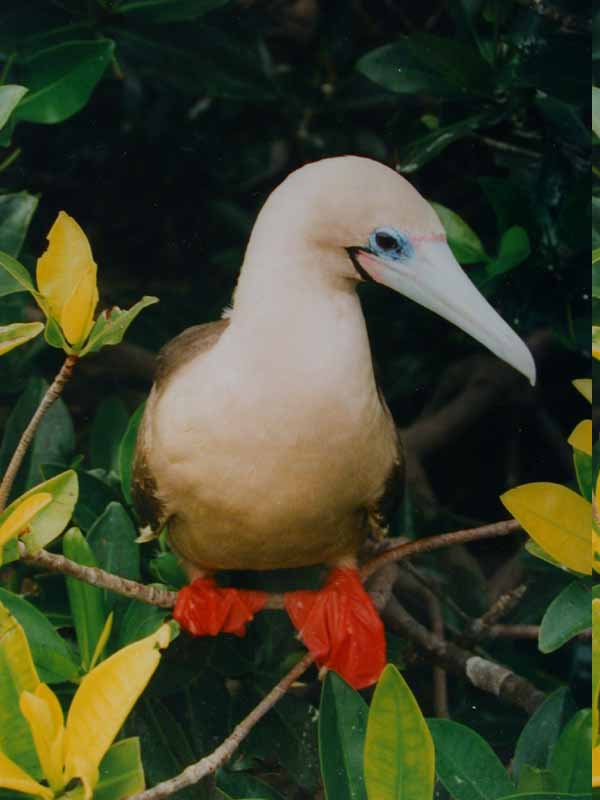
Red-footed Booby (Sula sula) by Bob-Nan

Red-footed Booby (Sula sula) by Bob-Nan

Lee’s Addition:
Boobies are part of the Sulidae Family of Gannets and Bobbies in the Pelicaniformes Order. There are actually 7 Boobies.
Abbott’s Booby
Blue-footed Booby
Brown Booby
Masked Booby
Nazca Booby
Peruvian Booby
Red-footed Booby

Interesting Things – Birds Making Music?

Do Birds Truly Make Music?

The flowers appear on the earth; the time of singing has come, and the voice of the turtledove is heard in our land. (Song of Solomon 2:12)

The Bible speaks of bird calls as songs, as most of us do. However, evolutionary theory has led some scientists to say that we are merely assigning human meanings to the calls of birds. They say that the bird calls have nothing to do with real music.

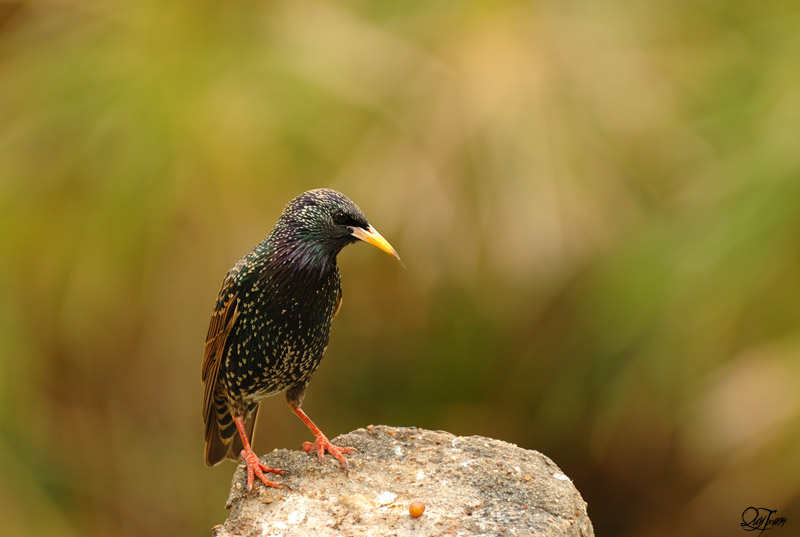
Common Starling (Sturnus vulgaris) by Quy Tran

Common Starling (Sturnus vulgaris) by Quy Tran

Ornithologists have known for some time that bird songs use the same musical scales as our music. Decades ago it was noted that some of Beethoven’s work could be heard from the European blackbird. The music was the same as the opening rondo of Beethoven’s “Violin Concert in D, Opus 61.” Since these birds pass their songs from generation to generation, Beethoven could have gotten the lilting music from the forefathers of today’s European blackbird! The songs of some species, like the song sparrow, follow the form of a sonata, beginning with a strong theme, then the theme is musically played with, and for a finish, the original theme is then repeated.

Song Sparrows song by Chris Parrish (xeno.canto.org)

Mozart had a starling as a pet. Once, having heard Mozart play his “Piano Concerto in C Major,” the starling not only imitated it, but changed the sharps to flats! Mozart exclaimed, “That was beautiful!” When the starling died, Mozart held an elaborate funeral for it. Eight days later he wrote “A Musical Joke,” which contains the same elaborate structure found in starling song.

A Musical Joke by Mozart

Do birds make true music, as the Bible says? Contrary to what some evolutionists say, Beethoven and Mozart certainly thought they did.

Prayer: Lord, I thank You for the gift of music, and I await the music of heaven. Amen.

From (Creation Moments©2010) References: Science News, 4/15/00, pp. 252-254, “Music without Borders.”


The Superb Fairywren – The Corporate Mob

The Superb Fairywren – The Corporate Mob ~ by a j mithra

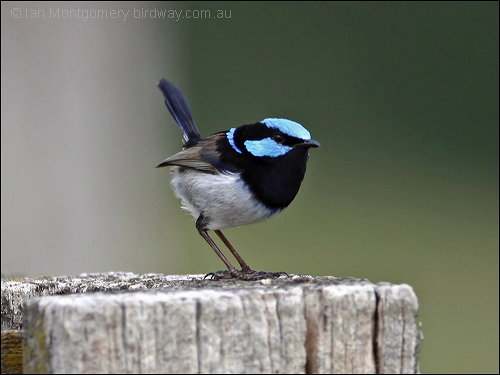
Superb Fairywren (Malurus cyaneus) by Ian Montgomery

Superb Fairywren (Malurus cyaneus) by Ian

The Superb Fairywren is one of 12 species of the genus Malurus, commonly known as Fairywren, also known as the Superb Blue-wren or colloquially as the Blue Wren, is a passerine bird of the Maluridae family found in Australia and lowland New Guinea..

The Superb Fairywren can be found in almost any area that has at least a little dense undergrowth for shelter, including grasslands with scattered shrubs, moderately thick forest, woodland, heaths, and domestic gardens. It has adapted well to the urban environment and is common in suburban Sydney, Canberra and Melbourne.

Superb Fairywrens are predominantly insectivorous. They mainly eats insects and supplements its diet with seeds. They eat a wide range of small creatures (mostly insects such as ants, grasshoppers, shield bugs, flies, weevils and various larvae) as well as small quantities of seeds, flowers, and fruit….

During winter, when food may be scarce, ants are an important ‘last resort’ food, constituting a much higher proportion of the diet Nestlings, in contrast to adult birds, are fed a diet of larger items such as caterpillars and grasshoppers…

Their foraging, termed ‘hop-searching’, occurs on the ground or in shrubs that are less than two meters high. Because this foraging practice renders them vulnerable to predators, birds tend to stick fairly close to cover and forage in groups….

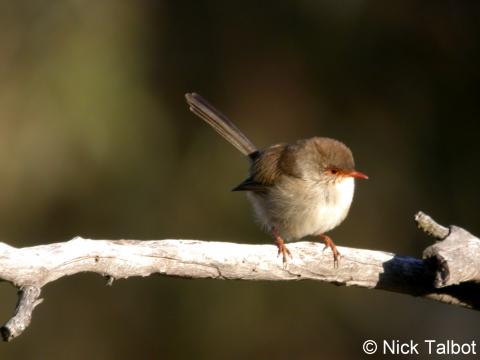
Superb Fairy-wren (Malurus cyaneus) Female by Nick Talbot

Superb Fairy-wren (Malurus cyaneus) Female by Nick Talbot

The Superb Fairywren is a cooperative breeding species, with pairs or groups of 3–5 birds maintaining and defending small territories year-round. The group consists of a social pair with one or more male or female helper birds that were hatched in the territory, though they may not necessarily be the offspring of the main pair. These birds assist in defending the territory and feeding and rearing the young…

Birds in a group roost side-by-side in dense cover as well as engaging in mutual preening. The group often shelters and rests together during the heat of the day. If only we, as believers, could learn to stick close together, we can easily turn satan, our predator in to a prey…

That is why the Bible says,

For where two or three are gathered together in my name, there am I in the midst of them. Mathew 18:20

Jesus too asked His disciples to go in twos to minister unto people…

Now after these things the Lord appointed seventy others, and sent them two and two before his face into every city and place, whither he himself was about to come. Luke 10:1

Again, if two lie together, then they have warmth; but how can one be warm [alone]? Ecclesiastes 4:11

These beautiful birds seem to know the secret of not only sticking close together, but also, engage in mutual preening…

We may call ourselves as the body of Christ but, when are we going to learn to stick together as one and help one another to grow in the Lord?

Several courtship displays by Superb Fairywren males have been recorded. The ‘sea horse flight’, named for its seahorse-like undulations, is one such display. During this exaggerated flight, the male—with his neck extended and his head feathers erect—tilts his body from horizontal to vertical, and descends slowly and springs upwards by rapidly beating his wings after alighting on the ground.

The ‘face fan’ display may be seen as a part of aggressive or sexual display behaviors; it involves the flaring of the blue ear tufts by erecting the feathers…

These male bird’s tilting of its body reminds us of God’s mercy..

The following verse shows the (horizontal) mercy and (vertical) grace of God…

For as the heaven is high above the earth, so great is his mercy toward them that fear him. As far as the east is from the west, so far hath he removed our transgressions from us. Psalm 103:11, 12

That is the reason Jesus descended slowly from heaven and gave His life for you and me…

Remember He took four thousand years since Adam and Eve to come down from heaven to redeem mankind from sin and shame..

And He ascended rapidly to heaven, to prepare a mansion for us…

Is there a better mating display on the face of the earth than the descending and ascending of our Lord Jesus to save the entire human race? Thank You Jesus, for your mercy and grace…..

Vocal communication among Superb Fairywrens is used primarily for communication between birds in a social group and for advertising and mobbing, or defending a territory. Superb Fairywrens’ alarm call is a series of brief sharp chits, universally given and understood by small birds in response to predators. Females also emit a purr while incubating. The basic, or Type I, song is a 1–4 second high-pitched reel consisting of 10–20 short elements per second and is sung by both males and females. Males also possess a peculiar song-like Type II vocalization, which is given in response to the calls of predatory birds, commonly Grey Butcherbirds (Cracticus torquatus). The purpose of this behavior, which does not elicit a response from other nearby wrens, remains unknown…. It may serve to announce male fitness, but this is far from certain…

Though this bird’s alarm call does not elicit response from other nearby wrens, it never stops  reminding others about the presence of the predator through its calls..

No matter how they respond, God has kept us as watchmen over His people to warn about the presence of the predator..

Ezekiel 33:4-7 shows us God’s purpose in our lives…

Then whosoever heareth the sound of the trumpet, and taketh not warning; if the sword come, and take him away, his blood shall be upon his own head

He heard the sound of the trumpet, and took not warning; his blood shall be upon him. But he that taketh warning shall deliver his soul.

But if the watchman see the sword come, and blow not the trumpet, and the people be not warned; if the sword come, and take any person from among them, he is taken away in his iniquity; but his blood will I require at the watchman’s hand.

So thou, O son of man, I have set thee a watchman unto the house of Israel; therefore thou shalt hear the word at my mouth, and warn them from me.

Like all Fairywrens, the Superb Fairywren is an active and restless feeder, particularly on open ground near shelter, but also through the lower foliage. Movement is a series of jaunty hops and bounces, with its balance assisted by a proportionally large tail, which is usually held upright, and rarely still. The short, rounded wings provide good initial lift and are useful for short flights, though not for extended jaunts. During spring and summer, birds are active in bursts through the day and accompany their foraging with song. Insects are numerous and easy to catch, which allows the birds to rest between forays. Food is harder to find during winter and they are required to spend the day foraging continuously…

These birds are restless feeders and they also sing while foraging….

If only we become restless feeders like these birds on the word of God and if only we sing and praise Jesus continuously all through the day, our Lord would encompass us with His presence…

Remember our Lord dwells among our praises…

Be careful for nothing; but in every thing by prayer and supplication with thanksgiving let your requests be made known unto God. (Philippians 4:6)

Have a blessed day!

Yours in YESHUA,
a j mithra

Please visit us at: Crosstree

*

The Capercaillie – The Stethoscope

The Capercaillie – The Stethoscope ~ by a j mithra

Western Capercaillie (Tetrao urogallus)©Wiki-Richard_Bartz

Western Capercaillie (Tetrao urogallus)©Wiki-Richard_Bartz

The Capercaillie is a resident in northern Europe and Asian coniferous forests,especially in hills and mountains, and in the mountains of central eastern Europe. It also has population outposts in the Pyrenees and Scottish Highlands. The Capercaillie is restricted to pinewood habitat in northern Scotland..

It prefers old, open pine forests with lush ericaceous ground cover, though in summer it is occasionally found in mature Oakwood..

Male capercaillies have a complex display that they use to attract females to mate with them in the Spring. This display is usually a communal affair at a traditional site known as a lek, which originates from the Norse word meaning ‘to dance’. They may also use a transient arena or even display from trees in response to the presence of a female. Initially the display song involves tapping and gurgling which accelerates to a drum roll that earned the bird his Gaelic name, capull-choille, the horse of the woods.

This drum roll is followed by a noise which rather resembles a cork being pulled out of a bottle, and the final song phase involves alternating gurgling and wheezing.To many people, this soft dawn song is rather surprising for such a large bird, especially as the purpose is to attract hens from afar. However, it is now recognized that parts of the song are below the human range of hearing. The subsonic part of the call is thought to carry well over distance and to be audible to other Capercaillie.

Like how the soft dawn song of the male is inaudible to human hearing, so is God’s voice inaudible to worldly souls….

God wants to speak to us early in the morning, when others cannot hear it, but, His bride, the Church only can hear it..

But how many Churches are awake early in the morning? Remember, God calls us as His Church…Are we awake at dawn to hear His voice?

Moses rose up early and went to Mount Sinai.. (Exodus34:4)

Joshua and his men rose early and went around the fort of Jericho, (Joshua 6:15)

Most servants of God sought the Lord early and they found the answers for their problems.. Wake up bride, it is time to listen to His voice..

I love them that love me; and those that seek me early shall find me. Proverbs 8:17

Western Capercaillie (Tetrao urogallus) ©Wikipedia

Western Capercaillie (Tetrao urogallus) ©Wikipedia

During the song the male has his tail held vertical and fanned out, his beak pointing skywards and the wings held out and drooped. In this posture the cock may slowly strut forward and often does a `flutter-jump’ following the cork pop part of the song. This involves leaping rapidly with noisily flapping wings, a brief glide and fluttering or crashing back to the ground. Once the hens have been drawn in to the lekking area, the cock’s display becomes more intense, but less vigorous with the flutter-jumping usually stopping…

During the mating season the males are very aggressive and have been known to attack bird watchers! Direct confrontation between competing suitors frequently occurs and has been described  as a “vicious explosion of buffeting wings and snapping bills – the pair may not cease until one is dead”. By the end of the mating season the dominant alpha males often sport various cuts and bald patches from these fights.

Our Lord had to confront satan and in the process, He was battered and bruised for our sins and took the stripes to heal us…

He is the Alpha who sports, nail pierced hand and feet, ploughed back, thorn-crowned head and a spear pierced rib…

He took everything to redeem us, save us and heal us…

But he was wounded for our transgressions, he was bruised for our iniquities: the chastisement of our peace was upon him; and with his stripes we are healed. Isaiah 53:5

In spite of all the sufferings, He is still seen knocking at the door for a space in our hearts? For what? Just to live with us and for us forever and ever…

Behold, I stand at the door, and knock: if any man hear my voice, and open the door, I will come in to him, and will sup with him, and he with me. Revelation 3:20

When are we going to let Him in to take over our lives completely?

The Capercaillie hen lays five to eight eggs in early May. Her nest is a scrape on the ground, frequently in a hollow under a tree. The cock plays no part in the brooding or rearing of the chicks. The precocious buff and reddish chicks all hatch at the same time. At this point they are very vulnerable to a wide range of predators and at a young age they are able to fly short distances over the heather.

The hen is very protective and keeps her brood close to her with muted contact calls. In summer the Capercaillie feed close to and even on the ground. Their diet includes buds, shoots, seeds and berries. This dictates their preference for open pinewood habitats with lush ground cover of heather and dwarf shrubs that provide not only ample food but protection too. In winter they are arboreal and pine needles are eaten by nipping off the leading shoots of conifers.

Capercaillie can be surprisingly nimble when climbing the branches of pine trees. They are renowned for being shy and very difficult to see except during the displaying season. If they are disturbed they will initially freeze; if flushed they take off with a characteristic  crashing as the bird leaves the foliage, and they can fly with surprising agility between trees, even in dense forest…

God wants us to freeze like these birds when we are being disturbed… Don’t you remember the following verse?

Be still, and know that I am God: I will be exalted among the heathen, I will be exalted in the earth. Psalm 46:10

Being herbivorous, Capercaillies have a profound effect on the vegetation they browse upon. For example, they act as agents for the dispersal of the berries they eat, especially for the blaeberry (Vaccinium myrtillus).

In the past, Capercaillie have not been highly regarded by foresters because of their winter habit of eating the leading shoots of conifers. In a sparsely wooded area, or where growth is less vigorous, this can check the growth and trees can take up to five years to recover. However, in a large native forest this damage is negligible and indeed adds to the variety and beauty of the shapes of Scots pine trees.

Capercaillie makes full use of a varied pinewood habitat. In winter the birds need pine trees for food and in summer good ground cover of shrubby vegetation for nesting and chick rearing. This reliance on, and exacting needs of, a varied but specific habitat led to their extinction in the past when the forests were destroyed by people.

The dramatic decline of these birds has focused attention on their habitat requirements and has shown that they act as a good indicator of the health and extent of varied mature forest cover.

We, as believers should act as a good indicator of the health of the body of Christ…Churches are being turned into pubs and malls.. Is this a good indication of the health of the body of Christ?

These birds would become extinct without a pinewood habitat…

Without Churches, we believers would become extinct too… Those dark days are not very far off… When the Lord returns, we are answerable to all those dying souls around us.. What are we doing to stop this decline of churches?

I know thy works, that thou art neither cold nor hot: I would thou wert cold or hot. So then because thou art lukewarm, and neither cold nor hot, I will spue thee out of my mouth. Revelation 3:15, 16

Have a blessed day!

Your’s in YESHUA, a j mithra
Please visit us at:  Crosstree


Lee’s Addition:
See Capercaillie video

To hear some of the sounds – Click Here then select from recordings.

There are two Capercaillies – Western and Black-billed. They are part of the Phasianidae – Pheasants, Fowl & Allies Family which has 181 members. They are in the Galliformes Order.

*

Birds of the Bible – Names of Birds II

White-tailed Hawk (Buteo albicaudatus) by Daves BirdingPix

White-tailed Hawk (Buteo albicaudatus) by Daves BirdingPix

In the first Names of Birds, I covered the English names of birds. This time the scientific names are going to be looked at, especially the second one. (The first part of the scientific name is the bird’s genus or group) “Birds normally have a scientific name and a common name. The scientific name is usually Latin-bases and is agreed upon by biologists across the world. The common name will vary by region, culture, and language.” (birding.com) No matter what the bird is called in different countries or by different ornithology groups, the scientific name refers to one specific bird. Birds do migrate many miles and spend time in many countries. This naming system helps keep from having the same bird counted numerous times in lists.

As I have worked with the list of the Birds of the World, I have observed similarities in the naming of the birds. For instance, “alba” is the second part of all of these birds–Western Great Egret, White Cockatoo, Sanderling, White Tern, White Wagtail, African Spoonbill, Phoenix Petrel, Western Barn Owl. Could you figure out what color they all are?

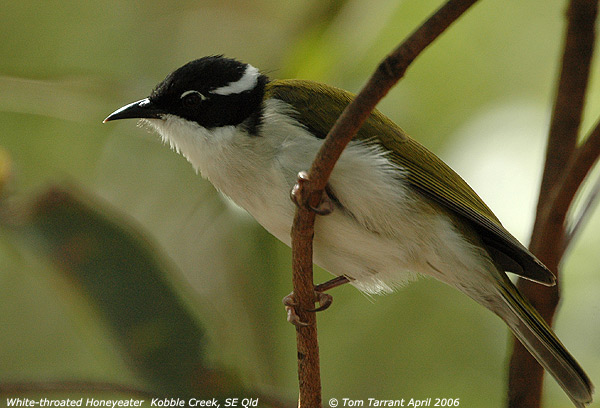
White-throated Honeyeater (Melithreptus albogularis) by Tom Tarrant

White-throated Honeyeater (Melithreptus albogularis) by Tom Tarrant

How about “albicauda“–White-tailed Shrike-Tyrant, White-tailed Blue Flycatcher, White-tailed Lark, White-tailed Hawk? Or “albogularis“–White-throated Jacamar, Rufous-banded Honeyeater, White-throated Pewee, White-throated Canary, White-throated Laughingthrush, White-throated Screech Owl, White-throated Honeyeater, White-throated Francolin, White-throated Caracara, White-throated Treerunner, White-spotted Fantail, White-throated Seedeater, White-throated Kingbird, White-chested White-eye? That last group was not all “white-throated,” in name, but they have white throats.

We know that Adam named the birds and other critters as the Scripture tells us:

Out of the ground the LORD God formed every beast of the field and every bird of the air, and brought them to Adam to see what he would call them. And whatever Adam called each living creature, that was its name. So Adam gave names to all cattle, to the birds of the air, and to every beast of the field. But for Adam there was not found a helper comparable to him. (Genesis 2:19-20 NKJV)

Blue-throated Bee-eater (Merops viridis) by Ray

Blue-throated Bee-eater (Merops viridis) by Ray

Did Adam use scientific names? I doubt it. Adam didn’t have to go though all this. Today the ornithologist (those who study birds) use this method of naming along with a common name in whatever language they speak.

Thought you might find it interesting to see some of the species’ second scientific names:
Colors:
albus/alba, white; cf albino, ater/atra, matt black, brachy-, short (Greek), brunne-, brown, caeruleus, blue, canus, grey, chloro-, green or yellow (Greek), cinerea-, grey or ash-coloured; cf cinders, crocus, cyan, blue, erythro-, red (Greek), flava, yellow, fuscus/fusca, dusky, guttatus, speckled or spotted, haema-, blood-red (Greek); cf haemoglobin, leuco-, white (Greek), lineatus, lined or striped, livia, blue-grey, longi-, long, luteus/lutea, yellow, major, greater, mega-, great (Greek), melas, black (Greek); cf melanistic, minor, lesser, niger/nigra, glossy black; cf negro, punctatus, spotted; cf punctuation, pusilla, tiny, rosea, rosy, ruber, red, rufus/rufa, red, striatus/striata, striped, versicolor, many-collored, varied, viridis, green, albogularis – White-throated
Countries:
abyssinicus, africana, americana, angolensis, antarctica,
Characteristics:
cauda, tail, –cephalus, head (Greek), –ceps, capped, headed, cilla, tail, collis, neck,  cristatus, crested, dactyl, finger or toe (Greek), frons, front, i.e. forehead, –gularis, throat, –ops, eye, –opsis, face, ptera, wing (Greek), –rhynchos, bill (Greek), –rostris, bill, torquatus, collared

Names are important and have meaning. Christ was named long before He was born. It was foretold.

Now all this was done, that it might be fulfilled which was spoken of the Lord by the prophet, saying, Behold, a virgin shall be with child, and shall bring forth a son, and they shall call his name Emmanuel, which being interpreted is, God with us. (Matthew 1:22-23 KJV)
After this manner therefore pray ye: Our Father which art in heaven, Hallowed be thy name.  (Matthew 6:9 KJV)
And in his name shall the Gentiles trust. (Matthew 12:21 KJV)
And Jesus came and spake unto them, saying, All power is given unto me in heaven and in earth. Go ye therefore, and teach all nations, baptizing them in the name of the Father, and of the Son, and of the Holy Ghost: Teaching them to observe all things whatsoever I have commanded you: and, lo, I am with you alway, even unto the end of the world. Amen.
(Matthew 28:18-20 KJV)

(Some information from Scientific bird names explained)

Birdwatching at Lake Hollingsworth-June 1st

Birdwatching at Lake Hollingsworth-June 1st

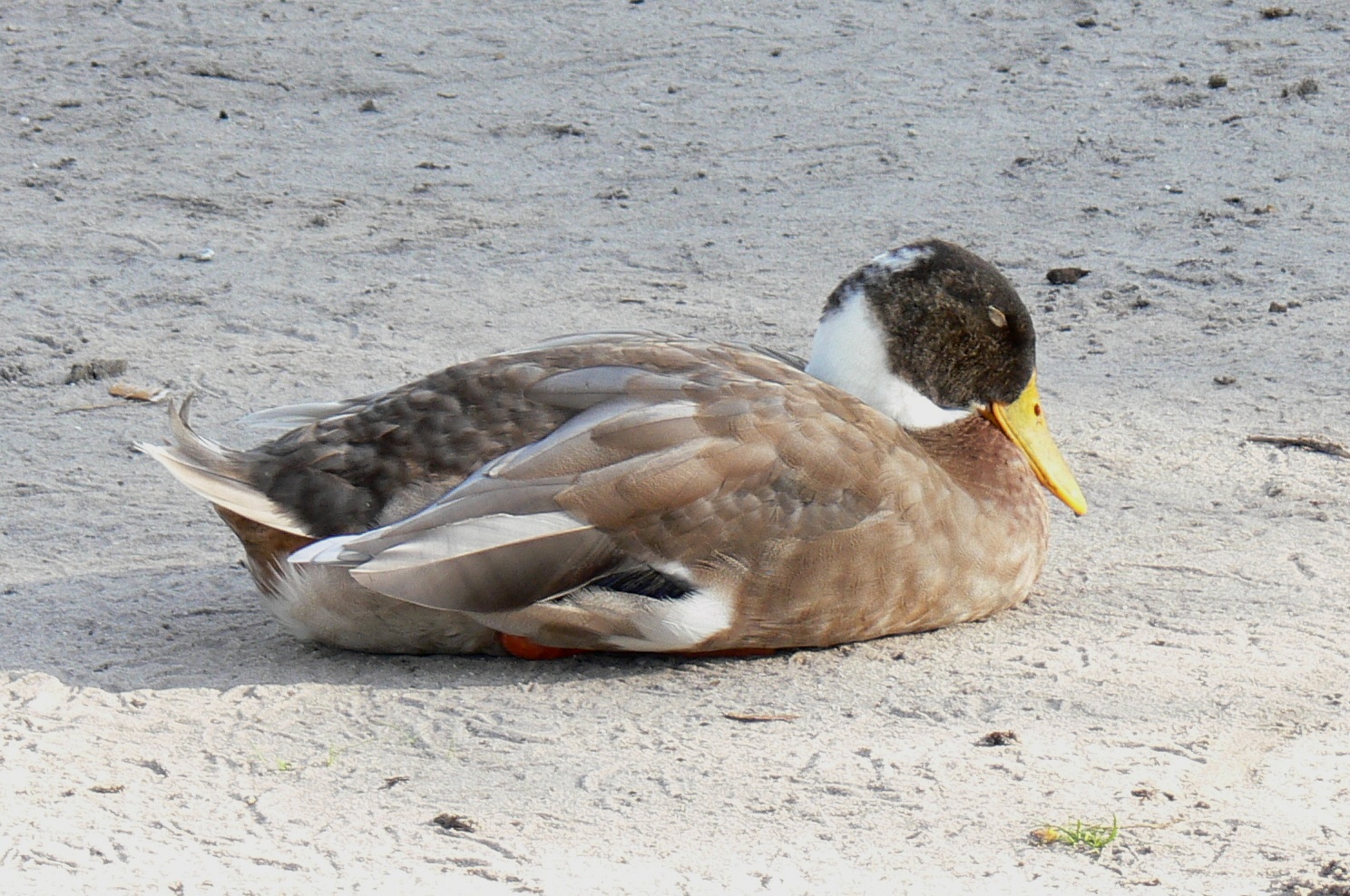
Lake Hollingsworth Mallard

Lake Hollingsworth Mallard

Dan and I finally got a chance to go birdwatching on Tuesday. It is the first time in awhile since we have been out and about here in Polk County, FL. We loaded the cameras, binocular, and of course something to feed the critters with. The only place around here we do that is at Lake Hollingsworth and Morton in Lakeland. So we chose Lake Hollingsworth as our main destination.

As we ride, I start my list of what we see. On the ride over there I spotted Fish Crows, Sandhill Cranes, a Great Blue Heron, some Ospreys at their nest, a White Ibis, about 20 Cattle Egrets checking out some cows, two Mourning Doves, four Boat-tailed Grackles and a Blue Jay. If we saw nothing at the lake, I would have been content with those.

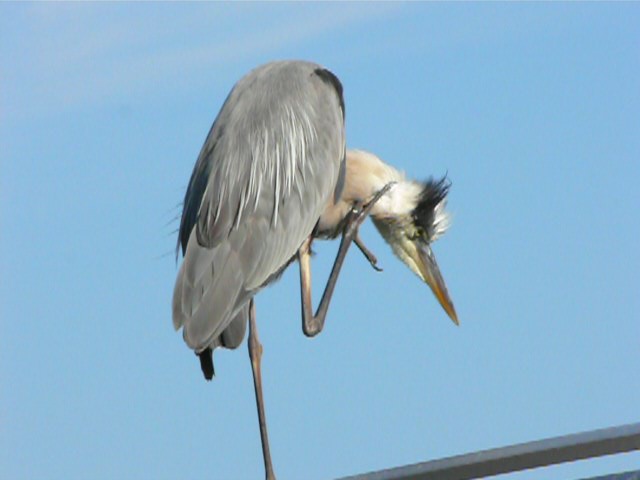
Great Blue Heron at Lake Hollingsworth

Great Blue Heron at Lake Hollingsworth

We spent about an hour looking around and feeding the gang. It was around 79° and mostly clear. A nice day. Near the parking lot is where the hungry beggars hang out. Waiting! I was surprised to see most of them snoozing. Pull out treats, and they come alive. After feeding the Mallards, White Ibises, Boat-tailed Grackles and a Gull, I did a short walk (legs weren’t working good) to the little dock where we watched a Great Blue Heron preening. I kept getting closer and closer, but he kept right on and only looked at me once. I got several videos of him.

We also observed a Green Heron for some time. Don’t see them out and about like this one. Looking at his coloration, we think he is most likely a juvenile.

The rest of the birds spotted were Red-winged Blackbirds, Common Grackles, Anhingas, Ospreys, Blue Jays, and Common Moorhens with three babies. On the way back at the parking lot, six Geese were protecting a gosling.

Green Heron Lake Hollingsworth

Green Heron Lake Hollingsworth

We decided to do lunch in Bartow, but had some spare time before they opened so went to the Mary Holland Park there. 86° by then. It is a small park but we managed to see – Boat-tailed Grackles, Opreys, Cardinals, Blue Jay, Great Egret, Mourning Dove, three White Ibises, heard a Red-Shouldered Hawk and a Red-bellied Woodpecker.

All together we spotted or heard 22 species. Not bad for an easy birdwatching adventure. Trust you have a great adventure the next time you are out enjoying God’s birds that He has created.

So God created great sea creatures and every living thing that moves, with which the waters abounded, according to their kind, and every winged bird according to its kind. And God saw that it was good. (Genesis 1:21 NKJV)

[

*

This slideshow requires JavaScript.

*