Child’s Book of Water Birds ~ The Oyster Catcher

The Oyster Catcher

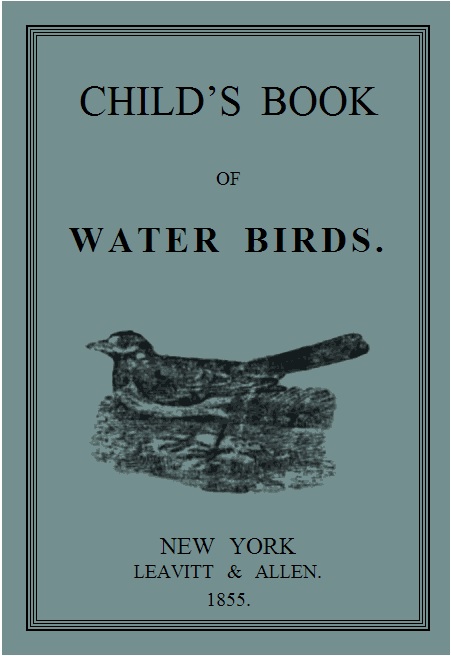
Child's Book of Water Birds - Book Cover

Child’s Book of Water Birds – Book Cover

***

Childs Bk of Water Birds titlebird

NEW YORK

LEAVITT & ALLEN.

1855.

***

Welcome to the Updated Child’s Book of Water Birds, by Anonymous. It was written in 1855 and this is 2013. That is 158 years ago.

*
*
Childs Bk of Water Birds oystercatcher

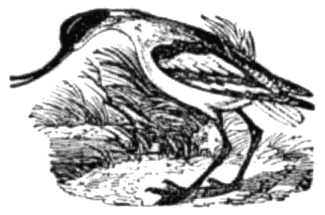
THE OYSTER CATCHER.

The Oyster Catcher feeds generally on shell-fish, oysters, limpets, &c. He detaches them from the rocks to which they are fastened, and opens them with his long, stout bill. The head, neck, and body are black. It lays two olive-brown eggs, spotted with black.

*

American Oystercatcher (Haematopus palliatus) by Robert Scanlon

American Oystercatcher (Haematopus palliatus) by Robert Scanlon

Update:

Just as day was breaking, Jesus stood on the shore; yet the disciples did not know that it was Jesus. (John 21:4 ESV)

American Oystercatchers are sometimes called the American Pied Oystercatcher. They are about 19 inches (42-52 cm) long. They were created with a large thick orange or red beak which helps them pry open their food, like oysters, clams, and mussels. They belong to the Oystercatcher Family which has twelve (12) species. They like the coastal areas and nest on the beaches. In winter, they are found in flocks along the coast from central New Jersey to the Gulf of Mexico (eastern) or along the Pacific coast from northwestern Baja California southward. (western).

Black Oystercatcher (Haematopus bachmani) Family by Beedie Savage

Black Oystercatcher (Haematopus bachmani) Family by Beedie Savage

***

See the other five Child’s Book of Water Birds:

The Swan

The Coot

The Dabchick

The Teal

The Goose

*

Oystercatcher Family

Oystercatcher – Wikipedia

Oystercatcher – All About Birds

Oystercatcher – ARKive


Bible Birds

Wordless Birds

*

Child's Book of Water Birds - Levit and Allen

Back Cover

*** PROJECT GUTENBERG EBOOK CHILD'S BOOK OF WATER BIRDS ***

*

The Dove – Weather Reporter… ~ Nuggets Plus

Mourning Dove (Zenaida macroura) by Quy Tran

Mourning Dove (Zenaida macroura) by Quy Tran

The Dove – Weather Reporter…
by A J Mithra
_

Nuggets Plus

Nuggets Plus

Dove sent by Noah

came at dusk with an olive leaf

and Noah knew that

the flood had receded!

God sent the dove, His Holy spirit

at dusk to the upper room

to encourage us or to help us

warn about the flood of the last days?

But as the days of Noah were, so shall also the coming of the Son of man be.”  Mathew 24:37


Carolina rainbow

Carolina rainbow

Lee’s Addition:

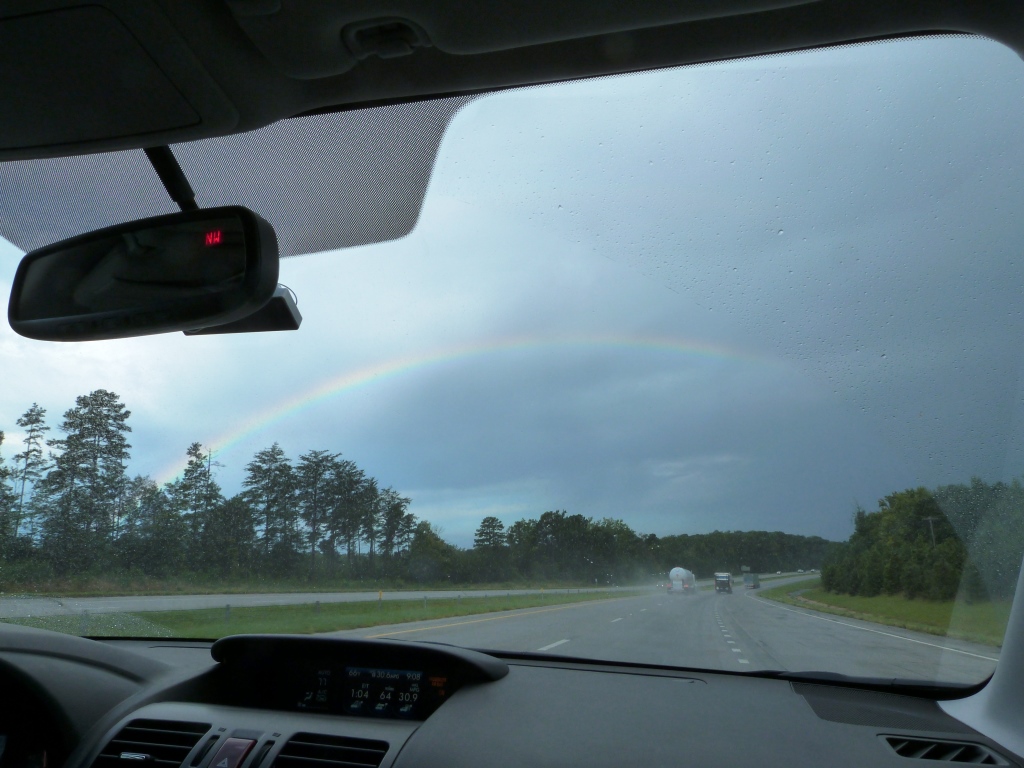
Thanks, A J, your timing is perfect as usual. We just got back from a week and a half trip to Indiana. Praise the Lord for his traveling mercies and for all of you who were praying for us as we traveled 2,300 miles. Also, we had great weather. Only one rain storm for about 10 minutes which produced a beautiful rainbow in South Carolina. More about the trip that later.

The rainbow shall be in the cloud, and I will look on it to remember the everlasting covenant between God and every living creature of all flesh that is on the earth. (Genesis 9:16 NKJV)

More Nuggets Plus

*


Birds Vol 2 #6 – The Volume II. July to December 1897 – Index

Yellow-Breasted Chat (Icteria virens) by USGS

Yellow-Breasted Chat (Icteria virens) by USGS

*

VOLUME II. JULY TO DECEMBER, 1897.

INDEX.

(RELOCATED – CLICK HERE)

Anhinga, or Snake Bird, Anhinga Anhingapages  Page  26-27
Avocet, American, Recurvirostra Americana 14-15
Audubon, John James 161
Bird Song JulSep
Bird MiscellanyBird Miscellany Plus 195-235
Blue Bird, Mountain, Sialia arctica 203-205
Bunting, Lazuli, Passerina amoena 196-198-199
Chimney Swift, Chætura pelagica 131-133
Captive’s Escape 116
Chat, Yellow-Breasted, Icteria virens 236-238-239
Cuckoo, Yellow-Billed, Coccyzus americanus 94-95
Dove, Mourning, Zenaidura macrura 111-112-113
Duck, Canvas-back, Athya valisneria 18-20
Duck, Mallard, Anas boschas 10-11-13
Duck, Wood, Aix Sponsa 21-23-24
Eagle, Baldheaded, Haliœtus lencocephalus 2-3-5
Flamingo, Phœnicopterus ruber 218-221
Flycatcher, Vermillion, Pyrocephalus rubineus mexicanus 192-193
Gold Finch, American, Spinus tristis 128-129-130
Goose, White-fronted, Anser albifrons gambeli 166-168-169
Grackle, Bronzed, Quiscalus quiscula 228-230-231
Grosbeak, Evening, Cocothraustes vespertina 68-70-71
Grouse, Black, Tetrao tetrix 217-220-223
Heron, Snowy, Ardea candidissima 38-39
How the Birds Secured Their Rights 115
Humming Bird, Allen’s Selasphorus alleni 210-211
Humming Bird, Ruby-Throated, Trochilus colubris 97-100-103
Junco, Slate Colored, Junco hyemalis 153-155
Kingbird, Tyrannus tyrannus 156-158-159
Kingfisher, European, Alcedo ispida 188-190-191
Kinglet, Ruby-crowned, Regulus calendula 108-110
Lark, Horned, Otocoris alpestris 134-135
Lost Mate 126
Merganser, Red-Breasted, Merganser serrator 54-55
Nuthatch, White-Breasted, Sitta carolinensis 118-119
Old Abe 35
Ornithological Congress 201
Osprey, American, Pandion paliœtus carolinenses 42-43-45
Partridge, Gambel’s, Callipepla gambeli 78-79
Phalarope, Wilson’s, Phalaropus tricolor 66-67
Pheasant, Ring-Necked, Phasianus torquatus 232-233
Phœbe, Sayornis phœbe 106-107
Plover, Belted Piping, Aegialitis meloda circumcincta 174-175
Plover, Semipalmated Ring, Aegialitis semi-polmata 6-8-9
Rail, Sora, Porzana Carolina 46-48-49
Sapsucker, Yellow-bellied, Sphyrapicus varius 137-140-143
Scoter, American, Oidemia deglandi 32-33
Skylark, Alauda arvensis 61-63-64
Snake Bird, (Anhinga) Anhinga anhinga 26-27
Snowflake, Plectrophenax nivalis 150-151-152
Sparrow, English, Passer domesticus 206-208-209
Sparrow, Song, Melospiza fasciata 90-91-93
Summaries (See each bird)
Tanager, Summer, Piranga rubra 163-165
Teal, Green winged, Anas carolinensis 213-214-215
The Bird’s Story 224
Thrush, Hermit, Turdus Aonalaschkae 86-88-89
To a Water Fowl 76
Tropic Bird, Yellow-billed, Phaethon flavirostris 184-186-187
Turkey, Wild, Meleagris gallopava 177-180-183
Turnstone, Arenaria interpres 170-171
Verdin, Auriparus flaviceps 226-227
Vireo, Warbling, Vireo gilvus 138-141
Vulture, Turkey, Catharista Atrata 72-73-75
Warbler, Blackburnian, Dendroica blackburnia 123-125
Warbler, Cerulean, Dendrœca caerulea 178-181
Warbler, Kentucky, Geothlypis formosa 50-51-53
Warbler, Yellow, Dendroica æstiva 83-85
Woodcock, American, Philohela minor 28-30-31
Wren, House, Troglodytes ædon 98-101-104
Wood Pewee, Contopus Virens 144-146-147-
Yellow Legs, Totanus flavipes 58-60

*

How precious also are Your thoughts to me, O God! How great is the sum of them! (Psalm 139:17 NKJV)

*

Birds Illustrated by Color Photography – Revisited

The above article is an article in the monthly serial for October 1897 “designed to promote Knowledge of Bird-Live.” These include Color Photography, as they call them, today they are drawings. There are at least three Volumes that have been digitized by Project Gutenberg.

To see the whole series of – Birds Illustrated by Color Photography – Revisited

*

Next Article – TBA

The Previous Article – The Yellow-breasted Chat

Wordless Birds

*

Child’s Book of Water Birds ~ The Goose

The Goose

Child's Book of Water Birds - Book Cover

Child’s Book of Water Birds – Book Cover

***

Childs Bk of Water Birds titlebird

NEW YORK

LEAVITT & ALLEN.

1855.

***

Welcome to the Updated Child’s Book of Water Birds, by Anonymous. It was written in 1855 and this is 2013. That is 158 years ago.

*
*

Childs Bk of Water Birds goose

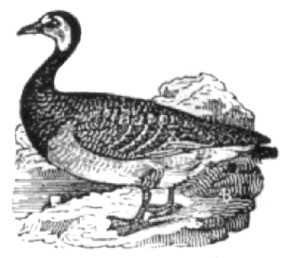
THE GOOSE.

The Goose is a very common bird. In Lincolnshire, England, enormous flocks are bred, containing from two to ten thousand each. They are subjected to the plucking of their wing-feathers periodically, in order to supply the demand for quills.

*

Canada Goose (Branta canadensis) w brood ©USFWS

Canada Goose (Branta canadensis) w brood ©USFWS

Update:

Today we use ballpoint pens and the Geese do not need to have their feathers plucked for quill pens. There are many Geese here in America and around the world.  They belong to the Ducks, Geese & Swan Family. Many local parks have geese of various kinds. They are larger than Ducks, but smaller than Swans,

The female is called a “goose” and the male is the “gander.” Some of the kinds of geese are: Barnacle, Cackling, Canada, Emperor, Nene, Ross’s and the Snow Goose.

Many geese, like the Snow Goose, have their chicks in summer in the northern parts of America and then fly south in the winter. They gather in huge flocks.

*

Even the stork in the heavens knows her times, and the turtledove, swallow, and crane keep the time of their coming, but my people know not the rules of the LORD. (Jer 8:7 ESV)

***

See the other five Child’s Book of Water Birds:

The Swan

The Coot

The Dabchick

The Teal

The Oyster Catcher

*

Ducks, Geese & Swan Family.

Bible Birds

Wordless Birds

*
Child's Book of Water Birds - Levit and Allen
*** PROJECT GUTENBERG EBOOK CHILD'S BOOK OF WATER BIRDS ***

*

Child’s Book of Water Birds ~ The Teal

The Teal

Child's Book of Water Birds - Book Cover

Child’s Book of Water Birds – Book Cover

***

Childs Bk of Water Birds titlebird

NEW YORK

LEAVITT & ALLEN.

1855.

***

Welcome to the Updated Child’s Book of Water Birds, by Anonymous. It was written in 1855 and this is 2013. That is 158 years ago.

*
*
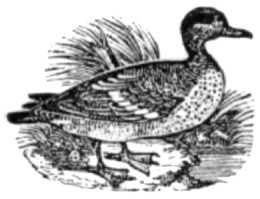
Childs Bk of Water Birds teal

THE TEAL.

The Teal is the smallest of the ducks. The Green-winged Teal is the American. It feeds on fresh-water insects, seeds, and aquatic plants. When fat it is considered a great luxury. It is almost always seen on well furnished tables. It generally feeds at night. It flies very swiftly, and utters a whistling cry.

***

*

Male Green-winged Teal at Lowry Park Zoo, Tampa, FL

*

Update:

This dabbling duck (the Green-winged Teal) flies south in the winter and will form large flocks.

This is the smallest North American dabbling duck. The male has grey flanks and back, with a yellow rear end and a white-edged green feathers. It has a chestnut head with a green eye patch.  a vertical white stripe on side of breast. The females are light brown.

Green-winged Teal (Anas carolinensis) Pair ©WikiC

14 Green-winged Teal (Anas carolinensis) Pair ©WikiC

*

It is a common duck of sheltered wetlands, usually feeds by dabbling for plant food or grazing.  It nests on the ground, near water and under cover.

This is a noisy species. The male has a clear whistle, whereas the female has a feeble “quack”.

We also have Blue-winged Teals and Cinnamon Teals here in America.

***

See the other five Child’s Book of Water Birds:

The Swan

The Coot

The Dabchick

The Goose

The Oyster Catcher

*

Green-winged Teal – WhatBird

Blue-winged Teal – WhatBird

Cinnamon Teal – WhatBird

Birdwatching Terms – Dabbling duck

Bible Birds

Wordless Birds

*
Child's Book of Water Birds - Levit and Allen
*** PROJECT GUTENBERG EBOOK CHILD'S BOOK OF WATER BIRDS ***

*

Birdwatching Term – Dabbling Duck

Blue-Winged-Teal-Dabbling ©Flyways USFWS

Blue-Winged-Teal-Dabbling ©Flyways USFWS

Dabbling Duck

What does it mean when a duck “dabbles” or is a “dabbling duck”?

This group of ducks has been so named because its members feed mainly on vegetable matter by upending on the water surface, or grazing, and only rarely dive. These are mostly gregarious ducks of freshwater or estuaries. These birds are strong fliers and northern species are highly migratory. Compared to other types of duck, their legs are placed more towards the centre of their bodies. They walk well on land, and some species feed on land.

Puddle ducks generally feed on the surface of the water or feed on very shallow bottoms. They are not equipped to dive down several feet like their diving counterparts. The most predominant difference between puddle ducks and divers are the size of the feet. A puddle duck’s feet are generally smaller because they do not need the extra propulsion to dive for their forage.

Another distinguishing characteristic of puddle ducks when compared to diving ducks is the way in which they take flight when spooked or are on the move.

Puddle ducks spring straight up from the water, and diving ducks need to gain momentum to take off, so they must run across the water a short distance to gain flight.

These Ducks belong to the Anatine sub-family of the Swans, Geese, and Duck Family.

Mallard-Takes-Off ©Flyways USFWS

Mallard-Takes-Off ©Flyways USFWS

For the younger reader:

What does it mean when a duck “dabbles” or is a “dabbling duck”?

They are called that because these ducks feed mainly on vegetable matter (plants) by upending on the water surface (They put their head in the water to eat and their tail section is all that is seen above the water.) or grazing, and only rarely dive.

When they take flight, they spring straight up from the water. The Diving ducks have to sort of run to take-off.

(Wikipedia with editing)

Look at the birds of the air; they neither sow nor reap nor gather into barns, and yet your heavenly Father keeps feeding them. Are you not worth much more than they? (Mat 6:26 AMP)

*

See:

Swans, Geese, and Duck Family.

Dabbling Ducks – Flyways.us

Dabbling Ducks – Wikipedia

More Birdwatching Terms

Wordless Birds

*

Birds of the Bible – Shield

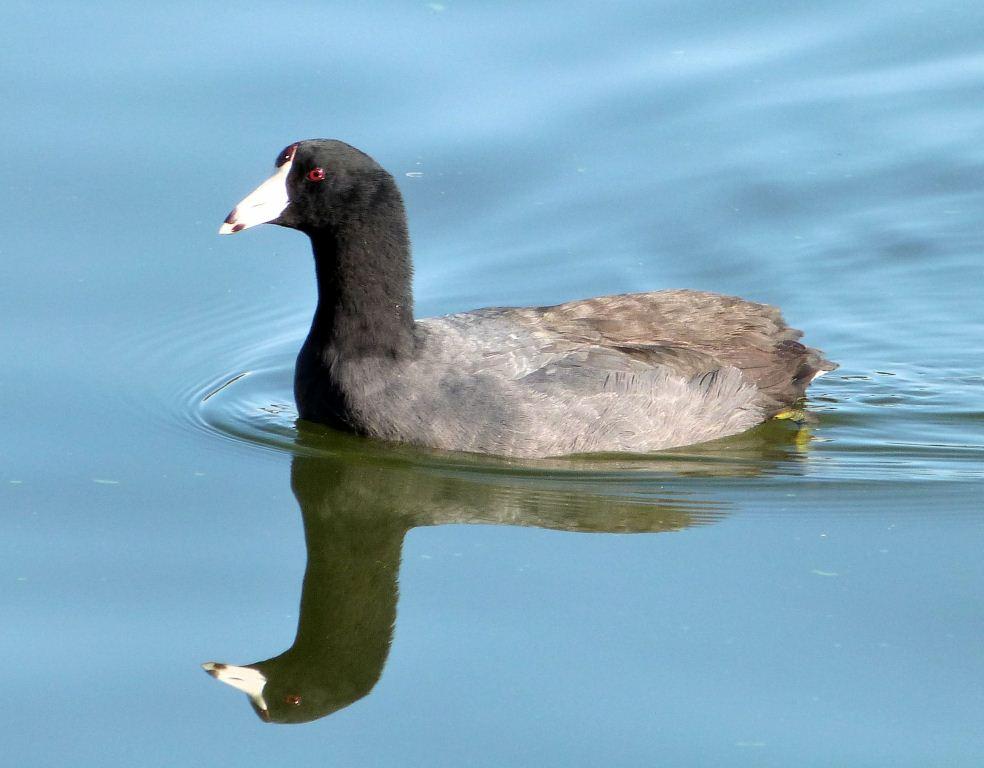
American Coot (Fulica americana) by Lee at Lk Morton

American Coot (Fulica americana) by Lee at Lk Morton

He shall cover thee with his feathers, and under his wings shalt thou trust: his truth shall be thy shield and buckler. (Psalm 91:4 KJV)

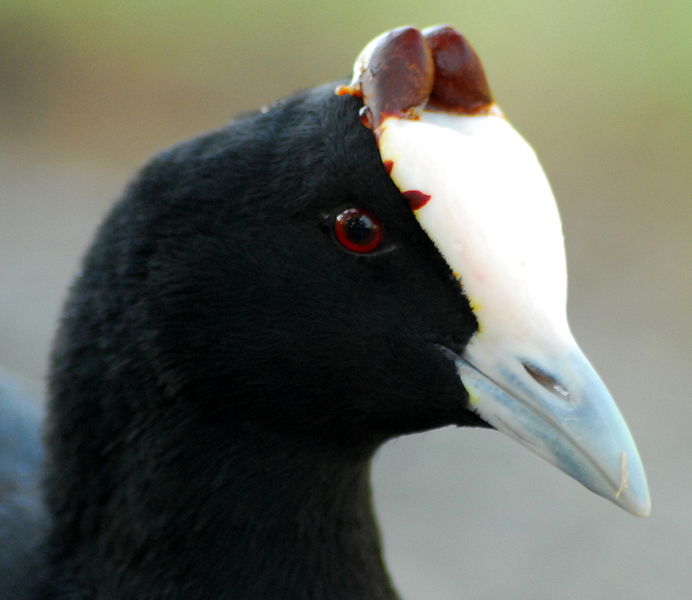
While working on the Coot article, the shield was mentioned. “Coots have prominent frontal shields or other decoration on the forehead…”

When the Lord created the Coots and many of the birds in the Rallidae – Rails, Crakes & Coots family, He gave them a frontal shield. Some Jacanas (Jacanidae – Jacanasalso have shields.

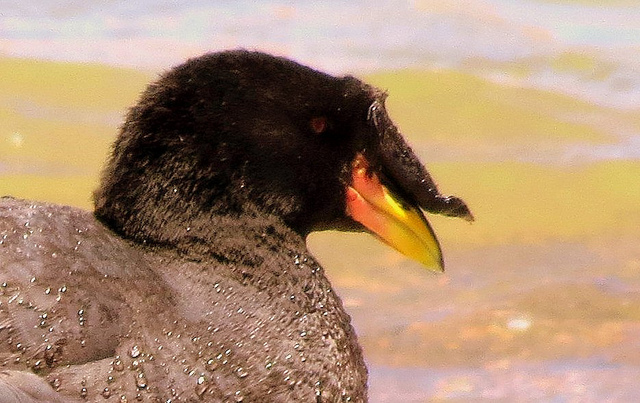
The Merriam-Webster Dictionary gives this definition: “a platelike prolongation of the base of the upper mandible over the forehead that is a characteristic feature of the coots and gallinules.”  A few coots and gallinules have a frontal shield, which is a fleshy rearward extension of the upper bill. The most complex frontal shield is found in the Horned Coot.

This slideshow requires JavaScript.


*
As you can see by the different photos, each species has a different shield, some similar, but others quite different.

Wikipedia says, “A shield is a type of personal armor, meant to intercept attacks, either by stopping projectiles such as arrows or redirecting a hit from a sword, mace, battle axe or similar weapon to the side of the shield-bearer.

Shields vary greatly in size, ranging from large panels that protect the user’s entire body to small models (such as the buckler) that were intended for hand-to-hand-combat use. Shields also vary a great deal in thickness; whereas some shields were made of relatively deep, absorbent, wooden planking to protect soldiers from the impact of spears and crossbow bolts, others were thinner and lighter and designed mainly for deflecting blade strikes.

Often shields were decorated with a painted pattern or an animal representation and these designs developed into systematized heraldic devices during high-medieval times for purposes of battlefield identification. ”

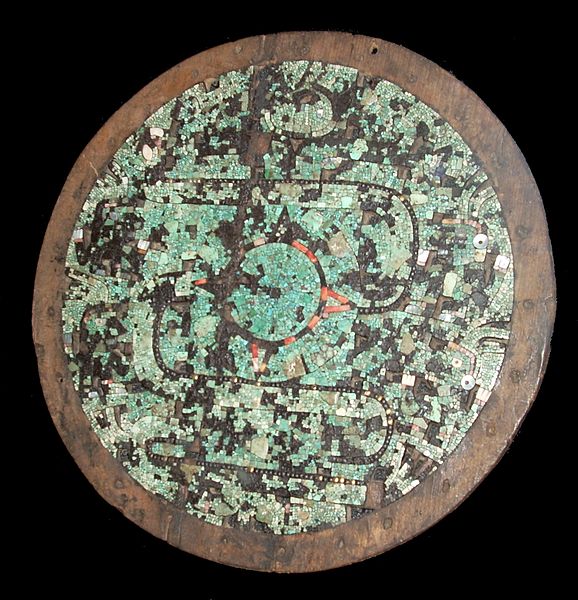
Ceremonial shield with mosaic decoration- Aztec or Mixtec-AD 1400-1521-In the British Museum ©WikiC

Ceremonial shield with mosaic decoration- Aztec or Mixtec-AD 1400-1521-In the British Museum ©WikiC

For our birds, I would think the decorated shields for identification seems the most logical. Since the Lord enjoys so much variety, we see it again displayed in these frontal shields.

At least 54 verses (depending on version) mention the word “shield” in the Bible. Psalm 91:4 above is providing refuge under feathers and wings and is protecting us with a shield of truth and faithfulness. Let’s look at some of the verses and just let His word encourage and challenge us to serve Him more.

The God of my rock; in him will I trust: he is my shield, and the horn of my salvation, my high tower, and my refuge, my saviour; thou savest me from violence. (2 Samuel 22:3 KJV)

But You, O LORD, are a shield about me, My glory, and the One who lifts my head. (Psalms 3:3 NASB)

Horned Coot (Fulica cornuta) ©©Flickr Gunnar Engblom

Horned Coot (Fulica cornuta) ©©Flickr Gunnar Engblom

Thou hast also given me the shield of thy salvation: and thy right hand hath holden me up, and thy gentleness hath made me great. (Psalms 18:35 KJV)

Our soul waiteth for the LORD: he is our help and our shield. (Psalms 33:20 KJV)

Red-knobbed Coot (Fulica cristata) Breeding ©WikiC

Red-knobbed Coot (Fulica cristata) Breeding ©WikiC

For the LORD God is a sun and shield: the LORD will give grace and glory: no good thing will he withhold from them that walk uprightly. (Psalms 84:11 KJV)

Ye that fear the LORD, trust in the LORD: he is their help and their shield. (Psalms 115:11 KJV)

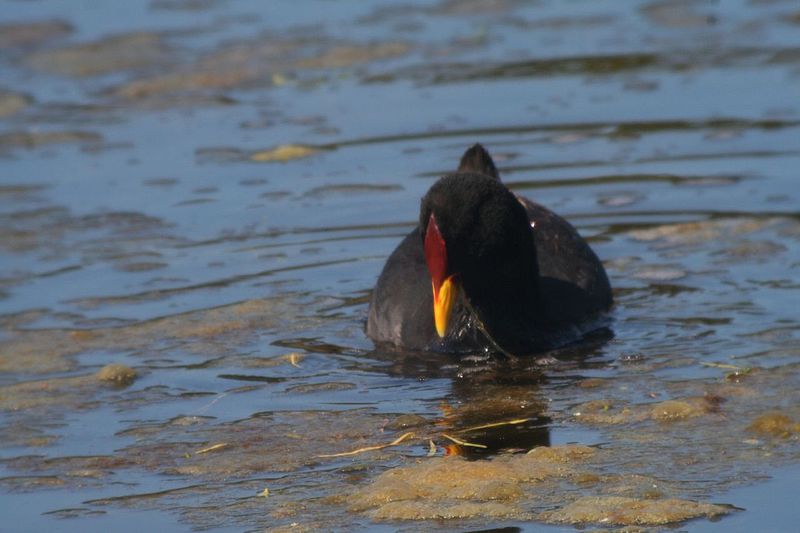
Red-fronted Coot (Fulica rufifrons) ©WikiC

Red-fronted Coot (Fulica rufifrons) ©WikiC

Above all, taking the shield of faith, wherewith ye shall be able to quench all the fiery darts of the wicked. (Ephesians 6:16 KJV)

Are others able to identify us by our shield?

*

Wordless Birds

*

See:

Birds of the Bible

Rallidae – Rails, Crakes & Coots Family

Jacanidae – Jacanas Family

Birdwatching Term – Frontal Shield

*

Child’s Book of Water Birds ~ The Coot

The Coot

Child's Book of Water Birds - Book Cover

Child’s Book of Water Birds – Book Cover

***

Childs Bk of Water Birds titlebird

NEW YORK

LEAVITT & ALLEN.

1855.

***
Welcome to the Updated Child’s Book of Water Birds, by Anonymous. It was written in 1855 and this is 2013. That is 158 years ago.
*
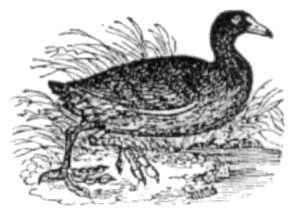
Childs Bk of Water Birds coot

THE COOT.

The Coot is generally found in large sheets of water, particularly if shaded by trees. The nest is a mass of flags, reeds, and grass, usually at the water’s edge, but sometimes actually in the water. The Coot’s eggs are generally seven in number. They are of a greenish-white, spotted.

*

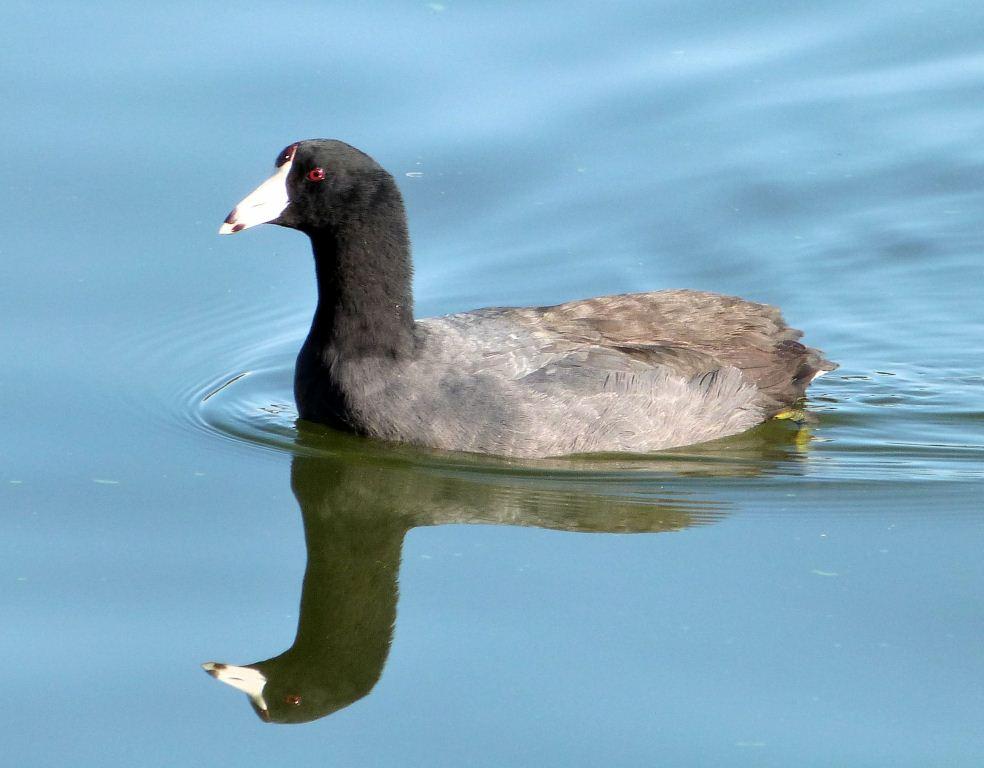
American Coot (Fulica americana) by Lee at Lk Morton

American Coot (Fulica americana) by Lee at Lk Morton

Update:

Coots are medium-sized birds that belong to the Raillidae – Rail Family. There are twelve (12) different Coots around the world.

They have mostly black feathers and can be seen swimming in open water. Coots have prominent frontal shields or other decoration on the forehead, with red to dark red eyes and coloured bills. Many, but not all, have white on the under tail.

Coots eat plants, eggs and some small animals. The defend their nest when they have babies. A group of Coots are called a “covert” or  “cover.”

Like other rails, they have long, lobed toes that are well adapted to soft, uneven surfaces. Coots have strong legs and can walk and run fast. This video shows their feet.

*


*

****

See the other five Child’s Book of Water Birds:

The Swan

The Dabchick

The Teal

The Goose

The Oyster Catcher

*

Rallidae – Rails, Crakes & Coots Family

American Coot – All About Birds

Bible Birds

Wordless Birds

*
Child's Book of Water Birds - Levit and Allen

Back Cover

*** PROJECT GUTENBERG EBOOK CHILD'S BOOK OF WATER BIRDS ***

*

Child’s Book of Water Birds ~ The Swan

The Swan

Child's Book of Water Birds - Book Cover

Child’s Book of Water Birds – Book Cover

***

Childs Bk of Water Birds titlebird

NEW YORK

LEAVITT & ALLEN.

1855.

***

Welcome to the Updated Child’s Book of Water Birds, by Anonymous. It was written in 1855 and this is 2013. That is 158 years ago.

*
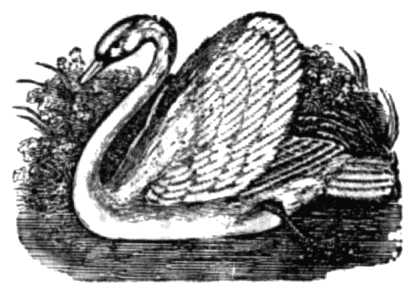
Childs Bk of Water Birds swan

THE SWAN.

The Swan is a very beautiful bird. It is generally white, though a black swan has been discovered in Australia. It is not very often seen in this country. It was brought from Asia and Eastern Europe into England—from whence, most probably, a few specimens have been introduced into this country. The Swan is very graceful in the water, but on land it is an awkward waddler.

*

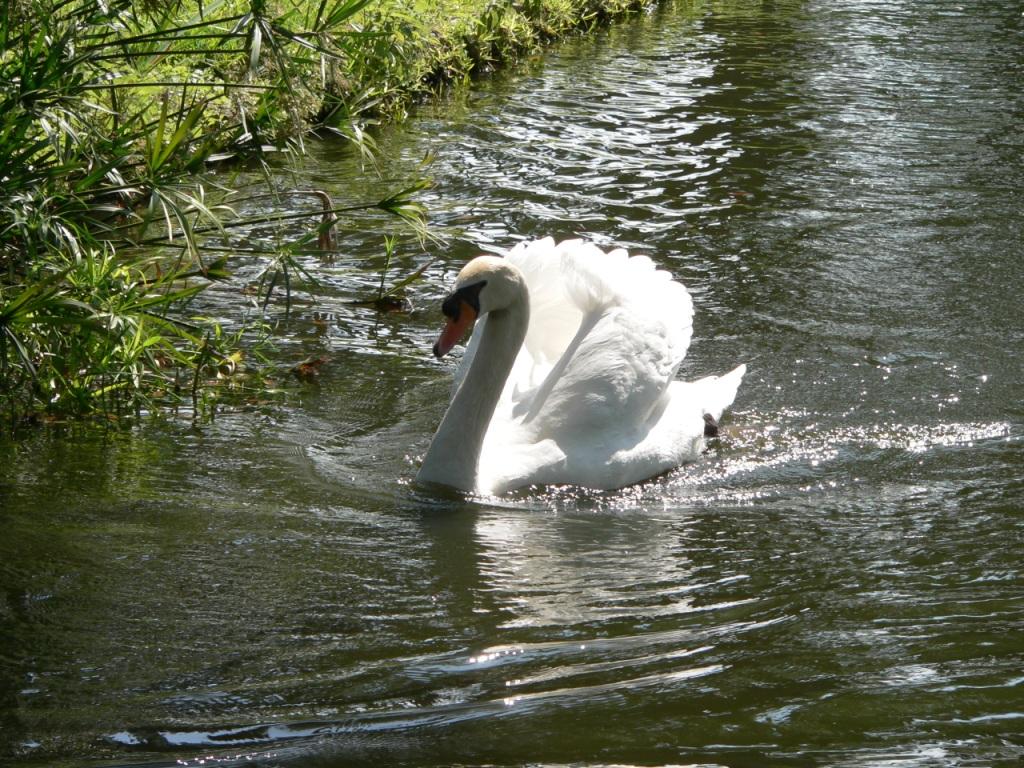
Swan at Bok Tower

Swan at Bok Tower

Update:

Swans are the largest member of the Water Birds family Swans. They are also among the largest flying birds. Some Swans have a wingspan almost 10 ft (3 m).

A group of swans is called a bevy or a wedge in flight. Swans feed in the water and on land.

The nest is on the ground near water. Average egg size (for the mute swan) is 4.4 X 2.9 in (113×74 mm), weighing 11 oz (340 g), in a clutch size of 4 to 7. Swans are very protective of their nest.

The Swan is one of the Bible Birds. (See Bible Birds – Swans)

And the swan, and the pelican, and the gier eagle, (Leviticus 11:18 KJV)

***

See the other five Child’s Book of Water Birds:

The Coot

The Dabchick

The Teal

The Goose

The Oyster Catcher

*

Anatidae – Swan Family

Bible Birds – Swans

Bible Birds

Wordless Birds


*

*
Child's Book of Water Birds - Levit and Allen
*** PROJECT GUTENBERG EBOOK CHILD'S BOOK OF WATER BIRDS ***

*

ALASKA’S BALD EAGLE by James J. S. Johnson

ALASKA’S  BALD  EAGLE

Dr. James J. S. Johnson

Associate Professor of Apologetics, ICR ( jjohnson@icr.org )

The ecological world of Southeastern Alaska hosts a diversity of animals  —   creatures of the air (like the Bald Eagle),  creatures of the land  (like the Alaskan Moose), as well as creatures of its freshwater rivers and streams (like Pacific Salmon), lakes and ponds (like Rainbow Trout).  This article will look at one of those creatures, the Bald Eagle.

The national bird of the United States of America, since 1782, is the bald eagle.  The backside of many quarter-dollar coins (the silver coins which most Americans call “quarters”) show an American bald eagle with outstretched wings.  Mexico’s most famous eagle is the golden eagle, which is a kind of “cousin” to the bald eagle.   The bald eagle’s scientific name is “Haliaeetus  leuocephalus”,  meaning  “white-headed  sea-eagle” (which is a very accurate name).  The adult bald eagles have their heads (including their neck area) covered in white feathers, and also their tail feathers are white; the rest of the adult bald eagle’s feathers are black or blackish-grey.  Their sharp curl-ended beaks and their talons (feet) are yellow.   A bald eagle is fully grown in about four or five years after its hatching.
Bald Eagles 1 for Alaska' Bald EagleHow big is the adult bald eagle?  The bald eagles is a very large bird; it often weighs about ten pounds, though it may weigh as much as thirteen pounds.  The bald eagle, when fully grown, is almost three feet long and its wingspan can be as wide as six or seven feet when fully spread out!  The tough-looking eagles have a voice that seems almost silly when compared with their rough toughness – their voices make sounds like thin squealing or squeaky cackling.

Where do bald eagles live?  Eagles sometimes migrate, flying south to avoid super-cold weather in Canada’s inland forests.  However, many bald eagles, especially those which live near coastal waters, do not migrate at all.  Bald eagles like to live on land near waters where fish (their favorite food) live, such on seacoasts, by rivers, by large lakes, or in marshy areas where flowing stream-waters provide homes for fish.  Bald eagles usually live in shoreline areas where cold water flows nearby, such as where snow-melt-watered mountain creeks empty into a estuarial bay ( a place where flowing freshwater mixes with tide-washing ocean water).

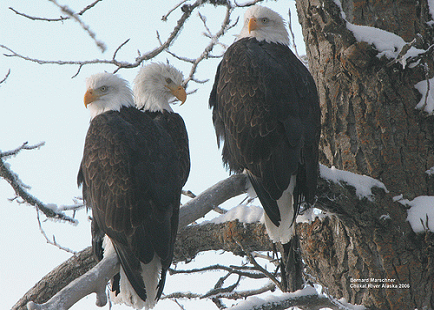
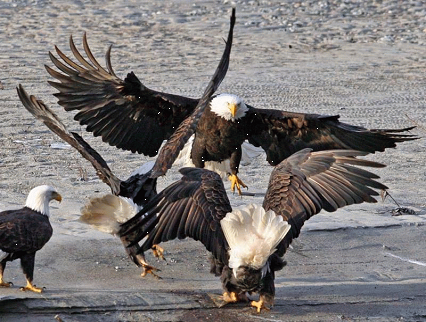
The highest concentration (most crowded gathering) of bald eagles in the world is in southeast Alaska, where the Chilkat River empties into the tidewaters near the town of Haines, a picture-postcard coastal town originally founded as a Presbyterian mission.   At the Chilkat River’s emptying point more than 3,000 bald eagles congregate annually, during autumn, for an all-you-can-eat salmon feast.  What do bald eagles like to eat?  Bald eagles are hawk-like “birds of prey”, meaning that they like to eat meat from smaller animals (like fish) that they hunt and kill for food.  Bald eagles especially like to eat salmon when then return to coastal streams and rivers during spawning seasons!  (After salmon reproduce fertilized eggs for the next generation of salmon, the parents salmon are fatally exhausted (so tired out that they are dying) and they move about in shallow water where it is easy for bald eagles to see them and to grab them for food).  If an eagle has an adequate food supply, which the eagles of Alaska usually do, they can live for twenty or thirty years, or may even live for forty years!
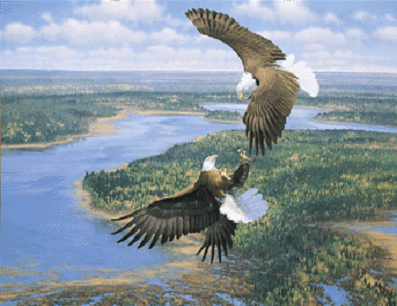
Bald Eagles 2 for Alaska' Bald EagleBald eagles have super-human eyesight (eyes able to see distances much farther than humans can see).  Their eyes are so sharp that the eagles can chase fish swimming near the surface of water, then zoom down near the water surface to grab the unsuspecting fish with their extra-strong talons (clawed-feet-like legs that can clutch things as if they were hands), then fly away with the fish to eat it (or to share it with its family).  An adult eagle’s beak is about two inches long and about one inch deep at its hook-like curled tip.  The sharp curled tip of the beak can rip into a fish easily, for eating convenience.  Sometimes bald eagles, while flying, will attack another fish-catching bird, the osprey (also called “fish hawk”), in order to get caught fish that the osprey is carrying.  Sometimes an osprey will intentionally drop its fish so that the eagle will fly down to catch the dropping fish; this allows the osprey to escape the attacking eagle – it’s better for the osprey to lose a fish than to lose its life!  Bald eagles eat other small animals, including other fish, ducks, seagulls, and other birds.

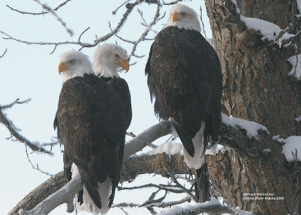
Where can eagles be easily seen?  In the coastal forestlands of southeastern Alaska (especially Juneau, Alaska’s capital city), many of the trees that cover sloping hillsides near the shoreline of rivers or bays of water are often filled with perching bald eagles.  The bald eagle prefers to make its nest in a tall tree, where sticks are gathered and arranged to provide the bald eagle family with a huge house of sticks and other materials.   Bald Eagles 3 for Alaska' Bald Eagle(Another kind of eagle, the golden eagle, prefers to make its home in rocky places on top of cliffs, and sometimes bald eagles do the same.  Baby golden eagles and baby bald eagles lookalike, but if the eaglet grows up to have a white head and a white tail it is a bald eagle.)  From the roadside, if you look up at the trees that are near Juneau’s shoreline, you will see many bald eagles perched in the high branches of those dark evergreen trees.  The eagles are easy to see, because their bald heads contrast in color against the dark green trees, so the trees look like Christmas trees decorated in popcorn balls, except that the white spots that look like popcorn are really the heads of the bald eagles!
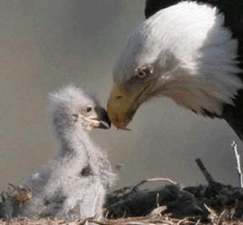
What kind of family life do eagles have?   Usually an eagle family has a father eagle and a mother eagle (who both act like they are “married” to each other), and a small number of hatched eagle children (one, two, or three) until the smaller eagles grow up large enough to fly away and start their own families (with mates for themselves).   Unlike many animals, the mother eagles are usually larger in size than the father eagles.  Bald eagle mates usually try to have one or more new eagle babies each spring.       After the eggs are laid the parent eagles take turns incubating them, to keep them warm enough to grow until it is time for hatching out of their eggs.  Whenever parent eagles walk around near the eggs they walk very cautiously.  Of course, if they did not, many eagle eggs would be accidentally broken by careless contact with a sharp eagle talon!

When eagles are grown up, at about four years of age, they find a mate to start a family with; so, a fully grown male eagle and a fully grown female eagle become an eagle pair, kind of like getting Bald Eagles 4 for Alaska' Bald Eaglemarried to each other.  The eagle couple will stay together as long as they both live (unless one is captured and prevented from returning to its mate).  Not all birds stay with their mates for life, but the bald eagle does.  The eagle couple will soon become parents, with the female eagle becoming a mother by laying large white fertile eggs that will one day hatch into baby eagles – called eaglets.  The baby eagles are very hungry but they cannot fly to get their own food, just as many other kinds of babies need their parents to care for them, and protect them, and feed them.
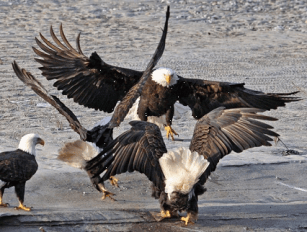
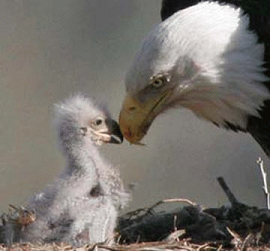
The parent eagles are very protective of their baby eaglets; they will attack any other bird that flies too close to the eagle nest, so ravens, gulls, and hawks better stay away and respect the eagle family’s privacy!   The baby eagles do not have “bald”-looking heads, because their heads do not have white feathers.  Baby eagles are blotchy brown-grey colored and begin their hatchling life with light grey-colored fuzzy feathers called “down”.  Young eagles are called nestlings during the time that they live in their parents’ nest.  It takes a while for the little eaglets to grow enough strength in their little wings so they can be ready to fly  like their parents.
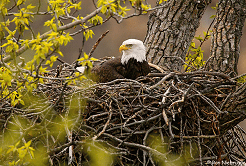
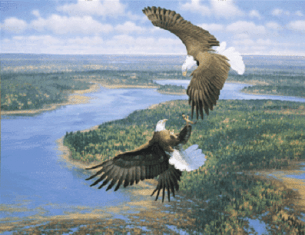
Bald Eagles 5 for Alaska' Bald EagleWhen a young eagle finally learns to fly it is called a fledgling.  Eagles are such heavy birds that they don’t Bald Eagles 6 for Alaska' Bald Eaglebuild their houses, called “nests”, near the ground.  Eagles build their nests high up in trees or on top of rocky mountains or cliffs, so that they can jump out into the air and glide on rising warm air currents.               Some air currents are made of warm rising air, so an eagle can jump into such warm air and “ride” it up like an elevator, then the eagle can glide from one air current to another , until it wants to fly down.  These rising air currents are called “thermals”.  The eagle that soars on a thermal is mostly at rest, because he is trusting the thermal to carry him along for a “ride” in the air.  The eagle soaring on such a thermal air current is a reminder of how we should trust and depend upon God to carry us through life’s adventures, as we travel from one day to the next.  By “riding” on upwardly spiraling thermal air currents eagles can save their energy, because too much wing-flapping can waste an eagle’s energy and cause it to get too tired to fly.  Like eagles, we can waste a lot of energy if we fail to depend on God, because worrying and distrusting God wastes a lot of mental energy and emotions!  (See Isaiah 40:31.)
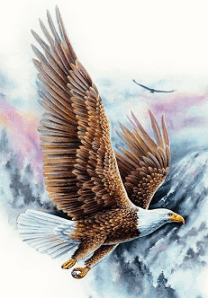
But they that wait upon the LORD shall renew their strength; they shall mount up with wings as eagles; they shall run, and not be weary; and they shall walk, and not faint. (Isa 40:31 KJV)

By conserving (carefully using, not wasting) his energy, the bald eagle can flap his wings only when he needs to, and he can rise to very high places in the air, which also means that the eagles can reach high places on top of mountains or cliffs that other animals cannot reach.  So an eagles’ nest (called an “eyrie”) can be far away from egg-eating animals that might bother parent eagles and try to eat their eggs before they have a chance to hatch into baby eaglets (the baby eaglets are called “hatchlings” when they first hatch).  Bald eagles, like other kinds of eagles, often live in rocky places in high places, so it is not surprising that people (including Biblical authors) compare highness with flying and nesting behaviors of eagles.
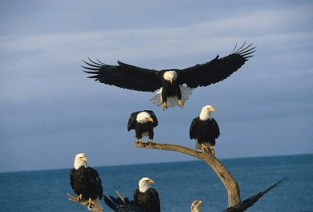
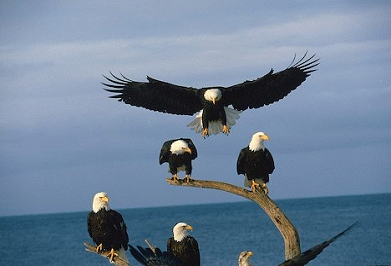
Bald Eagles 7One example of highness being compared to the nesting habits of eagles is found in the Bible, in the Book of Obadiah 1:3-4, where the eagle is described as a creature that lives in high places, much closer to the stars than do most other animals (or people).  Another Old Testament book in the Bible, the Book of Job, refers (at 39:27) to the eagle as mounting up into the air by God’s command (because God programs eagles to fly up into the air the way that they do), and as nesting in high places (because God programs eagles to do this also).

The pride of thine heart hath deceived thee, thou that dwellest in the clefts of the rock, whose habitation is high; that saith in his heart, Who shall bring me down to the ground? Though thou exalt thyself as the eagle, and though thou set thy nest among the stars, thence will I bring thee down, saith the LORD. (Oba 1:3-4 KJV)

Doth the eagle mount up at thy command, and make her nest on high? (Job 39:27 KJV)

Eagles are good parents, training their sons and daughters to live like eagles (see Deuteronomy 32:11).  Eagles can fly, like dive-bombing airplanes, at great speeds (see 2nd Samuel 1:23 and Lamentations 4:19).  Their strength is renewed from time to time, as their feather-cover adjusts to their growing bodies (see Isaiah 40:31 and Psalms 103:5). Eagles are known for their gracefulness and dignity (see Proverbs 30:19).  In fact, eagles fly very high in the air as a matter of habit – above most other birds (see Proverbs 23:5).

During winter bald eagles like to live near seacoasts or near large fast-moving rivers where fish are abundant.  Often, bald eagles must migrate south to avoid wintering in places where the food supply is too sparse or the weather is too harsh.  During spring, when the new baby eagles are hatched from eggs, bald eagles usually prefer to live in northern lands, such as Alaska and Canada, but some start their springtime families as far south as California on the West Coast and as far south as Virginia on the East Coast.  Since a thermal spring keeps the Chilkat River warm enough to prevent it from freezing in late summer and early autumn, many salmon continue to congregate in that unfrozen river during the autumn – this is like an “all-you-can-eat” salmon dinner for Alaskan bald eagles!

One place other than Alaska where bald eagles are easily seen in the later summer is along certain parts of the Snake River near Jackson Hole, Wyoming (part of the Grand Tetons National Park), in nests built in the tops of old dead trees along the river’s forested shoreline.  Of course, bald eagles are usually so high up in a tree (or soaring up in the air) that you really need to use binoculars (holding them with steady hands) to see the bald eagle’s colors, wings, talons, stern-looking face, curled beak, and clawed  talons.     Maybe learning about the salmon feasts of the Alaska bald eagles has made you hungry for some Alaska salmon!  If so, you might visit my favorite salmon bake feasting-place, “Gold Creek Salmon Bake” a few miles outside of Juneau, Alaska, an Alaskan rainforest all-you-can-eat place near an old abandoned gold mine.  But, if that’s not convenient for you at the moment, you might try buying some fresh salmon filets from your local grocery store, – and your family can enjoy a healthy protein-rich meal – a feast fit for the Bald Eagle, America’s national bird!

[The above text on Alaska’s Eagle is adapted from James J. S.  Johnson’s “The Bald Eagle”; © AD2001-AD2013 James J. S. Johnson, here reprinted/used by permission.]
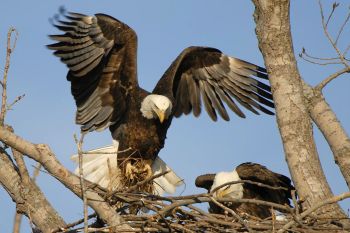
Bald Eagle Brings Nesting Material by Aesthetic Photos

Bald Eagle Brings Nesting Material by Aesthetic Photos

Lee’s Addition:

What an interesting, informative and challenging article about the Bald Eagles. Thank you, Dr. Johnson, for giving permission to post it here.

I am looking forward to some more articles that he will be sharing with us here.

See also:

Institute For Christian Research

Dr. James J. S. Johnson – Guest Author

Birds of the Bible – Eagles

Accipitridae – Kites, Hawks and Eagles

*

Vol 2, #6 – The Ring-necked Pheasant

Common Pheasant (Phasianus colchicus) "Ring-necked" for Birds Illustrated

Common Pheasant (Phasianus colchicus) “Ring-necked” for Birds Illustrated

From col. Chi. Acad. Sciences. Copyrighted by
Nature Study Pub. Co., 1897, Chicago.

THE RING-NECKED PHEASANT.

(RELOCATED – CLICK HERE)

Birdwatching – Anting

Black Drongo (Dicrurus macrocercus) Anting ©WikiC

Black Drongo (Dicrurus macrocercus) Anting ©WikiC

Consider the ravens, for they neither sow nor reap, which have neither storehouse nor barn; and God feeds them. Of how much more value are you than the birds? (Luk 12:24 NKJV)

“For animals in the wild, the medicine cabinet seems at first glance to be pretty bare, and you might think they’re just left out in the cold when it comes to finding remedies. But even with the fallen nature of our world, the Creator hasn’t left untamed creatures, like the ravens that neither sow nor reap (Luke 12:24), defenseless against all the things that ail them. In fact, He’s stocked their “closets” with a cornucopia of cures.” (From Jungle Doctors)

One of those cures is the birds “Anting” behaviour.

Anting (Excerpts from The Birder’s Handbook, p.487)

“Many different songbird species have been observed picking up single ants or small groups and rubbing them on their feathers. Less commonly, other songbirds “ant” by spreading their wings and lying on an anthill, and squirming or otherwise stimulating the ants to swarm up among their feathers.

Because the seasonal timing of anting and molting (spring and summer) often correspond, some have suggested that anting may soothe the skin during feather replacement. It seems more likely that the seasonal relationship simply reflects the greater activity of ants during those periods.”

Anting (Excerpts from Wikipedia)

In the behavior called anting, birds rub insects on their feathers, usually ants, which secrete liquids containing chemicals such as formic acid, that can act as an insecticide, miticide, fungicide, bactericide, or to make them edible by removing the distasteful acid. It possibly also supplements the bird’s own preen oil. Instead of ants, birds can also use millipedes. Over 250 species of bird have been known to ant. Most of those are Passerines.

Many theories exits as to why the birds “ant.”

It has been suggested that anting acts as way of reducing feather parasites such as mites or in controlling fungi or bacteria, although there has been little convincing support for any of the theories. It is possible that the use of certain kinds of ants indicates the importance of the chemicals they release. Some cases of anting involved the use of millipedes or caterpillars, and these too are known to release powerful defensive chemicals.

Another suggested function, based on observation of Blue Jays, is that the bird makes the insects edible, by discharging the harmful acid onto their feathers. The birds were found to show anting behaviour only if the ants had a full acid sac, and with subjects whose acid sacs had been experimentally removed, the behaviour was absent.

Finally, it has also been suggested that anting is related to feather moulting. However, the correlation may also be attributed to the greater activity of ants in summer.

Dusting with soil from ant-hills has been considered by some as equivalent to anting.

Some birds like Antbirds and Flickers not only ant, but also consume the ants as an important part of their diet. Other opportunist ant-eating birds include Sparrows, Wrens, Grouse and Starlings.

*
*
Anting (Excerpts from Audubon Society Encyclopedia of North American Birds, pps 19-20)

“John James Audubon published the first known reference to this habit in his Ornithological Biography (1831), in which he wrote of watching wild turkeys roll in ants’ nests ‘to clear their growing feathers of loose scales, and prevent ticks and other vermin from attacking them, these insects being unable to bear the odor of the earth in which ants have been.’ ”

Here are some of the birds listed in this section:

The turkeys mentioned, plus “crows; starlings and Indian mynas, magpie lark, gray thrush, Pekin robin, house sparrow, manakin and apostlebird in Australia; a Magpie in Britain; Grackles, Blue Jay, pekin robin, gray catbird, American robin, wood thrush, hermit thrush, veery, cedar waxwing, bobolink, Baltimore oriole, cardinal, rose-breasted grosbeak, black-headed grosbeak, indigo bunting, dark-eyed junco, Harris’ sparrow, white-crowned sparrow, fox sparrow, and song sparrow in America”;

“Others seen in the wild anting are: scarlet tanagers, summer tanagers, towhees…, others.” (Lack off capitalization is from the book)

Lee’s Additon:

But now ask the beasts, and they will teach you; And the birds of the air, and they will tell you; (Job 12:7 NKJV)

It appears that the birds were given instincts or knowledge, by their Creator, to protect themselves from pests and irritation. That would be a possible answer they might give us, if we were to question them. If these birds evolved, then it appears that they had to develop this habit in each country and area where the birds “ant.” Huh? As for me, I opt for a Creator giving them that knowledge rather than a chance behaviour happening in so many places.

*

*

See:

Anting – Wikipedia

Jungle Doctors (Scroll down to “Rubbing It In”) – Answers in Genesis

Birdwatching

Birds of the Bible

*