Birds Vol 1 #1 – The Golden Pheasant

Golden Pheasant (Chrysolophus pictus)

Golden Pheasant (Chrysolophus pictus)

Birds Illustrated by Color Photography – Revisited

Vol 1. January, 1897 No. 1

*

THE GOLDEN PHEASANT

They call me the Golden Pheasant, because I have a golden crest. It is like a king’s crown. Don’t you think my dress is beautiful enough for a king?

See the large ruff around my neck. I can raise and lower it as I please.

I am a very large bird. I am fourteen inches tall and twenty-eight inches long. I can step right over your little robins and meadow larks and blue jays and not touch them.

Sometimes people get some of our eggs and put them under an old hen. By and by little pheasants hatch out, and the hen is very good to them. She watches over them and feeds them, but they do not wish to stay with her; they like their wild life. If they are not well fed they will fly away.

I have a wife. Her feathers are beginning to grow like mine. In a few years she will look as I do. We like to have our nests by a fallen tree.
Golden Pheasant (Chrysolophus pictus) WikiC

Golden Pheasant (Chrysolophus pictus) WikiC


imgt

HE well-known Chinese Pheasant, which we have named the Golden Pheasant, as well as its more sober-colored cousin, the Silver Pheasant, has its home in Eastern Asia.

China is pre-eminently the land of Pheasants; for, besides those just mentioned, several other species of the same family are found there. Japan comes next to China as a pheasant country and there are some in India.

In China the Golden Pheasant is a great favorite, not only for its splendid plumage and elegant form, but for the excellence of its flesh, which is said to surpass even that of the common pheasant. It has been introduced into Europe, but is fitted only for the aviary.

For purposes of the table it is not likely to come into general use, as there are great difficulties in the way of breeding it in sufficient numbers, and one feels a natural repugnance to the killing of so beautiful a bird for the sake of eating it. The magnificent colors belong only to the male, the female being reddish brown, spotted and marked with a darker hue. The tail of the female is short. The statement is made, however, that some hens kept for six years by Lady Essex gradually assumed an attire like that of the males.

Fly-fishers highly esteem the crest and feathers on the back of the neck of the male, as many of the artificial baits owe their chief beauty to the Golden Pheasant.

According to Latham, it is called by the Chinese Keuki, or Keukee, a word which means gold flower fowl.
Golden Pheasant (Chrysolophus pictus) Male ©© NotMicroButSoft

Golden Pheasant (Chrysolophus pictus) Male ©© NotMicroButSoft


“A merry welcome to thee, glittering bird!
Lover of summer flowers and sunny things!
A night hath passed since my young buds have heard
The music of thy rainbow-colored wings—
Wings that flash spangles out where’er they quiver,
Like sunlight rushing o’er a river.”


Lee’s Addition:

What a beautiful bird. I am glad in 2012 that birds are not used for their feathers as much as they were back in the 1800’s. I’ve noticed in the first articles how the birds mentioned are either caged, captive, eaten or their feathers used for hats and other uses. Man was given dominion over the animals and are allowed to eat them, but I still like to see them out and about freely flying.

For You meet him with the blessings of goodness; You set a crown of pure gold upon his head. (Psalms 21:3 NKJV)

Now when He had taken the scroll, the four living creatures and the twenty-four elders fell down before the Lamb, each having a harp, and golden bowls full of incense, which are the prayers of the saints. (Revelation 5:8 NKJV)

The Golden Pheasant or “Chinese Pheasant”, (Chrysolophus pictus) is a gamebird of the order Galliformes (gallinaceous birds) and the family Phasianidae. It is native to forests in mountainous areas of western China but feral populations have been established in the United Kingdom and elsewhere.

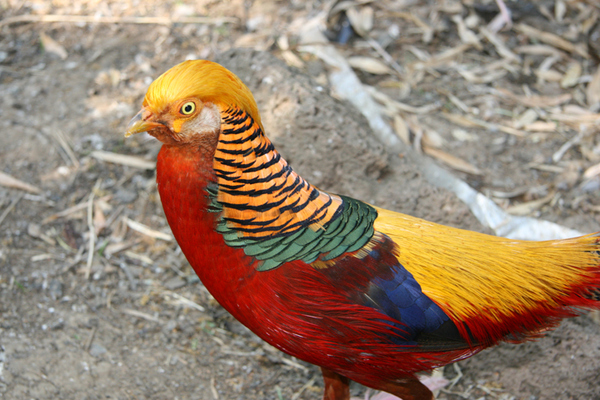
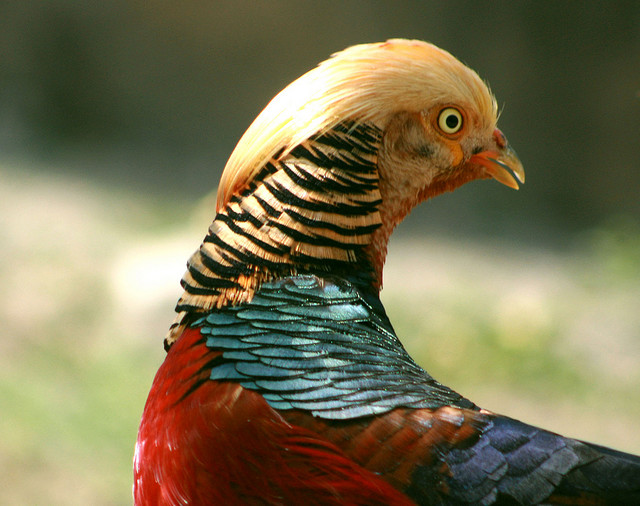
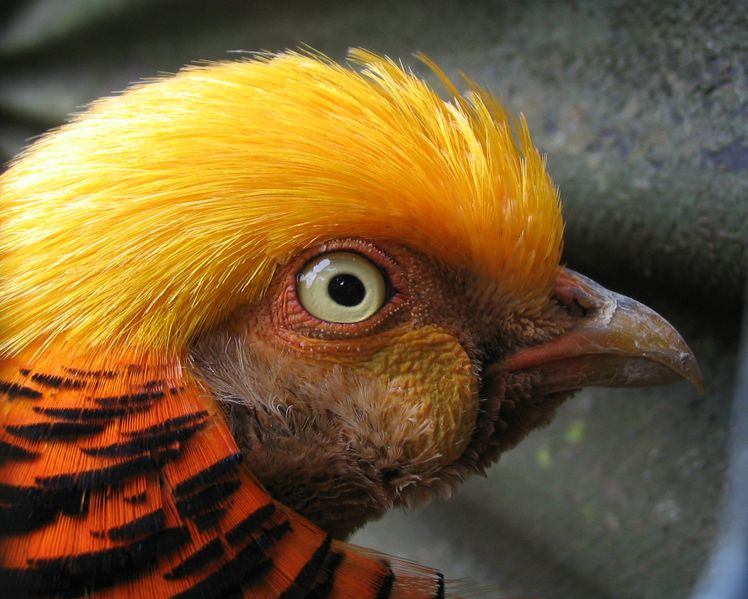
The adult male is 35.4-41.3 in (90–105 cm) in length, its tail accounting for two-thirds of the total length. It is unmistakable with its golden crest and rump and bright red body. The deep orange “cape” can be spread in display, appearing as an alternating black and orange fan that covers all of the face except its bright yellow eye, with a pinpoint black pupil.
Golden Pheasant (Chrysolophus pictus) ©WikiC

Golden Pheasant (Chrysolophus pictus) ©WikiC

Males have a golden-yellow crest with a hint of red at the tip. The face, throat, chin, and the sides of neck are rusty tan. The wattles and orbital skin are both yellow in colour, and the ruff or cape is light orange. The upper back is green and the rest of the back and rump are golden-yellow in colour. The tertiaries are blue whereas the scapulars are dark red. Another characteristic of the male plumage is the central tail feathers which are black spotted with cinnamon as well as the tip of the tail being a cinnamon buff. The upper tail coverts are the same colour as the central tail feathers. Males also have a scarlet breast, and scarlet and light chestnut flanks and underparts. Lower legs and feet are a dull yellow.

The female (hen) is much less showy, with a duller mottled brown plumage similar to that of the female Common Pheasant. She is darker and more slender than the hen of that species, with a proportionately longer tail (half her 60–80 cm length). The female’s breast and sides are barred buff and blackish brown, and the abdomen is plain buff. She has a buff face and throat. Some abnormal females may later in their lifetime get some male plumage. Lower legs and feet are a dull yellow.

Both males and females have yellow legs and yellow bills.

Despite the male’s showy appearance, these hardy birds are very difficult to see in their natural habitat, which is dense, dark young conifer forests with sparse undergrowth. Consequently, little is known of their behaviour in the wild.

They feed on the ground on grain, leaves and invertebrates, but roost in trees at night. While they can fly, they prefer to run: but if startled they can suddenly burst upwards at great speed, with a distinctive wing sound.

The Golden Pheasant is commonly found in zoos and aviaries, but often as impure specimens that have the similar Lady Amherst’s Pheasant in their lineage. (Wikipedia)
Birds Illustrated by Color Photograhy Vol 1 January 1897 No 1 - Cover

Birds Illustrated by Color Photography – Revisited  – Introduction

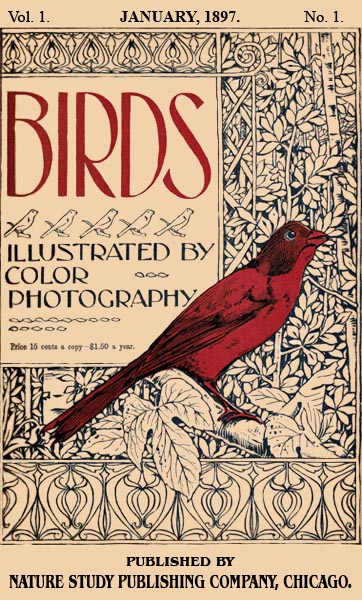
The above article is the third article in the monthly serial that was started in January 1897 “designed to promote Knowledge of Bird-Live.” These include Color Photography, as they call them, today they are drawings. There are at least three Volumes that have been digitized by Project Gutenberg.

To see the whole series of – Birds Illustrated by Color Photography – Revisited 

*

(Information from Wikipedia and other internet sources)

Next Article – The Australian Grass Parrakeet

Previous Article – Mandarin Duck

Links:

Phasianidae – Pheasants, Fowl & Allies
Galliformes Order
Golden Pheasant – Wikipedia
Golden Pheasant – ARKive

Gospel Presentation

*

Nuggets Plus – The Righteous Cedar…

Nuggets Plus – The Righteous Cedar… ~ by a j mithra

Nuggets Plus

Nuggets Plus

Not only Ships
but also God’s temple
and musical instruments
were built with the scented and
decay resistant wood
of the Cedar tree!
Cedar was even used for
ritual cleansing!
We say that we are God’s temple
and instruments in the hands of God!
God calls us as Cedar too!
But,
do we deserve to be called
as Cedar?
The righteous shall flourish like the palm tree:
he shall grow like a cedar in Lebanon.” (Psalm 92:12)
Have a blessed day!

*

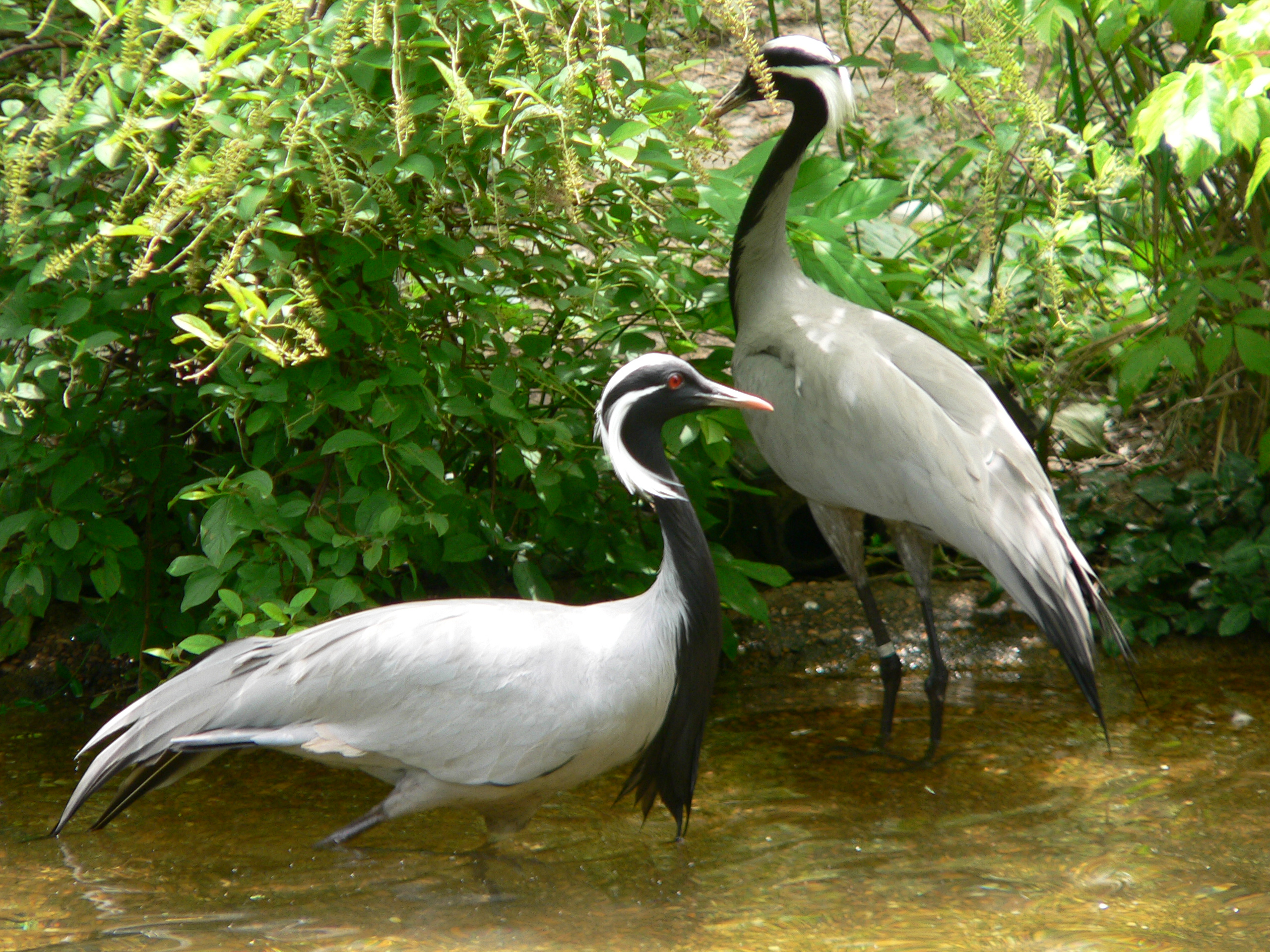
Birds of the Bible – Demoiselle Crane

Demoiselle Crane (Grus virgo) by Lee LPZoo 12-28-2011

Demoiselle Crane (Grus virgo) by Lee LPZoo 12-28-2011

“The Demoiselle Crane (Anthropoides virgo), is a species of crane that breeds in Central Asia and winters in India, with a few found in Cyprus and eastern Turkey as well. The crane annually migrates to Africa and South Asia in winter. The bird is symbolically significant in the culture of North India and Pakistan, where it is known as the koonj.

It has a loud trumpeting call, higher-pitched than the Common Crane. Like other cranes it has a dancing display, more balletic than the Common Crane, with less leaping, but with calling, bowing and head-bobbing.

Call – Demoiselle Crane (Grus virgo) from Xeno-canto.org

Like a crane or a swallow, so did I chatter: I did mourn as a dove: mine eyes fail with looking upward: O LORD, I am oppressed; undertake for me. (Isaiah 38:14 KJV)

*

*
Demoiselle Cranes have to take one of the toughest migrations in the world. In late August through September, they gather in flocks of up to 400 individuals and prepare for their flight to their winter range. During their migratory flight south, Demoiselles fly like all cranes, with their head and neck straight forward and their feet and legs straight behind, reaching altitudes of 16,000-26,000 feet (4,875-7,925 m). Along their arduous journey they have to cross the Himalayan mountains to get to their over-wintering grounds in India, many die from fatigue, hunger and predation from birds such as eagles. Simpler, lower routes are possible, such as crossing the range via the Khyber Pass. However, their presently preferred route has been hard-wired by countless cycles of migration (placed in them by their creator). At their wintering grounds, Demoiselles have been observed flocking with Common Cranes, their combined totals reaching up to 20,000 individuals. Demoiselles maintain separate social groups within the larger flock. In March and April, they begin their long spring journey back to their northern nesting grounds.

In Khichan, Rajasthan in India, villagers feed the Cranes on their migration and these large congregations have become an annual spectacle.

Yea, the stork in the heaven knoweth her appointed times; and the turtle and the crane and the swallow observe the time of their coming; but my people know not the judgment of the LORD. (Jeremiah 8:7 KJV)

Watch this amazing video of them crossing the Himalayan mountains by AZPanorama:

*

When the Lord created the Crane kind, they were programmed for future variations like this Demoiselle Crane. They act like many other birds that pretend they are injured. This helps them lead the preying bird or animal away to protect their young. The Demoiselles also are the smallest cranes.  They have shorter toes and bills than other cranes which allows them to travel on ground that is hard and dry. The shorter bills aid in their choice of food. Their survival is being provided by their Designer and Creator.

Our verses:

Isaiah 38:14

Geneva Bible Translation Notes – I was so oppressed with sorrow, that I was not able to utter my words, but only to groan and sigh.

CC Commentary – 14.) – As a crane, or a swallow. Hezekiah cannot satisfy himself in explaining the severity of his anguish. He now says that he was reduced so low that he could not utter an articulate voice, but muttered some confused sound, like persons who are almost at the point of death. Hence it is evident that his distress was excruciating; for the severity of the pain took away his voice, and his voice, he says, stuck in his throat; nothing was heard but indistinct groans.
Such is the import of these metaphors of “the crane and the swallow,” which the Prophet employs. Still it is certain that this indistinct sound of the voice is nevertheless heard by God; though all our senses are oppressed by pain, and our throat is choked by grief, still God beholds our hearts and listens to godly sighs, which will be even more powerful than plain and direct words, provided that the Spirit is present, who produces in us those “groanings that cannot be uttered,” of which Paul speaks. (Rom_8:26.) There is no believer who does not feel that in prayer, when his heart is oppressed by any heavy sorrow, he either stammers or is almost dumb.

Bible Knowledge Commentary – b. Hezekiah’s song of thanksgiving (Isa_38:9-20)
(1) Hezekiah’s statement about his condition.
After he was healed Hezekiah wrote a song to express his thanks to God. His illness came, he said, in the prime of his life. Death was referred to figuratively as having gates through which a person entered (cf. Job_38:17; Psa_9:13; Psa_107:18). His statement that in death he would not… see the Lord does not mean he had no hope of heaven. It probably means that he would no longer have the benefit of enjoying God’s blessings in this life. He would be without friends (Isa_38:11) as his house (his body) was dismantled. By death he would be cut… off like a cloth being cut from a weaver’s loom. He had hoped he would get well (Isa_38:13) but he got worse (Isa_38:13-14). His illness was as if God were a lion breaking all his bones, a figure of speech depicting his deep inner anguish. In some way his cries of pain were like the sound of a bird and his mourning like the doleful sound of a dove (cf. Isa_59:11; Nah_2:7). Hezekiah realized that this experience should humble him because God had brought on this illness.

Demoiselle Crane (Grus virgo) Memphis Zoo by Dan

Demoiselle Crane (Grus virgo) Memphis Zoo by Dan

Jeremiah 8:7

Bible Believer’s Commentary – 8:1-7 – …Unlike those who fall and rise again, who sin and repent, Judah refused to return to Jehovah. As far as the law was concerned, the people compared unfavorably with the stork, the turtledove, the swift, and the swallow, which are obedient to their appointed laws of migration.

CC Commentary – Here again Jeremiah condemns the shameful insensibility of the people, — that they had less wisdom than birds, not endued with reason and understanding. He then says, that the Jews were more foolish than cranes, swallows, and storks. He no doubt deeply wounded the feelings of the people by so severe a reproof; but it was necessary thus sharply to reprehend the despisers of God; for it appears evident by these words, that they were become exceedingly hardened in their vices. No wonder, then, that the Prophet declares that they were more silly than cranes and swallows.

Kelly Commentary – Moreover, the prophet was to remonstrate with the people of Jerusalem on their perpetual and unrepentant backsliding (Ver. 4-6), more heedless than familiar birds, great or small, which attend to their fit times, yet with all assumption of wisdom. (Ver. 7, 8.) But what wisdom is in those who reject the word of the Lord? Their covetousness and perfidious neglect of the true interests of Israel must meet with due retribution at His hands.

Geneva Bible Translation Notes – He accuses them in that they are more ignorant of God’s judgments, than these birds are of their appointed seasons to discern the cold and heat.

Adam Clarke’s Commentary – The stork in the heaven – The birds of passage know the times of their going and return, and punctually observe them; they obey the dictates of nature, but my people do not obey my law.

P.S. I have to share an incident that happened while I was teaching 4th grade in a Christian School. On a Friday, I had forgotten to write up the weekly Bible Quiz so I quickly put 5 Essay Questions on the board. We had been discussing King Hezekiah that week so one of the questions was “Tell me about King Hezekiah.” Well, while grading the papers, I almost fell out of my chair laughing. One of my students had told all about how he had been sick and that the Lord had – (here’s the verse – “Isaiah 38:8 Behold, I will bring again the shadow of the degrees, which is gone down in the sun dial of Ahaz, ten degrees backward. So the sun returned ten degrees, by which degrees it was gone down.”). My student went on to say that because the sun dial went back an hour, “that is why we now have Daylight Savings time.” Oh, the pleasures of teaching!

The Crane Family, Gruidaes, has 15 species. They are one of 6 families in the Gruiformes (Cranes, Rails, Coots and allies) Order.

See:

Birds of the Bible – Cranes

Birds of the Bible – Cranes I

Birds of the Bible – Cranes II

Gruidae – Cranes

Sharing the Gospel

*


Study Shows Bird Species Change Fast – Re-post

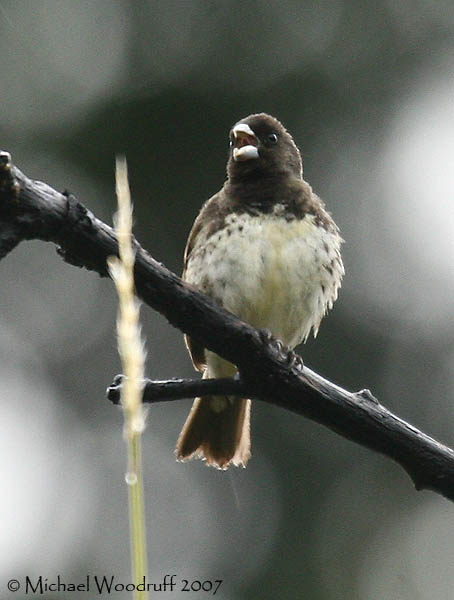
Yellow-bellied Seedeater (Sporophila nigricollis) by Michael Woodruff

Yellow-bellied Seedeater (Sporophila nigricollis) by Michael Woodruff

Study Shows Bird Species Change Fast
by Brian Thomas, M.S. *

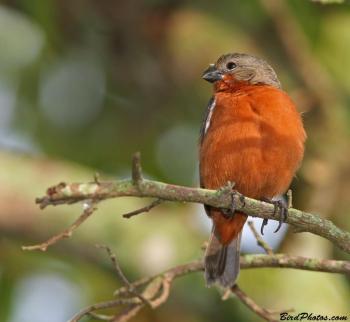
“Biologists recently found that feather colors and songs vary among some species within the South American genus Sporophila, also known as seedeater birds. But strangely, they did not find any genetic differences in the form of species-specific DNA markers. Do these variations fit any evolutionary pattern?

The researchers published their species comparisons in the Proceedings of the Royal Society B. In their report, they wrote, “Taken together, we suggest that this is a compelling example of an extremely rapid, recent and ongoing continental radiation, with species diverging in male plumage [feather] coloration patterns and song.”

Ruddy-breasted Seedeater (Sporophila minuta) ©BirdPhotos.com

Ruddy-breasted Seedeater (Sporophila minuta) ©BirdPhotos.com

“Lead author of the seedeater study and graduate biology student Leonardo Campagna said in a Queen’s University press release, “One of Darwin’s accomplishments was to show that species could change, that they were not the unaltered, immutable products of creation.”5

But nowhere does the Bible say that species cannot change! Instead, it seems that they would have to change—within the limits of their own interbreeding kind—in order to fulfill God’s command in Genesis 1 for His living creatures to fill the earth and its many changing environments.

And God blessed them, saying, “Be fruitful and multiply, and fill the waters in the seas, and let birds multiply on the earth.” (Genesis 1:22 NKJV)

Darwin insisted that animals slowly change between kinds. In contrast, seedeater birds have shown that they rapidly changed within their kind. Despite Campagna’s touting of Darwin’s “accomplishments,” these birds display programmed variation, not evolution.”

…. See the complete article in Institute of Creation Research” – Study Shows Bird Species Change Fast

*

Birds of the World – Thraupidae – Tanagers and Allies

Wordless Birds

*

That’s a Fact – Evolution In Action & On The Origin of Dogs

Here is an interesting video from the Institute of Creation Research. Thought I’d share it.

*

*

Then God saw everything that He had made, and indeed it was very good. So the evening and the morning were the sixth day. (Genesis 1:31 NKJV)

Also an interesting article about the Origin of Dogs. Love those dogs as well as birds. Here’s an excerpt.

“On the Origin of Dogs
by Brian Thomas, M.S. *

Overall, there are more dogs than children in American and British households.1 Dogs have become a huge part of humans’ lives. How and when did they get here?

Chromosomes show that “the domestic dog, Canislupus familiaris, is a grey wolf.” Additional DNA studies provide “strong evidence” that all dog breeds descended from a wolf population that was domesticated in southern East Asia. Dogs, wolves, coyotes, and foxes can interbreed, so they represent the created dog kind. Over 230 dog breeds have been defined in the 4,300 or so years of post-Flood history.

In his 300 B.C. book Historiae Animalium, Aristotle listed the dog separately from the wolf and fox. But University of Otago archaeologist Helen Leach wrote that “systematic breeding only emerged within the past 300 years.”

Over 200 breeds were produced in only 300 years? That doesn’t fit with evolution’s theory of gradual change, in which new features are supposedly favored by natural selection over vast time periods. A recent experiment proved that dogs most likely changed in just a few generations through pre-designed genetic programming and intentional breeding……

To see the rest of the article – Origin of Dogs

From Acts & Facts – January 2012

Sharing The Gospel

*

The Joy of Awareness – by Dot Malcolm

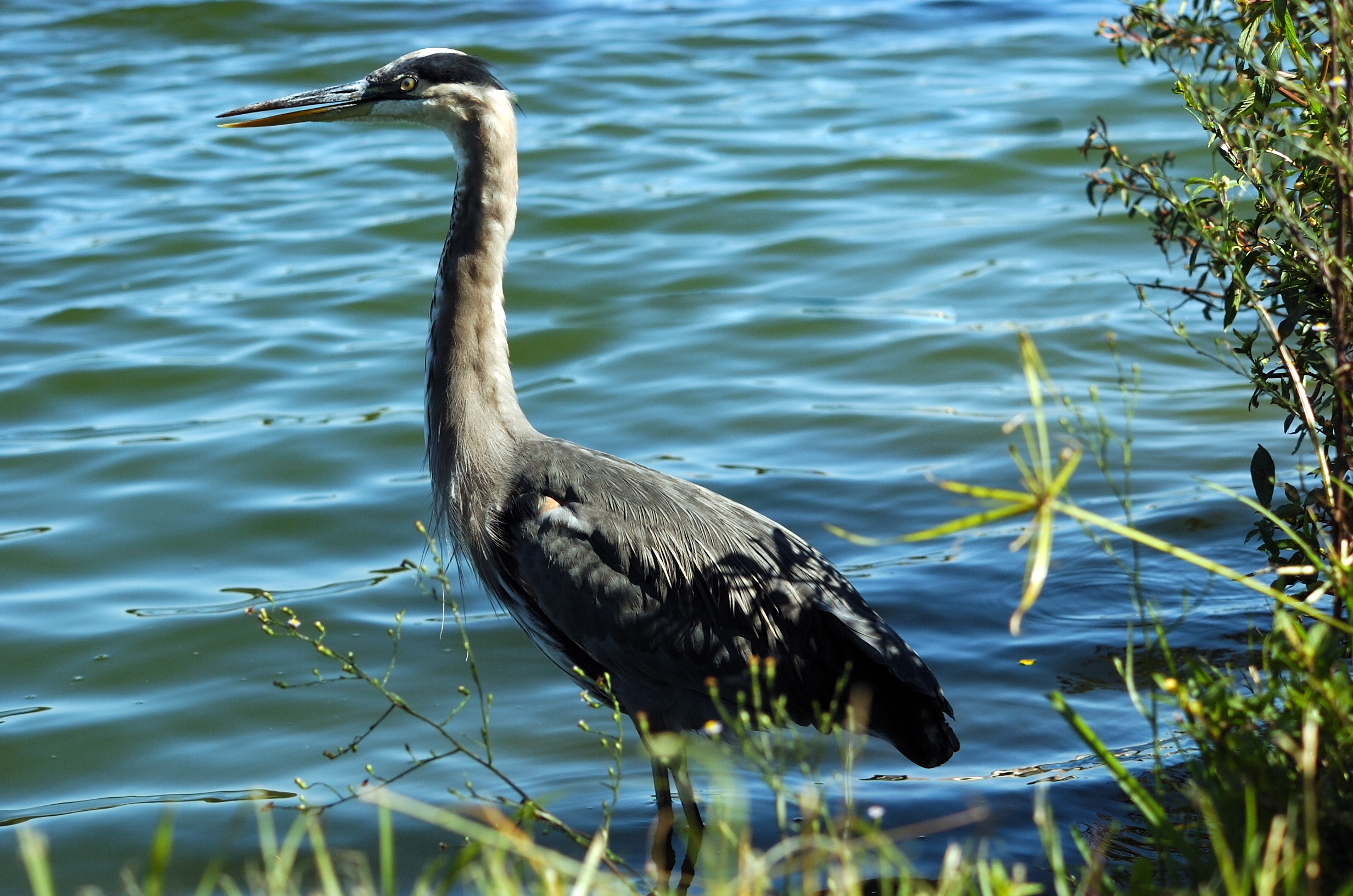
Great Blue Heron (Ardea herodias) by Dan at Lake Morton

Great Blue Heron (Ardea herodias) by Dan at Lake Morton

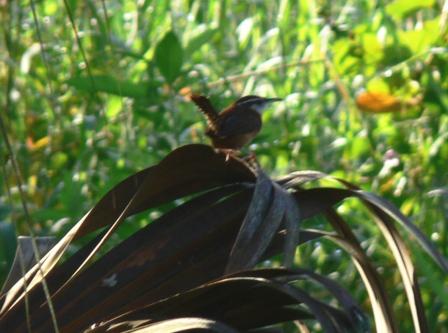
Since I was a child there has been an awareness of God’s creation and great enjoyment in it. At the age of 11 or 12 years, I saved my allowance and bought a book on Birds of America. It was real special to see a Heron fly over the farm headed for a swampy area.

My grandparents lived a short walking distance from us, and I liked going to her house. Her kitchen always smelled of toast. Also special was looking out the south kitchen window to see the wrens flying in and out of their houses which hung at eye level.

Carolina Wren (Thryothorus ludovicianus) by Lee at Circle B

Carolina Wren (Thryothorus ludovicianus) by Lee at Circle B

I no longer live in the north, but in the south and am now a grandma. Birds, butterflies and gardens are still high on my list of favorite things. Even tho’ the seasonal changes are not as evident as in the north, still I look forward to my special feathered friends coming and going.

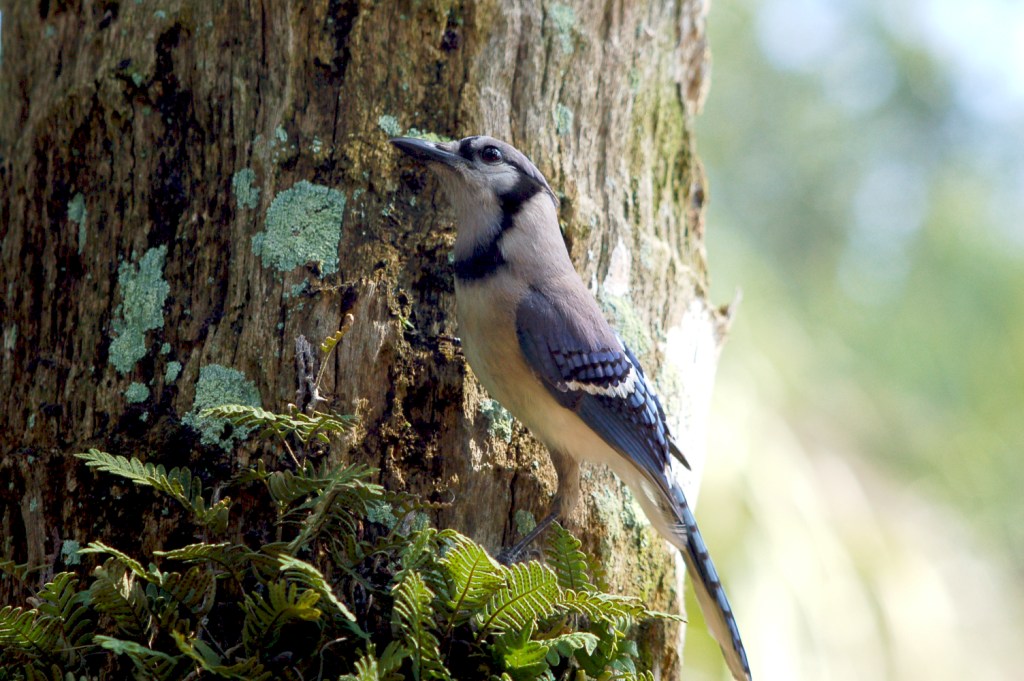
Blue Jay (Cyanocitta cristata) at Bok Tower By Dan'sPix

Blue Jay (Cyanocitta cristata) at Bok Tower By Dan’sPix

The Blue Jays are always present and they let me know before I see it, when the neighborhood Red-shouldered Hawk is around. They “Yell” enough to discourage even me if their frenzy of cries and wild flying were directed at me!

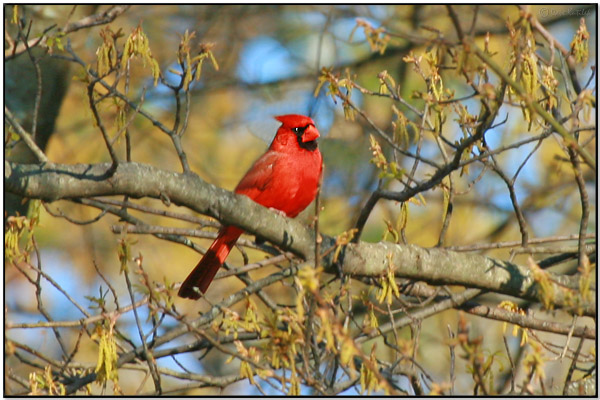
Northern Cardinal (Cardinalis cardinalis) by Daves BirdingPix

Northern Cardinal (Cardinalis cardinalis) by Daves BirdingPix

A pair of Cardinals come about the beginning of November, and I hear them before I see them. Also, in the winter months small chirpy birds can be heard which makes me look out the window for them. Today, I’m sitting on the patio swing having put out a cushion for myself and my sweet doggy companion, Ruby. When not claiming her seat, she stays busy with squirrel patrol.

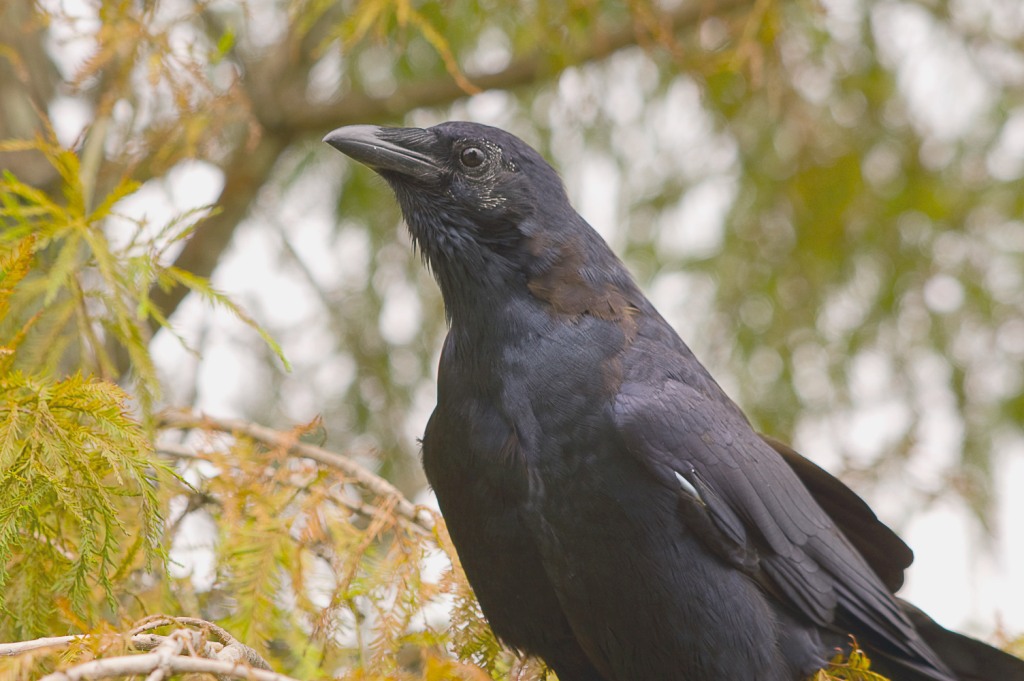
Fish Crow (Corvus ossifragus) at Lake Morton By Dan'sPix

Fish Crow (Corvus ossifragus) at Lake Morton By Dan’sPix

While working on the coming Sunday School lesson, I heard them – Crows. Some people find them irritating, but not me. Looking up I see black flying bodies against a blue sky dotted with white-dumpling clouds.

White Pelicans in Flight - Circle B Bar by Dan

White Pelicans in Flight – Circle B Bar

There are also the usual Vultures beautifully soaring overhead, and a single Pelican, and four unidentifiable ducks.

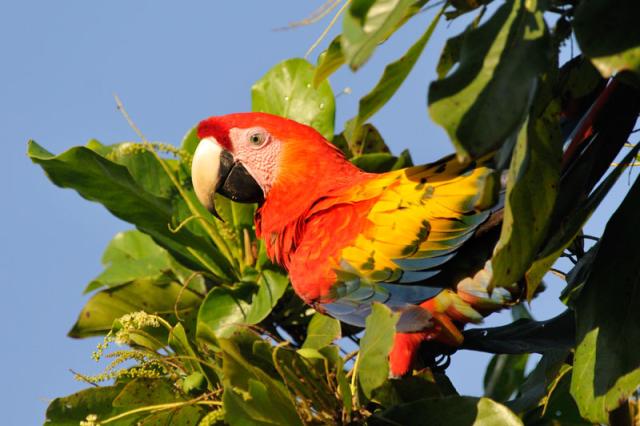
Scarlet Macaw (Ara macao) Reinier Munguia

Scarlet Macaw (Ara macao) Reinier Munguia

I should also mention of the neighbors Macaw (very noisy) who only makes me smile when he talks or laughs. They also have chickens that are very pleasant to listen to.

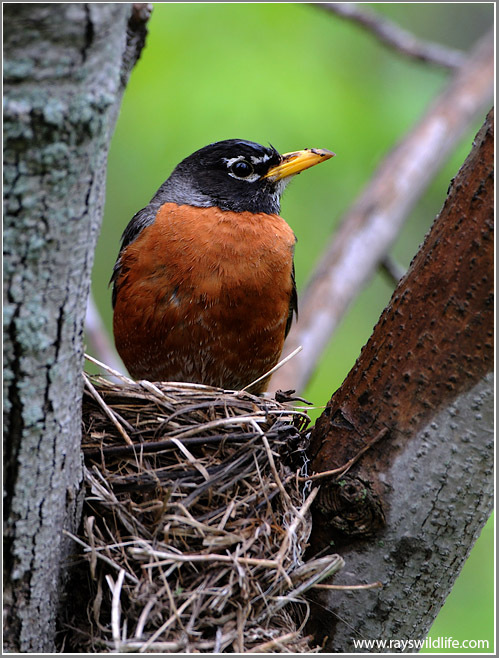
American Robin (Turdus migratorius) in nest by Ray

American Robin (Turdus migratorius) in nest by Ray

Admittedly the best will be if the Robins return. In the 5th grade our teacher had all of us draw a picture of a Robin. She then hung them around the room above the blackboards. Oh, Robins, please come back. Remember I promised not to mention your bad manners to anyone. I will gladly welcome you and you can be noisy, toss leaves, eat all the worms you want and anything else that suits you fancy.

Dot Malcolm, 12/30/11

Then God saw everything that He had made, and indeed it was very good. So the evening and the morning were the sixth day. (Genesis 1:31 NKJV)

See Dot’s other articles:

When The Robins Came – May 23, 2010

Return Of The Robins – March 14, 2011

*

Thanks, Dottie, for another interesting article. What a delight to read your love and awareness of birds. When the Robins come back, we will expect another article. You kept me busy finding photos for your many birds. Keep it up.

Dorothy is a charter member of our church, Faith Baptist, and a great friend.

*

2011 in review

The WordPress.com stats helper monkeys prepared a 2011 annual report for this blog.

Here’s an excerpt:

The Louvre Museum has 8.5 million visitors per year. This blog was viewed about 210,000 times in 2011. If it were an exhibit at the Louvre Museum, it would take about 9 days for that many people to see it.

Click here to see the complete report.

That report was produced by WordPress and is a great reminder for us to keep up the good work on our blog.

Most of all, thank you for taking the time to view Lee’s Birdwatching Adventures. Without you, these numbers would not be possible.

Thank You and Happy New Year!

And God said, Let there be lights in the firmament of the heaven to divide the day from the night; and let them be for signs, and for seasons, and for days, and years: (Genesis 1:14 KJV)

Birds in Christmas Hymns – Joyful, Joyful, We Adore Thee

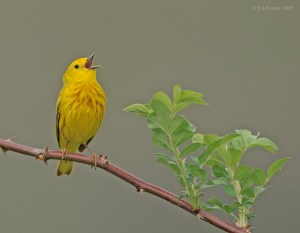
American Yellow Warbler (Dendroica aestiva) singing by J Fenton

American Yellow Warbler (Dendroica aestiva) singing by J Fenton

My lips shall greatly rejoice when I sing unto thee; and my soul, which thou hast redeemed. (Psalms 71:23 KJV)

Birds in Christmas Hymns

Birds in Christmas Hymns

Words by Hen­ry J. van Dyke, 1907. Van Dyke wrote this hymn while stay­ing at the home of Har­ry A. Gar­field at Wil­liams Col­lege, Mass­a­chu­setts. It was first pub­lished in the Pres­by­ter­i­an Hymn­al in 1911. It al­so ap­peared in the Po­ems of Hen­ry van Dyke, 1911. Van Dyke wrote:

“These vers­es are sim­ple ex­press­ions of com­mon Christ­ian feel­ings and de­sires in this pre­sent time—hymns of to­day that may be sung to­ge­ther by peo­ple who know the thought of the age, and are not afraid that any truth of sci­ence will de­stroy re­li­gion, or any re­vo­lu­tion on earth over­throw the king­dom of hea­ven. There­fore this is a hymn of trust and joy and hope.”

Music: Hymn to Joy, from the 9th Sym­pho­ny of Lud­wig van Beet­ho­ven; adapt­ed by Ed­ward Hodg­es, 1824

Joyful, Joyful, We Adore Thee

Joyful, joyful, we adore Thee, God of glory, Lord of love;
Hearts unfold like flowers before Thee, opening to the sun above.
Melt the clouds of sin and sadness; drive the dark of doubt away;
Giver of immortal gladness, fill us with the light of day!

All Thy works with joy surround Thee, earth and heaven reflect Thy rays,
Stars and angels sing around Thee, center of unbroken praise.
Field and forest, vale and mountain, flowery meadow, flashing sea,
Singing bird and flowing fountain call us to rejoice in Thee.

Thou art giving and forgiving, ever blessing, ever blessed,
Wellspring of the joy of living, ocean depth of happy rest!
Thou our Father, Christ our brother, all who live in love are Thine;
Teach us how to love each other, lift us to the joy divine.

Mortals, join the happy chorus, which the morning stars began;
Father love is reigning o’er us, brother love binds man to man.
Ever singing, march we onward, victors in the midst of strife,
Joyful music leads us sunward in the triumph song of life.

*

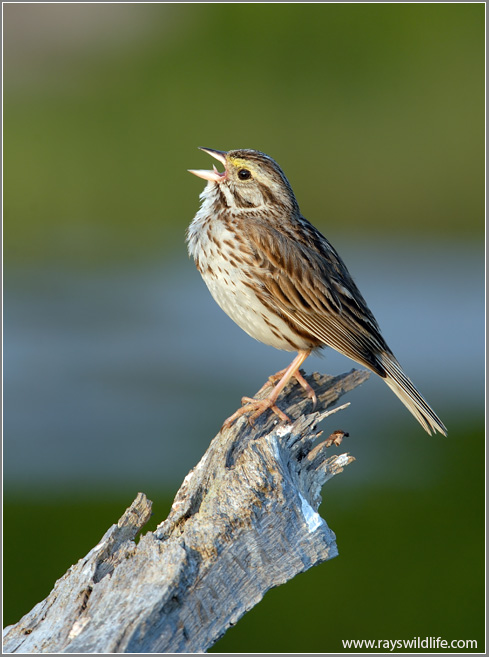
Savannah Sparrow singing by Ray

Savannah Sparrow singing by Ray

More Birds in Hymns

See ~ Christmas Gospel Presentation

Most information from The Cyber Hymnal – Joyful, Joyful, We Adore Thee

*

The Christmas Bird?

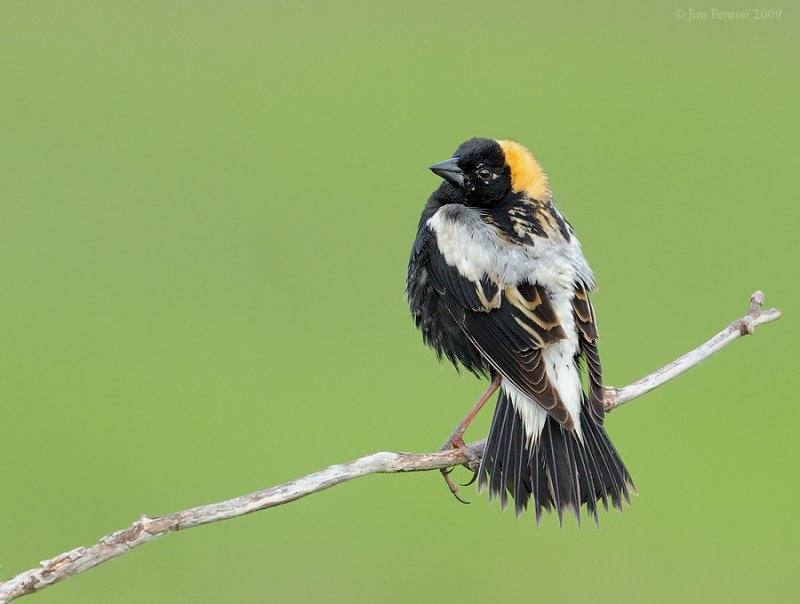
Bobolink (Dolichonyx oryzivorus) by J Fenton

Bobolink (Dolichonyx oryzivorus) by J Fenton

The Christmas Bird?

The other day as I was reading an article on Bobolinks,
My thoughts immediately flew to the manger
where our Lord lay among the haystack.
This bird too loves to live and nest among the hay fields.
  • Are we satisfied with the place which God has given us?
  • Or do we grumble about where God has placed us?
  • Or are we trying to live or outlive like others?
God lowered Himself to the manger..
We all want to be like Jesus,
  • but, are we willing to humble ourselves like Him?
Take my yoke upon you, and learn of me; for I am meek and lowly in heart: and ye shall find rest unto your souls.  (Mathew11:29)
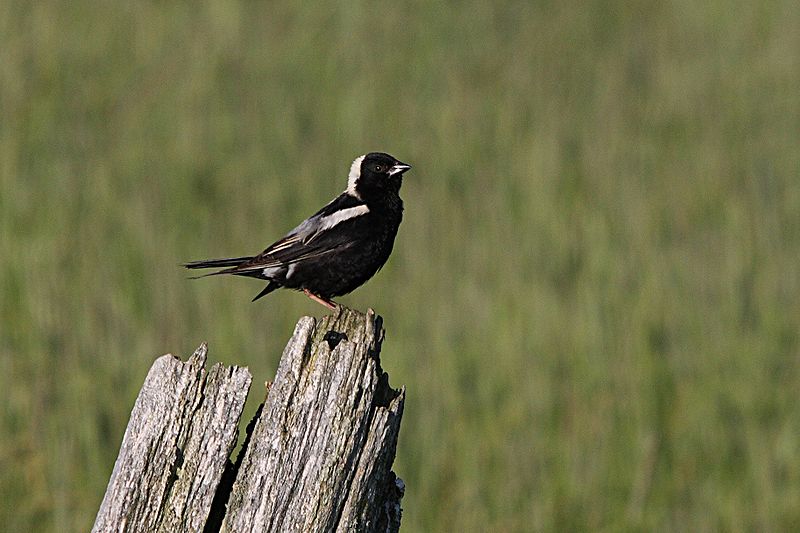
Bobolink (Dolichonyx oryzivorus) ©WikiC

Bobolink (Dolichonyx oryzivorus) ©WikiC

These birds are seen feeding during the night too…

This reminded me of the shepherds
who went in search of the Heavenly Manna during the night…
Each one of us would like to be called as being righteous, but,
  • do we meditate His words, every day and every night?
“But his delight is in the law of the LORD; and in his law doth he meditate day and night.” Psalm 1:2
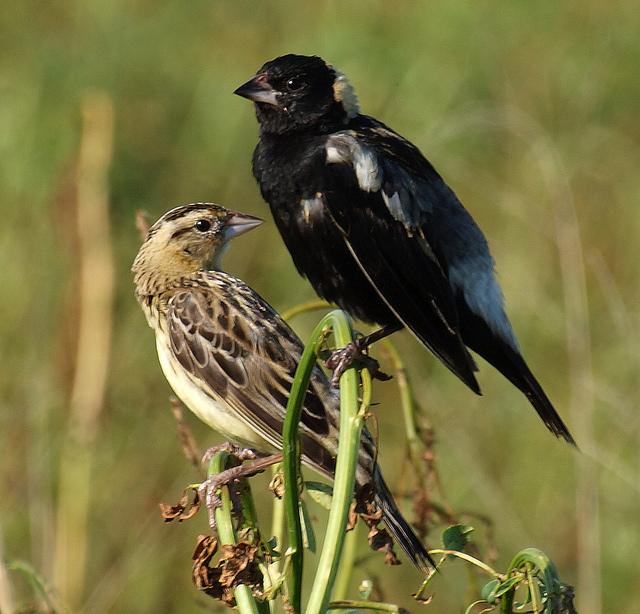
Bobolink (Dolichonyx oryzivorus) CC Pair ramendan

Bobolink (Dolichonyx oryzivorus) CC Pair ramendan

These birds though very small in size,

are extraordinary migrants,
making a trip of about 20,000 kilometers in one season
using the earth’s magnetic field as compass
and the location of stars as its map.
This reminded me of the star
that showed the way to the wise men
who came in search of
Jesus, the Brightest Morning Star…
I am the root and the offspring of David, and the bright and morning star. (Revelation 22:16)
When Jesus becomes our Bright and morning star,
We would never loose our way like the wise men
even in our darkest hour..
Can we call Bobolink as the “Christmas Bird?”
Wish you all a very blessed and a meaningful Christmas..
With love and prayers,

Yours in YESHUA,

a j mithra

Please visit us at:

ajmithra21/


Bobolinks are part of the Icteridae – Oropendolas, Orioles & Blackbirds Family.

Bobolink – Extraordinary Migrant…

*

Birds of the Bible – Eagles and Riches

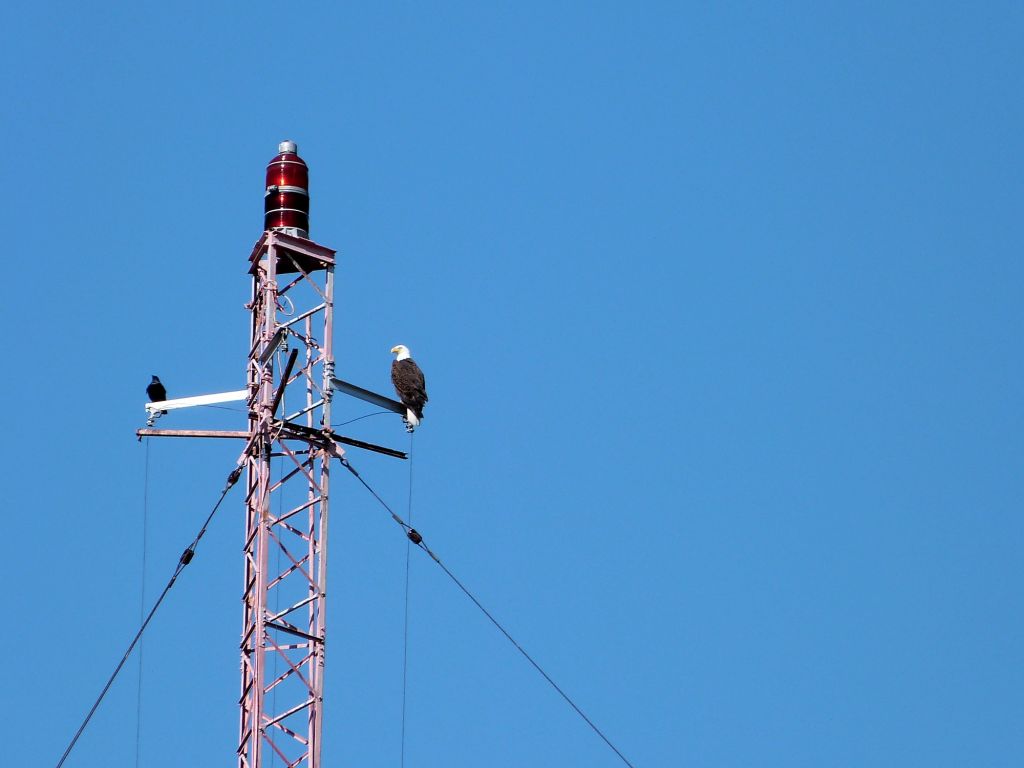
Bald Eagle on tower at S Lake Howard NPk 1 by Lee

Bald Eagle on tower at S Lake Howard NPk 1 by Lee

Labour not to be rich: cease from thine own wisdom. Wilt thou set thine eyes upon that which is not? for riches certainly make themselves wings; they fly away as an eagle toward heaven. (Proverbs 23:4-5 KJV)

While reading in Proverbs today, I came across this interesting verse in Chapter 23. As I have been reading through Proverbs, the terms “wisdom,” “fear” and “knowledge” are mentioned quite often. Verses like “The fear of the LORD is the beginning of knowledge: but fools despise wisdom and instruction. (Proverbs 1:7); For that they hated knowledge, and did not choose the fear of the LORD: (Proverbs 1:29); The fear of the LORD is the beginning of wisdom: and the knowledge of the holy is understanding. (Proverbs 9:10); By humility and the fear of the LORD are riches, and honour, and life.” (Proverbs 22:4 ); Receive my instruction, and not silver; and knowledge rather than choice gold. (Proverbs 8:10); For wisdom is better than rubies; and all the things that may be desired are not to be compared to it. (Proverbs 8:11) and many others.

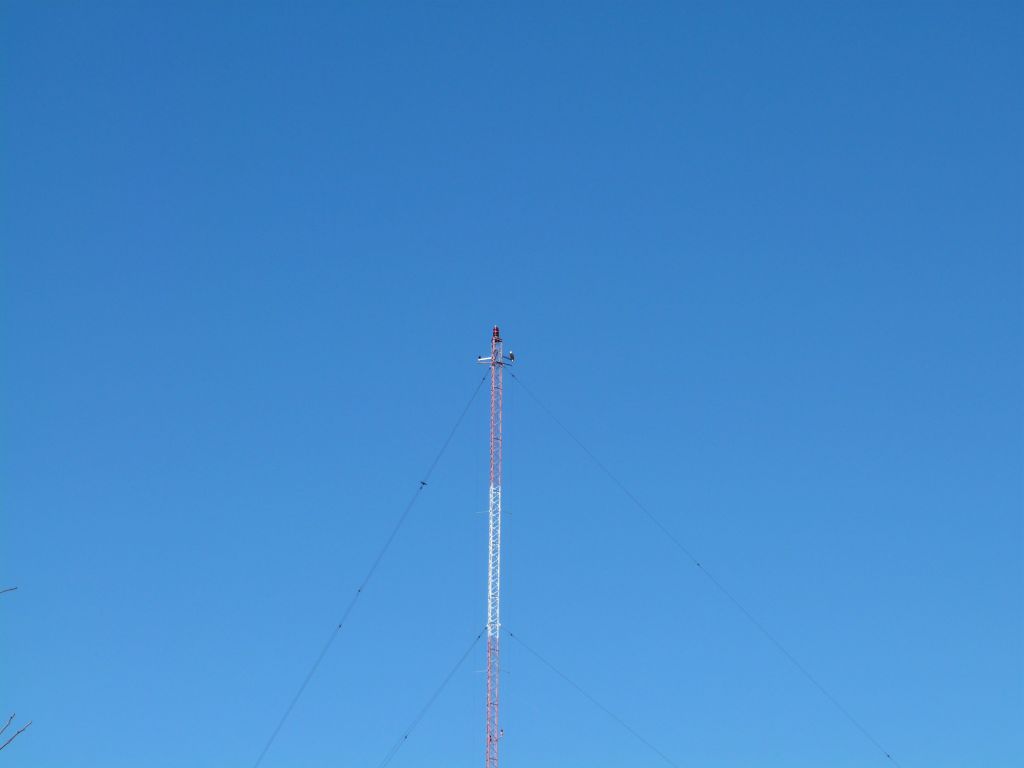
Bald Eagle on tower at S Lake Howard NPk 2 by Lee

Bald Eagle on tower at S Lake Howard NPk 2 by Lee (See him?)

So when I came across this verse and the Eagle was mentioned, I decided to see what I could find out about it and share it here. Plus, we were out birdwatching a little this week as I checked out my new Christmas gift of a camera. Captured the Bald Eagle sitting on the tower at South Lake Howard Nature Park. He was a long way away, but you can tell it is an Eagle. Also, it appears for this verse that is exactly what happens to riches when they are not received properly and with the right attitude. They end up like that Eagle, way out of reach. There is nothing wrong with being rich, if it is obtained in the proper manner. If the Lord chooses to let your wealth increase, Praise the Lord, if not, be content with the blessings He gives you.

Bald Eagle on tower at S Lake Howard NPk 3 by Lee

Bald Eagle on tower at S Lake Howard NPk 3 by Lee (How about now?)

Here are some of the comments from various commentaries:

Bible Knowledge Commentary – “The 7th saying. These verses warn against overwork for the sake of gaining riches. This speaks not against being industrious but against consuming oneself for money. Wise restraint in this area (as well as in what one eats at a banquet, Pro_23:1-2) is needed, especially in the present day when materialism drives many people to excessive work loads in order to accumulate more money. The reason for this advice is that riches are temporary and unstable (cf. Pro_27:24). The first part of Pro_23:5 is literally, “If you cause your eyes to fly after it” (i.e., wealth). Ironically, flying after wealth results in wealth flying away like an eagle.”

Matthew Poole’s Commentary – “They fly away as an eagle, swiftly, strongly, and irrevocably. We quickly lose the sight and possession of them. Their flying away from us is elegantly opposed to our eyes being set, or, as it is in the Hebrew, flying upon them, in the beginning of the verse.”

Believer’s Bible Commentary – “23:4, 5 The ceaseless struggle to be rich is a form of “wisdom” to be avoided. It means that you are spending your life pursuing false values and putting your trust in what doesn’t last. Riches have a way of sprouting wings and flying away like an eagle.”

John Gill’s Exposition– “for riches certainly make themselves wings; or, “it in making makes itself wings” (x); even that which is not, on which men cause their eyes to fly; no sooner are their eyes upon that, but that flies away from them like a bird with wings; see Hos_9:11. Either men are taken from that, or that from them, and sometimes very swiftly and suddenly;

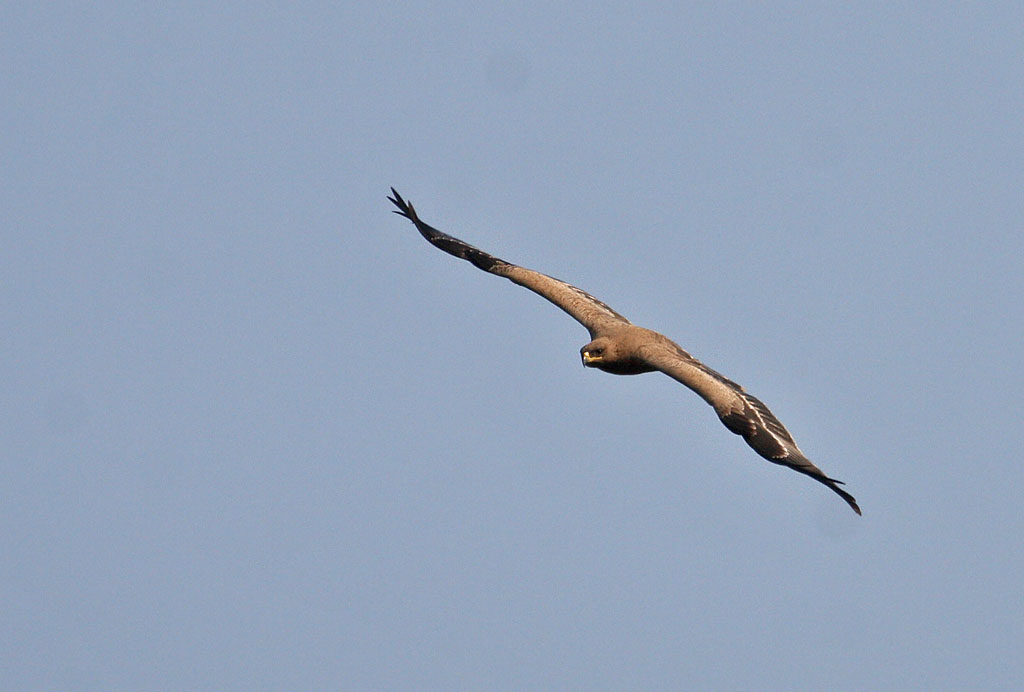
Steppe Eagle (Aquila nipalensis) by Peter Ericsson

Steppe Eagle (Aquila nipalensis) by Peter Ericsson

they fly away as an eagle towards heaven; the eagle flies very swiftly, none more swiftly; it flies towards heaven, out of sight, and out of reach, and out of call; so riches flee away to God, the original giver of them, from whence they came, and who is the sole disposer of them; they own him as the proprietor and distributor of them; and they flee to heaven as it were for fresh orders where they should be, and into whose hands they should come next; they flee away, so as not to be seen any more, and be recovered by those who have formerly enjoyed them.”

Through the Bible with J Vernon McGee – Proverbs 23:4-5 – “You have probably noticed that the United States dollar has an eagle on it. Believe me, that eagle will fly away if you’re not careful with it. I find that the eagles on my dollars take off all the time. We cannot depend on riches.
The whole thought here is this: There is nothing wrong in being rich. There is nothing wrong in working to be rich. However, don’t make that the goal in life. Wealth should not be the very object of our hearts. Some men have a lust, a thirst, a covetousness to make the almighty dollar, and the dollar becomes their god. A child of God is not to do that.
A wealthy man told me, “I do not make money for the sake of money. I make money for what it can do. At first I made money for what it could do for me. Now I make money for what it can do for God.” There is nothing wrong in a man becoming wealthy. The wrong comes when there is the overweening desire of the heart for money. That is covetousness; actually it is modern idolatry.
In the United States we do not find people bowing down to worship idols. However, we do find people busily engaging their whole lives in the worship of the almighty dollar. When I pastored a church in the downtown financial district of Los Angeles, I found that men, even including some Christian men, were far more zealous in coming down early on a Monday morning to watch the stock market open than they were on Sunday morning to attend church service. I met such a man rushing to the stock market display at the brokerage on a Monday morning. He met me, greeted me cordially, and told me what he was going to do. I mentioned to him that we had been missing him at church. He said, “Well, you know, I haven’t been feeling very well.” That is interesting. He didn’t feel well enough to come to church, but he was well enough to worship his god very early on a Monday morning. That’s covetousness, and that is what the proverb is talking about. That is a false god, and that false god is an eagle that will fly away at any moment.”

P.S. I really like my new camera and the 24X zoom. I had no idea that Dan was getting me a camera for Christmas. Thanks, Dan! (He is still the photographer, I still use a point-and-shoot on program mode.) All photos can be clicked on to enlarge them. I kept zooming in so you could see how far away the Eagle really was.

*

Birds in Christmas Hymns – The Day The Christ-Child’s Tender Eyes

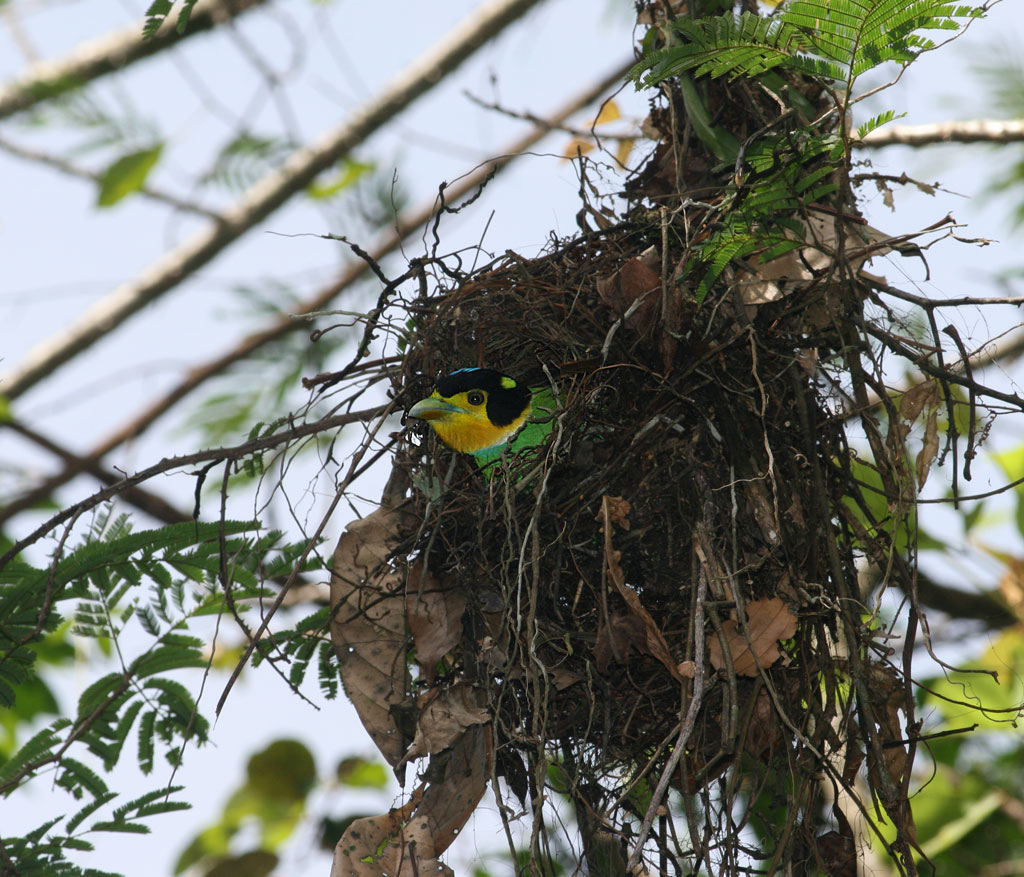
Long-tailed Broadbill (Psarisomus dalhousiae) in nest by Peter Ericsson

Long-tailed Broadbill (Psarisomus dalhousiae) in nest by Peter Ericsson

And when they were come into the house, they saw the young child with Mary his mother, and fell down, and worshipped him: and when they had opened their treasures, they presented unto him gifts; gold, and frankincense, and myrrh. (Matthew 2:11 KJV)

Words by May R. Smith (1842-1927).

Music: St. Pe­ters­burg, at­trib­ut­ed to Dmi­tri S. Bort­ni­an­sky (1751-1825), 1825

Birds in Christmas Hymns

Birds in Christmas Hymns

The Day The Christ-Child’s Tender Eyes

The day the Christ-child’s tender eyes
Unveiled their beauty on the earth,
God lit a new star in the skies
To flash the message of His birth;
And wise men read the glowing sign,
And came to greet the Child divine.

Low kneeling in the stable’s gloom,
Their precious treasures they unrolled;
The place was rich with sweet perfume;
Upon the floor lay gifts of gold.
And thus adoring they did bring
To Christ the earliest offering.

I think no nimbus wreathed the head
Of the young King so rudely throned;
The quilt of hay beneath Him spread
The sleepy kine beside Him owned;
And here and there in the torn thatch
The sky thrust in a starry patch.

Oh, when was new-born monarch shrined
Within such canopy as this?
The birds have cradles feather lined;
And for their new babes princesses
Have sheets of lace without a flaw,
His pillow was a wisp of straw!

He chose this way, it may have been,
That those poor mothers, everywhere,
Whose babies in the world’s great inn
Find scanty cradle-room and fare,
As did the Babe of Bethlehem,
May find somewhat to comfort them.

Mute Swan on Nest at Lake Morton

Mute Swan on Nest at Lake Morton by Dan

May Riley Smith (1842-1927) – Smith at­tend­ed the Tra­cey Fe­male In­sti­tute in Ro­ches­ter, and the Col­le­gi­ate In­sti­tute in Brock­port, New York. She mar­ried Al­bert Smith of Spring­field, Il­li­nois, in 1869; they were liv­ing in New York state in 1910. Her works in­clude:

The Gift of Gen­ti­ans, 1882
The Inn of Rest, 1888
Sometime and Other Po­ems, 1892

Dmi­tri S. Bort­ni­an­sky (1751-1825) – Bortniansky’s mu­sic­al ca­reer be­gan in the church choir. As a young man, he stu­died with Bal­das­sare Ga­lup­pi (il Bur­a­nel­lo) in St. Pe­ters­burg. In 1769, Bort­ni­an­sky fol­lowed Ga­lup­pi to Ita­ly (with the help of a sti­pend from Rus­sian Emp­ress Ca­ther­ine) to work in op­era. His pro­duct­ions in­clud­ed Cre­on­te (1776), Al­cide (1778), and Quin­to Fa­bio (1778). Af­ter re­turn­ing to Rus­sia, he be­came mas­ter of the court choir in St. Pe­ters­burg. In 1796, he was ap­point­ed di­rect­or of the czar’s court cha­pel and a coun­cilor of state. In ad­di­tion to his other du­ties, he com­posed li­tur­gi­cal mu­sic, and wrote op­er­as with French texts: La fête du seign­eur (1786), Le fau­con (1786), and Le fils-ri­val (1787). Af­ter his death, his work spread to Prus­sia, where his mu­sic ap­peared in Alt­preuß­ische Agen­de (Old Prus­sian Agen­da) in 1829. His tune St. Pe­ters­burg/Wells is a tra­di­tion­al clos­ing piece for the Groß­er Zap­fen­streich (cer­e­mon­i­al tat­too) in Ger­man mil­i­tary mu­sic.

*

More Birds in Hymns

See ~ Wordless Birds

Most information from The Cyber Hymnal – The Day The Christ-Child’s Tender Eyes

*

God & Natural Law – Answers in Genesis

Here is an interesting article from Answers in Genesis about how the universe obeys certain rules — “laws to which all things must adhere. These laws are precise, and many of them are mathematical in nature. Natural laws are hierarchical in nature; secondary laws of nature are based on primary laws of nature, which have to be just right in order for our universe to be possible. But, where did these laws come from, and why do they exist? If the universe were merely the accidental by-product of a big bang, then why should it obey orderly principles—or any principles at all for that matter? Such laws are consistent with biblical creation. Natural laws exist because the universe has a Creator God who is logical and has imposed order on His universe

In the beginning God created the heaven and the earth. (Genesis 1:1 KJV)

To see the whole article:

God & Natural Law – Answers in Genesis.