I haven’t been active here for several months. So, it’s time to start writing posts again. An explanation is due to those of you who follow this blog.
On October 17th, the love of my life went to heaven. “To be absent from the body is to be present with the Lord.” The Lord chose to take Dan on to be with him. Dan developed a brain bleed 10 days earlier and never regained consciousness.
Since Dan was our main photographer, I’ll either repost previous favorite photos or use other photographers. So, bear with me as I try to get back in the “Birding Saddle”, so to say.
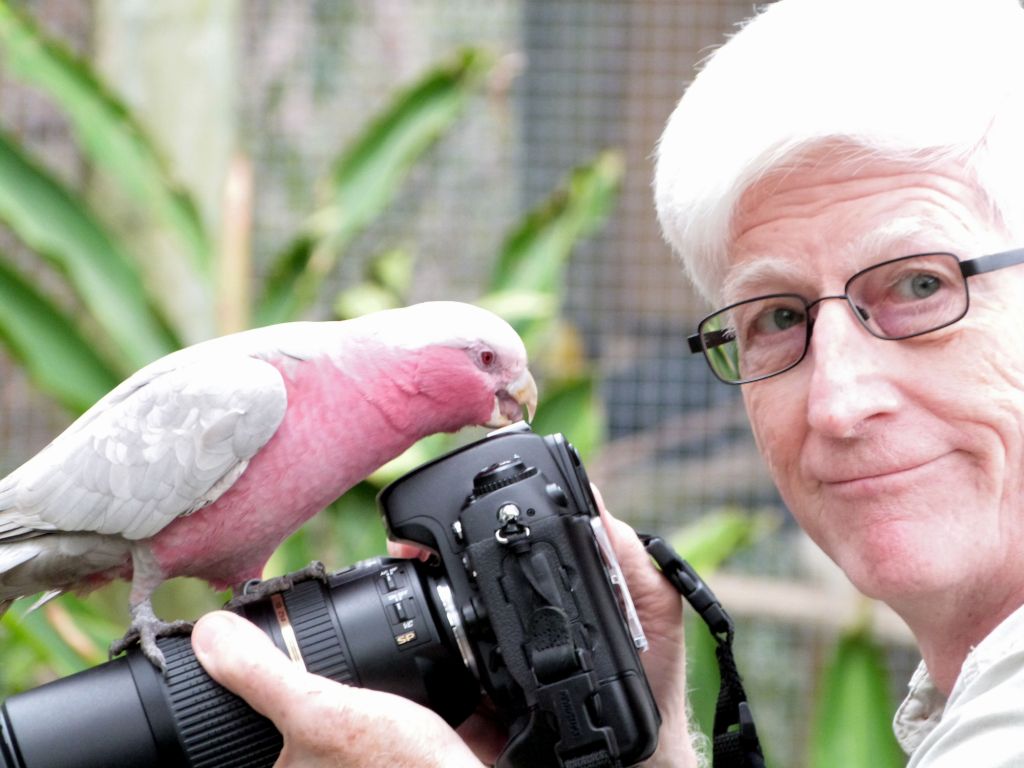
This is Birdwatching really close
Galah (Eolophus roseicapilla) and Dan by Lee
These last two pictures are my favorites as I caught the mischievous Galah checking out Dan’s camera and then Dan’s expression as he looked at me.
As for Dan, I’ll see him later. He, like me, accepted the Lord as his personal Savior when he was a youngster.
“For God so loved the world that He gave His only begotten Son, that whoever believes in Him should not perish but have everlasting life.”
(John 3:16 NKJV)
Have you accepted Him?
The song by Dr. Richard Gregory, “Hiding in the Shadow of the Rock”. I am reposting it for an encouragement and comfort to all those suffering today from the devastating damage from Hurricane Helene. There are many all through Florida, Geogia, North and South Carolina, plus a few other states. They could use our many prayers.
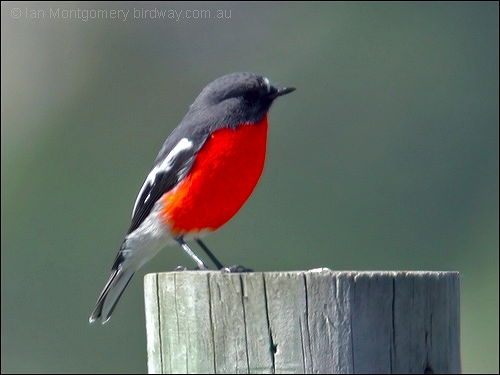
The Robins are all endemic to Australasia: New Guinea, Australia, New Zealand and numerous Pacific Islands as far east as Samoa. For want of an accurate common name, the family is often called the Australasian robins. There are 46 members presently. They are not related to our American Robin.
Flame Robin by Ian
Most species have a compact build with a large, rounded head, a short, straight bill, and rounded wingtips. They occupy a wide range of wooded habitats, from subalpine to tropical rainforest, and mangrove swamps to semi-arid scrubland. All are primarily insectivorous, although a few supplement their diet with seeds. Hunting is mostly by perch and pounce, a favoured tactic being to cling sideways onto a treetrunk and scan the ground below without moving.
They have long-term pair-bonds and small family groups. Most members practice cooperative breeding, with all family members helping defend a territory and feed nestlings. Nests are cup-shaped, usually constructed by the female, and often placed in a vertical fork of a tree or shrub. Many species are expert at adding moss, bark or lichen to the outside of the nest as camouflage, making it very difficult to spot, even when it is in a seemingly prominent location.
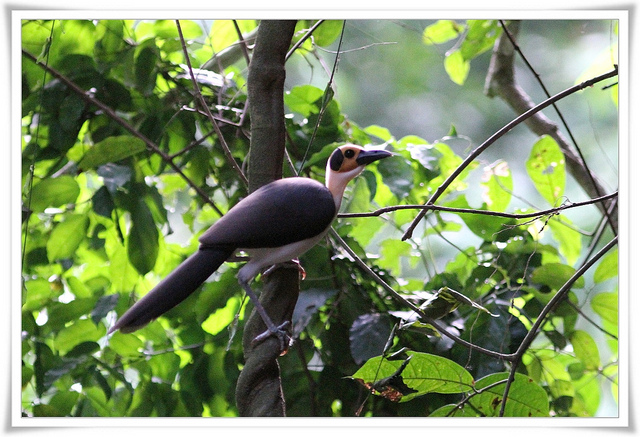
White-necked Rockfowl (Picathartes gymnocephalus) cc Ross@Texas
The White-necked and Grey-necked Rockfowls are the only members of the Picatharitidae family. They are also called “bald crows’ and are found in the rain-forests of tropical west and central Africa. They have unfeathered heads, and feed on insects and invertebrates picked from damp rocky areas. Both species are totally non-migratory, being dependent on a specialised rocky jungle habitat.
They are large (33–38 centimetres (13–15 in) long) passerines with crow-like black bills, long neck, tail and legs. They weigh between 200–250 grams (7.1–8.8 oz). The strong feet and grey legs are adapted to terrestrial movement, and the family progresses through the forest with long bounds on the ground. The wings are long but are seldom used for long flights. Rockfowl are generalized feeders, taking a wide range of invertebrate prey.
He is the Rock, His work is perfect; For all His ways are justice, A God of truth and without injustice; Righteous and upright is He. (Deuteronomy 32:4 NKJV)
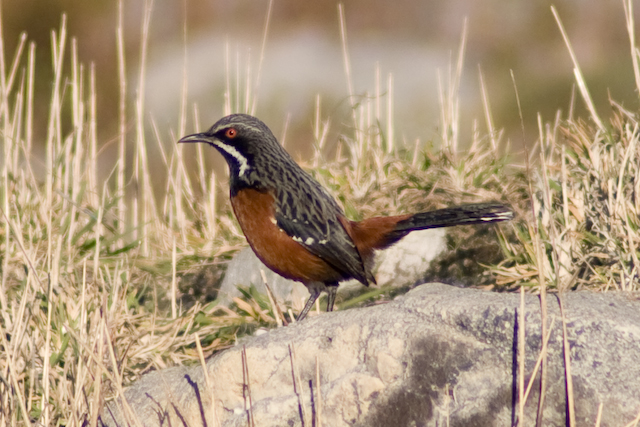
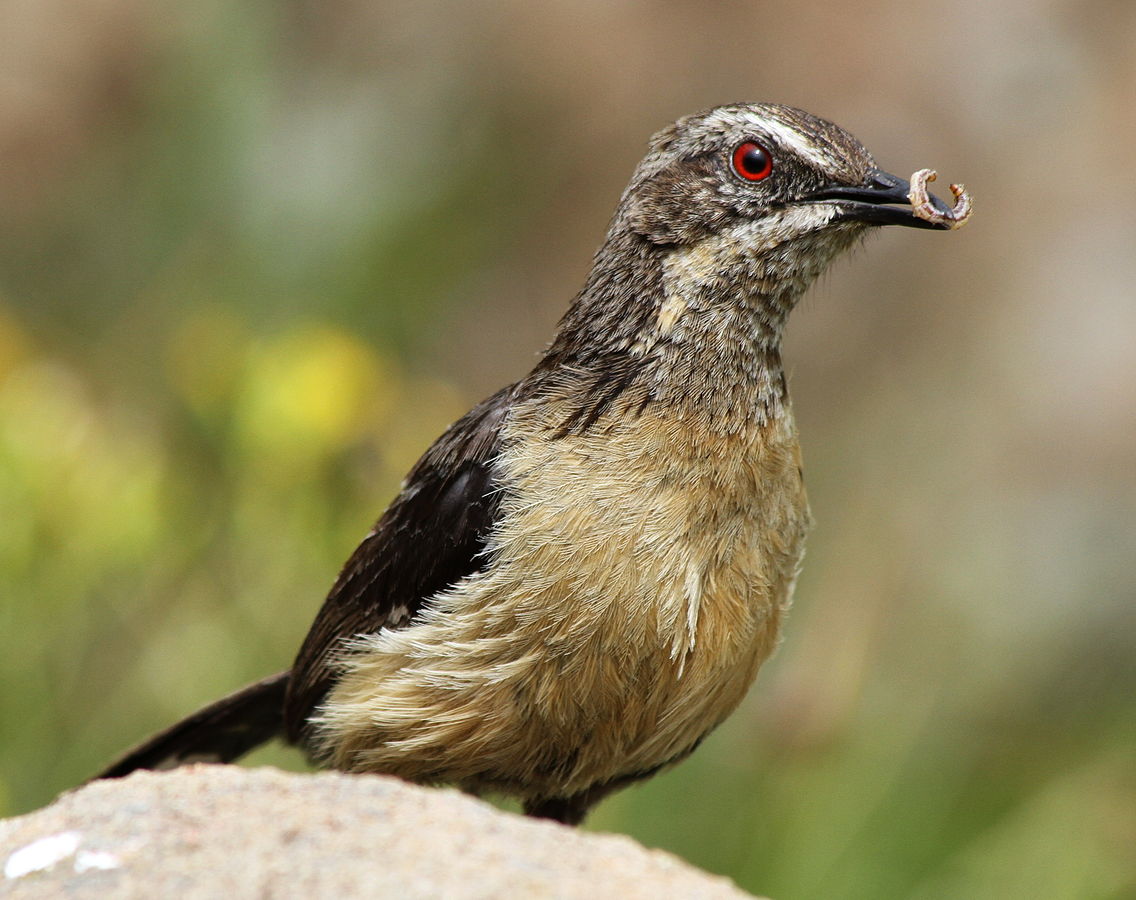
The Rockjumpers are medium-sized insectivorous or omnivorous birds in the genus Chaetops, which constitutes the entire family Chaetopidae. The two species, the Cape Rockjumper,, and the Drakensberg Rockjumper, are endemic residents of southern Africa. The Cape Rockjumper is a resident of the West Cape and SW East Cape, and the Orange-breasted (or Drakensberg) Rockjumper is distributed in the Lesotho highlands and areas surrounding this in South Africa. These are birds with mostly brown and red plumage. Both with long, white tipped black tails, black throats, broad white submoustachial lines, rufous or orange bellies and rumps and grey and black patterned backs and wings.[The iris is red and the bills and legs are black. Their wings are very small and they do not fly very often. They spend most of their lives running and jumping among rocks and grasses while hunting insects.
Rail-babbler (Eupetes macrocerus) by Peter Ericsson
The Rail-babbler or Malaysian Rail-babbler (Eupetes macrocerus) is a strange, rail-like, brown and pied inhabitant of the floor of primary forest in the Malay Peninsula and Sumatra (the nominate subspecies macrocerus), as well as Borneo (ssp. borneensis), distantly related to African crow-like birds. Its population has greatly decreased, however, it is locally still common in logged forest or on hill-forest on slopes. The species is poorly known and rarely seen, in no small part due to its shyness.
Each will be like a hiding place from the wind, a shelter from the storm, like streams of water in a dry place, like the shade of a great rock in a weary land. (Isaiah 32:2 ESV)
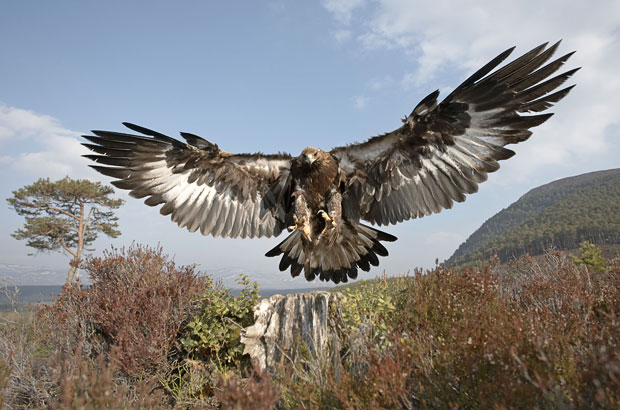
“But those who wait on the LORD Shall renew their strength; They shall mount up with wings like eagles, They shall run and not be weary, They shall walk and not faint.” (Isaiah 40:31 NKJV)
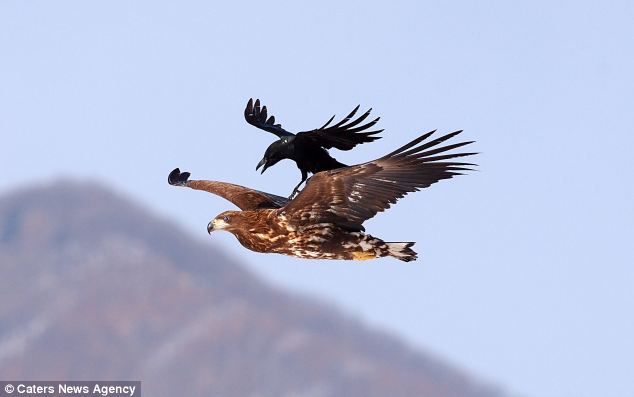
Bald Eagle (Haliaeetus leucocephalus) Flying by Aesthetic Photos
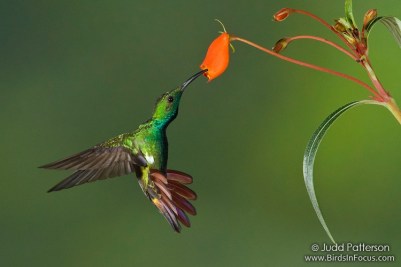
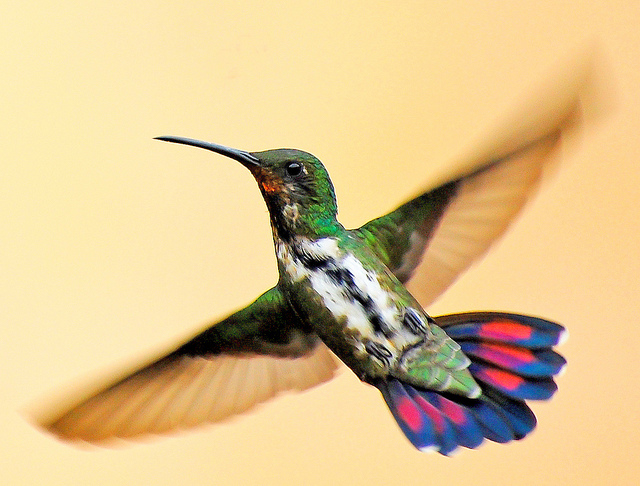
Green-breasted Mango (Anthracothorax prevostii) by Judd Patterson
Wonders Which You Have Done
***
Many, O LORD my God, are the wonders which You have done, And Your thoughts toward us; There is none to compare with You. If I would declare and speak of them, They would be too numerous to count.
(Psalms 40:5 NASB)
Green-breasted Mango (Anthracothorax prevostii) by Judd Patterson
Then God said, “Let the waters abound with an abundance of living creatures, and let birds fly above the earth across the face of the firmament of the heavens.” (Genesis 1:20 NKJV)
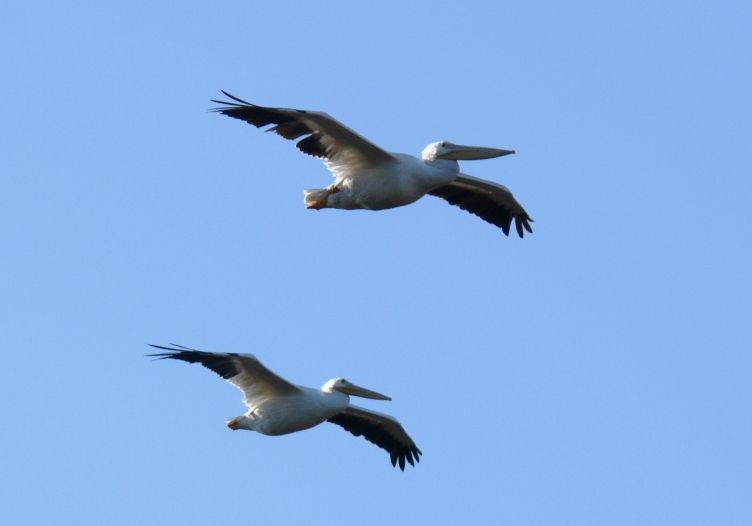
American White Pelican (Pelecanus erythrorhynchos) by Lee at Circle B Bar Reserve
When I Consider – Wednesdays – Sistine Chapel Ceiling and God’s Creation
(Sistine Chapel Ceiling and God’s Creation – Reposted and Updated)
“Imagine that you are the child of the famous painter, Michelangelo. You grew up watching your father paint the ceiling of the Sistine Chapel. Each stroke of the brush revealed his love, creative genius, and masterful perfection.”
Later in life, you visit the Chapel and see a tour guide giving his talk about how the painting came about. They are standing there in “awe under the grandeur of the artistic work” and then hears the guide boldly say words to this effect. “The ceiling occurred by naturalistic processes over countless years as water leaked through the roof and stained the plaster. The people are told by their expert guide that what appears as an intentionally designed work of beauty is strictly a chance occurrence.”
“Would you not, as Michelangelo’s child, rise up in righteous indignation at the telling of such a flagrant lie? If the guide said that you father had used the random procedure of dripping water through the plaster to create the masterpiece, would that lie have been any more palatable?”
He telleth the number of the stars; He calleth them all by their names. (Psalm 26:7)
“The modern “tour guides” of our world are evolutionists who would have us believe that all of the purpose, eloquent design, and astronomical complexity of life just happened as chance naturalistic processes (such as mutations) formed life over billions of years. Liberal theologians would have us believe that God used such a process to make things.”
As Christians that believe the Word of God as truth, we should “boldly proclaim the truth so that more people may come to know the true Master Artist and come to trust His written revelation to mankind (the Bible)”
The LORD by wisdom hath founded the earth; by understanding hath he established the heavens. (Proverbs 3:19)
Who knoweth not in all these that the hand of the LORD hath wrought this? (Job 12:9)
By his spirit he hath garnished the heavens; (Job 26:13)
That I may publish with the voice of thanksgiving, and tell of all thy wondrous works. (Psalms 26:7)
That they might set their hope in God, and not forget the works of God, but keep his commandments: (Psalms 78:7)
*Quotes from “Evidence from Common Sense March 22,” in “A Closer Look at the Evidence,” by Richard & Tina Kleiss, (Bryce Gaudian, The Great Works Catalog, p22)
“But the LORD said unto Samuel, Look not on his countenance, or on the height of his stature; because I have refused him: for the LORD seeth not as man seeth; for man looketh on the outward appearance, but the LORD looketh on the heart.” (1 Samuel 16:7 KJV)
Look at the birds of the air, for they neither sow nor reap nor gather into barns; yet your heavenly Father feeds them. Are you not of more value than they?
(Matthew 6:26 NKJV)
*
(Repost of article from Januarywith updated photo)









 Lee's Birdwatching Adventures Plus