One is Enough ~ by Dottie Malcolm

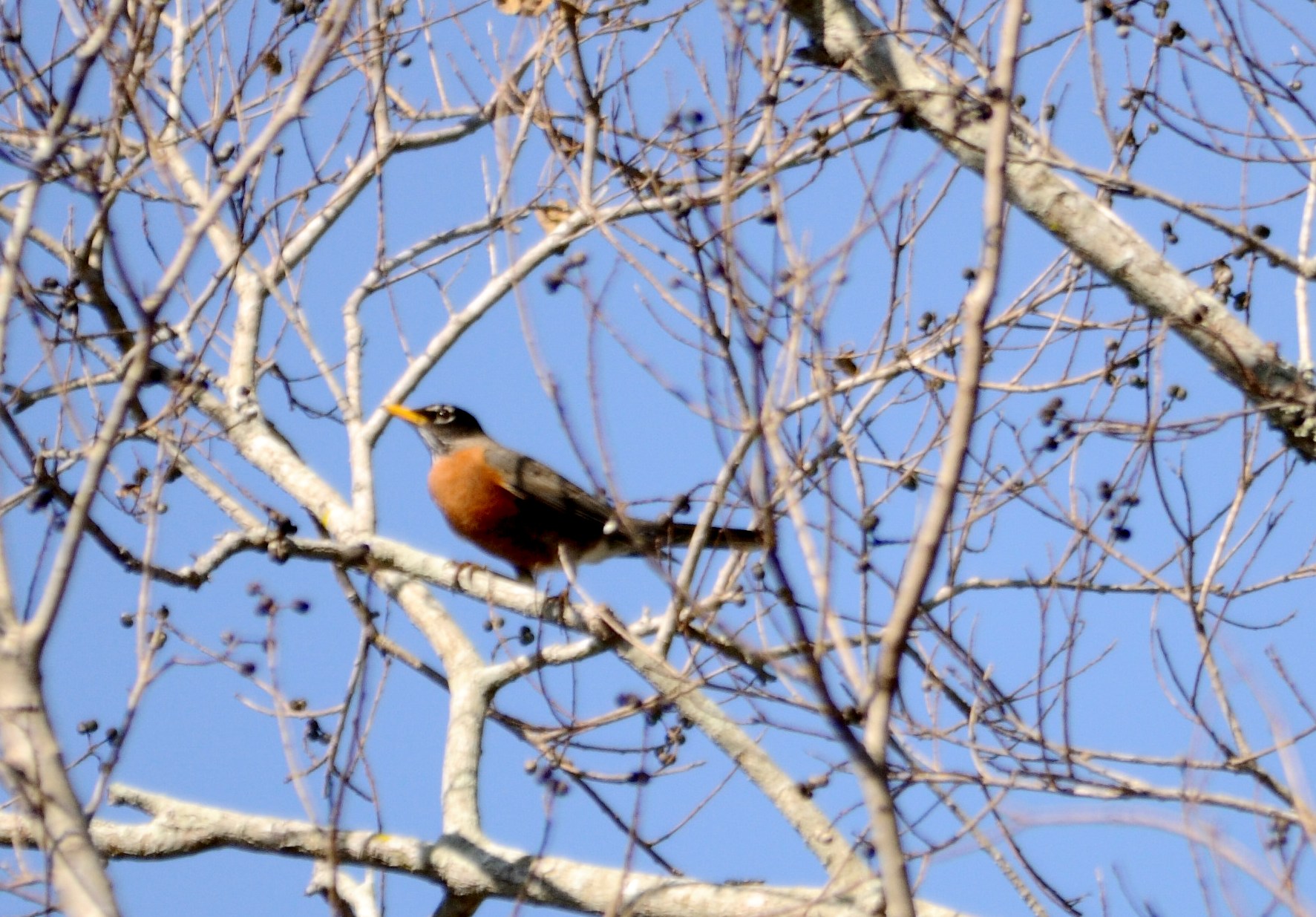
American Robin by Dan at Lake Howard

American Robin by Dan

“One is Enough” ~ by Dorothy “Dottie” Belle Malcolm

Having just returned home from a house cleaning job, my mind wasn’t about birds, but the greeting I would get from my dog Ruby. She was her usual happy, jumpy, self – anticipating a doggy treat for being left home alone.

I was not happy to find her soaking wet. This meant I had not closed the door well to the shower room and she had spent her time there during my absence. It would have been OK except my shower drips continuously – (yes, I do have a plan to have it checked out.) And this is a dog who hated to be showered! Figure that.

So anyway, I told her I needed to check the mail. And yes, she knows what this means. She ran outdoors and as we headed for the mailbox I heard a very familiar sound. We had startled a robin! Oh joy! I carefully began looking for it and found it was still hanging around a flower bed.

I don’t remember who I thanked first, the robin for being in my yard, or the Lord for sending it there!

It is the first and so far the only one I have seen in my yard this year. Recalling the year my yard was filled with them in Feb. 2010 and had told them they were all welcome back, put paid no return visits.

Having at least one, made my day. I’m not hard to please. I do hope to see it again, but if not, I’m happy anyway.

Every time I look out the window on this beautiful spring day, I will have a spirit of thanksgiving. Being able to enjoy God’s Creation is a great blessing.

One Robin is enough.

Dot Malcolm

(Feb 15, 2013)

Be glad in the LORD and rejoice, you righteous; And shout for joy, all you upright in heart! (Psalms 32:11 NKJV)


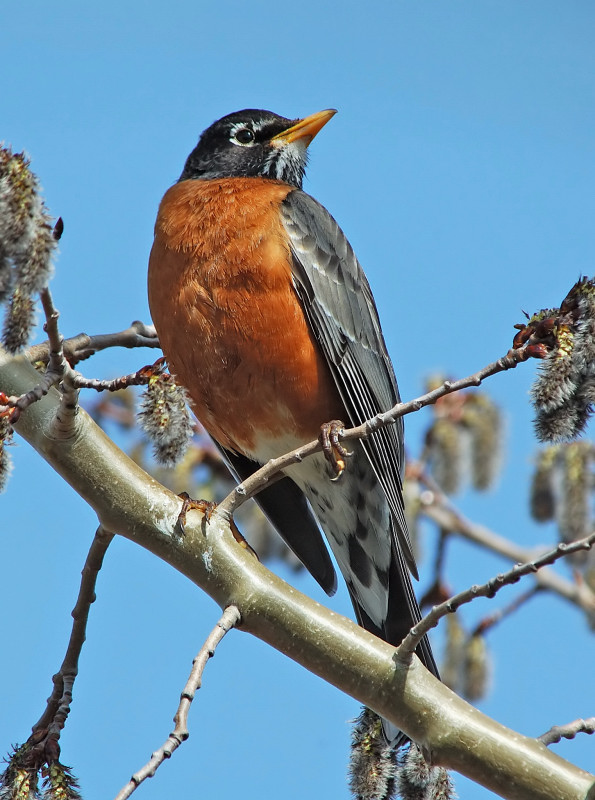
American Robin (Turdus migratorius)by Raymond Barlow

American Robin)by Raymond Barlow

Lee’s Addition:

What a great event. Dottie handed this to me Saturday morning at our annual Volunteer’s Breakfast. All those who volunteer around church are treated to a meal prepared by our Pastors and staff. Dottie has been a faithful Primary Sunday School teacher for years. Reading this story, I can see why they all love her and enjoy her teaching so much. Thank you, Dottie.

See her other articles:

*

Birds of the Bible – Names Study – Plover

American Golden Plover (Pluvialis dominica) at National Aviary by Lee

American Golden Plover (Pluvialis dominica) at National Aviary by Lee

From the article on Kosher Animals that we have been looking at with our Bird Name Study, the Plover is listed. I haven’t added a page for this bird so far, so let’s see what we can learn about this bird.

Under the Birds section they give a list of birds from the Septuagint and that is where we find the plover listed:

“The Septuagint versions of the lists are more helpful, as in almost all cases the bird is clearly identifiable:

charadrios (plover)”

They show that it appears in the LXX in Deuteronomy 14:18 and in Leviticus 11:19. Of course I can’t read it, but here it is from the LXX-BYZ on my e-Sword.

Deu 14:18 kaiG2532 CONJ pelekana N-ASM kaiG2532 CONJ charadrion N-ASM kaiG2532 CONJ taG3588 T-APN omoiaG3664 A-APN autoG846 D-DSM kaiG2532 CONJ porphuriona N-ASM kaiG2532 CONJ nukterida N-ASF

I do see the word charadrion in it though. Looking at my database of birds from IOC Version 3.2, the CHARADRIIFORMES Order came up. That is the Shorebirds and Allies Order. The Plover is definitely in that group. The Plovers are in the Charadriidae Family. The Plovers are there and also the Lapwings. Yet, checking the compare mode of all the Bible versions loaded, the Plover is not in any other translation. (at least in my English versions that I can read)

That bird is either translated as Lapwing or Hoopoe. This is going to take some more digging. I have already written about both of those birds.

The KJV+ uses H1744

And the stork, H2624 and the heron H601 after her kind, H4327 and the lapwing, H1744 and the bat. H5847 (Deuteronomy 14:18 KJV+)

H1744
דּוּכּיפת
dûkı̂yphath
doo-kee-fath’
Of uncertain derivation; the hoopoe or else the grouse: – lapwing.
Strong’s Hebrew and Greek Dictionaries

*

The BTSCTVM (which combines Brown Driver Briggs, Thayers, the KJV Concordance, and Strong’s TMV) has:

– Original: דּוּכּיפת
– Transliteration: Duwkiyphath
– Phonetic: doo-kee-fath’
– Definition:
1. unclean bird (probably hoopoe)
– Origin: of uncertain derivation
– TWOT entry: 414
– Part(s) of speech: Noun Feminine

– Strong’s: Of uncertain derivation; the hoopoe or else the grouse: – lapwing.
Total KJV Occurrences: 2
• lapwing, 2
Lev_11:19; Deu_14:18

From what is above, there is really no need to make a new Plover page. Since Plovers and Lapwings are in the same family, Charadriidae and many of the Scriptures say frequently, “their kind,” that is exactly what they are. “Same Kinds” (Oh, no! Did you notice they threw the “grouse” into that last definition. Later.)

We have also written about the Hoopoe, which is a totally different Order and Family.

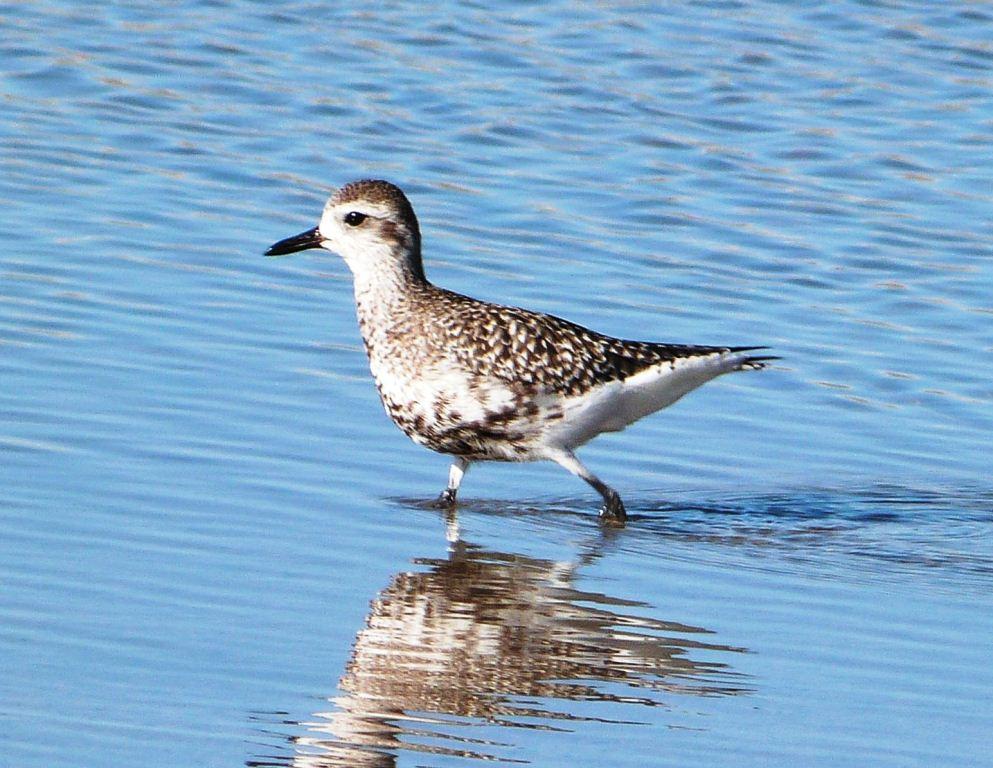
Black-bellied Plover - Ft DeSoto 11-22-12 Thanksgiving by Lee

Black-bellied Plover – Ft DeSoto 11-22-12 Thanksgiving

Plovers are a widely distributed group of wading birds belonging to the subfamily Charadriinae. There are about 40 species in the subfamily, most of them called “plover” or “dotterel”. The closely related lapwing subfamily, Vanellinae, comprises another 20-odd species.

Plovers are found throughout the world, and are characterised by relatively short bills. They hunt by sight, rather than by feel as longer-billed waders like snipes do.

They feed mainly on insects, worms or other invertebrates, depending on habitat, which are obtained by a run-and-pause technique, rather than the steady probing of some other wader groups.

The plover group of birds has a distraction display subcategorized as false brooding, pretending to change position, to sit on an imaginary nest site.

A group of plovers may be referred to as a stand, wing, or congregation. A group of dotterels may be referred to as a trip. (Wikipedia)

Northern Lapwing (Vanellus vanellus) by Nik

Northern Lapwing (Vanellus vanellus) by Nikhil Devasar

The versions of the Bible that list the Lapwing are: AKJV, Bishops, ECB, IAV, KJV, TRC, Tyndale, UKJV, Webster and the YLT.

Here is a very interesting version of Deut. 14:16:

The bittern, and the charadrion, every one in their kind: the houp also and the bat. (Deuteronomy 14:18 DRB)

That version actually mentions the Charadrion and the “houp,” which is the Hoopoe.

If you look through the birds in the Charadriidae Family you will find that the Lord was gracious and omniscient in his creative design of those species. I trust you never tire of studying God’s Word.

In your studies about the birds and other topics in the Bible, don’t forget one of the most important verses:

For God so loved the world, that he gave his only begotten Son, that whosoever believeth in him should not perish, but have everlasting life. (John 3:16 KJV)

*
See:
Birds of the Bible

Gospel Message
*

Singing In The Rain – Rejoicing

Today at 10:00 we say, “until we meet again” to a Deacon, Head Usher, Marine veteran and a dear friend at our church. He went on to glory last Saturday and this is in honor of him and an encouragement for his dear wife and all of us his friends.

But I would not have you to be ignorant, brethren, concerning them which are asleep, that ye sorrow not, even as others which have no hope. For if we believe that Jesus died and rose again, even so them also which sleep in Jesus will God bring with him. (1 Thessalonians 4:13-14)

(Below was taken from the 2000+ Illustrations.)

Rejoicing Always

A saintly woman who had suffered for weary months from a painful illness said to her pastor, “I have such a lovely robin that sings outside my window. In the early mornings as I lie here, he serenades me.”
Then a smile brightened her thin features as she added, “I love him because he sings in the rain.”

That is the most beautiful thing about a robin. When a storm has silenced every other songbird, the robin sings on. That is what the Christian who is with Christ may do. Any one can sing in the sunshine. You and I should sing on when the sun has gone down, or when clouds pour out their rain, for Christ is with us.

American Robin Singing

European Robin Singing Rain or Shine

*

Birdwatching Behavior – Illustration

American Robin (Turdus migratorius) eating by Jim Fenton

American Robin (Turdus migratorius) eating by Jim Fenton

“A few years ago my mom began feeding the birds on a regular basis in our backyard. At first, some of the birds were greedy. They weren’t sure if there would be enough food to go around. The starlings were especially mean, which doesn’t surprise anyone familiar with birds. They would attack the robins, cardinals, and sparrows that came to get a taste. This situation continued for several months until one day there was a noticeable change in the bird’s behavior.

After years of regular feeding from the unlimited supply, the birds appeared to be less greedy with the food. Now they were feeding at their leisure—realizing there would be more food when their current supply was finished. Then, last month, something even more remarkable happened. After all these months of hording, greed, and then cautiously enjoying, the birds began to demonstrate a nobler characteristic. They began calling for one another at mealtime.

Today, when the seed is spread for the birds, one will call for the others to share what they’ve discovered. The greed is less frequent. The jealous pecking is rare. The trees seem fuller these days with the joy of satisfaction from birds that have learned to share. The music of multiple species fills the air. Now they know the supply is unlimited. And as far as their appetite is concerned, it’s inexhaustible.

Just this morning, I noticed a sparrow feeding right beside a starling. Miracles never cease.

Why can’t this happen in the church?

God’s grace is inexhaustible and we ought to be calling other sinners to the fount where we’ve found refreshment and renewal.”

Charles K. Grant (An Illustration from SermonCentral.com)

All the earth will worship You, And will sing praises to You; They will sing praises to Your name.” Selah. Come and see the works of God, Who is awesome in His deeds toward the sons of men. (Psalms 66:4-5 NASB)

*

Australian Pelicans – The Corporate Feeders..

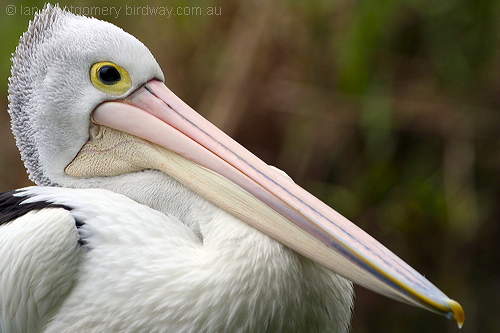
Australian Pelican (Pelecanus conspicillatus) by Ian at Birdway

Australian Pelican (Pelecanus conspicillatus) by Ian at Birdway

Australian Pelicans – The Corporate Feeders.. ~ by ajmithra

Australian Pelicans feed together in large numbers..
They herd fishes to shallow waters,
and surround them in decreasing circles..

  • This corporate fishing helps them gather more food..
  • Israelites gathered Manna together…

How many of us believe in Corporate feeding of the Word of God?

  • Corporate worship helped Jesophat overcome his enemies.
  • God descends when we congregate In His mighty name..
  • When God descends satan flees…

For where two or three are gathered together in my name, there am I in the midst of them. (Mathew 18:20)

Yours in YESHUA,
a j mithra

Please visit us at:

*

Pelicans belong to the Pelecanidae – Pelicans Family. They are also a Bird of the Bible.

*

Birds of the Bible – Names of Birds Study Introduction

Bald Eagle (Haliaeetus leucocephalus)  by AestheticPhotos

Bald Eagle (Haliaeetus leucocephalus) by AestheticPhotos

There have been several articles here about the Names of the Birds. See:

Now we are going to look at the Names of the Birds from another angle. I received this comment on the Clean vs Unclean blog.

Lee, my search on the topic of clean and unclean birds led met to a Wikipedia article and I discovered that when you look at the Hebrew words (found in the Masoretic text) for the names of various unclean birds, they sound like descriptions, ex. “bone breaker”, “plunger”, “one who darts”, and even “vomiting”. So perhaps the reason we don’t have “clear rules” listed (something I’ve wondered for a long time) is because the traits and characteristics were there all along, but not knowing Hebrew, we had no idea. Anyway, check it out   http://en.wikipedia.org/wiki/Kosher_animals#Birds

It is a very interesting article and will take some digging to discover some more insight into these birds and how they are named. If you have been following this blog, you know that it has been curious to me how the different versions of the Bible have given different names for the birds. Maybe we can solve some of those mysteries. It won’t be done in one article. That is for sure.

First let’s look at some highlights from the Wikipedia article (with editing).

*********************

Great Horned Owl - Lowry Pk Zoo by Lee

Great Horned Owl – Lowry Pk Zoo by Lee

Birds

In regard to birds, no general rule is given, and instead Leviticus 11:13-19 and Deuteronomy 14:11-18 explicitly list the prohibited birds: The masoretic text lists the birds as:

  • nesher
  • peres (bone breaker)
  • ozniyah (feminine form of oz, meaning strong)
  • ra’ah ([that which] darts, in the sense of rapid)
  • ayyah
  • oreb
  • bat yaanah (daughter of howling)
  • tahmas ([one who] scratches the face)
  • shahaf ([one which] atrophies)
  • netz
  • kos (cup)
  • shalak (plunger)
  • yanshuf (twilight)
  • tinshemet (blower/breather)
  • qa’at (vomiting)
  • racham (tenderness/affection)
  • hasidah (devoted)
  • anafah ([one which] sniffs sharply, in the sense of anger)
  • dukifat
  • atalef

The list in Deuteronomy has an additional bird, the dayyah, which seems to be a combination of da’ah and ayyah, and may be a scribal error; the Talmud regards it as a duplication of ayyah. This, and the other terms are vague and difficult to translate, but there are a few further descriptions, of some of these birds, elsewhere in the Bible:

  • The ayyah is mentioned again in the Book of Job, where it is used to describe a bird distinguished by its particularly good sight.
  • The bat yaanah is described by the Book of Isaiah as living in desolate places, and the Book of Micah states that it emits a mournful cry
  • The qa’at appears in the Book of Zephaniah, where it is portrayed as nesting on the columns of a ruined city; the Book of Isaiah identifies it as possessing a marshy and desolate kingdom.
  • The septuagint versions of the lists are more helpful, as in almost all cases the bird is clearly identifiable:
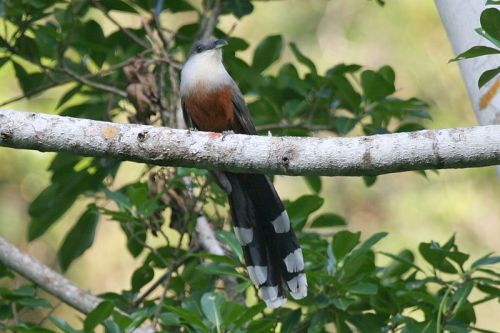
Chestnut-bellied Cuckoo (Coccyzus pluvialis) ©WikiC

Chestnut-bellied Cuckoo (Coccyzus pluvialis) ©WikiC

  • aeton (eagle)
  • grypa (ossifrage)
  • haliaetos (sea-eagle)
  • gyps (vulture)
  • ictinia (kite)
  • corax (raven)
  • stouthios (ostrich)
  • glaux (owl)
  • laros (gull)
  • hierax (hawk)
  • nycticorax (night raven)
  • cataractes (cormorant)
  • porphyrion (“purple [thing]”)
  • cycnos (swan)
  • ibis
  • pelican
  • charadrios (plover)
  • herodios (heron)
  • epops (hoopoe)
  • nycturia (bat)
  • meleagris (guineafowl)

Although the first ten of the birds identified by the Septuagint seem to fit the descriptions of the masoretic text, the ossifrage (Latin for bone breaker) being a good example, the correspondence is less clear for most of the remaining birds; it is also obvious that the list in Leviticus, or the list in Deuteronomy, or both, are in a different order in the Septuagint, compared to the masoretic text. Attempting to determine the correspondence is problematic; for example, the pelican may correspond to qa’at (vomiting), in reference to the pelican’s characteristic behaviour, but it may also correspond to kos (cup), as a reference to the pelican’s jaw pouch. An additional complexity arises from the fact that the porphyrion has not yet been identified, and classical Greek literature merely identifies a number of species that are not the porphyrion, including the peacock, grouse, and robin, and implies that the porphyrion is the cousin of the kingfisher; from these meagre clarifications, the porphyrion can only be identified as anything from the Lilac-breasted Roller, Indian Roller, or Northern Carmine Bee-eater, to the flamingo.

During the Middle Ages, classical descriptions of the hoopoe were mistaken for descriptions of the lapwing, on account of the lapwing’s prominent crest, and the hoopoe’s rarity in England, resulting in lapwing being listed in certain bible translations instead of hoopoe; similarly the sea eagle has historically been confused with the osprey, and translations have often used the latter bird in place of the former. Because strouthos (ostrich) was also used in Greek for the sparrow, a few translations have placed the sparrow among the list. In Arabic, the Egyptian Vulture is often referred to as rachami, and therefore a number of translations render racham as gier eagle, the old name for the Egyptian Vulture.

Variations arise when translations follow other ancient versions of the Bible, rather than the Septuagint, where they differ. Rather than vulture (gyps), the Vulgate has milvus, meaning Red Kite, which historically has been called the glede, on account of its gliding flight; similarly, the Syriac Peshitta has owl rather than ibis. Other variations arise from attempting to base translations primarily on the masoretic text; these translations generally interpret some of the more ambiguous birds as being various different kinds of vulture and owl. All of these variations mean that most translations arrive at a list of 20 birds from among the following (links are to articles already written here):

Lilac-breasted Roller (Coracias caudatus) by Bob-Nan

Lilac-breasted Roller (Coracias caudatus) by Bob-Nan

The fruit bat, a frugivorous vegetarian species of bat, eating some fruit

Despite being listed among the birds by the bible, bats are not birds, and are in fact mammals. Most of the remaining animals on the list are either birds of prey or birds living on water, and the majority of the latter in the list also eat fish or other seafood. The Septuagint’s version of the list comprehensively lists most of the birds of Canaan that fall into these categories. The conclusion of modern scholars is that, generally, ritually unclean birds were those clearly observed to eat other animals.

Although it does regard all birds of prey as being forbidden, the Talmud is uncertain of there being a general rule, and instead gives detailed descriptions of the features that distinguish a bird as being ritually clean. The Talmud argues that clean birds would have craws, an easily separated double-skin, and would eat food by placing it on the ground (rather than holding it on the ground) and tearing it with their bills before eating it; however, the Talmud also argues that only the birds in the biblical list are actually forbidden – these distinguishing features were only for cases when there was any uncertainty in the bird’s identity

Origin

The earliest rationalistic explanations of the laws against eating certain birds focused on symbolic interpretations; the first indication of this view can be found in the 1st century BC Letter of Aristeas, which argues that this prohibition is a lesson to teach justice, and is also about not injuring others. Such allegorical explanations were abandoned by most Jewish and Christian theologians after a few centuries, and later writers instead sought to find medical explanations for the rules; Nachmanides, for example, claimed that the black and thickened blood of birds of prey would cause psychological damage, making people much more inclined to cruelty.

However, other cultures treated the meat of certain carnivorous birds as having medical benefits, the Romans viewing Owl meat as being able to ease the pain of insect bites, for example; conversely, modern scientific studies have discovered very toxic birds such as the Pitohui, which are neither birds of prey nor water birds, and therefore the biblical regulations allow them to be eaten. Laws against eating any carnivorous birds also existed in Vedic India and Harran, and the Egyptian priests also refused to eat carnivorous birds.

Modern practical considerations

Due to the difficulty of identification, religious authorities have restricted consumption to specific birds for which Jews have passed down a tradition or permissibility from generation to generation. Birds for whom there has been a tradition of their being kosher include: the sparrow, pigeon, turtle dove, quail, the European and Middle Eastern partridges, the pheasant, ducks, geese, chickens, guineafowl among others. As a general principle, scavenging birds such as vultures and birds of prey such as hawks and eagles (which eat carrion when they find it) are not kosher. Turkey does not have a tradition, but because so many Orthodox Jews have come to eat it and it possesses the simanim (signs) required to render it a kosher bird, an exception is made, but with all other birds a Mesorah (tradition) is required.

Birds such as songbirds, which are consumed as delicacies in many societies, may be kosher in theory, but are not eaten in kosher homes as there is no tradition of them being eaten as such. Pigeons and doves are known to be kosher based on their permissible status as sacrificial offerings in the Temple. Likewise, though swans are kosher in theory if kosher-slaughtered, there is no Jewish tradition of eating them. (from Wikipedia)

***********

Second,  Study is not necessarily a weariness as Ecclesiastes 12:12 says,

And further, by these, my son, be admonished: of making many books there is no end; and much study is a weariness of the flesh. (KJV)

but we should study and even enjoy digging into God’s Word.

Study to shew thyself approved unto God, a workman that needeth not to be ashamed, rightly dividing the word of truth. (2 Timothy 2:15 KJV)

I am going to use my e-Sword program. If you have not used it, it is free and very useful. It has the KJV+ as part of it and it list the Greek and Hebrew words with their definitions. Will you join me in studying about the bird names in the languages of the Bible. Join me as we look at these words and compare them to the birds. Don’t let those weird-looking words scare you. You might find that learning to study about birds, might help you carry the method into studying more of God Word.

Look for future articles in this series.

P.S. A Lilac-breasted Roller is new to me. I can’t wait to find out the connection there.
*

Birds of the Bible

*

Interesting Things – The Amazing Camel and It’s Creator

What an amazing animal! God did some very special engineering from the git-go! None of this “grocery store” new and improved nonsense. He got it entirely right the first time.

The Amazing Camel and It’s Creator

(From Moody Press)

If you ever doubted that God exists, Meet the Very Technical, Highly Engineered Dromedary Camel.

When I’m hungry, I’ll eat almost anything-A leather bridle, a piece of rope, my master’s tent, Or a pair of shoes.

My mouth is so tough a thorny cactus doesn’t bother it. I love to chow down grass and other plants That grow here on the Arabian desert.

I’m a dromedary camel, the one-hump kind That lives on hot deserts in the Middle East.

My hump, all eighty pounds of it, Is filled with fat-my body fuel-not water as some people believe. My Mighty Maker gave it to me because He knew I wouldn’t always be able to find food As I travel across the hot sands. When I don’t find any chow, my body automatically Takes fat from the hump, feeds my system, And keeps me going strong. This is my emergency food supply.

If I can’t find any plants to munch, my body uses up my hump. When the hump gets smaller, it starts to tip to one side. But when I get to a nice oasis and begin to eat again, My hump soon builds back to normal.

I’ve been known to drink twenty-seven gallons of water in ten minutes. My Master Designer made me in such a fantastic way that In a matter of minutes all the water I’ve swallowed Travels to the billions of microscopic cells that make up my flesh.

Naturally, the water I swallow first goes into my stomach. There thirsty blood vessels absorb and carry it to every part of my body. Scientists have tested my stomach and found it empty Ten minutes after I’ve drunk twenty gallons.

In an eight hour day I can carry a four hundred pound load A hundred miles across a hot, dry desert And not stop once for a drink or something to eat. In fact, I’ve been known to go eight days without a drink, But then I look a wreck. I lose 227 pounds, my ribs show through my skin, And I look terribly skinny. But I feel great! I look thin because the billions of cells lose their water. They’re no longer fat. They’re flat.

Normally my blood contains 94 percent water, just like yours. But when I can’t find any water to drink, The heat of the sun gradually robs a little water out of my blood. Scientists have found that my blood can lose up to 40 percent of its water, and I’m still healthy.

Doctor’s say human blood has to stay very close to 94 percent water. If you lose 5 percent of it, you can’t see anymore; 10 percent, you can’t Hear and you go insane; 12 percent, your blood is as thick as molasses And your heart can’t pump the thick stuff. It stops, and you’re dead.

But that’s not true with me. Why? Scientists say my blood is different. My red cells are elongated. Yours are round. Maybe that’s what makes the difference.

This proves I’m designed for the desert, Or the desert is designed for me. Did you ever hear of a design without a Designer?

After I find a water hole, I’ll drink for about ten minutes And my skinny body starts to change almost immediately. In that short time my body fills out nicely, I don’t look skinny anymore, And I gain back the 227 pounds I lost.

Even though I lose a lot of water on the desert, My body conserves it too. Way in the beginning when my intelligent Engineer made me, He gave me a specially designed nose that saves water. When I exhale, I don’t lose much. My nose traps that warm, moist air from my lungs And absorbs it in my nasal membranes.

Tiny blood vessels in those membranes take that back into my blood. How’s that for a recycling system? Pretty cool, isn’t it. It works because my nose is cool. My cool nose changes that warm moisture in the air From my lungs into water.

But how does my nose get cool? I breath in hot dry desert air, And it goes through my wet nasal passages. This produces a cooling effect, and my nose stays as much as 18 degrees cooler than the rest of my body.

I love to travel the beautiful sand dunes. It’s really quite easy, because My Creator gave me specially engineered sand shoes for feet. My hooves are wide, and they get even wider when I step on them. Each foot has two long, bony toes with tough, leathery skin between my soles, are a little like webbed feet.

They won’t let me sink into the soft, drifting sand. This is good, because often my master wants me to carry him one hundred miles across the desert in just one day. (I troop about ten miles per hour.)

Sometimes a big windstorm comes out of nowhere, bringing flying sand with it. My Master Designer put special muscles in my nostrils that close the openings, keeping sand out of my nose but still allowing me enough air to breathe.

My eyelashes arch down over my eyes like screens, keeping the sand and sun out but still letting me see clearly. If a grain of sand slips through and gets in my eye, the Creator took care of that too. He gave me an inner eyelid that automatically wipes the sand off my eyeball just like a windshield wiper.

Some people think I’m conceited because I always walk around with my head held high and my nose in the air.

But that’s just because of the way I’m made. My eyebrows are so thick and bushy I have to hold my head high to peek out from underneath them. I’m glad I have them though. They shade my eyes from the bright sun.

Desert people depend on me for many things. Not only am I their best form of transportation, but I’m also their grocery store. Mrs. Camel gives very rich milk that people make into butter and cheese. I shed my thick fur coat once a year, and that can be woven into cloth. A few young camels are used for beef, but I don’t like to talk about that.

For a long time we camels have been called the “ships of the desert” because of the way we sway from side to side when we trot. Some of our riders get seasick.

I sway from side to side because of the way my legs work. Both legs on one side move forward at the same time, elevating that side. My “left, right left, right” motion makes my rider feel like he is in a rocking chair going sideways.

When I was six months old, special knee pads started to grow on my front legs. The intelligent Creator knew I had to have them. They help me lower my 1000 pounds to the ground.

If I didn’t have them, my knees would soon become sore and infected, and I could never lie down. I’d die of exhaustion.

By the way, I don’t get thick knee pads because I fall on my knees. I fall on my knees because I already have these tough pads. Someone very great thought of me and knew I needed them. He designed them into my genes.

It’s real difficult for me to understand how some people say I evolved into what I now am. I’m very technical, highly engineered dromedary camel. Things like me don’t just happen.

They’re planned on a drawing board by Someone very brilliant, Someone very logical.

John 1:1 says,
“In the beginning was the Word.
And the Word was with God,
and the Word was God.”
The Word means “logical, intelligent One.”

(Received in an e-Mail, but found it on the Lakeside Church of Christ website. Not sure who to give the credit to. Could not find it on the Moody site. We do know the ultimate credit goes to – The Creator.)
Birds of the Bible – Trusting Under The Wing

Red-necked Grebe (Podiceps grisegena) young on her wing ©USFWS

Red-necked Grebe (Podiceps grisegena) young on her wing ©USFWS

The LORD recompense thy work, and a full reward be given thee of the LORD God of Israel, under whose wings thou art come to trust. (Ruth 2:12 KJV)

While searching for “wing” or “wings” in my e-Sword, I discovered this really great verse. Let’s dig into it.

Searching further using “under” and “wing” here are a few more verses that sort of relate to the verse above:

Keep me as the apple of the eye, hide me under the shadow of thy wings, (Psalms 17:8 KJV)

How excellent is thy lovingkindness, O God! therefore the children of men put their trust under the shadow of thy wings. (Psalms 36:7 KJV)

He shall cover thee with his feathers, and under his wings shalt thou trust: his truth shall be thy shield and buckler. (Psalms 91:4 KJV)

Matthew 23:37 and Luke 13:34 mention being gathered under the wing, but they were not willing. Also, in  we covered. no pun intended, how birds protect their young under their wings and how God protects us. But the verse above seem to imply our trust.

What is being trusted? Boaz is implying that Ruth is trusting in the “LORD God of Israel.” She is from another country, another culture and religious way of life, but has turned her trust over to the LORD. That is something I did personally way back in 1960. I put my trust in the Lord to be my personal Savior. It was the best decision of my life.

Storks Shadowing Baby in Lakeland by Dan

Storks Shadowing Baby in Lakeland by Dan

In the Psalms verses, we can know that the Lord keeps His Eye on His own and we should desire to be the “apple of the eye.” Notice in the other verses that while we are under the wings we are trusting. Who? The Lord or LORD. Why do we trust? Wow! Look around at all the Lord has done just in creation and care of the birds. How about our care? We know through promises all through the Word of God that He cares for us. We know He doesn’t lie or do things for our harm. We also know that He is just and will give judgment when needed.  We could go on and on, but you can also see that the Lord Jesus Christ is “trustworthy.”

Baby Chick Peeping Out From Under His Mom's Wing - ©©

Baby Chick Peeping Out From Under His Mom’s Wing – ©©

We know the birds trust their parents to protect them while they are under their wings. Should we not trust the Savior while we are under His wings?

Here is a quote from the Believer’s Bible Commentary:

“2:4-12 When Boaz arrived from Bethlehem, he asked the identity of the young woman. Learning that she was Naomi’s daughter-in-law, he cordially invited her to continue gleaning in his fields and to share the water provided for his workers. In praising her for the loyal and selfless step that she had taken, Boaz concluded with a little prayer for her:
The LORD repay your work, and a full reward be given you by the LORD God of Israel, under whose wings you have come for refuge (v. 12).
Leon Morris comments:

In due course, the prayer was answered through him who uttered it. He recognizes the religious aspect of Ruth’s change of country by saying that she has come to trust (AV) under Yahweh’s wings. The imagery is probably that of a tiny bird struggling under the wings of a foster-mother. It gives a vivid picture of trust and security. . . .

From J. Vernon McGee:

“She had come to trust the Lord God. This is the reason she had left the land of Moab and made that radical decision. She had said that the God of Naomi would be her God. She had turned from idolatry to the living and true God. This woman has come to trust God; she was one of His children. Therefore this is the wonderful testimony that she had there in the land of Israel. And Boaz says, “May a full reward be given to you. May you be recompensed for this decision.”

From Matthew Henry:

“(5.) He (Boaz) prayed for her (Ruth_2:12): The Lord recompense thy work. Her strong affection to the commonwealth of Israel, to which she was by birth an alien, was such a work of the divine grace in her as would certainly be crowned with a full reward by him under whose wings she had come to trust. Note, Those that by faith come under the wings of the divine grace, and have a full complacency and confidence in that grace, may be sure of a full recompense of reward for their so doing. From this expression, the Jews describe a proselyte to be one that is gathered under the wings of the divine majesty.”

From John Gill’s Exposition:

“under whose wings thou art come to trust; whom she professed to be her God, and whom she determined to serve and worship; whose grace and favour she expected, and to whose care and protection she committed herself: the allusion is either to fowls, which cover their young with their wings, and thereby keep them warm and comfortable, and shelter and protect them, see Psa_36:7 or to the wings of the cherubim overshadowing the mercy seat, Exo_25:20 and the phrase is now adopted by the Jews to express proselytism; and so the Targum here,”thou art come to be proselyted, and to be hid under the wings of the Shechinah of his glory,”or his glorious Shechinah.”

My all time favorite photo showing this:

Under His Wings - (Dove - photographer unknown)

Under His Wings – by Ric Seet

Other Articles to check out:

*

Oriental White-eye – The Grace Seeker..

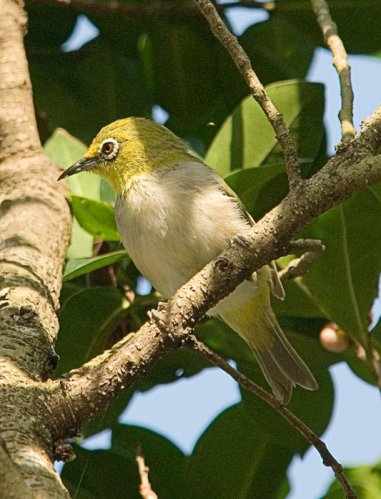
Oriental White-eye (Zosterops palpebrosus) ©WikiC

Oriental White-eye (Zosterops palpebrosus) ©WikiC

Oriental White-eye – The Grace Seeker.. ~ by a j mithra

The Oriental White-eye (Zosterops palpebrosus) is a small passerine bird in the white-eye family.

It is a resident breeder in open woodland in tropical Asia, east from the Indian Subcontinent to Southeast Asia, extending to Indonesia and Malaysia. They forage in small groups, feeding on nectar and small insects.

They are easily identified by the distinctive white eye-ring and overall yellowish upperparts. Several populations of this widespread species are named subspecies and some have distinctive variations in the extent and shades of yellows in their plumage.

This bird is small (about 8–9 cm long) with yellowish olive upper parts, a white eye ring, yellow throat and vent. The belly is whitish grey but may have yellow in some subspecies. The sexes look similar.

If we are called Christians, we need to look like Christ..

  • But, do we look like Christ or do people see Christ in us and through us?

We have just stepped into a new year, where many of us would have taken resolutions to eat less, quit smoking, stop watching porn stuff and maybe a resolution to stop taking resolutions…

  • But have we ever taken a resolution to walk like Christ, to talk like Christ and be like Christ?

People around us are watching us and expecting us to show Christ. You know?

Now is the time to take a resolution to be like Christ isn’t it?

For as many of you as have been baptized into Christ have put on Christ. (Galatians 3:27)

Japanese White-eye (Zosterops japonicus) by W Kwong

Japanese White-eye (Zosterops japonicus) by W Kwong

The species is widespread and is part of a superspecies complex that includes Zosterops japonicus, Zosterops meyeni and possibly others. The species is found in a wide range of habitats from scrub to moist forest.

They sometimes occur on mangrove areas such as in the Karachi area. and on islands they may lead a more insectivorous life. They are somewhat rare only in the drier desert regions of western India. A feral population was detected in San Diego, California in the 1980’s and subsequently eradicated.

These white-eyes are sociable, forming flocks which only separate on the approach of the breeding season. They are highly arboreal and only rarely descend to the ground.

God too expects us to be highly arboreal (living in a tree)..

  • Adam tried to live on the tree of life but was chased away from God’s presence..
  • We have a tree, the CROSS TREE, where Christ – the Vine hung to make us more like Him..
  • Now is the time to check if we are Arboreal?

I am crucified with Christ: nevertheless I live; yet not I, but Christ lives in me: and the life which I now live in the flesh I live by the faith of the Son of God, who loved me, and gave himself for me. (Galatians 2:20)

The breeding season is February to September but April is the peak breeding season and the compact cup nest is a placed like a hammock on the fork of a branch. The nest is made of cobwebs, lichens and plant fibre.
The nest is built in about 4 days and the two pale blue eggs are laid within a couple of days of each other. The eggs hatch in about 10 days. Both sexes take care of brooding the chicks which fledge in about 10 days Though mainly insectivorous, the Oriental White-eye will also eat nectar and fruits of various kinds.

They call frequently as they forage and the usual contact call is a soft nasal cheer.

They pollinate flower when they visit them for flower insects (such asthrips) and possibly nectar that form their diet. The forehead is sometimes coloured by pollen leading to mistaken identifications.

  • Do we visit Rose of Sharon and the Lilly of the valley every day and help in pollination?
  • If yes, why is that people are not able to witness pollen grains (Word of God) on most of our foreheads?

Therefore shall you lay up these my words in your heart and in your soul, and bind them for a sign upon your hand, that they may be as frontlets between your eyes. (Deuteronomy 11:18)

When nesting, they may mob palm squirrels but being small birds they are usually on the defensive. Their predators include bats (esp. Megaderma lyra) and birds such as the White-throated Kingfisher. Like some other white-eyes, they sometimes steal nest material from the nests of other birds Cases of interspecific feeding have been noted with white-eyes feeding the chicks of a Paradise Flycatcher.

They have been observed bathing in dew accumulated on leaves.

  • Do we remember, Israelites collected manna covered with the morning dew?

Which means feasting of Manna at dawn increases His grace in our life isn’t it? His grace is like early morning dew, this is what the Bible says right?

  • Without His grace it is unlikely for us to survive..

It is of the LORD’S mercies that we are not consumed, because his compassions fail not. They are new every morning: great is thy faithfulness. (Lamentations 3:22-23)

Oriental White-eye (Zosterops palpebrosus) ©WikiC

Oriental White-eye (Zosterops palpebrosus) ©WikiC

Although not strong fliers, they are capable of dispersing in winds and storms to new areas including offshore islands. Though these birds are not strong fliers, they still are able to disperse in wind and storm..

  • When we are weak , we need to remember that God uses the weak and the weary..
  • When you face a storm is life, just think of these birds and disperse in the storm…
  • For God always makes us lie down in green pastures and leads us beside still waters..
  • What storm is for others will be still waters for you and me, cos our Lord is our good Shepherd!

Apostle Paul had a thorn in His flesh, you know what God said?

And he said unto me, My grace is sufficient for thee: for my strength is made perfect in weakness. Most gladly therefore will I rather glory in my infirmities, that the power of Christ may rest upon me (2 Corinthians 12:9)

Lets seek for His bountiful grace each dawn to fly high above troubled waters..

Have a grace filled day!

Yours in YESHUA,
a j mithra


Lee’s Addition:

Read more from a j mitha

The White-eyes are in the Zosteropidae – White-eyes Family.

*

2012 in Review – Lee’s Birdwatching Adventures Plus

The WordPress.com stats helper monkeys prepared a 2012 annual report for this blog. (Lee’s Birdwatching Adventures Plus)

Here’s an excerpt:

About 55,000 tourists visit Liechtenstein every year. This blog was viewed about 380,000 times in 2012. If it were Liechtenstein, it would take about 7 years for that many people to see it. Your blog had more visits than a small country in Europe!

Click here to see the complete report.

Wow! Thank you all for coming to visit the blog this year!

Fair Fowl, Foul Fowl or Some of These Laws Are For The Birds!

Fair Fowl, Foul Fowl

Some of These Laws Are For The Birds!

Deuteronomy 14:12-20 by Francois Maurice

I love drawing birds, so illustrating this passage from Deuteronomy was a natural. I could have chosen the passage from Leviticus 11:13-19. They are identical. The same birds, in the same order with the same sentence structure. What are the odds? This got me scratching my head in quizzical puzzlement. (Wow, four z’s in two words! What are the odds?) Well, it turns out these two books were written by Moses. I didn’t know that then, but I do now! I knew that Moses spent forty days on Mt. Sinai talking to God. What I didn’t know was that, when he climbed down off that obscure, smoking, lightning-illuminated mountain; besides bringing us the Ten Commandments, he also brought the Oral Torah and six hundred thirteen specific and detailed laws meant for the people of Israel.  I want to delve briefly into these laws and to look at kosher laws, what they mean and how they apply to this illustration.

Known as the Mitzvot , these laws address all aspects of human life. There are three hundred sixty five negative and two hundred forty eight positive commandments. The negative ones are the ‘thou shalt nots…” and the positive ones are the ‘thou shalts…’

They are meant to preserve the sanctity of Jewish observance and the holiness of religious practices. They are also meant to encourage a serious perspective and importance to the business of living a meaningful and humble life.  A life that honors God and, as much as an individual is capable of adhering to the Mitzvot, keeps His commandments. This is the subjective part of the intent of Mitzvot . A couple of these laws are, for example, ‘ Know that God’ exists and ‘Do not put the word of God to the test’.

The objective intent of Mitzvot is based on the preservation, purification and health of the Jewish race. The commandments concerning dietary laws are a form of ancient health regulations! For example, the slaughtering of permitted animals is to be done rapidly, by cutting the throat of the animal with an extremely sharp knife with no serrations in the blade. This is considered the most humane way of dispatch. The goal of this type of slaughter is to get rid of as much blood as possible. Ingesting blood is forbidden. The animal is then hung to permit the evacuation of blood. It is then washed,  salted with kosher salt and cooked well. The USDA has determined that this ritual method of slaughter is so sanitary that kosher slaughterhouses are exempt from USDA regulations.

The Mizvot is divided into many categories i.e., Business practices, Clothing, Marriage, Divorce and Family, Treatment of Gentiles, Court and Judicial etc. There are many more but you get the idea.

Most of these worthy commandments have stood the test of time.  Consider the following ones, ‘Not to sell a Hebrew servant as a slave.,  ‘Not to pass a child through the fire to Molech’.,  (referring to child sacrifice),   ‘Not to wear garments made of wool and linen mixed together’.,  ‘To make a parapet for your roof’.?? And my favorite, ‘Not to put olive oil in the meal offering of a woman suspected of adultery’.!!! I presume it’s perfectly acceptable to drizzle olive oil on her matzos if you know she is an adulteress!?

Back to the birds. The forbidden birds in Deuteronomy 14:11-20 are either birds of prey or scavengers. As such, they are indiscriminate in their diet, hunt carrion and  cannibalize. They have sharp talons with strong feet for transporting their prey. Their beaks are sharp and hooked for tearing flesh.  God describes, to Ezekiel, a scene of Gog’s slain army.  Hordes of soldiers are scattered about on the mountains of Israel being devoured by (Ezekiel 39:4) “…the ravenous birds of every sort.” Quite a graphic scene made more dramatic by the presence of birds of prey.Bird of Prey by Francois Maurice

In Isaiah 46:11 God curiously refers to Cyrus the Great as a bird of prey “…a ravenous bird from the east”. It seems an incongruous reference to a man who is revered for his benevolence and justice. Cyrus tolerated and respected the culture and religion of the lands he conquered. Ah, you say! ‘Conquered’ implies blood and cruelty. Well, not in his case as when, in October of 539 BC, he annexed Babylonia without spilling a drop of blood. He then freed the Jews of whom 40,000 returned to their homeland. He then financed the rebuilding of the destroyed Temple in Jerusalem. He doesn’t seem to exhibit the tendencies of birds of prey. Was God implying that Cyrus had the tenacity and single minded intent of a predatory raptor?

Ostrich by Francois Maurice

Ostrich by Francois Maurice

Ostriches are in for some harsh treatment in Job 39:13-18. In a chapter that praises the freedom of the wild ass, the strength of the bull, the fearlessness and strength of the war-horse, the eyesight and flight of the eagle, we see the ostrich laying her eggs out in the open soil.  She is unconcerned that passing beasts will trod on them. She hopes the sun is warm enough to sustain and nurture them. “She is hardened against her young ones, as though they were not hers: her labour is in vain without fear; because God hath deprived her of wisdom, neither hath He imparted to her understanding.” The best that can be said about the ostrich in this passage is that they have wings and feathers to which I ask, “Why?” They can’t fly! Lamentations 4:3 equates the ostrich to a breast feeding sea monster! How weird is that? So- we have a strange looking, eight foot tall, three hundred pound bird who can’t fly but who can outrun a horse and kick a pursuer to death. It’s  eye is bigger that it’s brain, it makes great feather dusters and lives in a commune and hates its kids. God is humorous.

Doves are special in the Bible. They are used metaphorically to describe everything from the Spirit of God descending upon Jesus at His baptism (Mark 1:10), “And straightaway coming up out of the water, He saw the heavens opened, and the Spirit like a dove descending upon Him”, to the sorrowful murmurings of Queen Huzzab’s handmaidens. (Nahum 2:7), “And Huzzab shall be led away captive, she shall be brought up, and her maids shall lead her as with the voice of doves, tabering upon their breasts.” This magnificent run-on sentence uses a word that poignantly transforms this scene. Used but a single time in the entire Bible, the word tabering, (to beat on a small drum, tabour), infuses the scene with the pathos of the handmaidens who beat their breasts and mourn the captivity of their beloved queen. Doves, who mate for life, are used here to underscore the loyalty shown by the hand maidens. Notice also, that the phrase “the voice of doves” effectively adds another dimension to this passage. Imagine the queen following the handmaidens as naturally as one’s head turns upon hearing the nearby cooing of a pair of doves.

Doves by Francois Maurice

Doves by Francois Maurice

Francois Maurice

*


Lee’s Addition:

Francois is the author of It’s In The Bible! which was illustrations only. He is currently working of Volume Two. When asked to tell me more about himself so I could introduce him, here are parts of that information:

The article above is “one of 15 or so chapters. They are short-two to four pages- of commentary about a particular Bible passage passage. I illustrate it then analyze the theological message. My first book was It’s In The Bible!! and it was illustrations only. Volume two will have the same name since I own it. I also have ItsInTheBible.org and a Facebook page which is being developed to advertise my book. There will be some church related cartoons and some general commentaries on theological subjects along with study questions. Humor is included.”

“I am a committed Christian, on the vestry and many committees of St. John’s Episcopal in Chula Vista, CA.(Sad Diego area). I run a Bible study group there….I write and draw full time.”

“The article I sent you is not “typical” since it is “theme oriented” rather than Bible passage “in depth” study of what is going on in a particular scene. I am very curious and love to do research.”

“I am not an ornithologist however, so themes explored would be more “general” in nature. As you know there is a lot of bird influence throughout the Bible and a lot of material to be explored.”

I am looking forward to reading more articles from him and I trust you will also. Welcome, Francois.

*

Birds in Christmas Hymns – Joyful, Joyful, We Adore Thee (Re-post)

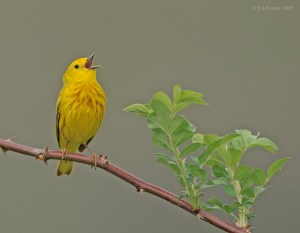
American Yellow Warbler (Dendroica aestiva) singing by J Fenton

American Yellow Warbler (Dendroica aestiva) singing by J Fenton

My lips shall greatly rejoice when I sing unto thee; and my soul, which thou hast redeemed. (Psalms 71:23 KJV)

Birds in Christmas Hymns

Birds in Christmas Hymns

Words by Hen­ry J. van Dyke, 1907. Van Dyke wrote this hymn while stay­ing at the home of Har­ry A. Gar­field at Wil­liams Col­lege, Mass­a­chu­setts. It was first pub­lished in the Pres­by­ter­i­an Hymn­al in 1911. It al­so ap­peared in the Po­ems of Hen­ry van Dyke, 1911. Van Dyke wrote:

“These vers­es are sim­ple ex­press­ions of com­mon Christ­ian feel­ings and de­sires in this pre­sent time—hymns of to­day that may be sung to­ge­ther by peo­ple who know the thought of the age, and are not afraid that any truth of sci­ence will de­stroy re­li­gion, or any re­vo­lu­tion on earth over­throw the king­dom of hea­ven. There­fore this is a hymn of trust and joy and hope.”

Music: Hymn to Joy, from the 9th Sym­pho­ny of Lud­wig van Beet­ho­ven; adapt­ed by Ed­ward Hodg­es, 1824

Joyful, Joyful, We Adore Thee

Joyful, joyful, we adore Thee, God of glory, Lord of love;
Hearts unfold like flowers before Thee, opening to the sun above.
Melt the clouds of sin and sadness; drive the dark of doubt away;
Giver of immortal gladness, fill us with the light of day!

All Thy works with joy surround Thee, earth and heaven reflect Thy rays,
Stars and angels sing around Thee, center of unbroken praise.
Field and forest, vale and mountain, flowery meadow, flashing sea,
Singing bird and flowing fountain call us to rejoice in Thee.

Thou art giving and forgiving, ever blessing, ever blessed,
Wellspring of the joy of living, ocean depth of happy rest!
Thou our Father, Christ our brother, all who live in love are Thine;
Teach us how to love each other, lift us to the joy divine.

Mortals, join the happy chorus, which the morning stars began;
Father love is reigning o’er us, brother love binds man to man.
Ever singing, march we onward, victors in the midst of strife,
Joyful music leads us sunward in the triumph song of life.

*

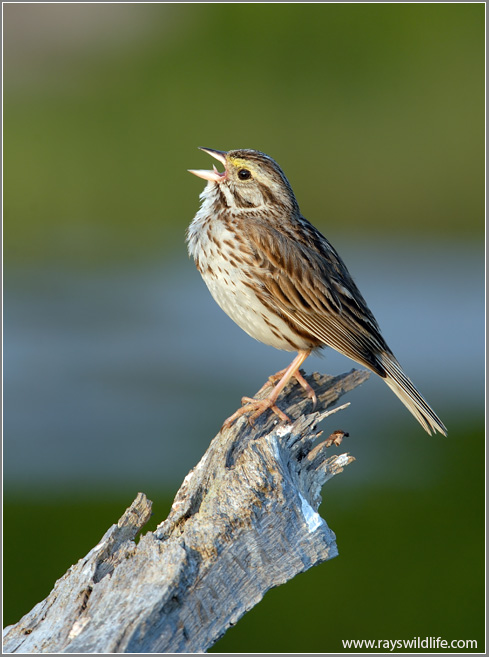
Savannah Sparrow singing by Ray

Savannah Sparrow singing by Ray

More Birds in Hymns

See ~ Christmas Gospel Presentation

Most information from The Cyber Hymnal – Joyful, Joyful, We Adore Thee

*