“There are certain Jews whom thou hast set over the affairs of the province of Babylon, Shadrach, Meshach, and Abednego; these men, O king, have not regarded thee: they serve not thy gods, nor worship the golden image which thou hast set up. (Daniel 3:12)
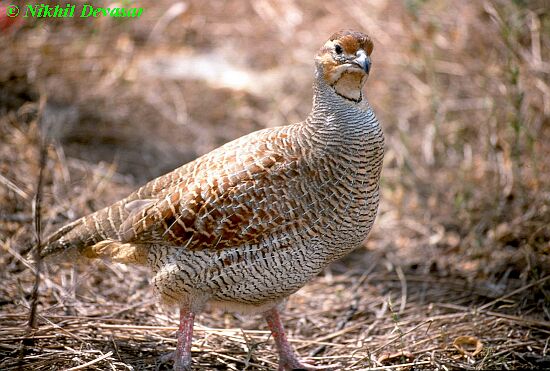
Grey Francolin (Francolinus pondicerianus) by Nikhil Devasar
“Now therefore, let not my blood fall to the earth before the face of the LORD: for the king of Israel is come out to seek a flea, as when one doth hunt a partridge in the mountains.” (1 Samuel 26:20 KJV)
Last week the introduction to the avian wonders of the Phasianidae – Pheasants and Allies Family I began. The first twenty-one (21) species were presented. With a 183 in this family, we will stay with this family for a few Sundays.
Today there are 2 Monal-Partridge (Tetraophasis) , 5 Snowcock (Tetraogallus), 10 Partridges in 3 genera (Lerwa) (Alectoris) and (Ammoperdix), and 17 Francolin in 4 genera (Francolinus), (Peliperdix), (Scleroptila) and (Dendroperdix). The Pternistis genus will be covered next time. It consistes of Francolins and Spurfowls.
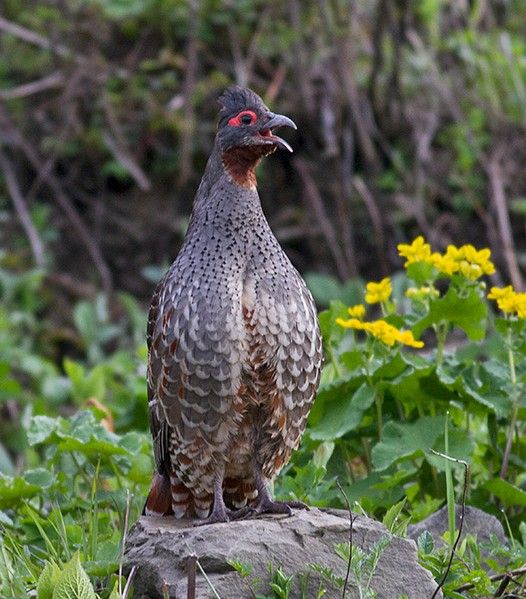
(Tetraophasis obscurus) is a species of bird in the Phasianidae family. It is found only in central China. Its natural habitat is boreal forests. The common name commemorates the French naturalist Jules Verreaux. The Szechenyi’s Monal-Partridge or buff-throated partridge (Tetraophasis szechenyii) is a species of bird in the family Phasianidae. It is found in China and India. Its natural habitat is boreal forests.
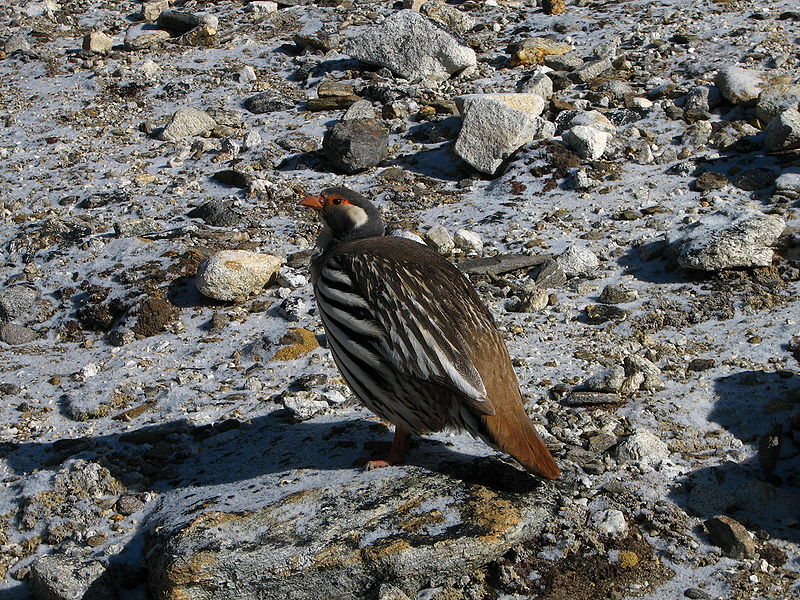
The Snowcocks are a group of bird species in the genus Tetraogallus of the pheasant family, Phasianidae. They are ground-nesting birds that breed in the mountain ranges of southern Eurasia from the Caucasus to the Himalayas and western China. Some of the species have been introduced into the United States. Snowcocks feed mainly on plant material. Snowcocks are bulky, long-necked, long-bodied partridge-like birds. Males and females are generally similar in appearance but females tend to be slightly smaller and rather duller in colouration than males. Their plumage is thick with a downy base to the feathers which helps them to withstand severe winter temperatures that may fall to −40 °C (−40 °F).
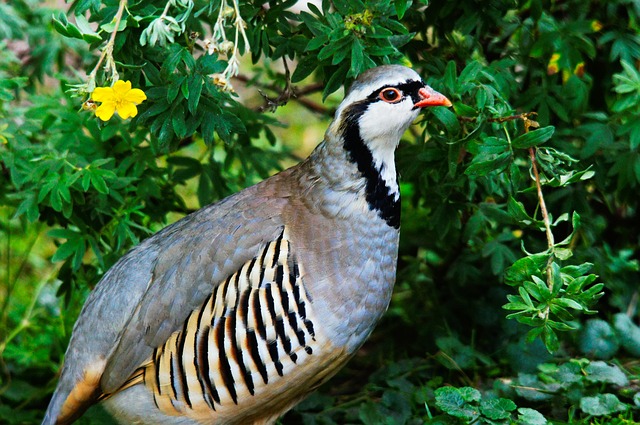
The genus Alectoris is a well-defined group of partridge species allied with coturnix and snowcocks and also related to partridge-francolins (Pternistes) and junglebush quail (Perdicula ). They are known collectively as rock partridges. The genus name is from Ancient Greek alektoris a farmyard chicken.
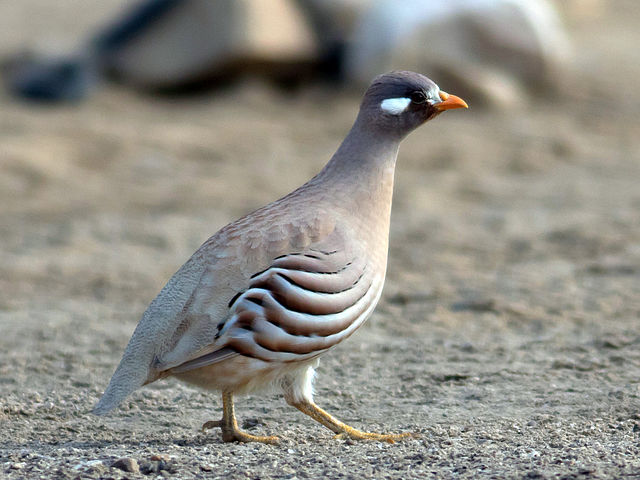
The See-see partridge occurs in southwest Asia, and the Sand partridge in Egypt and the Middle East. Both are resident breeders in dry, open country, often in hill areas. Both partridges in this genus are 22–25 cm long, rotund birds. They are mainly sandy brown, with wavy white and brown stripes on their flanks.
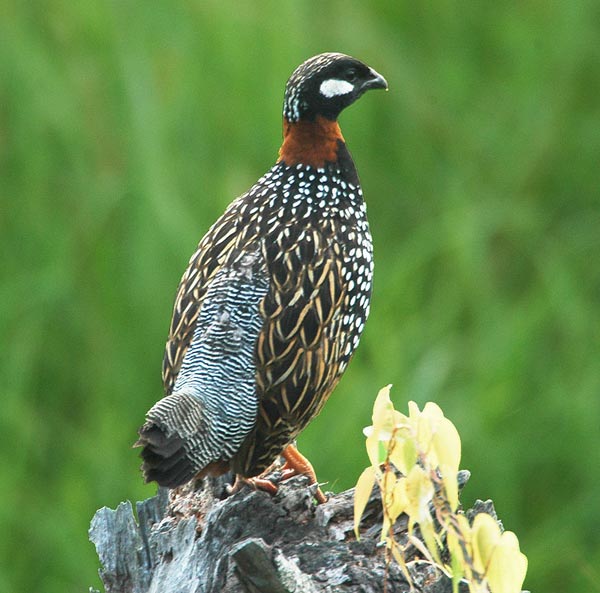
Black Francolin (Francolinus francolinus) by Nikhil Devasar
Francolinus is a genus of birds in the francolin group of the partridge subfamily of the pheasant family. Its five species range from western and central Asia through to southern and south-eastern Asia.
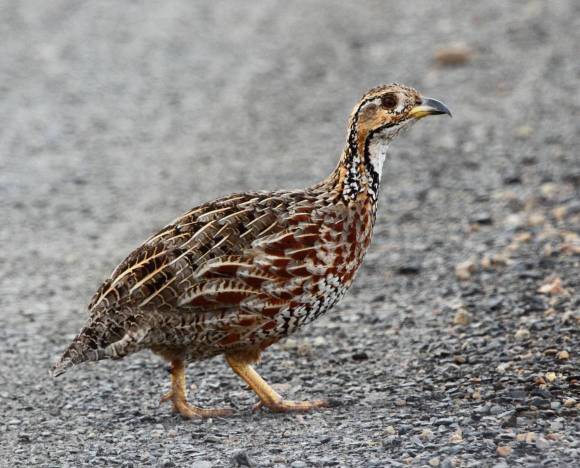
Coqui Francolin(Peliperdix coqui) by Dave’s BirdingPix
Peliperdix – Its four species range through tropical Sub-Saharan Africa.
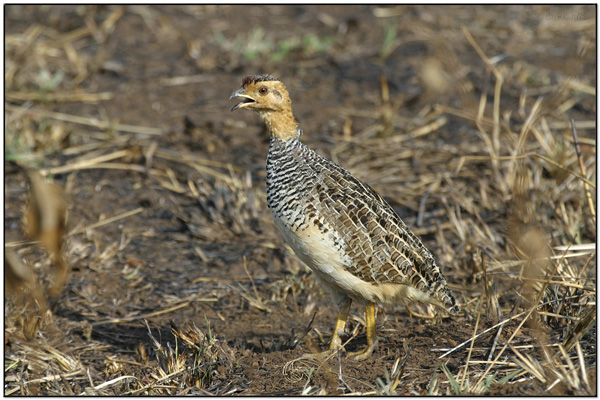
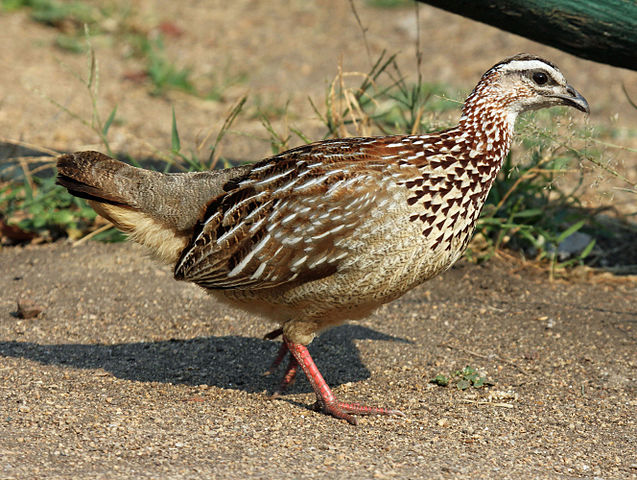
The Crested Francolin (Dendroperdix sephaena) – It is found in Angola, Botswana, Democratic Republic of the Congo, Ethiopia, Kenya, Malawi, Mozambique, Namibia, Somalia, South Africa, South Sudan, Swaziland, Tanzania, Uganda, Zambia, and Zimbabwe.
(Wikipedia, with editing)
This slideshow requires JavaScript.
“As the partridge sitteth on eggs, and hatcheth them not; so he that getteth riches, and not by right, shall leave them in the midst of his days, and at his end shall be a fool.” (Jeremiah 17:11 KJV)
“In the Garden” ~ Flute Solo Lauren D – Orchestra Concert
“There shall the great owl make her nest, and lay, and hatch, and gather under her shadow: there shall the vultures also be gathered, every one with her mate.” (Isaiah 34:15 KJV)
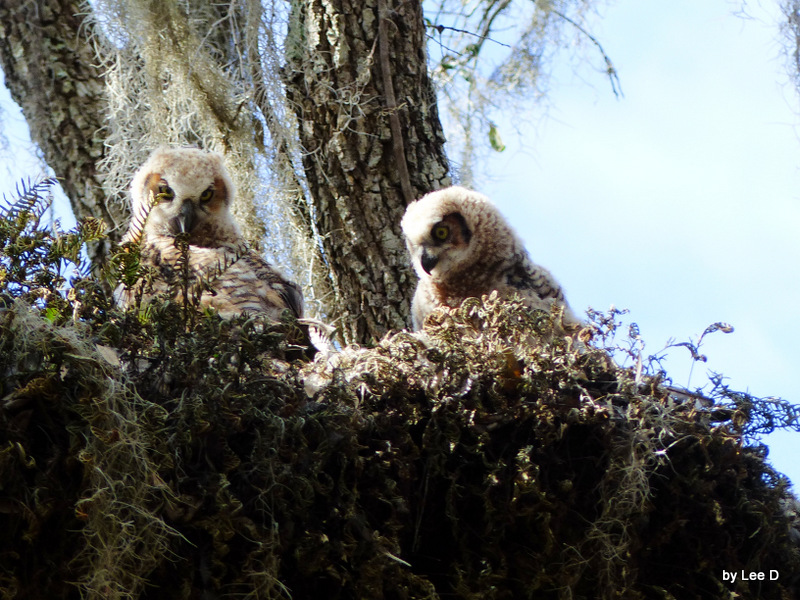
Great Horned Owl Youngsters at Circle B Bar Reserve by Lee
“O that there were such an heart in them, that they would fear me, and keep all my commandments always, that it might be well with them, and with their children for ever!” (Deuteronomy 5:29 KJV)
In all the busyness of things, the anniversary of this blog, slipped by unnoticed. The 15th of February was the 9th Anniversary of Lee’s Birdwatching Adventures Plus. Today, we are getting close to 1.7 million views since the blog was moved to WordPress in July of 2009. Am not sure how many hits were made to the original blog that started out on Blogger. But the Lord has be gracious.
We now have had visitors from 228 Countries. Wow! Who would have thought? I was excited in 2009 and I am still excited in 2017 at what the Lord had done with this blog.
I never imagined that the Lord would bless my efforts to this extent. From that start, I made a blog of my own on Blogspot.com so that I could learn how to post on the church’s blog. Once I began learning how to blog, it has been growing every since. Then in July, the blog was moved over to here at WordPress.com. This is a great place to host a blog/website (as I call it) and it is free.
Of course, Dan, my husband, has been our main photographer (Dan’s Pix), and we have been blessed with the permission to use the photos of some mighty fine photographers. Thank all of you for your expertise and permission. Check the sidebar out under Photography for links to the photographers.
Most importantly, Praise the Lord, for His blessings on this blog. Had the Lord not created everything, we would not have anything to write about, nor would we be here to write it.
When I consider thy heavens, the work of thy fingers, the moon and the stars, which thou hast ordained; What is man, that thou art mindful of him? and the son of man, that thou visitest him? … O LORD our Lord, how excellent is thy name in all the earth! (Psa 8:3,4,9 KJV)
Our pastor just reminded us of a quote by William Carey, an English Missionary to India:
Expect great things from God, attempt great things for God.
Great Blue Heron by Dan
I am not sure this was attempted as a “great thing,” but it was attempted to honor the Lord. That is a very great thing, and God has turned that attempt into a blog that has been visited over 10,000 times just since July. Many of those visits have come from around the world. Thank all of you for your visits.
Carey also said, “If I begin a thing I must go through with it!” This blog has been started and we trust we will continue to keep writing about God’s wonderful creation, especially His birds, and the joy of observing all God’s marvelous handiwork.




 Lee's Birdwatching Adventures Plus