***
APPLY THINE HEART
UNTO INSTRUCTION
***
“Apply thine heart unto instruction, and thine ears to the words of knowledge. (Proverbs 23:12 KJV)
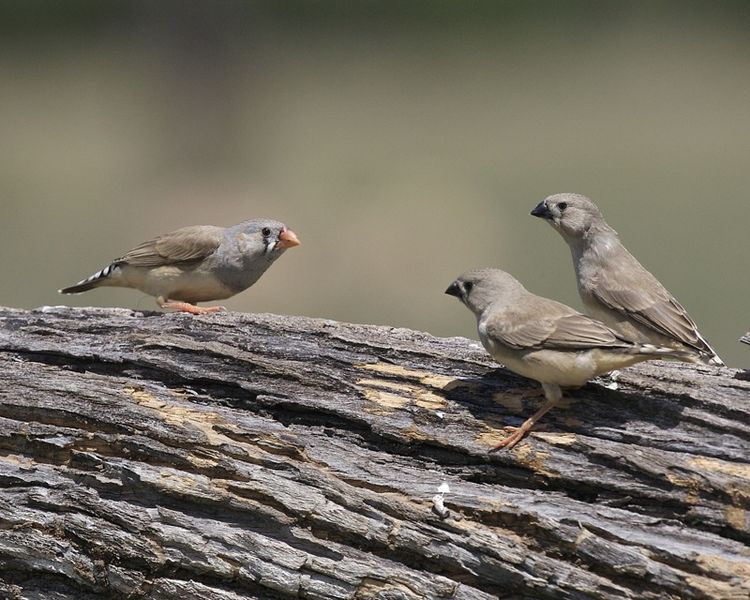
Zebra Finch (Taeniopygia guttata) ©WikiC Female & 2 young
*
*
“Apply thine heart unto instruction, and thine ears to the words of knowledge. (Proverbs 23:12 KJV)
Zebra Finch (Taeniopygia guttata) ©WikiC Female & 2 young
*
*
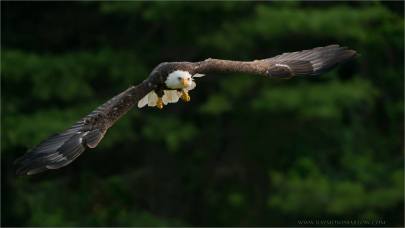
Bald Eagle (Haliaeetus leucocephalus) by Ray Barlow
“And he shall pass through Judah; he shall overflow and go over, he shall reach even to the neck; and the stretching out of his wings shall fill the breadth of thy land, O Immanuel.” (Isaiah 8:8 KJV)
Bald Eagle (Haliaeetus leucocephalus) by Ray Barlow
*
*

“Wherein they think it strange that ye run not with them to the same excess of riot, speaking evil of you:” (1 Peter 4:4 KJV)
“Not Going With The Crowd” by Lee at Lake Morton
*
*
“It is vain for you to rise up early, to sit up late, to eat the bread of sorrows: for so he giveth his beloved sleep.” (Psalms 127:2 KJV)
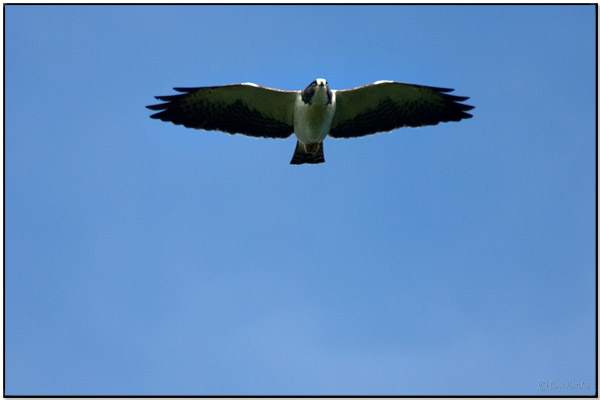
Short-tailed Hawk (Buteo brachyurus) by Daves BirdingPix
*
*

Green Broadbill (Calyptomena viridis) by Peter Ericsson
“A man’s pride shall bring him low: but honour shall uphold the humble in spirit.” (Proverbs 29:23 KJV)
Once there was a small bird who lived in the Lincoln Park Zoo in Chicago. His name was Frank. Frank was a Green Broadbill, and originally Frank had lived in Asia before being taken to the zoo. Frank was happy because he was kept in an exhibit with many interesting birds just like himself. Because he had such a bright green color, people would often find him interesting to search for in the exhibit.
Frank would often watch the different people who came to the zoo. Many times people would take pictures of him because they had never seen a bird like him before. Frank enjoyed it when people noticed him. Most of the time he would fly around the exhibit to different high spots for people to capture nice shots of him. Other times Frank would fly really close to the people.
But sometimes Frank became tired of flying around. He thought that maybe there could be another way for him to get about.
One day Frank was sitting on a branch high up in the exhibit so he could see a large part of the zoo. He watched one of the workers carefully drive a golf cart with buckets of food to feed the animals. Frank suddenly had an idea. If he were to drive the golf cart around, people were bound to notice him even more than they did already.

Green Broadbill (Calyptomena viridis) lesser ©©coracii
Frank watched carefully as the worker stopped the golf cart in front of his exhibit. He waited until after the worker had fed all of the birds and watched as the worker started the golf cart up again and drove away. It seemed simple enough to drive.
The next day Frank waited patiently as the worker came back to feed the birds once again. Once Frank was sure the worker wasn’t looking, he flew over to the golf cart and twisted the keys the way he had seen the worker do the day before. He flew down and pressed the pedal to the right like he had seen. The golf cart shot forward a little bit. Frank began flying back and forth rapidly in order to steer and press the pedal. Unfortunately, he didn’t get very far before the worker noticed the golf cart had begun to drift forward. The worker stopped the cart and shooed Frank out. Frank flew back to his branch. His plan hadn’t worked very well.
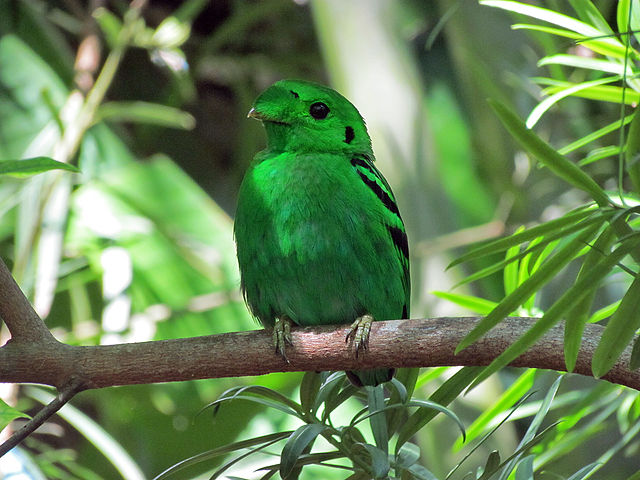
Green Broadbill (Calyptomena viridis) ©WikiC
However the next day Frank woke up to see many different people gathering around him. They were all incredibly excited and were taking multiple pictures of him. A news reporter was filming footage of the entire spectacle explaining to the camera how Frank had been seen driving a golf cart around the zoo. The news reporter explained that someone had taken a picture of Frank driving the cart and had sent it to the local newspaper. The news reporters had discovered it and decided to do a story on it.
After hearing the reporter, Frank understood what was going on and was extremely happy. He was famous.
But eventually the crowds stopped coming. Frank realized, however, that even after the big story the same people would still come to watch him. He decided he was appreciated no matter what. From then on, Frank wouldn’t try to do anything unusual so people would notice him, especially driving golf carts.
Lee’s Addition:
“Not that I speak in respect of want: for I have learned, in whatsoever state I am, therewith to be content.” (Philippians 4:11 KJV)
Well, Emma, you have done it again. What a delightful story, especially, because Broadbills are some of my most favorite birds. We saw a Green Broadbill in the Wings of Asia at Zoo Miami. He was very friendly, like your Frank. Set right out near us. We weren’t in a golf cart, but maybe he was watching our cameras. Maybe he was thinking that taking pictures would be easier than driving.
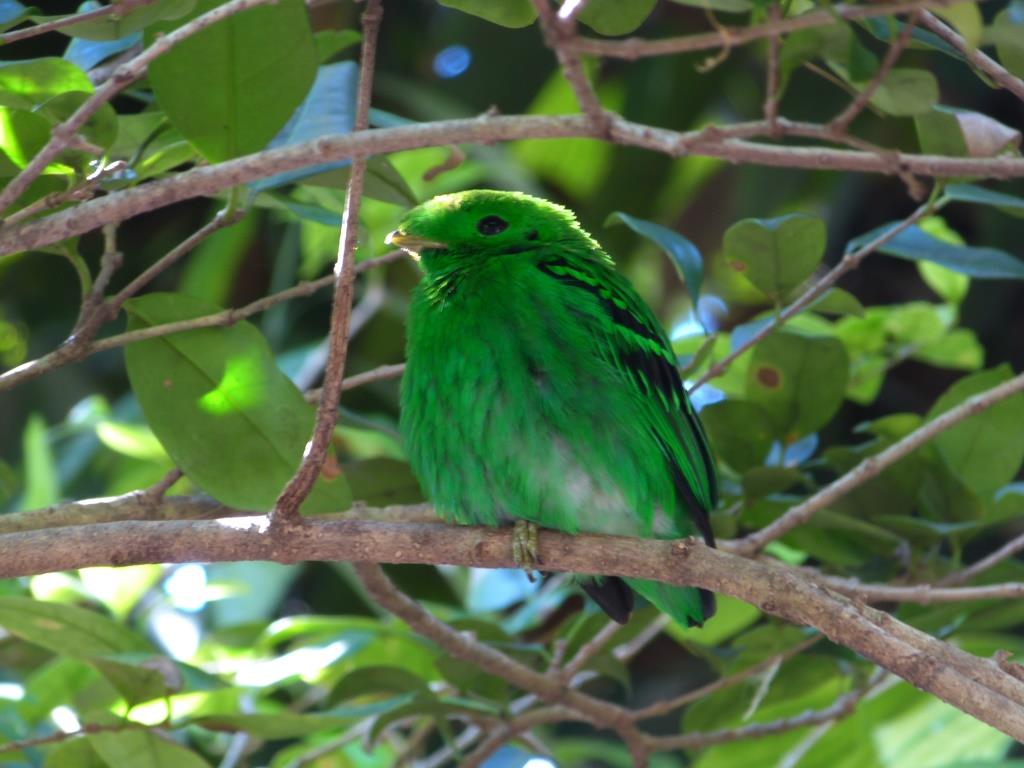
Green Broadbill (Calyptomena viridis) by Lee at ZM 2014
*
More of Emma Foster’s Bird Tales
*

“O magnify the LORD with me, and let us exalt his name together.” (Psalms 34:3 KJV)
Lizzard With Butterfly on Head ©Pixdaus White Eagle
[I know these aren’t birds, but I love this photo]
*
*

“I will make them and the places all around My hill a blessing; and I will cause showers to come down in their season; there shall be showers of blessing.(Ezekiel 34:26 NKJV)
Geese Getting A Shower ©Pinterest
*
*
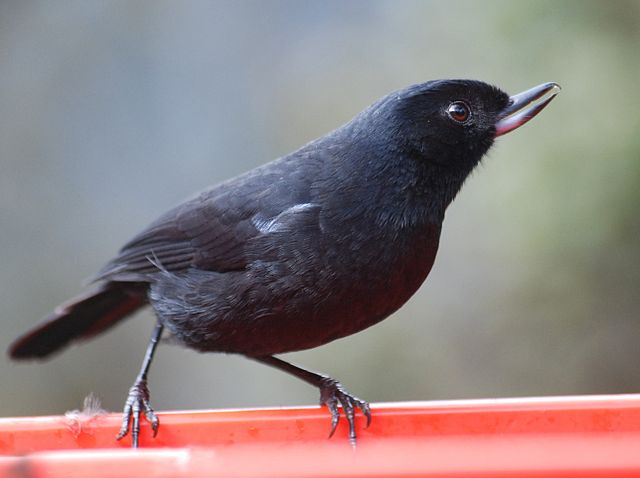
Glossy Flowerpiercer (Diglossa lafresnayii) ©WikiC
The grass withereth, the flower fadeth: but the word of our God shall stand for ever. (Isaiah 40:8 KJV)
Starting off this weeks avian wonders from the Thraupidae Family, these perfectly created “flowerpiercers are the members of two genera of tanagers, Diglossa and Diglossopis. The latter genus is sometimes subsumed into the former, but at present most authorities maintain them as separate. Based on mtDNA, the indigo flowerpiercer, which traditionally has been placed in Diglossopis, actually belongs in Diglossa. The common name refers to their habit of piercing the base of flowers to access nectar that otherwise would be out of reach. This is done with their highly modified bills [created by their creator], although this is greatly reduced in the bluish flowerpiercer, which has an almost “normal” bill. Most flowerpiercers are restricted to highlands, especially the Andes, in South America, but two species occur in Central America.” (Wikipedia)

Red Pileated Finch (Coryphospingus cucullatus) ©WikiC
There are eight species in between the Flowerpiercers and the Sierra Finches. These are in six different genera. All of these are songbirds that live in South America. They are considered incertae sedis which means in Latin that they are of uncertain placement. So they just sort of placed them together until they figure out were to place them.
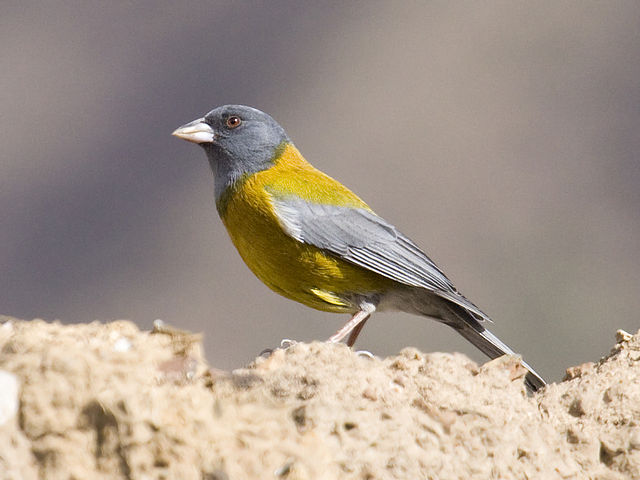
Peruvian Sierra Finch (Phrygilus punensis) ©WikiC
Phrygilus is a genus of mainly Andean seed-eating tanagers commonly known as sierra finches. Phrygilos means finch in Ancient Greek. Sometimes classified in the bunting and American sparrow family Emberizidae, more recent studies have shown them to belong in the Thraupidae. The genus appears to be polyphyletic consisting of at least three distinct lineages which in future may need to be split into separate genera.
“And he said unto me, My grace is sufficient for thee: for my strength is made perfect in weakness. Most gladly therefore will I rather glory in my infirmities, that the power of Christ may rest upon me.” (2 Corinthians 12:9 KJV)
“Your Grace is Sufficient” ~ Special by Courtney Love – Flute
*
Sunday Inspiration – Thraupidae – Tanagers and Allies I
Sunday Inspiration – Thraupidae – Tanagers and Allies II
Sunday Inspiration – Thraupidae – Tanagers and Allies III
Sunday Inspiration – Thraupidae – Tanagers and Allies IV
Sunday Inspiration – Thraupidae – Dacnis, Honeycreepers, Conebills
Traupidae Family – Tanagers and Allies
*
“Watch ye therefore, and pray always, that ye may be accounted worthy to escape all these things that shall come to pass, and to stand before the Son of man.”
(Luke 21:36 KJV)
Red Pileated Finch (Coryphospingus cucullatus) ©WikiC
*
*
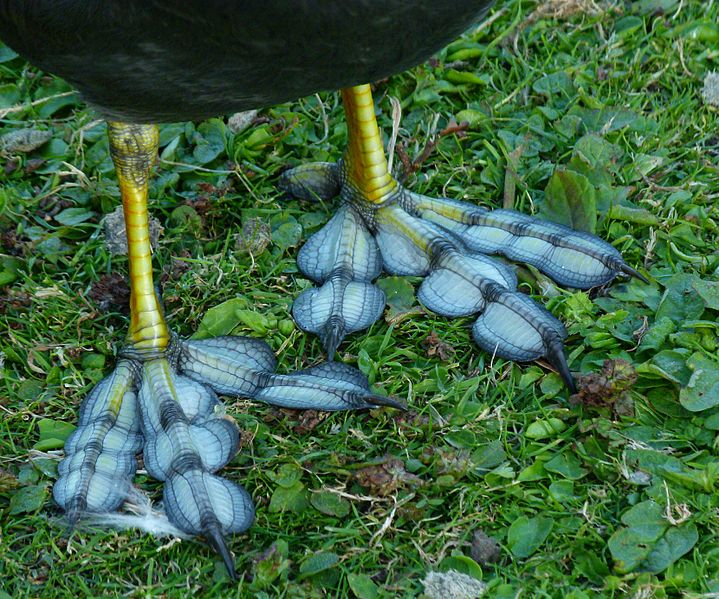
“And as the toes of the feet were part of iron, and part of clay, so the kingdom shall be partly strong, and partly broken. ” (Daniel 2:42 KJV)
EurasianCoot (Fulica atra) Lobed Feet ©WikiC
*
*

“That in blessing I will bless thee, and in multiplying I will multiply thy seed as the stars of the heaven, and as the sand which is upon the sea shore; and thy seed shall possess the gate of his enemies;” (Genesis 22:17 KJV)
Skimmers – Gulls – Terns resting at the shore MacDill by Lee
*
*
“Like as a lion that is greedy of his prey, and as it were a young lion lurking in secret places. Arise, O LORD, disappoint him, cast him down: deliver my soul from the wicked, which is thy sword:” (Psalm 17:12-13)
Though the title of today’s program is “One of evolution’s best-kept secrets,” Creation Moments could bring you hundreds of broadcasts with the same title. While evolutionists are filling science textbooks, Hollywood films, science magazines and natural history museums with their favorite evidences of evolution, they routinely fail to mention the evidences that call evolution into question.

Flamingo (Phoenicoparrus croizeti) Fossil ©WikiC
For example, evolutionists tell us that dinosaurs – after millions of years of gradual change – evolved into birds. But they don’t mention that fossils of many modern birds have been found in the very same rock layers where dinosaurs are found!
As Dr. Carl Werner points out in his book and DVD, Living Fossils, “Every time you see a T-rex or a Triceratops in a museum display, you should also see ducks, loons, flamingos or some of these other modern birds that have been found in the same rock layers as these dinosaurs, but this is not the case.”

Pacific Loon(Gavia pacifica) ©USFWS
To see if this was an innocent omission or deliberate deception, Dr. Werner traveled to 60 natural history museums and 10 dinosaur dig sights in seven different countries. His interviews with paleontologists revealed that they were well aware of the modern birds living alongside dinosaurs. And yet only one museum gave any hint that dinosaurs and modern birds lived at the same time.
What else aren’t you being told about evolution? Keep on listening to Creation Moments because we will expose more of evolution’s best-kept secrets on future broadcasts.
Prayer:
Heavenly Father, if evolution were true, evolutionists wouldn’t have anything to hide. I pray that the many of evolution’s darkest secrets will come to light! In Jesus’ Name. Amen.
Notes:
Dr. Don Batten, “Modern birds found with dinosaurs: Are museums misleading the public?”, Creation 34(3), 2012. Photo: Flamingo fossil. Courtesy of Ghedoghedo. (CC BY-SA 4.0)
**
[The bolding in the article is by me.]
Here is the link to the ‘dinos and ducks together’ Creation magazine story.
*
Modern birds found with dinosaurs
*
 Lee's Birdwatching Adventures Plus