“that at the time you hear the sound of the horn, flute, harp, lyre, and psaltery, in symphony with all kinds of music, you shall fall down and worship the gold image that King Nebuchadnezzar has set up;” (Daniel 3:5 NKJV)
“And there will be a tabernacle for shade in the daytime from the heat, for a place of refuge, and for a shelter from storm and rain.” (Isaiah 4:6 NKJV)
“For ye shall go out with joy, and be led forth with peace: the mountains and the hills shall break forth before you into singing, and all the trees of the field shall clap their hands.” (Isaiah 55:12 KJV)
Our journey through the Song Bird Order, known as the Passeriformes Order, has been ongoing for many Sundays. There are 131 Families within this Order, and we are now down to three families to go. The Traupidae Family which we are starting today, has 375 species. Guess what? We will not be covering them all today. The last four Sundays was used to show you the Emberizidae family of 181 species. I trust you enjoyed having that family split up into “bite-size” articles. The same will be true with this family of beautiful Tanagers and allies created by their Creator.
If you are fairly new to seeing these Sunday Inspirations, the slide shows have the birds arranged in taxonomy order. So, there really is a reason for the way they are presented in the slides.
“The family has an American distribution. The Thraupidae are the second-largest family of birds and represent about 4% of all avian species and 12% of the Neotropical birds. Traditionally, about 240 species of tanagers were described, but the taxonomic treatment of this family’s members is currently in a state of flux.” (Wikipedia)
“Tanagers are small to medium-sized birds. The shortest-bodied species, the white-eared conebill, is 9 cm (3.5 in) long and weighs 7 grams, barely smaller than the short-billed honeycreeper. The longest, the magpie tanager is 28 cm (11 in) and weighs 76 grams (0.168 pounds). The heaviest is the white-capped tanager which weighs 114 grams (0.251 pounds) and measures about 24 cm (9.4 in). Both sexes are usually the same size and weight. Tanagers are often brightly colored, but some species are black and white. Birds in their first year are often duller or a different color altogether. Males are typically more brightly colored than females. Most tanagers have short, rounded wings. The shape of the bill seems to be linked to the species’ foraging habits.”(Wikipedia)
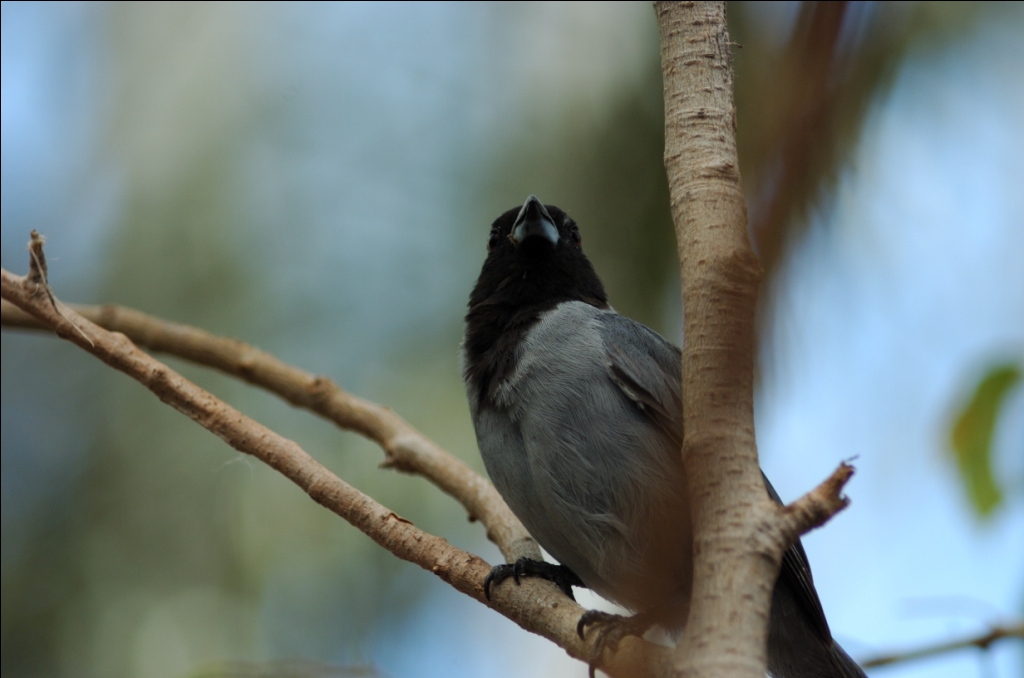
Black-faced Tanager (Schistochlamys melanopis) at National Aviary by Dan
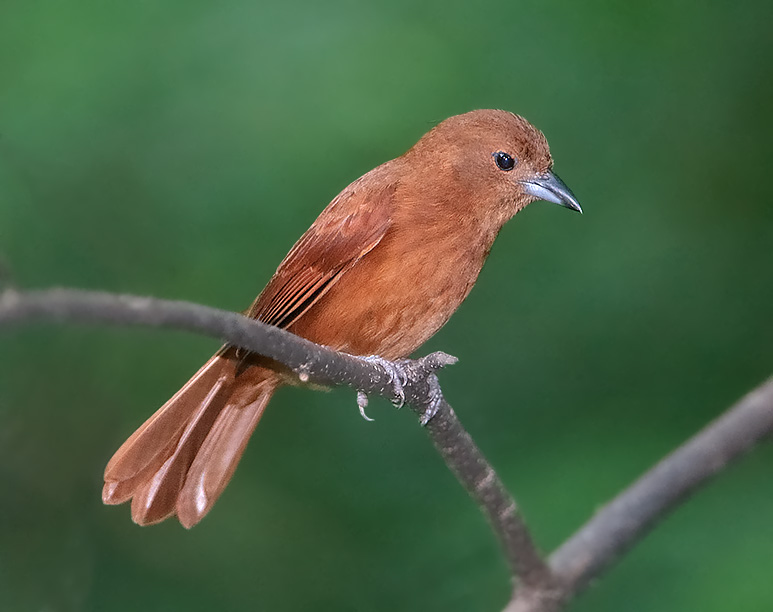
The Brown Tanager (Orchesticus abeillei) starts us off, followed by six Cardinals in the Paroaria genus. Various Tanagers from Schistochlamys, Cissopis, Conothraupis, Lamprospiza, Compsothraupis, Sericossypha, Nemosia, Creurgops, Mitrospingus and Orthogonys. (22 birds)
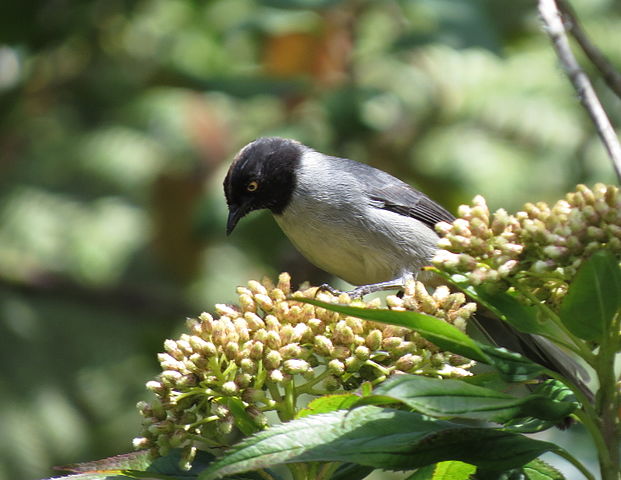
Next will be 15 Hemispingus, all in the Hemispingus genus. Hemispingus is a genus of warbler-like tanagers. They are found in highland forest in South America, especially in the Andes.
We will conclude with 20 or so more Tanagers from eight various genera. As you watch the slide show, you will see how the Lord enjoyed giving a great variety of color and patterns for these avian singers.
“Let them praise the name of the LORD: for he commanded, and they were created.” (Psalms 148:5 KJV)
This slideshow requires JavaScript.
Deck thyself now with majesty and excellency; and array thyself with glory and beauty. (Job 40:10 KJV)
“His heart is as firm as a stone; yea, as hard as a piece of the nether millstone.” (Job 41:24)
As dinosaur bones containing blood vessels and blood cells are continually being found, more and more laboratories are assigning dates to these bones in the thousands, not millions, of years. This makes evolutionists just like the patient who goes to his doctor, convinced that he is dead. After failing to convince the patient he is alive, the doctor pricks the man’s finger, causing it to bleed. “See?” the doctor says. You must be alive because dead men don’t bleed.” And the patient replies: “Imagine that! Dead men do bleed after all!”
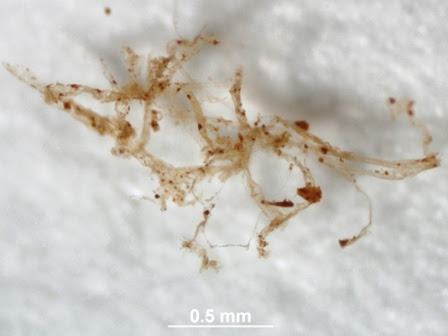
Blood vessels found in a supposedly 80-million-year-old hadrosaur fossil. Evolutionists know full well that dinosaur bones that are millions of years old should not have blood and blood vessels in them. To defend their position, they usually say the bones were contaminated, throwing off the dating. But North Carolina State University said that their researchers “have confirmed that blood vessel-like structures found in an 80 million-year-old hadrosaur fossil are original to the animal, and not biofilm or other contaminants.”
But like the patient who kept thinking he was dead, the university went on to say that their findings “add to the growing body of evidence that structures like blood vessels and cells can persist over millions of years.”
Photo Blood vessels found in a supposedly 80-million-year-old hadrosaur fossil. Courtesy of North Carolina State University. (Fair Use)
Evolutionists just won’t admit that their evolutionary dating of dinosaurs has finally been falsified. After all, that would be like admitting that the Bible is right, and this is something that atheistic evolutionists will never do.
Prayer: Heavenly Father, without You opening the eyes of evolutionists, I know it is impossible for me to get them to believe. Open their eyes to the truths found in Your infallible Word, I pray. Amen.
Notes:
“Researchers Confirm Original Blood Vessels in 80 Million-Year-Old Fossil,” NC State News, 12/1/15.
*














 Lee's Birdwatching Adventures Plus