Bible Birds Scrambled Puzzle

Western Barn Owl (Tyto alba) by SSlayton

Western Barn Owl (Tyto alba) by SSlayton

Creation Moments has Scrambled Scriptures Puzzles each week that you can subscribe to. Click here to see all of them.

This is one that has the Birds of the Bible scrambled. By clicking the link below, you can download it. Then it can be printed. Enjoy!

L T R L N A G T U R T L E D O V E T
W Q T N E T E B C A O K R O T S U Q
O C N O V G G S L I A U Q E G E E G
R B A C A S A N P Y E R P S O N A L
F H R L R N R R I A M V C F O A Y E
Y J O A E O F R E G R Z T V K R Z D
H T M F S R I U T R H R U Y C C Z E
D H R C F E S Y I K U T O C U B P K
V C O S C H S W K Y J D H W C I O C
P I C G D H O O E A G L E A G O U O
V R D E G D I R T R A P O E W Y G C
U T N H V U U C U Z Y Q O P C K N A
L S N O N E D B K K B N W F P L I E
T O W O O U T D M E M K L B H Y W P
U U Z P G C O C H L N C W W P V P F
R T R O Q V W O L L A W S A T K A B
E X E E E U B I T T E R N X H L L C
R H E A W G N A C I L E P N A W S X  ©Creation Moments
*
BITTERN
CHICKEN
CORMORANT
CRANE
CROW
CUCKOO
DOVE
EAGLE
FALCON
GLEDE
HAWK
HERON
HOOPOE
KITE
LAPWING
NIGHTHAWK
OSPREY
OSSIFRAGE
OSTRICH
OWL
PARTRIDGE
PEACOCK
PELICAN
PIGEON
QUAIL
RAVEN
SPARROW
STORK
SWALLOW
SWAN
TURTLEDOVE
VULTURE

Bible Birds Puzzle

*

*

Interesting Things – Dragonfly

Thinking

Here is an interesting video fromYouTube.com – Exploration Films about the Dragonflies. It is very interesting.

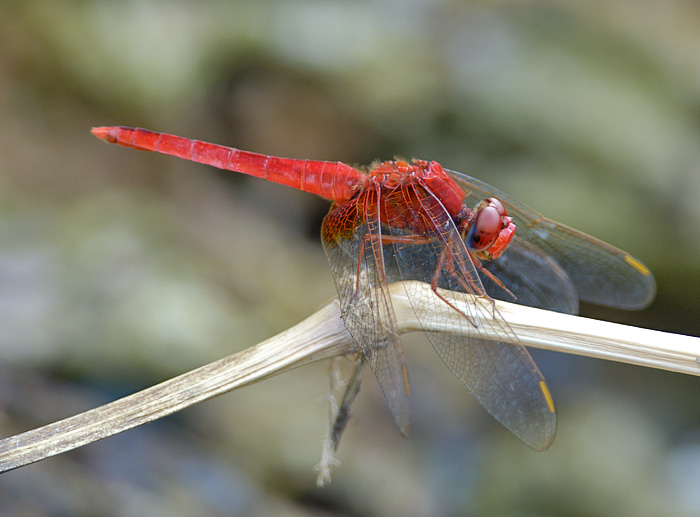
Dragonfly by Phil Kwong

Dragonfly by Phil Kwong

Learning from the Dragonfly by Creation Moments

“Scientists studying the dragonfly are learning even more secrets of flight. Our best high-performance aircraft can barely lift themselves off the ground. However, the dragonfly can lift 15 times his own weight into the air.”

The Amazing Mosquito Hawk by Creation Moments

But ask now the beasts, and they shall teach thee; and the fowls of the air, and they shall tell thee: Or speak to the earth, and it shall teach thee: and the fishes of the sea shall declare unto thee. Who knoweth not in all these that the hand of the LORD hath wrought this?
(Job 12:7-9 KJV)

More articles from Creation Moments:

100 Foot Ferns “dragonflies had wingspans of six feet”

The Pre-Flood Atmosphere “dragonflies were the size of hawks”

From Creation Ministries International:

“Dragonflies

Dragonflies are probably the most beautiful of the flying insects. There are about 4,500 different varieties. They begin their life in water, where eggs hatch into rather ugly brown nymphs. The time spent living in water varies from a few weeks to several years, but for all the varieties the day comes when the nymph suddenly has the urge to climb out of the water. It sits for a while at the top of a piece of grass until its skin splits open and out comes a dragonfly! After waiting for its wings to become firm and dry, the dragonfly flies away, its lovely colours glinting in the sunshine.

Although they are very small, dragonflies are wonderfully designed for flying. Their two pairs of wings are very light, but strengthened by a network of tiny veins, which not only carry blood fluid to keep the wings stiff, but also nerves and oxygen. Some dragonflies beat their wings 40 times in one second! Dragonflies are like tiny helicopters—they can even fly backwards! In fact, Igor Sikorsky, who first designed helicopters, for the idea from watching dragonflies.

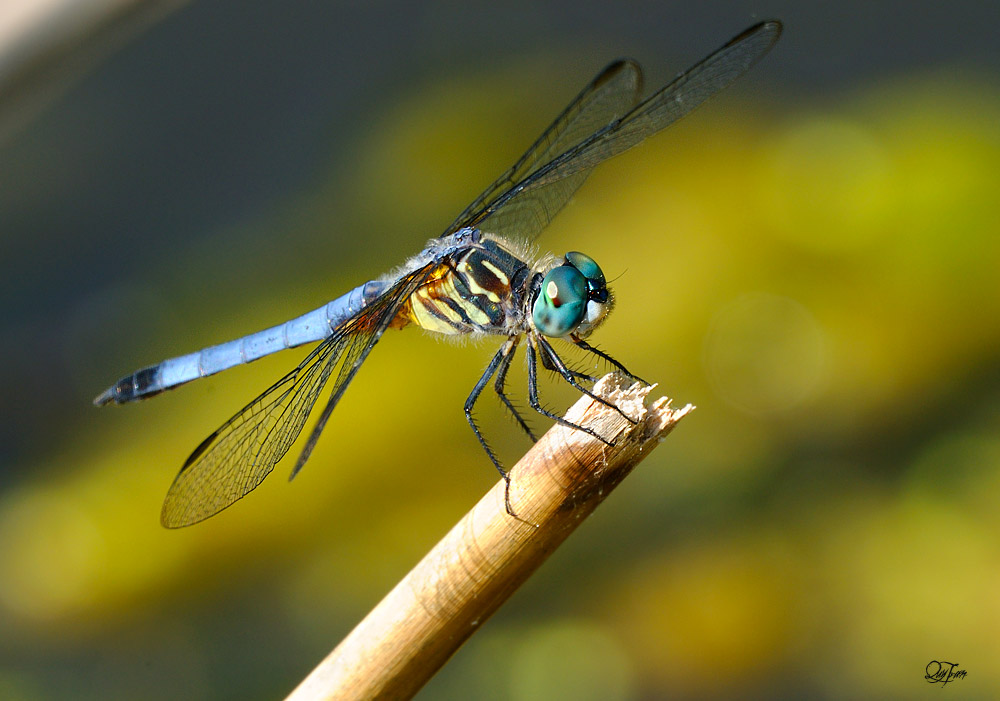
Dragonfly by QuyTran

Dragonfly by QuyTran

Another wonderful thing about dragonflies is their eyes. Each pair of eyes is actually made up of as many as 30,000 separate eyes, each with its own lens! This enables the insect to see what is happening over a wide area, and spot every tiny movement without moving its head.

The supposedly oldest fossil dragonflies are just like dragonflies are now, except that they were much larger—75 centimeters (2.5 feet) from wing-tip to wing-tip! So there is no evidence that they evolved from ancestors without wings. And surely those amazing eyes did not evolve? Dragonflies are another of the many wonders of God’s creation!” From Our World (Answers for Kids.)

Astonishing acrobatics – dragonflies – by Johathan Sarfati

(Updated 4/29/09)

Dragonflies and fighter pilots – what can we learn? by Ken Ham

*

Originally posted in 2009 – this is a duplicate.

More Interesting Things:

Interesting Things – Dragonflies II

*

*

Creation Moments – Bird that Lies and Steals

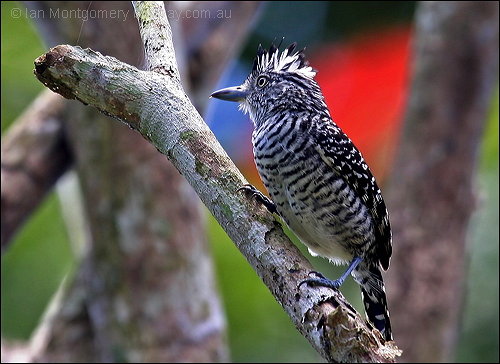
Barred Antshrike (Thamnophilus doliatus) by Ian

Barred Antshrike (Thamnophilus doliatus) by Ian

The Bird that Lies and Steals from Creation Moments©2013

If we confess our sins, he is faithful and just to forgive us [our] sins, and to cleanse us from all unrighteousness. (1 John 1:9 )

Many species of birds live in communities that are quite complex and even resemble human communities.

In the Amazon rainforests of Peru, 20 or more mixed species of birds will flock together in the lower levels of the rainforest canopy. Each flock has a leader and organizer – the bluish-slate ant-shrike. Each morning the ant-shrike will assemble its flock with loud calls.

This strange arrangement has a very good purpose. The ant-shrike watches over the flock like a mother watches her children. When a bird-eating hawk appears overhead, the ant-shrike shrieks a warning so that members of the flock can take cover. But as often as half the time, the ant-shrike sounds the alarm when there is no hawk. The ant-shrike sounds the alarm to distract members of the flock when he sees that they have discovered some choice insects. In this way, the ant-shrike gets up to 85 percent of its food by sounding the false hawk alarm. Nevertheless, the rest of the flock put up with his lying and thieving because of his value as a hawk watcher.

Lying and stealing are, of course, wrong for human beings. And our Creator will hold us each personally responsible for our thoughts and actions. But His Son, Jesus Christ, took our sins upon Himself so that all who believe in Him as their Lord and Savior will stand before Him cleansed of all their sins. Our Creator has promised this!

Prayer:
I thank You, Lord, that You have taken my sin upon Yourself. Help my trust to always rest in what You have done for me and not in what I think I can do to better myself before the heavenly Father. Amen.


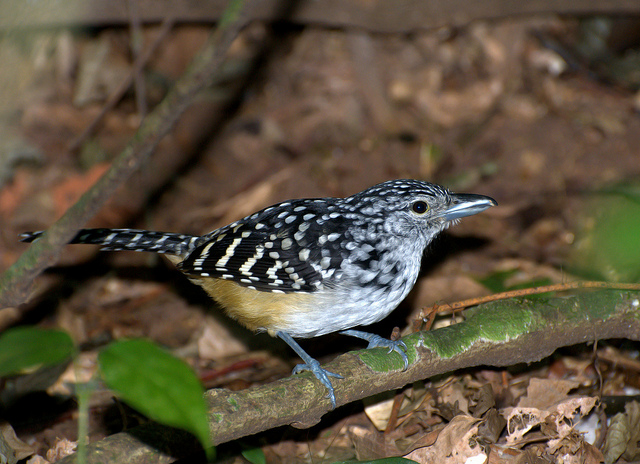
Spot-backed Antshrike (Hypoedaleus guttatus) by Dario Sanches

Spot-backed Antshrike (Hypoedaleus guttatus) by Dario Sanches

Lee’s Addition:

A very good lesson from our Antshrike and Creation Moments. Antshrikes belong to the Thamnophilidae – Antbirds Family. The antbird family contains over 200 species, variously called antwrens, antvireos, antbirds and antshrikes. The names refer to the relative sizes of the birds rather than any particular resemblance to the true wrens, vireos or shrikes.

The antbirds are a large family, Thamnophilidae, of passerine birds found across subtropical and tropical Central and South America, from Mexico to Argentina. There are more than 200 species, known variously as antshrikes, antwrens, antvireos, fire-eyes, bare-eyes and bushbirds. They are related to the antthrushes and antpittas (family Formicariidae), the tapaculos, the gnateaters and the ovenbirds. Despite some species’ common names, this family is not closely related to the wrens, vireos or shrikes.

Antbirds are generally small birds with rounded wings and strong legs. They have mostly sombre grey, white, brown and rufous plumage, which is sexually dimorphic in pattern and colouring. Some species communicate warnings to rivals by exposing white feather patches on their backs or shoulders. Most have heavy bills, which in many species are hooked at the tip.

Most species live in forests, although a few are found in other habitats. Insects and other arthropods form the most important part of their diet, although small vertebrates are occasionally taken. Most species feed in the understory and midstory of the forest, although a few feed in the canopy and a few on the ground. Many join mixed-species feeding flocks, and a few species are core members. To various degrees, around eighteen species specialise in following columns of army ants to eat the small invertebrates flushed by the ants, and many others may feed in this way opportunistically.

Silvery-cheeked Antshrike (Sakesphorus cristatus) by AGrosset

Silvery-cheeked Antshrike (Sakesphorus cristatus) by AGrosset

Antbirds are monogamous, mate for life, and defend territories. They usually lay two eggs in a nest that is either suspended from branches or supported on a branch, stump, or mound on the ground. Both parents share the tasks of incubation and of brooding and feeding the nestlings. After fledging, each parent cares exclusively for one chick.

The antbirds are a group of small to medium-sized passerines that range in size from the large Giant Antshrike to the tiny Pygmy Antwren. In general terms, “antshrikes” are relatively large-bodied birds, “antvireos” are medium-sized and chunky, while “antwrens” include most smaller species; “antbird” genera can vary greatly in size. Members of this family have short rounded wings that provide good manoeuvrability when flying in dense undergrowth. The legs are large and strong, particularly in species that are obligate ant-followers. These species are well adapted to gripping vertical stems and saplings, which are more common than horizontal branches in the undergrowth, and thus the ability to grip them is an advantage for birds following swarms of army ants. The claws of these antbirds are longer than those of species that do not follow ants, and the soles of some species have projections that are tough and gripping when the foot is clenched. Tarsus length in antbirds is related to foraging strategy. Longer tarsi typically occur in genera such as the Thamnophilus antshrikes that forage by perch-gleaning (sitting and leaning forward to snatch insects from the branch), whereas shorter tarsi typically occur in those that catch prey on the wing, such as the Thamnomanes antshrikes.

Most antbirds have proportionately large, heavy bills. Several genera of antshrike have a strongly hooked tip to the bill, and all antbirds have a notch or ‘tooth’ at the tip of the bill which helps in holding and crushing insect prey. The two genera of bushbirds have upturned chisel-like bills. (Wikipedia with editing)

Barred Antshrike – Duet Song by Jeremy Minns (xeno-canto)

Barred Antshrike – Call by Jeremy Minns (xeno-canto)

*

See:

Creation Moments

Thamnophilidae – Antbirds Family

Antbirds – Wikipedia

*

Bluebird Fathers – Protective and Teachers

Bluebird Fathers – Protective and Teachers ~ From Creation Moments (Re-post)

Eastern Bluebird (Sialia sialis) by S Slayton

Eastern Bluebird (Sialia sialis) by S Slayton

PROTECTIVE, TEACHING FATHERS

And, ye fathers, provoke not your children to wrath: but bring them up in the nurture and admonition of the Lord.  (Ephesians 6:4)

The first scientific studies that showed essential differences between males and females were not well received by some. Many Christians have resisted the teachings that men and women are by nature the same. Christians have traditionally understood the Bible to teach that males and females each have essential, honorable, but different roles to play.

Unfortunately, many Christians have been unsure how to describe those roles. As we study the scriptural portrayal of the family, especially in Ephesians chapter 5, a picture begins to emerge. All the scriptural examples of motherhood and fatherhood can be distilled into one basic idea. What we call a healthy maternal instinct and a healthy desire on the part of the male to protect and prevent danger are only two sides of the same coin.

An example of what this means was recently discovered in bluebirds. Scientists have found that bluebird fathers offer their nestling daughters twice as much food as their sons. Of course, the sons are never allowed to go hungry. Scientists were puzzled by this until someone suggested that by doing this, father bluebird was teaching his daughters, by example, how to select a mate. Female bluebirds are very fussy about selecting a mate. One of the most important things they look for in a mate is the ability to provide plenty of food for the next generation.

In an age of declining parenting skills, it’s good to be reminded that our Creator has given human parents instruction in His Word.

Prayer:
Dear Father, I thank You that You are a perfect Father. Fill Christian parents among us with love and patience. Most of all, fill them with the instruction of Your Word so that they may teach their children about You in both word and deed. In Jesus’ Name. Amen.

Notes:
K.A. Facklemann. 1992. “Bluebird Fathers Favor Pink Over Blue.” Science News, Jan. 4, p. 7.

*

An Inside Job – Re-post from Creation Moments

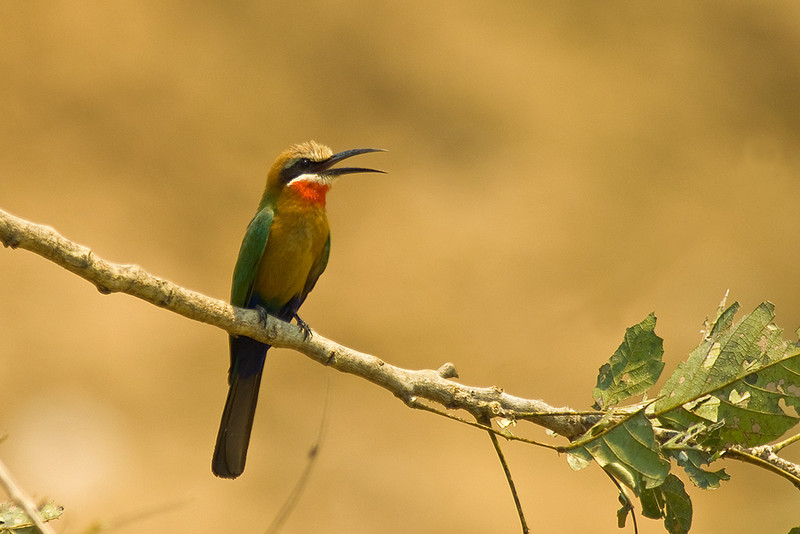
White-fronted Bee-eater (Merops bullockoides) by Africaddict

White-fronted Bee-eater (Merops bullockoides) by Africaddict

An Inside Job

Listen

And as ye would that men should do to you, do ye also to them likewise.” (Luke 6:31)

The White-fronted Bee-eater is an East African bird that lives in clans of up to fourteen members.

White-fronted bee-eaters have several problems to deal with. Since they nest on the cliffs overlooking riverbanks, youngsters need a great deal of attention until they learn to fly. Once they are on their own, the young birds are often put to work by their parents as helpers. A father may even drive away his sons’ mates in order to keep them as helpers.

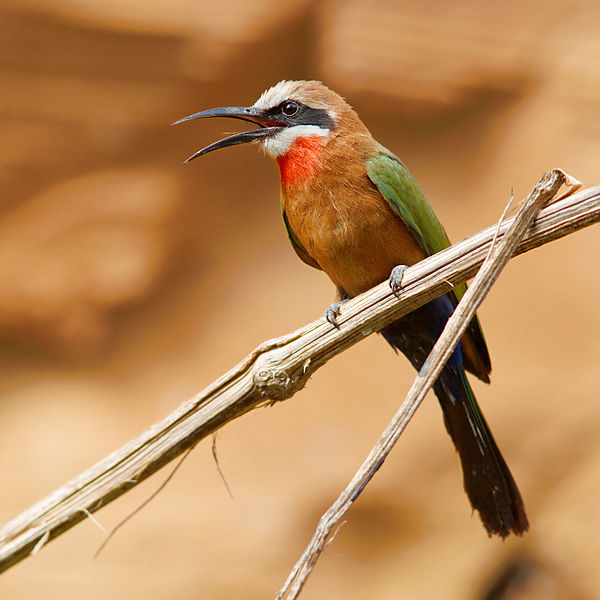
White-fronted Bee-eater (Merops bullockoides) ©WikiC

White-fronted Bee-eater (Merops bullockoides) ©WikiC

Helpers bring food for their mother, brothers and sisters. They also clean the nest area and watch for danger. However, the most important job is guarding the nest at egg-laying time. This is necessary because a female who doesn’t have her own nest will sneak into another bee-eater’s nest and lay her eggs there. If the eggs are laid before the owner of the nest starts laying her eggs, she will simply toss out the foreign egg. If there are eggs already in the nest, she will also care for the foreign eggs. The important job of guarding the nest is usually given to a daughter. However, scientists have observed that sometimes it is the daughter, while on guard duty with the mother absent, who sneaks into the nest and adds a few eggs of her own!

In His goodness, the Creator has given bee-eaters a way of life in which helping each other is part of their nature. This kindness toward each other improves the quality of life. It can serve as an example to us that the world is not designed to favor the survival of the most selfish or aggressive.

Prayer:

Dear Lord, in a world that sees only personal loss when kindness is offered, help me to remember that You gave me all things freely. Help me to see the reward of good will in helping others, even those who cannot help me in return. Amen.


White-fronted Bee-eater (Merops bullockoides) cropped by Bob-Nan

White-fronted Bee-eater (Merops bullockoides) cropped by Bob-Nan

Lee’s Addition:

Bee-eaters are one of the Lord more beautiful bird creations. I always enjoy see their photos. Soon we are going to a Zoo that I understand has Bee-eaters. Needless to say I am anxious to see them. Aren’t they gorgeous?

They belong to the Meropidae – Bee-eaters Family.

Creation Moments

White-fronted Bee-eater – Wikipedia

*

Interesting Things – Ancient Plane from Ancient Egypt

And I said, Oh that I had wings like a dove! [for then] would I fly away, and be at rest. Lo, [then] would I wander far off, [and] remain in the wilderness. (Psalm 55 6-7)

These days, we don’t have to wait very long before we hear some nonsense about how flight or – more recently – space travel are but stages in human evolutionary development. As Christians, we know that when Adam, the first man, is described as perfect, he is perfect in every way – spiritually, morally and intellectually. This probably explains why Scripture says that within the first few generations of human existence on Earth, the arts and sciences were flourishing.


In 1898, an object that was thought to be a small wooden model of a bird was discovered in Egypt. The “unremarkable” find was tossed into a box marked “wooden bird models” and was rediscovered in more recent times. The Egyptian Ministry of Culture set up a special panel to study the object. As a result of that study, the object is on display at the Cairo Museum today as the centerpiece of a special exhibit. It is now officially labeled as a model airplane.

The plane’s design shows that it is an excellent glider, and with a small engine it could carry huge loads because of the unique design of its wings. This 2,200 year old model airplane had wings that angle slightly downward at the ends—exactly the same improved wing design that was first used in modern times on the supersonic Concorde!

Everyone agrees that humans have always been interested in flight. But now it appears that we creationists were right – we have always been smart enough to do something about our interest in flight as well!

Prayer:
Lord, help people understand that they are not simply glorified animals but are Your creations. Help us all to see that You made each one of us for a purpose, and help me to live for Your purpose.
In Jesus’ Name. Amen.
Notes:
Photo: Courtesy of Dawoudk and licensed under the Creative Commons Attribution-Share Alike 3.0 Unported license.
*

The Wombat’s Backward Pouch (Re-post)

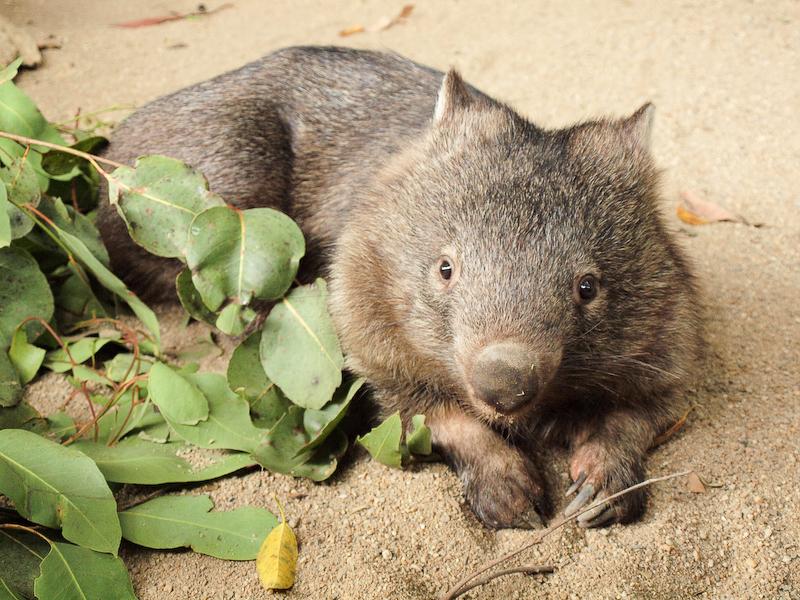
Common Wombat - Cairns CC

Common Wombat - Cairns CC

The Wombat’s Backward Pouch (Re-posted from Creation Moments)

Ephesians 2:10
For we are his workmanship, created in Christ Jesus unto good works, which God hath before ordained that we should walk in them.

Australia has many animals that are not found anywhere else in the world today. One of the most unique is the wombat, which looks like a small bear with brown fur. The wombat is a burrowing animal.

Like many of Australia’s animals, the wombat is a marsupial, having a pouch in which its prematurely born young complete their development. The pouches owned by most marsupials are open at the top toward the mother’s head. This works fine for the kangaroo and other marsupials – no one ever saw a kangaroo standing on its head.

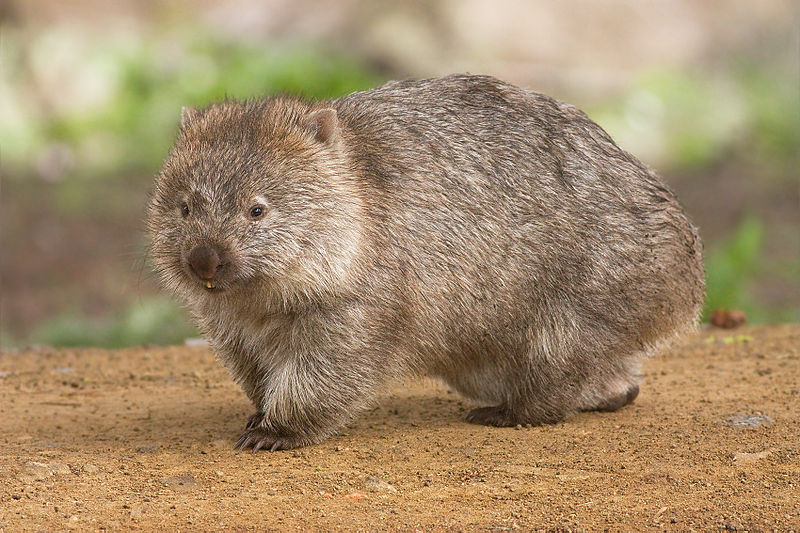
Common Wombat (Vombatus ursinus)-Maria Island National Park

Common Wombat (Vombatus ursinus)-Maria Island National Park

But the wombat is a burrowing animal. If its pouch opened toward the mother’s head, it would very quickly fill with dirt, which wouldn’t do the young wombat inside the pouch any good. So, unlike any other marsupial, the wombat’s pouch opens toward the animal’s hind legs – it points backward!

The marsupial’s pouch is a wondrous enough invention all by itself. But this pouch is a clear case of a specialized intelligent design for a unique situation. If the wombat’s backward pouch had been produced by mutations, how would baby wombats have gotten by during the millions of years of trial and error needed to redesign the pouch? It’s easy to see the wombat’s backward pouch as a humorous hint from the Creator that human theories simply cannot replace the account of creation that He has revealed to us in the Bible!

Prayer:
Lord, I thank You that You have so carefully planned every detail of the creation for the benefit of every creature. When things don’t seem to be going well in my life, comfort me with the fact that You are still in charge and that You care about the details of my life, too. Amen.
Notes:
Major, Trevor. 1989. “The backward wombat.” Reasoning from Revelation, August. p. 3.

©Creation Moments, 2012

*

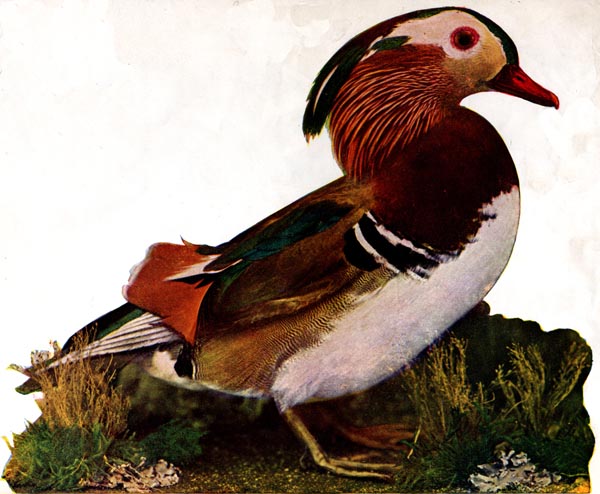
Birds Vol 1 #1 – The Mandarin Duck

Mandarin Duck

Mandarin Duck

Birds Illustrated by Color Photography – Revisited

Vol 1. January, 1897 No. 1

*

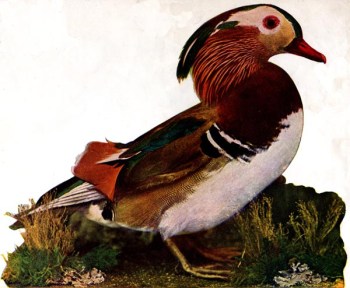
THE MANDARIN DUCK.

A Letter from China.

Quack! Quack! I got in just in time.

I came as fast as I could, as I was afraid of being whipped. You see I live in a boat with a great many other ducks.

My master and his family live in the boat too. Isn’t that a funny place to live in?

We stay in all night. Waking up early in the morning, we cry Quack! Quack! until we wake the master.

He gets up and opens the gate for us and out we tumble into the water. We are in such a hurry that we fall over each other. We swim about awhile and then we go to shore for breakfast.

There are wet places near the shore where we find worms, grubs, and roots. When evening comes the master blows a whistle. Then we know it is time to come home.

We start as soon as we hear it, and hurry, because the last duck in gets a whipping. It does not hurt much but we do not like it, so we all try to get home first.

I have web feet, but I perch like other birds on the branches of the trees near the river.

My feathers are beautiful in the sunlight. My wife always sits near me. Her dress is not like mine. It is brown and grey.

From May to August I lose my bright feathers, then I put on a dress like my wife’s.

My master’s family are Chinese, and they are very queer. They would not sell me for anything, as they would not like to have me leave China.

Sometimes a pair of us are put in a gay cage and carried to a wedding. After the wedding we are given to the bride and groom.

I hear the master’s whistle again. He wants me to come in and go to bed. Quack! Quack! Good bye!

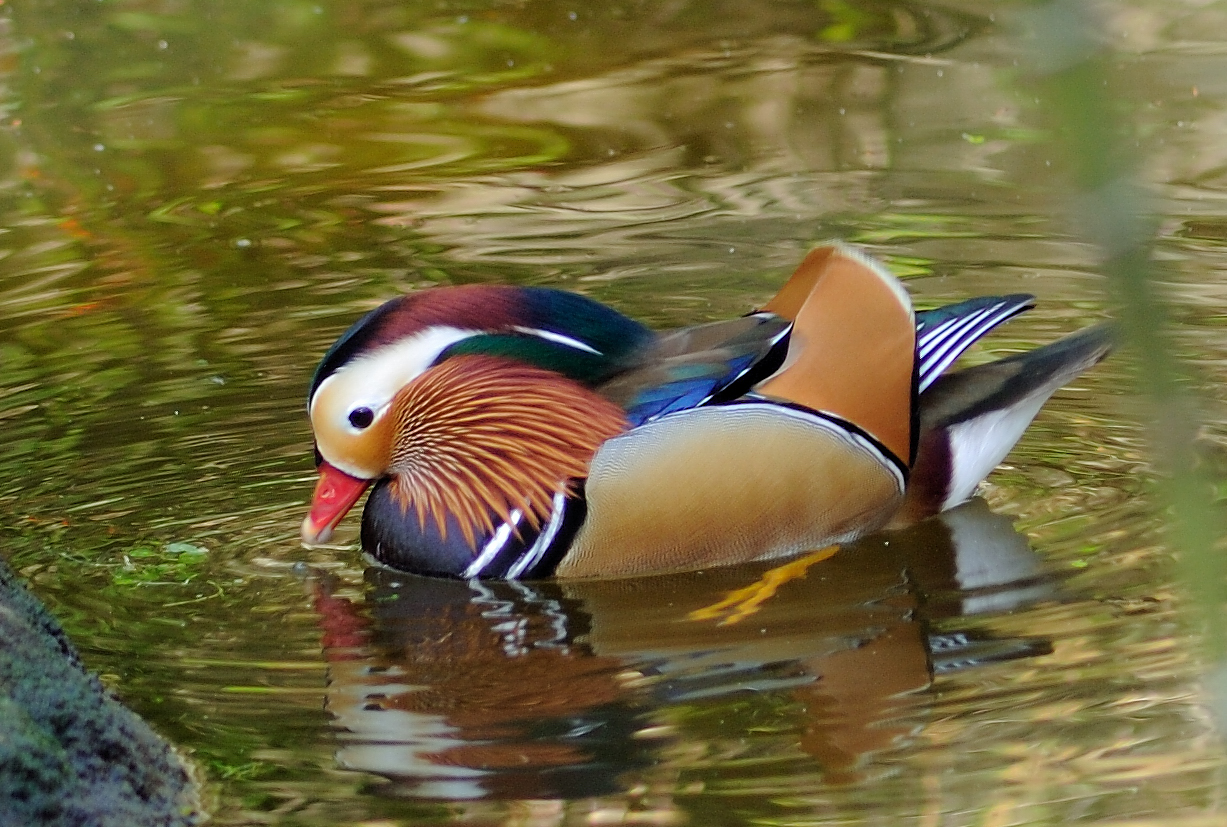
Mandarin Duck (Aix galericulata) by S Slayton

Mandarin Duck (Aix galericulata) by S Slayton

THE MANDARIN DUCK.

imga1

MORE magnificently clothed bird,” says Wood, “than the male Chinese Mandarin Duck, can hardly be found, when in health and full nuptial plumage. They are natives of China and Japan, and are held in such high esteem by the Chinese that they can hardly be obtained at any price, the natives having a singular dislike to seeing the birds pass into the possession of Europeans.”

Though web-footed, the birds have the power of perching and it is a curious sight to watch them on the branches of trees overhanging the pond in which they live, the male and female being always close together, the one gorgeous in purple, green, white, and chestnut, and the other soberly appareled in brown and grey. This handsome plumage the male loses during four months of the year, from May to August, when he throws off his fine crest, his wing-fans, and all his brilliant colors, assuming the sober tinted dress of his mate. The Summer Duck of America bears a close resemblance to the Mandarin Duck, both in plumage and manners, and at certain times of the year is hardly to be distinguished from that bird.

The foreign duck has been successfully reared in Zoological Gardens, some being hatched under the parent bird and others under a domestic hen, the latter hatching the eggs three days in advance of the former.

“The Chinese,” says Dr. Bennett, “highly esteem the Mandarin Duck, which exhibits, as they think, a most striking example of conjugal attachment and fidelity. A pair of them are frequently placed in a gaily decorated cage and carried in their marriage processions, to be presented to the bride and groom as worthy objects of emulation.”

“I could more easily,” wrote a friend of Dr. Bennett’s in China to whom he had expressed his desire for a pair of these birds, “send you two live Mandarins than a pair of Mandarin Ducks.”

Concerning their attachment and fidelity to one another, Dr. Bennett recites the following:

“Mr. Beale’s aviary at Maceo one day was broken open and the male bird stolen from the side of its mate. She refused to be comforted, and, retiring to the farthest part of the aviary, sat disconsolate, rarely partaking of food, and giving no attention to her soiled and rumpled plumage. In vain did another handsome drake endeavor to console her for her loss. After some time the stolen bird was found in the quarters of a miserable Chinaman, and at once restored to its mate. As soon as he recognized his abode he began to flap his wings and quack vehemently. She heard his voice and almost quacked to screaming with ecstasy, both expressing their joy by crossing necks and quacking in concert. The next morning he fell upon the unfortunate drake who had made consolatory advances to his mate, pecked out his eyes and so injured him that the poor fellow died in the course of a few days.”

According to Schrenck, this species appears in the countries watered by the Amoor about May, and departs again at the end of August; at this season it is always met with in small or large flocks, which are so extremely shy that they rarely come within gunshot. Whilst on the wing these parties crowd closely together in front, the birds in the rear occupying a comparatively free space.
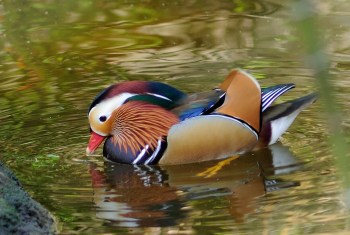
Mandarin Duck (Aix galericulata) LPZoo by Dan

Mandarin Duck (Aix galericulata) LPZoo by Dan


Lee’s Addition:

The Mandarin Duck is in the Anatidae – Ducks, Geese & Swans Family of the Answeriformes Order.  Along with the Wood Duck, these ducks just amaze me in their creation. When the Lord created them, He must have had a very neat paint brush. They are so gorgeous! Every time I see them they almost bring tears to my eyes.

The Mandarin Duck (Aix galericulata), or just Mandarin, is a medium-sized perching duck, closely related to the North American Wood Duck. It is 16-19 in (41–49 cm) long with a 25.5-29.5 in (65–75 cm) wingspan.

The adult male is a striking and unmistakable bird. It has a red bill, large white crescent above the eye and reddish face and “whiskers”. The breast is purple with two vertical white bars, and the flanks ruddy, with two orange “sails” at the back. The female is similar to female Wood Duck, with a white eye-ring and stripe running back from the eye, but is paler below, has a small white flank stripe, and a pale tip to its bill. The Mandarin ducklings are almost identical in look to Wood ducklings, and appear very similar to Mallard ducklings. The ducklings can be distinguished from Mallard ducklings because the eye-stripe of Mandarin ducklings (and Wood ducklings) stops at the eye, while in Mallard ducklings it reaches all the way to the bill.

Unlike other species of ducks, most Mandarin drakes reunite with the hens they mated with along with their offsprings after the eggs have hatched and even share scout duties in watching the ducklings closely. However, even with both parents securing the ducklings, most of them do not survive to adulthood.

Mandarins may form small flocks in winter.

Mandarin Ducks, which are referred to by the Chinese as Yuan-yang (simplified Chinese: 鸳鸯; traditional Chinese: 鴛鴦; pinyin: yuān yāng), where yuan() and yang() respectively stand for male and female Mandarin Ducks.

In traditional Chinese culture, Mandarin Ducks represent a life-time couple, unlike many other species of ducks. Hence they are frequently featured in Chinese art and are regarded as a symbol of conjugal affection and fidelity.

But now ask the beasts, and they will teach you; And the birds of the air, and they will tell you; (Job 12:7 NKJV)

A Chinese proverb for loving couples uses the Mandarin Duck as a metaphor: “Two mandarin ducks playing in water” (simplified Chinese: 鸳鸯戏水; traditional Chinese: 鴛鴦戲水; pinyin: yuān yāng xì shuǐ). The Mandarin Duck symbol is also used in Chinese weddings, because in traditional Chinese lore they symbolize wedded bliss and fidelity.

Because the male and female plumages of the Mandarin Duck are so unalike, yuan-yang is frequently used colloquially in Cantonese to mean an “odd couple” or “unlikely pair” – a mixture of two different types of same category. For example,yuanyang (drink) and yuan-yang fried rice.
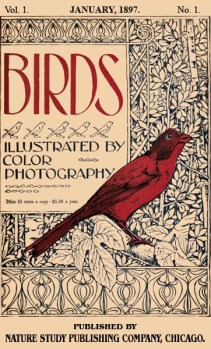
Birds Illustrated by Color Photograhy Vol 1 January 1897 No 1 - Cover

Birds Illustrated by Color Photography – Revisited – Introduction

The above article is the third article in the monthly serial that was started in January 1897 “designed to promote Knowledge of Bird-Live.” These include Color Photography, as they call them, today they are drawings. There are at least three Volumes that have been digitized by Project Gutenberg.

To see the whole series of – Birds Illustrated by Color Photography – Revisited

*

(Information from Wikipedia and other internet sources)

Next Article – The Golden Pheasant

Previous Article – The Resplendent Trogon (Quetzal)

Links:

Photos of Mandarin Ducks

Mandarin Duck – Wikipedia

Birds of the World – Anatidae – Ducks, Geese & Swans

Wordless Birds

*


Formed By Him – “Designed for Flight” by Creation Moments

Mallards flying off by Ian

Mallards flying off by Ian

Doth the hawk fly by thy wisdom, [and] stretch her wings toward the south? (Job 39:26)

When I Consider – “Designed for Flight” by Creation Moments

“Many textbooks tell young people today that birds are modified reptiles. Suppose, they say, that millions of years ago the scales on some reptiles began to fray along the edges. In time, they say, the frayed scales turned into feathers and birds were born.

When I Consider!

Formed By Him

The elegance and beauty of the feather make this story hard to believe. Can sticking a feather on a lizard produce a peacock? The bird’s feather is only a small part of the complete flying system of the bird. Even with very careful planning and redesigning, a reptile doesn’t have what it takes.

A bird needs massive breast muscles for flight. In some birds, 30 percent of the body weight of the bird is breast muscle. By comparison, in humans, breast muscles are only about 1 percent of body weight. A bird also needs an extremely high metabolism and blood pressure to deliver the energy those muscles need for flight. Birds have a higher metabolism than any other creature; they also have the necessary high blood pressure. Finally, as is well known, birds need light skeletons. The man-o’-war has a wingspan of seven feet. But its entire skeleton weighs only a few ounces – less than its feathers!

Even the most clever rebuilding of a reptile cannot produce a bird. In fact, birds have very little in common with reptiles. The entire being of the bird, from body to brain, has been specially designed for flight by a Creator who clearly knows everything there is to know about flight.

Prayer:
Father in heaven, the beauty, grace and huge variety of birds You have created are some of the most beautiful creatures on earth. As I thank You for them, fill me with new wonder over the wonderful work of Your hands. Amen.

Notes:
Vandeman, George. 1991. “The miracle of flight.” Signs of the Times, May. p. 25.”
*


All things were made by him; and without him was not any thing made that was made. (John 1:3 KJV)

More:
Formed By Him
When I Consider
Creation Moments

*

Interesting Things – Dragonfly (from Creation Moments)

Dragonfly by Phil Kwong

Dragonfly by ©Phil Kwong

Come, ye children, hearken unto me: I will teach you the fear of the LORD. (Psalm 34:11 )

Evolutionary naturalism paints the picture of life as if it were a haphazard series of accidents that just barely resulted in a range of living things that just manage to survive. This fanciful picture destroys our sense of wonder over the sophisticated engineering designs in nature.

SmileyCentral.com

Consider the mystery of flight, for example. Some evolutionists suggest that perhaps birds are descended from lizards that fell out of trees a lot. Other evolutionists say that birds came from lizards who grew wings, not for flight but to chase down and catch insects. Yet, they have little to say about the fact that we humans have come by most of our sophisticated knowledge about flight from studying the birds.

Then there is the problem, for the evolutionist, of how flight accidentally evolved so many times for so many creatures. Scientists studying the dragonfly are learning even more secrets of flight. Our best high-performance aircraft can barely lift themselves off the ground. However, the dragonfly can lift 15 times his own weight into the air. Scientists have learned that this is because the dragonfly’s wings are designed to create little whirlwinds over their top surfaces. These whirlwinds are the secret to creating incredible lifting power. Ways are now being planned to apply this secret to new aircraft designs.

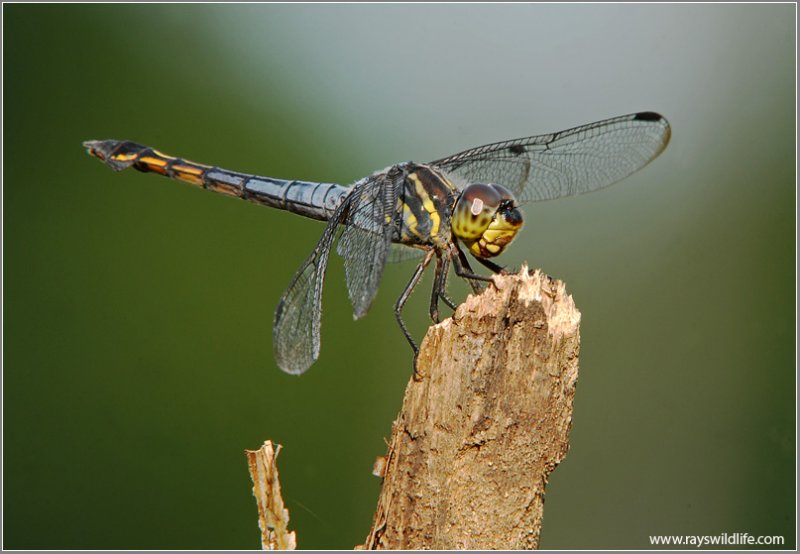
Dragonfly by ©Raymond Barlow

Dragonfly by ©Raymond Barlow

The engineering excellence found in nature and from which we have learned so much even in this day of interplanetary probes is not witness to a mindless process of evolution, but to a wise and mindful Creator.

Prayer:
Father, it seems a shame that humans learned about flight from the dragonfly and fail to see a witness to You. Yet, I know that I don’t learn from You as I should, either. Forgive me for Jesus’ sake and make me a better learner. Amen.

Notes:
“Dragonfly model for future wings.” Science Digest, Mar. 1984. p. 87. ©Creation Moments, 2011

***

The lessons being learned about the dragonfly’s wings are a good example of:

But now ask the beasts, and they will teach you; And the birds of the air, and they will tell you; (Job 12:7 NKJV)

We can learn much from the critters by learning about how the Lord created them and then applying those lessons to better our lives.

More Interesting Things

*

Interesting Things – The Weaver Bird

Lesser Masked Weaver (Ploceus intermedius) by Bob-Nan

Lesser Masked Weaver (Ploceus intermedius) by Bob-Nan

And God blessed them, and God said unto them, Be fruitful, and multiply, and replenish the earth, and subdue it: and have dominion over the fish of the sea, and over the fowl of the air, and over every living thing that moveth upon the earth. (Genesis 1:28)

Intelligence – as much as is needed and no more – is generously found throughout the creation. So we cannot say that intelligence alone makes humans special.

Consider the weaverbird. The weaverbird nest consists of woven strips of fiber and grass. Using beak and feet, the male weaverbird uses both loops and knots to weave his hanging nest. Then the nest must be inspected by a prospective mate. If she doesn’t like the nest’s construction, she will turn down the hopeful mate. The male must then tear down his work and start over. Some males have been observed constructing and tearing down their nests two dozen times before finding a prospective mate who is satisfied with his work. Some weaverbirds actually build huge cities of nests protected by a woven roof. One roof over a weaverbird city was 15 feet across!

SmileyCentral.com

Human intelligence spans much more than animal intelligence. However, what sets us apart from animals is the fact that our Creator made us to have a special relationship with Him. And even when Adam and Eve placed their will above God’s Word, He still loved us enough to pay the highest price to restore us to Himself. Jesus Christ lived in perfect obedience to God for us and then suffered the penalty of our disobedience against God. In His resurrection from the dead, all those who embrace Christ in faith receive the promise of being made new creations again – beginning right here in this life! That’s the wide gulf between humans and animals!

Prayer:
Dear Father, I thank You that You have given me being and life, and that when I was lost in sin, You still sought me out with Your gospel. Help me to truly live as Your new creation in Christ. For His sake. Amen.
Notes:
Science Digest, Aug. 1983. p. 73.

©Creation Moments 2011


Lee’s Addition:

Thought you might enjoy watching the weaver birds at work. Most of the Weaver Birds belong to the Ploceidae – Weavers, Widowbirds Family. Some of the Old World Sparrows – Passeridae Family have Weavers.
*

*

Wordless Birds

*

Interesting Things – Tool-Using Animals

SmileyCentral.com

So God created man in his [own] image, in the image of God created he him; male and female created he them. (Genesis 1:27)

Evolution devalues humanity. It tries to find the most unflattering way to describe human beings to try to counter the Bible’s claim that they were created in God’s image.

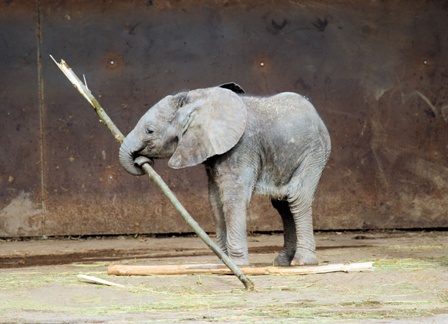
Baby Elephant with Tool ©©

Baby Elephant with Tool ©©

For generations, evolutionists said that the humans’ use of tools was all that made them different from animals. Creationists who objected, saying there was obviously more of a difference than that, were ignored as unscientific. It wasn’t so long ago that evolutionists scoffed at creationists who showed them that there are animals who use tools – and, therefore, the evolutionists’ definition was wrong.

Elephants often take sticks in their trunks to scratch their backs. Galapagos Woodpecker Finch (edited) use cactus spines, held in their beaks, to probe insects out of cracks in trees.

Chimpanzees even use sticks as levers to move heavy objects. They also make tools out of sticks by shaping them to the right size to poke into termite nests. The stick full of termites they pull out of the nest offers them a tasty snack. West African chimps actually use stones as hammers to crack nuts. So today, evolutionists recognize that some animals not only use tools, but also make them! Only now they claim that animals who use tools prove their theory. Which only goes to show that evolution is not science that can be disproved. It is a faith that will be believed even when the facts contradict it. The facts say that there is an unbridgeable difference between humans and animals.

Prayer:
Lord, I thank You for making animals. I ask that You would help all who are working to teach Christian young people that they are Your creations and not glorified animals. Show me my part in filling this need. Amen.
Notes:
“Tool-wielding beasts.” Science Digest, Aug. 1983. p. 107.

Lee’s Addition:

*

* More Interesting Things

*