Birds of the Bible – Uniquely Created – Tools

Many birds have built in “tools” such as the way their beaks are designed or their feet, or wings, etc. Some use things as tools as shown below in the articles and the video.

How Nature Works: White-winged Crossbill Feeding Technique from CornellLab of Ornithology. (Last statement gives credit to evolution, but we believe they were uniquely created with this ability by the Lord.)

Rooks Reveal Remarkable Tool Use It appears that Rooks (Crow related) have been given intelligence by their Creator to figure out how to use things as tools.

Also, New Caledonian Crows themselves are able to use tools.

The list goes on and on of the uniquely created ways birds use their built in or external “tools.” “The Tool-Using Bird” (Vulture) and “Animals That Make and Use Tools” by Creation Moments.

What kind of tools (gifts) has the Lord given you to use. Are you using them in the way that He intended for you to use them.

Having then gifts differing according to the grace that is given to us, let us use them: if prophecy, let us prophesy in proportion to our faith; (Romans 12:6 NKJV)

As each one has received a gift, minister it to one another, as good stewards of the manifold grace of God. (1 Peter 4:10 NKJV)

Interesting Articles and Videos:
Adaptation and ecology: the marvelous fit of organisms to their environment” by Dr. Gary Parker

Woodpecker Finch using a stick as a tool. YouTube by firpeace

Animals Using Tools YouTube by ronesh (Bird Fishing)

*

Birds of the Bible – Uniquely Created Sound

When the Lord created the birds, He gave each a unique design which includes not only their appearance, but also the sounds they make. Below is an interesting video about the sounds of the different birds. It is a little lengthy (9 min.) but well worth watching.

The Language of Birds by LabofOrnithology

The flowers appear on the earth; the time of the singing of birds is come, and the voice of the turtle is heard in our land; (Song of Solomon 2:12 KJV)

Each of the bird’s songs and sounds help them to communicate with one another, and with other species. Many times one bird, like a Blue Jay, will sound an alarm that warns all of the birds of an impending danger. Lots of birds singing is a sign that all is well in that area.

Just as the Lord uniquely gave each bird a separate song or sound, the Lord has given each of us in the church separate unique abilities and talents. One may be the preacher, one the song leader, teachers, choir or orchestra members, sound and video workers, baby sitters, ushers, etc. We all are different, but when all of those abilities are brought together, like all of those birds in the rain forest that make beautiful music together, we worship and serve the Lord jointly.

Thy hands have made me and fashioned me: give me understanding, that I may learn thy commandments. (Psalms 119:73 KJV)

Now therefore ye are no more strangers and foreigners, but fellowcitizens with the saints, and of the household of God; And are built upon the foundation of the apostles and prophets, Jesus Christ himself being the chief corner stone; In whom all the building fitly framed together groweth unto an holy temple in the Lord: In whom ye also are builded together for an habitation of God through the Spirit. (Ephesians 2:19-22 KJV)

*

Pigeons and Their Pecking Order

Hill Pigeon (Columba rupestris) by Nikhil Devasar

Hill Pigeon (Columba rupestris) by Nikhil Devasar

The April 7th issue of NatureNews has an interesting article called, “Airborne pigeons obey the pecking order.” According to the studies they did on flying pigeons that were strapped with tiny GPSs, they change directions by responding to the leaders, not just any member of the flock.

“”It is the first study demonstrating hierarchical decision-making in a group of free-flying birds,” says Tamás Vicsek, a biophysicist at Eötvös Loránd University in Budapest who led the study…”

Another interesting thing they found out was, “Although pigeons have an almost 340º field of view, the researchers found that the birds at the front of a flock tended to make the navigational decisions. Moreover, birds responded more readily to a leader’s movements if the leader was on their left side. These findings concur with previous work that indicated that social cues entering a bird’s left eye receive preferential processing in the brain2.”

The article is very interesting and worth reading. Of course, I don’t agree with the last sentence of the article because they give the credit to evolution. We believe that the Lord created the pigeons with this ability from the first day they were created.

Hast thou not known? hast thou not heard, that the everlasting God, the LORD, the Creator of the ends of the earth, fainteth not, neither is weary? there is no searching of his understanding. (Isaiah 40:28 KJV)

Who are these that fly as a cloud, and as the doves to their windows? Isa 60:8

Doth the hawk fly by thy wisdom… (Job 39:26a) God was asking Job about the hawk, but it could be any bird including the pigeon.

To read the complete article – Click Here

*

Thousands of Eyes, But No Brain?

This is a copy of a neat article by April Lorier – “Thousands of Eyes, But No Brain?

April Lorier Perspective

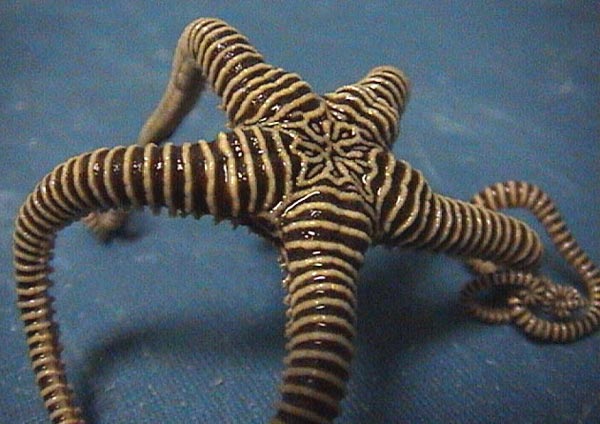
Brittlestar from Wikipedia

Brittlestar from Wikipedia

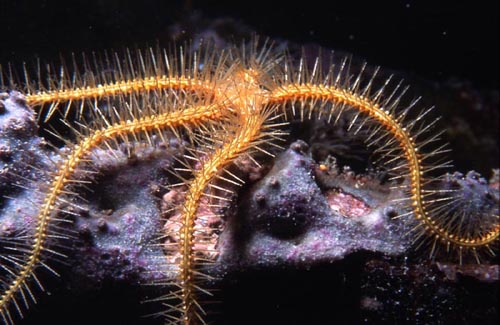
We generally associate eyes with our brain because they are two closely working parts of our nervous system. Our brain is necessary to interpret what our eyes see. However, the brittlestar, a relative of the starfish, has thousands of eyes and no brain.

The brittlestar’s body is covered with a pliable crystalline material. Inserted in this material are literally thousands of perfectly shaped lenses that collect light. Each of these lenses is about half the diameter of a human hair.

Researchers commented that these lenses are much finer than anything we can engineer. Studies show that all of these lenses work together to act as one giant eye. They seem to work rather like the compound eye of the fly. The lenses focus incoming light on photoreceptors.

Brittlestar ©Rachel Graham

Brittlestar ©Rachel Graham

Researchers believe that this arrangement allows the brittlestar to form a rough image of its surroundings and tell what time of day it is. If the light becomes too bright, the brittlestar can darken its skin, in effect, putting on sunglasses. Even more amazing is that the brittlestar does all of this, despite the fact that it doesn’t have a brain! As one researcher put it, “This is very clever engineering.”

The wonders that have come from God’s creative hand can lead even evolutionists to use the language of creation. Yet, God’s greatest wonder is His plan for our salvation.

2010 Christian Nature

“Better is the sight of the eyes than the wandering of the desire…” Ecclesiastes 6:9a —

References: Discover, 11/01, p. 16.

Used with permission of April Lorier.

See more of April’s articles.

*

Interesting Things – Increasing Numbers Want Equal Time for Creation

Increasing Numbers Want Equal Time for Creation – from Creation Moments

Deceit is in the heart of those who devise evil, but counselors of peace have joy. (Proverbs 12:20)

A few years ago, a news release revealed the result of a poll on what Americans prefer to have taught in public schools about origins. The poll was done for an organization that favors a dogmatic teaching of evolution. The news release stated only that a huge majority of Americans, 83 percent, favor the teaching of evolution in the public schools. We at Creation Moments were led to investigate this poll more closely since this poll result runs contrary to other recent polls.

SmileyCentral.com

The professional polling organization polled 1,500 people about whether creation or evolution should be taught in the public schools. Indeed, 83 percent said they believe that the theory of evolution should be taught in the public schools. However, what was not included in the popular reporting of the poll was that 79 percent of those polled said that creation should also be taught in the schools. Only 20 percent of those polled felt that evolution only should be taught. Clearly, Americans prefer both creation and evolution presented to the students so that they can make up their own minds. Equally notable is that almost half of those polled agreed with the statement that evolution is “far from being proven to be scientific.”

While the statement that 83 percent of those polled favor evolution being taught is true, it leaves out the most important part of the poll’s findings. Clearly, ordinary people want to hear about God’s creation.

Prayer: Dear Father, help us never to be deceived by the forces of darkness. Amen.

References: Christian News, 4/3/00, p. 2.,  Creation Moments ©2010

Flight 7…

Flight 7… – by a j mithra

Number seven signifies completeness and that is the reason GOD took rest on the seventh after creation..

The wing shape of birds has its basis in survival value…
There are Seven Basic Wing Shapes and arrangements for different flying styles;

1.  FAST TAKEOFF AND DODGING WINGS

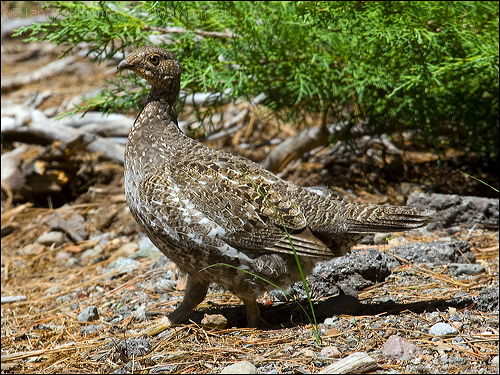
Sooty(Blue) Grouse (Dendragapusfuliginosus) byIan

Sooty (Blue) Grouse (Dendragapusfuliginosus) byIan

Birds such as pheasants and grouse that usually inhabit dense cover and need to dodge quickly between obstructions have wings that allow twisting flight at short distances..

Built for fast takeoff and dodging, this type of wing is relatively short but broad and cupped,
with flexible tips that can be set at varied angles without twisting the whole wing.

GOD expects us to be swift to hear, swift to lend a helping hand to the poor and the needy..

Wherefore, my beloved brethren, let every man be swift to hear, …….. (James 1:19)

2.  SOARING BIRD’S WINGS
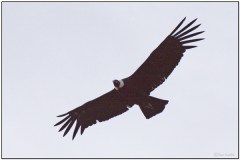
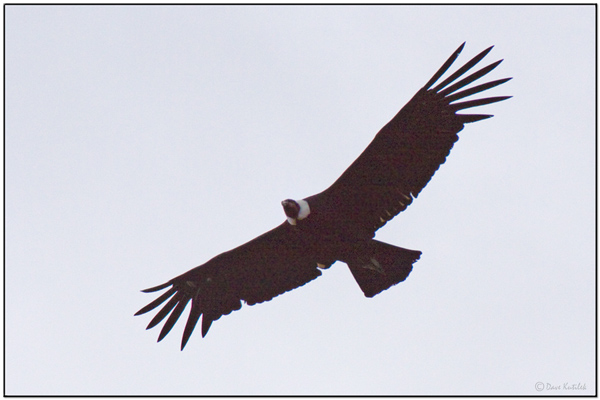
Andean Condor (Vultur gryphus) by Daves BirdingPix

Andean Condor (Vultur gryphus) by Daves BirdingPix

Soaring Birds tend to have broad wings. The Turkey Vulture has extremely broad wings for soaring. The breath of this wing type and the arrangement of the slotted primary feathers make it most efficient for soaring over land.

Black and Turkey Vultures, Red-tailed Hawks, Broad-winged hawks, Northern Harriers, Condors, Ravens, and some gulls have this kind of wings.

GOD wants us to wait in HIS presence and get wings of an Eagle to soar high even above storms… How long do we wait in HIS presence?

But they that wait upon the LORD shall renew their strength; they shall mount up with wings as eagles; they shall run, and not be weary; and they shall walk, and not faint. (Isaiah 40:31)

3.  HIGH SPEED AND MANEUVERABILITY FLIGHT WINGS
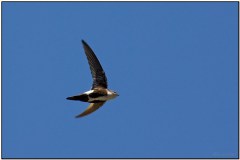
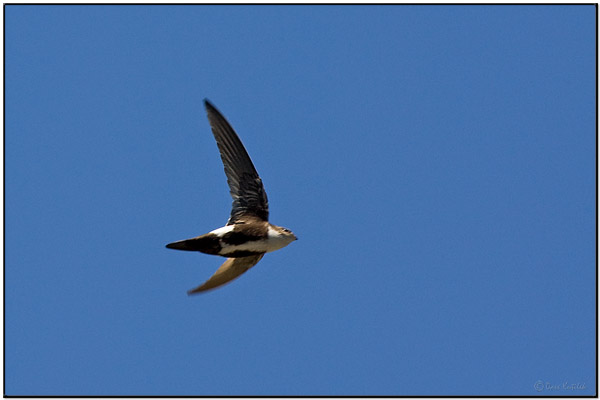
White-throated Swift by Dave's BirdingPix

White-throated Swift by Dave's BirdingPix

Some birds of prey and most other fast-flying birdshave developed High Speed Maneuverable wings. These wings of swifts, swallows, shorebirds, and waterfowl, and other small-to-medium-sized birds with rapid flight. Are extremely flat, moderately long narrow, and triangular, and tend to be swept backwards, like the wings of a high-speed jet fighter.

How many of us hasten to give our tithe and offering?
How many of us hasten to honor the servants of GOD?

Look at Abraham,

And Abraham hastened into the tent unto Sarah, and said, Make ready quickly three measures of fine meal, knead it, and make cakes upon the hearth. (Genesis 18:6)

Grey Heron (Ardea cinerea) by W Kwong

Grey Heron (Ardea cinerea) by W Kwong

4. SLOW FLAPPING FLIGHT WINGS

The kind of wings characteristic of Slow Flapping Flight are large and distinctly arched.

Herons, Egrets, and Ibises have this type of wing, and their style makes them immediately recognizable as belonging to one of those families, even when see from a distance.

GOD expects of us to be

….slow to speak, slow to wrath: (James 1:19)

5.  LONG DISTANCE OCEANIC SOARING WINGS

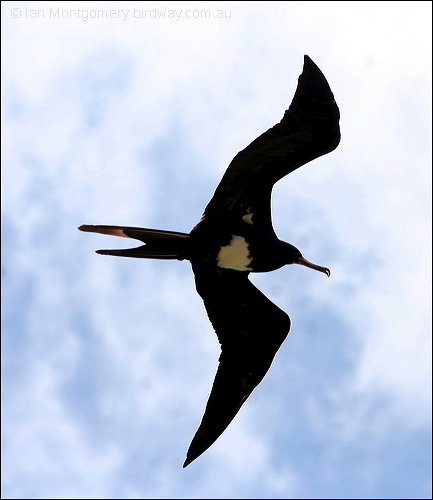
Christmas Frigatebird (Fregata andrewsi) by Ian

Christmas Frigatebird (Fregata andrewsi) by Ian

Seabirds, such as Shearwaters and Albatrosses, have a high-aspect wing, but one that is adapted for Long Distance Gliding — long, narrow, flat, and pointed, with no slotting of the primary feathers. The longest feathers are the outermost primaries.

Pointed wings like these are best suited for Long Distance Oceanic Soaring. Other birds with this type of wings are Gulls and Frigatebirds, which glide almost endlessly above the sea.

God wants to set us on high place; HE wants us to be high above everyone around us… But, not until we love HIM the way HE loves us…

Because he hath set his love upon me, therefore will I deliver him: I will set him on high, because he hath known my name.

6.  LONG DISTANCE GLIDING WINGS

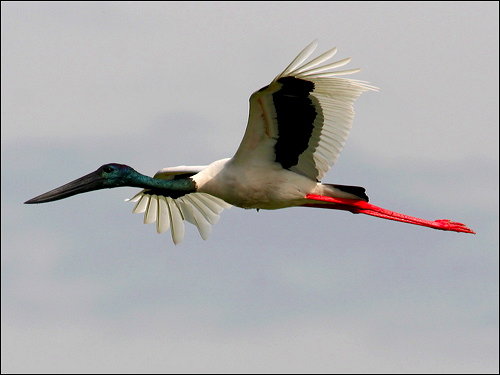
Black-necked Stork (Jabiru) (Ephippiorhynchus asiaticus) by Ian

Black-necked Stork (Jabiru) (Ephippiorhynchus asiaticus) by Ian

Still another Long Distance Gliding variation is found in the type of wing typical of storks and some vultures, a slotted, high-lifting structure. The wings are broad to provide more wing surface and short to make use of subtle variations in air currents.

We are on a very long journey; a journey of righteousness, a journey of perseverance, a journey of faithfulness and a journey of love…How calm are we on our journey?

And whosoever shall compel thee to go a mile, go with him twain. (Mathew 5:41)

7.  MOTIONLESS FLIGHT

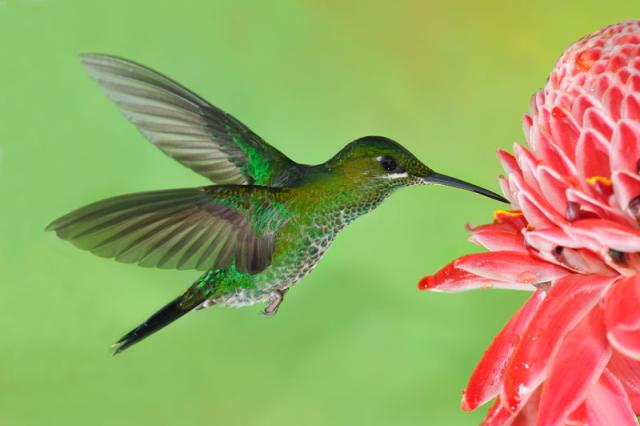
Green-crowned Brilliant (Heliodoxa jacula) Reinier Munguia

Green-crowned Brilliant (Heliodoxa jacula) Reinier Munguia

Hummingbirds’ wings are pointed and swept back, and they rotate at the shoulder, not at the wrist, as do those of most other birds. This allows the wing to be turned over in midstroke, so that backward motion cancels forward motion and the bird remains motionlessly poised in the air to sip the nectar of flowers. This bird then can execute Motionless Flight.

GOD created everything and took rest on the seventh day… HE created man on the sixth day so that, man shall worship HIM on the seventh day which is the first day for man on this earth…

Even in the list of flying styles of birds, the seventh flying style is MOTIONLESS FLIGHT… The birds seem to lay emphasis on the importance of the seventh day isn’t it?

Be still, and know that I am God: I will be exalted among the heathen, I will be exalted in the earth. (Psalms 46:10)

Have a blessed day!

Your’s in YESHUA,
a j mithra

Please visit us at: Crosstree


Updated on 8/8/11
Sorry about not crediting Paul Noll’s explanations and quotes of wing types. (Per comment)
See Bird Wing Shapes, by Paul Noll.
Lee
Interesting Things! – Techy Ants

SmileyCentral.com

High-Tech Ants

Then God saw everything that He had made, and indeed it was very good. So the evening and the morning were the sixth day. (Genesis 1:31)

Ant - Wikipedia

Ant - Wikipedia

Why do ants like electricity and why can they sense microwaves? If evolution were true, how would ants evolve a love for electricity in only the short time that man has been producing it? For what purpose would they have evolved the ability to sense microwave radiation long before man was using it?

It has been well established that ants like to build their nests around electrical equipment. They are often found around electrical meters. They are famous for building their nests around airport runway lights. They seem to be particularly fond of electrical relays. No one knows why. Now we learn that unlike any other multicelled creatures, they can survive inside a running microwave oven, perhaps enjoying your food as it cooks! How can they do this? It seems that ants can detect the invisible wave pattern of microwaves inside the oven. These patterns leave some areas of the oven low in microwave radiation while other areas are high in radiation. Ants simply avoid those areas where the radiation is strong enough to kill them. Incidentally, you can see these patterns by lining the tray on the floor of your microwave oven with marshmallows. You will notice that some will become very cooked while others are barely touched by the microwaves.

If evolution were true, how would ants develop the ability to deal successfully with conditions that did not exist? It makes more sense to conclude that our Creator, Who knows the future, made the ants as He did for reasons we still must discover.

References: Science Frontiers, 1-2/00, p. 2, “Ants Like Microwaves.”
©2010 Creation Moments, Inc.

Interesting Things – Increasingly Tangled Tree of Life

SmileyCentral.com

The Increasingly Tangled Tree of Life

All things were made through Him, and without Him nothing was made that was made. (John 1:3)

Researchers studying genetics have concluded that the evolutionary tree of life does not reflect the facts of biochemistry.

By the 1960s, biochemists had concluded that living things could be grouped into two distinct types based on their basic structures and genetic information. Eukaryotes have one or more cells and a true nucleus. Prokaryotes have smaller cells with no true nucleus. They are so different from eukaryotes that researchers concluded that they must have developed separately from non living matter. By the late 1970s, a third type of life was recognized – the archaea. Archaea favor extreme environments such as undersea vents. Their biochemistry is unlike prokaryotes or eukaryotes. According to evolutionists, life may have had to develop from non-living material three times. Further, to explain the biochemistry of these three types of creatures, biochemists have to assume that at points these separate types had to exchange genetic material with each other, and with a fourth, unknown and extinct type of living thing!

One logical conclusion of this new evolutionary approach is that life had to arise from non-life many times. Yet, modern biochemistry still has not explained how life could arise from non-life even once. However, this is exactly the pattern we might expect if all living things are the product of a wise Creator Who used similar designs to solve similar problems.

References: Scientific American, 2/00, pp. 90-95, “Uprooting the Tree of Life.”
©2008 Creation Moments, Inc.

Listen to article – Click Here

In the beginning God created the heaven and the earth. (Genesis 1:1 KJV)

Interesting Things – Ark, No Meat, Creator, Plus

SmileyCentral.com

While checking out Answers with Ken Ham, I found these interesting articles. Hope you find them informative.

Animals on the Ark–here Kitty, Kitty? (Jan 11, 2010)

Animals–no sin . . . no meat? (Mar 10, 2010)

Creator–where did He come from? (Jan 13, 2010)

Green-crowned Brilliant (Heliodoxa jacula) Reinier Munguia

The hummingbird-God’s Tiny Miracle! (Apr 5, 2007)

Bird brained-it could be a compliment! (Oct 9, 2009)

It’s a transition–NO, it’s a bird! (Aug 31, 2006)

Birds of the Bible – Pleasant to the Sight

ANS-Anat Wood Duck and Mandarin Duck

And out of the ground made the LORD God to grow every tree that is pleasant to the sight, and good for food; the tree of life also in the midst of the garden, and the tree of knowledge of good and evil. (Genesis 2:9 KJV)

While searching for articles about birds I came across this article. The quote below is also appropriate for birds. I believe many of them definitely qualify as “pleasant to the sight.”

“The answer that came to my mind was suggested by Genesis 2:9, where we read that God created fruit trees not only good for food but also “pleasant to the sight.” We normally expect to find aspects of beauty as well as utility in the artifacts of human creation; how much more should we expect beauty to abound in the handiwork of God! Even creationists seem to forget that God is not only the Great Engineer, but the Great Artist as well.

Unfortunately, just like the engineering marvels of God have been corrupted by mutations and other effects of the bondage to corruption occasioned by our sin (Romans 8:18-20), so its beauty has been marred. The God whose faithful care daily sustains what He has made will not leave it so. But with the creation that “groaneth in travail,” we also wait for that time when “they shall not hurt nor destroy in all my holy mountain, but the earth shall be full of the knowledge of the Lord as the waters cover the sea” (Isaiah 6:11).” (From, Nature’s Challenge to Evolutionary Theory, by Gary Parker, Ed.D., ICR)

Thought you might enjoy seeing some “Pleasant to the Sight” birds. It was hard to narrow the choices down. These are from the Non-Passerines. Used the Passerines last week.

*

This slideshow requires JavaScript.

*