The article is somewhat technical, but very interesting.
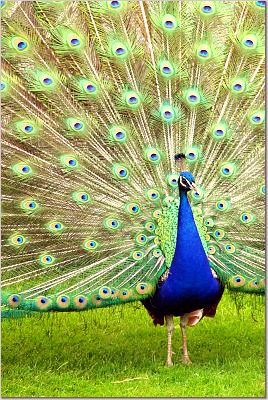
I like her closing thoughts, “God created all kinds of animals, plants, and the first two human beings in the space of just six days, about 6,000 years ago. They have for about 6,000 years varied and reproduced only within their created kinds, as we infer from Genesis chapter one He designed them to do. Protolife-to-peacock evolution cannot explain the beauty of the peacock’s feathers or its aerodynamic qualities, but what we read in the history book of all life—God’s Word—explains what we see in God’s world.
Of course we still don’t know why God designed such an over-the-top artistic wonder as the peacock. Perhaps He simply wanted His people to know that He is not only a great engineer but also to demonstrate that the Creator Himself appreciates beauty and wants us to do the same, admiring the handiwork of our God.”
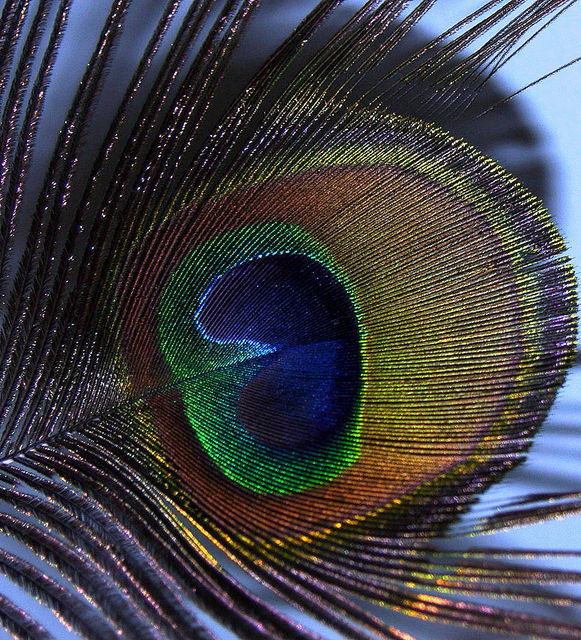
Peacock Feather
Gavest thou the goodly wings unto the peacocks? or wings and feathers unto the ostrich? (Job 39:13 KJV)
2. Secondly, worry depreciates the higher value of mankind
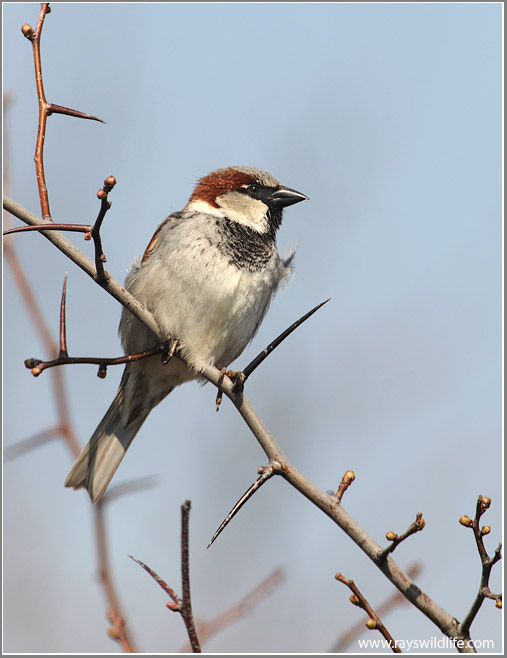
He’s not finished with the birds yet – notice verse 7 again – the last part – Do not fear; you are more valuable than many sparrows.
Matthews account says, “Are you not worth much more than they?
In case we didn’t pick up on the lesson – in case we’re a little slow – God’s care of the lesser creation ensures His care of His highest creation.
Evidently Jesus thinks we just might be a little slow on the uptake here – or maybe find it hard to believe – so He circles back around to this subject again and adds another pearl to the string – look over at verse 24. Consider the ravens, for they neither sow nor reap, they have no store room nor barn, and yet God feeds them; how much more valuable you are than the birds!
Maybe Jesus repeated this lesson simply because He knew that billions of people one day would struggle with believing they were less valuable than animals.
Was God peering into the 21st century or what?
You sit through the average Animal Planet program or read the latest evolutionary textbook taught to middle schoolers and you’ll get the message loud and clear that human beings have messed up the circle of life; humans have interrupted the food chain; humans are in the way and if we’d only get out-of-the-way, the animals who evidently have the right to be on the planet – because they evolved first – would get what they deserve; if we’d just go back to living in caves, the animals would be able to enjoy their lives so much better.
That message is coming across loud and clear!
Whenever you remove the glory of God’s created order, Genesis 1 and 2, where mankind was made in the image of God and given the right to rule earth – to train and subjugate and benefit from the animal kingdom – you end up with a culture where animals ultimately matter more.
You now exist to serve them; you now live to make their lives more comfortable.
Now I’m not defending animal abuse, by the way. We’re to be good stewards of earth and the animal kingdom.
But go visit India today, and watch, as I did, sacred cows which have been given superior rights within their culture – watch them meander across busy roadways and down streets cluttered with starving children – and begging mothers with babies on their hips; where a child starving to death is less important than a cow having something to eat.
How do we know that human beings are more valuable than animals? How do we know that?
Apart from God, we don’t.
Apart from the words of Jesus Christ, the creator of all things (Colossians 1), we might be confused – look again at verse 24 – you are more valuable than the birds.
And this really got the attention of Jesus’ Jewish audience, by the way, because Jesus used ravens as an example here – ravens were considered unclean according to Mosaic Law (Leviticus 11:13-15).vii
The ravens were unclean birds.
I’m sorry for how that makes you Baltimore Ravens fans feel – I’m sorry you had to find that out – you’ve been cheering all along for unclean animals . . . you already knew that.
Here’s why this was so stunning an analogy for Christ to make: It’s one thing to be insignificant like a sparrow and be cared for by God – it’s another thing to be unclean and despised and be cared for by God.
And you know why I’m so glad Jesus added this illustration?
Because the enemy of our heart and spirit and joy will more than likely come and whisper in our ear – sparrows might be cheap, but at least they’re clean animals – no wonder God cares about them; but you’re more like an unclean bird . . . despised and unclean according to God’s holy law . . . you don’t deserve God’s attention.
You have very reason to worry about your life.
But notice – verse 24. God has managed to care for them too – He effectively feeds them too – and get this – “How much more valuable you are than the animal kingdom!”
Worry denies the gracious care of God
Worry depreciates the higher value of mankind.
(Copied with permission from Wisdom for the Heart and Pastor Stephen Davey.)
i John MacArthur, Matthew 1-7 (Moody Publishers, 1985), p. 419 ii Ibid iii William Barclay, The Gospel of Luke (Westminster, 1975), p. p. 160 iv Bruce B. Barton, Life Application Bible: Luke (Tyndale, 1997), p. 314 v Barclay, p. 161 vi MacArthur, p. 119
Lee’s Addition:
Consider the ravens, for they neither sow nor reap, which have neither storehouse nor barn; and God feeds them. Of how much more value are you than the birds? (Luke 12:24 NKJV)
What a great encouragement not to worry. Thanks, Pastor Davey for part 2 of your great message.
Someone was brave enough to hand out a “button reading “Dinosaurs are not birds”” at a Florida Symposium on Dinosaur Bird Evolution. Needless to say that opinion was in the minority there. Like the writer, I and the emphasis of this blog is that Birds were Created by the Lord. So were Dinosaurs. The problem is that the Bible says they were both created in the same six day period. (24 hour days)
Anyway his article is very good and you would enjoy reading it. The quote below is very good.
“God engineered exquisite flight feathers for lightweight aerodynamic efficiency. Using a microscope, one can see an amazing display of interlocking hooks and barbules—features absent from all dinosaur fossils so far described. When the bird preens with its bill, the zippering effect flattens feathers and snaps them into shape again. In order to preen, the feather-possessing creature must have a bill. Some dinosaurs had beaks, but none had bills. Furthermore, true bird fossils appeared before dinosaurs in the fossil record—a fact that those who promote the strange dinosaur-to-bird theory gloss right over!”
So God created great sea creatures and every living thing that moves, with which the waters abounded, according to their kind, and every winged bird according to its kind. And God saw that it was good. And God blessed them, saying, “Be fruitful and multiply, and fill the waters in the seas, and let birds multiply on the earth.” So the evening and the morning were the fifth day. Then God said, “Let the earth bring forth the living creature according to its kind: cattle and creeping thing and beast of the earth, each according to its kind”; and it was so. And God made the beast of the earth according to its kind, cattle according to its kind, and everything that creeps on the earth according to its kind. And God saw that it was good. Then God said, “Let Us make man in Our image, according to Our likeness; let them have dominion over the fish of the sea, over the birds of the air, and over the cattle, over all the earth and over every creeping thing that creeps on the earth.” So God created man in His own image; in the image of God He created him; male and female He created them. Then God blessed them, and God said to them, “Be fruitful and multiply; fill the earth and subdue it; have dominion over the fish of the sea, over the birds of the air, and over every living thing that moves on the earth.” And God said, “See, I have given you every herb that yields seed which is on the face of all the earth, and every tree whose fruit yields seed; to you it shall be for food. Also, to every beast of the earth, to every bird of the air, and to everything that creeps on the earth, in which there is life, I have given every green herb for food”; and it was so. Then God saw everything that He had made, and indeed it was very good. So the evening and the morning were the sixth day. (Genesis 1:21-31 NKJV)
“Where is the wise? where is the scribe? where is the disputer of this world? hath not God made foolish the wisdom of this world?” (1 Corinthians 1:20)
Many people think that evolution is simply any change. Developing a new breed of dog is often referred to by many people as proof for evolution. But is it really? Those who claim that the domestic breeding of crop or animal species has anything to do with evolution take their cue from Darwin, who – although he had no degree in science – made the same claims.
Evolution is not simply change like what we see in domestic breeding programs. You might say that it’s easy for a creationist to say this, but let’s allow a scientist who is neither a creationist nor a Christian make the case for us. In his book Evolution: A Theory in Crisis, Dr. Michael Denton explains that evolution is in crisis for the simple reason that biology offers no evidence that evolution happens. Since science relies on evidence, he is really saying that evolution is not science at all.
Denton, who has spent much of his scientific career studying evolution, adds insult to injury by stating that “Despite more than a century of intensive effort on the part of evolutionary biologists, the major objections raised by Darwin’s critics . . . have not been met.”
In other words, evolutionary scientists have not been able to answer creationist challenges. Or, as we have been saying all along, the Bible does offer an intelligent alternative to evolution!
Prayer:
Dear Father, I thank You for those honest scientists who, even though they do not believe in Christ as their Lord and Savior, are still honest enough to identify a falsehood. Today I especially ask that You work in their hearts so that they may seek and find their Savior, Jesus Christ. In His Name. Amen.
Notes:
Photo: Cover of Michael Denton’s book Evolution: A Theory in Crisis. Published by Burnett Books, 1985.
*
Lee’s Addition:
In the beginning God created the heaven and the earth. (Genesis 1:1 KJV)
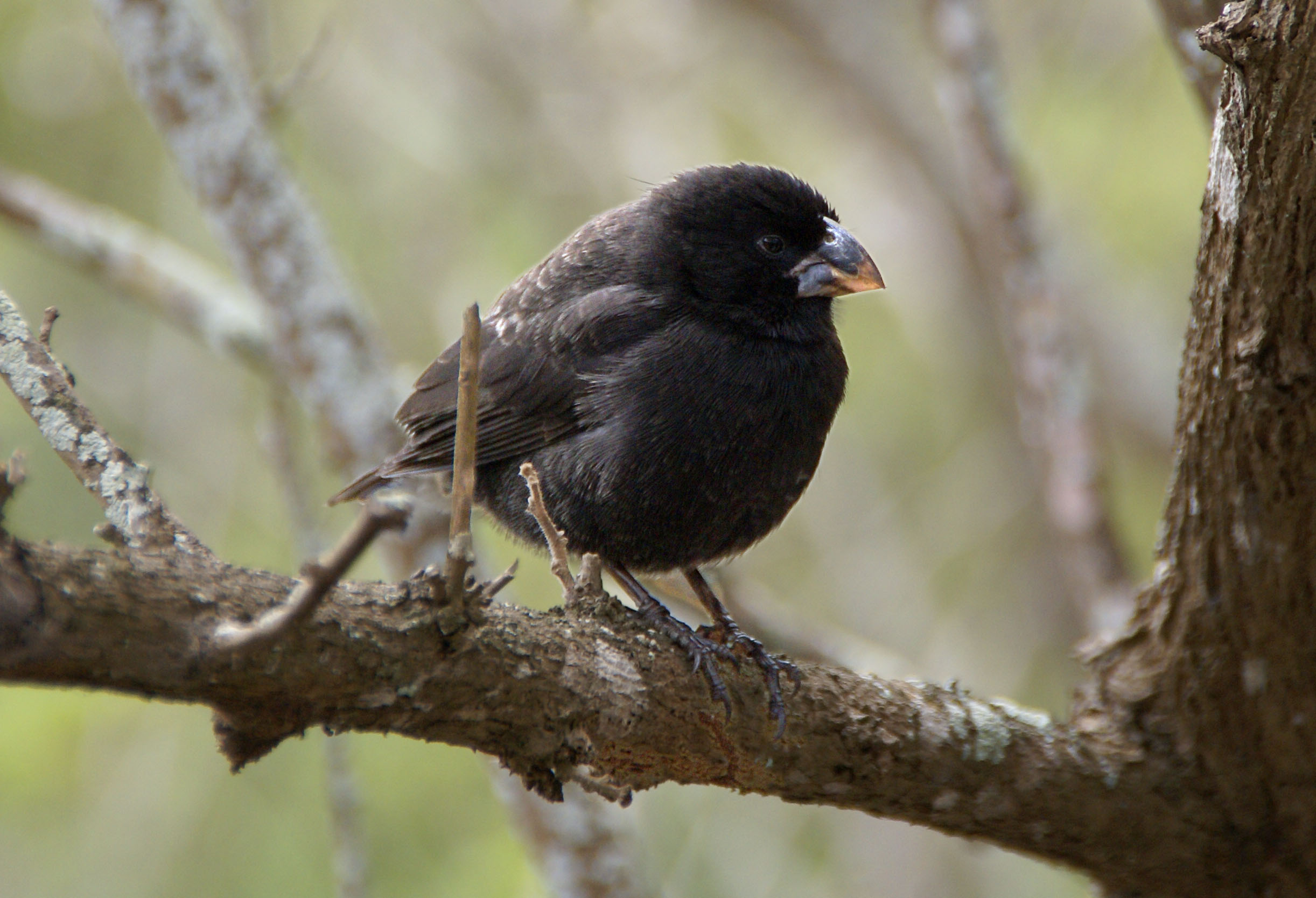
I alway enjoy the short, but Biblically truthful articles from Creation Moments. We see the birds breeding and developing subspecies, but that isn’t evolution. They are all still birds. The subspecies get split off into a different species of their own, yet when they run the DNA test, they find they all come from the same original pair of birds.
All that splitting and lumping is what keeps me busy every 3 or 4 months updating the Birds of the World lists.
American Robin (Turdus migratorius) in nest ready to eat WikiC
AFTER THEIR KINDS
And the earth brought forth grass, and herb yielding seed after his kind, and the tree yielding fruit, whose seed was in itself, after his kind: and God saw that it was good. (Genesis 1:12)
How wonderful! Your dog has just had puppies! But do you now have to sort through the litter and make sure there are no baby giraffes or kangaroos?
No, not a single giraffe or kangaroo in the litter!In God’s account of creation in Genesis 1, we repeatedly read that both plants and animals were created to reproduce “after their kind.” Genesis 1, in speaking about the creation of plants, repeats three times in just two verses that they are to reproduce “after their kind.” We see the same phrase repeated later in the chapter when animals are created. This is not just empty repetition. God is stressing a fundamental principle that all things reproduce “after their kind.” Mother dogs have puppies and mother cats have kittens. You can count on it.
Why does God stress this principle? Even before creation, God knew that humans would eventually sin and then seek to hide their responsibility by trying to explain things without a Creator. God knew that this idea of evolution would capture the faith of millions over the history of the world.
God stresses what our experience shows so that He might be harder for us to hide from. All things do reproduce after their kind. And despite evolutionists’ strong faith in evolution, they cannot offer one established scientific fact to explain how one kind of creature might eventually make a completely different kind!
Prayer:
I thank You, Lord, that You have made it hard for men to deny You. Yet men still deny You, seeking explanations and excuses outside of Your Word. I know that I, too, can do this, for I am both saint and sinner. I ask that You would correct me when I seek outside of Your Word what is so richly provided to me in Your Word. Amen.
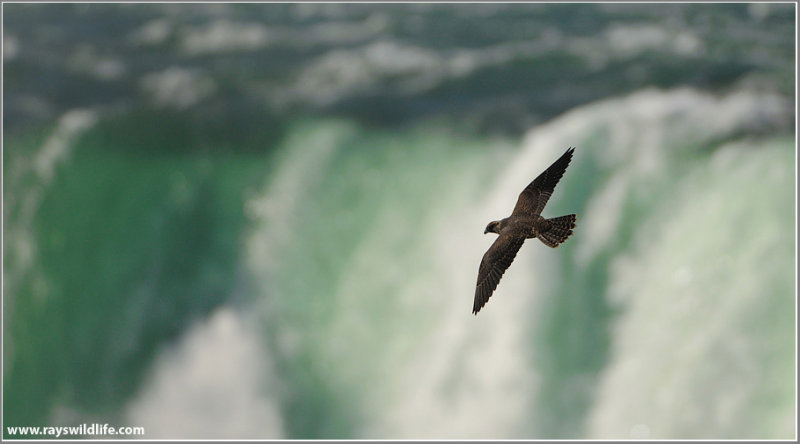
Doth the hawk fly by thy wisdom, [and] stretch her wings toward the south? Job 39:26
Many textbooks tell young people today that birds are modified reptiles. Suppose, they say, that millions of years ago the scales on some reptiles began to fray along the edges. In time, they say, the frayed scales turned into feathers and birds were born.
Designed for Flight The elegance and beauty of the feather make this story hard to believe. Can sticking a feather on a lizard produce a peacock? The bird’s feather is only a small part of the complete flying system of the bird. Even with very careful planning and redesigning, a reptile doesn’t have what it takes.
A bird needs massive breast muscles for flight. In some birds, 30 percent of the body weight of the bird is breast muscle. By comparison, in humans, breast muscles are only about 1 percent of body weight. A bird also needs an extremely high metabolism and blood pressure to deliver the energy those muscles need for flight. Birds have a higher metabolism than any other creature; they also have the necessary high blood pressure. Finally, as is well known, birds need light skeletons. The man-o’-war has a wingspan of seven feet. But its entire skeleton weighs only a few ounces – less than its feathers!
Even the most clever rebuilding of a reptile cannot produce a bird. In fact, birds have very little in common with reptiles. The entire being of the bird, from body to brain, has been specially designed for flight by a Creator who clearly knows everything there is to know about flight.
Prayer:
Father in heaven, the beauty, grace and huge variety of birds You have created are some of the most beautiful creatures on earth. As I thank You for them, fill me with new wonder over the wonderful work of Your hands. Amen.
Notes:
Vandeman, George. 1991. “The miracle of flight.” Signs of the Times, May. p. 25.
Deep Sea Fish – Watercress darter – Creation Moments
THE MASTER ARTIST
in
God’s Design
And out of the ground made the LORD God to grow every tree that is pleasant to the sight, and good for food; the tree of life also in the midst of the garden, and the tree of knowledge of good and evil. (Genesis 2:9 KJV)
For example, the Earth could get along with a lot less color. All those beautiful sunsets and sunrises actually serve no purpose, and neither does each one have to be different from every other. Many flowers have Watercress dartercolors that attract their pollinators, but few flowers actually need color for this purpose. But then, flowers in black and white certainly would be dull. There are many beautiful deep-sea fish that don’t need their bright and beautiful colors at all. Some of these fish live so far below the surface of the water that only a small amount of blue light reaches those depths. Where these fish live, everything always looks a very dim blue. Yet, some of these fish have incredibly bright coloration that they and their friends never see.
Here we have to ask the evolutionist what value could it have been for this fish to develop all these bright colors when they can serve no purpose for survival? In Genesis 2:9 we read that when God created the fruit trees for food, He also made them “pleasant to the sight.” They didn’t need to be. Clearly, God does indeed appreciate beauty and has created works that human artists can only try to copy.
Prayer:
Dear Lord, I thank You for all the beauty You have created in the world. I ask that You would help us to gain a better appreciation for it, and find better ways to preserve it. In Jesus Name. Amen.
Notes:
Gary Parker, Ed.D., “Nature’s Challenges to Evolutionary Theory,” Institute of Creation Research, Impact Series, October, 1978, No. 64. Photo: Watercress darter.
Magnificent Hummingbird (Eugenes fulgens) by Judd Patterson
Lee’s Addition:
This article goes along with the many things written here about our beautifully created birds.
I am so thankful that the Lord likes color and beauty. When heaven is described, it usually tells of the various “precious stones, “streets of gold,” and other wonderful sights that we cannot comprehend.
Surely the Creator has given us these brilliantly colored birds, fish, flowers, butterflies, trees in the Fall, and numerous other things, to give us a “glimpse” and “taste” of what heaven will look like, color wise.
Sorry I didn’t put a blog up last evening, but was occupied watching the Ken Ham vs Bill Nye Debate on Livestream. It was very interesting. Here is the YouTube of it, if you missed it. I believe it is only going to be available for a few days. (At least on Answers page)
In the beginning, God created the heavens and the earth. Genesis 1:1 ESV)
*
*
Here is another YouTube of a Post-debate Show by Creationtoday. It is a little shaky at first, but settles down after a minute or so.
“Scientists studying the dragonfly are learning even more secrets of flight. Our best high-performance aircraft can barely lift themselves off the ground. However, the dragonfly can lift 15 times his own weight into the air.”
But ask now the beasts, and they shall teach thee; and the fowls of the air, and they shall tell thee: Or speak to the earth, and it shall teach thee: and the fishes of the sea shall declare unto thee. Who knoweth not in all these that the hand of the LORD hath wrought this?
(Job 12:7-9 KJV)
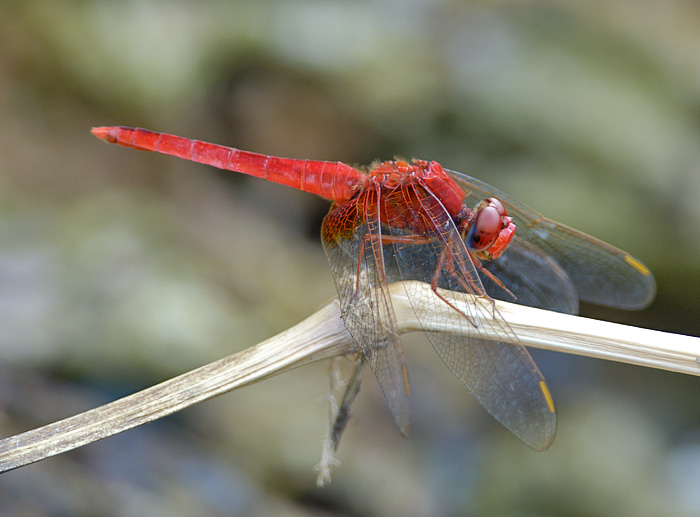
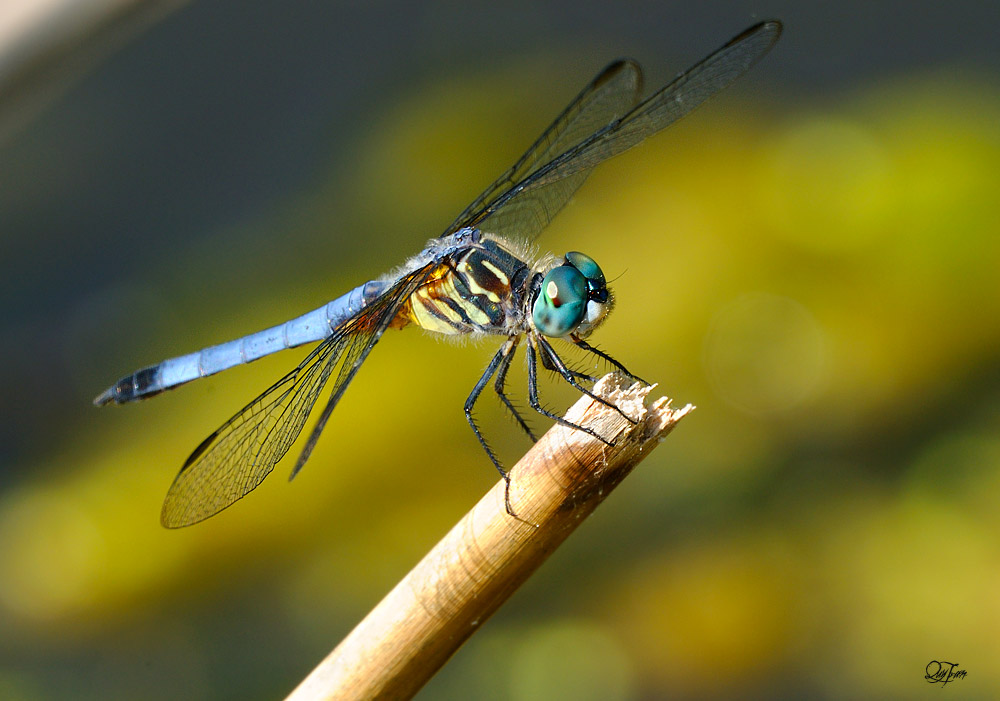
Dragonflies are probably the most beautiful of the flying insects. There are about 4,500 different varieties. They begin their life in water, where eggs hatch into rather ugly brown nymphs. The time spent living in water varies from a few weeks to several years, but for all the varieties the day comes when the nymph suddenly has the urge to climb out of the water. It sits for a while at the top of a piece of grass until its skin splits open and out comes a dragonfly! After waiting for its wings to become firm and dry, the dragonfly flies away, its lovely colours glinting in the sunshine.
Although they are very small, dragonflies are wonderfully designed for flying. Their two pairs of wings are very light, but strengthened by a network of tiny veins, which not only carry blood fluid to keep the wings stiff, but also nerves and oxygen. Some dragonflies beat their wings 40 times in one second! Dragonflies are like tiny helicopters—they can even fly backwards! In fact, Igor Sikorsky, who first designed helicopters, for the idea from watching dragonflies.
Dragonfly by QuyTran
Another wonderful thing about dragonflies is their eyes. Each pair of eyes is actually made up of as many as 30,000 separate eyes, each with its own lens! This enables the insect to see what is happening over a wide area, and spot every tiny movement without moving its head.
The supposedly oldest fossil dragonflies are just like dragonflies are now, except that they were much larger—75 centimeters (2.5 feet) from wing-tip to wing-tip! So there is no evidence that they evolved from ancestors without wings. And surely those amazing eyes did not evolve? Dragonflies are another of the many wonders of God’s creation!” From Our World (Answers for Kids.)
Following is a YouTube from Ian Juby about the creation of our birds. This is from his
Our Created Birds – this is Genesis Week episode 10, season 3
*
To see all of the video click on YouTube symbol or go to wazooloo for more of his videos.
Then God said, “Let the waters teem with swarms of living creatures, and let birds fly above the earth in the open expanse of the heavens.” God created the great sea monsters and every living creature that moves, with which the waters swarmed after their kind, and every winged bird after its kind; and God saw that it was good. God blessed them, saying, “Be fruitful and multiply, and fill the waters in the seas, and let birds multiply on the earth.” (Genesis 1:20-22 NASB)
But the natural man receiveth not the things of the Spirit of God: for they are foolishness unto him: neither can he know them, because they are spiritually discerned. (1 Corinthians 2:14 KJV)
Consider the ravens, for they neither sow nor reap, which have neither storehouse nor barn; and God feeds them. Of how much more value are you than the birds? (Luk 12:24 NKJV)
“For animals in the wild, the medicine cabinet seems at first glance to be pretty bare, and you might think they’re just left out in the cold when it comes to finding remedies. But even with the fallen nature of our world, the Creator hasn’t left untamed creatures, like the ravens that neither sow nor reap (Luke 12:24), defenseless against all the things that ail them. In fact, He’s stocked their “closets” with a cornucopia of cures.” (From Jungle Doctors)
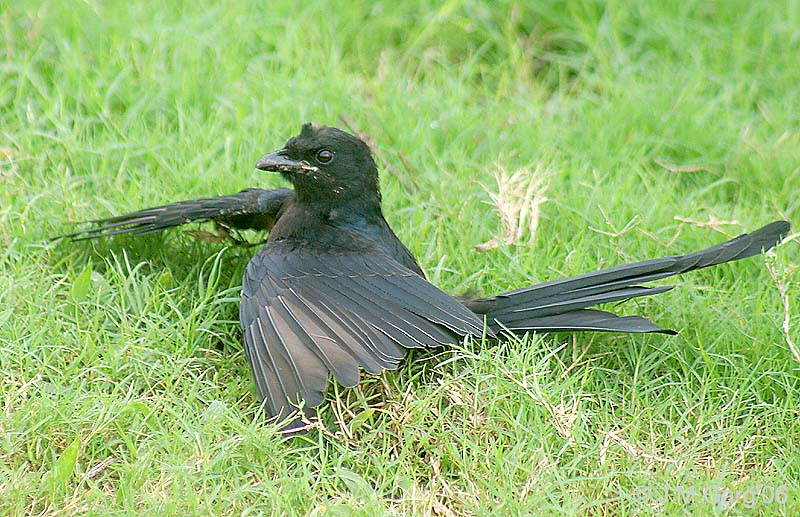
One of those cures is the birds “Anting” behaviour.
Anting (Excerpts from The Birder’s Handbook, p.487)
“Many different songbird species have been observed picking up single ants or small groups and rubbing them on their feathers. Less commonly, other songbirds “ant” by spreading their wings and lying on an anthill, and squirming or otherwise stimulating the ants to swarm up among their feathers.
Because the seasonal timing of anting and molting (spring and summer) often correspond, some have suggested that anting may soothe the skin during feather replacement. It seems more likely that the seasonal relationship simply reflects the greater activity of ants during those periods.”
In the behavior called anting, birds rub insects on their feathers, usually ants, which secrete liquids containing chemicals such as formic acid, that can act as an insecticide, miticide, fungicide, bactericide, or to make them edible by removing the distasteful acid. It possibly also supplements the bird’s own preen oil. Instead of ants, birds can also use millipedes. Over 250 species of bird have been known to ant. Most of those are Passerines.
Many theories exits as to why the birds “ant.”
It has been suggested that anting acts as way of reducing feather parasites such as mites or in controlling fungi or bacteria, although there has been little convincing support for any of the theories. It is possible that the use of certain kinds of ants indicates the importance of the chemicals they release. Some cases of anting involved the use of millipedes or caterpillars, and these too are known to release powerful defensive chemicals.
Another suggested function, based on observation of Blue Jays, is that the bird makes the insects edible, by discharging the harmful acid onto their feathers. The birds were found to show anting behaviour only if the ants had a full acid sac, and with subjects whose acid sacs had been experimentally removed, the behaviour was absent.
Finally, it has also been suggested that anting is related to feather moulting. However, the correlation may also be attributed to the greater activity of ants in summer.
Dusting with soil from ant-hills has been considered by some as equivalent to anting.
Some birds like Antbirds and Flickers not only ant, but also consume the ants as an important part of their diet. Other opportunist ant-eating birds include Sparrows, Wrens, Grouse and Starlings.
*
*
Anting (Excerpts from Audubon Society Encyclopedia of North American Birds, pps 19-20)
“John James Audubon published the first known reference to this habit in his Ornithological Biography (1831), in which he wrote of watching wild turkeys roll in ants’ nests ‘to clear their growing feathers of loose scales, and prevent ticks and other vermin from attacking them, these insects being unable to bear the odor of the earth in which ants have been.’ ”
Here are some of the birds listed in this section:
The turkeys mentioned, plus “crows; starlings and Indian mynas, magpie lark, gray thrush, Pekin robin, house sparrow, manakin and apostlebird in Australia; a Magpie in Britain; Grackles, Blue Jay, pekin robin, gray catbird, American robin, wood thrush, hermit thrush, veery, cedar waxwing, bobolink, Baltimore oriole, cardinal, rose-breasted grosbeak, black-headed grosbeak, indigo bunting, dark-eyed junco, Harris’ sparrow, white-crowned sparrow, fox sparrow, and song sparrow in America”;
“Others seen in the wild anting are: scarlet tanagers, summer tanagers, towhees…, others.” (Lack off capitalization is from the book)
Lee’s Additon:
But now ask the beasts, and they will teach you; And the birds of the air, and they will tell you; (Job 12:7 NKJV)
It appears that the birds were given instincts or knowledge, by their Creator, to protect themselves from pests and irritation. That would be a possible answer they might give us, if we were to question them. If these birds evolved, then it appears that they had to develop this habit in each country and area where the birds “ant.” Huh? As for me, I opt for a Creator giving them that knowledge rather than a chance behaviour happening in so many places.


 Evolution is not simply change like what we see in domestic breeding programs. You might say that it’s easy for a creationist to say this, but let’s allow a scientist who is neither a creationist nor a Christian make the case for us. In his book Evolution: A Theory in Crisis, Dr. Michael Denton explains that evolution is in crisis for the simple reason that biology offers no evidence that evolution happens. Since science relies on evidence, he is really saying that evolution is not science at all.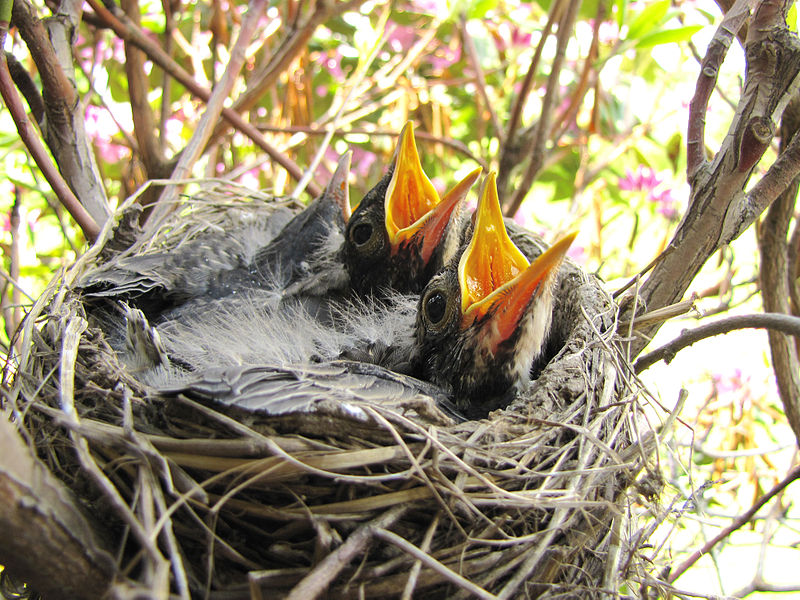




 Lee's Birdwatching Adventures Plus