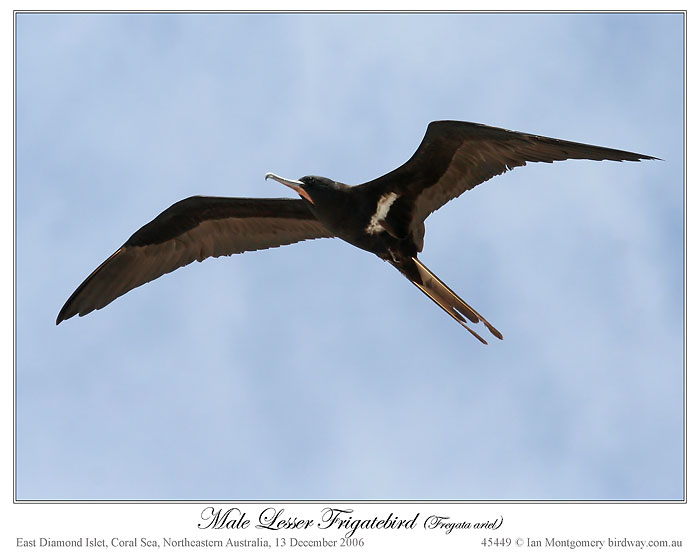
Lesser Frigatebird (Fregata ariel) male by Ian
Ian’s Bird of the Week – Lesser Frigatebird ~ by Ian Montgomery
Newsletter – 3/2/11
This is the third of the post-cyclone Yasi birds of the week. The first dealt with survival of small birds; the second with birds like fruit-doves that move after the cyclone in search of food. Another category of birds greatly affected by cyclones are seabirds, particularly those that spend much time on the wing and these often appear in places where they are not usually seen or get blown inland, sometimes over great distances.
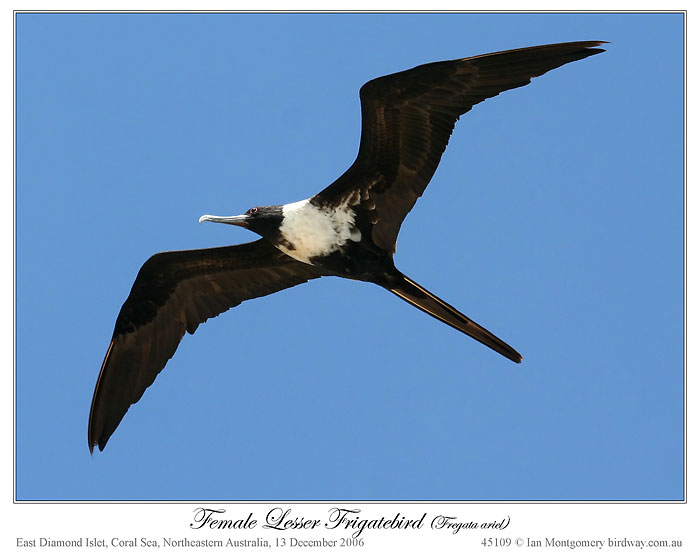
Lesser Frigatebird (Fregata ariel) female by Ian
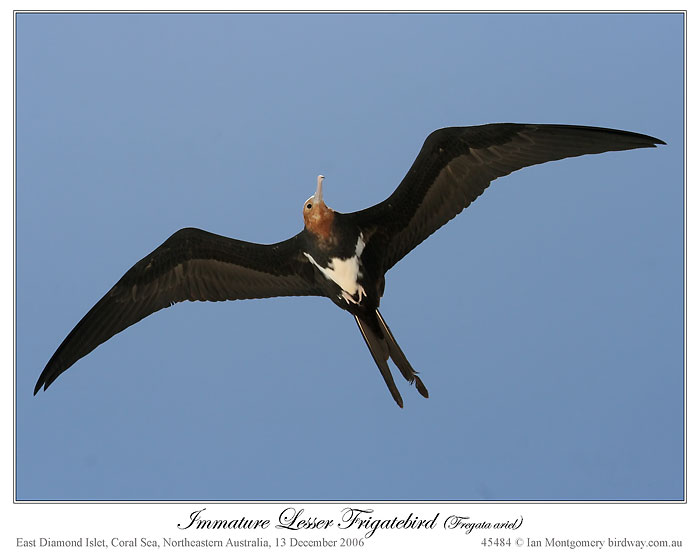
Lesser Frigatebird (Fregata ariel) imm. by Ian
11km from the coast is nothing to a frigatebird and it is likely that cyclone-distributed frigatebirds can find their way home (like swifts, they often take advantage of storm fronts). Less fortunate perhaps was the Petrel recorded post-Yasi on the Atherton Tableland by Alan Gillanders, though the record for Yasi goes to a Bridled Tern rescued ‘in bad shape’ in Alice Springs by Chris Watson, probably as far away from the ocean as you can get in Australia.
Ian Montgomery, Birdway Pty Ltd,
454 Forestry Road, Bluewater, Qld 4818
Phone: +61-7 4751 3115
Preferred Email: ian@birdway.com.au
Website: http://birdway.com.au
Lee’s Addition:
The birds of the air, And the fish of the sea That pass through the paths of the seas. O LORD, our Lord, How excellent is Your name in all the earth! (Psalms 8:8-9 NKJV)
The frigatebirds are a family, Fregatidae, of seabirds. There are five species in the single genus Fregata. They are also sometimes called Man of War birds or Pirate birds. Since they are related to the pelicans, the term “frigate pelican” is also a name applied to them. They have long wings, tails and bills and the males have a red gular pouch that is inflated during the breeding season to attract a mate. They are part of the Suliformes Order.
Frigatebirds are pelagic piscivores which obtain most of their food on the wing. A small amount of their diet is obtained by robbing other seabirds, a behavior that has given the family its name, and by snatching seabird chicks. Frigatebirds are seasonally monogamous, and nest colonially. A rough nest is constructed in low trees or on the ground on remote islands. A single egg[citation needed] is laid each breeding season. The duration of parental care in frigatebirds is the longest of any bird.
Frigatebirds are found over tropical oceans and ride warm updrafts. Therefore, they can often be spotted riding weather fronts and can signal changing weather patterns.
These birds do not swim and cannot walk well, and cannot take off from a flat surface. Having the largest wingspan to body weight ratio of any bird, they are essentially aerial, able to stay aloft for more than a week, landing only to roost or breed on trees or cliffs. (Wikipedia)
Dan and I had the privilege of see a Magnificent Frigatebird flying over Ding Darling NWR.










 Lee's Birdwatching Adventures Plus