***
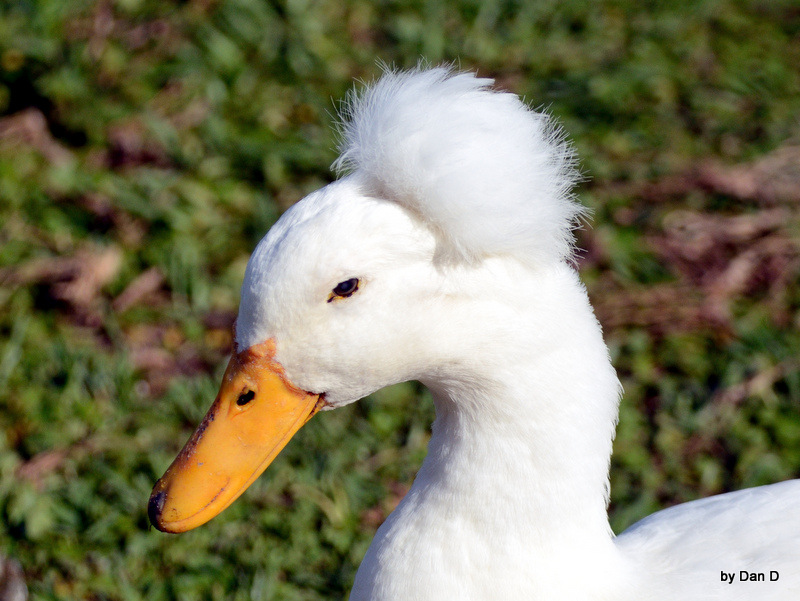
HAIR
***
“Then a spirit passed before my face; the hair of my flesh stood up:” (Job 4:15 KJV)
Aflac Duck Puffed Up – by Dan at Lake Morton
*
*
“Then a spirit passed before my face; the hair of my flesh stood up:” (Job 4:15 KJV)
Aflac Duck Puffed Up – by Dan at Lake Morton
*
*

“Then the king, when he heard these words, was sore displeased with himself, and set his heart on Daniel to deliver him: and he laboured till the going down of the sun to deliver him. (Daniel 6:14 KJV)
“
Birds flying to their home during the sunset – Chitwan National Park ©WikiC
*
*
Continuing through the Tanagers of the Thraupidae, we have some more beautiful birds to let you enjoy. Our Lord must have loved creating this kind of bird. He sure created enough of them through their interbreeding. We are about half way through the Traupidae family. This is the fifth installment. Not sure how many more it will take to finish up this family. Trust you are enjoying them.
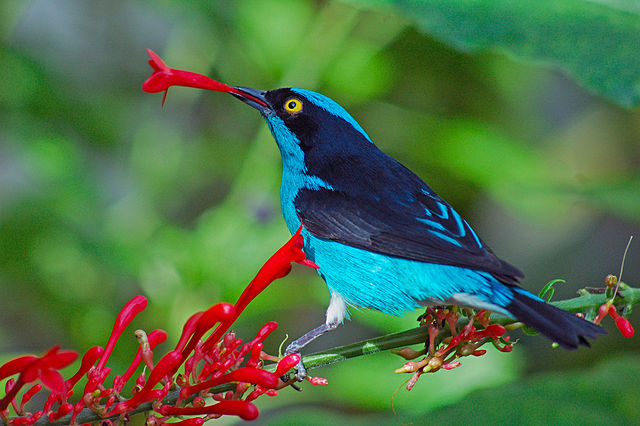
Black-faced Dacnis (Dacnis lineata) ©WikiC
The Dacnis genus are from the Columbia and other nearby countries in South America. Some I could not find photos of that gave permission to use, so enjoy the ones that could be shown. The most common Dacnis seems to be the Blue Dacnis. Typical of this genus, they “occur in forests and other woodlands, including gardens and parks. The bulky cup nest is built in a tree and the normal clutch is of two to three grey-blotched whitish eggs. The female incubates the eggs, but is fed by the male. These are social birds which eat mainly insects gleaned from foliage, flowers or bromeliads. Fruit is often taken and usually swallowed whole, but nectar is rarely consumed.” (Wikipedia) There is one more Dacnis that is in the Xenodacnis genus.
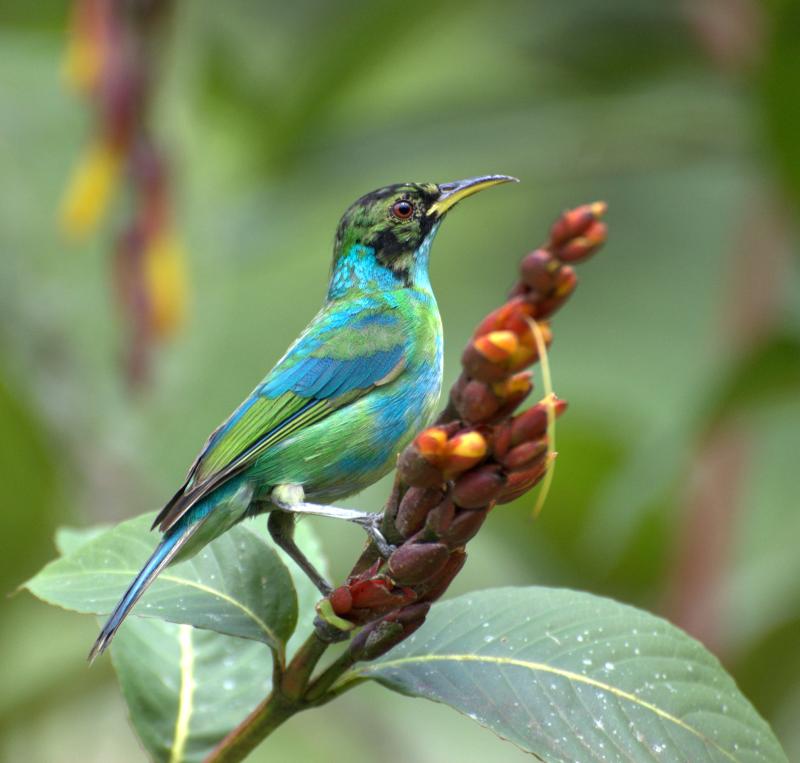
Green Honeycreeper (Chlorophanes spiza) Male Immature ©BirdPhotos.com
The next three genera, Cyanerpes, Chlorophanes, and Iridophanes are Honeycreepers. They have longer tails than the Dacnis and you will notice a little more down curve on their bills. The four Cyanerpes species have colourful legs, long wings and a short tail. The males are typically glossy purple-blue and the females greenish.
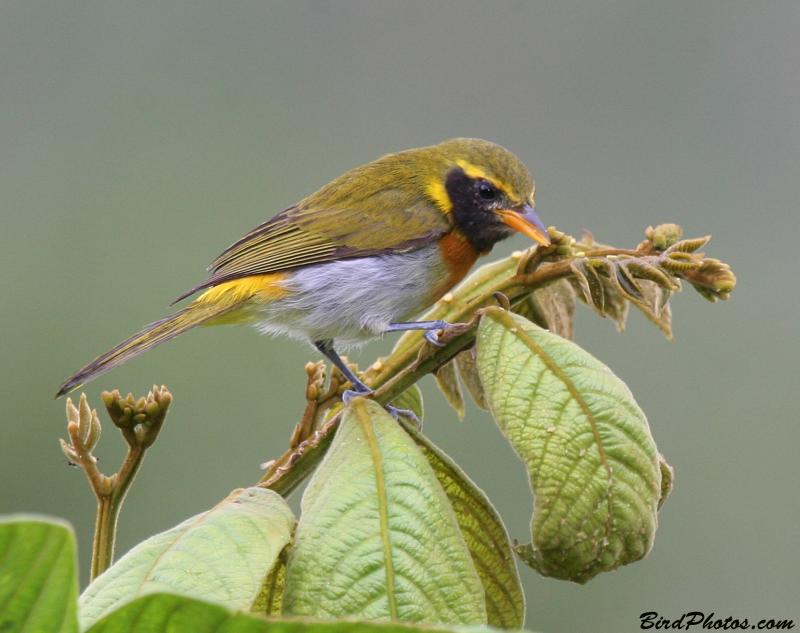
Guira Tanager (Hemithraupis guira) Male ©BirdPhotos.com
“Yellow-rumped” clade of Tanagers include the Heerospingus, Chrysothlpis, and Hemithraupis genera. These small to medium tanagers are found in the moist forests of Central and South America. The females are duller than the males.

White-browed Conebill (Conirostrum ferrugineiventre) ©WikiC
The Conebills from the Conirostrum genus, finish our group of beautiful birds from the Tanager Family for this week. “They are small tanagers (9–14 cm) found in the forests of South America. They feed in pairs or small flocks by gleaning insects from foliage.” Following these here is a Giant Conebill (Oreomanes fraseri) in its own genus.
“The genus consists of two rather distinct subgenera: The first, Ateleodacnis, possibly deserving full generic status, is confined to lowland areas. They are mostly grey in colour and inhabit deciduous woodlands, mangroves or riverbank habitats. The second group, the nominate Conirostrum subgenus, inhabits the forests of the Andes. They are somewhat more colourful combining grey or blue backs with rufous underparts. Their thin bills led to them being formerly classified as wood-warblers or honeycreepers but genetic data places them firmly in the tanager family and they are now generally considered to belong in the Thraupidae.” (Wikipedia)
Enjoy the Slideshow and the music below.
That in the ages to come he might shew the exceeding riches of his grace in his kindness toward us through Christ Jesus. For by grace are ye saved through faith; and that not of yourselves: it is the gift of God: Not of works, lest any man should boast. For we are his workmanship, created in Christ Jesus unto good works, which God hath before ordained that we should walk in them. (Ephesians 2:7-10 KJV)
“Amazing Grace & I Love You Written In Red” – Choir and Orchestra at Faith Baptist
*
Sunday Inspiration – Thraupidae – Tanagers and Allies I
Sunday Inspiration – Thraupidae – Tanagers and Allies II
Sunday Inspiration – Thraupidae – Tanagers and Allies III
Sunday Inspiration – Thraupidae – Tanagers and Allies IV
Traupidae Family – Tanagers and Allies
*
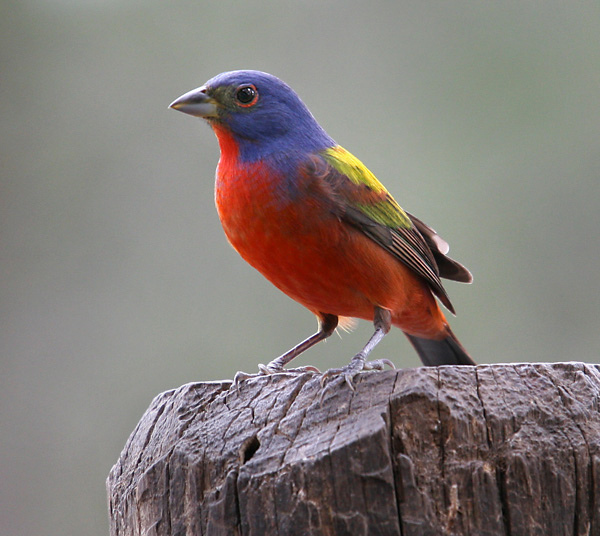
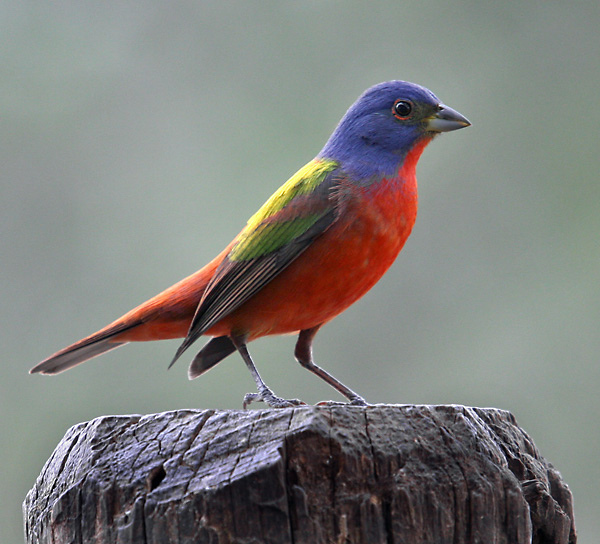
“Turn not to the right hand nor to the left: remove thy foot from evil.” (Proverbs 4:27 KJV)
Painted Bunting (Passerina ciris) Both Photos ©Flickr Ralph Arvesen
*
*

“And he that sat was to look upon like a jasper and a sardine stone: and there was a rainbow round about the throne, in sight like unto an emerald.” (Revelation 4:3 KJV)
Painted Bunting (Passerina ciris) ©©Flickr
*
*

“The light of the body is the eye: if therefore thine eye be single, thy whole body shall be full of light.” (Matthew 6:22 KJV)
Blue-necked Tanager (Tangara cyanicollis) ©Flickr Andres Cuervo
*
*

Magellanic Penguin (Spheniscus magellanicus) ©Globo TV
Dr. Jim sent this article to me today and I thought we would work it up. After checking online, there were quite a few news articles about Dindim the Magellanic Penguin and his rescuer. Here is the article:
 Today’s most heartwarming story is brought to you from a beach in Brazil.
It’s the story of a South American Magellanic penguin who swims 5,000 miles each year to be reunited with the man who saved his life.
Retired bricklayer and part time fisherman Joao Pereira de Souza, 71, who lives in an island village just outside Rio de Janeiro, Brazil, found the tiny penguin, covered in oil and close to death,
lying on rocks on his local beach in 2011. Joao cleaned the oil off the penguin’s feathers and fed him a daily diet of fish to build his strength. He named him Dindim.
After a week, he tried to release the penguin back into the sea. But, the bird wouldn’t leave. ‘He stayed with me for 11 months and then, just after he changed his coat with new feathers, he disappeared,’ Joao recalls.
And, just a few months later, Dindim was back. He spotted the fisherman on the beach one day and followed him home.

The prodigal penguin returns. Magellanic Penguin (Spheniscus magellanicus) ©Globo TV
Look who’s back
For the past five years, Dindim has spent eight months of the year with Joao and is believed to spend the rest of the time breeding off the coast of Argentina and Chile. It’s thought he swims up to 5,000 miles each year to be reunited with the man who saved his life.

Dindim the Magellanic Penguin ©Globo TV
‘I love the penguin like it’s my own child and I believe the penguin loves me,’ Joao told Globo TV. ‘No one else is allowed to touch him. He pecks them if they do. He lays on my lap, lets me give him showers, and allows me to feed him sardines and to pick him up. It’s thought Dindim believes the fisherman is also a penguin ‘Everyone said he wouldn’t return but he has been coming back to visit me for the past four years. He arrives in June and leaves to go home in February and every year he becomes more affectionate as he appears even happier to see me.’

Magellanic Penguin (Spheniscus magellanicus) ©Globo TV
But I trust I shall shortly see thee, and we shall speak face to face. Peace be to thee. Our friends salute thee. Greet the friends by name. (3 John 1:14 KJV)
Biologist Professor Krajewski, who interviewed the fisherman for Globo TV, told The Independent: ‘I have never seen anything like this before. I think the penguin believes Joao is part of his family and probably a penguin as well. ‘When he sees him he wags his tail like a dog and honks with delight. And, just like that, the world seems a kinder place again.
*
You might want to check out these articles as some of them have videos of these two.
Penguins belong to the SPHENISCIFORMES Order, the Penguins – Spheniscidae Family.
*

“And it came to pass in the six hundredth and first year, in the first month, the first day of the month, the waters were dried up from off the earth: and Noah removed the covering of the ark, and looked, and, behold, the face of the ground was dry.” (Genesis 8:13 KJV)
Philippine Hawk-Eagle (Nisaetus philippensis) ©Flickr Billy Lopue
*
*
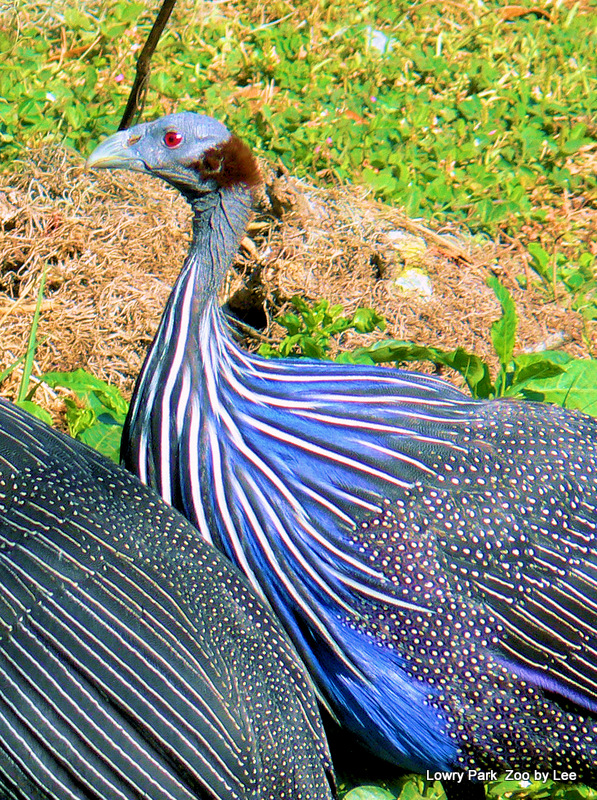
“And Cornelius said, Four days ago I was fasting until this hour; and at the ninth hour I prayed in my house, and, behold, a man stood before me in bright clothing,” (Acts 10:30 KJV)
Vulturine Guineafowl (Acryllium vulturinum) by Lee
*
*
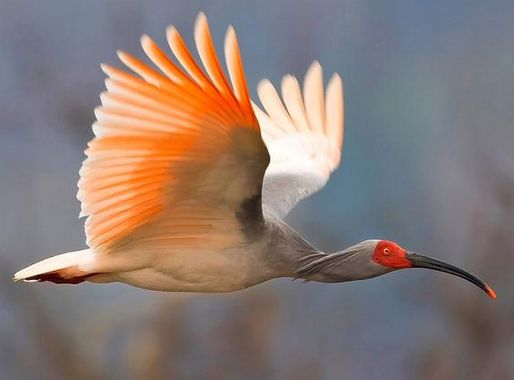
“And it is a rare thing that the king requireth, and there is none other that can shew it before the king, except the gods, whose dwelling is not with flesh.” (Daniel 2:11 KJV)
Crested Ibis (Asian) (Nipponia nippon) One of Rarest Birds ©©Pinterest
*
*
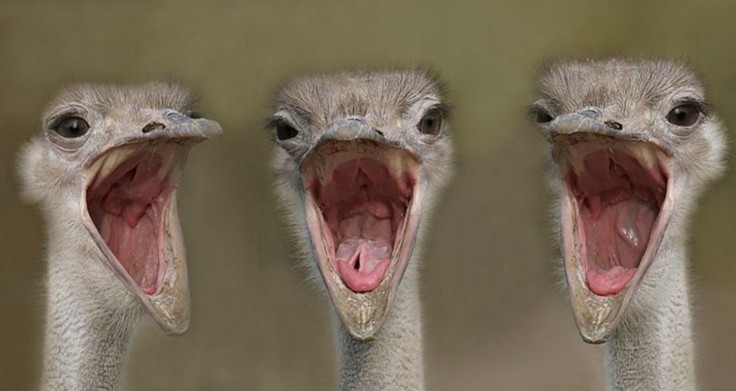
“And withal they learn to be idle, wandering about from house to house; and not only idle, but tattlers also and busybodies, speaking things which they ought not.” (1 Timothy 5:13 KJV)
Baby Ostritches ©AnimalWallXYZ
*
*
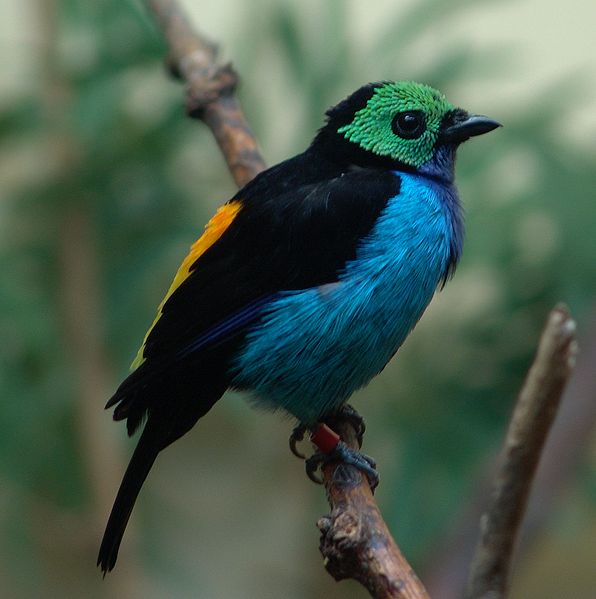
Paradise Tanager (Tangara_chilensis) -DenverZoo-WikiC
And Jesus said unto him, Verily I say unto thee, To day shalt thou be with me in paradise. (Luke 23:43 KJV)
This week, you are only going to meet those Tanagers that belong to one Genus. Why? Because there are around 50 of them and they are beautiful. The Lord created these beauties, and through their breeding, many varieties are available for us to enjoy. The genus featured today are those with Tangara as the first part of their scientific name. One of my favorites is the one above (actually all of them are). You might think an artist worked on these birds. Well, actually, He Did! “I know all the fowls of the mountains: and the wild beasts of the field are mine.” (Psalms 50:11 KJV)
Well, let’s get started looking at and learning about these lovely avian wonders.
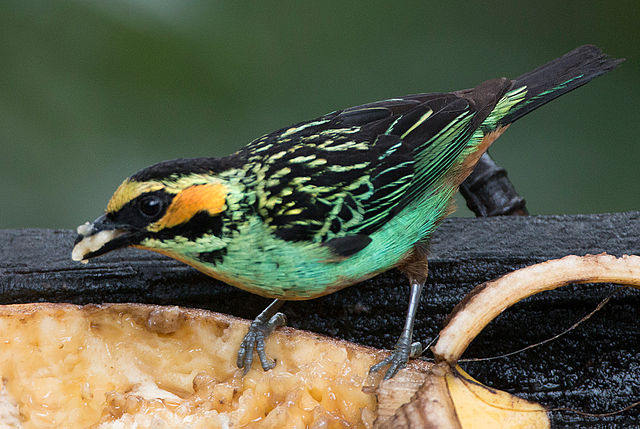
Golden-eared Tanager (Tangara chrysotis) ©WikiC
Tangara is a large genus of birds of the tanager family. It includes about 50 species, but as currently defined the genus is polyphyletic. All are from the Neotropics, and while most are fairly widespread, some have small distributions and are threatened. They are fairly small, ranging in size from 11.5–15 centimetres (4.5–5.9 in). This genus includes some of the most spectacularly colored birds of the world.
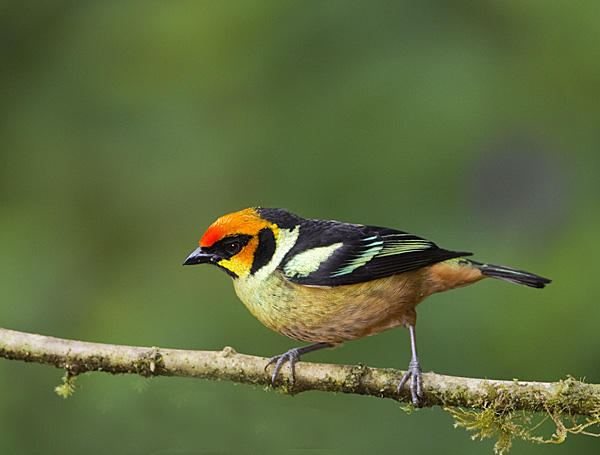
Flame-faced Tanager (Tangara parzudakii) ©WikiC
These tanagers are mainly found high in forest canopies, but some occupy more open habitat. They are found at all elevations below tree line but are most diverse in the Andean subtropical and foothill forests of Colombia, Ecuador and Peru.
The female builds a usually well concealed cup nest and lays two brown- or lilac-speckled white eggs. These hatch in 13–14 days and the chicks fledge in a further 15–16 days. The male and female feed the nestlings on insects and fruit, and may be assisted by helpers.
Tangara tanagers pick insects from leaves, or sometimes in flight, but fruit is a major dietary item, accounting for 53-86% of food items in those species which have been studied. (Information from Wikipedia Tangara)
And they sing the song of Moses the servant of God, and the song of the Lamb, saying, Great and marvellous are thy works, Lord God Almighty; just and true are thy ways, thou King of saints. (Revelation 15:3 KJV)
“El Shaddai” ~ by Nell Reese
*
Sunday Inspiration – Thraupidae – Tanagers and Allies I
Sunday Inspiration – Thraupidae – Tanagers and Allies II
Sunday Inspiration – Thraupidae – Tanagers and Allies III
Traupidae Family – Tanagers and Allies
*
 Lee's Birdwatching Adventures Plus