“And there will be a tabernacle for shade in the daytime from the heat, for a place of refuge, and for a shelter from storm and rain.” (Isaiah 4:6 NKJV)
“For ye shall go out with joy, and be led forth with peace: the mountains and the hills shall break forth before you into singing, and all the trees of the field shall clap their hands.” (Isaiah 55:12 KJV)
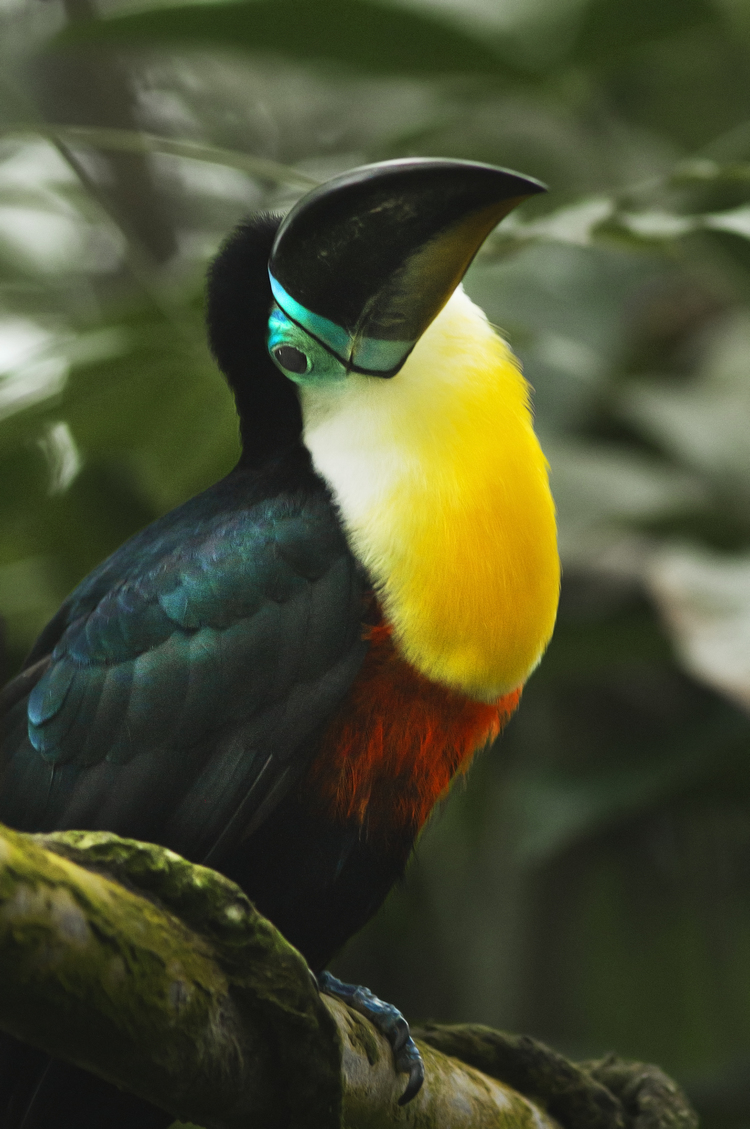
Our journey through the Song Bird Order, known as the Passeriformes Order, has been ongoing for many Sundays. There are 131 Families within this Order, and we are now down to three families to go. The Traupidae Family which we are starting today, has 375 species. Guess what? We will not be covering them all today. The last four Sundays was used to show you the Emberizidae family of 181 species. I trust you enjoyed having that family split up into “bite-size” articles. The same will be true with this family of beautiful Tanagers and allies created by their Creator.
If you are fairly new to seeing these Sunday Inspirations, the slide shows have the birds arranged in taxonomy order. So, there really is a reason for the way they are presented in the slides.
“The family has an American distribution. The Thraupidae are the second-largest family of birds and represent about 4% of all avian species and 12% of the Neotropical birds. Traditionally, about 240 species of tanagers were described, but the taxonomic treatment of this family’s members is currently in a state of flux.” (Wikipedia)
“Tanagers are small to medium-sized birds. The shortest-bodied species, the white-eared conebill, is 9 cm (3.5 in) long and weighs 7 grams, barely smaller than the short-billed honeycreeper. The longest, the magpie tanager is 28 cm (11 in) and weighs 76 grams (0.168 pounds). The heaviest is the white-capped tanager which weighs 114 grams (0.251 pounds) and measures about 24 cm (9.4 in). Both sexes are usually the same size and weight. Tanagers are often brightly colored, but some species are black and white. Birds in their first year are often duller or a different color altogether. Males are typically more brightly colored than females. Most tanagers have short, rounded wings. The shape of the bill seems to be linked to the species’ foraging habits.”(Wikipedia)
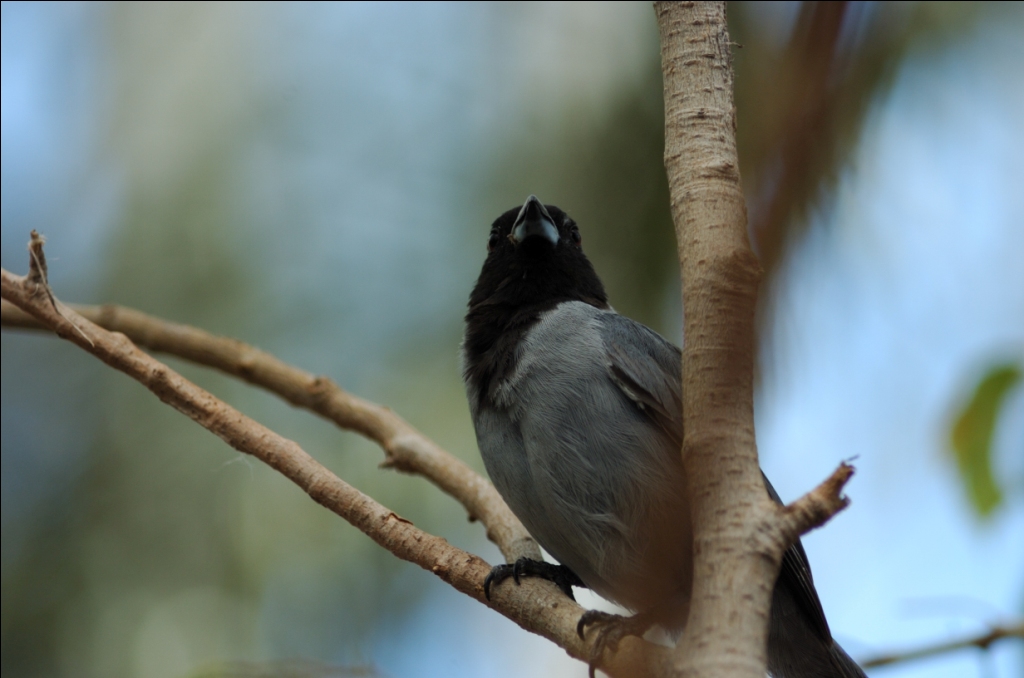
Black-faced Tanager (Schistochlamys melanopis) at National Aviary by Dan
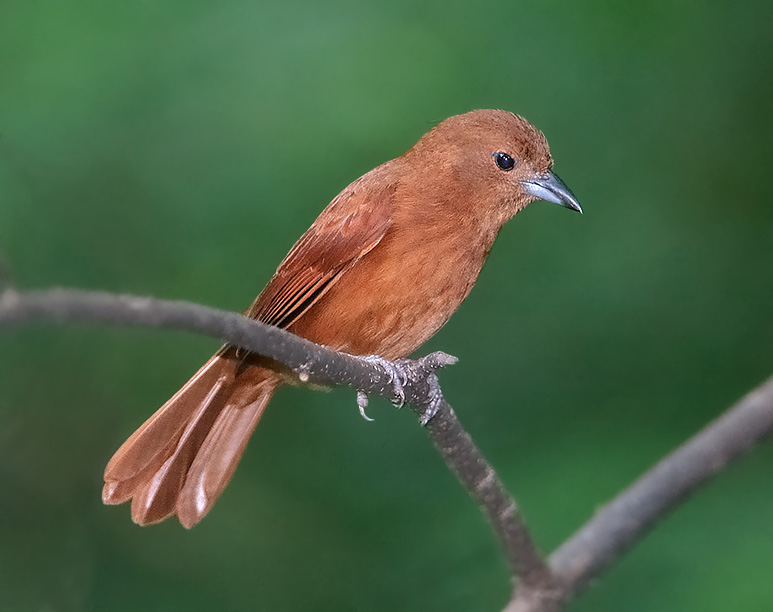
The Brown Tanager (Orchesticus abeillei) starts us off, followed by six Cardinals in the Paroaria genus. Various Tanagers from Schistochlamys, Cissopis, Conothraupis, Lamprospiza, Compsothraupis, Sericossypha, Nemosia, Creurgops, Mitrospingus and Orthogonys. (22 birds)
Next will be 15 Hemispingus, all in the Hemispingus genus. Hemispingus is a genus of warbler-like tanagers. They are found in highland forest in South America, especially in the Andes.
We will conclude with 20 or so more Tanagers from eight various genera. As you watch the slide show, you will see how the Lord enjoyed giving a great variety of color and patterns for these avian singers.
“Let them praise the name of the LORD: for he commanded, and they were created.” (Psalms 148:5 KJV)
This slideshow requires JavaScript.
Deck thyself now with majesty and excellency; and array thyself with glory and beauty. (Job 40:10 KJV)
“Many, O LORD my God, are thy wonderful works which thou hast done, and thy thoughts which are to us-ward: they cannot be reckoned up in order unto thee: if I would declare and speak of them, they are more than can be numbered.” (Psalms 40:5 KJV)
That ye might walk worthy of the Lord unto all pleasing, being fruitful in every good work, and increasing in the knowledge of God; (Colossians 1:10 KJV)
We finally come to the last birds in the Emberizidae – Buntings, New World Sparrows & Allies Family. This is the first family that we split up into four articles. With 181 species in this very common family, this gave you a chance to see more of them.
So, today, we will finish up the family by showing you last group of the “allies.” There is a Large-footed Finch in the Peropetes genus, the only one in the genus actually. Then the Atlapetes genus will be the bulk of the birds (31) and they are all Brushfinches, two finches from the Pselliophorus genus, a Yellow Cardinal from the Gubernatrix, and finish it off with 9 Bush Tanagers in the Chlorospingus genus. Forty-four amazing avian wonders from their Creator for us to enjoy.
The Large-footed Finch is found in the undergrowth of mountain forests, second growth, bamboo clumps, and scrubby pastures from 2150 m altitude to the scrubby páramo at 3350 m. It has a slender bill, a modestly sized tail and very large and powerful feet and legs.
White-naped Brushfinch (Atlapetes albinucha) by Kent Nickell
The next genus, the Atlapetes with their Brushfinches are rather interesting and colorful. Most are found in forest in subtropical or tropical areas. The range from Mexico, Central America and throughout South America.
The Yellow Cardinal is another neat avian creation, Looks just like our Northern Cardinal, but is yellow and in a different family altogether.
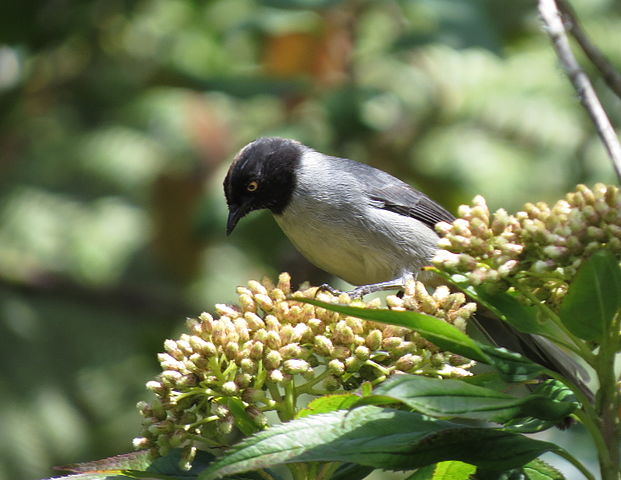
Sooty-capped Bush Tanager (Chlorospingus pileatus) by Ian
The last genus in this family, is the Chlorospingus and contains 9 Bush Tanagers. With this last group, we finish up the Emberizidae Family. Trust you enjoyed seeing most of the 181 members over the last few weeks.
This slideshow requires JavaScript.
Thou art worthy, O Lord, to receive glory and honour and power: for thou hast created all things, and for thy pleasure they are and were created. (Revelation 4:11 KJV)
“Worthy The Lamb” ~ Choir and Orchestra at Faith Baptist Church (May 15, 1916)
*