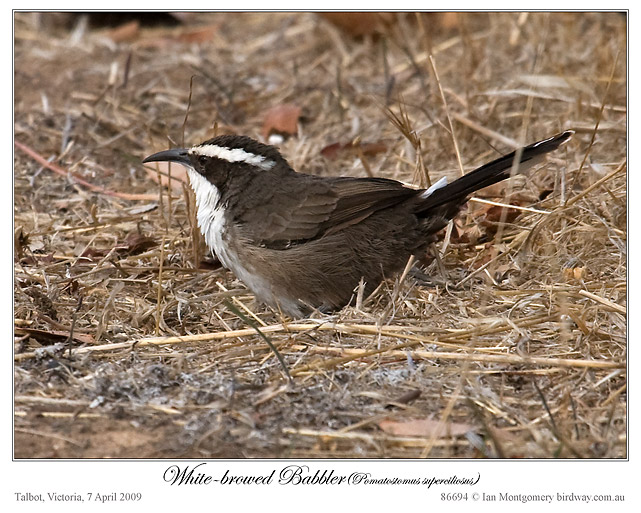
Ian’s Bird of the Week – White-browed Babbler

White-Browed Babbler by Birdway

White-Browed Babbler by Birdway

“If you had a bird popularity poll with Australian birders, I imagine that Babblers would do well. I hope so anyway, as it would show that pretty colours aren’t everything and character still counts in an often superficial world!

I photographed these White-browed Babblers when staying with friends in Talbot in rural Victoria northwest of Melbourne. This species is found in dry woodland in the southern half of the continent, mainly west of the Great Divide and south of the Tropic of Capricorn. Although wren-like in shape, they are much larger, the White-browed is 18-22cm./7-8.5in. in length and is the smallest of the four Australian species.
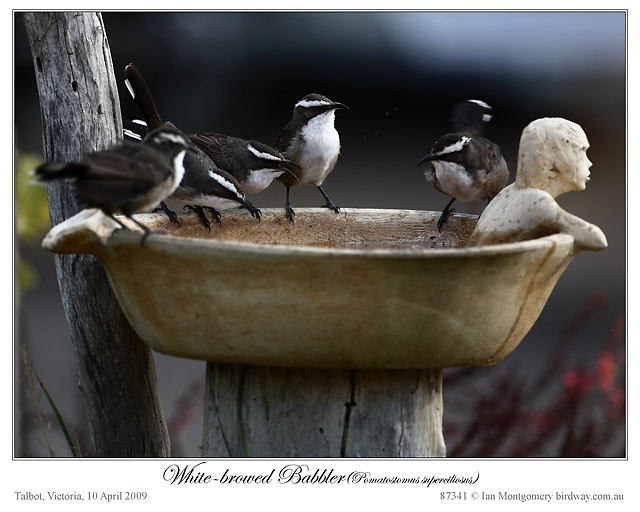
White-browed Babbler by Birdway

White-browed Babbler by Birdway

Babblers are highly social, noisy and exuberant. The live in groups of 3 to about a dozen and do everything together, including roosting, breeding and, as in the second photo, bathing. They build a number of domed nest in their territory; apparently only one of these is used for nesting, so the others are thought to be used for roosting. When disturbed by an observer, they chatter scoldingly, and move away, appearing to bounce rather than fly on their short wings. Their gregarious habits have earned them lots of common names such as Happy Family, Cackler, Go-aways, Twelve Apostles and Jumper, names applied rather indiscriminately to both this and the other widespread species, the Grey-crowned Babbler.

The four Australian species and a fifth found in PNG comprise the Australo-Papuan Babblers (family Pomatostomidae). These used to be included with the superficially similar Old World Babblers in the family Timaliidae http://www.birdway.com.au//timaliini/index.htm . It is now apparent that the two groups are not closely related.”

I’ve revised the Australo-Papuan Babblers on the website with new photos of 3 of the 4 species:
I’ve also added new photos to these waders:
Common Greenshank
Red-necked Stint
Bar-tailed Godwit
Black-tailed Godwit
Sooty Oystercatcher .
At the moment, I’m doing the ducks and have added photos, taken in Ireland, of:
Mute Swan
Tufted Duck
Eurasian Wigeon.

Please visit Ian Montgomery’s Birdway site for many interesting Birds of the World photography. He is a fantastic photographer. (Bolding by Lee)


Lee’s addition:
What an interesting bird and I love their common names – Happy Family, Cacker which bring to mind the following verses:

And my soul shall be joyful in the LORD; It shall rejoice in His salvation. (Psalms 35:9 NKJV)
Oh come, let us sing to the LORD! Let us shout joyfully to the Rock of our salvation. Let us come before His presence with thanksgiving; Let us shout joyfully to Him with psalms. For the LORD is the great God, And the great King above all gods. (Psalms 95:1-3 NKJV)”

“The Australo-Papuan or Australian babblers are endemic to Australia-New Guinea. The Australo-Papuan babblers are medium-sized terrestrial birds with sombre plumage and long decurved bills. The wings are short and round, and the tail is long and often held fanned which makes it look broad as well. The feet and legs are strong and adapted to a terrestrial existence. There is no sexual dimorphism in the plumage, which is composed of brown, russet and grey colours, often with striking white markings on the face and throat. The plumage of juvenile birds is similar to that of adults.
Five species in one genus are currently recognised, although the red-breasted subspecies rubeculus of the Grey-crowned Babbler may prove to be a separate species. Further investigation is required.

Chestnut-crowned Babbler by Birdway

Chestnut-crowned Babbler by Birdway

All five species are ground-feeding omnivores and highly social. Babblers live in family groups and small flocks of up to about 20 individuals and forage communally, calling loudly to one another all day long. They feed principally on insects and other invertebrates, but will also take seeds, fruits and small vertebrates. Most food is obtained on the ground, although they will also forage in low bushes; the Grey-crowned Babbler and New Guinea Babbler feed more extensively in vegetation than the other species. The long bill is used to probe and overturn large objects. They will also hold objects with one foot and hammer them with the bill in order to extract food.

Australo-Papuan babblers are monogamous breeders which defend territories. The breeding pair will be aided in breeding by a number of helpers from its group. A number of groups may have more than one breeding pair. Extra male helpers aid the male in his responsibilities whereas the females aid the main breeding male in hers. They have an extended breeding season. Australo-Papuan babblers construct large nests for communal roosting, and these nests may be used for breeding, or new nests may be constructed. There may be a lrage number of nests used by the group in a small area. When the female is breeding she alone uses the breeding nest. Nest construction, both of roosting and breeding nests, is undertaken by all birds in the group. Between one to six eggs are laid (the number and range varies by species) and are usually incubated by the breeding female alone (although a helper female may aid occasionally). The Breeding male and other helper males feed the breeding female during incubation. Incubation lasts between 19-25 days. The female broods the chicks until they are able to thermoregulate, and the chicks fledge after 16-23 days. After leaving the nest the chicks will continue to be fed by the adults for a number of months.”

The five species are the New Guinea Babbler, Grey-crowned Babbler, White-browed Babbler, Hall’s Babbler, and the Chestnut-crowned Babbler. (Photos are from Ian at Birdway)

*Information from Ian’s Bird of the Week newsletter, Wikipedia and other internet sources.

Check out the Bird of the Week – Introduction

See:
Ian’s Bird of the Week for more of these articles.
Ian’s Birdway Website
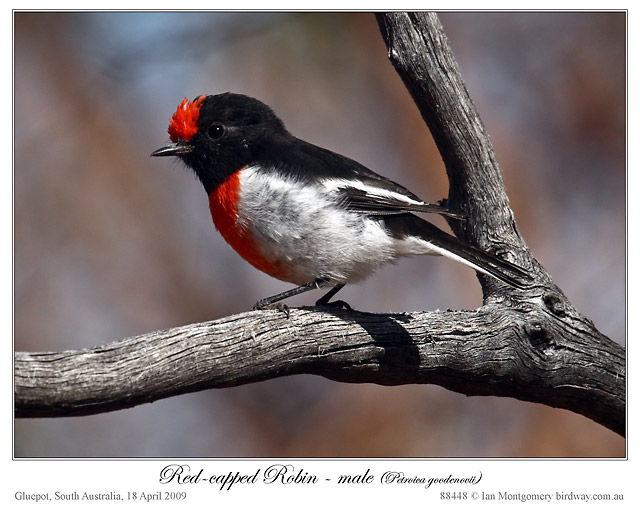

Ian’s Bird of the Week – Introduction

Red-capped Robin

Red-capped Robin by Birdway

Ian Montgomery of Birdway’s Birds of the World Website, who has been one of the photographers used throughout this blog, has given me permission for a new series of articles. Ian lives in Australia and is a fantastic photographer. On his website he “invites you to enjoy the beauty and fascination of wild birds with his photos of more than 1,200 species from Australia and around the World.” As of a few days ago, the “site contains more than 4,600 photos of 1,218 bird species in the wild; 581 of these are on the main Australian list of Christidis & Boles, 2008.” There is much to discover on the Birdway Website.

Every week Birdway sends out a newsletter with a Bird of the Week. The newsletters have interesting information about the bird being featured and several photos of that bird. With his permission, the Bird of the Week will be featured here, with some additions of my own at the bottom. We trust you will enjoy learning about and seeing some birds that many of us here in America do not have the privilege to see.

But now ask the beasts, and let them teach you; And the birds of the heavens, and let them tell you. (Job 12:7 NASB)

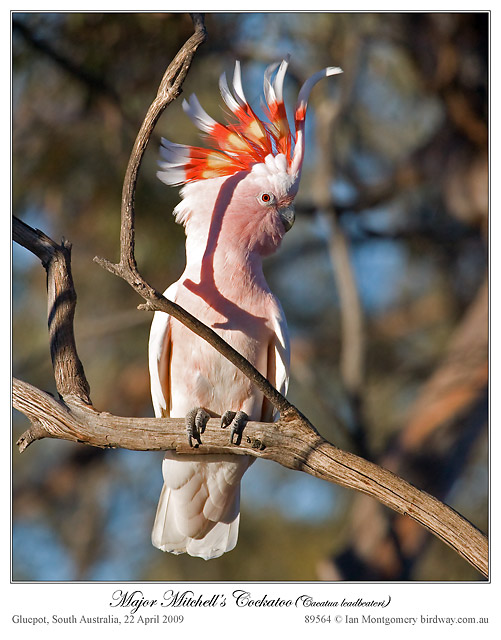
Major Mitchell's Cockatoo by Ian

Major Mitchell's Cockatoo by Ian

That is one of my favorite “bird verses.” I enjoy learning about the wonderful birds and critters that have been created. When I see their beauty and behavior, and their bad sides also, there are lessons to learn. Let’s see what we can learn through observing the different “Birds of the Week.”

I can’t say that I will only do one a week, because he has been producing the newsletter for some time. I will have a hard time picking from the past ones. I just may have to double-up.

Please visit his website – Birdway’s Birds of the World
Also, to sign up for his newsletter – CLICK HERE

Thanks you, Ian, for this privilege.

See the first Bird of the Week – White-browed Babbler

Birds of the Bible – None

I will consume man and beast; I will consume the birds of the heavens, The fish of the sea, And the stumbling blocks along with the wicked. I will cut off man from the face of the land,” Says the LORD. (Zephaniah 1:3 NKJV)

Flame Robin by Birdway

Flame Robin by Birdway

That verse caught me off-guard when I read it. Would the LORD really destroy all the birds? I hadn’t noticed that verse before. So, I went in search of what was meant by it and here are some of my findings:

From Geneva Bible Translation Notes:
“The Argument – Seeing the great rebellion of the people, and that there was now no hope of amendment, he gives notice of the great judgment of God, which was at hand, showing that their country would be utterly destroyed, and they would be carried away captives by the Babylonians.” In response as to the beast, birds and fish being consumed – “Not that God was angry with these dumb creatures, but because man was so wicked for whose cause they were created, God makes them to take part of the punishments with him.” God had created the critters and fish for man, but because of man’s sin, they (critters) are included in the judgement.

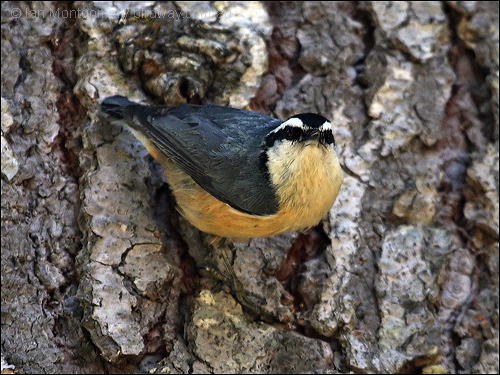
Red-breasted Nuthatch by Birdway

Red-breasted Nuthatch by Birdway

From John Darby’s Synopsis:
“The prophet (Zephaniah) begins by declaring that the land should be reduced to complete desolation; afterwards, that Judah, Jerusalem, their false gods, and their priests, should be smitten by the hand of Jehovah. The idolaters, those who mingled the name of Jehovah with that of other gods, those who had turned back from Jehovah, those who had not sought Him, …” Some of the other commentaries also indicated this mix of God and other gods. The New Testament reveals this is not an acceptable way of life in “No servant can serve two masters; for either he will hate the one and love the other, or else he will be loyal to the one and despise the other. You cannot serve God and mammon.” (Luke 16:13 NKJV)

The other commentaries seem to indicate the same, that because their sin was so bad, God was going to judge them. Have the birds and critters been caught in the judgment of man other times in the Bible? Yes! Here are some examples from Torrey’s Topical Textbook:

As you can see, each time, man’s sin caused or will cause them to suffer.

Tufted Coquette by Birdway

Tufted Coquette by Birdway

Then the LORD saw that the wickedness of man was great in the earth, and that every intent of the thoughts of his heart was only evil continually. And the LORD was sorry that He had made man on the earth, and He was grieved in His heart. So the LORD said, “I will destroy man whom I have created from the face of the earth, both man and beast, creeping thing and birds of the air, for I am sorry that I have made them.” But Noah found grace in the eyes of the LORD. (Genesis 6:5-8 NKJV)

Righteous are You, O LORD, when I plead with You; Yet let me talk with You about Your judgments. Why does the way of the wicked prosper? Why are those happy who deal so treacherously? You have planted them, yes, they have taken root; They grow, yes, they bear fruit. You are near in their mouth But far from their mind. But You, O LORD, know me; You have seen me, And You have tested my heart toward You. Pull them out like sheep for the slaughter, And prepare them for the day of slaughter. How long will the land mourn, And the herbs of every field wither? The beasts and birds are consumed, For the wickedness of those who dwell there, Because they said, “He will not see our final end.” (Jeremiah 12:1-4 NKJV)

so that the fish of the sea, the birds of the heavens, the beasts of the field, all creeping things that creep on the earth, and all men who are on the face of the earth shall shake at My presence. The mountains shall be thrown down, the steep places shall fall, and every wall shall fall to the ground.’ (Ezekiel 38:20 NKJV)

Hear the word of the LORD, You children of Israel, For the LORD brings a charge against the inhabitants of the land: “There is no truth or mercy Or knowledge of God in the land. By swearing and lying, Killing and stealing and committing adultery, They break all restraint, With bloodshed upon bloodshed. Therefore the land will mourn; And everyone who dwells there will waste away With the beasts of the field And the birds of the air; Even the fish of the sea will be taken away. (Hosea 4:1-3 NKJV)

Fire-tufted Barbet by Birdway

Fire-tufted Barbet by Birdway

God is going to judge the world and everyone in it. Here in America and around the world, the sinfulness of mankind just continues to increase. How long before we are judged and the critters caught in that judgment with us?

Birds of the Bible – For His Pleasure II

Oh, the depth of the riches both of the wisdom and knowledge of God! How unsearchable are His judgments and His ways past finding out!  (Romans 11:33 NKJV)

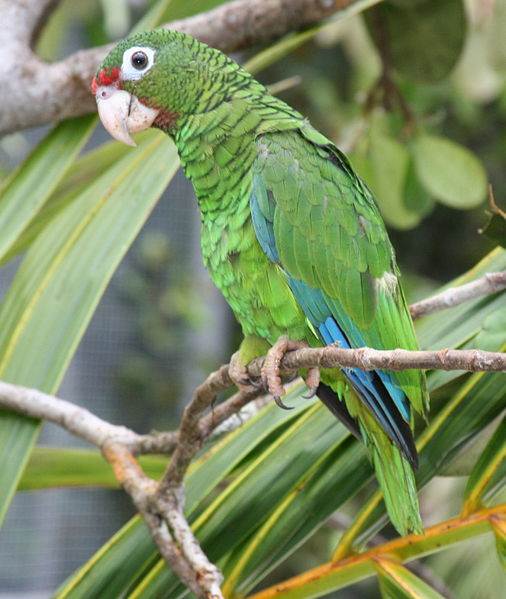
Puerto Rican Parrot

Puerto Rican Parrot

Last week the “Birds of the Bible – For His Pleasure”  that I wrote was about the Lord’s Handiwork with the colors and markings of the Birds. This time, how the Lord designed their bill or beak will be considered.

It is truly amazing to observe the birds around us. They come in all kinds of sizes, shapes and colors. Have you really noticed their bills or beaks. God has designed them with various shaped bills, different length, and uses for them. Depending on what niche they fill, they have just the perfect bill for that food that they need to partake of. Some times the food that they consume is not available and they either adapt to what is available, they move on to find that food, or they become endangered or extinct. Let’s look at some of the variety of bills and the birds attached to them.

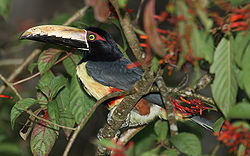
Collared Aracari

Collared Aracari

Toucan – “The colorful, giant bill, which in some large species measure more than half the length of the body, is the hallmark of toucans. Despite its size it is very light, being composed of bone struts with little solid material between them. The bill has forward-facing serrations resembling teeth,” which is used for eating fruit. “It does aid in their feeding behavior (as they sit in one spot and reach for all fruit in range, thereby reducing energy expenditure)…Also, the beak allows the bird to reach deep into treeholes to access food unavailable to other birds, and also to depredate suspended nests built by smaller birds.”

Hummingbird with beak in flower

Hummingbird with beak in flower

Hummingbirds – Their thin long bills are used for collecting nectar and to protect their split tongues.

Egrets and Herons – They have long pointed bills that can be used to spear the fish they catch. They also catch them by a quick closing of the beak.

Woodpeckers – Their beaks are use to peck and tear off the bark of trees to catch bugs hidden there.

Pelican – They have a big beak with a pouch that they can hold the fish they catch.

Gnatcatcher – A very fine and small beak helps them catch gnat and other tiny insects.

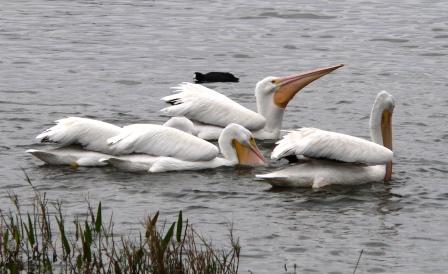
American White Pelicans at Lake Hollingsworth

American White Pelicans at Lake Hollingsworth

Sparrows and similiar – They have a cone shape bill that allows them to crack open seeds.

Parrots – Have even a bigger cone like beak that can open larger seeds and nuts.

Spoonbills – Have what looks like a spoon for a bill. They use it to swing back and forth in the water and have a very sensitive touch that will snap the paddles together when something gets in between them. Video

Bird Beaks from Wikipedia

Bird Beaks from Wikipedia

The list goes on and on and you will find in each case, that the bill and the bird match-up shows the infinite wisdom of our God and the Lord Jesus Christ, the Creator of them all.

As Christians, we also each have some niche that the Lord wants us to fill. He has given us the talents, abilities, gifts, etc. to do that task or ministry. Our problem sometimes is the will to do His Will with what He has provided for us. Again, let us learn from watching the birds and how they use what was designed for them.

See also: Beak from Wikipedia

Birds of the Bible – Vulture

But these you shall not eat: the eagle, the vulture, the buzzard, (Deu 14:12 NKJV)
And the vulture, and the kite after his kind; (Lev 11:14 KJV)


Job 28 tells of the wealth of earth that is hidden and must be mined; Gold, silver, brass, iron, precious stones such as sapphires, and gold dust. It is buried where the eyes of the birds mentioned have never seen them.

There is a path which no fowl knoweth, and which the vulture’s eye hath not seen: (Job 28:7 KJV)

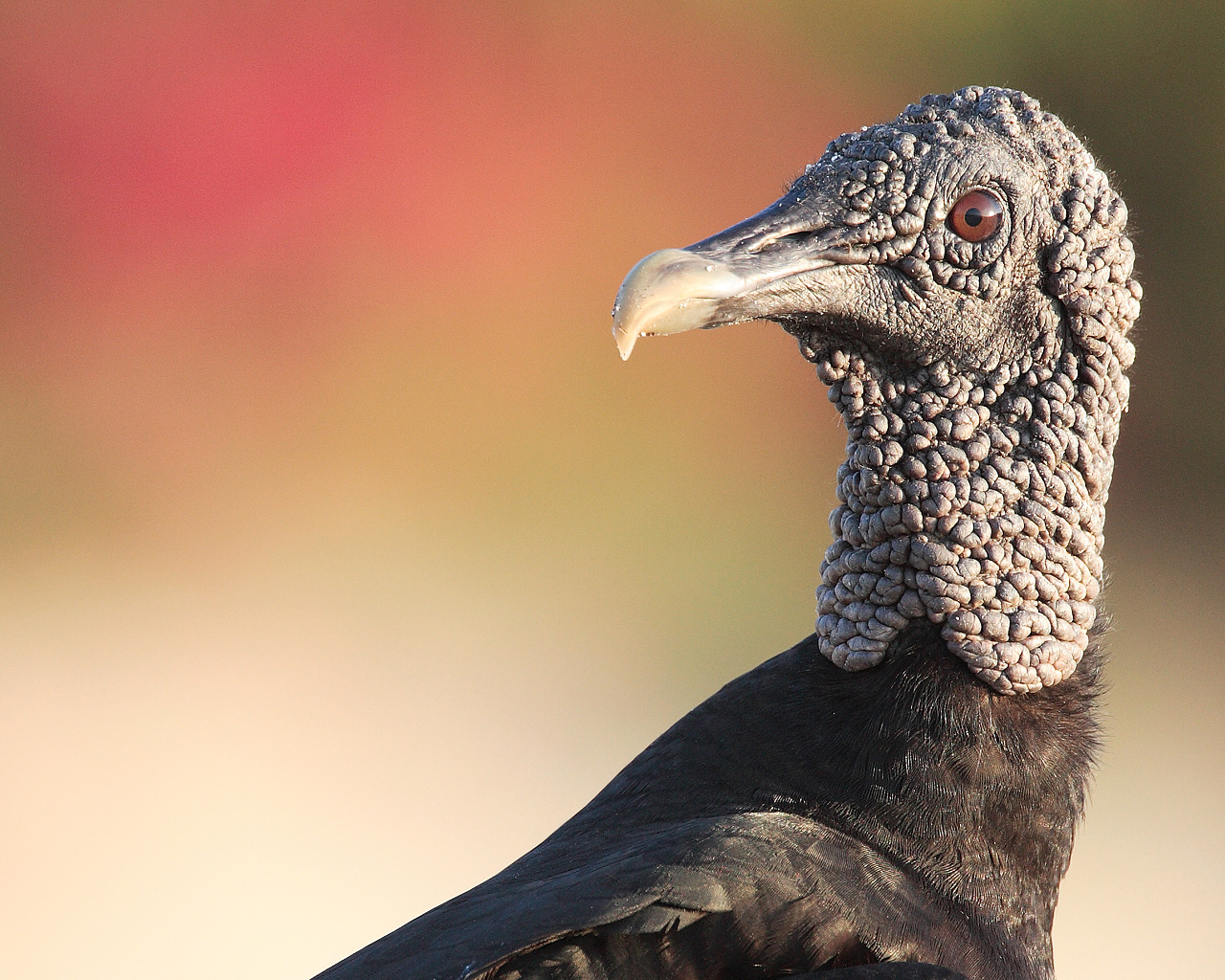
Black Vulture from Wikipedia

Black Vulture from Wikipedia

So, let’s find out some about the vulture. Vultures are good-sized birds that eat carrion (dead things). They help keep our country side clean of things that have died or been attacked by other birds or mammals. I think they are ugly looking, but what makes them look that way is the lack of feathers around the face. This helps them eat without messing up their feathers and having them soaked with blood and other dead stuff. The Lord made them the way they are and given them the task mentioned. I imagine the Lord does not consider them ugly.

In the New World we have the Andean Condor, Black Vulture, California Condor(the larges in North America-47″ with a 10′ wingspan), Greater Yellow Headed Vulture, King Vulture, Lesser Yellow Headed Vulture, and the Turkey Vulture. In the Old World Vulture family we get the African White-backed, Asian White-backed, Bearded, Cape Giffon, Cinereous, Egyptian, Eurasian Griffon, Himalayan Griffon, Hooded, Lappet Faced, Long Billed, Palm Nut, Red-headed, Ruppells Griffon, and White Headed Vultures.

A good reference to these Vultures is at these websites:

Nave’s Topical Bible – Vultures

*

Birds of the Bible – Nighthawk

Common Nighthawk

Common Nighthawk

The Night Hawk is part of the Caprimulgidae – Nightjars family. Here in North America, the Lesser, Common, and Antillean Nighthawks, are joined by the Common Pauraque, Common Poorwill, Chuck-Will’s Widow, and the Whip-Poor-Will to round out the family. They have long wings, short legs, and very small bills with a large mouth. All of these are late evening, early morning, and night hunters of insects. God created them with coloration that helps them blend in with the tree or leaves around them and most perch horizontal to the limbs instead of across them like most birds. This also helps hide them in the daytime. Even though they have the name “Hawk”, they do not resemble what most would think of hawks. The term is more of the fact of ‘hawking or catching” insects while in flight. Most fly low over the ground in search the moths and large flying insects. They range from 7 to 13 inches long with wingspans from 11 to 24 inches.

All Nighthawks listed in the New World are the Band-tailed Nighthawk, Plain-tailed Nighthawk, Nacunda Nighthawk, Rufous-bellied Nighthawk, Short-tailed Nighthawk, Antillean Nighthawk, Lesser Nighthawk, Common Nighthawk, Least Nighthawk, Sand-colored Nighthawk

UPDATE: AUG 30, 2008: Upon further investigation, the night hawk mentioned in the verses is most likely a type of owl that feeds at night. I will make a new article soon. Enjoy this anyway. (Lee)

They are again in our list of birds that are “unclean.” Both verses are identical in the KJV.

And the owl, and the night hawk, and the cuckoo, and the hawk after his kind, (Lev 11:16)
And the owl, and the night hawk, and the cuckoo, and the hawk after his kind, (Deu 14:15)

See Nighthawks for more information.


Grey Nightjar

Deuteronomy 14:11-18 Visualized

I trust you like my effort to use the Slideshow this way.


This slideshow requires JavaScript.

KJV

Most photos were provided by permission of the photographers in the sidebar.


Deuteronomy 14:11-18 KJV
(11) Of all clean birds ye shall eat.
(12) But these are they of which ye shall not eat: the eagle, and the ossifrage, and the ospray,
(13) And the glede, and the kite, and the vulture after his kind,
(14) And every raven after his kind,
(15) And the owl, and the night hawk, and the cuckow, and the hawk after his kind,
(16) The little owl, and the great owl, and the swan,
(17) And the pelican, and the gier eagle, and the cormorant,
(18) And the stork, and the heron after her kind, and the lapwing, and the bat.

Wordless Birds

*

Birds of the Bible – Falcons

American Kestrel by AestheticPhotos

American Kestrel by AestheticPhotos

Today we introduce another bird family that has been wonderfully created by God. The Falcon is in the Family “Falconidae” which are birds of prey. Worldwide there are over 60 species in the family. Falcons, Caracara, Forest-Falcons, Kestrels, Falconets, Pygmy-Falcons, and Hobbies make up the family. For an interesting list of the birds and videos of them, see Internet Bird Collection. These are the birds seen in North America according to Thayer’s Birding software:

  • Aplomado Falcon (15-16.5” with  40-48” wingspan) Mexico to Central and South America, TX

  • Gyrfalcon (20-25” with 50-64” wingspan – largest of the falcons) – Arctic tundra-winter seen in upper Midwest, Dakotas, Montana, Idaho and Washington – Flies close to the ground.

  • Peregrine Falcon (16-20” with  36-44” wingspan – large falcon)

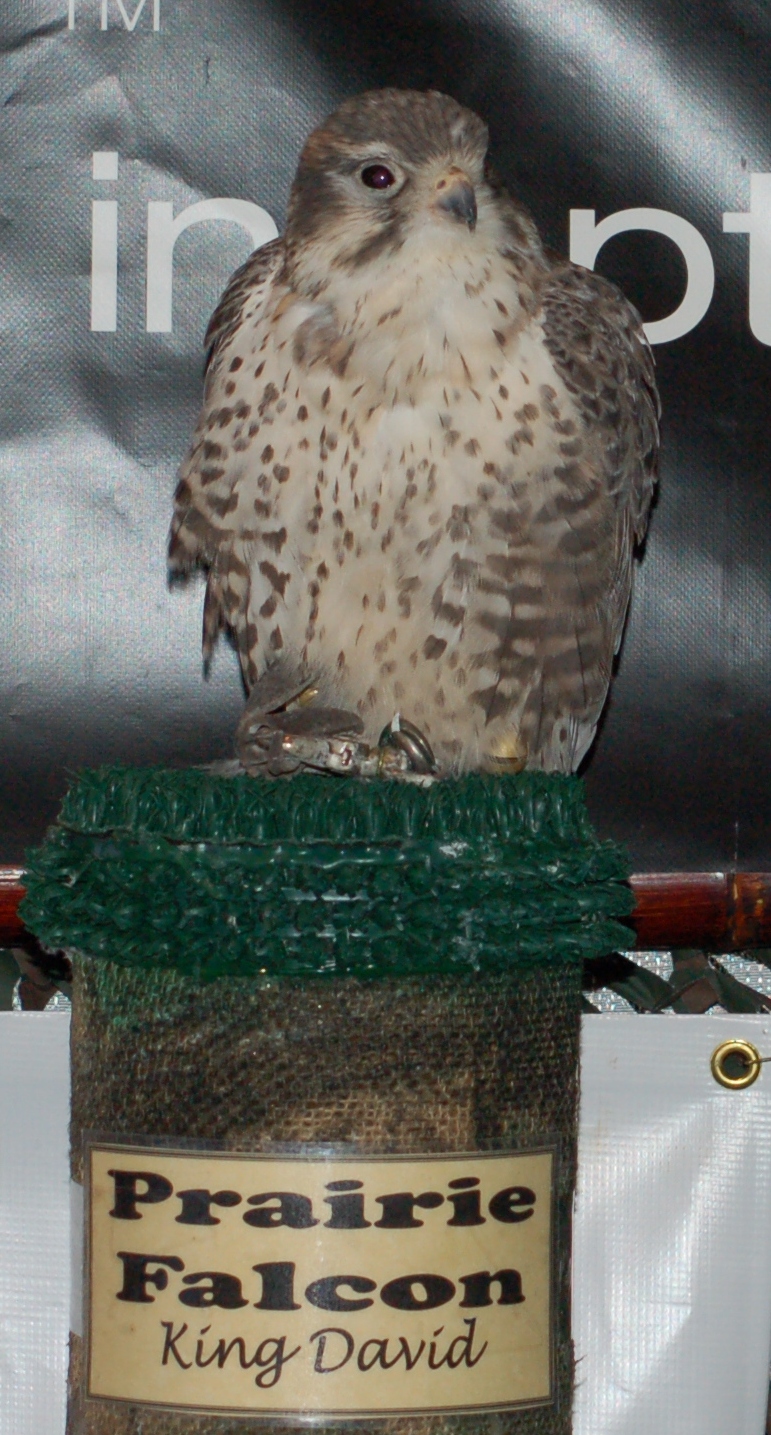
  • Prairie Falcon (15.5-19.5” with 35-43” wingspan)

  • Merlin (12” with 25” wingspan)

  • Collared Forest-Falcon (21-25” with 30-37” wingspan) (Accidental-South Texas)

  • American Kestrel (10.5” with 23” wingspan – Smallest falcon)

  • Eurasian Kestrel (13.5”with 29” wingspan Hovers) – Mass, NJ, N Brunswick and Aleutian Islands of Alaska

    Prairie Falcon by Dan

    Prairie Falcon by Dan

  • Crested Caracara (23” with 50” wingspan) – TX and FL, Prairie region of central FL, open arid and semiarid scrublands, grassland w/ few trees, ranchland

  • Eurasian Hobby (11-13” with 28-33” wingspan) – Europe and Asia, Africa (winters) very rare in North America Captures prey in the air.

A good article about the Falconidae Family is at the Handbook of the Birds of the World website. The Wikipedia had these comments:
“Falcons and caracaras are carnivores, feeding on birds, small mammals, reptiles, insects and carrion.”,
“They have strongly hooked bills, sharply curved talons and excellent eyesight. The plumage is usually composed of browns, whites, chestnut, black and grey, often with barring of patterning. ”
“They differ from other Falconiformes (Hawks, Eagles, Falcons, etc.) in killing with their beaks instead of their feet. They have a “tooth” on the side of their beak for the purpose.”

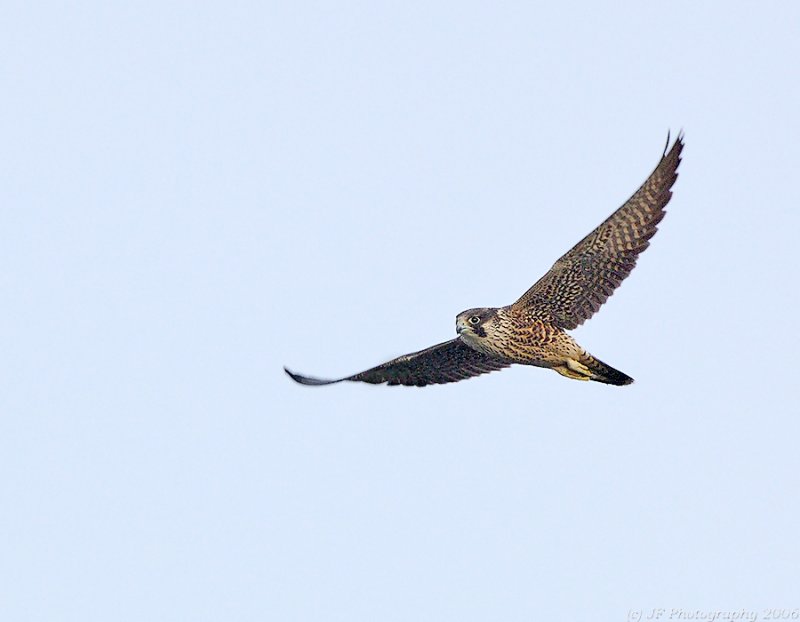
Peregine Falcon by Jim Fenton

Peregrine Falcon by Jim Fenton

The Falcon is another bird on the “unclean” list.
“And these you shall regard as an abomination among the birds; they shall not be eaten, they are an abomination: the eagle, the vulture, the buzzard, the kite, and the falcon after its kind;” (Leviticus 11:13-14 NKJV)
“the red kite, the falcon, and the kite after their kinds;” (Deuteronomy 14:13 NKJV)
“You shall fall upon the mountains of Israel, you and all your troops and the peoples who are with you; I will give you to birds of prey of every sort and to the beasts of the field to be devoured. (Ezekiel 39:4 NKJV)

Check out the

Falcons page for Photos and Videos
Falconidae – Caracaras, Falcons – Family

*

Birds of the Bible – Bittern


CLASS – AVES, Order –PELECANIFORMES, Family – Ardeidae – Herons, Bitterns


In North America we have theAmerican (23” with a 42-50” wingspan) and Least Bittern (11-14” with a 16-18” wingspan). Both dwell in marsh or wetland habitats and are very difficult to find. God has designed them with plumage and behavior (standing very still with the head pointing up) that helps camouflage them. They eat frogs, small fish, snakes and bugs, etc.
The bittern is an interesting find in the Bible.

I will also make it a possession for the bittern, and pools of water: and I will sweep it with the besom of destruction, saith the LORD of hosts. (Isa 14:23)

Again judgment is being given and the names of the new inhabitants are given. Only the birds will dwell there.

But the cormorant and the bittern shall possess it; the owl also and the raven shall dwell in it: and he shall stretch out upon it the line of confusion, and the stones of emptiness. (Isa 34:11)
Ninevah will be barren and the bittern and pelican will be singing from the vacant windows. The herds shall lie down in her midst, Every beast of the nation. Both the pelican and the bittern Shall lodge on the capitals of her pillars; Their voice shall sing in the windows; Desolation shall be at the threshold; For He will lay bare the cedar work. (Zep 2:14)

American Bittern Picture with permission from Gramps (Les)
A YouTube of a Bittern. I do not know the language, but it shows how the Bittern is camouflaged so well.

Family#26 – Ardeidae

*