Southern Screamer

Southern Screamer (Chauna torquata)  Jax Zoo by Lee

Southern Screamer (Chauna torquata) Jax Zoo by Lee

It came about at noon, that Elijah mocked them and said, “Call out with a loud voice, for he is a god; either he is occupied or gone aside, or is on a journey, or perhaps he is asleep and needs to be awakened.” (1 Kings 18:27 NASB)

Here is an introduction to another of the Lord’s neat creations. This one can be quite noisy at times. Not sure if that qualifies as a “joyful noise.” We have seen them at the Jacksonville Zoo and the Cincinnati Zoo.

The southern screamer (Chauna torquata), also known as the crested screamer, belongs to the order Anserformes. In the Anhimidae – Screamers Family. It is found in southeastern Peru, northern Bolivia, Paraguay, southern Brazil, Uruguay and northern Argentina. Its diet consists of plants stems, seeds, leaves, and, rarely, small animals.

Based on DNA analysis they are probably most closely related to the Australian magpie goose. (National Zoo)

Southern Screamer (Chauna torquata)  Jax Zoo by Lee

Southern Screamer (Chauna torquata) Jax Zoo by Lee

The southern screamer averages 32–37 in (81–95 cm) long and weighs 6.6–11.0 lb (3–5 kg). They are the heaviest, although not necessarily the longest, of the three screamers. The wingspan is around 67 in (170 cm). Among standard measurements, the wing chord measures 21 in (54 cm), the tail 9.1 in (23.2 cm), It lives in tropical and sub-tropical swamps, estuaries and watersides.

The southern screamer is a good swimmer, having partially webbed feet, but prefers to move on the ground. The bony spurs on its wings are used for protection against rival screamers and other enemies. Although it is non-migratory, it is an excellent flier. It lives in large flocks, feeding on the ground in grasslands and cultivated fields until nesting season, when birds pair off.

Southern Screamer (Chauna torquata)  Jax Zoo by Lee

Southern Screamer (Chauna torquata) Jax Zoo by Lee

The southern screamer establishes monogamous relationships that last its lifetime, estimated to be 15 years. Courtship involves loud calling by both sexes, which can be heard up to two miles away. “Highly vocal, they are named for their distinctive , far-carrying calls, easily carrying for several miles.”(NZ) The Southern Screamer is the most gregarious of the 3 screamer species and the most numerous. For the nest the couple makes a big platform of reeds, straws, and other aquatic plants in an inaccessible place near water. The female lays between two and seven white eggs. The couple share incubation, which takes 43 to 46 days. Chicks leave the nest as soon as they hatch, but the parents care for them for several weeks. The fledging period takes 8 to 14 weeks. (Wikipedia and other internet sources)

Southern Screamer Sign at Cincinnati  Zoo

Southern Screamer Sign at Cincinnati
Zoo

*

Here is a Southern Screamer from xeno-canto:

*

This slideshow requires JavaScript.

*

Fact Sheets:

Southern Screamer – Jacksonville Zoo

Southern Screamer – National Zoo

Screamer – Online Zoo

Southern Screamer – Wikipedia

*


Bible Birds – Lapwings II

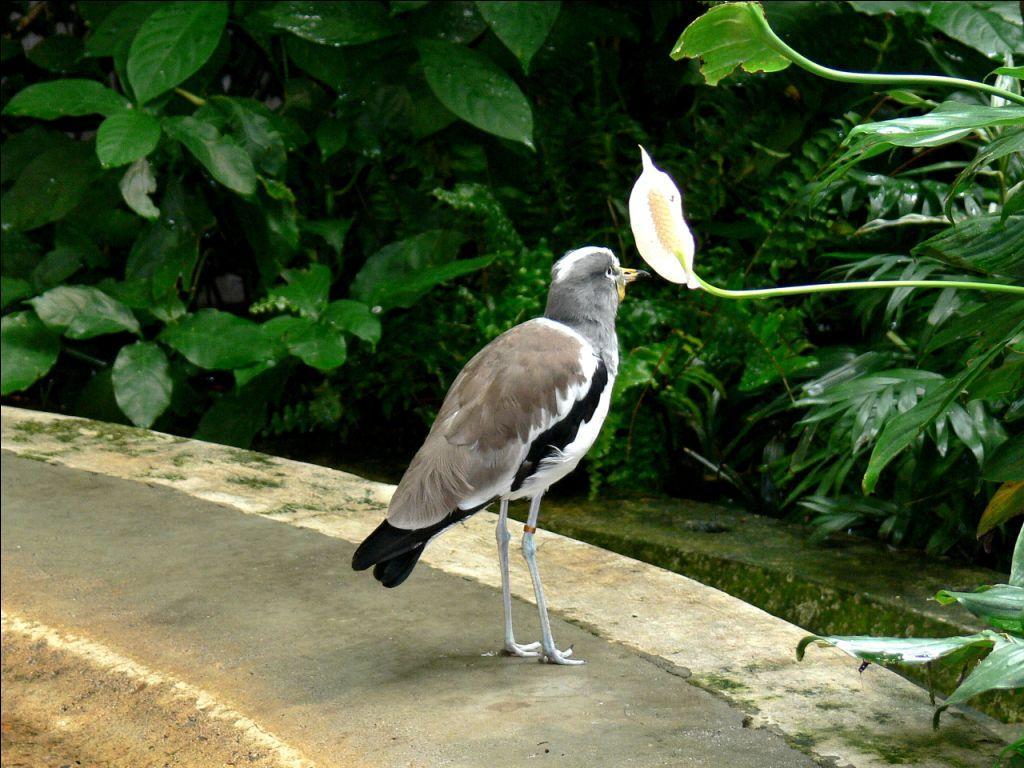
White-crowned Lapwing (Vanellus albiceps) at NA

White-crowned Lapwing (Vanellus albiceps) at NA

And the stork, the heron after her kind, and the lapwing, and the bat. (Leviticus 11:19 KJV)

The White-crowned Lapwing above was my first Lapwing encountered. They were at the National Aviary in Pittsburg, PA. They are from the tropical regions of Africa and have a diet of insects and other small invertebrates. (Fun Fact from Aviary) ~ White-headed Wattled Lapwings will bravely defend their territories against all comers, even hippos!

Now almost every zoo we visit has at least one species of Lapwing present. We see the Masked Lapwing most frequently. The reason Lapwings are mentioned in the Bible is because it is on the “Do Not Eat” list.

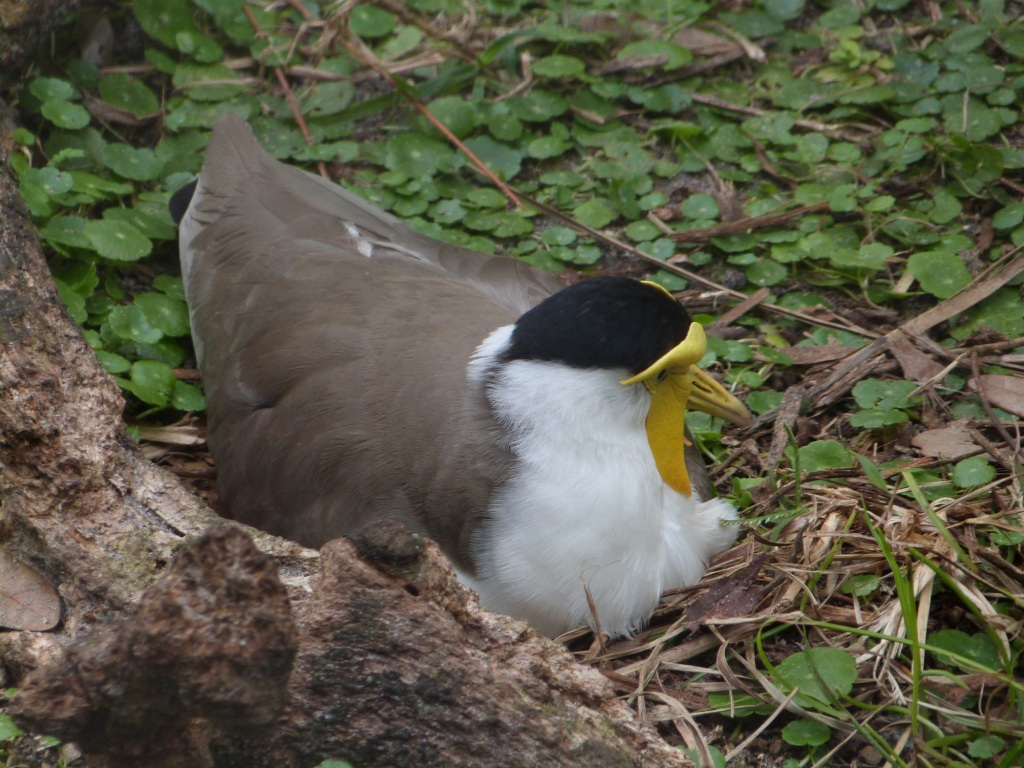
Masked Lapwing (Vanellus miles) Brevard Zoo by Lee

Masked Lapwing (Vanellus miles) Brevard Zoo by Lee

And the stork, and the heron after her kind, and the lapwing, and the bat. (Deuteronomy 14:18 KJV)

The Masked Lapwings are interesting to watch as they walk around on their long legs and as the “wattle” wiggles.

Vanellinae are any of various crested plovers, family Charadriidae, noted for its slow, irregular wingbeat in flight and a shrill, wailing cry. Its length is 10-16 inches. They are a subfamily of medium-sized wading birds which also includes the plovers and dotterels. The Vanellinae are collectively called lapwings but also contain the ancient Red-kneed Dotterel. A lapwing can be thought of as a larger plover.

The traditional terms “plover”, “lapwing” and “dotterel” were coined long before modern understandings of the relationships between different groups of birds emerged: in consequence, several of the Vanellinae are still often called “plovers”, and the reverse also applies, albeit more rarely, to some Charadriinae (the “true” plovers and dotterels).

In Europe, “lapwing” often refers specifically to the Northern Lapwing, the only member of this group to occur in most of the continent. (Wikipedia)

*

Here are some photos of Lapwings in the Vanellinae genera.

This slideshow requires JavaScript.

*

*

Birds of the Bible – Lapwing II

White-crowned Lapwing (Vanellus albiceps) at NA

White-crowned Lapwing (Vanellus albiceps) at NA

And the stork, the heron after her kind, and the lapwing, and the bat. (Leviticus 11:19 KJV)

The White-crowned Lapwing above was my first Lapwing encountered. They were at the National Aviary in Pittsburg, PA. They are from the tropical regions of Africa and have a diet of insects and other small invertebrates. (Fun Fact from Aviary) ~ White-headed Wattled Lapwings will bravely defend their territories against all comers, even hippos!

Now almost every zoo we visit has at least one species of Lapwing present. We see the Masked Lapwing most frequently. The reason Lapwings are mentioned in the Bible is because it is on the “Do Not Eat” list.

Masked Lapwing (Vanellus miles) Brevard Zoo by Lee

Masked Lapwing (Vanellus miles) Brevard Zoo by Lee

And the stork, and the heron after her kind, and the lapwing, and the bat. (Deuteronomy 14:18 KJV)

The Masked Lapwings are interesting to watch as they walk around on their long legs and as the “wattle” wiggles.

Vanellinae are any of various crested plovers, family Charadriidae, noted for its slow, irregular wingbeat in flight and a shrill, wailing cry. Its length is 10-16 inches. They are a subfamily of medium-sized wading birds which also includes the plovers and dotterels. The Vanellinae are collectively called lapwings but also contain the ancient Red-kneed Dotterel. A lapwing can be thought of as a larger plover.

The traditional terms “plover”, “lapwing” and “dotterel” were coined long before modern understandings of the relationships between different groups of birds emerged: in consequence, several of the Vanellinae are still often called “plovers”, and the reverse also applies, albeit more rarely, to some Charadriinae (the “true” plovers and dotterels).

In Europe, “lapwing” often refers specifically to the Northern Lapwing, the only member of this group to occur in most of the continent. (Wikipedia)

*

Here are some photos of Lapwings in the Vanellinae genera.

This slideshow requires JavaScript.

*

National Aviary – Pittsburgh, PA

Charadriidae – Plovers Family

Bible Birds – Masked Lapwing

Birds of the Bible – Lapwing

Birds of the Bible

Bible Birds

*

Sunday Inspiration – Herons

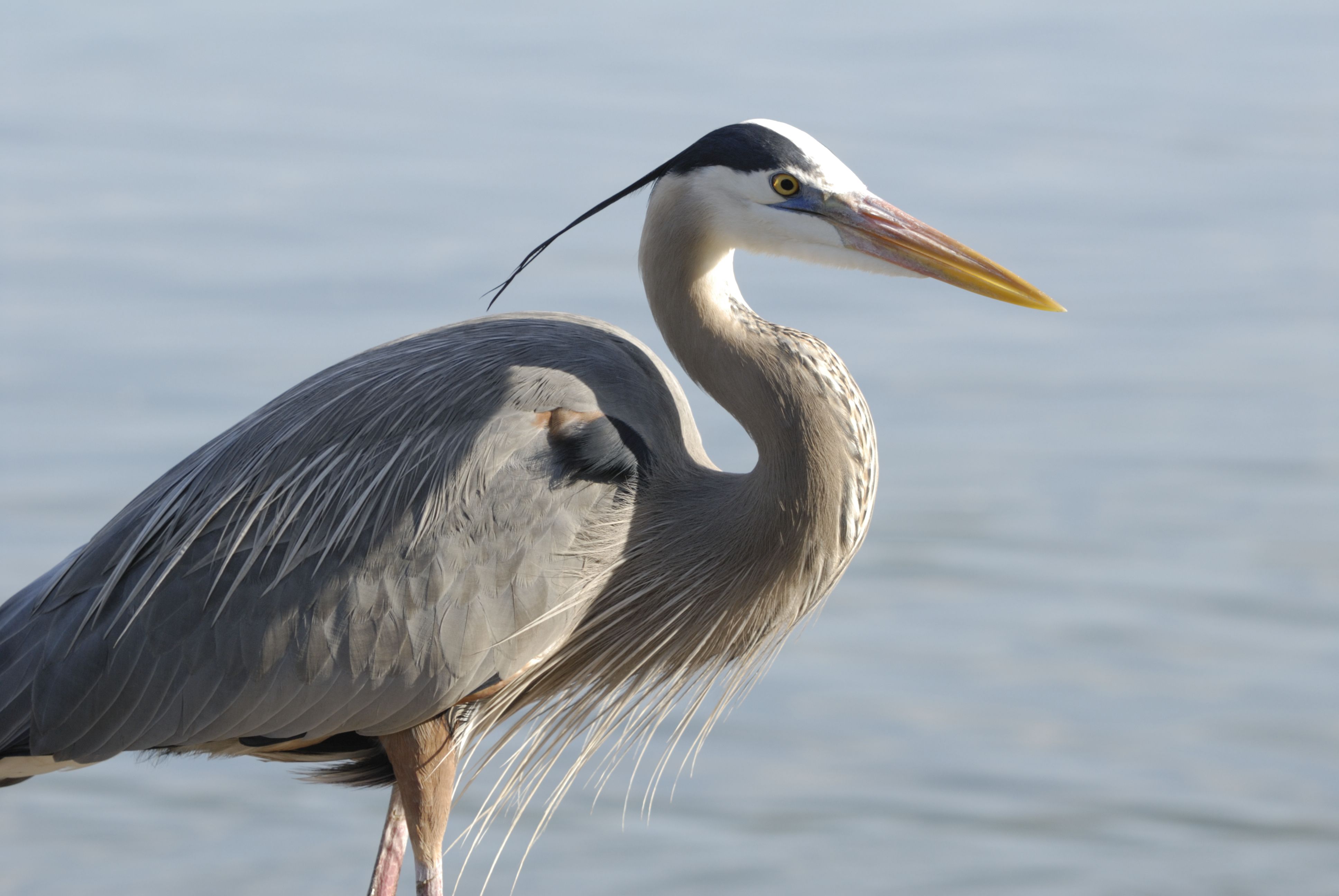
Great Blue Heron by Dan

Great Blue Heron by Dan

And the stork, the heron after her kind, and the lapwing, and the bat. (Leviticus 11:19 KJV)

Herons are a favorite bird species of mine. We see them frequently here in central Florida. One of their characteristics that impress me is their patience. It is common to see them standing almost still except for their neck swaying slowly back and forth.

Oh, that I had the patience like these Storks.

These wait all upon thee; that thou mayest give them their meat in due season. (Psalms 104:27 KJV)

Wait on the LORD: be of good courage, and he shall strengthen thine heart: wait, I say, on the LORD. (Psalms 27:14 KJV)

Knowing this, that the trying of your faith worketh patience. (James 1:3 KJV)

Herons belong to the  Ardeidae – Herons, Bitterns Family and are a Bird of the Bible.

*

This slideshow requires JavaScript.

*

*

“Peace Medley”  by Faith Baptist Choir

*

*


Slides From Birdwatching Lesson

Slide1

Oh that men would praise the LORD for his goodness, and for his wonderful works to the children of men! (Psalms 107:15 KJV)

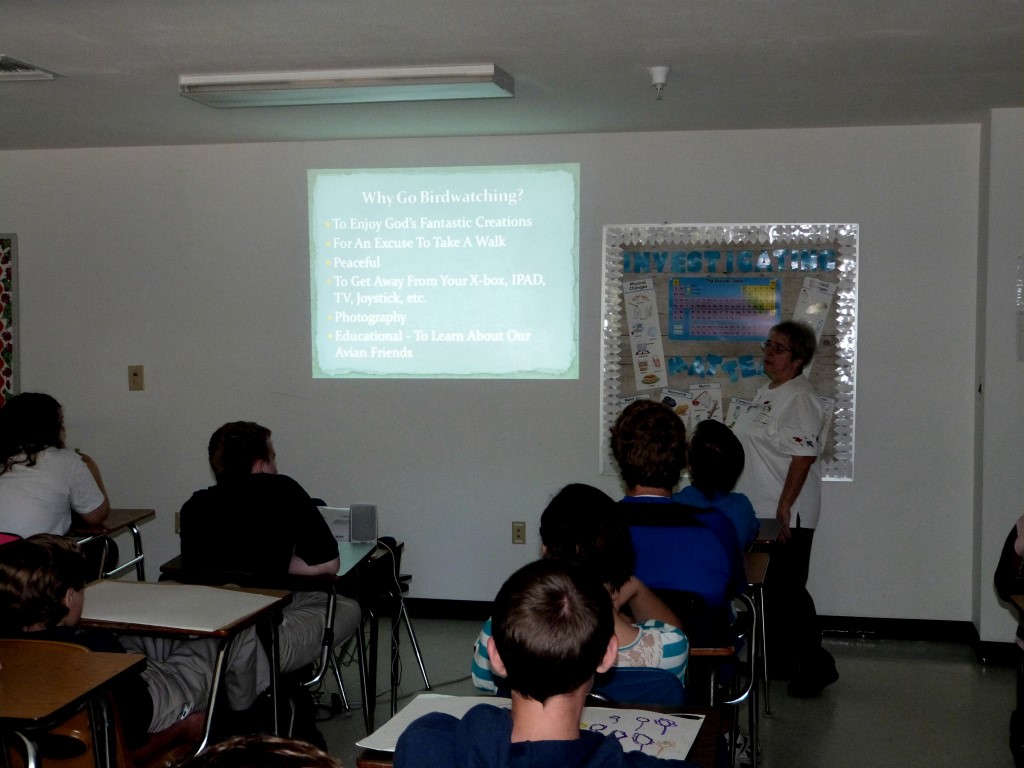
Here is the Powerpoint Presentation I used yesterday, converted to JPGs. (Teaching About Birdwatching) As it was shown, each point came up as I clicked and explained the points. The two videos that were part of it; the Blue Jay calling and the Carolina Wren singing, are included. If you can use any of this presentation, you have my permission. The first slide had an audio of birds singing as the students arrived.

*

This slideshow requires JavaScript.

*

*

Teaching About Birdwatching

Birdwatching

*


Teaching About Birdwatching

Lee Teaching Birdwatching

Lee Teaching About Birdwatching

 Give instruction to a wise man and he will be yet wiser; teach a righteous man (one upright and in right standing with God) and he will increase in learning. (Proverbs 9:9 AMP)

Hear instruction and be wise, and do not refuse or neglect it. (Proverbs 8:33 AMP)

I have been busy the last few days getting a Powerpoint Presentation ready. Today, I had the privilege of introducing Birdwatching to two classes at Winter Haven Christian School. One class was 9th and 10th graders and the other was 6th and 7th graders. This was their last full day before their summer break. This was a diversion for them.

Both classes seemed interested and maybe some of them will become future birdwatchers. We always try to spark an interest in our next generations coming behind us.

Dan was along and took a few photos while I did the presentation. He was also the one who helped carry things in.

I also tried to encourage those who may be interested in the photographic side of birdwatching.

Here are some of the photos from this morning:

This slideshow requires JavaScript.

*

Winter Haven Christian

Birdwatching 

Sunday Inspiration – Old Rugged Cross

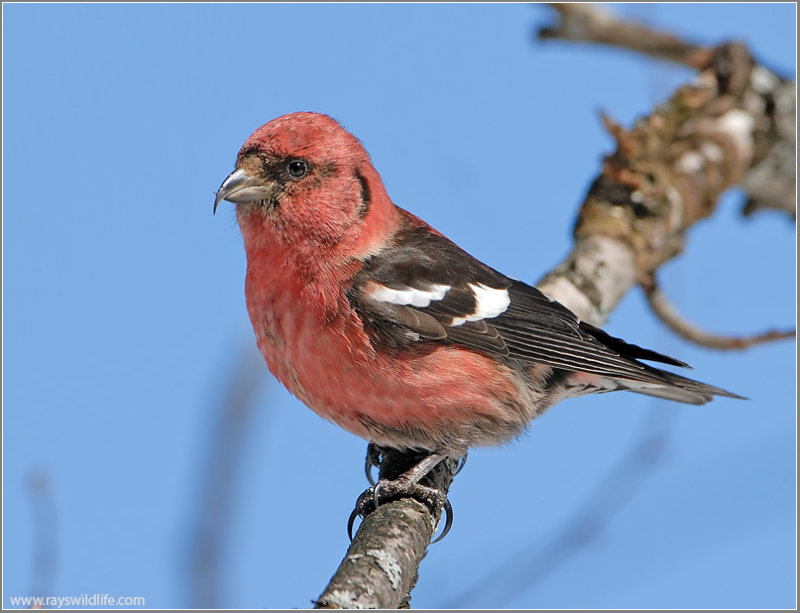
Two-barred Crossbill (Loxia leucoptera)(White-winged) by Raymond Barlow

Two-barred Crossbill (Loxia leucoptera)(White-winged) by Raymond Barlow

And he bearing his cross went forth into a place called the place of a skull, which is called in the Hebrew Golgotha: (John 19:17 KJV)

While thinking of the music for today’s Inspiration, my search began with “Cross” birds, but there aren’t that many with “Cross” in their name, so the “Hill” birds were added also.

When Christ died on the “cross” on a “hill” called Calvary, He became the Perfect Sacrifice for my sins and yours. Praise the Lord. May we think about His Love for us as we watch some of His creation.

“You are the light of the world. A city that is set on a hill cannot be hidden. Nor do they light a lamp and put it under a basket, but on a lampstand, and it gives light to all who are in the house. Let your light so shine before men, that they may see your good works and glorify your Father in heaven. (Matthew 5:14-16 NKJV)

*

This slideshow requires JavaScript.

*

*

“Old Rugged Cross” – Faith Baptist Church Orchestra

*

More Sunday Inspirations

Gideon

*


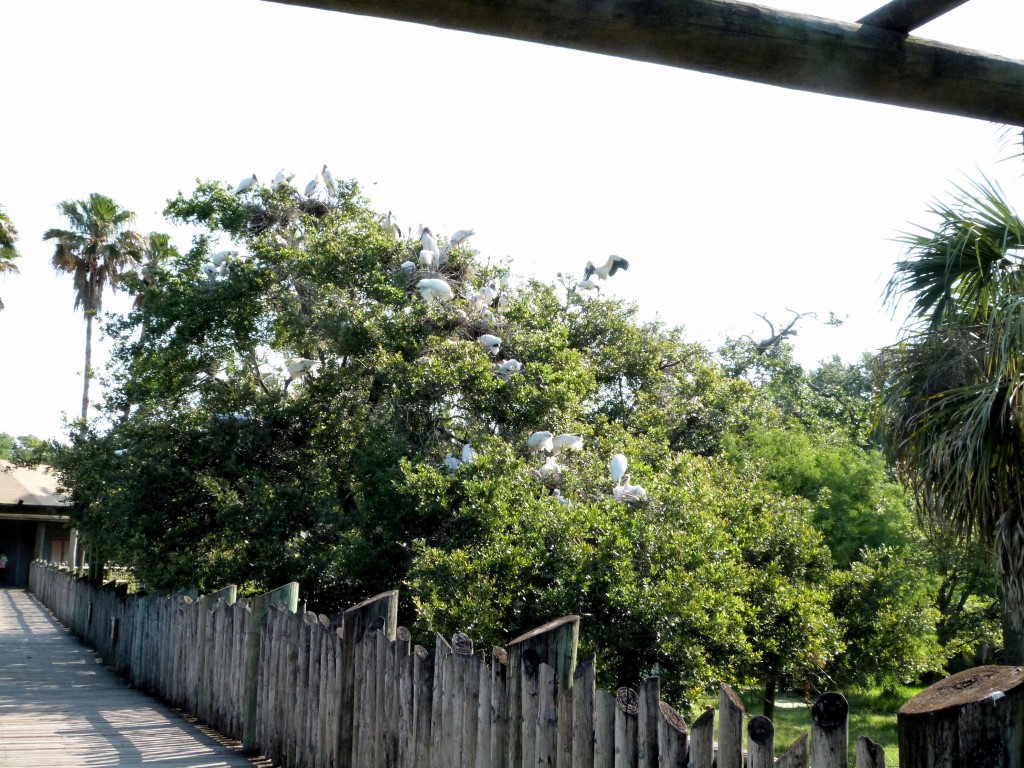
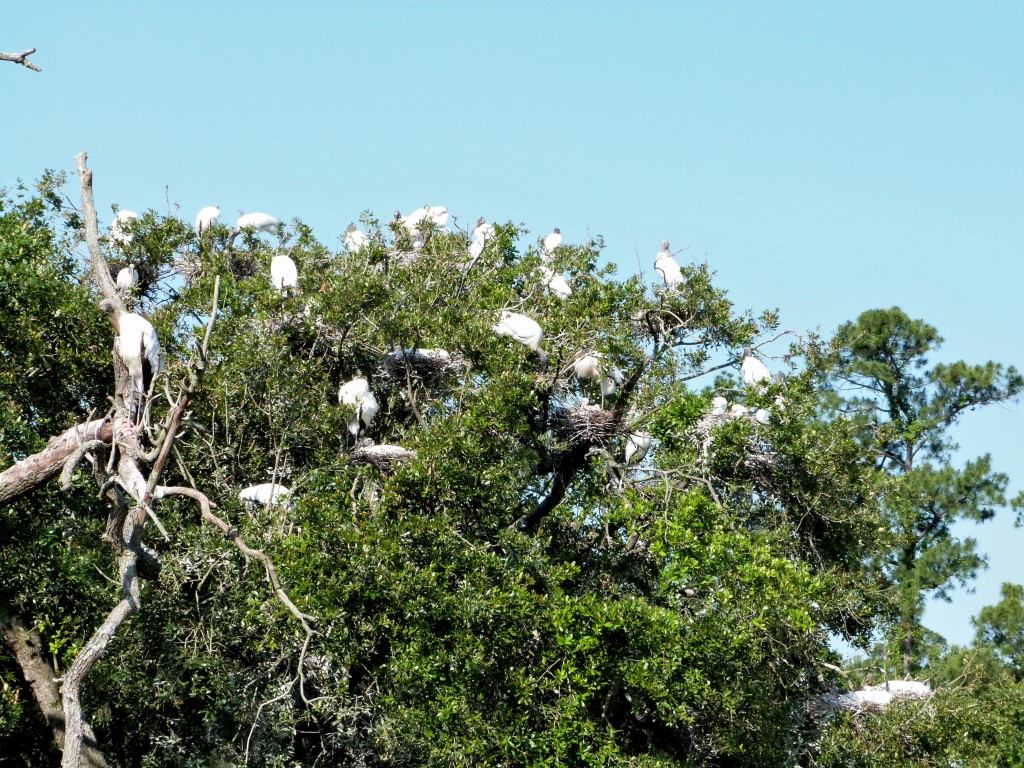
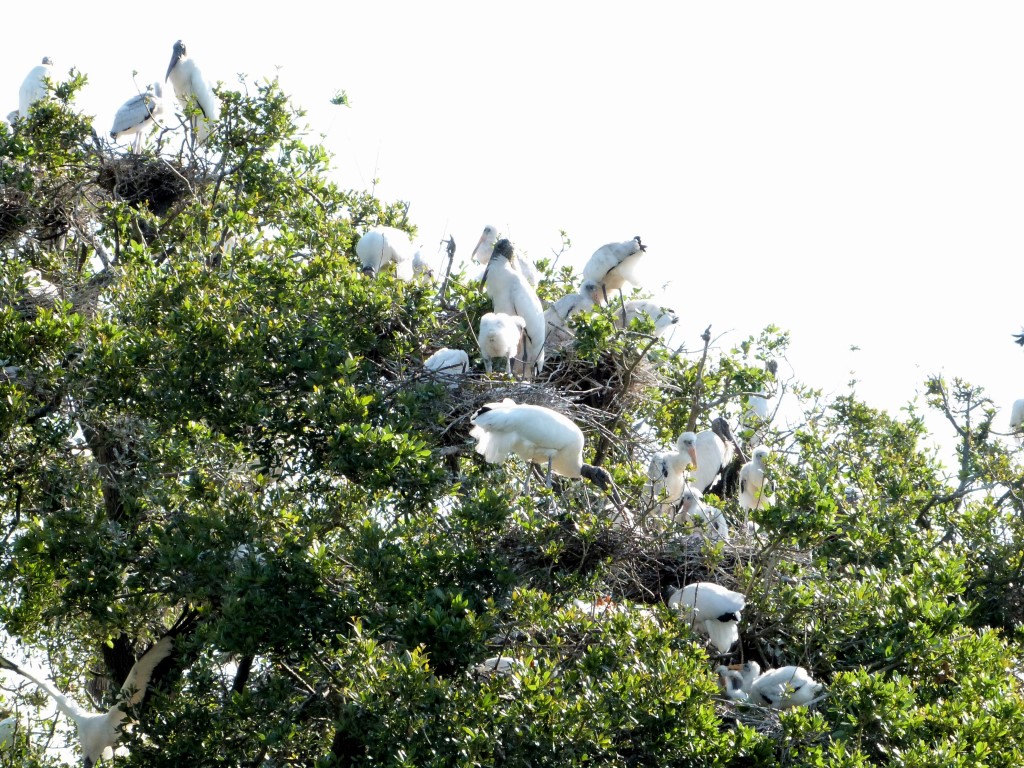
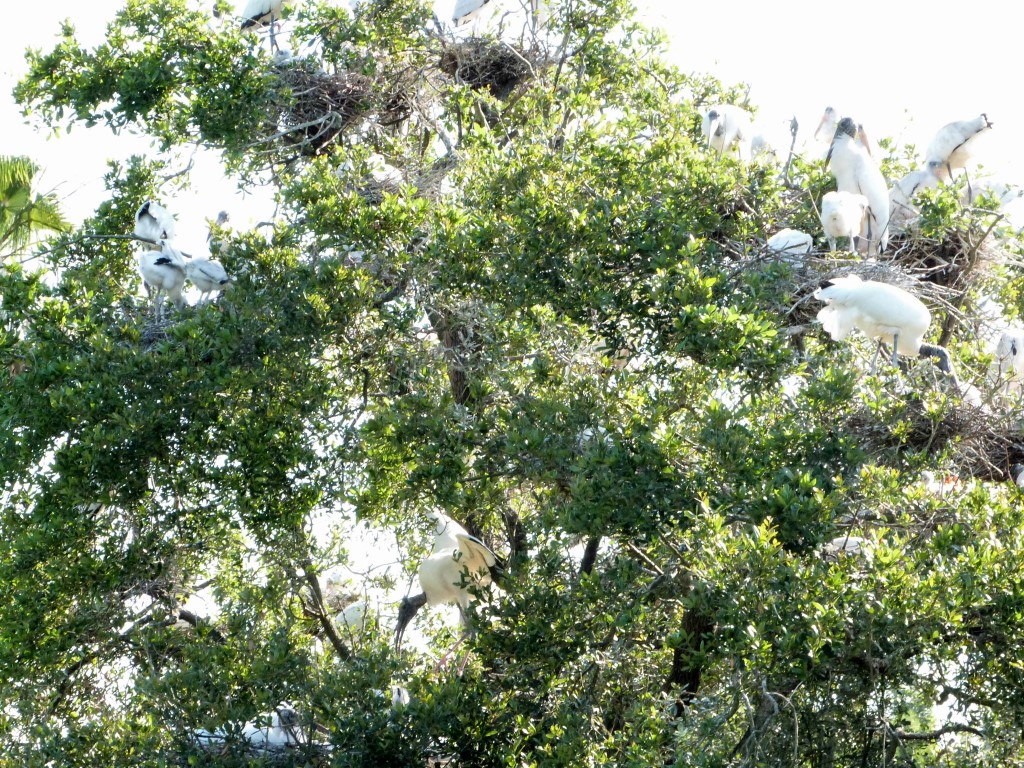
Jacksonville Zoo’s Noisy Stork Tree

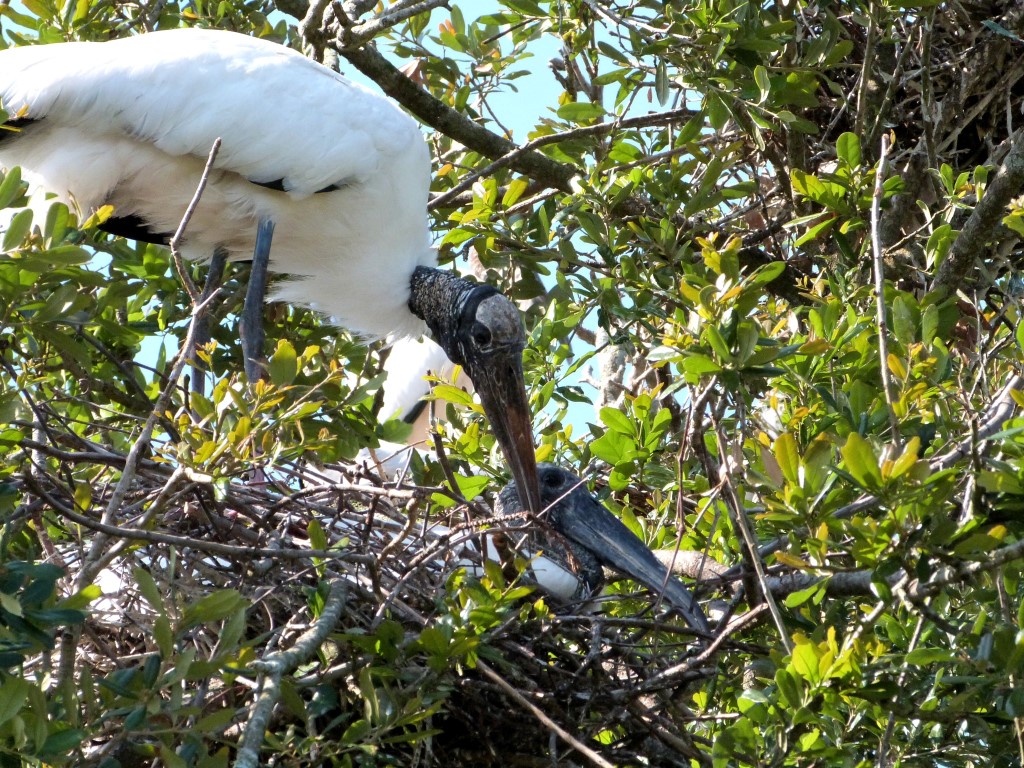
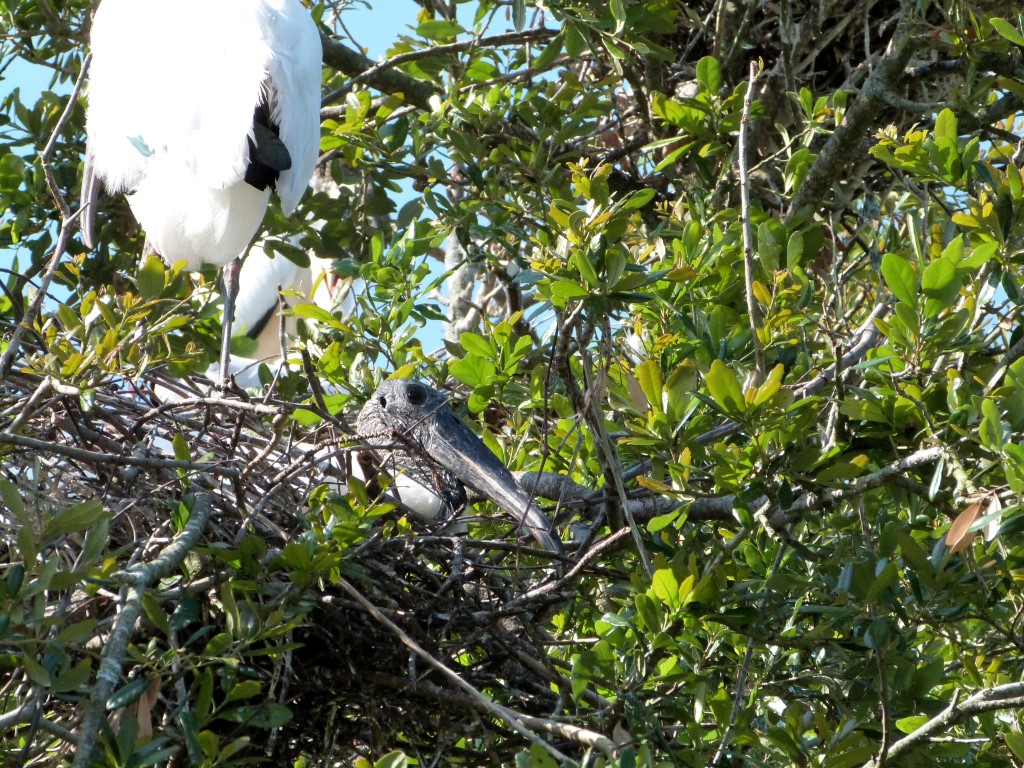
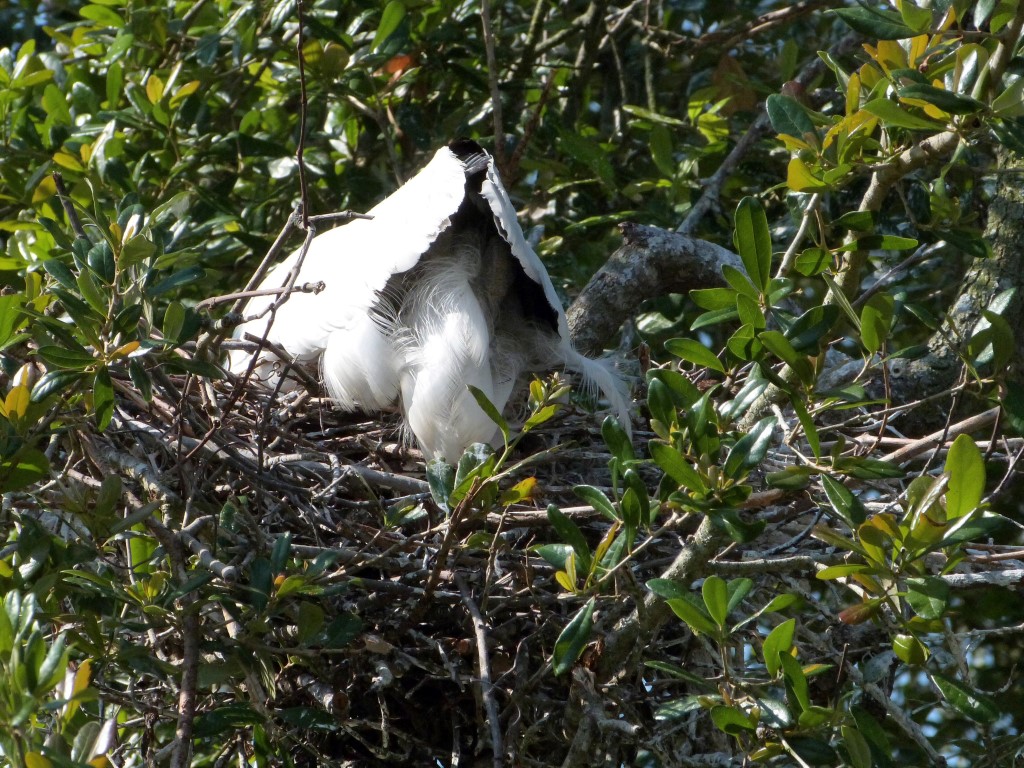
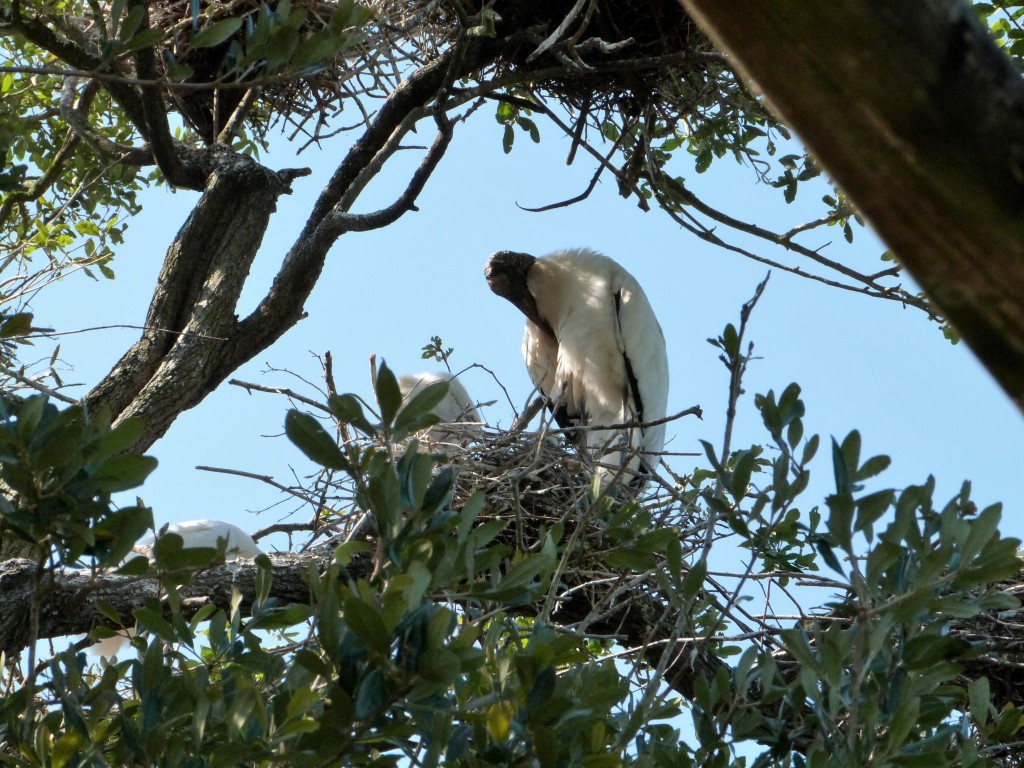
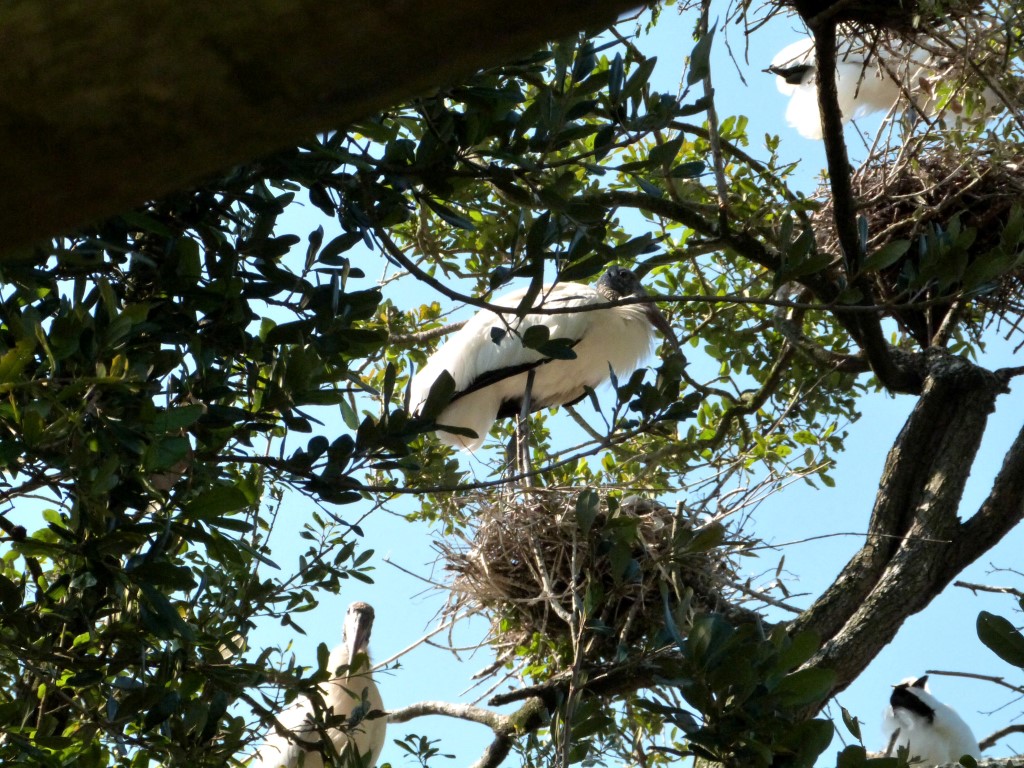
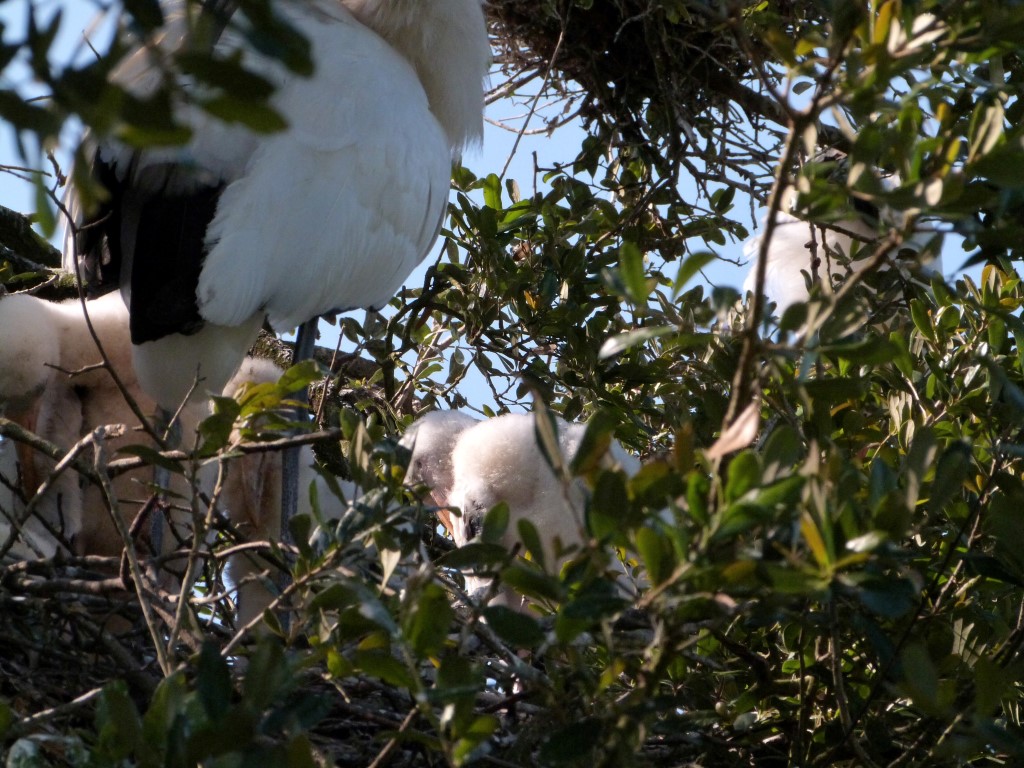
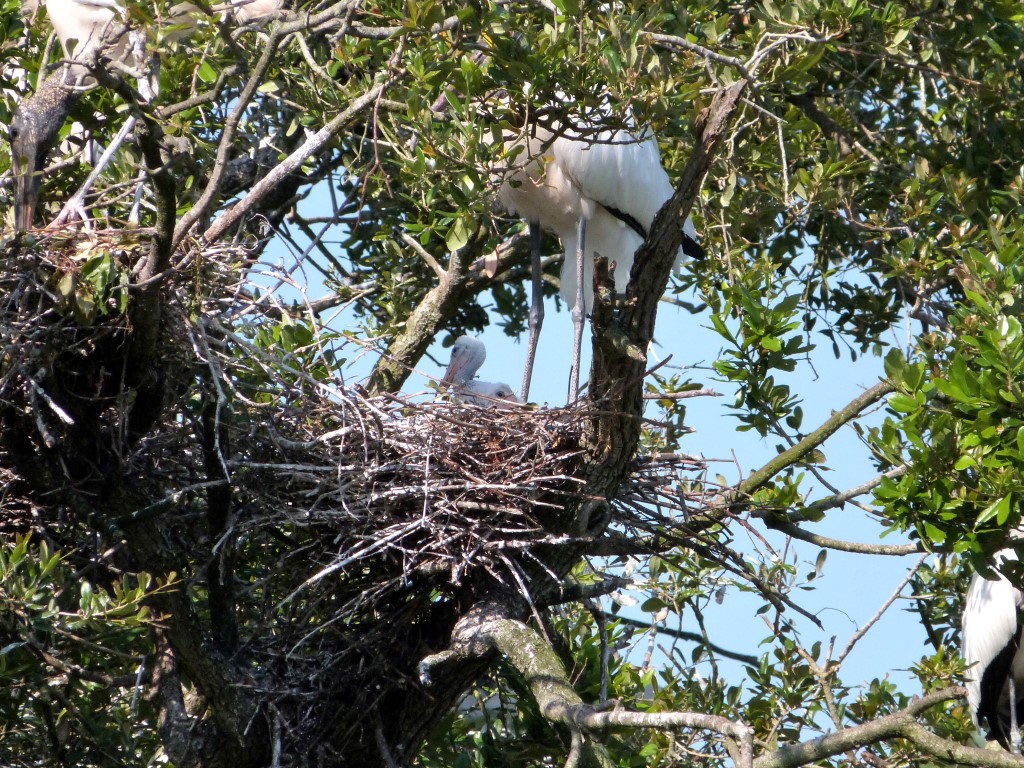
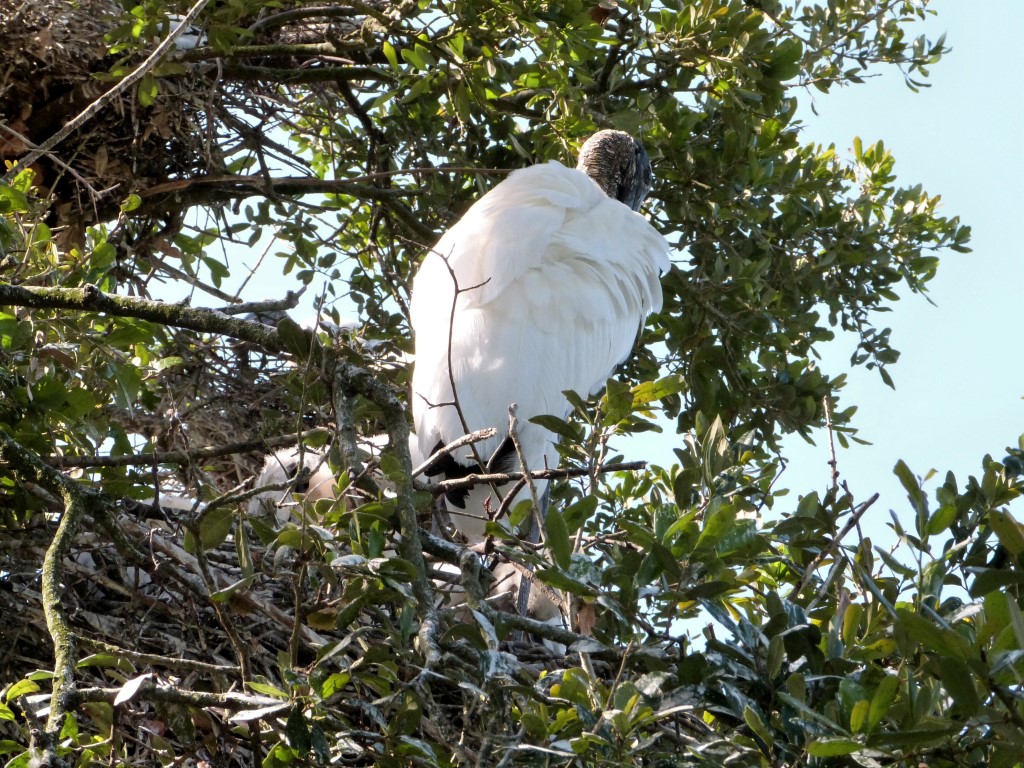
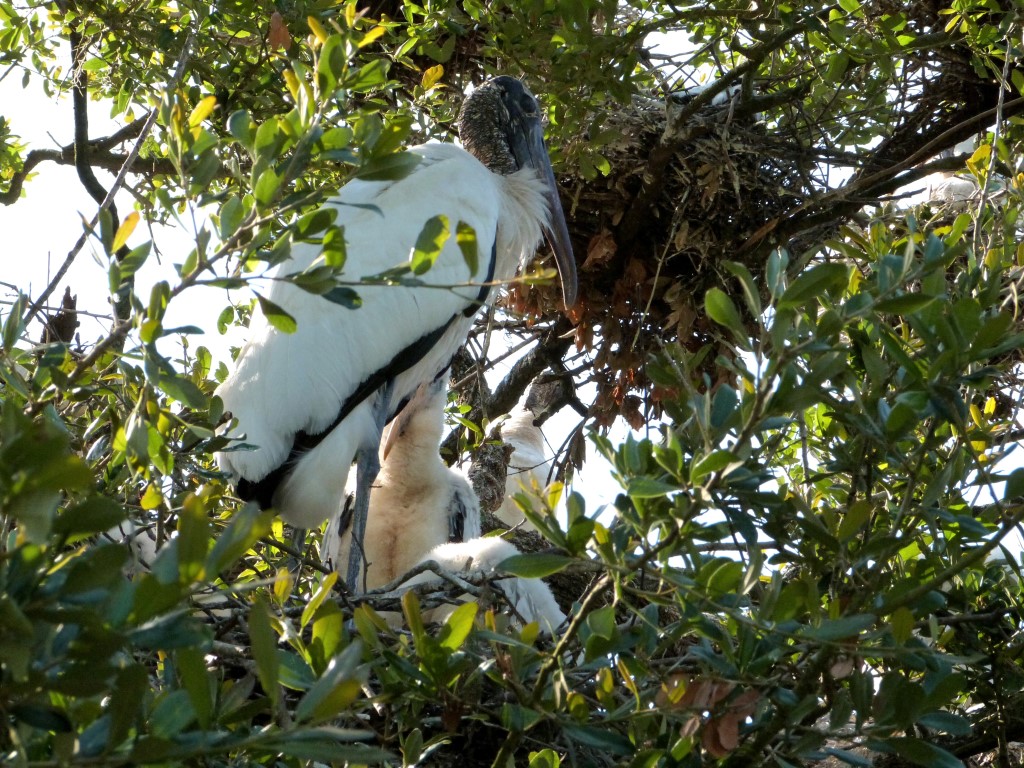
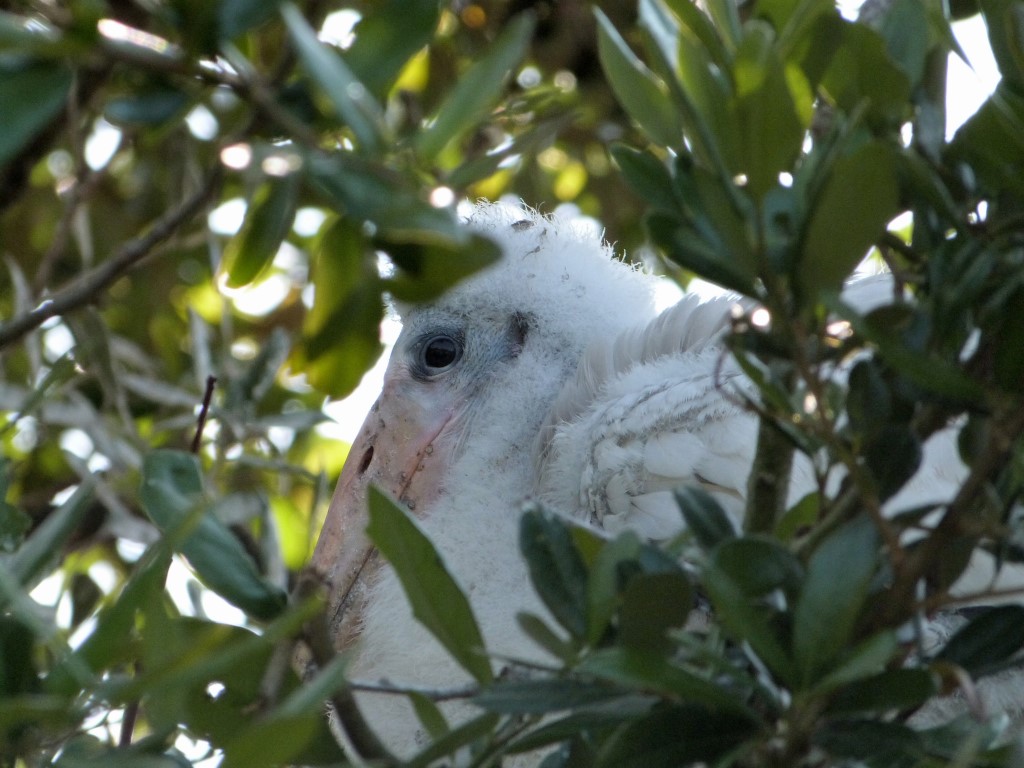
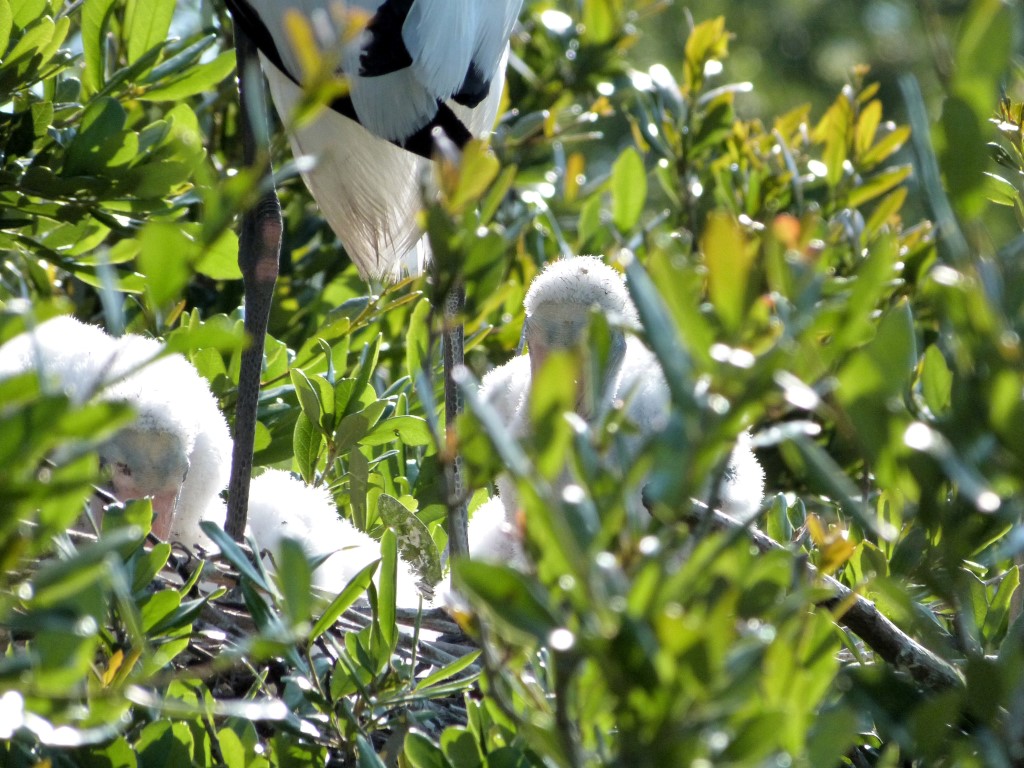
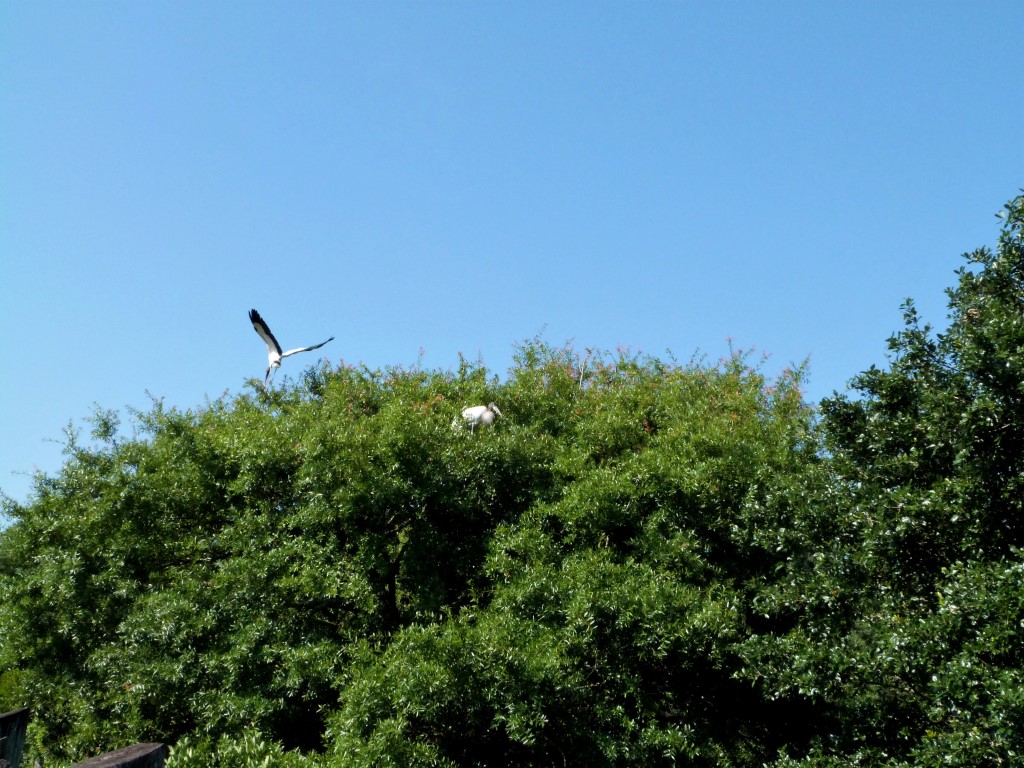
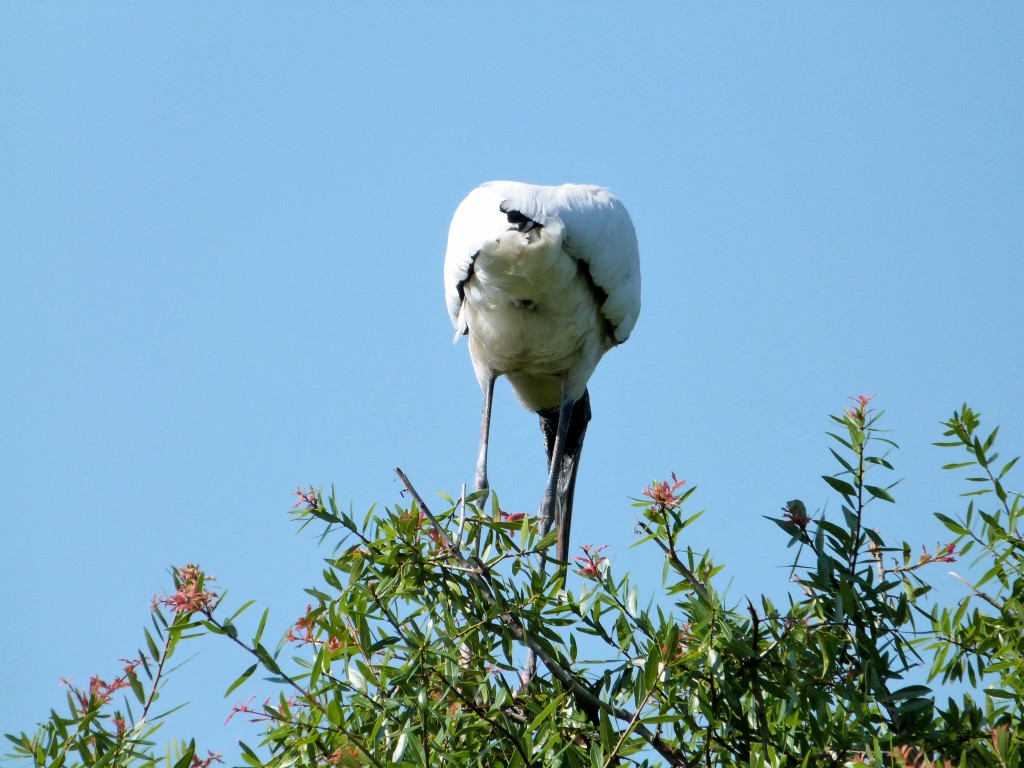
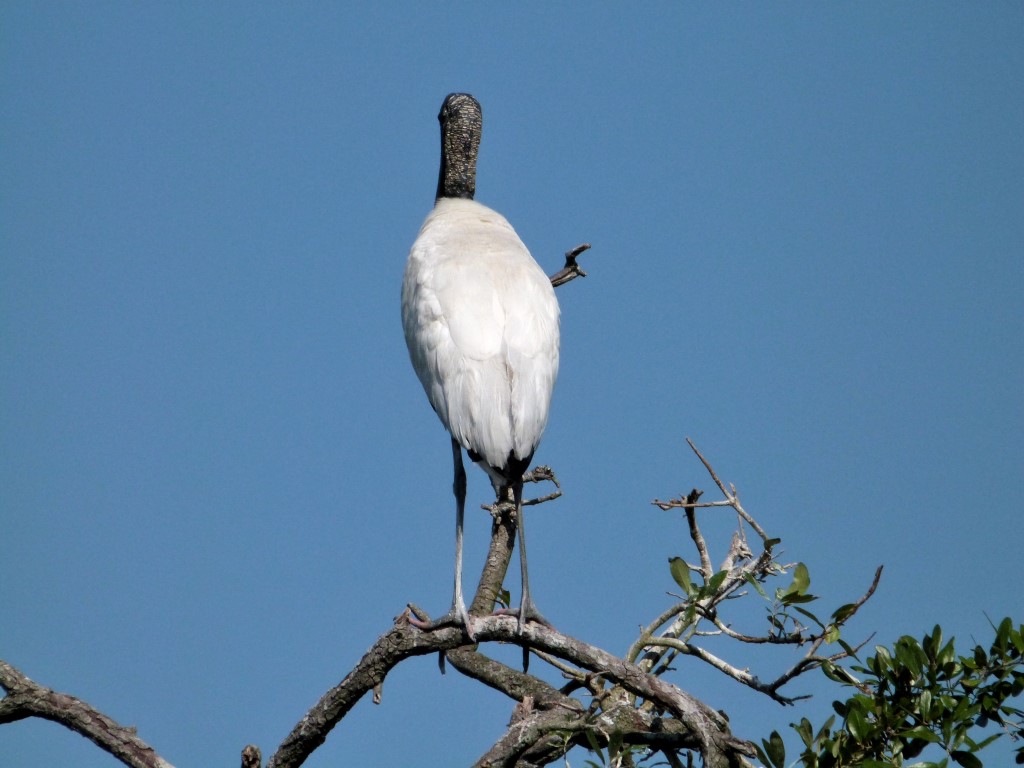
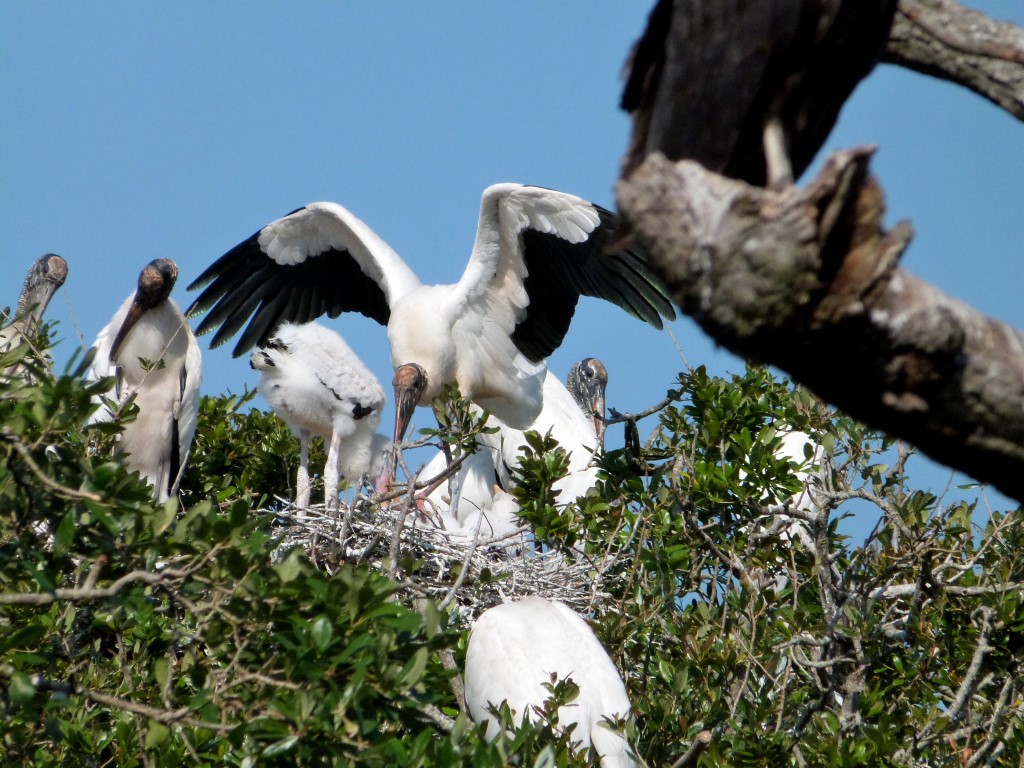
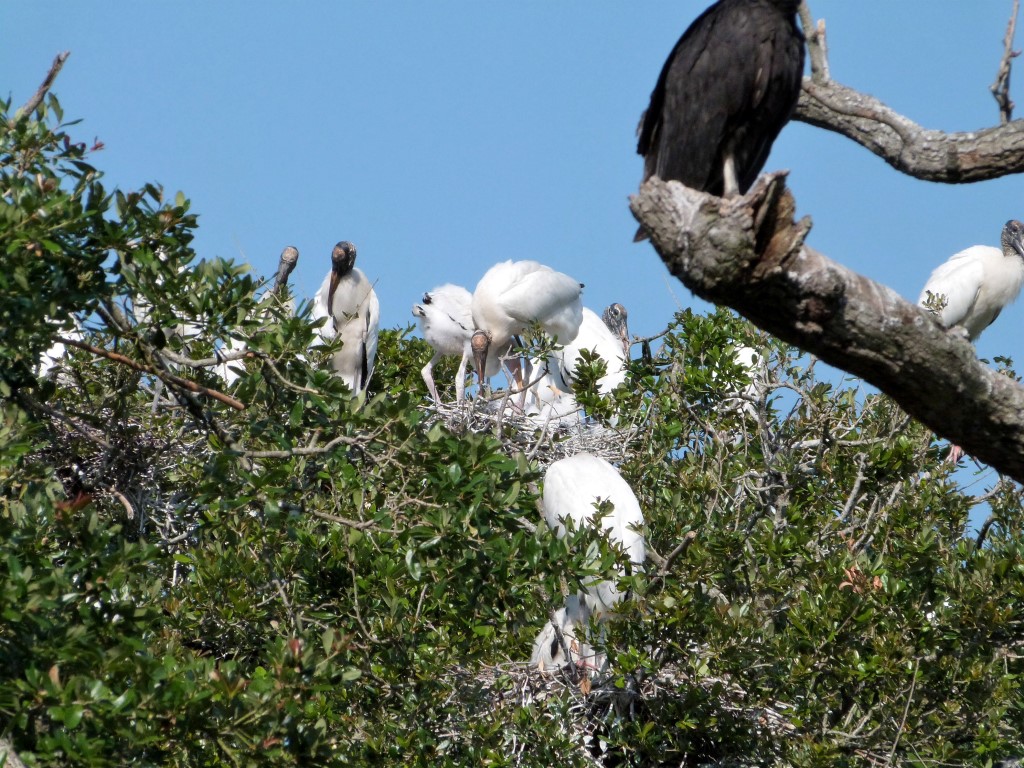
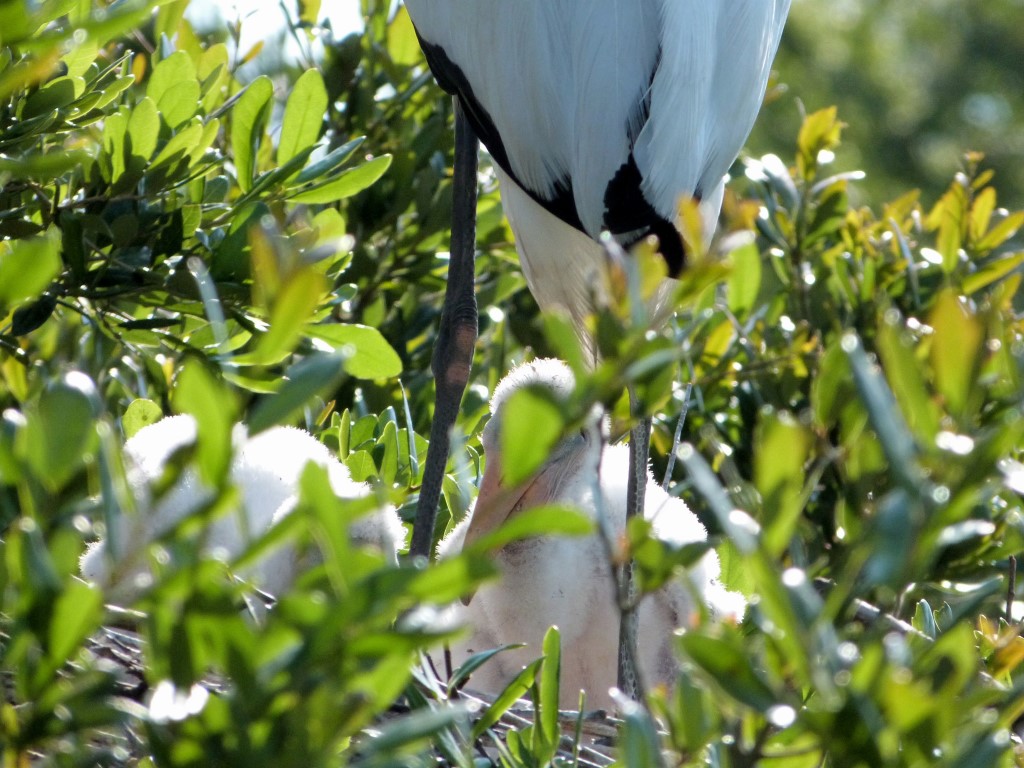
Wood Stork (Mycteria americana) with Chicks Jax Zoo by Lee

Wood Stork (Mycteria americana) with Chicks Jax Zoo by Lee

Yea, the stork in the heaven knoweth her appointed times; and the turtle and the crane and the swallow observe the time of their coming; but my people know not the judgment of the LORD. (Jeremiah 8:7 KJV)

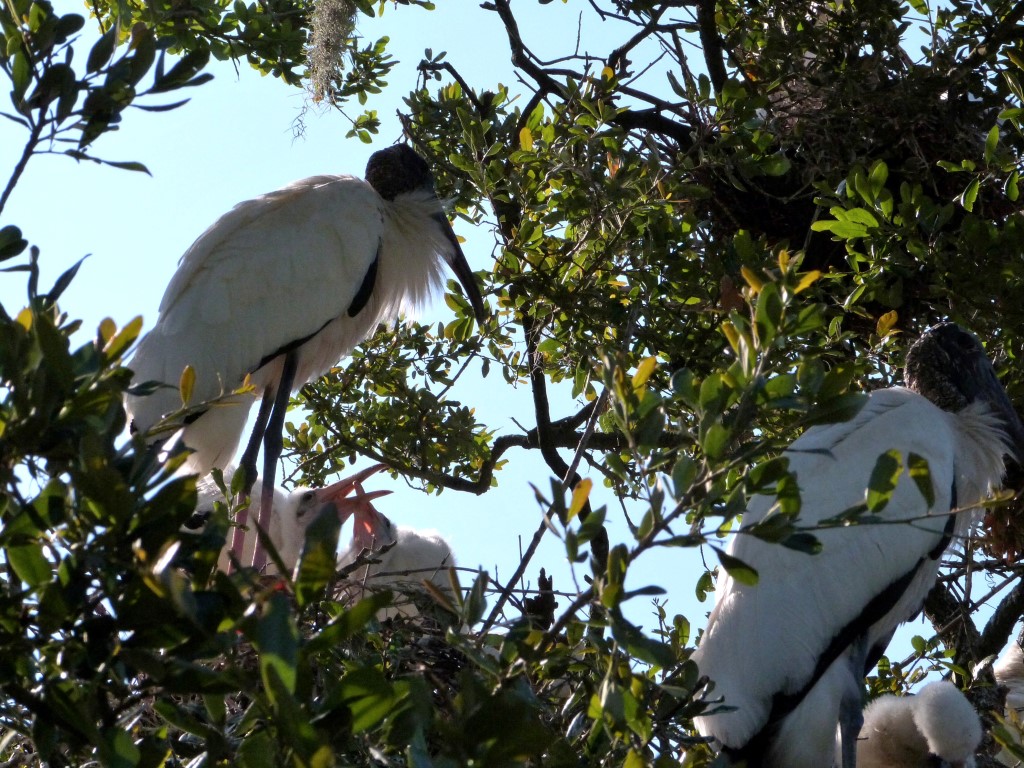
Last week while we were at the Jacksonville Zoo, we noticed a tree loaded with Wood Stork nests. It was hard to miss as you could hear it from far away. As you watch the videos, you will hear the noise coming from all the nest. The tree was right by the boardwalk, so we were very close to them.

Wood Stork (Mycteria americana) with Chicks Jax Zoo by Lee

 Where the birds make their nests: as for the stork, the fir trees are her house. (Psalms 104:17 KJV)

Wood Storks are part of the Ciconiidae – Storks Family and are also mentioned several times in Scripture. That makes them one of the Birds of the Bible – Storks. We are fortunate in that we get to see Wood Storks quite frequently here in Polk County, Florida, especially out at the Circle B Bar Reserve. Circle B is one of my favorite places to go birdwatching. Yet, I have never seen the nest up close like this.

Here is a combined video of the noisy tree: (Ignore the talking in the background, listen to the noisy birds.)

*

Sing unto him a new song; play skilfully with a loud noise. (Psalms 33:3 KJV)

After taking photos and videos, I found three young one showing how the noise was produced. Now multiply that by all the other nest with young ones doing the same thing.

Error
This video doesn’t exist

O come, let us sing unto the LORD: let us make a joyful noise to the rock of our salvation. (Psalms 95:1 KJV)

*

Hope you don’t mind seeing some of the photos also. These are set up so you can see them larger. Enjoy the Lord’s Creation in the form of Wood Storks.

*

See:

*

Birds of the Bible – Maturing Eagle

Bald Eagle (Haliaeetus leucocephalus) Jax Zoo by Lee

Bald Eagle (Haliaeetus leucocephalus) Maturing at Jax Zoo by Lee

Bless the LORD, O my soul: and all that is within me, bless his holy name. Bless the LORD, O my soul, and forget not all his benefits: Who forgiveth all thine iniquities; who healeth all thy diseases; Who redeemeth thy life from destruction; who crowneth thee with lovingkindness and tender mercies; Who satisfieth thy mouth with good things; so that thy youth is renewed like the eagle’s. (Psalms 103:1-5 KJV)

Last week at the Jacksonville Zoo, we saw this “rag-tag” Eagle. We found out that he is around five years old and has been going through his transition. They said that in the last two weeks he has really started to change. As you may know, Bald Eagles get their “bald” head when they mature. I have seen Eagles with an all black heads and the all white heads, but never in the process of maturing. I am glad that we were able to see him in this stage of his life.

Now for a much better photo by Dan:

Bald Eagle maturing at Jax Zoo by Dan

Bald Eagle maturing at Jax Zoo by Dan

Actually, it may be a “she.” I forgot to ask. Both male and females get the “bald” head after about five years of so.

The above verse, “so that thy youth is renewed like the eagle’s.” reminds of the Lord’s watch-care of the birds, but more importantly, over us. When I see this eagle, it reminds me of times when we mature as Christians. Sometimes we seem a little “rag-tag” in our development, but as we keep our eyes on the Lord, He helps us mature as we should.

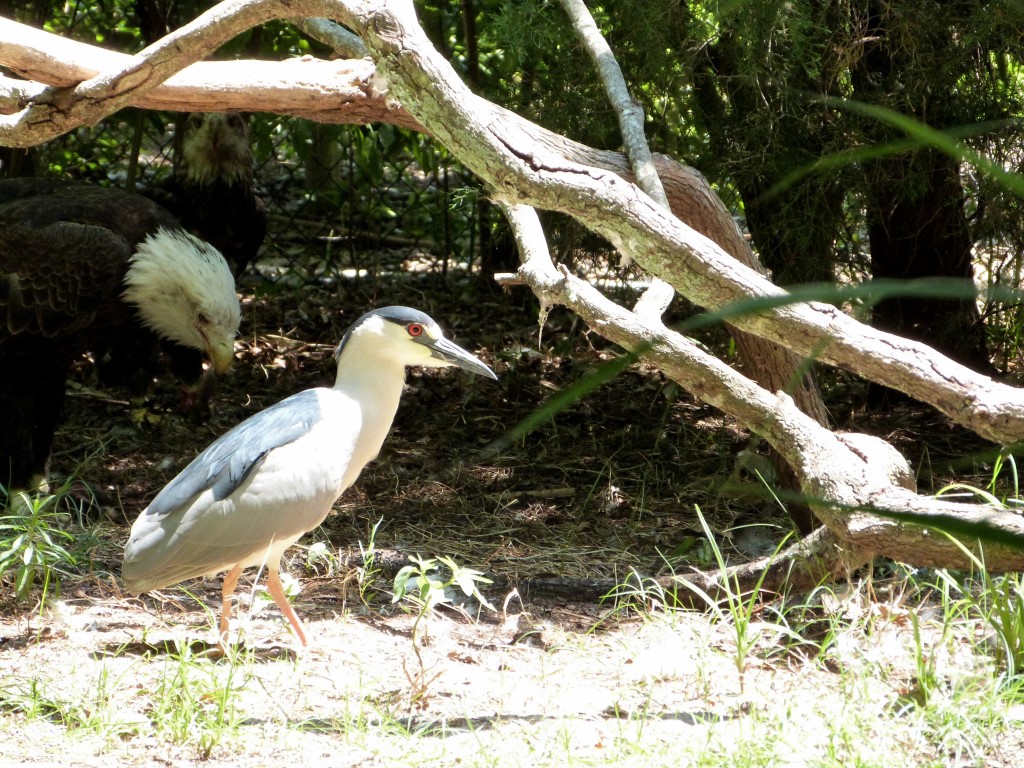
Black-crowned Night Heron (Nycticorax nycticorax) Jax Zoo by Lee

Black-crowned Night Heron (Nycticorax nycticorax) Jax Zoo by Lee

Here are some of the photos we took of the two eagles and a friendly Black-crowned Night-heron that was keeping them company. The Heron was wild and flew out later. These two Eagles were injured and can never return to the wild.

*

Also:

Changed From the Inside Out

*


Marabou Stork Chicks and Inca Tern at Jacksonville Zoo

Marabou Stork (Leptoptilos crumenifer) with chicks-Jax Zoo by Lee

Marabou Stork (Leptoptilos crumenifer) with chicks-Jax Zoo by Lee

Where the birds make their nests: as for the stork, the fir trees are her house. (Psalms 104:17 KJV)

We just got back from a trip to Jacksonville, FL and a visit to the Jacksonville Zoo. I haven’t had time to go through the photos yet, but wanted to share two of the videos.

The first one is two Marabou Stork chicks with a parent. They are not any better looking as a youngster than their parents are. We see them at the Lowry Park Zoo frequently, but never saw them with a chick.

The Marabou Stork (Leptoptilos crumeniferus) is a large wading bird in the Ciconiidae – Storks Family. It breeds in Africa south of the Sahara, in both wet and arid habitats, often near human habitation, especially waste tips. It is sometimes called the “Undertaker Bird” due to its shape from behind: cloak-like wings and back, skinny white legs, and sometimes a large white mass of “hair”. It has one of the largest wing spans of any bird. (Wikipedia)

*

*

The the second video is of an Inca Tern preening. I love those “whiskers.”

The Inca Tern (Larosterna inca) is a seabird in the Laridae – Gulls, Terns and Skimmers – Family. It is the only member of the genus Larosterna.

This uniquely plumaged bird breeds on the coasts of Peru and Chile, and is restricted to the Humboldt current. It can be identified by its dark grey body, white moustache on both sides of its head, and red-orange beak and feet.*

*

This is short because we are still unpacking. The Lord gave us a great trip and traveling mercies. I have many nice videos and photos to share. Stay tuned.

See:

Jacksonville Zoo

Bio Facts: Stork, Marabou – Jacksonville Zoo

Marabou Stork – Wikipedia

Marabou Stork – ARKive

Marabou Stork “Undertaker Bird”

Ciconiidae – Storks Family

Laridae – Gulls, Terns and Skimmers – Family

Inca Tern – Oregon Zoo

Inca Tern: The Magnificently Mustached Bird

Inca Tern – Wikipedia

*
Ian’s Bird of the Week – Chestnut-breasted Quail-thrush

Ian’s Bird of the Week – Chestnut-breasted Quail-thrush ~ by Ian Montgomery

Newsletter – 5/21/14

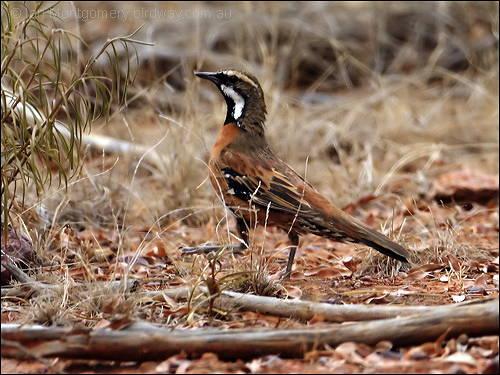
One of the specialties at Bowra is the Chestnut-breasted Quail-thrush a mainly terrestrial inhabitant of stony areas with scrubby bushes, particular mulga, in dry, but not desert, parts of western Queensland and NSW with a widely-separated population in Western Australia. It has suffered in eastern Australia from habitat clearance, but can usually be found at Bowra in an area called the Stony Ridge on the road that runs west of the homestead. This location, incidentally is also good for another specialty, Hall’s Babbler.

Chestnut-breasted Quail-thrush (Cinclosoma castaneothorax)  by Ian

Quail-thrushes are shy and either sit tight and flush suddenly with a quail-like whirring of their wings or run for cover. The Chestnut-breasted usually runs, but this time we unwittingly encircled this male bird which took refuge in a dead tree, the first time I’ve seen any quail-thrush do so. It looked confused rather than alarmed and wandered for a long time from branch to branch providing unusually good opportunities for photography until it hopped down onto the ground and ran away. On this occasion we saw only the brightly coloured male; females have more subdued colours, brown replacing the all the black plumage except the spotty wing coverts and rely on camouflage to escape detection when nesting on the ground. Quail-thrushes feed on both insects and seeds and there are an Australasian taxon with about four species in Australia and one in New Guinea.

Chestnut Quail-thrush by Ian

Chestnut Quail-thrush by Ian

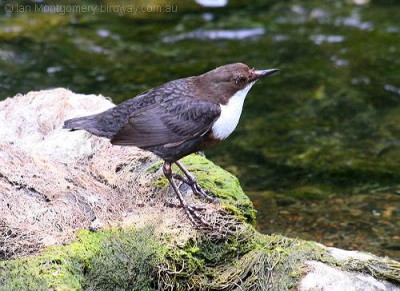
Quail-thrushes presumably get the quail part of their name from their terrestrial habits and whirring flight and the thrush part from their body shape. Cinclosoma is bird-taxonomy-speak for thrush in a confused sort of way. Confused because the Latin cinclus means thrush but derives from the Greek Kinklos a waterside bird of unknown type mentioned by Aristotle and others and though to be either an Old World Wagtail or a wader. To add to the confusion, Cinclidae refers to the Dipper family, not the thrushes, with Cinclus cinclus being the Eurasian White-breasted Dipper.


White-throated Dipper (Cinclus cinclus) by Ian

White-throated Dipper (Cinclus cinclus) by Ian


The confusion continues with actual taxonomy. The western race of the Chestnut-breasted is sometimes (IOC) treated as a separate species, the Western Quail-thrush. Meanwhile the geographically intermediate and closely-related Cinnamon Quail-thrush of central Australia desert country is sometimes split in two as well, with the Nullabor race being treated as a separate species, though it has also been lumped with the Chestnut-breasted. If that’s not enough, Birdlife International puts the Quail-thrushes in a family of their own, the Cinclosomatidae, while Birdlife Australia and the IOC lump with the Whipbirds and called them Psophodidae. (Birdlife International use to lump them and call them the Eupetidae.) I though you’d like to know! Let’s just enjoy the photos:

Greetings
Ian
**************************************************
Ian Montgomery, Birdway Pty Ltd,
454 Forestry Road, Bluewater, Qld 4818
Tel 0411 602 737 ian@birdway.com.au
Bird Photos http://www.birdway.com.au/
Recorder Society http://www.nqrs.org.au


Lee’s Addition:

The people asked, and He brought quail, And satisfied them with the bread of heaven. (Psa 105:40)

Thanks, Ian, for introducing us to another interesting bird. Your timing is perfect, as I am away from my computer for a few days.

Ian’s Bird of the Week
Odontophoridae – New World Quail Family

*

Sunday Inspiration – Singing Birds

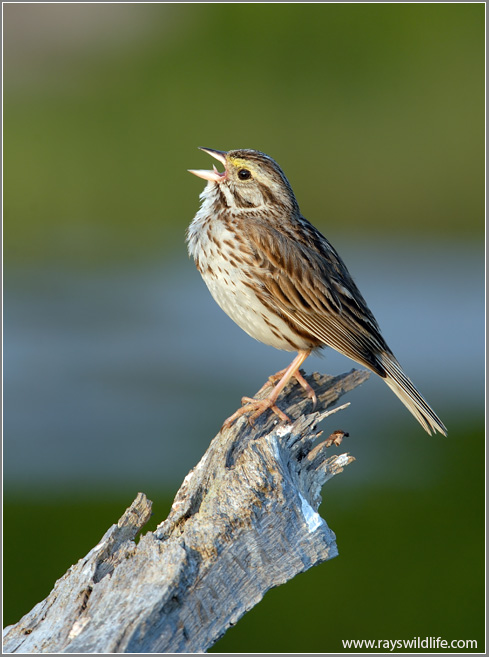
Savannah Sparrow singing by Ray

Savannah Sparrow singing by Ray

By them the birds of the heavens have their home; They sing among the branches. (Psalms 104:12 NKJV)

The Lord created the birds with the ability to sing such beautiful songs. They have various reasons for singing and shouldn’t we also be willing to sing in our different activities?

The LORD is my strength and my shield; My heart trusted in Him, and I am helped; Therefore my heart greatly rejoices, And with my song I will praise Him. (Psalms 28:7 NKJV)

“O God, my heart is fixed; I will sing and give praise, even with my glory.” (Psalms 108:1 KJV)

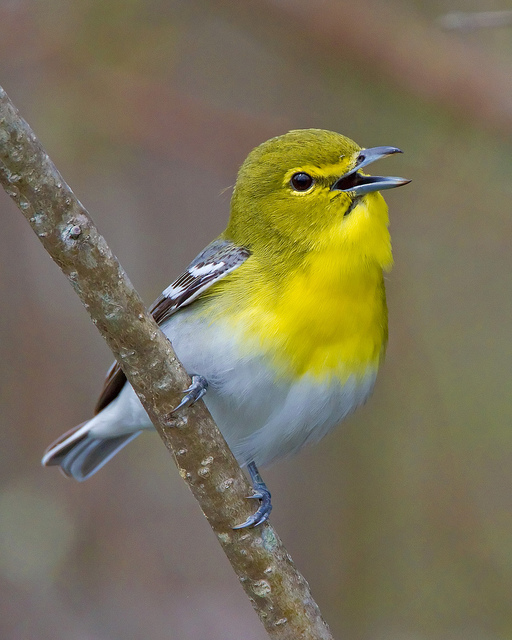
Yellow-throated Vireo (Vireo flavifrons) singing ©nebirdsplus

Yellow-throated Vireo (Vireo flavifrons) singing ©nebirdsplus

And some more great “singing” verses:

Speaking to yourselves in psalms and hymns and spiritual songs, singing and making melody in your heart to the Lord; (Ephesians 5:19 KJV)

Let the word of Christ dwell in you richly in all wisdom; teaching and admonishing one another in psalms and hymns and spiritual songs, singing with grace in your hearts to the Lord. (Colossians 3:16 KJV)

*

This slideshow requires JavaScript.

*

“Singing” – by Dr. Richard Gregory (permission given by Mrs. Gregory)

Dr. Gregory, who was a member of our church, is now in the presence of the Lord. He is seeing His Saviour “Face to face.”

*

Sunday Inspiration

Birds of the Bible

Birds of the Bible – Singing Birds

Birds in Hymns

Sharing The Gospel

*