Flight: The Genius of Birds Film

Flight DVD face

(Gen 1:21) So God created great sea creatures and every living thing that moves, with which the waters abounded, according to their kind, and every winged bird according to its kind. And God saw that it was good.

I have just had the privilege of “screening” the “FLIGHT: The Genius of Birds” film. After being contacted by its director, Lad, I accepted the offer to watch this amazing film all about the bird’s intelligently designed ability to fly. It is FANTASTIC!

Illustra Media produced this film and I am including their Trailer and three segments; the Embryonic Development, the Skeletal system, and the Hummingbird tongue.

Enjoy watching these. And this is only a part of a tremendously amazing film!

*

Flight: The Genius of Birds – Official Trailer

*

*

Embryonic Development

*

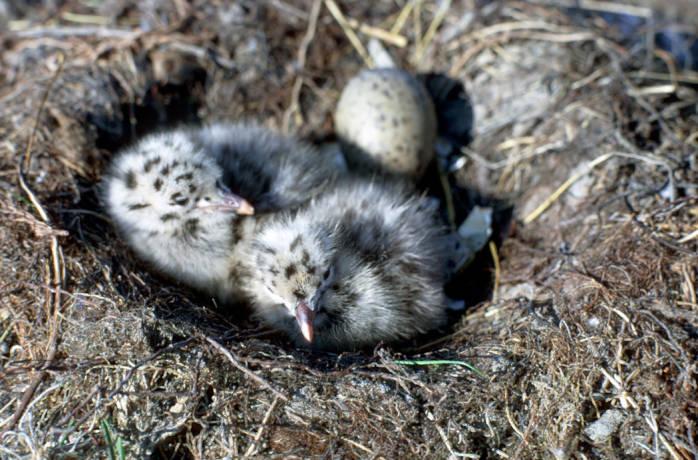
Iceland Gull (Larus glaucoides) chick-egg nest ©USFWS

Iceland Gull (Larus glaucoides) chick-egg nest ©USFWS

Out of the ground the LORD God formed every beast of the field and every bird of the air, and brought them to Adam to see what he would call them. And whatever Adam called each living creature, that was its name. (Gen 2:19)

*

*

Skeletal system

*

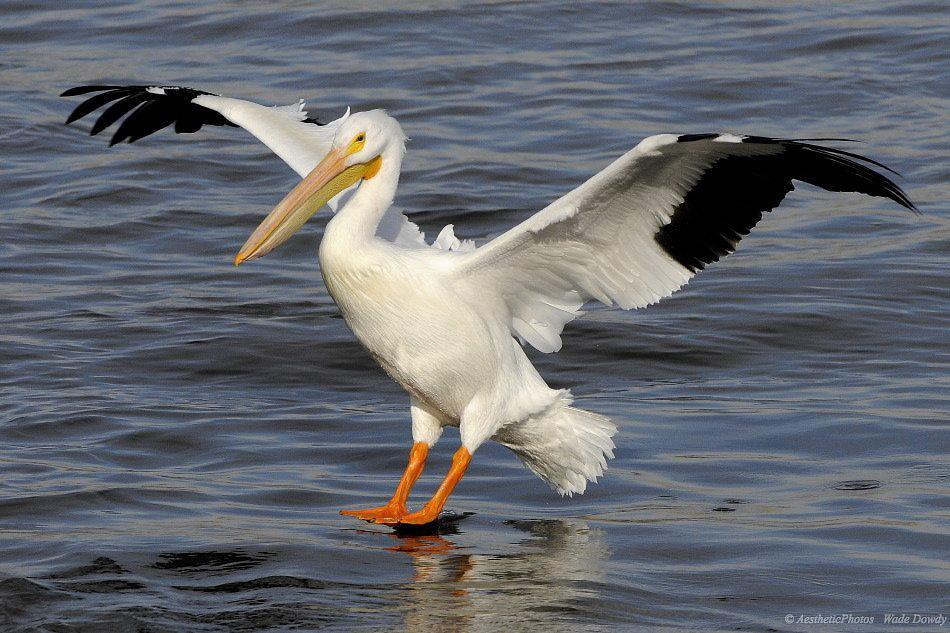
American White Pelican (Pelecanus erythrorhynchos) by AestheticPhotos

American White Pelican (Pelecanus erythrorhynchos) by AestheticPhotos

Many, O LORD my God, are thy wonderful works which thou hast done, and thy thoughts which are to us-ward: they cannot be reckoned up in order unto thee: if I would declare and speak of them, they are more than can be numbered. (Psa 40:5 KJV)

*

This clip tells about the skeletal makeup of the birds. They do a super job showing with their photography and illustrations. It helped me better understand how the bird’s bones and structure work together to enable birds to fly.
*

*

Hummingbird tongue

*

Rufous-tailed Hummingbird (Amazilia tzacatl) by Judd Patterson

Rufous-tailed Hummingbird (Amazilia tzacatl) by Judd Patterson

Such knowledge is too wonderful for me; it is high, I cannot attain unto it. (Psa 139:6 KJV)

*

I never imagined this is how they get the nectar. Wow!

*

I do not sell things here on the blog. My goal is to help promote this very informative video about how an Intelligent designer is behind all of the ingenious aspects of birds and their Flight. We know that the Lord Jesus Christ is that “intelligent designer’ and that He deserves all the credit.

In the beginning was the Word, and the Word was with God, and the Word was God. He was in the beginning with God. All things were made through Him, and without Him nothing was made that was made. (Joh 1:1-3)

Taken from YouTube – TO ORDER DVDs: www.illustramedia.com / FLIGHT: THE GENIUS OF BIRDS is the first episode in Illustra Media’s new series THE DESIGN OF LIFE. This remarkable documentary explores the evidence for intelligent design as revealed through the biological systems and mechanisms that make avian flight possible. Photographed in North America, England, Peru, Greenland, and Antarctica FLIGHT celebrates birds and the miracle of life in the skies.
The DVD is available for purchase now – visit www.illustramedia.com for more information.

*

Wordless Birds

*

Updated The Birdwatching Page 8/8/13

The Birdwatching Page was updated to add this video and links to photos of the birds shown. Here is the video and the photo links are on the Birdwatching Page.

And out of the ground the Lord God formed every [wild] beast and living creature of the field and every bird of the air and brought them to Adam to see what he would call them; and whatever Adam called every living creature, that was its name. (Genesis 2:19 AMP)

*

*

Black Swans by Bellamoon Nature

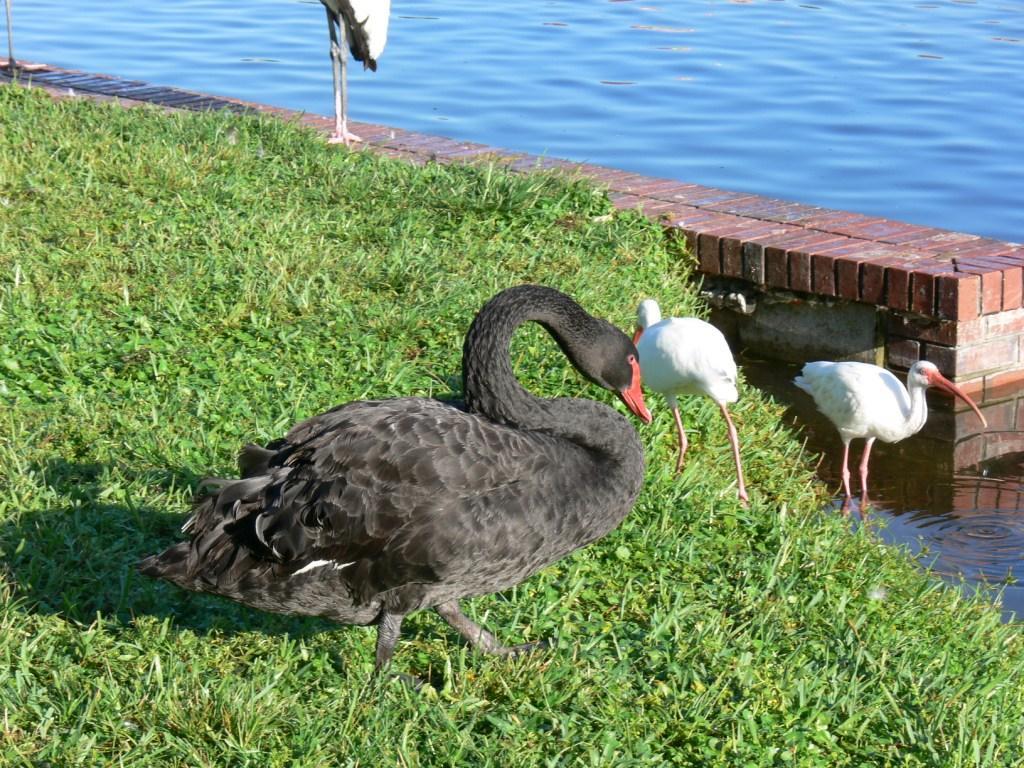
Black Swan by Lee

Black Swan by Lee

Bellamoon sent a link to some of his videos. The one below of the Black Swans and their family is super. He previously gave me permission to use his music for videos I put together, but this is better than anything I could ever do.

Several verses came to mind about “under his wings” while watching this:

Keep me as the apple of the eye, hide me under the shadow of thy wings, (Psalms 17:8 KJV)

How excellent is thy lovingkindness, O God! therefore the children of men put their trust under the shadow of thy wings. (Psalms 36:7 KJV)

He shall cover thee with his feathers, and under his wings shalt thou trust: his truth shall be thy shield and buckler. (Psalms 91:4 KJV)

He shall cover thee with his feathers, and under his wings shalt thou trust: his truth shall be thy shield and buckler. (Psalms 91:4 KJV)

O Jerusalem, Jerusalem, which killest the prophets, and stonest them that are sent unto thee; how often would I have gathered thy children together, as a hen doth gather her brood under her wings, and ye would not! (Luke 13:34 KJV)

There are verses that help us think about how kind these swans are to their young:

For thy lovingkindness is before mine eyes: and I have walked in thy truth. (Psalms 26:3 KJV)

Withhold not thou thy tender mercies from me, O LORD: let thy lovingkindness and thy truth continually preserve me. (Psalms 40:11 KJV)

Whoso is wise, and will observe these things, even they shall understand the lovingkindness of the LORD. (Psalms 107:43 KJV)

Links:

*

Birds Of The Bible – Joy And Laughter

Laughing Kookaburra (Dacelo novaeguineae) at LPZoo

Laughing Kookaburra (Dacelo novaeguineae) by Lee

While we were at Lowry Park Zoo last week, we also had the joy of hearing the Laughing Kookaburra (Dacelo novaeguineae) sounding off with its mate. Seems like the Myna birds and the singing dogs were not the only ones in a happy mood. The two Kookaburras got to “laughing” also. They sort of set the tone to put you a joyful mood.

For You, O Lord, have made me glad by Your works; at the deeds of Your hands I joyfully sing. (Psalms 92:4 AMP) Make a joyful noise to the Lord, all the earth; break forth and sing for joy, yes, sing praises! (Psalms 98:4 AMP)

I have always enjoyed seeing the Kookaburras. When we were at the National Aviary I tried recording them, but by the time I got the camera on, they stopped. I recorded them this time but didn’t get the camera focused on them until about half way through. Oh, the challenges of birdwatching! Well, at least trying to get a recording to use on the blog anyway. When you put all the events together; the singing Bali Myna, the singing dogs, and these singing Kookaburras, it brings to mind a story in the Bible. When Paul and Silas where in prison, (behind bars) they were joyful just the same. All of these critters plus the men (Paul and Silas) are behind bars, yet they are joyful and carrying on with their lives. Could there be a lesson there for us to learn and observe?

And at midnight Paul and Silas prayed, and sang praises unto God: and the prisoners heard them. (Acts 16:25 KJV)

Consider it wholly joyful, my brethren, whenever you are enveloped in or encounter trials of any sort or fall into various temptations. (James 1:2 AMP)

We all have things come into our lives, but our attitude affects how well we handle those circumstances. Prayer is one of the best ways to find peace in the midst of trials. Knowing the Lord Jesus Christ as personal Savior is the absolute best way. I trust you know Him.

Gospel Message

*

This video has two of my photos to cover the blurred part, but the sound is the whole recording.

The Laughing Kookaburra (Dacelo novaeguineae) is a carnivorous bird in the kingfisher family Halcyonidae. Native to eastern Australia, it has also been introduced to parts of New Zealand, Tasmania and Western Australia. Male and female adults are similar in plumage, which is predominantly brown and white. A common and familiar bird, this species of kookaburra is well known for its laughing call.

There are actually 6 Kookaburras:

  • Lilac Kingfisher (Cittura cyanotis)
  • Shovel-billed Kookaburra (Clytoceyx rex)
  • Laughing Kookaburra (Dacelo novaeguineae)
  • Blue-winged Kookaburra (Dacelo leachii)
  • Spangled Kookaburra (Dacelo tyro)
  • Rufous-bellied Kookaburra (Dacelo gaudichaud)

See:

Birds of the Bible

Laughing Kookaburra – Wikipedia

Alcedinidae – Kingfishers – Family

*

Birds of the Bible – Heron’s Teaching

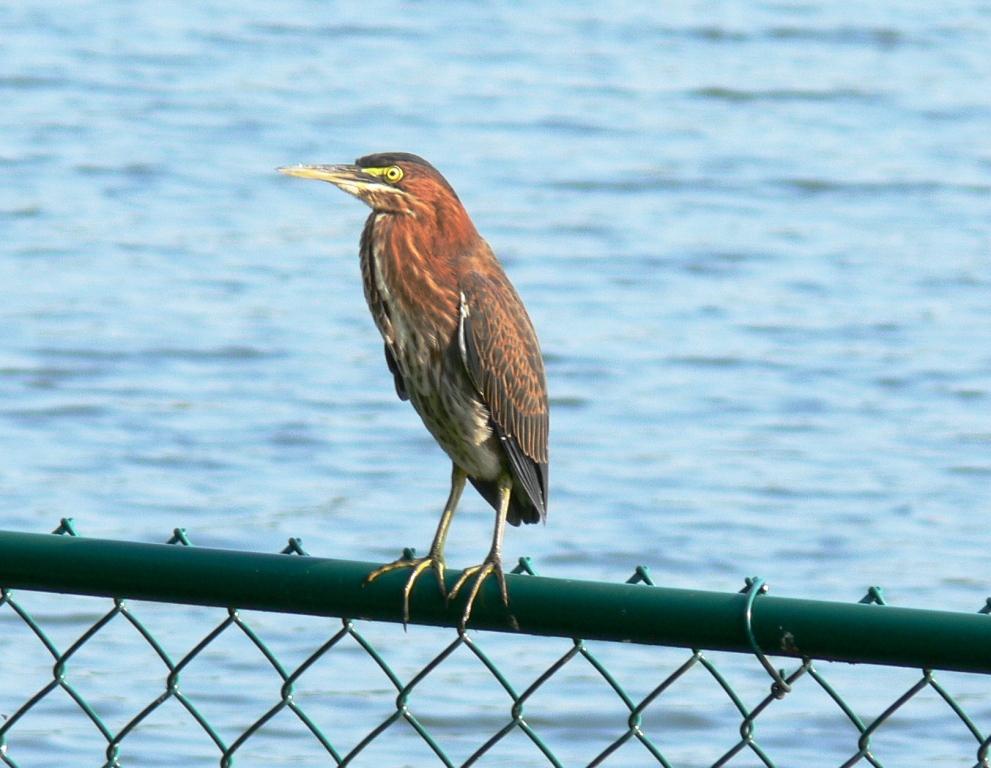
Green Heron (Butorides virescens) by Lee

Green Heron (Butorides virescens) by Lee

“But now ask the beasts, and they will teach you; And the birds of the air, and they will tell you; (Job 12:7 NKJV)

I have been thinking about that Green Heron in the video I posted a few days ago. (Green Heron Fishing With Bread) The verse above makes me think there has to be some lessons to learn from it. These are just some of my thoughts and I am sure you can come up with some of your own.

One that comes to thought right off is that bird’s patience. Are we?

These wait all upon thee; that thou mayest give them their meat in due season. That thou givest them they gather: thou openest thine hand, they are filled with good. (Psalms 104:27-28 KJV)

The verse used in the article tells how the Lord protects and provides for His creation. Will He not provide for us also. He loves us and wants to meet our needs, just as was provided for this Heron.

Look at the birds of the air, for they neither sow nor reap nor gather into barns; yet your heavenly Father feeds them. Are you not of more value than they? (Matthew 6:26 NKJV)

Another lesson is that the bird is doing something that we wouldn’t think it could do. You wonder where it learned that behavior. For us, the Lord wants us to do something, and if we are willing, we are amazed at what we can do. Things we would never think we had the capacity to do He helps us perform..

Jesus said unto him, If thou canst believe, all things are possible to him that believeth. (Mark 9:23 KJV)

I can do all things through Christ which strengtheneth me. (Philippians 4:13 KJV)

He (the heron) has a goal in mind and isn’t going to give up even though it takes several attempts to accomplish his goal. The Lord tells us to become “fishers of men” and we need to keep trying and not give up. Even when our “bread” is down to hardly anything and you think you might as well give up, you try one more time.

So then neither is he that planteth any thing, neither he that watereth; but God that giveth the increase. Now he that planteth and he that watereth are one: and every man shall receive his own reward according to his own labour. (1 Corinthians 3:7-8 KJV)

On a more light side, I am not so sure that the Heron wasn’t bordering on “gluttony.” Did you see that last part where it is swallowing the fish. Looks like it almost “bit of more than it could chew.”

But put ye on the Lord Jesus Christ, and make not provision for the flesh, to fulfil the lusts thereof. (Romans 13:14 KJV)

These are but a few and if you have some, leave a comment and share them with us.

Birds of the Bible – Herons

Birds of the Bible

Bible Birds

Wordless Birds

*

*

Birdwatching Tips – Herons, Egrets, Bitterns

Little Blue Heron at Lake Hollingsworth

Little Blue Heron at Lake Hollingsworth

Lev 11:19  And the stork, the heron after her kind, and the lapwing, and the bat.

Peterson’s Field Guide Videos have great information about how to identify birds in the Heron, Egrets and Bittern Family. This is a very good video.
*

*

See the other video in this series:

Peterson Field Guide-Videos

*

Ardeidae- Herons, Bitterns

Birds of the Bible – Herons

Wordless Birds

*

Green Heron Fishing With Bread

You have got to watch this Green Heron fishing with bread. The video speaks for itself.

Look at the birds of the air, for they neither sow nor reap nor gather into barns; yet your heavenly Father feeds them. Are you not of more value than they? (Matthew 6:26 NKJV)

*

*

Ardeidae- Herons, Bitterns

Birds of the Bible – Herons

Bible Birds – Herons

*

AWESOME BIRDS OF THE PHILIPPINES ! – Re-Post

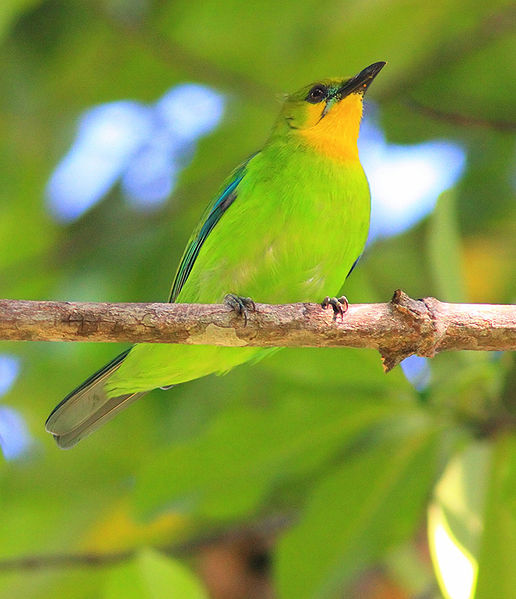
Yellow-throated Leafbird (Chloropsis palawanensis) @WikiC

Yellow-throated Leafbird (Chloropsis palawanensis) @WikiC

David Cabedo, who visits this site frequently, posted this article with the video on Philippines Birdwatching. It is fantastic. After showing the area of the Philippines, it then starts showing one bird after another that are in that area. Thanks, David, for finding and posting the YouTube. It is entitled, Avian Archipelago – Birdwatching in the Philippines” by avianarchipelago.

Enjoy!

*

*

He has made His wonderful works to be remembered; The LORD is gracious and full of compassion. (Psalms 111:4 NKJV)

See:

Philippine Birdwatching

Birds of the World

*

Video of 39 Species of Bird-of-paridise by Lab of Ornithology

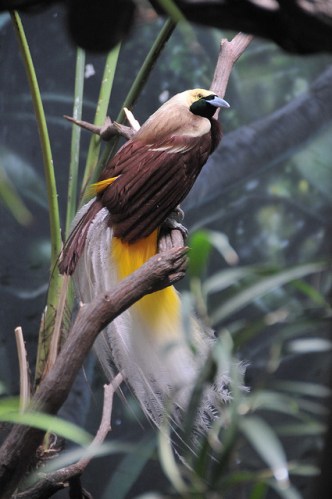
Lesser Bird-of-paradise (Paradisaea minor) ©©

Lesser Bird-of-paradise (Paradisaea minor) ©©

Which doeth great things past finding out; yea, and wonders without number. (Job 9:10 KJV)

Here is a  video of 39 species of Bird-of-Paridise by Lab of Ornithology. They just released it and thought you might enjoy seeing them. There are more YouTubes of them also at Cornell Lab of Ornithology.

Bird-of-Paradise belong to the Paradisaeidae – Birds-of-paradise Family.

*

Enjoy!

*

*

Birdwatching – American Coot

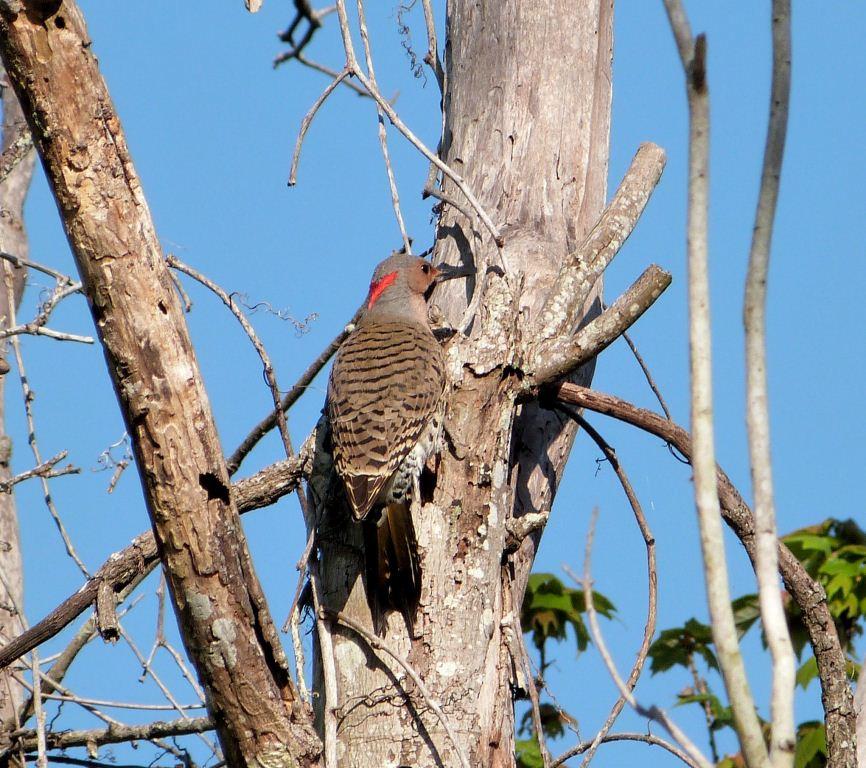
Northern Flicker cropped

Northern Flicker at S. Lake Howard by Lee

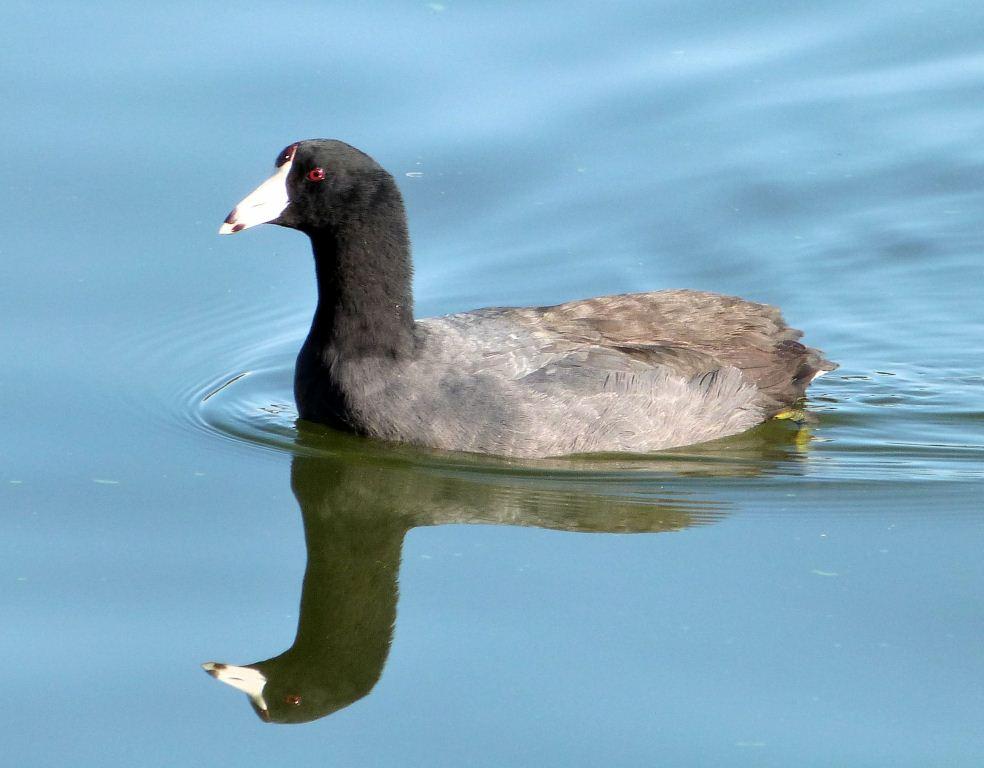
Dan and I went birdwatching last week at South Lake Howard Nature Park here in Winter Haven. We just stopped by on the way home from an errand. Captured a Northern Flicker with the camera, but the video is of the Coot’s feet. I have trying to get a photo of them because they are so different from other bird’s feet. Their feet are not webbed, but sort of flattened out. We only see them down here in the winter. See the Wikipedia information below. Apparently it helps them walk on the land, but it seems that a soft soil just under the water would be “squishy” and that may help their footing. Isn’t it neat how the Lord, in Him wisdom, provided for them in such a way.

O LORD, how manifold are your works! In wisdom have you made them all; the earth is full of your creatures. (Psalms 104:24 ESV)

The American Coot (Fulica americana) is a bird of the Rallidae – Rails, Crakes & Coots Family. Though commonly mistaken to be ducks, American Coots come from a distinct family. Unlike ducks, Coots have broad lobes of skin that fold back with each step in order to facilitate walking on dry land. They live near water, typically inhabiting wetlands and open water bodies in North America. Groups of these black-feathered, white-billed birds are called covers or rafts. The oldest known Coot lived to be 22 years old.

The American coot is a migratory bird that occupies most of North American. They live in the Southwestern United States, Mexico, and the pacific coast year round, and only occupy the northeastern regions during the summer breeding season. In the winter they can be found as far south as Panama. They generally build floating nests and lay 8-12 eggs per clutch. American coots eat primarily algae and other aquatic plants but they do eat animals (both vertebrates and invertebrates) when available.

Much research has been done on the breeding habits of American Coots. Studies have found that mothers will preferentially feed offspring with the brightest plume feathers, a characteristic known as chick ornaments. American coots are also susceptible to conspecific brood parasitism, and identify which offspring are theirs and which are from parasitic females.

The American Coot measures 13–17 in (34–43 cm) in length and 23–28 in (58–71 cm) across the wings. Adults have a short thick white bill and white frontal shield, which usually has a reddish-brown spot near the top of the bill between the eyes. Males and females look alike, but females are smaller. Juvenile birds have olive-brown crowns and a gray body. They become adult-colored around 4 months of age

The American Coot has a variety of repeated calls and sounds. Male and female Coots make different types of calls to similar situations. Male alarm calls are “puhlk” while female alarm calls are “poonk”. Also, stressed males go “puhk-cowah” or “pow-ur” while females call “cooah”

See the Sounds page of All About Birds for the American Coot.

American Coots are found near water—reed-ringed lakes and ponds, open marshes, and sluggish rivers. They prefer freshwater environments, but may temporarily live in saltwater environments during the winter months.

The American Coot’s breeding habitat extends from marshes in southern Quebec to the Pacific coast of North America and as far south as northern South America. Birds from temperate North America east of the Rocky Mountains migrate to the southern United States and southern British Columbia. It is often a year-round resident where water remains open in winter. The number of birds that stay year-round near the northern limit of the species’ range seems to be increasing.

Autumn migration occurs from August to December, with males and non-breeders moving south before the females and juveniles. Spring migration to breeding ranges occurs from large February to mid-May, with males and older birds moving North first. There has been evidence of birds travelling as far north as Greenland and Iceland. It is a rare but regular vagrant to Europe. The American Coot is a highly gregarious species, particularly in the winter, when its flocks can number in the thousands. The picture below is just of one group of hundreds at Viera Wetlands that day (2012)
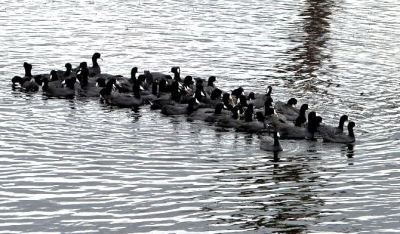
American Coot (Fulica americana) at Viera Wetlands by Lee

American Coot (Fulica americana) at Viera Wetlands by Lee

The American Coot can dive for food but can also forage and scavenge on land. It is omnivorous, eating plant material, arthropods, fish, and other aquatic animals. Its principal source of food is aquatic vegetation, especially algae. During breeding season, Coots are more likely to eat aquatic insects and mollusks—which constitute the majority of a chick’s diet.

The American Coot is a prolific builder and will create multiple structures during a single breeding season. It nests in well-concealed locations in tall reeds. There are three general types of structures: display platforms, egg nests and brood nests. Egg nests are typically 12 inches in diameter with a 12-15 inch ramp that allows the parents to enter and exit without tearing the sides of the nests. Coots will often build multiple egg nests before selecting one to lay their eggs in. Brood nests are nests that are either newly constructed or have simply been converted from old egg nests after the eggs hatch. They are simply larger egg nests. Egg and brood nests are actually elaborate rafts, and must be constantly added to in order to stay afloat. Females typically do the most work while building.

Females deposit one egg a day until the clutch is complete. Eggs are usually deposited between sunset and midnight. Typically, early season and first clutches average two more eggs than second nesting and late season clutches. Early season nests see an average of 9.0 eggs per clutch while late clutches see an average of 6.4 eggs per clutch. There is an inverse relationship between egg weights and laying sequence, wherein earlier eggs are larger than eggs laid later in the sequence. It is possible to induce a female Coot to lay more eggs than normal by either removing all or part of her clutch. Sometimes, a female may abandon the clutch if enough eggs are removed. Coots, however, do not respond to experimental addition of eggs by laying fewer eggs.

Incubation start time in the American Coot is variable, and can begin anywhere from the deposition of the first egg to after the clutch is fully deposited. Starting incubation before the entire clutch has been laid is an uncommon practice among birds. Once incubation starts it continues without interruption. Male and female Coots share incubation responsibility, but males do most of the work during the 21-day incubation period. Females will begin to re-nest clutches in an average of six days if clutches are destroyed during incubation.

Hatch order usually follows the same sequence as laying order. Regardless of clutch size, eight is the typical maximum size of a brood. Egg desertion is a frequent occurrence among Coots because females will often deposit more than eight eggs. Brood size limits incubation time, and when a certain number of chicks have hatched the remaining eggs are abandoned. The mechanism for egg abandonment has not yet been discovered. Food resource constraints may limit the number of eggs parents let hatch, or the remaining eggs may not provide enough visual or tactile stimulation to elicit incubation behavior. An American Coot can be forced to hatch more eggs than are normally laid. These additional offspring, however, suffer higher mortality rates due to inadequacy in brooding or feeding ability.
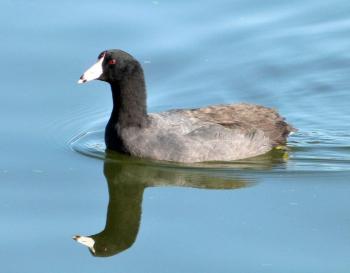
American Coot (Fulica americana) by Lee at Lk Morton

American Coot (Fulica americana) by Lee at Lk Morton

The American Coot, unlike other parasitized species, has the ability to recognize and reject conspecific parasitic chicks from their brood. Parents aggressively reject parasite chicks by pecking them vigorously, drowning them, preventing them from entering the nest, etc. They learn to recognize their own chicks by imprinting on cues from the first chick that hatches. The first-hatched chick is a reference to which parents discriminate between later-hatched chicks. Chicks that do not match the imprinted cues are then recognized as parasite chicks and are rejected.

Chick recognition reduces the costs associated with parasitism, and Coots are one of only three bird species in which this behavior has been observed. This is because hatching order is predictable in parasitized Coots—host eggs will reliably hatch before parasite eggs. In other species where hatching order is not as reliable, there is a risk of misimprinting on a parasite chick first and then rejecting their own chicks. In these species, the cost of accidentally misimprinting is greater than the benefits of rejecting parasite chicks.

The first evidence for parental selection of exaggerated, ornamental traits in offspring was found in American Coots. Black American Coot chicks have conspicuously orange-tipped ornamental plumes covering the front half of their body that are known as “chick ornaments” that eventually get bleached out after six days. This brightly colored, exaggerated trait makes Coot chicks more susceptible to predation and does not aid in thermoregulation, but remains selected for by parental choice. These plumes are not necessary for chick viability, but increased chick ornamentation increases the likelihood that a chick will be chosen as a favorite by the parents. Experimental manipulation of chick ornamentation by clipping the bright plumes have shown that parents show clear preferences for ornamented chicks over non-ornamented ones.

The American Coot is fairly aggressive in defense of its eggs and, in combination with their protected nesting habitat, undoubtedly helps reduce losses of eggs and young to all but the most determined and effective predators. American Crows, Black-billed Magpies and Forster’s Tern can sometime take eggs. Mammalian predators (including red foxes, coyotes, skunks and raccoons) are even less likely to predate coot nests, though nests are regularly destroyed in usurpation by muskrats. Conversely, the bold behavior of immature and adult coots leads to them falling prey with relative regularity once out of the breeding season. Regular, non-nesting-season predators include Great Horned Owls, Northern Harriers, Bald Eagles, Golden Eagles, American alligators, bobcats, Great Black-backed and California Gulls. In fact, Coots may locally comprise more than 80% of the Bald Eagle diet.

In culture – On the Louisiana coast, the Cajun word for coot is pouldeau, from French for “coot”, poule d’eau – literally “water hen”. Coot can be used for cooking; it is somewhat popular in Cajun cuisine, for instance as an ingredient for gumbos cooked at home by duck hunters.

(From Wikipedia and All About Birds with editing)

See also:

Birdwatching Trips

Rallidae – Rails, Crakes & Coots Family

American Coot – What Bird

American Coot – All About Birds

American Coot – Wikipedia

Birds of the World

*

Absolutely Amazing Videos of Eagle Receiving A New Beak

How long will the land have grief, and the plants of all the land be dry? because of the sins of the people living in it, destruction has overtaken the beasts and the birds; because they said, God does not see our ways. (Jeremiah 12:4 BBE)

Because of someone shooting a Bald Eagle, which is against the law, this bird was seriously injured.

Below are two video explaining what happened to Beauty, the Bald Eagle, and how they came to make a new beak for her. Enjoy.

*

*

Eagles are one of the Birds of the Bible and are in the Accipitridae – Family (Kites, Hawks & Eagles)

*

Wordless Birds

*

Did Dinosaurs Turn into Birds?: New Answers DVD 1 – Answers in Genesis

Painted Whitestart (Myioborus pictus) ©WikiC

Painted Whitestart (Myioborus pictus) ©WikiC

God created the great sea monsters and every living creature that moves, which the waters brought forth abundantly, according to their kinds, and every winged bird according to its kind. And God saw that it was good (suitable, admirable) and He approved it. (Genesis 1:21 AMP)

Here is an interesting link to Answers in Genesis about the “beginning of birds.” It is a 5 minute video by David Menton, Ph.D.

Did Dinosaurs Turn into Birds?: New Answers DVD 1 – Answers in Genesis.

From the Answers Weekly

*