A Pleasant Surprise – III

BJU Bird Collection 2018 Bottom Shelf

The next set of birds from the Waterman Bird Collection at BJU has five specimens. Four of these birds are found in or near water, but the Crow is not really known as a water bird. [This is a copy of the Waterman Bird Collection – Part II from Birds of the Bible for Kids]

This is the bottom shelf display under the Anatidae Family, just above them. That Family was covered in A Pleasant Surprise – II. I trust you clicked on the links provided to read more about those avian wonders.

Common Loon (Gavia immer) BJU Bird Collection 2018

Common Loon (Gavia immer) BJU Bird Collection 2018

Our big tall bird is a Common Loon. “The common loon or great northern diver (Gavia immer) is a large member of the loon, or diver, family of birds. Breeding adults have a plumage that includes a broad black head and neck with a greenish, purplish, or bluish sheen, blackish or blackish-grey upperparts, and pure white underparts except some black on the undertail coverts and vent. Non-breeding adults are brownish with a dark neck and head marked with dark grey-brown. Their upperparts are dark brownish-grey with an unclear pattern of squares on the shoulders, and the underparts, lower face, chin, and throat are whitish. The sexes look alike, though males are significantly larger and heavier than females. During the breeding season, they live on lakes and other waterways in Canada, the northern United States (including Alaska), as well as in southern parts of Greenland and Iceland. Small numbers breed on Svalbard and sporadically elsewhere in Arctic Eurasia. Common loons winter on both coasts of the US as far south as Mexico, and on the Atlantic coast of Europe.
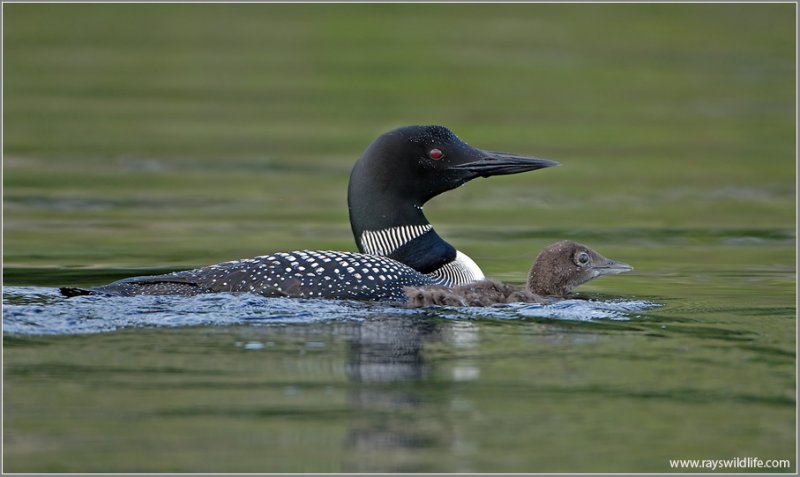
Common Loon by Raymond Barlow

Common loons eat a wide range of animal prey including fish, crustaceans, insect larvae, mollusks, and occasionally aquatic plant life. They swallow most of their prey underwater, where it is caught, but some larger items are first brought to the surface.” Common Loon – Wikipedia

Here is just one of the Cool Facts from Common Loon – All About Birds

  • Loons are agile swimmers, but they move pretty fast in the air, too. Migrating loons have been clocked flying at speeds more than 70 mph.

Red-necked Grebe (Podiceps grisegena) BJU Bird Collection 2018

Next to the Loon is a Red-necked Grebe (Podiceps grisegena). “Like all grebes, the Red-necked is a good swimmer, a particularly swift diver, and responds to danger by diving rather than flying. The feet are positioned far back on the body, near the tail, which makes the bird ungainly on land. It dives for fish or picks insects off vegetation; it also swallows its own feathers, possibly to protect the digestive system.” Red-necked Grebes – Wikipedia

Red-necked Grebe (Podiceps grisegena) young on her wing©USFWS

Red-necked Grebe (Podiceps grisegena) young on her wing©USFWS

Here is a Cool Fact from Red-necked Grebe – All About Birds

  • The oldest recorded Red-necked Grebe was at least 11 years old when it was found in Minnesota, the same state where it had been banded.

Pied-billed Grebe (Podilymbus podiceps) BJU Bird Collection 2018

The smaller Grebe, next to the Red-necked Grebe, is a Pied-billed Grebe (Podilymbus podiceps) . They both belong to the Podicipedidae Family. Now that is a bird we see often here in Florida.

Pied-Billed Grebe at Lake Hollingsworth, Lakeland, FL by Dan

Pied-Billed Grebe at Lake Hollingsworth, Lakeland, FL by Dan

“The Pied-billed Grebes (Podilymbus podiceps) is a species of the grebe family of water birds. Since the Atitlán grebe (Podilymbus gigas) has become extinct, it is the sole extant member of the genus Podilymbus. The pied-billed grebe is primarily found in ponds throughout the Americas. Other names of this grebe include American dabchick, dabchick, Carolina grebe, devil-diver, dive-dapper, dipper, hell-diver, pied-billed dabchick, pied-bill, thick-billed grebe, and water witch.”

Pied-billed Grebes are small, stocky, and short-necked. They are mainly brown, with a darker crown and back. Their brown color serves as camouflage in the marshes they live in. They do not have white under their wings when flying, like other grebes. Their undertail is white and they have a short, blunt chicken-like bill that is a light grey color, which in summer is encircled by a broad black band (hence the name). In the summer, its throat is black.”  Pied-billed grebe – Wikipedia [with editing]

A Cool Fact about this from Pied-billed Grebe – All About Birds

  • Pied-billed Grebe chicks typically leave the nest the first day after hatching and spend much of their first week riding around on a parent’s back. They usually spend most of their first 3 weeks on or near the nest platform.

Pied-billed Grebe (Podilymbus podiceps) chick ©WikiC

We will check out the other two birds in the display case next.

I trust you will enjoy meeting the various birds through this series. The links provided give much more information, and photos of these species.

“The works of the LORD are great, Studied by all who have pleasure in them.” (Psalms 111:2 NKJV)

Gaviidae – Loons – Family

Podicipedidae – Grebes – Family


A Pleasant Surprise – II

BJU Bird Collection 2018

In A Pleasant Surprise At The BJU Homecoming the Waterman Bird Collection, in the Science building, was introduced. This post will start introducing you to these wonderfully preserved specimens of birds that lived over a hundred years ago.

BJU Waterman Bird Collection 2018

At first, it bothered me about the use of birds in this manner, even though many museums have displays of birds. Yet, when you look back 100 plus years, they didn’t have the technology, nor the modern color cameras or slow motion videos to capture images of them. John Audubon did excellent drawing, with detailed colors. He also studied live birds and specimens.

“John James Audubon’s Birds of America is a portal into the natural world. Printed between 1827 and 1838, it contains 435 life-size watercolors of North American birds (Havell edition), all reproduced from hand-engraved plates, and is considered to be the archetype of wildlife illustration.” Birds of America

When the Lord first created the birds, there were no specimens until sin entered. How must those first birds have appeared? Photos, movies, and even specimens would have given us quite a sight. Today, we have fossils, but they do not show the beautiful feathers and features that those original avian wonders must have been adorned with.

“So God created great sea creatures and every living thing that moves, with which the waters abounded, according to their kind, and every winged bird according to its kind. And God saw that it was good. And God blessed them, saying, “Be fruitful and multiply, and fill the waters in the seas, and let birds multiply on the earth.” So the evening and the morning were the fifth day.” (Genesis 1:21-23 NKJV)

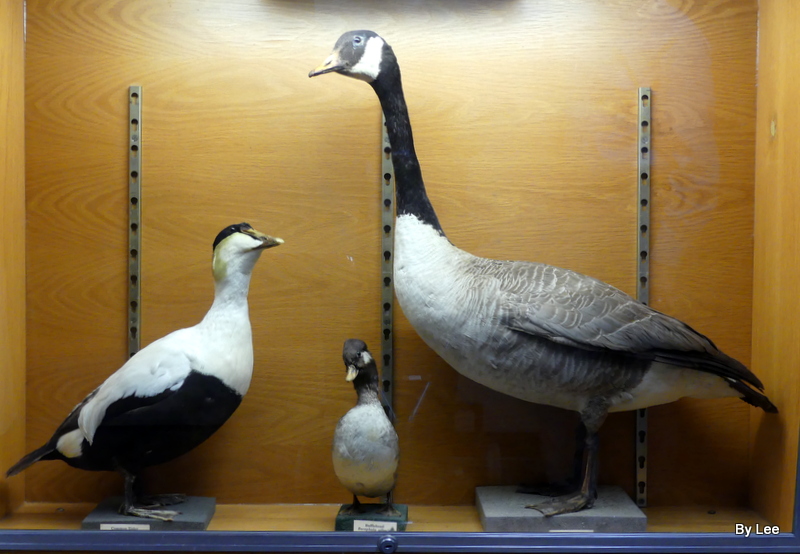
Common Eider, Bufflehead, and Canada Goose

The birds in the right hand side of the display above is where we will begin. On the top shelf is an Eider, a Bufflehead and a Goose. It is nice to see them together to get a size perspective.

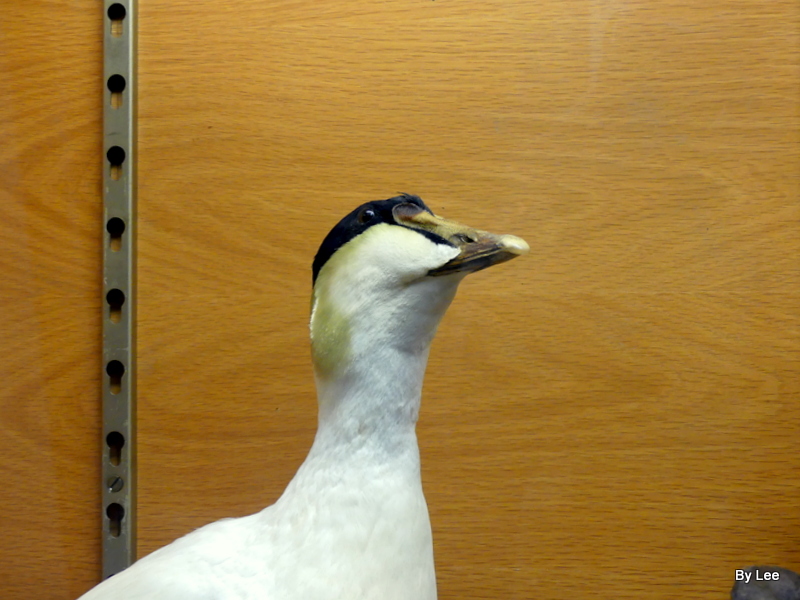
Common Eider (Somateria mollissima) BJU Bird Collection 2018

The Common Eider (pronounced /ˈaɪ.dər/) (Somateria mollissima) is a large (50–71 cm (20–28 in) in body length) sea-duck that is distributed over the northern coasts of Europe, North America and eastern Siberia. It breeds in Arctic and some northern temperate regions, but winters somewhat farther south in temperate zones, when it can form large flocks on coastal waters. It can fly at speeds up to 113 km/h (70 mph) Part of the Anatidae Family. Common Eider – Wikipedia and All About Birds

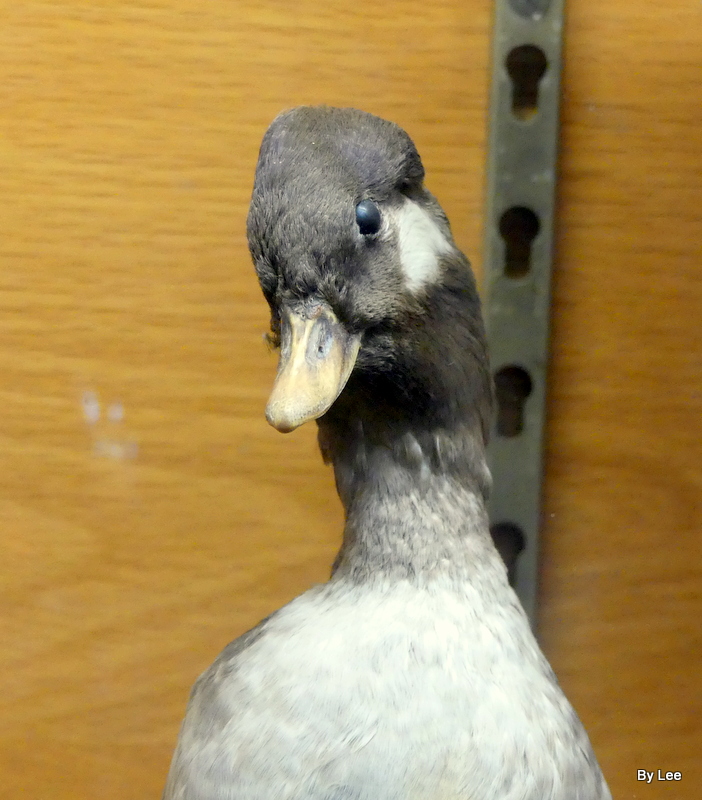
Bufflehead (Bucephala albeola) BJU Bird Collection 2018

The Bufflehead (Bucephala albeola) is a small sea duck of the genus Bucephala, the goldeneyes. This species was first described by Linnaeus in his Systema naturae in 1758 as Anas albeola.

The genus name is derived from Ancient Greek boukephalos, “bullheaded”, from bous, “bull ” and kephale, “head“, a reference to the oddly bulbous head shape of the species. The species name albeola is from Latin albus, “white”. The English name is a combination of buffalo and head, again referring to the head shape. This is most noticeable when the male puffs out the feathers on the head, thus greatly increasing the apparent size of the head.

Canada Goose (Branta canadensis) BJU Bird Collection 2018

All of these three birds are in the Anatidae Family. The photo shows how much larger the Goose is than the Bufflehead.

The Canada Goose (Branta canadensis) is a large wild goose species with a black head and neck, white cheeks, white under its chin, and a brown body. Native to arctic and temperate regions of North America, its migration occasionally reaches northern Europe. It has been introduced to the United Kingdom, New Zealand, Argentina, Chile, and the Falkland Islands. Like most geese, the Canada goose is primarily herbivorous and normally migratory; it tends to be found on or close to fresh water. Canada Goose Wikipedia and All About Birds

I trust you will enjoy meeting the various birds through this series. The links provided give much more information, and photos of these species.

“The works of the LORD are great, Studied by all who have pleasure in them.” (Psalms 111:2 NKJV)


A Pleasant Surprise At The BJU Homecoming

BJU Homecoming

Dan and I rode up to Greenville, South Carolina to attend the 2018 BJU Homecoming. We had two main events that we attended. When we parked quite a way from the place we were to be, I sort of grumbled because of the long walk with my walker [The campus is on hills]. Yet, the Lord always seems to turn our upside down grumps into upright delights.

BJU Science Building

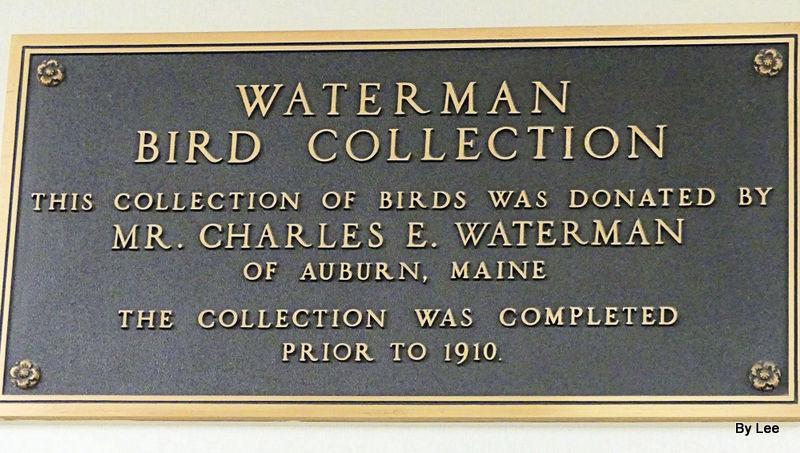
We parked down by the Science building, where Dan had taught years ago. I decided to take some photos. Thankfully, the building was open, and so began my delight. Inside we found a display of BIRDS! A lot of birds, which were from a collection of specimens that was completed before 1910. It was donated by Mr. Charles E. Waterman.

Waterman Bird Collection BJU 2018 Plaque

There were display cases filled with a Bird specimen collection that had been donated by Mr. Charles E Waterman. The collection is well over 100 years old. The birds have been well preserved, considering the age of ithe collection. My camera received a nice workout. [So did my back]

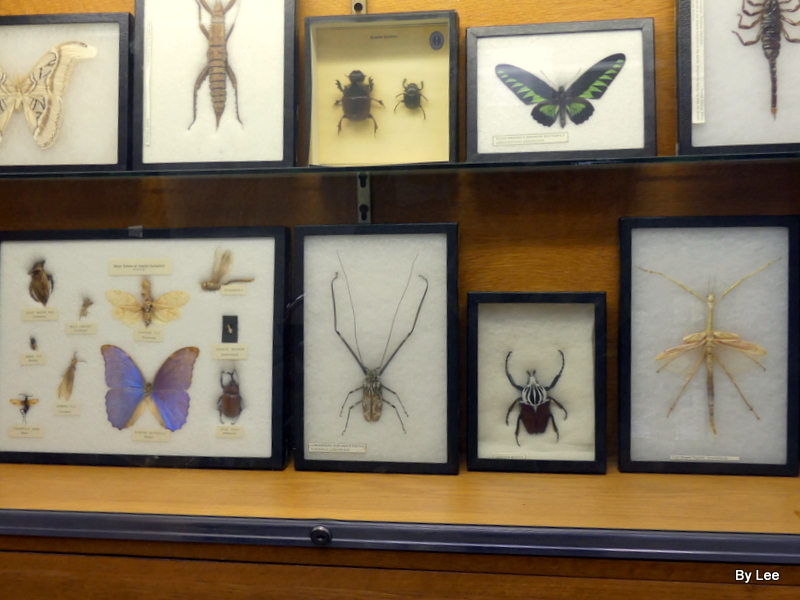
BJU BUg Collection 2018

BJU BUg Collection 2018

BJU BUg Collection 2018

Today, I want to show you the Bug and Squirrel displays, as the bird photos are still being adjusted. Photos of the display case is to give you an idea of how big those bugs really were. Sure wouldn’t want any of them on me.

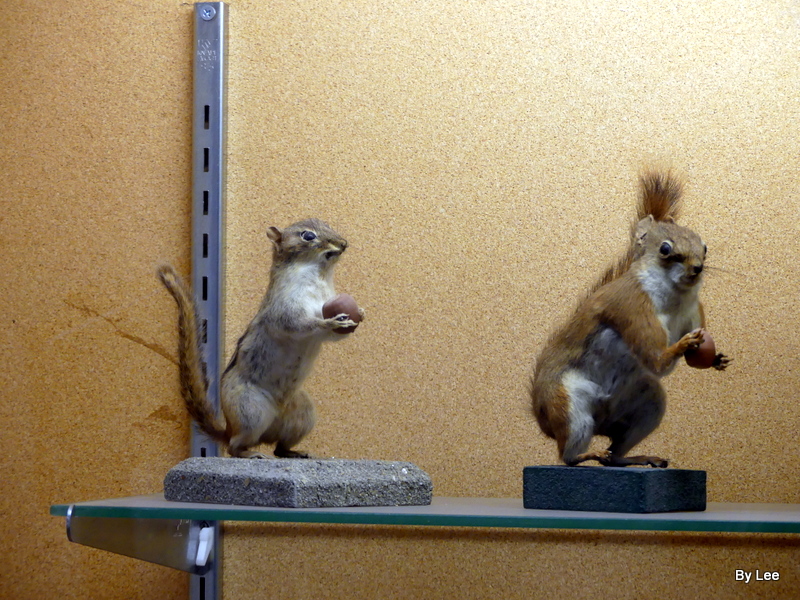
BJU Squirrel Collection 2018

The squirrels look as if they were practicing for a football game. :)

God’s Creative Hand is definitely seen in all of these created critters.

“Because that which may be known of God is manifest in them; for God hath shewed it unto them. For the invisible things of him from the creation of the world are clearly seen, being understood by the things that are made, even his eternal power and Godhead; so that they are without excuse: Because that, when they knew God, they glorified him not as God, neither were thankful; but became vain in their imaginations, and their foolish heart was darkened. Professing themselves to be wise, they became fools,” (Romans 1:19-22 KJV)

A Curious, Leeping or Panting Deer?

This was shared on Facebook. I enjoy the beach and deer, but never saw one doing this. Seems to enjoy himself/herself.

“As the deer pants for the water brooks, So my soul pants for You, O God. My soul thirsts for God, for the living God; When shall I come and appear before God?” (Psalms 42:1-2 NASB)

Here another video on YouTube:

Also, Isaiah 35:1-6 tells us more about the deer leaping to encourage the lame that they will also one day leap for joy.

“The wilderness and the desert will be glad, And the Arabah will rejoice and blossom; Like the crocus It will blossom profusely And rejoice with rejoicing and shout of joy. The glory of Lebanon will be given to it, The majesty of Carmel and Sharon. They will see the glory of the LORD, The majesty of our God. Encourage the exhausted, and strengthen the feeble. Say to those with anxious heart, “Take courage, fear not. Behold, your God will come with vengeance; The recompense of God will come, But He will save you.” Then the eyes of the blind will be opened And the ears of the deaf will be unstopped. Then the lame will leap like a deer, And the tongue of the mute will shout for joy. For waters will break forth in the wilderness And streams in the Arabah.” (NASB)

[Bolding and Italic added for emphasis]

Plus – Interesting Things Besides Birds

Scripture Alphabet of Animals: The Hart and Hind

You Got To Be Kidding!!!

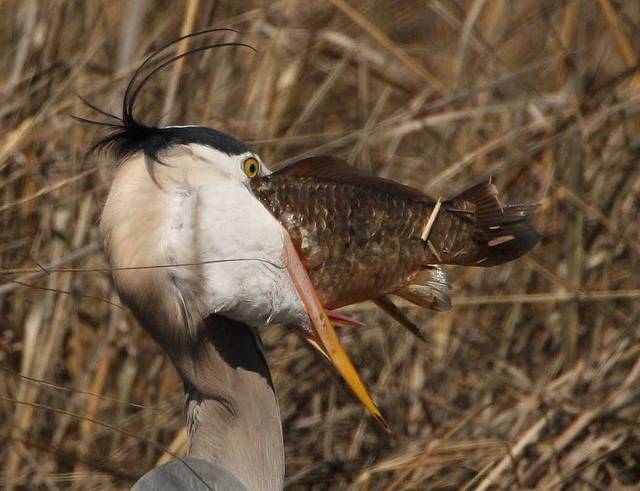
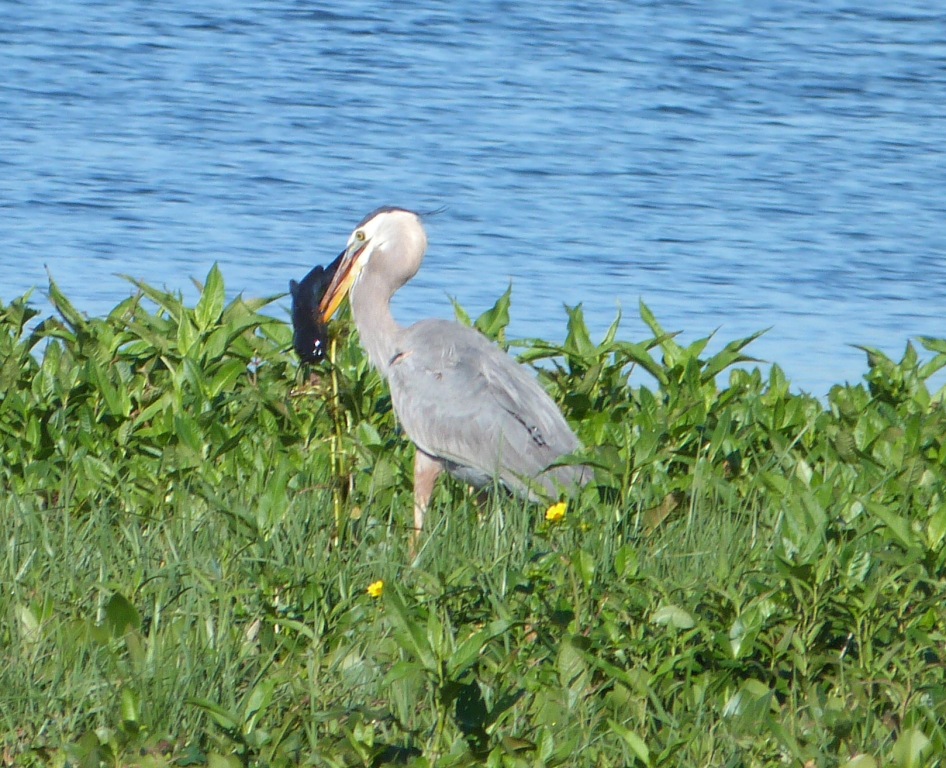
YouTube Video by stonecabinphotos – “A Great Blue Heron spears and swallows a huge carp at Bosque del Apache NWR on 29 Oct 2013. The process took 11 minutes.” I have seen them do this, but never with a fish this large. Watched this Great Blue catch a catfish at Circle B Reserve, but it was small compared to the one above.
Great Blue Heron with Catfish at Circle B by Lee - cropped

Great Blue Heron with Catfish at Circle B by Lee – cropped

Here is a photo by ©USFWS, but even it is smaller than the video above.

Great Blue Heron (Ardea herodias) ©USFWS

I can’t think of a verse that says that “you shouldn’t bite off more than you can chew.” There are verses that the Lord promises food for all his creation:
Who giveth food to all flesh: for his mercy endureth for ever. O give thanks unto the God of heaven: for his mercy endureth for ever.” (Psalms 136:25-26 KJV) “Which executeth judgment for the oppressed: which giveth food to the hungry.” (Psalms 146:7a KJV) “He giveth to the beast his food, and to the young ravens which cry.” (Psalms 147:9 KJV)

*

And having food and raiment let us be therewith content.” (1 Timothy 6:8 KJV)
This last verse reminds the Great Blue Heron that his catch and his beautiful feathers should help him be content. Though, not sure that the Heron may have a sore throat and an upset stomach. Enjoy! Bolding and italics in verse added for emphasis.

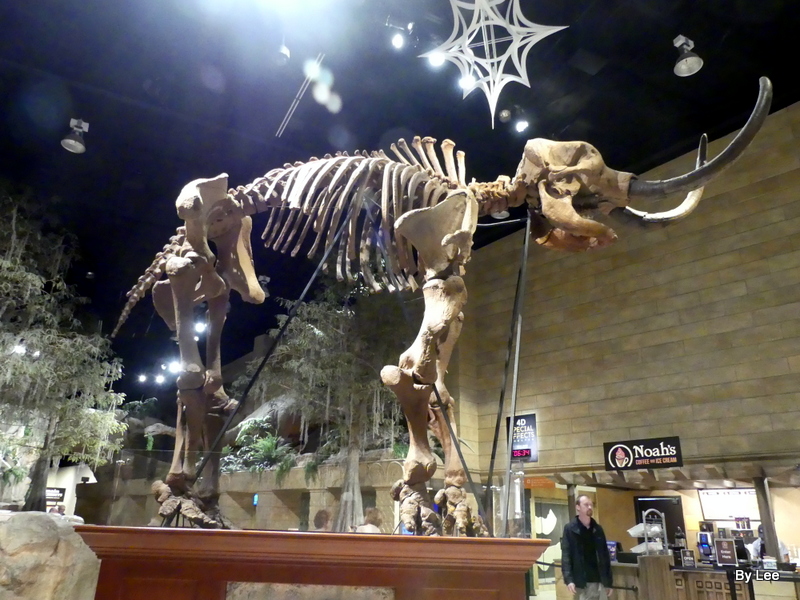
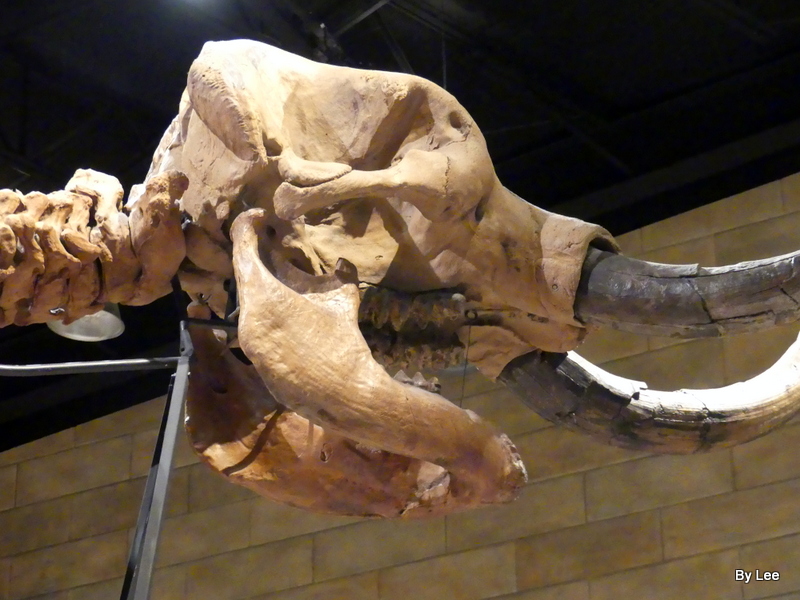
Mastodon at Creation Museum

Mastodon Cast Fossil Creation Museum 2018 by Dan

“Then God said, “Let the earth bring forth the living creature according to its kind: cattle and creeping thing and beast of the earth, each according to its kind”; and it was so. And God made the beast of the earth according to its kind, cattle according to its kind, and everything that creeps on the earth according to its kind. And God saw that it was good.” (Genesis 1:24-25 NKJV)

On the last visit to the Creation Museum last month, we encountered the HUGE skeleton of a Mastodon. It is known as the Burning Tree Mastodon. This fossil is actually a casting of the original fossil that was found under a golf course in Ohio. Looks and size are the same.

Mastodon – Creation Museum 2018 by Lee

We took several photos of the Mastodon to help get a perspective as to how large is really is. I would not liked to have come upon one back when they were alive on earth.

Mastodon Head and Neck – Creation Museum 2018 by Lee

Mastodon Head – Creation Museum 2018 by Lee

Here are a couple of articles, from Answers in Genesis and Institute For Creation Research, that give a more information about the Mastodon.

Fascinating Fossils: Glimpse the Creation Museum’s Collection

The Mastodon Has Arrived

Dinosaur DNA Trumps Mammoth Expert – Institute for Creation Research

Dragon Legends at Creation Museum I

Behemoth – Not The Stuff Of Legends!

Leviathan – Not The Stuff Of Legends!

Four Billion Birds Flying

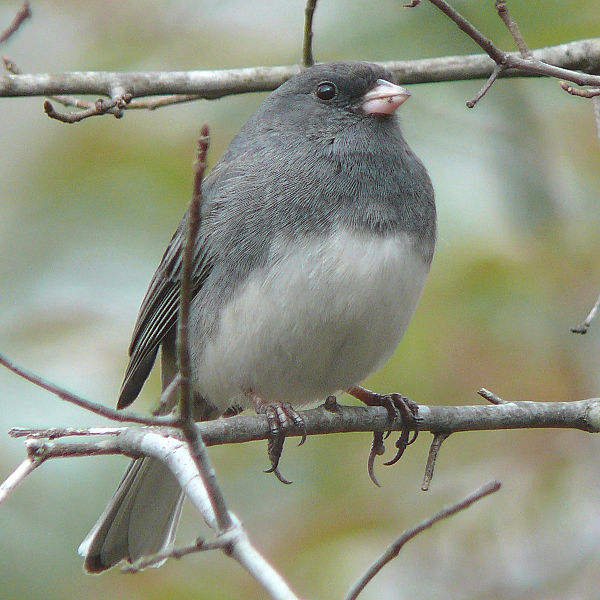
Dark-eyed Junco (Slate-colored) (Junco hyemalis hyemalis) female WikiC

“To everything there is a season, A time for every purpose under heaven:” (Ecclesiastes 3:1 NKJV)

Here are some interesting statements from an article on All About Birds. The research that Cornell Lab of Ornithology scientists are discovering with weather radar data is assisting the ornithologist. They are learning more about the 4 Billion birds that migrate during this time of the year.

“An average of 4 billion birds passed from Canada across the northern border of the U.S. in autumn, with 2.6 billion birds returning across the Canada–U.S. border in spring. Activity across the southern border was on an even grander scale: an average of 4.7 billion birds left the U.S. for Mexico and other points south each autumn, with 3.5 billion birds heading north across the U.S. southern border each spring.”

Summer Tanager (Piranga rubra) male by Kent Nickell

Summer Tanager (Piranga rubra) male by Kent Nickell

That is quite a few birds heading south, with fewer returning in the spring. It appears the birds that go further south have a better survival rate than the ones that winter here in the United States. 

” For birds crossing the U.S. northern border—which includes many short-distance migrants such as sparrows, Snow Buntings, and Dark-eyed Juncos that fly from Canada to spend winter in the Lower 48 states—the average rate of return was 64 percent. But for birds crossing the U.S. southern border—which includes more of the long-distance migrants such as warblers, tanagers, and orioles that travel to Central and South America, three to four times farther than the short-distance migrants—the average rate of return was 76 percent.”

Boat-tailed Grackle (Quiscalus major) at Lake Howard, Winter Haven, Florida By Dan'sPix

Boat-tailed Grackle (Quiscalus major) at Lake Howard, Winter Haven, Florida By Dan’sPix

My first thoughts were why are so many not surviving here in North America. Yet, those traveling further south, seem to fare better. I knew from previous articles I’ve read that many birds die from impact with tall buildings and glass windows. Here is what they had to say:

One explanation for the higher mortality among birds that overwinter in the U.S. may be a higher number of hazards. “All birds need to stay safe from predators, find enough food, and not get hit by a car,” says Ken Rosenberg, research coauthor and conservation scientist at the Cornell Lab. “Birds wintering in the U.S. may have more habitat disturbances and more buildings to crash into, and they might not be adapted for that.” 

They also discuss in this article the differences in different breeding strategy between short distant and long distant migrants.

“And He changes the times and the seasons;” (Daniel 2:21 NKJV)

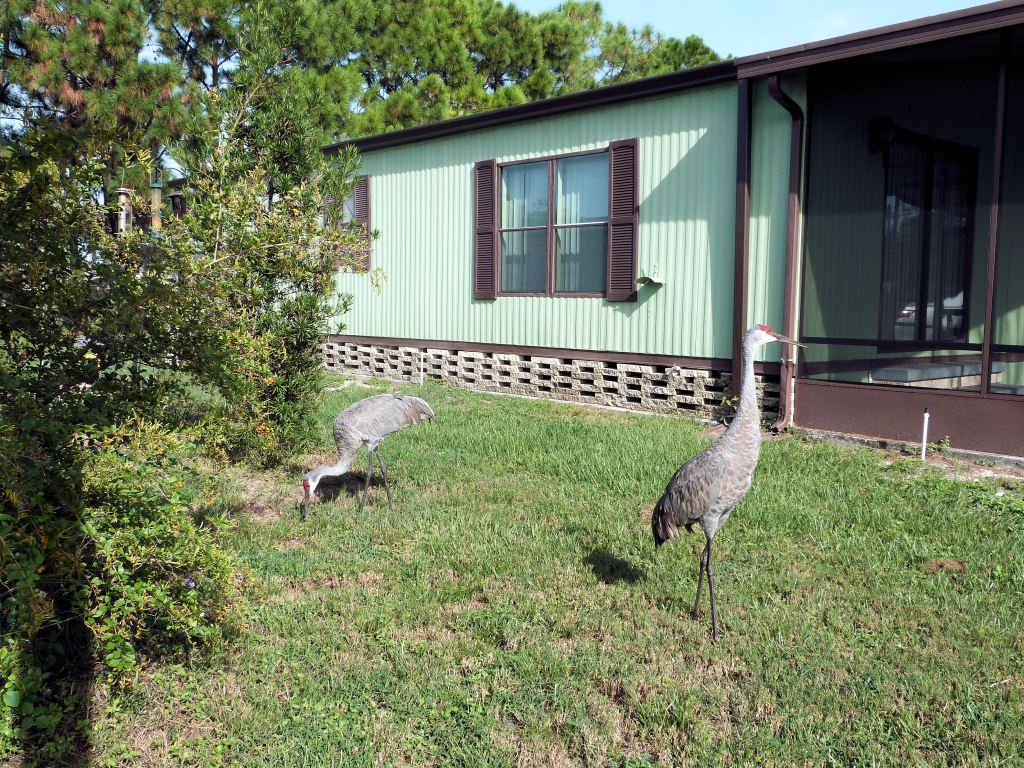
Sandhill Cranes in our side yard

Here in Florida, I have begun seeing more of the migrants that spend time near here. The Boat-tailed Grackles are invading my feeders already. I have also spotted more Bald Eagles, and the Heron, Egrets, and Sandhill Cranes seem to be more populous. Yeah, for the Winter Visitors!!


4 Billion Birds Will Fly Through American Airspace This Fall by Carley Eschiman, All About Birds, Sept 17,2018

Unbelievable Migrations from Creation Moments

Bird Migration Mistakes

Birds of the Bible – Migration September 2009

Interesting Things – Amazing Bird Migration


Birdwatching, Bugs, and Woodstock

Family Circus Bug And Birdwatching ©ArcMax

When you go birdwatching, do you get side-tracked by other critters? It is easy to do. Since the Creator, the Lord Jesus Christ created all of them, they are all amazing and enjoyable to examine up close.

So God created great sea creatures and every living thing that moves, with which the waters abounded, according to their kind, and every winged bird according to its kind. And God saw that it was good. And God blessed them, saying, “Be fruitful and multiply, and fill the waters in the seas, and let birds multiply on the earth.” (Genesis 1:21-22 NKJV)

Ladybug ©WikiC

Or maybe he was watching one of these:

Brevard Zoo Butterflies 4-3-2018 by Lee
Or could this be what he was looking at through his magnifying glass?

Caterpillar of the Old World Swallowtail – Size 42mm ©WikiC

“Then God said, ‘Let the earth bring forth the living creature according to its kind: cattle and creeping thing and beast of the earth, each according to its kind’; and it was so. And God made the beast of the earth according to its kind, cattle according to its kind, and everything that creeps on the earth according to its kind. And God saw that it was good.” (Genesis 1:24-25 NKJV)

Red-billed Oxpecker on equid “neighbor” (zebra), inspecting ear for bugs ©ibc.lynxeds

If you were to watch Woodstock, he would definitely entertain you.

Woodstock playing Elevator ©Arcamax

Then again, maybe Woodstock is trying to copy the behavior of the Widowbirds:

Trust you enjoy your day. A little humor helps our days be brighter.


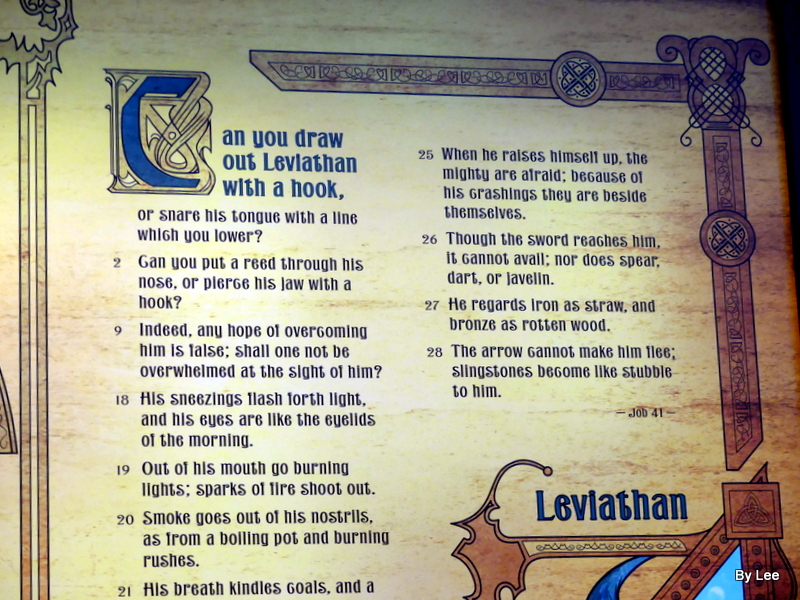
Leviathan – Not The Stuff Of Legends!

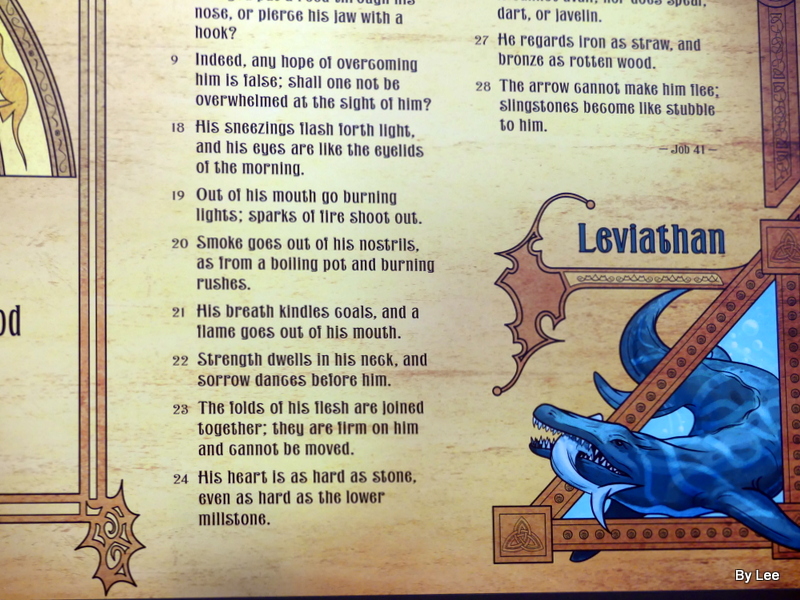
Leviathan – Not The Stuff Of Legends Creation Museum 2018 by Lee

In the post, Behemoth – Not The Stuff Of Legends! the introductory signs were shown for Behemoth. Now, here is the information about Leviathan that is also mentioned in the Bible. Job 41.

(1) “Can you draw out Leviathan with a hook, Or snare his tongue with a line which you lower?

(2) Can you put a reed through his nose, Or pierce his jaw with a hook?

(9) Indeed, any hope of overcoming him is false; Shall one not be overwhelmed at the sight of him?” (Job 41:1,2,9) NKJV

(19) “Out of his mouth go burning lights; Sparks of fire shoot out.

(20) Smoke goes out of his nostrils, As from a boiling pot and burning rushes.

(20) Smoke goes out of his nostrils, As from a boiling pot and burning rushes.

(21) His breath kindles coals, And a flame goes out of his mouth.

(22) Strength dwells in his neck, And sorrow dances before him.

(23) The folds of his flesh are joined together; They are firm on him and cannot be moved.

(24) His heart is as hard as stone, Even as hard as the lower millstone.

(25) When he raises himself up, the mighty are afraid; Because of his crashings they are beside themselves.

(26) Though the sword reaches him, it cannot avail; Nor does spear, dart, or javelin.

(27) He regards iron as straw, And bronze as rotten wood.

(28) The arrow cannot make him flee; Slingstones become like stubble to him.” (Job 41:19-28 NKJV)

These verses definitely describe some sort of large and strong critter in the sea or a body of water. Sounds like something you wouldn’t want to “tangle” with.

Webster’s Definition of Leviathan (1828 ver.)
LEVI’ATHAN, n. [Heb.]
1. An aquatic animal, described in Job 41, and mentioned in other passages of Scripture. In Isaiah, it is called the crooked serpent. It is not agreed what animal is intended by the writers, whether the crocodile, the whale, or a species of serpent.
2. The whale, or a great whale.

I forgot to put this is the first article:

Webster’s Definition of Behemoth (1828 ver.)
BE’HEMOTH, n.]Heb. a beast or brute; from an Arabic vert, which signifies, to shut, to lie hid, to be dumb. In Eth.dumb.]
Authors are divided in opinion as to the animal intended in scripture by this anme; some supposing it to be an ox, others, an elephant; and Bochart labors to prove it the hippopotamus, or river horse. The latter opinion is most probably. [See Hippopotamus.] The original word in Arabic signifies a brute of beast in general, especially a quadruped.

Both of these definitions have left the authors guessing, yet God, the Creator knows exactly what they were.


R A Torrey’s – Leviathan

Nave’s – Leviathan


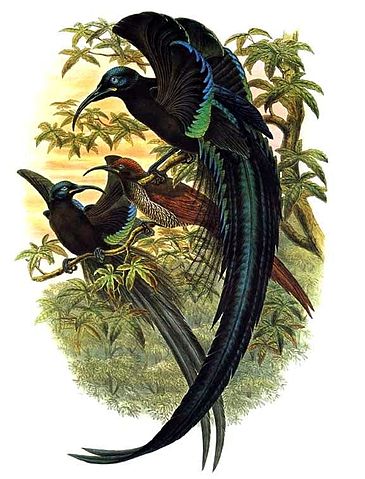
Black Sicklebill – Thin Blue Line

Here is an interesting video about a Black Sicklebill displaying.
Black Sicklebill: The Thin Blue Line by Cornell Lab of Ornithology
Black Sicklebills are elegant, slender birds with long bills and tails. But that all changes when a female comes by. The male transforms into a horizontal comet shape on his display perch. He doesn’t use his wings to do this; he uses flank feathers. The comet shape is accentuated by a narrow blue band of iridescence created when those flank feathers line up precisely. Filmed and photographed by Tim Laman and Eric Liner. [YouTube] “The black sicklebill (Epimachus fastosus) is a large bird-of-paradise of midmountain forests of New Guinea. The sicklebill’s diet consists mainly of fruits and arthropods. The male of the species performs a horizontal courtship display with the pectoral plumes raised around its head. The male has black plumage with iridescent green, blue and purple scale-like feathers, red irises, bright yellow mouth, long curved black bill, huge sabre-shaped tail and large erectile fan-like plumes on the sides of its breast. The female is smaller than the male, with reddish brown plumage, brown irises, and buff below. Reaching up to 110 cm in length, the male black sicklebill is the longest member of Paradisaeidae, though the curl-crested manucode has a larger body.” [Wikipedia with editing]
‘Call to Me, and I will answer you, and show you great and mighty things, which you do not know.’ (Jeremiah 33:3 NKJV)


Behemoth – Not The Stuff Of Legends!

Not The Stuff Of Legends – Creation Museum

Not the Stuff of Legends!

Not The Stuff Of Legends – Creation Museum

Not The Stuff Of Legends – Creation Museum

In the last article, Creation Museum’s Dragon Legends I, you were introduced to the beginning exhibits at the Creation Museum. The Dragon Legends continued with the next display. There they mention the “two real dragon-like creatures” found in God’s Word.

This post mentions the Behemoth mentioned in Job 40:16-24.

Behemoth

Not The Stuff Of Legends – Creation Museum

Job 40:16-24 NKJV

(16) See now, his strength is in his hips, And his power is in his stomach muscles.

(17) He moves his tail like a cedar; The sinews of his thighs are tightly knit.

(18) His bones are like beams of bronze, His ribs like bars of iron.

(19) He is the first of the ways of God; Only He who made him can bring near His sword.

(20) Surely the mountains yield food for him, And all the beasts of the field play there.

(21) He lies under the lotus trees, In a covert of reeds and marsh.

(22) The lotus trees cover him with their shade; The willows by the brook surround him.

(23) Indeed the river may rage, Yet he is not disturbed; He is confident, though the Jordan gushes into his mouth,

(24) Though he takes it in his eyes, Or one pierces his nose with a snare.

Beowulf and the Dragon was a poem about the battle with a huge dragon. Was it a story, or was it based on a battle with some real live large land animal?

Beowulf & The Dragon – Creation Museum

Beowulf & The Dragon – Creation Museum

Beowulf & The Dragon – Creation Museum

Previous Articles:
Feedback: Dinosaurs Living with People—The Biblical Worldview – Answers in Genesis

Interesting Things – Dinosaur Blood

From Creation Museum:

Dinosaurs-Dragons-Legends

More From Institute For Creation Research:

Is There Some Truth to Dragon Myths?

Did Medieval Artists See Real Dinosaurs?

Dinosaur Mania and Our Children


Dragon Legends at Creation Museum I

Dragon Legends Around the World, Creation Museum

When you first enter the Creation Museum in Kentucky, you are greeted by Dragons. The first display tells about dragons having been on earth during the same time as men and women. Through Dragon Legends.

The Lernaean Hydra Legend

Evolutionists want you to believe that they died off millions of years ago, but there is too much proof to the contrary. Today I am just sharing this first display with you. You will see more of these dragons in later posts.

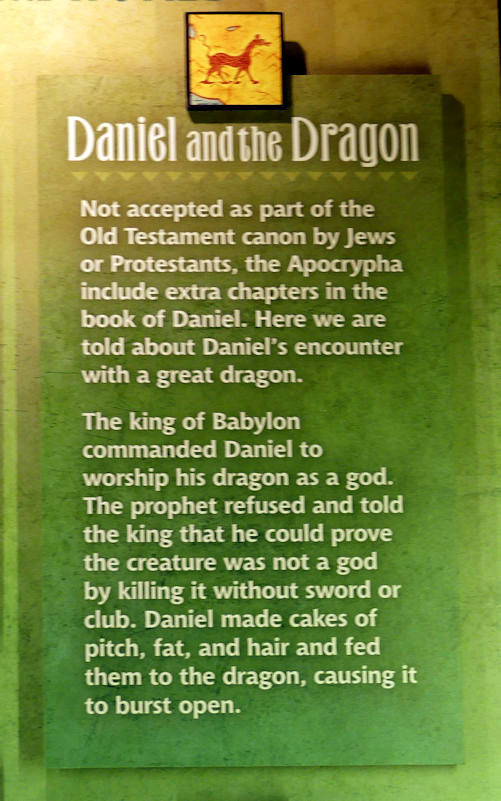
Daniel and The Dragon Legend

The Red Dragon in Wales also provides more legend material.

Red Dragon of Wales Legend

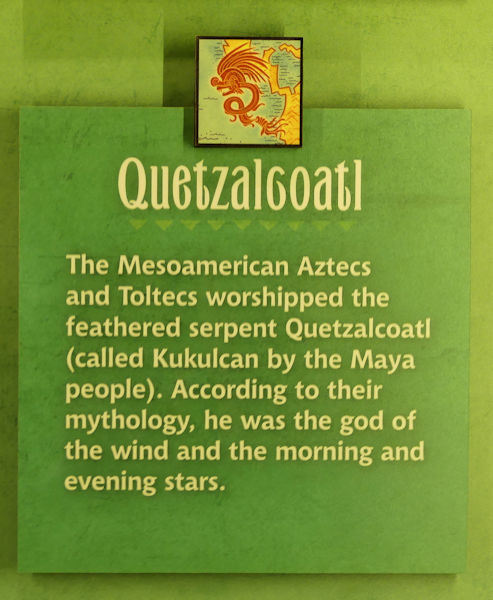
The last on on that exhibit is the Quetzalcoatl. Wonder if this is where the Quetzal got it’s name? Humm!

Quetzalcoatl Legend
Resplendent Quetzal (Pharomachrus mocinno) Reinier Munguia

” For he shall give his angels charge over thee, to keep thee in all thy ways. They shall bear thee up in their hands, lest thou dash thy foot against a stone. Thou shalt tread upon the lion and adder: the young lion and the dragon shalt thou trample under feet.” (Psalms 91:11-13 KJV)

This is just one sign display I have shared. I’ll be sharing more later. Yes, there is a real dinosaur skeleton to show you. For now, there was this Dragon hanging from the ceiling near this display.

Watch Out!