Behemoth – Not The Stuff Of Legends!

Not The Stuff Of Legends – Creation Museum

Not the Stuff of Legends!

Not The Stuff Of Legends – Creation Museum

Not The Stuff Of Legends – Creation Museum

In the last article, Creation Museum’s Dragon Legends I, you were introduced to the beginning exhibits at the Creation Museum. The Dragon Legends continued with the next display. There they mention the “two real dragon-like creatures” found in God’s Word.

This post mentions the Behemoth mentioned in Job 40:16-24.

Behemoth

Not The Stuff Of Legends – Creation Museum

Job 40:16-24 NKJV

(16) See now, his strength is in his hips, And his power is in his stomach muscles.

(17) He moves his tail like a cedar; The sinews of his thighs are tightly knit.

(18) His bones are like beams of bronze, His ribs like bars of iron.

(19) He is the first of the ways of God; Only He who made him can bring near His sword.

(20) Surely the mountains yield food for him, And all the beasts of the field play there.

(21) He lies under the lotus trees, In a covert of reeds and marsh.

(22) The lotus trees cover him with their shade; The willows by the brook surround him.

(23) Indeed the river may rage, Yet he is not disturbed; He is confident, though the Jordan gushes into his mouth,

(24) Though he takes it in his eyes, Or one pierces his nose with a snare.

Beowulf and the Dragon was a poem about the battle with a huge dragon. Was it a story, or was it based on a battle with some real live large land animal?

Beowulf & The Dragon – Creation Museum

Beowulf & The Dragon – Creation Museum

Beowulf & The Dragon – Creation Museum

Previous Articles:
Feedback: Dinosaurs Living with People—The Biblical Worldview – Answers in Genesis

Interesting Things – Dinosaur Blood

From Creation Museum:

Dinosaurs-Dragons-Legends

More From Institute For Creation Research:

Is There Some Truth to Dragon Myths?

Did Medieval Artists See Real Dinosaurs?

Dinosaur Mania and Our Children


Dragon Legends at Creation Museum I

Dragon Legends Around the World, Creation Museum

When you first enter the Creation Museum in Kentucky, you are greeted by Dragons. The first display tells about dragons having been on earth during the same time as men and women. Through Dragon Legends.

The Lernaean Hydra Legend

Evolutionists want you to believe that they died off millions of years ago, but there is too much proof to the contrary. Today I am just sharing this first display with you. You will see more of these dragons in later posts.

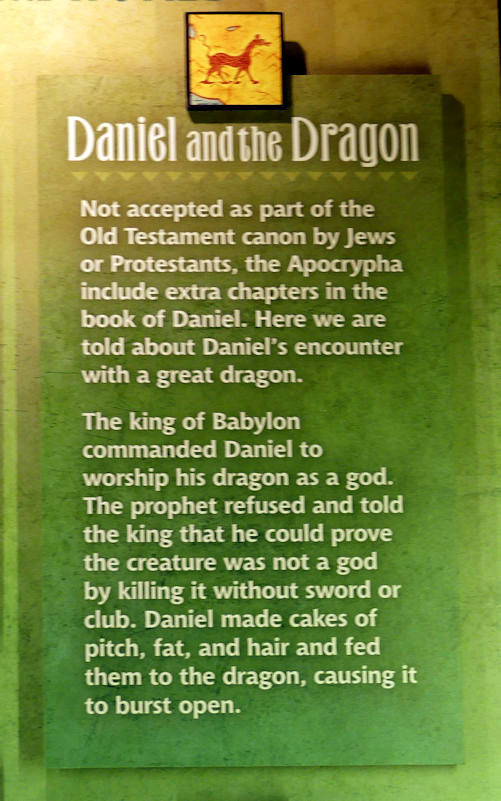
Daniel and The Dragon Legend

The Red Dragon in Wales also provides more legend material.

Red Dragon of Wales Legend

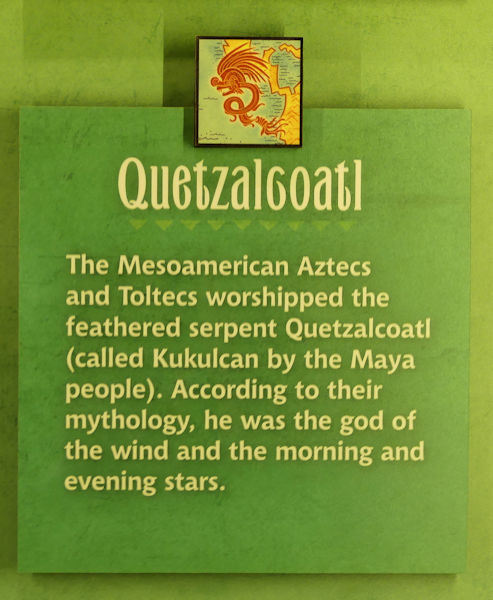
The last on on that exhibit is the Quetzalcoatl. Wonder if this is where the Quetzal got it’s name? Humm!

Quetzalcoatl Legend
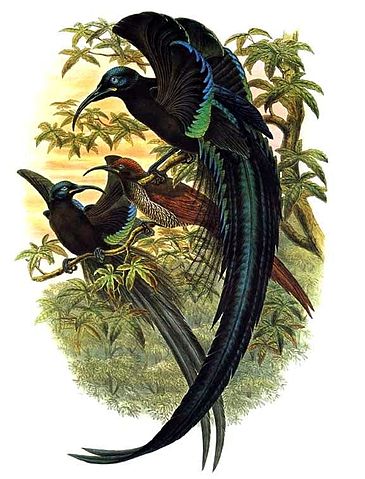
Resplendent Quetzal (Pharomachrus mocinno) Reinier Munguia

” For he shall give his angels charge over thee, to keep thee in all thy ways. They shall bear thee up in their hands, lest thou dash thy foot against a stone. Thou shalt tread upon the lion and adder: the young lion and the dragon shalt thou trample under feet.” (Psalms 91:11-13 KJV)

This is just one sign display I have shared. I’ll be sharing more later. Yes, there is a real dinosaur skeleton to show you. For now, there was this Dragon hanging from the ceiling near this display.

Watch Out!

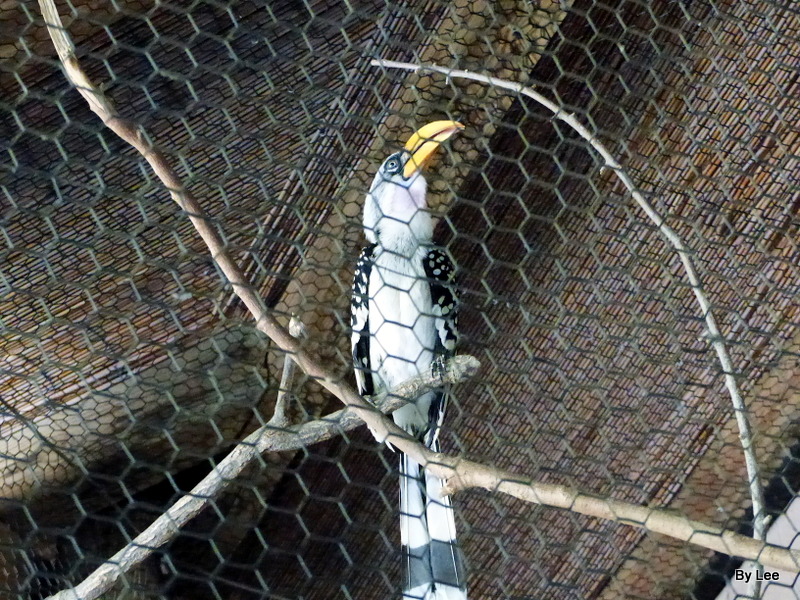
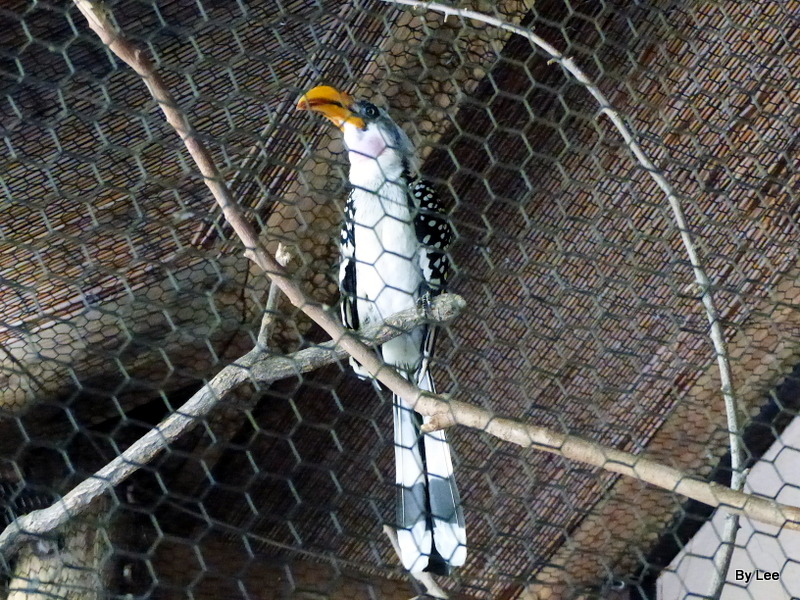
Southern Yellow-billed Hornbill – Cincinnati Zoo

Here are some more articles written about our visits to the Cincinnati Zoo: Here is a video by another visitor to the Hornbills:
http://www.youtube.com/watch?v=Btd7BgdBciQ
Trying to get through the fence/cage Southern Yellow-billed Hornbill (Tockus leucomelas) Cincinnati Zoo 2016
If you followed the posts while we were on our trip, you are aware that we skipped going to the Cincinnati Zoo because of weather. Home Again After 2,000 Mile Trip
And not only so, but we glory in tribulations also: knowing that tribulation worketh patience; And patience, experience; and experience, hope: (Romans 5:3-4 KJV)
Since we have been there twice already, I decided to see if there were some birds that were not written about from those trips. Actually, there are quite a few. This Southern Yellow-billed Hornbill’s photo caught my attention. It is so hard to get a photo through the cages of the zoos. This Avian Wonder was just as hard to capture. After several tries, the Hornbill came into focus and I still remember my excitement. Patience is hard at times, but it does pay off.
Yeah! I got through! Southern Yellow-billed Hornbill (Tockus leucomelas) Cincinnati Zoo 2016
“But if we hope for that we see not, then do we with patience wait for it.” (Romans 8:25 KJV)
Here are some more articles written about our visits to the Cincinnati Zoo: Here is a video by another visitor to the Hornbills:
http://www.youtube.com/watch?v=Btd7BgdBciQ

Weavers At Work

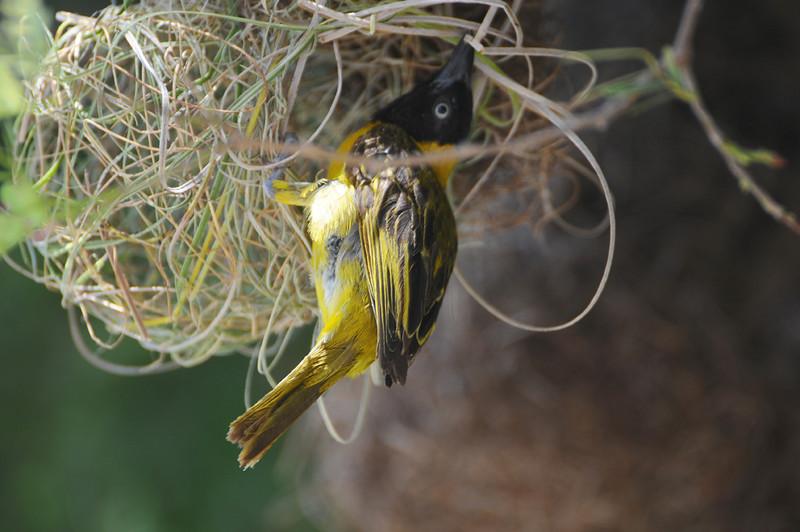
Lesser Masked Weaver (Ploceus intermedius) by Bob-Nan

My days are swifter than a weaver’s shuttle,… (Job 7:6a KJV)

“Them hath he filled with wisdom of heart, to work all manner of work, of the engraver, and of the cunning workman, and of the embroiderer, in blue, and in purple, in scarlet, and in fine linen, and of the weaver, even of them that do any work, and of those that devise cunning work.” (Exodus 35:35 KJV) [This has to do with the Tabernacle bulders, but the wisdom of heart applies here also.]

A friend shared a video with me of the Weaver Birds on Facebook while we were traveling. I thought I would share some of the fantastic weaving ability given these birds by their Creator.

These are just a few of the videos of Weavers at Work

Here’s another video on YouTube taken at the San Diego Zoo

*

*

*

Previous Articles about the Weaver Birds:

Sunday Inspiration – Weavers and Allies
Wonga Dove and Taveta Weavers at Houston Zoo
Nuggets Plus – The Weaver, The Caller (Ready)
Interesting Things – The Weaver Bird
Baya Weaver – The Model Church

Who Paints The Leaves?

  •  

Avian And Attributes – Sharp Part II

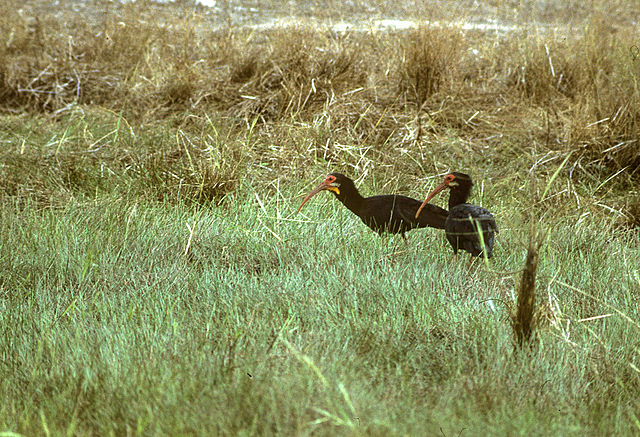
Sharp-tailed Ibis (Cercibis oxycerca) ©WikiC

“Like a club and a sword and a sharp arrow Is a man who bears false witness against his neighbor.” (Proverbs 25:18 NASB)

“Thy tongue deviseth mischiefs; like a sharp razor, working deceitfully.” (Psalms 52:2 KJV)


Avian and Attributes – Sharp Part II

The rest of the SHARP definitions. See Part I

SH’ARP, n.
1. In music, an acute sound.
2. A note artificially raised a semitone; or,
3. The character which directs the note to be thus elevated; opposed to a flat, which depresses a note a semitone.
4. A pointed weapon. [Not in use.]
SH’ARP, v.t.
1. To make keen or acute.
2. To render quick.
3. To mark with a sharp, in musical composition; or to raise a not a semitone.
SH’ARP, v.i. To play tricks in bargaining; to act the sharper.


Sharp-tailed Birds

There are seven Sharp-tailed birds:
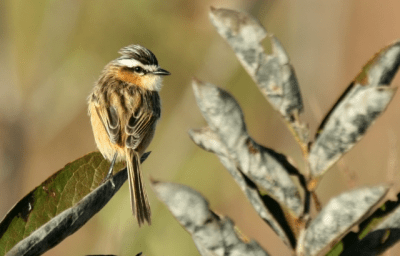
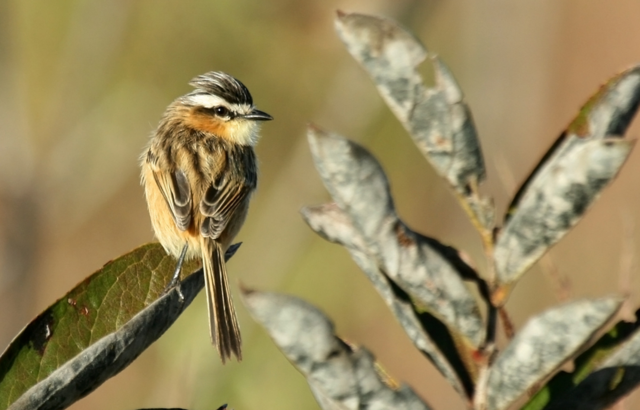
Sharp-tailed Grass Tyrant (Culicivora caudacuta) ©WikiC

Sharp-tailed Grass Tyrant (Culicivora caudacuta) is a species of bird in the family Tyrannidae, the only one in the genus Culicivora. It is found in Argentina, Bolivia, Brazil, Paraguay, and Uruguay. Its natural habitats are dry savanna and subtropical or tropical seasonally wet or flooded lowland grassland. It is threatened by habitat loss.
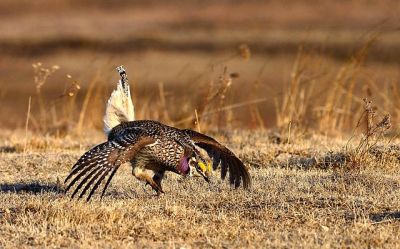
Sharp-tailed Grouse (Tympanuchus phasianellus) ©WikiC

Sharp-tailed Grouse (Tympanuchus phasianellus) (previously: Tetrao phasianellus) is a medium-sized prairie grouse. It is also known as the sharptail, and is known as fire grouse or fire bird by Native American Indians[clarification needed] due to their reliance on brush fires to keep their habitat open. The Sharp-Tailed Grouse is the provincial bird of Saskatchewan.
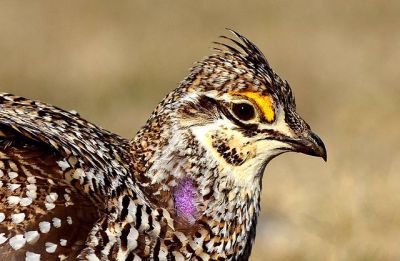
Sharp-tailed Grouse (Tympanuchus phasianellus) ©WikiC

Adults have a relatively short tail with the two central (deck) feathers being square-tipped and somewhat longer than their lighter, outer tail feathers giving the bird its distinctive name. The plumage is mottled dark and light browns against a white background, they are lighter on the underparts with a white belly uniformly covered in faint “V”-shaped markings. These markings distinguish sharp-tailed grouse from lesser and greater prairie chickens which are heavily barred on their underparts(Connelly et al. 1998). Adult males have a yellow comb over their eyes and a violet display patch on their neck. This display patch is another distinguishing characteristic from prairie chickens as male prairie chickens have yellow or orange colored air sacs
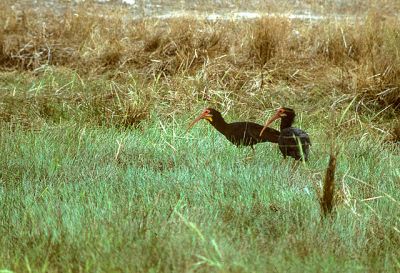
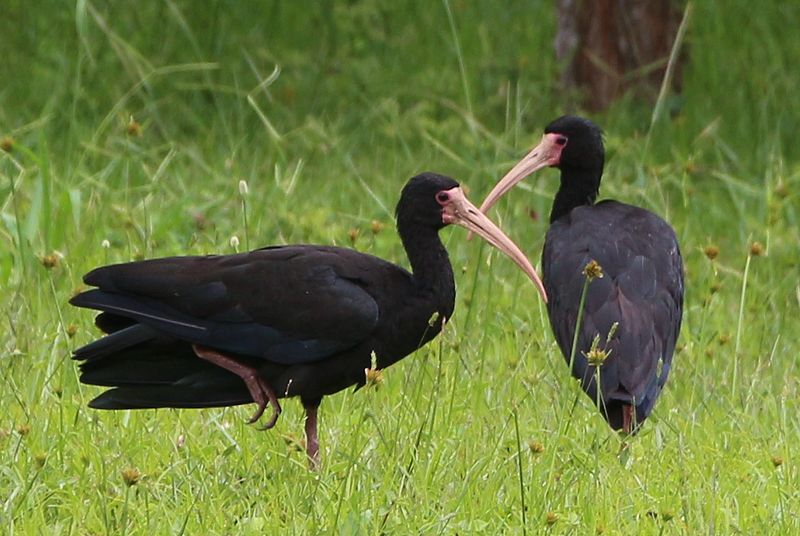
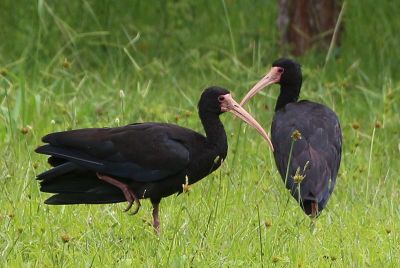
Sharp-tailed Ibis (Cercibis oxycerca) ©WikiC

Sharp-tailed Ibis (Cercibis oxycerca) is a species of ibis native to open wet savannas in parts of northern South America. This ibis is distinguished by its notably long tail, which is the longest among all extant ibis species; measuring 250-301mm in males and 256-272mm in females. The tail projects beyond the tips of the folded wings when the ibis stands; and beyond the trailing legs in flight. The plumage is predominantly black with greenish glossing; and with purplish tinges on the upper back, hind neck, wings and tail. The forehead and cheek region are occasionally greyish brown. Juveniles appear similar to adults, but their plumage lacks a metallic sheen.
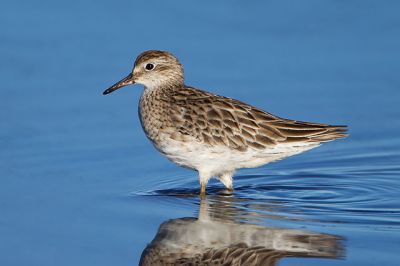
Sharp-tailed Sandpiper (Calidris acuminata) ©WikiC

Sharp-tailed Sandpiper (Calidris acuminata) – breeding adults are a rich brown with darker feather centres above, and white underneath apart from a buff breast. They have a light superciliary line above the eye and a chestnut crown. In winter, sharp-tailed sandpipers are grey above. The juveniles are brightly patterned above with rufous coloration and white mantle stripes.

This bird looks a lot like the pectoral sandpiper, within whose Asian range it breeds. It differs from that species in its breast pattern, stronger supercilium and more rufous crown. It has some similarities to the long-toed stint, but is much larger than the stint.
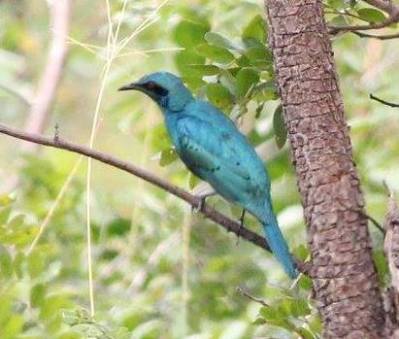
Sharp-tailed Starling (Lamprotornis acuticaudus) ©WikiC

Sharp-tailed Starling (Lamprotornis acuticaudus), also known as the sharp-tailed glossy-starling, is a species of starling in the family Sturnidae. It inhabits open woodland (namely miombo) in Angola, northern Botswana, the southern DRC, northern Namibia, western Tanzania, and Zambia.
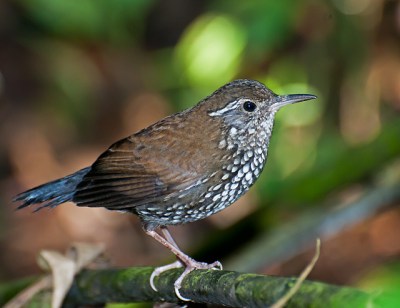
Sharp-tailed Streamcreeper (Lochmias nematura) by Dario Sanches

Sharp-tailed Streamcreeper (Lochmias nematura) is a passerine bird of South America belonging to the family Furnariidae, the ovenbirds. It is the only member of the genus Lochmias. The species is also known as the streamside streamcreeper.

This bird is about 6 in (15 cm) long, with a short tail and a long, thin, slightly curved bill. The plumage is dark brown, densely spotted white on the underparts. There is a white stripe over the eye and the tail is blackish. The song is an accelerating trill, lasting for about five seconds.


Avian and Attributes – Sharp Part I

More Avian and Attributes

Birds whose first or last name starts with “S”

Good News

*
[Definitions from Webster’s Dictionary of American English (1828), unless noted. Bird info from Wikipedia plus.]

Home Again After 2,000 Mile Trip

Home Again After 2,000 Mile Trip

We arrived home yesterday and are working on getting back in the routine of being home. The suitcases are unpacked and put away. We enjoyed sleeping in our own bed last night. If you have traveled, even overnight, you know the feeling of a night’s rest in your own bed.

American Wigeon flocks

We offered some of the migrating birds a ride south, but they declined our offer. [NOT!] Actually, we didn’t see sunshine for six days while we were north. Therefore, we wouldn’t have seen the birds anyway to offer them any assistance in their journey south.

“Even the stork in the sky Knows her seasons; And the turtledove and the swift and the thrush Observe the time of their migration; But My people do not know The ordinance of the LORD.” (Jeremiah 8:7 NASB)

Osprey Road by Dan - (Old Bartow Road)

Osprey Road by Dan – (Old Bartow Road)

We have a line of power poles on a road that goes to Bartow, Florida that is lined with platforms for bird nest. The Osprey come back every winter and rebuild their nest. I wonder if they feel like we did when we got to sleep in our own bed?

Because of the rain, overcast skies, and the approaching Hurricane Florence, we made the decision to come home several days early. We skipped the visit to the Cincinnati Zoo unfortunately. No bird photos to share from this trip.

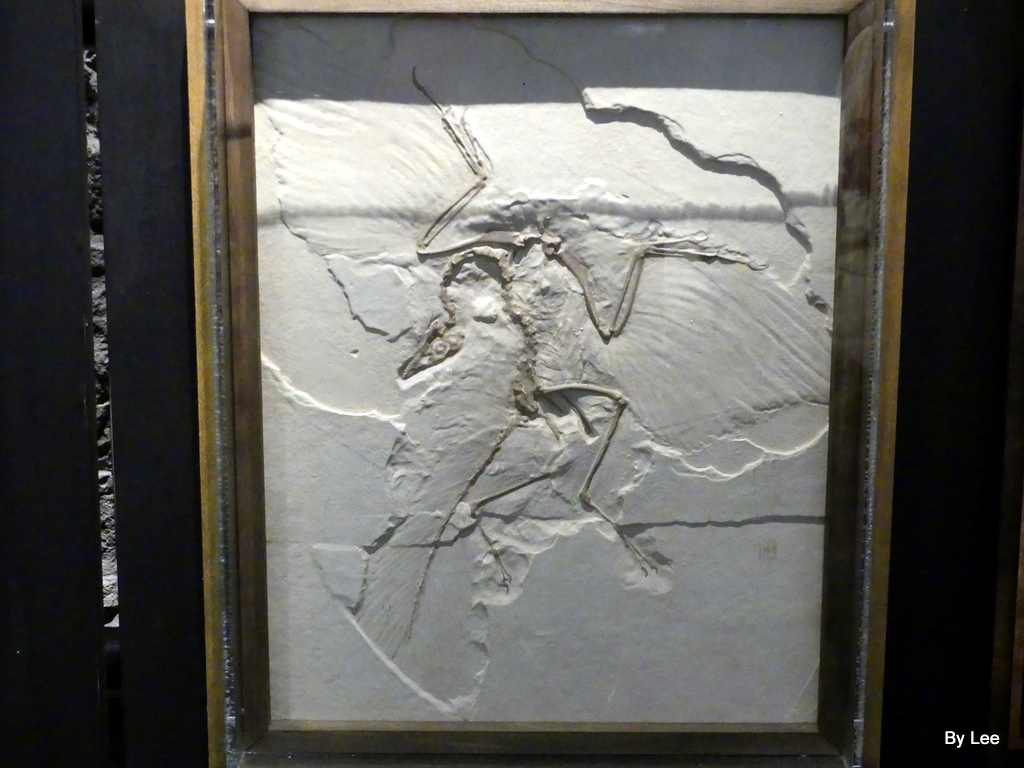
Bird Fossil at Creation Museum

We did get to go through the Creation Museum in Kentucky though. It has changed since we were there 8 or 9 years ago. Improved quite a bit, but they removed the bird [Finch] exhibits. I only found one fossil exhibit of a bird.

Because of a storm outside with lots of lightning, I think I will end this for now and post again tomorrow, Lord willing.

Stay Tuned!


Lots of Ducks and Geese

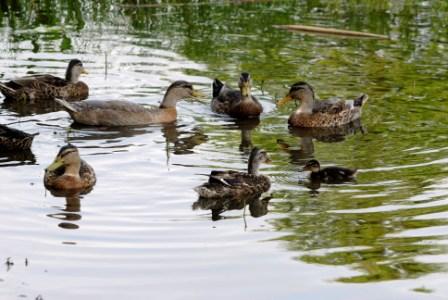
Mallards

“A man that hath friends must shew himself friendly: and there is a friend that sticketh closer than a brother.” (Proverbs 18:24 KJV)”

So far we haven’t seen many birds. My sister-in-law has a pond behind here with Mallards. Also, a Blue Jay has been calling, but has refused to show himself.

The ponds around town, Indianapolis, has lots of Canadian Geese hanging out. The one batch/flock had about 20 or so, and they were all faced south. Maybe they were getting aligned so they could get started South for the winter. Yet, up here it is still summer weather. Maybe they aren’t sure when to leave. Also, the remnants of Tropical Storm Gordon is going to come through tomorrow. The rain chance is 100% and flood warnings are being issued starting tomorrow. Welcome to Indiana.

Canada Goose (Branta canadensis) by Ian

Canada Goose (Branta canadensis) by Ian

Dan’s 60th High School reunion starts today and will be having gatherings for the next two days. We plan to leave here Sunday afternoon to go to Cincinnati area. Plans, depending on all this rain, we hope to go to the Cincinnati Zoo and then the Creation Museum. Then mosey home.

“But I trust I shall shortly see thee, and we shall speak face to face. Peace be to thee. Our friends salute thee. Greet the friends by name.” (3 John 1:14 KJV)

So far, praise the Lord, I have been handling this trip. My recent back surgery is still causing pain, but doing okay so far.

Unfortunately, my relative has NO INTERNET!!! :(   So here I sit at McDonalds. Yeah, for free internets! That is why the posts are intermitten. Trust to post photos from the Zoo later. Hope they won’t have raindrops dripping off of them. :)

Stay tuned!

Birds Heading South – We Are Heading North

Myrtle (Yellow-rumped) Warbler (Setophaga coronata) breeding ©WikiC

Looking forward to our northern birds to begin heading down for the winter. Actually, there have been reports already of migrating birds in various places around Florida. Unfortunately, some of them currently in Florida may be grounded for awhile until Tropical Storm Gordon blows out of the state.

“I would hasten my escape from the windy storm and tempest.” (Psalms 55:8 KJV)

Hurricane season gets active about the same time the fall migration gets underway. The Lord has given most of the birds the instinct to take cover during these disturbances.

We are currently headed the opposite direction. We are going North for a few days. Hope there will be a few birds left up there to enjoy while we are there. Dan has a High School reunion [60th] to attend. I will be visiting with a niece that I haven’t seen in years. When we get back home, maybe we will have some winter bird visitors already in Florida setting up their lawn chairs for the winter. That will give us some birding photos to take. Summer time is pretty slim on birding.

I am trusting the Lord to help me heal from my back surgery so we can get out and about with the birds again. So far, I am getting better, but still taking it easy. Also hope to get a few photos taken while on trip. Stay tuned!

Avian And Attributes – Sharp Part I

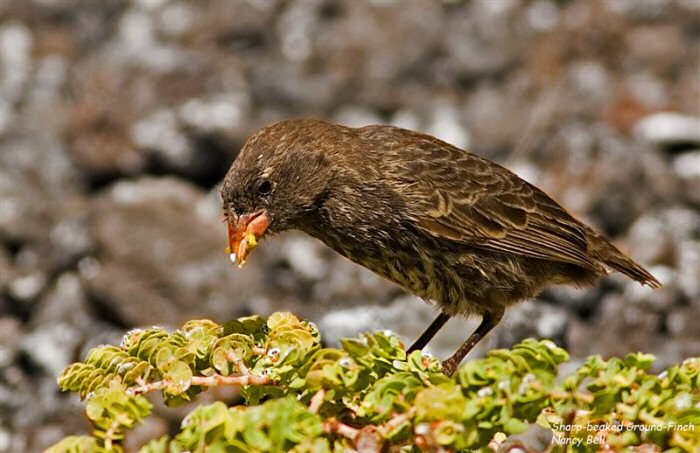
Sharp-beaked Ground Finch (Geospiza difficilis) Female ©WikiC

“For the word of God is quick, and powerful, and sharper than any twoedged sword, piercing even to the dividing asunder of soul and spirit, and of the joints and marrow, and is a discerner of the thoughts and intents of the heart. Neither is there any creature that is not manifest in his sight: but all things are naked and opened unto the eyes of him with whom we have to do.” (Hebrews 4:12-13 KJV)


Avian and Attributes – Sharp

SH’ARP, a.
1. Having a very thin edge or a fine point; keen; acute; not blunt. Thus we may say, a sharp knife, or a sharp needle. A sharp edge easily severs a substance; a sharp point is easily made to penetrate,it.
2. Terminating in a point or edge; not obtuse; as, a hills terminates in a sharp peak, or a sharp ridge.
3. Forming an acute or too small angle at the ridge; as a sharp roof.
4. Acute of mind; quick to discern or distinguish; penetrating; ready at invention; witty; ingenious.

“Thy tongue deviseth mischiefs; like a sharp razor, working deceitfully.” (Psalms 52:2 KJV)


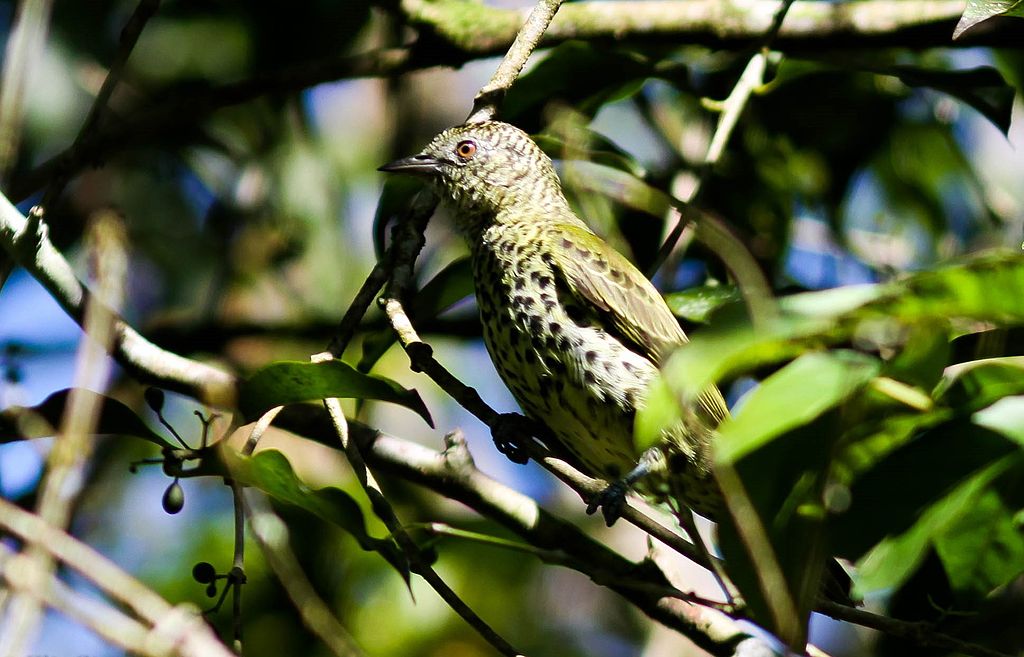
Sharpbill (Oxyruncus cristatus) ©WikiC

There are many “Sharp” named birds, but for this post, we will mention two of them. The Sharp-beaked Ground Finch and the Sharpbill. There will be more in a second article.

Sharp-beaked Ground Finch (Geospiza difficilis) ©Nancy Bell Mangoverde

The Sharp-beaked Ground Finch (Geospiza difficilis) is a species of bird in the Tanager family Thraupidae. It is classified as a least-concern species by the International Union for Conservation of Nature and it is native to the Galápagos Islands in Ecuador. It has a mass of around 20 grams (0.71 oz) and the males have black plumage, while females have streaked brown plumage. This finch was described by Richard Bowdler Sharpe in 1888.

This relatively small, slender-billed finch is endemic to the Galápagos Islands, where it is found on Fernandina, Santiago, Pinta, Genovesa, Darwin, and Wolf Islands. On the first three islands, it breeds in the humid highlands and disperses afterwards, but on the remaining smaller and lower islands the sharp-beaked ground finch is found in the arid zone year-round. Due to habitat destruction its range has decreased. It was formerly also present in the highlands of several other islands, and it is possible it still occurs on Isabela.

Sharpbill (Oxyruncus cristatus) ©WikiC

The Sharpbill (Oxyruncus cristatus) is a small passerine bird in the family Tityridae. Its range is from the mountainous areas of tropical South America and southern Central America (Panama and Costa Rica).

It inhabits the canopy of wet forest and feeds on fruit and some invertebrates. It has an orange erectile crest, black-spotted yellowish underparts and scaling on the head and neck. As its name implies, it has a straight, pointed beak, which gives its common name.

Sharpbills are most commonly found in tall dense forests but occasionally venture to the forest edge. Their diet consists of primarily of fruit, but they will also take insects, hanging upside down in from twigs to obtain insect larvae.


Sharp-Beaked Ground Finch – The Bloodsucker..

More Avian and Attributes

Birds whose first or last name starts with “S”

Good News

*
[Definitions from Webster’s Dictionary of American English (1828), unless noted. Bird info from Wikipedia plus.]
Bill It To The White Stork

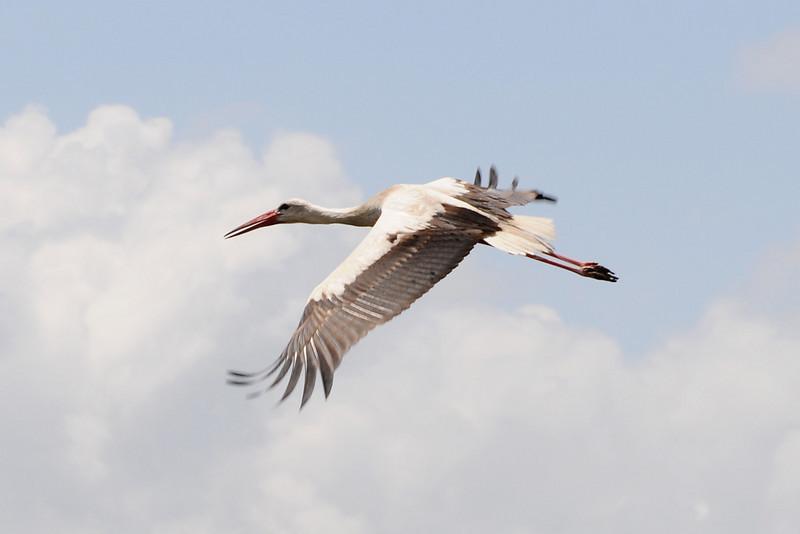
White Stork (Ciconia ciconia) by Bob-Nan

“Yea, the stork in the heaven knoweth her appointed times; and the turtle and the crane and the swallow observe the time of their coming; but my people know not the judgment of the LORD.” (Jeremiah 8:7 KJV)

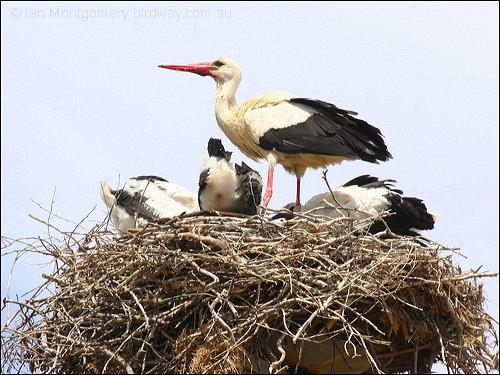
This migrating stork was tagged with a tracking device and ended up running up quite a phone bill. Here are excerpts from two different articles about Kajtek, the White Stork.

“A migrating, tagged, male white stork—known to the Polish environmentalists who were tracking him as “Kajtek”—blipped out of contact on 26 April.

That, however, did not stop him from making good use of the SIM card in his GPS tracker, with which the bird—or somebody who found the GPS device and picked it apart in order to get at the card—racked up a $2,700 phone bill.” [SIM card in bird’s GPS tracker]

White Stork (Ciconia ciconia) by Ian

“In a Facebook post, the group explains that “for unknown reasons” Kajtek stayed in the area for over two months, “travelling 25 kms in different directions during the day”.

Last month, EkoLogiczna was surprised with a phone bill linked to the SIM card installed in the Kajtek’s GPS tracker for a total amount of 10,000 PLN (€2,278).

“Someone quite simply removed the card from the tracker, put it in a phone and used it for 20 hours of communication,” the group said in the Facebook post.

According to the EuroNatur Foundation, Poland is a major centre of distribution for the white stork, accounting for 40% of the bird’s world population.”

“Let him that stole steal no more: but rather let him labour, working with his hands the thing which is good, that he may have to give to him that needeth.” (Ephesians 4:28 KJV)

Here are the stories about this:

SIM card in bird’s GPS tracker used to rack up $2,700 phone bill …

Roaming stork lands Polish charity with huge phone bill

USA Today

You Hold Me Up

Skimmer Baby Leaning against Parents Beak – ©Thomas C – NatlGeog – Pinterest

“If I say, “My foot slips,” Your mercy, O LORD, will hold me up. In the multitude of my anxieties within me, Your comforts delight my soul.” (Psalms 94:18-19 NKJV)

A Black Skimmer chick holding on to it’s parent. Adorable!

What verse(s) would you use for this photo?

*

Gideon

Flying Is Safer – At Least For Woodstock

Woodstock and Flying From Peanuts Cartoon

Then God said, “Let the waters abound with an abundance of living creatures, and let birds fly above the earth across the face of the firmament of the heavens.” (Genesis 1:20 NKJV)

Mixed Flock Flyiing 122717 Merritt Is NWR by Lee

My friend Woodstock, from the Peanuts cartoons has been entertaining me lately. This is just one of many that have lightened my day.

White Pelican Flying Overhead

Flying where it’s safer.

Spotted Flycatcher (Muscicapa striata) by John&Fish

Spotted Flycatcher (Muscicapa striata) by John&Fish

Bald Eagle (Haliaeetus leucocephalus) Flying by Aesthetic Photos

Bald Eagle (Haliaeetus leucocephalus) Flying by Aesthetic Photos

For thus says the LORD: “Behold, one shall fly like an eagle, And spread his wings over Moab. (Jeremiah 48:40 NKJV)

Enjoy!