Avian And Attributes – Friend/Friendly

“The Son of man came eating and drinking, and they say, Behold a man gluttonous, and a winebibber, a friend of publicans and sinners. But wisdom is justified of her children.” (Matthew 11:19 KJV)
“Yea, mine own familiar friend, in whom I trusted, which did eat of my bread, hath lifted up his heel against me.” (Psalms 41:9 KJV)

“These things said he: and after that he saith unto them, Our friend Lazarus sleepeth; but I go, that I may awake him out of sleep.” (John 11:11 KJV)


Avian and Attributes – Friendly

“And the scripture was fulfilled which saith, Abraham believed God, and it was imputed unto him for righteousness: and he was called the Friend of God.” (James 2:23 KJV)

FRIEND’LY, a. frend’ly.
1. Having the temper and disposition of a friend; kind; favorable; disposed to promote the good of another.
Thou to mankind be good and friendly still, and oft return.
2. Disposed to peace.
3. Amicable. We are on friendly terms.
4. Not hostile; as a friendly power or state.
5. Favorable; propitious; salutary; promoting the good of; as a friendly breeze or gale. Excessive rains are not friendly to the ripening fruits. Temperance is friendly to longevity.
FRIEND’LY, adv. frend’ly. In the manner of friends; amicably. [Not much used.]


“A man that hath friends must shew himself friendly: and there is a friend that sticketh closer than a brother.”
(Proverbs 18:24 KJV) Christ has definitely shown Himself friendly.

Friendly Bush-warbler, Mt Kinabalu, Borneo, 2009-07-03 (1 of 1).jpg

Friendly Bush Warbler ©Flickr Marcel Holyoak

Friendly Bush Warbler (Locustella accentor), also known as the Kinabalu friendly warbler, is a species of Old World warbler in the family Locustellidae. It is endemic to the island of Borneo.

See Video Above

The Friendly Fantail (Rhipidura albolimbata) is a species of bird in the family Rhipiduridae. It is found in the highlands of New Guinea. Its natural habitat is subtropical or tropical moist montane forests. Lives in the “Forest, mainly in more open lower to middle levels, occasionally in canopy, and forest edge; also wooded grassland, human-altered areas (gardens), clearings, stunted moss forest, alpine grassland with tree-ferns. Found mainly at 1370–3600 m, including above timber-line; on occasion as low as 1130 m.” [©HBW Alive]

*** The Post have been slower than normal. Dealing with Bronchitis again. ***


More Avian and Attributes

Birds whose first name start with “F”

Good News

*
[Definitions from Webster’s Dictionary of American English (1828), unless noted. Bird info from Wikipedia plus.]

Avian And Attributes – Flame

Crimson-backed Flameback-©SamindaDeSilva-Flickr

“His eyes were as a flame of fire, and on his head were many crowns; and he had a name written, that no man knew, but he himself.” (Revelation 19:12 KJV)


Avian and Attributes – Flame

“Therefore because the king’s commandment was urgent, and the furnace exceeding hot, the flame of the fire slew those men that took up Shadrach, Meshach, and Abednego. And these three men, Shadrach, Meshach, and Abednego, fell down bound into the midst of the burning fiery furnace. Then Nebuchadnezzar the king was astonied, and rose up in haste, and spake, and said unto his counsellors, Did not we cast three men bound into the midst of the fire? They answered and said unto the king, True, O king. He answered and said, Lo, I see four men loose, walking in the midst of the fire, and they have no hurt; and the form of the fourth is like the Son of God.” (Daniel 3:22-25 KJV)

The last article, Avian and Attributes – Fire, the verses of Christ the Lord has eyes like a “flame of fire.” The “Fire” birds were shown. Today, you will be introduced to the “Flame” birds. Also, the Lord was able to control flames. For instance, when he was seen with the three Hebrew children. Today, you will be introduced to the “Flame” Birds.

Flame
(1): (n.) Burning zeal or passion; elevated and noble enthusiasm; glowing imagination; passionate excitement or anger.
(2): (n.) A stream of burning vapor or gas, emitting light and heat; darting or streaming fire; a blaze; a fire.
(3): (n.) Ardor of affection; the passion of love.
(4): (n.) A person beloved; a sweetheart.
(5): (n.) To burn with a flame or blaze; to burn as gas emitted from bodies in combustion; to blaze.
(6): (n.) To burst forth like flame; to break out in violence of passion; to be kindled with zeal or ardor.
(7): (v. t.) To kindle; to inflame; to excite.


“Flame” Birds.

Flame-colored Tanager (Piranga bidentata) by Raymond Barlow

Flame-colored Tanager (Piranga bidentata) by Raymond Barlow

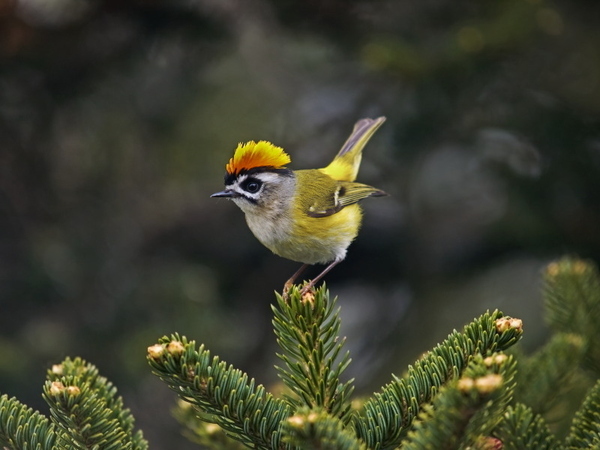
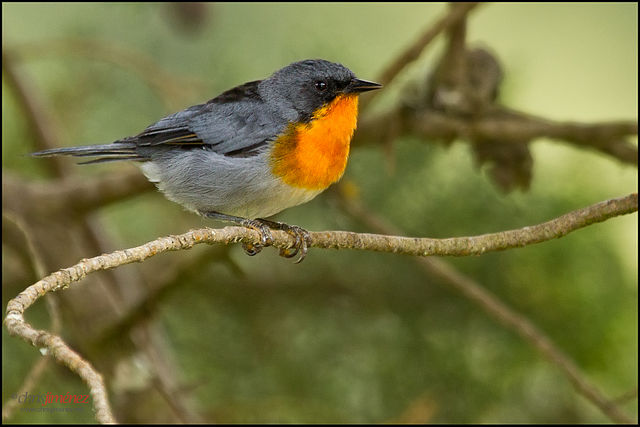
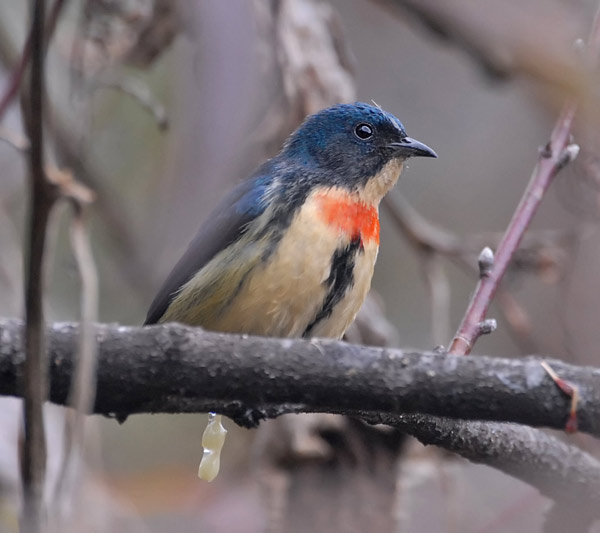
Flame Robin, Flame-breasted Flowerpecker, Flame-breasted Fruit Dove, Flame-breasted Sunbird, Flame-colored Tanager

Flamecrest

Flamecrest, Flame-crested Manakin, Flame-crested Tanager, Flame-crowned Flowerpecker,
Flame-eared Honeyeater

Flame-rumped Tanager (Ramphocelus flammigerus) ©WikiC

Flame-rumped Tanager (Ramphocelus flammigerus) ©WikiC

Flame-faced Tanager, Flame-fronted Barbet, Flame-rumped Tanager, Flame-templed Babbler, Flame-throated Bulbul, Flame-throated Sunangel

Flame-throated Warbler (Oreothlypis gutturalis) ©WikiC

Flame-throated Warbler, Flame-winged Parakeet, Flaming Sunbird


More Avian and Attributes

Birds whose first or last name start with “F”

Good News

*
[Definitions from Webster’s Dictionary of American English (1828), unless noted. Bird info from Wikipedia plus.]

Avian And Attributes – Fire

Fire-tufted Barbet by Lee at Wings of Asia

“And unto the angel of the church in Thyatira write; These things saith the Son of God, who hath his eyes like unto a flame of fire, and his feet are like fine brass;” (Revelation 2:18 KJV)


Avian and Attributes – Fire

FIRE, n. [The radical sense of fire is usually, to rush, to rage, to be violently agitated; and if this is the sense of fire, in coincides with L. furo. It may be from shining or consuming.]
1. In the popular acceptation of the word, fire is the effect of combustion. The combustible body ignited or heated to redness we call fire; and when ascending in a stream or body, we call it flame. A piece of charcoal in combustion, is of a red color and very hot. In this state it is said to be on fire, or to contain fire. When combustion ceases, it loses its redness and extreme heat, and we say, the fire is extinct.
2. The burning of fuel on a hearth, or in any other place.
3. The burning of a house or town; a conflagration. Newburyport and Savannah have suffered immense losses by fire. The great fire in Boston in 1711 consumed a large part of the town.
4. Light; luster; splendor.
Stars, hide your fires!
6. The instrument of punishment; or the punishment of the impenitent in another state.
Who among us shall dwell with the devouring fire? Isa 33.

Fire-breasted Flowerpecker (Dicaeum ignipectus) by Nikhil Devasar

Fire-breasted Flowerpecker (Dicaeum ignipectus) by Nikhil Devasar

8. Ardor of temper; violence of passion.
He had fire in his temper.
9. Liveliness of imagination; vigor of fancy; intellectual activity; animation; force of sentiment or expression.
And warm the critic with a poet’s fire.
11. Ardor; heat; as the fire of zeal or of love.
12. Combustion; tumult; rage; contention.
13. Trouble; affliction.
When thou walkest through the fire, thou shalt not be burnt. Isa 43.
To set on fire, to kindle; to inflame; to excite violent action.

Fire-tailed Myzornis (Myzornis pyrrhoura) ©WikiC

FIRE, v.t.
1. To set on fire; to kindle; as, to fire a house or chimney; to fire a pile.
2. To inflame; to irritate the passions; as, to fire with anger or revenge.
3. To animate; to give life or spirit; as, to fire the genius.
5. To cause to explode; to discharge; as, to fire a musket or cannon. [edited]


“As soon then as they were come to land, they saw a fire of coals there, and fish laid thereon, and bread. Jesus saith unto them, Bring of the fish which ye have now caught.” (John 21:9-10 KJV) [Jesus provided a fire to cook their meal.]

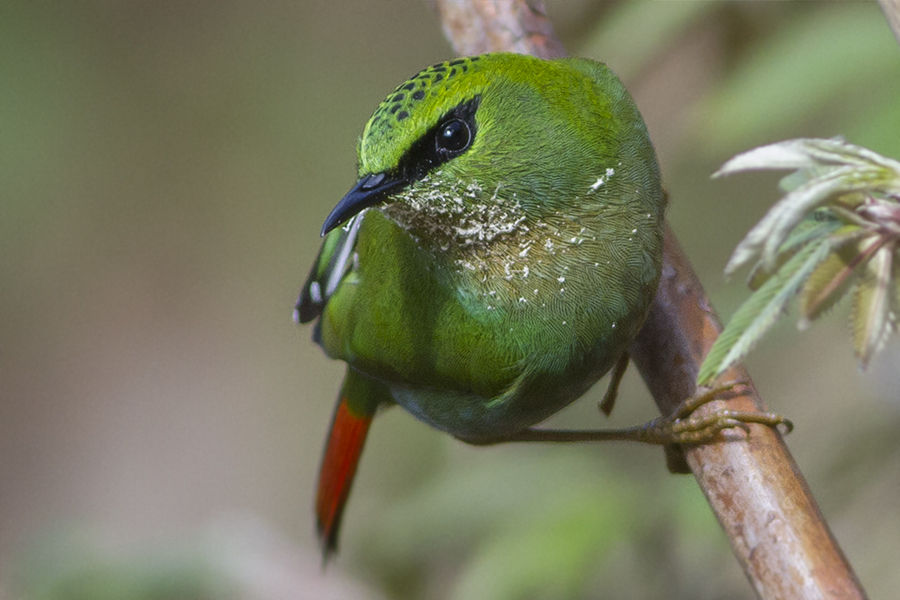
Too many “Fire” birds to give facts on, so here is a list and a gallery of their photos. Fire-bellied Woodpecker, Fire-breasted Flowerpecker, Fire-capped Tit, Fire-crested Alethe, Fire-eyed Diucon, Fire-fronted Bishop, Fire-maned Bowerbird, Fire-tailed Myzornis, Fire-tailed Sunbird, Firethroat, Fire-tufted Barbet, Firewood-gatherer. This does not include the birds who’s last name starts with “Fire.” Nor are any of the “Fiery” birds listed. [Another time]


More Avian and Attributes

Birds whose first name start with “F”

Good News

*
[Definitions from Webster’s Dictionary of American English (1828), unless noted. Bird info from Wikipedia plus.]

Avian And Attributes – Fearful

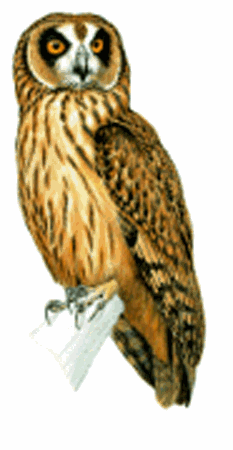
Fearful Owl (Nesasio solomonensis) Drawing Plant of birds_com

“Who is like unto thee, O LORD, among the gods? who is like thee, glorious in holiness, fearful in praises, doing wonders?” (Exodus 15:11 KJV)


Avian and Attributes – Fearful

FE’ARFUL, a.
1. Affected by fear; feeling pain in expectation of evil; apprehensive with solicitude; afraid. I am fearful of the consequences of rash conduct. Hence,
2. Timid; timorous; wanting courage.
“What man is there that is fearful and fainthearted?” Deu 20.
3. Terrible; impressing fear; frightful; dreadful.
“It is a fearful thing to fall into the hands of the living God.” Heb 10.
4. Awful; to be reverenced.
“That thou mayest fear this glorious and fearful name, Jehovah, thy God.” Deu 28.

Fearful can be used both ways, but for this article, I chose to think of the Lord attribute of Fearful as awesome in doing wonders. Matthew 8:26 He told them not to be fearful because He was in control.

“And he saith unto them, Why are ye fearful, O ye of little faith? Then he arose, and rebuked the winds and the sea; and there was a great calm. But the men marvelled, saying, What manner of man is this, that even the winds and the sea obey him!” (Matthew 8:26-27 KJV)


Fearful Owl

Directly linked to Flickr.

Fearful Owl

The Fearful Owl (Nesasio solomonensis) is a medium-sized owl endemic to the Solomon Islands archipelago. It is generally seen no more than 800 m above sea level, where it is found in tall lowland or hill forests.

The fearful owl is a large forest owl growing to a length of about 38 cm (15 in). It has a rufous facial disk and distinct white eyebrows. The inner edge of the facial disk is also white. It is usually mottled brown with deep ochre underparts and blackish streaks. This species may be confused with the Solomon hawk owl, although the latter is slightly smaller and more slender. It is also similar in appearance to the laughing owl, which is now extinct.

Its call is similar to a clear human scream, increasing in volume and tone and emitted in a series, each pulse being repeated at intervals of ten seconds.

*** Of course, the bird I chose, the Fearful Owl, did not have but one or two photos to use. Check online for more photos that are copyrighted. Also, there was no blog the last few days, because I have been/am fighting another bad cold. Praying it doesn’t go into bronchitis. ***


More Avian and Attributes
Birds whose first name starts with “F”
Good News
*
[Definitions from Webster’s Dictionary of American English (1828), unless noted. Bird info from Wikipedia plus.]

Avian And Attributes – Emerald

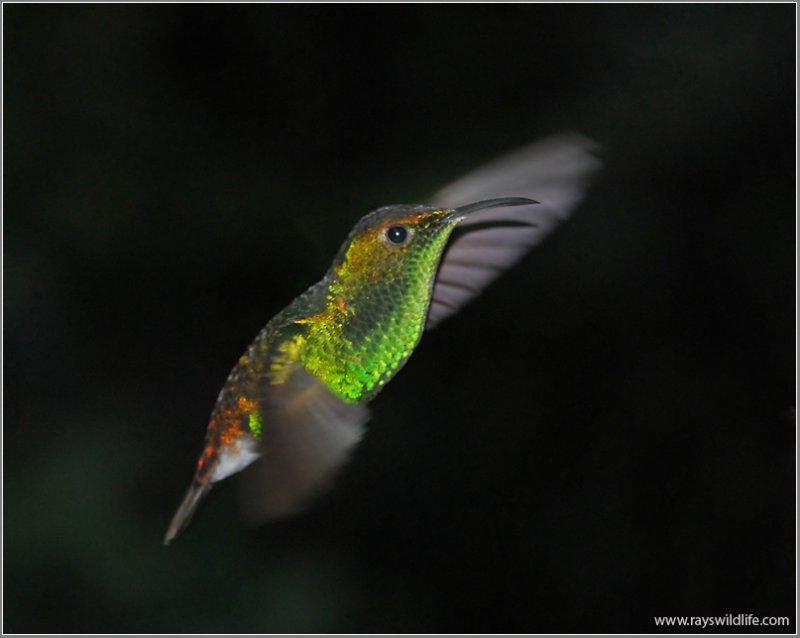
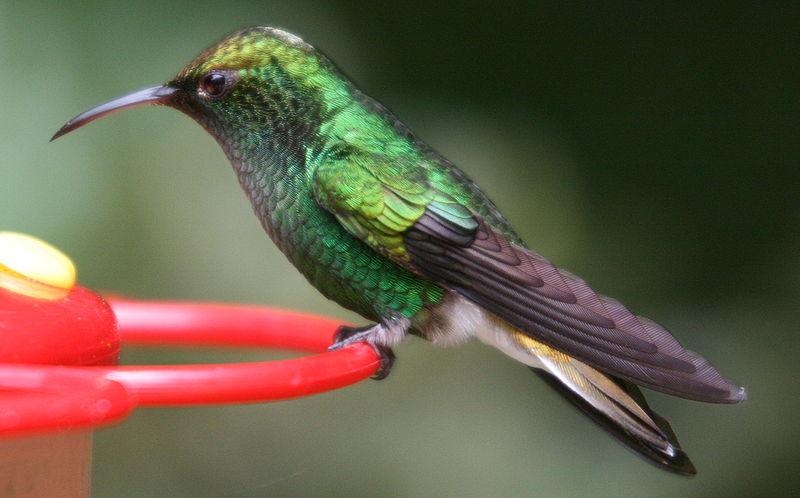
Coppery-headed Emerald by Ray

Coppery-headed Emerald by Ray

“And the foundations of the wall of the city were garnished with all manner of precious stones. The first foundation was jasper; the second, sapphire; the third, a chalcedony; the fourth, an emerald;” (Revelation 21:19 KJV)

“And he that sat was to look upon like a jasper and a sardine stone: and there was a rainbow round about the throne, in sight like unto an emerald.” (Revelation 4:3 KJV)


Avian and Attributes – Definition Name

EM’ERALD, n. [L. smaragdus.] A mineral and a precious stone, whose colors are a pure, lively green, varying to a pale, yellowish, bluish, or grass green. It is always crystallized, and almost always appears in regular, hexahedral prisms, more or less perfect, and sometimes slightly modified by truncations on the edges, or on the solid angles. It is a little harder than quartz, becomes electric by friction, is often transparent, sometimes only translucent, and before the blowpipe is fusible into a whitish enamel or glass. The finest emeralds have been found in Peru.
The subspecies of emerald are the precious emerald and the beryl. [Webster]

Emerald
Exodus 39:11 (c) This green stone represents praise, worship and adoration which begins now and lasts throughout eternity. Judah which means “praise” had his name graven on the emerald stone on the breastplate of the high priest.

Rev. 4:3 (c) This complete rainbow was given this color to typify the eternal character of GOD’s grace and the everlasting nature of GOD’s covenant of mercy. It was “green” to signify eternal praise. [Wilson’s Dictionary of Bible Types]


Emerald Tanager (Tangara florida) ©WikiC

Emerald Birds

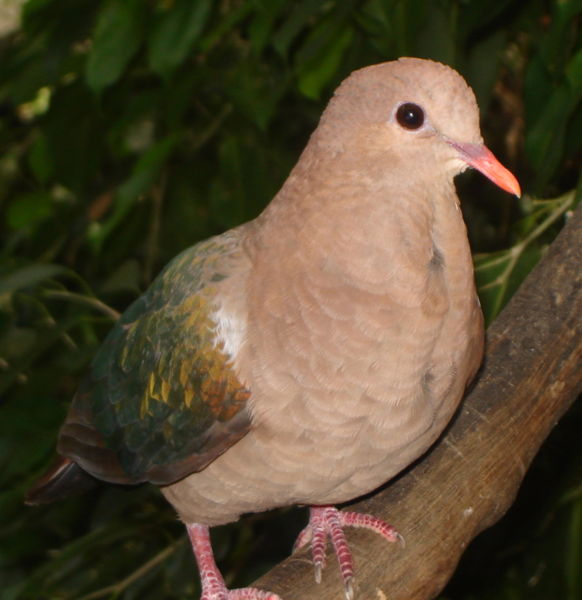
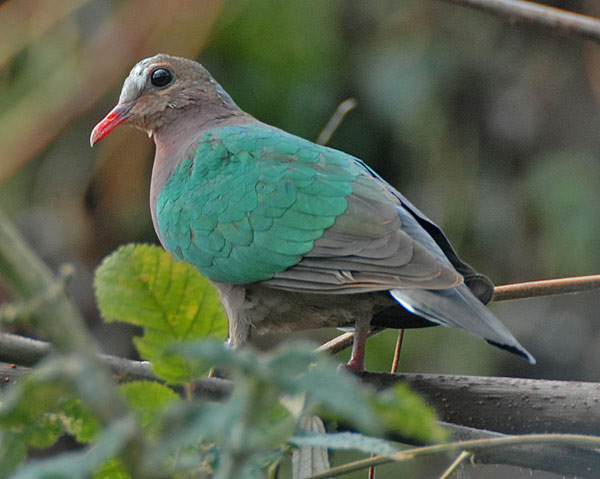
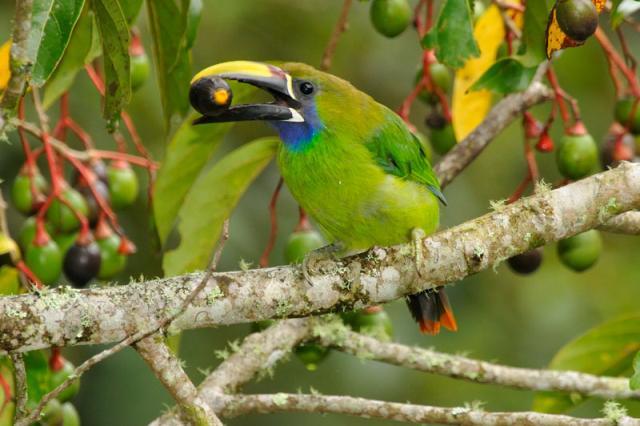
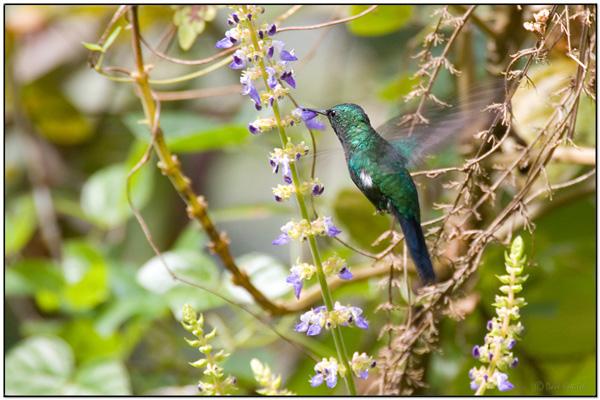
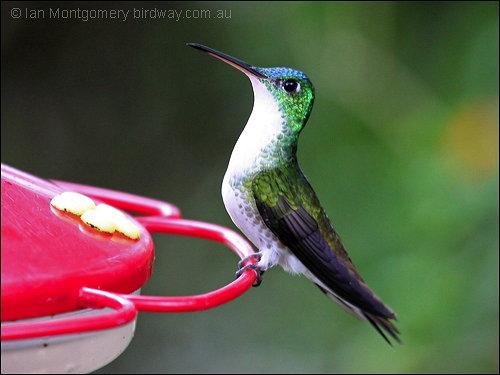
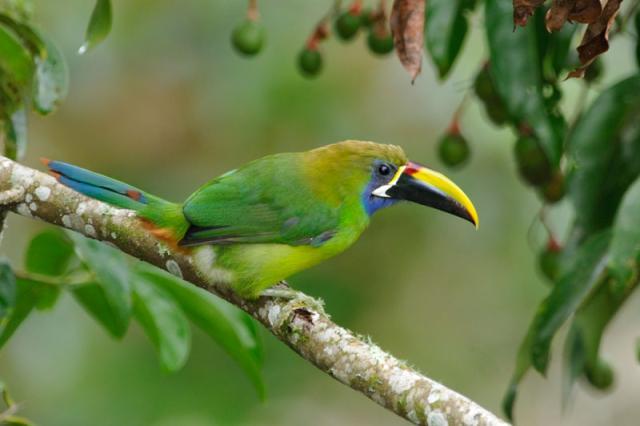
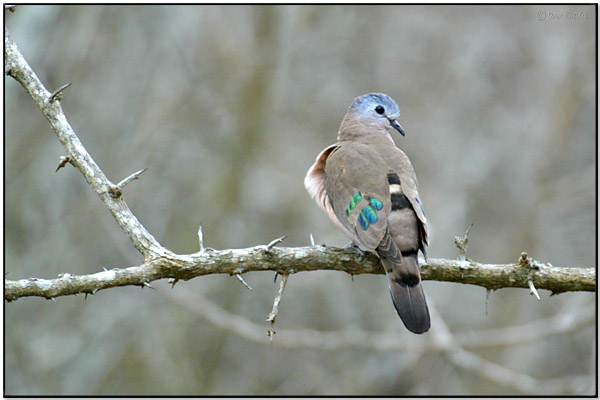
There are six birds that have a first name of Emerald: Emerald Starling, Emerald Tanager, Emerald Toucanet, Emerald-bellied Puffleg, Emerald-chinned Hummingbird, Emerald-spotted Wood Dove. There are also Hummingbird family members that are Emeralds.

“Happy is he that hath the God of Jacob for his help, whose hope is in the LORD his God: Which made heaven, and earth, the sea, and all that therein is: which keepeth truth for ever:” (Psalms 146:5-6 KJV)


*
[Definitions from Webster’s Dictionary of American English (1828), unless noted. Bird info from Wikipedia plus.]

Which “Rail” Family Bird is This?

Immature Gallinule/Moorhen Viera Wetlands 12-26-17 by Lee

“And they that know thy name will put their trust in thee: for thou, LORD, hast not forsaken them that seek thee. Sing praises to the LORD, which dwelleth in Zion: declare among the people his doings.” (Psalms 9:10-11 KJV)

Dan and I visited the east coast of Florida last week for several days. The first day, we stopped in to look around Viera Wetlands. It was around noon, and not the best time to view birds. It was quiet, but there is always something there to see. It was closed for some time after Hurricane Irma, and this is the first time we have been able to check out the birds there since then.

Knowing your common and local birds is important for birdwatching. Then, when something out of the ordinary appears, it may well catch your eye. As is the case with this bird. At first, pouring over the bird books and software, I thought it was a King Rail. If it is, then it would be a new LIFE bird for me. Now, I am not so sure what it is.

It appears to an immature bird, and most likely in the Rail Family. I would appreciate any who could leave a note with the correct ID for this bird. Here is another photo. Both of these were zoomed in and also cropped.

Immature Gallinule/Moorhen Viera Wetlands 12-26-17 by Lee

Thankfully, as the verse above says, I do know the Lord’s Name and have put my trust in Him. Also, He knows our name. Now, if I just knew this bird’s name. :)

*** My First Bird of the Year was a House Finch at our feeder. ***

If you want, you can leave your 1st Bird of the Year below.

Happy New Year 2018

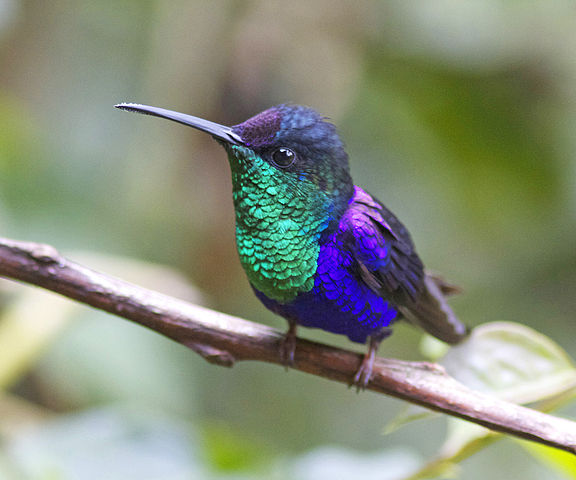
Violet-) Crowned Woodnymph (Thalurania colombica) ©WikiC

“Thou crownest the year with thy goodness; and thy paths drop fatness. They drop upon the pastures of the wilderness: and the little hills rejoice on every side. The pastures are clothed with flocks; the valleys also are covered over with corn; they shout for joy, they also sing.” (Psalms 65:11-13 KJV)

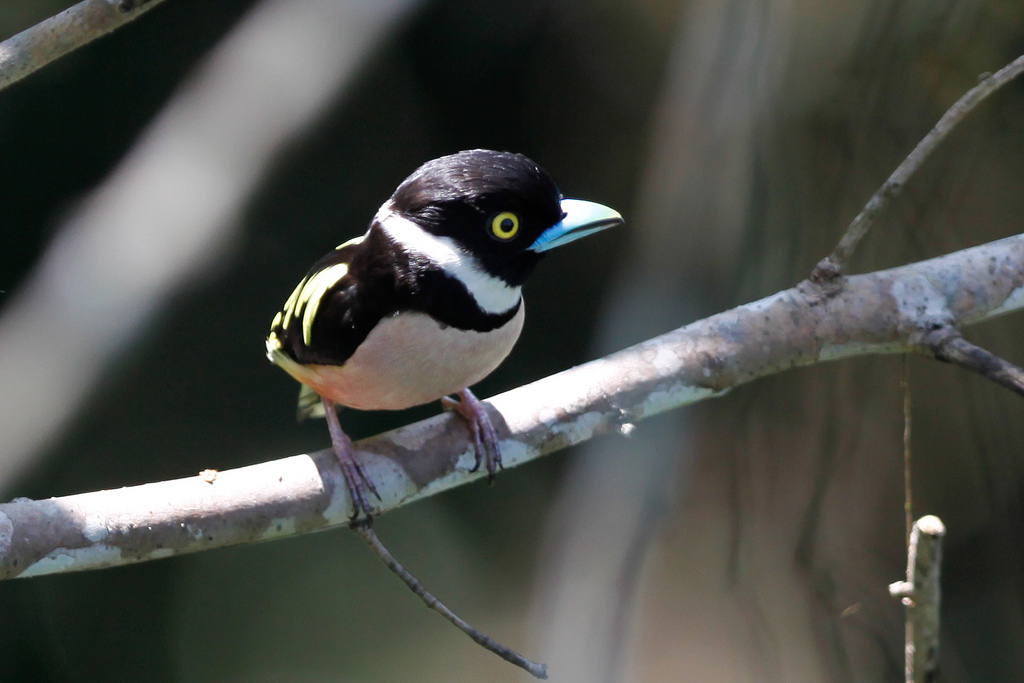
Black-and-yellow Broadbill (Eurylaimus ochromalus) ©©Flickr Holyoak

“The fear of the LORD is the beginning of wisdom: and the knowledge of the holy is understanding. For by me thy days shall be multiplied, and the years of thy life shall be increased.” (Proverbs 9:10-11 KJV)

Great Blue Heron Viera Wetlands - Bad Hair Day

Great Blue Heron Viera Wetlands – Bad Hair Day

“For all our days are passed away in thy wrath: we spend our years as a tale that is told. The days of our years are threescore years and ten; and if by reason of strength they be fourscore years, yet is their strength labour and sorrow; for it is soon cut off, and we fly away.” (Psalms 90:9-10 KJV)

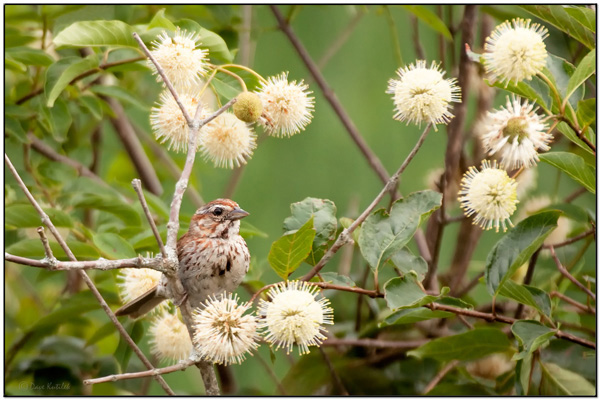
Song Sparrow in white flowers by Daves BirdingPix

Song Sparrow in white flowers by Daves BirdingPix

“I have considered the days of old, the years of ancient times. I call to remembrance my song in the night: I commune with mine own heart: and my spirit made diligent search.” (Psalms 77:5-6 KJV)

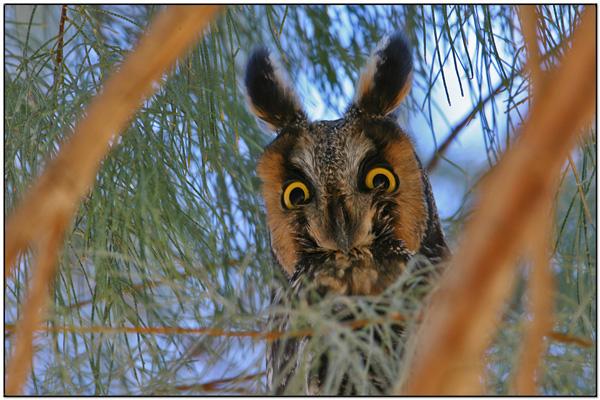
Northern Long-eared Owl

“But, beloved, be not ignorant of this one thing, that one day is with the Lord as a thousand years, and a thousand years as one day. The Lord is not slack concerning his promise, as some men count slackness; but is longsuffering to us-ward, not willing that any should perish, but that all should come to repentance.” (2 Peter 3:8-9 KJV)

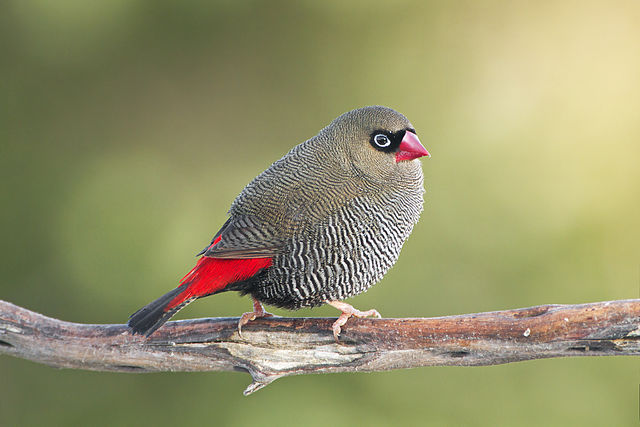
Beautiful Firetail (Stagonopleura bella) M ©WikiC

And let the beauty of the LORD our God be upon us: and establish thou the work of our hands upon us; yea, the work of our hands establish thou it.” (Psalms 90:17 KJV)

Lord willing, we shall all have a blessed and prosperous year. Happy New Year from all of us.

** Keep an eye out for your first bird spotted/heard in 2018 **

Meeting the Challenge of a New Year – Repost

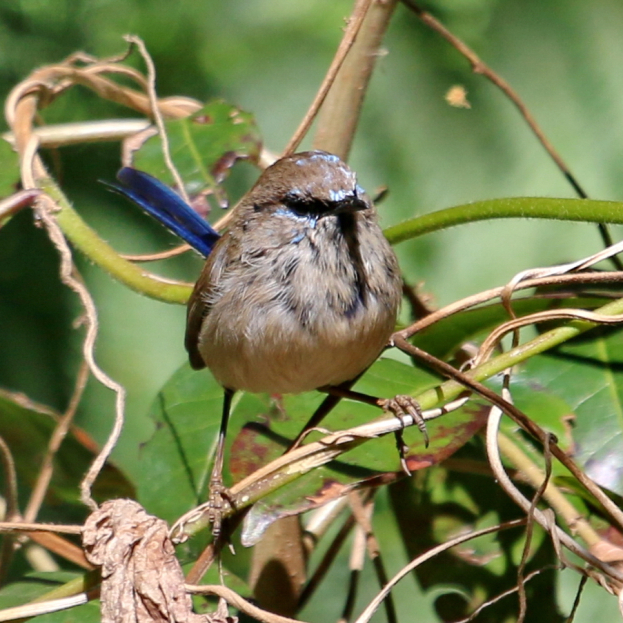
Superb Fairywren (Malurus cyaneus) by AussieBirder

Aussiebirder and his wife, Christian friends we have met through blogging, has just posted a great New Year’s Day Challenge. It is reposted here for you to read and consider. Please enjoy:

As the past year fades away, my wife and I set goals for the new year and look at ways to improve our life together. We ask what can we do better? What do we need to change? What do we need to start doing to achieve our goals for 2018? When we go birding in our local Oatley Park Reserve we find this male Superb Fairy-wren pictured above, eclipsing (this means it is changing its plumage from non breeding to breeding plumage). The male Superb Fairy-wren when not breeding looks very similar to the female, but for its blue tail. You can see the blotchy changes, as it starts to gradually change to its blue coat……

PLEASE CONTINUE TO THE ARTICLE


Avian And Attributes – Ear(ed)

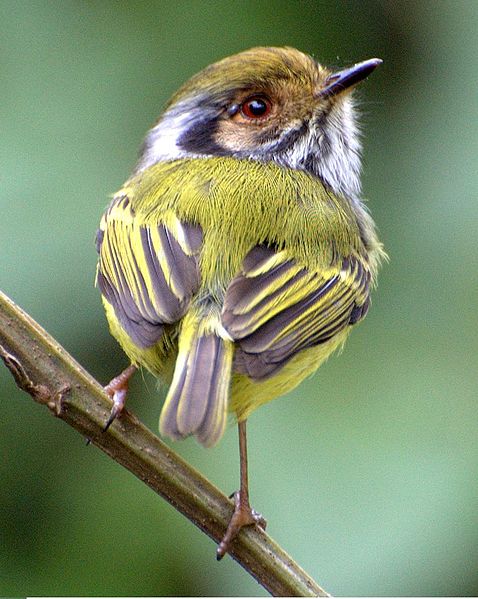
Eared Pygmy Tyrant (Myiornis auricularis) ©WikiC

Eared Pygmy Tyrant (Myiornis auricularis) ©WikiC

“LORD, thou hast heard the desire of the humble: thou wilt prepare their heart, thou wilt cause thine ear to hear:” (Psalms 10:17 KJV)

Bow down thine ear to me; deliver me speedily: be thou my strong rock, for an house of defence to save me.” (Psalms 31:2 KJV)


Avian and Attributes – Ear (Eared)

E’AR, n. [L. auris, whence auricula; audio.]
1. The organ of hearing; the organ by which sound is perceived; and in general, both the external and internal part is understood by the term. The external ear is a cartilaginous funnel, attached, by ligaments and muscles, to the temporal bone.
2. The sense of hearing, or rather the power of distinguishing sounds and judging of harmony; the power of nice perception of the differences of sound, or of consonances and dissonances. She has a delicate ear for music, or a good ear.
5. A favorable hearing; attention; heed; regard. Give no ear to flattery.
I cried to God–and he gave ear to me. Psa 77.
He could not gain the prince’s ear.
6. Disposition to like or dislike what is heard; opinion; judgment; taste.
7. Any part of a thing resembling an ear; a projecting part from the side of any thing; as the ears of a vessel used as handles. [Edited]


Eared Dove (Zenaida auriculata) by Robert Scanlon

Eared Dove (Zenaida auriculata) by Robert Scanlon

“The hearing ear, and the seeing eye, the LORD hath made even both of them.” (Proverbs 20:12 KJV)

Our Creator, the Lord Jesus Christ, created the ear which is able to receive sounds and messages. A Lord who Listens. He listens to our request to Him and expects us to listen to the messages He gives to us. So, today, we see that there are five birds named “Eared.”

Eared Dove (Zenaida auriculata) is a New World dove. It is a resident breeder throughout South America from Colombia to southern Argentina and Chile, and on the offshore islands from the Grenadines southwards. It may be a relatively recent colonist of Tobago and Trinidad. It appears to be partially migratory, its movements driven by food supplies.

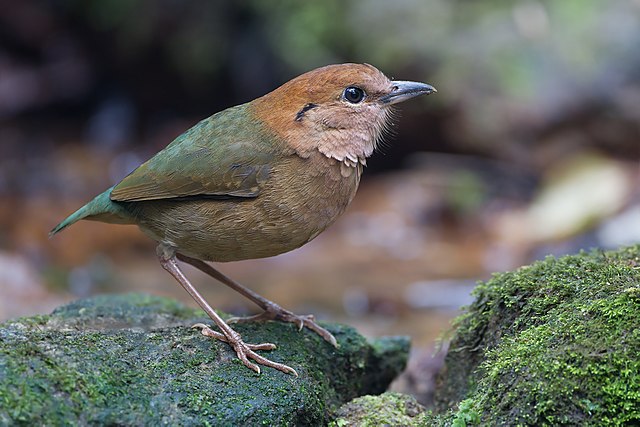
Eared Pitta (Hydrornis phayrei) ©WikiC

Eared Pitta (Hydrornis phayrei) is a species of bird in the pitta family, Pittidae and is found in Southeast Asia. Its natural habitats are subtropical or tropical moist lowland forests and subtropical or tropical moist montane forests.

Eared Poorwill (Nyctiphrynus mcleodiiis a species of nightjar in the family Caprimulgidae. It is endemic to Mexico.
Its natural habitats are subtropical or tropical dry forests and subtropical or tropical moist montane forests.

Eared Pygmy-Tyrant - Intervales - Brazil_S4E9991

Eared Pygmy Tyrant (Myiornis auricularisis a species of bird in the family Tyrannidae. It is found in Brazil, Paraguay and northeastern Argentina. Its natural habitats are subtropical or tropical moist lowland forests and heavily degraded former forest.

Eared Quetzal (Euptilotis neoxenus), also known as the eared trogon, is a near passerine bird in the trogon family, Trogonidae. It breeds in streamside pine-oak forests and canyons in the Sierra Madre Occidental of Mexico south to western Michoacán. It is sometimes seen as a vagrant to southeasternmost Arizona in the United States and has bred there. This range includes part of the Madrean Sky Islands region of southeastern Arizona, southwestern New Mexico, and northern Sonora.


More Avian and Attributes

Birds whose first or last name start with “E”

Good News

*
[Definitions from Webster’s Dictionary of American English (1828), unless noted. Bird info from Wikipedia plus.]

*** Dan and I were away for four day on a Birdwatching Adventure. We just arrived back today and will soon have some photos and tales to tell. Stay Tuned! ***

Christmas Bird from the Christmas Islands

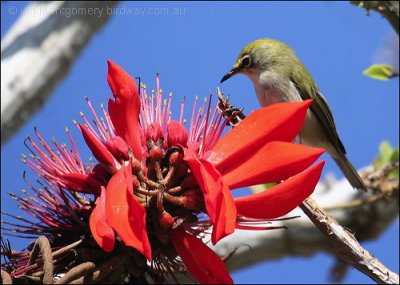
Christmas Island White-eye (Zosterops natalis) by Ian

Christmas Island White-eye (Zosterops natalis) by Ian

“For unto you is born this day in the city of David a Saviour, which is Christ the Lord. And this shall be a sign unto you; Ye shall find the babe wrapped in swaddling clothes, lying in a manger.” (Luke 2:11-12 KJV)

MERRY CHRISTMAS from Dan and I, and from our writers, who add so much to this blog. James J. S. Johnson, Emma Foster, and Ian Montgomery are the other authors currently. We have produced quite a few articles about “Christmas Birds,” yet not much about the birds named “Christmas.” Here is a brief description of them, with links to other “Christmas Bird” articles over the years.
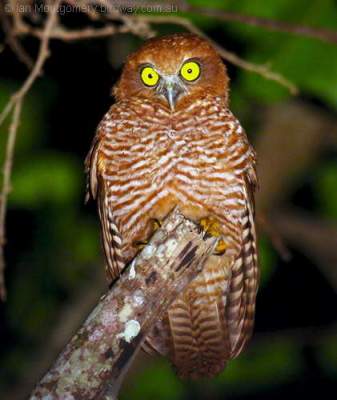
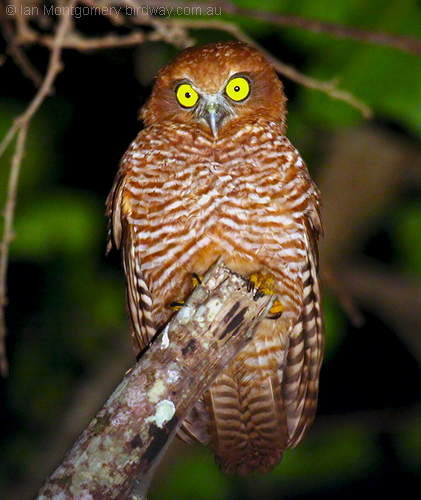
Christmas Boobook (Ninox natalis) by Ian

Christmas Boobook (Ninox natalis) by Ian

The Christmas Boobook (Ninox natalis), also known more specifically as the Christmas Island hawk-owlis a species of owl in the family Strigidae. Closely related to the hawk owls of Southeast Asia and Australia. N. natalis was first classified at species level by J.J.Lister in 1888. It was not until 1998 however that DNA testing confirmed its status as a separate species from other owls.

The Christmas Island Hawk Owl is a small, rufous-brown hawk-owl with a barred breast, dark chestnut facial mask, whitish brow, lores and throat, yellow eyes, legs and feet. It is approximately 26–29 cm in length and 130-190 grams in weight with the female slightly larger than the male. The double-noted hoot, boo-book, has a clucking quality with the second note usually lower in pitch. The begging call of juveniles is a high-pitched trill.

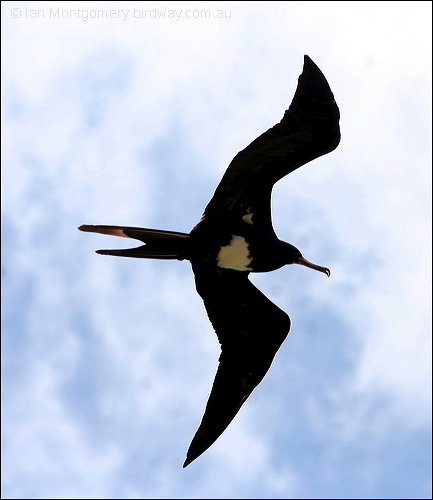
Christmas Frigatebird (Fregata andrewsi) by Ian

Christmas Frigatebird (Fregata andrewsi) by Ian

Christmas Frigatebird (Fregata andrewsi) or Christmas Island Frigatebird (Fregata andrewsi) is a seabird of the frigatebird family Fregatidae which is endemic to Christmas Island in the Indian Ocean. The Christmas frigatebird is a large lightly built seabird with brownish-black plumage, long narrow wings and a deeply forked tail. It has a wingspan of around 2.15 m (7.1 ft). The male has an egg shaped white patch on its belly and a striking red gular sac which it inflates to attract a mate. The female is slightly larger than the male and has a white breast and belly. They feed on fish taken in flight from the ocean’s surface (mostly flying fish), and sometimes indulge in kleptoparasitism, harassing other birds to force them to regurgitate their food.
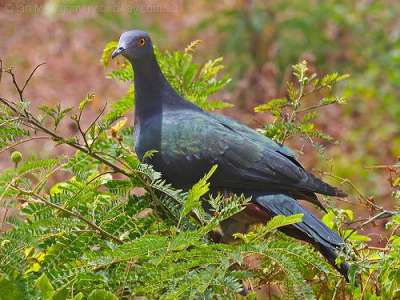
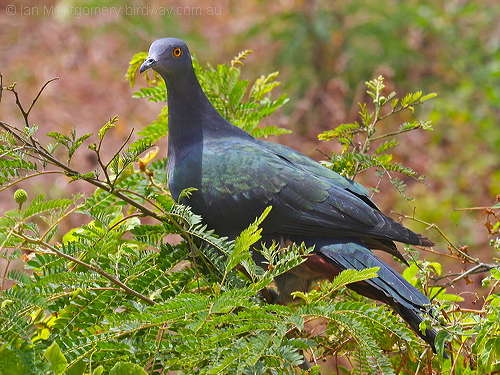
Christmas Island Imperial-Pigeon (Ducula whartoni) by Ian

Christmas Island Imperial-Pigeon (Ducula whartoni) by Ian

Christmas Imperial Pigeon (Ducula whartoni), is a large (39 cm in length, 450-700 g in weight) pigeon, mainly dark grey in colour with an iridescent sheen. Fruit from forest trees with occasional buds and leaves are it main diet. It builds a platform nest of twigs high in a forest tree. It utters a deep booming call.

See: Ian’s Bird of the Week – Christmas Imperial Pigeon
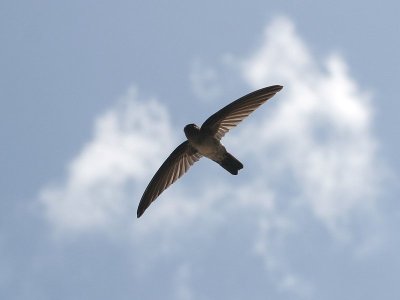
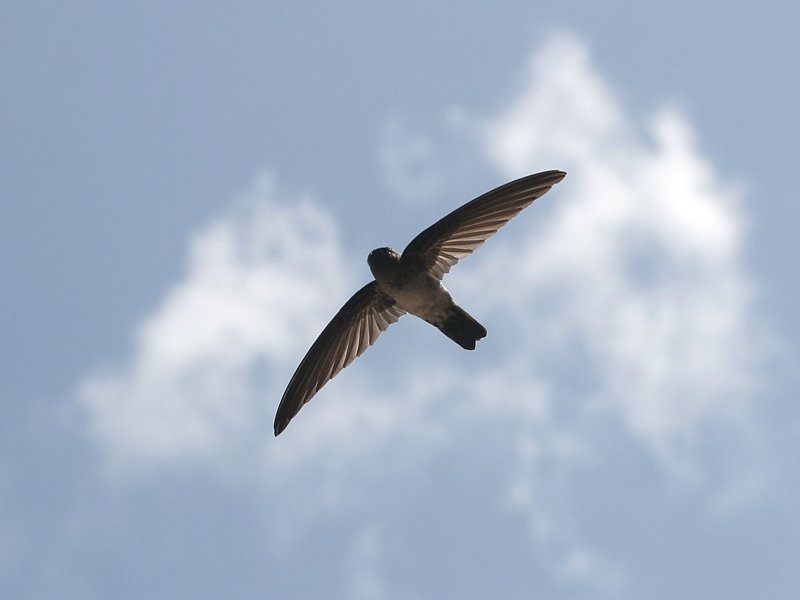
Christmas Island Swiftlet (Collocalia natalis) ©Christmas IS Wildlife

Christmas Island Swiftlet (Collocalia natalis), also known as the Christmas glossy swiftlet or the Christmas cave swiftlet, is a small bird in the swift family Apodidae. It is endemic to Christmas Island, an Australian territory in the eastern Indian Ocean. It was formerly commonly treated as a subspecies of the glossy swiftlet.

Christmas Shearwater (Puffinus nativitatis) ©WikiC 2 FK Starr

Christmas Shearwater (Puffinus nativitatis) is a medium-sized shearwater of the tropical Central Pacific. It is a poorly known species due to its remote nesting habits, and it has not been extensively studied at sea either.

The Christmas Shearwater nests on remote islands of the Central Pacific: the Northwestern Hawaiian Islands, Tuamotu, the Marshall Islands, Kiritimati (for which the species is named) and Sala-y-Gómez. It has become locally extinct on a number of islands, including Wake Island. Outside of the breeding season it ranges across the Pacific, having been recorded off the coast of Mexico and Guatemala in the east, and Bonin Islands in the west. Further south it is rare, having been recorded off Fiji only twice (one time in early to mid-May).
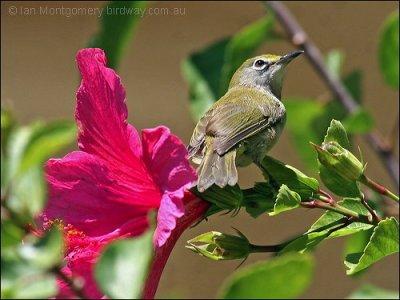
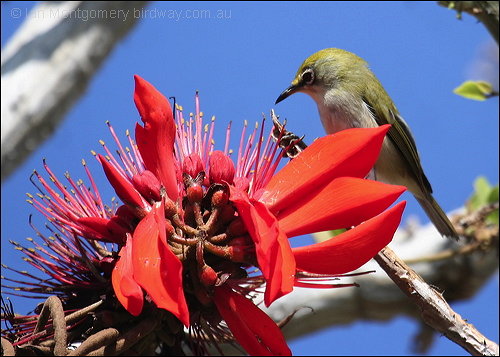
Christmas White-eye (Zosterops natalis) by Ian

Christmas White-eye (Zosterops natalis) by Ian

The Christmas White-eye (Zosterops natalis) is a species of bird in the family Zosteropidae. It is endemic to Christmas Island. Its natural habitats are subtropical or tropical moist lowland forests and subtropical or tropical moist shrubland. It is threatened by habitat loss.

See also: Ian’s Bird of the Week – Christmas Island White-eye

It is always refreshing to take a look back at other Christmas Blogs. Just as we are all looking back to the first “Christmas” event, when the Saviour of the World, took on human flesh, as a baby. Totally human, totally God. It is difficult for us to wrap our thoughts around that truth.

Some Christmas Birds (Re-posted)

The Christmas Birds Series in 2013

In 2014 – Sunday Inspiration – Christmas Birds  Please watch the video near the end.

MAY YOUR CHRISTMAS BE FILLED WITH BLESSINGS AS YOU REMEMBER THE REASONS FOR CELEBRATING OUR SAVIOUR’S BIRTH.

Joys and Challenges of Birdwatching

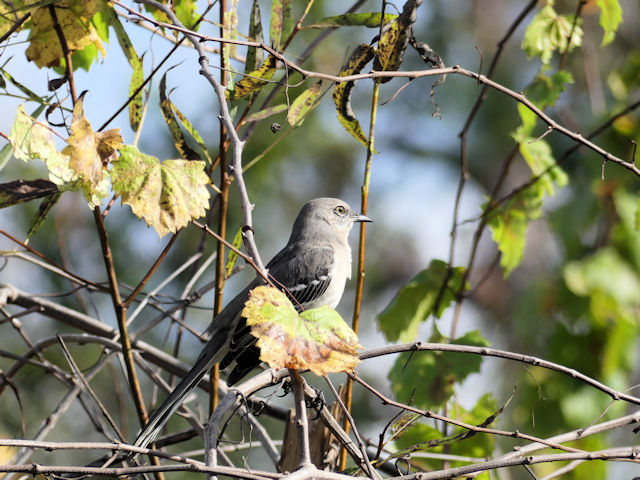
Northern Mockingbird (Mimus polyglottos) at Gatorland by Lee

“Delight thyself also in the LORD; and he shall give thee the desires of thine heart.” (Psalms 37:4 KJV)

While enjoying the birds and critters at Gatorland this week, I had another enjoyable adventure. In fact, at breakfast this morning, I was chuckling as I was again relating my tale to Dan. Most know that Dan is the “Bird Photographer” and I am the “Bird Watcher.” I only use a nice “point-and-shoot” camera that is always set on “Program” mode. In other words, I don’t know an “F-stop” from a “bus stop.”

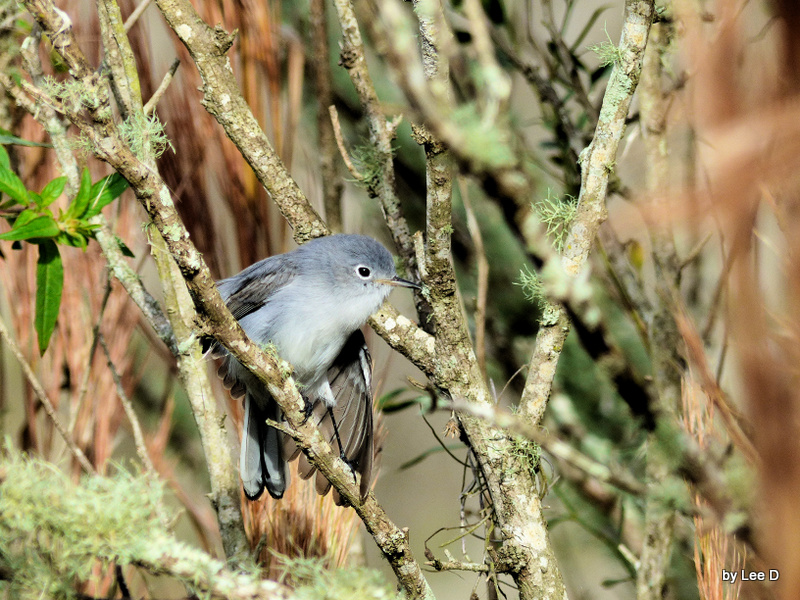
Earlier, at Gatorland, I had been listening to, and watching a Blue-grey Gnatcatcher in the trees. I kept waiting for him to pop out so I could get a photo. This went on for some time, and most birders know how they do not stay still. Finally, he popped out on a limb in clear view. Pulled my camera and…. it was turned off. Needless to say by the time it was on, he was gone. Yuk! [Here is a photo from another adventure.]

Blue-grey Gnatcatcher preening at Circle B by Lee

Oh, well! There must be another adventure yet to enjoy.

Off I rolled on the motorized wheels, while Dan rested. Aha! I heard a Northern Mockingbird. Let’s see if I can have better luck this time.

“But the meek shall inherit the earth; and shall delight themselves in the abundance of peace.” (Psalms 37:11 KJV)

True birders know that “patience is a virtue.” I visually chased that Mockingbird through the bushes waiting for him to pop out. This time I made sure my camera was on. [Program mode also takes great “bush” pictures. Notice how clear the limb in the upper right corner.:o) ]

Northern Mockingbird (Mimus polyglottos) at Gatorland

“Better is the end of a thing than the beginning thereof: and the patient in spirit is better than the proud in spirit.” (Ecclesiastes 7:8 KJV)

I heard the Mockingbird first coming from these bushes, and thus began my delightful challenge of getting a photo of it.

Northern Mockingbird (Mimus polyglottos) at Gatorland

The northern mockingbird (Mimus polyglottos) is the only mockingbird commonly found in North America. This bird is mainly a permanent resident, but northern birds may move south during harsh weather. This species has rarely been observed in Europe. This species was first described by Linnaeus in his Systema Naturæ in 1758 as Turdus polyglottos. The northern mockingbird is known for its mimicking ability, as reflected by the meaning of its scientific name, ‘many-tongued mimic.’ The northern mockingbird has gray to brown upper feathers and a paler belly. Its tail and wings have white patches which are visible in flight.

Mockingbird in there

They teach taking photos with a 1/3 rule. Birdwatchers like me place them right in the center so we can find them later.

Northern Mockingbird (cropped)

Cropped – See, it is there.

The northern mockingbird is an omnivore. It eats both insects and fruits. It is often found in open areas and forest edges but forages in grassy land. The northern mockingbird breeds in southeastern Canada, the United States, northern Mexico, the Bahamas, the Cayman Islands and the Greater Antilles.

Almost got him - at least the eye

Getting better, can see part of it.

The northern mockingbird is known for its intelligence. A 2009 study showed that the bird was able to recognize individual humans, particularly noting those who had previously been intruders or threats. Also, birds recognize their breeding spots and return to areas in which they had the greatest success in previous years. Urban birds are more likely to demonstrate this behavior. Finally, the mockingbird is influential in United States culture, being the state bird of five states, appearing in book titles, songs and lullabies, and making other appearances in popular culture. [Wikipedia with editing]

FINALLY!!!

Finally Northern Mockingbird (Mimus polyglottos) at Gatorland

NOW HE FOUND ME!!!

He found me Northern Mockingbird (Mimus polyglottos) at Gatorland

This is the Joy of Birdwatching. You have to love the Adventures, and saying a prayer now and then to ask the Lord to “Please” let the bird come in to view!!!

The whole series on Flickr

More Gatorland Adventures

*

Great Egret Preening at Gatorland

I love watching the Great Egret with their long flowing feathers. Today the breeze was blowing gently and was able to catch this beautiful Great Egret on Video. Enjoy!

“He who dwells in the secret place of the Most High Shall abide under the shadow of the Almighty. I will say of the LORD, “He is my refuge and my fortress; My God, in Him I will trust.” Surely He shall deliver you from the snare of the fowler And from the perilous pestilence. He shall cover you with His feathers, And under His wings you shall take refuge; His truth shall be your shield and buckler.” (Psalms 91:1-4 NKJV)

These photos were also taken:

Great Egret at Gatorland

Great Egret at Gatorland

Great Egret Feathers at Gatorland

Great Egret at Gatorland

These photos are on the Flickr Site. Still testing.