Avian And Attributes – Pearl

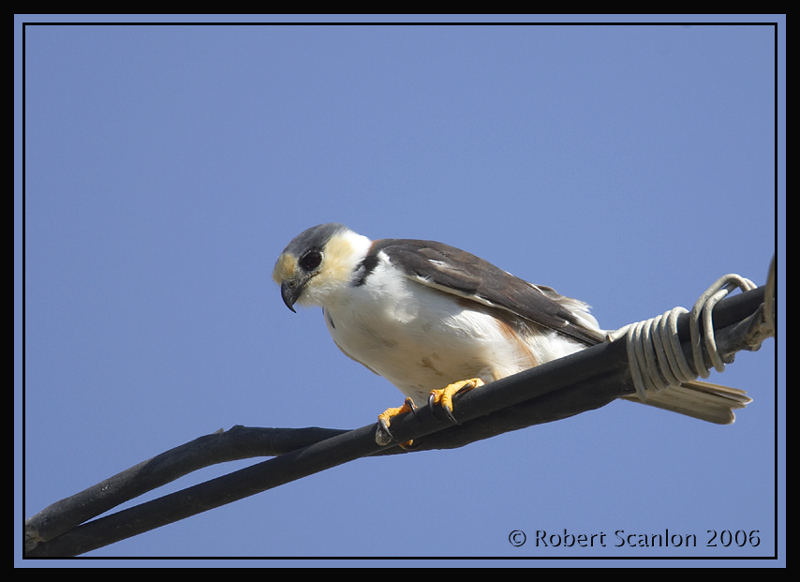
Pearl Kite (Gampsonyx swainsonii) by Robert Scanlon

Pearl Kite (Gampsonyx swainsonii) by Robert Scanlon

“And the twelve gates were twelve pearls; every several gate was of one pearl: and the street of the city was pure gold, as it were transparent glass. And I saw no temple therein: for the Lord God Almighty and the Lamb are the temple of it.” (Revelation 21:21-22 KJV)


Avian and Attributes – Pearl

PEARL, n. perl.
1. A white, hard, smooth, shining body, usually roundish, found in a testaceous fish of the oyster kind. The pearl-shell is called matrix perlarum, mother of pearl, and the pearl is found only in the softer part of the animal. It is found in the Persian seas and in many parts of the ocean which washes the shores of Arabia and the continent and isles of Asia, and is taken by divers. Pearls are of different sizes and colors; the larger ones approach to the figure of a pear; some have been found more than an inch in length. They are valued according to their size, their roundness, and their luster or purity, which appears in a silvery brightness.
2. Poetically, something round and clear, as a drop of water or dew.
3. A white speck of film growing on the eye.
PEARL,v.t. perl. To set or adorn with pearls.
PEARL, v.i. perl. To resemble pearls.

“Again, the kingdom of heaven is like unto a merchant man, seeking goodly pearls: Who, when he had found one pearl of great price, went and sold all that he had, and bought it.” (Matthew 13:45-46 KJV)
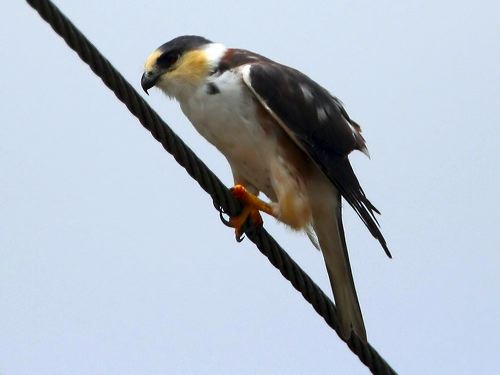

Pearl Kite (Gampsonyx swainsonii) by Ian

Pearl Kite

The Pearl Kite (Gampsonyx swainsonii) is a very small raptor found in open savanna habitat adjacent to deciduous woodland. It is the only member of the genus Gampsonyx. The scientific name commemorates the English naturalist William Swainson.

The type specimen was collected from Brazil by English naturalist William Swainson, and described by Nicholas Aylward Vigors in 1825.  Vigors noted the similarity to both hawks and falcons, but placed Gampsonyx within the “Accipitrine subfamily” because it lacks the notched beak of the falcons. He also noted its striking resemblance to the coloration of the falconets.

Later, the pearl kite was classified with the falcons. For example, Peters placed it with the forest falcons in subfamily Polyhieracinae. In the mid-20th century it was found to be related to Elanus based on morphology and its molt schedule.

This tiny kite breeds from Panama, Colombia and Venezuela south to Bolivia and northern Argentina, with an isolated sedentary population in Nicaragua. It is expanding its range and was proved to breed on Trinidad in 1970. It was first reported in Costa Rica in the mid-1990s, and now is fairly common along Pacific slope, to 1000m.
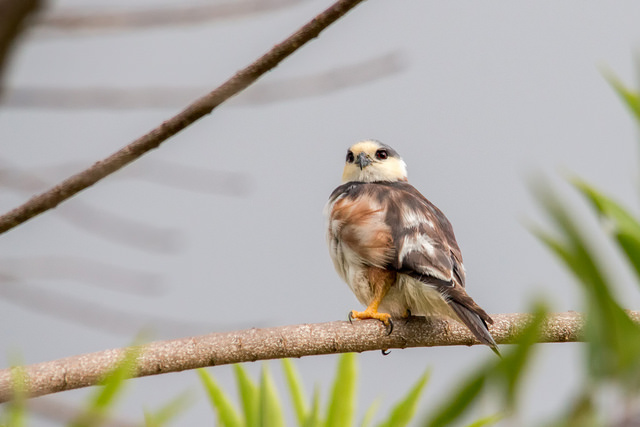
Pearl Kite (Gampsonyx swainsonii) ©Flickr Fernando Flores

The pearl kite is 20.3–23 cm (8.0–9.1 in) in length and weighs 80–95 g (2.8–3.4 oz). It is the smallest raptor in the Americas and one of the two smallest accipitrids in the world (besides the little sparrowhawk). The tiny hawk, another neotropical species, attains a slightly higher weight than the pearl kite. The adult has a black crown, upperparts, wing and tail, a rufous edged white collar, yellow forehead and cheeks, mainly white underparts, and yellow legs. Immature birds are similar to the adults but have white and chestnut tips to the back and wing feathers, a buff collar and some buff on the white underparts. In flight this species looks mainly black above and white below. The northern form G. s. leonae differs from the nominate G. s. swainsonii in that it has rufous flanks.

The nest is a deep cup of sticks built high in a tree. The clutch is 2-4 brown-marked white eggs, incubated mainly by the female for 34–35 days to hatching, with a further 5 weeks to fledging. There may be two broods in a season.

The pearl kite feeds mainly on lizards, especially Anolis, but also takes small birds and insects; it usually sits on a high open perch from which it swoops on its prey. The call is a high musical pip-pip-pip-pip or kitty-kitty-kitty.


More Avian and Attributes

Birds whose first name starts with “P”

What will you do with Jesus?

*
[Definitions from Webster’s Dictionary of American English (1828), unless noted. Bird info from Wikipedia plus.]
Avian And Attributes – Paradise

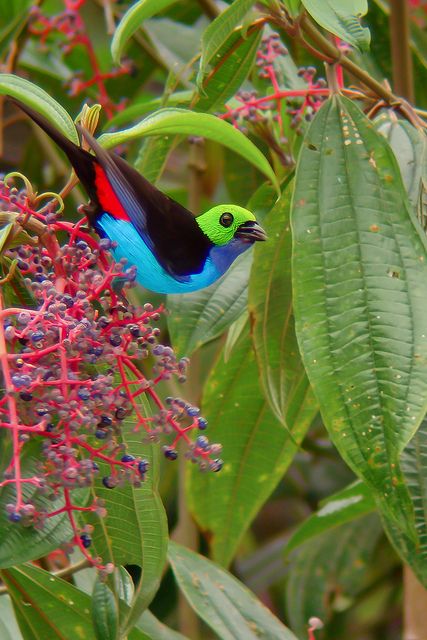
Paradise Tanager (Tangara chilensis) by Juan D Ramirez Rpo on Flickr From Pinterest

“And he said unto Jesus, Lord, remember me when thou comest into thy kingdom. And Jesus said unto him, Verily I say unto thee, To day shalt thou be with me in paradise.” (Luke 23:42-43 KJV)


Avian and Attributes – Paradise

PAR’ADISE, n. [Gr.] The garden of Eden, in which Adam and Eve were placed immediately after their creation.
1. A place of bliss; a region of supreme felicity or delight.
The earth
Shall all be paradise–
2. Heaven, the blissful seat of sanctified souls after death.
This day shalt thou be with me in paradise. Luke 23.
3. Primarily, in Persia, a pleasure-garden with parks and other appendages.

“He that hath an ear, let him hear what the Spirit saith unto the churches; To him that overcometh will I give to eat of the tree of life, which is in the midst of the paradise of God.” (Revelation 2:7 KJV)


Paradise Birds

Paradise Drongo 

Paradise Drongo Photo

The paradise drongo or ribbon-tailed drongo (Dicrurus megarhynchus) is a species of bird in the family Dicruridae. It is endemic to New Ireland in the Bismarck Archipelago, Papua New Guinea.

Paradise Jacamar

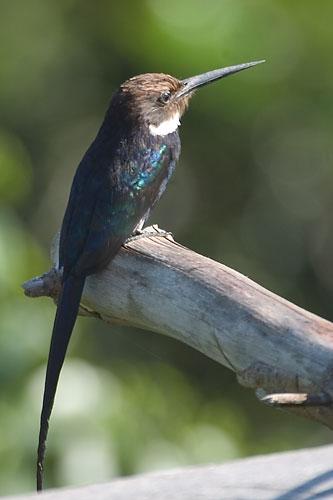
Paradise Jacamar (Galbula dea) ©Arthur Grosset

The Paradise Jacamar (Galbula dea) distributed throughout tropical rainforests and savanna of Bolivia, Brazil, Colombia, Ecuador, Peru and the Guyanas. Its range encompasses nearly the entire Amazon Basin, except in the northwest basin in parts of Colombia and Venezuela, (the northeast is the three countries of the Guyanas, which drain to the Atlantic-Caribbean). The diet consists mainly of butterflies and other flying insects.

Paradise Riflebird

Paradise Riflebird-Australia-Birdway

Paradise Riflebird (Ptiloris paradiseus) is medium-sized, up to 30 cm long. The male is black with an iridescent greenish blue crown, throat and central tail feathers. It has a black curved bill, black feet, dark brown iris and yellow mouth. The female is an olive brown bird with barred blackish below with a long white brow above her eye. The species is Endemic to eastern Australia, where it occurs in the rainforests of New South Wales and central Queensland.

Paradise Riflebird (Ptiloris paradiseus) Female ©WikiC

Paradise Shelduck

Paradise Shelduck (Tadorna variegata) by Ian 2

Paradise Shelduck (Tadorna variegata) by Ian 2

The Paradise Shelduck (Tadorna variegata) is a large goose-like duck endemic to New Zealand. It is a shelduck, a group of large goose-like birds which are part of the bird family Anatidae. The genus name Tadorna comes from Celtic roots and means “pied waterfowl”. Known to the Māori as pūtangitangi, but now commonly referred to as the “paradise duck”, it is a prized game bird. Both the male and female have striking plumage: the male has a black head and barred black body, the female a white head with a chestnut body. The paradise shelducks usually live as pairs, grazing on grass and weeds, and will raid crops, particularly when molting.

Paradise Tanager

Paradise Tanager (Tangara_chilensis) -DenverZoo-WikiC

Paradise Tanager (Tangara chilensis) -DenverZoo-WikiC

The Paradise Tanager (Tangara chilensis) is a brilliantly multicolored, medium-sized songbird whose length varies between 13.5 and 15 cm. It has a light green head, sky blue underparts and black upper body plumage. Depending on subspecies, the rump is yellow and red or all red. The beak is black and the legs are grey.

Found in humid tropical and subtropical forests in the western and northern Amazon Basin in South America, it occurs in Venezuela, Peru, Colombia, Ecuador, Bolivia, Brazil and the Guianas. Despite its scientific name, it is not found in Chile.

Paradise-crow

Paradise-crow (Lycocorax pyrrhopterus) ©©Flickr

The Paradise-crow (Lycocorax pyrrhopterus) also known as the silky crow, is a medium-sized crow-like bird-of-paradise. One of the few monogamous birds-of-paradise, the paradise-crow is endemic to lowland forests of North Maluku in Indonesia. The diet consists mainly of fruits and arthropods.


More Avian and Attributes

Birds whose first name starts with “P”

Good News

*
[Definitions from Webster’s Dictionary of American English (1828), unless noted. Bird info from Wikipedia plus.]

Avian And Attributes – Palm

Palm Tanager (Thraupis palmarum) 2 by Kent Nickell

Palm Tanager (Thraupis palmarum) by Kent Nickell

“Then did they spit in his face, and buffeted him; and others smote him with the palms of their hands,” (Matthew 26:67 KJV)

“Took branches of palm trees, and went forth to meet him, and cried, Hosanna: Blessed is the King of Israel that cometh in the name of the Lord.” (John 12:13 KJV)


Avian and Attributes – Palm

PALM, n. p`am.. [L. palma.]
1. The inner part of the hand.
2. A hand or hand’s breadth; a lineal measure of three inches.
4. The name of many species of plants, but particularly of the date-tree or great palm, a native of Asia and Africa.
The palms constitute a natural order of monocotyledonous plants,with a simple cylindric stem, terminating in a crown of leaves or fronds, within which rises a tuft of flowers and fruits; all natives of warm climates. They vary in size from 2 to more than 100 feet in height.
5. Branches of the palm being worn in token of victory, hence the word signifies superiority, victory, triumph. The palm was adopted as an emblem of victory, it is said, because the tree is so elastic as when pressed, to rise and recover its correct position.
Namur subdued is England’s palm alone.

“Took branches of palm trees, and went forth to meet him, and cried, Hosanna: Blessed is the King of Israel that cometh in the name of the Lord.” (John 12:13 KJV)


Palm Cockatoo (Probosciger aterrimus) ©Wikipedia

Palm Birds

Palm Cockatoo (Probosciger aterrimus), also known as the goliath cockatoo or great black cockatoo, is a large smoky-grey or black parrot of the cockatoo family native to New Guinea, Aru Islands, and Cape York Peninsula. It has a very large black beak and prominent red cheek patches.

Palm Lorikeet (Charmosyna palmarum) ©Drawing WikiC

The Palm Lorikeet (Charmosyna palmarum) is a species of parrot in the family Psittaculidae. It is found in Solomon Islands and Vanuatu. Its natural habitats are subtropical or tropical moist lowland forest, subtropical or tropical moist montane forest and plantations.

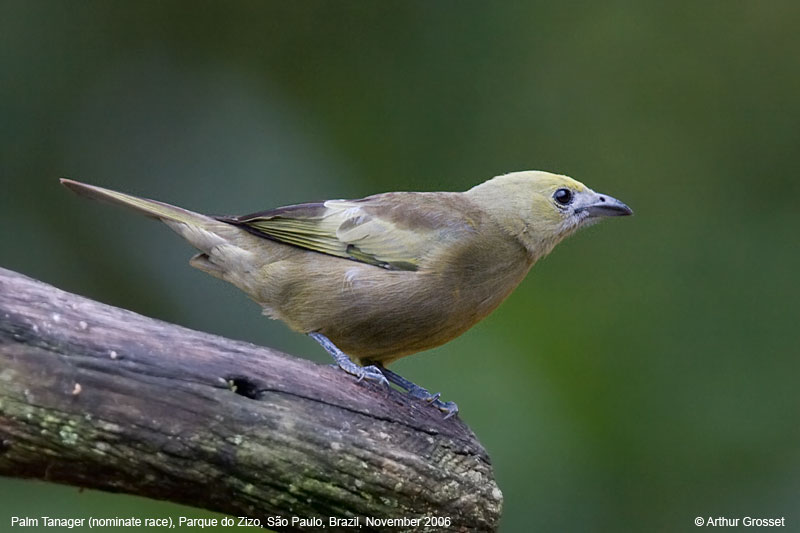
Palm Tanager (Thraupis palmarum) ©Arthur Grosset

The Palm Tanager (Thraupis palmarum) is a medium-sized passerine bird. This tanager is a resident breeder from Nicaragua south to Bolivia, Paraguay and southern Brazil. It also breeds on Trinidad and, since 1962, on Tobago. In Trinidad and Tobago, it is known by colloquial names such as the “palmiste” and the “green jean”.

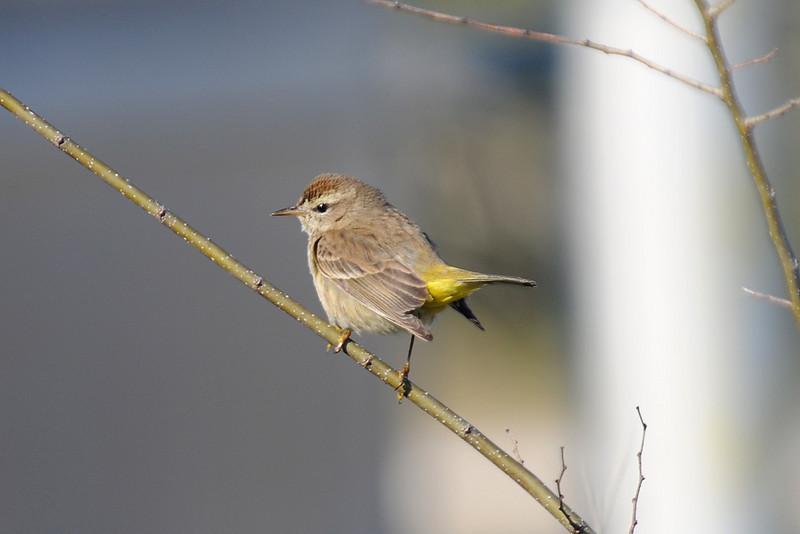
Palm Warbler (Setophaga palmarum) by Bob-Nan

The Palm Warbler (Setophaga palmarum) is a small songbird of the New World warbler family. The species comprises two distinct subspecies that may merit specific status.

“Yellow palm warbler” or “eastern palm warbler” (S. p. hypochrysea) of the eastern third of the breeding range has brownish-olive upper parts and thoroughly yellow underparts with bold rufous breast and flank streaking. It migrates later in the fall than its western counterpart.

“Brown palm warbler” or “western palm warbler” (S. p. palmarum) inhabits the remaining western two-thirds of the breeding range. It has much less yellow below, with less colorful streaking, and cold grayish-brown upper parts.

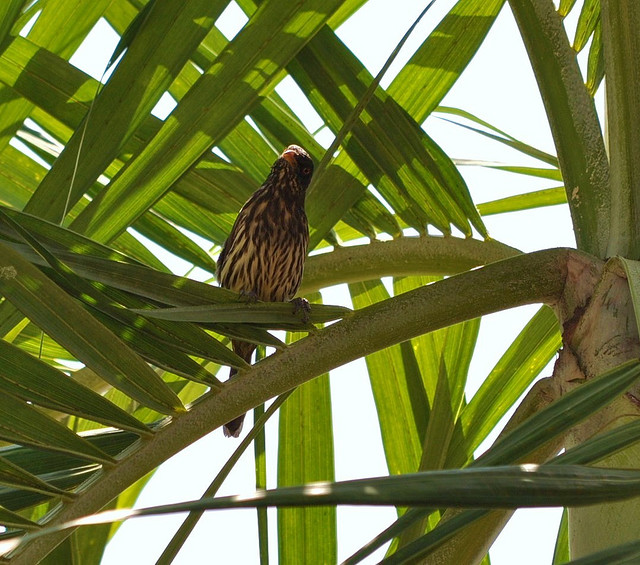
Palmchat (Dulus dominicus) ©SevenSeas of Rhye

Palmchat (Dulus dominicus) ©SevenSeas of Rhye

The Palmchat (Dulus dominicus) is a small, long-tailed passerine bird, the only species in the genus Dulus and the family Dulidae. It is thought to be related to the waxwings, family Bombycillidae, and is sometimes classified with that group. The name reflects its strong association with palms for feeding, roosting and nesting. The palmchat is the national bird of the Dominican Republic.


More Avian and Attributes

Birds whose first name starts with “P”

Gideon

*
[Definitions from Webster’s Dictionary of American English (1828), unless noted. Bird info from Wikipedia plus.]
Avian And Attributes – Noble

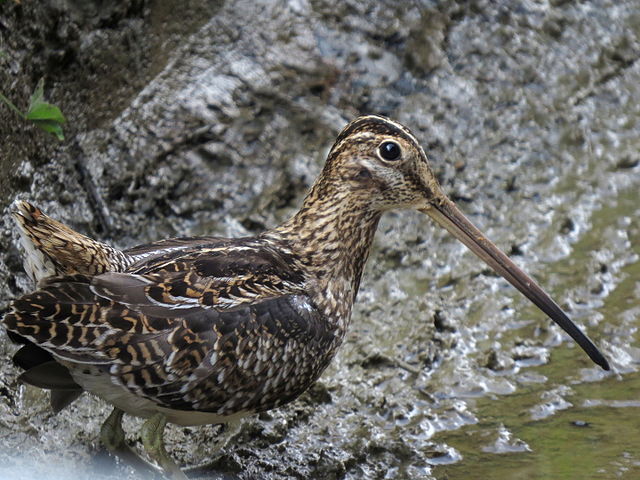
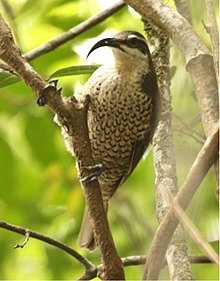
Noble Snipe (Gallinago nobilis) ©WikiC

“These were more noble than those in Thessalonica, in that they received the word with all readiness of mind, and searched the scriptures daily, whether those things were so.” (Acts 17:11 KJV)


Avian and Attributes – Noble

NO’BLE, a.
1. Great; elevated; dignified; being above every thing that can dishonor reputation; as a nobel mind; a noble courage; noble deeds of valor.
2. Exalted; elevated; sublime.
3. Magnificent; stately; splendid; as a noble parade; a noble edifice.
4. Of an ancient and splendid family; as nobel by descent.
5. Distinguished from commoners by rank and title; as a noble personage.
8. Ingenuous; candid; of an excellent disposition; ready to receive truth. Acts 17.
9. Of the best kind; choice; excellent; as a noble vine. Jer 2.
NO’BLE, n.
1. A person of rank above a commoner; a nobleman; a peer; as a duke, marquis, earl, viscount or baron.
2. In Scripture, a person of honorable family or distinguished by station. Exo 24. Neh 6.


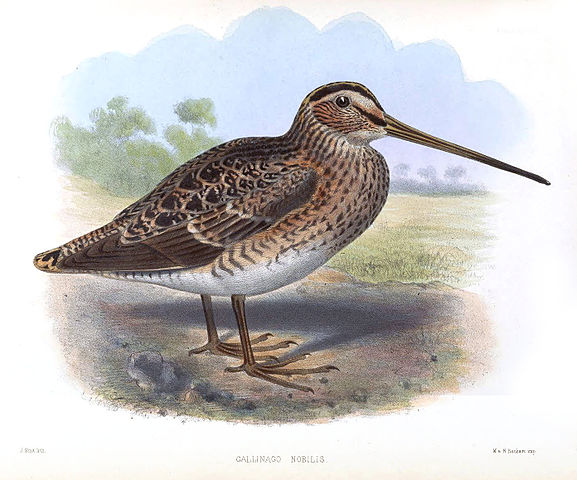
Noble Snipe (Gallinago nobilis) ©Drawing WikiC

Noble Snipe (Gallinago nobilis) is a small stocky wader. It breeds in the Andes of Colombia, Ecuador, Peru and Venezuela above or just below the treeline. It is entirely sedentary.

This 30–32.5 cm long snipe has a stocky body and relatively short legs for a wader. Its upperparts, head and neck are streaked and patterned with dark brown and buff, and gold edges to the feathers form distinct lines down its back. The belly is white with brown barring on the flanks. The horn-coloured bill is very long and straight. The legs and feet are greyish-green. The sexes are similar, but females are longer billed; immature birds differ only in showing pale fringes on the wing coverts. The noble snipe has a clear melodious call.

The noble snipe is found high altitude wet grassland marshes and swamps from 2,700 – 4,200 m.

Little is known of its biology, but it has an aerial display, which involves flying high in circles, followed by a powerful stoop during which the bird makes a drumming sound, caused by vibrations of modified outer tail feathers, lower pitched than that of common snipe. It breeds from March to July.

The noble snipe is usually alone or in pairs, but is difficult to observe on the ground. It forages by pushing its long bill deep into the mud seeking insects and worms. Its cryptic plumage provides effective camouflage when the bird stands motionless amongst marsh vegetation.


More Avian and Attributes

Birds whose first name starts with “N”

Sharing The Gospel

*
[Definitions from Webster’s Dictionary of American English (1828) edited, unless noted. Bird info from Wikipedia plus.]

Avian And Attributes – Night

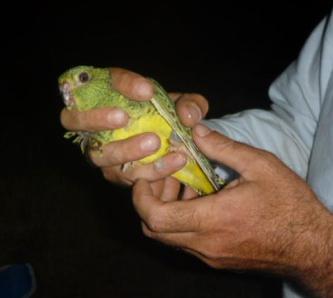
Night Parrot (Pezoporus occidentalis) ©WikiC by ornithologist Steve Murphy

“Then saith Jesus unto them, All ye shall be offended because of me this night: for it is written, I will smite the shepherd, and the sheep of the flock shall be scattered abroad. But after I am risen again, I will go before you into Galilee. Peter answered and said unto him, Though all men shall be offended because of thee, yet will I never be offended. Jesus said unto him, Verily I say unto thee, That this night, before the cock crow, thou shalt deny me thrice.” (Matthew 26:31-34 KJV)


Avian and Attributes – Night

NIGHT, n. [The sense may be dark, black, or it may be the decline of the day, from declining, departing.]
1. That part of the natural day when the sun is beneath the horizon, or the time from sunset to sunrise.
2. The time after the close of life; death. John 9.
She closed her eyes in everlasting night.
3. A state of ignorance; intellectual and moral darkness; heathenish ignorance. Rom 13.
4. Adversity; a state of affliction and distress. Isa 21.
5. Obscurity; a state of concealment from the eye or the mind; unintelligibleness.
Nature and natures works lay hid in night.
In the night, suddenly; unexpectedly. Luke 12.
To-night, in this night. To-night the moon will be eclipsed.


Night Parrot (Pezoporus occidentalis) Drawing WikiC

Night Parrot (Pezoporus occidentalis) Drawing WikiC

Night Parrot (Pezoporus occidentalis) is a small parrot endemic to the continent of Australia. It is well known as being one of the most elusive and mysterious birds in the world, with no confirmed sightings of the bird between 1912 and 1979, leading to speculation that it was extinct. Sightings since 1979 have been extremely rare and the bird’s population size is unknown, though based on the paucity of records it is thought to number between 50 and 249 mature individuals. The first photographic and video evidence of a live individual was publicly confirmed in July 2013.

A relatively small and short-tailed parrot, the species’ colour is predominantly a yellowish green, mottled with dark brown, blacks and yellows. Both sexes have this coloration. It is distinguished from the two superficially similar ground parrot species by its shorter tail and different range and habitat. Predominantly terrestrial, taking to the air only when panicked or in search of water, the night parrot has furtive, nocturnal habits and—even when it was abundant—was apparently a highly secretive species. Its natural habitat appears to be the spinifex grass which still dominates much of the dry, dusty Australian interior; other early reports also indicate that it never strayed far from water. It may also inhabit chenopod shrublands, eucalyptus woodlands, and mallee shrublands. One of the vocalisations of the night parrot has been described as a croak and identified as a contact call. Other calls, mostly short ‘ding-ding’ whistles, and a more drawn out whistle, have been recorded from Queensland and Western Australia.


More Avian and Attributes

Birds whose first name starts with “N”

Good News

*
[Definitions from Webster’s Dictionary of American English (1828), unless noted. Bird info from Wikipedia plus.]

Avian And Attributes – Naked

Naked-faced Spiderhunter (Arachnothera clarae) ©WikiC

“I was a stranger, and ye took me not in: naked, and ye clothed me not: sick, and in prison, and ye visited me not. Then shall they also answer him, saying, Lord, when saw we thee an hungred, or athirst, or a stranger, or naked, or sick, or in prison, and did not minister unto thee? Then shall he answer them, saying, Verily I say unto you, Inasmuch as ye did it not to one of the least of these, ye did it not to me.” (Matthew 25:43-45 KJV)


Avian and Attributes – Naked

NAKED, a. Open, discovered, to strip.
1. Not covered; bare; having no clothes on; as a naked body or a naked limb.
2. Unarmed; defenseless; open; exposed; having no means of defense or protection against an enemys attack, or against other injury.
3. Open to view; not concealed; manifest. Hebrews 4.
4. Destitute of worldly goods. Job 1.
5. Exposed to shame and disgrace. Exodus 32.
6. Guilty and exposed to divine wrath. Revelations 3.
7. Plain; evident; undisguised; as the naked truth.
8. Mere; bare; simple; wanting the necessary additions. God requires of man something besides the naked belief of his being and his word.
9. Not inclosed in a pod or case; as naked seeds of a plant.
10. Without leaves, fulcres or arms; as a naked stem or trunk.
11. Not assisted by glasses; as the naked eye.


Naked-faced Barbet (Gymnobucco calvus) ©WikiC

The Naked-faced Barbet (Gymnobucco calvus) is a bird species in the family Lybiidae (the African barbets). It used to be placed in the family Bucconidae (puffbirds), which has been split up; alternatively, it may be included in a vastly expanded Ramphastidae (toucans).

It is found in Angola, Benin, Cameroon, Republic of the Congo, Democratic Republic of the Congo, Ivory Coast, Equatorial Guinea, Gabon, Ghana, Guinea, Liberia, Nigeria, Sierra Leone, and Togo.

The Naked-faced Spiderhunter (Arachnothera clarae) is a species of bird in the Nectariniidae family. It is endemic to the Philippines.

Its natural habitat is subtropical or tropical moist lowland forests.


More Avian and Attributes

Birds whose first name starts with “N”

Wordless Toucan

*
[Definitions from Webster’s Dictionary of American English (1828), unless noted. Bird info from Wikipedia plus.]
Avian And Attributes – Myrtle

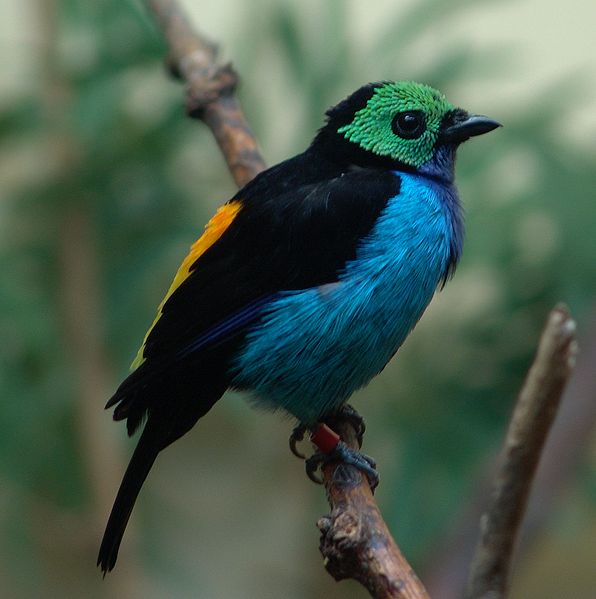
Myrtle Warbler (Setophaga coronata) by Anthony747

Myrtle Warbler (Setophaga coronata) by Anthony747

“So shall my word be that goeth forth out of my mouth: it shall not return unto me void, but it shall accomplish that which I please, and it shall prosper in the thing whereto I sent it. For ye shall go out with joy, and be led forth with peace: the mountains and the hills shall break forth before you into singing, and all the trees of the field shall clap their hands. Instead of the thorn shall come up the fir tree, and instead of the brier shall come up the myrtle tree: and it shall be to the LORD for a name, for an everlasting sign that shall not be cut off.” (Isaiah 55:11-13 KJV)


Avian and Attributes – Myrtle

MYR’TLE, n. [L. myrtus.] A plant of the genus Myrtus, of several species. The common myrtle rises with a shrubby upright stem, eight or ten feet high. Its branches form a close full head, closely garnished with oval lanceolate leaves. It has numerous small, pale flowers from the axillas, singly on each footstalk.


Myrtle (Yellow-rumped) Warbler (Setophaga coronata) breeding ©WikiC

Myrtle warbler (Setophaga coronata) is a small New World warbler.

This passerine bird was long known to be closely related to its western counterpart, Audubon’s warbler, and at various times the two forms have been classed as separate species or grouped as yellow-rumped warblers, Setophaga coronata. The two forms most likely diverged when the eastern and western populations were separated in the last ice age. In North America, the two forms are now again officially recognized as conspecific.

The myrtle warbler has a northerly and easterly distribution, with Audubon’s further west. It breeds in much of Canada and the northeastern USA. It is migratory, wintering in the southeastern United States, eastern Central America, and the Caribbean. It is a rare vagrant to western Europe, and has wintered in Great Britain. Its breeding habitat is a variety of coniferous and mixed woodland. Myrtle warblers nest in a tree, laying 4–5 eggs in a cup nest.

The summer male myrtle warbler has a slate blue back, and yellow crown, rump and flank patch. It has white tail patches, and the breast is streaked black. The female has a similar pattern, but the back is brown as are the breast streaks.

The myrtle can be distinguished from Audubon’s warbler by its whitish eyestripe, white (not yellow) throat, and contrasting cheek patch. Their trill-like songs, nearly indistinguishable, consist of a 3–4 syllable “tyew-tyew-tyew-tyew”, sometimes followed by 3 more “tew”‘s. The call is a hard check.


More Avian and Attributes

Birds whose first or last name starts with “M”

Wordless Toucan

*
[Definitions from Webster’s Dictionary of American English (1828), unless noted. Bird info from Wikipedia plus.]
Avian And Attributes – Mute

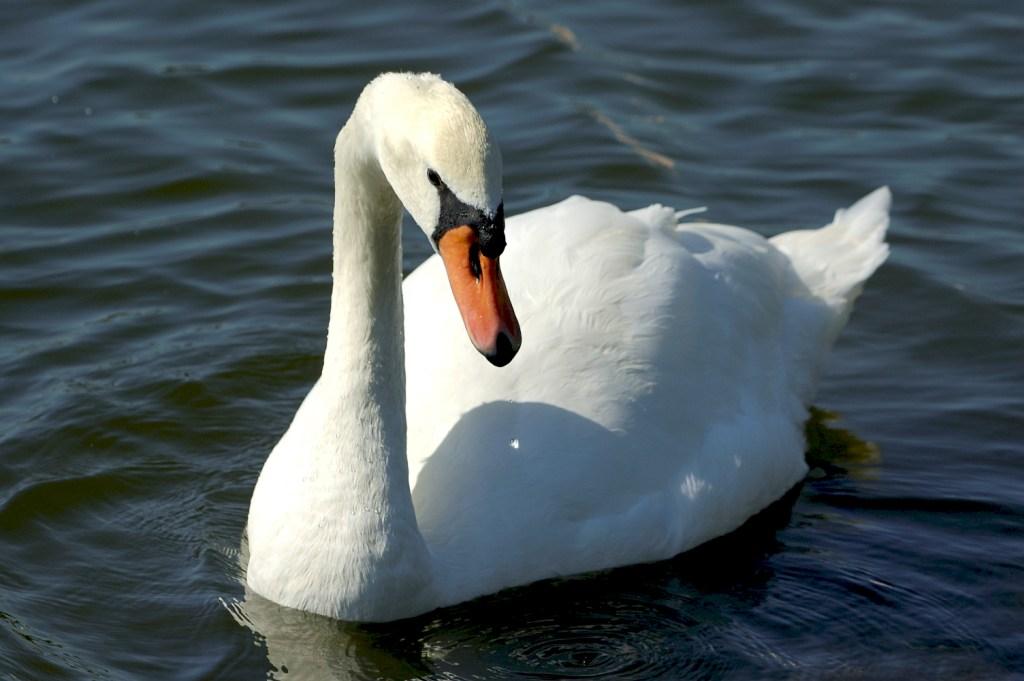
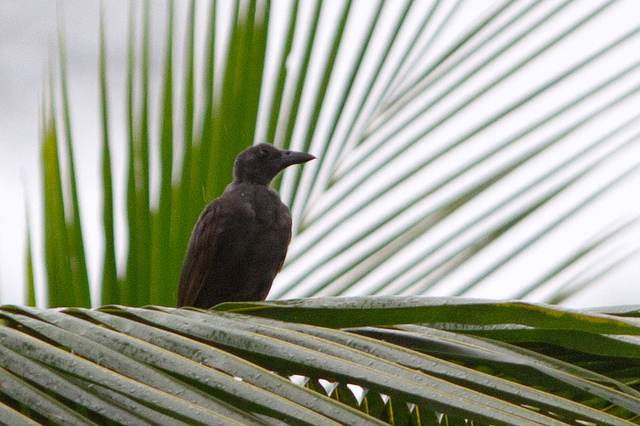
Mute Mute Swan (Cygnus olor) at Lake Morton By Dan’sPix

So the LORD said to him, “Who has made man’s mouth? Or who makes the mute, the deaf, the seeing, or the blind? Have not I, the LORD?” (Exodus 4:11 NKJV)
“I was mute, I did not open my mouth, Because it was You who did it.” (Psalms 39:9 NKJV)
“Then great multitudes came to Him, having with them the lame, blind, mute, maimed, and many others; and they laid them down at Jesus’ feet, and He healed them.” (Matthew 15:30 NKJV)
“Then one was brought to Him who was demon-possessed, blind and mute; and He healed him, so that the blind and mute man both spoke and saw.” (Matthew 12:22 NKJV)


Avian and Attributes – Mute

MUTE, a. [L. mutus.]
1. Silent; not speaking; not uttering words, or not having the power of utterance; dumb. Mute may express temporary silence, or permanent inability to speak.
To the mute my speech is lost.
In this phrase, it denotes unable to utter words. More generally, it denotes temporarily silent; as, all sat mute.
All the heavenly choir stood mute.
2. Uttering no sound; as mute sorrow.
3. Silent; not pronounced; as a mute letter.
MUTE, n. In law, a person that stands speechless when he ought to answer or plead.
1. In grammar,a letter that represents no sound; a close articulation which intercepts the voice. Mutes are of two kinds, pure and impure. The pure mutes instantly and entirely intercept the voice, as k, p and t, in the syllables ek,ep, et. The impure mutes intercept the voice less suddenly, as the articulations are less close. Such are b,d and g, as in the syllables eb, ed,eg.
2. In music, a little utensil of wood or brass, used on a violin to deaden or soften the sounds.
MUTE, v.i. To eject the contents of the bowels, a birds.
MUTE, n. The dung of fowls.


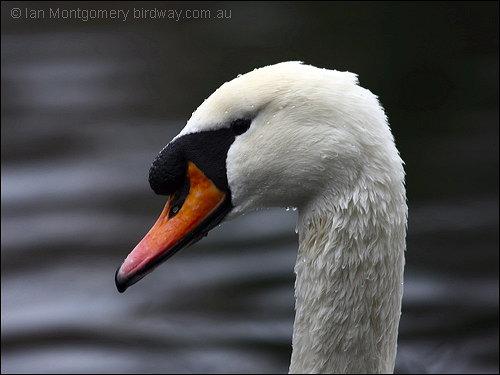
The Mute Swan (Cygnus olor) is a species of swan and a member of the waterfowl family Anatidae. It is native to much of Eurasia, and (as a rare winter visitor) the far north of Africa. It is an introduced species in North America, Australasia and southern Africa. The name ‘mute’ derives from it being less vocal than other swan species. Measuring 125 to 170 cm (49 to 67 in) in length, this large swan is wholly white in plumage with an orange beak bordered with black. It is recognisable by its pronounced knob atop the beak, which is larger in males.

Mute Swan (Cygnus olor) by Ian

The mute swan is one of the heaviest flying birds. In several studies from Great Britain, males (known as cobs) were found to average from about 10.6 to 11.87 kg (23.4 to 26.2 lb), with a weight range of 9.2–14.3 kg (20–32 lb) while the slightly smaller females (known as pens) averaged about 8.5 to 9.67 kg (18.7 to 21.3 lb), with a weight range of 7.6–10.6 kg (17–23 lb). While the top normal weight for a big cob is roughly 15 kg (33 lb), one unusually big Polish cob weighed almost 23 kg (51 lb) and this counts as the largest weight ever verified for a flying bird, although it has been questioned whether this heavyweight could still take flight.

Young birds, called cygnets, are not the bright white of mature adults, and their bill is dull greyish-black, not orange, for the first year. The down may range from pure white to grey to buff, with grey/buff the most common. Cygnets grow quickly, reaching a size close to their adult size in approximately three months after hatching. Cygnets typically retain their grey feathers until they are at least one year old, with the down on their wings having been replaced by Flight feathers earlier that year.

Mute Swan on Nest at Lake Morton

Mute Swan on Nest at Lake Morton by Dan

Mute swans nest on large mounds that they build with waterside vegetation in shallow water on islands in the middle or at the very edge of a lake. They are monogamous and often reuse the same nest each year, restoring or rebuilding it as needed. Male and female swans share the care of the nest, and once the cygnets are fledged it is not uncommon to see whole families looking for food.


More Avian and Attributes

Birds whose first name starts with “M”

Good News

*
[Definitions from Webster’s Dictionary of American English (1828), unless noted. Bird info from Wikipedia plus.]
Avian And Attributes – Mountain

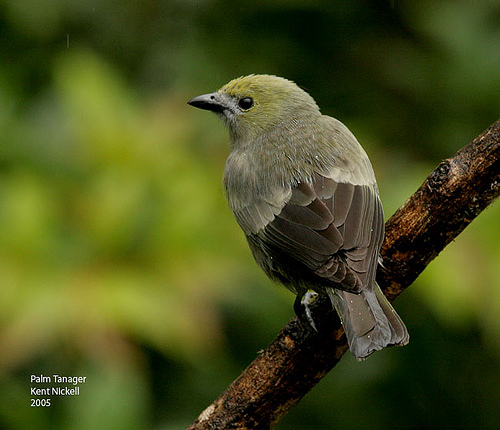
Mountain Wagtail (Motacilla clara) ©WikiC

“A Song and Psalm for the sons of Korah. Great is the LORD, and greatly to be praised in the city of our God, in the mountain of his holiness.” (Psalms 48:1 KJV)

“And it shall come to pass in the last days, that the mountain of the LORD’S house shall be established in the top of the mountains, and shall be exalted above the hills; and all nations shall flow unto it.” (Isaiah 2:2 KJV)


Avian and Attributes – Mountain

MOUNT’AIN, n. [L. adjective, montanus.] A large mass of earth and rock, rising above the common level of the earth or adjacent land, but of no definite altitude. We apply mountain to the largest eminences on the globe; but sometimes the word is used for a large hill. In general, mountain denotes an elevation higher and larger than a hill; as the Altaic mountains in Asia, the Alps in Switzerland, the Andes in South America,the Allegheny mountains in Virginia, the Catskill in New York, the White mountains in New Hampshire, and the Green mountains in Vermont. The word is applied to a single elevation, or to an extended range.

“And after six days Jesus taketh Peter, James, and John his brother, and bringeth them up into an high mountain apart, And was transfigured before them: and his face did shine as the sun, and his raiment was white as the light. And, behold, there appeared unto them Moses and Elias talking with him.” (Matthew 17:1-3 KJV)


There are numerous birds whose first name starts with Mountain. The links below will take you to their family pages. Below I am adding photos for many of them.

Mountain Avocetbill (Opisthoprora euryptera)
Mountain Bamboo Partridge (Bambusicola fytchii)
Mountain Barbet (Psilopogon monticola)
Mountain Blackeye (Chlorocharis emiliae)
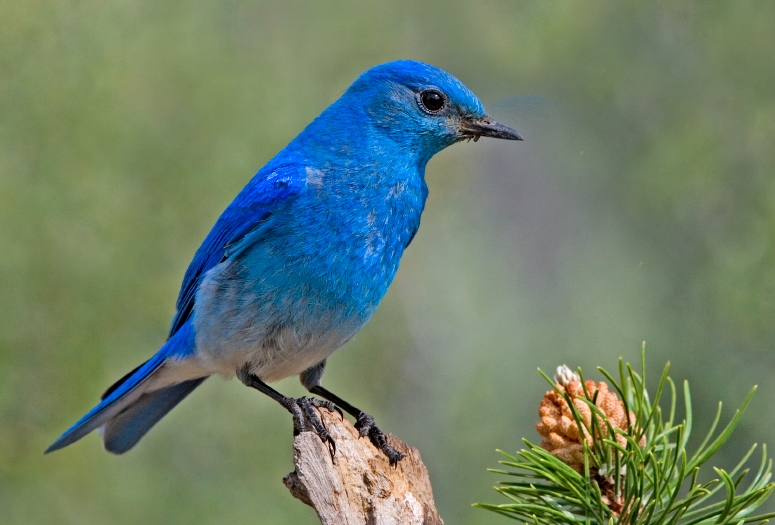
Mountain Bluebird (Sialia currucoides)
Mountain Bulbul (Ixos mcclellandii)
Mountain Buzzard (Buteo oreophilus)
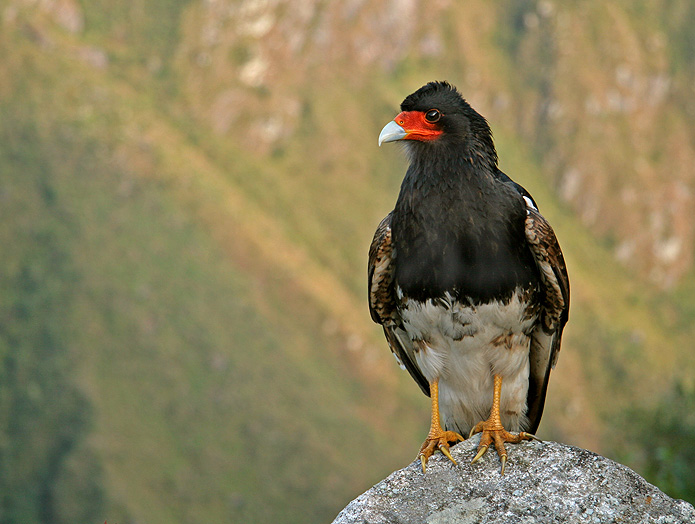
Mountain Caracara (Phalcoboenus megalopterus)
Mountain Chickadee (Poecile gambeli)
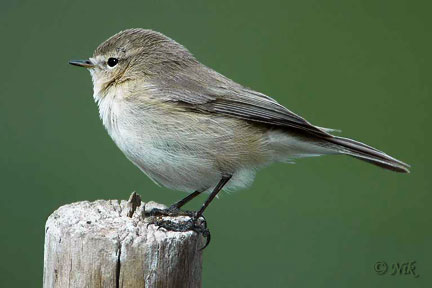
Mountain Chiffchaff (Phylloscopus sindianus)
Mountain Elaenia (Elaenia frantzii)
Mountain Firetail (Oreostruthus fuliginosus)
Mountain Fulvetta (Alcippe peracensis)
Mountain Greenbul (Arizelocichla nigriceps)
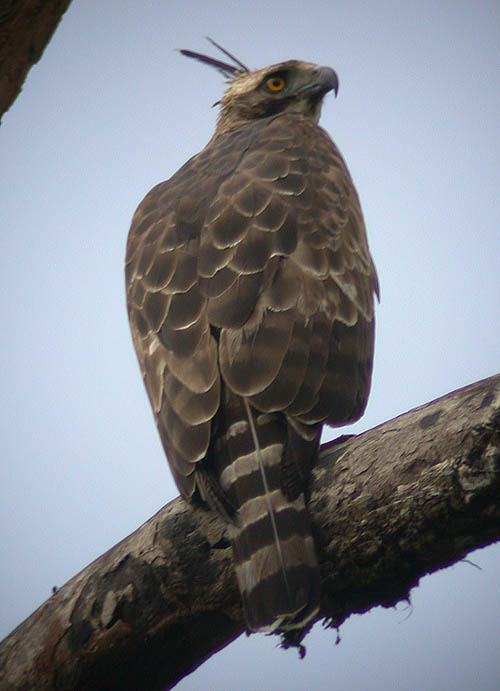
Mountain Hawk-Eagle (Nisaetus nipalensis)
Mountain Honeyeater (Meliphaga orientalis)
Mountain Illadopsis (Illadopsis pyrrhoptera)
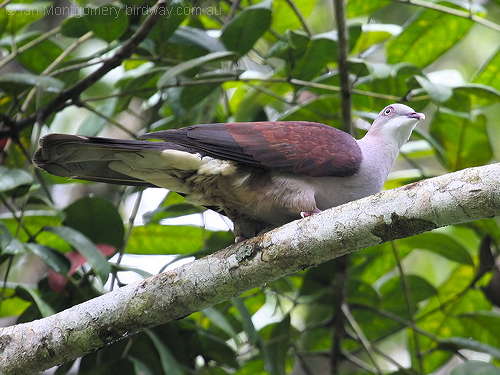
Mountain Imperial Pigeon (Ducula badia)
Mountain Kingfisher (Syma megarhyncha)
Mountain Leaf Warbler (Phylloscopus trivirgatus)
Mountain Masked Apalis (Apalis personata)
Mountain Mouse-warbler (Crateroscelis robusta)
Mountain Myzomela (Myzomela adolphinae)
Mountain Oriole (Oriolus percivali)
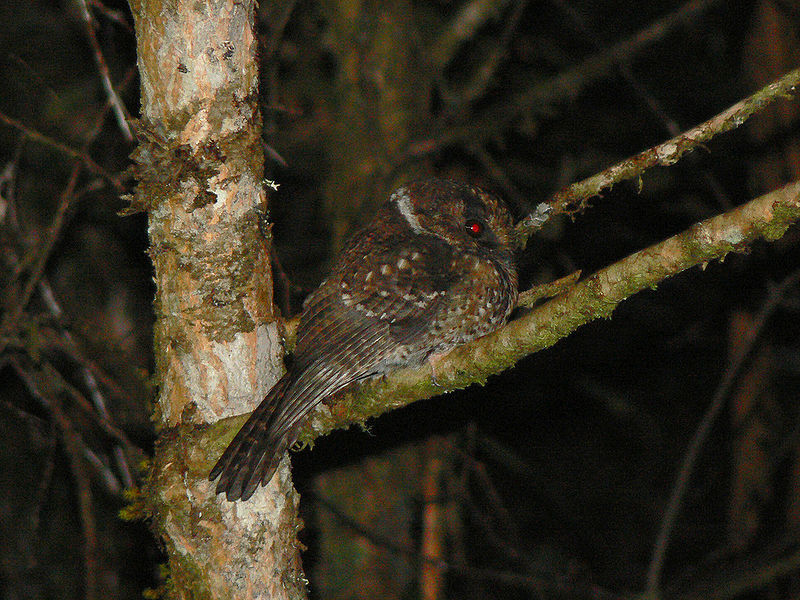
Mountain Owlet-nightjar (Aegotheles albertisi)
Mountain Parakeet (Psilopsiagon aurifrons)
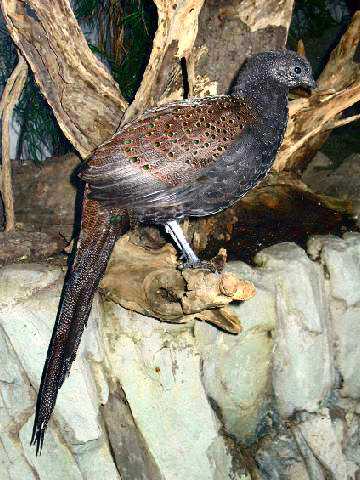
Mountain Peacock-Pheasant (Polyplectron inopinatum)
Mountain Peltops (Peltops montanus)
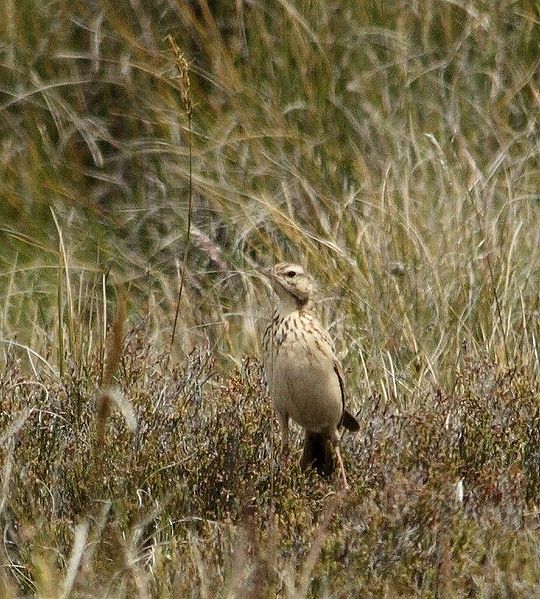
Mountain Pipit (Anthus hoeschi)
Mountain Plover (Charadrius montanus)
Mountain Pygmy Owl (Glaucidium gnoma)
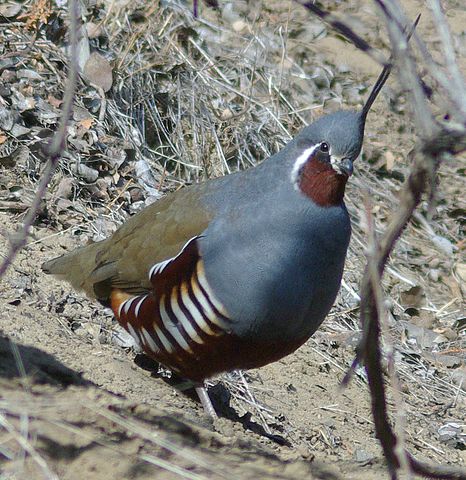
Mountain Quail (Oreortyx pictus)
Mountain Robin (Petroica bivittata)
Mountain Robin-Chat (Cossypha isabellae)
Mountain Saw-wing (Psalidoprocne fuliginosa)
Mountain Scops Owl (Otus spilocephalus)
Mountain Serin (Chrysocorythus estherae)
Mountain Serpent Eagle (Spilornis kinabaluensis)
Mountain Shrike (Lanius validirostris)
Mountain Sooty Boubou (Laniarius poensis)
Mountain Starling (Aplonis santovestris)
Mountain Swiftlet (Aerodramus hirundinaceus)
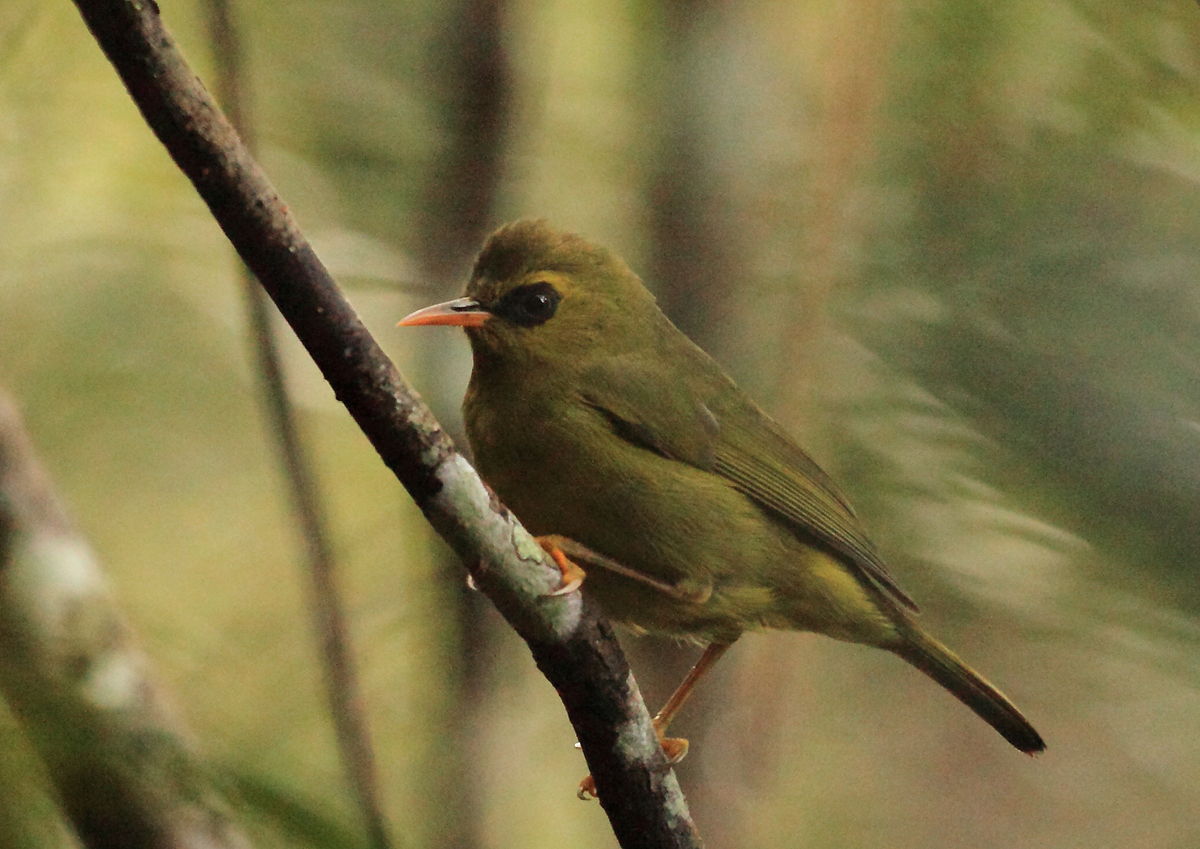
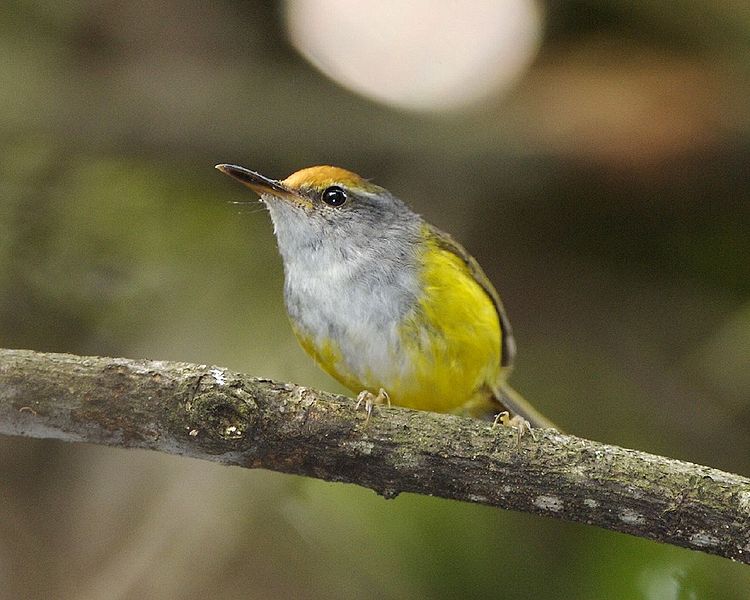
Mountain Tailorbird (Phyllergates cucullatus)
Mountain Thornbill (Acanthiza katherina)
Mountain Thrush (Turdus plebejus)
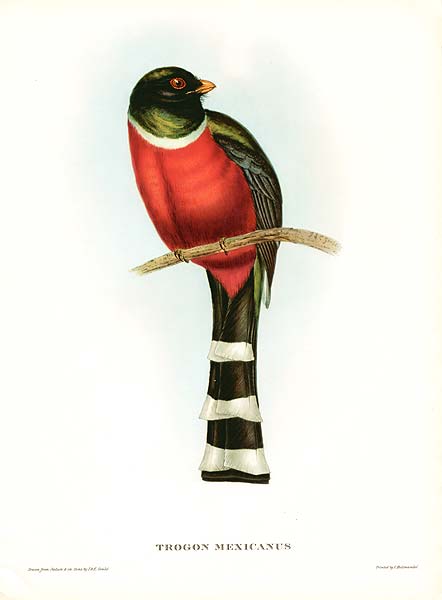
Mountain Trogon (Trogon mexicanus)
Mountain Velvetbreast (Lafresnaya lafresnayi)
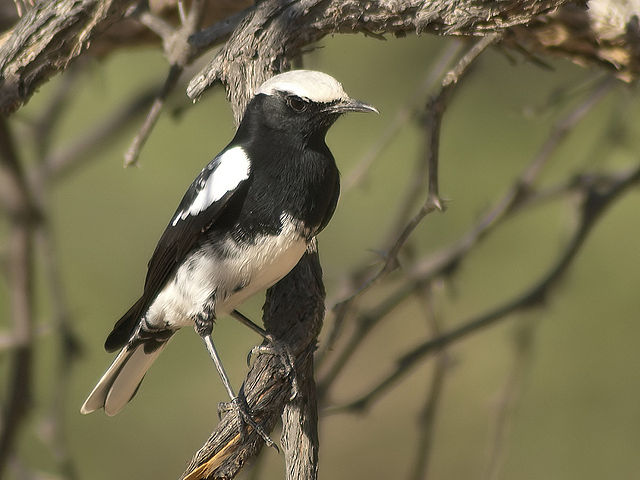
Mountain Wagtail (Motacilla clara)
Mountain Wheatear (Myrmecocichla monticola)
Mountain White-eye (Zosterops montanus)
Mountain Wren (Troglodytes solstitialis)
Mountain Wren-Babbler (Napothera crassa)
Mountain Yellow Warbler (Iduna similis)


More Avian and Attributes

Birds whose first name starts with “M”

Good News

*
[Definitions from Webster’s Dictionary of American English (1828), unless noted. Bird info from Wikipedia plus.]

“That if thou shalt confess with thy mouth the Lord Jesus, and shalt believe in thine heart that God hath raised him from the dead, thou shalt be saved.” (Romans 10:9 KJV)

Avian and Attributes – Mount [Correction]

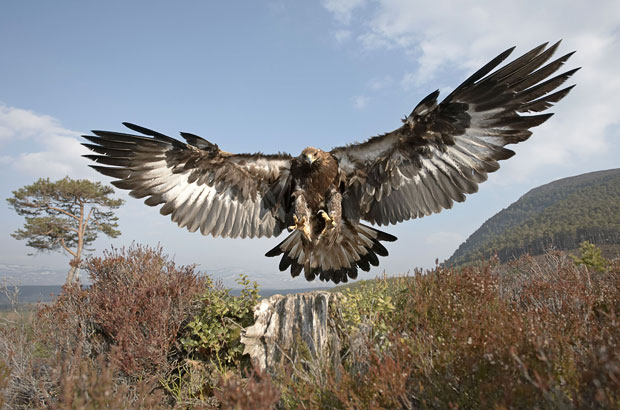
Golden Eagle (Aquila chrysaetos) Flying ©WikiC

The link was sent to many of you as https://leesbird.com/2018/02/15/avian-and-attributes-mount/ which was sent accidentally.

This caused a 404 Error.

The correct link is:

https://leesbird.com/2018/02/27/avian-and-attributes-mount/

Avian And Attributes – Mount

Mount Cameroon Speirops (Zosterops melanocephalus) ©WikiC

And I looked, and, lo, a Lamb stood on the mount Sion, and with him an hundred forty and four thousand, having his Father’s name written in their foreheads. And I heard a voice from heaven, as the voice of many waters, and as the voice of a great thunder: and I heard the voice of harpers harping with their harps:
(Revelation 14:1-2 KJV)

And he came out, and went, as he was wont, to the mount of Olives; and his disciples also followed him. And when he was at the place, he said unto them, Pray that ye enter not into temptation. And he was withdrawn from them about a stone’s cast, and kneeled down, and prayed, Saying, Father, if thou be willing, remove this cup from me: nevertheless not my will, but thine, be done.
(Luke 22:39-42 KJV)


Avian and Attributes – Mount

MOUNT, n. [L. mons, literally a heap or an elevation.]
1. A mass of earth, or earth and rock, rising considerably above the common surface of the surrounding land. Mount is used for an eminence or elevation of earth, indefinite in highth or size, and may be a hillock, hill or mountain. It is applied in Scripture to the small hillocks on which sacrifice was offered as well as to Mount Sinai. Jacob offered sacrifice on the mount or heap of stones raised for a witness between him and Laban. Gen 31.
2. A mound; a bulwark for offense or defense.
Hew ye down trees and cast a mount against Jerusalem. Jer 6.
3. Formerly, a bank or fund of money.
MOUNT, v.i.
1. To rise on high; to ascend; with or without up.
Doth the eagle mount up at thy command? Job 39.
The fire of trees and houses mounts on high.
2. To rise; to ascend; to tower; to be built to a great altitude.
Though Babylon should mount up to heaven. Jer 51.
3. To get on horseback.
4. To leap upon any animal.
5. To amount; to rise in value.
Bring then these blessings to a strict account,
Make fair deductions, see to what they mount.
MOUNT, v.t. To raise aloft; to lift on high.
What power is it which mounts my love so high?
1. To ascend; to climb; to get upon an elevated place; as, to mount a throne.
2. To place one’s self on horseback; as, to mount a horse.
3. To furnish with horses; as, to mount a troop. The dragoons were well mounted.
4. To put on or cover with something; to embellish with ornaments; as, to mount a sword.
5. To carry; to be furnished with; as, a ship of the line mounts seventy four guns; a fort mounts a hundred cannon.
6. To raise and place on a carriage; as, to mount a cannon.
To mount guard, to take the station and do the duty of a sentinel.


Bald Eagle (Haliaeetus leucocephalus) by Ray Barlow

There are four “Mount” birds, but surprisingly, only one photo available to use. [shown at top]

Mount Cameroon Francolin (Pternistis camerunensis) is a bird species in the family Phasianidae. It is found only in Cameroon.

Mount Cameroon Speirops (Zosterops melanocephalus) is a species of bird in the disputed family Zosteropidae, which might be included in the Timaliidae. It is endemic to Cameroon.  Its natural habitats are subtropical or tropical moist montane forests and subtropical or tropical high-altitude shrubland.

Mount Kupe Bushshrike (Telophorus kupeensis) is a species of bird in the family Malaconotidae. It is endemic to Cameroon, where it is found in the Bakossi Forest Reserve and in particular on Mount Kupe.

Mount Victoria Babax (Babax woodi) is a species of passerine bird of the family Leiothrichidae typical of the mountains of the northeast of the Indian subcontinent . Previously it was considered a subspecies of Chinese babax .

Golden Eagle (Aquila chrysaetos) Swooping Down ©Netns Wildlifezone

“Hast thou not known? hast thou not heard, that the everlasting God, the LORD, the Creator of the ends of the earth, fainteth not, neither is weary? there is no searching of his understanding. He giveth power to the faint; and to them that have no might he increaseth strength. Even the youths shall faint and be weary, and the young men shall utterly fall: But they that wait upon the LORD shall renew their strength; they shall mount up with wings as eagles; they shall run, and not be weary; and they shall walk, and not faint.” (Isaiah 40:28-31 KJV)

“And in the day time he was teaching in the temple; and at night he went out, and abode in the mount that is called the mount of Olives.” (Luke 21:37 KJV)

One of the attributes of Christ, that I think about, is his going up to the Mount to pray. Like us, He became weary in His human body, even though He is 100% God, while on earth, He was also 100% human. Therefore He needed rest and refreshment of body as we do.


More Avian and Attributes

Birds whose first name starts with “M”

Good News

*
[Definitions from Webster’s Dictionary of American English (1828), unless noted. Bird info from Wikipedia plus.]

In the beginning was the Word, and the Word was with God, and the Word was God. The same was in the beginning with God. All things were made by him; and without him was not any thing made that was made. (John 1:1-3 KJV)


Avian And Attributes – Morning

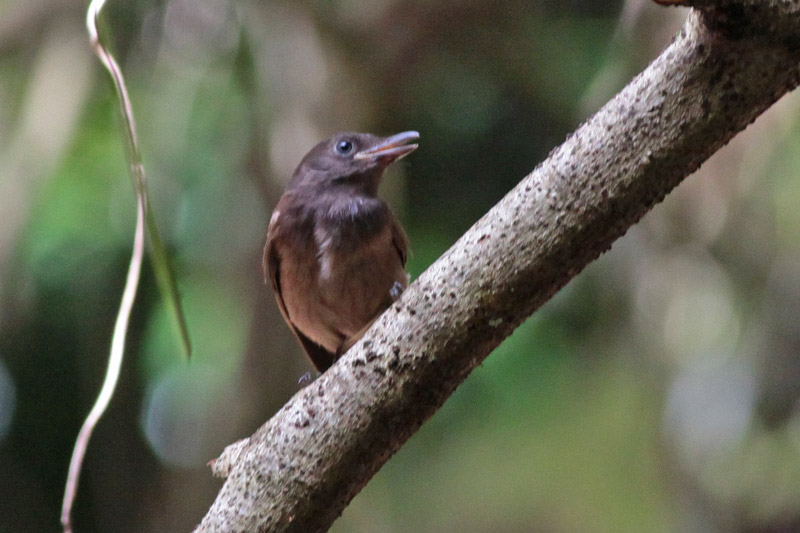
Morningbird (Colluricincla tenebrosa) by Margaret Sloan

Morningbird (Colluricincla tenebrosa) by Margaret Sloan

“And in the morning, rising up a great while before day, he went out, and departed into a solitary place, and there prayed.” (Mark 1:35 KJV)

“Watch ye therefore: for ye know not when the master of the house cometh, at even, or at midnight, or at the cockcrowing, or in the morning:” (Mark 13:35 KJV)

“And early in the morning he came again into the temple, and all the people came unto him; and he sat down, and taught them.” (John 8:2 KJV)

I Jesus have sent mine angel to testify unto you these things in the churches. I am the root and the offspring of David, and the bright and morning star.” (Revelation 22:16 KJV)


Avian and Attributes – Morning

MORN’ING, n.
1. The first part of the day, beginning at twelve o’clock at night and extending to twelve at noon. Thus we say, a star rises at one o’clock in the morning. In a more limited sense, morning is the time beginning an hour or two before sunrise, or at break of day, and extending to the hour of breakfast and of beginning the labors of the day. Among men of business in large cities, the morning extends to the hour of dining.
2. The first or early part.
In the morning of life, devote yourself to the service of the Most High.
MORN’ING, a. Pertaining to the first part or early part of the day; being in the early part of the day; as morning dew; morning light; morning service.
She looks as clear
As morning roses newly washed with dew.


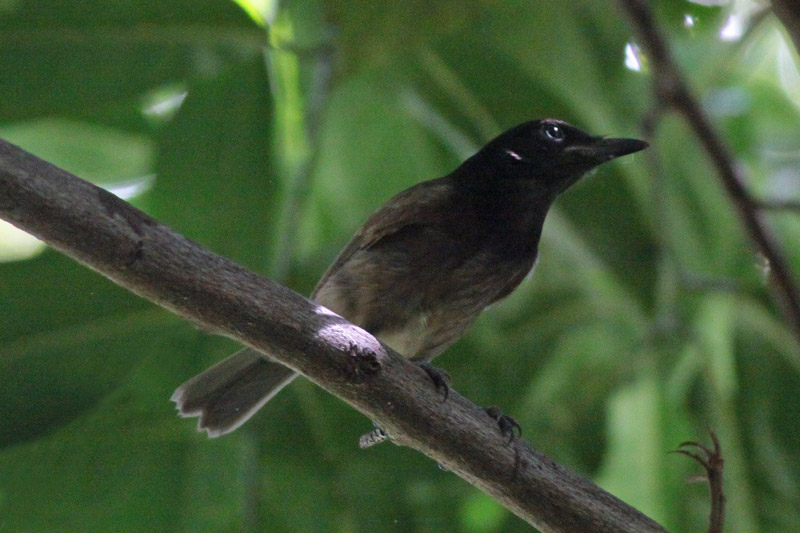
Morningbird (Colluricincla tenebrosa) by Margaret Sloan

Morningbird (Colluricincla tenebrosa) by Margaret Sloan

Morningbird (Pachycephala tenebrosa)

The Mmorningbird (Pachycephala tenebrosa) is a songbird species in the family Pachycephalidae. It is endemic to the islands of Babelthuap, Koror, Garakayo, Peleliu and Ngabad in Palau. Its natural habitat is deep primary tropical moist lowland forests. The species is non-migratory. It is apparently commoner on the smaller islands in its range.

Morningbirds feed principally on insects, but also take snails, berries, fruit and seeds. They feed on or around the ground.


More Avian and Attributes

Birds whose first name starts with “M”

Morningbird – A Voice In The Morning

Good News

*
[Definitions from Webster’s Dictionary of American English (1828), unless noted. Bird info from Wikipedia plus.]
“My voice shalt thou hear in the morning, O LORD; in the morning will I direct my prayer unto thee, and will look up.” (Psalms 5:3 KJV)