India’s Shrimp ‘Ranching’ Needs Re-set

India’s Shrimp ‘Ranching’ Needs Re-set

Dr. James J. S. Johnson

And God created great whales, and every living creature that moves, which the waters brought forth abundantly, after their kind … and God saw that it was good. (Genesis 1:21)

The Aquaculturists: 20/10/2017: Shrimp farming in India

India may be looking to America for a jump-start to revitalize its shrimp aquaculture industry, according to recent report (May 11, 2020) in the Hindu Business Line.

The report, which was issued by the Confederation of Indian Industry (CII) looks into a range of measures to improve the export potential of the aquaculture sector. Around 90 % of India’s aquaculture production is generally exported. And, although exports have plummeted since the COVID-19 pandemic, the report warns that producers may struggle to meet demand once the movement of goods and people returns to normal . . . (1)

India’s shrimp-farming operations have two major vulnerabilities—dependence on outside (i.e., outside of India, which now includes lockdown/shutdown facts not previously present in the global marketplace) sources for breeding shrimp and for the kind of food that shrimp larva need to eat, so that they can grow into mature shrimp of marketable size.

The Confederation of Indian Industry has recommended measures to improve the export potential of the aquaculture sector in order to capture a major share of the global market. …  The lion’s share of Indian aquaculture comprises shrimp, for which both broodstocks and larval feeds are imported. With the global lockdown situation, the supply of these has been stalled, which will have a significant impact on production, CII said in its report.(2)

But for restarting India’s shrimp-farming operations, some adjustments to “business-as-usual” will be necessary, both logistically and legally.

To reduce the lag time in the supply of broodstock, CII has recommended re-establishing import of broodstock by expediting air transportation from the US by arranging special cargo flights. It is pointed out that the RGCA [Rajiv Gandhi Centre for Aquaculture] quarantine facility in Chennai is shut and its holding capacity is not sufficient for large consignments. Hence, the imported broodstock should be allowed to be taken to hatcheries directly and thereafter sampling can be done by RGCA. On approval, hatchery owners can be allowed to use the broodstock.(2)
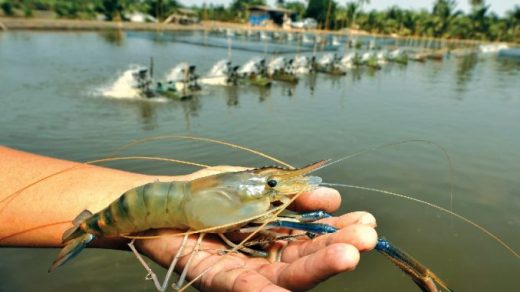
India-freshwater-shrimp-farming

What a huge undertaking—revitalizing this part of India’s fisheries/aquaculture industry is truly a “big deal”, in the global marketplace. As a fish/seafood exporter India has very serious competition—for almost 20 years China has been the world’s #1 producer of fish and seafood exports.(3)

India is the world’s second-largest [sic] fish producer with a total production of 13.7 million tonnes in 2018-19 of which 65 % was from inland fishing. Almost 50 % of inland fish production is from culture fisheries, which constitutes 6.5 % of global fish production. Shrimp accounts for a majority share of India’s aquaculture, which is growing at a CAGR [compound annual growth rate] of 17.4 % over the past 3 years.(2)

Providing affordable (and available) protein-rich food is a worldwide need.  Harvesting oceanic fish and shellfish—including shrimp—can contribute much to feeding peoples of the world.(4),(5)  Aquaculture (which is comparable to “ranching” sea creatures–like shrimp–as livestock), however, can supplement oceanic finfish and shellfish, for the benefit of many hungry humans.(6),(7)

May God bless America to recover its own economic health—and to do so with such strength that it can once again bless India, and other nations of the world, such as by helping India to jump-start their own now-vulnerable aquaculture industry.(8)

Farmers making a fortune in shrimp farming

References

  1. Staff writer. 2020. Why India’s Shrimp Sector Must Become More Self-Sufficient. The Fish Site. Posted (May 12, 2020) at https://thefishsite.com/articles/why-indias-shrimp-sector-must-become-more-self-sufficient – accessed may 15, 2020.
  2. Kumar, V. S. 2020. CII Chalks Out Steps to Boost Aquaculture Exports. Hindu Business Line. Posted (May 11, 2020) at https://www.thehindubusinessline.com/economy/agri-business/cii-chalks-out-steps-to-boost-aquaculture-exports/article31555206.ece# — accessed May 15, 2020.
  3. Nag, O. S. 2017. Top Fish and Seafood Exporting Countries. Posted (April 25, 2017) at https://www.worldatlas.com/articles/top-fish-and-seafood-exporting-countries.html —  accessed May 15, 2020.
  4. According to the Lord Jesus, fish are good food. Matthew 7:9-11; Luke 11:11-13..
  5. Incorporating actuarial biology insights (pioneered by marine biologist Johan Hjort) has enabled the world’s shrimp industry, including shrimp-farming, to economically maximize productivity. See Johnson, J. J. S. 2019. Northern Prawns, Baltic Prawns, and Brown Shrimp, Illustrating Genesis 1:22 (including Johan Hjort’s Actuarial Biology Research on Pandalus borealis). Nordic Legacy Series (Norwegian Society of Texas, Fort Worth, Texas, February 24, 2019), 15 pages.
  6. Aquaculture now faces new challenges from pandemic politics. See Johnson, J. J. S. 2020. Fish Farming Feeds Scots, But It’s Not Getting Easier.  COVID-19 News. Posted April 21, 2020) at https://www.icr.org/article/fish-farming-feeds-scots-but-not-getting-easier .
  7. Fish-farming, using managed coast water net-pens is one aquaculture method useful in fulfilling the Genesis Mandate. See Johnson, J. J. S. 2013. Fulfilling the Genesis Mandate while Helping the Poor. Acts & Facts. 42(12):19, posted at https://www.icr.org/article/fulfilling-genesis-mandate-while-helping .
  8. Acts 20:35.


The Kingbird – McGuffey’s 2nd Grade Reader

Grey Kingbird (Tyrannus dominicensis) by Lee at Honeymoon Is SP

McGuffey Readers were a series of graded primers for grade levels 1-6. They were widely used as textbooks in American schools from the mid-19th century to the mid-20th century, and are still used today in some private schools and in homeschooling. [Posting these for young readers to enjoy and practice reading while school is out.]

Here is a story of Kingbird from the Second Grade Reader. (From Gutenberg)

McGuffey Reader Set ©WikiC

LESSON XVIII.

New Words:

ber’ries strikes rob’in ea’gle short king rid

foe dart fails sharp hawk worms ac’tive

Eastern Kingbird (Tyrannus tyrannus) by Margaret Sloan

THE KINGBIRD.

1. The kingbird is not bigger than a robin.

2. He eats flies, and worms, and bugs, and berries.

3. He builds his nest in a tree, near some house.

4. When there are young ones in the nest, he sits on the top of a tree near them.

5. He watches to see that no bird comes to hurt them or their mother.

6. If a hawk, a crow, or even an eagle comes near, he makes a dash at it.

7. Though he is so small, he is brave, and he is also very active.

8. He never fails to drive off other birds from his nest.

9. He flies around and around the eagle, and suddenly strikes him with his sharp bill.

10. He strikes at his eye, and then darts away before the eagle can catch him.

11. Or he strikes from behind, and is off again before the eagle can turn round.

12. In a short time, the great eagle is tired of such hard blows, and flies away. He is very glad to get rid of his foe.

13. Is not the little fellow a brave bird?

14. Because he can drive off all other birds, he is called the KINGBIRD.

“Watch, stand fast in the faith, be brave, be strong.” (1 Corinthians 16:13 NKJV)

***


Title: McGuffey’s Second Grade Reader – Gutenberg – Author: William Holmes McGuffey

Release Date: June 29, 2005 [EBook #14668] – Language: English

Wordless Birds

More McGuffey’s Second Grade Reader Stories

The Owl – McGuffey’s 2nd Grade Reader

Western Screech Owl (Megascops kennicottii)(captive) by Raymond Barlow

Western Screech Owl (Megascops kennicottii)(captive) by Raymond Barlow

McGuffey Readers were a series of graded primers for grade levels 1-6. They were widely used as textbooks in American schools from the mid-19th century to the mid-20th century, and are still used today in some private schools and in homeschooling.

LESSON LII.

oak dusk fight squeak ruf’fled

bag Fred whoo a wake’ creep’ing

THE OWL.

1. “Where did you get that owl, Harry?”

2. “Fred and I found him in the old, hollow oak.”

3. “How did you know he was there?”

4. “I’ll tell you. Fred and I were playing ‘hide and seek’ round the old barn, one night just at dusk.

5. “I was just creeping round the corner, when I heard a loud squeak, and a big bird flew up with something in his claws.

6. “I called Fred, and we watched him as he flew to the woods. Fred thought the bird was an owl, and that he had a nest in the old oak.

Barn Owls (Family Tytonidae) with catch ©Pixelbirds

7. “The next day we went to look for him, and, sure enough, he was there.”

8. “But how did you catch him? I should think he could fight like a good fellow with that sharp bill.”

9. “He can when he is wide awake; but owls can’t see very well in the daytime, and he was taking a nap.

Northern Barred Owl (Strix varia) LPZ by Dan 2014

Northern Barred Owl (Strix varia) LPZ by Dan 2014

10. “He opened his great eyes, and ruffled up his feathers, and said, “Whoo! Whoo!’ ‘Never mind who,’ Fred said, and slipped him into a bag.”

Eurasian Eagle-Owl (Bubo bubo) by Nikhil Devasar

Eurasian Eagle-Owl (Bubo bubo) by Nikhil Devasar

May kinds of owls are mentioned in the Bible. Most of them are listed as birds to not eat.

“… the short-eared owl, ;… the little owl, the fisher owl, and the screech owl; the white owl,… (Leviticus 11:16-18 NKJV)

McGuffey’s Reader for 2nd Grade:

ABC’s of the Gospel

More McGuffey’s Second Grade Reader Stories

What A Bird Taught – McGuffey’s 2nd Grade Reader

MacGillivray's Warbler

[Illustration: Bird perched on tree branch.] MacGillivray’s Warbler

LESSON XI.

twit-twee bough (bow) twit-twit top’most lock

spray mate close’ly ros’y an’swer (an’ser)

WHAT A BIRD TAUGHT.

1. Why do you come to my apple tree,
Little bird so gray?
Twit-twit, twit-twit, twit-twit-twee!
That was all he would say.

2. Why do you lock your rosy feet
So closely round the spray?
Twit-twit, twit-twit, twit-tweet!
That was all he would say.

3. Why on the topmost bough do you get,
Little bird so gray?
Twit-twit-twee! twit-twit-twit!
That was all he would say.

4. Where is your mate? come, answer me,
Little bird so gray.
Twit-twit-twit! twit-twit-twee!
That was all he would say.
Alice Cary.

***


Title: McGuffey’s Second Grade Reader – Gutenberg – Author: William Holmes McGuffey

Release Date: June 29, 2005 [EBook #14668] – Language: English

“And whoso shall receive one such little child in my name receiveth me.” (Matthew 18:5 KJV)

Wordless Birds

More McGuffey’s Second Grade Reader Stories

Scrambled Birds of the Bible

American Bittern (Botaurus lentiginosus) by Lee

Then God said, “Let the waters abound with an abundance of living creatures, and let birds fly above the earth across the face of the firmament of the heavens.” So God created great sea creatures and every living thing that moves, with which the waters abounded, according to their kind, and every winged bird according to its kind. And God saw that it was good.” (Genesis 1:20-21 NKJV)

Scrambled Scripture – Birds of the Bible ©Creation Moments

Creation Moments has many Scrambled Scripture word searches. Here is one on the Birds of the Bible. Can you find all the birds listed?

For this Word Search and for many more, check out the Links below:

More Scrambled Scriptures

See our Bible Birds

Wordless Birds

Harriet Newell Cook – Scripture Alphabet of Animals

Scripture Alphabet of Animals

Harriet Newell Cook (1814-1843) – author of Scripture Alphabet of Animals

Baudet Donkey - Shaky and Brown

Baudet Donkey – Shaky and Brown

While looking for the quoted thoughts by G. D. Watson, “Others May, You Cannot,” I found the Christian Articles Website. It is loaded with articles by numerous pastors and preachers, but also other Christian writers. That is where I found Harriet N. Cook’s “Scripture Alphabet of Animals.” Her works and the others on that website are in the public domain and usable. I have decided to use her as a guest writer and produce the bird sections (finished) she wrote about. The other sections are being done also. They are listed below. Also, her books are available on Google Books and can be read on the computer or one of the eBook readers.

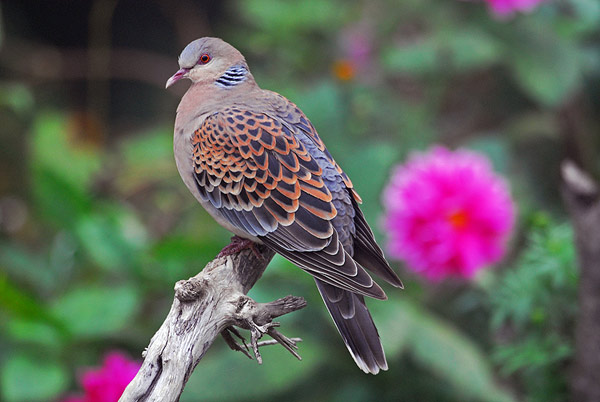
Oriental Turtle Dove (Streptopelia orientalis) by Nikhil

Oriental Turtle Dove (Streptopelia orientalis) by Nikhil

Harriet Newell Cook was born in 1814 and died in 1843. In her short 29 years of life she wrote several juvenile books and thought I would share parts of them here. “Her first volume for the young was one of Natural History, calculated to illustrate portions of the Bible, for the young, and entitled, “The Scripture Alphabet of Animals.” Nearly thirty thousand copies of the work have been printed in its English dress, and eight thousand of the German translation. The style of this work is eminently lucid…”

Her last very interesting work for the young —“The Trees, Flowers and Fruits of the Bible“– she was not permitted to finish, by reason of her death. It was completed by Miss F. M. Caulkins…” (From Memoir of Mrs. Harriet Newell Cook By Lydia Howard Sigourney, at Google Books)

Beasts, and all cattle; creeping things, and flying fowl: Kings of the earth, and all people; princes, and all judges of the earth: Both young men, and maidens; old men, and children: Let them praise the name of the LORD: for his name alone is excellent; his glory is above the earth and heaven. (Psalms 148:10-13 KJV)

It was difficult finding information about her personally. Also, I couldn’t find a picture of her. One thing was for certain, she appears to have loved the Lord greatly and wanted to serve Him through her writing.

See Also:

Scripture Alphabet of Animals: The Ant
Scripture Alphabet of Animals: The Ass (Donkey)
Scripture Alphabet of Animals: The Bear
Scripture Alphabet of Animals: The Bee
Scripture Alphabet of Animals: The Camel
Scripture Alphabet of Animals: The Dog
Scripture Alphabet of Animals: The Eagle
Scripture Alphabet of Animals: The Fox or Jackal
Scripture Alphabet of Animals: The Goat
Scripture Alphabet of Animals: The Hart and Hind
Scripture Alphabet of Animals: The Horse
Scripture Alphabet of Animals: The Ibex or the Wild Goat
Scripture Alphabet of Animals: The Jerboa or Mouse
Scripture Alphabet of Animals: The Kite
Scripture Alphabet of Animals: The Leopard
Scripture Alphabet of Animals: The Lion
Scripture Alphabet of Animals: The Locust
Scripture Alphabet of Animals: The Mole
Scripture Alphabet of Animals: The Night-Hawk
Scripture Alphabet of Animals: The Ostrich
Scripture Alphabet of Animals: The Peacock
Scripture Alphabet of Animals: The Quail
Scripture Alphabet of Animals: The Raven
Scripture Alphabet of Animals: The Roe or Gazelle
Scripture Alphabet of Animals: The Scorpion
Scripture Alphabet of Animals: The Sheep
Scripture Alphabet of Animals: The Stork
Scripture Alphabet of Animals: The Turtle-Dove
Scripture Alphabet of Animals: The Unicorn
Scripture Alphabet of Animals: The Vulture
Scripture Alphabet of Animals: The Whale
Scripture Alphabet of Animals: The Wolf

See:

Bible Birds

Birds of the Bible

Wordless Birds

*