The Goose That Called The Police

“How hast thou helped him that is without power? how savest thou the arm that hath no strength?” (Job 26:2)

A friend sent me this email, and then I was able to find a video about it. Thought you all might enjoy this.

A Goose Quacked And Pecked At A Cop’s Car. When He Followed Her, He Couldn’t Believe What He Saw!

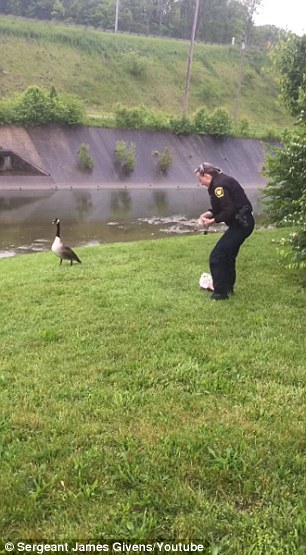
Officer James Givens has served with the Cincinnati Police Department for over 26 years, but has never quite experienced anything like this before. He was sitting in his patrol car in a parking lot when he got an unexpected visitor. A goose came up to his car and started pecking on the side of it. He threw out a bit of food for her, thinking that’s what she wanted, but she didn’t take it.

She continued to peck and quack, then walked away, stopped, and looked back at Officer Givens. Then she came back to his car and pecked at it again. She made it very obvious that she wanted Officer Givens to follow her, so he finally got out of his car and did just that.

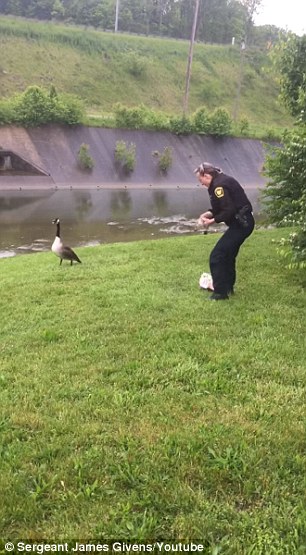
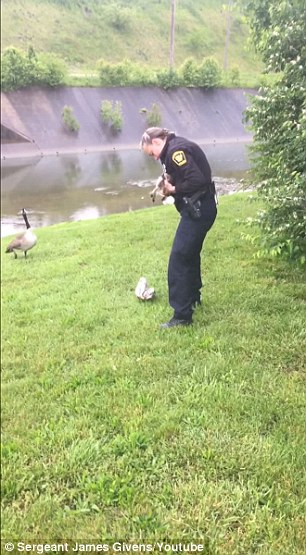
The goose led him 100 yard away to a grassy area near a creek. Sitting there was one of her babies, tangled up in a balloon string. He was kicking his feet, desperate for help. He was wary of helping the baby on his own, worried that the goose might attack him, so he called for help from the SPCA, but no wildlife rescuers were available at the moment.

Luckily, Given’s colleague, Officer Cecilia Charron, came to help. She began to untangle the baby, and the mother goose just stood there and watched, quacking. She didn’t become aggressive, and just let Officer Charron do what she had to do to set the baby free. It’s like the mother goose knew they were helping. Once she untangled the baby, she put her down and she ran right to her mom and they went back to swimming in the creek. Charron teared up and said it was the highlight of her 24 years on the force.

“It seems like something made up. It was just incredible,” Givens said. “I honestly don’t know why I decided to follow her, but I did. It makes me wonder – do they know to turn to humans when they need help?

We may never know the answer to this question, but what we do know is that Officer Givens was in the right place at the right time to help this mother and her baby!

“Life is precious because it is vulnerable, like a little bird. To love life means to love its vulnerability, asking for care, attention, guidance, and support.”   — Fr. Henri Nouwen

“The only thing necessary for evil to triumph is for good men to do nothing.” – Edmund Burke (1729-97)

“They helped every one his neighbour; and every one said to his brother, Be of good courage.” (Isaiah 41:6)
*

Another Update From I.O.C. – Version 6.4

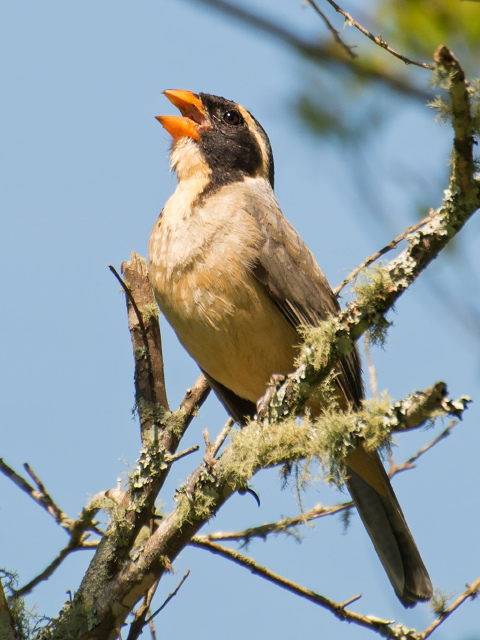
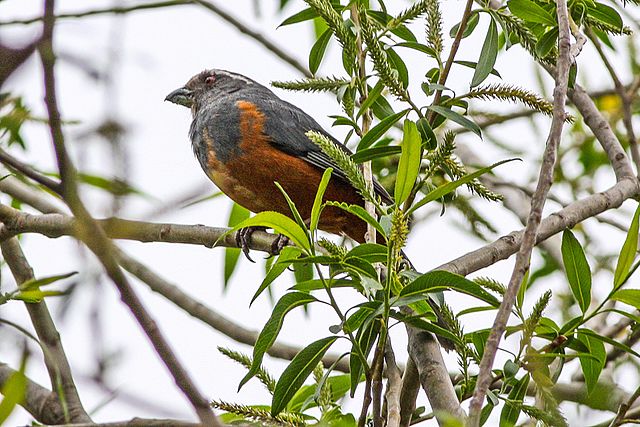
Golden-billed Saltator (Saltator aurantiirostris parkesi) ©Flickr Claudio Dias Timm

Golden-billed Saltator (Saltator aurantiirostris parkesi) ©Flickr Claudio Dias Timm

“Now go, write it before them in a table, and note it in a book, that it may be for the time to come for ever and ever:” (Isaiah 30:8)

I have been updating the site for the newest changes to the Birds of the World. They demoted 3 species down to subspecies, and raised 4 subspecies up to full species status. Overall, that made for a gain of 1 species. So, now there are 10,660 living avian species in the world. All the indexes are complete and all the updates are done also. These updated comments is at the top of all the main Birds of the World pages:

These pages contain Lee’s Birds of the World, based on the IOC World Bird List 6.4 contains 10,660 extant species (and 155 extinct species)  classified in 40 Orders,  238 Families (plus 2 Incertae Sedis) and 2294 Genera and 20,358 Subspecies.  All the ORDERs and the Families are listed. Please enjoy looking around at the references to the numerous birds that the Lord has created.

One major change is that they took the Saltators out of the Cardinalidae Family (53 species) and put them in the Thraupidae Family (391). Here is a slideshow of the birdies, that have flown the nest over to the Thraupidae clan:

This slideshow requires JavaScript.

Slate-colored Grosbeak (Saltator grossus )
Black-throated Grosbeak (Saltator fuliginosus )
Black-headed Saltator (Saltator atriceps )
Buff-throated Saltator (Saltator maximus )
Black-winged Saltator (Saltator atripennis )
Green-winged Saltator (Saltator similis )
Greyish Saltator (Saltator coerulescens )
Orinoco Saltator (Saltator orenocensis )
Thick-billed Saltator (Saltator maxillosus )
Black-cowled Saltator (Saltator nigriceps )
Golden-billed Saltator (Saltator aurantiirostris )
Masked Saltator (Saltator cinctus )
Black-throated Saltator (Saltator atricollis )
Lesser Antillean Saltator (Saltator albicollis )
Streaked Saltator (Saltator striatipectus )

This fellow not only changed Families, but they also changed its genus from Saltator to Pseudosaltator. They also made him a Mountain Saltator.

Rufous-bellied Mountain Saltator (Pseudosaltator rufiventris) ©Flickr Ron Knight

Rufous-bellied Mountain Saltator (Pseudosaltator rufiventris) ©Flickr Ron Knight

Some of the other changes were the three birds they made subspecies, were all Toucanets. They are in the Ramphastidae – Toucans Family.

Blue-throated Toucanet (Aulacorhynchus caeruleogularis)
White-throated Toucanet (Aulacorhynchus albivitta)

To finish up, other than some minor male (-us), or female (-a) endings to a few names, there were four birds given the full species status. They are so new that there are no photos available yet that aren’t copyrighted.

  • Baliem Whistler (Pachycephala balim)
  • Chestnut-throated Flycatcher (Myiagra castaneigularis)
  • Mongolian Short-toed Lark (Calandrella dukhunensis)
  • Streak-eared Bulbul (Pycnonotus conradi)

*

“And further, by these, my son, be admonished: of making many books there is no end; and much study is a weariness of the flesh.” (Ecclesiastes 12:12)

Birds of the World

*

“E” is for Eagles and Eiders: “E” Birds”, Part 1

Dr. James J. S. Johnson

verreauxseagle-soaring-by-cliffs-mikehaworth

Verreaux’s Eagle (Aquila verreauxii)
Fair Use photo credit: Mike Haworth

The pride of thine heart hath deceived thee, thou that dwellest in the clefts of the rock, whose habitation is high; that saith in his heart, Who shall bring me down to the ground? Though thou exalt thyself as the eagle, and though thou set thy nest among the stars, thence will I bring thee down, saith the LORD. (Obadiah 1:3-4)

E” is for Eagles, Eiders, Egrets, Emus, Earthcreepers, Eagle-owls, Euphonias, Elaenias, Eremomelas, Elepaios, and/or Emerald hummingbirds — plus whatever other birds there are, that have names that begin with the letter E.

This present study (i.e., “‘E’ Birds, Part 1”) will focus on Eagles and Eiders.
But first, because this blogpost-article calmly continues an alphabet-based series on birds, we look at Psalm 119:33-40, — thereafter we review two categories of birds that start with the letter “E”, namely, Eagles and Eiders.
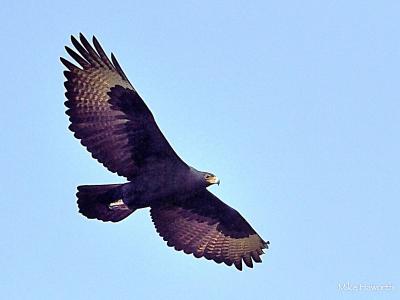
verreauxseagle-soaring-sky-mike-haworth

Verreaux’s Eagle (Aquila verreauxii)
Fair Use photo credit: Mike Haworth

THE ALPHABET HELPS TO TEACH US ABOUT GOD’S TRUTH
Using alphabet letters, to order a sequence of information, has Biblical precedent, as is noted in the four earlier articles in this series of “alphabet birds” — i.e., A birds; B birds; and C birds; and D birds.

The perfect example is the “acrostic” pattern of Psalm 119, the longest psalm (having 176 verses!), which psalm has 22 sections (comprised of 8 verses per section), representing the 22 letters of the Hebrew alphabet. (Compare that to the English alphabet, which has 26 alphabet letters, and/or to the Norwegian alphabet, which has 29 alphabet letters.) The sentences in each section start with the same Hebrew letter: Verses 1-8 start with ALEPH, Verses 9-16 with BETH, Verse 17-24 with GIMEL, and so forth.

he-5th-hebrew-letter-chart

Fair Use Image Credit:  4.bp.blogspot.com

In this serial study’s lesson, the fifth octet of verses in Psalm 119 (i.e., Psalm 119:33-40), each sentence starts with HÊ (pronounced “hay”, like what horses eat), the Hebrew consonant equivalent to the English “H”.

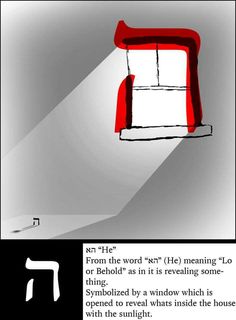
The word based upon this letter is HÊ’, (also pronounced “hay”, like what horses eat), which is routinely translated as a “Behold!” (or “Lo!”) in the Old Testament (see YOUNG’S ANALYTICAL CONCORDANCE, Index-Lexicon to the Old Testament, page 18, column 4), such as in Ezekiel 16:43 & Genesis 47:23.

Because thou hast not remembered the days of thy youth, but hast fretted me in all these things, behold! — therefore, I also will recompense thy way upon thine head, saith the Lord GOD: and thou shalt not commit this lewdness above all thine abominations. (Ezekiel 16:43)

Then Joseph said unto the people, Behold, I have bought you this day and your land for Pharaoh: Lo! — here is seed for you, and ye shall sow the land. (Genesis 47:23)

The Aramaic equivalent, HÂ’ (pronounced “Ha!”) appears in Daniel 3:25, when King Nebuchadnezzar was shocked to see what surprisingly happened in the fiery furnace, after Shadrach, Meshach and Abednego were unjustly thrust therein.

daniel-5-verses

In King James English, one alerted others by exclaiming, “behold!” – meaning something like our modern expressions “Hey! Look!” and/or “Hey! Watch out!” In other words, ironically, the modern English exclamation “Hey!” means about the same thing as the ancient Hebrew exclamation “HÊ’!” – which is pronounced the same as is the English “Hey!”

Exclamations — like “Hey!” — alert us, to pay attention to something, to behold something, to watch out for something, that is very important. In the New Testament, the Greek equivalent is an imperative form of a verb meaning “look”, i.e., the New Testament’s equivalents (of “Behold!” or “Lo!”) likewise call someone to “Look!”
he-hebrew-letter-window

Fair Use image Credit: Pinterest

So, because HÊ’ is the fifth letter in the Hebrew alphabet, each verse (in Psalm 119:33-40) literally starts with that letter as the first letter in the first word (although the first Hebrew word may be differently placed in the English translation’s sentence):

33 Teach-me [hôrênî], O LORD, the way of Thy statutes; and I shall keep [a form of nâtsar] it unto the end.

34 Give-me-understanding [habînēnî], and I shall keep [a form of nâtsar] Thy law; yea, I shall observe [a form of shâmar] it with my whole heart.

35 Make-me-to-go [hadrîkēnî] in the path of Thy commandments; because therein do I delight [a form of ].

36 Incline [haṭ] my heart unto Thy testimonies, and not to covetousness.

37 Turn-away [ha‘abēd] mine eyes from beholding vanity; and quicken Thou me in Thy way.

38 Stablish [haqēm] Thy word unto thy servant, who is devoted to Thy fear.

39 Turn-away [ha‘abēd] my reproach which I fear: for Thy judgments are good.

40 Behold [hinnēh] ! — I have longed after Thy precepts; quicken me in Thy righteousness.

As noted before, Psalm 119 is all about God’s revelation of truth – especially truth about Himself – to mankind (in a comprehensive “A to Z” panorama). The most important revelation of truth that God has given to us, and the most authoritative form of truth that we have, is the Holy Bible – the Scriptures (2nd Peter 1:16-21). Here, the octet of verses in Psalm 119:33-40 is dominated by references to the Scriptures, using the terms “Thy statutes” (verse 33), “Thy law” (verse 34), “Thy commandments” (verse 35), “Thy testimonies” (verse 36), “Thy way” (verse 37), Thy Word” (verse 38), “Thy judgments” (verse 39), and “Thy precepts” (verse 40).

Notice how the “theme” of the Hebrew noun hê’ appears frequently in this section of Psalm 119 – because when you behold a “window” of valuable/relevant information, provided by God, you “watch out!” —  i.e., you look and see what is important for you to learn about, that helps you with your God-designed destiny.

Accordingly, the Hebrew letter HÊ’ alerts our attention to vitally important information – such as the sobering cause-and-effect logic of God’s punishment of wickedness (Ezekiel 16:43), or the providential opportunity to live and thrive in a well-provided-for situation (Genesis 47:23), or the astounding sight of a miracle happening inside a burning fiery furnace (Daniel 3:25).

But what about the running theme of alertness in Psalm 119:33-40? Behold!

In Psalm 119:33, the psalmist requests teaching from the LORD, in order that the psalmist “keep” God’s way completely. A person cannot practice God’s truth, in daily living, with first learning what God’s truth is — this is practical logic that Ezra exemplified in his life (Ezra 7:10).

merkava3-firing-projectile

Israel’s armored cavalry “chariot” [Merkava 3], firing projectile (public domain)

Two Hebrew verbs appear in Verse 33, “teach” (a causative active imperative form of YÂRÂH, which refers to the action of projecting, i.e., casting a projectile such as an arrow or spear) and “keep” (a simple active imperfect form of NÂTSAR, which refers to guarding, preserving, conserving, protecting). The idea here is that the psalmist is alert to his need to vigorously dive into – like an arrow being forcibly shot into God’s assigned missions in life – which involve the spiritual pathway of God’s statutes, in order for the psalmist to guard those statutes (in daily living) “to the end”. This is not a relaxed scenario! If God’s Word was like a swimming pool, the psalmist is asking God to “throw him into the deep end”, so that the psalmist is confronted with challenges needful for “finishing strong” in his spiritual journey!

Psalm 119:34 is similar in meaning to Verse 33, because the psalmist again is seeking to “keep” (NÂTSAR) God’s Word, which this time is called God’s “law” (TÔRÂH), so that the psalmist can be careful in attending to (SHÂMAR) God’s law with his “whole heart”, like a watchman on a city wall. To do this, the psalmist asks God to give him “understanding” (a causative active imperative form of the Hebrew verb BÎN — literally exhorting God to cause the psalmist to understand what is needful, to achieve the goal of carefully living by God’s Word, with his “whole heart”. This too is no relaxed scenario – very serious understanding, discernment, judgment is needed. So this verse shows the psalmist being watchful, living life with “eyes open”, to know what is really going on in life.
psalm119-105-lighted-pathway

Fair Use Credit: JohnFanPhotography.com

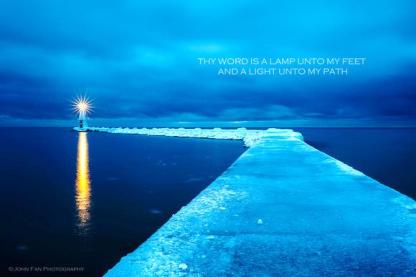
 In Psalm 119:35, the psalmist requests God to “lead” [a causative active imperative form of DÂRAK] him in the proper pathway, namely, the pathway of proper living – this verse resembles a later verse, Psalm 119:105, that likens life’s spiritual journey as needing the enlightenment of God’s Word, “a lamp to my feet” and “a light unto my path”. Notice the psalmist’s purpose for this — he has “delighted” [a simple active perfect form of CHÂPHĒTS] in God’s commandments. The verb CHÂPHĒTS (which appears as “delighted” in Psalm 119:35) denotes the action of being delighted, favoring, enjoying, being pleased with – i.e., having a positive attitude toward someone or something. Remember the Westminster Confession? “Man’s chief end is to glorify God, and to enjoy Him forever.”

This reminds me of something my granddaughter Sydney said, when she was about 5 years old, when her mom told her that “we love God”. “Yeah”, Sydney agreed, “and we like God, too!” (Accordingly, we like and enjoy His Word, too!)

sydney-doubleoak-jumphouse

Sydney (photo at about age 2), who loves God, and who likes Him too!

In Psalm 119:36, the psalmist asks God to “incline” his heart toward God’s “testimonies”. The word translated “incline” is a causative active imperative form of the Hebrew verb NÂṬÂH, which refers to the action of stretching or spreading out (e.g., spreading/stretching out a tent in Genesis 33:19 & Exodus 33:7, and arching a spear in Joshua 8:18 & 8:26), so the psalmist is beseeching God to stretch his heart toward God’s testimonies. This is no lackadaisical request! Of course, the testimonies of God’s witnesses were not of slight importance – the fate of families, communities, and even and nations would depend upon how such testimonies were received (or not received) — see, e.g., Deuteronomy 8:9 & 32:46; 2nd Kings 17:13-15; Nehemiah 9:26-34; Psalm 78:56; Isaiah 8:20; Amos 3:13; John 3:32 & 4:44; Acts 1:8; 1st Corinthians 15:15; Ephesians 4:17; 1st Thessalonians 4:6; Hebrews 12:1; 1st Peter 1:11; 1st John 4:14; Rev 22:16 & 22:20. In other words, watch out! — God’s testimony, provided by God’s witnesses, is never to be trifled with. The psalmist wants the opposite of shying away from God’s testimonies; the psalmist wants to stretch toward God’s testimonies.

In fact, the psalmist is actually pleading with God, asking God to make the psalmist to stretch him toward God’s testimonies, as opposed to the psalmist being inclined (i.e., “stretched”) toward seeking worldly “gain”. This cannot be a passive enterprise – in order for us to stretch toward God, and toward what honors God (i.e., what Colossians 3:2 calls “the things above”), we must affirmatively pull our hearts away from the worldly “treasures” that all-too-often compete with God, as our heart’s affection.

refuse-2-b-distracted-derailed-rr-track

Fair Use Credit: Felicia Starks

In Psalm 119:37, the psalmist asks God to turn the psalmist’s eyes from visons of vanities, as the psalmist recognizes that real life is experienced only in the ways of God. The verb translated “turn away” (in Psalm 119:37) is a causative active imperative form of the Hebrew verb ‘ÂBAR (literally, “to pass through”). Thus, the psalmist is imploring God to make the psalmist to “pass through” (or “pass over”) the lying sights of worldly temptation and folly. In other words, the psalmist does not expect divine deliverance, from worldly vanities, to come in the form of escape so much as to come in the form of a successful endurance (see 1st Corinthians 10:13). To achieve this result, the psalmist (and we) must pay alert attention to what is reliable and true — and (likewise) refuse to be distracted by what is ultimately illusory and false.

[Regarding the inherent distractiveness of deceit, seeStaying on Track, Despite Deceptive Distractions.

In Psalm 119:38, the psalmist asks God to make what He says to “arise” (using a causative active imperative form of the Hebrew verb QÛM) – i.e., whatever God’s promises He must establish. As mere mortals we cannot, by ourselves, establish God’s will on earth. God must make His own Word happen — and He is ready, willing, and able to do just that (see Isaiah 14:24 & 14:27)! Yet notice who the intended beneficiaries of God promises are: “those who fear Thee”, i.e., those with reverential awe of God, those who worshipfully fear His power and holiness – and that should describe us. Obviously this is not a lackadaisical matter – this is something we must pay close and sober attention to, especially if we hope to be on the “good side” of God’s promises.

In Psalm 119:39, the psalmist begins with the same Hebrew verb that Verse 37 began with, ‘ÂBAR (literally, “to pass through”), this time asking God to cause the psalmist’s self-dreaded “reproach” to pass through, i.e., the psalmist is fearful of his own fallibility and faultiness, and rightfully so – as we all should be. The psalmist’s prayer is a prayer of dependence — God needs to protect us form ourselves. The old saying is true: we are our own worst enemies. Accordingly, we need for God to take/pull us through our own shameful sinfulness, overruling our inherent sin-nature (which we inherited form Adam our first forefather), so that we can freely live for Him. But only God’s truth can free us from our sinful selves; only the Scriptures give us the truth that sets us free (see John 8:31-32). Thus, God’s Word is liberating. As the psalmist here says, God’s ordinances are “good” – they are the real daily nutrition that our lives must have, spiritually speaking (Matthew 4:4) — see Real Freedom Only Comes from Real Truth”, posted at  (from the April AD2013 issue of ACTS & FACTS).

In Psalm 119:40, the psalmist starts the verse with the exclamation “Behold!” (Hebrew: HĪNĒH), which repeats the tone of this octet of verses. The last word in this verse is an intensive active imperative form of the Hebrew verb CHAYAH (meaning “to live” or “to have life”). Thus, the psalmist is beseeching God to give him life “in Thy [i.e., God’s] righteousness”, because the psalmist “has longed for” (simple active perfect form of the verb TÂ’AB) a life that harmonizes with God’s ordinances/judgments. In other words, the psalmist connects real living to God’s gift of His own righteousness, that fits the worthy goal of living according to God’s judgments. This is no careless approach to daily living! This requires careful dependence upon God — only He can give us a good life.
In sum, Scripture-based living is not easy – it requires watchfulness, alertness, caution, sobriety, and complete dependence upon God’s Word-based guidance.

Thus we see the theme, woven throughout the octet of HÊ’ verses (Psalm 119:33-40), is that we need to be alert while living life on earth (i.e., “Watch out! Beware! Hey! Pay attention!”) — and that God’s Word is what equips us to be properly alerted to what is really happening in and around us.

After that lesson (from Psalm 119:33-40), about the value of careful attentiveness, it is appropriate to consider some EAGLES, those huge raptors that illustrate super-keen eyesight, telescopic eyes that they routinely use for the serious business of catching prey on land, in air, and even at the water’s surface.
stellersseaeagle-igorshpilenok

EAGLES

Regarding Eagles, see Lee Dusing’s Sunday Inspiration: Eagles, as well as her “Bible Birds: Eagles”.

The best known eagle, for Americans, is the USA’s national bird, the BALD EAGLE. Frequenting saltwater shorelines, these hawk-like fish-eating raptors are well-populated in coastal Alaska, as is reported in Alaska’s Bald Eagle, which is quoted below.

????????????????????????????????????

                   Photo credit: SkagwayExcursion.com

BALD EAGLE pair (Alaska)

Bald eagles may enjoy abundant fishing opportunities, in Alaska and in other coastwater and riverine areas, but life has not been easy for these carnivores, due to the accumulation of poisons in food chains they depend upon.

Driven to near extinction due to DDT [via its byproduct DDE] poisoning and illegal killing. Now making a comeback in North America. Returns to same nest each year, adding more sticks, enlarging it to massive proportions, at times up to 1,000 pounds (450 kg). In the midair mating ritual, one eagle will flip upside down and lock talons with another. Both tumble, then break apart to continue flight. Thought to mate for life, but will switch mates if not successful reproducing. Juvenile attains the white head and tail at about 4-5 years of age.

[Quoting Stan Tekiela, BIRDS OF TEXAS FIELD GUIDE (Adventure Publications, 2004), page 81.]
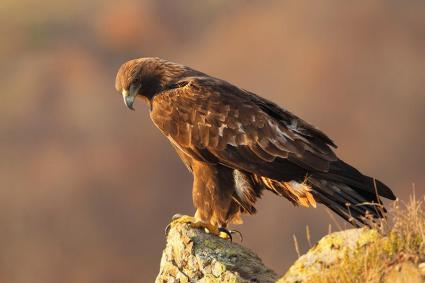
goldeneagle-perching-wildechotours

GOLDEN EAGLE  (photo credit: WildEchoTours.com)

The other major variety of eagle, in North America, is the GOLDEN EAGLE, which lives off of prey it seizes from the ground, or from the air.

Large and powerful bird of prey that has no trouble taking larger prey such as jackrabbits. Hunts by perching or soaring and watching for movement [on the ground below]. Inhabits mountainous terrain, requiring large territories to provide large supply of food. Thought to mate for life, renewing pair bond late in winter with spectacular high-flying courtship displays. Usually nests on cliff faces, rarely in trees. Uses well-established nest that has been used for generations. Not uncommon for it to add thing to nest such as antlers, bones and barbed wire.

[Quoting Stan Tekiela, BIRDS OF TEXAS FIELD GUIDE (Adventure Publications, 2004), page 239.]

Golden Eagles are actually well distributed throughout the Northern Hemisphere, not just in North America, as the range map (below) indicates.

goldeneagle-rangemap-wikipedia

Golden Eagle Range Map (Wikipedia)

But would you expect there to be many more examples of “eagles” than just the Bald Eagle (Haliaeetus leucocephalos) and the Golden Eagle (Aquila chrysactos)?

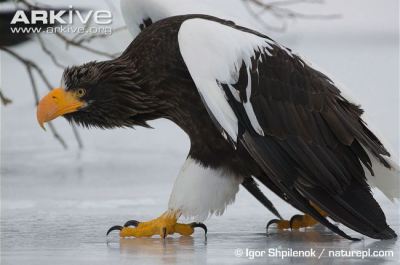
The varieties of Eagles – besides North America’s Bald Eagle and Golden Eagle – are many [see Accipitridae – Kites, Hawks, Eagle ], such as: Indian Black Eagle [found in tropical Africa], Black-and-chestnut Eagle, Bonelli’s Eagle, Chaco Eagle, Crested Eagle, Crowned Eagle, Gurney’s Eagle, Harpy Eagle, Eastern Imperial Eagle, Spanish Imperial Eagle, Little Eagle, Long-crested Eagle, Martial Eagle, Papuan Eagle, Philippine Eagle, Pygmy Eagle, Grey Sea Eagle [a/k/a Ørn and White-tailed Sea-Eagle], Sanford’s Sea Eagle, Steller’s Sea Eagle, White-bellied Sea Eagle, Andaman Serpent Eagle, Congo Serpent Eagle, Crested Serpent Eagle, Madagascan Serpent Eagle, Mountain Serpent Eagle, Great Nicobar Serpent Eagle, Philippine Serpent Eagle, Sulawesi Serpent Eagle, Southern Banded Snake Eagle, Western Banded Snake Eagle, Beaudouin’s Snake Eagle, Black-chested Snake Eagle, Brown Snake Eagle, Short-toed Snake Eagle, Solitary Eagle, African Fish Eagle, Madagascan Fish Eagle, Pallas’s Fish Eagle, Lesser Fish Eagle, Grey-headed Fish Eagle, Changeable Hawk-Eagle, Flores Hawk-Eagle, Mountain Hawk-Eagle, Legge’s Hawk-Eagle, Blyth’s Hawk-Eagle, Javan Hawk-Eagle, Sulawesi Hawk-Eagle, Philippine Hawk-Eagle, Pinsker’s Hawk-Eagle, Wallace’s Hawk-Eagle, Black Hawk-Eagle, Black-and-white Hawk-Eagle, Ornate Hawk-Eagle, Rufous-bellied Hawk-Eagle, Ayre’s Hawk-Eagle, Cassin’s Hawk-Eagle, African Hawk-Eagle, Booted Eagle, Lesser Spotted Eagle, Greater Spotted Eagle, Indian Spotted Eagle, Wahlberg’s Eagle, Tawny Eagle, Wedge-tailed Eagle, Verreaux’s Eagle [a/k/a African Black Eagle], Black-chested Buzzard Eagle, and Steppe Eagle!
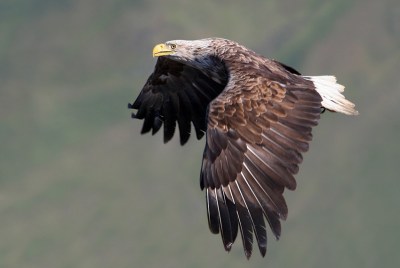
whitetailedseaeagle-sindriskulason

Grey Sea Eagle, a/k/a Ørn and White-tailed Sea-Eagle

Fair Use Credit: Sindri Skulason

 Consider the following information about eagles, a raptor often mentioned in Holy Scripture:

Eagles are such heavy birds that they don’t build their houses, called “nests”, near the ground. Eagles build their nests high up in trees or on top of rocky mountains or cliffs, so that they can jump out into the air and glide on rising warm air currents. Some air currents are made of warm rising air, so an eagle can jump into such warm air and “ride” it up like an elevator, then the eagle can glide from one air current to another , until it wants to fly down. These rising air currents are called “thermals”. The eagle that soars on a thermal is mostly at rest, because he is trusting the thermal to carry him along for a “ride” in the air. The eagle soaring on such a thermal air current is a reminder of how we should trust and depend upon God to carry us through life’s adventures, as we travel from one day to the next. By “riding” on upwardly spiraling thermal air currents eagles can save their energy, because too much wing-flapping can waste an eagle’s energy and cause it to get too tired to fly. Like eagles, we can waste a lot of energy if we fail to depend on God, because worrying and distrusting God wastes a lot of mental energy and emotions! (See Isaiah 40:31, quoted below.)

But they that wait upon the LORD shall renew their strength; they shall mount up with wings as eagles; they shall run, and not be weary; and they shall walk, and not faint. (Isaiah 40:31)

By conserving (carefully using, not wasting) his energy, the bald eagle can flap his wings only when he needs to, and he can rise to very high places in the air, which also means that the eagles can reach high places on top of mountains or cliffs that other animals cannot reach. So an eagles’ nest (called an “eyrie”) can be far away from egg-eating animals that might bother parent eagles and try to eat their eggs before they have a chance to hatch into baby eaglets (the baby eaglets are called “hatchlings” when they first hatch). Bald eagles, like other kinds of eagles, often live in rocky places in high places, so it is not surprising that people (including Biblical authors) compare highness with flying and nesting behaviors of eagles.

One example of highness being compared to the nesting habits of eagles is found in the Bible, in the Book of Obadiah (at Obadiah 1:3-4), where the eagle is described as a creature that lives in high places, much closer to the stars than do most other animals (or people).

Another Old Testament book in the Bible, the Book of Job, refers (at Job 39:27) to the eagle as mounting up into the air by God’s command (because God programs eagles to fly up into the air the way that they do), and as nesting in high places (because God programs eagles to do this also).

“The pride of thine heart hath deceived thee, thou that dwellest in the clefts of the rock, whose habitation is high; that saith in his heart, ‘Who shall bring me down to the ground?’ Though thou exalt thyself as the eagle, and though thou set thy nest among the stars, thence will I bring thee down, saith the LORD.” (Obadiah 1:3-4)

“Doth the eagle mount up at thy command, and make her nest on high?” (Job 39:27)

Eagles are good parents, training their sons and daughters to live like eagles (see Deuteronomy 32:11). Eagles can fly, like dive-bombing airplanes, at great speeds (see 2nd Samuel 1:23 and Lamentations 4:19). Their strength is renewed from time to time, as their feather-cover adjusts to their growing bodies (see Isaiah 40:31 and Psalms 103:5). Eagles are known for their gracefulness and dignity (see Proverbs 30:19). In fact, eagles fly very high in the air as a matter of habit – above most other birds (see Proverbs 23:5).

[Quoting from James J. S. Johnson, “Alaska’s Bald Eagle”].

ag of Mexico ©WikiC

Flag of MEXICO  (displaying Golden Eagle)

Eagles are favorite birds on national flags and in official coat-of-arms emblems. For a just a few examples, consider these “flagged” eagles:

Consider – for just a few representative examples – the eagles that appear on the flags – some present, some past — of these national and state/provincial flags: Albania; American Samoa; Austria (armorial flag); Brandenburg, Germany; Ecuador (armorial banner); Egypt; Geneva, Switzerland; Germany (armorial flag ); Iowa; Italian president’s flag (AD1880-AD1946); Jordan (armorial banner); Mexico; North Dakota; Oregon (front side of state flag); Pennsylvania; Poland (armorial flag); Prussia (armorial banner, AD1819-AD1850); (Moldova; Mount Athos (autonomous Greek protectorate); Russian Czar’s banner (18th century A.D.); Serbia (during AD1882-AD1918); Silesia (until absorption by Prussia in AD1742 – parts of Silesia now lay within Poland, Germany, and the Czech Republic); United States Coast Guard and Marine Corps; Utah; Virgin Islands (of the USA); Zambia; etc.

[Quoting from James J. S. Johnson, “’Flag that Bird!’ (Part 1)

goldeneagle-swooping-down-netns-wildlifezone

Golden Eagle in flight
(Fair Use Credit: NETNS Wildlife Zone)

No wonder so many countries choose to include an eagle in their official coat-of-arms — these birds are truly regal!

Now for another category of “E” birds, the eiders.
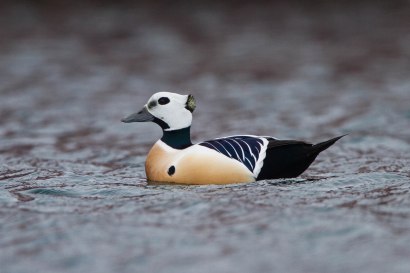
stellerseider-wikipedia

Steller’s Eider in icy seawater (Wikipedia)

EIDERS

Eiders are large sea-ducks, the largest wild ducks in North America and Europe – with the exception of the Muscovy Duck (which, in parts of Texas and Florida, occurs in the wild). Examples of eiders include the Common Eider (Somateria mollissima), King Eider (Someteria spectabilis), and Spectacled Eider (Somateria fischeri), and Steller’s Eider (Polysticta stelleri), all four of which varieties are found in Alaskan waters. Eiders in the wild (including Steller’s Eider, misleadingly classified as a “different genus” of eider) are known to hybridize, so (obviously) all eiders descend from the same created kind.

Regarding downy-feather-famous Eiders, see, Lee Dusing’s “The Eider: The Cushion Makers (Nuggets Plus)”.  Eiders are true mariners, “sea ducks”, a term that includes mergansers, oldsquaw (a/k/a “long-tailed duck”), bufflehead, goldeneyes, and (of course) eiders.
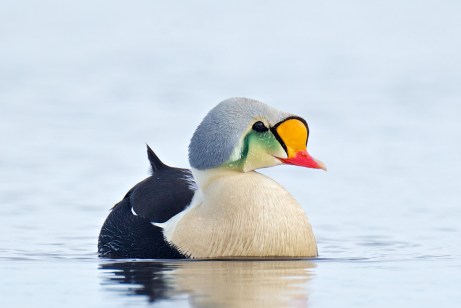
kingeider-alaska-by-greggthompson

King Eider male near Barrow, Alaska (by Gregg Thompson)

Ornithologist Steve Madge describes eiders as cold-water ducks of the North. ”

Large sea-ducks of northern coastal waters. Adult males distinctive [in physical appearance], but other plumages similar; immatures take two or more years to reach maturity, males having confusing variety of piebald plumages [i.e., the usual colored feathering is modified by partial leucism, so that the usual black plumage is whitish, yet feathers of rainbow colors are not whitewashed]. Head-and-bill shape important [for identification], especially extent of feathering onto bill-base.

[Quoting Steve Madge & Hilary Burn, WATERFOWL: AN IDENTIFICATION GUIDE TO THE DUCKS, GEESE AND SWANS OF THE WORLD (Houghton Mifflin, 1988), page 104.]
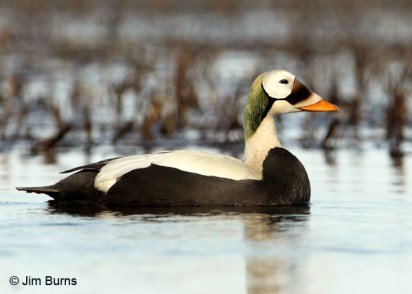
spectacled-eider-male-jimburns

Spectacled Eider male (photo by Jim Burns)

The Eider’s down feathers are especially well-designed for efficiently insulating the body heat of these North-dwelling ducks, so it is no surprise that eider feathers are prized as down for pillow-making. As, as the Nordic Store (Iceland) advises, “Eiderdown is the softest and lightest down in the world … extremely rare, in great demand and highly prized (accounting for its high price)”. [Quoting Nordic Store, with an (apparently) informative YouTube video, narrated in Icelandic, at Eiderdown Duvets and Pillows  — showing beautiful eiders at sea and on land, in colonial activities.]

================================

God willing, the next contribution to this alphabetic series will be some more “E” birds – perhaps Egrets, Emus, and Earthcreepers!

Meanwhile, in accordance with Psalm 119:33-40, use God’s Word as you attentively and alertly live life, daily, with its opportunities to follow Christ. (Hey!) Carefully interpret whatever you see, by the wisdom of God’s Word, as you keep your eyes open, like the observant eagle!

><>  JJSJ profjjsj@verizon.net

e
Sunday Inspiration – Whistling, White-backed Ducks, and Geese

Black-bellied Whistling Duck (Dendrocygna autumnalis) at Palm Beach Zoo by Lee
Black-bellied Whistling Duck (Dendrocygna autumnalis) at Palm Beach Zoo by Lee

 “And the swan, and the pelican, and the gier-eagle,” (Leviticus 11:18)

I have always enjoyed trying to whistle and today we lead off our latest Family, the Anatidae, in the Answeriformes Order. The Anatidae family has ducks, geese, swans, and a few others that add up to 173 species. The Whistling Ducks do make a whistling sound, which I notice more when they are flying. We have the Black-bellied Whistling Ducks here locally. In fact, some hang out at the pond in our housing area.

Anat Black-bellied Whistling Duck (Dendrocygna autumnalis) by Lee at Palm Beach Zoo

Black-bellied Whistling Duck (Dendrocygna autumnalis) by Lee at Palm Beach Zoo

Audio of a Black-bellied Whistling Duck from xeno-canto.

The Anatidae are the biological family of birds that includes ducks, geese, and swans. The family has a cosmopolitan distribution, occurring on all the world’s continents. These birds are adapted for swimming, floating on the water surface, and in some cases diving in at least shallow water. (The magpie goose is no longer considered to be part of the Anatidae, but is placed in its own family

They are generally herbivorous, and are monogamous breeders. A number of species undertake annual migrations. A few species have been domesticated for agriculture, and many others are hunted for food and recreation. Five species have become extinct since 1600, and many more are threatened with extinction.

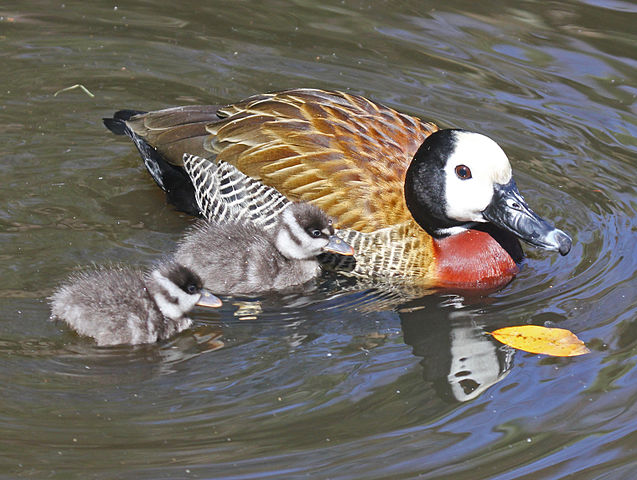
White-faced Whistling Duck (Dendrocygna viduata) ©WikiC

White-faced Whistling Duck (Dendrocygna viduata) ©WikiC

Whistling ducks are found in the tropics and subtropics. As their name implies, they have distinctive whistling calls. The whistling ducks have long legs and necks, and are very gregarious, flying to and from night-time roosts in large flocks. Both sexes have the same plumage, and all have a hunched appearance and black underwings in flight.

White-backed Duck (Thalassornis leuconotus) ©WikiC

White-backed Duck (Thalassornis leuconotus) ©WikiC

The white-backed duck (Thalassornis leuconotus) is a waterbird of the family Anatidae. It is distinct from all other ducks, but most closely related to the whistling ducks in the subfamily Dendrocygninae, though also showing some similarities to the stiff-tailed ducks in the subfamily Oxyurinae. It is the only member of the genus Thalassornis.

These birds are well adapted for diving. On occasions they have been observed to stay under water for up to half a minute. They search especially for the bulbs of waterlilies. From danger, they also escape preferentially by diving; hence, the namesake white back is hardly visible in life. (Information from Wikipedia)

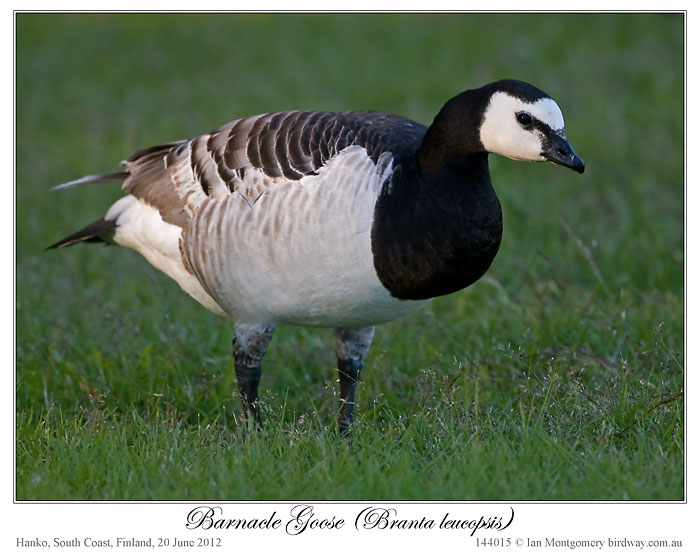
Barnacle Goose (Branta leucopsis) by Ian 2

Barnacle Goose (Branta leucopsis) by Ian

The black geese of the genus Branta are waterfowl belonging to the true geese and swans subfamily Anserinae. They occur in the northern coastal regions of the Palearctic and all over North America, migrating to more southernly coasts in winter, and as resident birds in the Hawaiian Islands. Alone in the Southern Hemisphere, a self-sustaining feral population derived from introduced Canada geese is also found in New Zealand.

The scientific name Branta is a Latinised form of Old Norse Brandgás, “burnt (black) goose). The black geese derive their vernacular name for the prominent areas of black coloration found in all species. They can be distinguished from all other true geese by their legs and feet, which are black or very dark grey. Furthermore, they have black bills and large areas of black on the head and neck, with white (ochre in one species) markings that can be used to tell apart most species.[note 1] As with most geese, their undertail and uppertail coverts are white. They are also on average smaller than other geese, though some very large taxa are known, which rival the swan goose and the black-necked swan in size.

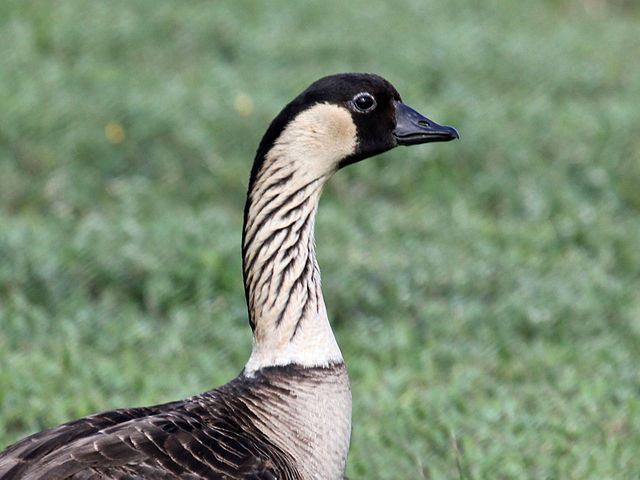
Nene (Branta sandvicensis) ©WikiC

Nene (Branta sandvicensis) ©WikiC

The Nene (Branta sandvicensis), also known as nēnē and Hawaiian goose, is a species of goose endemic to the Hawaiian Islands. The official bird of the state of Hawaiʻi, the nene is exclusively found in the wild on the islands of Oahu, Maui, Kauaʻi, Molokai, and Hawaiʻi. The Hawaiian name nēnē comes from its soft call. The species name sandvicensis refers to the Sandwich Islands, an old name for the Hawaiian Islands. (Above information from Wikipedia)

The first two photos show how the different zoos call the same bird by different names. This is why the scientific name is very important. Also, Dan and I have been fortunate to have seen most of these birds either in the wild or in zoos. It is always a joy to watch the Lord’s Creations in person.

This slideshow requires JavaScript.


I made me pools of water, to water therewith the wood that bringeth forth trees: (Ecclesiastes 2:6)

In those pools of water, most likely you will find one of these.

“I’d Rather Have Jesus” ~ by Faith Baptist Orchestra*

*

ANSERIFORMES Order

Anatidae – Ducks, Geese & Swans Family

Falling Plates

*


Sunday Inspiration – Anseriformes I ~ Screamer and Magpie Goose

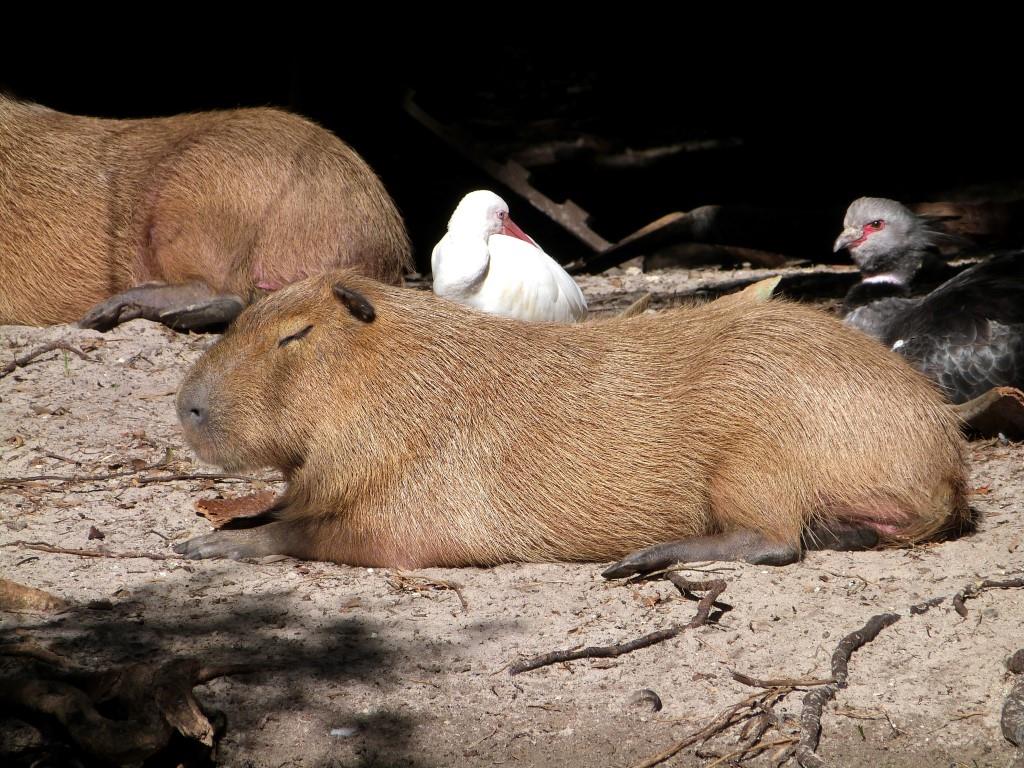
ANS-Anhm Southern Screamer (chauna torquata)with a Capybara by Lee at Palm Beach Zoo

Southern Screamer with a Capybara by Lee at Palm Beach Zoo

“Constantly, night and day, he was screaming among the tombs and in the mountains, and gashing himself with stones. Seeing Jesus from a distance, he ran up and bowed down before Him;” (Mark 5:5-6 NASB)

Our next Order, the Anseriformes has three families. The Anhimidae – Screamers Family has only three members; the Horned, Northern and Southern Screamers. The Anseranatidae – Magpie Goose Family is even smaller. The Magpie Goose is the only member. The third family is huge with 173 species. That is the Anatidae Family which has Ducks, Geese, Swans and other water birds. Today, we will just do the first two families. Dan and I have seen the Southern Screamer at several zoos. Also, this audio, by zeno-canto of s Southern Screamer screaming.

“The screamers are a small clade of birds (Anhimidae). For a long time, they were thought to be most closely related to the Galliformes because of similar bills, but they are instead more closely related to ducks (family Anatidae), most closely to the magpie goose (which some DNA evidence suggests are closer to screamers than to ducks). The clade is exceptional within the living birds in lacking uncinate processes of ribs. The screamers are represented by three species, the horned screamer (Anhima cornuta), the southern screamer or crested screamer (Chauna torquata) and the northern screamer or black-necked screamer (Chauna chavaria). The birds’ skin has a layer about a quarter of an inch thick that is filled with small bubbles of air, which produce a crackling sound when pressed.” (Wikipedia with editing)

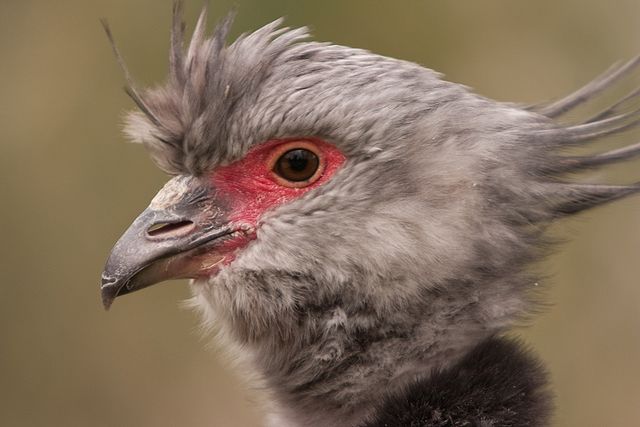
Southern Screamer (Chauna torquata) Closeup of head ©WikiC

Southern Screamer (Chauna torquata) Closeup of head ©WikiC

The three species occur only in South America, ranging from Colombia to northern Argentina. They are large, bulky birds, with a small downy head, long legs and large feet which are only partially webbed. They have large spurs on their wings which are used in fights over mates and territorial disputes; these can break off in the breast of other screamers, and are regularly renewed. Unlike ducks they have a partial molt, and are able to fly throughout the year. They live in open areas and marshes with some grass and feed on water plants. One species, the southern screamer, is considered a pest as it raids crops and competes with farm birds. (Wikipedia)

Horned Screamer (Anhima cornuta) ©©Flickr WMCarlos

Horned Screamer (Anhima cornuta) ©©Flickr WMCarlos

The Horned Screamer is a massive 84–95 cm (33–37.5 in) long, 3.5 kg (7.7 lb) bird, with a small chicken-like bill. The upperparts, head and breast are black, with white speckles on the crown, throat and wing coverts. There is a long spiny structure projecting forward from the crown. This structure is unique among birds and is not derived from a feather but is a cornified structure that is loosely attached to the skull and grows continuously while often breaking at its tip. This gives this species its name. The belly and under wing coverts are white. It has two sharp spurs on its wings, and feet which are only partially webbed.

The horned screamer’s call, as its name suggests, is a very loud U-WHO or honking YOIK-YOK.

The horned screamer is found in lowlands from Colombia, Venezuela, Brazil, Bolivia, Peru, Ecuador, Suriname, French Guiana, and Guyana. It is now extinct in Trinidad and Tobago. Despite having declined locally, it remains widespread and is fairly common overall. Its range in Brazil appears to have expanded in recent years.

It lives in well-vegetated marshes and feeds on water plants. Its nest is a large pile of floating vegetation anchored in shallow water. Three olive-brown eggs are laid, and the young, like those of most Anseriformes, can run as soon as they are hatched.

ANS-Anhm Northern Screamer (Chauna chavaria) ©WikiC

Northern Screamer (Chauna chavaria) ©WikiC

The Northern Screamer (Chauna chavaria), also known as the black-necked screamer, is a large species of bird in the small family Anhimidae, the screamers. It is a resident breeder in northern Colombia, in Chocó, Antioquia, Córdoba, Sucre, Bolívar, Magdalena, Santander, and Cesar Departments and northwestern Venezuela, in Zulia, Mérida, and Trujillo States. On average, they are 88.9 cm (35 in) long and weigh about 3.9 kg (8.6 lb).

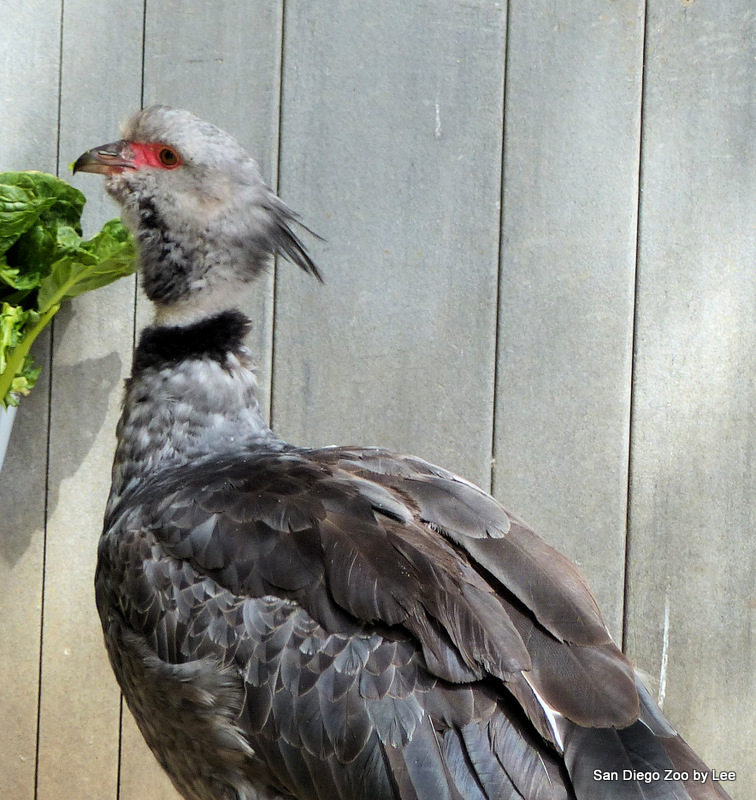
Southern Screamer (Chauna torquata) San Diego Zoo by Lee

Southern Screamer (Chauna torquata) San Diego Zoo by Lee

The southern screamer averages 81–95 cm (32–37 in) long and weighs 3–5 kg (6.6–11.0 lb).[3] They are the heaviest, although not necessarily the longest, of the three screamers.[4] The wingspan is around 170 cm (67 in).[5] Among standard measurements, the wing chord measures 54 cm (21 in), the tail 23.2 cm (9.1 in), the culmen 4.5 cm (1.8 in) and the long tarsus 11 cm (4.3 in).[6] It lives in tropical and sub-tropical swamps, estuaries and watersides.

The southern screamer is a good swimmer, having partially webbed feet, but prefers to move on the ground. The bony spurs on its wings are used for protection against rival screamers and other enemies. Although it is non-migratory, it is an excellent flier. It lives in large flocks, feeding on the ground in grasslands and cultivated fields until nesting season, when birds pair off.

Magpie Goose (Anseranas semipalmata) by Ian

Magpie Goose (Anseranas semipalmata) by Ian

The Magpie Goose (Anseranas semipalmata) is a waterbird species found in coastal northern Australia and savannah in southern New Guinea. It is a unique member of the order Anseriformes, and arranged in a family and genus distinct from all other living waterfowl. The magpie goose is a resident breeder in northern Australia and in southern New Guinea. The species was once also widespread in southern Australia, but disappeared from there largely due to the drainage of the wetlands where the birds once bred.

Magpie geese are unmistakable birds with their black and white plumage and yellowish legs. The feet are only partially webbed, and the magpie goose feeds on vegetable matter in the water, as well as on land. Males are larger than females. Unlike true geese, their molt is gradual, so no flightless period results. Their voice is a loud honking.  [I also think that top-knot would make it distinguishable] (All information Wikipedia with editing)

This slideshow requires JavaScript.

*
“And many of the people believed on him, and said, When Christ cometh, will he do more miracles than these which this man hath done?” (John 7:31 KJV)

“Jesus Wrought A Miracle of Love” ~ Solo by Paul Ebright

*

More Sunday Inspirations

Ansiformes – Waterfowl

Anhimidae – Screamers Family

Anseranatidae – Magpie Goose Family

Gospel Message

*

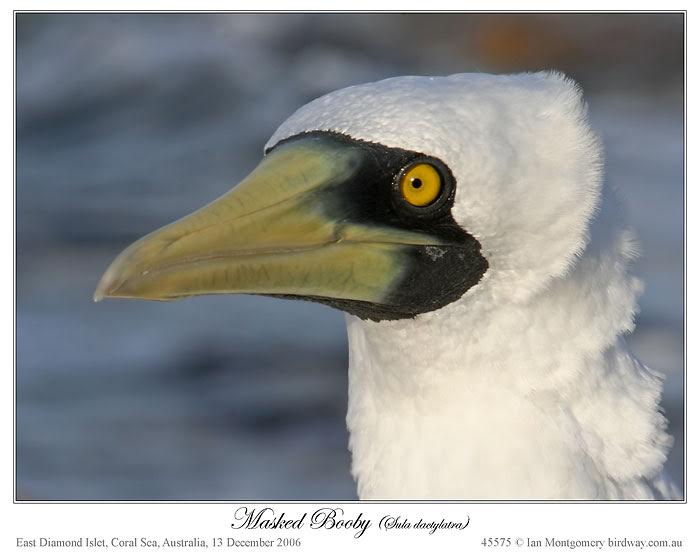
Ian’s Bird of the Week – Masked Booby

Masked Booby (Sula dactylatra) by Ian

Ian’s Bird of the Week ~ by Ian Montgomery

Newsletter – 10/14/16

Masked Booby was bird of the week in May 2011, but here it is again to acknowledge the recent use of one of my photos in an Australian, or more specifically, Norfolk Island, stamp.

Here is the original photo taken on Philip Island just off Norfolk Island in 2012. The differences between the sexes in Masked Boobies are subtle, with the main difference being in the colour of the bill: yellower in males than in females which have a bluish tint to the bill.

Masked Booby (Sula dactylatra) by Ian

Here is another male Booby from the 2011 bird of the week, taken on an island in the Coral Sea east of Townsville. Note the difference in the colour of the eye. Masked Boobies generally have yellow irises, but those breeding on Norfolk Island, Lord Howe Island and Kermadec Island (off New Zealand) have dark brown irises and are sufficiently different in other less obvious respects to be treated as a separate race, sometimes known as the Tasman Booby (Sula dactylatra tasmani).

Masked Booby (Sula dactylatra) by Ian

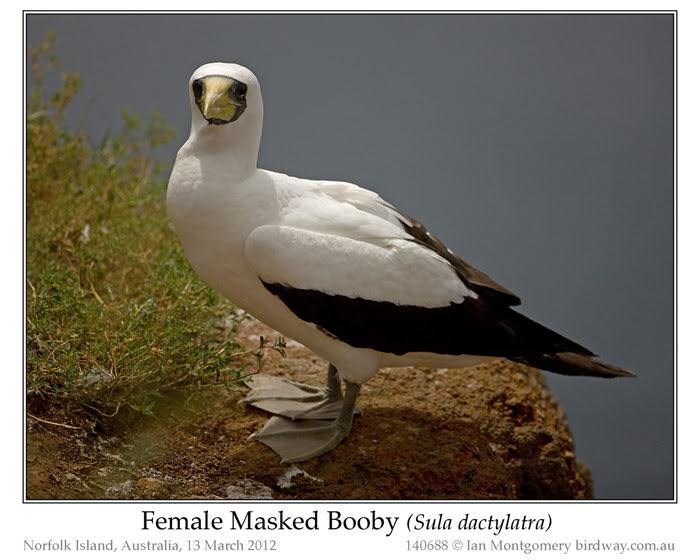
The next photo shows an adult female Masked Booby on Norfolk Island itself. Here you can see another difference characteristic of the tasmani subspecies: the legs and feet are khaki (those of the race personata found in the Coral Sea, off Western Australia and elsewhere across the Pacific have dark, almost black legs and feet.

Masked Booby (Sula dactylatra) Female by Ian

Here is a juvenile at the same site on Norfolk Island as the female bird. The juveniles are somewhat similar in appearance to adult Brown Boobies and the best distinguishing field mark is the complete white collar of the juvenile Masked Booby. In Brown Boobies the brown of the head and neck is contiguous with the brown of the back and, in front, extends as far down as level with the wings and is sharply demarcated from the white breast.

Masked Booby (Sula dactylatra) Juvenile by Ian

Here is another photo of a juvenile Masked Booby, this time in flight and at Lord Howe Island, the other Australian breeding colony of the Tasman subspecies. The white collar is clear visible in flight too, as is the extensive amount of white on the breast.

Masked Booby (Sula dactylatra) Juvenile by Ian

Masked Boobies breed on isolated islands throughout the tropics and sub-tropics. As well as occurring across the Pacific, they breed in the eastern and western Indian Ocean, the Red Sea and in the western and central Atlantic. The adults normally stay close to the breeding colonies, though young birds and some adults do range farther afield. So, they do occur occasional along the coast of mainland Australia.

The largest colony is found on an uninhabited coral cay called Clipperton Island or Ile de al Passion – it’s a French territory – off the coast of Mexico, with a population of perhaps 100,000 birds.

It was visited in 1958 by an American ornithologist called Kenneth Stager who was shocked to find that feral pigs had reduced the population of Masked Boobies to a mere 150 birds. Being an old-fashioned ornithologist, he had a gun with him to collect specimens so he singlehandedly shot all of the pigs, 58 in number, restoring the cay to to its pre-human state.

Other animals to benefit were the local red crabs and other nesting seabirds. It has the second largest colony of Brown Boobies and one of the relatively few colonies of the eastern Pacific Nazca Booby, very similar in appearance to the Masked, but better known on the Galapagos island and Isla de al Plata off the coast of Ecuador.

Ian Montgomery – Birdway – Photos


Lee’s Addition:

It has been well over a month since Ian produced one of his articles for us to enjoy. I wrote to Ian to see if he was okay, and here is part of his response. I trust he doesn’t mind, but this will help us think about and pray for his recovery.

“I did have problems with the second cataract operation as an interruption to the blood supply to the retina caused some loss of sight to the central part of the field of view – cloudiness, blurriness and lack of colour vision. Naturally that was a bit of a shock and for a while it made me reluctant to do anything which made me more conscious of it, particularly photography and working with images on the computer.

Anyway, the eye is gradually improving, though whether it will recover completely over the next six months or so is uncertain. Your email prompted me to stop vacillating about the bird of the week and get me into action, so thank you for that.”

More Ian’s Bird of the Week articles
Ian’s Bird of the Week – Long-tailed and White-winged Trillers – previous one
Gideon
*

Birdwatching On Board The Ark Encounter – The Provisions I

The Door of the Ark by Lee

The Door of the Ark by Lee

This is the third article in the Birdwatching On Board the Ark Encounter. Below are links to the other articles. This time I would like to share some of the ways they showed how critters and birds were provided with provisions to sustain them. [All the bolding is added emphasis by me.]

In Genesis 6, the God was instructing Noah about building an Ark with all the directions or instructions. Then He informs Adam that his family and the critters are to be onboard also. They were to “keep them alive.”

Genesis 6:18-22 KJV
(18) “But with thee will I establish my covenant; and thou shalt come into the ark, thou, and thy sons, and thy wife, and thy sons’ wives with thee.
(19) And of every living thing of all flesh, two of every sort shalt thou bring into the ark, to keep them alive with thee; they shall be male and female.
(20) Of fowls after their kind, and of cattle after their kind, of every creeping thing of the earth after his kind, two of every sort shall come unto thee, to keep them alive.
(21) And take thou unto thee of all food that is eaten, and thou shalt gather it to thee; and it shall be for food for thee, and for them.
(22) Thus did Noah; according to all that God commanded him, so did he.”

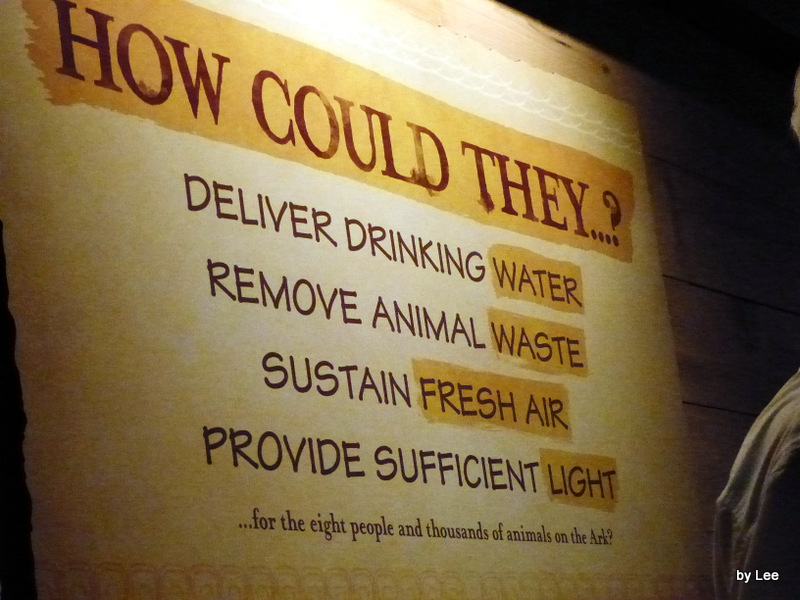
How Could They...?

How Could They…?

That is a huge undertaking. How would they do that? On the Ark Encounter, it was interesting to see how they visualized this part of their commission to keep the critters alive, especially the birds. That is what this is concentrated on. Also, that same command was given again in:

Of fowls also of the air by sevens, the male and the female; to keep seed alive upon the face of all the earth. (Genesis 7:3 KJV)

They Went In the Ark

They Went In the Ark

They went in:

“In the six hundredth year of Noah’s life, in the second month, the seventeenth day of the month, the same day were all the fountains of the great deep broken up, and the windows of heaven were opened.” (Genesis 7:11 KJV)

And came out:

“And it came to pass in the six hundredth and first year, in the first month, the first day of the month, the waters were dried up from off the earth: and Noah removed the covering of the ark, and looked, and, behold, the face of the ground was dry. And in the second month, on the seven and twentieth day of the month, was the earth dried. And God spake unto Noah, saying, Go forth of the ark, thou, and thy wife, and thy sons, and thy sons’ wives with thee. Bring forth with thee every living thing that is with thee, of all flesh, both of fowl, and of cattle, and of every creeping thing that creepeth upon the earth; that they may breed abundantly in the earth, and be fruitful, and multiply upon the earth.” (Genesis 8:13-17 KJV)

Now if we do the math, Adam, his family, and the critters were in the ark at least one year and 10 days. That is a lot of provisions to have on board! So, let’s see how the Ark Encounter stored their provisions and provided for all on board.

Here are some of the ways thy stored water and grain:

Now that they have provisions stored, the next photos are food preparations for the humans, I suspect:

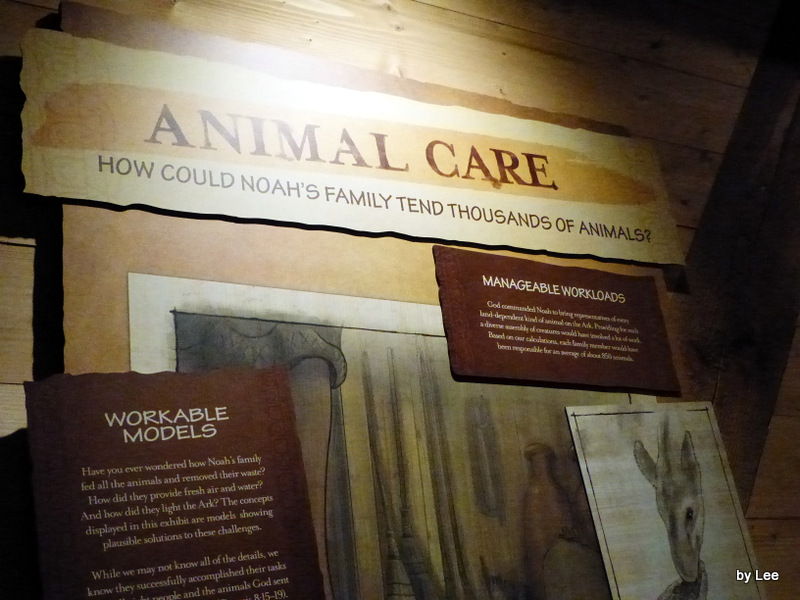
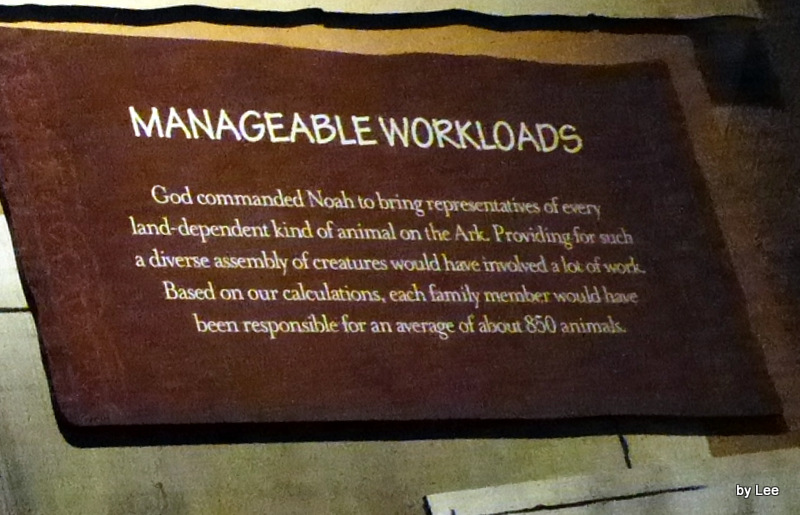
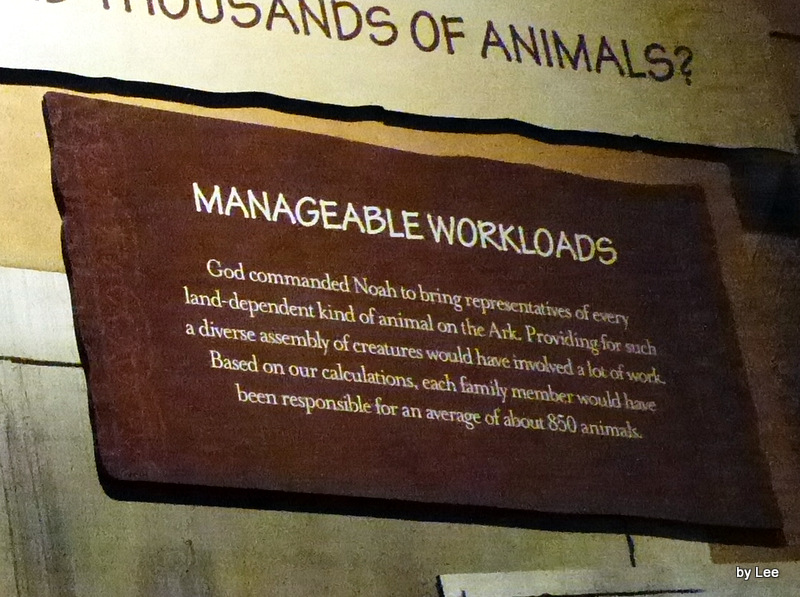
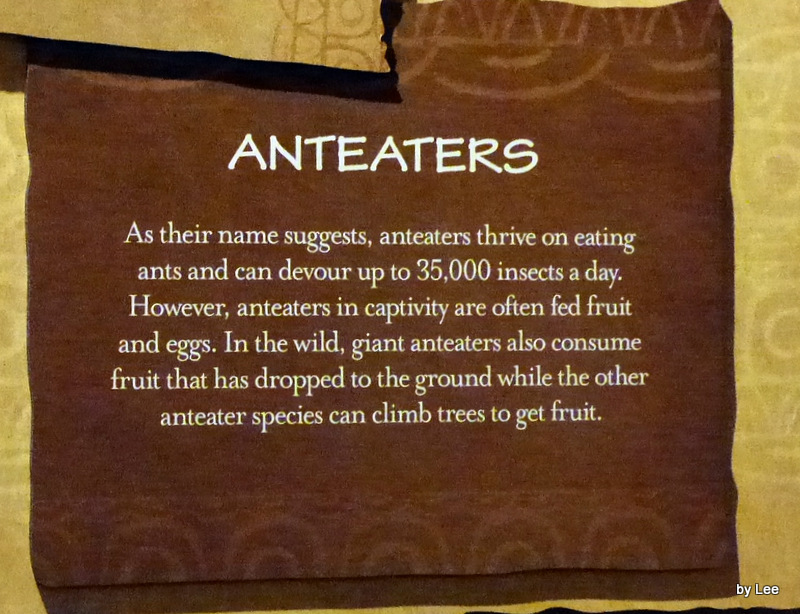
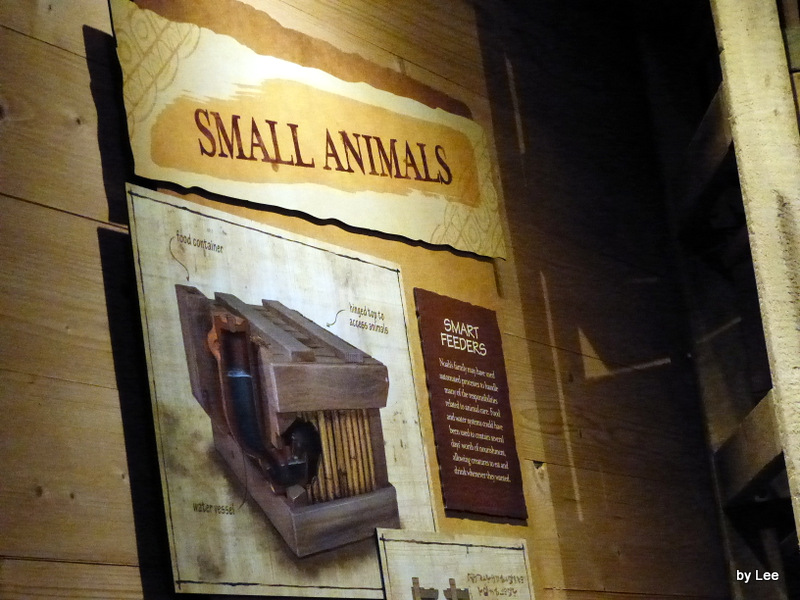
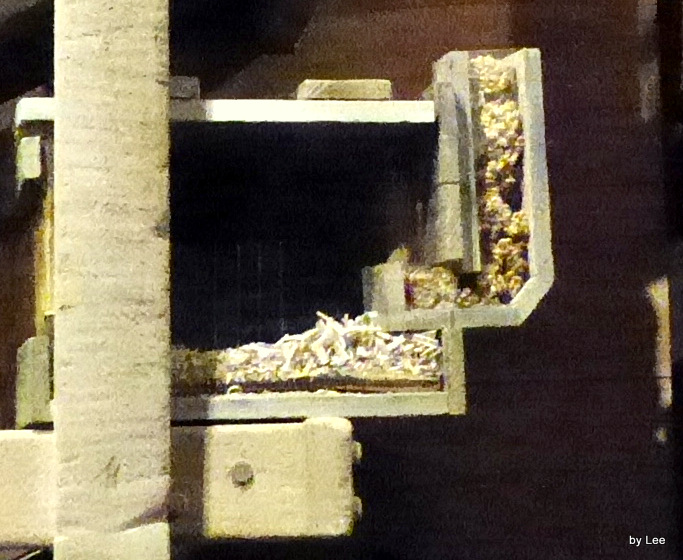
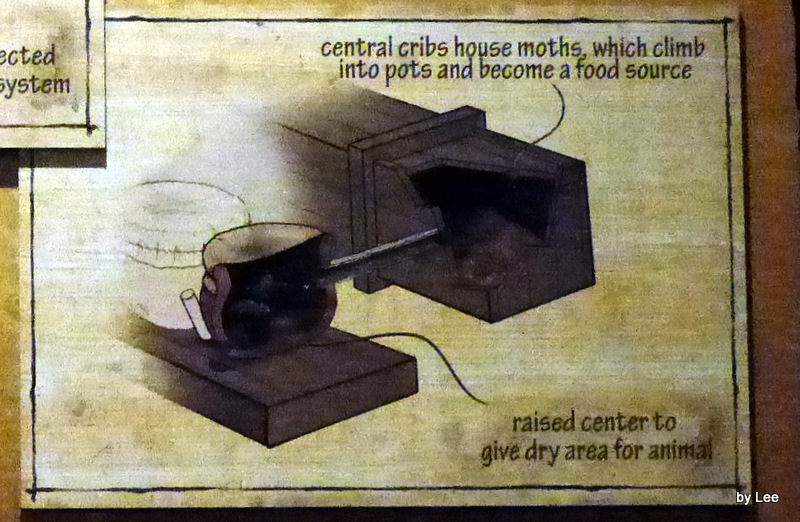
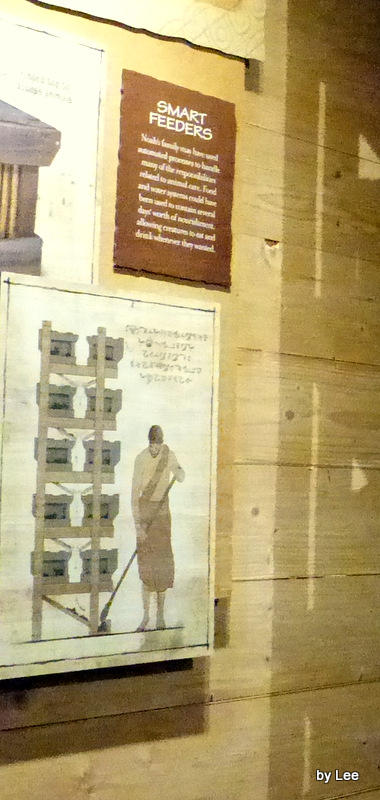
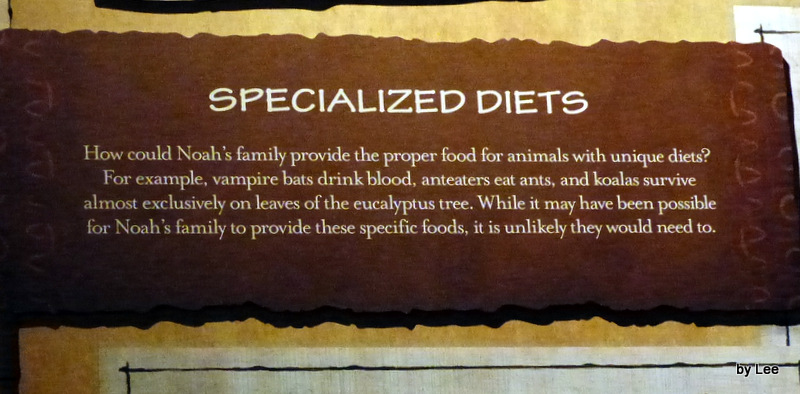
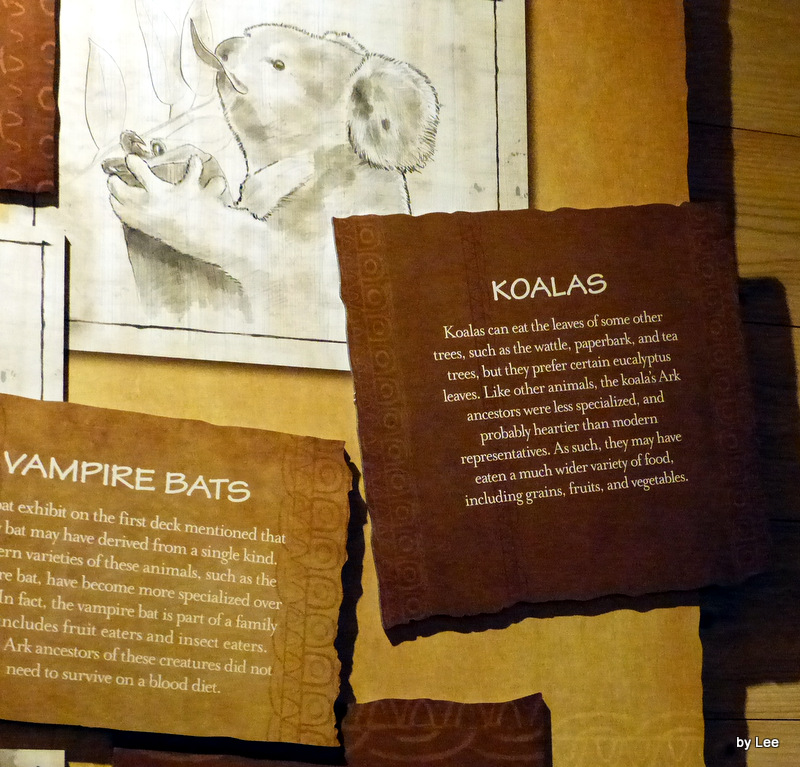
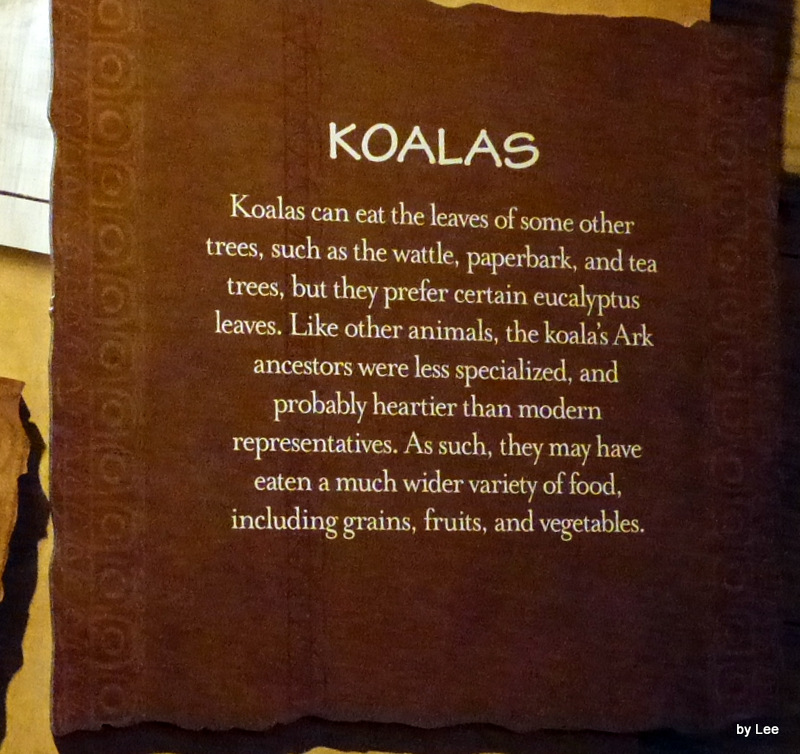
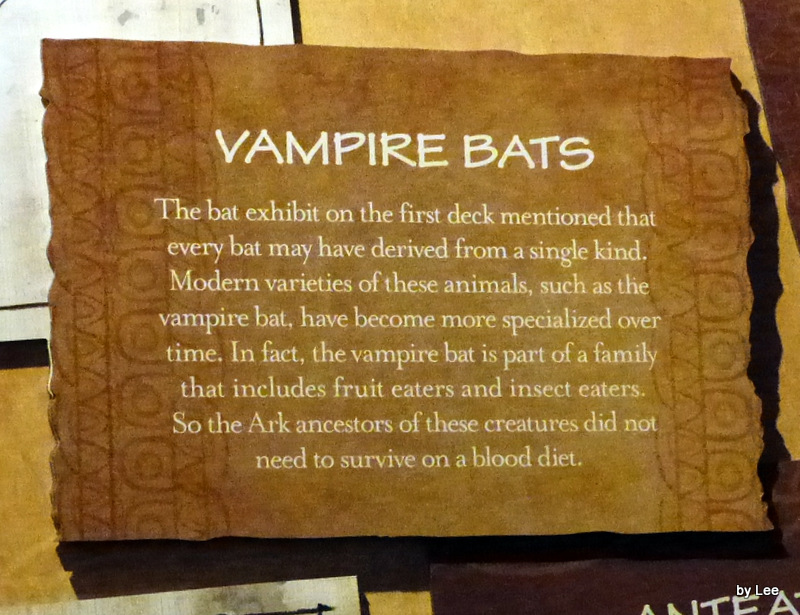
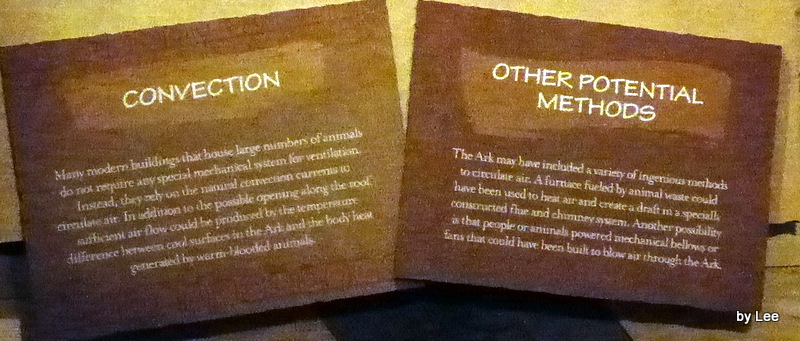
In the first articles of the series, you were shown the birds and their cages, but now, they have to be fed. Here are some of the photos from the Ark Encounter suggesting how some of this could have taken place. [Please forgive the photos, they were shot in low light, after all the Ark didn’t have modern lights and fluorescent lighting like today.] I tried to get as many close-ups of the signs as I could. Reading their signs is how the different operations are explained.

As I have been putting this together, it appears we will need a part II. Stay tuned!

*

See Also:

Birdwatching On Board the Ark Encounter – The Doves
Birdwatching On Board the Ark Encounter – More Birds
Avian Kinds on the Ark – Introduction
Avian Kinds on the Ark – What Is A Kind?
Avian Kinds on the Ark – Birds Embarking

*

Sunday Inspiration – Ostrich, Rhea, Cassowary, Emu & Kiwi

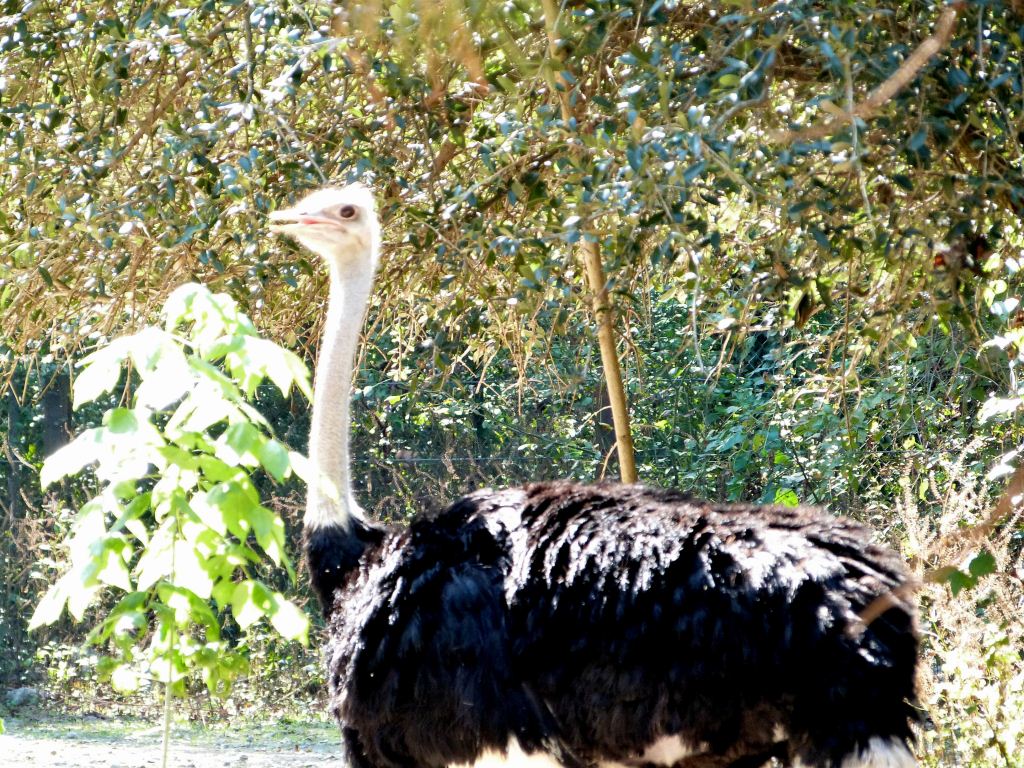
Common Ostrich (Struthio camelus) at Riverbanks Zoo SC by Lee

Common Ostrich (Struthio camelus) at Riverbanks Zoo SC by Lee

“Gavest thou the goodly wings unto the peacocks? or wings and feathers unto the ostrich? Which leaveth her eggs in the earth, and warmeth them in dust, And forgetteth that the foot may crush them, or that the wild beast may break them. She is hardened against her young ones, as though they were not hers: her labor is in vain without fear; Because God hath deprived her of wisdom, neither hath he imparted to her understanding. What time she lifteth up herself on high, she scorneth the horse and his rider.” (Job 39:13-18)

Today we have thirteen (13) birds that are in four (4) Orders with a total of five (5) families. As mentioned before, these will be much easier than the LARGE Passeriformes Order that took months to view. Our Orders are the Struthioniformes, with one (1) family, Struthionidae that has two (2) Ostritches; the Rheiformes has one (1) family, Rheidae, with two (2) Rheas; and then the Casuariiformes Order has two (2) families, Casuariidae with three (3) Cassowaries and the Dromiidae family with a solo Emu; Apterygiformes Order with the Apterygidae family with five (5) Kiwis.

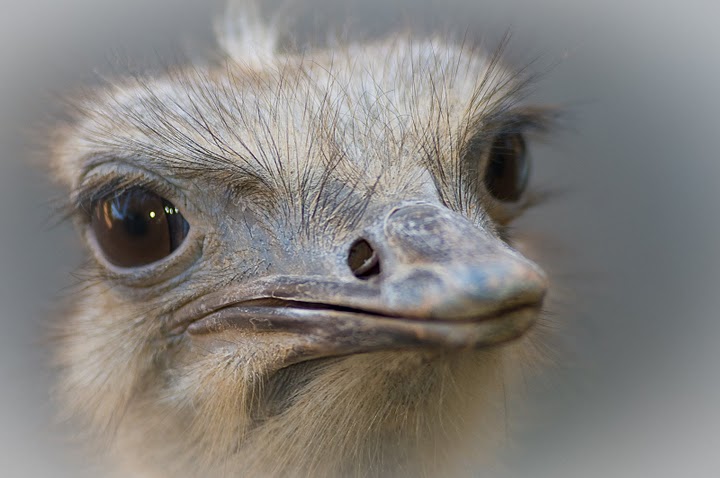
Common Ostrich (Struthio camelus) Closeup by WikiC

Common Ostrich (Struthio camelus) Closeup by ©WikiC

Struthioniformes, with one (1) family, Struthionidae that has two (2) Ostritches – “Ostriches are large, non-flying birds that live in Africa. Besides in their natural environment, ostriches are often breed as farm animals because some people like to eat their meat, eggs or to wear fashion products made of their skin. Although they are killed for commercial purposes, they are not endangered. There are around 2 million ostriches that can be found around the globe.” (SoftSchools)

Greater Rhea (Rhea americana) by ©Wayne Deeker

Greater Rhea (Rhea americana) by ©Wayne Deeker

Rheiformes has one (1) family, Rheidae, with two (2) Rheas – “Rhea is a member of the group of flightless birds. This is the largest bird in the South America. There are two species of rhea: Greater or American Rhea and Lesser or Darwin’s Rhea. They differ in size and in type of habitat they inhabit. Rhea can be found in open grasslands, pampas and woodlands of Argentina, Uruguay, Bolivia, Paraguay, Chile, Peru and Brazil. Rhea is also kept on farms because of its meat, eggs and skin. Number of rhea in the wild is decreased due to habitat loss, but they are still not listed as endangered species.” (SoftSchools with editing)

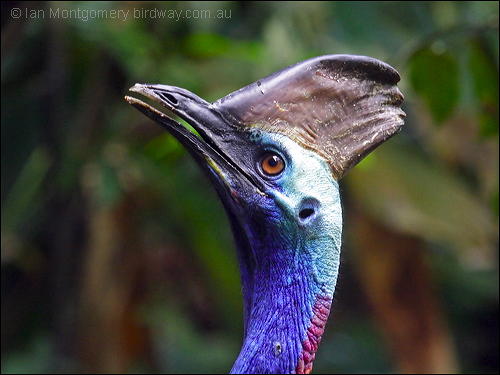
Southern Cassowary (Casuarius casuarius) by Ian

Southern Cassowary (Casuarius casuarius) by Ian

Casuariiformes Order has two (2) families, Casuariidae with three (3) Cassowaries – “The bird order Casuariiformes has four surviving members: the three species of cassowary, and the only remaining species of emu. The emus are classified in the family Dromaiidae, while the cassowaries are all located within the Casuariidae family. All four members of the order are very large flightless birds native to Australia-New Guinea.” (Wikipedia)

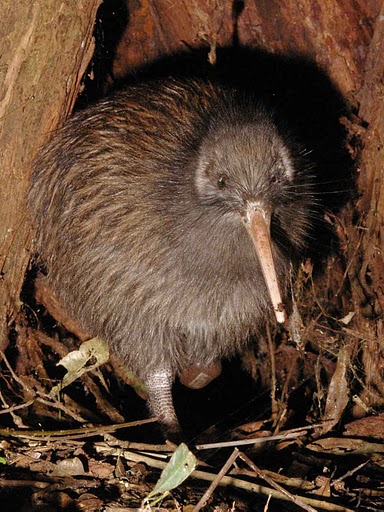
North Island Brown Kiwi (Apteryx mantelli) by Derek©WikiC

North Island Brown Kiwi (Apteryx mantelli) by Derek©WikiC

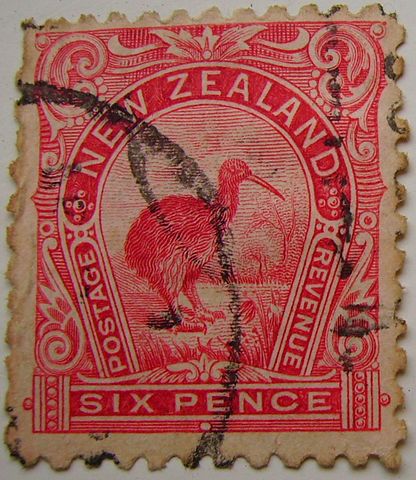
Apterygiformes Order with the Apterygidae family with five (5) Kiwis – “Kiwi (pronounced /kiːwiː/) or kiwis are flightless birds native to New Zealand, in the genus Apteryx and family Apterygidae. At around the size of a domestic chicken, kiwi are by far the smallest living ratites (which also consist of ostriches, emus, rheas, and cassowaries), and lay the largest egg in relation to their body size of any species of bird in the world. DNA sequence comparisons have yielded the surprising conclusion that kiwi are much more closely related to the extinct Malagasy elephant birds than to the moa with which they shared New Zealand. There are five recognized species. All species have been negatively affected by historic deforestation but currently the remaining large areas of their forest habitat are well protected in reserves and national parks. At present, the greatest threat to their survival is predation by invasive mammalian predators.

Kiwi is the nickname used internationally for people from New Zealand,[1] as well as being a relatively common self-reference. The name derives from the kiwi, a flightless bird, which is native to, and the national symbol of, New Zealand. Unlike many demographic labels, its usage is not considered offensive; it is generally viewed as a symbol of pride and endearment for the people of New Zealand..” (Wikipedia with editing)

New Zealand Stamp with Kiwi ©WikiC

New Zealand Stamp with Kiwi ©WikiC


This slideshow requires JavaScript.


*

“And we have seen and do testify that the Father sent the Son to be the Saviour of the world. Whosoever shall confess that Jesus is the Son of God, God dwelleth in him, and he in God.”
(1 John 4:14-15 KJV)

“Hosanna, Messiah Has Come” ~ Choir and Solo by Lisa Brock

*
More Sunday Inspirations

Birds of the Bible – Ostrich

Sharing The Gospel

*

What Happens To Birds In Hurricanes? – Repost

A Bird in the Storm ©Flickr Sam

A Bird in the Storm ©Flickr Sam

This story is from eNature’s Blog. Many of us worry about the birds and how they make it through Hurricanes like Matthew. This information is well worth repeating.

What Happens To Birds Caught In Hurricanes Like Matthew?

Hurricane Matthew is making its way towards the US East coast after hitting Haiti and Cuba with some of the highest sustained winds and rainfall totals in recent memory.

While Matthew’s wind, rain and storm surge will certainly affect many people, some folks are also wondering about the effects the hurricane may have on birds.

Numbers are hard to come by, but it’s clear that many birds are killed outright by hurricanes. This is especially true of seabirds, which have nowhere in which to seek shelter from these storms. Beaches may be littered with seabird carcasses following major storm events. Most Atlantic hurricanes occur in late summer and early fall—and fall storms coincide with bird migration and may disrupt migration patterns severely.

Many birds get caught up in storm systems and are blown far off course, often landing in inhospitable places or simply arriving too battered and weakened to survive. Others, while not killed or displaced by storms, may starve to death because they are unable to forage while the weather is poor. The number of birds that die as a result of a major hurricanes may run into the hundreds of thousands….

Read on for the whole story….

But as they sailed he fell asleep: and there came down a storm of wind on the lake; and they were filled with water, and were in jeopardy. (Luke 8:23 KJV)

Behold the fowls of the air: for they sow not, neither do they reap, nor gather into barns; yet your heavenly Father feedeth them. Are ye not much better than they? (Matthew 6:26 KJV)

*

The Best Toolmakers in the World by Emma Foster

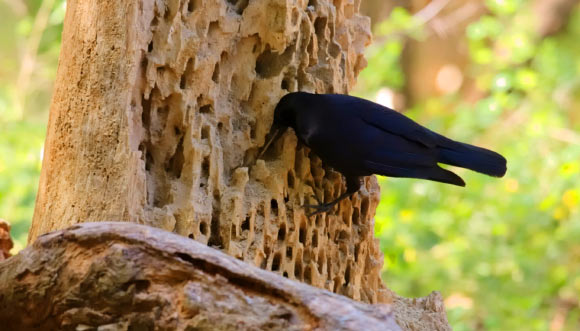
New Caledonian Crow (Corvus moneduloides) ©Jolyon Troscianko

The Best Toolmakers in the World

 By Emma Foster

Once there was a group of crows that lived on an island off of eastern Australia. They were New Caledonian Crows and every day one of them would leave their group of large nests in the trees to hunt for food.

On one particular day, one of the crows named Oliver flew to a tree trunk to search for food. Oliver carefully ripped off a piece of a plant to scoop out some worms from the trunk. In order to scrape the worms out, Oliver bit the strip of the plant with his beak to give the side of it a sharp, jagged edge. After pulling out the worms, Oliver grabbed them in his beak and made ready to fly away.

But as Oliver was about to fly back to his nest he spotted two creatures he had never seen before.

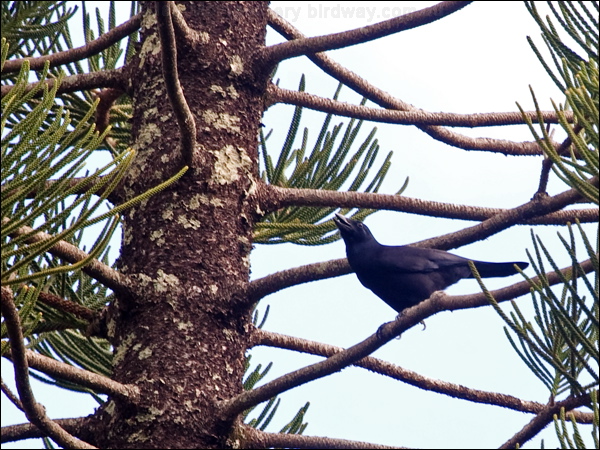
New Caledonian Crow (Corvus moneduloides) by Ian Montgomery

New Caledonian Crow (Corvus moneduloides) by Ian Montgomery

They were tall, wearing long white things that looked like tails to Oliver. They were hiding in the bushes as if they were watching him, but because they didn’t appear as if they would attack, Oliver flew back to his nest leaving his tool behind.

The next day, Oliver returned to the same tree trunk and made another tool just like the one had constructed the previous day. But before he dug into the trunk for more worms he noticed the same creatures sitting behind the bushes and watching him make his tool. This time, they had a strange machine.

Glancing down, Oliver realized that the tool he had made yesterday was gone, and he guessed that the creatures must have taken it. Thinking, that all the creatures wanted was whatever he made, Oliver attempted an experiment. After pulling out some worms and placing them in his claws, Oliver flew close to where the creatures sat and dropped his tool. After flying away, Oliver hid and watched the creatures pick it up and examine it. It seemed that they were taking notes on the way he had shaped the tool.

The next day Oliver made another tool after digging out worms then flew back to the bushes. This time he waited in front of the bushes, and the two creatures came out from behind the bushes. Oliver remained where he was.

Eventually the two people cautiously came closer to him. The entire time they used the strange machine Oliver had seen before. Oliver watched patiently, wondering what they were doing. One threw a couple of nuts down and Oliver assumed that this was payment to him for giving them his tool. After a few minutes Oliver flew away with the nuts, still confused.

New Caledonian Crow (Corvus moneduloides) by Ian Montgomery

New Caledonian Crow (Corvus moneduloides) by Ian Montgomery

But what Oliver didn’t know was that the people were two scientists studying New Caledonian Crows in eastern Australia. They had been documenting exactly how Oliver had built his tool out of the plant in order to get his food. And according to studies, besides humans, crows like Oliver are the best tool makers in the world. But Oliver never knew why they were there or where the people had come from. He did, however, fly back to the other crows to explain what he had seen. The other crows appeared to be very impressed at how Oliver had become a tool entrepreneur. From then on, the other crows considered Oliver’s tools to be better than of all the others when it came to catching food.


Lee’s Addition:

“Whence then cometh wisdom? and where is the place of understanding?” (Job 28:20 KJV)

Emma has given us another Bird Tale, but this one is actually based on some research she did about this interesting bird. She didn’t tell me which articles she had read, but I found several on the internet. One link and a video are below. Some of the articles found on line try to explain this behavior as part of evolution, but as the verse above says, we know where wisdom comes from. The Lord created the birds with enough knowledge to develop this habit. Crows are known as being very intelligent.

Thanks, Emma, for a very good article. Now we know how the birds must feel when they are being “watched” by those scientist. Keep up the great stories.

*

More of Emma’s Stories

Wild New Caledonian crows possess tool-craft talent

This video shows the New Caledonian Crow working with his tool very successfully. His friend joins in the search for worms, but doesn’t quite have the knack of the first one. This was part of a research project of the scientist.

Birdwatching On Board the Ark Encounter – The Doves

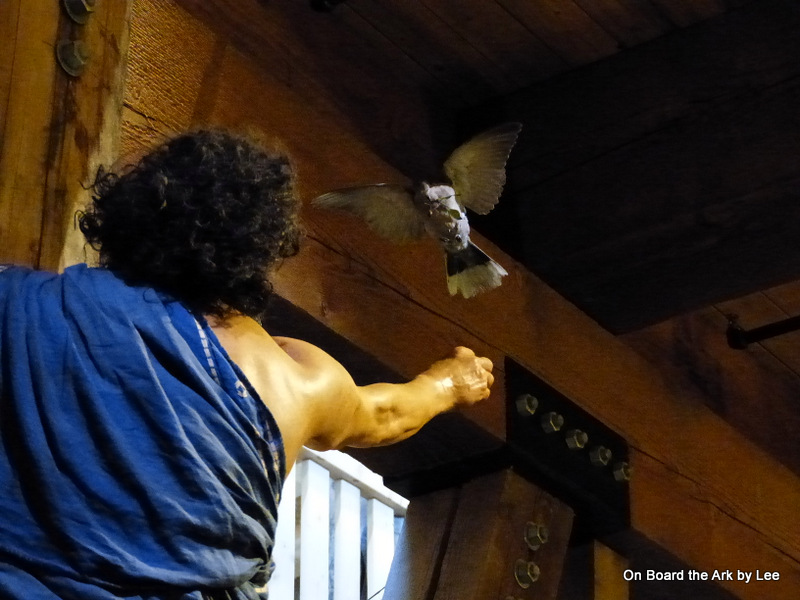
Noah taking the Dove Back on board. the Ark

Noah taking the Dove Back on board. the Ark

On Monday, September 12, 2016 we visited the Ark Encounter in Kentucky. One of my goals was to find as many birds as I could on the Ark. Dan and I were on vacation for almost two weeks and the highlight of our trip was a visit to the Ark. When you first see the size of the, it is overwhelming. The picture below is almost deceiving. The Ark spans ” 510 feet long, 85 feet wide, and 51 feet high.” (From the website)

Dan and I sitting way out front.

Dan and I sitting way out front.

“And of every living thing of all flesh, two of every sort shalt thou bring into the ark, to keep them alive with thee; they shall be male and female. Of fowls after their kind, and of cattle after their kind, of every creeping thing of the earth after his kind, two of every sort shall come unto thee, to keep them alive. And take thou unto thee of all food that is eaten, and thou shalt gather it to thee; and it shall be for food for thee, and for them. Thus did Noah; according to all that God commanded him, so did he.” (Genesis 6:19-22 KJV)

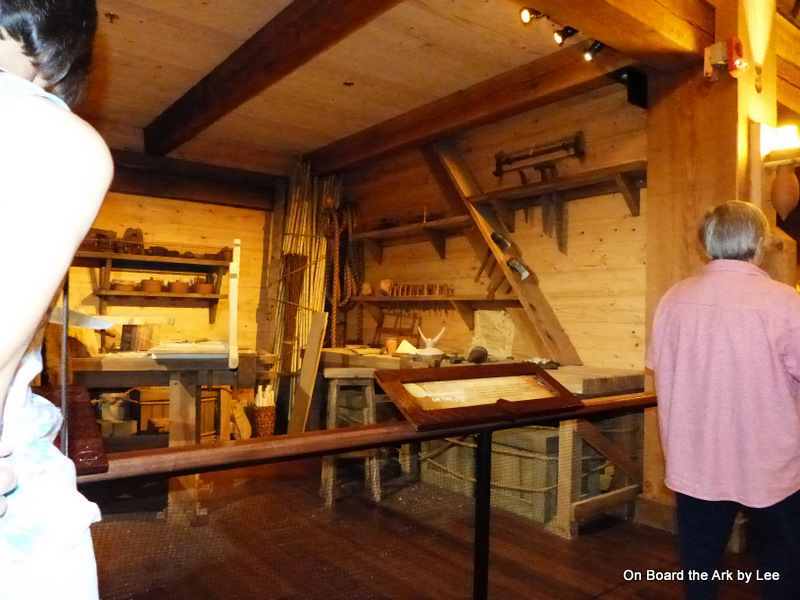
The first bird I observed was a carved bird in a workshop on board the Ark. It appears to be a dove, maybe.

Bird being carved in Workshop

Bird being carved in Workshop

The Workshop with the Dove

The Workshop with the Dove

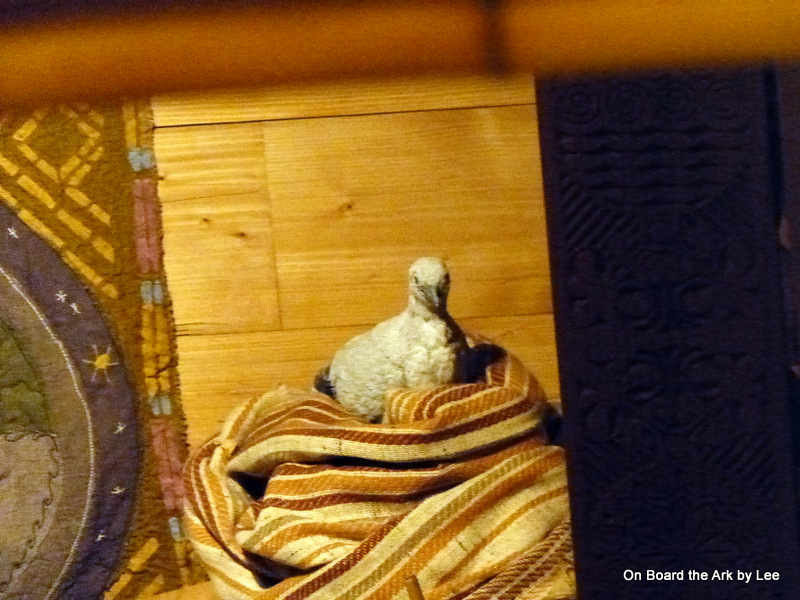
Then we saw a dove resting before its next venture out of the Ark.

Dove resting on board the Ark

Dove resting on board the Ark

“And the dove came in to him in the evening; and, lo, in her mouth was an olive leaf pluckt off: so Noah knew that the waters were abated from off the earth. And he stayed yet other seven days; and sent forth the dove; which returned not again unto him any more.” (Genesis 8:11-12 KJV)

The next dove we saw was on a mural depicting various events in Genesis.

Mural Showing the Dove on the Ark

Mural Showing the Dove on the Ark

Mural on the Ark

Mural on the Ark

Stay tuned as the other birds are revealed. We know from Scripture that there were seven pairs of every “kind” of birds/fowls on board the ark. I have more to show you.

“And the LORD said unto Noah, Come thou and all thy house into the ark; for thee have I seen righteous before me in this generation. Of every clean beast thou shalt take to thee by sevens, the male and his female: and of beasts that are not clean by two, the male and his female. Of fowls also of the air by sevens, the male and the female; to keep seed alive upon the face of all the earth.” (Genesis 7:1-3 KJV)

*

The Ark Encounter

Just some of the latest articles here about the Ark:

Birds of the Bible – Foundation – The Ark

Birds of the Bible – Loading the Ark

Birds of the Bible – Leaving the Ark

Avian Kinds on the Ark – Introduction

Avian Kinds on the Ark – What Is A Kind?

Avian Kinds on the Ark – Birds Embarking

*

HORNBILLS THAT UNDERSTAND MONKEY – Re-post

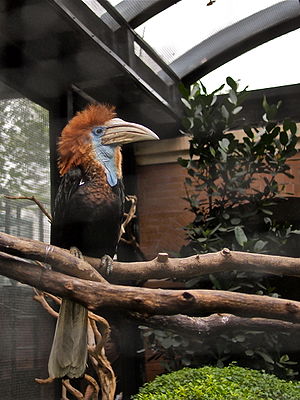
Yellow-casqued Hornbill (Ceratogymna elata) ©Wiki

Yellow-casqued Hornbill (Ceratogymna elata) ©Wiki

Hornbills That Understand Monkey by Creation Moments

“Whom we preach, warning every man, and teaching every man in all wisdom; that we may present every man perfect in Christ Jesus…” (Colossians 1:28)

Interesting Things from Smiley CentralWith the exception of basic messages such as aggression, communication between two entirely different species has seldom been observed among animals in the wild. We know that many animals among the same species give each other specific warnings about an impending danger. However, scientists have never noted one species recognizing the specific warning given by a second species.

Diana monkeys on the Ivory Coast of Africa face two primary threats: leopards and crowned eagles. When one of these threats appears, the spotter gives a very specific bark-like call depending on the type of threat. Of course, the monkeys need to respond differently to each threat, whether it comes from the leopard below or the eagle above. So it helps them to know what they are facing. On the other hand, a bird named the yellow hornbill is threatened only by the crowned eagles. Researchers noted that these birds ignored the monkeys’ warning about the leopards. But when the monkeys signaled danger from the eagle, the yellow hornbill took defensive measures. Researchers confirmed their observations using tape-recorded monkey calls. The researchers were amazed that these birds understood the monkey warnings in an intelligent manner.

Diana Monkey at the Henry Doorly Zoo ©WikiC

Diana Monkey at the Henry Doorly Zoo ©WikiC

Such intelligence comes from the Creator, Who has given the gift of such intelligence to His creatures in a way that provides for their survival. This shows His loving care for His creation.

Prayer:
Father, thank You for Your love, especially for Your forgiving love to me in Your Son, Jesus Christ. Amen.

Notes:
Science News, 3/20: 2004, p. 188, “Hornbills know which monkey calls to heed.” Photo: Diana Monkey at the Henry Doorly Zoo ©WikiC. (CC-BY-SA 3.0)
Creation Moments ©AD2016 (Used with permission)

Hornbills That Understand Monkey by Creation Moments