I. O. C. Version 6.3 Finished Updating

Emperor Goose (Anser canagicus) head ©USFWS

Emperor Goose (Anser canagicus) head ©USFWS

“I know that, whatsoever God doeth, it shall be for ever: nothing can be put to it, nor any thing taken from it: and God doeth it, that men should fear before him.” (Ecclesiastes 3:14 KJV)

All the pages and links (as far as I know) are correctly updated to the newest version of world bird names. A few of the changes were mentioned in Update to the Birds of the World,6.3. Here are some more of those changes and additions.

The Snow Goose, Ross’s Goose and the Emperor Goose had their genus changed from Chen to Anser. The Emperor Goose also had a gender name change from canagica to canagicus. There were several other birds that had those kind of changes:

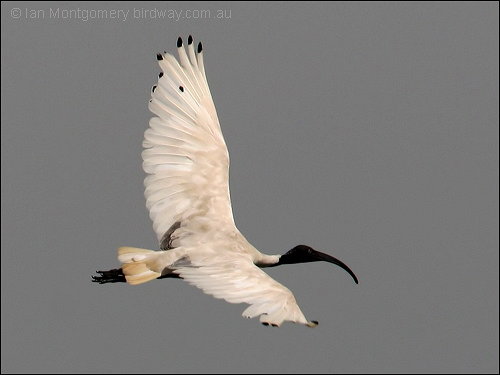
Australian White Ibis (Threskiornis moluccus to Threskiornis molucca)
Purple Gallinule (Porphyrio martinicus to Porphyrio martinica)
Brazilian Tanager (Ramphocelus bresilius to Ramphocelus bresilia)
Black Sunbird (Leptocoma sericea to Leptocoma aspasia)

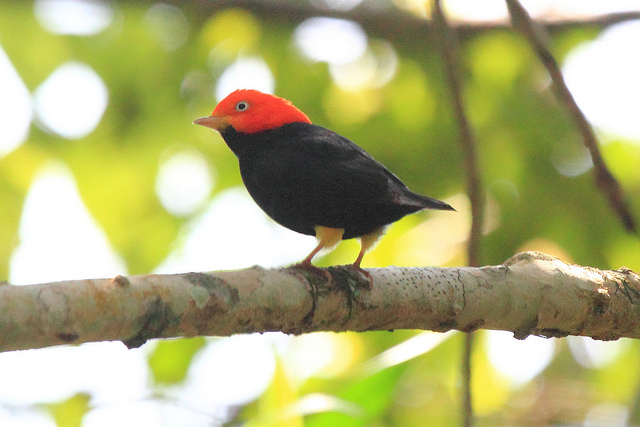
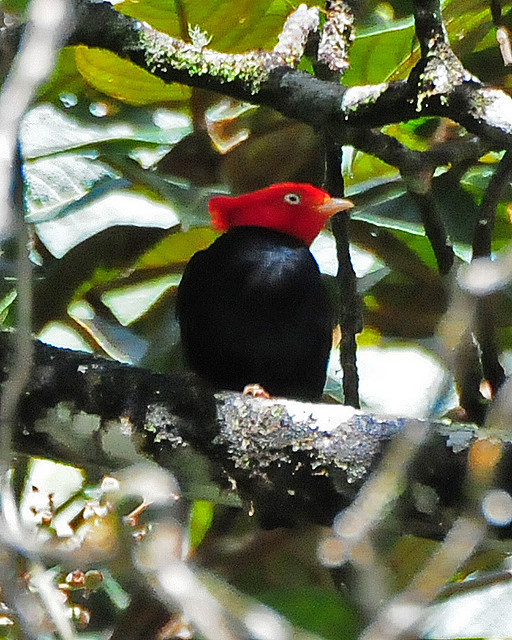
Red-capped Manakin (Ceratopipra mentalis) ©Flickr Dominic Sherony

Red-capped Manakin (Ceratopipra mentalis) ©Flickr Dominic Sherony

The Manakins had a huge change. Not only did they change the genera, but they also reshuffled the Pipridae – Manakins Family around. Here are those genera changes:

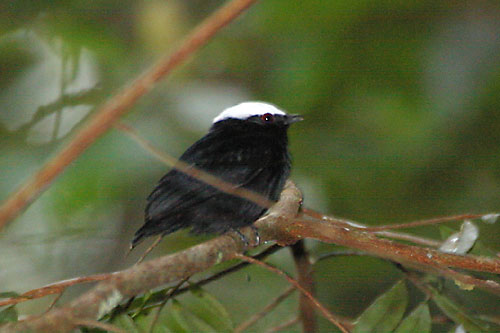
White-crowned Manakin (Dixiphia to Pseudopipra)
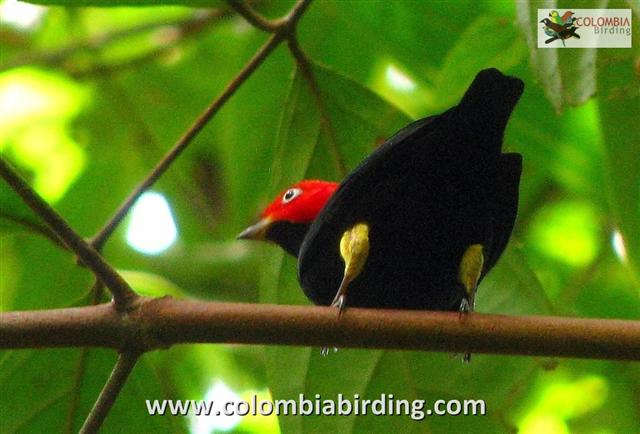
Scarlet-horned ManakinRed-capped Manakin, Round-tailed Manakin, Golden-headed Manakin, Red-headed Manakin (Dixiphia to Ceratopipra)
Green Manakin (Xenopipo to Cryptopipo)
Yellow-headed Manakin, and Jet Manakin (Xenopipo to Chloropipo)

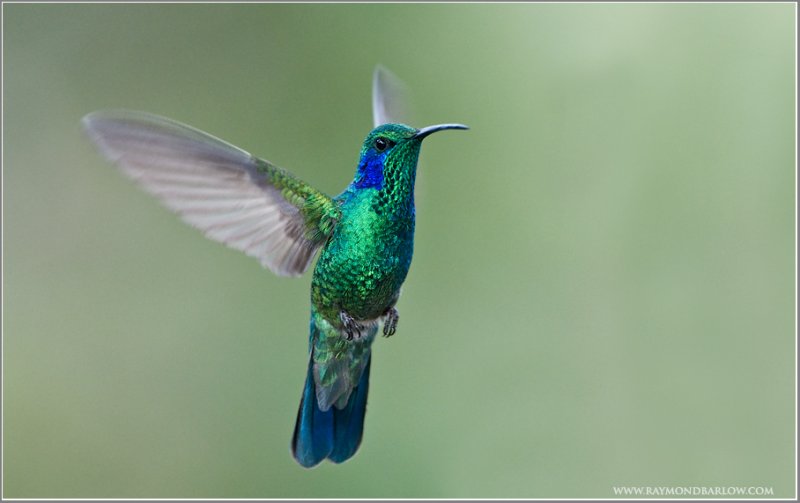
Mexican Violetear (Colibri thalassinus) by Raymond Barlow

Mexican Violetear (Colibri thalassinus) by Raymond Barlow

They made 12 English Name changes:
Snow Mountains Quail (Anurophasis monorthonyx) to Snow Mountain Quail
Auckland Merganser (Mergus australis) to New Zealand Merganser
White-bellied Wood Rail (Aramides albiventer) to Rufous-naped Wood Rail
Pomarine Skua (Stercorarius pomarinus) to Pomarine Jaeger
Green Violetear (Colibri thalassinus) to Mexican Violetear
Blue-diademed Motmot (Momotus lessonii) to Lesson’s Motmot
Stephens Island Wren (Traversia (Xenicus) lyalli) to Lyall’s Wren
Red-bellied Pitta (Erythropitta erythrogaster) to Philippine Pitta
Plain Wren (Cantorchilus modestus) to Cabanis’s Wren
Plain-backed Thrush (Zoothera mollissima) to Alpine Thrush
Blue Chaffinch (Fringilla teydea) to Tenerife Blue Chaffinch

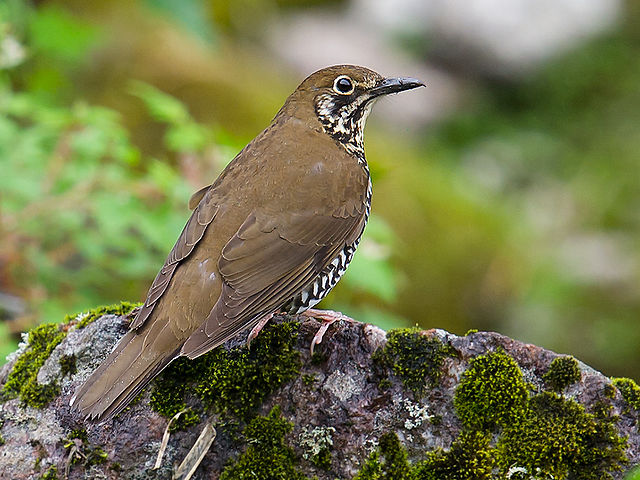
Himalayan Thrush (Zoothera salimalii) ©WikiC

Himalayan Thrush (Zoothera salimalii) ©WikiC

They added these new species and deleted the Coot with this update:

Grey-faced Petrel (Pterodroma gouldi)
Townsend’s Storm Petrel (Oceanodroma socorroensis)
Ainley’s Storm Petrel (Oceanodroma cheimomnestes)
Caribbean Coot (Fulica caribaea) Deleted (Now American Coot)
Cyprus Scops Owl (Otus cyprius)
Lesser Violetear (Colibri cyanotus)
Red-backed Flameback (Dinopium psarodes)
Puerto Rican Parakeet (Psittacara maugei)
Sula Pitta (Erythropitta dohertyi)
Sulawesi Pitta (Erythropitta celebensis)
Siao Pitta (Erythropitta palliceps)
Sangihe Pitta (Erythropitta caeruleitorques)
South Moluccan Pitta (Erythropitta rubrinucha)
North Moluccan Pitta (Erythropitta rufiventris)
Louisiade Pitta (Erythropitta meeki)
Bismarck Pitta (Erythropitta novaehibernicae)
Papuan Pitta (Erythropitta macklotii)
Ayacucho Thistletail (Asthenes ayacuchensis)
Aceh Bulbul (Pycnonotus snouckaerti)
Canebrake Wren (Cantorchilus zeledoni)
Isthmian Wren (Cantorchilus elutus)
Santa Marta Wood Wren (Henicorhina anachoreta)
Sichuan Thrush (Zoothera griseiceps)
Gran Canaria Blue Chaffinch (Fringilla polatzeki)

*

“For I am the LORD, I change not;” (Malachi 3:6a KJV)

Birds of the World contain Lee’s Birds of the World, based on the IOC World Bird List 6.3 contains 10,659 extant species (and 155 extinct species)  classified in 40 Orders,  238 Families (plus 2 Incertae Sedis) and 2292 Genera and 20,413 Subspecies.  All the ORDERs and the Families are listed. Please enjoy looking around at the references to the numerous birds that the Lord has created.

Update to the Birds of the World,6.3

Wordless Toucan

*

Update To The Birds of the World, 6.3

Recently they, the I. O. C., released version 6.3 and changes are being made to this site to reflect those updates.

There are now 10,659 species, up 22 since version 6.2. They actually added 23, but they merged one. The Caribbean Coot is now considered an American Coot (Fulica americana).

GRU-Rall American Coot (Fulica americana) (previous Caribbean ©WikiC

They have added another species to the Extinct species. Now there are 155 that have become extinct since the early 1500’s. The latest avian added to this list is the Puerto Rican Parakeet. It was also known as the Puerto Rican Conure and was a subspecies of the Hispaniolan Parakeet. (There is a nice turnaround video on that page)

Puerto Rican conure (Aratinga chloroptera maugei) ©Drawing WikiC

Puerto Rican Conure (Aratinga chloroptera maugei) ©Drawing WikiC

The eye of him who sees me will see me no more; While your eyes are upon me, I shall no longer be. (Job 7:8 NKJV)

Another big change this version, is the removal of a Bird Family, the Pelecanoididae – Diving Petrel Family was consolidated into the Procellariidae – Petrels, Shearwaters family.

Peruvian Diving Petrel (Pelecanoides garnotii) ©WikiC – Video
Magellanic Diving Petrel (Pelecanoides magellani) by DavesBP – Video
South Georgia Diving Petrel (Pelecanoides georgicus)Video
Common Diving Petrel (Pelecanoides urinatrix) by Daves BirdingPix

So now there are 40 Orders, 238 Families (plus 2 Incertae sedis). I’ll share more later as I update more. Stay Tuned!

Avian Kinds on the Ark – Birds Embarking

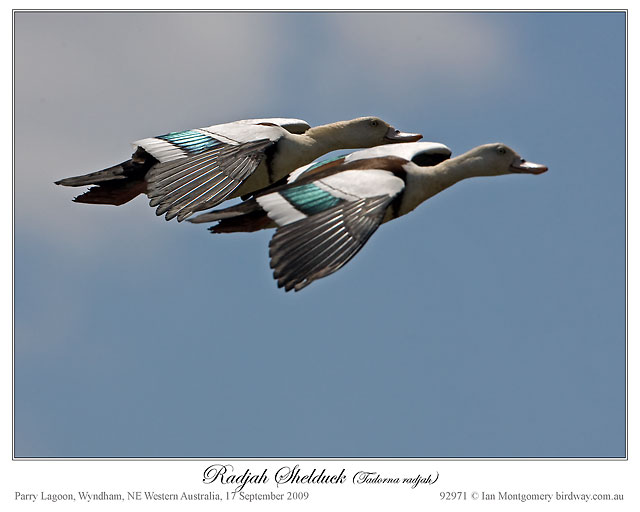
Pair of Raja Shelduck by Ian

In this second article in this series, Avian Kinds on the Ark – What is a Kind?, I am introducing you to some of the studies by Dr. Jean Lightner. She and others are trying to figure out how many “kinds” of birds would have enter the ark.  This study is worthwhile as a stand-alone research project — yet its importance is now accented by the “Ark Encounter”, a full-sized replica of the Noah’s Ark (produced and hosted by ANSWERS IN GENESIS ministry in Kentucky). The Ark Encounter team are trying to be as close to the Bible as possible in filling the ark with critters and especially avian kinds.

Since that article, I have found some more interesting data and quotes that I’d like to share. First, I made this quote in that article.

“In Birds of the Bible – Foundation #3 Updated, ” I made this remark “Noah did not have to round up the animals, they came to him. Because not every animal we see today came on board but the main kinds (for instance the “bird kinds” may have had a “warbler kind” but not have black and white warblers, yellow-rumped warblers, hooded warbler, etc.), which ever ones they were, there was plenty of room for them. I have an idea that because the LORD sent the animals, birds, and critters, that their DNAs [i.e., their specific genes  — DNA-based genotypes) were of the highest quality. (That is my opinion)”

I want to expand on that this time. I have thinking about the birds that came to Noah. Did they come to Noah?  —  or did Noah have to go round them up? No, Noah did not have to go searching for the animals. After re-reading Genesis 7-9, it seems clear that they came to Noah. God sent them, by pairs of seven for each “kind” of birds. Dr. Lightner basically places the kinds equal with families in most cases.

Of every clean beast thou shalt take to thee by sevens, the male and his female: and of beasts that are not clean by two, the male and his female. Of fowls also of the air by sevens, the male and the female [notice!  —  of the bird kinds, the “sevens” exception was applied, regardless of whether the bird kinds were “clean” or “unclean”]; to keep seed alive upon the face of all the earth. (Genesis 7:2-3 KJV)

Great Frigatebird (Fregata minor) pair ©Flickr Len Blumin

Great Frigatebird (Fregata minor) pair ©Flickr Len Blumin

And Noah went in, and his sons, and his wife, and his sons’ wives with him, into the Ark, because of the waters of the flood. Of clean beasts, and of beasts that are not clean, and of fowls, and of every thing that creepeth upon the earth, There went in two and two unto Noah into the ark, the male and the female, as God had commanded Noah. And it came to pass after seven days, that the waters of the flood were upon the earth. (Genesis 7:7-10 KJV)

In the selfsame day entered Noah, and Shem, and Ham, and Japheth, the sons of Noah, and Noah’s wife, and the three wives of his sons with them, into the ark; They, and every beast after his kind, and all the cattle after their kind, and every creeping thing that creepeth upon the earth after his kind, and every fowl after his kind, every bird of every sort. And they went in unto Noah into the ark, two and two of all flesh, wherein is the breath of life. (Genesis 7:13-15 KJV)

Bring forth with thee every living thing that is with thee, of all flesh, both of fowl, and of cattle, and of every creeping thing that creepeth upon the earth; that they may breed abundantly in the earth, and be fruitful, and multiply upon the earth. (Genesis 8:17 KJV)

Every beast, every creeping thing, and every fowl, and whatsoever creepeth upon the earth, after their kinds, went forth out of the ark. And Noah builded an altar unto the LORD; and took of every clean beast, and of every clean fowl, and offered burnt offerings on the altar. (Genesis 8:19-20 KJV)
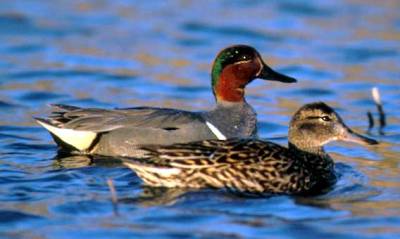
Green-winged Teal (Anas carolinensis) Pair ©WikiC

Green-winged Teal (Anas carolinensis) Pair ©WikiC

That is quite a bit of Scripture, and the bolding is to help with some points to I would like to make. First, notice that all the cattle or land animals are coming in pairs. The male and his female  — that pair is deemed as “one” animal unit, because that is how God planned and made these animals in the first place. Critters that are not birds (i.e., land beasts like cattle, elephants, horses, etc.) are coming in by seven pairs if their kind is deemed “clean”, or by one pair if “unclean”.  Yet the birds (fowls) are not coming in by clean or unclean. They are all coming in by seven pairs, according to their kind.  [Notice how this shows a special favoritism that God has for birds!  In a sense, therefore, it is a godly trait to regard birds as favorite animals! :) ]

Also notice that Noah and his family entered the Ark first, then the critters came in. “There went in two and two unto Noah into the ark” (7:9), and “in the selfsame day entered Noah” (7:13), then,  “they went in unto Noah into the ark” (7:15).  If I am reading the Word correctly, Noah was in the Ark when the land animals, birds and creeping things came in. Personally, I think that the Lord rounded up the critters that He wanted to be in the Ark to be preserved. If the Lord can make ravens to feed Elijah, ” I have commanded the ravens to feed thee there ” (1 Kings 17:4), can He not command the exact critters to come to Noah? Their DNA must have been the near perfect for their kinds, especially for conserving and transmitting the biodiversity that God Himself wanted to be provided to the post-Flood world. Just as all the diverse humans in the world (today) come from the eight humans on board the Ark, their DNA was and is diverse enough to produce all the different physical characteristics (skin colors, hair types, body sizes, etc.) that we see today.  [In a sense, God preserved and transmitted all the molecular biology “hardware” and DNA/RNA “software” needed for all the phenotype “applications” we have today.]

Another point about the quoted verses. In Genesis 8 we see that it didn’t rain until seven days later. Could that be to give Noah and his family time to place all the animals in their stalls, pens, cages, or whatever containers were used for the long voyage ahead? What do you put “creeping things” in? :)

When they came off the Ark, after the Flood was over, not a single animal has perished because they came off in pairs,: one pair of unclean land animals (and “creeping things”), seven pairs of clean land animals, and seven pair of every “kind” of genetically defined bird category. Noah gives an offering to the Lord and uses one pair from the clean critters. Now we have six pairs of clean animals with which to breed abundantly in the earth, and be fruitful, and multiply upon the earth.

Northern Pintail (Anas acuta) pair by Ray

Northern Pintail (Anas acuta) pair by Ray

As was said before, the avian taxonomy of the birds (which is ultimately a mix of common sense, careful observations, plus some arbitrariness) is in flux. As Dr. Jean Lightner indicated there is much shuffling going on trying to figure out which bird belongs “where” [i.e., belongs to this group or that group, based ultimately on genetic compatibility — which is demonstrated by breedability). Here are a few quotes I thought interesting about this situation. Of course, these are from those who believe in evolution, but they are shaking their heads trying to figure which family and genus birds belong to.

Here is a quote from DNA Reveals New Bird Species by Current Results. “Examining the differences in the genetic bar code among birds leads scientists to suspect that 15 unidentified species of birds breed on the North American continent. At the same time, analysis of 643 bird species finds that 42 of these should actually be lumped as 17 species.” [Seems they keep narrowing down the species toward the kinds.]  Here’s more interesting quotes from the same article.

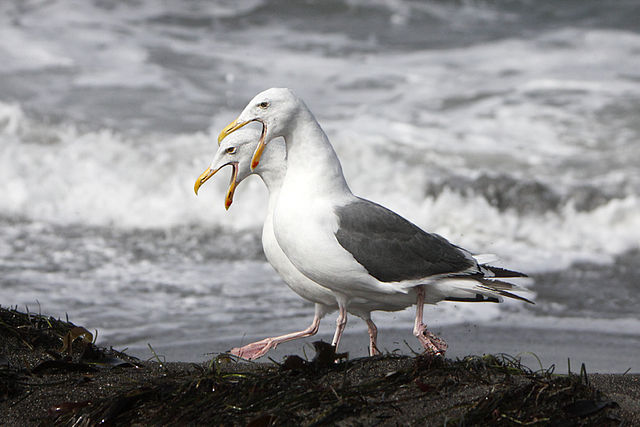
Western Gull (Larus occidentalis) Pair ©WikiC

Western Gull (Larus occidentalis) Pair ©WikiC

“Can’t tell apart all those large, white-headed gulls lingering along the west coast seashore? Well apparently neither does the mitrochondiral DNA for eight species such as glaucous and herring gulls. Other birds that mitrochondrial DNA cannot distinguish are American from northwestern crows and red-naped from red-breasted sapsuckers. Most of these species with overlapping DNA are known to hybridize [i.e., they can successfully breed together].”

“Figuring out who is truly related to whom in modern bird families has been an ongoing problem, says Shannon Hackett. A biologist at the Field Museum in Chicago, she did not work on the new study. Part of the problem, she explains, is that at some point in the distant past, there was an explosion in the number of bird species. This rapid increase has made it difficult for scientists to decode the history of birds from fossils.” [Could that be when they were created?]

“In 2008, Hackett’s team studied 19 different segments of DNA from 169 bird species. Their tree of life suggested that falcons and hawks, and grebes and ducks, were only distantly related. Those surprises were confirmed by the new study.” [No surprise to Bible-believing creationists! Must be different kinds, maybe?]

African Hawk-Eagle (Aquila spilogaster) Pair ©WikiC

African Hawk-Eagle (Aquila spilogaster) Pair ©WikiC

Answers In Genesis has many articles on this subject, but again, I want to share a few quotes. These are from Bird Speciation From the Flood to the Present by Dr. David W Boyd, Jr.  In answer to how all those birds fit on the ark, he said, “Does that mean that Noah had two (or seven) of all 10,380 extant bird species (more if you count extinct species)? If a biblical kind and a species were equivalent, then yes. But they are not the same; many species are categorized under each biblical kind.”

“To help answer that question, we are aware that evolutionary scientists have recently compiled genetic and fossil evidence to suggest that flying birds originated from a group of dinosaurs in South America about 95 million years ago.6 Using their data, the scientists suggested that flying birds began radiating and diversifying over the world after a huge meteor struck near the Yucatan Peninsula 66 million years ago. The subsequent disaster of that meteor has been suggested as the main cause for the extinction of dinosaurs. Using this model, evolutionary scientists attempt to demonstrate that all birds in existence today descended from one common ancestor of the dinosaur lineage.”

“Scientists who accept the biblical account of creation and the worldwide Flood compile evidence from Scripture, genetics, the fossil record, hybridization data, and morphological characteristics to suggest that God created many kinds of birds that began radiating and diversifying over the world after the worldwide Flood destroyed the earth about 4,500 years ago. These birds included both flying and non-flying birds. The two answers given by evolutionary scientists and creation scientists are so far apart from one another that it seems almost impossible to think that they are looking at the same data.”
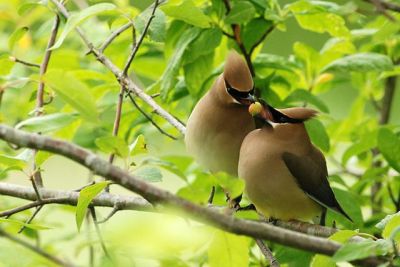
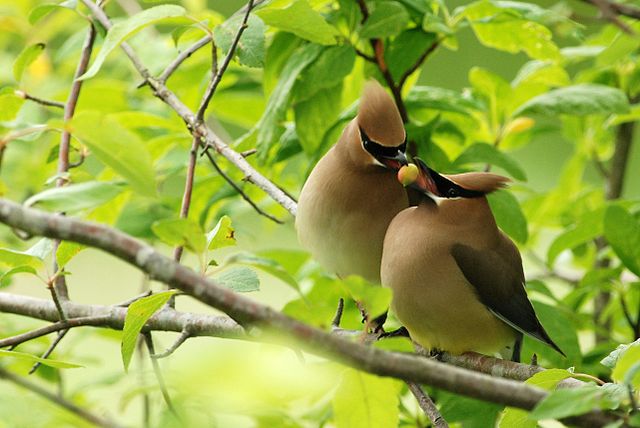
Cedar Waxwing (Bombycilla cedrorum) Passing Berries ©WikiC

Cedar Waxwing (Bombycilla cedrorum) Passing Berries ©WikiC

“A scientist with a biblical worldview has to account for the different species of birds found today in each created bird kind from the Flood to the present. Models of speciation and radiation for those events would only need thousands of years.”

Here is my most favorite quote from his article: “Dr. Jean Lightner has conservatively estimated that birds are comprised of about 196 created kinds.7 If we round that up to 200 bird kinds, we could account for all 10,380 extant species by each species diverging into two species just once every 750 yearsjust six times (200 to 400 to 800 to 1,600 to 3,200 to 6,400 to 12,800). That would even give us 2,420 more bird species to account for some extinction events. That is a very simplistic view and does not account for many variables, but it does provide us with a quick way to estimate if simple speciation (doubling) could account for all the birds we have today.

Here is a link to a very interesting chart I found on Pantasthumb. It shows the different birds grouped, by genera, within each family, in a tree format. Very interesting to look at. It might help make some of this article make a little more sense. Of course this is from an evolutionary perspective, but the evidence is shares by both sides.  TO SEE CHART The article this chart came from is “Update on the Tree of Birds“.

That is enough to think about for now. More later in another Avian Kinds on the Ark. Actually, this series is a sub-series for Birds of the Bible.

*

Avian Kinds on the Ark – Introduction

Avian Kinds on the Ark – What is a Kind?

DNA Reveals New Bird Species by Current Results.

Bird Speciation From the Flood to the Present by Dr. David W Boyd, Jr

Birds of the Bible – Foundation – The Ark

Birds of the Bible – Foundation #3 Updated

An Initial Estimate of Avian Ark Kinds,

Birds of the Bible – Seven By Seven

*

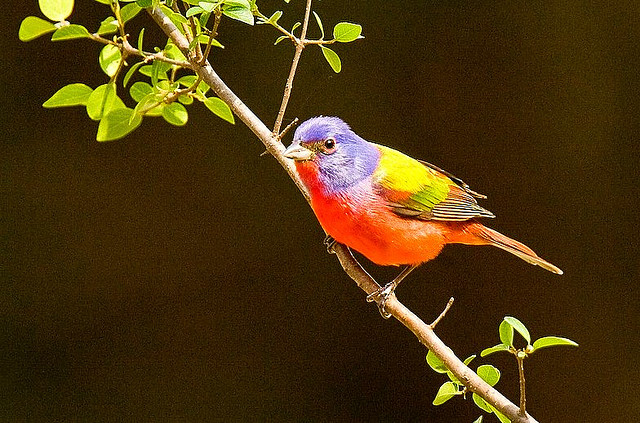
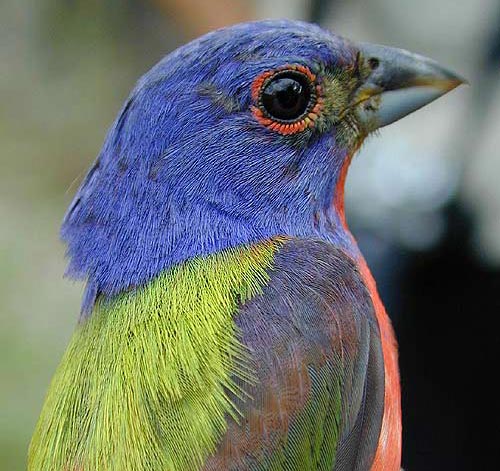
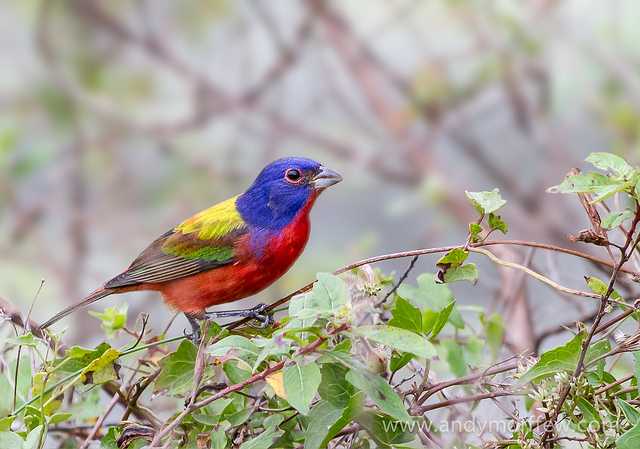
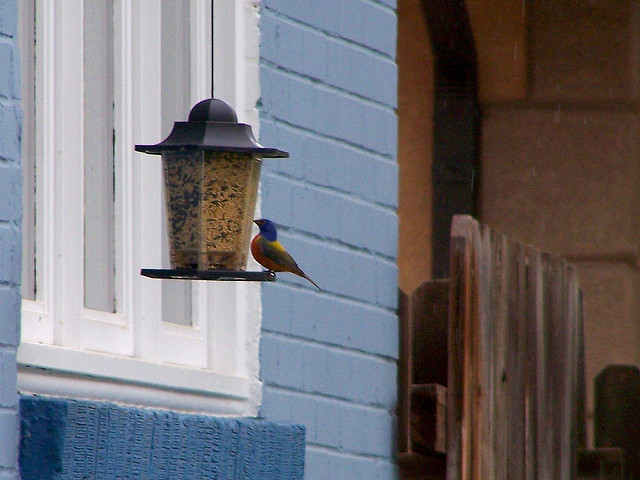
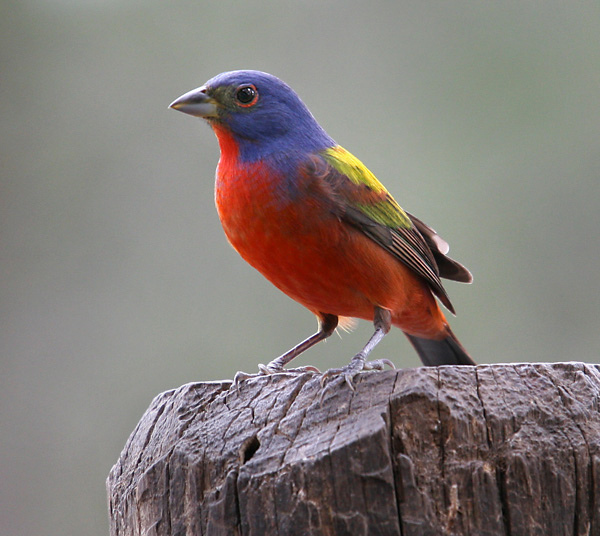
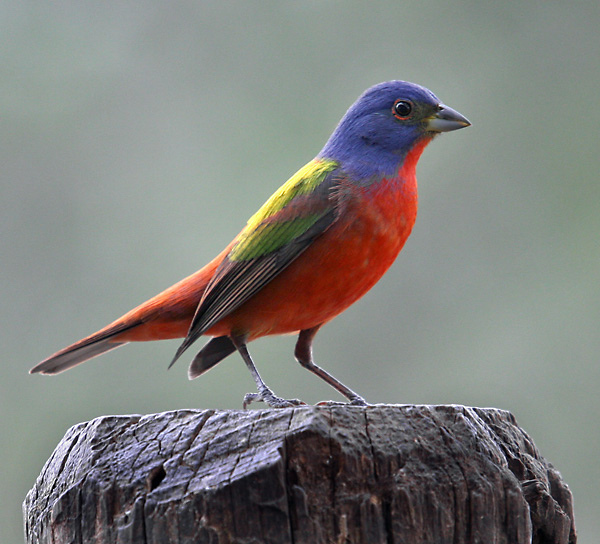
Painted Bunting – About’s Bird of the Week

Painted Bunting (Passerina ciris) ©©Flickr3

Painted Bunting (Passerina ciris) ©©Flickr3

“And he that sat was to look upon like a jasper and a sardine stone: and there was a rainbow round about the throne, in sight like unto an emerald.” (Revelation 4:3 KJV)

I am on the email list for About Home/Birding/Wild Birds. The articles are written mainly by Melissa Mayntz  Her bird of the week is one of my favorite beauties. My first encounter with a Painted Bunting was when we lived in south Florida. I was sitting at my computer and glanced out the window to the flat feeder hanging under my awning. When I saw, my neck jerked around and stared at this beautiful rainbow-colored bird. I had never seen one and didn’t even know what it was. I learned real quick.

Painted Bunting Subspecies (Passerina ciris ciris) ©WikiC

Painted Bunting Subspecies (Passerina ciris ciris) ©WikiC

I would like to share part of her article, trust I am not copying too much. You can read the rest of her article HERE.

Common Name: Painted Bunting, Rainbow Bunting

Scientific Name: Passerina ciris

Scientific Family: Cardinalidae

Appearance:

  • Bill: Thick and conical, lower mandible slightly thicker, gray
  • Size: 5-6 inches long with 9-inch wingspan, short neck, rounded wings
  • Colors: Green, blue, red, yellow, gray, black, orange
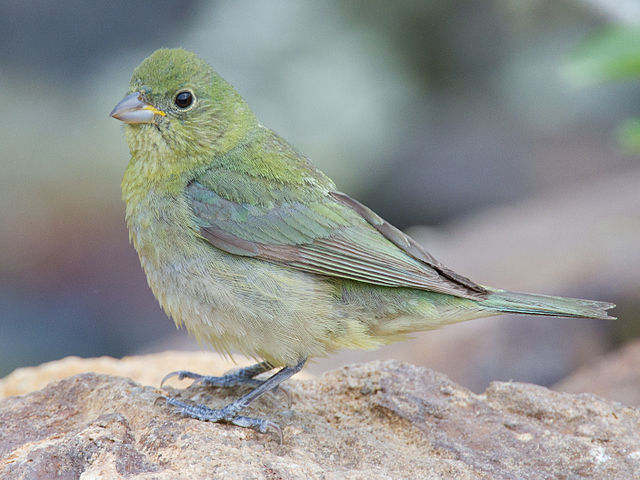
  • Markings: Birds are dimorphic. Males have brilliant coloration with a rich blue head, red eye ring, bright green mantle, red chest, red or orange-red abdomen and gray tail. Females are green overall, with brighter green on the back and a duller olive wash on the wings. Females’ throat and abdomen may be yellow-green, and they may show a yellow gape. For both genders, the eyes are black and the legs and feet are gray-black.Juveniles are similar to adult females but show less coloration overall and can appear a monotone gray-brown with a faint pale wing bar.Species is monotypic.”

See the rest of her article HERE. I have put together a slideshow to show off this bird for you. Trust you will enjoy the lovely created rainbow-colored beauty. Like she said, this is a SHOWSTOPPER BIRD.

“Thou art worthy, O Lord, to receive glory and honour and power: for thou hast created all things, and for thy pleasure they are and were created.” (Revelation 4:11 KJV)

Cardinalidae – Cardinals, Grosbeaks and allies

Wordless Birds With Hummingbirds
*

Magellanic Penguin Swims 5,000 Miles For Reunion

Magellanic Penguin Swims 5,000 Miles For Reunion With Man Who Saved His Live

Magellanic Penguin (Spheniscus magellanicus) ©Globo TV

Magellanic Penguin (Spheniscus magellanicus) ©Globo TV

Best Buds

Dr. Jim sent this article to me today and I thought we would work it up. After checking online, there were quite a few news articles about Dindim the Magellanic Penguin and his rescuer. Here is the article:

Interesting Things from Smiley CentralToday’s most heartwarming story is brought to you from a beach in Brazil.

It’s the story of a South American Magellanic penguin who swims 5,000 miles each year to be reunited with the man who saved his life.

Retired bricklayer and part time fisherman Joao Pereira de Souza, 71, who lives in an island village just outside Rio de Janeiro, Brazil, found the tiny penguin, covered in oil and close to death,
lying on rocks on his local beach in 2011. Joao cleaned the oil off the penguin’s feathers and fed him a daily diet of fish to build his strength. He named him Dindim.

After a week, he tried to release the penguin back into the sea. But, the bird wouldn’t leave. ‘He stayed with me for 11 months and then, just after he changed his coat with new feathers, he disappeared,’ Joao recalls.

And, just a few months later, Dindim was back. He spotted the fisherman on the beach one day and followed him home.

The prodigal penguin returns. Magellanic Penguin (Spheniscus magellanicus) ©Globo TV

The prodigal penguin returns. Magellanic Penguin (Spheniscus magellanicus) ©Globo TV

Look who’s back

For the past five years, Dindim has spent eight months of the year with Joao and is believed to spend the rest of the time breeding off the coast of Argentina and Chile. It’s thought he swims up to 5,000 miles each year to be reunited with the man who saved his life.

Magellanic Penguin (Spheniscus magellanicus) ©Globo TV

Dindim the Magellanic Penguin ©Globo TV

‘I love the penguin like it’s my own child and I believe the penguin loves me,’ Joao told Globo TV. ‘No one else is allowed to touch him. He pecks them if they do. He lays on my lap, lets me give him showers, and allows me to feed him sardines and to pick him up. It’s thought Dindim believes the fisherman is also a penguin ‘Everyone said he wouldn’t return but he has been coming back to visit me for the past four years. He arrives in June and leaves to go home in February and every year he becomes more affectionate as he appears even happier to see me.’

Magellanic Penguin (Spheniscus magellanicus) ©Globo TV

Magellanic Penguin (Spheniscus magellanicus) ©Globo TV

But I trust I shall shortly see thee, and we shall speak face to face. Peace be to thee. Our friends salute thee. Greet the friends by name. (3 John 1:14 KJV)

Biologist Professor Krajewski, who interviewed the fisherman for Globo TV, told The Independent: ‘I have never seen anything like this before. I think the penguin believes Joao is part of his family and probably a penguin as well. ‘When he sees him he wags his tail like a dog and honks with delight. And, just like that, the world seems a kinder place again.

*

You might want to check out these articles as some of them have videos of these two.

Penguins belong to the SPHENISCIFORMES Order, the Penguins – Spheniscidae Family.

Wordless Birds

*

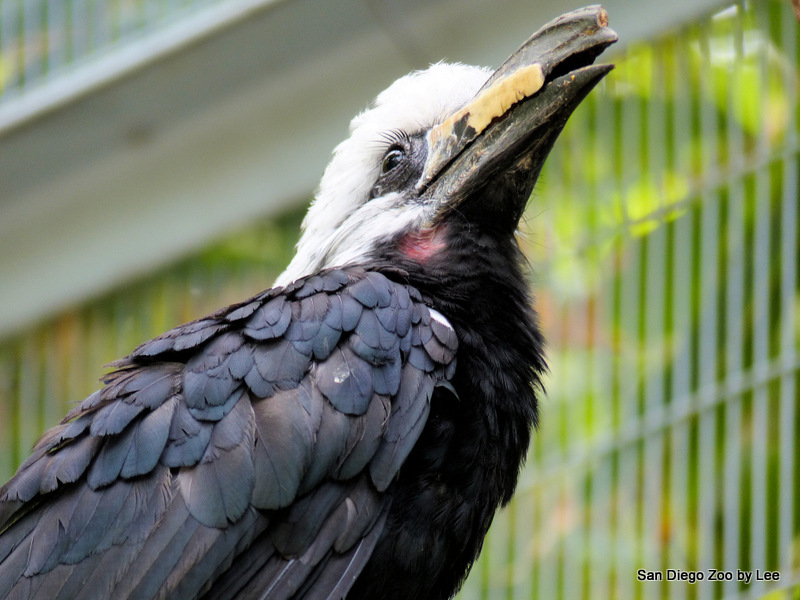
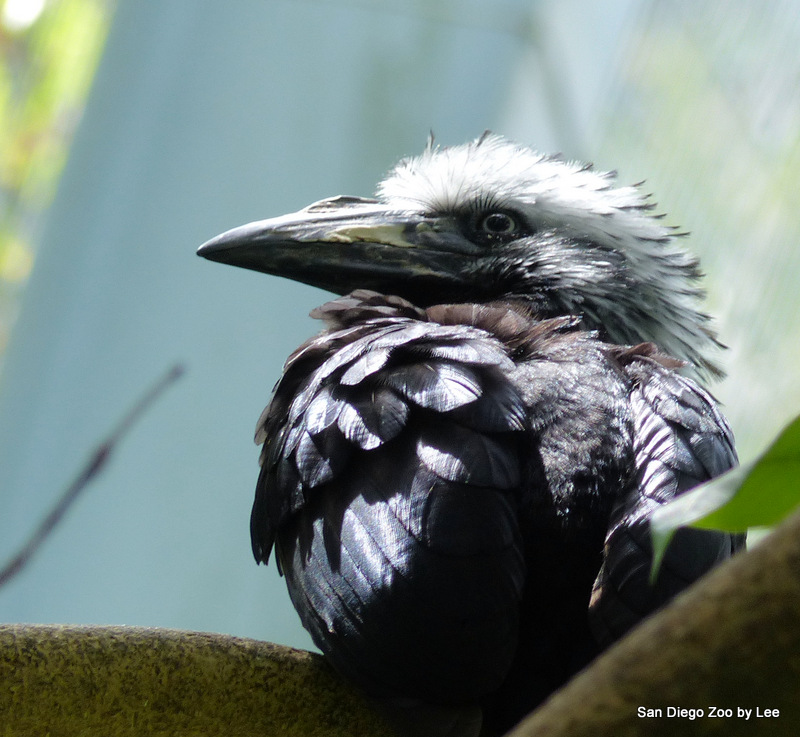
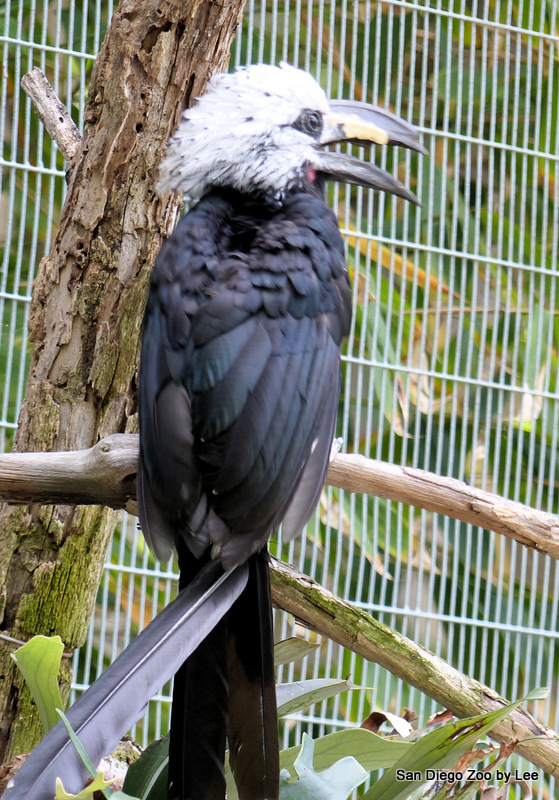
San Diego Zoo’s White-crested Hornbill

White-crested Hornbill (Horizocerus albocristatus albocristatus) SD Zoo

White-crested Hornbill (Horizocerus albocristatus albocristatus ) SD Zoo

The LORD is my rock, and my fortress, and my deliverer; my God, my strength, in whom I will trust; my buckler, and the horn of my salvation, and my high tower. (Psalms 18:2 KJV)

Last year Dan and I made our coast to coast trip. Our five-week trip enabled us to go to the San Diego Zoo for two days. That was definitely on my “Bucket List” for that trip. Since we haven’t been able to do much birdwatching this year, I thought I would finally get around to doing some more articles about that fantastic trip.

Actually, I got discouraged with my pictures and sort of “gave up.” It wasn’t the pictures fault, it was mine. I had recently updated my photography software to an improved one. (Dan’s hand me down copy) As I have stated many times before, I am a birdwatcher, not a photographer. Dan is our great photographer with the nice camera and fancy lenses. Me, I shoot in “program” mode, but, I shoot 5-10 times more photos than Dan. Dan waits for the perfect shot or the right angle. Me? If it’s a bird, I shoot it before it can get away. Anyway, the software frustrated me and at the same time, a program I have been using for years to “shrink” my photos for the blog, was no longer available.

Thus, these photos have been sitting on my hard drive waiting for me to do something with them. Now that I understand the software better, and I now know how to “shrink” them, it’s time to bring them out of hiding.

White-crested Hornbill (Horizocerus albocristatus albocristatus) SD Zoo Day 1

White-crested Hornbill (Horizocerus albocristatus albocristatus) SD Zoo Day 1

Another big encouragement I received lately was a series of tips from a photographer whose site I follow. He is at Victor Rakmil Photography. My favorite one, that encouraged me, was the one about a squirrel. It had to do with “cropping.” I always cropped my photos at the end, but he said to start there first. Simple, but it made sense. The photos in this article were cropped and then fixed up a bit.

Buco White-crested Hornbill (Horizocerus albocristatus albocristatus) SD Zoo

Buco White-crested Hornbill (Horizocerus albocristatus albocristatus) SD Zoo

The White-crested Hornbill was my first attempt at this and I threw a few other photos in. Trust you enjoy them.

Back to this West African Long-tailed Hornbill. This is what the San Diego Zoo calls it, but it is actually a White-crested Hornbill subspecies (Tropicranus albocristatus albocristatus). They are from Guinea to the Ivory Coast. Length “70cm. Elongate, slender hornbill with a very long graduated tail. Predominately black but with bushy white crest extending from forecrown to nape, and white face. The relatively slender black bill with cream upper mandible has a casque that extends for most of its length.” (Birdlife.org) To see a really great photo of this bird, CLICK HERE. They live primarily in forest with dense tangles. Also in tall gallery and secondary forest.

Here is a recording of a White-crested Hornbill by xeno-canto.org

White-crested Hornbill (Tropicranus albocristatus albocristatus) is from the Bucerotidae (The Hornbill kind) See Avian Kinds on the Ark – What Is A Kind?

“Feeds mainly on insects but takes also spiders, slugs, lizards, snakes, nestlings and shrews and also fruit which is taken from the ground. Often follows driver-ants, bird groups or monkeys to hawk for insects disturbed by them. Little known about breeding. The nest is placed in a natural cavity in a tree or palm stump. The female seals the entrance with its own droppings. Lays 2 eggs.” (BirdForum.net)

He hath dispersed, he hath given to the poor; his righteousness endureth for ever; his horn shall be exalted with honour. (Psalms 112:9 KJV)

*

Sea To Sea In 2015

Birds of the World

Bucerotidae – Hornbills

Victor Rakmil Photography

Sunday Inspiration – Thraupidae – Tanagers and Allies IV

Paradise Tanager (Tangara_chilensis) -DenverZoo-WikiC

Paradise Tanager (Tangara_chilensis) -DenverZoo-WikiC

And Jesus said unto him, Verily I say unto thee, To day shalt thou be with me in paradise. (Luke 23:43 KJV)

This week, you are only going to meet those Tanagers that belong to one Genus. Why? Because there are around 50 of them and they are beautiful. The Lord created these beauties, and through their breeding, many varieties are available for us to enjoy. The genus featured today are those with Tangara as the first part of their scientific name. One of my favorites is the one above (actually all of them are). You might think an artist worked on these birds. Well, actually, He Did! “I know all the fowls of the mountains: and the wild beasts of the field are mine.” (Psalms 50:11 KJV)

Well, let’s get started looking at and learning about these lovely avian wonders.

Golden-eared Tanager (Tangara chrysotis) ©WikiC

Golden-eared Tanager (Tangara chrysotis) ©WikiC

Tangara is a large genus of birds of the tanager family. It includes about 50 species, but as currently defined the genus is polyphyletic. All are from the Neotropics, and while most are fairly widespread, some have small distributions and are threatened. They are fairly small, ranging in size from 11.5–15 centimetres (4.5–5.9 in). This genus includes some of the most spectacularly colored birds of the world.

Flame-faced Tanager (Tangara parzudakii) ©WikiC

Flame-faced Tanager (Tangara parzudakii) ©WikiC

These tanagers are mainly found high in forest canopies, but some occupy more open habitat. They are found at all elevations below tree line but are most diverse in the Andean subtropical and foothill forests of Colombia, Ecuador and Peru.

The female builds a usually well concealed cup nest and lays two brown- or lilac-speckled white eggs. These hatch in 13–14 days and the chicks fledge in a further 15–16 days. The male and female feed the nestlings on insects and fruit, and may be assisted by helpers.

Tangara tanagers pick insects from leaves, or sometimes in flight, but fruit is a major dietary item, accounting for 53-86% of food items in those species which have been studied. (Information from Wikipedia Tangara)

This slideshow requires JavaScript.

And they sing the song of Moses the servant of God, and the song of the Lamb, saying, Great and marvellous are thy works, Lord God Almighty; just and true are thy ways, thou King of saints. (Revelation 15:3 KJV)

“El Shaddai” ~ by Nell Reese

*

More Sunday Inspirations

Sunday Inspiration – Thraupidae – Tanagers and Allies I

Sunday Inspiration – Thraupidae – Tanagers and Allies II

Sunday Inspiration – Thraupidae – Tanagers and Allies III

Traupidae Family – Tanagers and Allies

Sharing The Gospel

*

Avian Kinds on the Ark – What Is A Kind?

Green-winged Teal (Anas carolinensis) Pair ©WikiC

They Came By Pairs – Green-winged Teal (Anas carolinensis) ©WikiC

And of every living thing of all flesh, two of every sort shalt thou bring into the ark, to keep them alive with thee; they shall be male and female. Of fowls after their kind, and of cattle after their kind, of every creeping thing of the earth after his kind, two of every sort shall come unto thee, to keep them alive. And take thou unto thee of all food that is eaten, and thou shalt gather it to thee; and it shall be for food for thee, and for them. Thus did Noah; according to all that God commanded him, so did he. (Genesis 6:19-22 KJV)

When Noah was preparing the Ark, he was informed that the animals and birds (fowls) after their kinds would come to him to keep them alive. Again, notice in Genesis 7:1-3 that the clean beast and the birds (fowls) all come by sevens (pairs) also. Clean or unclean, the birds came by seven pairs. There is no distinction made with them.

And the LORD said unto Noah, Come thou and all thy house into the ark; for thee have I seen righteous before me in this generation. Of every clean beast thou shalt take to thee by sevens, the male and his female: and of beasts that are not clean by two, the male and his female. Of fowls also of the air by sevens, the male and the female; to keep seed alive upon the face of all the earth. (Genesis 7:1-3 KJV)

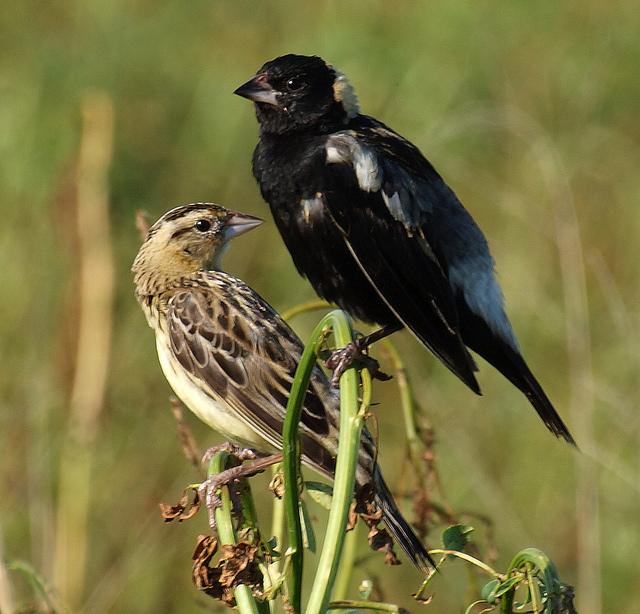
Bobolink (Dolichonyx oryzivorus) CC Pair ramendan

Bobolink (Dolichonyx oryzivorus) ©© Pair ramendan

In Birds of the Bible – Foundation #3 Updated, I made this remark “Noah did not have to round up the animals, they came to him. Because not every animal we see today came on board but the main kinds (for instance the “bird kinds” may have had a “warbler kind” but not have black and white warblers, yellow-rumped warblers, hooded warbler, etc.), which ever ones they were, there was plenty of room for them. I have an idea that because the LORD sent the animals, birds, and critters, that their DNA’s were of the highest quality. (That is my opinion)”

At the time that comment was made, I was not aware of this article from Dr. Jean Lightner, about the Avian Ark Kinds. This series is based on her’s and other’s research into the Avian Kinds that came on board the ark.

“Kinds” or created kinds are called “baramins” and they used different methods to try to find the original kinds. This part of her article is rather technical, and honestly, I don’t understand some of the terms and methods discussed. Yet, the findings, is what I would like to share with you. Those, we can understand. (You can read her article HERE)

Most of us are aware that the many variety of dogs we see today came from an original “dog kind.” No matter how much interbreeding they do, the results are still dog kinds. Cats and dogs don’t interbreed, so no evolution is involved. Variation within the dog kind has occurred, just as it has in the “bird kinds”. In the Bird Kinds, they have come up with approximately 196 putative bird kinds and most of those break down to our modern-day Families in our taxonomy. Yet, in the I.O.C. their are 239 families and two Incertae Sedis families which make 241 families. The next articles will show how those Families compare to today’s families.

By the way, my math was off in that first article. I forgot the two Incertae Sedis Families. That makes for 45 extra families to account for.

Mountain Bluebird, male (R) & female (L) ©Mickey Barnes / from Birds & Blooms

Mountain Bluebird, male (R)- female (L) ©Mickey Barnes / from Birds & Blooms

Two quotes from Dr. Lighner’s article: “There is tremendous variety seen today in animal life as creatures have multiplied and filled the earth since the Flood (Genesis 8:17). In order to identify which modern species are related, being descendants of a single kind, interspecific hybrid data is utilized. When hybrid data is lacking, a cognitum approach is preferred; this identifies natural groupings based on human cognitive senses. Generally the cognitum at the family level (which is usually fairly strong) is preferred when hybrid data is lacking, though obvious cognita surrounding this level are noted.” (emphasis mine)

“As in mammals and amphibians, the state of avian taxonomy is in flux. Despite the ideal of neatly nested hierarchies in taxonomy, it seems groups of birds are repeatedly “changing nests.” This is partially because where an animal is placed depends on which characteristics one chooses to consider. While many had thought that molecular data would resolve these issues, in some cases it has exacerbated them.”

One thing we can see from all this. We will never know exactly who, what, or which one belongs to this family or that order or kind until we reach heaven and ask their Creator.

Let them praise the name of the LORD: for he commanded, and they were created. (Psalms 148:5 KJV)

*

Avian Kinds on the Ark – Introduction

Birds of the Bible – Foundation – The Ark

Birds of the Bible – Foundation #3 Updated

An Initial Estimate of Avian Ark Kinds,

Birds of the Bible – Seven By Seven

*
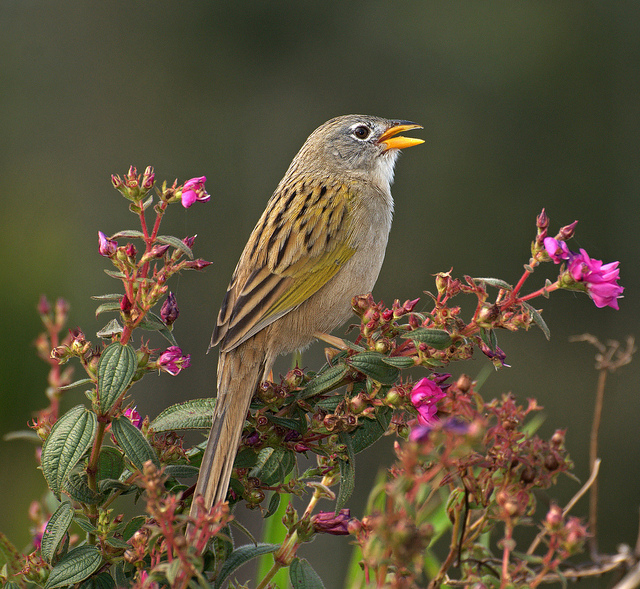
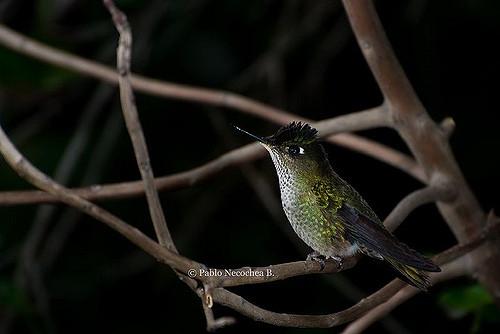
Hummingbird Families – Firecrowns

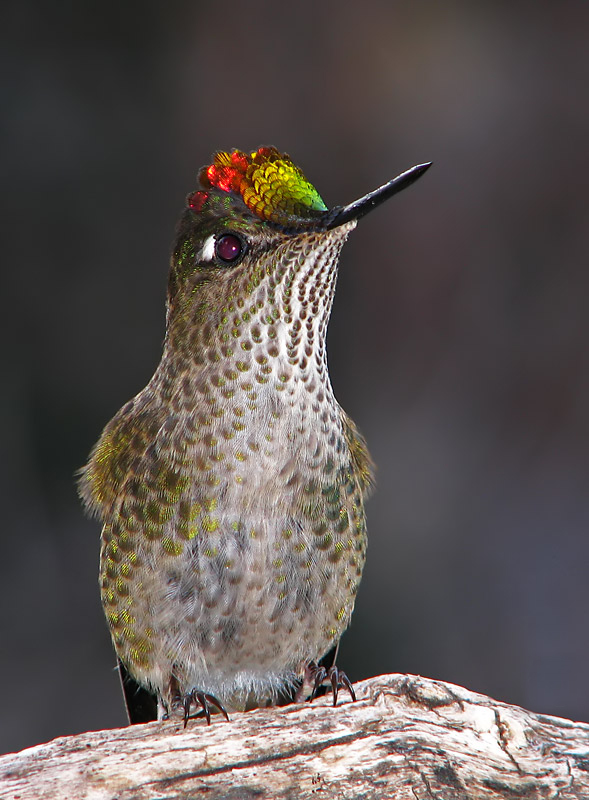
Green-backed Firecrown (Sephanoides sephaniodes) ©WikiC

Green-backed Firecrown (Sephanoides sephaniodes) ©WikiC

For You meet him with the blessings of goodness; You set a crown of pure gold upon his head. (Psalms 21:3 NKJV)

A few days ago, I used this photo for one of our Daily Devotionals, Lee’s Two Word Tuesday. It is such a beautiful creation from the Lord, that I wondered what I could find out about it and where it is from. So, here is what I discovered:

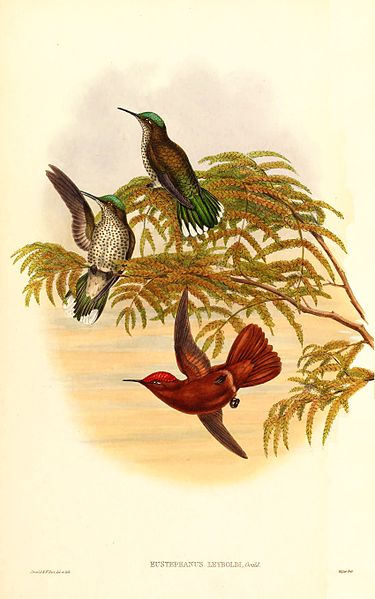
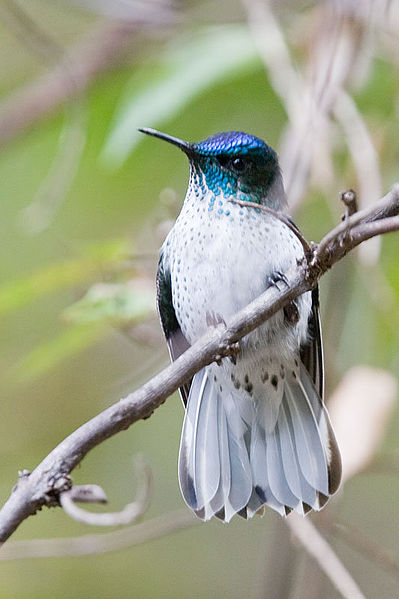
The firecrowns are the genus Sephanoides of the hummingbirds. There are two species. They are members of the Trochilidae – Hummingbird Family.

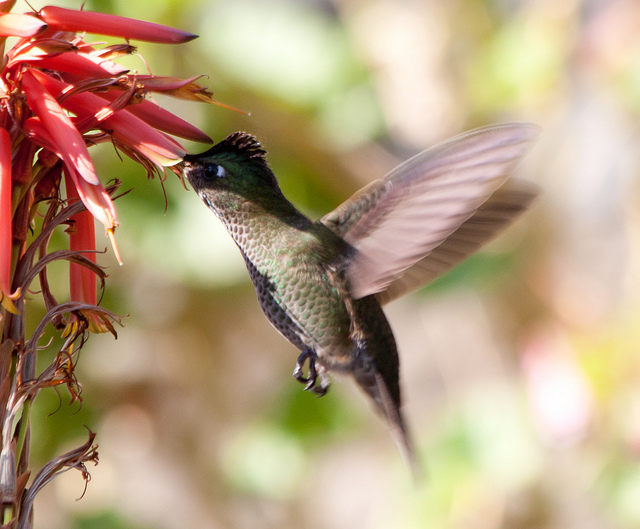
Green-backed firecrown, Sephanoides sephaniodes

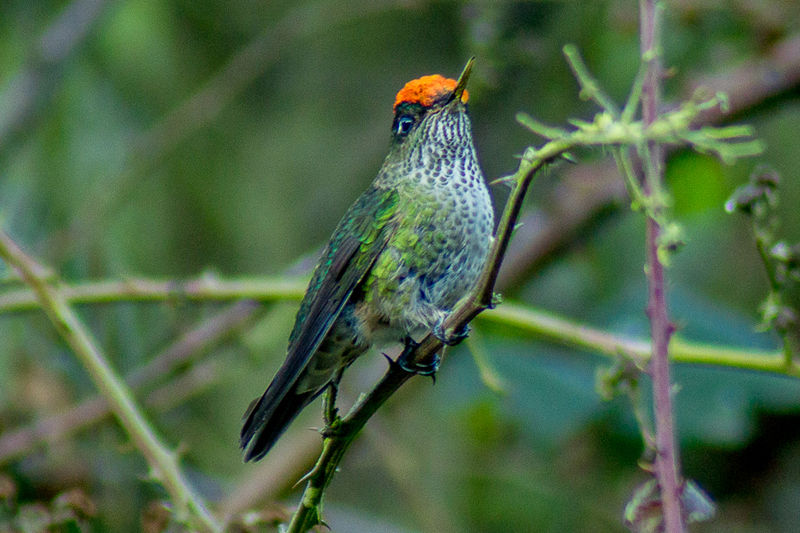
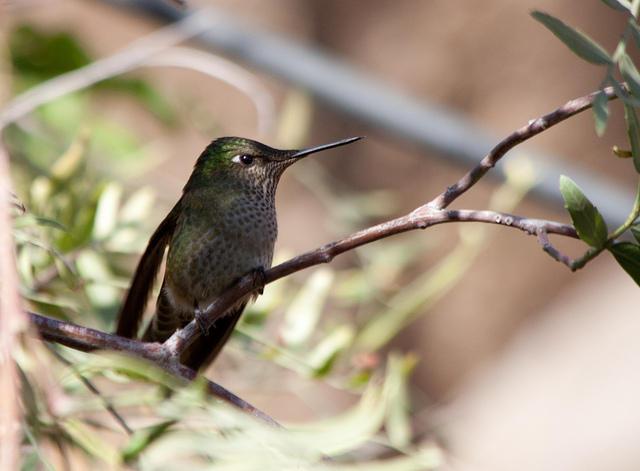
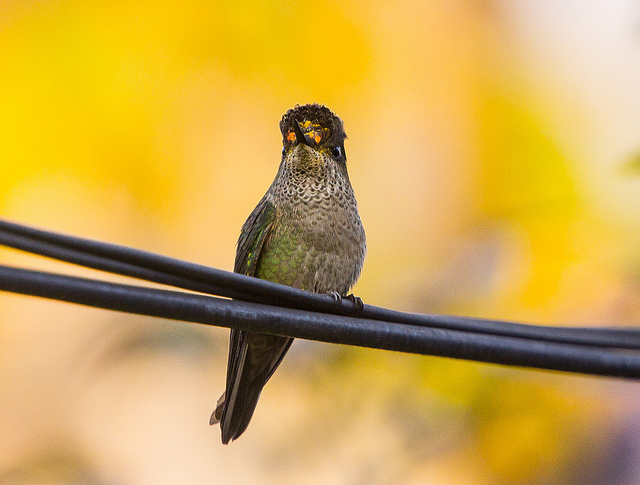
Green-backed Firecrown (Sephanoides sephaniodes) ©Flickr Flavio Camus

Green-backed Firecrown (Sephanoides sephaniodes) ©Flickr Flavio Camus

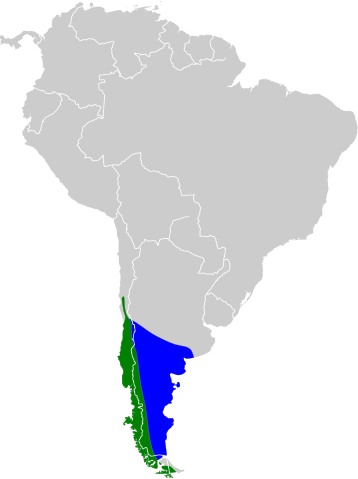
The Green-backed Firecrown (Sephanoides sephaniodes) occurs widely in Argentina and Chile and Isla Róbinson Crusoe, one of a three-island archipelago belonging to Chile. This Firecrown seasonally migrates to the mainland. Both species will hang from flower petals or leaves with their feet. They feed on nectar and insects.

“This compact bird has a short bill and tail, overall dark green plumage with whitish-gray underparts, and males possess a namesake glowing orange-red crown patch. These birds are highly territorial and often badger wayward trespassing birds as large as caracaras.” (Neotropical Birds)

Juan Fernández firecrown, Sephanoides fernandensis

Juan FernándezFirecrown (Sephanoides fernandensis hembra) ©Flickr Island Conservation

Juan Fernández Firecrown (Sephanoides fernandensis hembra) Subspecies ©Flickr Island Conservation

For what is our hope, or joy, or crown of rejoicing? Are not even ye in the presence of our Lord Jesus Christ at his coming? (1 Thessalonians 2:19 KJV)

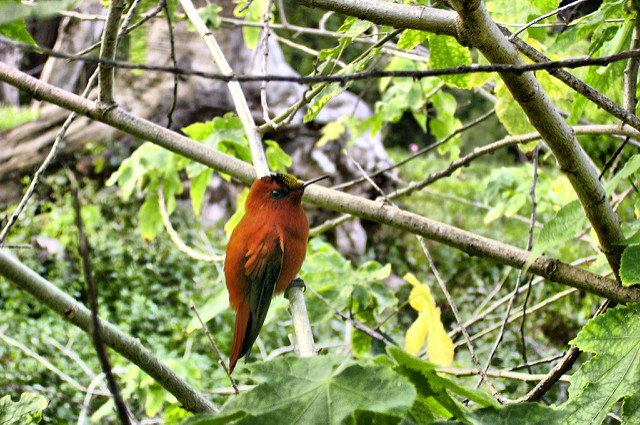
The Juan Fernández Firecrown (Sephanoides fernandensis) is a hummingbird that is found solely on Isla Róbinson Crusoe, one of a three-island archipelago belonging to Chile. It is 350 miles off the coast. It is non-migratory and shares the island with its smaller relative the Green-backed Firecrown.

The Juan Fernández Firecrown arguably shows the greatest degree of sexual dimorphism found among hummingbirds. Unlike in most hummingbirds, where females simply lack the ornamental plumage of the males, in S. fernandensis they are also brilliantly-colored, but differ so much from males that in the 19th century they were thought to be different species until a nest was discovered with one of each sex.

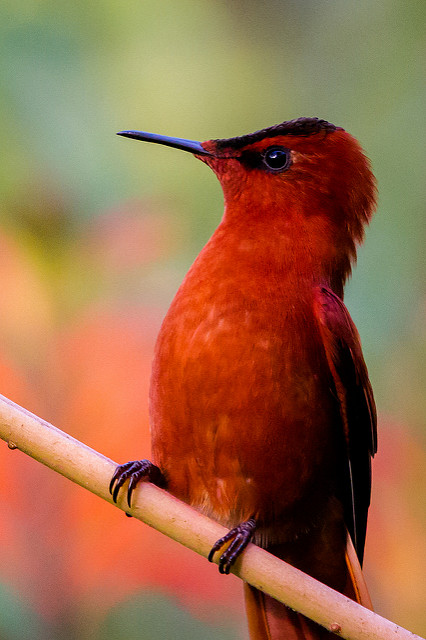
Juan Fernandez Firecrown (Sephanoides fernandensis) ©WikiC

Juan Fernandez Firecrown (Sephanoides fernandensis) ©WikiC

The male is 11.5–12 cm long and weighs 10.9 g. Its color is mostly cinnamon orange, excepting dark grey wings, black bill, and iridescent gold crown.

Juan Fernandez Firecrown (Sephanoides fernandensis) ©Flickr Island Conservation

Juan Fernandez Firecrown (Sephanoides fernandensis) ©Flickr Island Conservation

The female is 10 cm long and weighs 6.8 g. Its underparts are white with a dappling of very small green and black areas; the crown is iridescent blue, and upperparts are blue-green.

(Information from Wikipedia)

*

*

Trochilidae – Hummingbird Family

Lee’s Two Word Tuesday – 7/5/16

Firecrown – Wikipedia

Green-backed Firecrown – Wikipedia

Juan Fernández Firecrown  – Wikipedia

Neotropical Birds
*
Avian Kinds on the Ark – Introduction

Ark Encounter During Construction

Ark Encounter During Construction

You shall take with you seven each of every clean animal, a male and his female; two each of animals that are unclean, a male and his female; also seven each of birds of the air, male and female, to keep the species alive on the face of all the earth. (Genesis 7:2-3 NKJV)

Today in Williamstown, Kentucky, they had the Grand Opening of the Ark Encounter. The building of the Ark Encounter was mentioned in Birds of the Bible – Foundation – The Ark. Now, it is open and we are looking forward to the opportunity to go see this modern day, full sized Ark. It’s about 900 miles from where we live, but it is definitely on my “bucket list.”

What I want to do, in a series of articles, is to introduce the Avian Kinds, Bird kinds, that are thought to be on board. An article, An Initial Estimate of Avian Ark Kinds, appeared on Nov. 27, 2013. It was written by Dr. Jean Lightner. Here is her abstract from that article.

Creationists recognize that animals were created according to their kinds, but there has been no comprehensive list of what those kinds are. As part of the Answers in Genesis Ark Encounter project, research was initiated in an attempt to more clearly identify and enumerate vertebrate kinds that were present on the Ark. In this paper, using methods previously described, 196 putative bird kinds are identified. Due to the limited information available and the fact that avian taxonomic classifications shift, this should be considered only a rough estimate.

I bolded the “196 putative bird kinds are identified” because that is what these articles are going to be about. According to I. O. C., the naming list that this site uses, there are 239 Families. On the Birds of the World family page, you will see this:

Lee’s Birds of the World, based on the IOC World Bird List 6.2 contains 10,637 extant species (and 154 extinct species)  classified in 40 Orders,  239 Families (plus 2 Incertae Sedis) and 2289 Genera and 20,490 Subspecies.

If my math is correct, 239 minus 196, equals 43. Okay, where did those 43 extra families come from? That is what this series is going to try to find out. (Not Today)

Ark Encounter - First Look, By TV station

Ark Encounter – First Look, By TV station

STAY TUNED!!

*

Birds of the Bible – Foundation – The Ark

An Initial Estimate of Avian Ark Kinds

Grand Opening of the Ark Encounter

Birds of the World

*

Sunday Inspiration – Thraupidae – Tanagers and Allies II

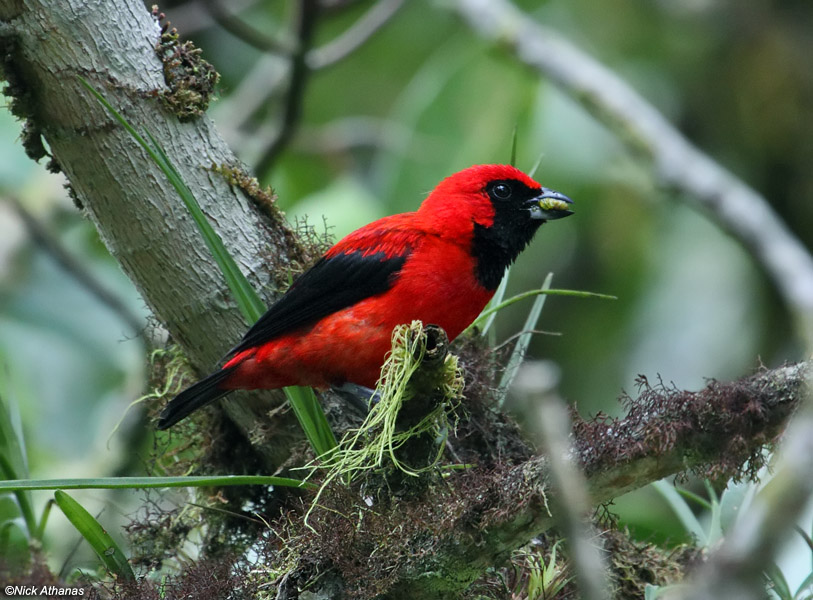
Vermilion Tanager (Calochaetes coccineus) ©Nick Athanas

Vermilion Tanager (Calochaetes coccineus) ©Nick Athanas

Come now, and let us reason together, saith the LORD: though your sins be as scarlet, they shall be as white as snow; though they be red like crimson, they shall be as wool. (Isaiah 1:18 KJV)

Last week’s Sunday Inspiration of Tanagers and Allies started us off on this huge family. We will continue, starting with the five Lanio genus of Shrike-Tanagers.

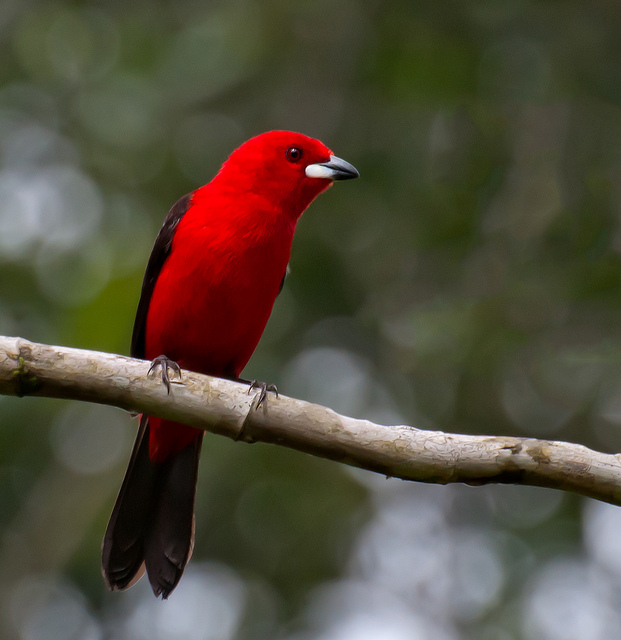
Brazilian Tanager (Ramphocelus bresilius) by Dario Sanches

Brazilian Tanager (Ramphocelus bresilius) by Dario Sanches

The words of the LORD are pure words: as silver tried in a furnace of earth, purified seven times. (Psalms 12:6 KJV)

Wait until you see the second very colorful genus, the Ramphocelus. These are Neotropical birds that have enlarged shiny whitish or bluish-grey lower mandibles, which are pointed upwards in display. However, this is greatly reduced in the females of most species. Males are black and red, orange or yellow, while females resemble a duller version of the males, or are brownish or greyish combined with dull red, orange or yellowish.

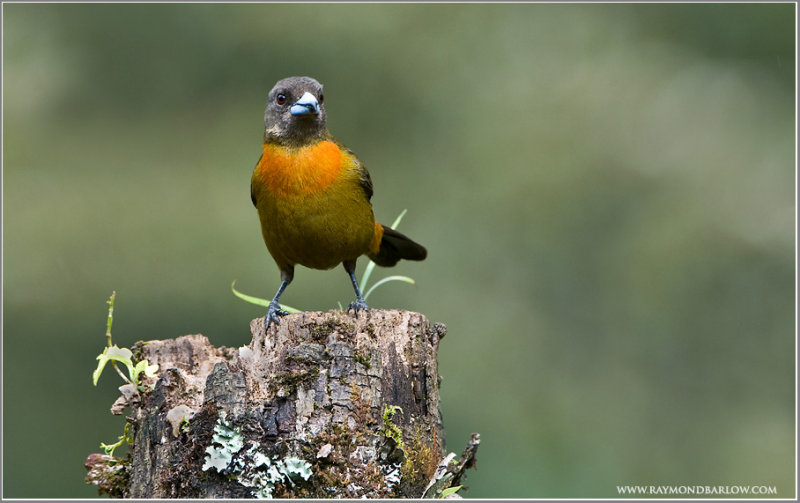
Cherrie's Tanager (Ramphocelus costaricensis) Female by Raymond Barlow

Cherrie’s Tanager (Ramphocelus costaricensis) Female by Raymond Barlow

Ramphocelus tanagers are found in semi-open areas. The nest is a cup built by the female of plant materials such as moss, rootlets, and strips of large leaves like banana or Heliconia, and is often in a fairly open site in a tree. The female usually lays pale blue eggs, with grey, brown or lavender spots, and the young stay in the nest for only about 12 days. The songs of this genus are repetitions of rich one- or two-syllable whistles. Most of these are of a crimson or reddish hue.

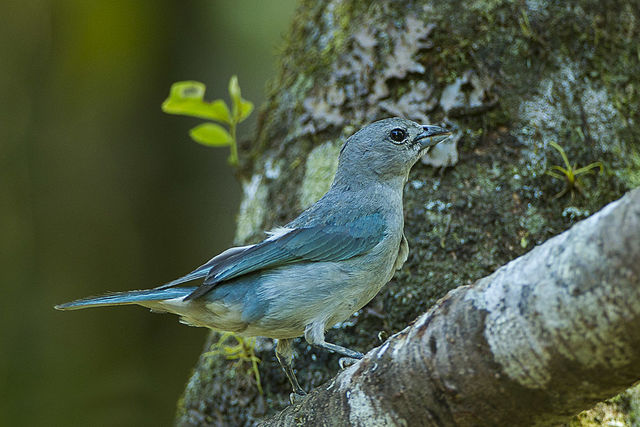
Sayaca Tanager (Thraupis sayaca) ©WikiC

Sayaca Tanager (Thraupis sayaca) ©WikiC

The Thraupis Tanagers are another beautiful genera of the Lord’s Creation. This time, blue will is the dominate color. “These tanagers are mainly found in semi-open habitats including plantations and open woodland, but some will venture into towns. They feed from medium to high levels in trees, taking mainly fruit, with some nectar, and insects which may be taken in flight.” (Wikipedia)

Blue-backed Tanager (Cyanicterus cyanicterus) ©Francesco_Veronesi

This week will end with two genus that have only one species each, the Vermilion Tanager (Calochaetes coccineus) and the Blue-backed Tanager (Cyanicterus cyanicterus). All the birds this week live from Mexico down through South America.

This slideshow requires JavaScript.

I know all the birds of the mountains, And the wild beasts of the field are Mine. (Psalms 50:11 NKJV)

“My Faith Still Holds” ~ Faith Baptist Orchestra

*

More Sunday Inspirations

Sunday Inspiration – Thraupidae – Tanagers and Allies I

Traupidae Family – Tanagers and Allies

Hope for Hard Times

*

Sunday Inspiration – Thraupidae – Tanagers and Allies I

Chestnut-headed Tanager (Pyrrhocoma ruficeps) ©WikiC

Chestnut-headed Tanager (Pyrrhocoma ruficeps) ©WikiC

“For ye shall go out with joy, and be led forth with peace: the mountains and the hills shall break forth before you into singing, and all the trees of the field shall clap their hands.” (Isaiah 55:12 KJV)

Our journey through the Song Bird Order, known as the Passeriformes Order, has been ongoing for many Sundays. There are 131 Families within this Order, and we are now down to three families to go. The Traupidae Family which we are starting today, has 375 species. Guess what? We will not be covering them all today. The last four Sundays was used to show you the Emberizidae family of 181 species. I trust you enjoyed having that family split up into “bite-size” articles. The same will be true with this family of beautiful Tanagers and allies created by their Creator.

If you are fairly new to seeing these Sunday Inspirations, the slide shows have the birds arranged in taxonomy order. So, there really is a reason for the way they are presented in the slides.

White-lined Tanager (Tachyphonus rufus) Female ©WikiC

White-lined Tanager (Tachyphonus rufus) Female ©WikiC

“The family has an American distribution. The Thraupidae are the second-largest family of birds and represent about 4% of all avian species and 12% of the Neotropical birds. Traditionally, about 240 species of tanagers were described, but the taxonomic treatment of this family’s members is currently in a state of flux.” (Wikipedia)

Red-crested Cardinal (Paroaria coronata) ©WikiC

Red-crested Cardinal (Paroaria coronata) ©WikiC

“Tanagers are small to medium-sized birds. The shortest-bodied species, the white-eared conebill, is 9 cm (3.5 in) long and weighs 7 grams, barely smaller than the short-billed honeycreeper. The longest, the magpie tanager is 28 cm (11 in) and weighs 76 grams (0.168 pounds). The heaviest is the white-capped tanager which weighs 114 grams (0.251 pounds) and measures about 24 cm (9.4 in). Both sexes are usually the same size and weight. Tanagers are often brightly colored, but some species are black and white. Birds in their first year are often duller or a different color altogether. Males are typically more brightly colored than females. Most tanagers have short, rounded wings. The shape of the bill seems to be linked to the species’ foraging habits.”(Wikipedia)

Black-faced Tanager (Schistochlamys melanopis) at National Aviary by Dan

Black-faced Tanager (Schistochlamys melanopis) at National Aviary by Dan

The Brown Tanager (Orchesticus abeillei) starts us off, followed by six Cardinals in the Paroaria genus. Various Tanagers from Schistochlamys, Cissopis, Conothraupis, Lamprospiza, Compsothraupis, Sericossypha, Nemosia, Creurgops, Mitrospingus and Orthogonys. (22 birds)

Black-headed Hemispingus (Hemispingus verticalis) ©WikiC

Black-headed Hemispingus (Hemispingus verticalis) ©WikiC

Next will be 15 Hemispingus, all in the Hemispingus genus. Hemispingus is a genus of warbler-like tanagers. They are found in highland forest in South America, especially in the Andes.

Fulvous-headed Tanager (Thlypopsis fulviceps) ©WikiC

Fulvous-headed Tanager (Thlypopsis fulviceps) ©WikiC

We will conclude with 20 or so more Tanagers from eight various genera. As you watch the slide show, you will see how the Lord enjoyed giving a great variety of color and patterns for these avian singers.

“Let them praise the name of the LORD: for he commanded, and they were created.” (Psalms 148:5 KJV)

This slideshow requires JavaScript.

Deck thyself now with majesty and excellency; and array thyself with glory and beauty. (Job 40:10 KJV)

“My Jesus I Love Thee” ~ Faith Baptist Orchestra

*

Sunday Inspirations

Traupidae Family – Tanagers and Allies

Family: Building a Home God’s Way

*