***

MARVELOUS
***
“This is the LORD’S doing; it is marvellous in our eyes. ” (Psalms 118:23 KJV)
Marvelous Spatuletail (Loddigesia mirabilis) ©©Dubi Shapiro
*
*
“This is the LORD’S doing; it is marvellous in our eyes. ” (Psalms 118:23 KJV)
Marvelous Spatuletail (Loddigesia mirabilis) ©©Dubi Shapiro
*
*

“By them shall the fowls of the heaven have their habitation, which sing among the branches.” (Psalms 104:12 KJV)
Birds Singing from BeliefNet
*
*
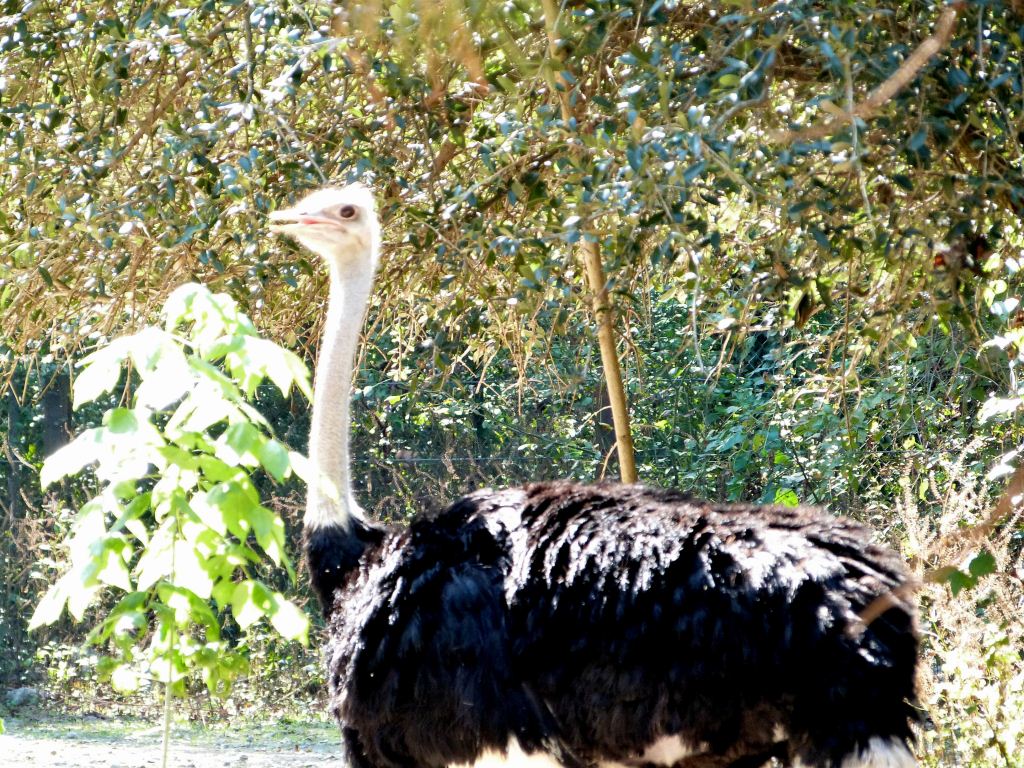
Common Ostrich (Struthio camelus) at Riverbanks Zoo SC by Lee
“Gavest thou the goodly wings unto the peacocks? or wings and feathers unto the ostrich? Which leaveth her eggs in the earth, and warmeth them in dust, And forgetteth that the foot may crush them, or that the wild beast may break them. She is hardened against her young ones, as though they were not hers: her labor is in vain without fear; Because God hath deprived her of wisdom, neither hath he imparted to her understanding. What time she lifteth up herself on high, she scorneth the horse and his rider.” (Job 39:13-18)
Today we have thirteen (13) birds that are in four (4) Orders with a total of five (5) families. As mentioned before, these will be much easier than the LARGE Passeriformes Order that took months to view. Our Orders are the Struthioniformes, with one (1) family, Struthionidae that has two (2) Ostritches; the Rheiformes has one (1) family, Rheidae, with two (2) Rheas; and then the Casuariiformes Order has two (2) families, Casuariidae with three (3) Cassowaries and the Dromiidae family with a solo Emu; Apterygiformes Order with the Apterygidae family with five (5) Kiwis.
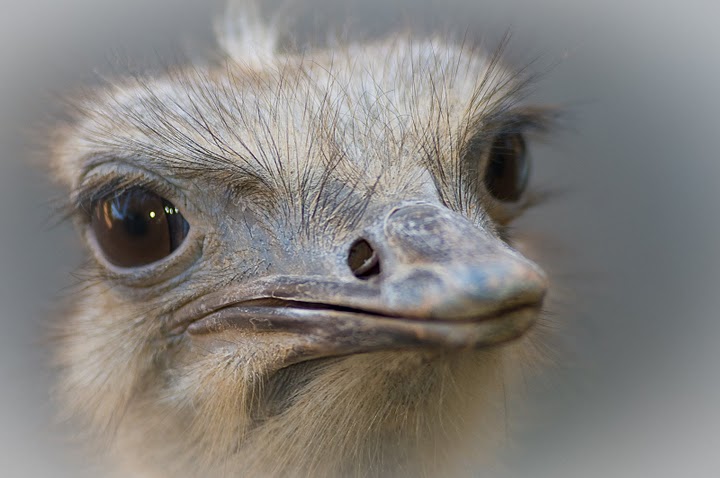
Common Ostrich (Struthio camelus) Closeup by ©WikiC
Struthioniformes, with one (1) family, Struthionidae that has two (2) Ostritches – “Ostriches are large, non-flying birds that live in Africa. Besides in their natural environment, ostriches are often breed as farm animals because some people like to eat their meat, eggs or to wear fashion products made of their skin. Although they are killed for commercial purposes, they are not endangered. There are around 2 million ostriches that can be found around the globe.” (SoftSchools)

Greater Rhea (Rhea americana) by ©Wayne Deeker
Rheiformes has one (1) family, Rheidae, with two (2) Rheas – “Rhea is a member of the group of flightless birds. This is the largest bird in the South America. There are two species of rhea: Greater or American Rhea and Lesser or Darwin’s Rhea. They differ in size and in type of habitat they inhabit. Rhea can be found in open grasslands, pampas and woodlands of Argentina, Uruguay, Bolivia, Paraguay, Chile, Peru and Brazil. Rhea is also kept on farms because of its meat, eggs and skin. Number of rhea in the wild is decreased due to habitat loss, but they are still not listed as endangered species.” (SoftSchools with editing)
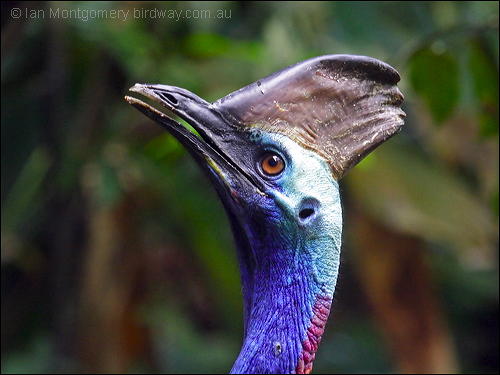
Southern Cassowary (Casuarius casuarius) by Ian
Casuariiformes Order has two (2) families, Casuariidae with three (3) Cassowaries – “The bird order Casuariiformes has four surviving members: the three species of cassowary, and the only remaining species of emu. The emus are classified in the family Dromaiidae, while the cassowaries are all located within the Casuariidae family. All four members of the order are very large flightless birds native to Australia-New Guinea.” (Wikipedia)
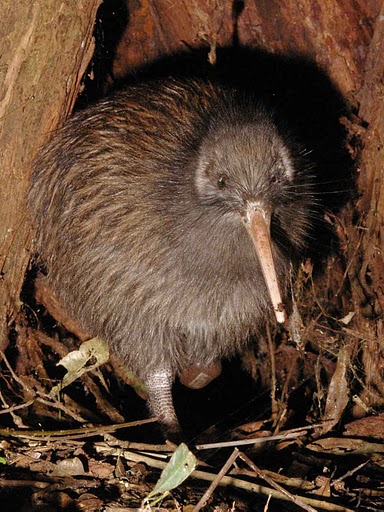
North Island Brown Kiwi (Apteryx mantelli) by Derek©WikiC
Apterygiformes Order with the Apterygidae family with five (5) Kiwis – “Kiwi (pronounced /kiːwiː/) or kiwis are flightless birds native to New Zealand, in the genus Apteryx and family Apterygidae. At around the size of a domestic chicken, kiwi are by far the smallest living ratites (which also consist of ostriches, emus, rheas, and cassowaries), and lay the largest egg in relation to their body size of any species of bird in the world. DNA sequence comparisons have yielded the surprising conclusion that kiwi are much more closely related to the extinct Malagasy elephant birds than to the moa with which they shared New Zealand. There are five recognized species. All species have been negatively affected by historic deforestation but currently the remaining large areas of their forest habitat are well protected in reserves and national parks. At present, the greatest threat to their survival is predation by invasive mammalian predators.
Kiwi is the nickname used internationally for people from New Zealand,[1] as well as being a relatively common self-reference. The name derives from the kiwi, a flightless bird, which is native to, and the national symbol of, New Zealand. Unlike many demographic labels, its usage is not considered offensive; it is generally viewed as a symbol of pride and endearment for the people of New Zealand..” (Wikipedia with editing)

New Zealand Stamp with Kiwi ©WikiC
“And we have seen and do testify that the Father sent the Son to be the Saviour of the world. Whosoever shall confess that Jesus is the Son of God, God dwelleth in him, and he in God.”
(1 John 4:14-15 KJV)
“Hosanna, Messiah Has Come” ~ Choir and Solo by Lisa Brock
*

Marabou Stork in Bathroom During Hurricane
“And Noah went in, and his sons, and his wife, and his sons’ wives with him, into the ark, because of the waters of the flood. Of clean beasts, and of beasts that are not clean, and of fowls, and of every thing that creepeth upon the earth, There went in two and two unto Noah into the ark, the male and the female, as God had commanded Noah. ” (Genesis 7:7-9 KJV)
I wonder if all the workers at the zoos every had the idea they were doing something similar to what had done in the past? Adam, his family, the animals, birds, and critters were placed in the ark to protect them from the flood. From the reports I seen, it seems the critters have all survived. Hurricane is still along the South Carolina coast as this is produced.
Just thought you might enjoy watching and reading some of the articles about the zoo animals during this storm. For us here, the sun is shining and the wind is down to an occasional breeze. Praise the Lord for His protection.
What St Augustine Alligator Farm And Zoological Park did for their animals before Hurricane came by:
Some interesting articles to check out:
Jacksonville Fire Rescue Dept. helps Jacksonville Zoo
What Zoos Do To Prepare For Natural Disasters
Animals in Florida Zoo Hunker Down For Hurricane Matthew
FAQ: Animal Safety & Hurricane Matthew
*

“He maketh the storm a calm, so that the waves thereof are still.” (Psalms 107:29 KJV)
Flocks Settling at the Shore by Lee
Praise the Lord, Hurricane Matthew is departing our area and the seas are calming back down. Thanks for all the prayers. Our Haitian and Bahamian friends need much prayer as they try to rebuild their lives.
*
*

“For he commandeth, and raiseth the stormy wind, which lifteth up the waves thereof.” (Psalms 107:25 KJV)
Snowy Egret (Egretta thula) In The Wind ©Flickr Andrea Westmoreland
*
Tonight the effects of Hurricane Matthew are causing rain and fairly gusty winds here in Central Florida. So far, Matthew is staying to the east of us, but not by much. (We just got word that it is finally shifting to the east a tad, which is good for us.) Though the Snowy Egrets will still be having a “flying feather” night. Praying for all of those people along the shore as the hurricane scrapes the coast, during tonight and into early morning. Your prayers are always welcomed.
*
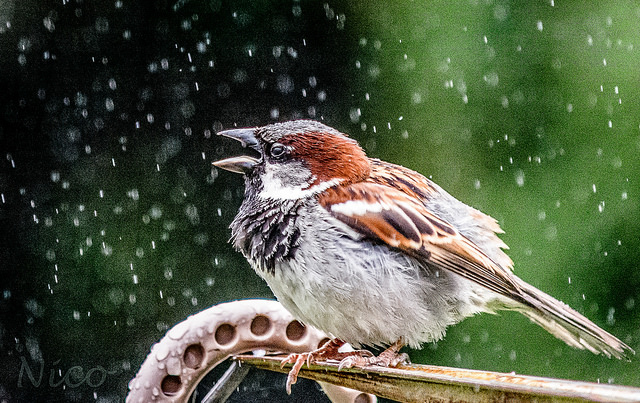
“I would hasten my escape from the windy storm and tempest.” (Psalms 55:8 KJV)
House Sparrow (Passer domesticus) In Rain ©Flickr Nicole Nicky
*
*
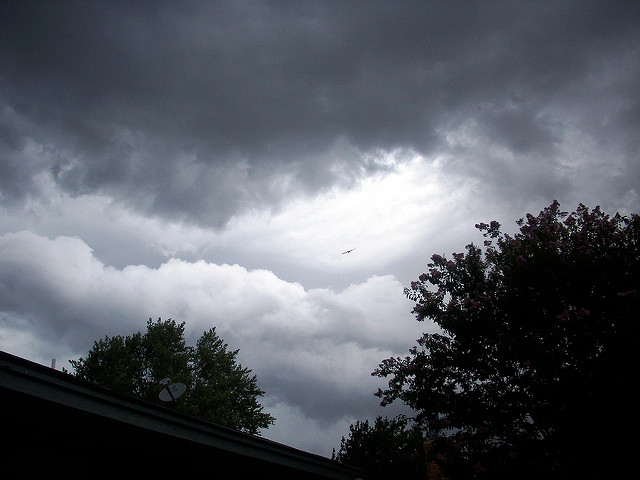
A Bird in the Storm ©Flickr Sam
This story is from eNature’s Blog. Many of us worry about the birds and how they make it through Hurricanes like Matthew. This information is well worth repeating.
Hurricane Matthew is making its way towards the US East coast after hitting Haiti and Cuba with some of the highest sustained winds and rainfall totals in recent memory.
While Matthew’s wind, rain and storm surge will certainly affect many people, some folks are also wondering about the effects the hurricane may have on birds.
Numbers are hard to come by, but it’s clear that many birds are killed outright by hurricanes. This is especially true of seabirds, which have nowhere in which to seek shelter from these storms. Beaches may be littered with seabird carcasses following major storm events. Most Atlantic hurricanes occur in late summer and early fall—and fall storms coincide with bird migration and may disrupt migration patterns severely.
Many birds get caught up in storm systems and are blown far off course, often landing in inhospitable places or simply arriving too battered and weakened to survive. Others, while not killed or displaced by storms, may starve to death because they are unable to forage while the weather is poor. The number of birds that die as a result of a major hurricanes may run into the hundreds of thousands….
But as they sailed he fell asleep: and there came down a storm of wind on the lake; and they were filled with water, and were in jeopardy. (Luke 8:23 KJV)
Behold the fowls of the air: for they sow not, neither do they reap, nor gather into barns; yet your heavenly Father feedeth them. Are ye not much better than they? (Matthew 6:26 KJV)
*
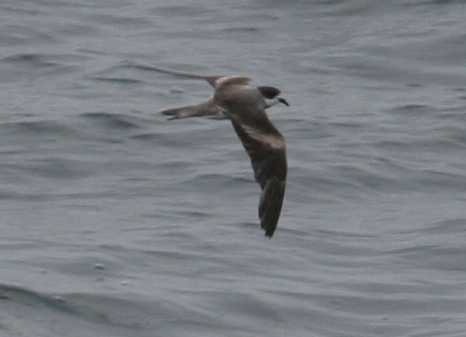
“The LORD is slow to anger, and great in power, and will not at all acquit the wicked: the LORD hath his way in the whirlwind and in the storm, and the clouds are the dust of his feet.” (Nahum 1:3 KJV)
Hornby’s Storm Petrel (Oceanodroma hornbyi) ©WikiC
P.S. Our area is due to receive a glancing blow from Hurricane Matthew beginning tomorrow evening. Thanks for your prayers in advance.
*
*
James J. S. Johnson
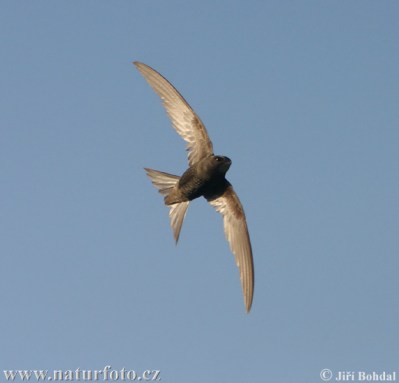
COMMON SWIFT (Apus apus) photo credit: Jiri Bohdal
Make a joyful noise unto the LORD, all ye lands. (Psalm 100:1)
What is making a “joyful noise”? It is commanded is Scripture, whatever it is – see Psalm 66:1; 81:1; 95:1-2; 98:4; 98:4; 100:1.
To many, the noise of circuitous swifts is just that, a screeching-like screaming noise — not the kind of “music” that King David would have included in his orchestra-supported choir (1st Chronicles 15:16). But to a bird-lover, the aerial call of this air-zooming insectivore is a “joyful noise”, installed and directed by the Composer and Giver of all birdsong (and other avian vocalizations).
Yes, as other ignore them, I enjoy hearing the energetic calls of Common Swifts (Apus apus), as they zip around, in hunting packs, de-bugging the lower airspace during the bug-filled days of summer.

COMMON SWIFT flock in air (photo credit: Biopix; J C Schou)
On July 10th of AD2006 I was watching a flock of swifts circling above the rooftops in Old Town, Tallinn, Estonia. The flock’s high-speed-choreography included swerving, veering, soaring, turning, rolling, and circling maneuvers — always in graceful curves, yet nonetheless amazingly quick – in a word, “swift”. It was done so fluidly that it compares, though at a smaller-group level, with the carefully choreographed flock-flights of starling murmurations (which are described elsewhere at “Choreographed Choir on the Wing: Birds of a Feather Flock Together:).
It was a privilege to see such a lively and speedy display of God’s bioengineering, a fly-by performance, like a high-speed aerial parade. And the quaint old-town venue, Tallinn’s “Old Town”, still includes walls and towers from the Hanseatic League era (some 2 or 3 centuries older than the Protestant Reformation), providing an air of calm busyness that matched the swifts’ quick-turning air-dance.
The COMMON SWIFT (Apus apus) is, as its name suggests, a bird that is both common and quick. As a true “swift”, having wings curved like a parenthesis (or boomerang, or crescent-sliver), it somewhat resembles a short-legged version of a Barn Swallow or Purple Martin, colored in black and grey, although its wings are narrower and more sickle-shaped in flight. When viewed from beneath, a swift’s silhouette (against the sky) almost looks like an anchor, as it glides. And swifts often glide, often circling above or near rooftops and other objects. When they want to accelerate, their wingbeats are thorough and (unsurprisingly) swift. The super-short legs are used for clinging to walls and other vertical surfaces, matching the German name for this bird, Mauersegler (“wall-glider”). Don’t expect to see this bird sitting on the ground – if it is “grounded” there is probably an involuntary explanation.
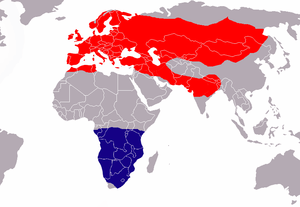
COMMON SWIFT range map (Wikipedia)
And “common” it is, in summer, all over Europe (and ranging from west to east across the middle band of Asia, as well as much of the Mideast and India). This insect-gobbling bird is a migrant, going where the bugs are plentiful — before the “bug famine” of Eurasia’s winter months the Common Swift migrates to the southern half of Africa, where bugs teem (during Africa’s summer months). Swifts and swiftlets are found all over the inhabited words, i.e., anywhere that flying insects are available for “eating on the fly”. Consider these illustrative examples: Black Swift (all over North America, from Canada to Costa Rica and Brazil), White-fronted Swift (forests in Mexico), Great Dusky Swift (many forests of South America), Sooty Swift (many forests of South America), White-chinned Swift (Central and South America), Cave Swiftlet (caves and woods of India, Indonesia, and Malaysia), Himalayan Swiftlet (common to the Himalayan range and Southeast Asia) — just to list a few. One of the rarest swifts is the Seychelles Swiftlet (a subspecies or cousin of the smaller Mascarene Swiftlet of Mauritius and Reunion (both being east-of-Madagascar islands in the Indian Ocean). The Seychelles Swift is found only on the Seychelles Islands east of Africa (and north of Madagascar), in the Indian Ocean. (See postage stamp – public domain image)

SEYCHELLES SWIFTLET [public domain]
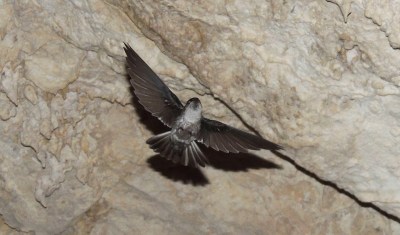
Atiu Swiftlet (photo credit: Wikipedia)
Now back to the COMMON SWIFT, such as those who circled the air near the rooftops of Old Town, Tallinn (Estonia), that summer afternoon in AD2006.
The Common Swift’s visible physical and behavioral traits have been aptly summarized by the co-authors whose bird-book I used on that summer afternoon in Tallinn:
Dark, scythe-winged aerial feeder seen careening through sky in characteristic noisy, screaming parties. Flies in lower airspace early and late in day [when flying insects are out and about], and in wet weather. Spends virtually entire life … on the wing, coming to land only to nest. Larger than Barn Swallow, unlike which it never perches on wires or vegetation. Adult [has] uniform blackish-brown plumage relieved only by whitish chin. Very long, narrow, swept-back wings and [relatively] fat, cigar-shaped body give illusion that bird is bigger than it really is. Clearly forked tail lacks Swallow’s streamers and is often held tightly closed. Bill tiny. Sexes alike; similar juvenile has narrow pale feather edgings.
Nest colonially beneath eaves of buildings, less often in caves or hollow trees.
Enters site at breakneck speed and is only rarely seen perched below, clinging to walls with tiny legs and feet (unusually, all four toes face forwards). Breeds commonly in built-up areas, but travels huge distances to feed. Typically seen in parties of 10—100 birds, but congregates in massive swarms on spring and autumn migration, especially over wetlands and reservoirs. Flight action varied: either very fast with twinkling wingbeats or slower, with sudden flurries of wingbeats and glides on wings stiffly outstretched and slightly bowed down. Jinks, rises and falls with quick flick of wings and briefly spread tail as it gulps insect prey in [relatively] huge, gaping mouth.
Shrill, piercing screaming call, sree, is the essence of warm summer evenings.
[Quoting Chris Kightley, Steve Madge, & Dave Nurney, POCKET GUIDE TO THE BIRDS OF BRITAIN AND NORTH-WEST EUROPE (Yale University Press, 1998), page 174.]
And what kind of town is Estonia’s Tallinn? It is the main port and capital of Estonia, a land weary of foreign occupations.
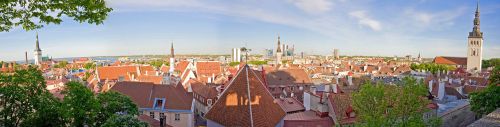
Old Town, Tallinn, Estonia (photo credit: Wikipedia)
The native Estonians (who maybe felt like helpful bugs, trying to escape hungry predators), century after century, has been parasitized (and preyed upon) by many opportunists who — like busy Common Swifts — swiftly (or sometimes slowly) inserted themselves onto Estonia’s Baltic coastland, sometimes colonizing and sometimes content with controlling the flow of trade.
A quick [i.e., “swift”] summary of Estonia’s serial occupations by neighboring armies follows. Perhaps the reader can consider these back-and-forth conquests of the Estonian lands, and imagine how the “caught-in-the-middle” Estonians, of generation after generation after generation, lived, as their land changed from colony to battlefield to colony, etc.
Estonia’s sequence of political phases may be condensed to 24 episodes, namely: (1) the Viking era … (800s through 1200); (2) wars with Germany’s Bishop Albert of Livonia and the Sword Brethren (1208-1227); (3) Denmark intervenes and begins to rule Tallinn [from taani linn, meaning “Dane fort”, with the city continuing to be called by its German name, “Reval”], due to Danish King Valdemar II’s conquest … [resulting in] Estonia being occupied by a mix of Danes and Germans by 1220); (4) political decline of the ethnic-German “Sword Brethren” of Livonia, due to Lithuanian militarism … followed by merger of the Livonian Sword Brethren with Prussia’s Teutonic Knights [as Lithuania flourished]; (5) Danish-German domination of Estonia [with the Hanseatic League controlling Estonia’s economy] ; (6) decline of the militaristic Prussian Teutonic Knights, due to Russian militarism aided by Estonian and Latvian conscripted soldiers … [e.g., Alexandr Nevskii’s “Battle on the Ice” victory in AD1242]; (7) political association with, and domination by, the plutocratic “super-merchants” of Germany’s Hanseatic League (with Lübeck Law adopted for Tallinn in 1248, with Tallinn’s trade featuring Estonian rye [!], barley, oats, honey, bearskins and other furs, exchanged for imported herring, salt, precious metals, and clothing materials); (8) Danish relinquishment of troublesome Estonia (prompted by the bloody Jüriöö Mäss rebellion of 1343-1345 … resulting in Denmark’s “sale” of Estonia to the Prussian Teutonic Knights in 1346 … [so Estonia and Latvia were ruled by ethnic-Germans form the mid-AD1300s through the mid-AD1400s]; (9) Old Livonia declines, as Prussia’s Teutonic Knights decline, due to military defeats [e.g., Tannenberg, in AD1410] by the rising empire of Poland-Lithuania … {and Russia unsuccessfully tries, in AD1502, to grab Estonia from Poland-Lithuania]; (10) Estonia is touched by the Reformation, with Luther’s “use-of-the-language-of-the-common-people” policy beginning to change Estonia, planting the first seeds of Estonian cultural identity restoration (Reformation first arrives in Estonia during the 1520s; 1525 sees first book printed in Estonian language [and during that year Walter von Plettenburg, Rome’s “Master of the Livonian Order”, converts to Lutheran Christianity, heavily impacting the launching of the Protestant Reformation in Estonia]; first-Estonian-language church services in the 1530s); (11) the Livonian Wars (1558-1583) reveal Russia’s ambitions for the Baltic lands … followed by Estonia being “sold” to Denmark, who opposed the Russians (1560); (12) Old Livonia disintegrates, as the Swedes arrive to oppose Russia, and Tallinn becomes a Swedish land … (1561); (13) meanwhile, the Livonian lands south of Tallinn become Polish possessions (1561); (14) Livonian resistance to Russia, well into the mid-1500s, permitted the Germany-based Reformation to take root among the Estonian people (often aided by Swedish military action, combined with Lutheran education reforms led by Swedes, Germans, and Finns … for example, Tartu University [was founded] by Swedish King Gustav Adolphus, in 1632, to promote Lutheran education and culture); (15) Russia competed with Sweden for Estonia … complicated by Poland joining the fray (in 1579), resulting in Sweden successfully holding onto Estonia [AD1586]; (16) however, Sweden and Russia resumed war in the 1590s … as tension between Sweden and Poland, regarding who gets Estonia, continued to rise; (17) Sweden continued to dominate the Baltic lands … (from 1600-1629), somewhat resolved by the “Peace of Altmark” [AD1629]; (18) Denmark increased its ascendancy in the region … Denmark’s remaining portion of Estonia [i.e., Saaremaa] was transferred to Sweden (1645); (19) [Estonia suffers, due to war-ravaged agriculture] the Great Hunger of the 1690s (1695-1697); (20) Sweden’s domination in the Baltic [is lost in] the “Great Northern War” of 1700-1721 (with the last fighting of this war, on Estonian soil, occurring in 1710); (21) 300+ years of domination by Russia, with the last portion (from the mid-1800s onward) seeing a growth of national patriotism and a recovered sense of the Estonian language and cultural identity (1710-1918); (22) the first taste of Estonian independence (1918-1940); (23) interrupted by Soviet Russia’s re-conquest and cultural suppression of Estonia (1940-1991); and (24) Estonia’s post-Soviet experience of national independence [which was triggered by Estonia’s “Singing Revolution”], which is ongoing (1991 to present).
[Quoting James J. S. Johnson, “Heritage Highlights: Estonia”, BALTIC HERITAGE REVIEW (June AD2006), pages 2-4.] Surely you became weary (if not also wary), if you actually read all of that listing of 2-dozen political turnovers (flying over 12 centuries of political history), so imagine what native Estonians must feel like – having been occupied and re-occupied by foreigners, generation after generation.
Maybe the Estonians feel like little flying insects, the easy-prey targets for ever-hungry (and fleet-flying) Swifts, coming at them, from all directions, chasing what could have been tranquility from Tallinn’s lower airspace.

Olaf’s Church [Oleviste kirik] in Tallinn:
Roman Catholic, later Lutheran, now Baptist
(photo credit: Wikipedia)
And that description well fits the memory that I still retain, of the speedy, quick-turning, aerial acrobatics — of noisy Common Swifts — that I saw near the rooflines and rooftops of the ancient-looking building in Tallinn’s Old Town, likely displaying what those same birds’ ancestors did centuries before, when Tallinn (then called “Reval”) was an old Hanseatic League trading port city.
When it comes to bird behavior, some things don’t change all that much. Of course, European trade has now returned to the old Hanseatic port-city of Reval – or Tallinn (as it is called today, and has been for centuries) — and much of that trade comes today in the form of cruise ship passengers and European Union commerce.
If you are ever in the neighborhood (of Tallinn), check it out; there is a lot of history to see there, and to appreciate, as you think about what all has occurred there, century after century. So visit Tallinn at a relaxed pace – don’t just whizz by, like a Common Swift.
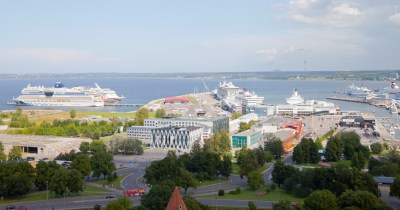
Tallinn port, where cruise ships visit Estonia (photo credit: Wikipedia)
But this nostalgic report began with a quote from Psalm 100, about singing. There is one habit that the Estonians are especially famous for, maybe moreso than any other habit – despite their long years (and centuries) of being suppressed as a Baltic people, they never gave up their songs.

Estonian choir in Tallinn
(photo credit: JJSJ in AD2006, actually a photo of a large sign in Tallinn)
Estonians love to sing, especially in their own native Estonian language. And now, years after the tense days of Estonia’s “Singing Revolution”, they can sing with a freedom that is relatively new to their land. May God bless them – and may He keep their songs in their hearts, as they look up to Him — because He alone is the ultimate Giver of all good songs, even the diverse songs (and chirps, and other vocal noises) of the busy feathered creatures whom we call “songbirds”.
And may each of us, who has the Lord Jesus Christ as our personal Redeemer, live each day with a song in our hearts, singing with grace and gratitude (Colossians 3:16).
Make a joyful noise unto the Lord, all the earth: make a loud noise, and rejoice, and sing praise. (Psalm 98:4)
*
Apodidae – Swifts Family
*
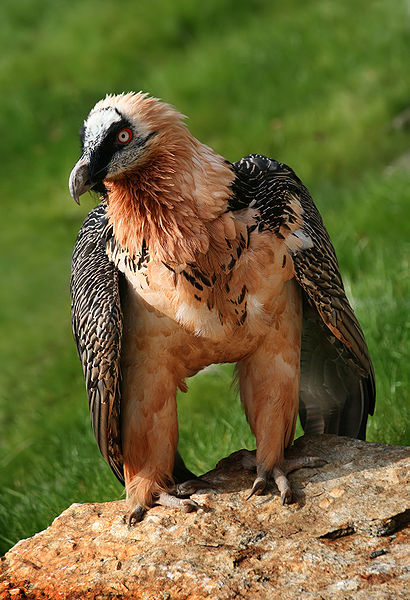
“And these are they which ye shall have in abomination among the fowls; they shall not be eaten, they are an abomination: the eagle, and the ossifrage, and the osprey,” (Leviticus 11:13)
Bearded Vulture (Gypaetus barbatus) (Ossifrage or Lammergeier) ©Wiki
*
Birds of the Bible – Ossifrage
*
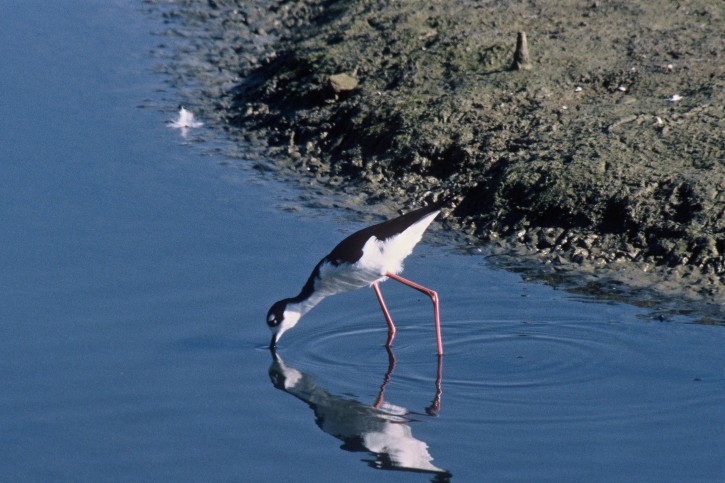
“They give drink to every beast of the field: the wild asses quench their thirst.” (Psalm 104:11)
Black-necked Stilt (Himantopus mexicanus) Drinking from lake ©WikiC
*
*
 Lee's Birdwatching Adventures Plus