Absolutely Amazing Videos of Eagle Receiving A New Beak

How long will the land have grief, and the plants of all the land be dry? because of the sins of the people living in it, destruction has overtaken the beasts and the birds; because they said, God does not see our ways. (Jeremiah 12:4 BBE)

Because of someone shooting a Bald Eagle, which is against the law, this bird was seriously injured.

Below are two video explaining what happened to Beauty, the Bald Eagle, and how they came to make a new beak for her. Enjoy.

*

*

Eagles are one of the Birds of the Bible and are in the Accipitridae – Family (Kites, Hawks & Eagles)

*

Wordless Birds

*

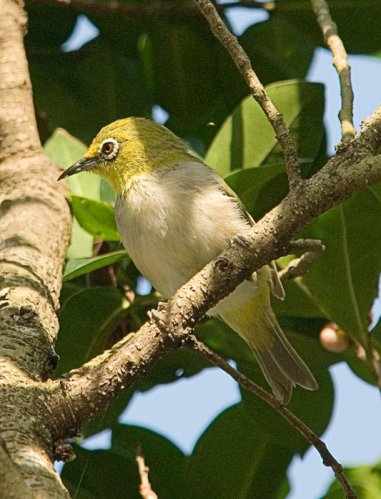
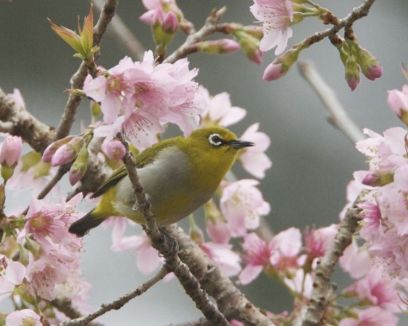
Oriental White-eye – The Grace Seeker..

Oriental White-eye (Zosterops palpebrosus) ©WikiC

Oriental White-eye (Zosterops palpebrosus) ©WikiC

Oriental White-eye – The Grace Seeker.. ~ by a j mithra

The Oriental White-eye (Zosterops palpebrosus) is a small passerine bird in the white-eye family.

It is a resident breeder in open woodland in tropical Asia, east from the Indian Subcontinent to Southeast Asia, extending to Indonesia and Malaysia. They forage in small groups, feeding on nectar and small insects.

They are easily identified by the distinctive white eye-ring and overall yellowish upperparts. Several populations of this widespread species are named subspecies and some have distinctive variations in the extent and shades of yellows in their plumage.

This bird is small (about 8–9 cm long) with yellowish olive upper parts, a white eye ring, yellow throat and vent. The belly is whitish grey but may have yellow in some subspecies. The sexes look similar.

If we are called Christians, we need to look like Christ..

  • But, do we look like Christ or do people see Christ in us and through us?

We have just stepped into a new year, where many of us would have taken resolutions to eat less, quit smoking, stop watching porn stuff and maybe a resolution to stop taking resolutions…

  • But have we ever taken a resolution to walk like Christ, to talk like Christ and be like Christ?

People around us are watching us and expecting us to show Christ. You know?

Now is the time to take a resolution to be like Christ isn’t it?

For as many of you as have been baptized into Christ have put on Christ. (Galatians 3:27)

Japanese White-eye (Zosterops japonicus) by W Kwong

Japanese White-eye (Zosterops japonicus) by W Kwong

The species is widespread and is part of a superspecies complex that includes Zosterops japonicus, Zosterops meyeni and possibly others. The species is found in a wide range of habitats from scrub to moist forest.

They sometimes occur on mangrove areas such as in the Karachi area. and on islands they may lead a more insectivorous life. They are somewhat rare only in the drier desert regions of western India. A feral population was detected in San Diego, California in the 1980’s and subsequently eradicated.

These white-eyes are sociable, forming flocks which only separate on the approach of the breeding season. They are highly arboreal and only rarely descend to the ground.

God too expects us to be highly arboreal (living in a tree)..

  • Adam tried to live on the tree of life but was chased away from God’s presence..
  • We have a tree, the CROSS TREE, where Christ – the Vine hung to make us more like Him..
  • Now is the time to check if we are Arboreal?

I am crucified with Christ: nevertheless I live; yet not I, but Christ lives in me: and the life which I now live in the flesh I live by the faith of the Son of God, who loved me, and gave himself for me. (Galatians 2:20)

The breeding season is February to September but April is the peak breeding season and the compact cup nest is a placed like a hammock on the fork of a branch. The nest is made of cobwebs, lichens and plant fibre.
The nest is built in about 4 days and the two pale blue eggs are laid within a couple of days of each other. The eggs hatch in about 10 days. Both sexes take care of brooding the chicks which fledge in about 10 days Though mainly insectivorous, the Oriental White-eye will also eat nectar and fruits of various kinds.

They call frequently as they forage and the usual contact call is a soft nasal cheer.

They pollinate flower when they visit them for flower insects (such asthrips) and possibly nectar that form their diet. The forehead is sometimes coloured by pollen leading to mistaken identifications.

  • Do we visit Rose of Sharon and the Lilly of the valley every day and help in pollination?
  • If yes, why is that people are not able to witness pollen grains (Word of God) on most of our foreheads?

Therefore shall you lay up these my words in your heart and in your soul, and bind them for a sign upon your hand, that they may be as frontlets between your eyes. (Deuteronomy 11:18)

When nesting, they may mob palm squirrels but being small birds they are usually on the defensive. Their predators include bats (esp. Megaderma lyra) and birds such as the White-throated Kingfisher. Like some other white-eyes, they sometimes steal nest material from the nests of other birds Cases of interspecific feeding have been noted with white-eyes feeding the chicks of a Paradise Flycatcher.

They have been observed bathing in dew accumulated on leaves.

  • Do we remember, Israelites collected manna covered with the morning dew?

Which means feasting of Manna at dawn increases His grace in our life isn’t it? His grace is like early morning dew, this is what the Bible says right?

  • Without His grace it is unlikely for us to survive..

It is of the LORD’S mercies that we are not consumed, because his compassions fail not. They are new every morning: great is thy faithfulness. (Lamentations 3:22-23)

Oriental White-eye (Zosterops palpebrosus) ©WikiC

Oriental White-eye (Zosterops palpebrosus) ©WikiC

Although not strong fliers, they are capable of dispersing in winds and storms to new areas including offshore islands. Though these birds are not strong fliers, they still are able to disperse in wind and storm..

  • When we are weak , we need to remember that God uses the weak and the weary..
  • When you face a storm is life, just think of these birds and disperse in the storm…
  • For God always makes us lie down in green pastures and leads us beside still waters..
  • What storm is for others will be still waters for you and me, cos our Lord is our good Shepherd!

Apostle Paul had a thorn in His flesh, you know what God said?

And he said unto me, My grace is sufficient for thee: for my strength is made perfect in weakness. Most gladly therefore will I rather glory in my infirmities, that the power of Christ may rest upon me (2 Corinthians 12:9)

Lets seek for His bountiful grace each dawn to fly high above troubled waters..

Have a grace filled day!

Yours in YESHUA,
a j mithra


Lee’s Addition:

Read more from a j mitha

The White-eyes are in the Zosteropidae – White-eyes Family.

*
Version 3.2 IOC List of Birds Updated – Finally

Green-headed Tanager (Tangara seledon) by Dario Sanches

Green-headed Tanager (Tangara seledon) by Dario Sanches

I deleted this info because it was out of date and causing 404 errors. See

Birds of the World Families

for most upto date links.

O LORD, our Lord, How excellent is Your name in all the earth, Who have set Your glory above the heavens! … When I consider Your heavens, the work of Your fingers, The moon and the stars, which You have ordained, What is man that You are mindful of him, And the son of man that You visit him? For You have made him a little lower than the angels, And You have crowned him with glory and honor. You have made him to have dominion over the works of Your hands; You have put all things under his feet, All sheep and oxen— Even the beasts of the field, The birds of the air, And the fish of the sea That pass through the paths of the seas. O LORD, our Lord, How excellent is Your name in all the earth! (Psalms 8:1-9 NKJV)

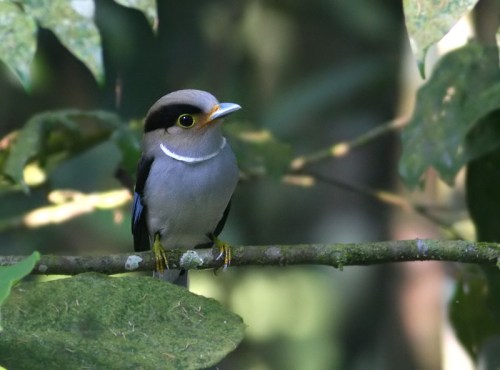
Silver-breasted Broadbill (Serilophus lunatus) by Peter Ericsson

Silver-breasted Broadbill (Serilophus lunatus) by Peter Ericsson

See:

*

Your First Bird Sighted in 2013 – Please Comment

Marian (Naturalist at Avon Park Range) and Lee 2004

Marian (Naturalist at Avon Park Range) and Lee 2004

I beseech you therefore, brethren, by the mercies of God, that you present your bodies a living sacrifice, holy, acceptable to God, which is your reasonable service. And do not be conformed to this world, but be transformed by the renewing of your mind, that you may prove what is that good and acceptable and perfect will of God. (Romans 12:1-2 NKJV)

Well here we are at the end of 2012 and the beginning of 2013. Wow! What a fast year, now we get to renew ourselves and start afresh with a new list of birds for the year.

What will it be? The first one you sight. Will it be an old familiar friend or something new to you? Let us know what you see. Please leave a comment and tell us your first bird of 2013. You might even tell us your last bird of 2012. As I write this, it is only 9:00 am on Dec 31st, but some of you around the world are all ready celebrating the new year.

When you leave your bird sighted, tell us at least where you are, even if it is only your country. If you don’t see Comments on the page, click the Leave a Comment at the end of the article and it will take you to the full article.

I am excited to read about your first (and last) birds from around the world. I will post mine as soon as I spot them in the morning.

HAPPY NEW YEAR AND LORD BLESS YOU!

Wordless Birds

*

2012 in Review – Lee’s Birdwatching Adventures Plus

The WordPress.com stats helper monkeys prepared a 2012 annual report for this blog. (Lee’s Birdwatching Adventures Plus)

Here’s an excerpt:

About 55,000 tourists visit Liechtenstein every year. This blog was viewed about 380,000 times in 2012. If it were Liechtenstein, it would take about 7 years for that many people to see it. Your blog had more visits than a small country in Europe!

Click here to see the complete report.

Wow! Thank you all for coming to visit the blog this year!

Birds of the Bible – Roseate Spoonbill

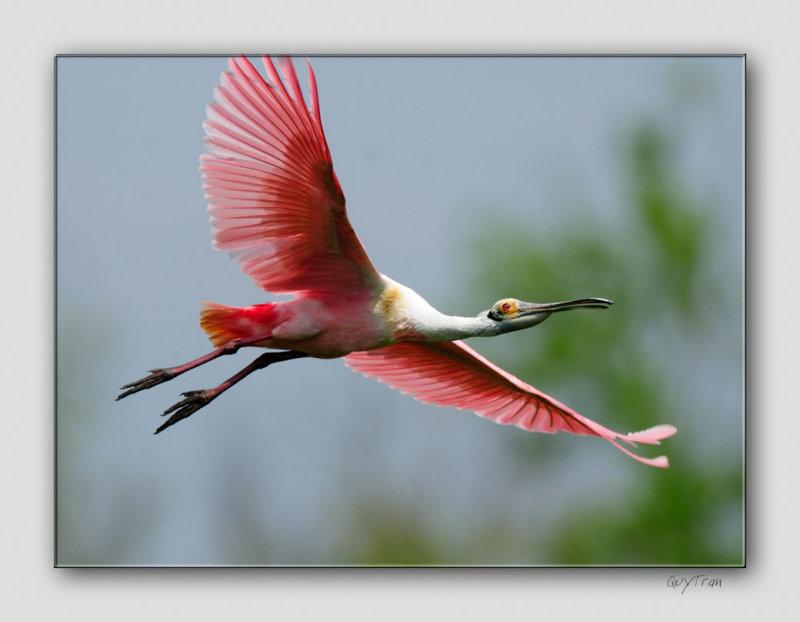
Roseate Spoonbill (Platalea ajaja) by Quy Tran

Roseate Spoonbill (Platalea ajaja) by Quy Tran

Birds of the Bible – Roseate Spoonbill

The Roseate Spoonbill is a member of the Threskiornithidae – Ibises, Spoonbills Family. We see them quite often in this area, especially in the Fall and Winter time.  I am always thrilled when we come upon them in our birdwatching adventures. Their cousins, Ibises, are a Bird of the Bible.

Then God said, “Let the waters abound with an abundance of living creatures, and let birds fly above the earth across the face of the firmament of the heavens.” So God created great sea creatures and every living thing that moves, with which the waters abounded, according to their kind, and every winged bird according to its kind. And God saw that it was good. And God blessed them, saying, “Be fruitful and multiply, and fill the waters in the seas, and let birds multiply on the earth.” So the evening and the morning were the fifth day. (Genesis 1:20-23 NKJV)

Since the Lord created all the birds, this is one of His neater creations, at least in my opinion. Their spoon-shaped bill is sort of unique to the birds. There are actually five other Spoonbills besides the Roseate.

The Roseate Spoonbill is 28–34 in (71–86 cm) long, with a  47–52 in (120–133 cm) wingspan and a weigh 2.6–4.0 lb (1.2–1.8 kg). The legs, bill, neck and spatulate bill all appear elongated. Adults have a bare greenish head (“golden buff” when breeding) and a white neck, back, and breast (with a tuft of pink feathers in the center when breeding), and are otherwise a deep pink. The bill is grey. There is no significant sexual dimorphism.

Like the American Flamingo, their pink color is diet-derived, consisting of the carotenoid pigment canthaxanthin. Another carotenoid, astaxanthin, can also be found deposited in flight and body feathers. The colors can range from pale pink to bright magenta, depending on age and location. Captive Spoonbill are fed their normal diets, plus some include juices made from carrots.

Unlike herons, spoonbills fly with their necks outstretched. They alternate groups of stiff, shallow wingbeats with glides.

Spoonbills feeding in a pond by the school. Cloudy day. Not the best, but you can see their eating behavior. Taken by me.

This species feeds in shallow fresh or coastal waters by swinging its bill from side to side as it steadily walks through the water, often in groups. The spoon-shaped bill allows it to sift easily through mud. It feeds on crustaceans, aquatic insects, frogs, newts and very small fish ignored by larger waders. In the United States a popular place to observe Roseate Spoonbills is “Ding” Darling National Wildlife Refuge in Florida. (Also at Circle B Bar Reserve as you can see by the list below of some of my sighting on e-Bird) Roseate Spoonbills must compete for food with Snowy Egrets, Great Egrets, Tricolored Herons, and American White Pelicans.

We came upon a group of them roosting at Ding” Darling National Wildlife Refuge. It was the first time I had seen that many in one place and so close to us.

Enlarge - Count at least 20 Spoonbills

Roseate Spoonbills at Ding Darling NWR – Dan at work.

The Roseate Spoonbill nests in shrubs or trees, often mangroves, laying 2 to 5 eggs, which are whitish with brown markings. Immature birds have white, feathered heads, and the pink of the plumage is paler. The bill is yellowish or pinkish.

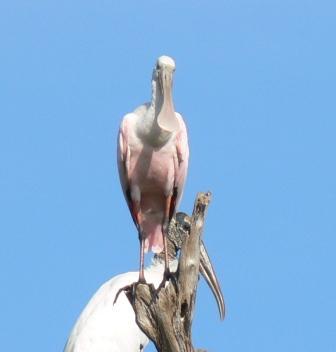
Here is one I caught in a tree at Circle B Bar Reserve:

Roseate Spoonbill and Wood Stork by Lee

Roseate Spoonbill and Wood Stork by Lee

What prompted writing about one of the bird friends I always enjoy seeing, is an article about the Roseate Spoonbill in one of my latest additions of BirdWatching. It’s a great magazine and I am not condemning it. I am used to “reading around the evolutionary influences” in articles about birds. But I was offended by this remark, “It’s hard not to look at the Roseate Spoonbill in the Everglades and think, ‘What happened here:’ Amid the herons and cormorants, the spoonbill seems like an evolutionary hiccup, a failed experiment.

One, the Roseate Spoonbill is far from an “evolutionary hiccup!” It hasn’t evolved, it was created by a loving all knowing Creator, that knew exactly what He was doing. Two, it definitely was not a “failed experiment.” The way the bill is designed and the sensitivity of its touch is amazing. The Lord promised to provide for all His creatures as well as His own people. Nor are we “hiccups.” We are all created by him, but there are differences and varieties in the birds just as there is in our talents and abilities.

I know all the birds of the mountains, And the wild beasts of the field are Mine. (Psalms 50:11 NKJV)

Look at the birds of the air, for they neither sow nor reap nor gather into barns; yet your heavenly Father feeds them. Are you not of more value than they? (Matthew 6:26 NKJV)

All the birds of the heavens made their nests in its boughs; Under its branches all the beasts of the field brought forth their young; And in its shadow all great nations made their home. (Ezekiel 31:6 NKJV)

(Wikipedia and other internet resources consulted)

See:

Birds of the Bible

Birds of the Bible – Ibises

Bible Birds – Ibises

Birds of the Bible – Isaiah 34:11

Birds of the World – Threskiornithidae – Ibises, Spoonbills

World – Life Observations – Roseate Spoonbill

  Location Date
1 Roseate Spoonbill Corpus Christi 8-Nov-01
2 Roseate Spoonbill Circle B Bar Reserve 9-Feb-07
3 Roseate Spoonbill Viera Wetlands 20-Nov-07
4 Roseate Spoonbill Merritt Island NWR–Black Point Wildlife Dr. 22-Nov-07
5 Roseate Spoonbill Circle B Bar Reserve 10-May-08
6 Roseate Spoonbill Lake John Rookery 15-May-08
7 Roseate Spoonbill J. N. Ding Darling NWR 15-Jul-08
8 Roseate Spoonbill Circle B Bar Reserve 1-Nov-08
9 Roseate Spoonbill 6 Circle B Bar Reserve 28-Nov-08
10 Roseate Spoonbill 16 Merritt Island NWR–Black Point Wildlife Dr. 20-Jan-09
11 Roseate Spoonbill 3 Circle B Bar Reserve 24-Feb-09
12 Roseate Spoonbill 4 Circle B Bar Reserve 10-Mar-09
13 Roseate Spoonbill 15 Circle B Bar Reserve 24-Oct-09
14 Roseate Spoonbill 15 Circle B Bar Reserve 23-Dec-09
15 Roseate Spoonbill 5 Hillsborough 4-Feb-10
16 Roseate Spoonbill 1 MacDill AFB 31-Jan-11
17 Roseate Spoonbill 1 Lake Parker Park 7-Jan-12
18 Roseate Spoonbill 3 Circle B Bar Reserve 16-Jan-12
19 Roseate Spoonbill 2 Picnic Island Beach 24-Jan-12
20 Roseate Spoonbill 1 Lake Hollingsworth 26-Jan-12
21 Roseate Spoonbill 3 MacDill AFB 16-Aug-12
22 Roseate Spoonbill 3 Circle B Bar Reserve 10-Nov-12

*

Birds in Christmas Hymns – Christmas Brings Joy To Every Heart (Re-post)

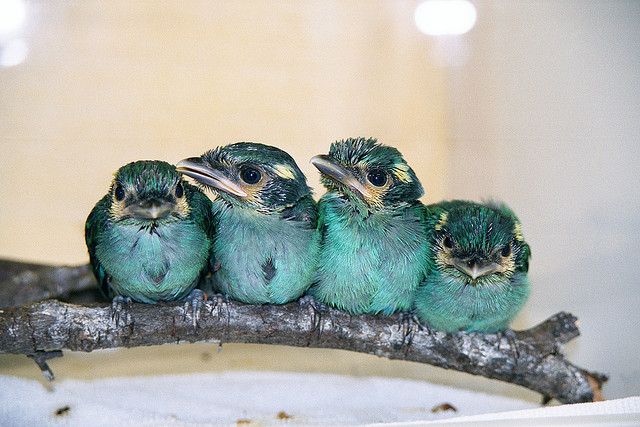
Long-tailed Broadbill (Psarisomus dalhousiae) babies ©©coracii

Long-tailed Broadbill (Psarisomus dalhousiae) babies ©©coracii

Rejoice in the Lord always. Again I will say, rejoice! (Philippians 4:4 NKJV)

Birds in Christmas Hymns

Birds in Christmas Hymns

Words by Bern­hardt S. In­ge­mann (1789-1862), 1840 (Julen har bragt velsignet bud); trans­lat­ed from Dan­ish to Eng­lish by Ce­cil Cow­drey.

Music: Christ­mas Brings Joy, Christ­oph E. Weyse (1774-1842), 1841

Christmas Brings Joy To Every Heart

Christmas brings joy to every heart,
Sets old and young rejoicing,
What angels sang once to all on earth,
Oh, hear the children voicing.
Bright is the tree with lights aglow,
Like birds that perch together,
The child that holdeth Christmas dear
Shall keep these joys forever.

Joy comes to the all the world today,
To halls and cottage hasting,
Come, sparrow and dove, from roof tree tall,
And share our Christmas feasting.
Dance, little child, on mother’s knee,
The lovely day is dawning,
The road to paradise is found
The blessèd Christmas morning.

Once to this earth our Savior came,
An infant poor and lowly,
To open for us those gardens fair
Where dwell His angels holy.
Christmas joy He bringeth us,
The Christ child King of heaven,
“To every little child,” He saith,
“Shall angel wings be given.”

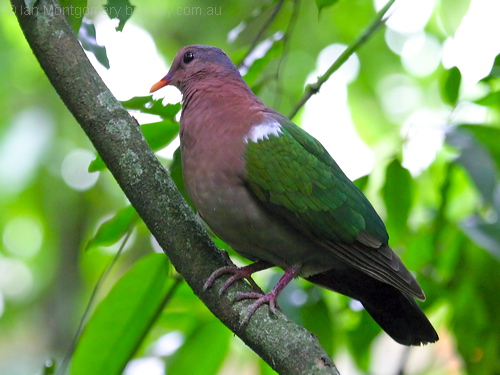
Emerald Dove by Birdway

Most information from The Cyber Hymnal

See ~ Christmas Gospel Presentation

More ~ Birds in Hymns

*

Birds In Christmas Hymns – This Endris Night (Re-post)

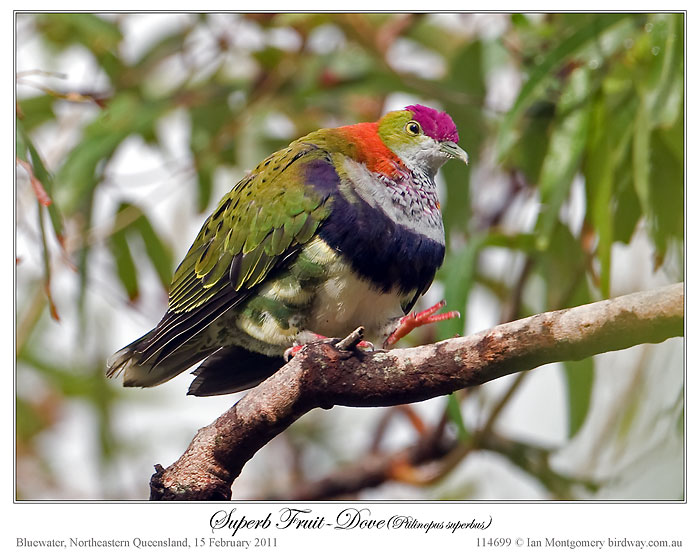
Superb Fruit Dove (Ptilinopus superbus) by Ian

Superb Fruit Dove (Ptilinopus superbus) by Ian

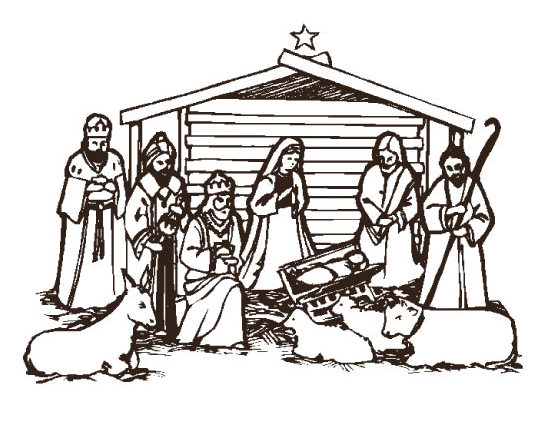
And she brought forth her firstborn son, and wrapped him in swaddling clothes, and laid him in a manger; because there was no room for them in the inn. (Luke 2:7 KJV)

Words & Music: 15th Century –  This Endris Night

Birds in Christmas Hymns

Birds in Christmas Hymns

This Endris Night

This endris night I saw a sight
A star as bright as day;
And ever among a maiden sung,
Lullay, by by, lullay.

This lovely lady sat and sung,
And to her Child did say:
My Son, my Brother, Father, dear,
Why liest Thou thus in hay?

My sweetest bird, thus ’tis required,
Though Thou be King veray;
But nevertheless I will not cease
To sing, By by, lullay.

The Child then spake in His talking,
And to his mother said:
“Yea, I am known as Heaven-King,
In crib though I be laid.

For angels bright down to Me light:
Thou knowest ’tis no nay:
And for that sight thou may’st delight
To sing, By by, lullay.

“Now, sweet Son, since Thou art a king,
Why art Thou laid in stall?
Why dost not order thy bedding
In some great kingès hall?

Methinks ’tis right that king or knight
Should lie in good array:
And then among, it were no wrong
To sing, By by, lullay.

“Mary mother, I am thy Child,
Though I be laid in stall;
For lords and dukes shall worship Me,
And so shall kingès all.

Ye shall well see that kingès three
Shall come on this twelfth day.
For this behest give Me thy breast
And sing, By by, lullay.

“Now tell, sweet Son, I Thee do pray,
Thou art my Love and Dear—
How should I keep Thee to Thy pay,
And make Thee glad of cheer?

For all Thy will I would fulfill—
Thou knowest well, in fay;
And for all this I will Thee kiss,
And sing, By by, lullay.

“My dear mother, when time it be,
Take thou Me up on loft,
And set Me then upon thy knee,
And handle me full soft.

And in thy arm thou hold Me warm,
And keep Me night and day,
And if I weep, and may not sleep,
Thou sing, By by, lullay.

“Now sweet Son, since it is come so,
That all is at Thy will,
I pray Thee grant to me a boon,
If it be right and skill,—

That child or man, who will or can
Be merry on my day,
To bliss Thou bring—and I shall sing,
Lullay, by by, lullay.

___

Some of the archaic terms require explanation:
This endris night: The other night, a few nights ago
Veray: True
Light: Alight
No nay: Undeniable
Methinks: I think
Pay: Satisfaction
Fay: Faith
Boon: Favor
Skill: Reasonable

*

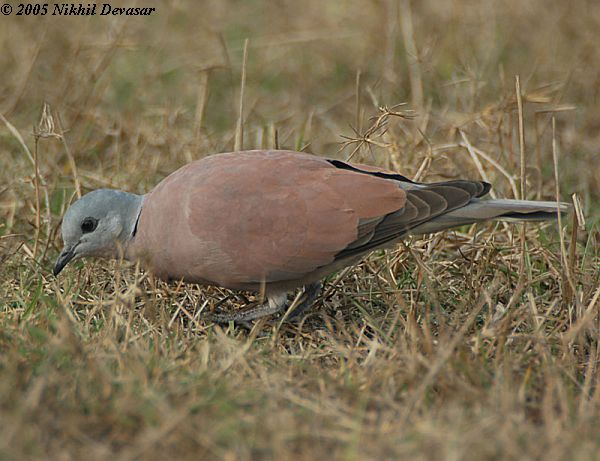
Red Turtle Dove (Streptopelia tranquebarica) by Nikhil Devasar

Red Turtle Dove (Streptopelia tranquebarica) by Nikhil Devasar

More Birds in Hymns

See ~

Christmas Gospel Presentation

Wordless Birds

Most information from The Cyber Hymnal – – This Endris Night

*

Did Dinosaurs Turn into Birds?: New Answers DVD 1 – Answers in Genesis

Painted Whitestart (Myioborus pictus) ©WikiC

Painted Whitestart (Myioborus pictus) ©WikiC

God created the great sea monsters and every living creature that moves, which the waters brought forth abundantly, according to their kinds, and every winged bird according to its kind. And God saw that it was good (suitable, admirable) and He approved it. (Genesis 1:21 AMP)

Here is an interesting link to Answers in Genesis about the “beginning of birds.” It is a 5 minute video by David Menton, Ph.D.

Did Dinosaurs Turn into Birds?: New Answers DVD 1 – Answers in Genesis.

From the Answers Weekly

*

Birdwatching Eagles on Communications Tower

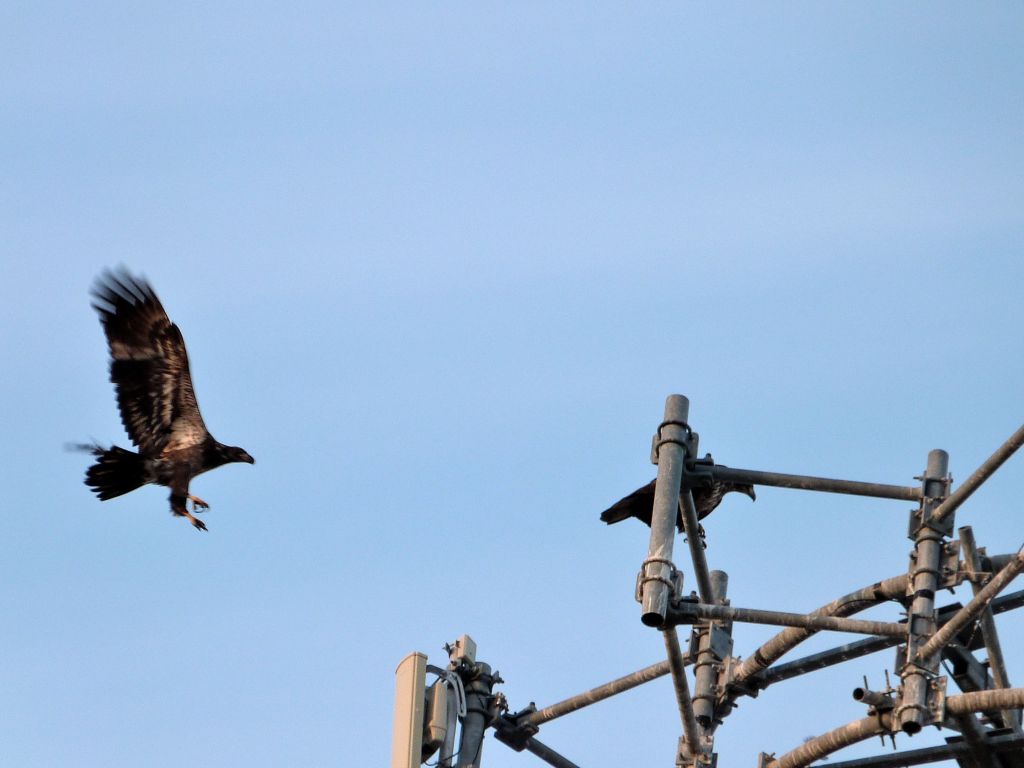
Third to arrive

Third to arrive

Doth the eagle mount up at thy command, and make her nest on high? (Job 39:27 KJV)

But they that wait upon the LORD shall renew their strength; they shall mount up with wings as eagles; they shall run, and not be weary; and they shall walk, and not faint. (Isaiah 40:31 KJV)

Last night we went on my first birdwatching adventure since my eye surgery. After an article was shown to me, by a friend, we had to check it out. And it is only about 3 miles from our house.

Here is the article’s link: Eagles Making a Home on Sheriff’s Communications Tower

First Eagle Chased off by Grackle-crop

First Eagle Chased off by Grackle

We arrived around 4:30 pm and we had other birdwatchers coming to see the event. At first there were quite a few Boat-tailed Grackles up on the tower. When the first young Eagle arrived, they promptly chased him off.

When the second Eagle came in, he landed and the Grackles decided it was time to leave. From there on, the mostly young eagles came in one or two at a time. Wow! I have never seen that many Bald Eagles together at one time. By the time we left there were 25 that had come to the tower. When one landed, as the article said, they would start greeting each ofter. The lady standing by us keep coming up with stories they might be telling, like; “How was your day?”, “You should see the large fish that I caught”, “Went over to …..” It was fun.

 The setting Sun

The setting Sun

We also saw 2 Sandhill Cranes, 12 Lesser Scaups on the pond, 2 Killdeer, 4 White Ibises flying by and of course the Grackles. It was a nice evening and we watched the sun set over the pond.

The Tower with 20 Bald Eagles

The Tower with 20 Bald Eagles

And they answered and said unto him, Where, Lord? And he said unto them, Wheresoever the body is, thither will the eagles be gathered together. (Luke 17:37 KJV)

The tower is 190 feet tall and we were standing back quite a bit. I know my eye is blurry, but considering how zoomed in these photos are, I think they are not bad. Shot several videos trying to get the sound of their greetings, but every one was talking during them. We were all as excited as the Eagles to see each other and have their chats.

What an event.

Here is the tower as we saw it without the aid of the camera.

The Tower without zoom

The Tower without zoom

Bald Eagles are of course one of our Birds of the Bible with at least 34 verses mentioning them. They belong to the Accipitridae – Family (Kites, Hawks & Eagles).

I will have more photos and video later.

*