***
SIX ON A ROW
***
“And thou shalt set them in two rows, six on a row, upon the pure table before the LORD.” (Leviticus 24:6 KJV)
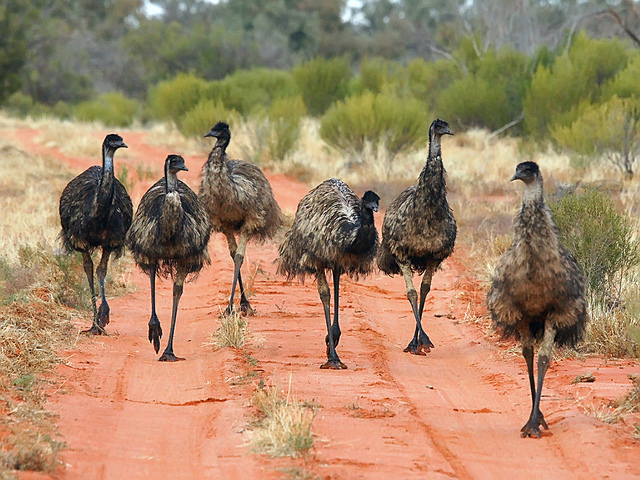
Kilcowera Station- Six Emus on a Row ©SciAmerica
*
*
“And thou shalt set them in two rows, six on a row, upon the pure table before the LORD.” (Leviticus 24:6 KJV)
Kilcowera Station- Six Emus on a Row ©SciAmerica
*
*
“As the hart panteth after the water brooks, so panteth my soul after thee, O God.” (Psalms 42:1b KJV)
Cormorant Panting at Gatorland by Lee
*
*
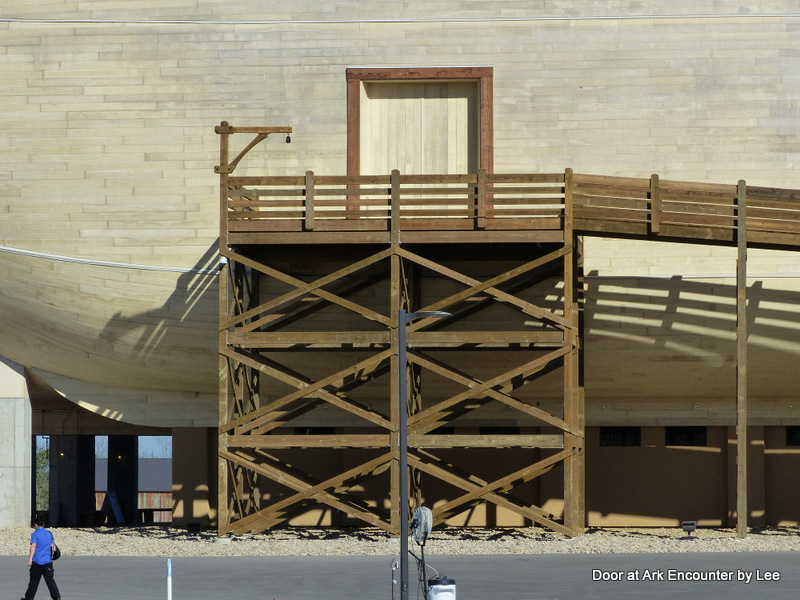
“A window shalt thou make to the ark, and in a cubit shalt thou finish it above; and the door of the ark shalt thou set in the side thereof; with lower, second, and third stories shalt thou make it.” (Genesis 6:16 KJV)
The Door of the Ark at Ark Encounter by Lee
*
*
Migratory Bird Treaty Centennial (USF&WS)
Yea, the stork in the heaven knoweth her appointed times; and the turtle and the crane and the swallow observe the time of their coming; but my people know not the judgment of the Lord. (Jeremiah 8:7)
Dr. James J. S. Johnson
Bird migrations are marvelous — only God could preprogram and orchestrate such magnificent maneuverings! Did you know that this year (AD2016) marks the 100th anniversary of the Migratory Bird Treaty? Just how was that avian conservation treaty “hatched”, and why, 100 years ago?
There are several remarkable aspects of that historic Canadian-American treaty, looking back a century, at events during AD1916. Before looking at its impact today, however, a quick bird’s-eye-view “fly-over” of the historical background is appropriate.
AD1885: The U.S. Department of Agriculture was directed by Congress to have a “Division of Economic Ornithology and Mammalogy”, leading to studies about how birds can positively check the harm caused by “pests”; this part of the USDA was later modified to become the “Division of Biological Survey”, and that in turn was modified to become the present “Fish and Wildlife Service” (which merged with the U.S. Bureau of Fisheries as part of being transferred to the Department of the Interior).
AD1894: Charles Almanzo Babcock, school superintendent of Oil City (Pennsylvania), spearheaded “Bird Day”, to be celebrated as a special day for appreciating and celebrating the value of birds. Babcock’s holiday is celebrated on May 4th. Similar holidays have been established by others, e.g., Americans also use January 5th as “National Bird Day”. “International Migratory Bird Day” is celebrated in America and Canada on the second Saturday in May. However, in Mexico (and in several other Latin American countries) “International Migratory Bird Day” is celebrated on the second Saturday in October.
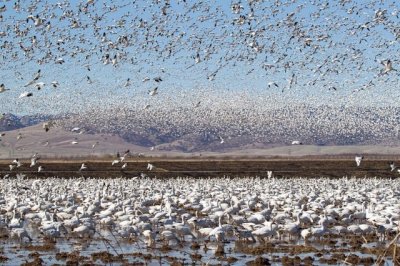
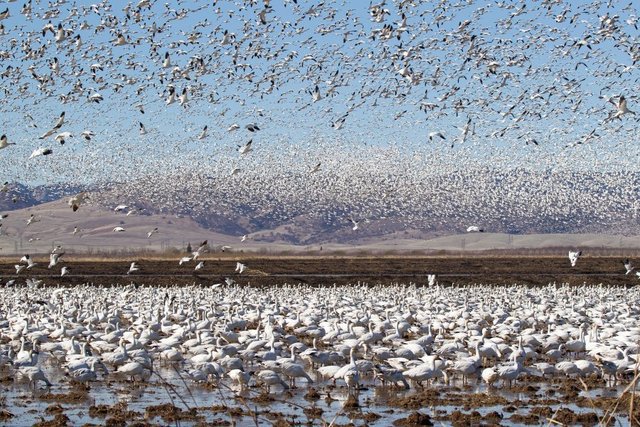
Snow Geese during migration (Colusa County, California)
AD1896: The U.S. Supreme Court decided a case regarding governmental regulation of wild game: Geer v. Connecticut, 161 U.S. 519 (1896). In that case — which resolved a controversy over transporting wild birds across state lines — the federal high court assumed that wild animals are subject to state government jurisdiction (and thus also state government regulation), as opposed to being subject to management under federal statutes passed by Congress. This ruling was interpreted by many to mean that Congress had no direct control over wildlife, because wild animals were deemed to be the collective property of whatever state they were in. (However, there was no “preemption” problem, then, because Congress had not yet passed any federal acts to regulate interstate commerce of wild game animals or their product.) If only state governments cold validly regulate interstate hunting and fishing, as many understood the Geer ruling, the consequence would be that Congress had no legal authority to pass an enforceable wildlife protection law that could bind each of the states (and their citizenry). Could Congress do nothing to protect wasteful overhunting of interstate-migrating birds? Did the U.S. Constitution have any provision that could be harnessed to circumvent the Geer ruling? Was Congress’s power to regulate “interstate commerce” enough to exercise valid jurisdiction over how migratory birds are treated, either dead or alive, so long as state lines were crossed? These legal question would soon be answered. First, the “interstate commerce” power of Congress was used to assert federal regulatory power to regulate the sale (and commercial transportation) of birds in one state if the acquisition of that bird (dead or alive) was accomplished by violating the law of another state. In effect, this approach would use a piggyback strategy, using federal “interstate commerce” powers to enforce state laws.
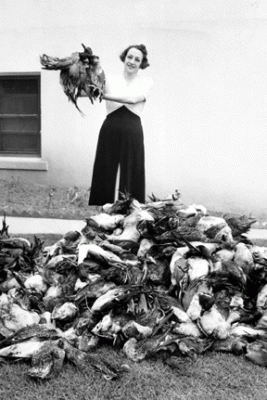
AD1900: Congress passed the “Lacey Act” of AD1900, declaring commercial transportation or sale of hunted birds (or products derived from their dead bodies) illegal, if crossing state lines was involved (i.e., if “interstate commerce” was involved), but only if the birds (dead or alive) were obtained in a way that violated the state laws of another state. This law was needed to ban the wholesale (and routinely wasteful) destruction of birds, for commercial purposes, primarily to provide flamboyant feathers for fancy ladies’ hats. To do this, the Lacey Act (as a federal law) prohibited using “interstate commerce” activity (i.e., crossing state lines as part of a commercial enterprise) to “get away with” violating any wildlife laws of states where birds were obtained. (The Lacey Act has been legislatively expanded since, by Congress, so that it now incorporates and enforces a treaty that bans trafficking in illegal wildlife, the “CITES treaty” [Convention on International Trade in Endangered Species of Wild Fauna and Flora] — which is an enforcement task assigned, nowadays, to the Office of Law Enforcement within the U.S. Fish & Wildlife Service.) Of course, the Lacey Act only equipped Congress with “piggyback” powers to regulate interstate commerce that facilitated illegal trafficking in wildlife, subject to the hunting laws passed according to the differing preferences of the various state legislatures. If migratory birds traverse 10 states (as they migrate seasonally from north to south, or vice versa), the migrating birds may be protected in only 9 of those 10 states, under applicable state laws, only to be legally shot out of the sky (or while resting in a stopover) while flying in the one state where they may be legally shot by hunter.
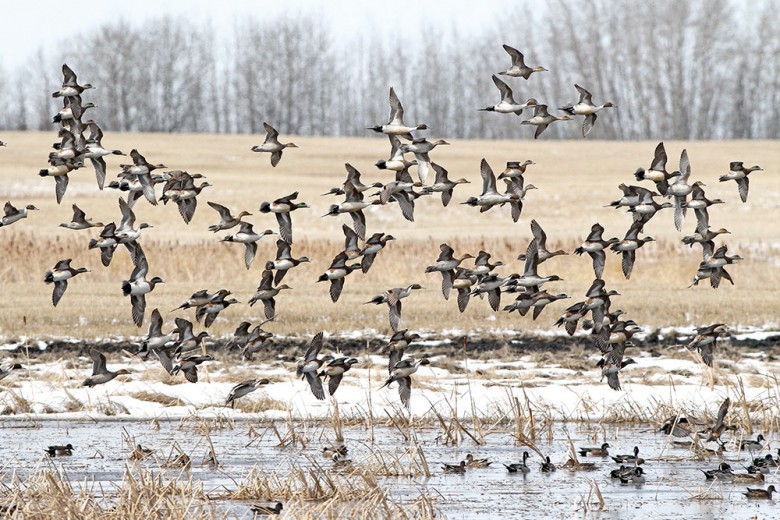
Wigeons and Pintails (Saskatchewan, Canada)©Conservator
AD1913-AD1914: Congress passed the Weeks-McLean Act of 1913, to ban bird-hunting in the spring (i.e., the vulnerable and “critical” timeframe when birds typically reproduce and nurture their hatchlings in the direction of successful fledging), and marketing of illegally hunted birds (and bird products, such as fancy bird feathers that were consumed by the fashion industry in what was called “millinery murder”). This Congress-issued law empowered the Secretary of Agriculture to promulgate bird-hunting seasons nationwide. However, judicial review of this federal statute — in the form of federal court rulings, styled United States v. Shauver, 214 Fed. 154 (E.D. Ark. 1914), and United States v. McCullagh, 221 Fed. 288 (D. Kan. 1915) — resulted in the Weeks-McLean Act being declared invalid (i.e., unauthorized), as an unconstitutional overreach regarding natural resources that jurisdictionally were subject to the police powers of state governments (and their state laws), not federal. It is noteworthy that the federal government, in the Shauver ruling, based their argument on the federal government’s rights under the Property Clause of the U.S. Constitution (in Article IV, section 3, subsection 2), not under the Constitution’s Commerce Clause (in Article I, section 8). However, in the McCullagh ruling, the federal government unsuccessfully argued that the Weeks-McLean Act was legitimate as a constitutional exercise of powers to protect the “general welfare” (Article IV, section, 3, subsection 2) and/or powers to regulate interstate commerce (Article I, section 8). It thus appeared to Congress that the federal courts were reluctant to enforce any kind of nationwide law that restricts hunting, transporting, and/or sale of migratory birds – even if the activities were provably part of “interstate commerce”.

AD1916-AD1920: The time was now ripe, in the knock-down wake of what had been the Weeks-McLean Act, for Congress to try a different approach to constitutionally constructing an enforceable law to protect migratory birds. The Weeks-McLean Act had 3 strikes against it, constitutionally speaking: it could not be validated by the Property Clause, nor by the General Welfare Clause, nor even by the Interstate Commerce Clause. What was left? What about using the Treaty Clause in the U.S. Constitution’s Article II, section 2, subsection 2) — which authorizes the U.S. president to use “power, by and with the advice and consent of the Senate, to make Treaties, provided two thirds of the Senators present concur”. The first step in this strategic process would be negotiating and ratifying a treaty, to protect migratory birds with migratory ranges that overlap Canada and America, followed by a Congressional statute to implement such a treaty. Canada was not sufficient independent (i.e., “sovereign”) to negotiate on its own behalf, so the United Kingdom (a/k/a Great Britain) represented Canada in the treaty (which is reprinted below, as an APPENDIX) —- the Convention Between the United States and Great Britain for the Protection of Migratory Birds (of 1916) — was successfully negotiated and approved by the U.S. Senate and president (in this case, Woodrow Wilson, ironically an evolutionist, whose Darwinian worldview logically clashed with the conservation ethic embodied by the treaty). This treaty was soon (i.e., “soon”, relatively speaking) endorsed for implementation purposes (including Congressional funding mechanisms) by the Migratory Bird Treaty Act of 1918. Immediately that Congressional act was challenged in the federal courts, by plaintiffs who claimed that it too was Congressional (i.e., federal) power-grab not authorized by the U.S. Constitution. In short, the U.S. Supreme Court was impressed by the strategic treaty-based/implementing statute — the U.S. Supreme Court validated the Migratory Bird Treaty Act (and, by necessary implication, the treaty itself) via its ruling in the case styled Missouri v. Holland (so named because the U.S. Game Warden involved was surnamed Holland). Specifically, Missouri v. Holland, 252 U.S. 416, 40 S.Ct. 382 (1920), vindicated Congress’ right to implement the Migratory Bird Treaty’s provisions, as a “federal preëmption” of all state laws notwithstanding, based on the constitutional logic that enforcing a proper federal treaty trumps whatever state-legislated wildlife regulation laws may exist to the contrary. The juristic rationale for this result was the Supremacy Clause of the U.S. Constitution (in Article VI, section 2).
Retroactively speaking, therefore, the Supreme Court ruling in AD1920 (i.e., in Missouri v. Holland) validated the Congressional statute (i.e., the Migratory Bird Treaty Act) enacted in AD1918, which itself endorsed, for implementation purposes, the actual Migratory Bird Treaty of AD1916. (With that history in mind, you can better appreciate the official text of the treaty, which is fairly succinct yet specific, reprinted as an APPENDIX at the foot of this article.)
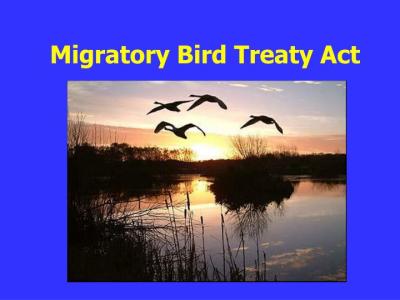
So that is the bird’s-eye-view “fly-by” of how Americans (and, indirectly, Canadians too) the Migratory Bird Treaty was “hatched”, 100 years ago!
Yea, the stork in the heaven knoweth her appointed times; and the turtle and the crane and the swallow observe the time of their coming; but my people know not the judgment of the Lord. (Jeremiah 8:7)
Bird migrations are marvelous — only God could preprogram and orchestrate such magnificent maneuverings! Surely bird migrations, which seasonally display God’s bioengineering genius and care, deserve some respect and admiration from us too, as we watch such winged wonders.
ABOUT THE AUTHOR: James J. S. Johnson, in addition to continuously teaching at various Christian colleges in Texas, since AD1991 (including courses on ecology, birds life and avian conservation, environmental laws and treaties), and teaching now for ICR-SOBA (including course that analyze bird life from a Biblical creation perspective), is an attorney licensed to practice law in the State of Texas, in the State of Colorado, and in several federal courts and administrative tribunals (including the U.S. Supreme Court). No stranger to environmental laws and conservation programs, he formerly provided monitoring research data to the Trinity River Authority of Texas (during the mid-AD1990s) in his capacity (then) as a Certified Water Quality Monitor (credentialed as such by what was then the Texas Natural Resource Conservation Commission). Jim’s love for bird life, however, began much earlier in life, as is documented briefly at Attracted To Genesis By Magnets and a Bird Book (and more fully at Appreciating Baltimore Orioles and My First Bird Book ).
Selected Bibliography:
U.S. Fish & Wildlife Service, “Migratory Bird Treaty Centennial 1916-2016” (accessed 9-16-AD2016)
Geer v. Connecticut, 161 U.S. 519, 16 S.Ct. 600 (1896).
Missouri v. Holland, 252 U.S. 416, 40 S.Ct. 382 (1920).
United States v. Shauver, 214 Fed. 154 (E.D. Ark. 1914).
United States v. McCullagh, 221 Fed. 288 (D. Kan. 1915).
The Lacey Act of 1900, now codified as amended at 16 U.S.C. sections 3371-3378.
Migratory Bird Treaty (of 1916), formally titled Convention Between the United States and Great Britain for the Protection of Migratory Birds, USA-Great Britain, 39 Stat. 1702.
Migratory Bird Treaty Act of 1918, 40 Stat. 755, codified at 16 U.S.C. sections 703-712.
Weeks-McLean Act of 1913, 37 Stat. 828, 847-848 (1913).
CITES, formally titled Convention on International Trade in Endangered Species of Wild Fauna and Flora, 27 U.S.T. 1087, T.I.A.S. 8249 (entered into force, applicable to USA, in 1975).
Edward T. Swaine, “Putting Missouri v. Holland on the Map, 72 Missouri Law Review 1007 (fall 2008).
Paul Schmidt, “The Migratory Bird Treaty Centennial: For 100 Years, This Landmark Agreement has been the Cornerstone of Migratory Bird Management Across North America”, posted by DUCKS UNLIMITED.
Mallard drake photo credit: Legallabrador.org/ .
Migrating Snow Geese / Colusa County (California) <= click for photo credit
Migrating Wigeons & Pintails / Saskatchewan (Canada) photo credit: www.conservator/ca/ .
B&W photograph of lady with decorative bird-hat, next to pile of slaughtered birds (public domain), showing need for The Lacey Act of 1900
APPENDIX: official text of the Migratory Bird Treaty of AD1916
CONVENTION BETWEEN THE UNITED STATES AND GREAT BRITAIN FOR THE PROTECTION OF MIGRATORY BIRDS.
[U. S. Treaty Series, No. 628] Signed at Washington, August 16, 1916; ratifications exchanged December 7, 1916.
WHEREAS, Many species of birds in the course of their annual migrations traverse certain parts of the United States and the Dominion of Canada; and Whereas, Many of these species are of great value as a source of food or in destroying insects which are injurious to forests and forage plants on the public domain, as well as to agricultural crops, in both the United States and Canada, but are nevertheless in danger of extermination through lack of adequate protection during the nesting season or while on their way to and from their breeding grounds; The United States of America and His Majesty the King of the United Kingdom of Great Britain and Ireland and of the British Dominions beyond the Seas, Emperor of India, being desirous of saving from indiscriminate slaughter and of insuring the preservation of such migratory birds as are either useful to man or are harmless, have resolved to adopt some uniform system of protection which shall effectively accomplish such objects and to the end of concluding a convention for this purpose have appointed as their respective plenipotentiaries: The President of the United States of America, Robert Lansing, Secretary of State of the United States; and His Britannic Majesty, the Right Honorable Sir Cecil Arthur Spring Rice, G. C. V. O., K. C. M. G., etc., His Majesty’s Ambassador Extraordinary and Plenipotentiary at Washington; Who after having communicated to each other their respective full powers which were found to be in due and proper form, have agreed to and adopted the following articles:
ARTICLE I
The high contracting powers declare that the migratory birds included in the terms of this convention shall be as follows:
1. Migratory Game Birds:
(a) Anatidae or waterfowl, including brant, wild ducks, geese, and swans.
(b) Gruidae or cranes, including little brown, sandhill, and whooping cranes.
(c) Rallidae or rails, including coots, gallinules and sora and other rails.
(d) Limicolae or shorebirds, including avocets, curlew, dowitchers, godwits, knots, oyster catchers, phalaropes, plovers, sand- pipers, snipe, stilts, surf birds, turnstones, willet, woodcock and yellowlegs.
(e) Columbidae or pigeons, including doves and wild pigeons.
2. Migratory Insectivorous Birds: Bobolinks, catbirds, chickadees, cuckoos, flickers, flycatchers, grosbeaks, humming birds, kinglets, martins, meadowlarks, nighthawks, or bull bats, nut-hatches, orioles, robins, shrikes, swallows, swifts, tanagers, titmice, thrushes, vireos, warblers, wax-wings, whippoorwills, woodpeckers, and wrens, and all other perching birds which feed entirely or chiefly on insects.
3. Other Migratory Nongame Birds: Auks, auklets, bitterns, fulmars, gannets, grebes, guillemots, gulls, herons, jaegers, loons, murres, petrels, puffins, shear- waters, and terns.ARTICLE II
The high contracting Powers agree that, as an effective means of preserving migratory birds, there shall be established the following close seasons during which no hunting shall be done except for scientific or propagating purposes under permits issued by proper authorities.
1. The close season on migratory game birds shall be between March 10 and September 1, except that the close season on the limicolae or shorebirds in the Maritime Provinces of Canada and in those States of the United States bordering on the Atlantic Ocean which are situated wholly or in part north of Chesapeake Bay shall be between February 1 and August 15, and that Indians may take at any time scoters for food but not for sale. The season for hunting shall be further restricted to such period not exceeding three and one-half months as the high contracting Powers may severally deem appropriate and define by law or regulation.
2. The close season on migratory insectivorous birds shall continue throughout the year. 3. The close season on other migratory nongame birds shall continue throughout the year, except that Eskimos and Indians may take at any season auks, auklets, guillemots, murres and puffins, and their eggs, for food and their skins for clothing, but the birds and eggs so taken shall not be sold or offered for sale.ARTICLE III
The high contracting Powers agree that during the period of ten years next following the going into effect of this convention, there shall be a continuous close season on the following migratory game birds, to wit:- Band-tailed pigeons, little brown, sandhill and whooping cranes, swans, curlew and all shorebirds (except the black-breasted and golden plover, Wilson or jack snipe, woodcock, and the greater and lesser yellowlegs); provided that during such ten years the close seasons on cranes, swans and curlew in the Province of British Columbia shall be made by the proper authorities of that Province within the general dates and limitations elsewhere prescribed in this convention for the respective groups to which these birds belong.
ARTICLE IV
The high contracting Powers agree that special protection shall be given the wood duck and the eider duck either (1) by a close season extending over a period of at least five years, or (2) by the establishment of refuges, or (3) by such other regulations as may be deemed appropriate.
ARTICLE V
The taking of nests or eggs of migratory game or insectivorous or nongame birds shall be prohibited, except for scientific or propagating purposes under such laws or regulations as the high contracting Powers may severally deem appropriate.
ARTICLE VI
The high contracting Powers agree that the shipment or export of migratory birds or their eggs from any State or Province, during the continuance of the close season in such State or Province, shall be prohibited except for scientific or propagating purposes, and the international traffic in any birds or eggs at such time captured, killed, taken, or shipped at any time contrary to the laws of the State or Province in which the same were captured, killed, taken, or shipped shall be likewise prohibited. Every package containing migratory birds or any parts thereof or any eggs of migratory birds transported, or offered for transportation from the United States into the Dominion of Canada or from the Dominion of Canada into the United States, shall have the name and address of the shipper and an accurate statement of the contents clearly marked on the outside of such package.ARTICLE VII
Permits to kill any of the above-named birds which, under extraordinary conditions, may become seriously injurious to the agricultural or other interests in any particular community, may be issued by the proper authorities of the high contracting Powers under suitable regulations prescribed therefor by them respectively, but such permits shall lapse, or may be cancelled, at any time when, in the opinion of said authorities, the particular exigency has passed, and no birds killed under this article shall be shipped, sold or offered for sale.
ARTICLE VIII
The high contracting Powers agree themselves to take, or propose to their respective appropriate law-making bodies, the necessary measures for insuring the execution of the present convention.
ARTICLE IX
The present convention shall be ratified by the President of the United States of America, by and with the advice and consent of the Senate thereof, and by His Brittanic Majesty. The ratifications shall be exchanged at Washington as soon as possible and the convention shall take effect on the date of the exchange of the ratifications. It shall remain in force for fifteen years and in the event of neither of the high contracting Powers having given notification, twelve months before the expiration of said period of fifteen years, of its intention of terminating its operation, the convention shall continue to remain in force for one year and so on from year to year. In faith whereof, the respective plenipotentiaries have signed the present convention in duplicate and have hereunto affixed their seals. Done at Washington this sixteenth day of August, one thousand nine hundred and sixteen.
[SEAL] ROBERT LANSING. [SEAL] CECIL SPRING RICE.
“Convention Between the United States and Great Britain for the Protection of Migratory Birds”, reprinted in The American Journal of International Law, Volume 11, No. 2, Supplement: Official Documents (April, 1917), pages 62-66 (published online by The American Society of International Law)
“And the land shall yield her fruit, and ye shall eat your fill, and dwell therein in safety.” (Leviticus 25:19 KJV)
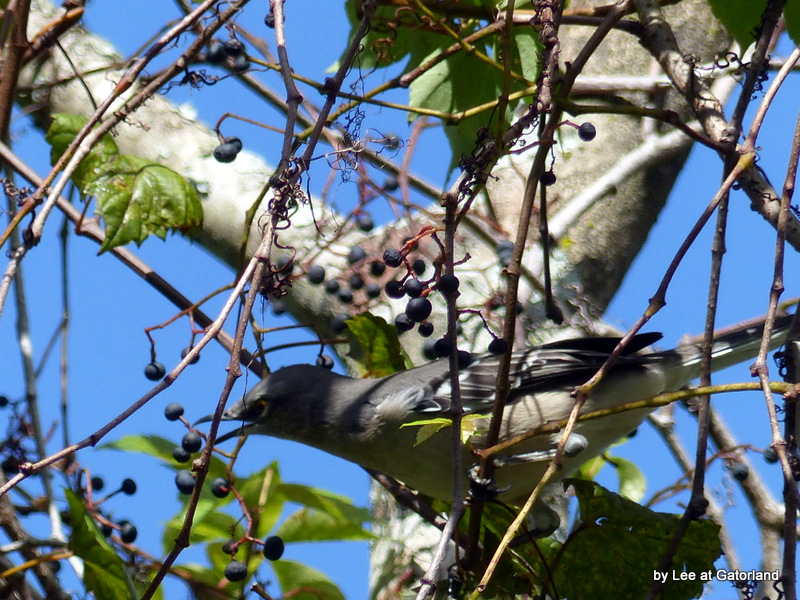
Mockingbird at Gatorland 9-17-16 by Lee
*
*

Bay-backed Shrike (Lanius vittatus) by Nikhil Devasar
Remember that thou magnify his work, which men behold. (Job 36:24)
This is the second part of our review of the Passeriformes – Songbird families, which were all presented weekly. The slide show will show one or two photos from each family. These are in taxonomic order. Part I of the Review covered the New Zealand Wrens to Mottled Berry Hunters. This week we will review the Ioras to the Babblers.
Also, the links to these families will be listed and the article associated with them. There will be one more review (III). There are 131 families. All total, there are over 6,000 birds in these families and thankfully, most of them we were able to show. Some photos are protected by copyright and it was not possible to find a photo. Yet, there were more show than we would ever be able to see individually, in person.
Aegithinidae – Ioras
Campephagidae – Cuckooshrikes
Mohouidae – Whiteheads
Neosittidae – Sittellas
Eulacestomidae – Ploughbill
Oreoicidae – Australo-Papuan Bellbirds
Pachycephalidae – Whistlers and allies
Laniidae – Shrikes
Vireonidae – Vireos, Greenlets
Oriolidae – Figbirds, Orioles
Dicruridae – Drongos
Rhipiduridae – Fantails
Monarchidae – Monarchs
Corvidae – Crows, Jays
Corcoracidae – Australian Mudnesters
Melampittidae – Melampittas
Ifritidae – Ifrita
Paradisaeidae – Birds-of-paradise
Petroicidae – Australasian Robins
Picathartidae – Rockfowl
Chaetopidae – Rockjumpers
Eupetidae – Rail-babbler
Bombycillidae – Waxwings
Ptiliogonatidae – Silky-flycatchers
Hypocoliidae – Hypocolius
Dulidae – Palmchat
Mohoidae – Oos
Hylocitreidae – Hylocitrea
Stenostiridae – Fairy Flycatchers
Paridae – Tits, Chickadees
Remizidae – Penduline Tits
Nicatoridae – Nicators
Panuridae – Bearded Reedling
Alaudidae – Larks
Pycnonotidae – Bulbuls
Hirundinidae – Swallows, Martins
Pnoepygidae – Wren-babblers
Macrosphenidae – Crombecs, African Warblers
Cettiidae – Cettia Bush Warblers and allies
Scotocercidae – Streaked Scrub Warbler
Erythrocercidae – Yellow Flycatchers
Incertae-Sedis– Family Uncertain-Warbler, Hylia
Aegithalidae – Bushtits
Phylloscopidae – Leaf Warblers and allies
Acrocephalidae – Reed Warblers and allies
Locustellidae – Grassbirds and allies
Donacobiidae – Black-capped Donacobius
Bernieridae – Malagasy Warblers
Cisticolidae – Cisticolas and allies
Timaliidae – Babblers
Pellorneidae – Fulvettas, Ground Babblers
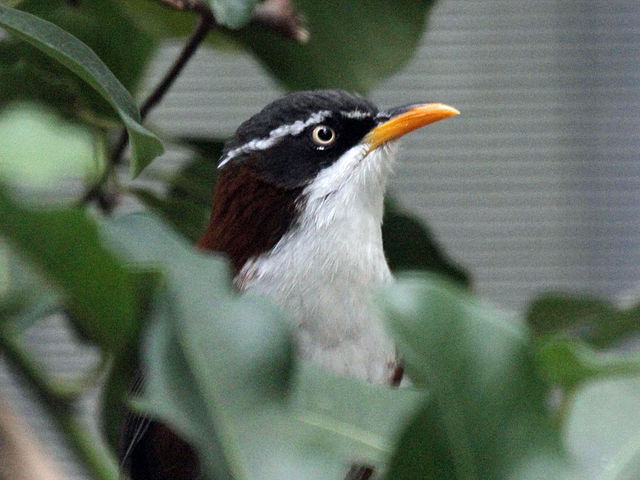
Chestnut-backed Scimitar Babbler (Pomatorhinus montanus) ©WikiC
Here are the Sunday Inspiration articles that were written about these families.
Cuckooshrikes ~ “There’s Something About That Name” ©The Hyssongs
Whistlers and Avian Friends ~ “”The Love of God” ~ Dr. Richard Gregory
Shrikes and Vireos ~ “El Shaddai” – by Nell Reese
Figbirds, Orioles and Drongos ~ “He Touched Me” -~ ©The Hyssongs
Fantails ~ “So Send I You” – Men’s Quartet – Faith Baptist
Monarchs ~ “He’s Looking on You” ~ by Dr. Richard Gregory
Crows and Jays ~ “Peace Medley” ~ by Faith Baptist Choir
Independence Day ~ “Military Medley” ~ Faith Baptist Orchestra
From Mud to Beauty ~ “I Heard The Voice of Jesus” ~ By Sean Fielder
Australian Robin and Friends ~ “Hiding in the Shadow of the Rock” ~ © Dr. Richard Gregory
Deep Love of Jesus ~ “Oh The Deep, Deep, Love of Jesus” ~ Megan Fee and Jill Foster
Tits, Chickadees and Penduline Tits ~ “Just a Little Talk With Jesus Makes It Right” ~ Vegter Quartet (together for Vi’s 90th Birthday)
Larks ~ “His Eye Is On The Sparrow ” – by Kathy Lisby, Faith Baptist Church
Bulbuls ~ “How Deep The Father’s Love For Us” ~ played by Megan Fee and Jill Foster
Swallows and Martins ~ “If I Don’t Have Love” ~ by Jessie Padgett – Special at Faith Baptist
Wren-babblers – Crombecs and Bush Warblers – “Bow The Knee” ~ Sheila Vegter and Jacob (her son who is playing the piano and singing)
Little Beauties From The Lord ~ “Beautiful Saviour (Fairest Lord Jesus)”) ~ by Kid’s Choir at Faith Baptist
Reed Warblers ~ “When I Survey The Wondrous Cross” ~ by Miss Anna Pletcher (12 years old) on piano
Grassbirds and Allies ~ “The Church’s One Foundation” – Megan Fee, Cody Hancock & Dakota Hancock ~ at Faith Baptist
Worthy The Lamb ~ “Worthy The Lamb” ~ Choir at Faith Baptist Church
Cisticolas and Singing ~ “How Can I Keep From Singing?” ~ by the Trio + 1 (Pastor Jerry, Reagan Osborne, Caleb & Jessie Padgett) Faith Baptist
Fulvettas, Ground Babblers ~ “Everything’s Fine” ~ ©Hyssongs
*
“Were You There, When They Crucified My Lord” – Communion Music – Organ & Piano
*
Sunday Inspiration – Passeriformes Review I
*
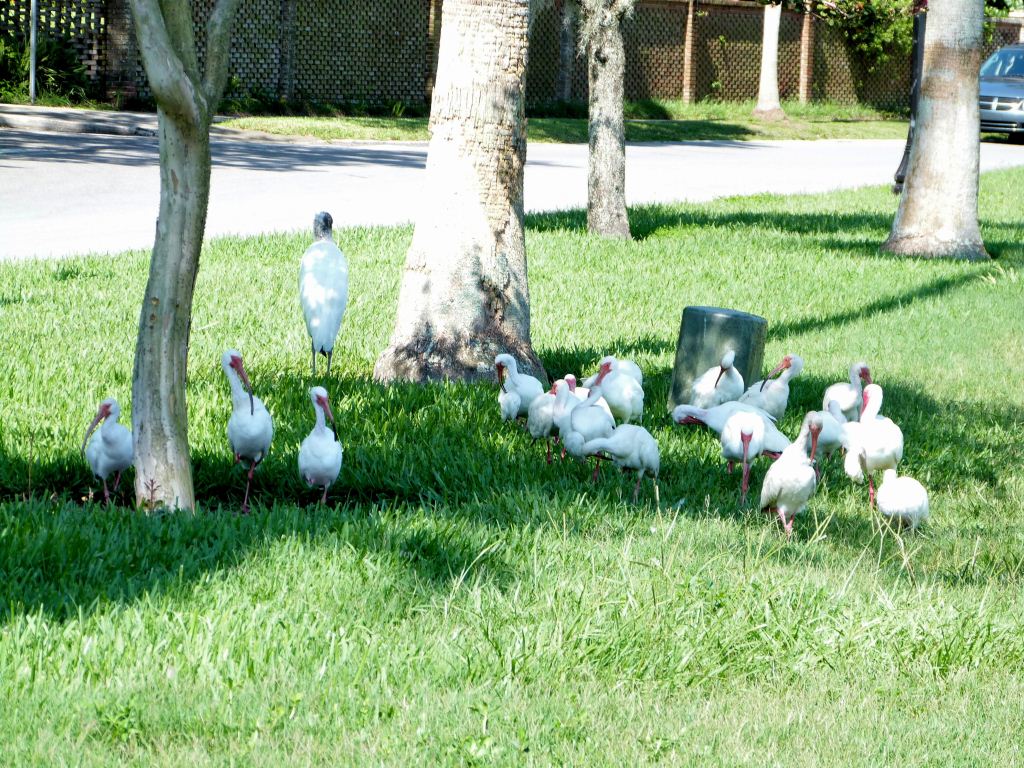
“But ye are a chosen generation, a royal priesthood, an holy nation, a peculiar people; that ye should shew forth the praises of him who hath called you out of darkness into his marvellous light:” (1 Peter 2:9 KJV)
Ibises and Wood Storks – Some coming out into the sun at Lake Morton by Lee
*
*

Or if he shall ask an egg, will he offer him a scorpion?” (Luke 11:12 KJV)
Indian Roller (Coracias benghalensis).With Scorpion ©WikiC
*
*
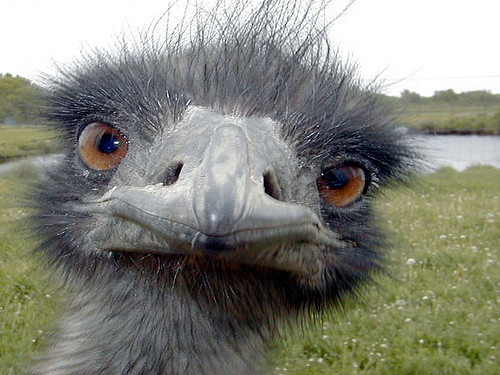
“And say ye moreover, Behold, thy servant Jacob is behind us. For he said, I will appease him with the present that goeth before me, and afterward I will see his face; peradventure he will accept of me.” (Genesis 32:20 KJV)
Emu (Dromaius novaehollandiae) ©Flickr Justin
*
*
My friend from Australia, whom I’ve met through blogging, has a really interesting post. It is about the Lyrebird which we have written about before. He has a segment about a young lyrebird practicing his mating dance. I love it. There are other birds mentioned also. Aussiebirder always has neat articles. Enjoy!

As we leave an unusually wet winter and enter the beautiful early spring, with wildflowers blooming, I took off early one morning into the Southern Highlands to Barren Grounds National Park for another attempt at finding the elusive and endangered Eastern Ground Parrot.

Above photo is taken from the sign in the park of the two endangered species of birds in Australia which live in the scrubby heathlands of the highlands. One reason why these birds have become endangered is that both these birds are predominately ground dwellers, and seldom fly. This makes them very vulnerable to predators, especially humans, ferule cats and foxes.
………….To read the rest of the article and see his video and recordings CLICK HERE:
Thanks, AussieBirder, for such an interesting article.
See Also:
Ian’s Bird of the Week – Displaying Superb Lyrebird
*
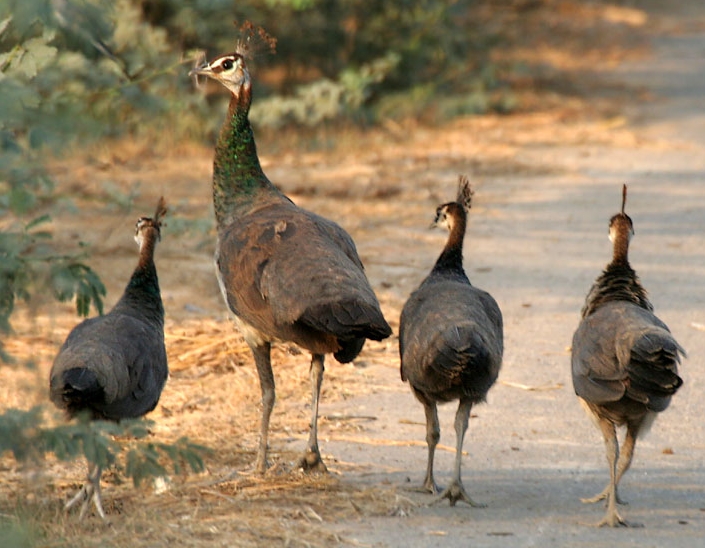
“And Jacob stole away unawares to Laban the Syrian, in that he told him not that he fled.” (Genesis 31:20 KJV)
Indian Peafowl with immature Stealing away ©WikiC
*
*
Busy Spectacles, Oblivious to Spectator Hummingbirds
Dr. James J. S. Johnson
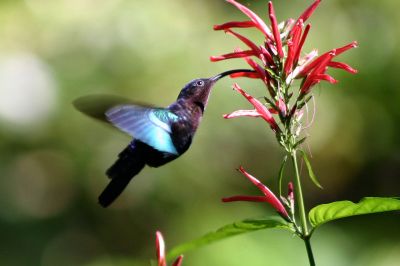
Purple-throated Carib Hummingbird (Wikipedia image)
So teach us to number our days, that we may apply our hearts unto wisdom. (Psalm 90:12)
Two years ago the shoe was “on the other foot”, when I wrote about “Busy Hummingbirds, Oblivious to Spectators”. Yet during the Labor Day weekend, it was I who was the busy “spectacle”, “oblivious” to spectator hummingbirds in my own backyard!
It all started as just another half-day of clean-up in my backyard, in reaction to 4 stormy-weather-caused tree casualties, this year: serious branch tear-offs on 4 different Bradford pear trees. The aftermath involves a lot of branch debris clean-up, for packaging (in yard-trash bags, after my oldest grandson helped trim the arboreal wreckage with his chainsaw) required by the trash pickup service. One of the piles of yard trash was stacked under an oak tree, situated next to an iron rod fence that is heavily draped by a flourishing “thicket” of trumpet vine growth.
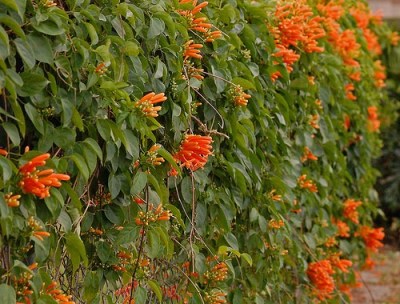
Trumpet Vine “wall” (acultivatednest.com image)
In fact, the iron rod fence itself is so enveloped, in the greenery and blossoms of trumpet vines, that the combination of fences and vine-growth resembles a “wall” or curtain of vine growth, green leaves, and bright orange “trumpet” flowers. Next to that fence is a tall and sturdy oak tree, loaded with green leaves. Then I noticed what initially looked like a thick brownish-green insect buzzing about the fence’s trumpet vine blossoms – but it was no dragonfly or damselfly or moth or butterfly – it was a busy hummingbird! (Later I saw another hummer buzz by the same area, collecting nectar from blossom after blossom of the same thicket of trumpet vine flowers.)

Hummingbird at Trumpet Vine blossom (Mike Lentz image)
Why had I not noticed that our trumpet vine “patch” was hosting hummingbirds?
Unlike two years ago, this time I was the “oblivious” one – I had busily ignored those hummingbirds (for months, at least), because I was so busy bagging yard rubbish. So, being a true birder, I promptly went inside our house, to fetch my binoculars, so I could observe the hummingbird activities more closely.

Trumpet Vine in backyard by tree (image credit: WhatGrowsHere.com)
The hummers were obtaining nectar, again and again — then they would flit away into the foliage of the nearby oak tree. On closer investigation I was that the trumpet vine had grown out form the fence — and had traveled up the trunk of the oak tree, entwining itself around various oak branches, so that the orange flowers peeked out of the top of the oak tree! Try to imagine a large oak tree, covered in bright green leaves – yet sporting some orange trumpet-shaped flowers near the top of the leaves! (Now I need to research whether the trumpet vine is parasitically detrimental to the oak tree – or whether it will be okay to leave it as it is.)
So much for being a careful spectator of my own backyard! As the serial crises of summer storms recently ravaged our Bradford pear trees, consuming many weekend hours (and a lot of my attention) I had neglected to monitor other developments in my own backyard. Yet what should I have expected? After all, hummingbirds — if any were to be found in my backyard — would surely be attracted to the vermillion-red blossoms of the Trumpet Vine. “All hummingbirds are drawn to the color red, whether in the form of a flower bearing the nectar that accounts for more than half of their dietary intake or in the colorful plastic petals of a sugar-water feeder.” [Quoting “Hummingbirds and Feeding”, in BIRDS IN YOUR BACKYARD: A BIRD LOVER’S GUIDE TO CREATING A GARDEN SANCTUARY (Birds & Blooms, edited by Robert J. Dolezal, 2009 Readers Digest edition), page 108.] For video footage of a hummer defending his trumpet vine from bee competitors see https://www.youtube.com/watch?v=_ZfryKJxRd8 .
Maybe that can happen in other aspects of life, too. (Some call this the problem of the “tyranny of the urgent” – where only priorities with hard deadlines get serious attention.) Maybe getting distracted by the various “in-your-face” crises of life, which frequently crash down here-and-there, in one storm after another, can pull our gaze away from other parts of our own “backyards” — such that this of that vine can silently creep up into a nearby tree (a little bit at a time, week after week, month after month), and we don’t notice it.

Trumpet Vine (a/k/a Trumpet Creeper) climbing up tree
Could this habit of being repeatedly distracted (by whatever makes the loudest “noise”) apply to personal Bible study, or personal prayer life, or the forgotten/postponed need for getaway time with one’s husband or wife, or the need to be a vocal witness to an non-Christian friend (or coworker, or relative, or neighbor)? Sometimes it is important to step back, look up, and regain a big-picture perspective. Life continues to flow quickly by, second by second, minute by minute, hour by hour, day by day, week by week, month by month, year by year. How quickly our lives, like money, are spent!
If you love someone, if you care for someone, tell (and/or show) him or her so – do it today! Don’t wait for a “hard deadline”, because the “tyranny of the urgent” may distract you (or me) from doing those important things that have no exact deadline. Don’t be oblivious (like me) to what is happening (or not happening) right next to you!
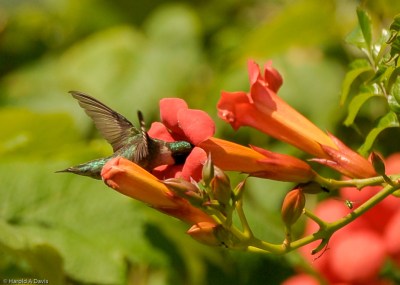
Hummingbird at Trumpet Vine (image credit: Harold A. Davis)
Notice the hummingbirds in your own backyard, and treasure the beauty that God is sharing in the process. Notice also when vine are sneaking form one place to another – if they are harmful, take action!
So here is my takeaway prayer: may I be less oblivious to what is happening in my own backyard – and may I appreciate the beauty that God provides (such as those colorful and quick little hummingbirds, that I didn’t even know were living in my oak tree, enjoying the trumpet vines that drape my fence), each day, as I live out whatever day son earth that I have left to live (before it’s time to go Home).
So teach us to number our days, that we may apply our hearts unto wisdom. (Psalm 90:12)
*
Busy Hummingbirds, Oblivious to Spectators
More post by James J. S. Johnson
*
 Lee's Birdwatching Adventures Plus