That Beautiful Sunbird

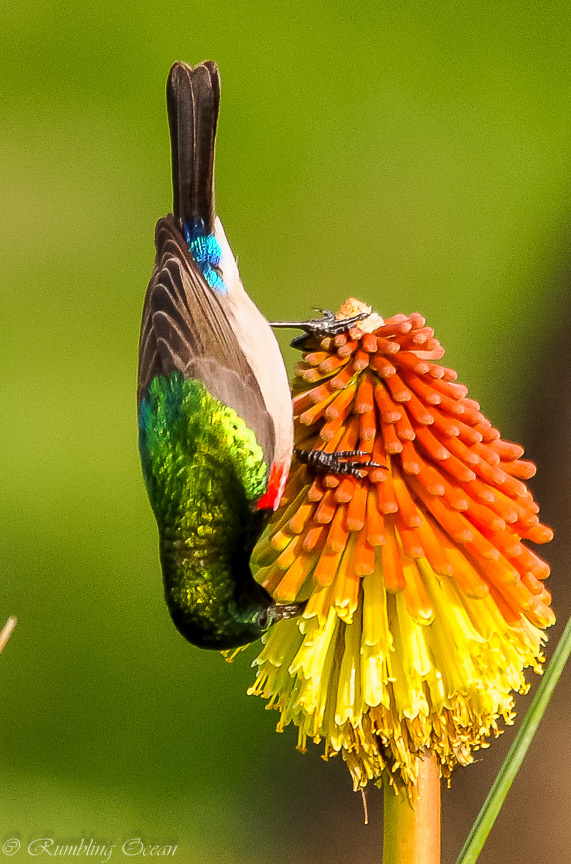
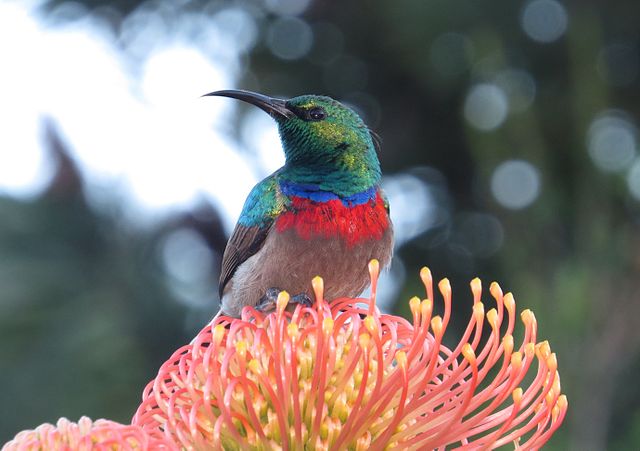
Lesser Double-collared Sunbird enjoying a Kniphofia flower ©©Rambling Ocean-Boeta.

Lesser Double-collared Sunbird enjoying a Kniphofia flower ©©Rambling Ocean-Boeta.

Then shall the righteous shine forth as the sun in the kingdom of their Father. Who hath ears to hear, let him hear. (Matthew 13:43 KJV)

In the daily devotional yesterday, I forgot to give you a link to my friend’s website. They gave me permission to use it, but I forgot to give him credit for his beautiful photography.

I have fixed my over-site by providing the link. Our Rumbling Ocean is a site I have been following for some time and have become friends with them. They have a son who is featured very often. We have all been watching him grow up. They live on the East Coast of South Africa and are within 150 m of the ocean. Check out their blogs at:

Our Rumbling Ocean  and Having Fun With My Camera

Here are links to the four pictures of the sunbird and the Kniphofia flower:

Now, let me tell you a little bit about that beautiful bird that the Lord created. The scientific name is Cinnyris chalybeus, and as is common, they have several names given to a bird. Locally, there in South Africa, it is known as the Lesser Double-collared Sunbird. The I.O.C. uses the name,  Southern Double-collared Sunbird (Cinnyris chalybeus).
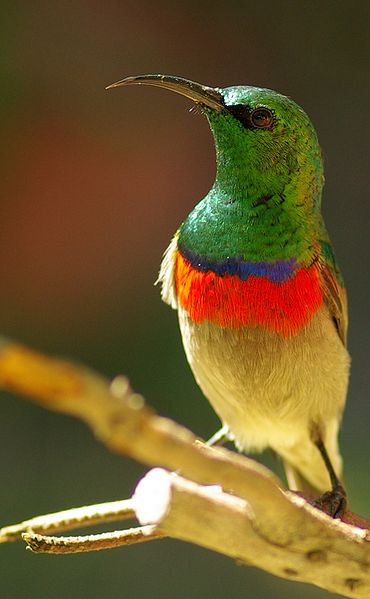
Southern Double-collared Sunbird (Cinnyris chalybeus) ©WikiC

Southern Double-collared Sunbird (Cinnyris chalybeus) ©WikiC

“The southern double-collared sunbird or lesser double-collared sunbird (Cinnyris chalybeus) is a small passerine bird which breeds in southern South Africa. It is mainly resident, but partially migratory in the north-east of its range.” This Sunbird is part of the Nectariniidae – Sunbirds Family. This family was featured in the Sunday Inspiration – Sunbirds in August.

“This sunbird is common in gardens, fynbos, forests and coastal scrub. The southern double-collared sunbird breeds from April to December, depending on region. The closed oval nest is constructed from grass, lichen and other plant material, bound together with spider webs. It has a side entrance which sometimes has a porch, and is lined with wool, plant down and feathers.”
outhern Double-collared Sunbird (Cinnyris chalybeus) ©WikiC

outhern Double-collared Sunbird (Cinnyris chalybeus) ©WikiC

“The southern double-collared sunbird is 12 cm long. The adult male has a glossy, metallic green head, throat upper breast and back. It has a brilliant red band across the chest, separated from the green breast by a narrow metallic blue band. The rest of the underparts are whitish. When displaying, yellow feather tufts can be seen on the shoulders. As with other sunbirds the bill is long and decurved. The bill, legs and feet are black. The eye is dark brown. The male can be distinguished from the similar greater double-collared sunbird by its smaller size, narrower red chest band and shorter bill.

Southern Double-collared Sunbird (Cinnyris chalybeus) Female ©WikiC

Southern Double-collared Sunbird (Cinnyris chalybeus) Female ©WikiC

The female southern double-collared sunbird has brown upperparts and yellowish-grey underparts. The juvenile resembles the female. The female is greyer below than the female orange-breasted sunbird, and darker below than the female dusky sunbird.”

Southern Double-collared Sunbird (Cinnyris chalybeus) ©©Redwood

Southern Double-collared Sunbird (Cinnyris chalybeus) ©©Redwood

“The southern double-collared sunbird is usually seen singly or in small groups. Its flight is fast and direct on short wings. It lives mainly on nectar from flowers, but takes some fruit, and, especially when feeding young, insects and spiders. It can take nectar by hovering like a hummingbird, but usually perches to feed most of the time.

The call is a hard chee-chee, and the song is high-pitched jumble of tinkling notes, rising and falling in pitch and tempo for 3–5 seconds or more.” (Quoted material is from Wikipedia with editing.) I also think Rambling Oceans photos are better, but I had only asked permission for the one. :(

*

Our Rumbling Ocean

Having Fun With My Camera

Sunday Inspiration – Sunbirds

Southern Double-collared Sunbird – Wikipedia

Who Paints The Leaves?

*

Lee’s Four Word Thursday – 2/25/16

***

Lesser Double-collared Sunbird enjoying a Kniphofia flower ©©Rambling Ocean-Boeta.

I WILL HOPE CONTINUALLY

***


But I will hope continually, and will yet praise thee more and more. (Psalms 71:14 KJV)

Lesser Double-collared Sunbird enjoying a Kniphofia flower ©©Rambling Ocean-Boeta.

*

More Daily Devotionals

*

A Great Friend Goes “Home”

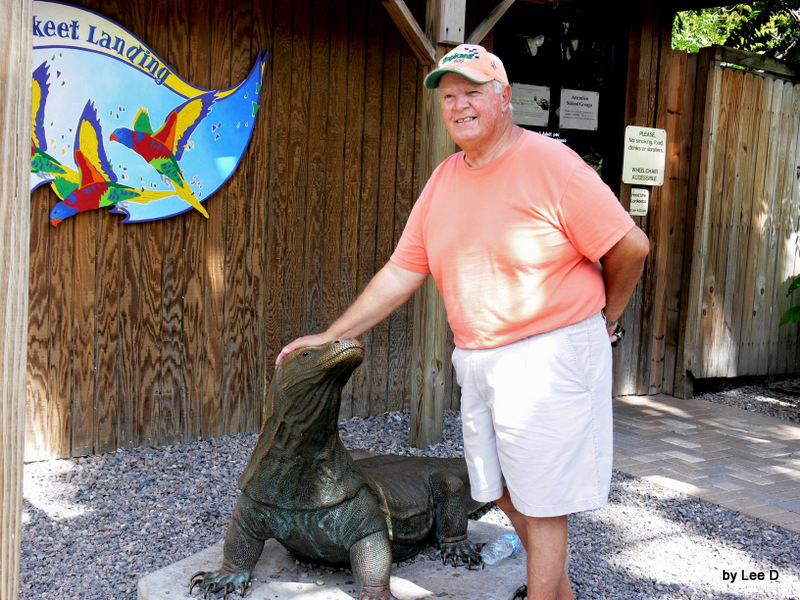
Jim with Komono Dragon at Lowry Park Zoo

Jim with Komono Dragon at Lowry Park Zoo

Therefore we are always confident, knowing that, whilst we are at home in the body, we are absent from the Lord: (For we walk by faith, not by sight:) We are confident, I say, and willing rather to be absent from the body, and to be present with the Lord. (2 Corinthians 5:6-8 KJV)

Dan and I have been privileged to have close friends over the years. As you move to new locations, the Lord helps you develop more “best friend” relationships. Here, Jim and Phyllis, have become more of our “best friends.” Yesterday, Jim (James) Foster, went home “to be with Our Lord.”

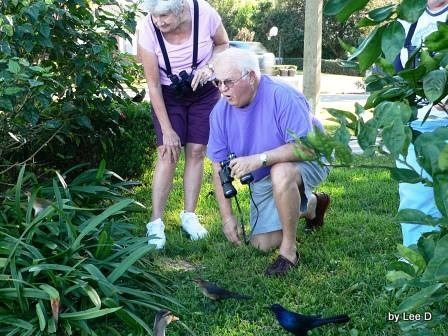
Jim and Phyllis Looking at Baby Gallinule at Lake Hollingsworth

Jim and Phyllis Looking at Baby Gallinule at Lake Hollingsworth

Over the years, Jim and Phyllis have joined us in some of our birdwatching adventures, and so, in honor of those great times together, I’d like to share some of those photos. This is also, to help ease the loss we feel at his “home going.”

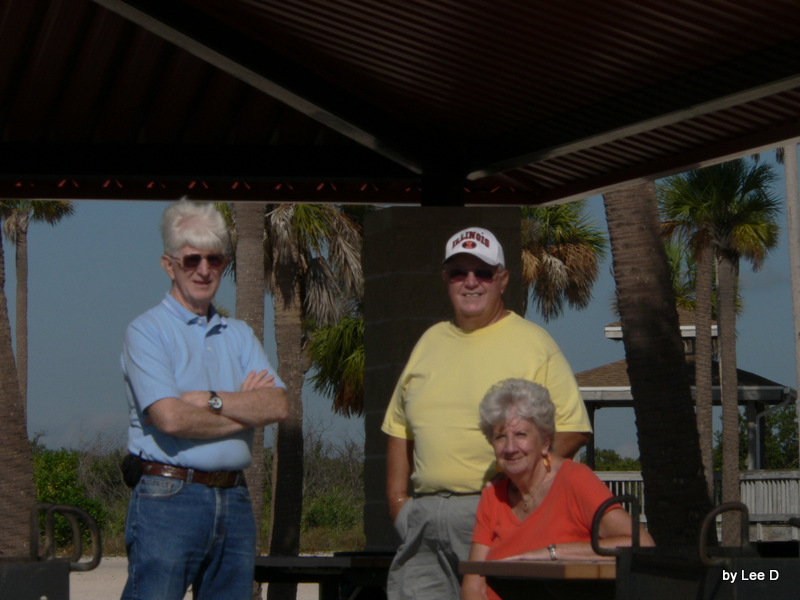
Dan, Jim and Phyllis at MacDill AFB Shore

Dan, Jim and Phyllis at MacDill AFB Shore

Jim is enjoying the delights of heaven and of being in the presence with the Lord. It is those of us here, that are sad and happy at the same time.

Jim and Emma Foster - Work Day 2011

Jim and Emma Foster – Work Day 2011

Also, you are familiar with our great stories from Emma Foster. This is her grandfather. She, and all of her family will appreciate your prayers.

Jim and Phyllis were always ready and willing to volunteer for VBS and other events at church. Most of the time, it was in the kitchen area.

Jim with Pastor Pete and Emma at Window

But I would not have you to be ignorant, brethren, concerning them which are asleep, that ye sorrow not, even as others which have no hope. For if we believe that Jesus died and rose again, even so them also which sleep in Jesus will God bring with him. (1 Thessalonians 4:13-14 KJV)

This slideshow requires JavaScript.


*

Lee’s Three Word Wednesday – 2/24/16

***

Photographers with animals 10

ON THE HEAD

***


Blessings are on the head of the righteous, …. (Proverbs 10:6a NKJV)

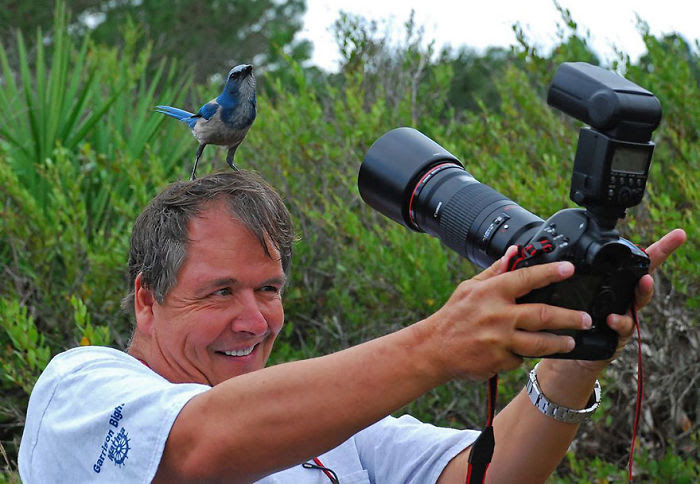
Scrub Jay on Photographer’s Head ©Unknown
Wild Wildlife Photographers!
*

More Daily Devotionals

*

Lee’s Two Word Tuesday – 2/23/16

***

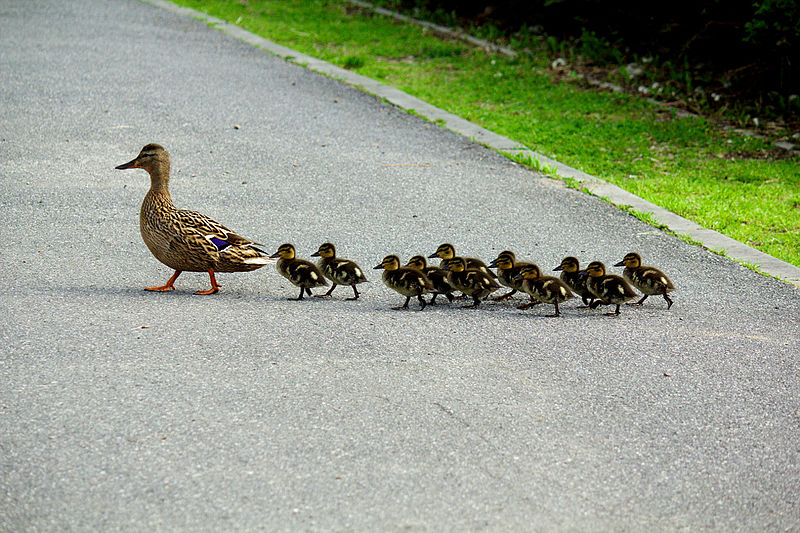
Mallard Duck army marching (I know it's not a King, but it's cute) ©WikiC

FOLLOW ME

***


And as Jesus passed forth from thence, he saw a man, named Matthew, sitting at the receipt of custom: and he saith unto him, “Follow me!” And he arose, and followed him. (Matthew 9:9 KJV)

Mallard Duck and Followers ©WikiC

*

More Daily Devotionals

*

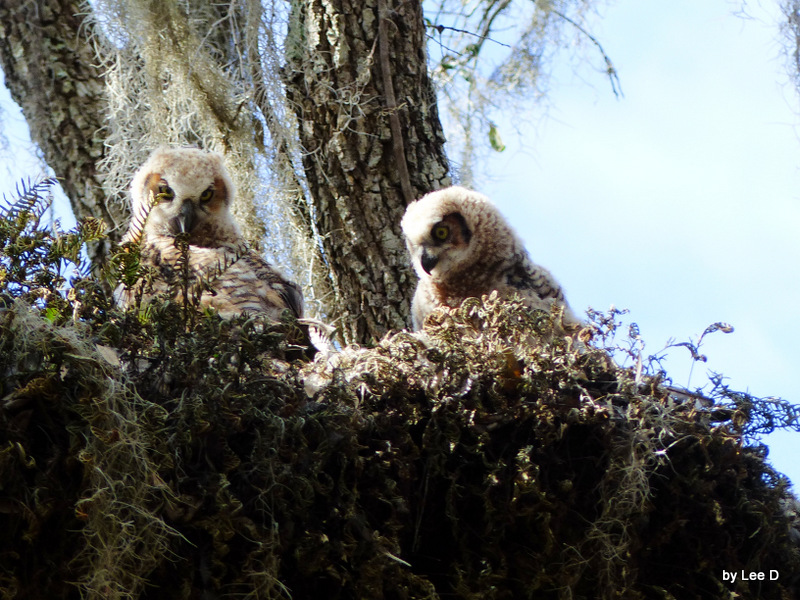
Great Horned Owl Youngsters

Great Horned Owl Youngsters at Circle B Bar Reserve by Lee

Great Horned Owl Youngsters at Circle B Bar Reserve by Lee

“And the little owl, and the cormorant, and the great owl,” (Leviticus 11:17 KJV)

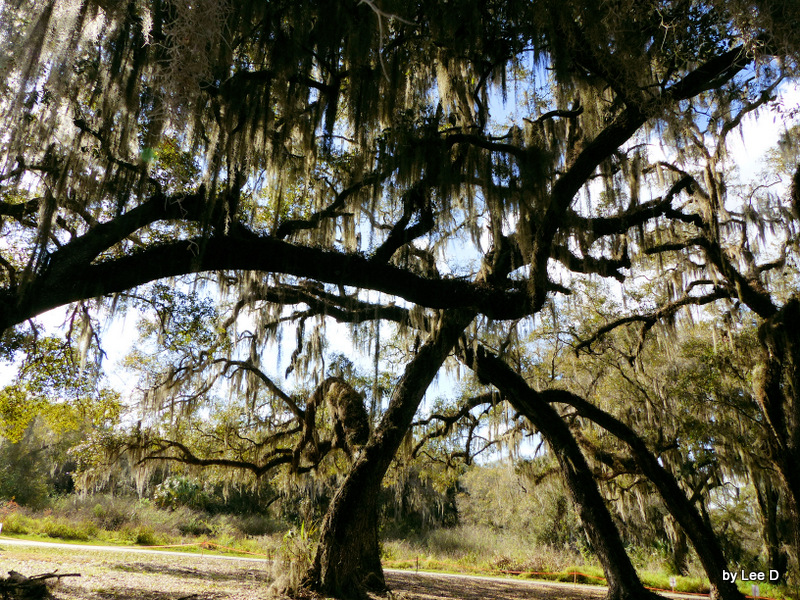
This afternoon we were able to go to the Circle B Bar Reserve and watch the latest talk of the birders. Yesterday, our birding friends at church told us about these two youngsters that were stealing all the attention at the park.

It was easy to find the area, because it is roped off to keep everyone at a safe distance from the youngsters. An array of onlookers with binoculars and lots of cameras were watching and waiting for the youngsters to wake up from their naps.

Great Horned Owl Youngsters at Circle B Bar Reserve by Lee

Great Horned Owl Youngsters at Circle B Bar Reserve by Lee

Finally, a fuzzy ball appeared, and then a head popped up. Eventually, two heads were visible.

Notice how their Creator gave them just the right kind of feathers to blend in with their surroundings. Another example of the Lord’s Care for His creation.

Great Horned Owl Youngsters at Circle B Bar Reserve by Lee

Trust you will enjoy these glimpses of them. It was hard trying to catch a decent photo because they were quite a way from us. Trying to hold a zoomed in, hand-held, camera in “program mode” is a challenge. But, I am so thankful for the Lord allowing us to see some of his wonderfully created Great Horn Owl youngsters. These were my first GHO youngsters seen in the wild.

Great Horned Owl Youngsters at Circle B Bar Reserve by Lee

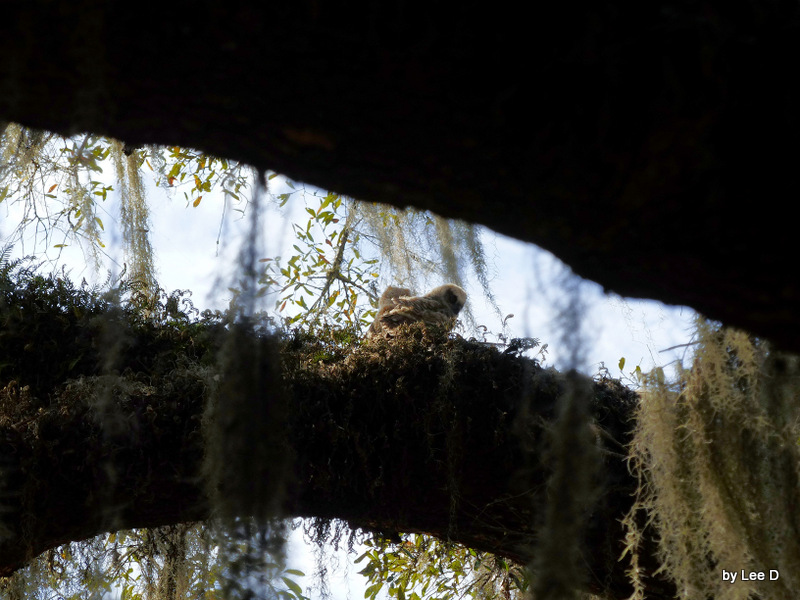
Do You See Them

Great Horned Owl Youngsters at Circle B Bar Reserve by Lee

Let Me Zoo In Some More. .. Do You See Them Now?

Great Horned Owl Youngsters at Circle B Bar Reserve by Lee

Zoomed In More…Do You See Them Now!

Here is a slide show of the photos in fairly decent order of how they were taken.

This slideshow requires JavaScript.

I was able to shoot some video, but again, it’s a little shaky. Enjoy.

*

Birds of the Bible – Owls

Strigidae – Owls

Circle B Bar Reserve

Wordless Birds

*

Lee’s One Word Monday – 2/22/16

***

WISDOM

***


If any of you lacks wisdom, let him ask of God, who gives to all liberally and without reproach, and it will be given to him. (James 1:5 NKJV)

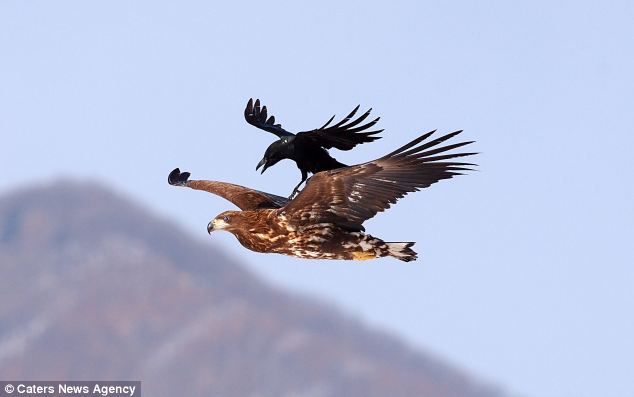
Crow on Eagle’s Back ©©

*

More Daily Devotionals

*

Lee’s Seven Word Sunday – 2/21/16

***

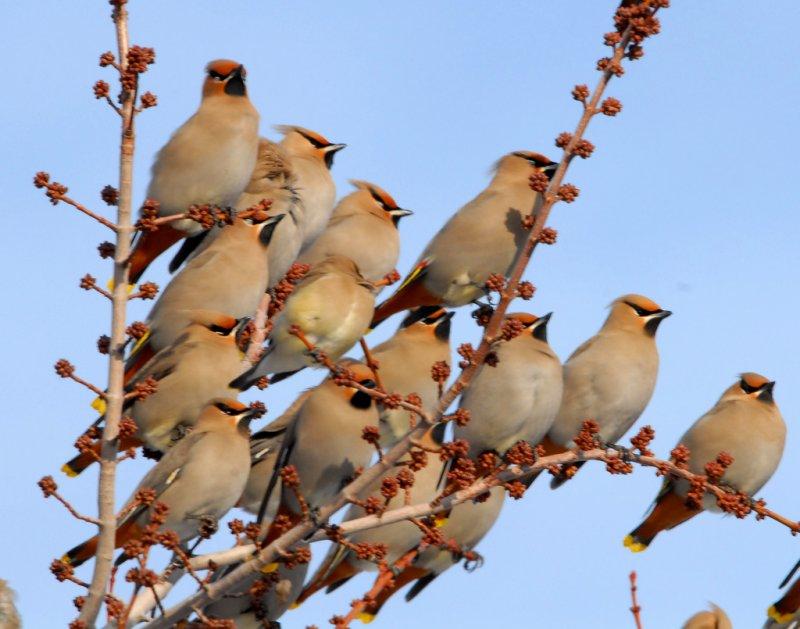
Bohemian Waxwing (Bombycilla garrulus) © by Paul Higgins

THE LOVE OF MANY SHALL WAX COLD

***


And because iniquity shall abound, the love of many shall wax cold. (Matthew 24:12 KJV)

Bohemian Waxwing (Bombycilla garrulus) © by Paul Higgins

*

More Daily Devotionals

*

Sunday Inspiration – Some Small Families

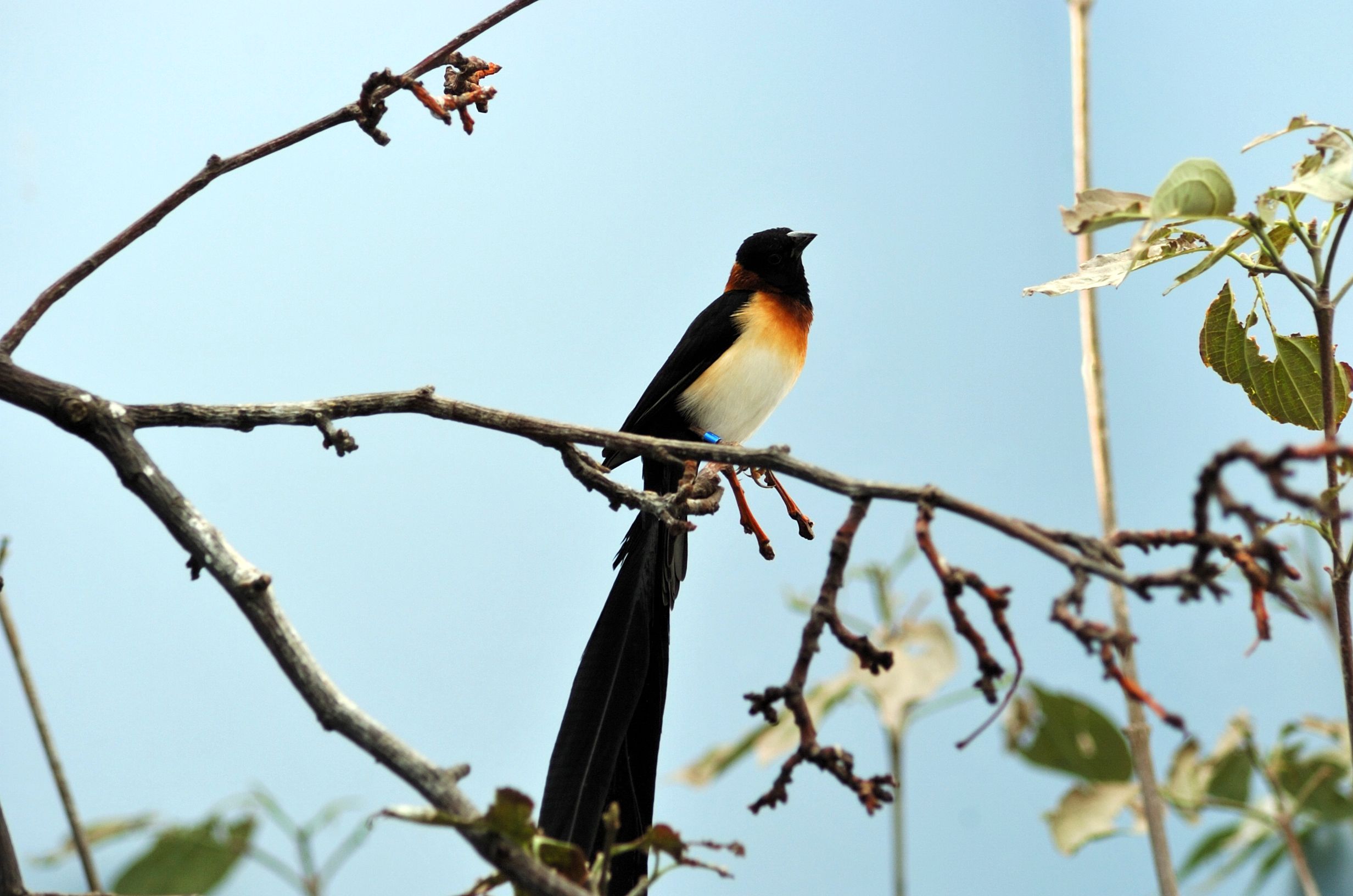
Long-tailed Paradise Whydah by Dan at the National Aviary

Long-tailed Paradise Whydah by Dan at the National Aviary

Better is little with the fear of the LORD than great treasure and trouble therewith. (Proverbs 15:16 KJV)

Our next families in our Passeriformes Order are small families. Because they are small in number does not mean they are small in beauty. I love the song, “Little  Is Much When God Is In It.” Maybe because I am short. :)  Sometimes these small groups are a result of the ornithologists not being sure which family to include them. As they (ornithologists) keep doing DNA studies, more shuffling in families will occur.

Our largest family, Viduidae, today has twenty species of Indigobirds, Whydahs, and a Cuckoo-finch. We saw our first Whydah at the National Aviary in Pittsburg, PA. It is appropriately called a Long-tailed Paradise Whydah. You can see its long tail, worn by males, in the photo. These are finch-like birds which usually have black or indigo predominating in their plumage.

All are brood parasites, which lay their eggs in the nests of estrildid finch species; most indigobirds use fire-finches as hosts, whereas the paradise whydahs chose pytilias. Unlike the cuckoo, the indigobirds and whydahs do not destroy the host’s eggs.

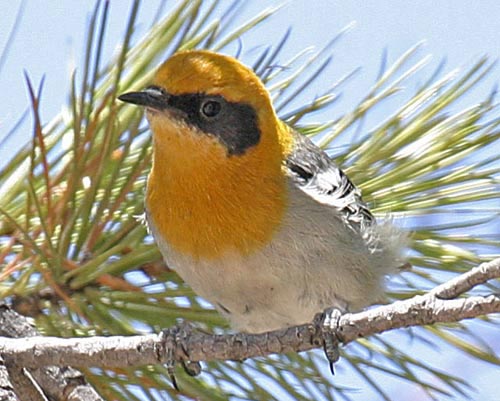
Olive Warbler (Peucedramus taeniatus) ©WikiC

Olive Warbler (Peucedramus taeniatus) ©WikiC

The Olive Warbler is the solo member of his family, (Peucedramidae), but there are several sub-species. This species breeds from southern Arizona and New Mexico, USA, south through Mexico to Nicaragua. It is the only bird family endemic to North America (including Central America).

It is an insectivorous species of coniferous forests. Though it is often said to be non-migratory,[3] most New Mexican birds leave the state from November to late February. It lays 3–4 eggs in a tree nest”. (Wikipedia)

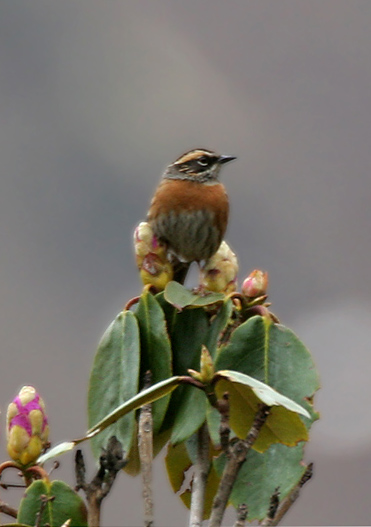
Rufous-breasted Accentor (Prunella strophiata) ©WikiC

Rufous-breasted Accentor (Prunella strophiata) ©WikiC

The Prunellidae – Accentors Family has thirteen members named Accentors and one Dunnock, of the genus, Prunella. All but the Dunnock and the Japanese Accentor are inhabitants of the mountainous regions of Europe and Asia; these two also occur in lowland areas, as does the Siberian Accentor in the far north of Siberia. This genus is not strongly migratory, but they will leave the coldest parts of their range in winter, and make altitudinal movements.

Their typical habitat is mountainous regions in an area far above the tree-line, but below the snow-line. The Himalayan accentor can be found as high as 17,000 ft above sea level when breeding, however, most accentors breed in scrub vegetation at lower levels. Most species migrate downwards to spend the winter, with only some being hardy enough to remain. Accentors spend the majority of their time in the undergrowth and even when flushed, stay low to the ground until reaching cover. (Wikipedia)

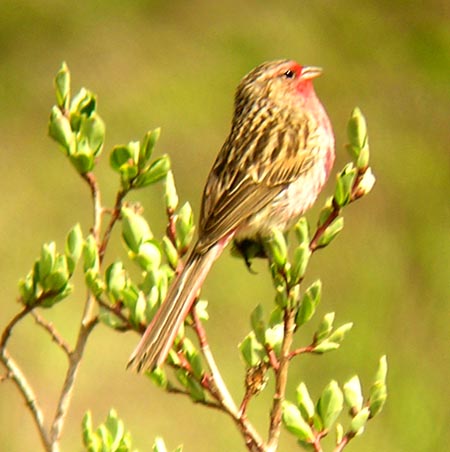
Przevalski's Finch (Urocynchramus pylzowi) ©Montereybay

Przevalski’s Finch (Urocynchramus pylzowi) ©Montereybay

Skipping over the Wagtails and Pipits (covered next week), our last bird, the Przevalski’s Finch (Urocynchramus pylzowi), is again in a family by itself.

The Przevalski’s Finch or Przewalski’s Finch (Urocynchramus pylzowi) is an unusual passerine bird from the mountains of central-west China. The species is named for Nikolai Przhevalsky, the Russian explorer who described it. Its taxonomic affinities were unclear for a long time, giving rise to other common names, the Pink-tailed Bunting and the Przewalski’s Rosefinch. In 2000 it was proposed that it should in fact be regarded neither as a finch nor a bunting, but as the only member of the family Urocynchramidae,

Przewalski’s Finch is a small bird similar in appearance to the Long-tailed Rosefinch. The tail is long and – quite unlike in typical finches – graduated, with the outer feathers much shorter than the central ones. The sexes are sexually dimorphic, with the males having bright pink on the throat, breast and belly. Both sexes have brown streaked plumage on the back and wings. The bill is thinner than those of the rosefinches. (Wikipedia)

This slideshow requires JavaScript.

But Jesus said, Suffer little children, and forbid them not, to come unto me: for of such is the kingdom of heaven. (Matthew 19:14 KJV)

“Little Prayers” ~ by the ©The Hyssongs

*

Motacillidae – Wagtails, Pipits – Next Week

ABC’s Of The Gospel

*

Lee’s Six Word Saturday – 2/20/16

***

SET YOUR MIND ON THINGS ABOVE

***


Set your mind on things above, not on things on the earth. (Colossians 3:2 NKJV)

Great Hornbill (Buceros bicornis) at Houston Zoo by Dan

*

More Daily Devotionals

*

Amazing Video by Richard Sidey

King Penguin (Aptenodytes patagonicus) by Bob-Nan

King Penguin (Aptenodytes patagonicus) by Bob-Nan

These see the works of the LORD, and his wonders in the deep. (Psalms 107:24 KJV)

*

https://player.vimeo.com/video/41225777?badge=0

*

Jeanie Boyette, who has written poems here on the blog, sent me this link. What a fantastic video! How can we not thank our Great Creator as we watch this. Richard Sidey produced this show of God’s Wonder’s.

Gideon

*

Lee’s Five Word Friday – 2/19/16

***

Geese in V Formation ©Hamid Hajihusseini

WHICH GIVETH US THE VICTORY

***


But thanks be to God, which giveth us the victory through our Lord Jesus Christ. (1 Corinthians 15:57 KJV)

Geese in V Formation ©Hamid Hajihusseini

*

More Daily Devotionals

*