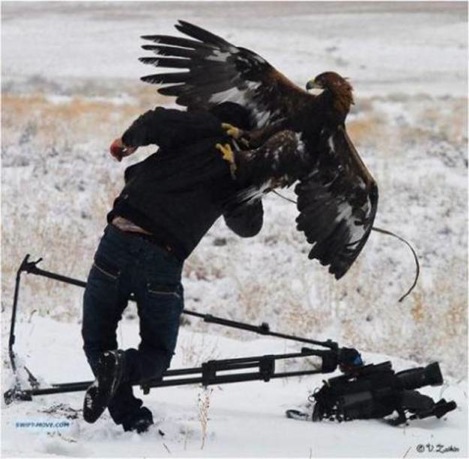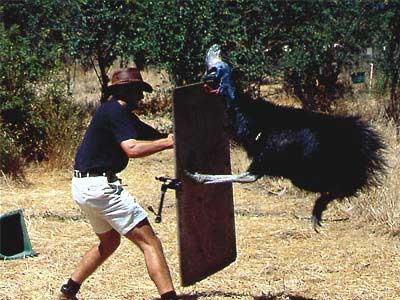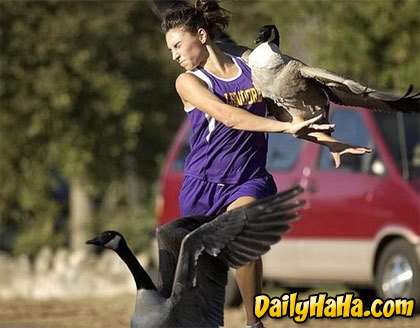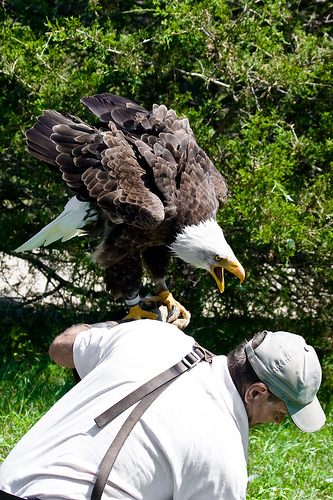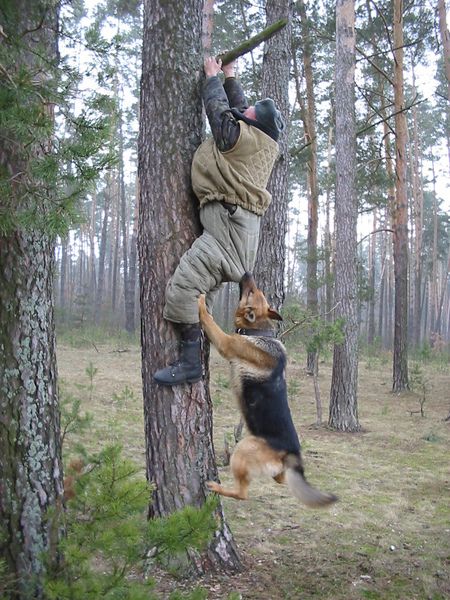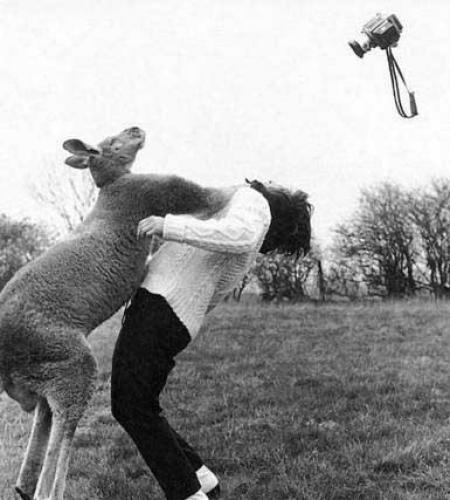
Don’t sit around the house. Get out and enjoy nature!

This is from an e-mail and thought all of us birdwatchers and photographers might enjoy it.

Don’t sit around the house.

Get out and enjoy nature!

Don't sit around the house 1Don't sit around the house 2Don't sit around the house 3Don't sit around the house 4Don't sit around the house 6Don't sit around the house 7Don't sit around the house 8Don't sit around the house 9Don't sit around the house 10Don't sit around the house 11Don't sit around the house 12Don't sit around the house 13Don't sit around the house 14Don't sit around the house 15*

Never mind, go back inside.

Be anxious for nothing, but in everything by prayer and supplication, with thanksgiving, let your requests be made known to God; (Philippians 4:6 NKJV)

How Do You Bird Watch?

Black-bellied Whistling Ducks

Black-bellied Whistling Ducks at Circle B by Lee

Observe and consider the ravens; for they neither sow nor reap, they have neither storehouse nor barn; and [yet] God feeds them. Of how much more worth are you than the birds!
(Luke 12:24 AMP)

It would be interesting to hear from those readers who go birdwatching or watch birds, even if it is only from your window. Consider leaving comments so that we can understand that there are various methods.

As for me, my ways of birdwatching have changed over the years. First, I became more aware of the birds around me by a naturalist at a local park in south Florida. We started with simple things like not staring at a tree, but use “soft eyes” to watch for movement. After that, she showed me how to hold and adjust the binoculars. What a difference that made. Notes and a good bird book came next. The rest is history. I love birds and enjoy seeing how beautifully they were created.

Over time, I wanted to see how many birds I could get on a list. Many people like to birdwatch this way. They will go to great heights (literally) to find a new bird for their list. I would put Ian in that category. Don’t you just enjoy reading about his birdwatching adventures.

Dan searching for something to photo

Dan searching for something to photograph

Many like Dan, Ian, and our other photographers enjoy the challenge of photography. It is not always easy to get a great photo, especially when the birds don’t wait for you to get all the settings right.

Lee at Lake Morton by Dan

Lee at Lake Morton by Dan

Some like to feed the wildlife at home or a park and watch whoever shows up at that location.

Then you have every thing in between. Some enjoy going on birdwatching trips with other birders. This can be very helpful when you are just learning about the birds.

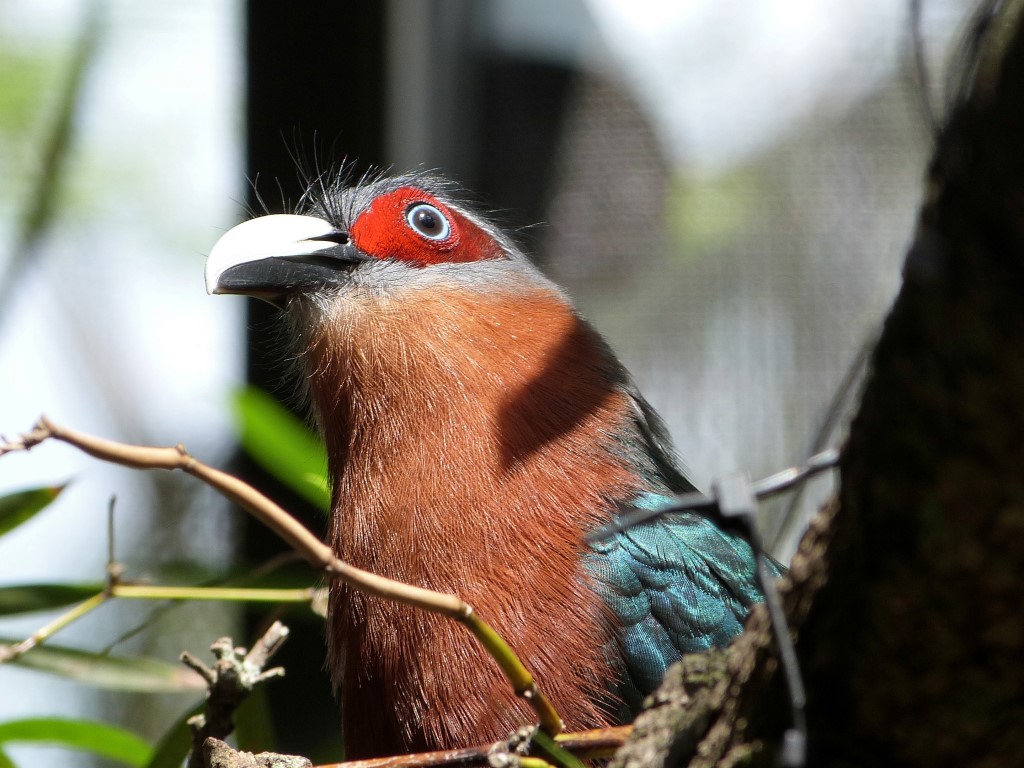
Chestnut-breasted Malkoha (Phaenicophaeus curvirostris) Palm Beach Zoo by Lee

Chestnut-breasted Malkoha (Phaenicophaeus curvirostris) Palm Beach Zoo by Lee

Today, I have mellowed somewhat. Between an issue with my feet and legs, I can no longer walk great distances. My age is also becoming a factor. I enjoy watching birds wherever they are including the Zoos. Those are easier for me to handle and actually, get to see the birds for longer periods of time and at closer ranges. That also allows me to see birds from other areas that I will never be able to get to.

I think I am actually becoming a bird “watcher.” I enjoy just seeing what they are up to or how they are put together. Like those feet I mentioned in the last article. Finding Birds in the Bible and Birds in Hymns are also pleasurable for me.

Black-bellied Whistling Duck (Dendrocygna autumnalis) Feet by Lee at PB Zoo

Black-bellied Whistling Duck Feet by Lee at PB Zoo

Is any one way of birdwatching any better than another? Not to my way of thinking. They are all fine methods and there are plenty of birds out there for all of us to enjoy.

What is your method or what gives you the most enjoyment when you are out on a “birdwatching adventure”?

*

Ian’s Bird of the Week

A J Mithra’s way of mixing birds and Scripture.

Check out our photographers down the sidebar.

Our Guest Writers

Most of the rest are my adventures plus the –

Birds in the Bible and Birds in Hymns

*

The Common Potoo – Video

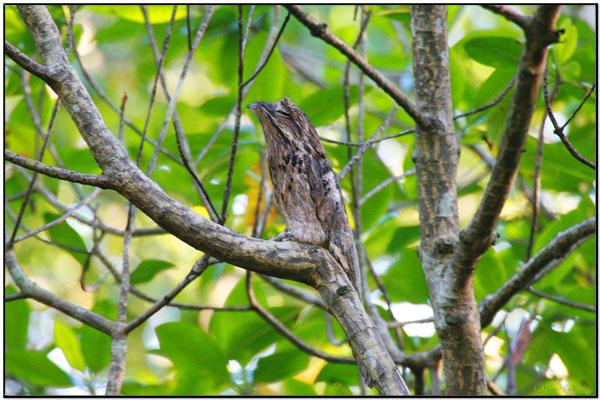
Common Potoo (Nyctibius griseus) by Daves BirdingPix

Common Potoo (Nyctibius griseus) by Daves BirdingPix

Thought I would share this video with you. A friend suggested that I watch it. It is really good.

Also, I didn’t do the usual Sunday Inspiration today because of honoring A J Mithra. It has affected me greatly. He had become a dear friend and I will miss him. I know he is enjoying the Lord’s presence, but there is still sadness here.

The world’s most brazenly hidden bird — the Common Potoo by jonnytropics

*

Potoos are members of the Nyctibiidae – Potoos Family. There are seven species and the Lord has given them an appearance of wood or some camouflaged look.

This verse is out of context, but it describes our bird.

It stood still, but I could not discern its appearance. A form was before my eyes; there was silence, ….. (Job 4:16)

*

Nyctibiidae – Potoos Family

Wordless Birds

*

A J Mithra – Now With His Lord

A J Mithra

A J Mithra

We are confident, yes, well pleased rather to be absent from the body and to be present with the Lord. (2 Corinthians 5:8)

I just received word that A. J. Mithra passed away yesterday, Friday, January 31, 2014, of a cardiac arrest. They had the funeral today. A J was 54 and is survived by his wife and two children. He knew the Lord as his personal Saviour and we know that He is in the presence of the Lord.

The Times of India has this article: Chronicler of birdsong Mithra falls silent. His Facebook page, Aj Mithra, is still active for now.

I knew he has not sent many articles lately and when I contacted him recently, he told me that he was not feeling well. Here is an excerpt for that e-mail.

So many things had happened during the past few months.. Our son had a fall while playing basketball and developed a hairline crack. Then my wife’s vocal chord got so bad that she was asked to stop talking for two months.. She is still having pain and is on medical leave. Our daughter was down with fever and now since a week I’m unwell too.

Please keep A. J.’s family in your prayers as I know we will. His articles were always such a joy to receive and place on here. He had a way of watching birds and then coming up with his applications. It always made one stop and think, and then want to correct a behavior that the Lord might not be pleased with.

His articles are posted on his page here at: A J Mithra

I, personally am going to miss him greatly. We have become good friends over the years. He had recently gotten a nice camera and was having a great time photographing birds, which he loved. Here are a few from his Facebook page.

*

Here are some of his articles:

*

ABA 2014 Bird of the Year – Rufous Hummingbird

Rufous-tailed Hummingbird (Amazilia tzacatl) by Judd Patterson

Rufous-tailed Hummingbird (Amazilia tzacatl) by Judd Patterson

For who hath despised the day of small things? for they shall rejoice, … (Zec 4:10a KJV)

The Birding Bunch left me a comment and reminded me that the ABA Bird of the Year for 2014 has been announced. So, I have updated the Badge on the Sidebar. The bird they chose this year is another beautiful creation from the Lord.

ABA Bird of the Year

The Rufous Hummingbird (Selasphorus rufus) is a small hummingbird, about 3 inches  long (8 cm) with a long, straight and very slender bill. The female is slightly larger than the male.

Rufous Hummingbird (Selasphorus rufus) by Africaddict

Rufous Hummingbird (Selasphorus rufus) by Africaddict

The adult male, (shown in the photo), has a white breast, rufous face, upperparts, flanks and tail and an iridescent orange-red throat patch (gorget). Some males have some green on back and/or crown. The female has green upperparts with some white, some iridescent orange feathers in the center of the throat, and a dark tail with white tips and rufous base. Females and the rare green-backed males are extremely difficult to differentiate from Allen’s Hummingbird.

They feed on nectar from flowers using a long extendable tongue or catch insects on the wing. These birds require frequent feeding while active during the day and become torpid at night to conserve energy.

Because of their small size, they are vulnerable to insect-eating birds and animals.

He will bless them that fear the LORD, both small and great. The LORD shall increase you more and more, you and your children. Ye are blessed of the LORD which made heaven and earth. (Psalm 115:13-15 KJV)

Read more about this beautifully created Hummingbird at:

*

Birds of the World – Magnificent Riflebird

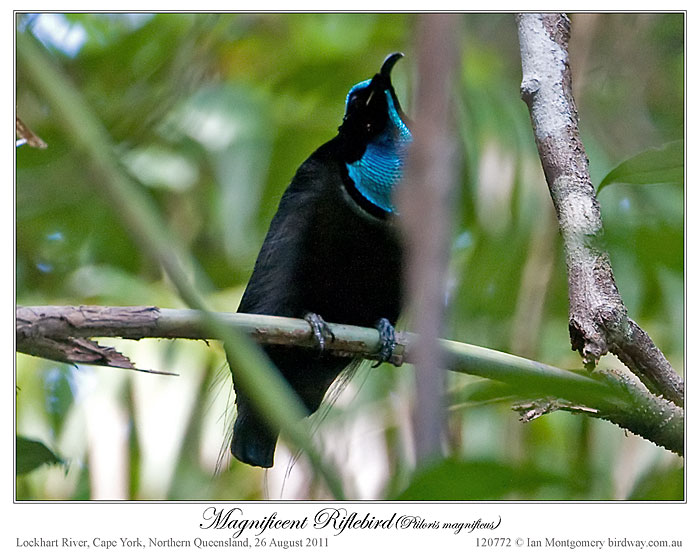
Magnificent Riflebird (Ptiloris magnificus) by Ian

Magnificent Riflebird (Ptiloris magnificus) by Ian

Let them praise the name of the LORD: for his name alone is excellent; his glory is above the earth and heaven. (Psa 148:13 KJV)

The Magnificent Riflebird is a member of the Paradisaeidae – Birds-of-paradise Family. They are a family of birds that really showcase the Lord’s Creative Hand.

The Magnificent Riflebird (Ptiloris magnificus) is a medium-sized (up to 34 cm long) passerine bird of the Paradisaeidae family. The male is velvet-black bird of paradise with elongated black filamental flank plumes, an iridescent blue-green crown, a wide, triangle-shaped breast shield, and on central tail feathers. It has a black curved bill, yellow mouth, blackish feet and a dark brown iris. The female is brownish with dark spots and buff bars below.

The Magnificent Riflebird is widely distributed throughout lowland rainforests of New Guinea and far Northeastern Australia. The diet consists mainly of fruits and arthropods.

Males perform solitary courtship displays on a ‘dancing perch’. During these displays, the male fully extends his wings and raises his tail; he hops upward while swinging his head from side to side, showing off his metallic blue-green breast shield. Multiple females will observe these displays. Females subsequently build nests, incubate, brood, and feed young without male assistance. (Wikipedia with editing)

The Lab of Ornithology produced this clip.

*

Praise him for his mighty acts: praise him according to his excellent greatness. (Psa 150:2 KJV)

P.S. I am off on a birdwatching adventure, but wanted to share this with you. More about our adventure later.

*

Paradisaeidae – Birds-of-paradise Family

Ian’s Bird of the Week – Magnificent Riflebird

Magnificent Riflebird – Wikipedia

*

Lake Hollingsworth 1/17/14

Lake Hollingsworth

Lake Hollingsworth 1-17-2014

Today we finally got out to do a little birdwatching. Dan wanted to check out something on his camera, so we stopped by Lake Hollingsworth in Lakeland today.

After working on the update for the Birds of the World, I thought I would take Peter England’s advice on his comment and get out in the sunshine.

Peter England

Well done Lee, go outside and enjoy the warm sun. Wear a hat….! Birds have a strange way of congratulating people like you !
Still your friend ? Peter E.

Yes, he is still my friend. :o)  I did not wear my hat though.  :o(    But I received kind congrats from the birds, so all is well.

We saw mostly the normal birds for that lake, though there was a lack of birds today. It had been cold last night and maybe they were still under their blankets.

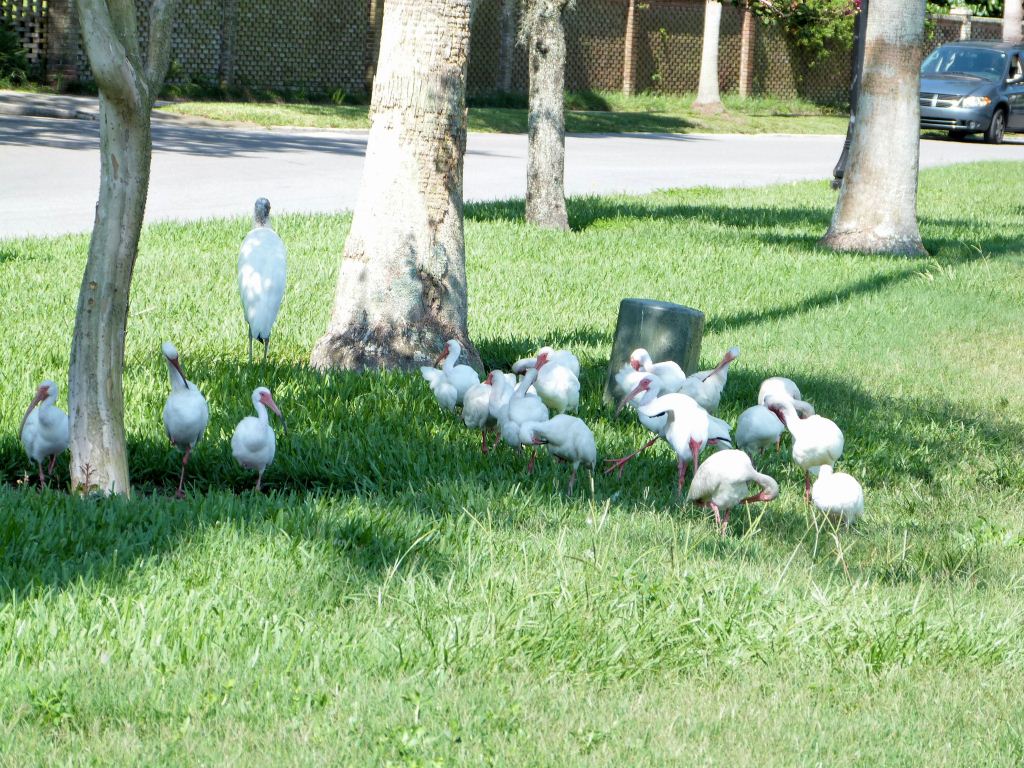
Ibises and Wood Stork

The White Ibises, about 40 of them, greeted us. They were looking for a handout, but we were just there to take a few pictures. So they walked back off. Some of the birds seen were the Mallards, Common Gallinules, Royal Terns, Ring-billed Gulls, Double-crested Cormorants (way out on the lake), Anhingas, Muscovy Ducks, Tricolored and Great Blue Herons, Red-winged Blackbirds and Boat-tailed Grackles. A flock of about 200 or more Fish Crows flew over, making their calls as they flew by.

Palm Warbler (Setophaga palmarum) yellow by Lee

Palm Warbler (Setophaga palmarum) yellow by Lee

The hardest part was trying to get a photo of the numerous Warblers that were flitting around the trees. They kept moving so much, I couldn’t get a decent shot. I did ID a Palm Warbler because it was standing on the dock. Also, some Yellow-rumped Warblers, because their yellow rumps showed up. Not sure if they are one of the split ones like a Magnolia or not.

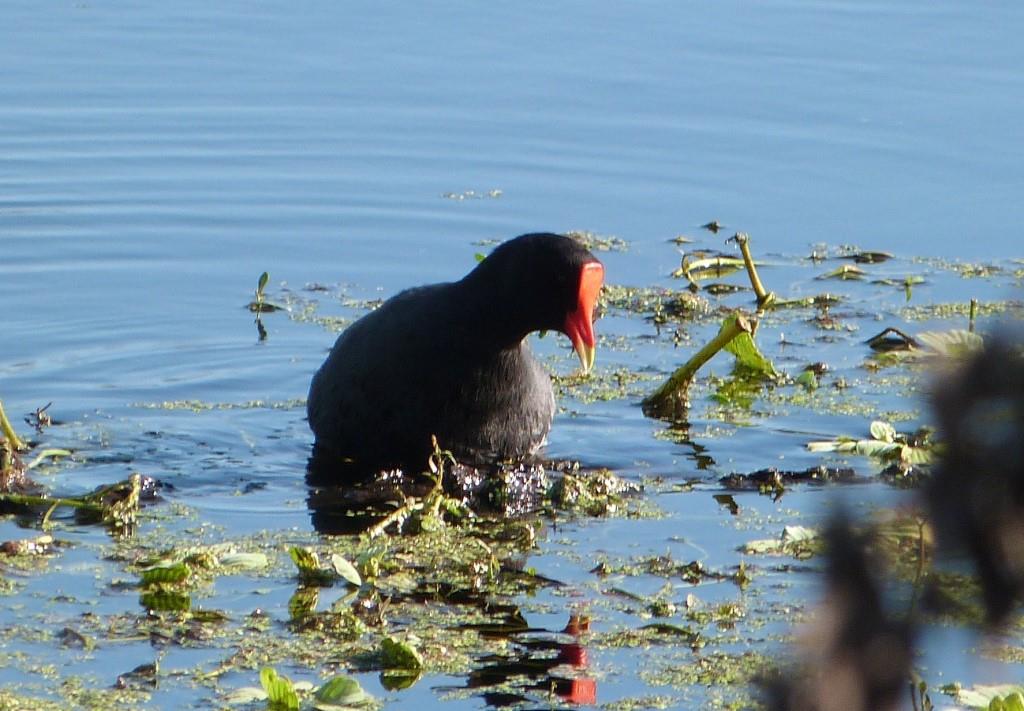
Common Gallinule (Gallinula galeata) by Lee at Circle B

Common Gallinule (Gallinula galeata) by Lee at Circle B

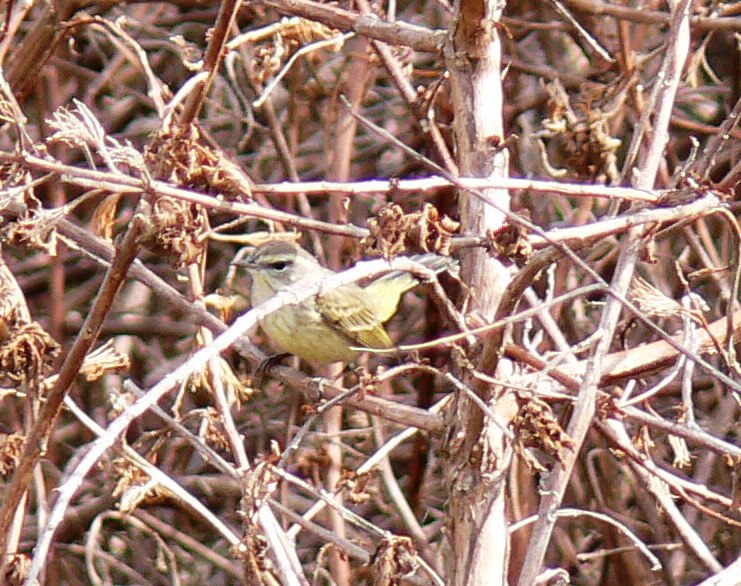
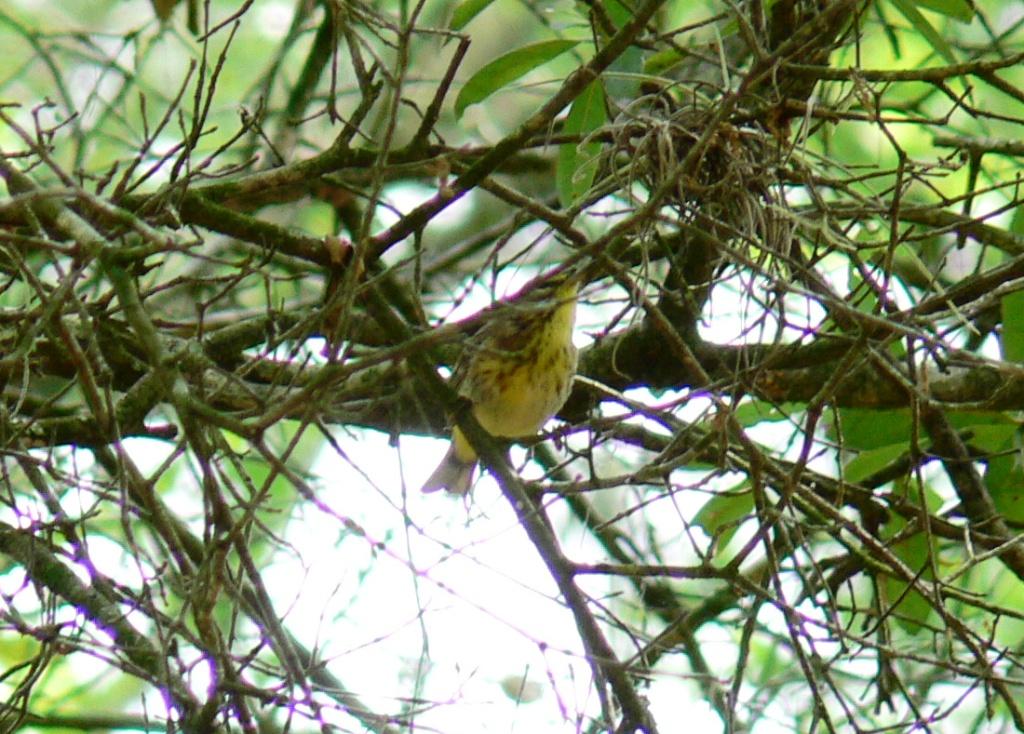
Dan got a decent photo of a Yellow-throated Warbler and I have one that is yellow, but not sure what it is. So, it is right here. Maybe someone knows for sure and will leave a comment. We get most of our Warblers down here in the winter and I really do not know that many of them. (Update: It is a Pine Warbler thanks to a reader.) It is easier to photograph the big birds like Herons, Ibises, Egrets, Anhingas and Cormorants which we see often.

Unknown Warbler by Lee

Unknown Warbler by Lee

We also found a snake sunning itself. Dan got up close to get its picture, but I stayed back. It never moved the whole time we were watching it. We were down in the mid-30’s (F) last night, so it may not have been able to scurry away.

Not a bad birdwatching adventure for about 30 minutes worth of time. I just enjoy seeing the Lord’s neat birds out and about doing their thing.

You are worthy, O Lord, To receive glory and honor and power; For You created all things, And by Your will they exist and were created. (Revelation 4:11 NKJV)

*

This slideshow requires JavaScript.

*** My original photos were hacked. These are not the ones used originally. ***
*

Birdwatching Trips

Lake Hollingsworth Birdwatching Trips

*

Family Pages Done – IOC 4.1

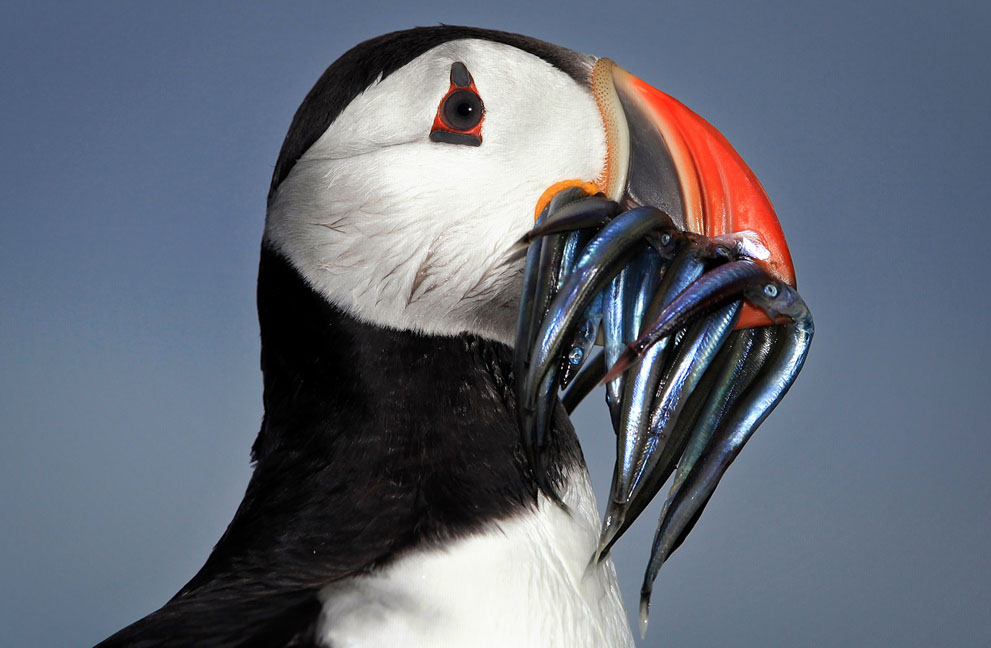
Puffin with Sand Eels

Puffin with Sand Eels

All 237 Family pages are updated to the new I.O.C. 4.1 Version. I am still kicking up dust and now preparing the Alphabetical Indexes.

Stay Tuned! Thanks for the encouraging Likes and Comments.

And further, my son, be admonished by these. Of making many books there is no end, and much study is wearisome to the flesh. (Ecclesiastes 12:12 NKJV)

In the mean time, a friend sent me this article and I love the photo of the Puffin.

http://www.theatlantic.com/infocus/2014/01/a-trip-to-the-farne-islands/100658/

There are some great photos of the Farne Islands. It is from The Atlantic.

Birds of the World (When you see that page show 4.1 Version, you’ll know I am finished.)

*

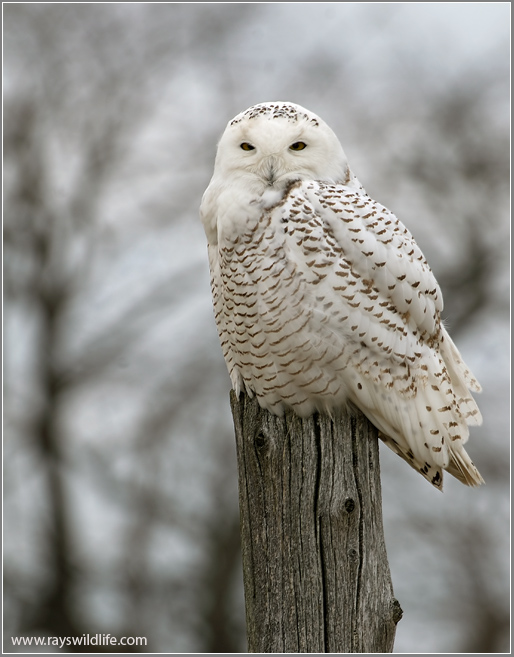
Birds of the Bible – Snowy Owl in Florida

Snowy Owl (Bubo scandiacus) by Raymond Barlow

Snowy Owl (Bubo scandiacus) by Raymond Barlow (Not the one being seen)

the ostrich, the short-eared owl, the sea gull, and the hawk after its kind; the little owl, the fisher owl, and the screech owl; the white owl, the jackdaw, and the carrion vulture;
(Leviticus 11:16-18 NKJV)

And the owl, and the night hawk, and the cuckow, and the hawk after his kind, And the little owl, and the cormorant, and the great owl, (Leviticus 11:16-17 KJV)

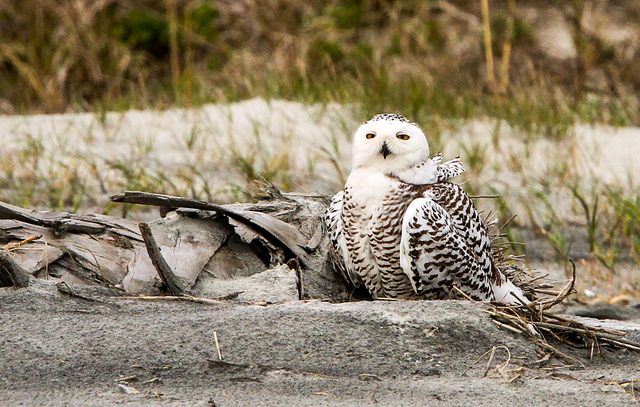
Florida birdwatchers are pleased to have an odd appearance of a Snowy Owl. She is a young owl, but she has quite a following down here. What makes this so unusual is that she is way out of the normal winter grounds for these birds. This is only the third observation of the Snowy Owl in Florida. We are known for our “Snowbirds,” but the Snowy Owl definitely qualifies as a “Snowbird.”

This bird has made a temporary home at the Little Talbot Island State Park. Not sure how the bird has any privacy. Birdwatchers from all around are making trips to Duval County, where Jacksonville is located. She was still there as of yesterday, Jan 5, 2014.

Snowy Owl (Bubo scandiacus) Female in Florida 2013-2014 ©©minds-eye

Snowy Owl (Bubo scandiacus) Female in Florida 2013-2014 ©©minds-eye

Snowy Owl (bubo scandiacus) are members of the Strigidae – Owl Family. They are the largest North American Owl. Owls are a Bird of the Bible and depending on which version you use, Owls are mentioned in 14 verses in the KJV, but a “Snowy Owl” is not mentioned, but the “great” and “white” owls are mentioned. What a lovely creation from our Lord.

This yellow-eyed, black-beaked white bird is easily recognizable. It is 52–71 cm (20–28 in) long, with a 125–150 cm (49–59 in) wingspan. Also, these birds can weigh anywhere from 1.6 to 3 kg (3.5 to 6.6 lb).[3] It is one of the largest species of owl and, in North America, is on average the heaviest owl species. The adult male is virtually pure white, but females and young birds have some dark scalloping; the young are heavily barred, and dark spotting may even predominate. Its thick plumage, heavily feathered taloned feet, and colouration render the Snowy Owl well-adapted for life north of the Arctic Circle.

Snowy Owl calls are varied, but the alarm call is a barking, almost quacking krek-krek; the female also has a softer mewling pyee-pyee or prek-prek. The song is a deep repeated gahw. They may also clap their beak in response to threats or annoyances. While called clapping, it is believed this sound may actually be a clicking of the tongue, not the beak.

This powerful bird relies primarily on lemmings and other small rodents for food during the breeding season, but at times of low prey density, or during the ptarmigan nesting period, they may switch to favoring juvenile ptarmigan. They are opportunistic hunters and prey species may vary considerably, especially in winter. They feed on a wide variety of small mammals such as meadow voles and deer mice, but will take advantage of larger prey, frequently following traplines to find food. Some of the larger mammal prey includes hares, muskrats, marmots, squirrels, rabbits, raccoons, prairie dogs, rats, moles, smaller birds, entrapped furbearers. Birds preyed upon include ptarmigan, other ducks, geese, shorebirds, pheasants, grouse, coots, grebes, gulls, songbirds, and even other raptors, including other owl species. Most of the owls’ hunting is done in the “sit and wait” style; prey may be captured on the ground or in the air, or fish may be snatched off the surface of bodies of water using their sharp talons. Each bird must capture roughly 7 to 12 mice per day to meet its food requirement and can eat more than 1,600 lemmings per year.

Snowy Owls, like many other birds, swallow their small prey whole. Strong stomach juices digest the flesh, while the indigestible bones, teeth, fur, and feathers are compacted into oval pellets that the bird regurgitates 18 to 24 hours after feeding. Regurgitation often takes place at regular perches, where dozens of pellets may be found. Biologists frequently examine these pellets to determine the quantity and types of prey the birds have eaten. When large prey are eaten in small pieces, pellets will not be produced. (Wikipedia)

Here are some of the links to articles:

*

You’re the King(‘s) Bird

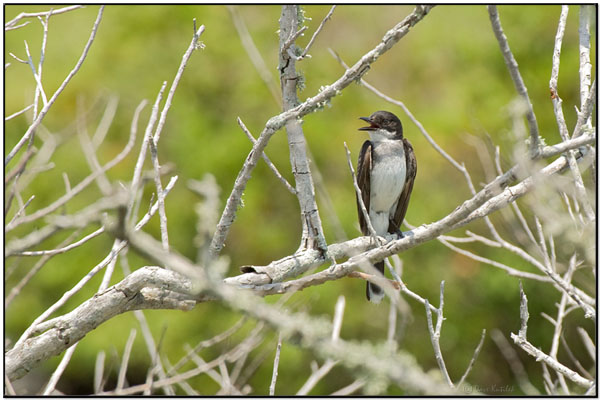
Eastern Kingbird (Tyrannus tyrannus) by Margaret Sloan

Eastern Kingbird (Tyrannus tyrannus) by Margaret Sloan

You’re the King(‘s) Bird ~ by a j mithra

With dark gray upper parts and a neat white tip to the tail, the Eastern Kingbird looks like it’s wearing a business suit.

And this big-headed, broad-shouldered bird does mean business—just watch one harassing crows, Red-tailed Hawks, Great Blue Herons, and other birds that pass over its territory.

Eastern Kingbirds often perch on wires in open areas and either sally out for flying insects or flutter slowly over the tops of grasses.

They spend winters in South American forests, where they eat mainly fruit.

Kingbirds are “passerines,” a taxonomic group commonly referred to as perching birds or songbirds. But kingbirds and other flycatchers are in a different subgroup from true songbirds, and they don’t have nearly as complex voices. Rather than learning their calls they probably perform them innately. The young begin to give adult calls at about two weeks of age.

God created us to worship Him after He threw satan.

This people have I formed for myself; they shall shew forth my praise.” Isaiah 43:21
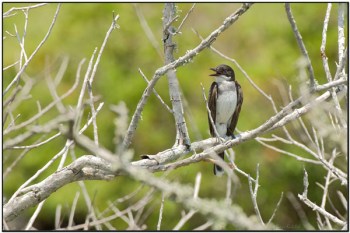
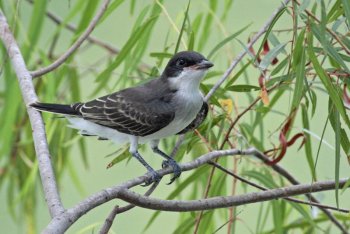
Eastern Kingbird (Tyrannus tyrannus) by Daves BirdingPix

Eastern Kingbird (Tyrannus tyrannus) by Daves BirdingPix

Like these birds, worship in our lives should be innate.

  • But, what are we doing in our lives?

We seem to have preset, pre-timed and pre-modeled our spiritual lives in tune with traditional church practices. Come Sunday, we celebrate and worship like as if that would be the last day of our lives. What about week days? Week days seem to be weak days with no personal worship. Corporate worship is fine, but, if personal worship is missing in our lives, is it possible to survive the spiritual warfare against satan. After all, it’s the worship that breaks the hell loose isn’t it?

  • Did not Joshua and his men bring down the walls of Jericho through their worship?”
  • The worship of King Josiah’s choir brought them victory over their enemies isn’t it?
  • Peter and Silas worshipped and their worship broke their chains?

How many times have we read them all, but, do we practice them in our lives?
May be we think that these instances tell us about the power of corporate worship!

Worship the Lord with gladness; come before him with joyful songs. Psalm 100:2

If only we had set our lives based on the above verse, our lives would be as triumphant as King David isn’t it? That is the reason why God calls David as a man after His own heart!

And when he had removed him, he raised up unto them David to be their king; to whom also he gave testimony and said, I have found David the son of Jesse, a man after mine own heart, which shall fulfil all my will. Acts 13:22

The Bible calls us as the Royal priesthood. The price to be paid to be called so is worship.

  • David worshipped at all times and God turned him into a king.

I will bless the Lord at all times: his praise shall continually be in my mouth. Psalm 34:1

  • Are we worthy to be called the Royal priesthood?
King's Crown ©©British Columbia Field Ornithologists

King’s Crown ©©British Columbia Field Ornithologists

It’s not called a kingbird for nothing. The Eastern Kingbird has a crown of yellow, orange, or red feathers on its head, but the crown is usually concealed.

We as children of the King of kings are not called the royal priesthood for nothing. That doesn’t mean that we are born with crowns over our heads, but, God is waiting
for us to finish our race to get our crown. We need to cross check our lives with that of the word of God to find out which crown we deserve to get at the end of the race.

Here are a few crowns waiting for us.

The Incorruptible Crown:

And every man that striveth for the mastery is temperate in all things. Now they do it to obtain a corruptible crown; but we an incorruptible. I Corinthians 9:25

The crown of rejoicing:

“For what is our hope, or joy, or crown of rejoicing? Are not even ye in the presence of our Lord Jesus Christ at his coming?” 1 Thessalonians 2:19

The crown of righteousness:

Henceforth there is laid up for me a crown of righteousness, which the Lord, the righteous judge, shall give me at that day: and not to me only, but unto all them also that love his appearing. 2 Timothy 4:8

The crown of glory:

And when the chief Shepherd shall appear, ye shall receive a crown of glory that fadeth not away. 1 Peter 5:4

The crown of life :

Do not fear any of those things which you are about to suffer. Indeed, the devil is about to throw some of you into prison, that you may be tested, and you will have tribulation ten days. Be faithful until death, and I will give you the crown of life” (Revelation 2:10)

Above all God calls us as His crown. What privilege it is for sinners like me to be called as the crown that the Creator Himself holds in His hands!

Thou shalt also be a crown of glory in the hand of the LORD, and a royal diadem in the hand of thy God. Isaiah 62:3

When they encounter a potential predator the kingbird may simultaneously raise its bright crown patch,stretch its beak wide open to reveal a red gape, and dive-bomb the intruder.

What do we do when we encounter satan’s plans in our lives?

  • Raise our crown?
  • Dive-bomb?

Our God has given us double barreled ammunition to thwart and nullify satan’s plans. Be still and worship the King and He shall sent His heavenly army to raise a banner for us. For, He is Jehovah Nissi.

So shall they fear the name of the LORD from the west, and his glory from the rising of the sun. When the enemy shall come in like a flood, the spirit of the LORD shall lift up a standard against him. Isaiah 59:19

Yours in YESHUA,
a j mithra


Lee’s Addition:

Thanks A J. Glad you are finally getting better and able to produce another great article for us. Our prayers are with you.

The Eastern Kingbird, featured in this article is part of the Tyrannidae – Tyrant Flycatchers Family. There are 11 Kingbirds in the family. They belong to flycatchers

Snowy-throated Kingbird (Tyrannus niveigularis)
White-throated Kingbird (Tyrannus albogularis)
Tropical Kingbird (Tyrannus melancholicus)
Couch’s Kingbird (Tyrannus couchii)
Cassin’s Kingbird (Tyrannus vociferans)
Thick-billed Kingbird (Tyrannus crassirostris)
Western Kingbird (Tyrannus verticalis)
Scissor-tailed Flycatcher (Tyrannus forficatus)
Fork-tailed Flycatcher (Tyrannus savana)
Eastern Kingbird (Tyrannus tyrannus)
Grey Kingbird (Tyrannus dominicensis)
Giant Kingbird (Tyrannus cubensis)
Loggerhead Kingbird (Tyrannus caudifasciatus)

As the name implies, a great majority of tyrant-flycatchers are entirely insectivorous (though do not necessarily specialized in flies). However, food can vary greatly and some (like the large Great Kiskadee) will eat fruit or small vertebrates (e.g. small frogs). In North America, most species are associated with a “sallying” feeding style, where they fly up to catch an insect directly from their perch and then immediately return to the same perch. Most tropical species however do not feed in this fashion and several types prefer to glean insects from leaves and barks. Tropical species are sometimes found in mixed-species foraging flocks, where various types of passerines and other smallish birds are found feeding in proximity. (Wikipedia)

*

*

The First Birds of 2014

American White Ibis (Eudocimus albus) 1st Birds of 2014 by Lee

American White Ibis (Eudocimus albus) 1st Birds of 2014 by Lee

About 8:30 am I was sitting at our table and caught a glimpse of some white birds landing in the front yard. Looking out, I saw 22 American White Ibises. Yeah! My first birds sighted in 2014. I went back in and after a while decided to get my camera. Three had left, but 19 were left. Here are some photos and a video I made of them.

Oh, sing to the LORD a new song! Sing to the LORD, all the earth. (Psalms 96:1 NKJV)

For the Athenians, all of them, and the foreign residents and visitors among them spent all their leisure time in nothing except telling or hearing something newer than the last– (Acts 17:21 AMP)

American White Ibis (Eudocimus albus) 1st Birds of 2014 by Lee

American White Ibis (Eudocimus albus) 1st Birds of 2014 by Lee

The photos are blurred around their heads, but when you watch the video, you will see why. Their heads are bobbing constantly as they probe for goodies out of my neighbor’s and my yard. They had originally landed in our yard on the right. By the time I got the camera, they had worked their way next door. I figured that I would do good to get a photo. But! They turned around and worked their way back to our yard.

As you can tell it was drab and drizzling rain. It was also cool and I was standing out in my bare feet and my pajamas. What we won’t do to get that 1st sighting and photo of a bird in a new year.

Boat-tailed Grackle (Quiscalus major) 2nd Bird of 2014 by Lee

Boat-tailed Grackle (Quiscalus major) 2nd Bird of 2014 by Lee

I kept hearing a Boat-tailed Grackle in the tree, so decided to get his photo. So he was #2 and as I looked through the lens, there was #3 behind him. That is an Eurasian Collared Dove. Not to be left out, #4 landed on that tree. A male Red-bellied Woodpecker.

Eurasian Collared Dove (Streptopelia decaocto) Red-bellied Woodpecker (Melanerpes carolinus) 3rd and 4th Birds of 2014 by Lee

Eurasian Collared Dove and Red-bellied Woodpecker 3rd and 4th Birds of 2014 by Lee

There you have my first birds of 2014
1. American White Ibis (Eudocimus albus)
2. Boat-tailed Grackle (Quiscalus major)
3. Eurasian Collared Dove (Streptopelia decaocto)
4. Red-bellied Woodpecker (Melanerpes carolinus)

How about you? 

Also, if there are any photographers that would like to share photos with the blog on a regular basis, contact me at Lee@Leesbird.com. I am always eager to have photos available for showing the birds as we write about them. A link and credit are given to you.

This slideshow requires JavaScript.

*

*

2014′s First Bird Seen

*

2014’s First Bird Seen

Sandhill Crane (Grus canadensis) Lake June-in-Winter S Pk

Sandhill Crane (Grus canadensis) Lake June-in-Winter S Pk

Happy New Year!

What was the first bird you saw in 2014? I am taking a survey and will publish the results in a few days.

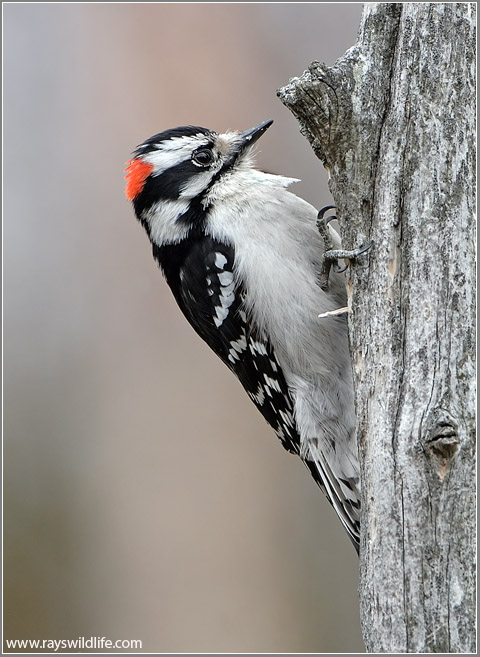
My last birds seen in 2013 were 10 Sandhill Cranes and then just before dark I saw a Downy Woodpecker. It is still 2013 as this is being posted. I will add my first bird in the morning.

Downy Woodpecker (Picoides pubescens) by Raymond Barlow

Downy Woodpecker (Picoides pubescens) by Raymond Barlow

*

*
ON THE first day of the seventh month [on New Year’s Day of the civil year], you shall have a holy [summoned] assembly; you shall do no servile work. It is a day of blowing of trumpets for you [everyone blowing who wishes, proclaiming that the glad New Year has come and that the great Day of Atonement and the Feast of Tabernacles are now approaching]. (Numbers 29:1 AMP)

*
You might want to leave a comment just in case the survey doesn’t work. It’s a new attempt on my part. Leave bird and country.

*