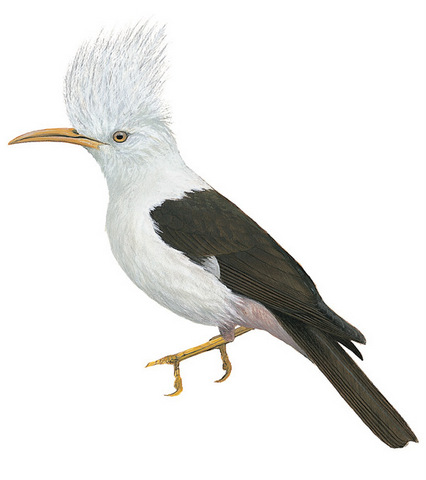
Heaven’s New Jerusalem and Birds – Beryl II

(This is a repost of Heaven’s New Jerusalem and Birds – Beryl. The series originally appeared in 2019. (With a little dusting and updating they will all be reposted in the coming days. Stay tuned.)
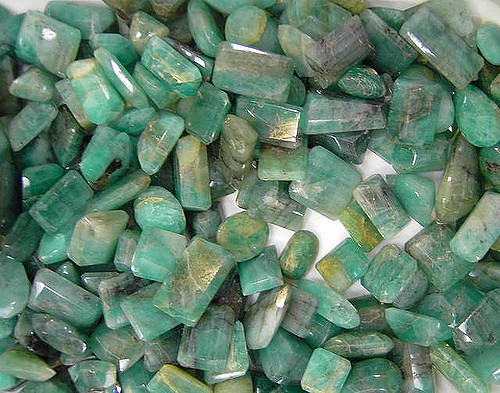
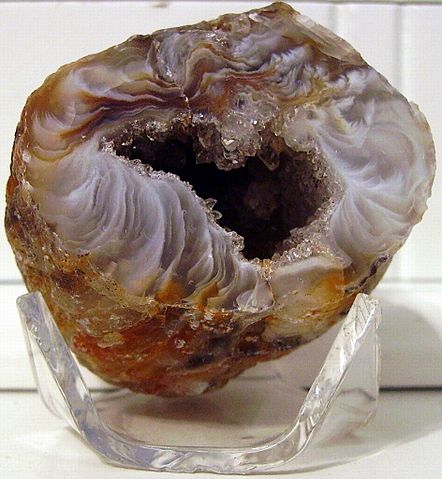
Rough Cut Beryl ©Flickr Amanda

“The foundations of the wall of the city were adorned with all kinds of precious stones: the first foundation was jasper, …. the fifth sardonyx, the sixth sardius, the seventh chrysolite, the eighth beryl, the ninth topaz, the tenth chrysoprase, the eleventh jacinth, and the twelfth amethyst.” (Revelation 21:19a-20 NKJV)

Three Colors of Beryl ©WikiC

BER’YL,n. [L.beryllus; Eng.brilliant.]
A mineral, considered by Cleaveland as a subspecies of Emerald. Its prevailing color is green of various shades,but always pale. Its crystals are usually longer and larger than those of the precious emerald, and its structure more distinctly foliated. It is harder than the apatite,with which it has been confounded; harder and less heavy than the pycnite. The best beryls are found in Brazil, in Siberia and Ceylon, and in Dauria, on the frontiers of China. They are found in many parts of the United States. [Webster Dictionary 1828]
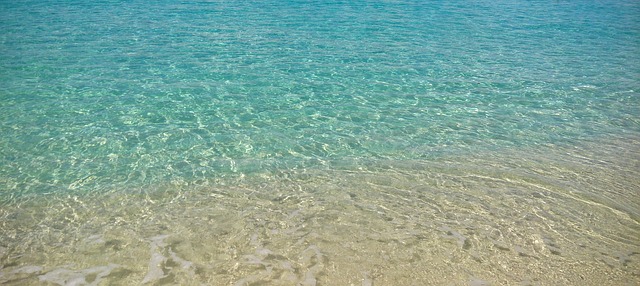
Water Summer Beach Sea Blue/green Ocean Nature ©Max Pixel

Beryl – berullos (G969), “beryl,” is a precious stone of a sea-green color, Rev_21:20 (cf. Exo_28:20). [Vine’s]
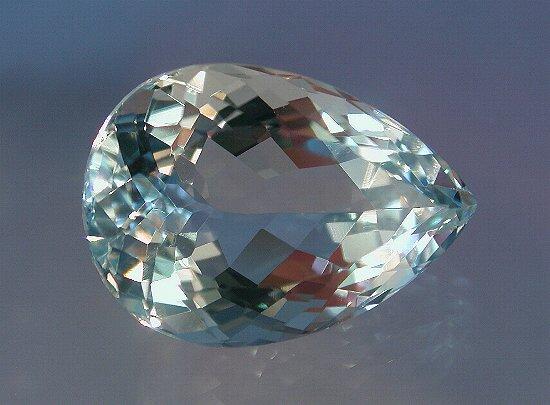
Faceted aquamarine ©WikiC

Beryl is a mineral of great hardness, and, when transparent, of much beauty. …probably the mineral now called beryl, which is identical with the emerald except in color, being a light green or bluish-green. [Smith’s Bible Dictionary]

Beryl ©WikiC

beryl — of a sea-green color. [Jamieson-Fausset-Brown]

I believe that most of these references are in agreement that the color is a light green, leaning toward “sea-green.” So, let’s see what birds we can find of that sort of color.

There are actually two birds with Beryl in their first names:

The Berylline Hummingbird (Amazilia beryllina),
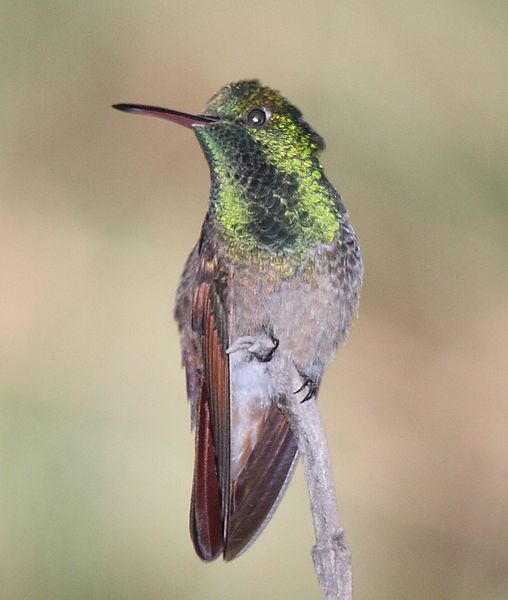
Berylline Hummingbird (Amazilia beryllina) ©WikiC
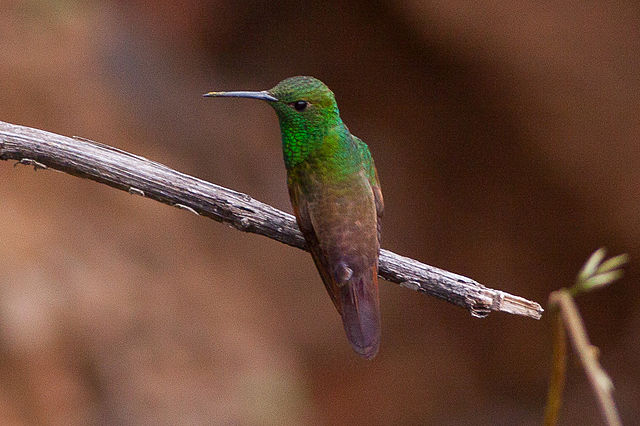
Berylline Hummingbird (Amazilia beryllina) ©WikiC

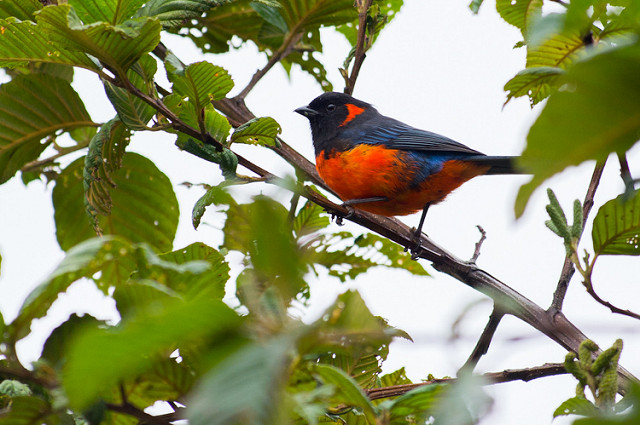
And the Beryl-spangled Tanager.
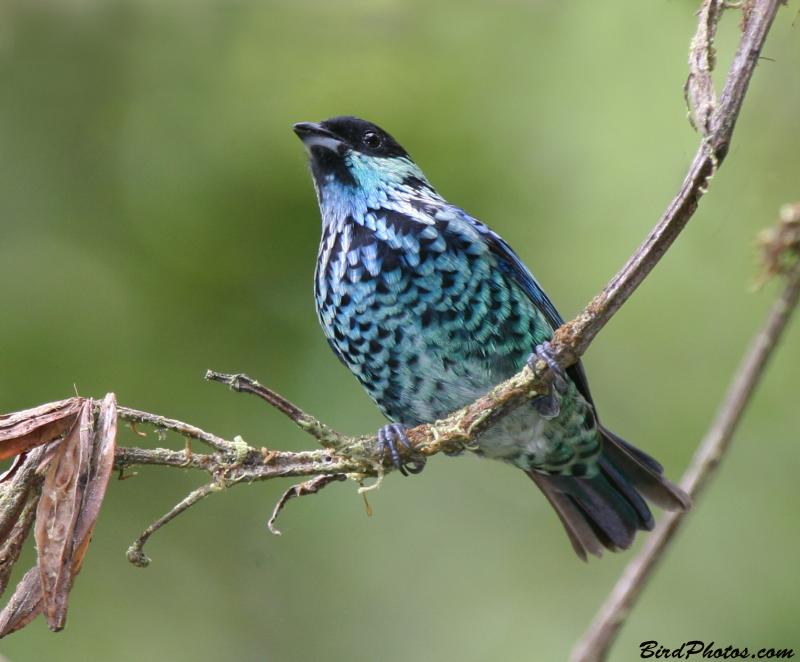
Beryl-spangled Tanager (Tangara nigroviridis cyanescens) ©BirdPhotos.com
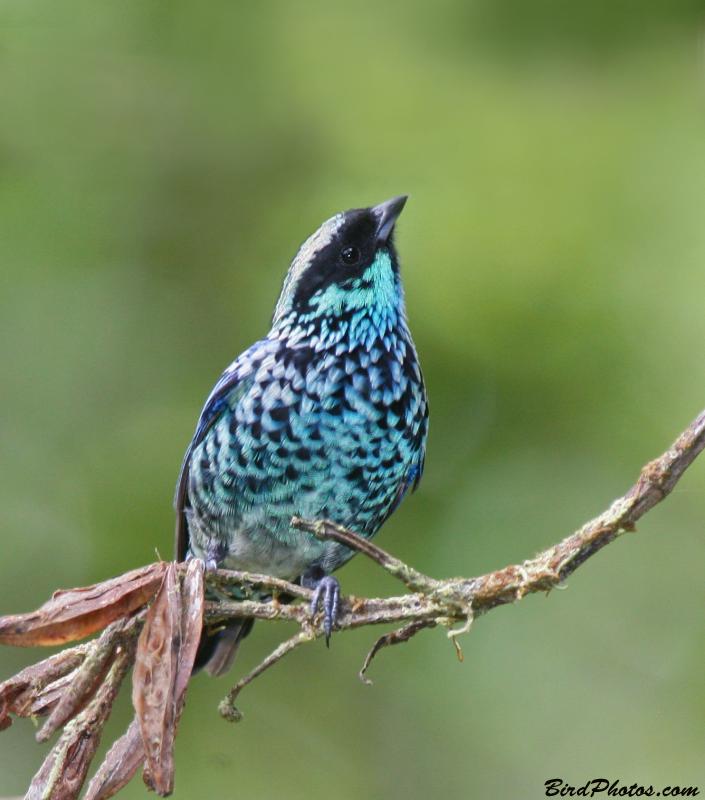
Beryl-spangled Tanager (Tangara nigroviridis cyanescens) ©BirdPhotos.com

Or another shot from below the bird:
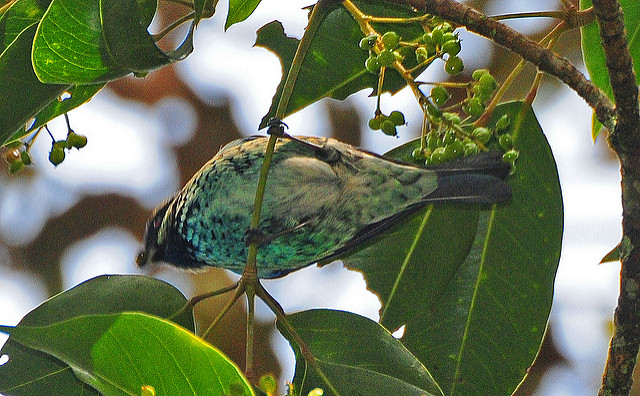
Beryl-spangled Tanager (Tangara nigroviridis) ©Flickr Oldenettel

Also, there is one bird that has beryl… in its scientific name. Now this one matches what I take a sea-green. Do you agree?

Sri Lanka Hanging Parrot (Loriculus beryllinus) ©WikiC

Articles in this Series so far:

Wordless Birds – With Hummingbirds


Heaven’s New Jerusalem and Birds – Sardius II

(This is a repost of Heaven’s New Jerusalem and Birds – Sardius. The series originally appeared in 2019. (With a little dusting and updating they will all be reposted in the coming days. Stay tuned.)

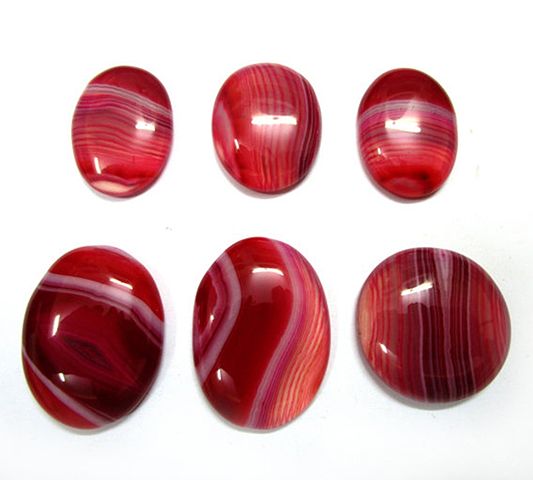
Sardius Stone ©Pinterest

“The foundations of the wall of the city were adorned with all kinds of precious stones: the first foundation was jasper, …. the fifth sardonyx, the sixth sardius, the seventh chrysolite, the eighth beryl, the ninth topaz, the tenth chrysoprase, the eleventh jacinth, and the twelfth amethyst.” (Revelation 21:19a-20 NKJV)

Cornelian Stones ©Etsy

What color is this Sardius stone, the sixth foundation layer for the New Jerusalem?

Sardius (n.) A precious stone, probably a carnelian, one of which was set in Aaron’s breastplate. [Webster Dict. 113

“The sixth, sardius; the same with the sardine stone, Rev_4:3 of a blood colour, and what is commonly called a cornelian: it is found in Sardinia, from whence it has its name, and in Bohemia and Silesia, though those of Babylon are the best. This was Reuben’s stone.” [John Gill’s Exposition]

Two polished pebbles of carnelian_sard ©WikiC

Sardius – Sardius. (red). (Hebrew, odem). The stone which occupied the first place in the first row of the high priest’s breastplate. Exo_28:27. The sard, which is probably the stone denoted by odem, is a superior variety of agate, sometimes called camelian, and has long been a favorite stone for the engraver’s art. Sardis differ in color: there is a bright-red variety, and, perhaps, the Hebrew, odem, from a root means “to be red,” points to this kind.” [Smith’s Bible Dictionary]

“6. Sardius (Gr.: sardios)—its color is fiery red. Pliny says that it is the red stone from Sardis. Swete says that it is fiery red.” [J. Vernon McGee]

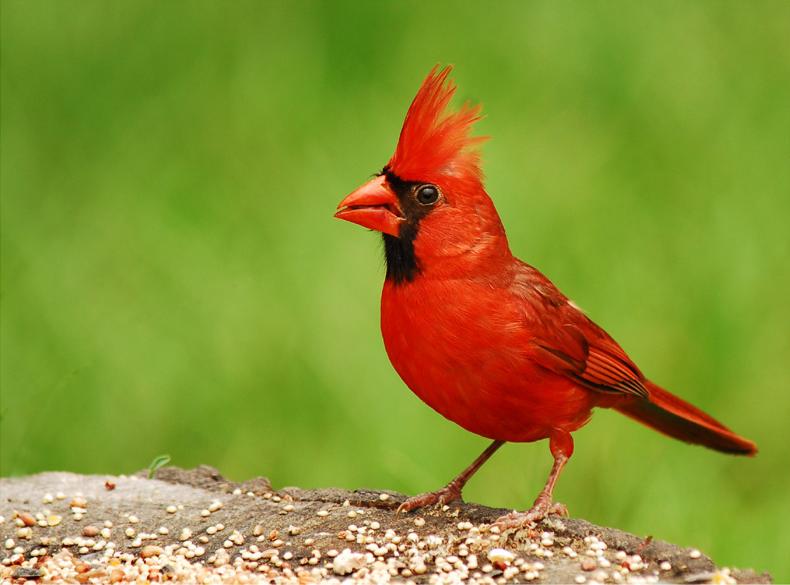
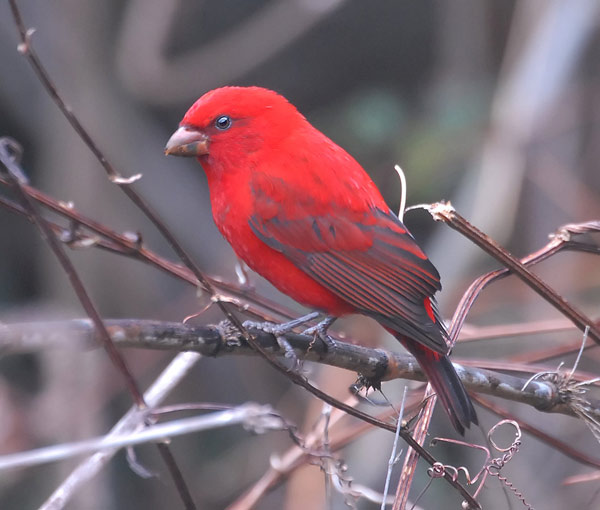
Those four Commentary and Dictionary definitions are all much saying the same; Red, Blood Red, or Fiery Red.  Before I start finding photos of birds, many are already on my mind. Especially the Northern Cardinal:

Northern Cardinal (Cardinalis cardinalis) - WikiC

Northern Cardinal (Cardinalis cardinalis) ©WikiC

This should be easy finding photos to match the color of this sixth foundation. Of course, what we’ll see in heaven, will exceed these beyond anything we can imagine!!!


10 Stunning Red Colored Birds

Articles in this Series so far:

What will you do with Jesus?

Heaven’s New Jerusalem and Birds – Sardonyx II

This is a repost of Heaven’s New Jerusalem and Birds – Sardonyx. The series originally appeared in 2019. (With a little dusting and updating they will all be reposted in the coming days. Stay tuned.)

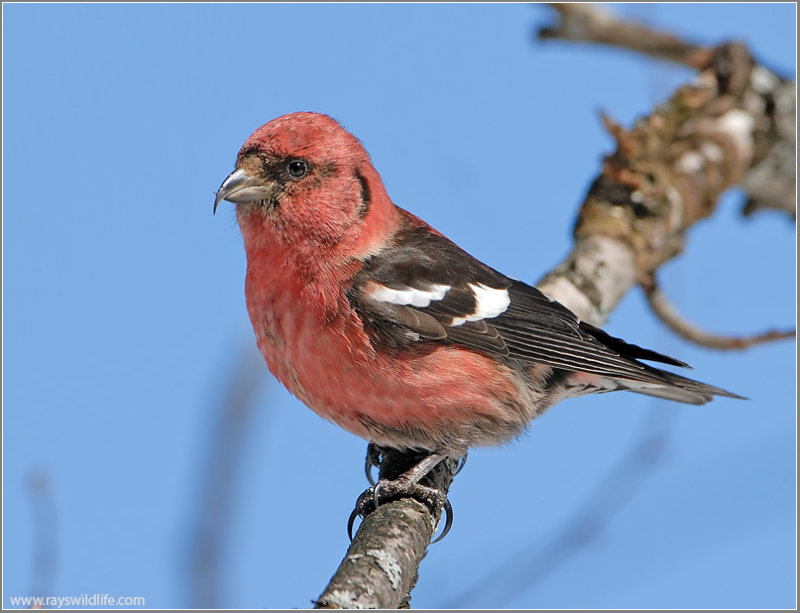
Two-barred Crossbill (Loxia leucoptera)(White-winged) by Raymond Barlow

Two-barred Crossbill (Loxia leucoptera)(White-winged) by Raymond Barlow

“The foundations of the wall of the city were adorned with all kinds of precious stones: the first foundation was jasper, …. the fifth sardonyx, the sixth sardius, the seventh chrysolite, the eighth beryl, the ninth topaz, the tenth chrysoprase, the eleventh jacinth, and the twelfth amethyst.” (Revelation 21:19a-20 NKJV)

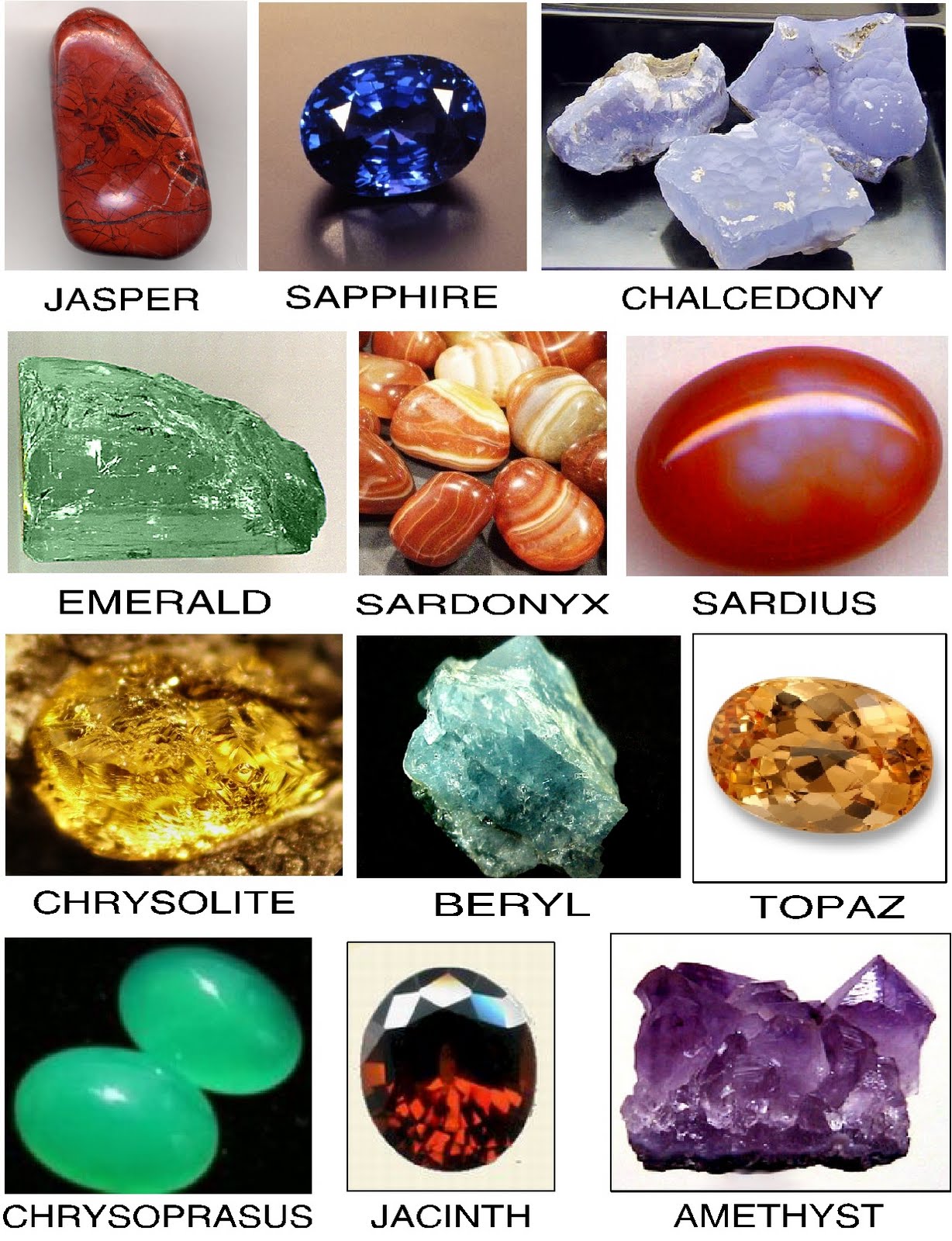
While searching for material on these foundation stones, this article caught my attention. It appears that Cindy had the same questions as we are trying to figure out. I believe her blog is inactive, but this is still posted. Precious Jewels by Cindy. She had this chart with 12 stones of the foundations.

12 Jewels Foundation New Jerusalem ©Sundayswithcindy

“Pretty impressive, isn’t it? Actually, it will exceed far beyond what our human minds can even conceive when we try to imagine the beauty and magnificence of that holy city. I Corinthians 2:9 tells us, “But as it is written, Eye hath not seen, nor ear heard, neither have entered into the heart of man, the things which God hath prepared for them that love him.”
*
My curiosity was up, though, when it came to those precious gemstones. What were their colors? How would they look all sandwiched together? I knew I could not begin to imagine the scope of its beauty, but at least I wanted to get some glimpse of what it might appear to be. I mean, we can try to imagine the pearly gates, and even the streets of pure gold although the Bible says the pure gold will be like transparent glass, but the foundation of all those beautifully colored jewels? Ahh—how lovely to have the world at our fingertips via the Internet! In a matter of seconds, my curiosity about the precious gemstones of the foundation was satisfied!” [Bolding added]

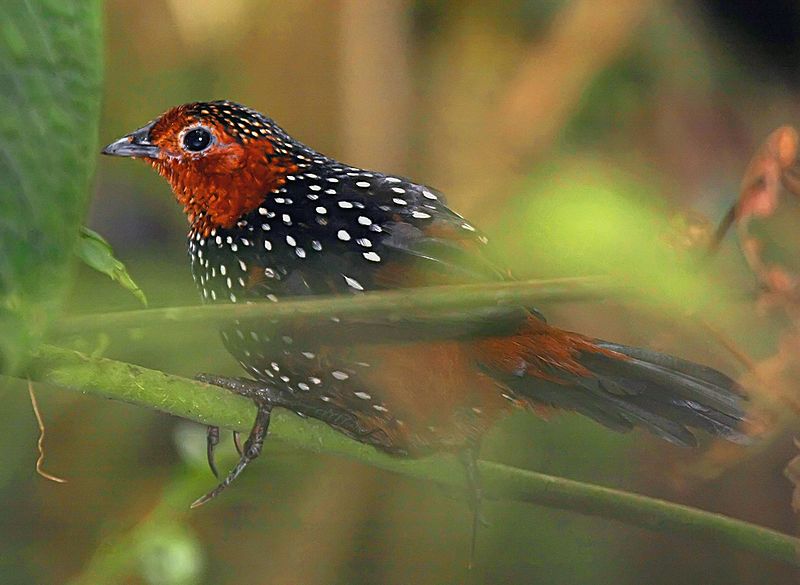
Ocellated Tapaculo (Acropternis orthonyx) ©WikiC

Through the rest of her article, she discovered what I am finding. Names of those stones are not the same today. So, if these birds aren’t a perfect match, please forgive us.
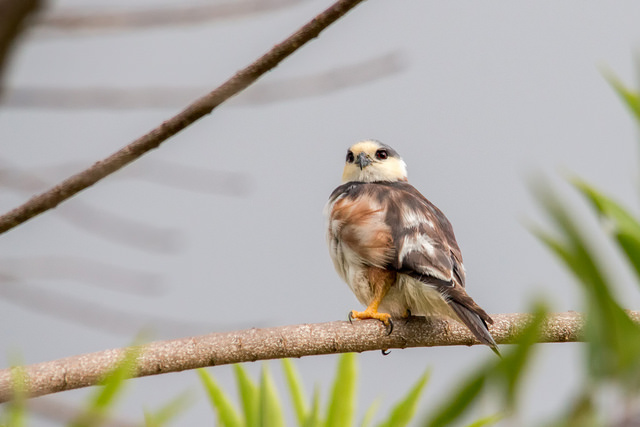
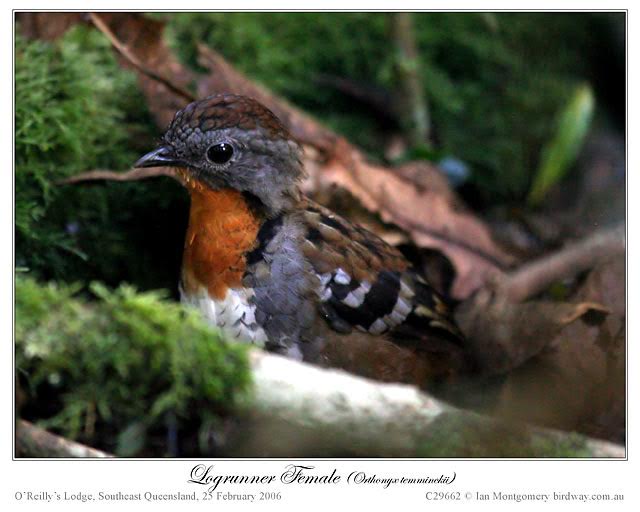
There are no birds with the name of “sardonyx” in it, but the two tones of red seems interesting enough to try to find some birds like that.  All the translations I searched have either Sardonyx or just Onyx. [There are a few birds with ONYX in their scientific name[

Pearl Kite (Gampsonyx swainsonii) ©Flickr Fernando Flores

Here are what some of the study Bibles and commentaries say:
NKJV MacArthur Study Bible – “ sardonyx. A variety of chalcedony with parallel layers of red and white”
KJ Study Bible Notes – ” sardonyx is red and white”
Jamieson-Fausset-Brown – “sardonyx — a gem having the redness of the cornelian, and the whiteness of the onyx.”
IBS – “Sardonyx – White stone with red layers.
John Gill – “The fifth, sardonyx,…. Which is partly of the sardian, and partly of the onyx stone, which resembles a man’s nail, from whence it has its name; it is reddish, bordering on white; it may be thought to answer to the onyx in the breastplate, on which was written the name of Joseph.”

Australian Logrunner (Orthonyx temminckii) by Ian

So with all of these, looks like there must be some reddish and white birds around somewhere. Let’s see what we can find:

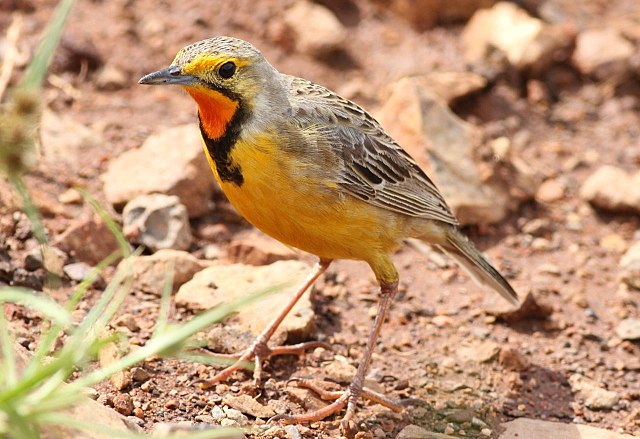
Cape Longclaw (Macronyx capensis) ©WikiC

I still haven’t found what I was hoping to find. This next bird is getting closer.

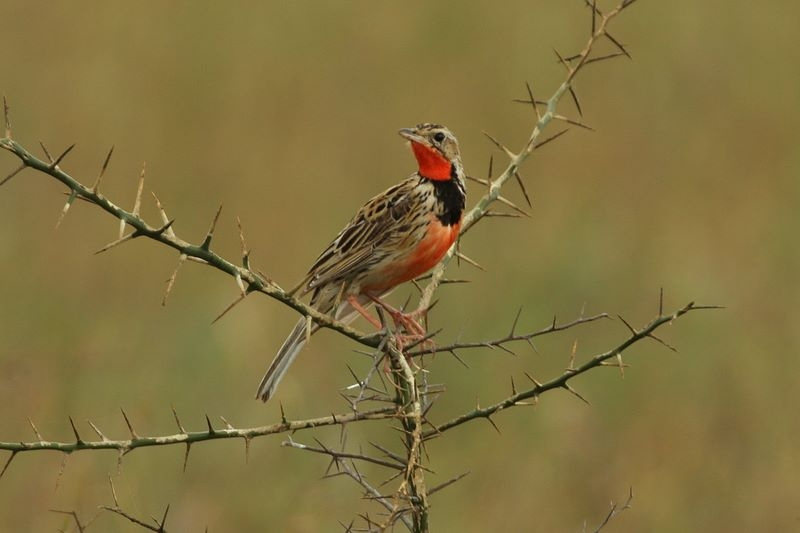
Rosy-throated Longclaw (Macronyx ameliae) ©WikiC

But this is the color of most sardonyx they show on the internet:

Red onyx – Handicraft ©WikiC

Have you seen any birds like that? Let me see what we have already shown here on the blog.

Red-throated Twinspot (Hypargos niveoguttatus) ©WikiC

None of these absolutely match our Sardonyx stone, but are they amazing Avian Wonders from their creator?

*** Articles in this Series so far:

Is There a God?

Heaven’s New Jerusalem and Birds – Colors II

[(Repost/Updated) There was/is a second blog, Birds of the Bible for Kids“. Many of these articles were shared over there, but I didn’t usually bring those over here. Why? Because it was “supposed” to be for kids and younger people. Because of time restraints or whatever reason, many times the articles do not get re-written in their terms. Those articles are in the process of transferring them here under the KID’S SECTION]

This time, I have decided to bring an article I had just posted over there here for you to enjoy. It goes along with the series on the 12 Foundational Stones.

Enjoy!

The Precious Stones and Birds posts have been introducing you to colors of the twelve, (12) foundations of the New Jerusalem, which will be our eternal home, if we have invited Christ into our hearts as Savior. [See below to find out how to do that.]

Those posts were mainly copied from our blog, Lee’s Birdwatching Adventures Plus, and may have used words and terms which were harder to understand. Starting with this article and the following, 12 Stones and Birds posts, we are going to try to explain them in easier terms.

In the article, Precious Stones and Birds – Foundation Stones, you were able to see different colors of stones that might be used. Before introducing the 12 different stones and the birds with sort of matching colors, here is an interesting explanation of colors.

Carolina rainbow spotted on Vacation 9-3-2013 by Lee

Most of us have seen a rainbow, and they are very pretty depending how bright the sun is shining through the clouds, or reflecting on the clouds. I have always enjoyed seeing rainbows and once in awhile, see a double rainbow.

Rainbow Across Yellowstone Lake ©David Grimes

“Like the appearance of a rainbow in a cloud on a rainy day, so was the appearance of the brightness all around it. This was the appearance of the likeness of the glory of the LORD. …” (Ezekiel 1:28a NKJV)

This is from a commentary about these stones: “THE STONES OF FIRE IN THE FOUNDATION
The twelve foundations of the city not only have the names of the twelve apostles, but they are twelve different precious stones. The most beautiful and costly articles known to man are precious stones. These stones express in human terms the magnificence of the city. The superlative degree of gems is used to convey something of the glory of the city to those who now “… see through a glass, darkly …” (1Cor12:11). We are going to see through it clearly someday.

A close examination of these twelve stones in the foundation reveals a polychromed paragon [multicolored example] of beauty; varied hues and tints form a galaxy of rainbow colors. The stones are enumerated as follows:

The foundations of the New Jerusalem are constructed of the flashing brilliance of rich and costly gems. On the inside is Jesus who, when He was here, was the Light of the World. There He will be the Light of the Universe. Astronauts tell us that in space the colors almost entirely are gray and black—but wait until you see the New Jerusalem. It is going to light up God’s new heavens and new earth as they have never been lighted before. I think it is going to be the most breathtaking sight that you have ever seen. … Everything is going to revolve around it, and the light will come from there. It truly will be the Jesus Christ Light and Power Company then. The light will shine out in all these brilliant and beautiful colors.

Light dispersion conceptual waves – Prism ©WikiC

Color is described to us today as dissected light. If you pass a ray of light through a prism, it is broken up into three primary colors: red, blue, and yellow. From these three primary colors come all colors and shades of colors. Light is a requirement for color. Where there is no light, there is no color. Objects of color reveal color to the eye because of their ability to absorb or to reject light rays. A red stone absorbs all the color rays except red; it rejects or throws back to the eye the red ray, which gives it the color of red.

Light dispersion of a mercury vapor lamp with a flint glass prism©WikiC

The New Jerusalem is a city of light and a city of color. God is light, and He is there. The city is described as a jasper stone as clear as crystal. All of this color will be coming out and flooding God’s universe. The jasper stone is a sphere, and the city, the New Jerusalem, is within. The light shining from within through the jasper stone, acting as a prism, would give every color and shade of color in the rainbow—colors that you and I have not even thought of yet. …. The presence of the primary colors suggests that every shade and tint is reflected from this city. A rainbow that appears after a summer shower gives only a faint impression of the beauty in the coloring of the city of light. Oh, what a glorious place this is! [J. Vernon McGee Commentary on Revelation21:19-20 – explantions and bolded added]

Rainbow Lorikeet Lowry Park Zoo 12-31-15 by Lee

Did you read what was said about WHO gives the Light? The Bible says that Jesus is the Light of the World.

“Then spake Jesus again unto them, saying, I am the light of the world: he that followeth me shall not walk in darkness, but shall have the light of life.” (John 8:12 KJV)

Jesus came to earth to provide a way for you to be able to see heaven and spend eternity [forever] with Him and live in the beautiful city where we are writing about. Almost every article here has a link at the bottom to tell how you can believe in Jesus. Please don’t miss heaven and all its beauty, plus, most important being with The Savior, the Lord Jesus Christ.

The ABC’s of the Gospel

*****

As stated above, this is a repost of this article that came from the “Kids” blog version of Lee’s Birdwatching Adventures, but at a younger reading level. Many of the post are still there.

Heaven’s New Jerusalem and Birds – Chalcedony II

This is a repost of Heaven’s New Jerusalem and Birds – Chalcedony. The series originally appeared in 2019. (With a little dusting and updating they will all be reposted in the coming days. Stay tuned.)

Chalcedony (Variety Agate) Quartz ©WikiC

“And the foundations of the wall of the city were garnished with all manner of precious stones. The first foundation was jasper; the second, sapphire; the third, a chalcedony; the fourth, an emerald;” (Revelation 21:19 KJV)

The Chalcedony stone in the foundation of the New Jerusalem is really a challenge. I have consulted the internet and my Bible programs, e-Sword and Bible Gateway. Also searched the Latin or scientific terms for names even close to “Chalcedony.” Most to no avail as far as finding birds that have chalcedony or a derivative in their names.

As you will see from the quotes below, most seem to mention white (and milky), gray (grey), blue, or a pearly color. Let me see. Out of over 10,000 birds, surely, I can find a few to share with you.

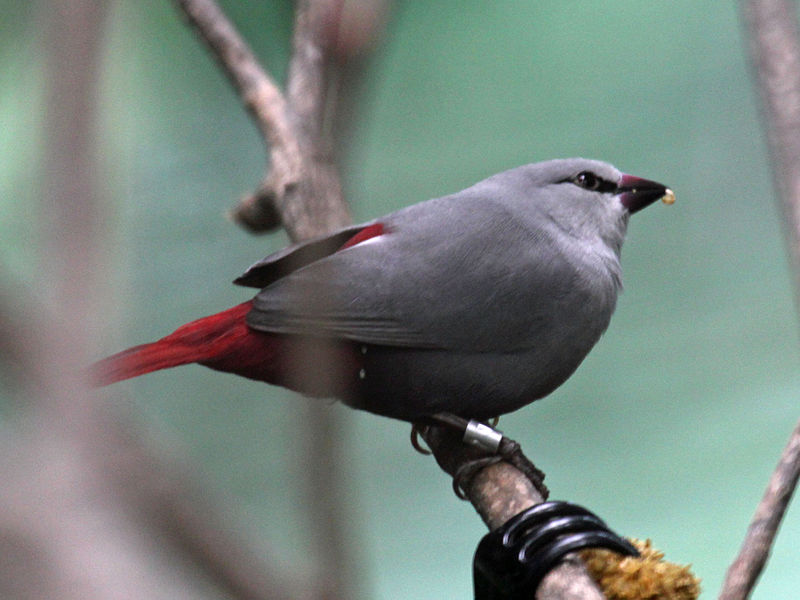
Lavender Waxbill (Estrilda caerulescens) ©WikiC

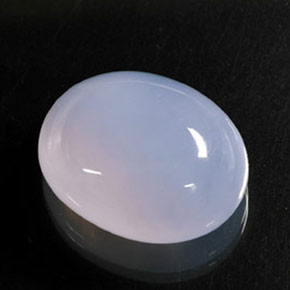
Lavendar Blue Chalcedony ©Mineral_net

THE GEMSTONE CHALCEDONY
“Chalcedony is the form of Quartz that is compact and microcrystalline. It occurs in many different forms, colors, and patterns, and many varieties have been used as gemstones since antiquity. In the gemstone trade, the term Chalcedony is often used specifically to describe the white, gray, or blue translucent type of Chalcedony, but its technical term includes all additional varieties.” [Minerals.net]

Chalcedony
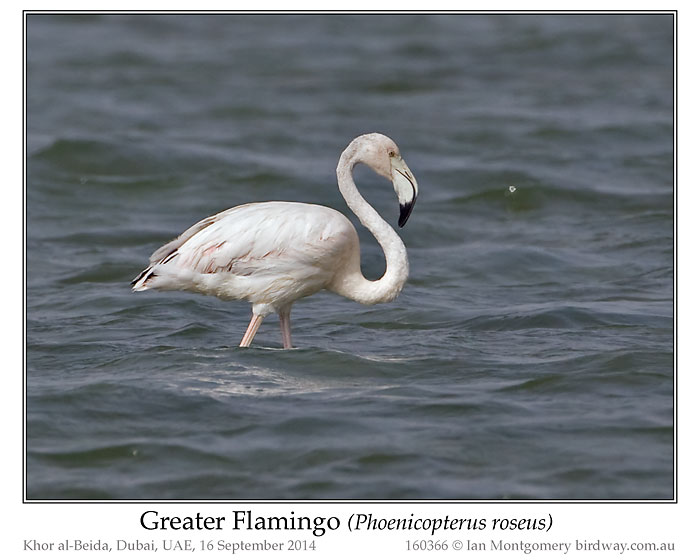
“Rev_21:19. With it the third foundation of the wall of New Jerusalem is adorned. An agate-like quartz in modern mineralogy, of pearly luster and transparent, found in the Travascus mine in Cornwall. Cups, plates, knife handles, etc. are formed of it in India. Pliny makes it resemble turquoise; others make it of a light brown. The chalcedony of Theophrastus is called from Chalcedon in ancient Thrace, and was the copper emerald obtained from the mines there.” [Fausset’s Bible Dictionary, emphasis mine]

Greater Flamingo (Phoenicopterus roseus) by Ian

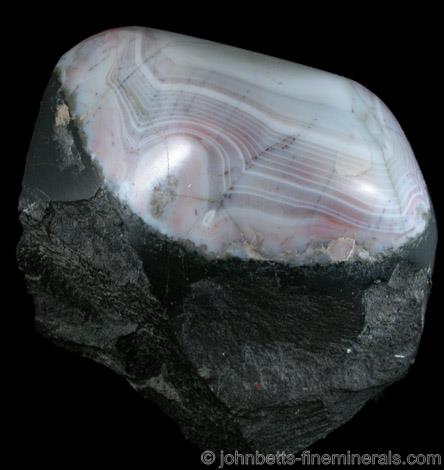
Polished Agate Portion ©Mineral.net

“Chalcedony. Chalcedony occurs only in Rev_21:19. The name is applied, in modern mineralogy, to one of the varieties of agate. It is generally translucent and exhibits a great variety of colors. So named because, it was found near the ancient Chalcedon, near Constantinople.” [Smith’s Bible Dictionary]

chalkedon (G5472), the name of a gem, including several varieties, one of which resembles a cornelian, is “supposed to denote a green silicate of copper found in the mines near Chalcedon” (Swete, on the Apocalypse), Rev_21:19.” [Vine’s]

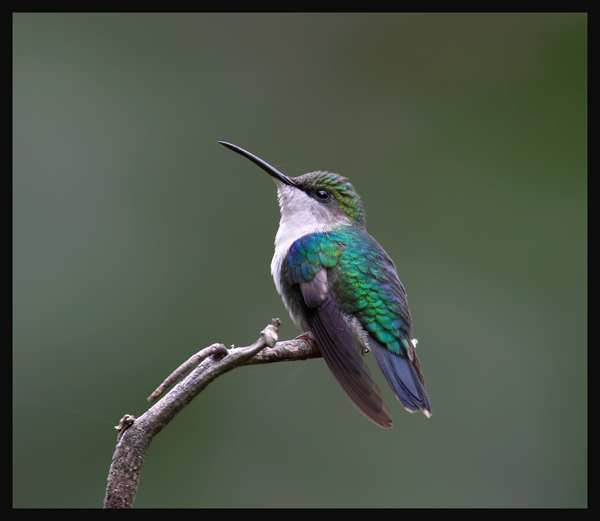
Crowned Woodnymph (Thalurania colombica) by RScanlon

Crowned Woodnymph (Thalurania colombica) by RScanlon

Chalcedony moss agate gem Mineral.net

“CHALCEDONY, n. A subspecies of quartz, a mineral called also white agate, resembling milk diluted with water, and more or less clouded or opake, with veins, circles and spots. It is used in jewelry.
The varieties of chalcedony are common chalcedony, heliotrope, chrysoprase, plasma, onyx, sard and sardonyx.” [Webster’s Dictionary 1828]

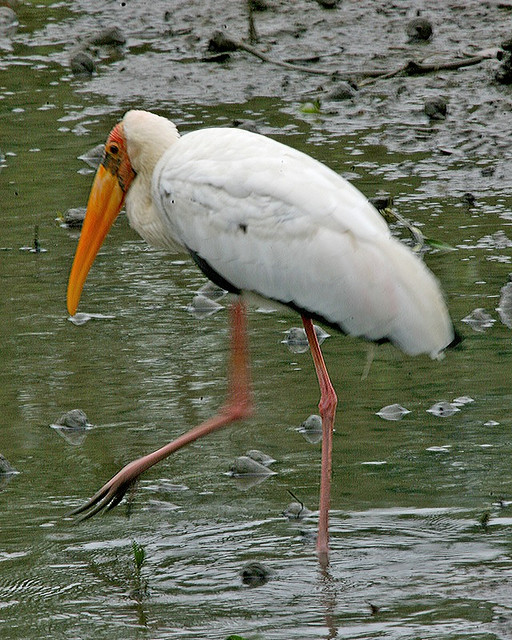
Milky Stork (Mycteria cinerea) ©©LipKee

Milky Stork (Mycteria cinerea) ©©LipKee

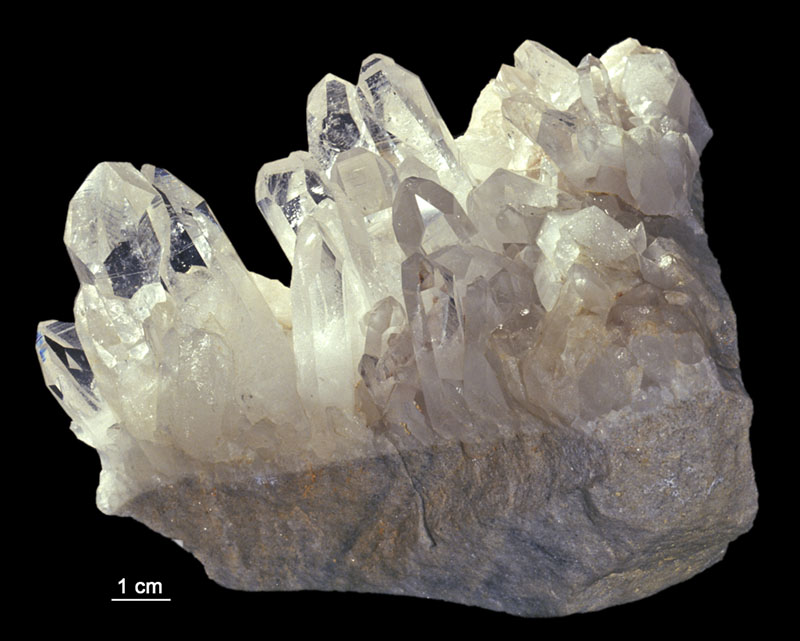
Quartz Article_Figure Milky Quartz ©IUBloomingtion

THE GEMSTONE CHALCEDONY
“Chalcedony is the form of Quartz that is compact and microcrystalline. It occurs in many different forms, colors, and patterns, and many varieties have been used as gemstones since antiquity. In the gemstone trade, the term Chalcedony is often used specifically to describe the white, gray, or blue translucent type of Chalcedony, but its technical term includes all additional varieties.” [Minerals.net]

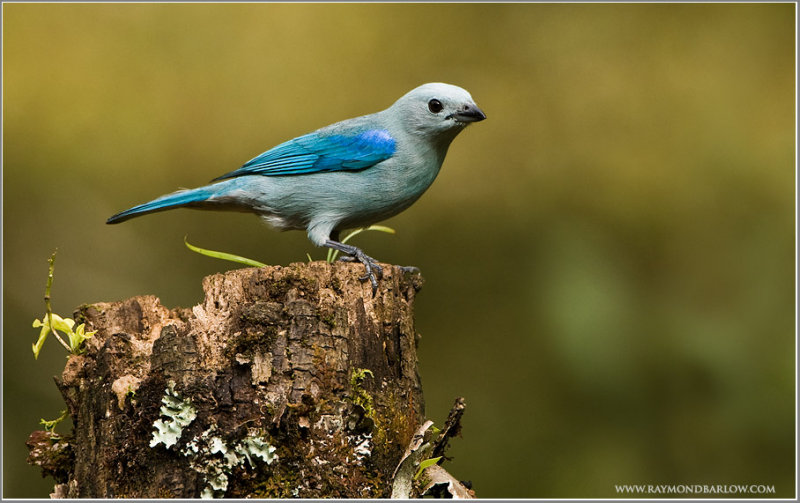
Blue-grey Tanager (Thraupis episcopus) by Raymond Barlow

Blue-grey Tanager (Thraupis episcopus) by Raymond Barlow

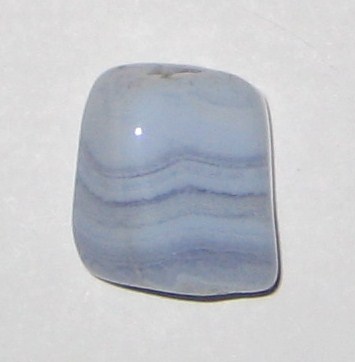
Agate – Blue Lace – Chalcedony – Nambia ©Stephanie Clifford

Chalcedony has a waxy luster and may be semitransparent or translucent. It can assume a wide range of colors, but those most commonly seen are white to gray, grayish-blue or a shade of brown ranging from pale to nearly black. The color of chalcedony sold commercially is often enhanced by dyeing or heating.” [Wikipedia – Chalcedony]

Whatever that third layer is going to look like, it will be spectacular!!!

“The first foundation was jasper; the second, sapphire; the third, a chalcedony; the fourth, an emerald;” (Revelation 21:19b KJV)


*** Articles in this Reposted Series so far:

Wordless Birds – With Hummingbirds

Birds of Grand Canyon, Part 1: Introduction

Dr. James J. S. Johnson

Birds of Grand Canyon, Part 1: Introduction

 Who hath divided a watercourse for the overflowing of waters, or a way for the lightning of thunder? To cause it to rain on the earth, where no man is, on the wilderness, wherein there is no man?  To satisfy the desolate and waste ground, and to cause the bud of the tender herb to spring forth? (Job 38:25-27)

Welcome to the wonderful world of Grand Canyon wildlife!  Inside the Grand Canyon, and atop its ledge-like rims, live many creatures that God has fitted to flourish in that extreme habitat — including many precious birds!  Much of Grand Canyon is hot and dry, so many of its animals need to be designed and equipped for desert life, in order to thrive there generation after generation, season after season (Genesis 8:22).  However, atop the rims it can get quite cold in winter, with freezing temperatures, frigid winds, and snowfall – so not all of Grand Canyon’s wildlife are desert denizens.

[JJSJ’s ASIDE: this summer I’m privileged to participate in a GRAND CANYON EXPEDITION (September 3rd-7th, A.D.2024 — https://landmarkevents.org/gc5/ ), hosted by LANDMARK EVENTS ( http://www.LandmarkEvents.org ), God willing, river-rafting on a scenic stretch of the Colorado River, inside the inner gorge of the Grand Canyon, giving special attention to the wildlife that God provides for in that unique and astonishingly interesting habitat. The best Christ-honoring vacation/tour/adventure opportunities, that I can imagine (based on years of personal experiences), are those hosted by Landmark Events — check them out, early, to plan your next vacation/adventure, in America or beyond.]

So, some of Grand Canyon’s birds are not stereotypical “desert birds”, though many that live below are.
And, as the patriarch Job learned many centuries ago, God caringly provides for creatures that live in “wastelands” not dominated by humans — in extreme deserts, unattractive habitats for humans — God has provided for the physiological and metabolic nutrition needs of such desert denizens, including birds of such xeric and torrid lands, such as much of Grand Canyon (especially its Inner Gorge).
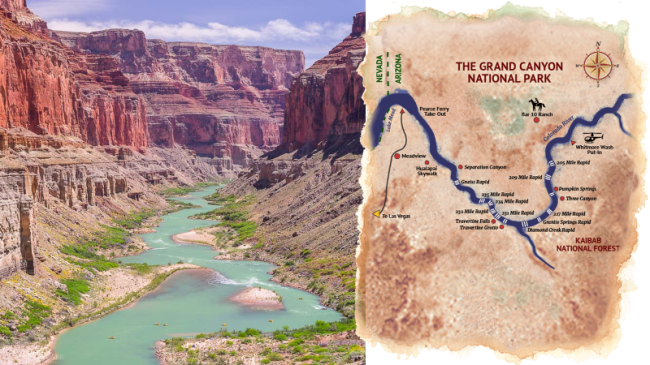
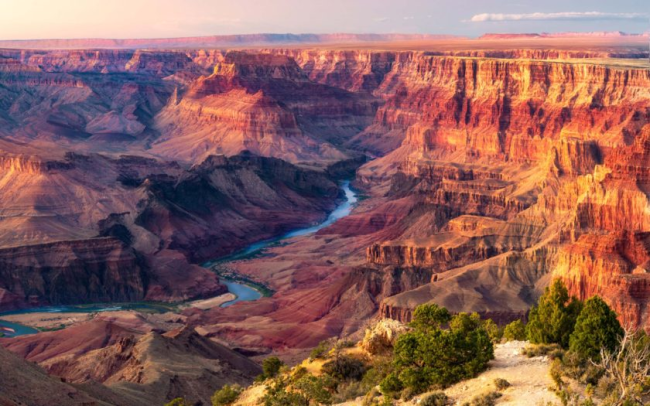
GRAND CANYON, showing COLORADO RIVER (Wallpapers13.com photo credit)

So, what kinds of birds call Grand Canyon “home”, or, at least, treat that canyon as a temporary home according to seasonal migration journeys?
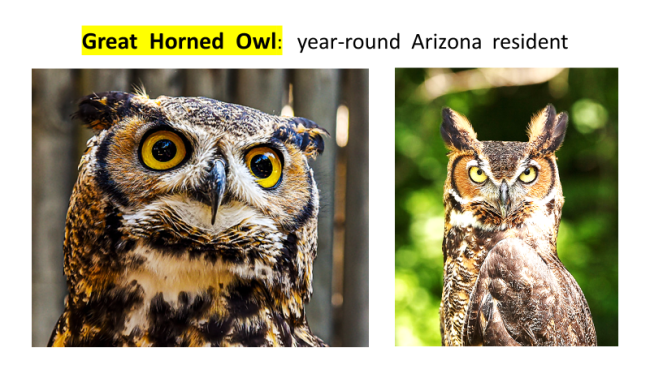
Grand Canyon has many large birds of prey, such as eagles (Golden Eagles and wintering Bald Eagles), hawks (Red-tailed Hawk, Sharp-shinned Hawk, Goshawk), falcons (Peregrine Falcon, American Kestrel), and owls (Great Horned Owl, Northern Pygmy Owl, Mexican Spotted Owl).  
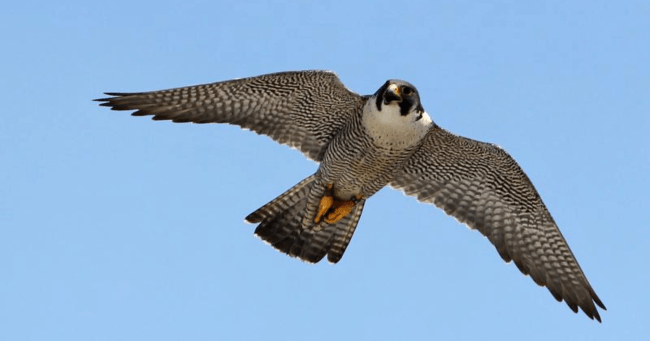
PEREGRINE FALCON flying (Indianapolis Star photo credit)

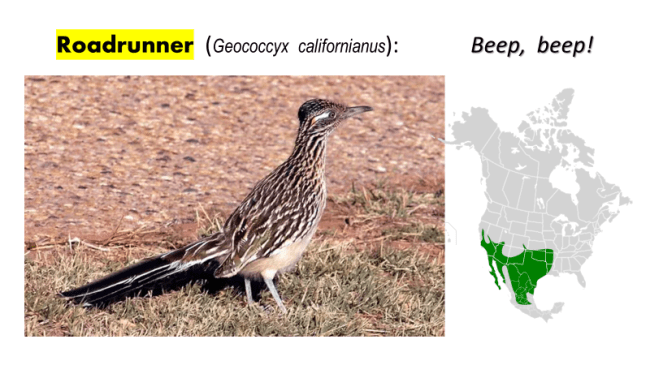
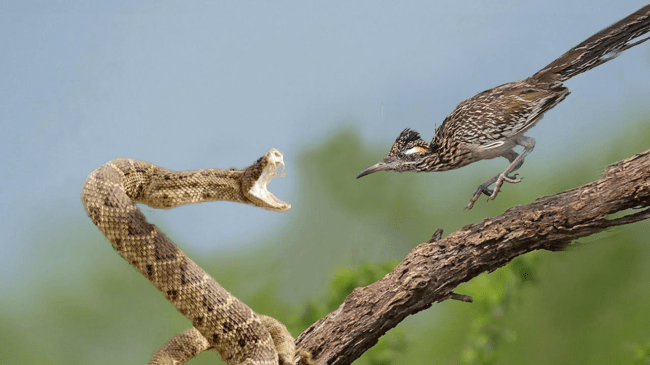
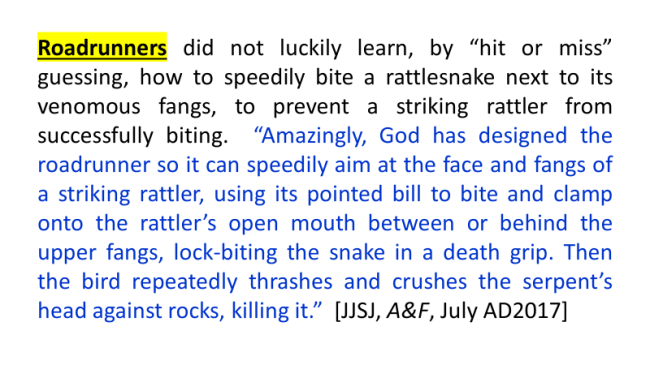
Although not classified as a “bird of prey”, the Roadrunner is proficient at killing and eating frogs, lizards, and even snakes! 

ROADRUNNER preparing to kill RATTLESNAKE
(Pinterest / Snake Channel YouTube photo credit)

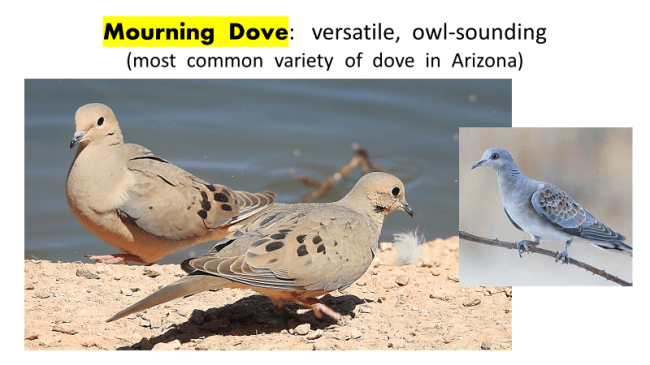
Some owl-sounding birds are actually Mourning Doves (Hoooo! Hoooo! Hoooo!), so they “bluff” at being predators of rodents (who actually threaten their eggs). 
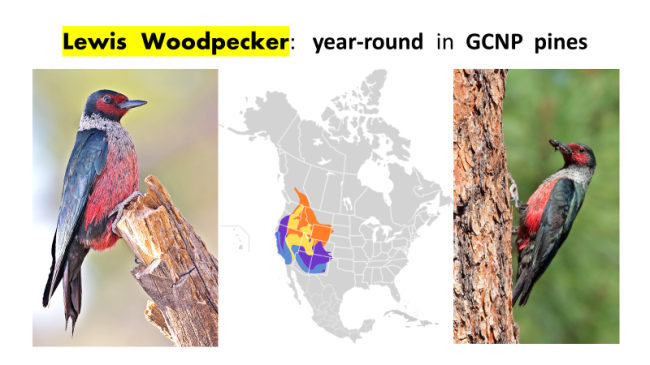
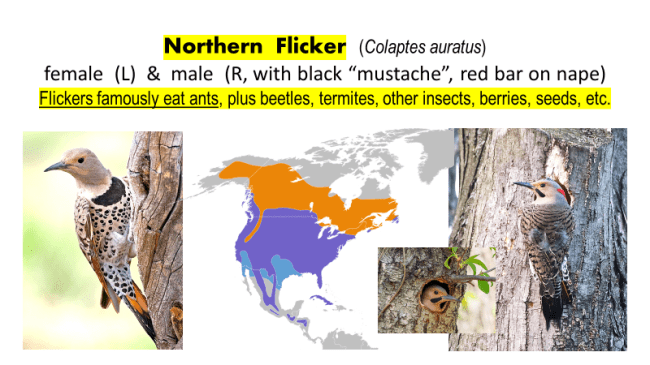
Grand Canyon’s rims and interiors have trees, so woodpeckers are to be expected. Resident woodpeckers include Lewis Woodpecker, Hairy Woodpecker, and Northern Flicker

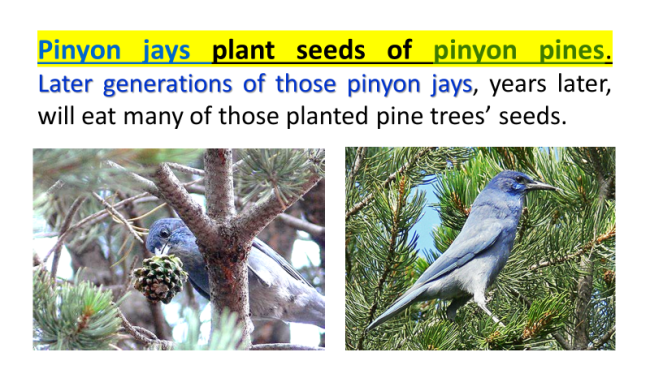
(Many other birds love to dwell in evergreen trees, such as pinyon pines or ponderosa pines. (Even wild Blue Peafowl are found in the Grand Canyon’s conifers.)
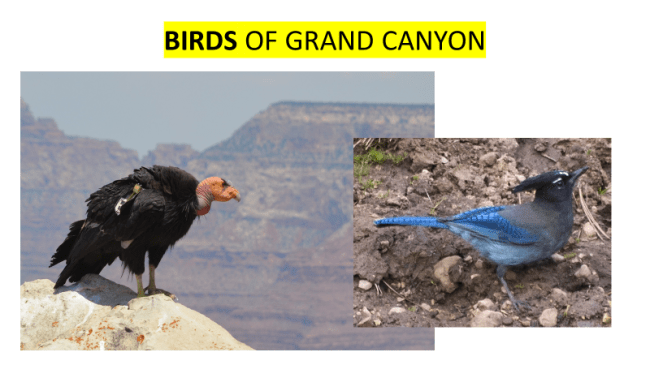
Scavenger birds of the canyon include the California Condor and Turkey Vulture, both serving as garbage pickup birds.
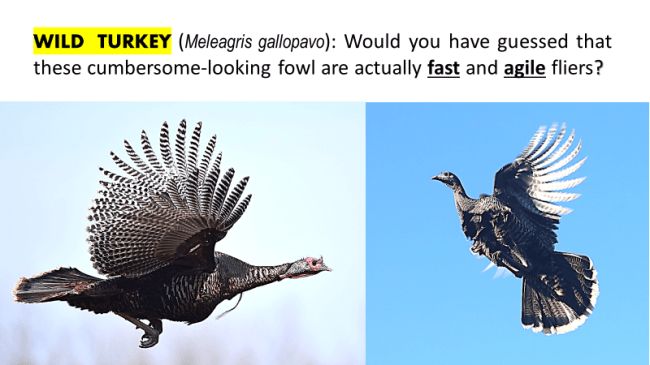
Galliformes (i.e., chicken-like ground-fowl) include Wild Turkey. 

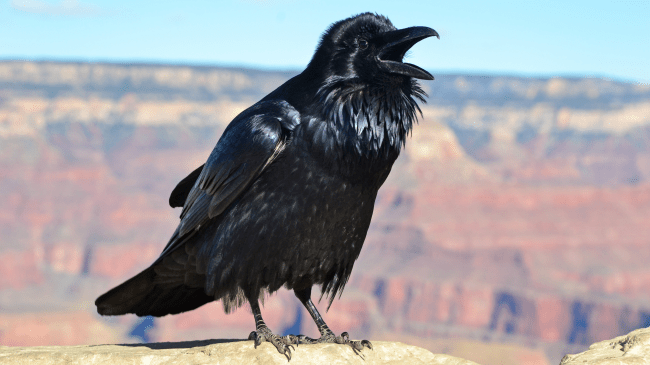
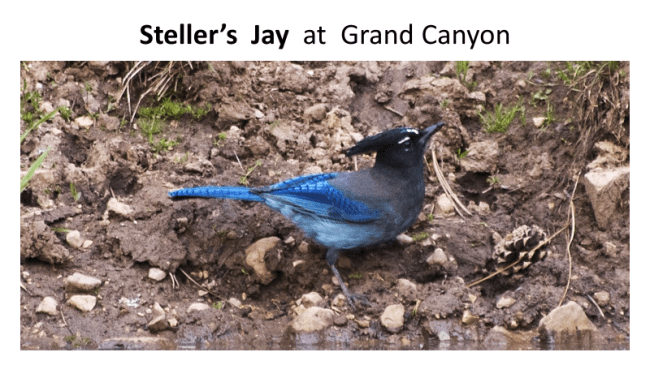
Corvids include Common Raven, Steller’s Jay, Pinyon Jay, Scrub Jay, etc. 
RAVEN at GRAND CANYON
(National Park Service photo credit)
STELLER’S JAY (National Park Service photo credit)

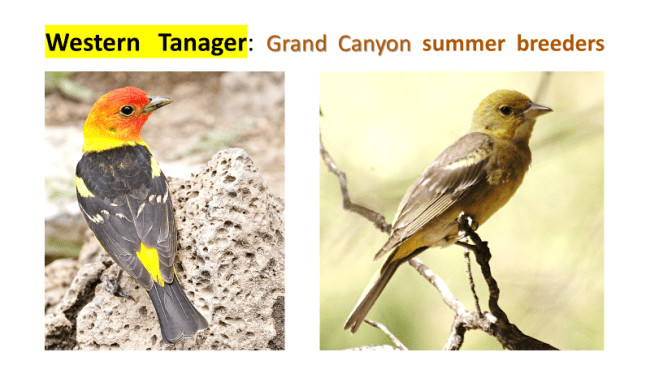
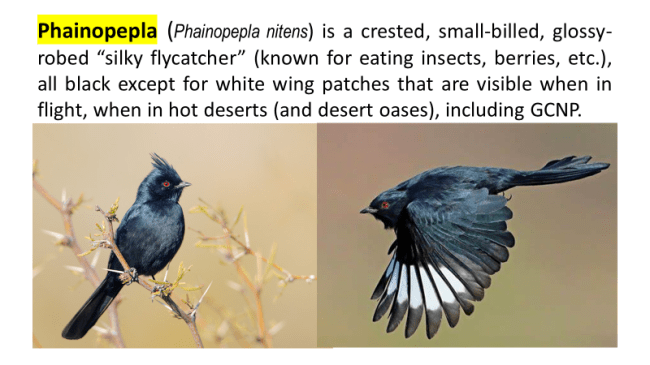
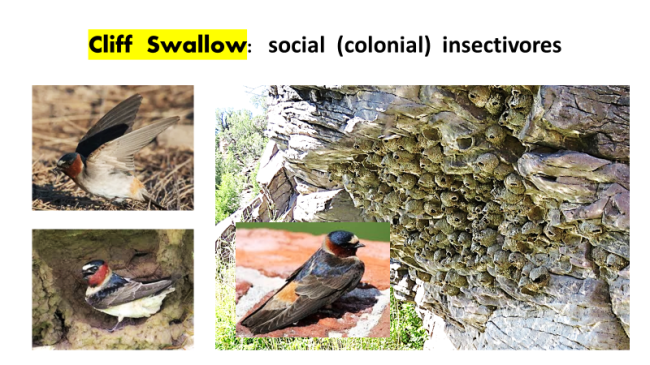
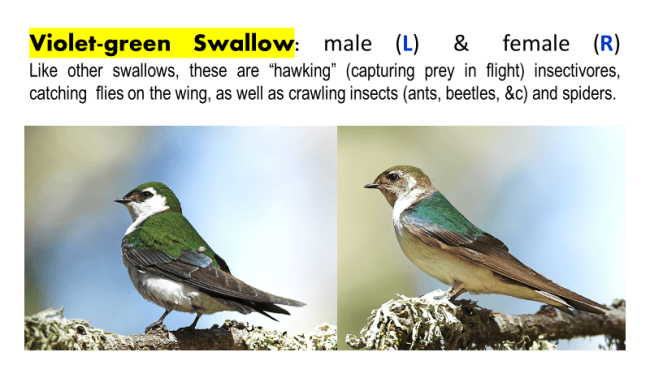
Other perching birds include Phainopepla, Dark-eyed Junco, European Starling, Western Tanager, Scott’s Oriole, Canyon Wren, Rock Wren, Mountain Chickadee, Common Grackle, Violet-green Swallow, Cliff Swallow, Brown Creeper, Western Bluebird, hummingbirds, etc.

PHAINOPEPLA
(perching: AnimalSpot.net photo credit
flying: eBird photo credit)

In short, Grand Canyon illustrate4s avian biodiversity — some specific examples of which will be, hopefully, inspected in future blogposts of this series.

There is so much more! This is just an introduction, D.v. —  meanwhile, welcome to the wonderful world of Grand Canyon’s avian wildlife!

Heaven’s New Jerusalem and Birds – Foundation Stones II

This is a repost of the original that appeared on (February 22, 2019)

Precious Stone

“O LORD, our Lord, How majestic is Your name in all the earth!” (Psalms 8:9 NASB)

Before matching the bird’s colors to the Foundation Stones, here are some facts and photos to help us understand the colors of the twelve foundations, if that is possible with our human minds. If the stones are this beautiful now, what will they be like in heaven?

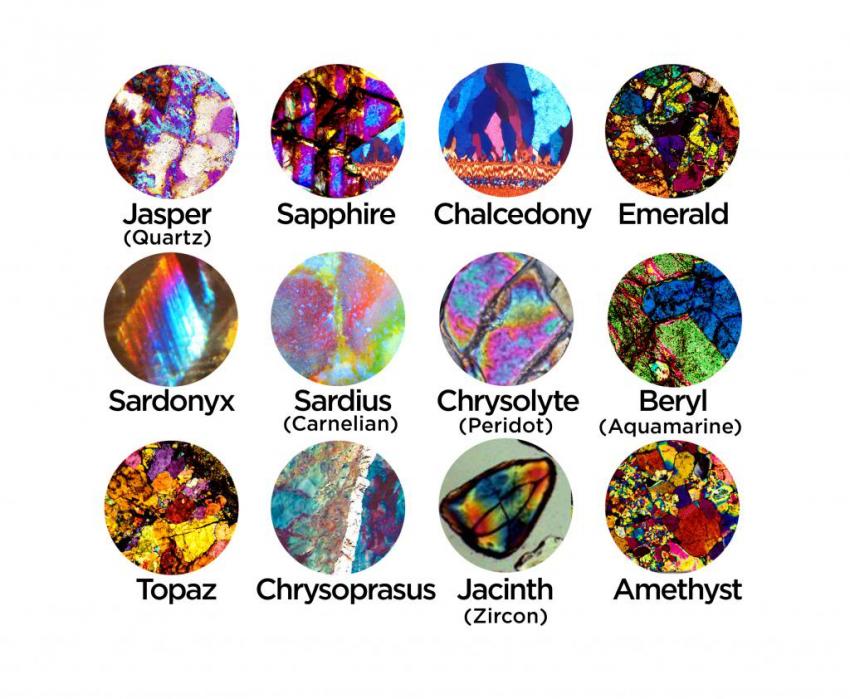
Very interesting article about The 12 Foundation Stones in New Jerusalem gives fact about these gems. “In the past century, it has been discovered that gems can be classified as either anisotropic or isotropic, and only recently have scientists discovered cross polarized light, which can be used to identify whether a gem is anisotropic or isotropic. When viewed in crossed-polarised light (similar to “pure” light), anisotropic stones produce a colourful array- reflecting all the colours of the rainbow, whereas isotropic stones lose all of their colour and appear black.”

There are some words in there that are new to me, like, anisotropic or isotropic, cross polarized light. Yet the next paragraph, is really informative:

“It’s interesting that, in Revelation chapter 21, there are 12 gems mentioned to be inlaid for decoration of the New Jerusalem, and ALL of these 12 gems are anisotropic gems, i.e., gems that can show colourful patterns under pure light…

Twelve Stones of Revelation 21 from Christian Evidence

We normally think of the colors of these stones as:

New Jerusalem Gemstones

It will be worth your time to read the article, especially, “What are the odds? The 12 Foundation Stones in New Jerusalem,

Here is a video showing the colors of these stones. [music can be muted]

“And the building of the wall of it was of jasper: and the city was pure gold, like unto clear glass. And the foundations of the wall of the city were garnished with all manner of precious stones. The first foundation was jasper; the second, sapphire; the third, a chalcedony; the fourth, an emerald; The fifth, sardonyx; the sixth, sardius; the seventh, chrysolite; the eighth, beryl; the ninth, a topaz; the tenth, a chrysoprasus; the eleventh, a jacinth; the twelfth, an amethyst.” (Revelation 21:18-20 KJV)

I am aware that the seven colors of the rainbow are not necessarily the order of the foundation, but this article is also worth reading:

The Colors of the Rainbow


Looking Back and Looking Ahead

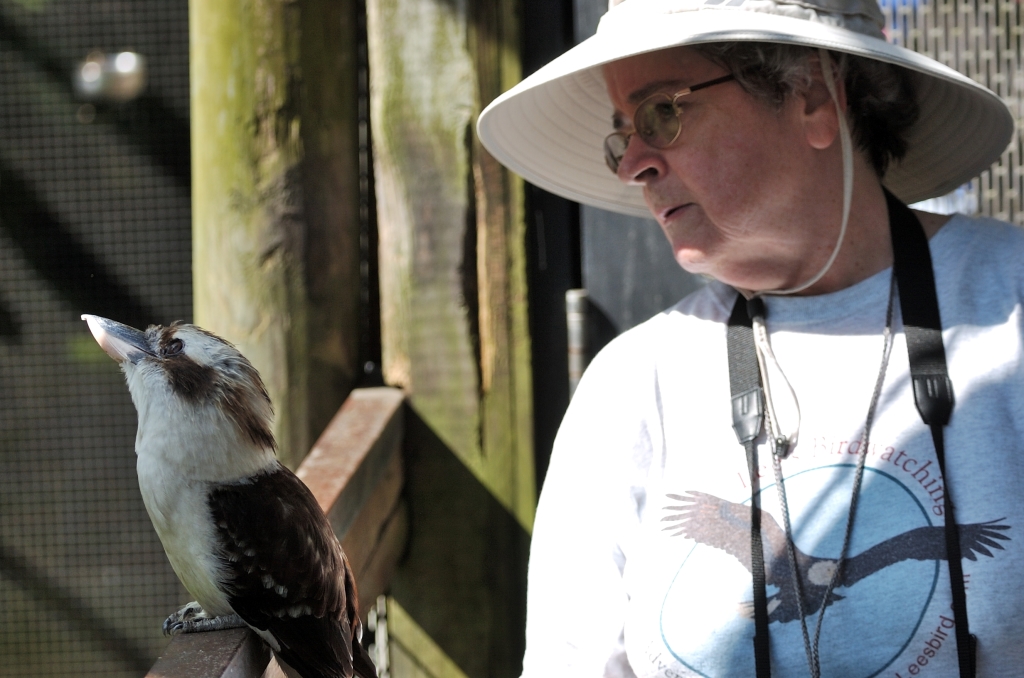
Lee with Laughing Kookabura at Brevard Zoo by Dan

” O LORD, our Lord, How excellent is Your name in all the earth, Who have set Your glory above the heavens!  Out of the mouth of babes and nursing infants You have ordained strength, Because of Your enemies, That You may silence the enemy and the avenger.  When I consider Your heavens, the work of Your fingers, The moon and the stars, which You have ordained, What is man that You are mindful of him, And the son of man that You visit him?  (5)  For You have made him a little lower than the angels, And You have crowned him with glory and honor.  (6)  You have made him to have dominion over the works of Your hands; You have put all things under his feet, All sheep and oxen—Even the beasts of the field, The birds of the air, And the fish of the sea That pass through the paths of the seas. O LORD, our Lord, How excellent is Your name in all the earth!

When I was asked to do some articles about birds, way back in 2008, I never imagined that today, Lee’s Birdwatching Adventures (now with WordPress) would have:

  • 2,513,166 visits as of today
  • 3,857 articles posted

The Lord has truly blessed these efforts. But now? After prayer and much thought, A decision has been made!!

Galah (Eolophus roseicapilla) Hopping on the camera

Galah (Eolophus roseicapilla) Hopping on Dan’s camera

LET’S CONTINE ON!!!!

I’ve paid the fees to continue. The Lord is about to allow me to turn 81 in a little over a week. Thank You Lord. We already have several great writers and photographer that can still add new articles here. The wealth of articles makes great resources for those seeking information about birds, especially home school students and others.

Golden Eagle and Dr Jim – Circle B by Lee

Dr. James J.S. Johnson from Institute for Creation Research,

William Wise a great photographer and writer, and

Golden Eagle, a.k.a. Dr. Baron Brown, are still birding.

ME?? I am planning to review and repost many of the great series of previous posts. I’ll check for broken link and missing photos.

In fact, tomorrow, the Heaven’s New Jerusalem and Birds – Foundation Stones series will begin. It’s one of my favorites.

Thank you for all the visits over the years and trust you’ll continue checking out these “oldies but goodies.” At my age, I forget things. :)

Praise the Lord for all these blessings that He has allowed us the share.

Stay Tuned!

The Wise Owl

Merlin, the Squealing-Laughter Falcon of Saskatchewan

Merlin, the Squealing-Laughter Falcon of Saskatchewan

Dr. James J. S. Johnson

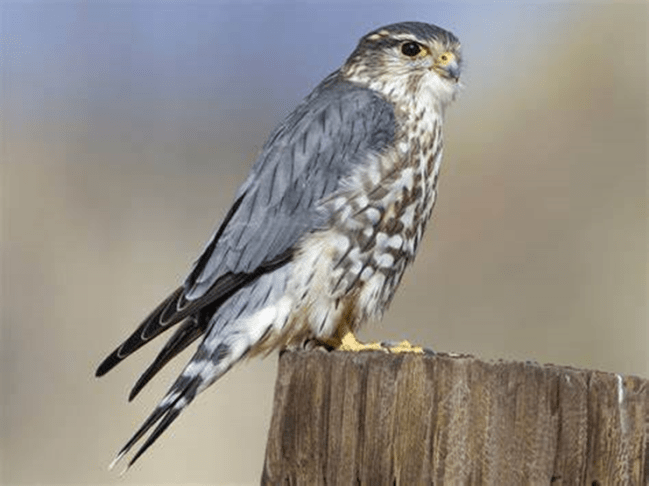
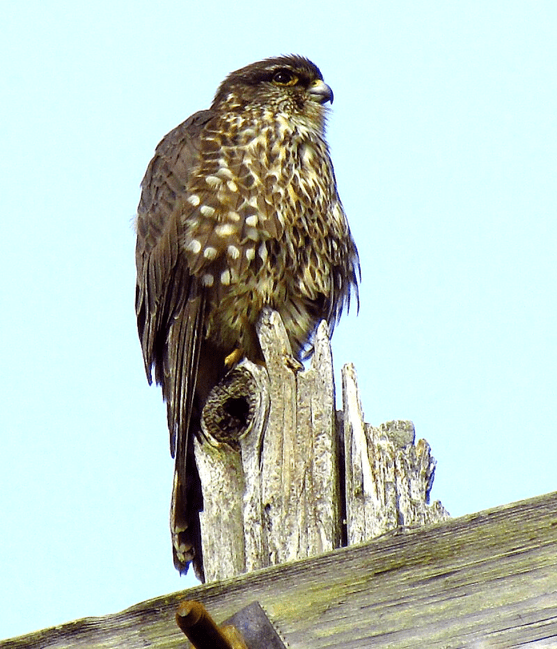
MERLIN perching   (Animalia-life.club photo credit)

These things be of (the) fowls which ye shall not eat, and shall be eschewed of you (and shall be shunned by you); an eagle, and a gripe [i.e., gryphon], [and] an aliet [or “merlyon”, as in some early Wycliffite Bible copies of the late AD1380s]      (Leviticus 11:13)   

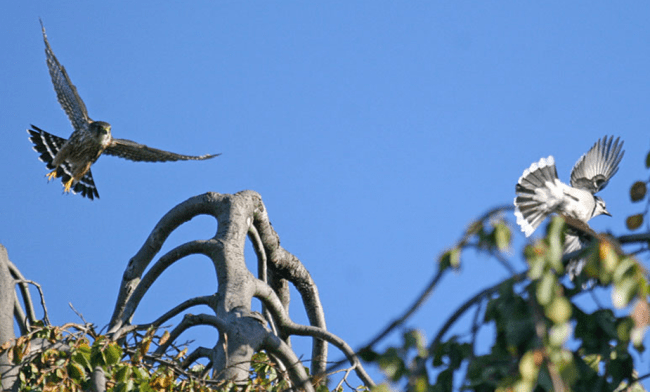
Merlin chasing Blue Jay   (Wikipedia/John Harrison photo credit)

Saskatchewan (an interior province of Canada) is mostly a grassland, prairies (dominated by agriculture) with occasional hills and trees, here and there punctuated by lakes, ponds, and rivers – a wonderful habitat for birds — such as falcons.  

Earlier this month (August 2-7th AD2024), by God’s grace, my wife and I attended a Christian family camp in Saskatchewan (near Fort Qu’Appelle), and the most memorable bird that I observed (on the 6th of August, AD2024), there, was a Merlin (Falco columbarius), a resident falcon also known as the Pigeon Hawk, who was circuitously flying near the lakeshore; it eventually landed upon a shoreline tree’s branch, conveniently perching there for me to see it, almost as if it was politely and patiently posing for me (as I compared its shape and plumage to my Saskatchewan bird chart). 

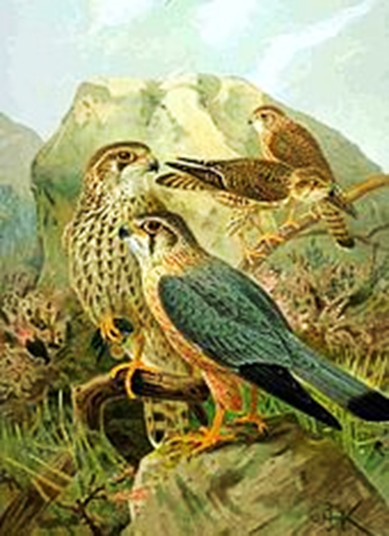
MERLINS portrayed in the wild   (public domain image)

The merlin’s squeaking laughter-like call, which I heard on multiple days at that family camp property in Saskatchewan, reminded me of seagull laughter, although the Merlin’s calls seemed more repetitive – a staccato laughter — almost like rhythmic squealing. 

The fancy scientific name for the Merlin is Falco columbarius, meaning “dove falcon” – perhaps because the Merlin is a falcon shaped (and colored) somewhat like an over-sized mourning dove or pigeon.  The males have wingspans almost 2 feet wide; the females are slightly larger.

MERLIN juvenile    (Wikipedia image credit)

But, from the perspective of prey seized by this falcon’s sickle-shaped talons, the Merlin is no laughing matter. 

Merlins — like other falcons (e.g., peregrines), hawks, and kites — are feathered predators, zooming down upon their next meal with sudden bursts of aerial speed.  Like “sparrow-hawks” (i.e., kestrels, which are also a type of falcon), merlins ambush and seize smaller birds, for food, some as little as sparrows and others as large as grouse.  In the same cluster of trees, by the lakeside where the Merlin was perching, I repeatedly saw an American Robin, as well as several gulls (perhaps they were Ring-billed Gulls?).  Hopefully that robin escaped the merlin’s hungry hunting.

Merlins are flexible in adapting to various ranges, with different biome habitats. 

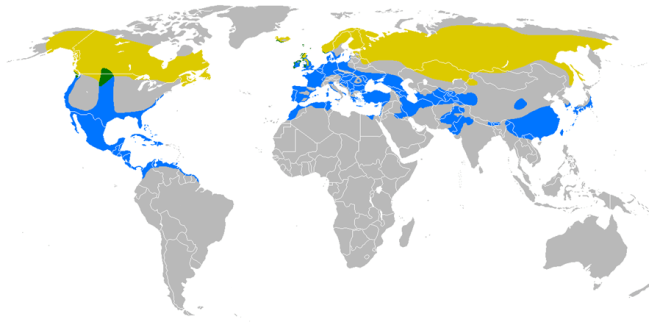
Merlins are often found in northern forests and grasslands, including birch scrubland country (e.g., in Saskatchewan’s birch-studded prairies) and willow-prominent wet woods, from sea level to timberline. Many of their summer breeding ranges are in North America’s boreal forests and prairies, as well as in Eurasia’s taiga forests and steppes.  Most merlins migrate, seasonally, with warm winter ranges in mild grasslands, woodlands, and coastlands.

SUMMER & WINTER RANGES of Merlin migrants.

Laughter makes life more livable.  And seeing a squealing-laughter-calling Merlin, as a “lifer”, while attending a precious Christian family camp in rural Saskatchewan, was an unexpected blessing, to say the least.  (So was visiting the fish hatchery that serves Fort Qu’Appelle – but I digress.)

The Lord has many beautiful places on earth, plus many beautiful birds therein – and Saskatchewan’s Merlin illustrates that beauty.  No surprise, because the ultimate source of all beauty is God Himself (Psalm 27:4).

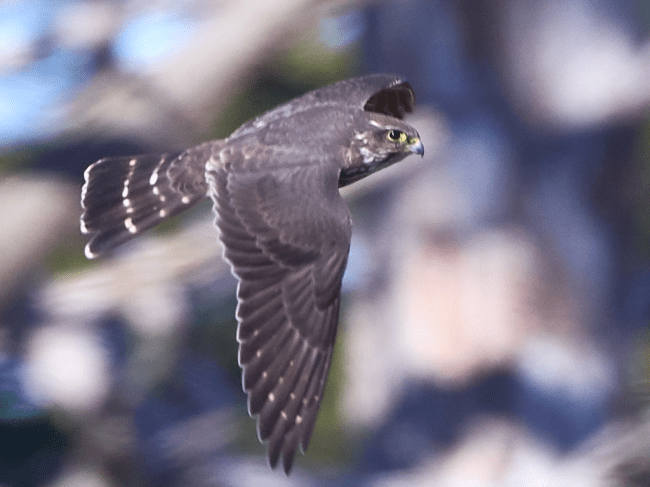
MERLIN in flight (U.S. National Park Service photo credit)

What’s Its Name? – “elegans”

??? (Platycercus elegans) ©WikiC

In this post let’s investigate the name of “elegans.” Before I reveal what that means, let’s look at a few birds with “elegans” in its Scientific/Latin name.

elegans

??? (Malurus elegans) male-breeding ©WikiC

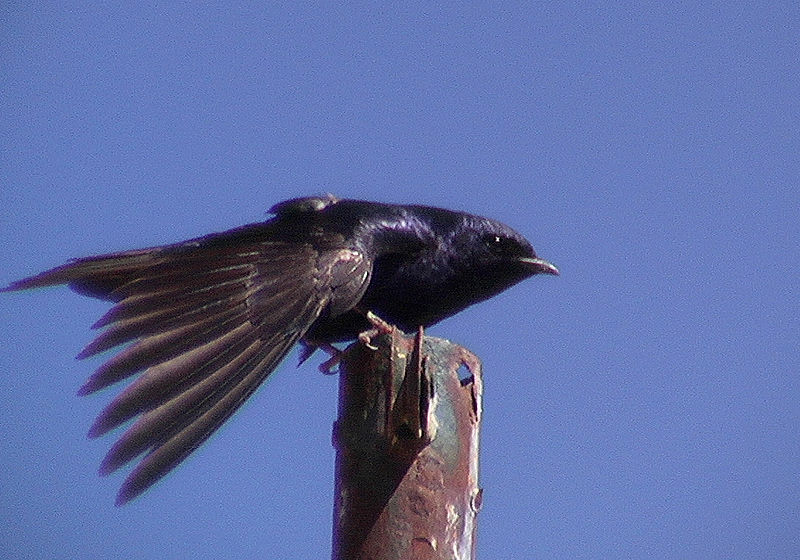
??? (Progne elegans) ©WikiC

??? (Emberiza elegans) ©WikiC

Elegant Crested Tinamou (Eudromia elegans) Cloud Forest at Zoo Miami by Lee

??? (Eudromia elegans) Cloud Forest at Zoo Miami by Lee

Buff-spotted Flufftail (Sarothrura elegans) ©©kibuyu

??? (Sarothrura elegans) ©©kibuyu

??? (Rallus elegans) Viera Wetlands 12-26-17 by Lee

That’s enough to give a view of some of the “elegans.” Just looking at the variety, I have no clue as to what “elegans” means. :)

This photo by Ian gives the whole birds name. Maybe it means “Elegant”?

"Yellow" Crimson Rosella (Platycercus elegans flaveolus) by Ian 4

“Yellow” Crimson Rosella (Platycercus elegans flaveolus) by Ian

Here are links to the birds above in order presented:

Crimson Rosella (Platycercus elegans)

Red-winged Fairywren (Malurus elegans)

Elegant Crested-Tinamou (Eudromia elegans)

Southern Martin (Progne elegans)

Yellow-throated Bunting (Emberiza elegans)

Elegant Crested-Tinamou (Eudromia elegans)

Buff-spotted Flufftail  (Sarothrura elegans)

King Rail (Rallus elegans)

After seeing all these beautiful Avian Wonders from the Lord, whatever the term means, I’m voting for ELEGANT!!!

“And God blessed them, saying, ‘Be fruitful and multiply, and fill the waters in the seas, and let birds multiply on the earth.’ ” (Genesis 1:22 NKJV)

Elegant Tern by Ian Montgomery

Elegant Tern by Ian Montgomery

Here are the rest of the “elegans” at Birds of the World – at Cornell Lab:

Brush Bronzewing (Phaps elegans)

Elegant Tern (Thalasseus elegans)

Subantarctic Shearwater (Puffinus elegans)

Ryukyu Scops-Owl (Otus elegans)

Elegant Trogon (Trogon elegans)

Chestnut Woodpecker Celeus elegans

Brazilian Laniisoma (Laniisoma elegans elegans) Pinterest

Brazilian Laniisoma (Laniisoma elegans elegans) Pinterest

Elegant Parrot (Neophema elegans)

Elegant Pitta (Pitta elegans)

Elegant Crescentchest (Melanopareia elegans)

Elegant Woodcreeper (Xiphorhynchus elegans)

Brazilian Laniisoma (Laniisoma elegans)

Elegant Tit (Periparus elegans)

WOW!!! WHAT A CREATOR!!

Formed By Him

Good News

Happy Mother’s Day!

Happy Mother’s Day!

I wonder if all the Bird Mother’s have a special Day? Thought I would see what photos from the past have mom’s and youngsters. Let’s See!!

Mom and baby Penquins ©Pinterest

Emu (Dromaius novaehollandiae) Baby by WaltDaily©©

Snowy Egret Baby by Dan at Gatorland

Skimmer Baby Leaning against Parents Beak – ©Thomas C – NatlGeog – Pinterest

Mom and Baby at Lake Hollingsworth by Lee

Baby Geese by Dan

Australasian Grebe (Tachybaptus novaehollandiae) with babies ©WikiC

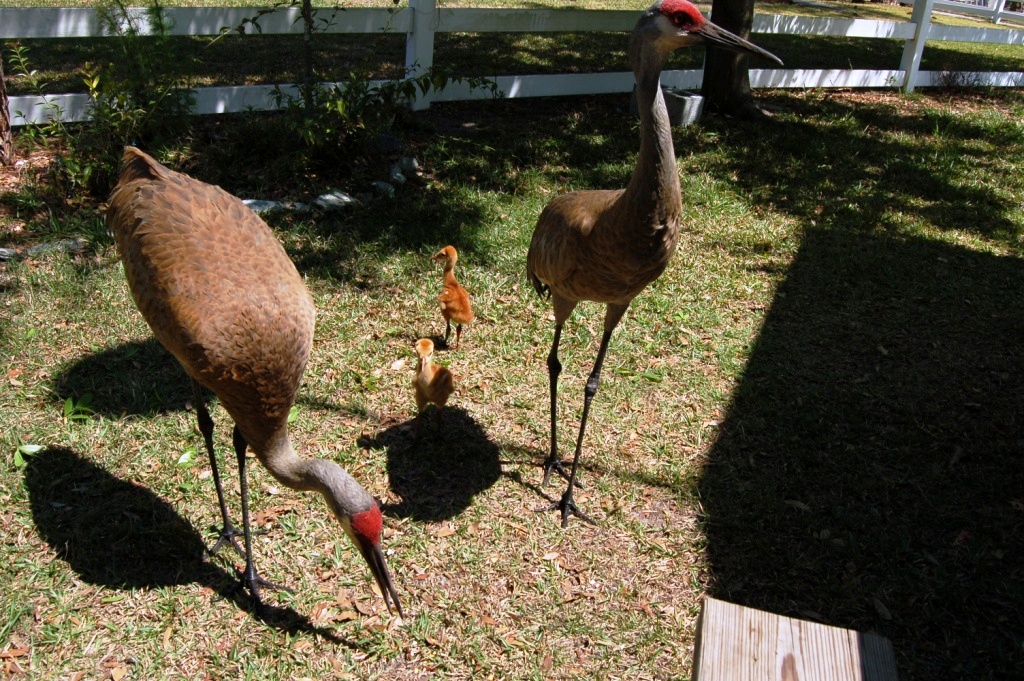
Sandhill Cranes and Babies in yard by Lee

Black-bellied Whistling Duck (Dendrocygna autumnalis) and Babies by Lee at Circle B

Black-bellied Whistling Duck and Babies by Lee at Circle B

Sandhill Crane "colts"

Sandhill Crane “colts” by Lee

Female Chipping Sparrow bird feeding three baby Chipping Sparrow nestlings, Athens, Clarke County, GA. by William Wise

Common Starling (Sturnus vulgaris) at Nest 1 by Anthony747

Well, I think you get the idea. Mother’s can be very busy at times. Enjoy your day!

“HONOR YOUR FATHER AND MOTHER,” which is the first commandment with promise:
(Ephesians 6:2 NKJV)

Previous Posts:

Avian Happy Mother’s Day

Sunday Inspiration – Mother’s Day

Mother’s Day– “Stay Close To Me” © The Hyssongs

Emberizidae Family Allies I ~ “Be Thou My Vision” ~ by Ladies and Girls Choir on Mother’s Day

Good News

What’s His Name? – “Varius”

As we start the new series about the bird’s Scientific/Latin names, a verse came to mind about His name. Of course, that is referring to God, but I like the “What is His name” part. So, for now (unless some suggest a different one) that will be the name of these articles.

Who has ascended into heaven, or descended? Who has gathered the wind in His fists? Who has bound the waters in a garment? Who has established all the ends of the earth? What is His name, and what is His Son’s name, If you know?” (Proverbs 30:4 NKJV)

Varius means

If you go to Birds of the World – Species and the type the Scientific/Latin name, a list of those birds will show. “The specific epithet varius is the Latin word meaning “various”, “diverse” or “variegated” (Wikipedia)”. Here is the list of birds from “Birds of the World – with “varius.

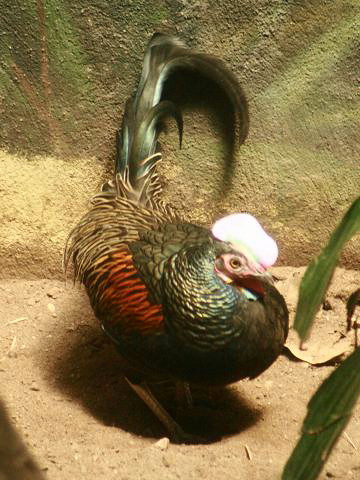
Green Junglefowl – Gallus varius
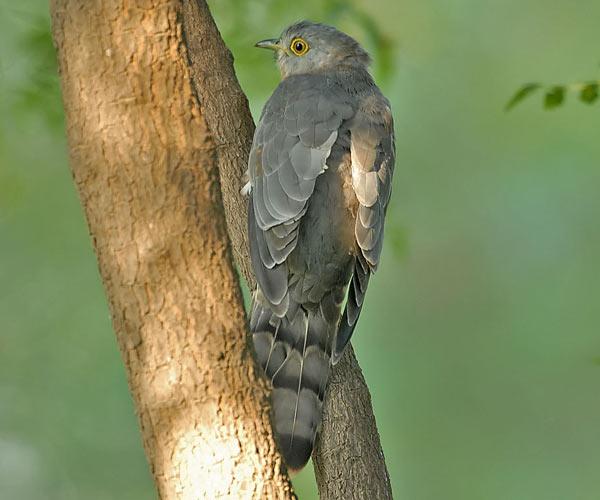
Common Hawk-Cuckoo – Hierococcyx varius
Painted Buttonquail – Turnix varius
Pied Cormorant – Phalacrocorax varius
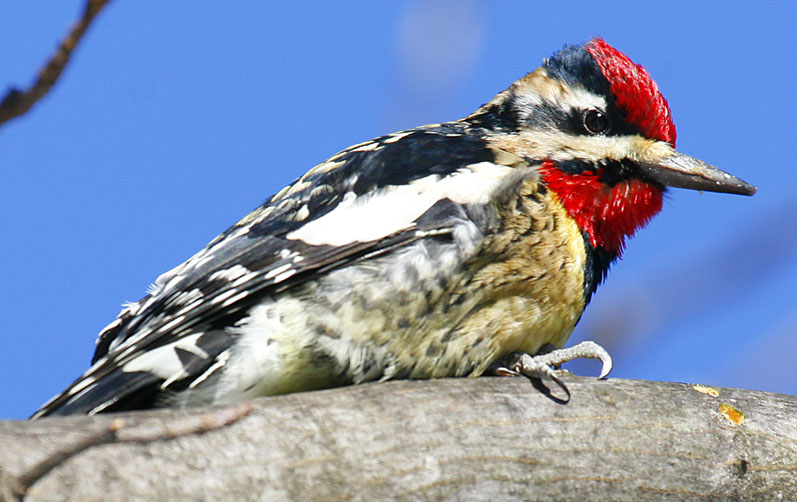
Yellow-bellied Sapsucker – Sphyrapicus varius
Mulga Parrot – Psephotellus varius
Variegated Flycatcher – Empidonomus varius
Varied Tit – Sittiparus varius
Reunion Starling – Fregilupus varius

Green Junglefowl (Gallus varius) ©WikiC

Green Junglefowl (Gallus varius) ©WikiC

Common Hawk-Cuckoo (Hierococcyx varius) by Nikhil

Painted Buttonquail (Turnix varius) by Ian

Painted Buttonquail (Turnix varius) by Ian

Australian Pied Cormorant (Phalacrocorax varius) by Ian

Yellow-bellied Sapsucker (Sphyrapicus varius) ©WikiC

Yellow-bellied Sapsucker (Sphyrapicus varius) ©WikiC

Mulga Parrot (Psephotus varius) by Ian

Mulga Parrot (Psephotellus varius) by Ian

Variegated Flycatcher (Empidonomus varius) from Audubon

Varied Tit (Sittiparus varius) by Shanghai Birding

Reunion Starling – (Fregilupus varius) Planet of Birds

A short clip of a Painted Buttonquail

A few previous articles mentioning some of these birds:

Ian’s Irregular Bird – Painted Birds

Yellow-bellied Sapsucker – Chief Corner Stone’s Keystone

Siamese Fireback by Dan

Stay tuned as we investigate some more of these Scientic/Latin names.

Good News