***
RISE AND PRAY
***
“And said unto them, Why sleep ye? rise and pray, lest ye enter into temptation.” (Luke 22:46 KJV)
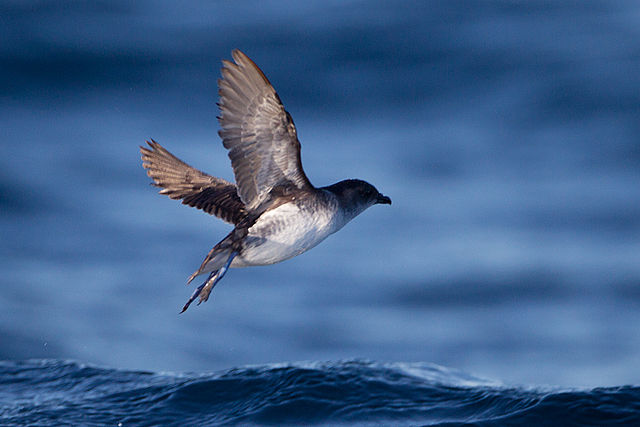
Common Diving Petrel (Pelecanoides urinatrix) ©WikiC
*
“And said unto them, Why sleep ye? rise and pray, lest ye enter into temptation.” (Luke 22:46 KJV)
Common Diving Petrel (Pelecanoides urinatrix) ©WikiC
*
“Therefore we must give the more earnest heed to the things we have heard, lest we drift away.” (Hebrews 2:1 NKJV)
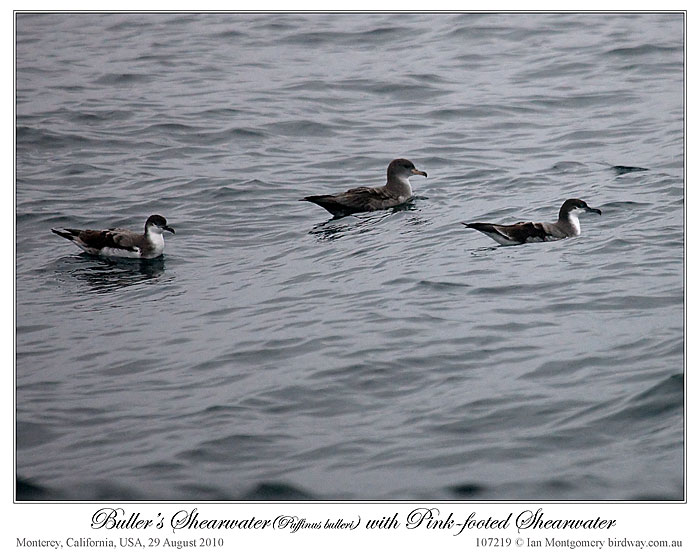
Buller’s Shearwater (Puffinus bulleri) and Pink-footed Shearwater (Puffinus creatopus) by Ian
*
DINOSAUR TAIL FEATHER IN AMBER?
“Behold the fowls of the air: for they sow not, neither do they reap, nor gather into barns; yet your heavenly Father feedeth them. Are ye not much better than they?” Matthew 6:26
 Evolutionary scientists have recently claimed strong evidence to support the evolution of birds from dinosaurs. Palaeontologist Lida Xing was visiting a market in Myanmar, when he saw a piece of amber, containing a tiny feather, along with the more usual insects. He claimed that the feather had to belong to a dinosaur, rather than a bird, because the vertebrae present in the specimen were all separate. This, he claimed, contrasted with the tail of archaeopteryx, the tip of whose tail has vertebrae which are fused at the terminus. Archaeopteryx is widely accepted to be a bird, although the article on Wikipedia classifies it as a feathered dinosaur. Wikipedia classifies it as a feathered dinosaur.
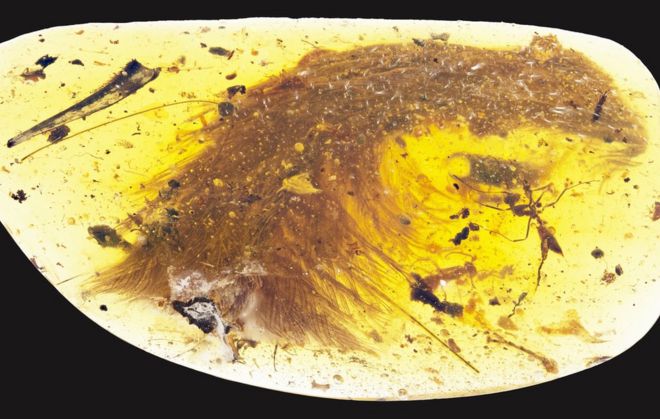
The feathered tail was preserved in amber from north-eastern Myanmar ©CURRENT BIOLOGY
Creation scientist Dr David Menton has shown that the feather could not have belonged to a dinosaur. Therapod dinosaurs would have been bipedal, and their long tails balance their bodies as they walk, like other bipeds, from their hips. But birds do not walk from their hips. Their femurs and knees are within their body walls. The part of the bird’s leg, often assumed to be a “wrong-facing” knee, is, in fact, equivalent to the ankle in other vertebrates. The amber feathered tail shows that it would have had insufficient weight to provide balance for a bipedal dinosaur. It is much more likely, therefore, that the feathered tail belonged to a bird.Evolutionists have an a priori commitment to finding feathered dinosaurs, as evidence of evolution. Once again, it is seen that they have jumped the gun, if not the shark, in their enthusiasm.
Prayer:
Help us, Lord, to consider again the works of Your creation, and give You the praise and the glory. Amen.
Notes:
Reported on the BBC, ‘Beautiful’ dinosaur tail found preserved in amber, (December 2016), retrieved 12/23/2016. Menton, D. (2016), Did a Dinosaur Get Its Feathered Tail Caught in Amber? , retrieved 12/23/2016.
©Creation Moments 2017, with permission.
*
“For from you sounded out the word of the Lord not only in Macedonia and Achaia, but also in every place your faith to God-ward is spread abroad; so that we need not to speak any thing.” (1 Thessalonians 1:8 KJV)
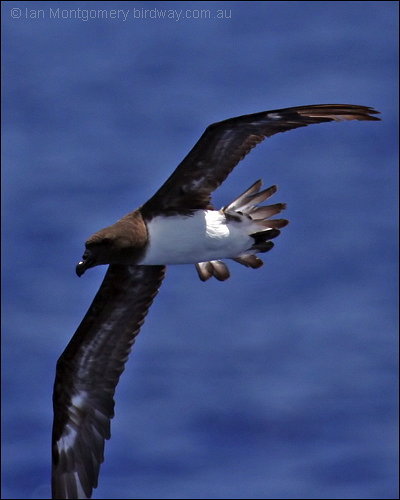
Tahitian Petrel (Pseudobulweria rostrata) by Ian
*

“And my people shall dwell in a peaceable habitation, and in sure dwellings, and in quiet resting places;” (Isaiah 32:18 KJV)
Flesh-footed Shearwater (Puffinus carneipes) by Ian
*
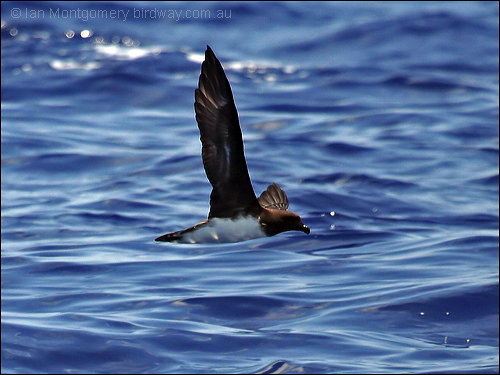
Tahiti Petrel (Pseudobulweria rostrata) by Ian
“The LORD on high is mightier than the noise of many waters, yea, than the mighty waves of the sea.” (Psalms 93:4 KJV)
Today’s Sunday Inspiration will bring us through the last 49 members of the Procellariidae Family. These include Petrels in the Pseudobulweria (5), Procellaria (5), and Bulweria (3) genera, plus 4 Diving Petrels in the Pelecanoides genus. The final group of Shearwaters are in the Calonectris (4), Ardenna (7), and Puffinus (21) genera
Tahitian Petrel (Pseudobulweria rostrata) by Ian
“The Pseudobulweria are generally largish darkish petrels, but may have white undersides. They are long-winged and fly about with rather leisurely wingbeats and soar a lot. Though they are attracted by chum, Pseudobulweria petrels are not particularly prone to following ships. They often approach floating prey from downwind, picking it up without landing on the water or during a brief landing in which the wings are kept raised.”
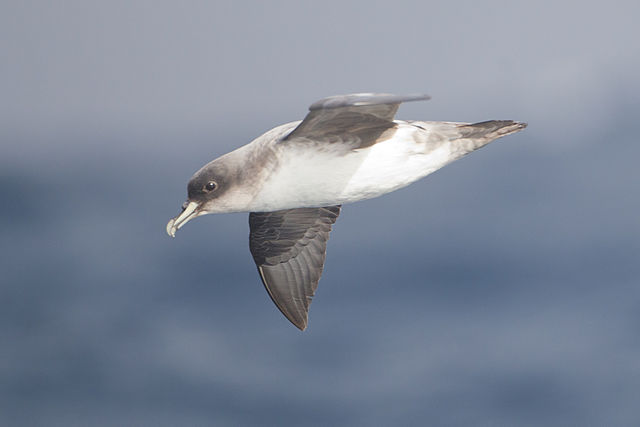
Grey Petrel (Procellaria cinerea) ©WikiC
What an amazing Creator these Avian Wonders have to provide so much for them. “Procellaria is a member of the family Procellariidae and the order Procellariiformes. As members of Procellariiformes, they share certain characteristics. First they have tubular nostrils called naricorns. This feature gives them their common name, tubenoses. The opening to the nostril is located differently in some birds. These birds have the opening on top of the upper bill. Second, they produce a stomach oil that contains wax esters and triglycerides. This oil fills two functions. When predators threaten the birds or their chick or egg, they spit the substance on them. This substance has an awful smell, and mats the feathers down, degrading their usefulness. Also, they can digest the wax esters for a high energy source of food, during long flights or the period of time that they are incubating their egg or caring for their young. They also have a uniquely structured bill, with seven to nine distinct horny plates. Finally, they have a salt gland that is located above their nasal passages and helps desalinate their body, as they drink seawater. They excrete the salty waste out their nose.” [Quote from Wikipedia, bolding mine]

Cory’s Shearwater (Calonectris borealis) ©WikiC
Calonectris is a genus of seabirds. The genus name comes from Ancient Greek kalos, “good” and nectris, “swimmer”. Calonectris shearwaters are long-distance migrants. The genus comprises three large shearwaters. There are two other shearwater genera. Puffinus, which comprises about twenty small to medium-sized shearwaters, and Procellaria with another four large species. The latter are usually named as petrels, although they are thought to be more closely related to the shearwaters than to the other petrels.
The species in this group are long-winged birds, dark brown or grey-brown above, and mainly white below. They are pelagic outside the breeding season. They are most common in temperate and cold waters. These tubenose birds fly with stiff wings, and use a shearing flight technique to move across wave fronts with the minimum of active flight. Their flight appears more albatross-like than the Puffinus species.

Great Shearwater (Ardenna gravis) ©WikiC
Ardenna is a genus of seabirds that “comprises a group medium-sized shearwaters. The species were for a long time included in the genus Puffinus but this genus was split based on the results of a phylogenetic analysis of mitochondrial DNA. The genus had been introduced by Ludwig Reichenbach in 1853, although the name was first used to refer to a seabird by Italian naturalist Ulisse Aldrovandi in 1603.”
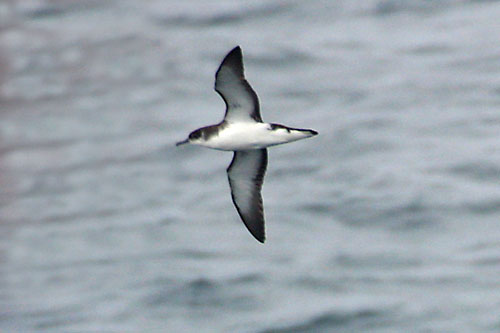
Manx Shearwater (Puffinus puffinus) ©AGrosset
Puffinus – “The species in this group are long-winged birds, dark brown or black above, and white to dark brown below. They are pelagic outside the breeding season. They are most common in temperate and cold waters. These tubenose birds fly with stiff wings, and use a shearing flight technique to move across wave fronts with the minimum of active flight. Some small species, such as the Manx shearwater, are cruciform in flight, with their long wings held directly out from their bodies.
Visit this link and watch the video about the Manx Shearwater Interesting Things – Amazing Bird Migration
Many are long-distance migrants, perhaps most spectacularly the sooty and short-tailed shearwaters, which perform migrations of 14,000 km or more each year. Puffinus shearwaters come to islands and coastal cliffs only to breed. They are nocturnal at the colonial breeding sites, preferring moonless nights to minimise predation. They nest in burrows and often give eerie contact calls on their night-time visits. They lay a single white egg.”

Common Diving Petrel (Pelecanoides urinatrix) by Daves BirdingPix
Diving Petrels in the Pelecanoides
The diving petrels are seabirds in the bird order Procellariiformes. There are four very similar species all in the family Procellariidae and genus Pelecanoides (Lacépède, 1799), distinguished only by small differences in the coloration of their plumage and their bill construction. They are only found in the Southern Hemisphere.
Diving petrels are auk-like small petrels of the southern oceans. The resemblances with the auks are due to convergent evolution, since both families feed by pursuit diving, although some researchers have in the past suggested that the similarities are due to relatedness. Among the Procellariiformes the diving petrels are the family most adapted to life in the sea rather than flying over it, and are generally found closer inshore than other families in the order.
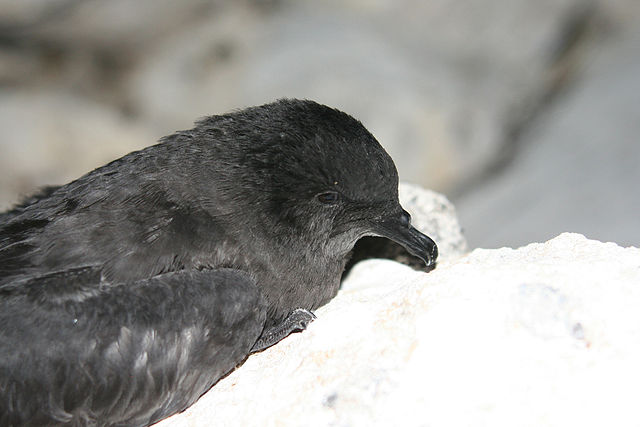
Bulwer’s Petrel (Bulweria bulwerii) ©WikiC
“Bulweria is a genus of seabirds in the family Procellariidae named after English naturalist James Bulwer. The genus has two extant species, Bulwer’s petrel (B. bulwerii) and Jouanin’s petrel (B. fallax). A third species, the Olson’s petrel (Bulweria bifax), became extinct in the early 16th century; it is known only from skeletal remains. Bulwer’s Petrel ranges in the Atlantic, Indian and Pacific Oceans, whereas Joaunin’s Petrel is confined to the northwestern Indian Ocean. Olson’s Petrel is known from the Atlantic.”
[Most information from Wikipedia]
“The mighty God, even the LORD, hath spoken, and called the earth from the rising of the sun unto the going down thereof.” (Psalms 50:1 KJV)
“Big Mighty God” ~ Three plus One Quartet
*
Procellariidae – Petrels, Shearwaters
Sunday Inspiration – Procellariidae Family – Petrel, Fulmar and Prion
Sunday Inspiration – Procellariidae – (Pterodroma – Gadfly) Petrels
Interesting Things – Amazing Bird Migration
*
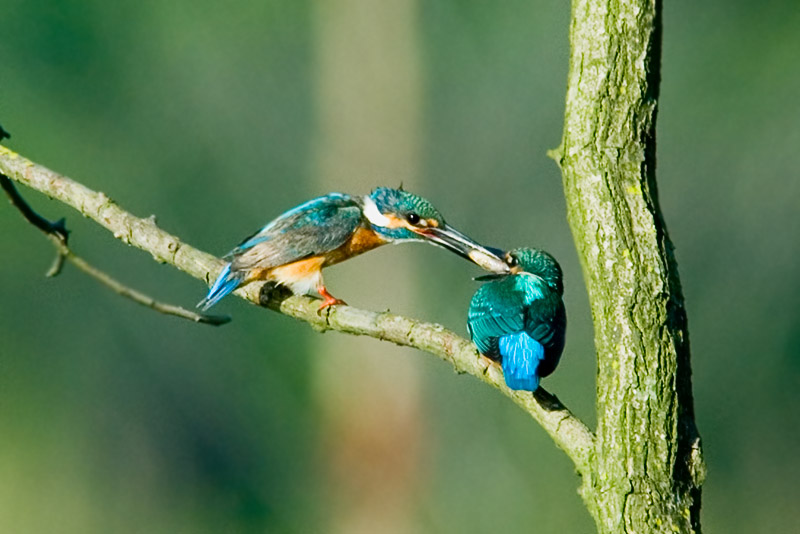
“Give to him that asketh thee, and from him that would borrow of thee turn not thou away.
(Matthew 5:42 KJV)
Kingfisher Feeding Young by Phil Kwong
*

“And the foundations of the wall of the city were garnished with all manner of precious stones. The first foundation was jasper; the second, sapphire; the third, a chalcedony; the fourth, an emerald; (Revelation 21:19 KJV)
Blue-chinned Sapphire (Chlorestes notata) ©WikiC
*

“And there sat in a window a certain young man named Eutychus, being fallen into a deep sleep: and as Paul was long preaching, he sunk down with sleep, and fell down from the third loft, and was taken up dead.” (Acts 20:9 KJV)
Sword-billed Hummingbird (Ensifera ensifera) by Michael Woodruff
*
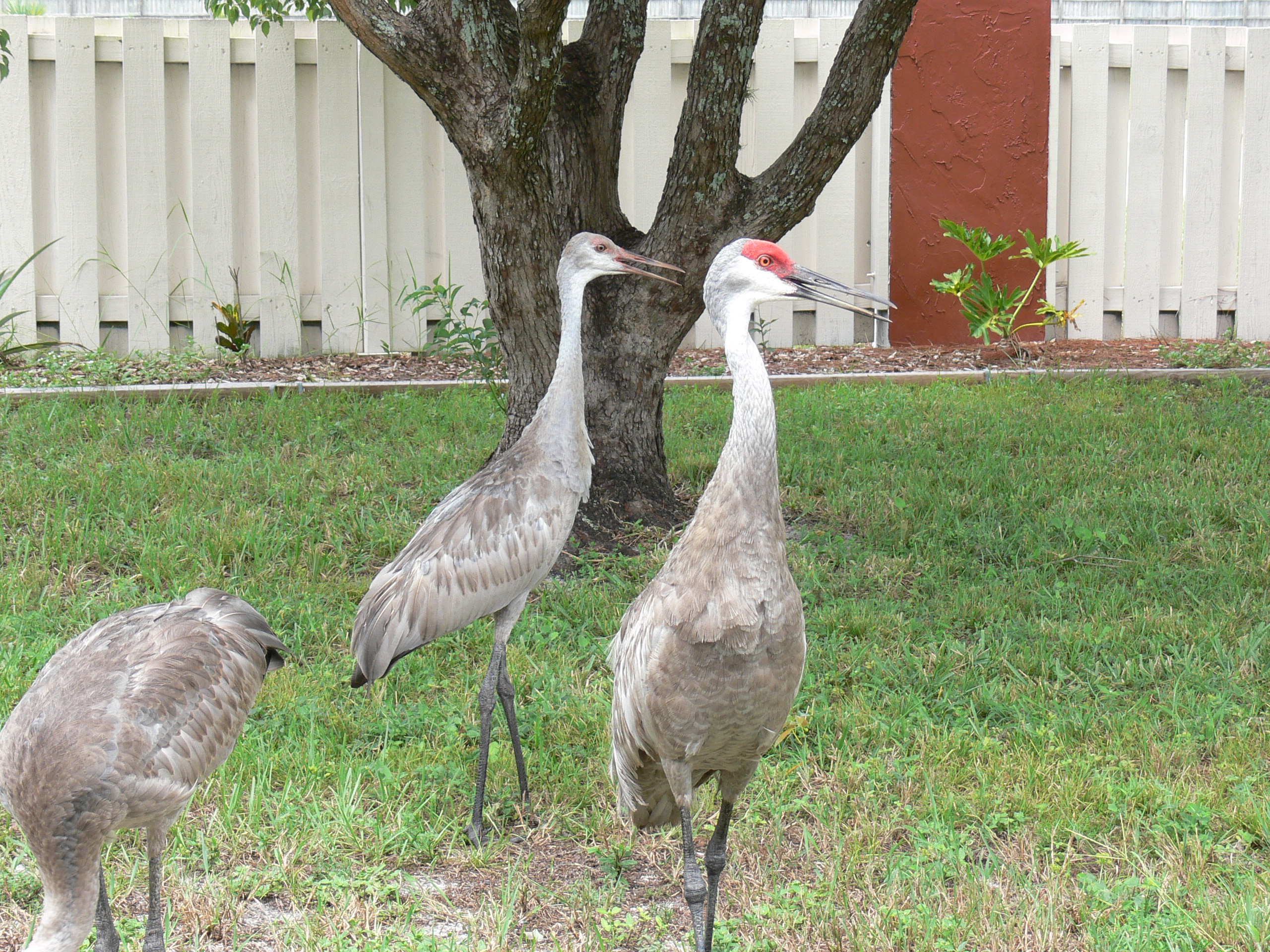
Sandhill Cranes – Adult and Juvenile in our yard 8/27/10
The latest I.O.C. Birds of the World Version 7.2 is now completed on this site. [As far as I know] Just finished updating all the Indexes for the birds by the First Name and by the Last Name. I trust this will continue to assist in finding just that bird you are looking for. [I find it easier to find the birds on Lee’s Birdwatching Adventures, than out in the field trying to find them. :0) ]
Indexes:
The last two articles, Latest I.O.C. Update is Version 7.2 – Name Changes and the Species Changes listed those changes. Today’s updates are in the Taxonomy. Some of these were changes in genera, a few were spelling corrections, a couple of them shuffled some birds around.

Sandhill Crane (Antigone canadensis) by Lee at Wings of Asia
Five Cranes had a change of genus fron Grus:

Spoon-billed Sandpiper (Calidris pygmeus) ©WikiC
The Surfbird, Ruff, Broad-billed Sandpipe, Spoon-billed Sandpiper, and the Buff-breasted Sandpiper were all changed to the Calidris genus.
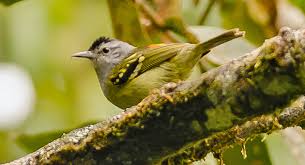
Rufous-rumped Antwren (Euchrepomis callinota) ©Neotropical Birds
Four Antwrens were changed from the Terenura genus to the Euchrepomis genus. They are the Rufous-rumped Antwren, Chestnut-shouldered Antwren, Yellow-rumped Antwren, and the Ash-winged Antwren.
Two Bulbuls; the Olive Bulbul had a spelling correction from virescens to viridescens, and the Buff-vented Bulbul is Iole crypta.
And last of all, two Laughingthrushes, the Black-chined and Kerala, have a new genus of Montecincla.
Most casual birdwatchers are not too concerned about these kinds of changes, but those who work with photos and life lists, etc. have an interest.
Until the next update, it is hoped that the indexes and information will be helpful.
“They are all plain to him who understands, And right to those who find knowledge.” (Proverbs 8:9 NKJV)
The latest update to the I.O.C.’s list of all the birds of the world was released near the end of April. This blog site, Lee’s Birdwatching Adventures Plus, is almost updated with this new version. All the indexes and the actual family pages are finished. The alphabetical list of names is all that is left for me to update.
One bird was deleted from the list with this version:

Archbold’s Owlet-nightjar (Aegotheles archboldi) ©Dr Suwanna Mookachopan – Pinterest
Archbold’s Owlet-nightjar (Aegotheles archboldi)
Here are the English and scientific names of the new birds add with this new Version:
Black-fronted Francolin (Pternistis atrifrons)
Bermuda Hawk (Bermuteo avivorus) Extinct, not Pre-historic :o)
Norfolk Ground Dove (Alopecoenas norfolkensis) Extinct, not Pre-historic :o)
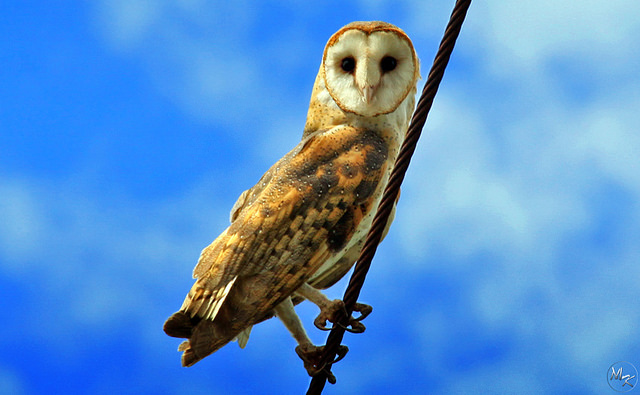
American Barn Owl (Tyto furcata) ©Frutos Atrativos do Cerrado
American Barn Owl (Tyto furcata) part of Barn Owls
Blue-vented Hummingbird (Amazilia hoffmanni) split from Steely-vented Hummingbird
Peruvian Racket-tail (Ocreatus peruanus) split from Booted Racket-tail (now White-booted)
Rufous-booted Racket-tail (Ocreatus addae) split from Booted Racket-tail (now White-booted)
Bermuda Flicker (Colaptes oceanicus) Extinct, not Pre-historic :o)

Cordilleran Parakeet (Psittacara frontatus) ©IBC/HBW
Cordilleran Parakeet (Psittacara frontatus)
Tatama Tapaculo (Scytalopus alvarezlopezi)
Cachar Bulbul (Iole cacharensis)
Charlotte’s Bulbul (Iole charlottae)
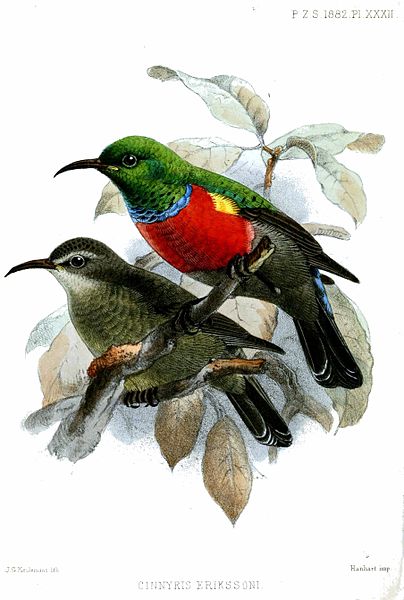
Ludwig’s Double-collared Sunbird (Cinnyris ludovicensis) ©Drawing WikiC
Whyte’s Double-collared Sunbird (Cinnyris whytei) split from Ludwig’s Double-collared Sunbird
Tomorrow, I’ll try to present rest of the changes. Still working on indexes.
The reason for the smiley face after the new extinct ones is because as most readers of this blog are aware, that this blog teaches Creation, not evolution. That means they now know the birds lived not soooooo far back in history.
Then God said, “Let the waters abound with an abundance of living creatures, and let birds fly above the earth across the face of the firmament of the heavens.” So God created great sea creatures and every living thing that moves, with which the waters abounded, according to their kind, and every winged bird according to its kind. And God saw that it was good. (Genesis 1:20-21 NKJV)

“And also that every man should eat and drink, and enjoy the good of all his labour, it is the gift of God.” (Ecclesiastes 3:13 KJV)
Firey-throated and Volcano Hummingbird ©Raymond Barlow
*
 Lee's Birdwatching Adventures Plus