Mystery Bird Solved at Zoo Miami

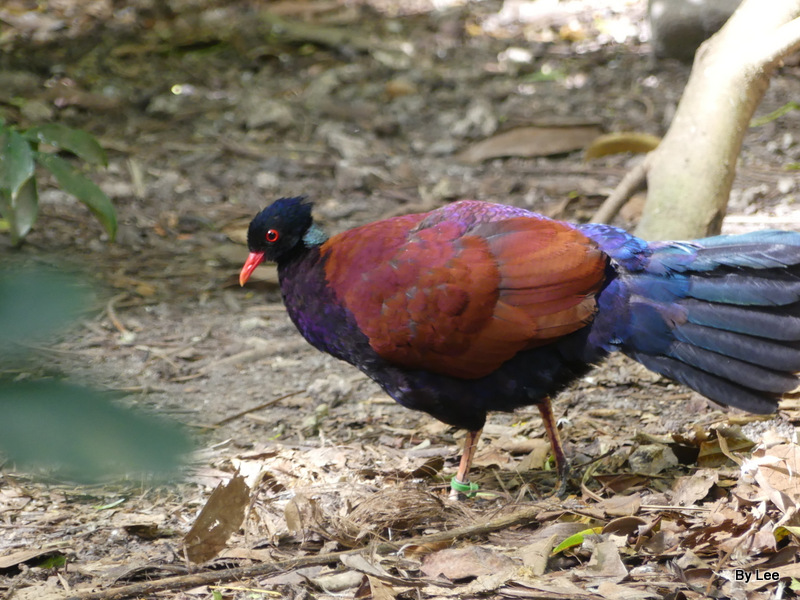
Pheasant Pigeon (Otidiphaps nobilis) (Green-naped) Zoo Miami by Lee

Mystery Bird at Zoo Miami by Lee

“My son, keep thy father’s commandment, and forsake not the law of thy mother: Bind them continually upon thine heart, and tie them about thy neck.” (Pro 6:20-21 KJV)

Finally sat down and started naming my photos from our latest trip to Zoo Miami’s Wings of Asia Aviary. Since we spent the whole day, just in that Aviary, except for lunch, the photos are not in any order. Ducks especially have a way of swimming by and then another, then back they come again. Most of you photographers know how it is. And as I’ve always stated, I wish the Lord had hung name tags on birds so we could more easily identify them. :o)

I was fortunate to receive a list of the current birds from the workers, which has been a huge help. With at least 500 birds and 88 species in one aviary, it can get complicated putting names on the right birds.

I had gone through these photos before I came to the one above:

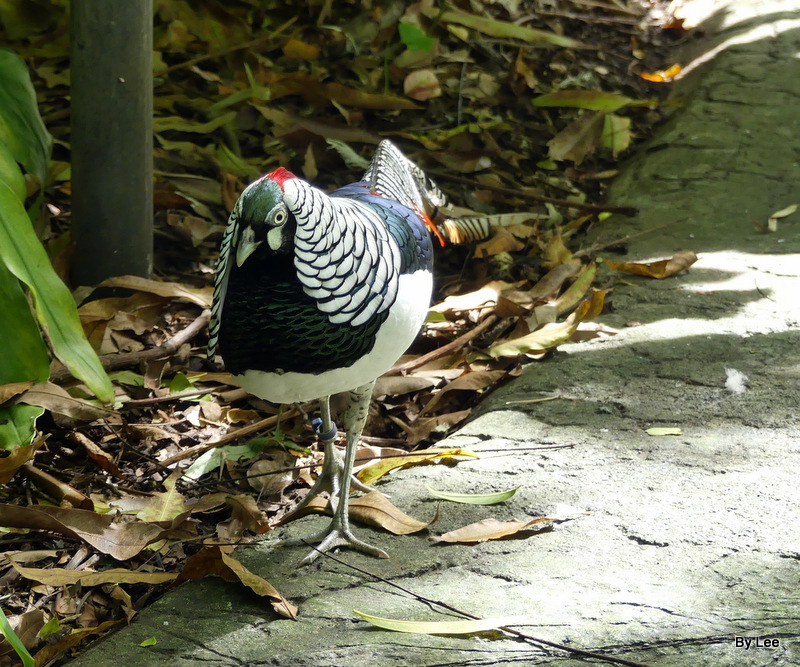
Lady Amherst's Pheasant (Chrysolophus amherstiae) Zoo Miami by Lee

Lady Amherst’s Pheasant (Chrysolophus amherstiae) Zoo Miami by Lee

Now there is a beautifully designed avian wonder from the Creator. More about this bird later.

The Siamese Fireback is also in the Pheasant family.

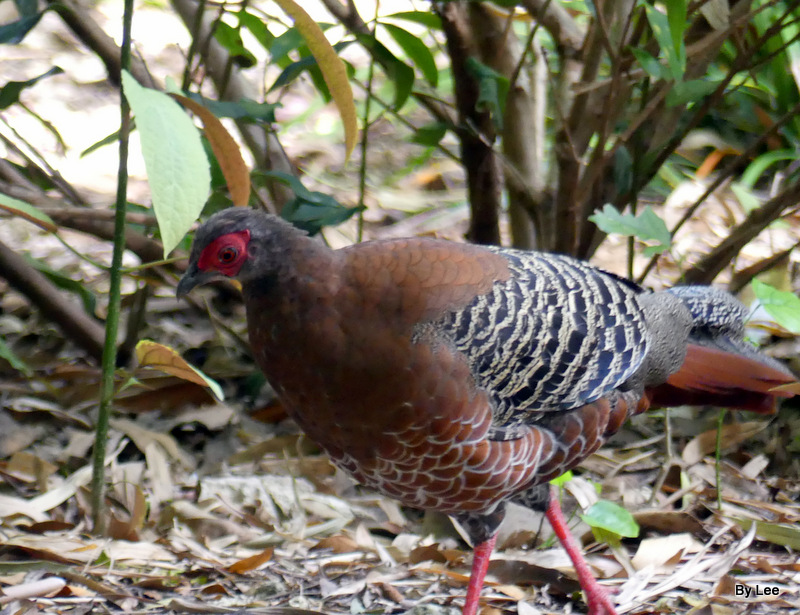
Siamese Fireback (Lophura diardi) Zoo Miami by Lee

Siamese Fireback (Lophura diardi) Zoo Miami by Lee

So, when our mystery bird showed up, which family do you think I kept looking through? The Pheasants and allies – Phasianidae Family. I searched high and low.

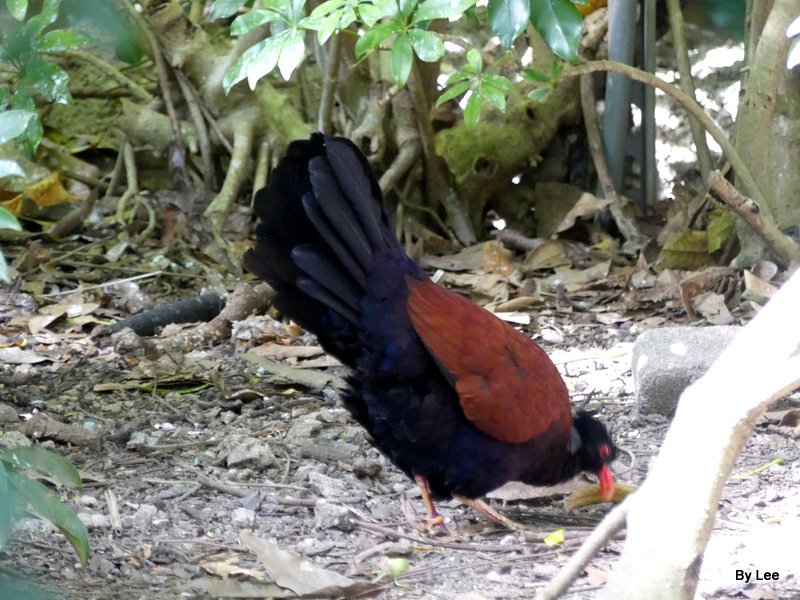
Pheasant Pigeon (Otidiphaps nobilis) (Green-naped) Zoo Miami by Lee

Guess what this bird is!

Can you guess what this bird is?

Pheasant Pigeon (Otidiphaps nobilis) (Green-naped) Zoo Miami by Lee

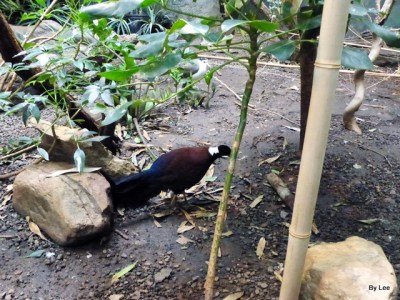
Mystery Bird and a Red-vented Bulbul at the Zoo

I about fell out of my computer chair when I found out.

Pheasant Pigeon (Otidiphaps nobilis) (Green-naped) Zoo Miami by Lee

Maybe a close up of the face will help. Zoo Miami by Lee

Our Mystery Bird turns out to actually be a Pigeon!!!. This is a Pheasant Pigeon (Otidiphaps nobilis) [Green-naped Pheasant Pigeon] as Zoo Miami calls it.

Pheasant Pigeon (Otidiphaps nobilis) (Green-naped) Zoo Miami by Lee

Pheasant Pigeon (Otidiphaps nobilis) (Green-naped) Zoo Miami by Lee

I Just Couldn’t Believe THIS IS A PIGEON!!!!!

“The pheasant pigeon (Otidiphaps nobilis) is a genus of large terrestrial pigeon found in the primary rainforests of New Guinea and nearby islands. It ranges primarily over hilly and lower mountain areas, but can also be found in lowlands.

There are four species, [actually subspecies] which differ primarily in the presence or absence of a small crest and in the colour of the nape. The two best known are the western nominate (O. nobilis) with a greenish nape and O. n. aruensis from the Aru Islands with a white nape. [We saw this at the Cincinnati Zoo] The two remaining species, O. n. cervicalis from the eastern part of its range and O. n. insularis from Fergusson Island, have a grey nape and a black nape (concolour with the remaining black neck) respectively.” [Wikipedia with editing]

COL-Colu Pheasant Pigeon (Otidiphaps nobilis) (Green-naped) Cincinnati Zoo 2016 - Lee (2).JPG

Pheasant Pigeon [White-naped]  (Otidiphaps nobilis) Cincinnati Zoo 2016 – Lee

Pheasant Pigeon – Wikipedia


*


Lee’s Six Word Saturday – 11/12/16

***

Birds Calling OUt ©DailyMail

HER CHILDREN ARISE UP, AND CALL

***


“Her children arise up, and call her blessed.” (Proverbs 31:28a)

Birds Calling Out ©DailyMail

*

More Daily Devotionals

*

Lee’s Five Word Friday – 11/11/16

***

Bald Eagle and a flag

THE WHOLE CHURCH, SALUTETH YOU

***


“Gaius mine host, and of the whole church, saluteth you. ” (Rom 16:23A KJV)

IN HONOR OF ALL OF OUR BRAVE VETERANS!!

Bald Eagle and a Flag

*

More Daily Devotionals

Sunday Inspiration – Veteran’s Day

Cher Ami – World War I Hero

Salute to Our Veterans

*

Lee’s Four Word Thurday – 11/10/16

***

Mourning Collared Dove (Streptopelia decipiens) With Young ©WikiC

HIS MOTHER TAUGHT HIM

***


“The words of king Lemuel, the prophecy that his mother taught him.” (Proverbs 31:14)

Mourning Collared Dove (Streptopelia decipiens) With Young ©WikiC

*

More Daily Devotionals

*

Lee’s Three Word Wednesday – 11/9/16

***

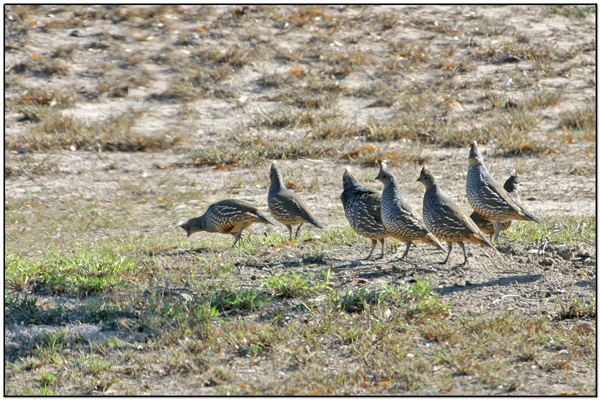
Scaled Quail (Callipepla squamata) by DavesBirdingPix

AND BROUGHT QUAIL

***


“And there went forth a wind from the LORD, and brought quails from the sea, and let them fall by the camp, as it were a day’s journey on this side, and as it were a day’s journey on the other side, round about the camp, and as it were two cubits high upon the face of the earth.” (Numbers 11:31 KJV)

Scaled Quail (Callipepla squamata) by DavesBirdingPix

*

More Daily Devotionals

Birds of the Bible – Quail

*

“E” is for Egrets and Emus: “E” Birds”, Part 2

“E” is for Egrets and Emus: “E Birds”, Part 2
James J. S. Johnson

“Blessings are upon the head of the just, but violence covereth the mouth of the wicked.” (PROVERBS 10:6)

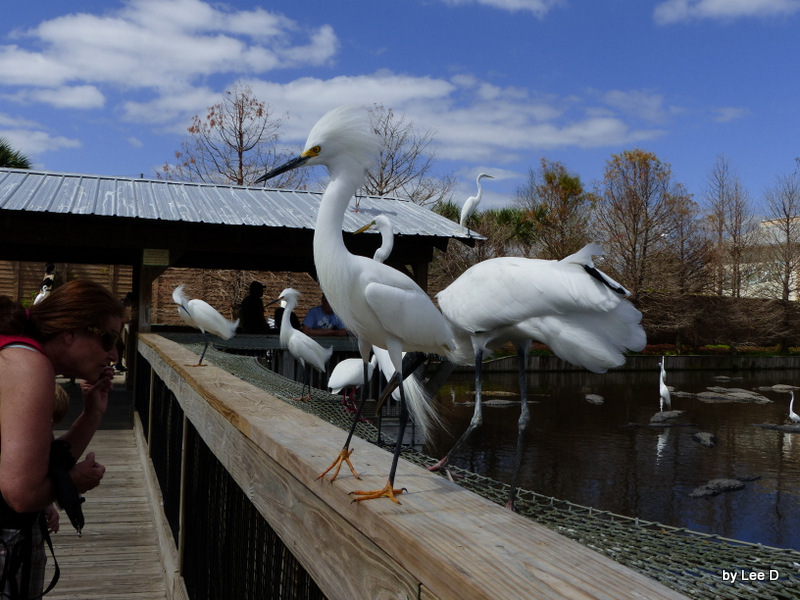
Is that an egret, standing on top of my head?*

Photo credit:  Marcia Webel (St. Petersburg, Florida)

(*Actually, the egret was perching upon branches behind me, not atop my head.)

It is a blessing to use our heads, to watch birds, such as egrets.

As noted in Part 1 of the “E” Birds “E” is for Eiders, Eagles, (of which there are many varieties), Eagle-owls, Egrets, Emus, Eagle-owls, Egrets, Euphonias, Elaenias, Eremomelas, Elepaios, Earthcreepers, and Emerald hummingbirds — plus whatever other birds there are, that have names that begin with the letter E.

In this Part 2 (reviewing “E” birds), 2 categories of “E” birds are considered: Egrets and Emus.

snowyegret-gatorlandflorida-ad2016

Snowy Egret at Gatorland by Lee

EGRETS

Regarding Egrets, see, e.g., Lee Dusing’s “Egrets and Heron Catching the Gator Taxis” as well as her “Baby Snowy Egrets at Gatorland”.

It is truly amazing to see egrets seeking food, at Florida’s Gatorland, while presumptively and precariously perched atop the backs of drifting/semi-submerged alligators. As ornithologist Lee Dusing once observed:

Most times these alligators and birds get along fine. People are tossing food to them and so they abide each other. It is amazing how different critters get along. I can only imagine how it must have been when they were first created. There was no desire of the gators to eat the birds. Today, under the curse, it is a totally different situation.

[Quoting Lee Dusing’s “Egrets and Heron Catching the Gator Taxis”, See also my report on how Cattle Egrets practice “mutual aid” with various terrestrial herbivores, in “Cattle Egrets, Cattle, and Other Herbivore Neighbors”.

Since those egrets have been described, as just noted, previously, not much will be added here, regarding them, except for a few comments regarding their distribution, i.e., regarding the ranges they inhabit.
greatwhiteegrets-by-bencemate

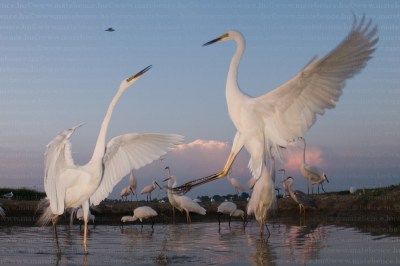
Great White Egrets (photo by Bence Mate)

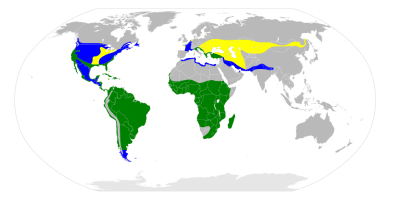
The Great White Egret (Ardea alba) is well-known in North America, as the range map below shows, but most of America only hosts this tall egret during the winter months.
greatwhiteegret-range-map-wikipedia

Great White Egret range map (Wikipedia)
Yellow = breeding; Green = year-round; Blue = wintering

Breeding occurs mostly in the Mississippi River watershed corridor states, with a swath of the Southwest and southern coasts providing year-round habitat of this long-legged shorebird.

A tall and stately bird, the Great [White] Egret slowly stalks shallow [waters of] wetlands looking for small fish [or frogs, or snakes, etc.] to spear [or grab] with its long sharp bill. Nests in colonies of up to 100 birds. Now protected [legally], they were hunted to near extinction in the 1800s and early 1900s for their long white plumage.

[Quoting Stan Tekiela, BIRD OF TEXAS FIELD GUIDE (Cambridge, MN: Adventure Publications, 2004), page 371.]

Another familiar white-feathered egret, in America, is the Snowy Egret.
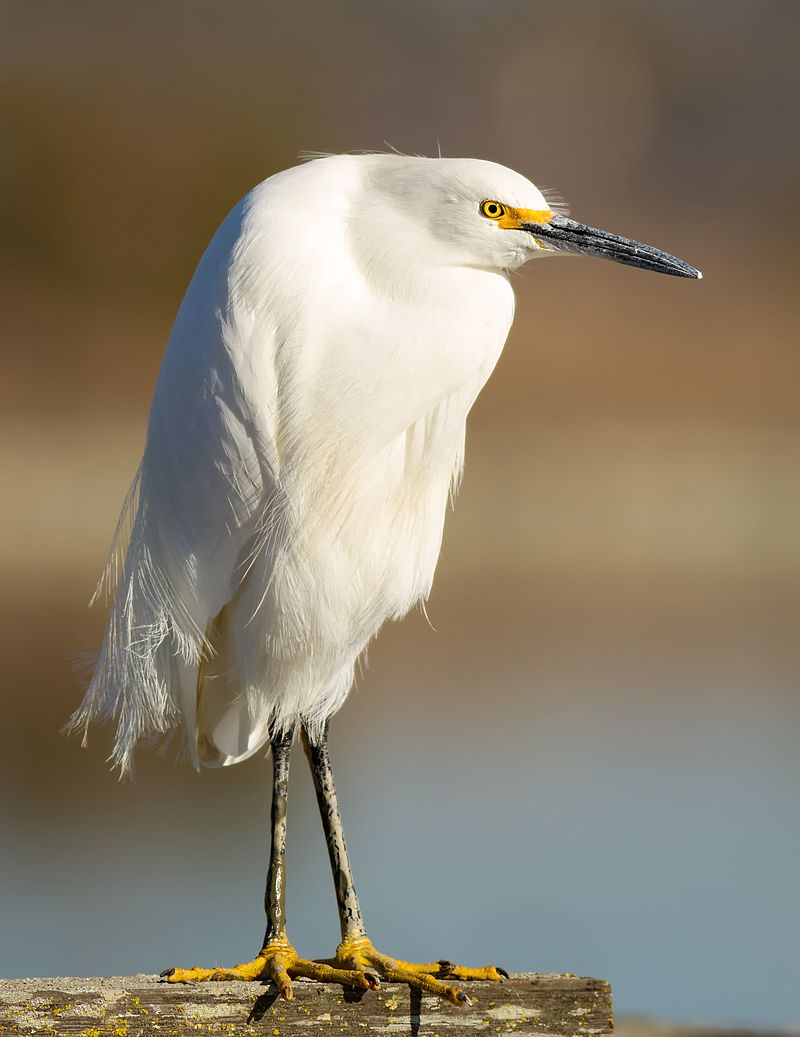
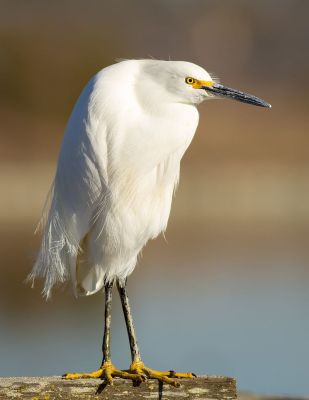
The Snowy Egret (Egretta thula) is a small-scale heron with snowy white plumage, famous for its “golden slippers”.
snowyegret-wikipedia

Snowy Egret (Wikipedia)

Like the resourceful Cattle Egret (mentioned above — see coverage of this wide-ranged and herbivore-helping egret,) the Snowy Egret is small in size, as herons and egrets go. However, unlike the Cattle Egret, its feathers are all white, and its feet are a mustard-yellow (or goldenrod yellow) in color.  The Snowy Egret is a wetland bird – preferring swamps (including mangrove swamps), pondshores, marshlands (including saltmarshes), island shores, and estuaries (including tidal mudflats).

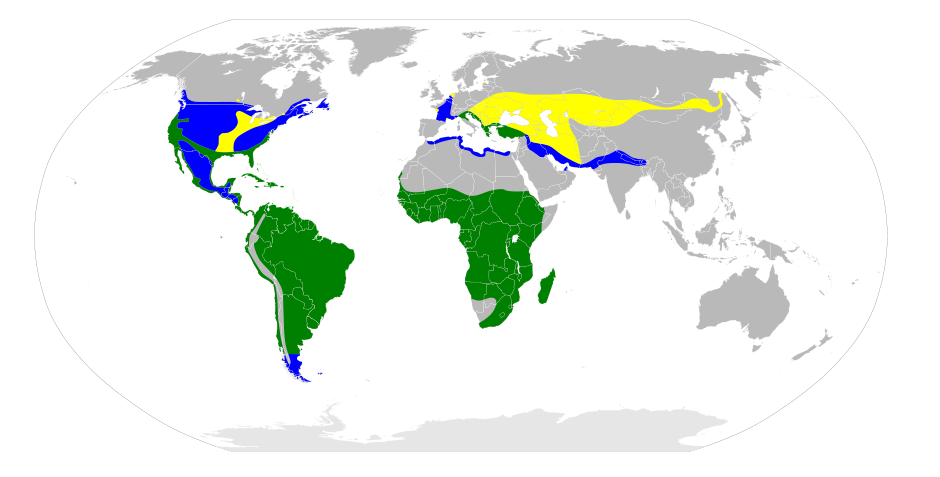
As shown below, the Snowy Egret has a breeding range that includes some patches of America, mostly in part of the Northwest and in the drainage basin of the Mississippi River. Also, the Snowy Egret is a year-round resident of America’s Atlantic coast and America’s Gulf of Mexico coast.
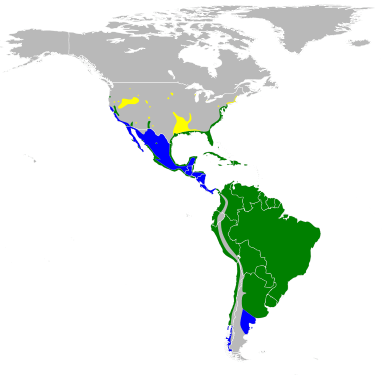
snowyegret-range-map-wikipedia

Snowy Egret range map (Wikipedia)
Yellow = breeding; Green = year-round; Blue = wintering

 More than a century ago the Snowy Egret (as well as the Flamingo, the Roseate Spoonbill, various cranes, ducks, geese, swans, other members of the heron-egret family, doves, as well as insectivorous passerine migrants, etc.) was wastefully being hunted for its fancy feathers, jeopardizing the entire American population — until the Migratory Bird Treaty was enacted (and was enforced).

Regarding the Migratory Bird Treaty’s historic importance, see “Looking Back 100 Years, at the Migratory Bird Treaty: A Bird’s-eye View of How It was Hatched”.
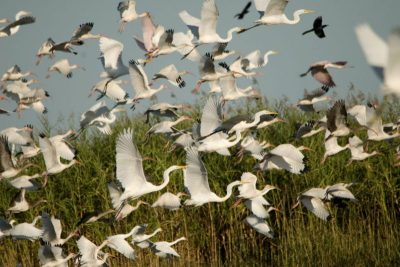
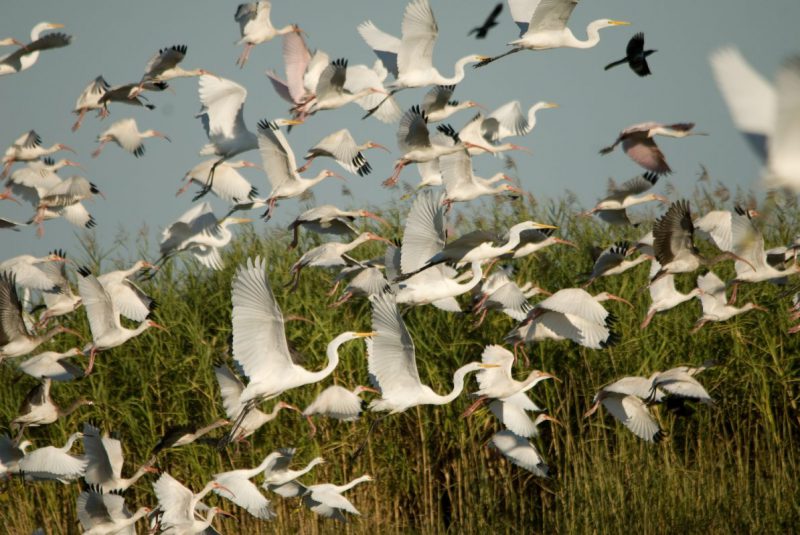
Great White Egret, Snowy Egret, White Ibis,Roseate Spoonbill, and
Great-tailed Grackle, flying over coastal marshland (Photo credit: Eric Ripma)

Thankfully, populations of egrets (and other long-legged, long-necked birds, such as cranes, herons, flamingo, roseate spoonbill, ibis, etc.) have rebounded, since passage (100 years ago) and enforcement of the Migratory Bird Treaty.

EMUS

Regarding Australia’s Emu (as well as regarding other ratites, including the smallest ratite — New Zealand’s kiwi), see ornithology professor Lee Dusing’s “Sunday Inspiration: Ostrich, Rhea, Cassowary, Emu & Kiwi”.

Also, for a close-up (albeit abrupt) perspective on an Emu, see “Lee’s Five Word Friday: 9/16/16”.
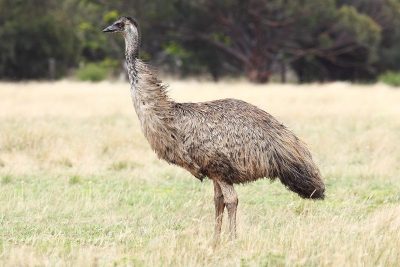
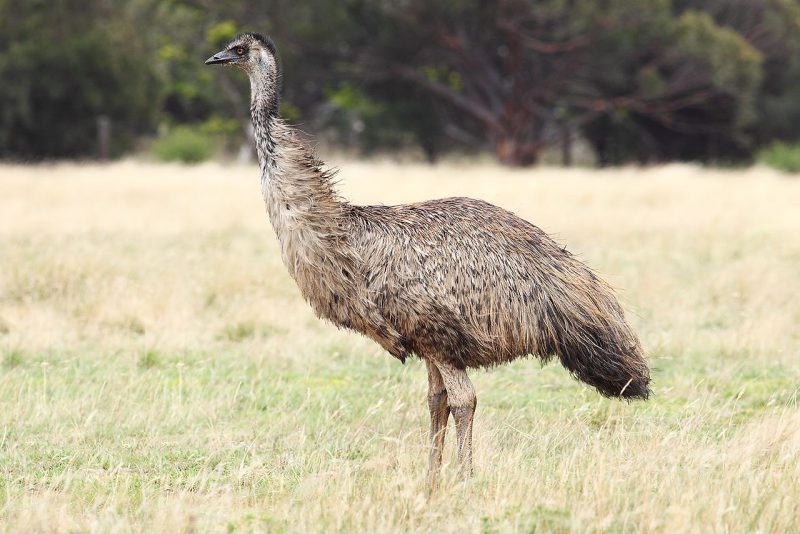
Emu (Dromaius novahollandiae) in the wild (Wikipedia)

The Emu is the second-largest (non-extinct) bird, by height; only the Ostrich is taller. By weight the Emu is the world’s third-largest bird, weighing less than the Ostrich and anther ratite “cousin”, the double-wattled Southern Cassowary.

The Emu has an over-all height of about 180 cm. (70”); to the top of the back it measures about 100 cm. (40”); it can weigh up to 55 kg. (120 lbs.) and have a beak up to 12 cm. long (5”). The body is very bulky, the coloring of the plumage brownish. The feet have three toes [each]. … The nest [typically located in scrubby steppe grassland habitat] is a hollow in the ground near a shrub, and it is covered with leaves, grass, et cetera. Various females lay 15-25 eggs, which are incubated by the male for 52-60 days [during with time the male loses a lot of weight, due to not eating], depending on the interruptions made by the male to find food and water. The nestlings, which have a distinctive white and brown-striped plumage, achieve complete development and sexual maturity within 2 or 3 years. The Emu can run at speeds of up to 50 kph. (30 mph.).

[Quoting Gianfranco Bologna, SIMON & SCHUSTER’S GUIDE TO BIRDS (Simon & Schuster, 1981; edited by John Bull), page 143.]

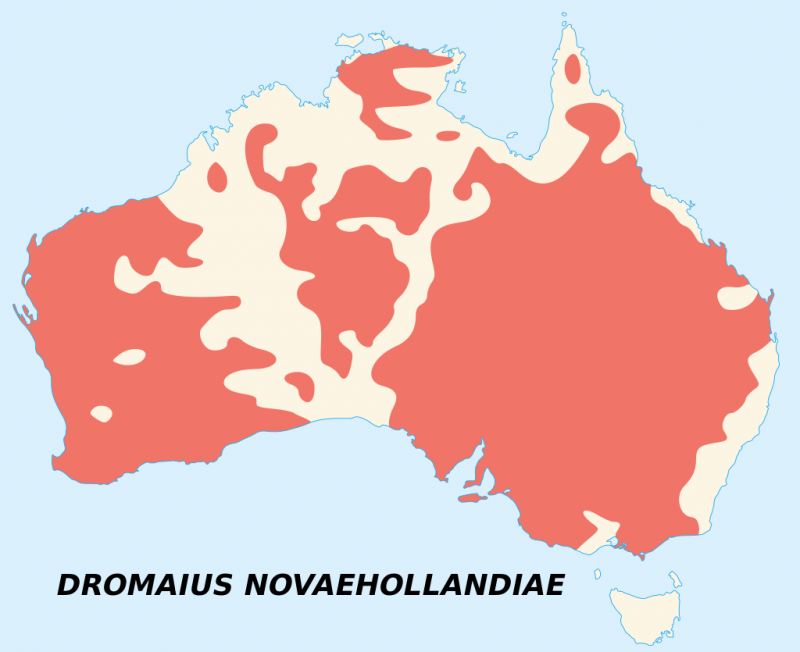
Since the Emu was described previously (as noted in the previous sentence), no more will be added here, other than to note that the Emu’s native range covers most of Australia. (Also, emus have been, and now are, raised commercially in America, for their meat, for oil, or sometimes as part of investment scams.)
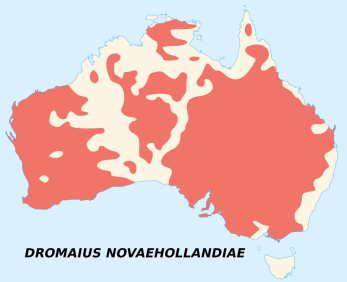
emu-range-map-wikipedia

Emu range map (Wikipedia)

In recent years I have observed, in the wild, many varieties of Egrets – especially Great White Egret, Snowy Egret, and Cattle Egret. Also, on a few occasions I have observed (very close up) domesticated Emus – and they are not fully “tame” even when they are “domesticated”. All of these birds, which range in size, are marvels in motion — examples of God’s super-genius bioengineering.

Whenever we look at such feathered creatures, we should be amazed, and we should admire God’s handiwork, — because God has given us the ability to use our minds (which are somehow linked to the physical “hardware” of our heads, especially our eyes and brains). In a sense, we have such birds “on our heads”, as we think through the blessings God has given, due to Him creating such birds.

So, if our minds are renewed to proper reverence of God, as the Creator of all creation (Revelation 4:11), our “heads” can empirically accept and analyze these visual blessings, as feathered exhibits displaying God’s glory.

“Blessings are upon the head of the just, but violence covereth the mouth of the wicked.” (PROVERBS 10:6)

God willing, the next contribution to this alphabetic series will be some “F birds” – perhaps some of these: Fairywrens, Falcons, Fantails, Fernbirds, Fieldwrens, Figbirds, Finches, Firetails, Fiscals, Flamebacks, Flamingos, Flatbills, Flowerpeckers, Flycatchers, Foliage-gleaners, Forktails, Francolins, Friarbirds, Frigatebirds, Frogmouths, Fruiteaters, Fulmars, Fulvettas, etc.! Meanwhile, enjoy using your eyes (and the rest of your head) to appreciate the blessings and privileges of daily life, including opportunities to observe God’s avian wonders, like egrets and emus.

><> JJSJ
Lee’s Two Word Tuesday – 11/8/16

***

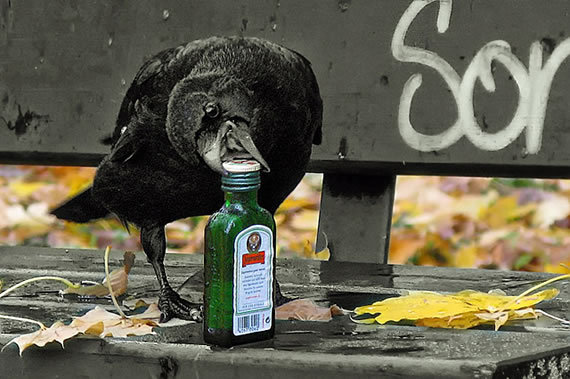
Crow Trying to Drinking ©Cutest Paw

TO DRINK

***


“It is not for kings, O Lemuel, it is not for kings to drink wine; nor for princes strong drink:” (Proverbs 31:4)

Crow Trying To Drink ©Cutest Paw

*

More Daily Devotionals

*

Lee’s One Word Monday – 11/7/16

***

Birds on Gate - St. Peter Port ©Oriana

GATES

***


“Her husband is known in the gates, when he sitteth among the elders of the land.” (Proverbs 31:23)

Birds on Gate – St. Peter Port ©Oriana

*

More Daily Devotionals

*

Lee’s Seven Word Sunday – 11/6/16

***

Robins in Snow ©Deanna Greens

SHE IS NOT AFRAID OF THE SNOW

***


“She is not afraid of the snow for her household: for all her household are clothed with scarlet.” (Proverbs 31:21)

Robins in Snow ©Deanna Greens

*

More Daily Devotionals

*

Sunday Inspiration – Ducks and Geese

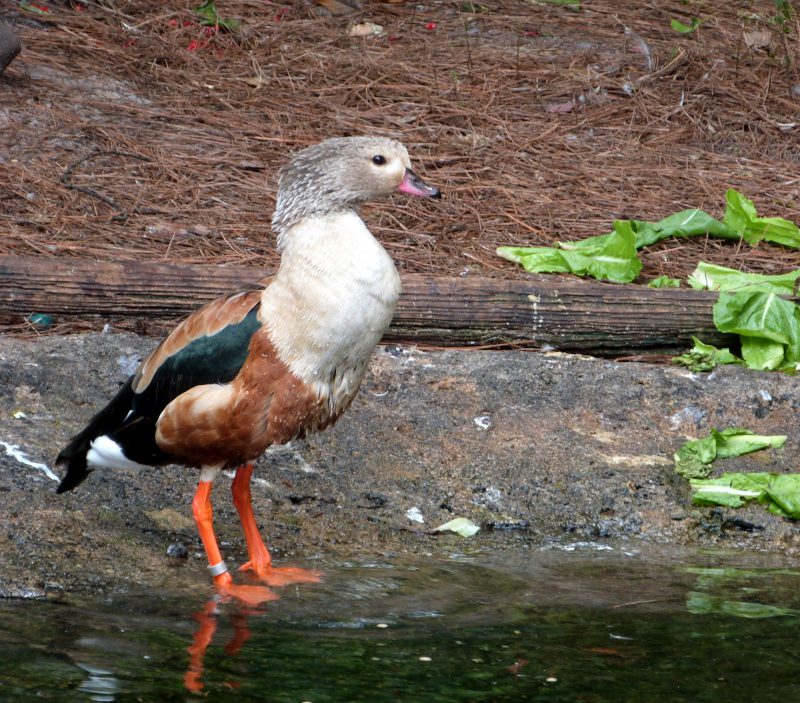
Orinoco Goose (Neochen Jubata) by Lee

Orinoco Goose (Neochen Jubata) by Lee

“With him is wisdom and strength, he hath counsel and understanding.” (Job 12:13 KJV)

It’s Sunday and time for some more of the Anatidae Family. We have 18 more great swimmers for you to check out. These are in 10 different genera, with 9 Ducks, 9 Geese and 2 sheldgeese. The Lord created all of these with shapes and colors, but they all love being in or near water.

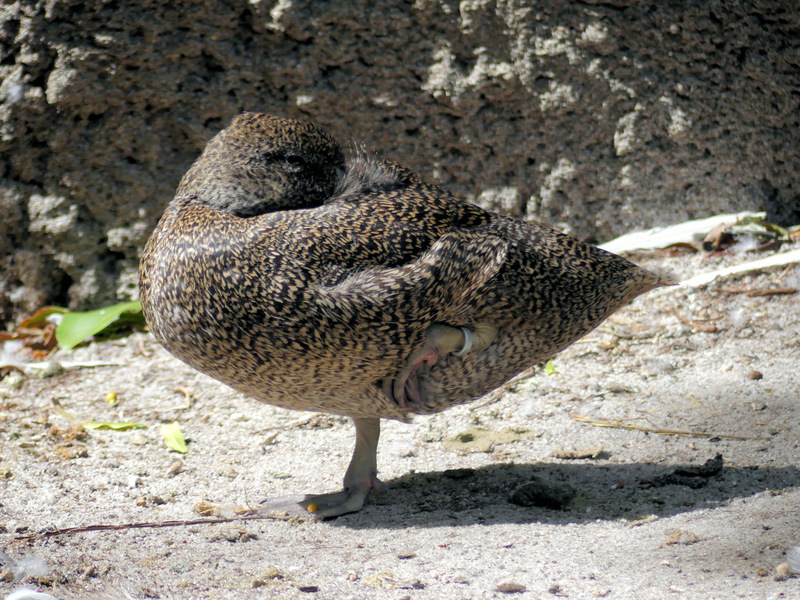
Freckled Duck (Stictonetta naevosa) by Lee at Zoo Miami

Freckled Duck (Stictonetta naevosa) by Lee at Zoo Miami

Freckled Duck (Stictonetta naevosa) – is a waterfowl species endemic to Australia and is among the rarest waterfowl in the world. The freckled duck has also been referred to as the monkey duck or the oatmeal duck in English, Punktchenente in German, canard mouchete in French and pato manchado in Spanish. These birds are usually present in mainland Australia, but disperse to coastal and subcostal wetlands in the dry period. During such times it is common for the freckled duck population to congregate in flocks in the same area, giving the impression that they are more common than they really are.

The freckled duck has a distinctive appearance. It is characterized, in adults, by dark grey to black plumage covered with small white flecks, which gives the duck the ‘freckled’ look. The feet, legs and bill of both sexes is of a slate grey color. Hatchlings and juveniles are distinguished by a uniform light grey plumage, which they lose around their 32nd week when they undergo a full body molt to assume the adult plumage.

In the past few decades, several institutions have established breeding programs to aid in supplementation of the freckled duck population. and Zoo Miami is one of the ones in this program. We saw these on our latest trip to the zoo.

Blue Duck (Hymenolaimus malacorhynchos) ©Flickr Phillip Capper

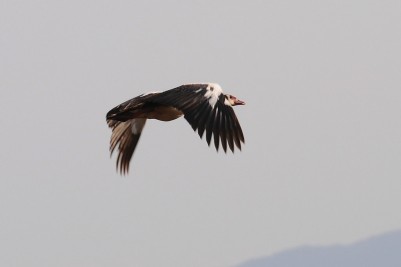
Blue Duck (Hymenolaimus malacorhynchos) is endemic to New Zealand. (Also known as “Whio”) It is the only member of the genus Hymenolaimus. It is an endemic resident breeder in New Zealand, nesting in hollow logs, small caves and other sheltered spots. It is a rare duck, holding territories on fast flowing mountain rivers. It is a powerful swimmer even in strong currents, but is reluctant to fly. It is difficult to find, but not particularly wary when located.

Captive North Island Whio are held and bred on both main islands of New Zealand, but the progeny are returned to their respective island. South Island whio are held and bred in captivity on the South Island only. All captives are kept by approved and permitted zoological and wildlife facilities as part of the national recovery plan. As part of this current ten-year plan (2009-2019) is the WHIONE program which works with specially trained nose dogs to locate nests. The eggs removed and ducklings hatched and raised in captivity. Later they are conditioned for coordinated release. Sounds like they are continuing the Genesis mandate. (Genesis 1:26-28)  * The blue duck is depicted on the reverse side of the New Zealand $10 banknote.

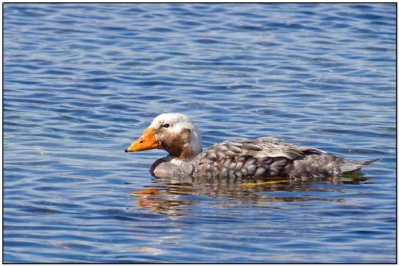
Falkland Steamer Duck (Tachyeres brachypterus) by Dave's BirdingPix

Falkland Steamer Duck (Tachyeres brachypterus) by Dave’s BirdingPix

The Steamer Ducks are a genus (Tachyeres) of ducks in the family Anatidae. All of the four species occur at the southern cone of South America in Chile and Argentina, and all except the Flying Steamer Duck are flightless; even this one species capable of flight rarely takes to the air. The genus name Tachyeres, “having fast oars” or “fast rower”, comes from Ancient Greek ταχυ- “fast” + ἐρέσσω “I row (as with oars)”. The common name “steamer ducks” arose because, when swimming fast, they flap their wings into the water as well as using their feet, creating an effect like a paddle steamer. They can be aggressive and are capable of chasing off predators like petrels.

The Steamer Ducks are the Flying Steamer Duck (Tachyeres patachonicus), Fuegian Steamer Duck (Tachyeres pteneres), Falkland Steamer Duck (Tachyeres brachypterus), and the Chubut Steamer Duck (Tachyeres leucocephalus)

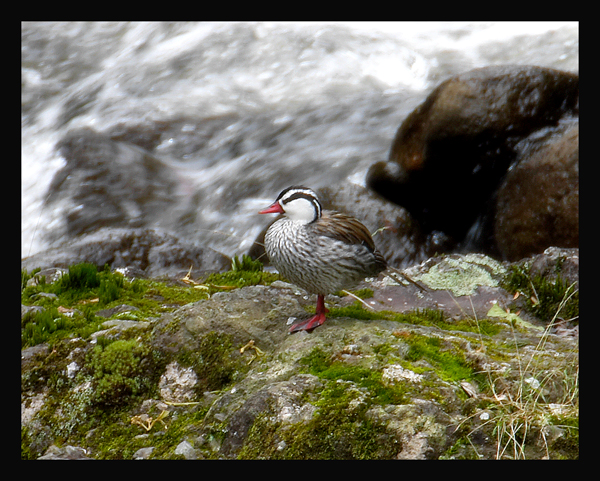
Torrent Duck (Merganetta armata) by Robert Scanlon

Torrent Duck (Merganetta armata) by Robert Scanlon

Torrent Duck (Merganetta armata) is the only member of the genus Merganetta. Its closest relative may be the blue duck of New Zealand.
This 43–46-centimetre (17–18 in) long species is a resident breeder in the Andes of South America, nesting in small waterside caves and other sheltered spots. Like the blue duck, it holds territories on fast flowing mountain rivers, usually above 1,500 metres (4,900 ft). It is a powerful swimmer and diver even in white water, but is reluctant to fly more than short distances. It is not particularly wary when located.
Male torrent ducks have a striking black and white head and neck pattern and a red bill. In flight they show dark wings with a green speculum. Females of all subspecies are somewhat smaller than the drakes; they have orange underparts and throat, with the head and upperparts grey and a yellower bill. Juveniles are pale grey above and whitish below.

Spur-winged Goose (Plectropterus gambensis) by Bob-Nan

Spur-winged Goose (Plectropterus gambensis) by Bob-Nan

Spur-winged Goose (Plectropterus gambensis) is a large bird in the family Anatidae, related to the geese and the shelducks, but distinct from both of these in a number of anatomical features, and therefore treated in its own subfamily, the Plectropterinae. It occurs in wetlands throughout sub-Saharan Africa. Adults are 75–115 cm (30–45 in) long and weigh on average 4–6.8 kg (8.8–15.0 lb), rarely up to 10 kg (22 lb), with males noticeably larger than the females. The wingspan can range from 150 to 200 cm (59 to 79 in).

This species often occurs in open grasslands with lakes, seasonal pools, rivers, swamps and river deltas. Large inland rivers and lakes are perhaps most commonly inhabited, with saline lakes and upland areas generally being avoided, although the species can occur to an elevation of 3,000 m (9,800 ft) in eastern Africa. It is also absent from arid zones.

Comb Duck (Sarkidiornis sylvicola) by Nikhil Devasar

Comb Duck (Sarkidiornis sylvicola) by Nikhil Devasar

Comb Duck (Sarkidiornis sylvicola) and Knob-billed Duck (Sarkidiornis melanotos) are an unusual, pan-tropical duck, found in tropical wetlands in sub-Saharan Africa, Madagascar and south Asia from Pakistan to Laos and extreme southern China. It also occurs in continental South America south to the Paraguay River region in eastern Paraguay, southeastern Brazil and the extreme northeast of Argentina, and as a vagrant on Trinidad. These were subspecies that have both been raise to full species status.

These common species are unmistakable. One of the largest species of duck. Length can range from 56 to 76 cm (22 to 30 in), wingspan ranges from 116 to 145 cm (46 to 57 in) and weight from 1.03 to 2.9 kg (2.3 to 6.4 lb). Adults have a white head freckled with dark spots, and a pure white neck and underparts. The upperparts are glossy blue-black upperparts, with bluish and greenish iridescence especially prominent on the secondaries (lower arm feathers). The male is much larger than the female, and has a large black knob on the bill. Young birds are dull buff below and on the face and neck, with dull brown upperparts, top of the head and eyestripe.

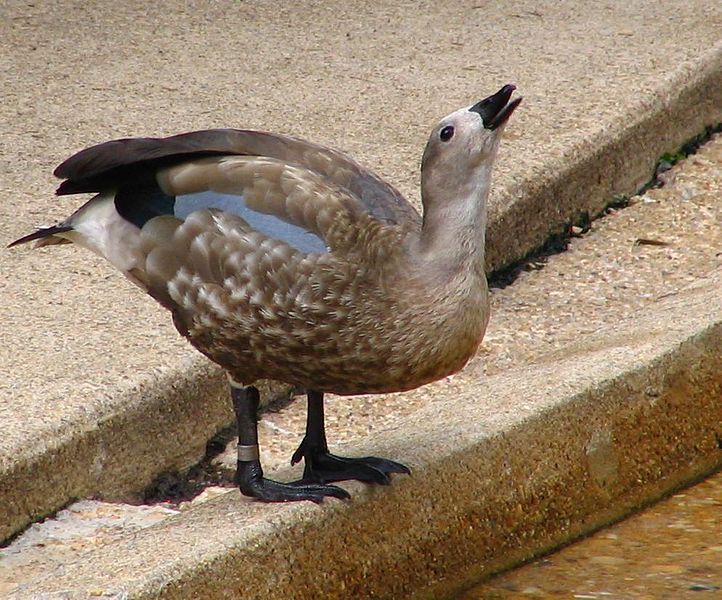
Blue-winged Goose (Cyanochen cyanoptera) at Zoo ©WikiC

Blue-winged Goose (Cyanochen cyanoptera) at Zoo ©WikiC

Blue-winged Goose (Cyanochen cyanoptera)  is a waterfowl species which is endemic to Ethiopia. It is the only member of the genus Cyanochen. This is a stocky grey-brown bird about 70 centimetres (28 in) long with a slightly paler head and upper neck. It has a small black bill and black legs. In flight, this species shows a pale blue forewing. Sexes are similar, but immature birds are duller. The plumage of these birds is thick and loose, furlike as an adaptation to the cold of the Ethiopian highlands.

It feeds by grazing, and is apparently largely nocturnal, loafing during the day. It can swim and fly well, but this terrestrial bird is reluctant to do either, and is quite approachable. It forms flocks outside the breeding season. It breeds by mountain lakes and streams. This little-known species is believed to build a lined nest amongst grass tussocks, and to lay 6–7 eggs.

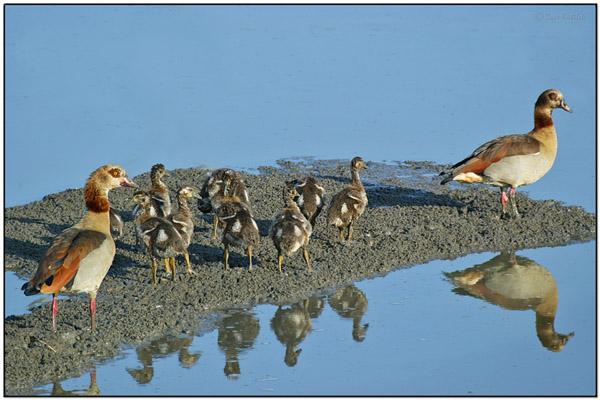
Egyptian Goose (Alopochen aegyptiaca) by Daves BirdingPix

Egyptian Goose (Alopochen aegyptiaca) by Daves BirdingPix

The Egyptian Goose (Alopochen aegyptiacus) is native to Africa south of the Sahara and the Nile Valley. The other two species, Mauritius Sheldgoose (Alopochen mauritiana) became extinct in 1698 and Reunion Sheldgoose (Alopochen kervazoi) was extinct in the 1690’s. Both were over hunted.

Egyptian geese were considered sacred by the Ancient Egyptians, and appeared in much of their artwork. They have been raised for food and extensively bred in parts of Africa since they were domesticated by the ancient Egyptians. Because of their popularity chiefly as ornamental bird, escapes are common and small feral populations have become established in Western Europe.

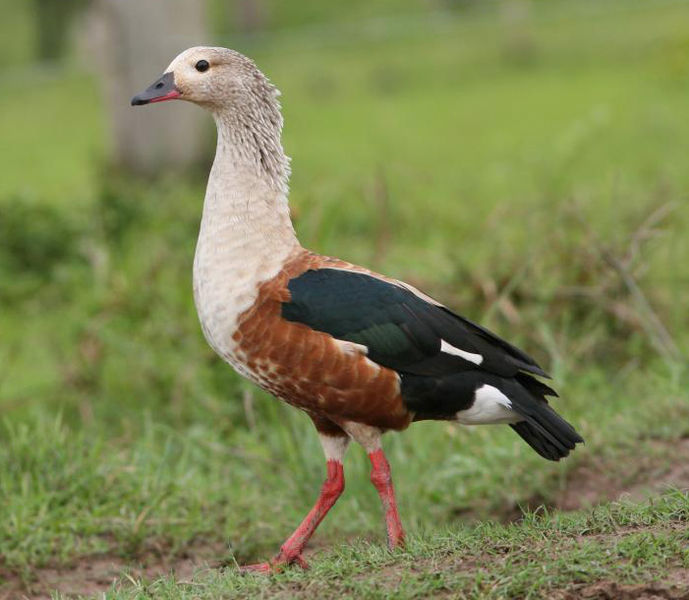
Orinoco Goose (Neochen jubata) ©WikiC

Orinoco Goose (Neochen jubata) ©WikiC

Orinoco Goose (Neochen jubata) are 61 to 76 cm (24 to 30 in) long and are resident breeders in the forests of tropical South America. Its preference is forest lakes or marshes with access to open woodland or savanna. This is a largely terrestrial species, which will also perch readily in trees. It rarely swims or flies unless hard pressed. In flight it looks heavy, more like a goose than a duck, hence the English name.

It has a pale head and neck, chestnut flanks and mantle and blackish wings with a white speculum. The legs are red and the bill is black and pinkish. The sexes of this striking species are identical in plumage, though the males are larger; juveniles have duller plumage than adults.

Upland Goose (Chloephaga picta) by Daves BirdingPix

Upland Goose (Chloephaga picta) by Daves BirdingPix

The Chloephaga genus is made up of these Geese all from South America. The Andean Goose (Chloephaga melanoptera), Upland Goose (Chloephaga picta), Kelp Goose (Chloephaga hybrida), Ashy-headed Goose (Chloephaga poliocephala), and the Ruddy-headed Goose (Chloephaga rubidiceps). They are considered part of the Sheldgeese subfamily.

“Sheldgoose, any of the larger members of the duck tribe Tadornini, family Anatidae (order Anseriformes). The smaller members of the tribe are called shelducks. Sheldgeese inhabit tropical and subtropical regions worldwide. They are small-billed and rather long-legged, with upright stance; some have bony spurs—which function as weapons—at the wing bend. Typically they show white wing patches and are finely black-barred below. They are not true geese, though they resemble them in some anatomic features.” Encyclopaedia Britannica

(Information from Wikipedia with editing)


This slideshow requires JavaScript.

“In a moment, in the twinkling of an eye, at the last trump: for the trumpet shall sound, and the dead shall be raised incorruptible, and we shall be changed.” (1Co 15:52 KJV)

“I Will Rise” ~ Margaret and Sue, accompanied by Amy – cello and Jill – Keyboard

*

More Sunday Inspirations

Anatidae – Ducks, Geese and Swans Family

Falling Plates

*

Lee’s Six Word Saturday – 11/5/16

***

Common Kingfisher (Alcedo atthis) ©Kidwings

SHE BRINGETH HER FOOD FROM AFAR

***


“She is like the merchants’ ships; she bringeth her food from afar.” Proverbs 31:14 

Common Kingfisher (Alcedo atthis) ©Kidwings

*

More Daily Devotionals

*

Lee’s Five Word Friday – 11/4/16

***

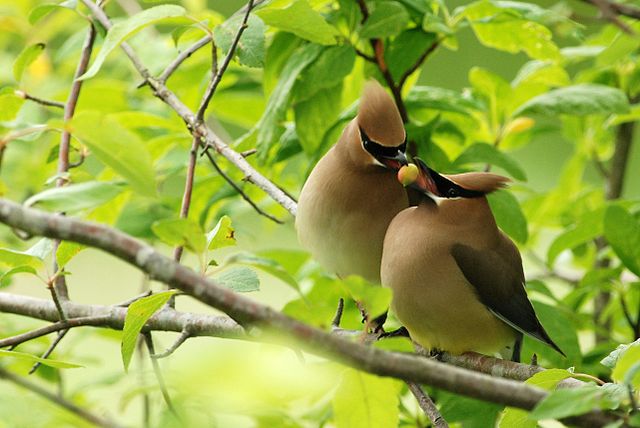
Cedar Waxwing (Bombycilla cedrorum) Passing Berries ©WikiC

GIVE HER OF THE FRUIT

***


“Give her of the fruit of her hands; and let her own works praise her in the gates.” Proverbs 31:1

Cedar Waxwing (Bombycilla cedrorum) Passing Berries ©WikiC

*

More Daily Devotionals

*