***
NOW THOSE WHO ESCORTED PAUL
***
“Now those who escorted Paul brought him as far as Athens; and receiving a command for Silas and Timothy to come to him as soon as possible, they left.” (Acts 17:15 NASB)
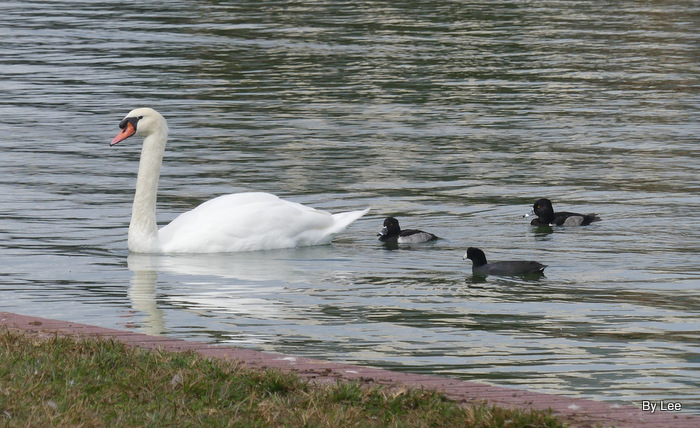
Mute Swan and Escorts
*
*
“Now those who escorted Paul brought him as far as Athens; and receiving a command for Silas and Timothy to come to him as soon as possible, they left.” (Acts 17:15 NASB)
Mute Swan and Escorts
*
*

View at Lake Morton
We made a short birdwatching trip over to Lake Morton in Lakeland, FL recently. Dan wanted to check out something with his camera and of course I tagged along. As I have mentioned lately, my back is acting up, so I just walked about 40 feet and sat on a bench. It is amazing what you can see at the lake just sitting in one spot. I was about that far from the shore to watch all the activity swimming by.
First I was greeted with a momma Mallard swimming with her to babies.
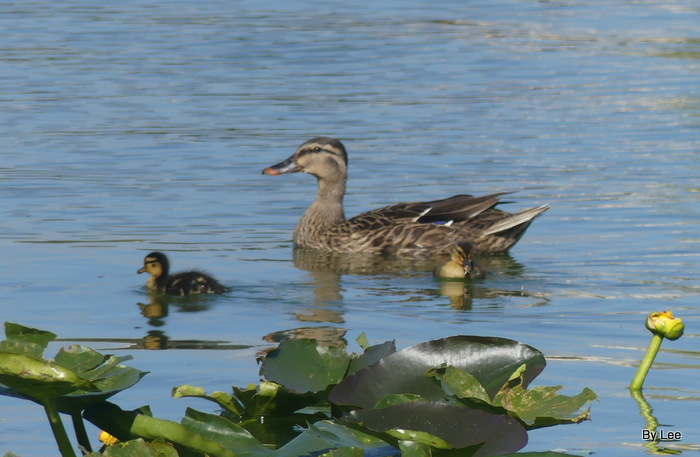
Momma Mallard and 2 Babies at Lake Morton
Then a Black-necked Swan went the other way.

Black-necked Swan at Lake Morton
White Pelican made several circles over head:
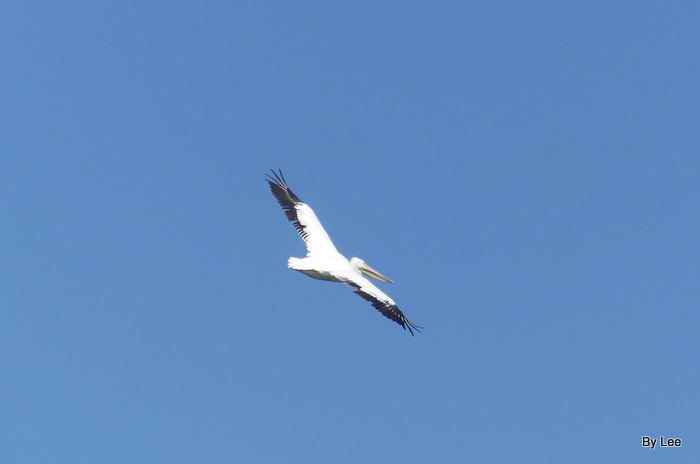
White Pelican Flying Overhead
A Male Ring-necked Duck swam by:
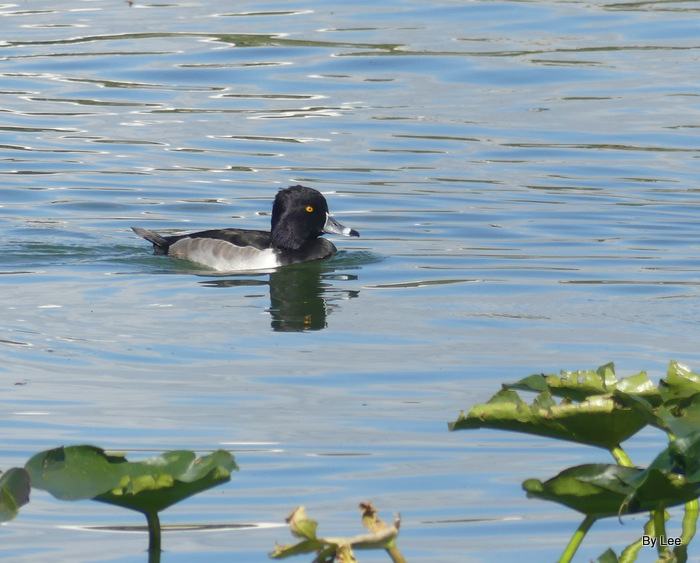
Ring-necked Duck Swimming
My attention turned to one of the Avian Wonders I am so amazed at watching. “Big Foot” Coot came by. I always like to watch their feet. Then a group of them came by and while watching them walk away from me, I actually saw a bit of the underside of those amazing feet. Here is a series of photos of the Coots:

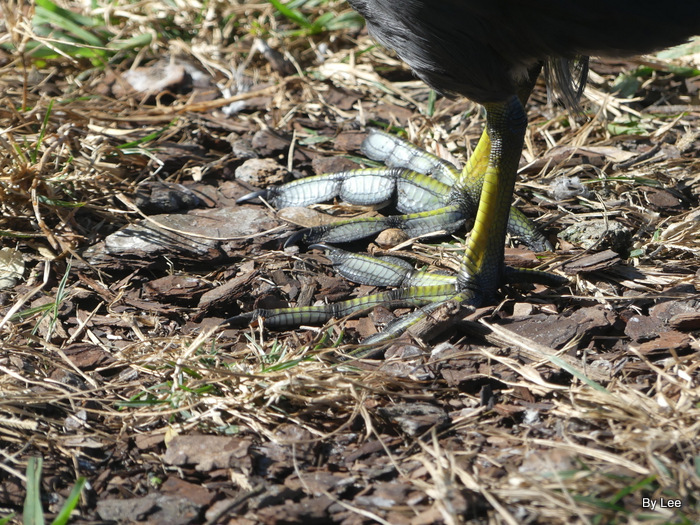
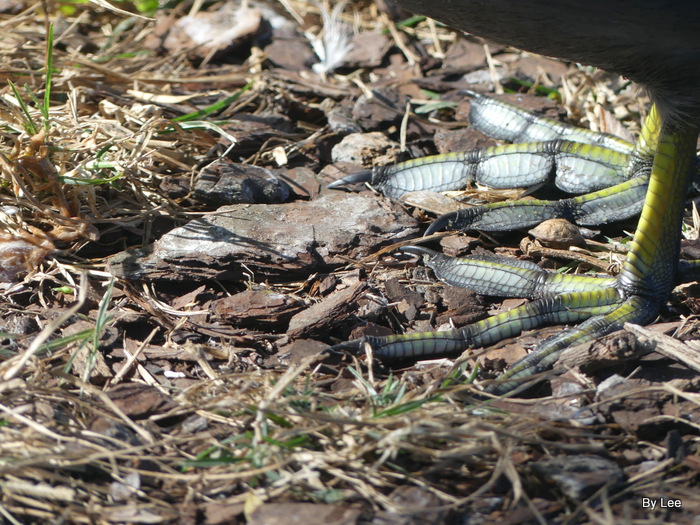
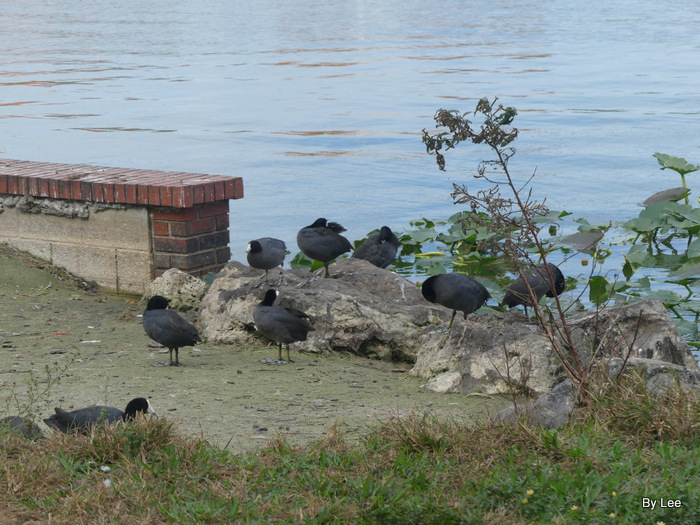
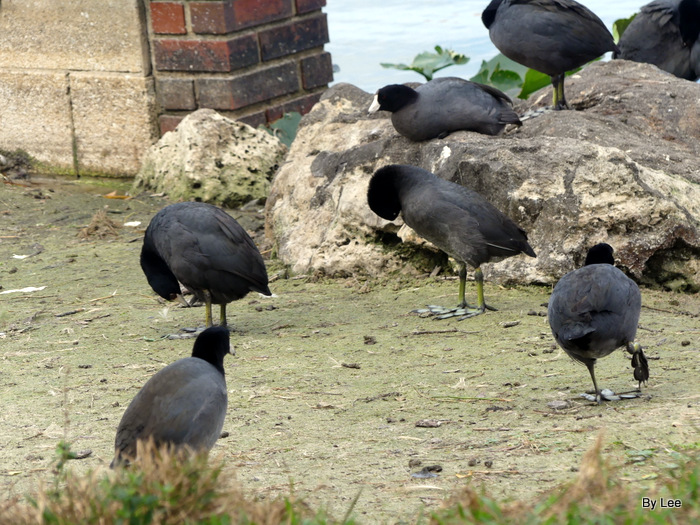
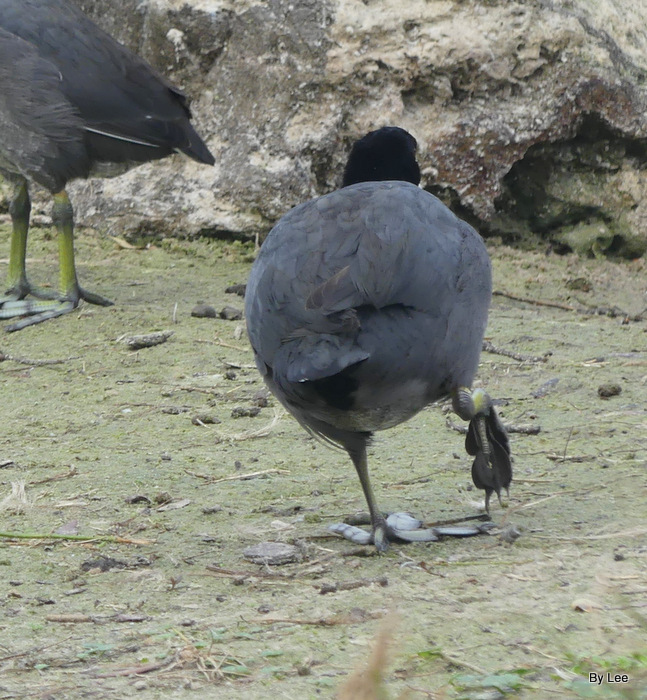
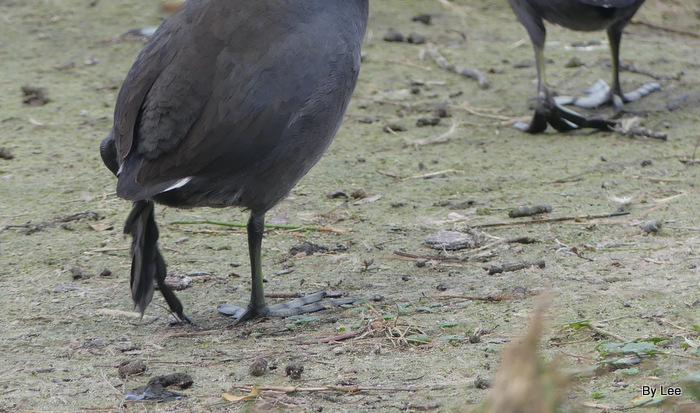
It always amazes me how they can walk without stumbling over their own feet. Their feet are so useful in the water, but on shore they seem “weird” to me. See Birdwatching – American Coot.
Took this photo from the internet:
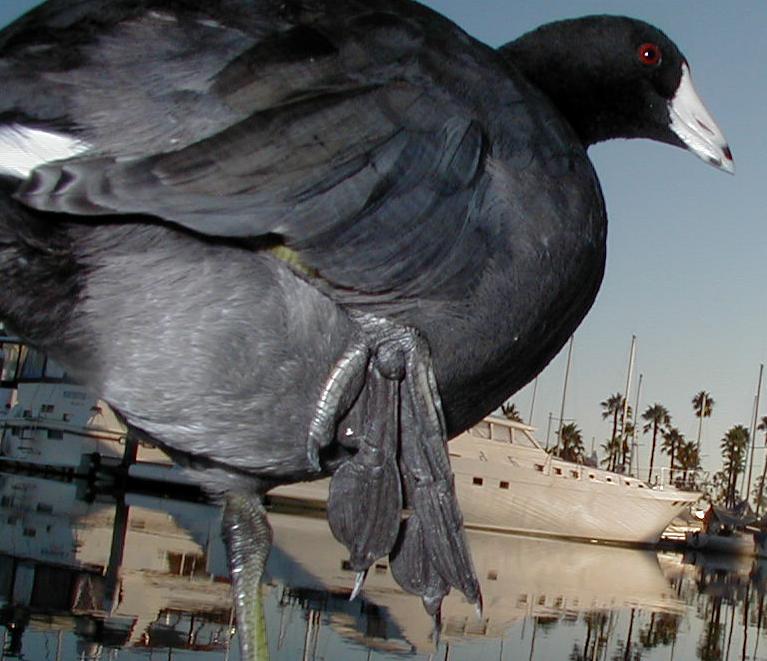
Lobed Feet of American Coot – Underside ©Beakycoot
The last bird we watched before leaving was a favorite around here. A Great Blue Heron stopped by.
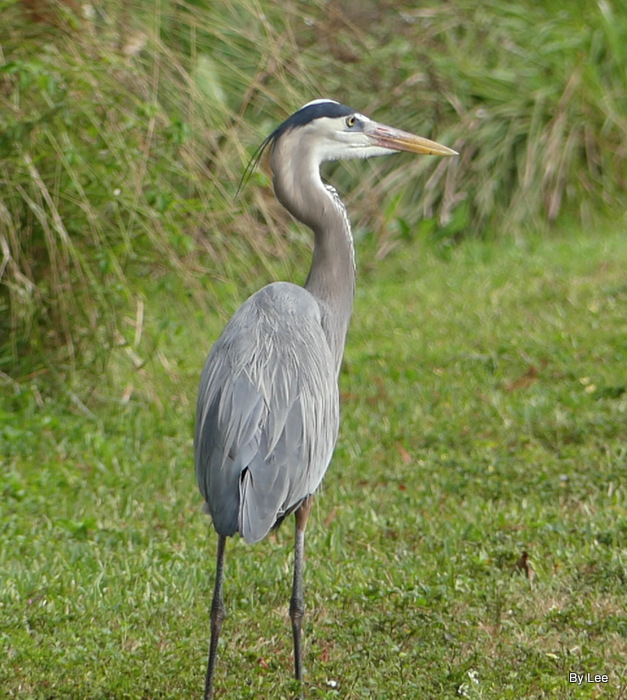
Great Blue Heron
There were other birds around, but for now, this gives you a little bit of my latest blessings from birdwatching. Not bad birdwatching for just sitting in one spot. The Lord is Good.
“He does great things past finding out, Yes, wonders without number.” (Job 9:10 NKJV)
*
C is for Coot and Corvids: “C” Birds”, Part 2
Child’s Book of Water Birds ~ The Coot
Rallidae – Rails, Crakes & Coots
Lee’s One Word Monday – 10/17/16
Lee’s Five Word Friday – 7/22/16
*

“Now Israel loved Joseph more than all his children, because he was the son of his old age: and he made him a coat of many colors. (Genesis 37:3)
Green Jay (cyanocorax luxuosus) by DavesBP
*
*

Black-capped Chickadee on snowy conifer
“And Jesus said unto him, Foxes have holes, and birds of the air have nests; but the Son of man hath not where to lay his head.” (Matthew 8:20)
Millions of North Americans are familiar with the call of the Black-Capped chickadee: “Chicka-dee”. However, most bird-watchers know that the little chickadee communicates danger with its “chickadee-dee-dee” call. Bird-watchers also know that chickens use different warnings for dangers from the air or from the ground.
Scientists decided to see if chickadees used specialized calls for different dangers. In their first experiments they used a stuffed hawk to see what the chickadees in an outdoor aviary would do. However, they were only fooled once, and after that researchers had to use live hawks. After studying over 5,000 responses, a pattern emerged. Small, agile raptors like hawks are more dangerous to chickadees than, say, a large, horned owl, which the chickadees can easily evade. When confronted by a smaller raptor, the birds’ “chicka” call added up to four “dee”s in rapid succession, instead of two more leisurely “dee”s. Even more “dee”s might be added if the chickadees evaluated the danger as greater. Most frightening to the little birds was a pygmy owl that rated 23 “dee”s.
God cares for all His creatures and, knowing that predation would enter the creation with man’s sin, provided them with ways to warn each other. He also gave man His Word to warn us how to avoid sin and how to escape from it through Jesus Christ, should we become entrapped.
Prayer:
I thank You, Lord, for Your protection from all the dangers we face, especially the danger of our sin. Amen.
Notes:
Science News, 6/25/05, pp. 403-404, S. Milius, “Dee for Danger.” See also: http://www.allaboutbirds.org/guide/black-capped_chickadee/sounds
Creation Moments ©2016 – Used with permission

Mountain Chickadee (Poecile gambeli) ©WikiC
*
More articles about these Avian Wonders:
Tiny Yet Tough: Chickadees Hunker Down for Winter
Black-capped Chickadees Fed by Hand
Sunday Inspiration – Tits, Chickadees and Penduline Tits
Birds Vol 1 #5 – The Black-capped Chickadee
*
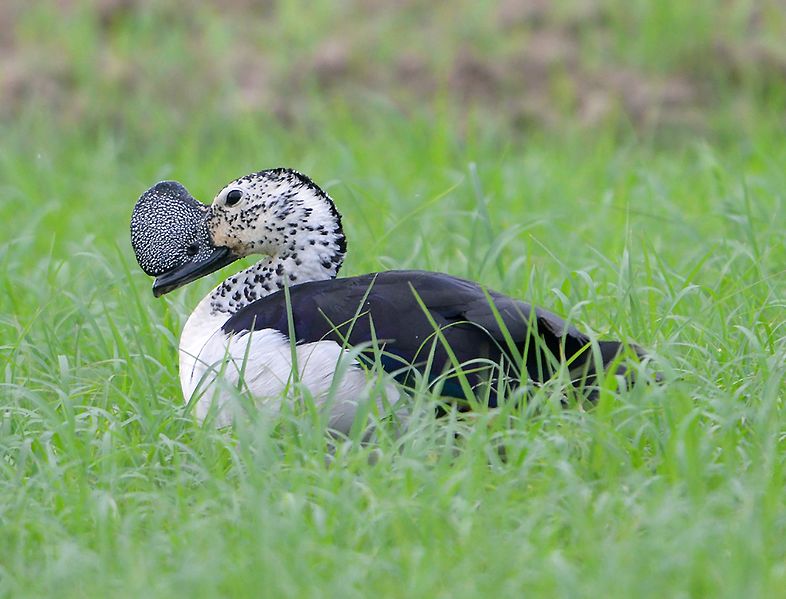
“We are bound to thank God always for you, brethren, as it is fitting, because your faith grows exceedingly, and the love of every one of you all abounds toward each other,” (2 Thessalonians 1:3 NKJV)
Knob-billed Duck (Sarkidiornis melanotos) ©WikiC
*
*
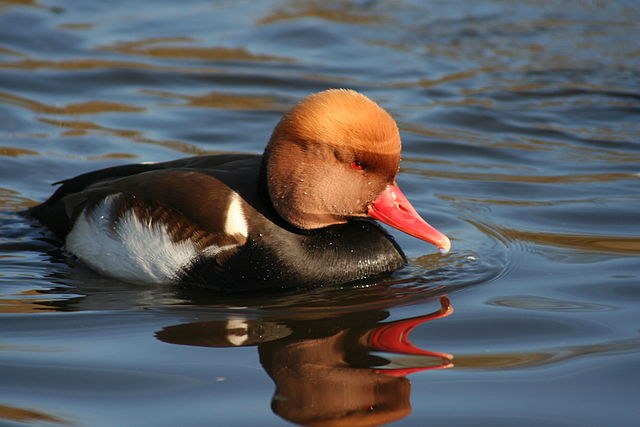
“Love suffers long and is kind; love does not envy; love does not parade itself, is not puffed up;” (1 Corinthians 13:4 NKJV)
Red-crested Pochard (Netta rufina) Male©WikiC
*
*
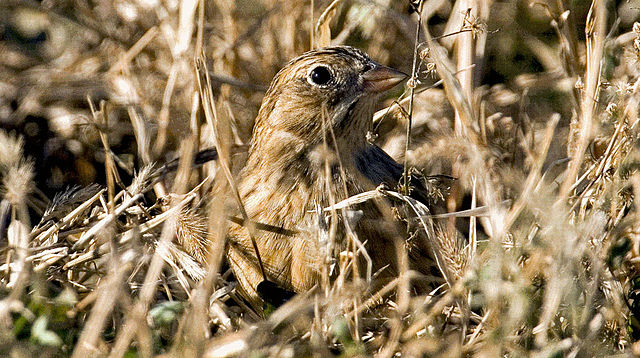
“Thou art my hiding place; thou shalt preserve me from trouble; thou shalt compass me about with songs of deliverance. Selah.” (Psalms 32:7 KJV)
Smith’s Longspur (Calcarius pictus) ©WikiC
*
*

“Woe unto him that striveth with his Maker! Let the potsherd strive with the potsherds of the earth. Shall the clay say to him that fashioneth it, What makest thou? or thy work, He hath no hands?” (Isaiah 45:9 KJV)
Birds building mud nest on window sill ©©
*
*

Marbled Duck (Marmaronetta angustirostris) at Lowry Park Zoo by Lee
“He turns a wilderness into pools of water, And dry land into watersprings. There He makes the hungry dwell,…” (Psalms 107:35-36a NKJV)
Today we will continue through the Anatidae family of Ducks, Geese, Swans and allies. We start off with these neat Marbled Ducks that greet us when we visit the Parakeet Plus Aviary at Lowry Park Zoo in Tampa, FL.

Marbled Duck (Marmaronetta angustirostris) at Lowry Park Zoo by Lee
“The marbled duck, or marbled teal (Marmaronetta angustirostris), is a medium-sized duck. It used to be included among the dabbling ducks, but is now classed as a diving duck. The scientific name, Marmaronetta angustirostris, comes from the Greek marmaros, marbled and netta, a duck, and Latin angustus, narrow or small and rostris billed.The marbled duck is approximately 39–42 cm (15–17 in) long. Adults are a pale sandy-brown colour, diffusely blotched off-white, with a dark eye-patch and shaggy head. Juveniles are similar but with more off-white blotches. In flight, the wings look pale without a marked pattern, and no speculum on the secondaries. These birds feed mainly in shallow water by dabbling or up-ending, occasionally diving. Little is known of their diet.”

Pink-headed Duck (Rhodonessa caryophyllacea) Specimen Extinct ©WikiC
“The pink-headed duck (Rhodonessa caryophyllacea) was (or is) a large diving duck that was once found in parts of the Gangetic plains of India, Bangladesh and in the riverine swamps of Myanmar but feared extinct since the 1950s. Numerous searches have failed to provide any proof of continued existence. It has been suggested that it may exist in the inaccessible swamp regions of northern Myanmar and some sight reports from that region have led to its status being declared as “Critically Endangered” rather than extinct. The genus placement has been disputed and while some have suggested that it is close to the red-crested pochard (Netta rufina), others have placed it in a separate genus of its own. It is unique in the pink colouration of the head combined with a dark body. A prominent wing patch and the long slender neck are features shared with the common Indian spot-billed duck. The eggs have also been held as particularly peculiar in being nearly spherical.”

Red-crested Pochard (Netta rufina) by Dan at Zoo Miami
The next genus, Netta, and the Aythya genus, together make up the: “Subfamily: Aythyinae, diving ducks (Some 15 species of diving ducks, of worldwide distribution, in two to four genera; The 1986 morphological analysis suggested the probably extinct pink-headed duck of India, previously treated separately in Rhodonessa, should be placed in Netta, but this has been questioned. Furthermore, while morphologically close to dabbling ducks, the mtDNA data indicate a treatment as distinct subfamily is indeed correct, with the Tadorninae being actually closer to dabbling ducks than the diving ducks)”

Rosy-billed Pochard (Netta peposaca) ©WikiC
“Netta is a genus of diving ducks. The name is derived from Greek Netta “duck”. Unlike other diving ducks, the Netta species are reluctant to dive, and feed more like dabbling ducks. These are gregarious ducks, mainly found on fresh water. They are strong fliers; their broad, blunt-tipped wings require faster wing-beats than those of many ducks and they take off with some difficulty.
They do not walk as well on land as the dabbling ducks because their legs tend to be placed further back on their bodies to help propel them when underwater.”

Ring-necked Duck (Aythya collaris) at Lake Morton by Dan
“Aythya is a genus of diving ducks. It has twelve described species. The name Aythya comes from the Ancient Greek word αυθυια, aithuia, which may have referred to a sea-dwelling duck or an auklet.” The Aythyas are the; Canvasback (A. valisineria), Common pochard (A. ferina), Redhead (A. americana), Ring-necked duck (A. collaris), Hardhead (A. australis), Baer’s pochard (A. baeri), Ferruginous duck (A. nyroca), Madagascar pochard (A. innotata), New Zealand scaup (A. novaeseelandiae), Tufted duck (A. fuligula), Greater scaup (A. marila), Lesser scaup (A. affinis)”
[all quoted material is from Wikipedia]
“Bring forth with thee every living thing that is with thee, of all flesh, both of fowl, and of cattle, and of every creeping thing that creepeth upon the earth; that they may breed abundantly in the earth, and be fruitful, and multiply upon the earth.” (Genesis 8:17 KJV)
“And Noah went forth, and his sons, and his wife, and his sons’ wives with him: Every beast, every creeping thing, and every fowl, and whatsoever creepeth upon the earth, after their kinds, went forth out of the ark.” (Genesis 8:18-19 KJV)
“How Can I Keep Singing” ~ The 3+1 Trio (Pastor Jerry, Reagan Osborne, Caleb and Jessie Padgett)”.
*
Anatidae – Ducks, Geese and Swans
Pastor Jerry Smith – Testimony
*
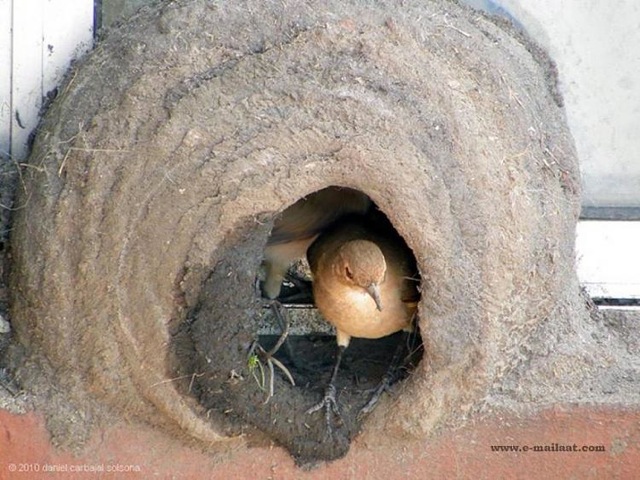
“How much less in them that dwell in houses of clay, whose foundation is in the dust, which are crushed before the moth?” (Job 4:19 KJV)
Birds building mud nest on window sill ©©
*
*

“Behold, I am according to thy wish in God’s stead: I also am formed out of the clay.” (Job 33:6 KJV)
Crested Hornero (Furnarius cristatus) ©©Flickr KarinaDiarte
*
*
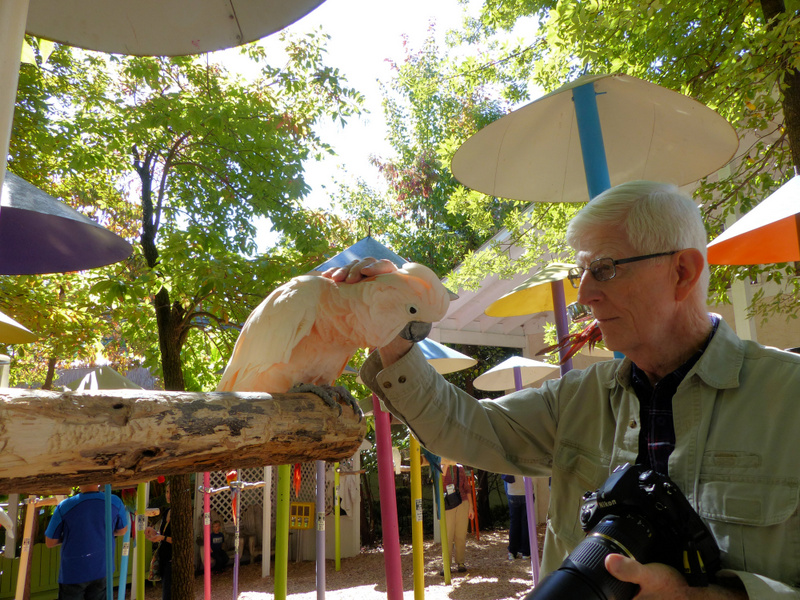
Salmon-crested Cockatoo (Cacatua moluccensis) at Parrot Mtn by Lee
As the fire burneth a wood, and as the flame setteth the mountains on fire; (Psalms 83:14 KJV)
As you may recall, Dan and I visited the Parrot Mountain and Garden of Eden in Gatlinburg, Tennessee this summer. There have been devastating fires up in the mountains in that area due to severe drought conditions. Many places have been destroyed in the Gatlingburg surrounding area. Dollywood, who has quite a collection of Eagles and Parrot Mountain with their Parrots were to close for comfort, but the Lord has been good to them and their keepers.
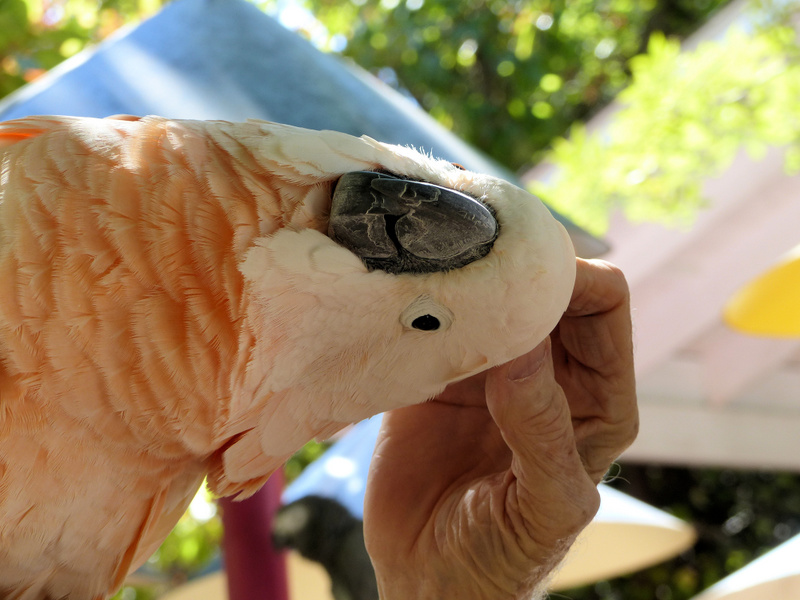
Salmon-crested Cockatoo (Cacatua moluccensis) at Parrot Mtn by Lee
“I know all the fowls of the mountains: and the wild beasts of the field are mine.” (Psalms 50:11 KJV)
Salmon-crested (Moluccan) Cockatoo at Parrot Mountain
Parrot Mountain’s Prayer Garden
Plantain-eater at Parrot Mountain
Parrot Mountain’s Origin and Mission
Here are some of the articles you might find interesting:
Dollywood’s eagles ‘safe and sound,’ as are Parrot Mountain birds
This is from their Facebook Account:
Parrot mountain was not affected by the fires! All the birds are safe and secure! God was watching over Parrot mountain. We pray for all those who were affected by the fires. Thank you all for your concerns ! We appreciate you all and love you guys. #PrayForGatlinburg
LIST: What’s damaged, destroyed and intact From 9 News
*
 Lee's Birdwatching Adventures Plus