Matthew Chapter A Day – 2

Beginning of Matthew, in case you missed the first post. Matthew Chapter A Day – 1

Matthew Chapter 2 – Audio

Matthew 2:1-23 KJV

The Visit of the Wise Men
(1)  Now when Jesus was born in Bethlehem of Judaea in the days of Herod the king, behold, there came wise men from the east to Jerusalem,
(2)  Saying, Where is he that is born King of the Jews? for we have seen his star in the east, and are come to worship him.
(3)  When Herod the king had heard these things, he was troubled, and all Jerusalem with him.
(4)  And when he had gathered all the chief priests and scribes of the people together, he demanded of them where Christ should be born.
(5)  And they said unto him, In Bethlehem of Judaea: for thus it is written by the prophet,
(6)  And thou Bethlehem, in the land of Juda, art not the least among the princes of Juda: for out of thee shall come a Governor, that shall rule my people Israel.
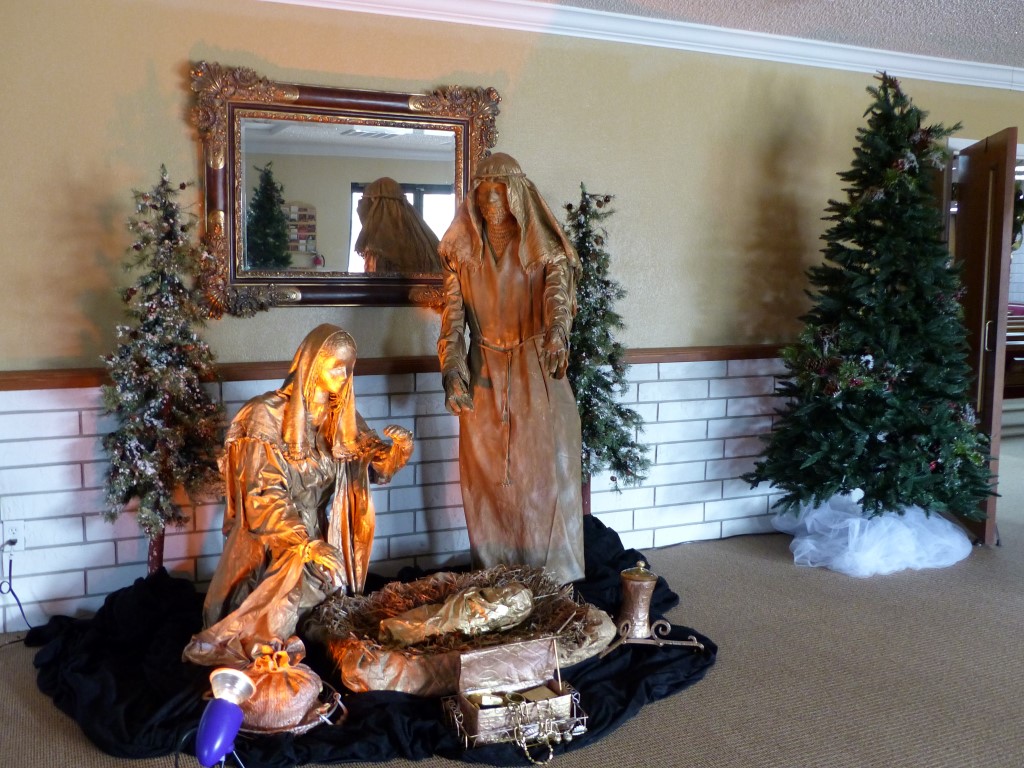
(7)  Then Herod, when he had privily called the wise men, enquired of them diligently what time the star appeared.
(8)  And he sent them to Bethlehem, and said, Go and search diligently for the young child; and when ye have found him, bring me word again, that I may come and worship him also.
(9)  When they had heard the king, they departed; and, lo, the star, which they saw in the east, went before them, till it came and stood over where the young child was.
(10)  When they saw the star, they rejoiced with exceeding great joy.
(11)  And when they were come into the house, they saw the young child with Mary his mother, and fell down, and worshipped him: and when they had opened their treasures, they presented unto him gifts; gold, and frankincense, and myrrh.
(12)  And being warned of God in a dream that they should not return to Herod, they departed into their own country another way.
The Flight to Egypt
(13)  And when they were departed, behold, the angel of the Lord appeareth to Joseph in a dream, saying, Arise, and take the young child and his mother, and flee into Egypt, and be thou there until I bring thee word: for Herod will seek the young child to destroy him.
(14)  When he arose, he took the young child and his mother by night, and departed into Egypt:
(15)  And was there until the death of Herod: that it might be fulfilled which was spoken of the Lord by the prophet, saying, Out of Egypt have I called my son.
Herod Kills the Children
(16)  Then Herod, when he saw that he was mocked of the wise men, was exceeding wroth, and sent forth, and slew all the children that were in Bethlehem, and in all the coasts thereof, from two years old and under, according to the time which he had diligently enquired of the wise men.
(17)  Then was fulfilled that which was spoken by Jeremy the prophet, saying,
(18)  In Rama was there a voice heard, lamentation, and weeping, and great mourning, Rachel weeping for her children, and would not be comforted, because they are not.
(19)  But when Herod was dead, behold, an angel of the Lord appeareth in a dream to Joseph in Egypt,
(20)  Saying, Arise, and take the young child and his mother, and go into the land of Israel: for they are dead which sought the young child’s life.
(21)  And he arose, and took the young child and his mother, and came into the land of Israel.
(22)  But when he heard that Archelaus did reign in Judaea in the room of his father Herod, he was afraid to go thither: notwithstanding, being warned of God in a dream, he turned aside into the parts of Galilee:
(23)  And he came and dwelt in a city called Nazareth: that it might be fulfilled which was spoken by the prophets, He shall be called a Nazarene.
The Return to Nazareth
Mat 2:19  But when Herod was dead, behold, an angel of the Lord appeareth in a dream to Joseph in Egypt,
Mat 2:20  Saying, Arise, and take the young child and his mother, and go into the land of Israel: for they are dead which sought the young child’s life.
Mat 2:21  And he arose, and took the young child and his mother, and came into the land of Israel.
Mat 2:22  But when he heard that Archelaus did reign in Judaea in the room of his father Herod, he was afraid to go thither: notwithstanding, being warned of God in a dream, he turned aside into the parts of Galilee:
Mat 2:23  And he came and dwelt in a city called Nazareth: that it might be fulfilled which was spoken by the prophets, He shall be called a Nazarene.

Good News

Matthew Chapter A Day – 1

I keep seeing the suggestion to read the Bible’s Book of Matthew during the month of December, one day at a time. Even though this is two days late, here is Chapter 1. After catching up, the others will be on the correct day. You may want to listen to the Word read as you read it. Christmas time is so busy, that we forget to remember the Real Reason for the holiday season.

Like the rest of many of you, I also am busy, and will schedule these in advance. Trust you will take the time to read/listen to the Word of God and reflect on the most important gift given to man. The Lord Jesus Christ, the Saviour of the World. He is also the Creator of all these birds that we present on this blog.


Matthew Chapter 1 – Audio

The Genealogy of Jesus Christ
Matthew 1:1-25 KJV

(1)  The book of the generation of Jesus Christ, the son of David, the son of Abraham.
(2)  Abraham begat Isaac; and Isaac begat Jacob; and Jacob begat Judas and his brethren;
(3)  And Judas begat Phares and Zara of Thamar; and Phares begat Esrom; and Esrom begat Aram;
(4)  And Aram begat Aminadab; and Aminadab begat Naasson; and Naasson begat Salmon;
(5)  And Salmon begat Booz of Rachab; and Booz begat Obed of Ruth; and Obed begat Jesse;
(6)  And Jesse begat David the king; and David the king begat Solomon of her that had been the wife of Urias;
(7)  And Solomon begat Roboam; and Roboam begat Abia; and Abia begat Asa;
(8)  And Asa begat Josaphat; and Josaphat begat Joram; and Joram begat Ozias;
(9)  And Ozias begat Joatham; and Joatham begat Achaz; and Achaz begat Ezekias;
(10)  And Ezekias begat Manasses; and Manasses begat Amon; and Amon begat Josias;
(11)  And Josias begat Jechonias and his brethren, about the time they were carried away to Babylon:
(12)  And after they were brought to Babylon, Jechonias begat Salathiel; and Salathiel begat Zorobabel;
(13)  And Zorobabel begat Abiud; and Abiud begat Eliakim; and Eliakim begat Azor;
(14)  And Azor begat Sadoc; and Sadoc begat Achim; and Achim begat Eliud;
(15)  And Eliud begat Eleazar; and Eleazar begat Matthan; and Matthan begat Jacob;
(16)  And Jacob begat Joseph the husband of Mary, of whom was born Jesus, who is called Christ.
(17)  So all the generations from Abraham to David are fourteen generations; and from David until the carrying away into Babylon are fourteen generations; and from the carrying away into Babylon unto Christ are fourteen generations.

Birth of Christ from an e-mail

(18)  Now the birth of Jesus Christ was on this wise: When as his mother Mary was espoused to Joseph, before they came together, she was found with child of the Holy Ghost.
(19)  Then Joseph her husband, being a just man, and not willing to make her a publick example, was minded to put her away privily.
(20)  But while he thought on these things, behold, the angel of the Lord appeared unto him in a dream, saying, Joseph, thou son of David, fear not to take unto thee Mary thy wife: for that which is conceived in her is of the Holy Ghost.
(21)  And she shall bring forth a son, and thou shalt call his name JESUS: for he shall save his people from their sins.
(22)  Now all this was done, that it might be fulfilled which was spoken of the Lord by the prophet, saying,
(23)  Behold, a virgin shall be with child, and shall bring forth a son, and they shall call his name Emmanuel, which being interpreted is, God with us.
(24)  Then Joseph being raised from sleep did as the angel of the Lord had bidden him, and took unto him his wife:
(25)  And knew her not till she had brought forth her firstborn son: and he called his name JESUS.

Christmas Gospel Presentation

Standing Firm

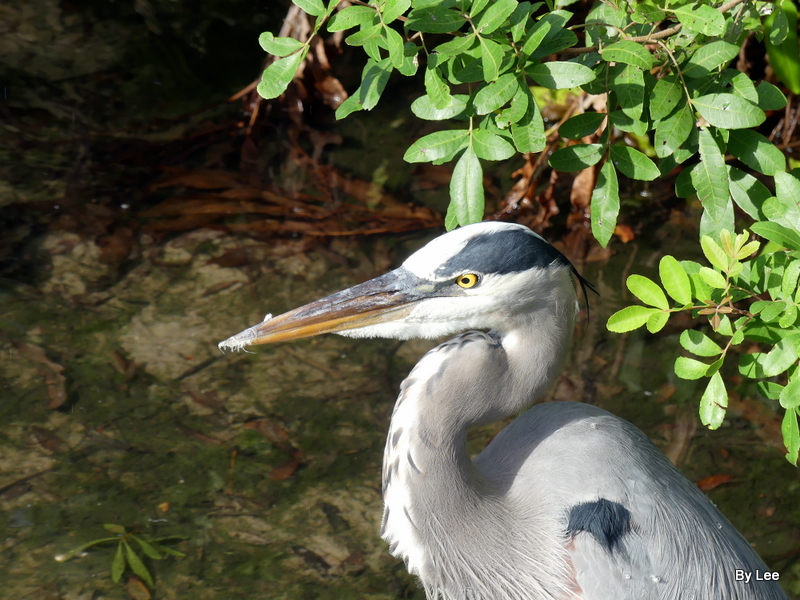
Great Blue Heron standing in the water at Brevard Zoo

While at the Brevard Zoo last week, I was able to watch a wild Great Blue Heron standing in the river there. His feet, provided by our gracious Creator, caught my attention.

Great Blue Heron’s Feet – [wild] Brevard Zoo

This brings to mind several verses that has to do with “standing firm.”

“So then, brethren, stand firm and hold to the traditions which you were taught, whether by word of mouth or by letter from us.” (2 Thessalonians 2:15 NASB)

“Put on the full armor of God, so that you will be able to stand firm against the schemes of the devil.” (Ephesians 6:11 NASB)

Over the years, I have been fascinated with the feet of birds. Especially the larger birds that have more height or weight to support in water, land, or on Lilly pads.

Black-bellied Whistling Duck (Dendrocygna autumnalis) Feet by Lee at PB Zoo

Black-bellied Whistling Duck Feet by Lee at PB Zoo

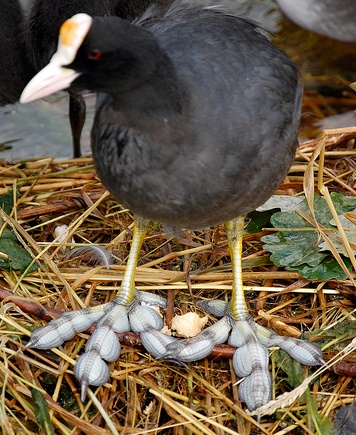
Giant Coot (Fulica gigantea) Loped Feet ©©Flickr

Giant Coot (Fulica gigantea) Loped Feet ©©Flickr

“So then, brethren, stand firm and hold to the traditions which you were taught, whether by word of mouth or by letter from us.” (2 Thessalonians 2:15 NASB)

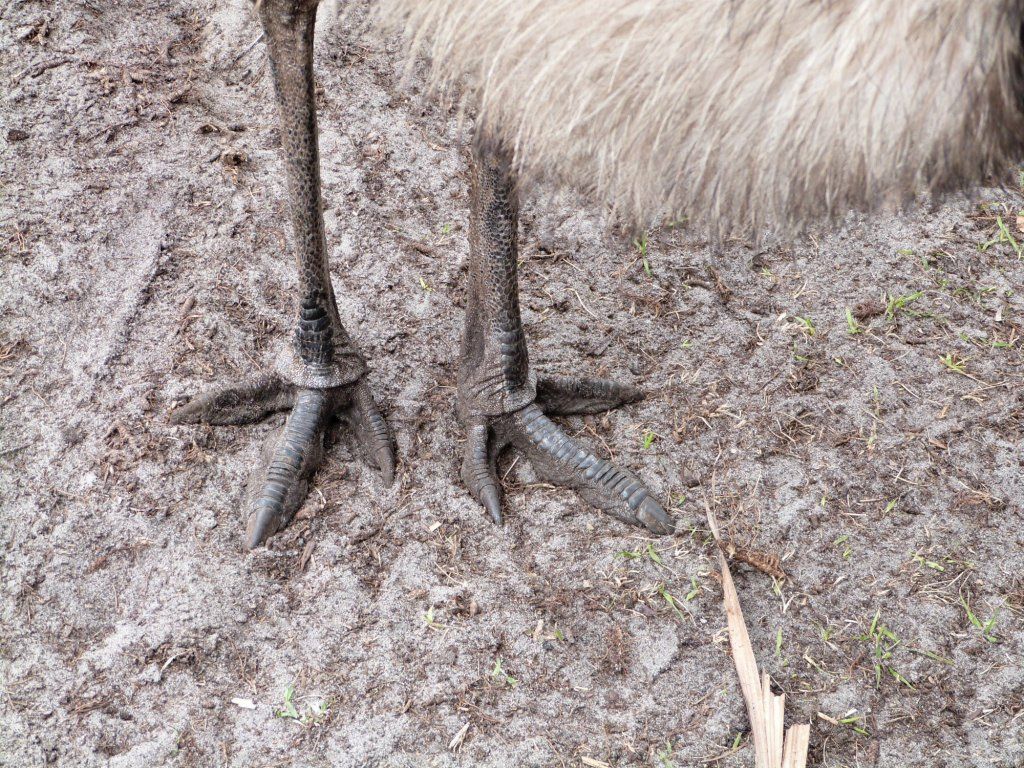
Emu (Dromaius novaehollandiae) Brevard Zoo by Lee

Emu (Dromaius novaehollandiae) Feet Brevard Zoo by Lee

African Finfoot with puffy feet ©WikiC

African Finfoot with puffy feet ©WikiC

“Therefore, take up the full armor of God, so that you will be able to resist in the evil day, and having done everything, to stand firm. Stand firm therefore, HAVING GIRDED YOUR LOINS WITH TRUTH, and HAVING PUT ON THE BREASTPLATE OF RIGHTEOUSNESS, and having shod YOUR FEET WITH THE PREPARATION OF THE GOSPEL OF PEACE;” (Ephesians 6:13-15 NASB)

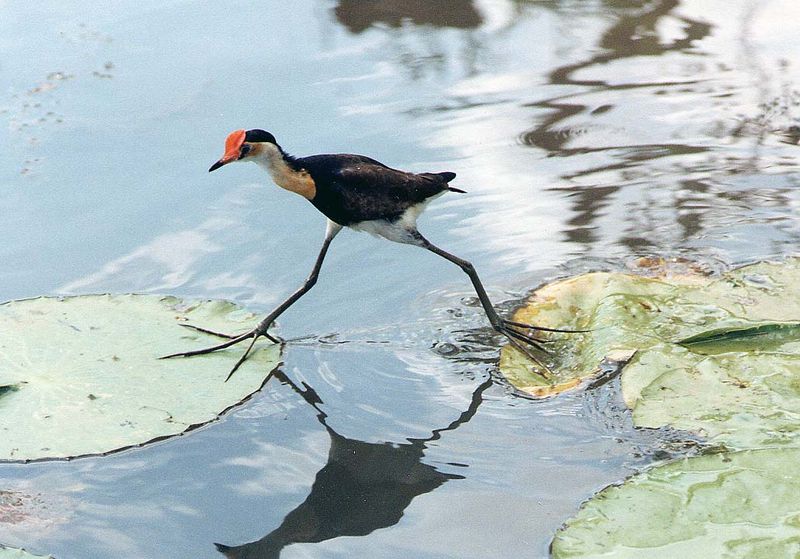
Comb-crested Jacana (Irediparra gallinacea) by Wiki

Comb-crested Jacana (Irediparra gallinacea) ©Wiki on Pads

“for now we really live, if you stand firm in the Lord.” (1 Thessalonians 3:8 NASB)

All of these birds were given feet that are meant to meet their needs. The Lord has given us the “Armour of God,” Traditions/teachings of Godly preachers and teachers, preparations, etc. Then He tells us to Stand Firm, because He has provided just the right training for us, just as He has provided just the right feet for the bird’s situations.

Avian And Attributes – Sharp Part II

Sharp-tailed Ibis (Cercibis oxycerca) ©WikiC

“Like a club and a sword and a sharp arrow Is a man who bears false witness against his neighbor.” (Proverbs 25:18 NASB)

“Thy tongue deviseth mischiefs; like a sharp razor, working deceitfully.” (Psalms 52:2 KJV)


Avian and Attributes – Sharp Part II

The rest of the SHARP definitions. See Part I

SH’ARP, n.
1. In music, an acute sound.
2. A note artificially raised a semitone; or,
3. The character which directs the note to be thus elevated; opposed to a flat, which depresses a note a semitone.
4. A pointed weapon. [Not in use.]
SH’ARP, v.t.
1. To make keen or acute.
2. To render quick.
3. To mark with a sharp, in musical composition; or to raise a not a semitone.
SH’ARP, v.i. To play tricks in bargaining; to act the sharper.


Sharp-tailed Birds

There are seven Sharp-tailed birds:

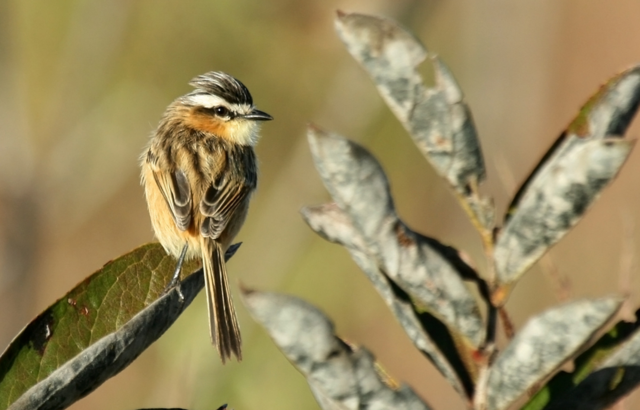
Sharp-tailed Grass Tyrant (Culicivora caudacuta) ©WikiC

Sharp-tailed Grass Tyrant (Culicivora caudacuta) is a species of bird in the family Tyrannidae, the only one in the genus Culicivora. It is found in Argentina, Bolivia, Brazil, Paraguay, and Uruguay. Its natural habitats are dry savanna and subtropical or tropical seasonally wet or flooded lowland grassland. It is threatened by habitat loss.

Sharp-tailed Grouse (Tympanuchus phasianellus) ©WikiC

Sharp-tailed Grouse (Tympanuchus phasianellus) (previously: Tetrao phasianellus) is a medium-sized prairie grouse. It is also known as the sharptail, and is known as fire grouse or fire bird by Native American Indians[clarification needed] due to their reliance on brush fires to keep their habitat open. The Sharp-Tailed Grouse is the provincial bird of Saskatchewan.

Sharp-tailed Grouse (Tympanuchus phasianellus) ©WikiC

Adults have a relatively short tail with the two central (deck) feathers being square-tipped and somewhat longer than their lighter, outer tail feathers giving the bird its distinctive name. The plumage is mottled dark and light browns against a white background, they are lighter on the underparts with a white belly uniformly covered in faint “V”-shaped markings. These markings distinguish sharp-tailed grouse from lesser and greater prairie chickens which are heavily barred on their underparts(Connelly et al. 1998). Adult males have a yellow comb over their eyes and a violet display patch on their neck. This display patch is another distinguishing characteristic from prairie chickens as male prairie chickens have yellow or orange colored air sacs

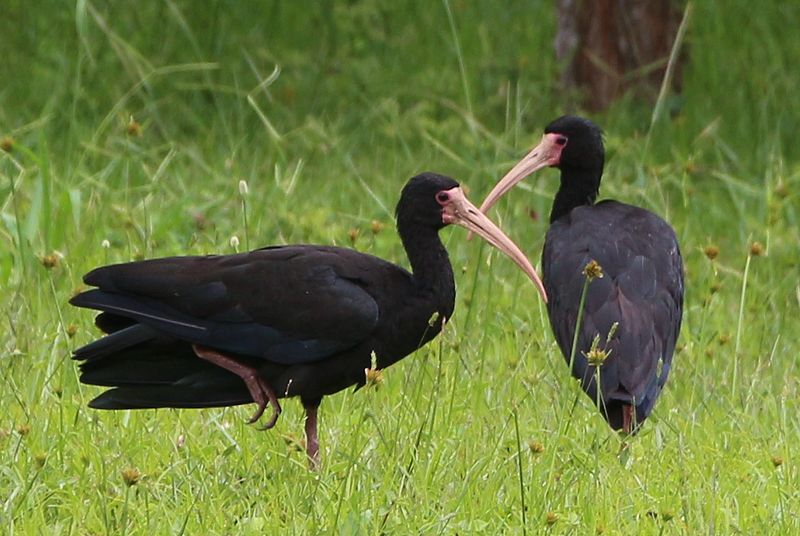
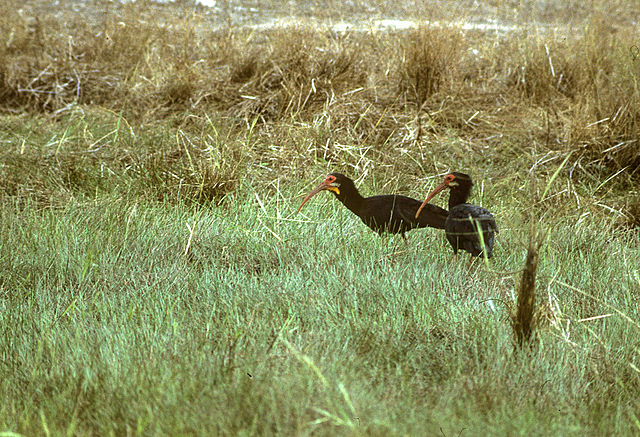
Sharp-tailed Ibis (Cercibis oxycerca) ©WikiC

Sharp-tailed Ibis (Cercibis oxycerca) is a species of ibis native to open wet savannas in parts of northern South America. This ibis is distinguished by its notably long tail, which is the longest among all extant ibis species; measuring 250-301mm in males and 256-272mm in females. The tail projects beyond the tips of the folded wings when the ibis stands; and beyond the trailing legs in flight. The plumage is predominantly black with greenish glossing; and with purplish tinges on the upper back, hind neck, wings and tail. The forehead and cheek region are occasionally greyish brown. Juveniles appear similar to adults, but their plumage lacks a metallic sheen.

Sharp-tailed Sandpiper (Calidris acuminata) ©WikiC

Sharp-tailed Sandpiper (Calidris acuminata) – breeding adults are a rich brown with darker feather centres above, and white underneath apart from a buff breast. They have a light superciliary line above the eye and a chestnut crown. In winter, sharp-tailed sandpipers are grey above. The juveniles are brightly patterned above with rufous coloration and white mantle stripes.

This bird looks a lot like the pectoral sandpiper, within whose Asian range it breeds. It differs from that species in its breast pattern, stronger supercilium and more rufous crown. It has some similarities to the long-toed stint, but is much larger than the stint.

Sharp-tailed Starling (Lamprotornis acuticaudus) ©WikiC

Sharp-tailed Starling (Lamprotornis acuticaudus), also known as the sharp-tailed glossy-starling, is a species of starling in the family Sturnidae. It inhabits open woodland (namely miombo) in Angola, northern Botswana, the southern DRC, northern Namibia, western Tanzania, and Zambia.

Sharp-tailed Streamcreeper (Lochmias nematura) by Dario Sanches

Sharp-tailed Streamcreeper (Lochmias nematura) is a passerine bird of South America belonging to the family Furnariidae, the ovenbirds. It is the only member of the genus Lochmias. The species is also known as the streamside streamcreeper.

This bird is about 6 in (15 cm) long, with a short tail and a long, thin, slightly curved bill. The plumage is dark brown, densely spotted white on the underparts. There is a white stripe over the eye and the tail is blackish. The song is an accelerating trill, lasting for about five seconds.


Avian and Attributes – Sharp Part I

More Avian and Attributes

Birds whose first or last name starts with “S”

Good News

*
[Definitions from Webster’s Dictionary of American English (1828), unless noted. Bird info from Wikipedia plus.]

Avian And Attributes – Sharp Part I

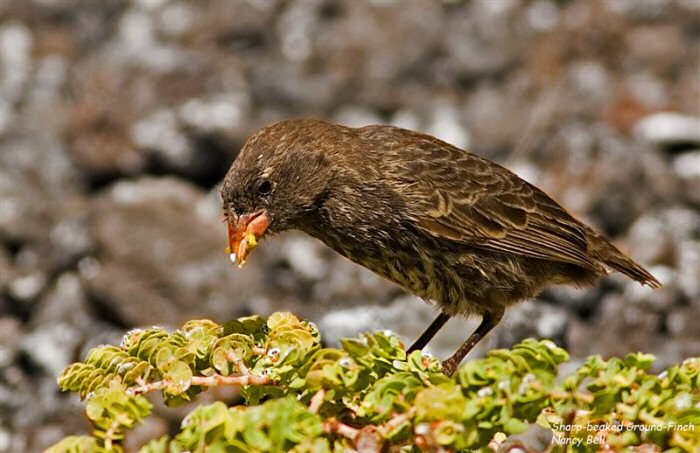
Sharp-beaked Ground Finch (Geospiza difficilis) Female ©WikiC

“For the word of God is quick, and powerful, and sharper than any twoedged sword, piercing even to the dividing asunder of soul and spirit, and of the joints and marrow, and is a discerner of the thoughts and intents of the heart. Neither is there any creature that is not manifest in his sight: but all things are naked and opened unto the eyes of him with whom we have to do.” (Hebrews 4:12-13 KJV)


Avian and Attributes – Sharp

SH’ARP, a.
1. Having a very thin edge or a fine point; keen; acute; not blunt. Thus we may say, a sharp knife, or a sharp needle. A sharp edge easily severs a substance; a sharp point is easily made to penetrate,it.
2. Terminating in a point or edge; not obtuse; as, a hills terminates in a sharp peak, or a sharp ridge.
3. Forming an acute or too small angle at the ridge; as a sharp roof.
4. Acute of mind; quick to discern or distinguish; penetrating; ready at invention; witty; ingenious.

“Thy tongue deviseth mischiefs; like a sharp razor, working deceitfully.” (Psalms 52:2 KJV)


Sharpbill (Oxyruncus cristatus) ©WikiC

There are many “Sharp” named birds, but for this post, we will mention two of them. The Sharp-beaked Ground Finch and the Sharpbill. There will be more in a second article.

Sharp-beaked Ground Finch (Geospiza difficilis) ©Nancy Bell Mangoverde

The Sharp-beaked Ground Finch (Geospiza difficilis) is a species of bird in the Tanager family Thraupidae. It is classified as a least-concern species by the International Union for Conservation of Nature and it is native to the Galápagos Islands in Ecuador. It has a mass of around 20 grams (0.71 oz) and the males have black plumage, while females have streaked brown plumage. This finch was described by Richard Bowdler Sharpe in 1888.

This relatively small, slender-billed finch is endemic to the Galápagos Islands, where it is found on Fernandina, Santiago, Pinta, Genovesa, Darwin, and Wolf Islands. On the first three islands, it breeds in the humid highlands and disperses afterwards, but on the remaining smaller and lower islands the sharp-beaked ground finch is found in the arid zone year-round. Due to habitat destruction its range has decreased. It was formerly also present in the highlands of several other islands, and it is possible it still occurs on Isabela.

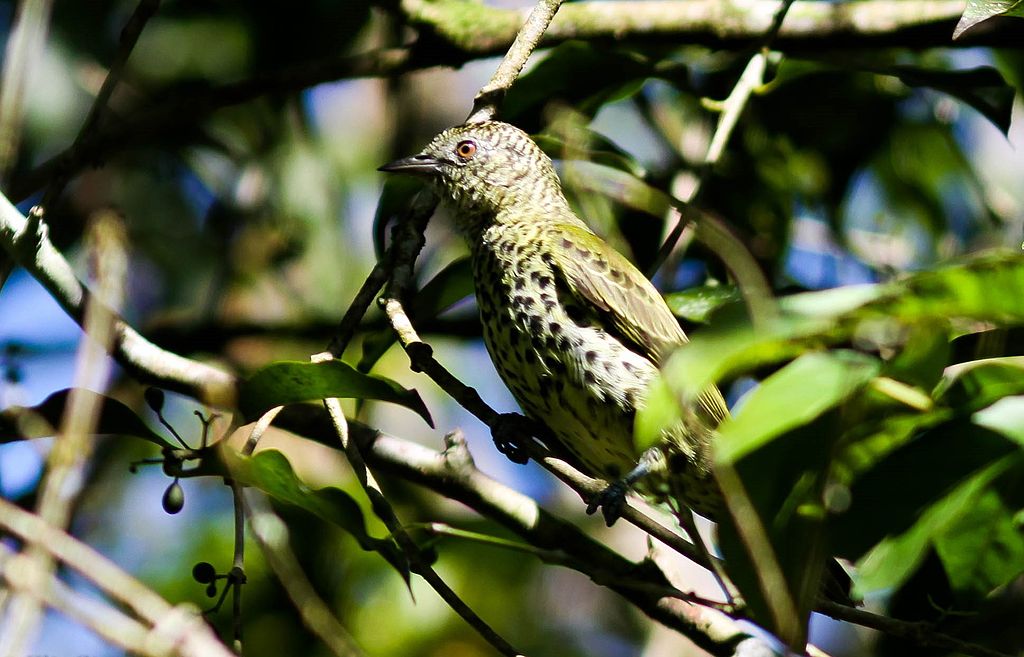
Sharpbill (Oxyruncus cristatus) ©WikiC

The Sharpbill (Oxyruncus cristatus) is a small passerine bird in the family Tityridae. Its range is from the mountainous areas of tropical South America and southern Central America (Panama and Costa Rica).

It inhabits the canopy of wet forest and feeds on fruit and some invertebrates. It has an orange erectile crest, black-spotted yellowish underparts and scaling on the head and neck. As its name implies, it has a straight, pointed beak, which gives its common name.

Sharpbills are most commonly found in tall dense forests but occasionally venture to the forest edge. Their diet consists of primarily of fruit, but they will also take insects, hanging upside down in from twigs to obtain insect larvae.


Sharp-Beaked Ground Finch – The Bloodsucker..

More Avian and Attributes

Birds whose first or last name starts with “S”

Good News

*
[Definitions from Webster’s Dictionary of American English (1828), unless noted. Bird info from Wikipedia plus.]

Many Thanks!

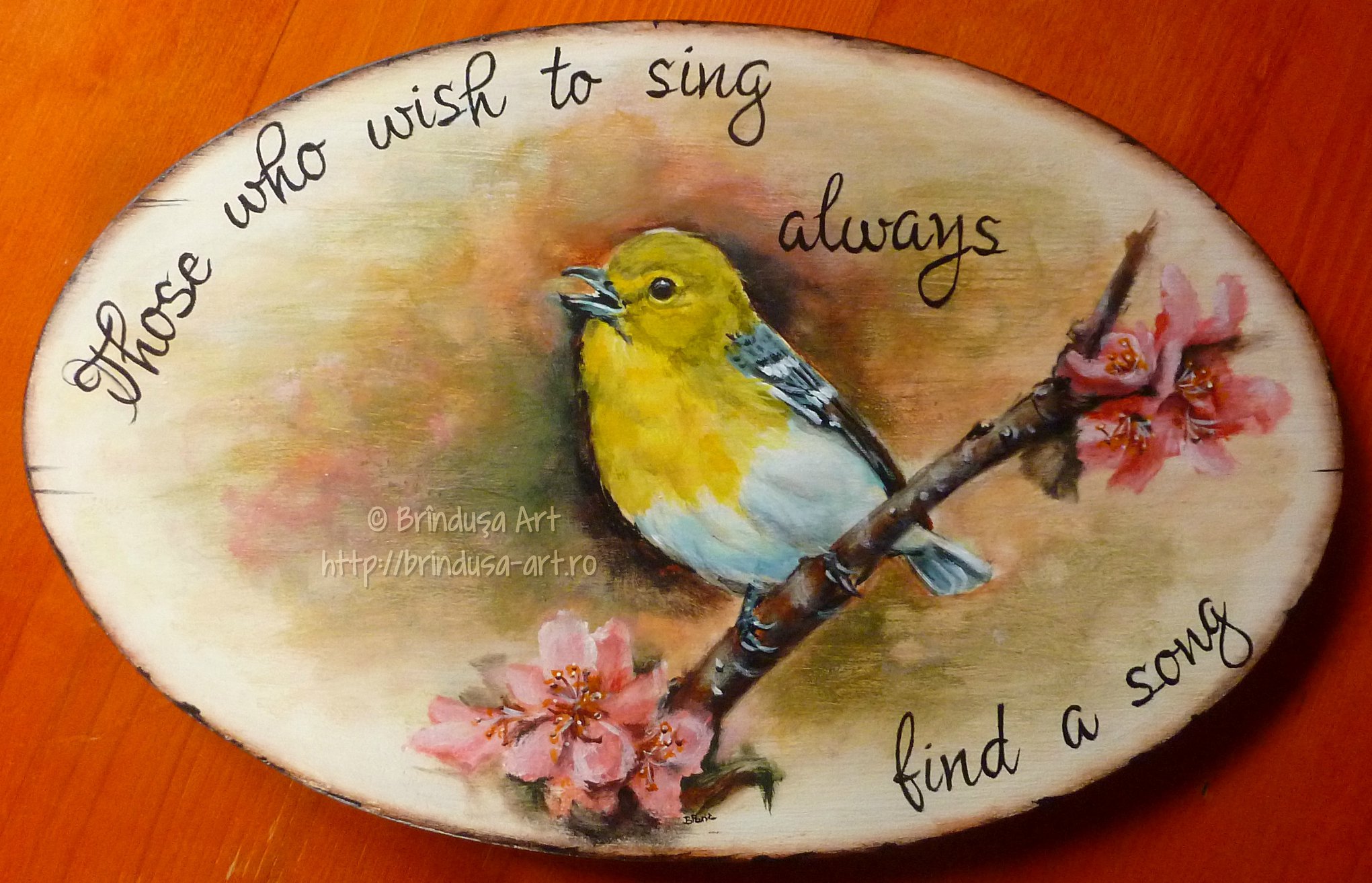
Yellow-throated Vireo (Vireo flavifrons) singing ©Brindusa Art

As many of the readers of this blog know, I had back surgery on August 3rd. Before I mention the results of the surgery, I want to give some thanks.

#1  I want to thank the Lord for His Watching over all that has happened during this. Thanks and praise to a wonderful Savior who cares so much about us.

“O give thanks unto the LORD; call upon his name: make known his deeds among the people.” (Psalms 105:1 KJV)

#2  I want to thank all of you for your prayers and well wishes. Also, for continuing to keep up with the blog. I cannot thank you enough for that. Thank you.

“For the eyes of the Lord are over the righteous, and his ears are open unto their prayers: ” (1 Peter 3:12a KJV)

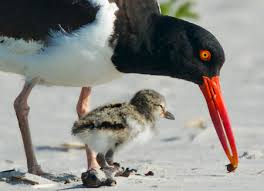
American Oystercatchers (American Bird Conservancy photo)

#3  I want to especially thank Dr. James J. S. Johnson, who has been practically carrying on this blog, by providing almost an article a day. The articles have been very interesting and entertaining, as I detect by the remarks that have been posted. He posts occasional posts here, but Dr. Jim, as I call him, has written the last 11 posts. Thank you, Dr. Jim.

“We therefore ought to receive such, that we might be fellowhelpers to the truth.” (3 John 1:8 KJV)

My forty-five (45) minute surgery and an overnight stay in the hospital ended up being a two and a half hour surgery and five nights in the hospital. Then we I returned home on Tuesday (100 mile ride), I ended up in the Emergency Room the next day, here in town. It is taking me a while to get back up to strength.

I just found out yesterday why the longer surgery. While they were placing the wedge/cage by my vertebra, the vertebrae fractured due to soft bone. I started bleeding immediately and they had to stop to get that stopped. Then they had to figure out what to do with the vertebra. [How many times I have prayed for other’s surgeries that the Lord would guide their hands, and their thinking.] Thank you for praying.

As a result of that, I ended up with fluid in the sac by the lung. That had to be drained a few days after the surgery. I believe I am now on the mend. I am still weak and on medicine that has slowed me down from even thinking about blogging. See why I am so thankful for the last 11 articles by Dr. Johnson. Needless to say, I have not done any birdwatching. :)

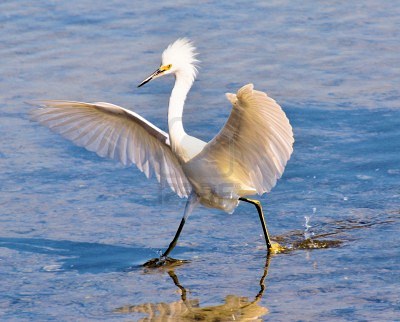
SNOWY EGRET wading & shading (Mrs. Bursk Science Class blog)

Thanks again to all of you for your thoughts and prayers, and especially for the Lord who knew all about this before, during, and after the surgery, and never left me.

***

If you missed the latest 11 articles by Dr. Jim:

Shake a Leg (or 2 or 3 or 4), Crab-Eater! – Aug 7

Crazy as a Coot! – Aug 8

Pinyon Jay, Grand Canyon’s Forester – Aug 9

Killdeer atop Killdeer: Appreciating Help from Others – Aug 10

Loggerhead Shrike: Converting Thorns into Meat-hooks – Aug 11

Oystercatchers Must be Gentiles – Aug 12

Eggs Taste Better if Salted – Aug 13

Penguin Eggs Tragedy – Aug 14

Shades of Snowies – Aug 15

Peregrine Falcon – Proactive Hunter – Aug 16

Egret Feathers Worth More Than Gold – Aug 17

Avian And Attributes – Shade

Shade Bush Warbler Drawing ©HBAlive

“The LORD is thy keeper: the LORD is thy shade upon thy right hand.” (Psalms 121:5 KJV)


Avian and Attributes – Shade

SHADE, n. [L. scutum, a shield.]
1. Literally, the interception, cutting of or interruption of the rays of light; hence, the obscurity which is caused by such interception. Shad differs from shadow, as it implies no particular form or definite limit. whereas a shadow represents in form the object which intercepts the light. Hence when we say, let us resort to the shade of a tree, we have no reference to its form; but when we speak of measuring a pyramid or other object by its shadow, we have reference to its extent.
2. Darkness; obscurity; as the shades of night.
3. An obscure place, properly in a grove or close wood, which precludes the sun’s rays; an hence, a secluded retreat.
4. A screen; something that intercepts light or heat.
5. Protection; shelter.
6. In painting, the dark part of the picture.
7. Degree or gradation of light.
White, red, yellow, blue, with their several degrees, or shades and mixtures, as green, come only in by the eyes. Locke.
8. A shadow.


Shade Bush Warbler in Middle Drawing by John Anderton

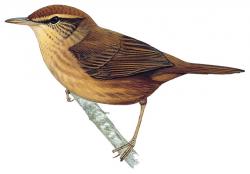
Shade Bush Warbler (Horornis parens) or shade warbler (Horornis parens) is a species of bird in the family Cettiidae. It is found only in Solomon Islands, where it is endemic to the island of Makira (formerly San Cristobal Island). Its natural habitats are tropical moist lowland forests and tropical moist montane forest above 600m. It feeds on insects in the undergrowth and on the ground.

There are really no photos available on line.

H B Alive Drawing

https://goo.gl/images/aiFdky


More Avian and Attributes

Birds whose first name starts with “S”

Good News

*
[Definitions from Webster’s Dictionary of American English (1828), unless noted. Bird info from Wikipedia plus.]

Avian And Attributes – Seaside

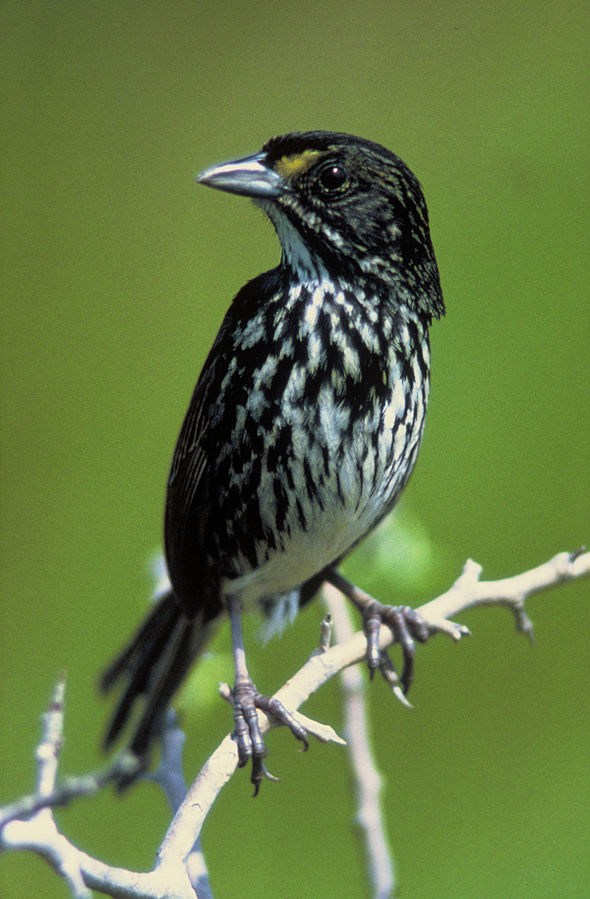
Seaside Sparrow (Ammodramus maritimus) (Dusky-extinct) ©WikiC

“The same day went Jesus out of the house, and sat by the sea side.” (Matthew 13:1 KJV)

“And he began again to teach by the sea side: and there was gathered unto him a great multitude, so that he entered into a ship, and sat in the sea; and the whole multitude was by the sea on the land.” (Mark 4:1 KJV)


Avian and Attributes – Seaside

Sea-side
SE’A-SIDE, n. [sea and side.]

The land bordering on the sea; the country adjacent to the sea, or near it.


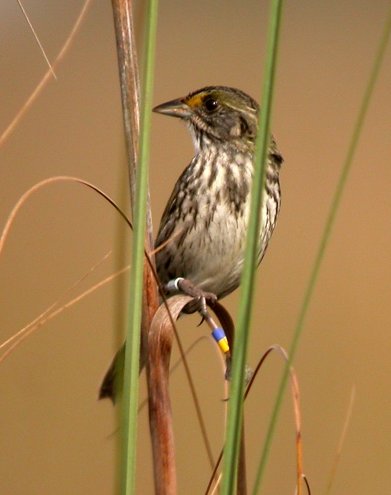
Seaside Sparrow (Ammodramus maritimus mirabilis) (Cape Sabel) ©WikiC

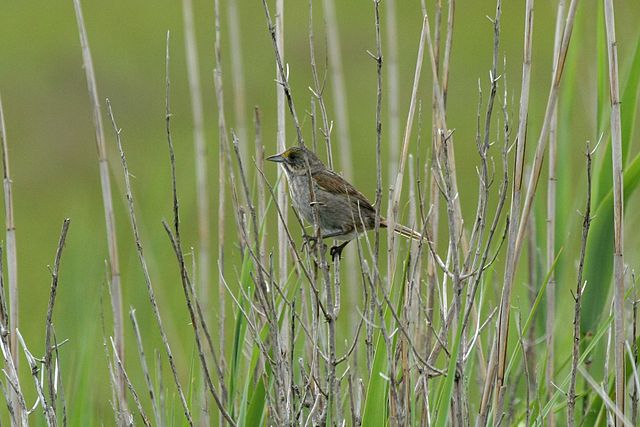
Seaside Sparrow (Ammodramus maritima) is a small American sparrow.

Adults have brownish upperparts with gray on the crown and nape, and a grayish-buff-colored breast with dark streaks; they have a dark face with gray cheeks, a white throat, and a short, pointed tail. Birds show a small yellow streak just above the eye.

Their breeding habitat is salt marshes on the Atlantic and Gulf coasts of the United States from southern New Hampshire to southern Texas. The nest is an open cup usually built in the salt marsh on tidal reeds and spartina grasses. Females lay two to five eggs.

Seaside Sparrow (Ammodramus maritimusl) ©WikiC

Northern birds most often migrate further south along the eastern coast of the United States. They forage on the ground or in marsh vegetation, sometimes probing in mud. They mainly eat insects, marine invertebrates and seeds. Their feeding areas are often some distance away from the areas they choose to nest.

The song is a raspy buzz that closely resembles a distant red-winged blackbird.


More Avian and Attributes

Birds whose first name starts with “S”

Good News

*
[Definitions from Webster’s Dictionary of American English (1828), unless noted. Bird info from Wikipedia plus.]

Avian And Attributes – Screaming

Screaming Piha (Lipaugus vociferans) ©WikiC

“And when the disciples saw Him walking on the sea, they were terrified and said, It is a ghost! And they screamed out with fright. But instantly He spoke to them, saying, Take courage! I AM! Stop being afraid!” (Matthew 14:26-27 AMP)

Jesus walked on the sea and they were terrified and might have screamed in fear.


Avian and Attributes – Scream

screamshoutyellshriekhoothollervociferationoutcrybellow, or raising one’s voice is a loud vocalization in which air is passed through the vocal folds with greater force than is used in regular or close-distance vocalization. This can be performed by any creature possessing lungs, including humans. There are slight differences in meaning among them; for example, “scream” and “shriek” generally refer to a higher-pitched, sharp sound, used by some birds and other animals, and a “hoot”, such as emitted by an owl, usually does not involve words.

A scream is often an instinctive or reflex action, with a strong emotional aspect, like fear, pain, surprise, joy, anger, etc. [This would describe what those in the boat most like did.]


Screaming Birds

Screaming Cowbird (Molothrus rufoaxillaris) ©WikiC

Screaming Cowbird (Molothrus rufoaxillarisis an obligate brood parasite belonging to the family Icteridae and is found in South America. It is also known commonly as the short billed cowbird.

Within South America, the screaming cowbird is found in north east and central Argentina, south east Bolivia, central Brazil and throughout Paraguay and Uruguay. Its natural habitat is pastureland where it forages amongst grazing animals such as cows, hence the name “cowbird”. Similar to other cowbirds, it forages predominantly on the ground, eating invertebrates that have been disturbed by grazing stock. The distribution of the screaming cowbird has increased significantly in recent decades due to habitat alteration caused by deforestation and by following its hosts into new areas.

Screaming Piha (Lipaugus vociferans) by AGrosset

Screaming Piha (Lipaugus vociferans) by AGrosset

Screaming Piha (Lipaugus vociferans) is a species of passerine bird in the family Cotingidae. It is found in humid forests in the Amazon and tropical parts of the Mata Atlântica in South America. It is adapting well to human settlement areas like gardens and parks.

Both sexes have dull grey plumage (wings and tail often somewhat browner) and a voice that is extraordinary loud. Males often gather in loose leks, where they sing to attract females.

The Cofan people of Ecuador call it the Pwe-pwe Yoh, which is a reference to its voice. Among the Ecuadorian Secoyas, the bird is known as the Kwow-kwee-yo. The sound is frequently used in movies, and also can be heard in the background of the popular game Angry Birds Rio.

[Wikipedia with editing]


More Avian and Attributes

Birds whose first name starts with “S”

Good News

*
[Definitions from Webster’s Dictionary of American English (1828), unless noted. Bird info from Wikipedia plus.]

Avian And Attributes – Scarlet-plus Birds

Scarlet-and-white Tanager (Chrysothlypis salmoni) ©WikiC

“They shall spread over them a scarlet cloth, …” (Numbers 4:8a NKJV)

“Come now, and let us reason together, saith the LORD: though your sins be as scarlet, they shall be as white as snow; though they be red like crimson, they shall be as wool.” (Isaiah 1:18 KJV)


Avian and Attributes – Scarlet II

Scarlet
This dye was obtained by the Egyptians from the shell-fish Carthamus tinctorius; and by the Hebrews from the Coccus ilicis, an insect which infests oak trees, called kermes by the Arabians.
This colour was early known (Gen_38:28). It was one of the colours of the ephod (Exo_28:6), the girdle (Exo_28:8), and the breastplate (Exo_28:15) of the high priest. It is also mentioned in various other connections (Jos_2:18; 2Sa_1:24; Lam_4:5; Nah_2:3). A scarlet robe was in mockery placed on our Lord (Mat_27:28; Luk_23:11). “Sins as scarlet” (Isa_1:18), i.e., as scarlet robes “glaring and habitual.” Scarlet and crimson were the firmest of dyes, and thus not easily washed out. [Easton’s Bible Dictionary]

Crimson, red, purple, and scarlet:
Used in the symbolisms of the tabernacle furnishings and priestly vestments and functions, as types and shadows of the atonement. ]Nave’s Topical Bible]


There are so many birds whose names begin with “Scarlet-“, that I decided to do a Part II. I want to show more of God’s Handiwork in the Avian Creations. These are by far not all of them.

Scarlet-browed Tanager (Heterospingus xanthopygius) ©WikiC

Scarlet-browed Tanager (Heterospingus xanthopygius) ©WikiC

Scarlet-browed Tanager (Heterospingus xanthopygius) ©WikiC

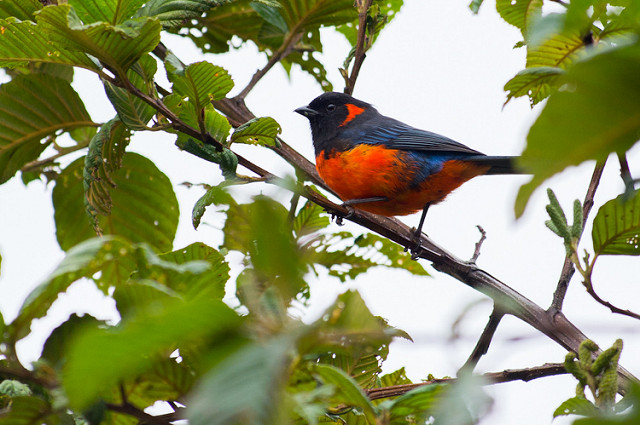
Scarlet-bellied Mountain Tanager (Anisognathus igniventris) ©Flickr Joao Quental

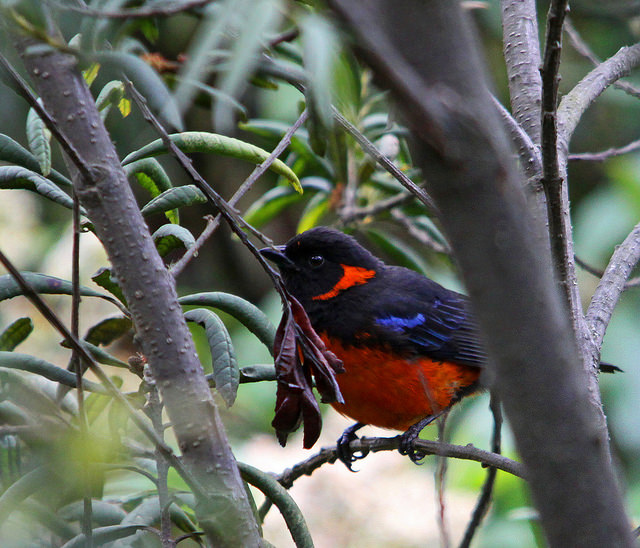
Scarlet-bellied Mountain Tanager (Anisognathus igniventris) ©Flickr vll.sandl

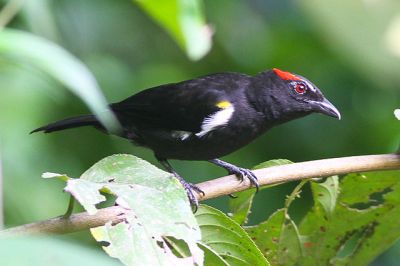
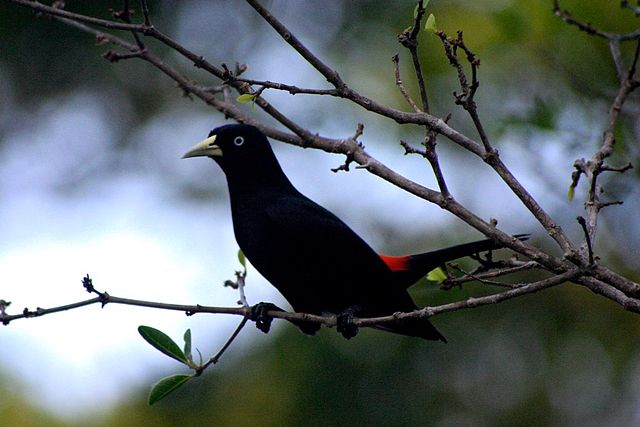
Scarlet-rumped Cacique (Cacicus microrhynchus) ©WikiC

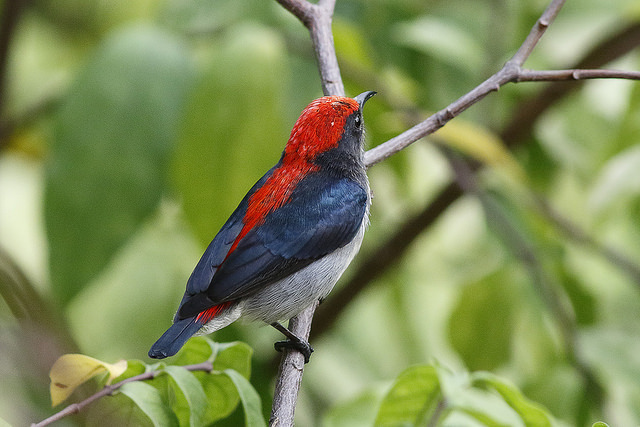
Scarlet-backed Flowerpecker (Dicaeum cruentatum) ©Flickr Dave Curtis

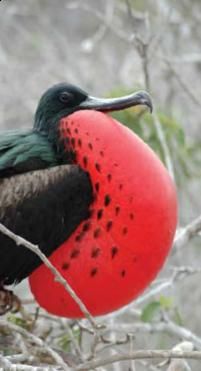
The scarlet-throated Frigate bird, Galapagos islands, EcuadorFrom Pinterest

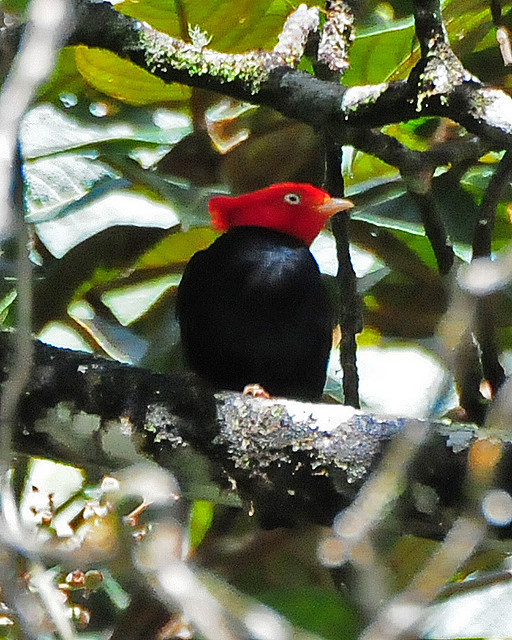
Scarlet-horned Manakin (Ceratopipra cornuta) ©©Flickr JerryOldenettel

Scarlet-horned Manakin (Ceratopipra cornuta) ©©Flickr JerryOldenettel

Scarlet-horned Manakin (Ceratopipra cornuta) ©©Flickr JerryOldenettel

Scarlet-horned Manakin (Ceratopipra cornuta) ©©Flickr JerryOldenettel

Scarlet-backed Flowerpecker (Dicaeum cruentatum) by ©Wiki

Scarlet-headed Flowerpecker (Dicaeum trochileum) by© Wiki

Scarlet-rumped Trogon (Harpactes duvaucelii) ©©LipKee

Scarlet-rumped Trogon (Harpactes duvaucelii) ©©LipKee

Scarlet-rumped Trogon (Harpactes duvaucelii) ©WikiC

Scarlet-rumped Trogon (Harpactes duvaucelii) ©WikiC

Scarlet-headed Blackbird (Amblyramphus holosericeus) by Lee

Scarlet-headed Blackbird asleep by Lee

Scarlet-headed Blackbird by Dan

Scarlet-headed Blackbird (Amblyramphus holosericeus) by Dan


More Avian and Attributes

Birds whose first name starts with “S”

Good News

*
[Definitions from Webster’s Dictionary of American English (1828), unless noted. Bird info from Wikipedia plus.]

Avian And Attributes – Scarlet

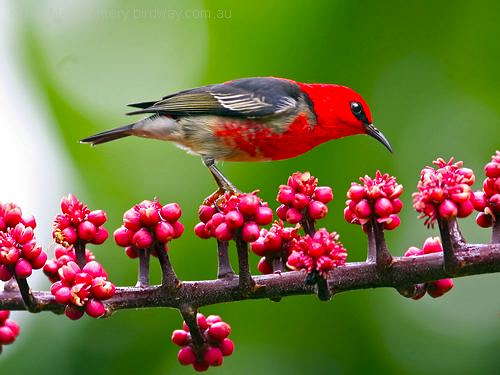
Scarlet Myzomela (Myzomela sanguinolenta) by Ian at Birdway

Scarlet Myzomela (Myzomela sanguinolenta) by Ian at Birdway

“And they stripped Him and put a scarlet robe on Him. When they had twisted a crown of thorns, they put it on His head, and a reed in His right hand. And they bowed the knee before Him and mocked Him, saying, “Hail, King of the Jews!” (Matthew 27:28-29 NKJV)


Avian and Attributes – Scarlet

SC’ARLET, n.
1. A beautiful bright red color, brighter than crimson.
2. Cloth of a scarlet color.
All her household are clothed with scarlet. Prov 31.
SC’ARLET, a. of the color called scarlet; of a bright red color; as a scarlet cloth or thread; a scarlet lip.


Scarlet Birds

Scarlet Finch

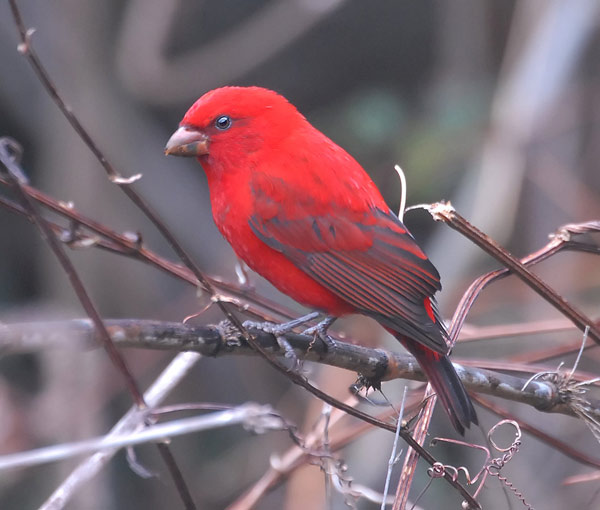
Scarlet Finch (Haematospiza sipahi) by Nikhil Devasar

Scarlet Finch (Haematospiza sipahi) by Nikhil Devasar

Scarlet Flycatcher

Scarlet Flycatcher (Pyrocephalus rubinus) by Dario Sanches

Scarlet Ibis

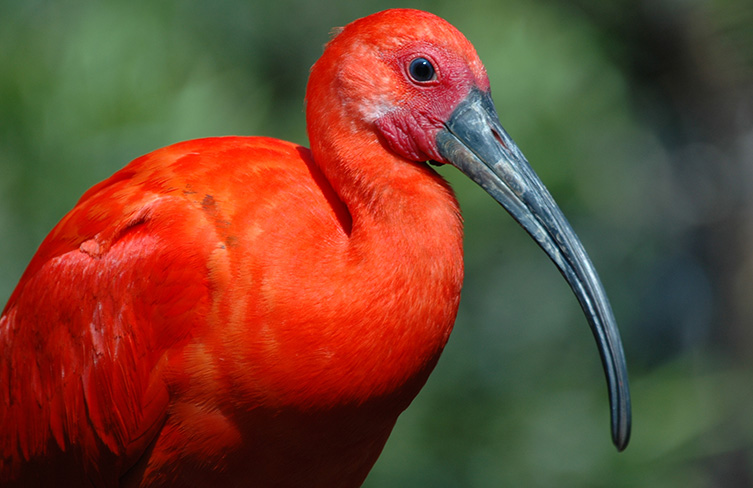
Scarlet Ibis (Eudocimus ruber) ©whm.ac.uk

Scarlet Macaw

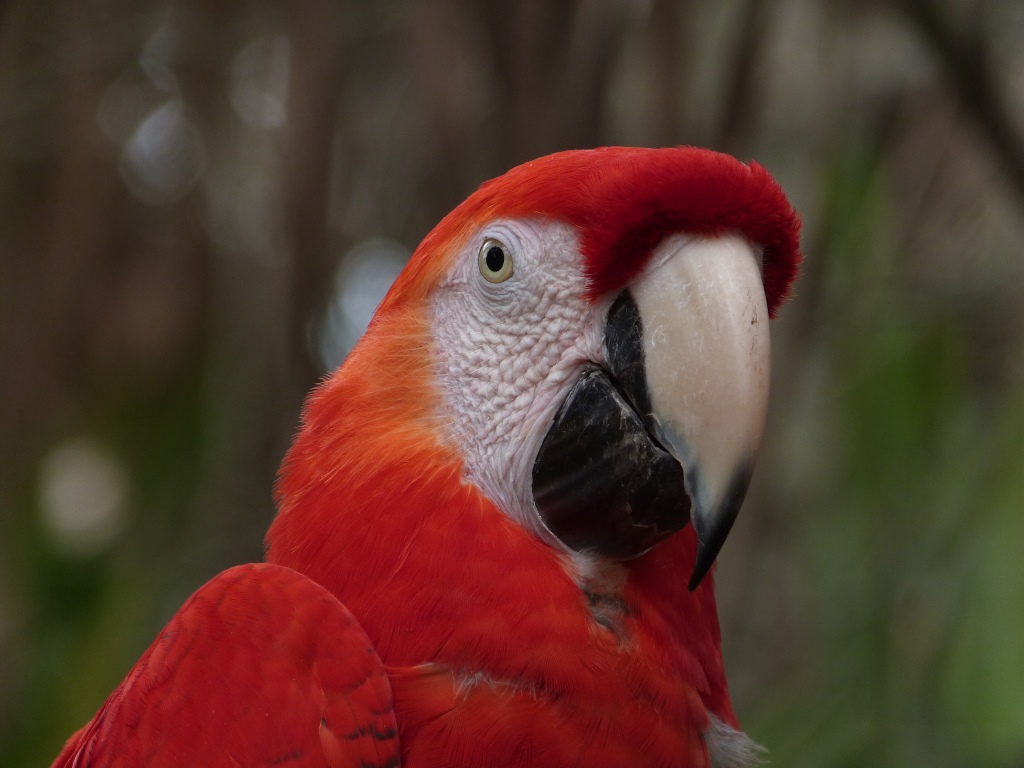
Scarlet Macaw (Ara macao) by Lee at Brevard Zoo

Scarlet Macaw (Ara macao) by Lee at Brevard Zoo

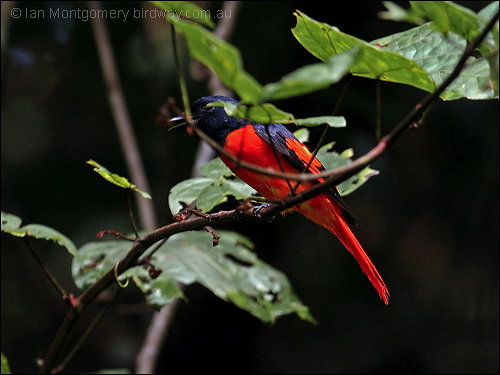
Scarlet Minivet

Scarlet Minivet (Pericrocotus speciosus) by Ian

Scarlet Myzomela

Scarlet Honeyeater or Myzolema (Myzomela sanguinolenta) by Tom Tarrant

Scarlet Robin

Scarlet Robin (Petroica boodang) by Ian

Scarlet Robin (Petroica boodang) by Ian

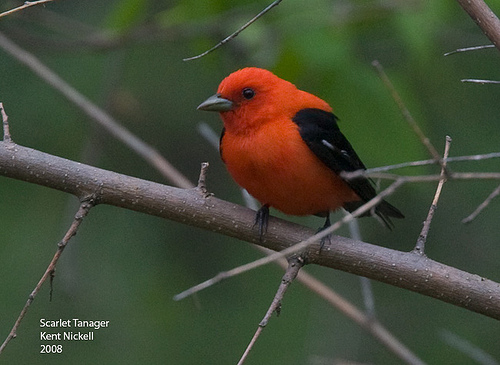
Scarlet Tanager

Scarlet Tanager (Piranga olivacea) by Kent Nickell

Scarlet Tanager (Piranga olivacea) by Kent Nickell

She is not afraid of snow for her household, For all her household is clothed with scarlet. (Proverbs 31:21 NKJV)


More Avian and Attributes

Birds whose first name starts with “S”

Good News

*
[Definitions from Webster’s Dictionary of American English (1828), unless noted. Bird info from Wikipedia plus.]

Avian And Attributes – Scale

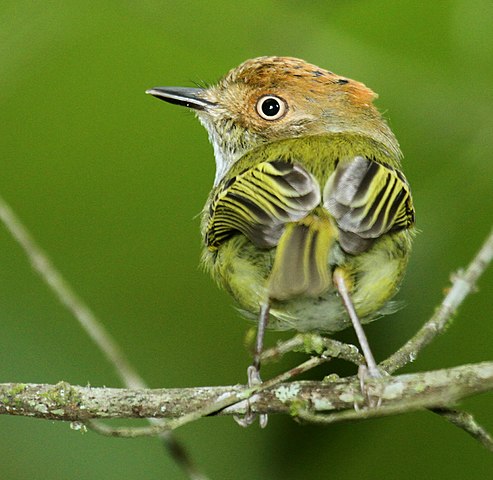
Scale-crested Pygmy Tyrant (Lophotriccus pileatus) by Michael Woodruff

Scale-crested Pygmy Tyrant (Lophotriccus pileatus) by Michael Woodruff

Who has measured the waters in the hollow of His hand, Measured heaven with a span And calculated the dust of the earth in a measure? Weighed the mountains in scales And the hills in a balance? Who has directed the Spirit of the LORD, Or as His counselor has taught Him? With whom did He take counsel, and who instructed Him, And taught Him in the path of justice? Who taught Him knowledge, And showed Him the way of understanding?” (Isaiah 40:12-14 NKJV)


Avian and Attributes – Scale

SCALE, n. [L. id. If the sense is to strip, it coincides with the Gr. to spoil.]
1. The dish of a balance; and hence, the balance itself, or whole instrument; as, to turn the scale.
Long time in even scale the battle hung.
3. The small shell or crust which composes a part of the covering of a fish; and hence, any thin layer or leaf exfoliated or separated; a thin lamin; as scales of iron or of bone.
4. A ladder; series of steps; means of ascending. [L. scala.]
5. The art of storming a place by mounting the wall on ladders; an escalade, or scalade.
6. A mathematical instrument of wood or metal, on which are marked line and figures for the purpose of measuring distances, extent or proportions; as a plain scale; a diagonal scale.
7. Regular gradation; a series rising by steps or degrees like those of a ladder. Thus we speak of the scale of being, in which man occupies a higher rank than brutes, and angels a higher rank than man.
8. Any instrument, figure or scheme, graduated for the purpose of measuring extent or proportions as a map drawn by a scale of half an inch to a league.
9. In music, a gamut; a diagram; or a series of lines and spaces rising one above another, on which notes are placed; or a scale consists of the regular gradations of sounds. A scale may be limited to an octave, called by the Greeks a tetrachord, or it may extend to the compass of any voice or instrument.
10. Any thing graduated or marked with degrees at equal distances.
SCALE, v.t.
1. To climb, as by a ladder; to ascend by steps; and applied to the walls of a fortified place, to mount in assault or storm.
Oft have I scal’d the craggy oak.
2. [from scale, a balance.] To measure; to compare; to weight.
3. [from scale, the covering of a fish.] to strip or clear of scales; as, to scale a fish.
4. To take off in thin lamins or scales.
5. To pare off a surface.
If all the mountains were scaled, and the earth made even –
[Edited]


Scale- Birds

Scale-crested Pygmy Tyrant (Lophotriccus pileatus)

Scale-crested Pygmy Tyrant (Lophotriccus pileatus) ©WikiC

The Scale-crested Pygmy Tyrant (Lophotriccus pileatus) is a species of bird in the family Tyrannidae. It was given its name for the small crown-like ring of feathers on the top of its head. It raises these feathers both to attract a mate and to seem larger when frightened.

It is found in Colombia, Costa Rica, Ecuador, Panama, Peru, Venezuela, and possibly Honduras. Its natural habitats are subtropical or tropical moist lowland forest and subtropical or tropical moist montane forest. Not much is known about the habits or breeding of the bird.

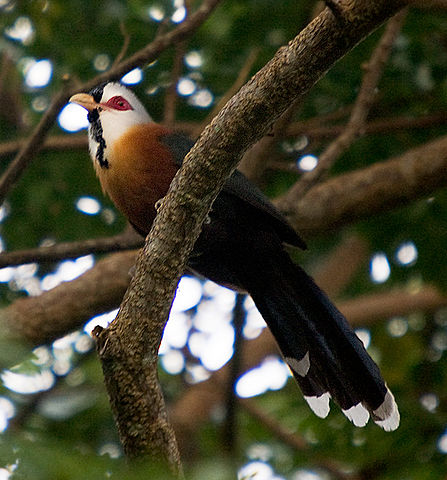
Scale-feathered Malkoha

Scale-feathered Malkoha (Dasylophus cumingi) ©WikiC

Scale-throated Earthcreeper

The Scale-feathered Malkoha (Dasylophus cumingi) is a species of cuckoo in the family Cuculidae. It is endemic to the northern Philippines.

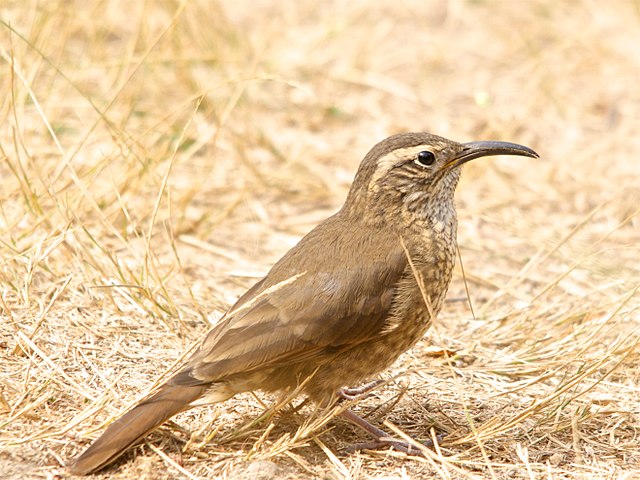
Scale-throated Earthcreeper (Upucerthia dumetaria) ©WikiC

Scale-throated Hermit

The Scale-throated Earthcreeper (Upucerthia dumetaria) is a species of bird in the Furnariidae family. It is found in Argentina and the Altiplano; it winters in the Pampas and east of Córdoba. Its natural habitats are subtropical or tropical dry shrubland, subtropical or tropical high-altitude shrubland, and subtropical or tropical high-altitude grassland. They build their nests at the end of tunnels measuring between one and two meters. These tunnels are almost exclusively based on slopes; however, rock crevices are occasionally used. It formerly included the Patagonian forest earthcreeper (U. saturatior) as a subspecies.

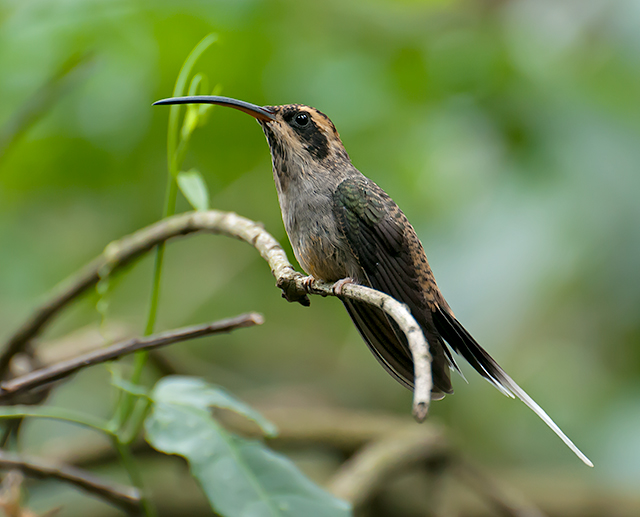
Scale-throated Hermit (Phaethornis eurynome) by Dario Sanches

The Scale-throated Hermit (Phaethornis eurynome) is a species in the hummingbird family, Trochilidae.

It is found in the Atlantic forest in north-eastern Argentina, south-eastern Brazil, and eastern Paraguay. The supposed “black-billed hermit”, described as P. nigrirostris, has turned out to be a mutant P. eurynome with an all-black bill.


More Avian and Attributes

Birds whose first name starts with “S”

Good News

*
[Definitions from Webster’s Dictionary of American English (1828), unless noted. Bird info from Wikipedia plus.]