Interesting Things – The Weaver Bird

Lesser Masked Weaver (Ploceus intermedius) by Bob-Nan

Lesser Masked Weaver (Ploceus intermedius) by Bob-Nan

And God blessed them, and God said unto them, Be fruitful, and multiply, and replenish the earth, and subdue it: and have dominion over the fish of the sea, and over the fowl of the air, and over every living thing that moveth upon the earth. (Genesis 1:28)

Intelligence – as much as is needed and no more – is generously found throughout the creation. So we cannot say that intelligence alone makes humans special.

Consider the weaverbird. The weaverbird nest consists of woven strips of fiber and grass. Using beak and feet, the male weaverbird uses both loops and knots to weave his hanging nest. Then the nest must be inspected by a prospective mate. If she doesn’t like the nest’s construction, she will turn down the hopeful mate. The male must then tear down his work and start over. Some males have been observed constructing and tearing down their nests two dozen times before finding a prospective mate who is satisfied with his work. Some weaverbirds actually build huge cities of nests protected by a woven roof. One roof over a weaverbird city was 15 feet across!

SmileyCentral.com

Human intelligence spans much more than animal intelligence. However, what sets us apart from animals is the fact that our Creator made us to have a special relationship with Him. And even when Adam and Eve placed their will above God’s Word, He still loved us enough to pay the highest price to restore us to Himself. Jesus Christ lived in perfect obedience to God for us and then suffered the penalty of our disobedience against God. In His resurrection from the dead, all those who embrace Christ in faith receive the promise of being made new creations again – beginning right here in this life! That’s the wide gulf between humans and animals!

Prayer:
Dear Father, I thank You that You have given me being and life, and that when I was lost in sin, You still sought me out with Your gospel. Help me to truly live as Your new creation in Christ. For His sake. Amen.
Notes:
Science Digest, Aug. 1983. p. 73.

©Creation Moments 2011


Lee’s Addition:

Thought you might enjoy watching the weaver birds at work. Most of the Weaver Birds belong to the Ploceidae – Weavers, Widowbirds Family. Some of the Old World Sparrows – Passeridae Family have Weavers.
*

*

Wordless Birds

*

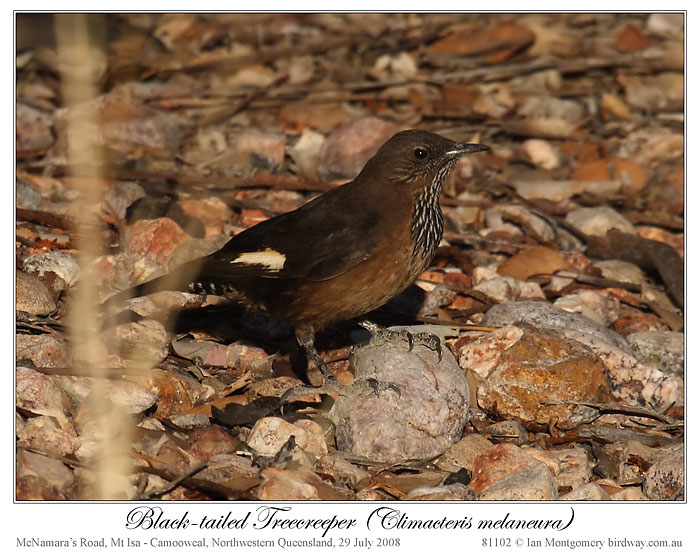
Ian’s Bird of the Week – Black-tailed Treecreeper

Black-tailed Treecreeper (Climacteris melanurus) by Ian

Black-tailed Treecreeper (Climacteris melanurus) by Ian

Ian’s Bird of the Week – Black-tailed Treecreeper ~ by Ian Montgomery

Newsletter – 10/28/11

I hope you like albatrosses and penguins as I leave in less than 2 weeks for a boat-trip to the so-called Sub-Antarctic island south of New Zealand and Australia and seabirds will, I hope, dominate the bird of the week for some time to come. In the meantime, here is a real landlubber, the Black-tailed Treecreeper, from northwestern Australia. It’s range extends from northwestern Queensland (Cloncurry district) through the Top End of the Northern Territory to the Kimberley region of northern Western Australia, with an isolated population of a paler race slightly farther south in the Pilbara region.

Black-tailed Treecreeper (Climacteris melanurus) by Ian

Black-tailed Treecreeper (Climacteris melanurus) by Ian

This bird is a male with a black throat with white streaks and the photo shows well the huge rear claws that it uses to climb trees. The photo also shows that Australo-Papuan Treecreepers (Climacteridae Family) usually don’t rely on their tails as a prop, unlike the unrelated Northern Hemisphere Treecreepers (Certhiidae) and Woodpeckers (Picidae). This photo was taken in tropical forest in Kakadu but this species also occurs in much more arid country with only scattered trees and it will feed on the ground, as in the second photo, taken at McNamara’s Road between Mount Isa and Camooweal. This bird is also a male: females have pale throats, but I haven’t got a good photo of one.

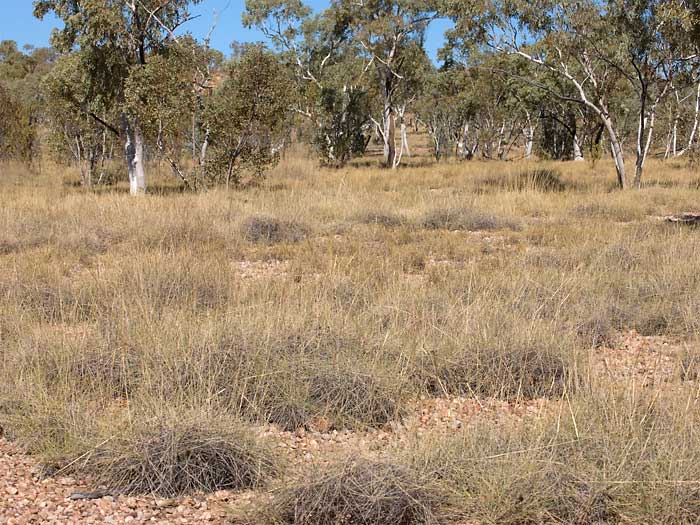
McNamaras Road by Ian

McNamaras Road by Ian

The main ground cover here is a prickly grass usually called spinifex (Triodia) and this site, third photo, is famous for its Carpentarian Grasswrens, but I remember it better for a hard night’s camping with a punctured airbed on this fourth-failed and final foray here in search of these elusive grasswrens – final because I was shown the grasswrens at another site two days later by Brian Venables who has much better hearing than I have! (Carpentarian Grasswren)

Best wishes
Ian

Ian Montgomery, Birdway Pty Ltd,
454 Forestry Road, Bluewater, Qld 4818
Phone: 0411 602 737 +61-411 602 737
Preferred Email: ian@birdway.com.au
Website: http://birdway.com.au


Lee’s Addition:

I am glad Ian is the one camping in an area like that last photo. That prickly grass doesn’t look too inviting. Those neat photos of the Treecreeper are worth it though. Thanks for sacrificing your airbed for them.

In them the birds build their nests; the stork has her home in the fir trees. (Psalms 104:17 ESV)

The Climacteridae- Australian Treecreeper Family and the Certhiidae – Treecreepers Family are in the Passeriformes Order and the Picidae – Woodpeckers Family is in the Piciformes Order.

*

Being and Doing as God Enables – by A. W. Tozer

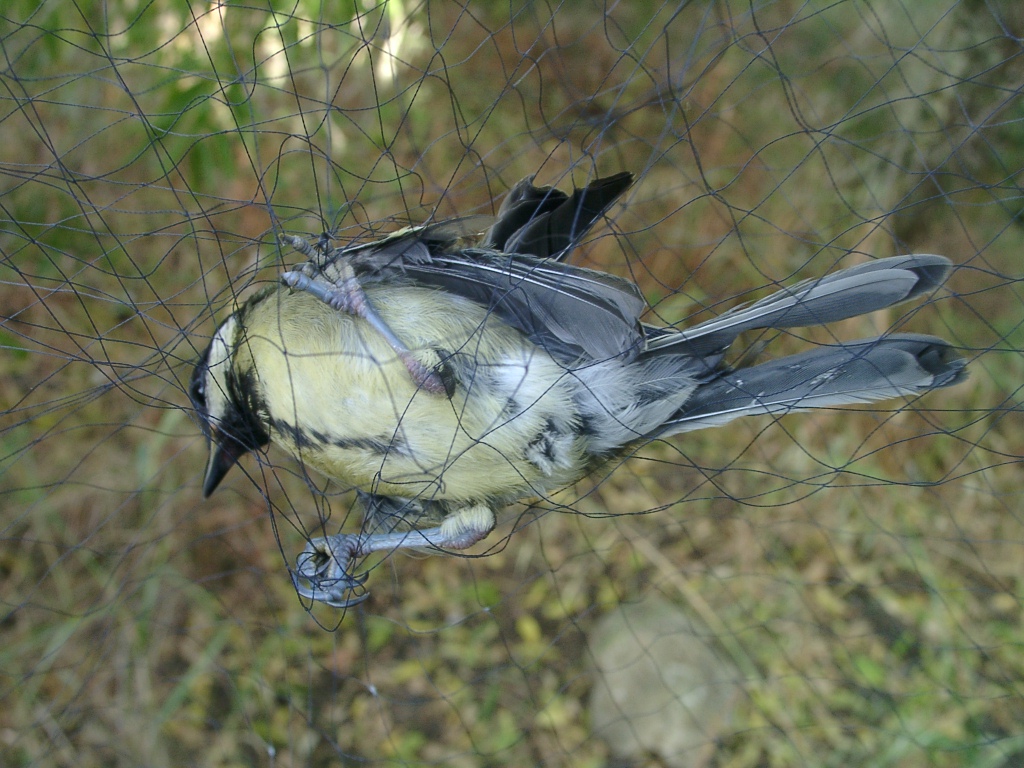
Bird caught in a net

Bird caught in a net

Being and Doing as God Enables – By A.W. Tozer  
(Guest Writer from the Past)

Surely in vain the net is spread in the sight of any bird. (Proverbs 1:17 KJV)

Failing to get ready in time for eternity, and failing to get ready now for the great then that lies out yonder, is a trap in plain sight. There is an odd saying in the Old Testament, “How useless to spread a net in full view of all the birds” (Proverbs 1:17).

When the man of God wrote that, he gave the birds a little credit. It would be silly for a bird watching me set the trap to conveniently fly down and get into it. Yet there are people doing that all the time. People who have to live for eternity fall into that trap set for them in plain sight. It is folly to put off to a tomorrow because you may never see the things that you should do now. It is an act of inexcusable folly to count on help that will never come. It is foolish to ignore God’s help now offered us. Many are guilty of ignoring the help that is presently being extended to them, all the while waiting for help that will never come from others. There is not much that can be said in favor of lazy or careless Christians. God never told anyone to do anything that he or she could not do. Jesus said to the man with the paralyzed arm that hung at his side like a limp piece of flesh, “Stretch out your hand” (Matthew 12:13a). And the man, believing that Jesus was the Christ, stretched out his hand and was healed instantly. God has never asked anyone yet to do anything that He was not enabling the person to do.

See  A.W. Tozer index.

A.W. Tozer (1897 – 1963)

A 20th-century prophet” they called him even in his lifetime. For 31 years he was pastor of Southside Alliance Church in Chicago, where his reputation as a man of God was citywide. Concurrently he became editor of Alliance Life, a responsibility he fulfilled until his death in 1963.

His greatest legacy to the Christian world has been his 30 books. Because A.W. Tozer lived in the presence of God he saw clearly and he spoke as a prophet to the church. He sought for God’s honor with the zeal of Elijah and mourned with Jeremiah at the apostasy of God’s people.

But he was not a prophet of despair. His writings are messages of concern. They expose the weaknesses of the church and denounce compromise. They warn and exhort. But they are messages of hope as well, for God is always there, ever faithful to restore and to fulfill His Word to those who hear and obey.

The Pursuit of God by A. W. Tozer – ebook

A. W. Tozer – Wikipedia

Birds of the Bible – Bird Catcher

Wordless Birds

*

Nuggets Plus – Digestion and Meditation

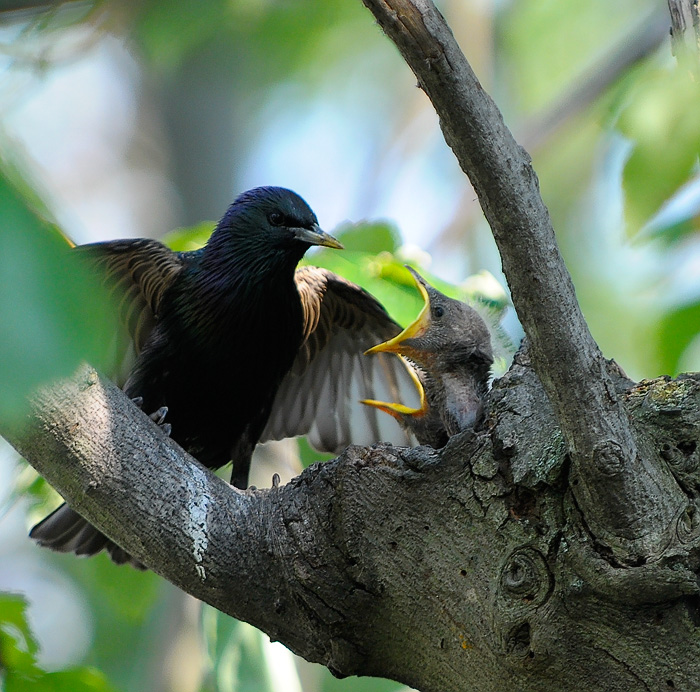
Common Starling (Sturnus vulgaris) at Nest by Anthony747

Common Starling (Sturnus vulgaris) at Nest by Anthony747

A crop (or croup sometimes called a craw) is a thin-walled expanded portion of the alimentary tract used for the storage of food prior to digestion that is found in many animals, including gastropods, earthworms, leeches, insects, birds, and even some dinosaurs.

Nuggets Plus

Nuggets Plus

As with most other organisms that have a crop, the crop is used to temporarily store food. Not all birds have a crop. In adult doves and pigeons, the crop can produce crop milk to feed newly hatched birds.

Scavenging birds, such as vultures, will gorge themselves when prey is abundant, causing their crop to bulge. They subsequently sit, sleepy or half torpid, to digest their food. Most raptors have one; like falcons, hawks, eagles and vultures but owls do not.

Cows eat grasses and then spend time digesting their food. (See Video)

When we read God’s Word, do we digest it and meditate on what we have read?

I rejoice at thy word, as one that findeth great spoil. (Psalms 119:162 KJV)
Thy words were found, and I did eat them; and thy word was unto me the joy and rejoicing of mine heart: for I am called by thy name, O LORD God of hosts. (Jeremiah 15:16 KJV)
Let the words of my mouth, and the meditation of my heart, be acceptable in thy sight, O LORD, my strength, and my redeemer. (Psalms 19:14 KJV)

*

God’s World – by Charles Kingsley

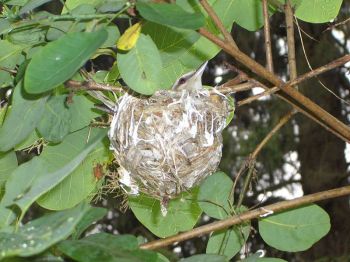
Red-eyed Vireo (Vireo olivaceus) ©WikiC in nest

Red-eyed Vireo (Vireo olivaceus) ©WikiC in nest

Twenty-Five Village Sermons, 1 – God’s World – By Charles Kingsley 
(Guest Writer from the Past)

O Lord, how manifold are Thy works! in wisdom hast Thou made them all: the earth is full of Thy riches. Psalm 104:24

When we read such psalms as the one from which this verse is taken, we cannot help, if we consider, feeling at once a great difference between them and any hymns or religious poetry which is commonly written or read in these days. The hymns which are most liked now, and the psalms which people most willingly choose out of the Bible, are those which speak, or seem to speak, about God’s dealings with people’s own souls, while such psalms as this are overlooked. People do not care really about psalms of this kind when they find them in the Bible, and they do not expect or wish nowadays any one to write poetry like them. For these psalms of which I speak praise and honour God, not for what He has done to our souls, but for what He has done and is doing in the world around us. This very 104th psalm, for instance, speaks entirely about things which we hardly care or even think proper to mention in church now. It speaks of this earth entirely, and the things on it. Of the light, the clouds, and wind–of hills and valleys, and the springs on the hill- sides–of wild beasts and birds–of grass and corn, and wine and oil–of the sun and moon, night and day–the great sea, the ships, and the fishes, and all the wonderful and nameless creatures which people the waters–the very birds’ nests in the high trees, and the rabbits burrowing among the rocks,–nothing on the earth but this psalm thinks it worth mentioning. And all this, which one would expect to find only in a book of natural history, is in the Bible, in one of the psalms, written to be sung in the temple at Jerusalem, before the throne of the living God and His glory which used to be seen in that temple,–inspired, as we all believe, by God’s Spirit,– God’s own word, in short: that is worth thinking of. Surely the man who wrote this must have thought very differently about this world, with its fields and woods, and beasts and birds, from what we think. Suppose, now, that we had been old Jews in the temple, standing before the holy house, and that we believed, as the Jews believed, that there was only one thin wall and one curtain of linen between us and the glory of the living God, that unspeakable brightness and majesty which no one could look at for fear of instant death, except the high-priest in fear and trembling once a- year–that inside that small holy house, He, God Almighty, appeared visibly–God who made heaven and earth. Suppose we had been there in the temple, and known all this, should we have liked to be singing about beasts and birds, with God Himself close to us? We should not have liked it–we should have been terrified, thinking perhaps about our own sinfulness, perhaps about that wonderful majesty which dwelt inside. We should have wished to say or sing something spiritual, as we call it; at all events, something very different from the 104th psalm about woods, and rivers, and dumb beasts. We do not like the thought of such a thing: it seems almost irreverent, almost impertinent to God to be talking of such things in His presence. Now does this shew us that we think about this earth, and the things in it, in a very different way from those old Jews? They thought it a fit and proper thing to talk about corn and wine and oil, and cattle and fishes, in the presence of Almighty God, and we do not think it fit and proper. We read this psalm when it comes in the Church-service as a matter of course, mainly because we do not believe that God is here among us. We should not be so ready to read it if we thought that Almighty God was so near us.
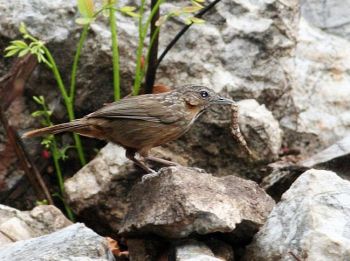
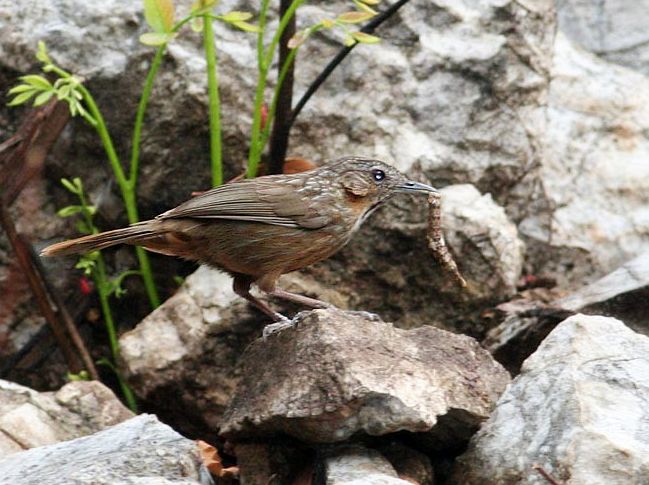
Limestone Wren-Babbler (Napothera crispifrons) by Peter Ericsson

Limestone Wren-Babbler (Napothera crispifrons) by Peter Ericsson

That is a great difference between us and the old Jews. Whether it shews that we are better or not than they were in the main, I cannot tell; perhaps some of them had such thoughts too, and said, ‘It is not respectful to God to talk about such commonplace earthly things in His presence;’ perhaps some of them thought themselves spiritual and pure-minded for looking down on this psalm, and on David for writing it. Very likely, for men have had such thoughts in all ages, and will have them. But the man who wrote this psalm had no such thoughts. He said himself, in this same psalm, that his words would please God. Nay, he is not speaking and preaching ABOUT God in this psalm, as I am now in my sermon, but he is doing more; he is speaking TO God–a much more solemn thing if you will think of it. He says, “O Lord my God, THOU art become exceeding glorious. Thou deckest Thyself with light as with a garment. All the beasts wait on Thee; when Thou givest them meat they gather it. Thou renewest the face of the earth.” When he turns and speaks of God as “He,” saying, “He appointed the moon,” and so on, he cannot help going back to God, and pouring out his wonder, and delight, and awe, to God Himself, as we would sooner speak TO any one we love and honour than merely speak ABOUT them. He cannot take his mind off God. And just at the last, when he does turn and speak to himself, it is to say, “Praise thou the Lord, O my soul, praise the Lord,” as if rebuking and stirring up himself for being too cold-hearted and slow, for not admiring and honouring enough the infinite wisdom, and power, and love, and glorious majesty of God, which to him shines out in every hedge-side bird and every blade of grass. Truly I said that man had a very different way of looking at God’s earth from what we have!
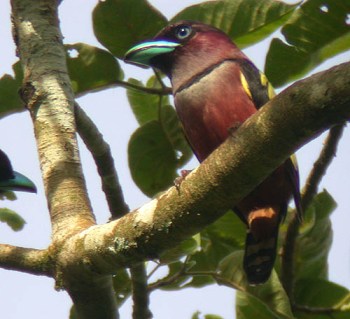
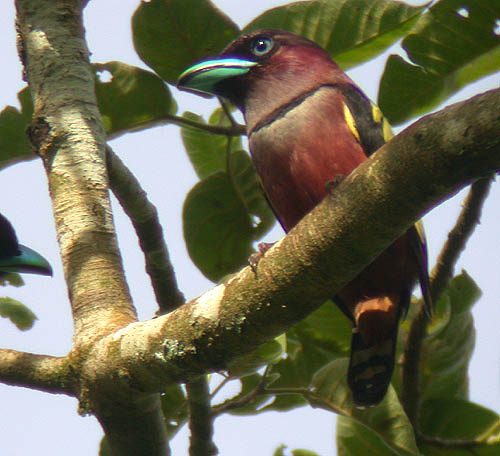
Banded Broadbill (Eurylaimus javanicus) by Peter Ericsson

Banded Broadbill (Eurylaimus javanicus) by Peter Ericsson

Now, in what did that difference lie? What was it? We need not look far to see. It was this,–David looked on the earth as God’s earth; we look on it as man’s earth, or nobody’s earth. We know that we are here, with trees and grass, and beasts and birds, round us. And we know that we did not put them here; and that, after we are dead and gone, they will go on just as they went on before we were born,–each tree, and flower, and animal, after its kind, but we know nothing more. The earth is here, and we on it; but who put it there, and why it is there, and why we are on it, instead of being anywhere else, few ever think. But to David the earth looked very different; it had quite another meaning; it spoke to him of God who made it. By seeing what this earth is like, he saw what God who made it is like: and we see no such thing. The earth?–we can eat the corn and cattle on it, we can earn money by farming it, and ploughing and digging it; and that is all most men know about it. But David knew something more–something which made him feel himself very weak, and yet very safe; very ignorant and stupid, and yet honoured with glorious knowledge from God,–something which made him feel that he belonged to this world, and must not forget it or neglect it, that this earth was his lesson-book–this earth was his work-field; and yet those same thoughts which shewed him how he was made for the land round him, and the land round him was made for him, shewed him also that he belonged to another world–a spirit- world; shewed him that when this world passed away, he should live for ever; shewed him that while he had a mortal body, he had an immortal soul too; shewed him that though his home and business were here on earth, yet that, for that very reason, his home and business were in heaven, with God who made the earth, with that blessed One of whom he said, “Thou, Lord, in the beginning hast laid the foundation of the earth, and the heavens are the work of thy hands. They shall perish, but Thou shalt endure; they all shall fade as a garment, and like a vesture shalt Thou change them, and they shall be changed; but Thou art the same, and THY years shall not fail. The children of Thy servants shall continue, and their seed shall stand fast in Thy sight.” “As a garment shalt Thou change them,”– ay, there was David’s secret! He saw that this earth and skies are God’s garment–the garment by which we see God; and that is what our forefathers saw too, and just what we have forgotten; but David had not forgotten it.

Look at this very 104th psalm again, how he refers every thing to God. We say, ‘The light shines:’ David says something more; he says, “Thou, O God, adornest Thyself with light as with a curtain.” Light is a picture of God. “God,” says St. John, “is light, and in Him is no darkness at all.” We say, ‘The clouds fly and the wind blows,’ as if they went of themselves; David says, “God makes the clouds His chariot, and walks upon the wings of the wind.” We talk of the rich airs of spring, of the flashing lightning of summer, as dead things; and men who call themselves wise say, that lightning is only matter,–‘We can grind the like of it out of glass and silk, and make lightning for ourselves in a small way;’ and so they can in a small way, and in a very small one: David does not deny that, but he puts us in mind of something in that lightning and those breezes which we cannot make. He says, God makes the winds His angels, and flaming fire his ministers; and St. Paul takes the same text, and turns it round to suit his purpose, when he is talking of the blessed angels, saying, ‘That text in the 104th Psalm means something more; it means that God makes His angels spirits, (that is winds) and His ministers a flaming fire.’ So shewing us that in those breezes there are living spirits, that God’s angels guide those thunder-clouds; that the roaring thunderclap is a shock in the air truly, but that it is something more–that it is the voice of God, which shakes the cedar-trees of Lebanon, and tears down the thick bushes, and makes the wild deer slip their young. So we read in the psalms in church; that is David’s account of the thunder. I take it for a true account; you may or not as you like. See again. Those springs in the hill- sides, how do they come there? ‘Rain-water soaking and flowing out,’ we say. True, but David says something more; he says, God sends the springs, and He sends them into the rivers too. You may say, ‘Why, water must run down-hill, what need of God?’ But suppose God had chosen that water should run UP-hill and not down, how would it have been then?–Very different, I think. No; He sends them; He sends all things. Wherever there is any thing useful, His Spirit has settled it. The help that is done on earth He doeth it all Himself.–Loving and merciful,–caring for the poor dumb beasts!–He sends the springs, and David says, “All the beasts of the field drink thereof.”
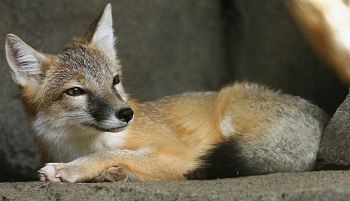
Swift Fox

Swift Fox ©WikiC

The wild animals in the night, He cares for them too,–He, the Almighty God. We hear the foxes bark by night, and we think the fox is hungry, and there it ends with us; but not with David: he says, “The lions roaring after their prey do seek their meat from God,”–God, who feedeth the young ravens who call upon Him. He is a God! “He did not make the world,” says a wise man, “and then let it spin round His finger,” as we wind up a watch, and then leave it to go of itself. No; “His mercy is over all His works.” Loving and merciful, the God of nature is the God of grace. The same love which chose us and our forefathers for His people while we were yet dead in trespasses and sins; the same only- begotten Son, who came down on earth to die for us poor wretches on the cross,–that same love, that same power, that same Word of God, who made heaven and earth, looks after the poor gnats in the winter time, that they may have a chance of coming out of the ground when the day stirs the little life in them, and dance in the sunbeam for a short hour of gay life, before they return to the dust whence they were made, to feed creatures nobler and more precious than themselves. That is all God’s doing, all the doing of Christ, the King of the earth. “They wait on Him,” says David. The beasts, and birds, and insects, the strange fish, and shells, and the nameless corals too, in the deep, deep sea, who build and build below the water for years and thousands of years, every little, tiny creature bringing his atom of lime to add to the great heap, till their heap stands out of the water and becomes dry land; and seeds float thither over the wide waste sea, and trees grow up, and birds are driven thither by storms; and men come by accident in stray ships, and build, and sow, and multiply, and raise churches, and worship the God of heaven, and Christ, the blessed One,–on that new land which the little coral worms have built up from the deep. Consider that. Who sent them there? Who contrived that those particular men should light on that new island at that especial time? Who guided thither those seeds–those birds? Who gave those insects that strange longing and power to build and build on continually?– Christ, by whom all things are made, to whom all power is given in heaven and earth; He and His Spirit, and none else. It is when HE opens His hand, they are filled with good. It is when HE takes away their breath, they die, and turn again to their dust. HE lets His breath, His spirit, go forth, and out of that dead dust grow plants and herbs afresh for man and beast, and He renews the face of the earth. For, says the wise man, “all things are God’s garment”– outward and visible signs of His unseen and unapproachable glory; and when they are worn out, He changes them, says the Psalmist, as a garment, and they shall be changed.

The old order changes, giving place to the new,
And God fulfils Himself in many ways.

But He is the same. He is there all the time. All things are His work. In all things we may see Him, if our souls have eyes. All things, be they what they may, which live and grow on this earth, or happen on land or in the sky, will tell us a tale of God,–shew forth some one feature, at least, of our blessed Saviour’s countenance and character,–either His foresight, or His wisdom, or His order, or His power, or His love, or His condescension, or His long-suffering, or His slow, sure vengeance on those who break His laws. It is all written there outside in the great green book, which God has given to labouring men, and which neither taxes nor tyrants can take from them. The man who is no scholar in letters may read of God as he follows the plough, for the earth he ploughs is his Father’s: there is God’s mark and seal on it,–His name, which though it is written on the dust, yet neither man nor fiend can wipe it out!
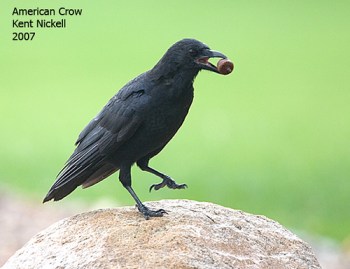
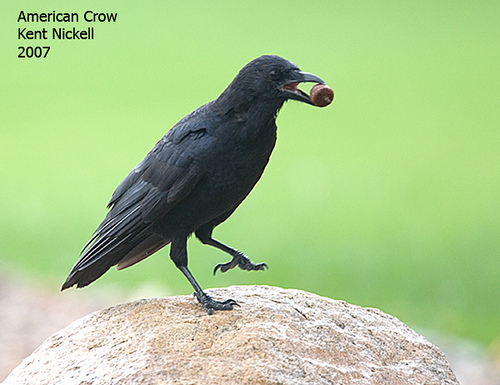
American Crow (Corvus brachyrhynchos) by Kent Nickell

American Crow (Corvus brachyrhynchos) by Kent Nickell

The poor, solitary, untaught boy, who keeps the sheep, or minds the birds, long lonely days, far from his mother and his playmates, may keep alive in him all purifying thoughts, if he will but open his eyes and look at the green earth around him.

Think now, my boys, when you are at your work, how all things may put you in mind of God, if you do but choose. The trees which shelter you from the wind, God planted them there for your sakes, in His love.–There is a lesson about God. The birds which you drive off the corn, who gave them the sense to keep together and profit by each other’s wit and keen eyesight? Who but God, who feeds the young birds when they call on Him?–There is another lesson about God. The sheep whom you follow, who ordered the warm wool to grow on them, from which your clothes are made? Who but the Spirit of God above, who clothes the grass of the field, the silly sheep, and who clothes you, too, and thinks of you when you don’t think of yourselves?–There is another lesson about God. The feeble lambs in spring, they ought to remind you surely of your blessed Saviour, the Lamb of God, who died for you upon the cruel cross, who was led as a lamb to the slaughter; and like a sheep that lies dumb and patient under the shearer’s hand, so he opened not his mouth. Are not these lambs, then, a lesson from God? And these are but one or two examples out of thousands and thousands. Oh, that I could make you, young and old, all feel these things! Oh, that I could make you see God in every thing, and every thing in God! Oh, that I could make you look on this earth, not as a mere dull, dreary prison, and workhouse for your mortal bodies, but as a living book, to speak to you at every time of the living God, Father, Son, and Holy Ghost! Sure I am that that would be a heavenly life for you,–sure I am that it would keep you from many a sin, and stir you up to many a holy thought and deed, if you could learn to find in every thing around you, however small or mean, the work of God’s hand, the likeness of God’s countenance, the shadow of God’s glory.

See  Charles Kingsley index.

Charles Kingsley – 1819 – 1875

Charles Kingsley was born in Holne (Devon), the son of a vicar. His brother, Henry Kingsley, also became a novelist. He spent his childhood in Clovelly, Devon and was educated at Magdalene College, Cambridge, before choosing to pursue a ministry in the church. From 1844, he was rector of Eversley in Hampshire, and in 1860, he was appointed Regius Professor of Modern History at the University of Cambridge.

Kingsley’s interest in history spilled over into his writings, which include The Heroes (1856), a children’s book about Greek mythology, and several historical novels, of which the best known are Hypatia (1853), Hereward the Wake (1865), and Westward Ho! (1855).

In 1872 Kingsley accepted the Presidency of the Birmingham and Midland Institute and became its 19th President.

Kingsley died in 1875 and was buried in St Mary’s Churchyard in Eversley.

*

Interesting Things – Tool-Using Animals

SmileyCentral.com

So God created man in his [own] image, in the image of God created he him; male and female created he them. (Genesis 1:27)

Evolution devalues humanity. It tries to find the most unflattering way to describe human beings to try to counter the Bible’s claim that they were created in God’s image.

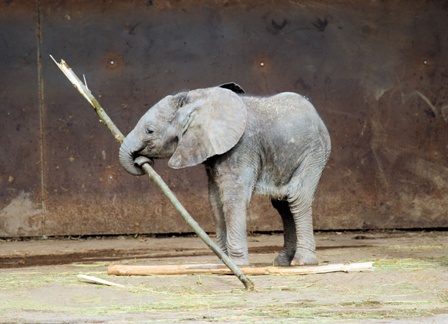
Baby Elephant with Tool ©©

Baby Elephant with Tool ©©

For generations, evolutionists said that the humans’ use of tools was all that made them different from animals. Creationists who objected, saying there was obviously more of a difference than that, were ignored as unscientific. It wasn’t so long ago that evolutionists scoffed at creationists who showed them that there are animals who use tools – and, therefore, the evolutionists’ definition was wrong.

Elephants often take sticks in their trunks to scratch their backs. Galapagos Woodpecker Finch (edited) use cactus spines, held in their beaks, to probe insects out of cracks in trees.

Chimpanzees even use sticks as levers to move heavy objects. They also make tools out of sticks by shaping them to the right size to poke into termite nests. The stick full of termites they pull out of the nest offers them a tasty snack. West African chimps actually use stones as hammers to crack nuts. So today, evolutionists recognize that some animals not only use tools, but also make them! Only now they claim that animals who use tools prove their theory. Which only goes to show that evolution is not science that can be disproved. It is a faith that will be believed even when the facts contradict it. The facts say that there is an unbridgeable difference between humans and animals.

Prayer:
Lord, I thank You for making animals. I ask that You would help all who are working to teach Christian young people that they are Your creations and not glorified animals. Show me my part in filling this need. Amen.
Notes:
“Tool-wielding beasts.” Science Digest, Aug. 1983. p. 107.

Lee’s Addition:

*

* More Interesting Things

*

Weights Become Wings – Mrs. Charles E. Cowman

Bald Eagle (Haliaeetus leucocephalus) Flying by Aesthetic Photos

Bald Eagle (Haliaeetus leucocephalus) Flying by Aesthetic Photos

Weights Become Wings – By Mrs. Charles E. Cowman
(Guest Writer from the Past)

They shall mount up with wings as eagles” (Isa.40:31)

There is a fable about the way the birds got their wings at the beginning. They were first made without wings. Then God made the wings and put them down before the wingless birds and said to them, “Come, take up these burdens and bear them.”

The birds had lovely plumage and sweet voices; they could sing, and their feathers gleamed in the sunshine, but they could not soar in the air. They hesitated at first when bidden to take up the burdens that lay at their feet, but soon they obeyed, and taking up the wings in their beaks, laid them on their shoulders to carry them.

For a little while the load seemed heavy and hard to bear, but presently, as they went on carrying the burdens, folding them over their hearts, the wings grew fast to their little bodies, and soon they discovered how to use them, and were lifted by them up into the air–the weights became wings.

It is a parable. We are the wingless birds, and our duties and tasks are the pinions God has made to lift us up and carry us heavenward. We look at our burdens and heavy loads, and shrink from them; but as we lift them and bind them about our hearts, they become wings, and on them we rise and soar toward God.

There is no burden which, if we lift it cheerfully and bear it with love in our hearts, will not become a blessing to us. God means our tasks to be our helpers; to refuse to bend our shoulders to receive a load, is to decline a new opportunity for growth. –J. R. Miller

Blessed is any weight, however overwhelming, which God has been so good as to fasten with His own hand upon our shoulders. F. W. Faber

See: Mrs. Charles E. Cowman index.

Guest Writer from the Past (In the Public Domain)

Lettie Cowman
1870 – 1960

Lettie Cowman was a Wesleyan missionary to Japan who, with her husband Charles E. Cowman, co-founded the Oriental Missionary Society in 1901 for church planting in most of the world outside North America.

Her books are devotionals she compiled from sermons, readings, writings, and poetry that she had encountered.

*

Birdwatching at Lake Morton – October 21, 2011

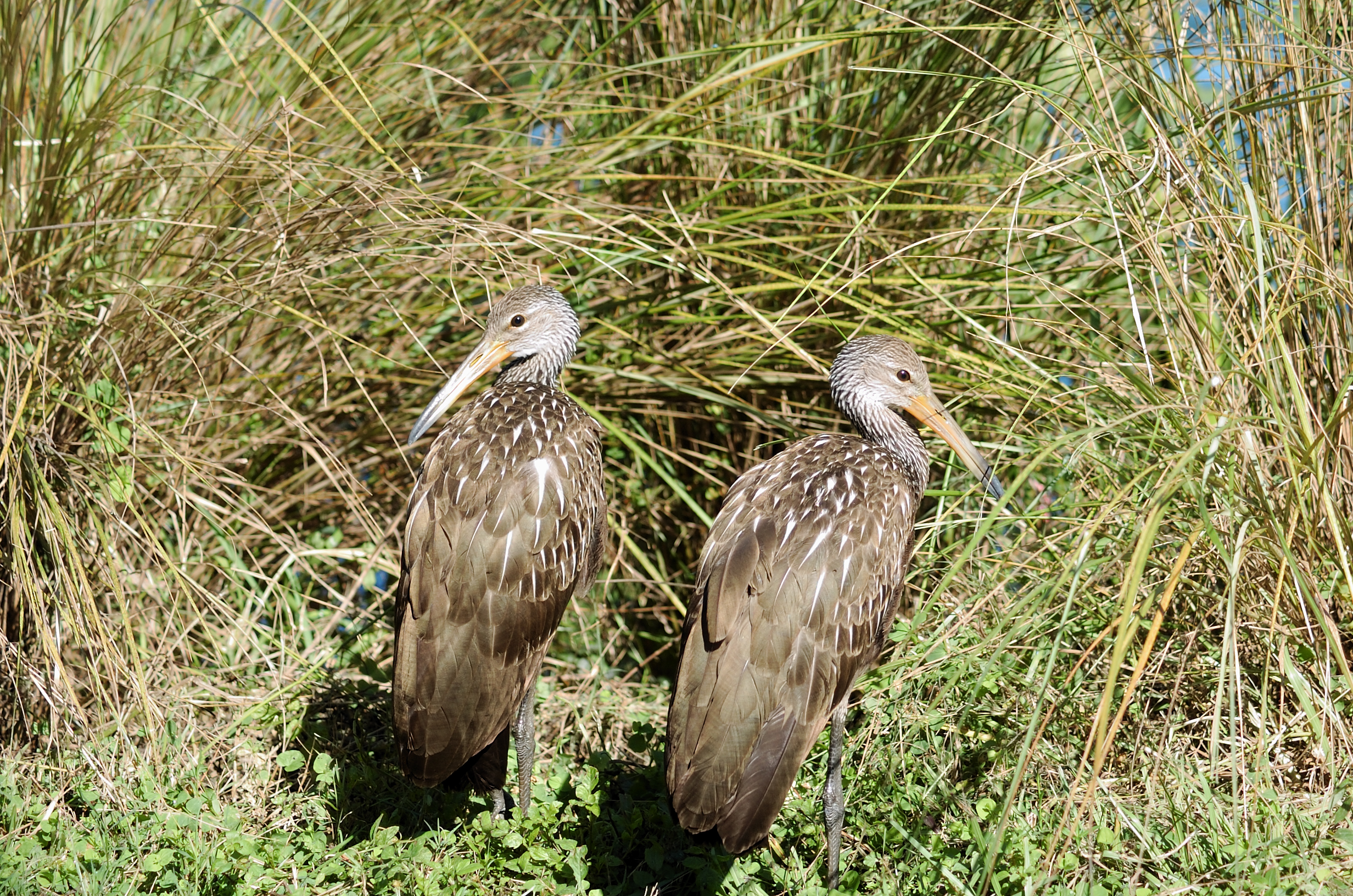
Limpkin (Aramus guarauna) Juveniles by Dan at Lake Morton

Limpkin (Aramus guarauna) by Dan at Lake Morton

Today Dan and I went by Lake Morton for just a short while. We were on our way to have lunch and do some shopping. It was a great day without a cloud in the sky. The temperature was a pleasant 63° (17.2º C).

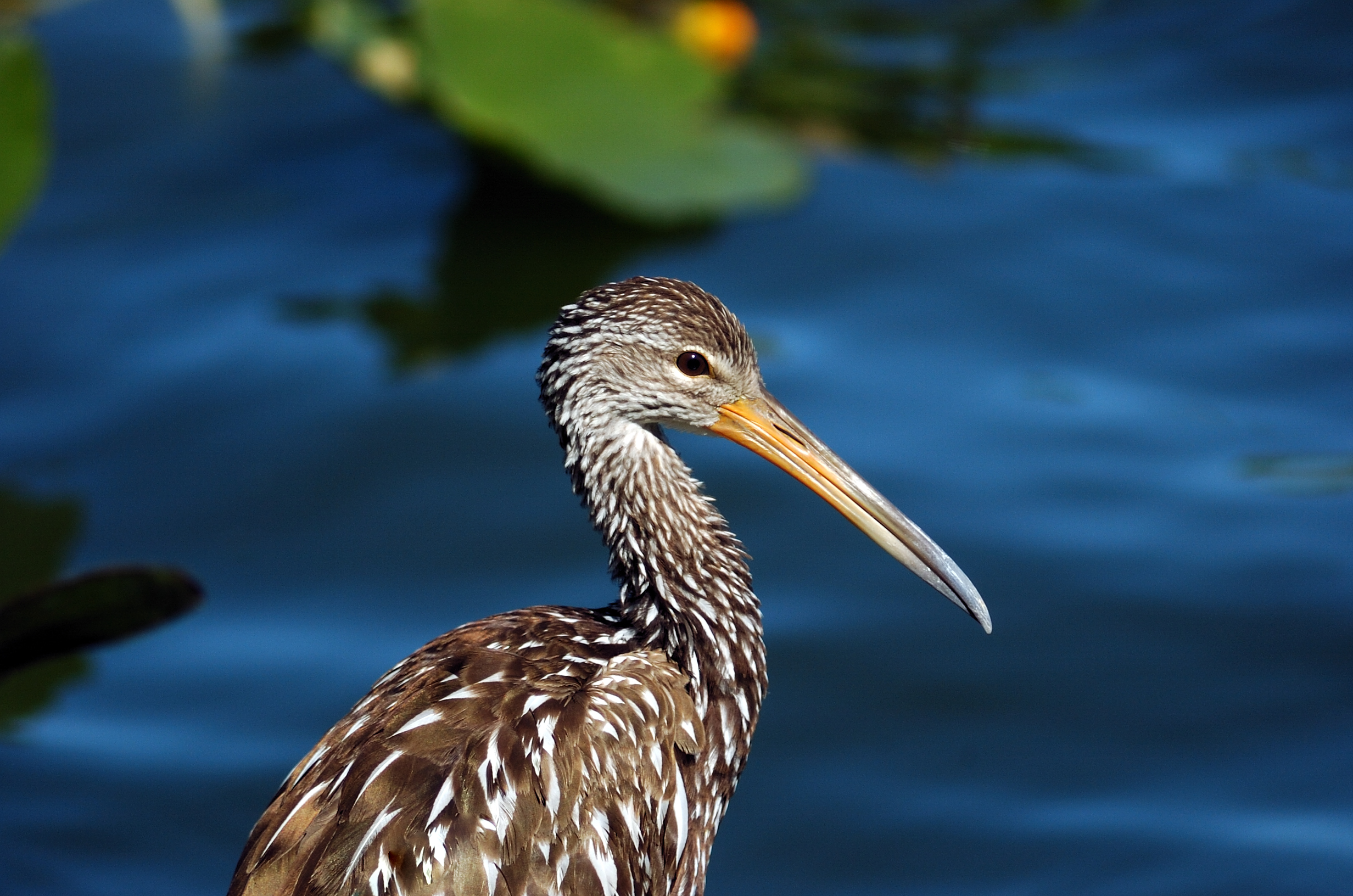
When we were last there, there were 5 young Limpkins and I want to see how they had grown. We spotted 4 of them sunning themselves. They have lost that fuzz on their heads and the spots are becoming quite distinguished. Dan took a great picture of one of them closeup.

Limpkin (Aramus guarauna) Juvenile by Dan at Lake Morton

Limpkin (Aramus guarauna) by Dan at Lake Morton

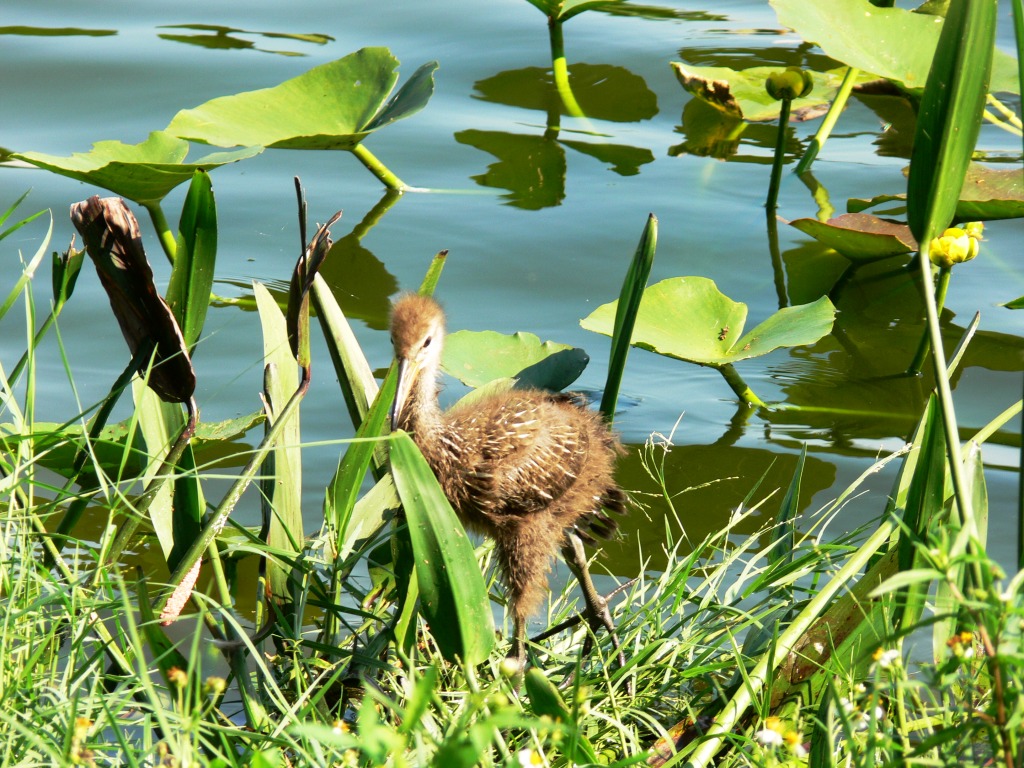
I can tell by their faces that they are still young. Here is a photo of one when it still had its fuzz.

Limpkin baby taken 9-12-11 by Lee

Limpkin (Aramus guarauna) baby taken 9-12-11 by Lee

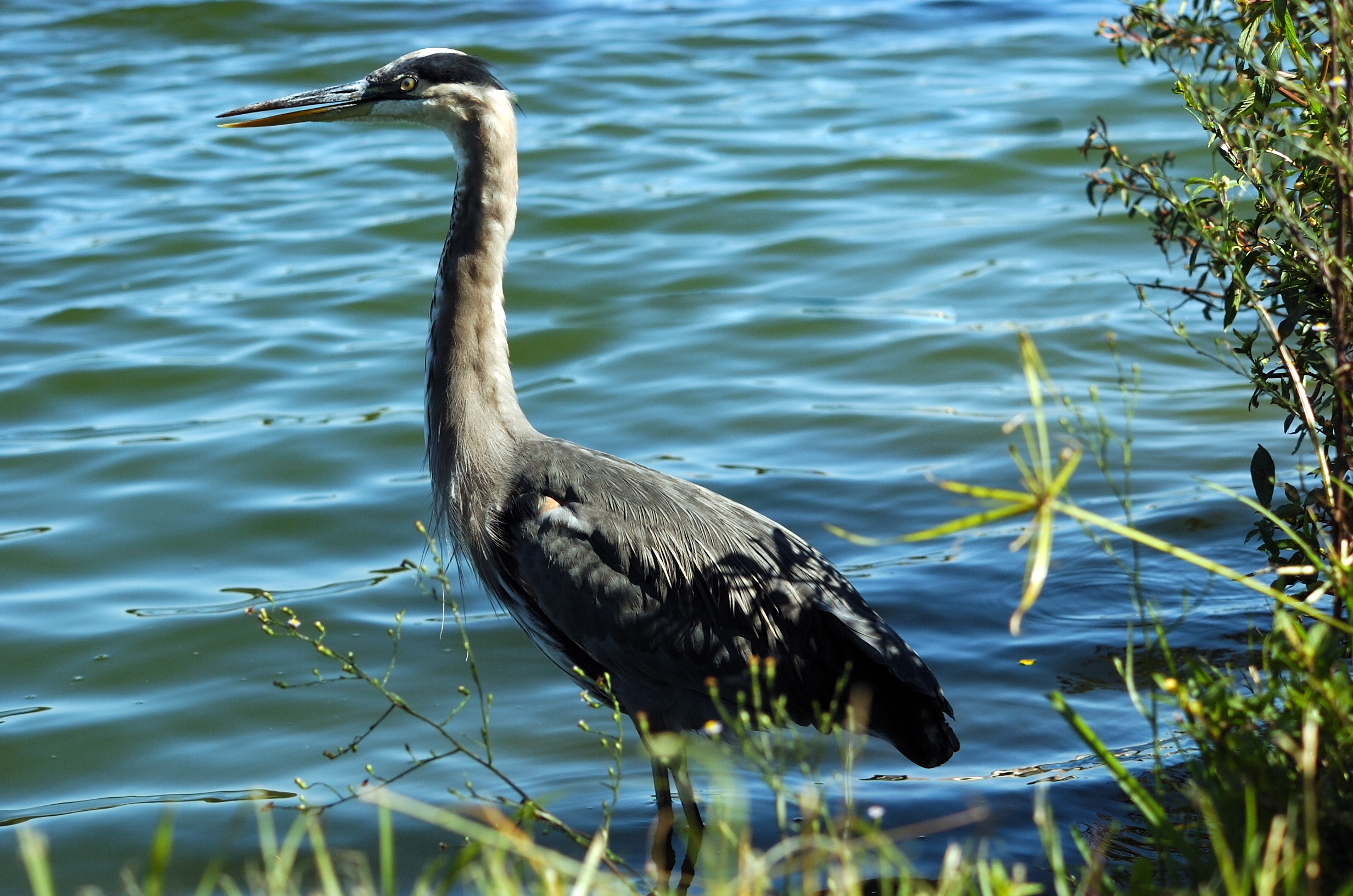
A Great Blue Heron decided to be friendly and came walking toward me while I was feeding some of the ducks. When I tossed him some food, he ate it and kept coming closer. I kept tossing it food and it kept coming closer. What a delight! If I were brave, I would have tried to hand feed him (or her). As I have said in other blogs, this is only one of two places we feed the birds in this area.

Great Blue Heron (Ardea herodias) by Dan at Lake Morton

Great Blue Heron (Ardea herodias) by Dan at Lake Morton

What did we see today? Besides the 4 Limpkin youngsters and the Great Blue Heron, we spotted Black and Turkey Vultures, a Great Egret, Anhingas, more Great Blue Herons and a Snowy Egret. Those were seen on the way to Lake Morton in Lakeland. At the lake we saw 15-20 Coots (they are back), 3 Wood Storks, 15-20 Mallards, 10 “Aflac” Ducks, Muscovy Ducks, a Great Egret, Laughing Gull, 7 Mute Swans, 2 Black Swans, Boat-tailed Grackle and 10 Ring-necked Ducks (they are back). Our winter visiting birds are finally returning.

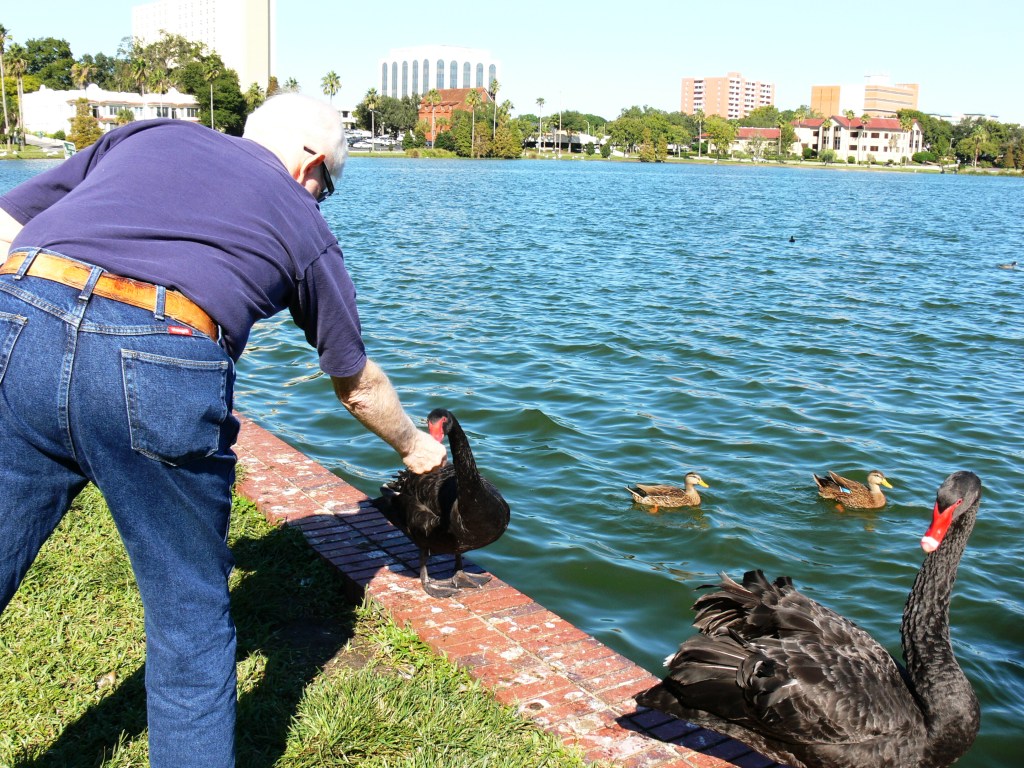
 Dan feeding a Black Swan at Lake Morton

Dan feeding a Black Swan at Lake Morton

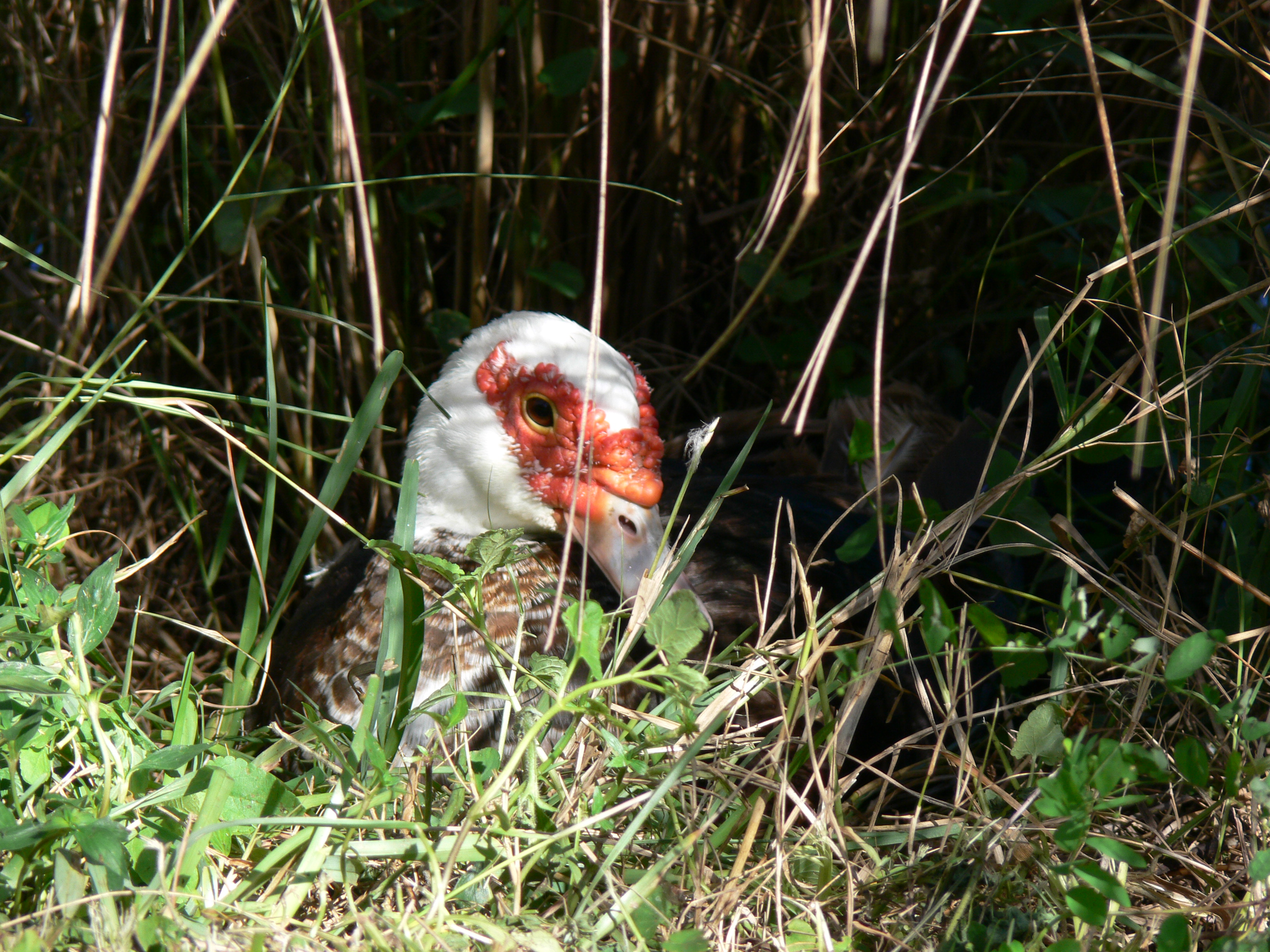
I caught Dan feeding one of the Black Swans. Then I found a Muscovy Duck sitting on a nest with the male standing guard in front. To me, they seem “not so pretty”, but the Lord created all the birds and I am sure His Eye is on the Muscovy as well as it is on the Sparrow.

Muscovy Duck (Cairina moschata)

Muscovy Duck on nest at Lake Morton by Lee

I know all the birds of the mountains, And the wild beasts of the field are Mine. (Psalms 50:11 NKJV)

What a perfect day for birding and even though we weren’t there long, the Lord let us see His Creation again, up close and enjoy them.

This was the LORD’s doing; It is marvelous in our eyes. This is the day the LORD has made; We will rejoice and be glad in it. (Psalms 118:23-24 NKJV)

*

Birds of the Bible – The Law Of The Birds

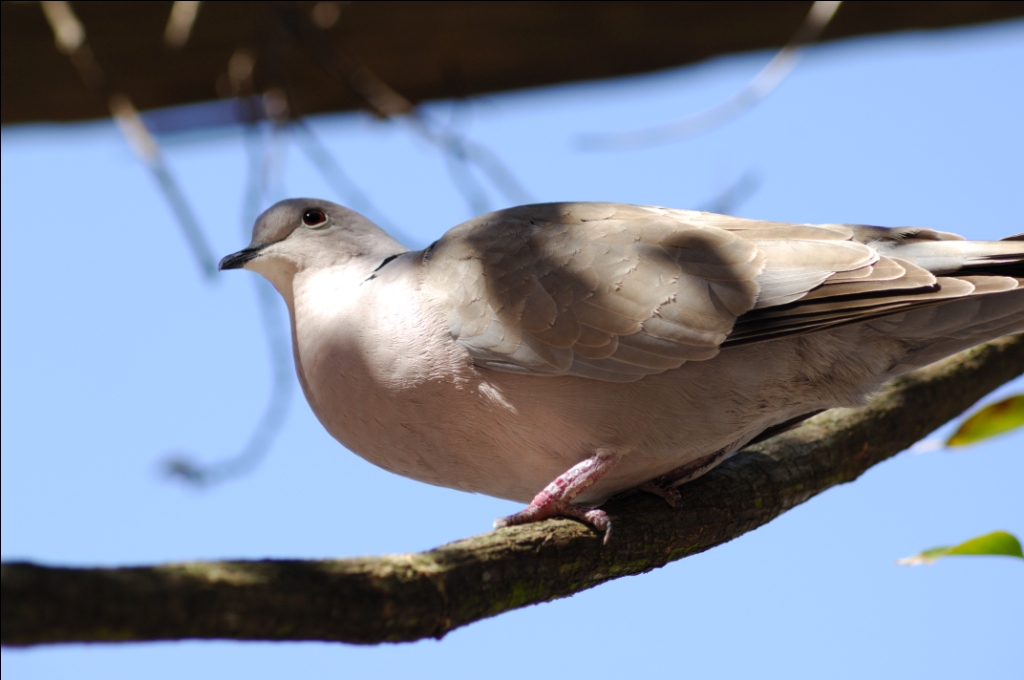
Eurasian Collared Dove (Streptopelia decaocto) by Dan

Eurasian Collared Dove (a “clean” bird) by Dan

This is the law of the animals and the birds and every living creature that moves in the waters, and of every creature that creeps on the earth, to distinguish between the unclean and the clean, and between the animal that may be eaten and the animal that may not be eaten. (Leviticus 11:46-47 NKJV)

The phrase “law of the animals and the birds” caught my eye while looking at Leviticus 11. We have written other articles on the “Clean and Unclean” birds in this chapter, but I like the way the verse is worded in the NKJV. See Clean vs Unclean and Deuteronomy 14:11-18 Visualized. In those articles the birds were named whether clean or unclean.

This “law of the birds” was given to the Israelites for instruction on which birds could be eaten and which were to be avoided as cuisine. But why were they selected and what significance does this have today for Christians? Here are some of the commentator’s remarks on this verse.

Long-eared Owl (Asio otus) by Derek

Long-eared Owl (an “unclean” bird) by Derek

Believer’s Bible Commentary – “In giving this law concerning clean and unclean creatures, God was teaching lessons concerning His holiness and the necessity for His people to be holy as well (vv. 44-47).
In Mark 7:18-19, the Lord Jesus declared all foods to be ceremonially clean. And Paul taught that no food should be refused if it is received with thanksgiving (1Tim_4:1-5). However, even that would not include foods that are contaminated, culturally unacceptable, or digestively disagreeable to a person.”

So we know it was to teach God’s holiness and for the people to be holy. Also stated by:

Bible Knowledge Commentary – c. Summary and theological conclusion (Lev 11:41-47)
“The whole set of food laws is summarized by the repetition of selected examples (Lev 11:41-43). As God’s people were to distinguish between clean and unclean animals, so God had distinguished between them and other nations. These food regulations were to serve as a perpetual reminder of the holiness of God and His grace in choosing Israel (Lev 11:45).”

Wild Turkey (Meleagris gallopavo) by Lee at LPZoo

Wild Turkey (a “clean” bird) by Lee at LPZoo

The practical applications for today are given in several of the commentaries such as:

Matthew Henry’s Condensed Commentary – “These laws seem to have been intended,
1. As a test of the people’s obedience, as Adam was forbidden to eat of the tree of knowledge; and to teach them self-denial, and the government of their appetites.
2. To keep the Israelites distinct from other nations. Many also of these forbidden animals were objects of superstition and idolatry to the heathen.
3. The people were taught to make distinctions between the holy and unholy in their companions and intimate connexions.
4. The law forbad, not only the eating of the unclean beasts, but the touching of them. Those who would be kept from any sin, must be careful to avoid all temptations to it, or coming near it. The exceptions are very minute, and all were designed to call forth constant care and exactness in their obedience; and to teach us to obey. Whilst we enjoy our Christian liberty, and are free from such burdensome observances, we must be careful not to abuse our liberty. For the Lord hath redeemed and called his people, that they may be holy, even as he is holy. We must come out, and be separate from the world; we must leave the company of the ungodly, and all needless connexions with those who are dead in sin; we must be zealous of good works devoted followers of God, and companions of his people.”

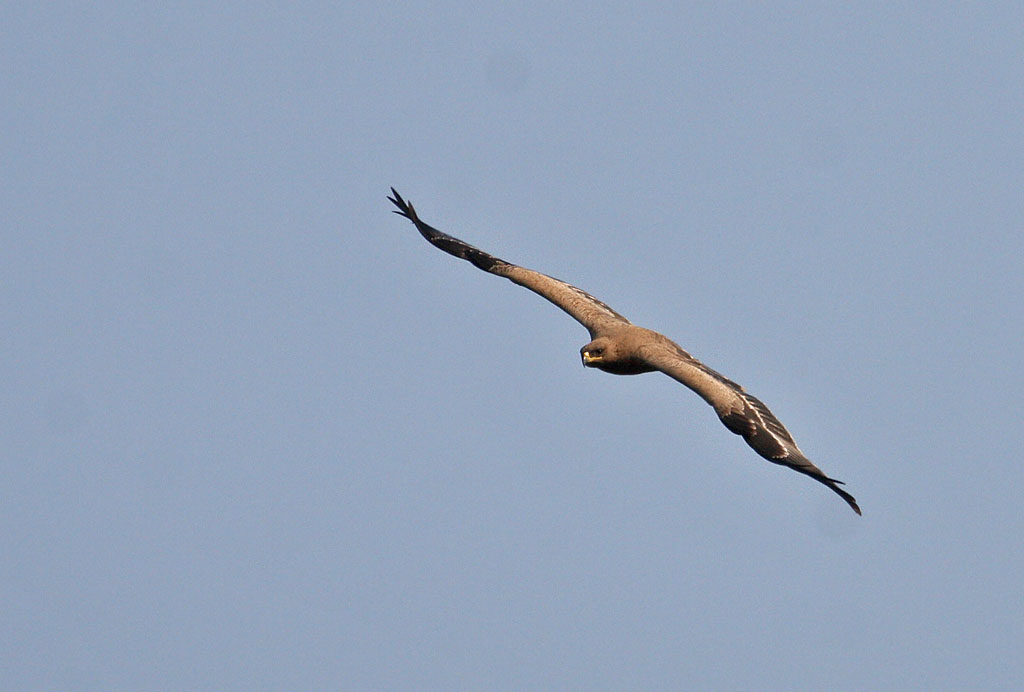
Steppe Eagle (Aquila nipalensis) by Peter Ericsson

Steppe Eagle (an “unclean” bird) by Peter Ericsson

Through The Bible With J Vernon McGee – CLASSIFICATION OF CLEAN AND UNCLEAN MADE BY A HOLY GOD
“It is God who makes the sharp distinction between the clean and the unclean. Holiness in little things is essential. This is the real test of God’s man. The acid test of any life of any of God’s people is this. God says, “I am your Lord. I am holy. Be ye holy.”
My friend, you must make the decision as to whether you are going to walk with God and for God in this contaminated world. This is the lesson for us from his chapter of the clean and the unclean.”

We are told in Scripture that the birds can teach us:

But now ask the beasts, and they will teach you; And the birds of the air, and they will tell you; (Job 12:7 NKJV)
Who teaches us more than the beasts of the earth, And makes us wiser than the birds of heaven? (Job 35:11 NKJV)

Maybe we should watch and observe things about them and also comprehend truths taught about them from the God who created them.

Whether it is pleasing or displeasing, we will obey the voice of the LORD our God to whom we send you, that it may be well with us when we obey the voice of the LORD our God.” (Jeremiah 42:6 NKJV)

*

Birds at the Ladies Retreat

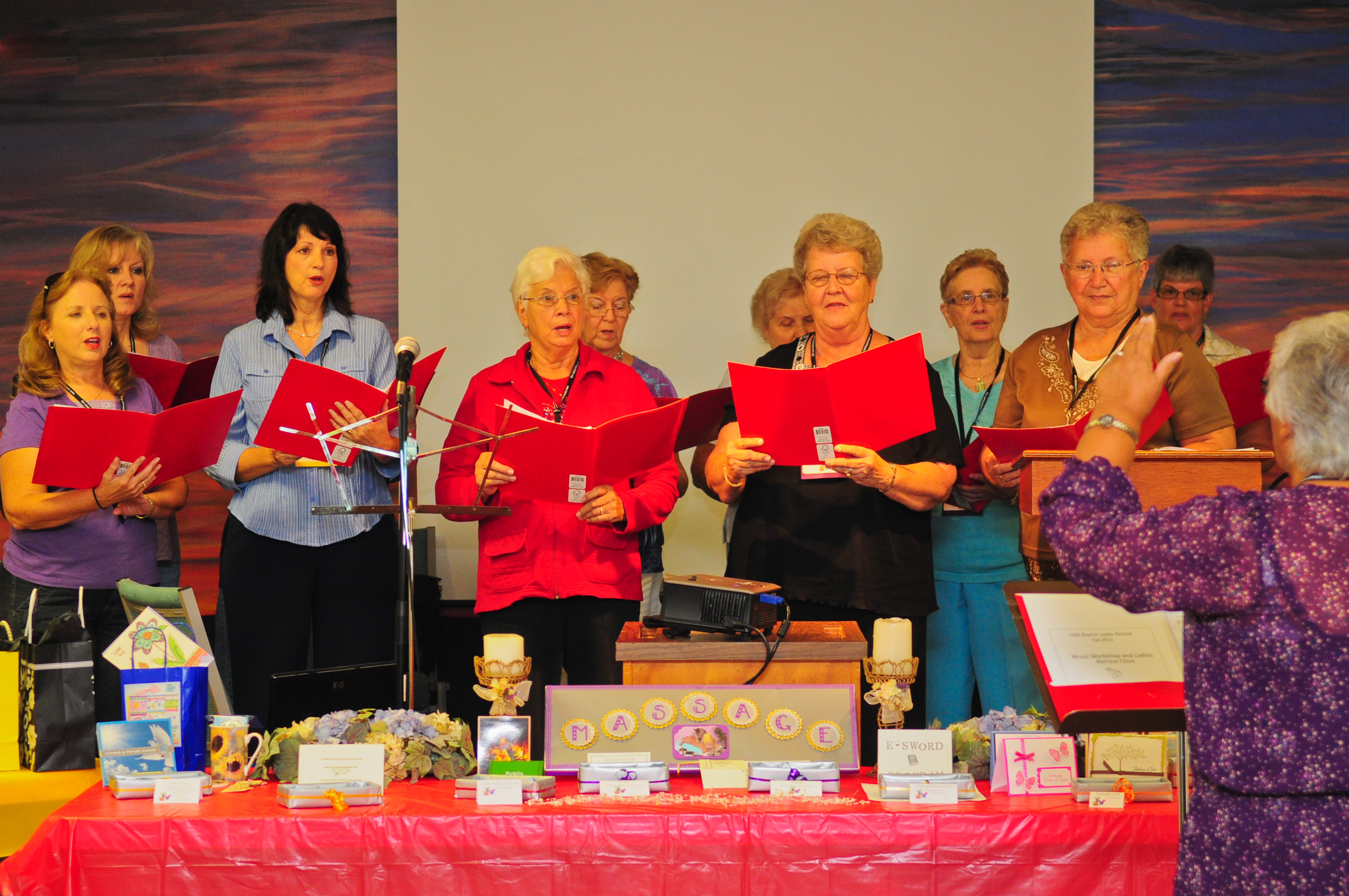
Singing - Broken and Spilled Out

Retreat Choir

We had our Ladies Retreat this last week-end. I got involved in it and became one of the coordinators. Jill, our pastor’s wife, was the other one. We have spent hours preparing for it over the last month or so. For me, I have had to depend on my other writers and an occasional article from me to keep this blog up. Now maybe we will get articles out a little more frequent.

Having then gifts differing according to the grace that is given to us, (Romans 12:6a KJV)

Our theme was “God Gives Good Gifts.” The retreat was Friday afternoon through late afternoon on Saturday and almost 80 ladies attended. The Lord blessed us with great weather (we had 6 inches the week-end before), lots of sweet fellowship, laughs, singing, testimonies, exercises, and challenges from His Word during three General Sessions.

There were workshops to choose from breadmaking, couponing, birdwatching (me), parenting, scrapbooking, card making, singing, Bible study with e-Sword (me), prayer journaling, organizing, how to handle trials, and make-up inside and out, all with a Christian emphasis. We have many gifted ladies in our church.

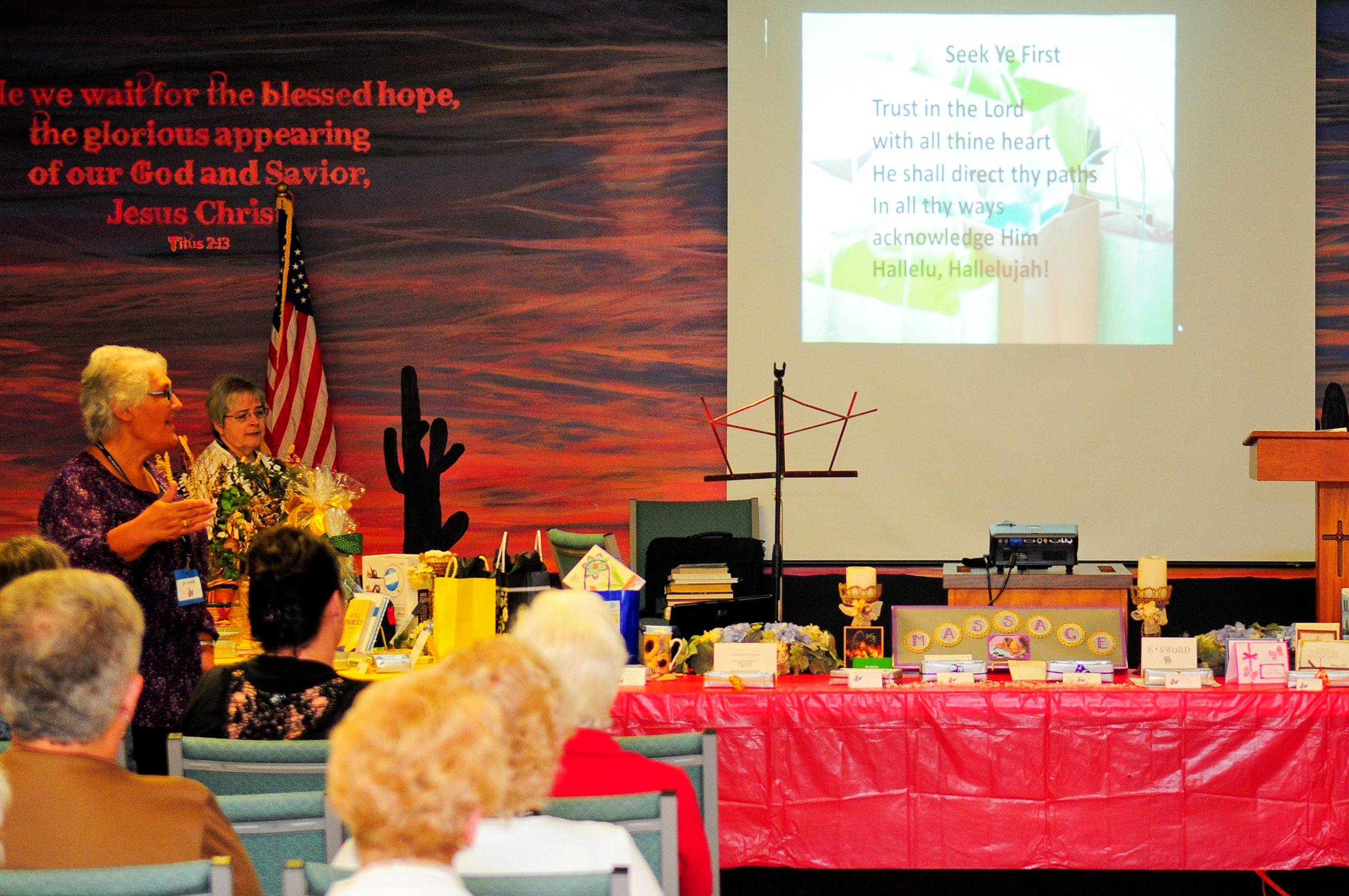
Ladies Retreat - Singing

Ladies Retreat - Singing

So how did birds show up at the Retreat? On Friday afternoon while not feeling well, I was told to go put my feet up for awhile and rest. I did, but my view from my lounge chair looked straight out at the lake. A Great Egret was fishing along the bank. Then, I taught a workshop on Saturday about Birdwatching. I shared birding tips and how and why to make lists. Binoculars were brought and we learned about them and how to properly adjust them to their eyes.

During my devotional on “Discover Your Gifts,” I had plenty of bird photos in my Powerpoint. They were all different and pointed out that as they are different, all of us are different, but the Lord uses those differences for His glory. They were challenged to find or discover their talents, gifts, and abilities. The other two devotionals by Jill and Lisa, our other speakers, challenged the ladies to “Develop”  and then to “Demonstrate” those gifts.

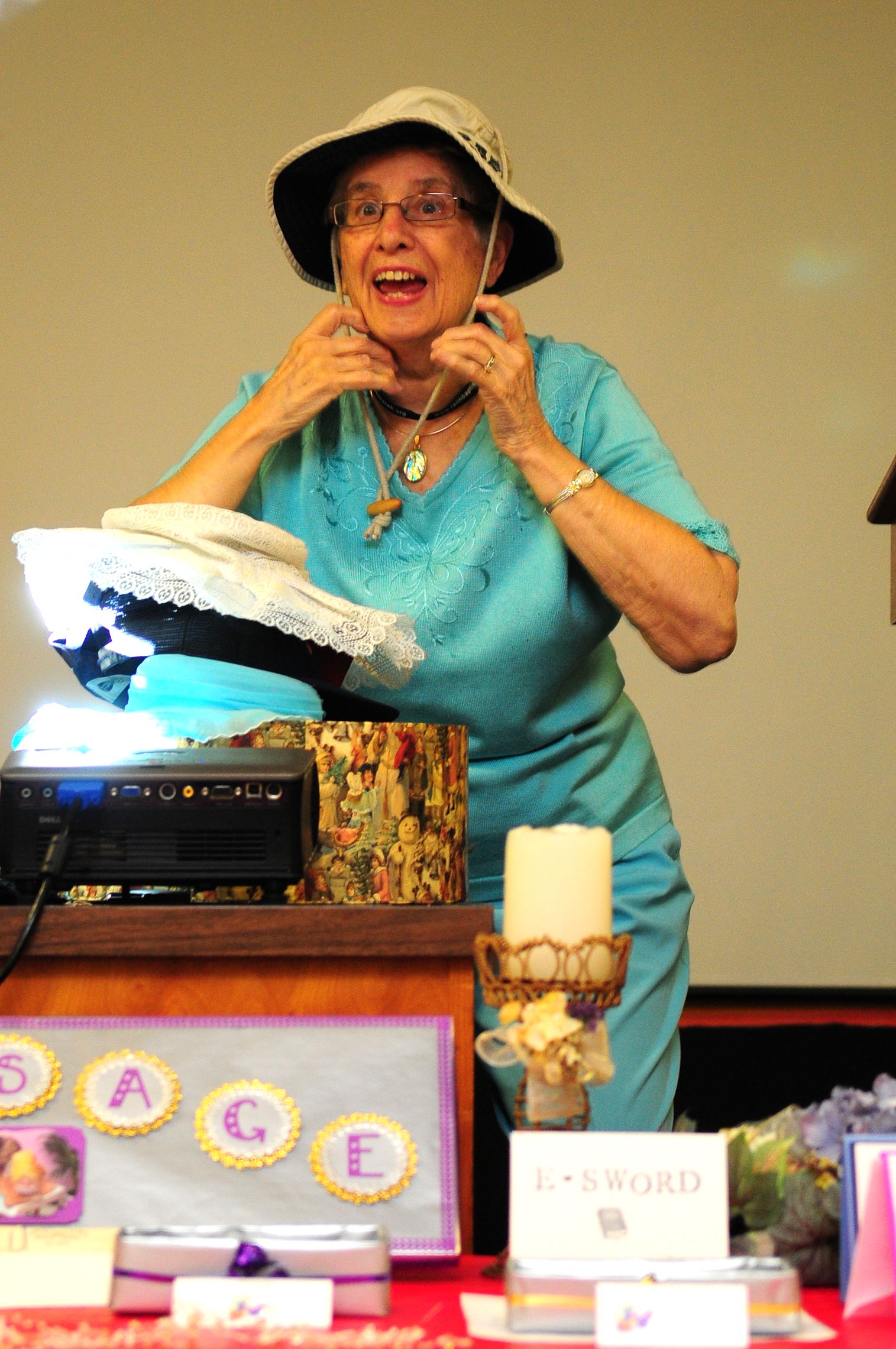
Ladies Retreat - Skit

Helen's - Too Many Hats

We had many others that talked about prayer, trials, gave testimonies, opportunities to serve, and even the skits left you with a challenge. The singing was sweet and the specials were fantastic. Kathy sang one of my favorites, “His Eye Is On The Sparrow,” just before my devotional.

It was a very good retreat, and even though I came home physically drained, my heart and spirit were totally filled up and over-flowing with blessings. God DOES Give GOOD Gifts.

Of course, the greatest gift of all:

For the wages of sin is death; but the gift of God is eternal life through Jesus Christ our Lord. (Romans 6:23 KJV)

More articles about the Retreat:

Article in the Fountain – Our Church Blog

Related Posts in the Fountain:

God Gives Good Gifts: A Ladies’ Retreat
Ladies’ Retreat – Workout Time & Break-Making Workshop
Ladies’ Retreat – Scrapbooking & Encouragement Through Card-Making
Ladies’ Retreat – Parenting & Prayer Journaling
Ladies’ Retreat – Couponing & Organization Workshops
Ladies’ Retreat – Joy in Trials & Singing Workshop
*

Ian’s Bird of the Week – Red-kneed Dotterel

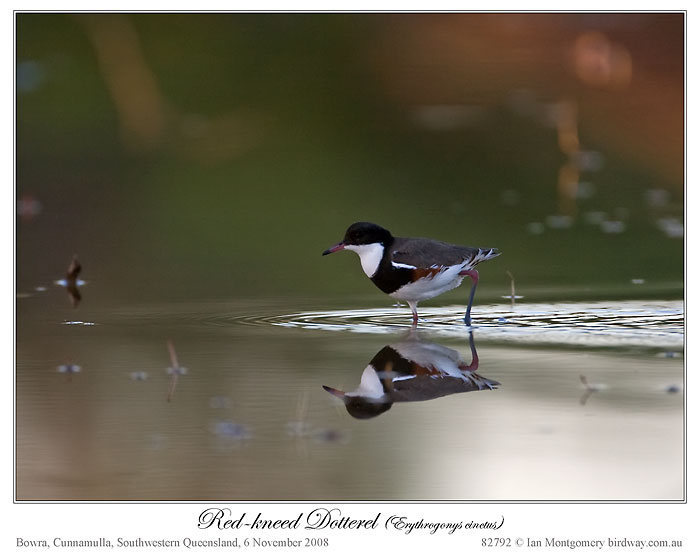
Red-kneed Dotterel (Erythrogonys cinctus) by Ian 1

Red-kneed Dotterel (Erythrogonys cinctus) by Ian

Ian’s Bird of the Week – Red-kneed Dotterel ~ by Ian Montgomery

Newsletter – 10-17-11

I’d chosen this for last week’s bird until the excitement over the Spotless Crake on Ross River pushed it into the background. Some would argue that the Red-kneed Dotterel is much more beautiful – and is also uncommon in Townsville – but it lacks the mystique of habitual lurkers like crakes that grant audiences only as a special privilege.

Red-kneed Dotterels live almost exclusively near fresh water and are rarely seen in tidal areas. The bird in the first photo was wading at sunset in the shallows of a tranquil pond near a bore at Bowra, an AWC reserve http://www.australianwildlife.org/Bowra.aspx near Cunnamulla in Southwestern Queensland. It was a lovely evening, and I was sitting in a camping chair with camera and tripod and mainly watching parrots and cockatoos coming in to drink: birding in style.
Red-kneed Dotterel (Erythrogonys cinctus) by Ian 2

Red-kneed Dotterel (Erythrogonys cinctus) by Ian

The close-up, second photo was photographed at Melbourne Water’s euphemistically called Western Treatment Plant near Werribee on the shores of Port Phillip Bay, also a famous birding spot but not as pleasant for camping as Bowra. Red-kneed Dotterels (actually red-ankled) are small plovers, length 17-19cm/7-8in, not closely related to other ones such as the Black-fronted Dotterel: both are members of monotypic genera – containing only one species. Recent DNA studies have shown that the Red-kneed shows closer affinity to Lapwings than other plovers, which a certain physical resemblance supports, allowing for small size, a lack of wattles and better manners.
Red-kneed Dotterel (Erythrogonys cinctus) by Ian 3

Red-kneed Dotterel (Erythrogonys cinctus) by Ian 3

Red-kneed Dotterels are adaptable and occur widely through the more arid regions of Australia, apart from deserts. The one in the third photo is a young bird hatched beside a small wetland near Birdsville produced by an overflow from the local geothermal power station that makes electricity from almost boiling water (98ºC) from the Great Artesian Basin http://www.derm.qld.gov.au/register/p00834aa.pdf .

Best wishes
Ian

Ian Montgomery, Birdway Pty Ltd,
454 Forestry Road, Bluewater, Qld 4818
Preferred Email: ian@birdway.com.au
Website: http://www.birdway.com.au/index.php

Lee’s Addition:

What a neat little bird. I love the clean lines and especially it’s knees or ankles. Ian, you captured it well! I am at the variety of birds you have there in Australia.

The Dotterels are in the Charadriidae – Plovers Family of the Charadriiformes Order. That order has 19 families of Shorebirds and their allies. Check out Ian’s Charadriidae Family photos – Click Here.

Thy words have upholden him that was falling, and thou hast strengthened the feeble knees. (Job 4:4 KJV)

More Ian’s Bird of the Week

Ian’s Bird of the Week – Spotless Crake

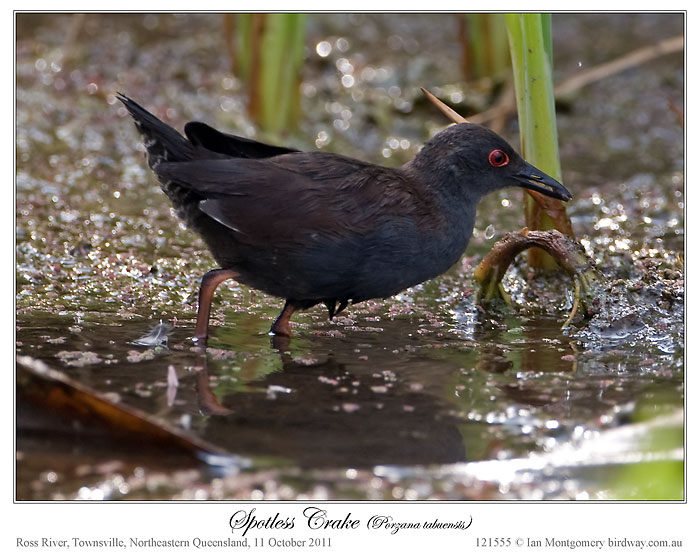
Spotless Crake (Porzana tabuensis) by Ian

Spotless Crake (Porzana tabuensis) by Ian

Ian’s Bird of the Week – Spotless Crake ~ by Ian Montgomery

Newsletter – 10/11/11

There’s no doubt as to what is currently the Bird of the Week in Townsville: the discovery of this Spotless Crake in a small patch of reedy grass beside Ross River just below Aplin’s Weir is causing great excitement. They’re rare here and the birder who circulated the news, thank you Marlene, could find only 5 records in Townsville since 1994, the last one being in 2000. Not having photographed one before, I got up at 5:40am this morning to have a second attempt at photographing it (it wasn’t very cooperative yesterday afternoon) and there was universal agreement that this was a noteworthy event as I’m famously not an early riser.

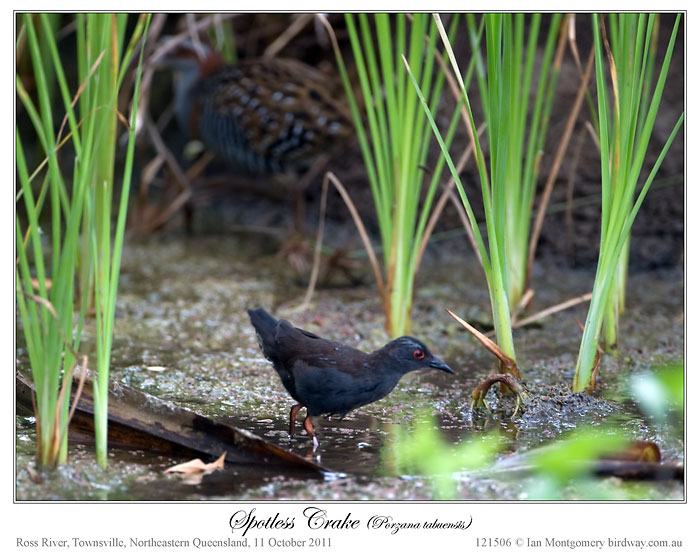
Spotless Crake (Porzana tabuensis) by Ian

Spotless Crake (Porzana tabuensis) by Ian

In fact, the Crake wasn’t very cooperative this morning either, making only 3 brief appearances between 6:30 and 9:00am, really brief with the longest period between the first and last photo in a session being 6 seconds. It was definitely a question of using a tripod mounted camera focussed on its chosen spot. If you compare the first and second photos, taken 40 minutes apart, and look for the semicircular reed stem sticking out of the water near its bill, you’ll see that it was in almost exactly the same place on both occasions.
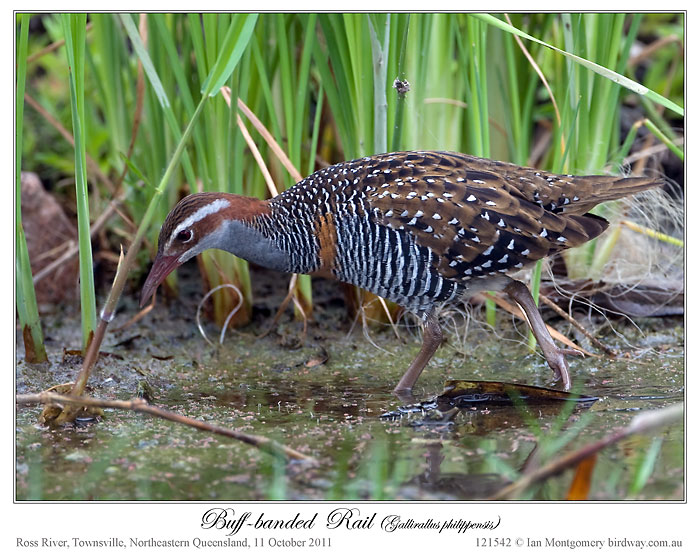
If you look in the background, you can see an out-of-focus and much larger Buff-banded Rail that was around at the same time, but completely overshadowed by its rarer cousin. The rail was much more forthcoming, and regularly paraded in full view to have its photo taken (at the risk of missing an appearance by the real star) as in the third photo.
Buff-banded Rail (Gallirallus philippensis) by Ian

Buff-banded Rail (Gallirallus philippensis) by Ian

For comparison Spotless Crakes are 17-20cm/6.7-8in in length, while Buff-banded Rails are 28-33cm/11-13in. The names ‘crake’ and ‘rail’ are used taxonomically somewhat indiscriminately for these small secretive members of the Rallidae. For example, the Hawaiian and St Helena Rails belong to the same genus as most of the Australian Crakes (Porzanus). Still on names, it’s very unusual for birds to be named after features they lack, such as spots. In the Birdlife International list of birds of the world, about 10,000 species, I could find only 9 that are something-less: 2 are crestless, 3 are flightless, 2 are spotless and, prizewinner for strange names, the Northern and Southern Beardless Tyrannulets. I didn’t count Restless Flycatcher and the other spotless is the Spotless Starling.

Best wishes
Ian


Ian Montgomery, Birdway Pty Ltd,
454 Forestry Road, Bluewater, Qld 4818
Phone: 0411 602 737 +61-411 602 737
Preferred Email: ian@birdway.com.au
Website: http://birdway.com.au


Lee’s Addition:

Sounds like Ian’s Spotless Crake was the talk of the town, at least of the birder’s. I love the way Ian shows so much patience while he is out birdwatching. Most of us would give up and miss these neat photos. Thanks, Ian, for your patience.

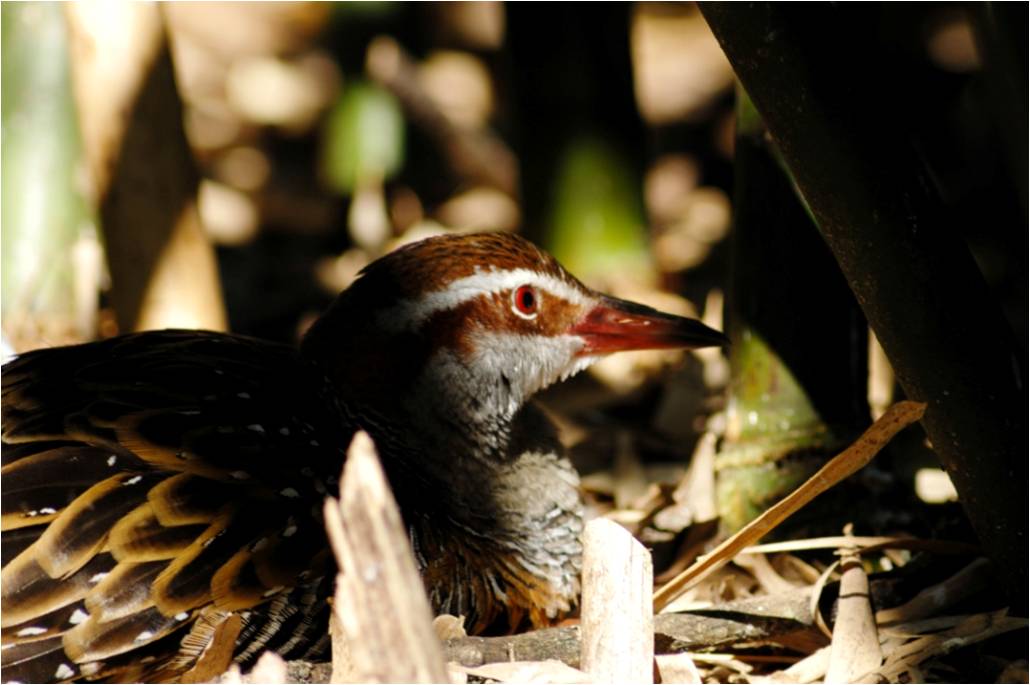
That second bird, the Buff-banded Rail, is also a resident at the Lowry Park Zoo. I have been privileged of see it on vary rare occasions. The bird was hidden very well.

But if we hope for that we see not, then do we with patience wait for it. (Romans 8:25 KJV)

Buff-banded Rail (Gallirallus philippensis) by Lee at Lowry Pk Zoo

Buff-banded Rail (Gallirallus philippensis) by Lee at Lowry Pk Zoo

*