The flowers appear on the earth; the time of singing has come, and the voice of the turtledove is heard in our land. (Song of Solomon 2:12)
The Bible speaks of bird calls as songs, as most of us do. However, evolutionary theory has led some scientists to say that we are merely assigning human meanings to the calls of birds. They say that the bird calls have nothing to do with real music.
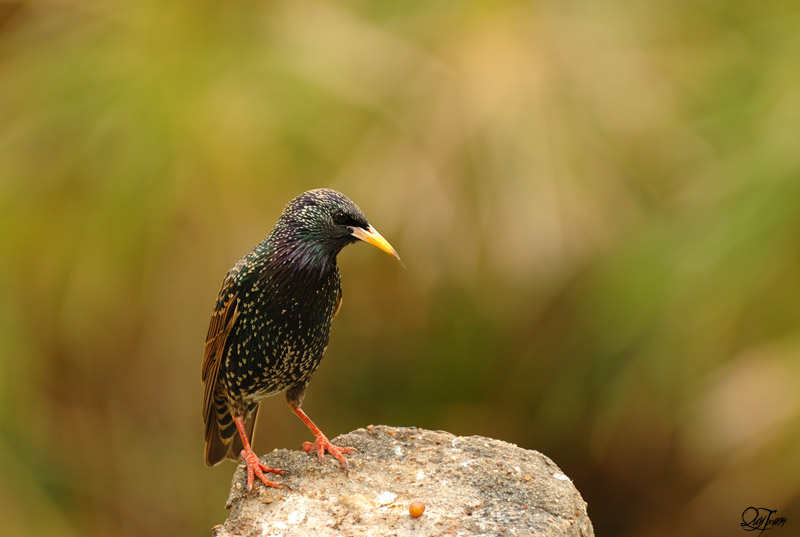
Common Starling (Sturnus vulgaris) by Quy Tran
Ornithologists have known for some time that bird songs use the same musical scales as our music. Decades ago it was noted that some of Beethoven’s work could be heard from the European blackbird. The music was the same as the opening rondo of Beethoven’s “Violin Concert in D, Opus 61.” Since these birds pass their songs from generation to generation, Beethoven could have gotten the lilting music from the forefathers of today’s European blackbird! The songs of some species, like the song sparrow, follow the form of a sonata, beginning with a strong theme, then the theme is musically played with, and for a finish, the original theme is then repeated.
Song Sparrows song by Chris Parrish (xeno.canto.org)
Mozart had a starling as a pet. Once, having heard Mozart play his “Piano Concerto in C Major,” the starling not only imitated it, but changed the sharps to flats! Mozart exclaimed, “That was beautiful!” When the starling died, Mozart held an elaborate funeral for it. Eight days later he wrote “A Musical Joke,” which contains the same elaborate structure found in starling song.
A Musical Joke by Mozart
Do birds make true music, as the Bible says? Contrary to what some evolutionists say, Beethoven and Mozart certainly thought they did.
Prayer: Lord, I thank You for the gift of music, and I await the music of heaven. Amen.
The Superb Fairywren – The Corporate Mob ~ by a j mithra
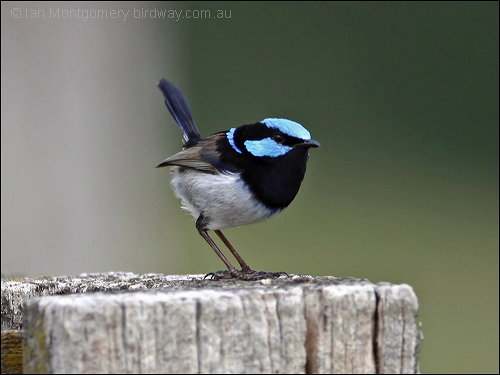
Superb Fairywren (Malurus cyaneus) by Ian
The Superb Fairywren is one of 12 species of the genus Malurus, commonly known as Fairywren, also known as the Superb Blue-wren or colloquially as the Blue Wren, is a passerine bird of the Maluridae family found in Australia and lowland New Guinea..
The Superb Fairywren can be found in almost any area that has at least a little dense undergrowth for shelter, including grasslands with scattered shrubs, moderately thick forest, woodland, heaths, and domestic gardens. It has adapted well to the urban environment and is common in suburban Sydney, Canberra and Melbourne.
Superb Fairywrens are predominantly insectivorous. They mainly eats insects and supplements its diet with seeds. They eat a wide range of small creatures (mostly insects such as ants, grasshoppers, shield bugs, flies, weevils and various larvae) as well as small quantities of seeds, flowers, and fruit….
During winter, when food may be scarce, ants are an important ‘last resort’ food, constituting a much higher proportion of the diet Nestlings, in contrast to adult birds, are fed a diet of larger items such as caterpillars and grasshoppers…
Their foraging, termed ‘hop-searching’, occurs on the ground or in shrubs that are less than two meters high. Because this foraging practice renders them vulnerable to predators, birds tend to stick fairly close to cover and forage in groups….
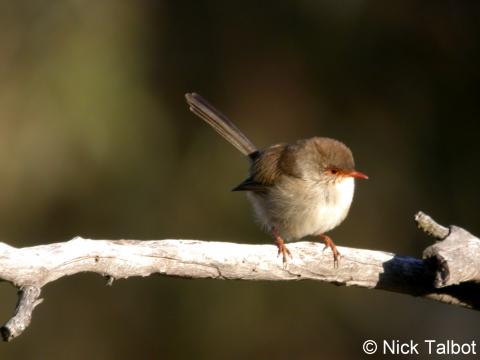
Superb Fairy-wren (Malurus cyaneus) Female by Nick Talbot
The Superb Fairywren is a cooperative breeding species, with pairs or groups of 3–5 birds maintaining and defending small territories year-round. The group consists of a social pair with one or more male or female helper birds that were hatched in the territory, though they may not necessarily be the offspring of the main pair. These birds assist in defending the territory and feeding and rearing the young…
Birds in a group roost side-by-side in dense cover as well as engaging in mutual preening. The group often shelters and rests together during the heat of the day. If only we, as believers, could learn to stick close together, we can easily turn satan, our predator in to a prey…
That is why the Bible says,
For where two or three are gathered together in my name, there am I in the midst of them. Mathew 18:20
Jesus too asked His disciples to go in twos to minister unto people…
Now after these things the Lord appointed seventy others, and sent them two and two before his face into every city and place, whither he himself was about to come. Luke 10:1
Again, if two lie together, then they have warmth; but how can one be warm [alone]? Ecclesiastes 4:11
These beautiful birds seem to know the secret of not only sticking close together, but also, engage in mutual preening…
We may call ourselves as the body of Christ but, when are we going to learn to stick together as one and help one another to grow in the Lord?
Several courtship displays by Superb Fairywren males have been recorded. The ‘sea horse flight’, named for its seahorse-like undulations, is one such display. During this exaggerated flight, the male—with his neck extended and his head feathers erect—tilts his body from horizontal to vertical, and descends slowly and springs upwards by rapidly beating his wings after alighting on the ground.
The ‘face fan’ display may be seen as a part of aggressive or sexual display behaviors; it involves the flaring of the blue ear tufts by erecting the feathers…
These male bird’s tilting of its body reminds us of God’s mercy..
The following verse shows the (horizontal) mercy and (vertical) grace of God…
For as the heaven is high above the earth, so great is his mercy toward them that fear him. As far as the east is from the west, so far hath he removed our transgressions from us. Psalm 103:11, 12
That is the reason Jesus descended slowly from heaven and gave His life for you and me…
Remember He took four thousand years since Adam and Eve to come down from heaven to redeem mankind from sin and shame..
And He ascended rapidly to heaven, to prepare a mansion for us…
Is there a better mating display on the face of the earth than the descending and ascending of our Lord Jesus to save the entire human race? Thank You Jesus, for your mercy and grace…..
Vocal communication among Superb Fairywrens is used primarily for communication between birds in a social group and for advertising and mobbing, or defending a territory. Superb Fairywrens’ alarm call is a series of brief sharp chits, universally given and understood by small birds in response to predators. Females also emit a purr while incubating. The basic, or Type I, song is a 1–4 second high-pitched reel consisting of 10–20 short elements per second and is sung by both males and females. Males also possess a peculiar song-like Type II vocalization, which is given in response to the calls of predatory birds, commonly Grey Butcherbirds (Cracticus torquatus). The purpose of this behavior, which does not elicit a response from other nearby wrens, remains unknown…. It may serve to announce male fitness, but this is far from certain…
Though this bird’s alarm call does not elicit response from other nearby wrens, it never stops reminding others about the presence of the predator through its calls..
No matter how they respond, God has kept us as watchmen over His people to warn about the presence of the predator..
Ezekiel 33:4-7 shows us God’s purpose in our lives…
Then whosoever heareth the sound of the trumpet, and taketh not warning; if the sword come, and take him away, his blood shall be upon his own head
He heard the sound of the trumpet, and took not warning; his blood shall be upon him. But he that taketh warning shall deliver his soul.
But if the watchman see the sword come, and blow not the trumpet, and the people be not warned; if the sword come, and take any person from among them, he is taken away in his iniquity; but his blood will I require at the watchman’s hand.
So thou, O son of man, I have set thee a watchman unto the house of Israel; therefore thou shalt hear the word at my mouth, and warn them from me.
Like all Fairywrens, the Superb Fairywren is an active and restless feeder, particularly on open ground near shelter, but also through the lower foliage. Movement is a series of jaunty hops and bounces, with its balance assisted by a proportionally large tail, which is usually held upright, and rarely still. The short, rounded wings provide good initial lift and are useful for short flights, though not for extended jaunts. During spring and summer, birds are active in bursts through the day and accompany their foraging with song. Insects are numerous and easy to catch, which allows the birds to rest between forays. Food is harder to find during winter and they are required to spend the day foraging continuously…
These birds are restless feeders and they also sing while foraging….
If only we become restless feeders like these birds on the word of God and if only we sing and praise Jesus continuously all through the day, our Lord would encompass us with His presence…
Remember our Lord dwells among our praises…
Be careful for nothing; but in every thing by prayer and supplication with thanksgiving let your requests be made known unto God. (Philippians 4:6)
The Capercaillie is a resident in northern Europe and Asian coniferous forests,especially in hills and mountains, and in the mountains of central eastern Europe. It also has population outposts in the Pyrenees and Scottish Highlands. The Capercaillie is restricted to pinewood habitat in northern Scotland..
It prefers old, open pine forests with lush ericaceous ground cover, though in summer it is occasionally found in mature Oakwood..
Male capercaillies have a complex display that they use to attract females to mate with them in the Spring. This display is usually a communal affair at a traditional site known as a lek, which originates from the Norse word meaning ‘to dance’. They may also use a transient arena or even display from trees in response to the presence of a female. Initially the display song involves tapping and gurgling which accelerates to a drum roll that earned the bird his Gaelic name, capull-choille, the horse of the woods.
This drum roll is followed by a noise which rather resembles a cork being pulled out of a bottle, and the final song phase involves alternating gurgling and wheezing.To many people, this soft dawn song is rather surprising for such a large bird, especially as the purpose is to attract hens from afar. However, it is now recognized that parts of the song are below the human range of hearing. The subsonic part of the call is thought to carry well over distance and to be audible to other Capercaillie.
Like how the soft dawn song of the male is inaudible to human hearing, so is God’s voice inaudible to worldly souls….
God wants to speak to us early in the morning, when others cannot hear it, but, His bride, the Church only can hear it..
But how many Churches are awake early in the morning? Remember, God calls us as His Church…Are we awake at dawn to hear His voice?
Moses rose up early and went to Mount Sinai.. (Exodus34:4)
Joshua and his men rose early and went around the fort of Jericho, (Joshua 6:15)
Most servants of God sought the Lord early and they found the answers for their problems.. Wake up bride, it is time to listen to His voice..
I love them that love me; and those that seek me early shall find me. Proverbs 8:17
During the song the male has his tail held vertical and fanned out, his beak pointing skywards and the wings held out and drooped. In this posture the cock may slowly strut forward and often does a `flutter-jump’ following the cork pop part of the song. This involves leaping rapidly with noisily flapping wings, a brief glide and fluttering or crashing back to the ground. Once the hens have been drawn in to the lekking area, the cock’s display becomes more intense, but less vigorous with the flutter-jumping usually stopping…
During the mating season the males are very aggressive and have been known to attack bird watchers! Direct confrontation between competing suitors frequently occurs and has been described as a “vicious explosion of buffeting wings and snapping bills – the pair may not cease until one is dead”. By the end of the mating season the dominant alpha males often sport various cuts and bald patches from these fights.
Our Lord had to confront satan and in the process, He was battered and bruised for our sins and took the stripes to heal us…
He is the Alpha who sports, nail pierced hand and feet, ploughed back, thorn-crowned head and a spear pierced rib…
He took everything to redeem us, save us and heal us…
But he was wounded for our transgressions, he was bruised for our iniquities: the chastisement of our peace was upon him; and with his stripes we are healed. Isaiah 53:5
In spite of all the sufferings, He is still seen knocking at the door for a space in our hearts? For what? Just to live with us and for us forever and ever…
Behold, I stand at the door, and knock: if any man hear my voice, and open the door, I will come in to him, and will sup with him, and he with me. Revelation 3:20
When are we going to let Him in to take over our lives completely?
The Capercaillie hen lays five to eight eggs in early May. Her nest is a scrape on the ground, frequently in a hollow under a tree. The cock plays no part in the brooding or rearing of the chicks. The precocious buff and reddish chicks all hatch at the same time. At this point they are very vulnerable to a wide range of predators and at a young age they are able to fly short distances over the heather.
The hen is very protective and keeps her brood close to her with muted contact calls. In summer the Capercaillie feed close to and even on the ground. Their diet includes buds, shoots, seeds and berries. This dictates their preference for open pinewood habitats with lush ground cover of heather and dwarf shrubs that provide not only ample food but protection too. In winter they are arboreal and pine needles are eaten by nipping off the leading shoots of conifers.
Capercaillie can be surprisingly nimble when climbing the branches of pine trees. They are renowned for being shy and very difficult to see except during the displaying season. If they are disturbed they will initially freeze; if flushed they take off with a characteristic crashing as the bird leaves the foliage, and they can fly with surprising agility between trees, even in dense forest…
God wants us to freeze like these birds when we are being disturbed… Don’t you remember the following verse?
Be still, and know that I am God: I will be exalted among the heathen, I will be exalted in the earth. Psalm 46:10
Being herbivorous, Capercaillies have a profound effect on the vegetation they browse upon. For example, they act as agents for the dispersal of the berries they eat, especially for the blaeberry (Vaccinium myrtillus).
In the past, Capercaillie have not been highly regarded by foresters because of their winter habit of eating the leading shoots of conifers. In a sparsely wooded area, or where growth is less vigorous, this can check the growth and trees can take up to five years to recover. However, in a large native forest this damage is negligible and indeed adds to the variety and beauty of the shapes of Scots pine trees.
Capercaillie makes full use of a varied pinewood habitat. In winter the birds need pine trees for food and in summer good ground cover of shrubby vegetation for nesting and chick rearing. This reliance on, and exacting needs of, a varied but specific habitat led to their extinction in the past when the forests were destroyed by people.
The dramatic decline of these birds has focused attention on their habitat requirements and has shown that they act as a good indicator of the health and extent of varied mature forest cover.
We, as believers should act as a good indicator of the health of the body of Christ…Churches are being turned into pubs and malls.. Is this a good indication of the health of the body of Christ?
These birds would become extinct without a pinewood habitat…
Without Churches, we believers would become extinct too… Those dark days are not very far off… When the Lord returns, we are answerable to all those dying souls around us.. What are we doing to stop this decline of churches?
I know thy works, that thou art neither cold nor hot: I would thou wert cold or hot. So then because thou art lukewarm, and neither cold nor hot, I will spue thee out of my mouth. Revelation 3:15, 16
Have a blessed day!
Your’s in YESHUA, a j mithra
Please visit us at: Crosstree
White-tailed Hawk (Buteo albicaudatus) by Daves BirdingPix
In the first Names of Birds, I covered the English names of birds. This time the scientific names are going to be looked at, especially the second one. (The first part of the scientific name is the bird’s genus or group) “Birds normally have a scientific name and a common name. The scientific name is usually Latin-bases and is agreed upon by biologists across the world. The common name will vary by region, culture, and language.” (birding.com) No matter what the bird is called in different countries or by different ornithology groups, the scientific name refers to one specific bird. Birds do migrate many miles and spend time in many countries. This naming system helps keep from having the same bird counted numerous times in lists.
As I have worked with the list of the Birds of the World, I have observed similarities in the naming of the birds. For instance, “alba” is the second part of all of these birds–Western Great Egret, White Cockatoo, Sanderling, White Tern, White Wagtail, African Spoonbill, Phoenix Petrel, Western Barn Owl. Could you figure out what color they all are?
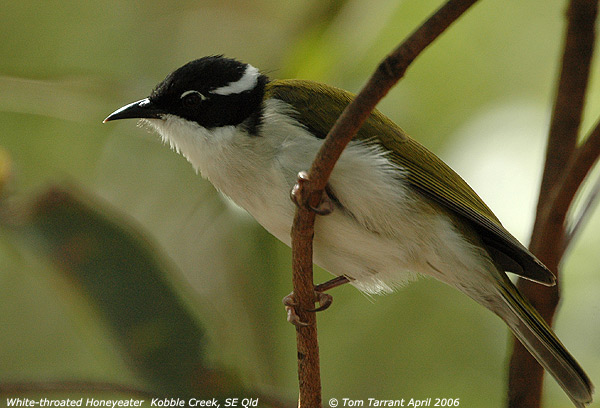
White-throated Honeyeater (Melithreptus albogularis) by Tom Tarrant
How about “albicauda“–White-tailed Shrike-Tyrant, White-tailed Blue Flycatcher, White-tailed Lark, White-tailed Hawk? Or “albogularis“–White-throated Jacamar, Rufous-banded Honeyeater, White-throated Pewee, White-throated Canary, White-throated Laughingthrush, White-throated Screech Owl, White-throated Honeyeater, White-throated Francolin, White-throated Caracara, White-throated Treerunner, White-spotted Fantail, White-throated Seedeater, White-throated Kingbird, White-chested White-eye? That last group was not all “white-throated,” in name, but they have white throats.
We know that Adam named the birds and other critters as the Scripture tells us:
Out of the ground the LORD God formed every beast of the field and every bird of the air, and brought them to Adam to see what he would call them. And whatever Adam called each living creature, that was its name. So Adam gave names to all cattle, to the birds of the air, and to every beast of the field. But for Adam there was not found a helper comparable to him. (Genesis 2:19-20 NKJV)
Blue-throated Bee-eater (Merops viridis) by Ray
Did Adam use scientific names? I doubt it. Adam didn’t have to go though all this. Today the ornithologist (those who study birds) use this method of naming along with a common name in whatever language they speak.
Thought you might find it interesting to see some of the species’ second scientific names:
Colors: albus/alba, white; cf albino, ater/atra, matt black, brachy-, short (Greek), brunne-, brown, caeruleus, blue, canus, grey, chloro-, green or yellow (Greek), cinerea-, grey or ash-coloured; cf cinders, crocus, cyan, blue, erythro-, red (Greek), flava, yellow, fuscus/fusca, dusky, guttatus, speckled or spotted, haema-, blood-red (Greek); cf haemoglobin, leuco-, white (Greek), lineatus, lined or striped, livia, blue-grey, longi-, long, luteus/lutea, yellow, major, greater, mega-, great (Greek), melas, black (Greek); cf melanistic, minor, lesser, niger/nigra, glossy black; cf negro, punctatus, spotted; cf punctuation, pusilla, tiny, rosea, rosy, ruber, red, rufus/rufa, red, striatus/striata, striped, versicolor, many-collored, varied, viridis, green, albogularis – White-throated
Countries: abyssinicus, africana, americana, angolensis, antarctica,
Characteristics: cauda, tail, –cephalus, head (Greek), –ceps, capped, headed, cilla, tail, collis, neck, cristatus, crested, dactyl, finger or toe (Greek), frons, front, i.e. forehead, –gularis, throat, –ops, eye, –opsis, face, ptera, wing (Greek), –rhynchos, bill (Greek), –rostris, bill, torquatus, collared
Names are important and have meaning. Christ was named long before He was born. It was foretold.
Now all this was done, that it might be fulfilled which was spoken of the Lord by the prophet, saying, Behold, a virgin shall be with child, and shall bring forth a son, and they shall call his name Emmanuel, which being interpreted is, God with us. (Matthew 1:22-23 KJV)
After this manner therefore pray ye: Our Father which art in heaven, Hallowed be thy name. (Matthew 6:9 KJV)
And in his name shall the Gentiles trust. (Matthew 12:21 KJV)
And Jesus came and spake unto them, saying, All power is given unto me in heaven and in earth. Go ye therefore, and teach all nations, baptizing them in the name of the Father, and of the Son, and of the Holy Ghost: Teaching them to observe all things whatsoever I have commanded you: and, lo, I am with you alway, even unto the end of the world. Amen.
(Matthew 28:18-20 KJV)
Dan and I finally got a chance to go birdwatching on Tuesday. It is the first time in awhile since we have been out and about here in Polk County, FL. We loaded the cameras, binocular, and of course something to feed the critters with. The only place around here we do that is at Lake Hollingsworth and Morton in Lakeland. So we chose Lake Hollingsworth as our main destination.
As we ride, I start my list of what we see. On the ride over there I spotted Fish Crows, Sandhill Cranes, a Great Blue Heron, some Ospreys at their nest, a White Ibis, about 20 Cattle Egrets checking out some cows, two Mourning Doves, four Boat-tailed Grackles and a Blue Jay. If we saw nothing at the lake, I would have been content with those.
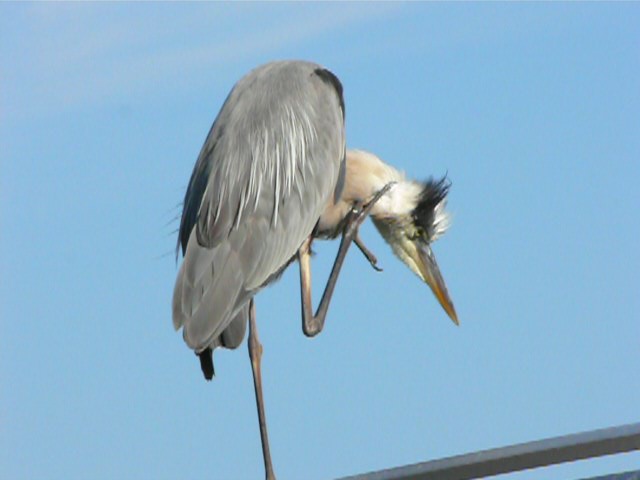
Great Blue Heron at Lake Hollingsworth
We spent about an hour looking around and feeding the gang. It was around 79° and mostly clear. A nice day. Near the parking lot is where the hungry beggars hang out. Waiting! I was surprised to see most of them snoozing. Pull out treats, and they come alive. After feeding the Mallards, White Ibises, Boat-tailed Grackles and a Gull, I did a short walk (legs weren’t working good) to the little dock where we watched a Great Blue Heron preening. I kept getting closer and closer, but he kept right on and only looked at me once. I got several videos of him.
We also observed a Green Heron for some time. Don’t see them out and about like this one. Looking at his coloration, we think he is most likely a juvenile.
The rest of the birds spotted were Red-winged Blackbirds, Common Grackles, Anhingas, Ospreys, Blue Jays, and Common Moorhens with three babies. On the way back at the parking lot, six Geese were protecting a gosling.
Green Heron Lake Hollingsworth
We decided to do lunch in Bartow, but had some spare time before they opened so went to the Mary Holland Park there. 86° by then. It is a small park but we managed to see – Boat-tailed Grackles, Opreys, Cardinals, Blue Jay, Great Egret, Mourning Dove, three White Ibises, heard a Red-Shouldered Hawk and a Red-bellied Woodpecker.
All together we spotted or heard 22 species. Not bad for an easy birdwatching adventure. Trust you have a great adventure the next time you are out enjoying God’s birds that He has created.
So God created great sea creatures and every living thing that moves, with which the waters abounded, according to their kind, and every winged bird according to its kind. And God saw that it was good. (Genesis 1:21 NKJV)
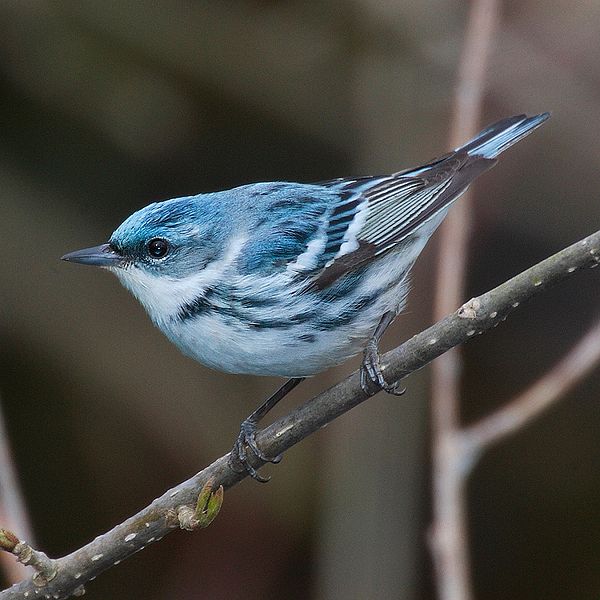
Named for the male’s unique blue color, the cerulean warbler is a small, migratory bird that weighs about 0.3 oz. During migration, cerulean warblers pass through the southern United States, flying across the Gulf of Mexico to the highlands of Central America and on to South America….
They winter in broad-leaved evergreen forests within a narrow band of middle elevations (1,600 to 6,000 ft.) in the Andes Mountains of northern South America from Columbia to Peru and Venezuela….
Recent findings show that the birds begin their spring migration to the breeding grounds by flying approximately 1,000 miles over the Caribbean Sea to reach Nicaragua and Belize.
Are you feeling small and insecure?
Just remember, these birds are so small, yet GOD has given them the energy to cross not only over the Caribbean sea but also such long distance…
GOD loves to use small things to do great works…
Like David to bring down goliath, a girl to bring healing to an army commander and a small boy to feed the multitudes…
The little one shall become a thousand, and the small one a strong nation; I, Jehovah, will hasten it in its time. (Isaiah 60:22)
Cerulean warblers nest and raise their young in large tracts of deciduous hardwood forest that have tall, large-diameter trees and diverse vertical structure in the forest canopy from early spring to late summer. .
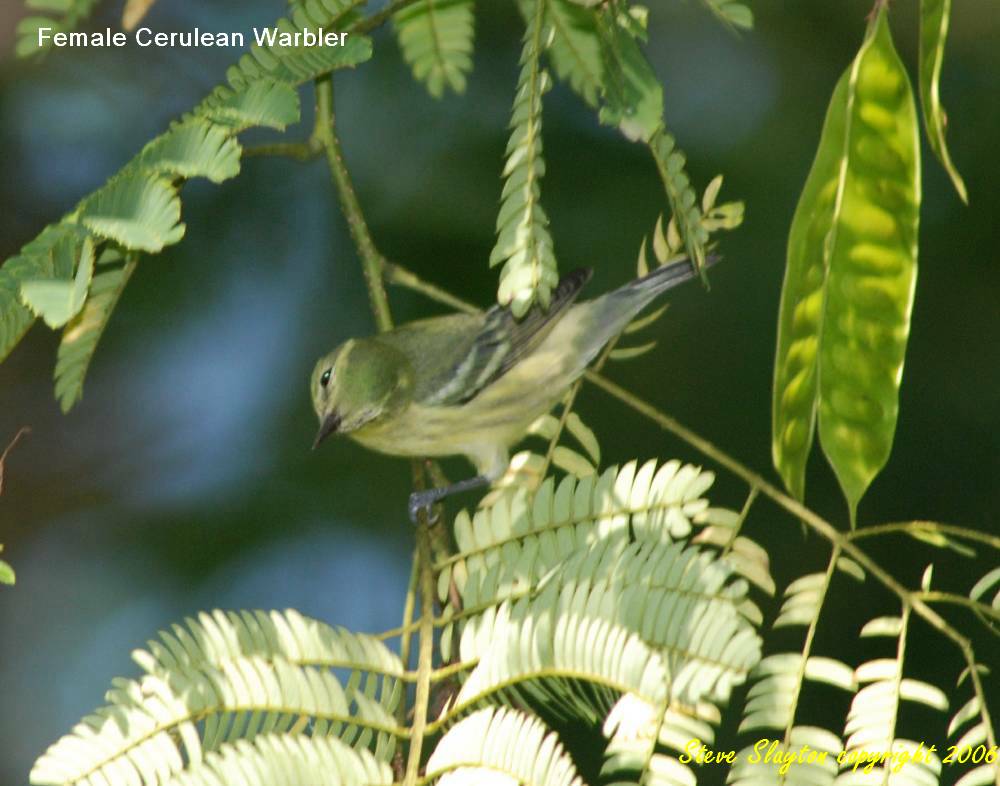
Cerulean Warbler (Dendroica cerulea) female by Steve Slayton
They prefer uplands, wet bottomlands, moist slopes, and mountains from less than
100 feet to more than 3,500 feet in elevation.
The Cerulean Warbler is a flagship species for conservation due to its attractiveness, high conservation concern and life history. The Cerulean Warbler often inhabits areas that are of global importance for conservation, yet are highly threatened. Therefore, conserving the Cerulean Warbler is not only about a shared migratory species, but also the lives of local peoples who will determine its future.
GOD has trust in us and that’s why HE has chosen us to be the flagship species for the conservation and extension of HIS kingdom…
HE is faithful to finish the good work that HE had started in us, but, are we faithful?
A faithful man shall abound with blessings; …… (Proverbs 28:20)
The female has her own fascinating behavior: with wings tucked, the bird purposefully tumbles off the side of her lofty nest. Although not quite in a freefall, just before she hits the ground—like a bungee jumper on a cord—she stops short. Instead of shooting back skyward, however, her open wings whisk her along the forest floor in search of insects, including bees, caterpillars and wasps.
The copyright holder of the chorus of cheerful trills coming from high in the forest canopy is that of the male, as he only sings. The males are also persistent singers who sing at intervals of one and a half minute to two minutes for nearly and hour each morning. Most of the singing is done in the morning and some good songs can be heard in the afternoon also..
The 0.3 oz Cerulean Warbler sings for one hour each morning. If the same bird is of the size of a human, it would be singing all day long…
I think GOD also expects us to sing all day long and that is the reason HE created us..
Anyway, we have to keep singing day and night non-stop in heaven….
If we don’t sing here on earth, is it possible for us to sing for HIM in heaven?
the people which I formed for myself, that they might set forth my praise. (Isaiah 43:21)
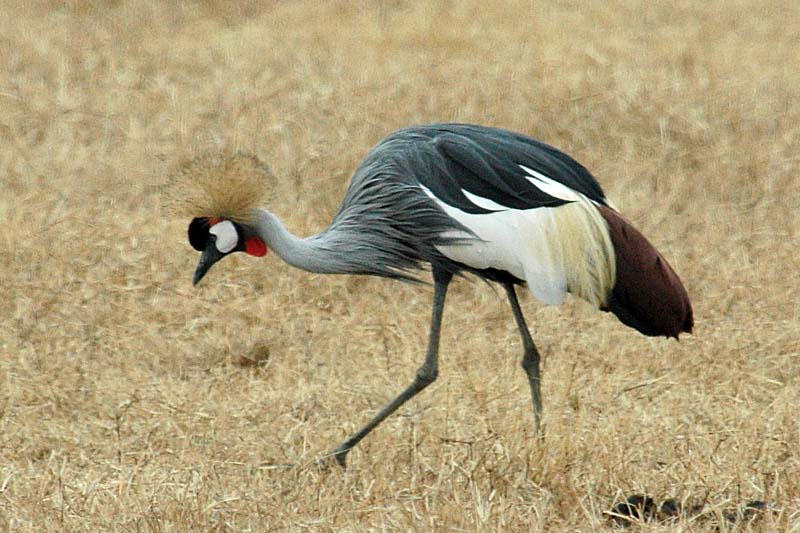
Grey Crowned Crane (Balearica regulorum) by Bob-Nan
The Grey Crowned Crane is a tall, majestic looking bird which sports a crown of sorts, made of tall stiff golden feathers that looks for all the world like a real crown. He has large white patches of feathers on his cheeks with small red patches at the top of them and a slate gray coloring over most of his wings, with a black bill and legs.
The Grey Crowned is quite tall for a Crane, at about three feet high when they are fully mature, with the crown making them appear taller still. They are among the largest of the cranes with a wing span that can reach six and a half or seven feet across when they are in flight.
If GOD can crown these beautiful birds, don’t you think that HE would crown us? It is for us that HE left HIS glory, so that we may be crowned with eternal life…
Blessed is the man that endureth temptation: for when he is tried, he shall receive the crown of life, which the Lord hath promised to them that love him. James 1:12
The one who created these beautiful birds is the only ONE who is the most beautiful of all…
His mouth is most sweet: yea, he is altogether lovely. This is my beloved, and this is my friend, O daughters of Jerusalem. Songs of Solomon 5:16
The ONE who created us in HIS own image became nothing on the cross, so that we would become something for HIS glory..
HE turned ugly on the cross to make us beautiful…
But he was wounded for our transgressions, he was bruised for our iniquities: the chastisement of our peace was upon him; and with his stripes we are healed.
Grey Crowned Crane (Balearica regulorum) by Daves BirdingPix
The Grey Crowned Crane is found near rivers and wetlands, usually in marshy grasslands near rivers or lakes in Eastern Zaire, Kenya, Tanzania and Uganda.
We are supposed to be found by the Living waters that flow from the cross… Where are we right now? Whom do we trust?
For he shall be as a tree planted by the waters, and that spreadeth out her roots by the river, and shall not see when heat cometh, but her leaf shall be green; and shall not be careful in the year of drought, neither shall cease from yielding fruit. Jeremiah 17:8
Come to the cross, where the blood is still alive to cleanse you… Come to the Living water, which still flows to quench your thirst….
Social and gregarious during most of the year, moving about in flocks of up to 100 and roosting in trees or riverbeds. The cranes’ long legs and necks and excellent peripheral vision help them spot predators in the tall Savannah grasses.
Some of us may have lost our way, in the process may have lost our vision too..
The Bible says,
The statutes of the LORD are right, rejoicing the heart: the commandment of the LORD is pure, enlightening the eyes. Psalm 19:8
In breeding season which is springtime in this area, the pairs of cranes will build nests which are very large, made of grass and vegetation on the lesser wet parts of the marshy ground or even in shallow water. The cranes remain monogamous, and even after the chicks leave the nest the pair remains together, and will breed each season strictly with each other, remaining paired for life.
Grey Crowned Crane (Balearica regulorum) by Bob-Nan
An omnivore, the crowned crane eats plants, seeds, grain, insects, frogs, worms, snakes, small fish and eggs of water animals. Stamping their feet as they walk, they flush out insects which are quickly caught and eaten. One of the most beautiful of all cranes, and the only crane which will roost in trees.
We too are supposed to be the only tree roosters.. We are those who carry our own tree to roost on the cross tree….
The spectacular dances performed by the adults are not strictly connected with reproductive behavior but are also an expression of joy.
Dancing for the LORD is an act of worship…. He was the King, but still, David danced before the Lord.Eeven though his wife Michal made fun of him, Kind David said,
And I will yet be more vile than thus, and will be base in mine own sight: and of the maidservants which thou hast spoken of, of them shall I be had in honour. 2Samuel 6:14
Do we have the guts to say so?
Both the male and female cooperate in building the nest, and in defending the eggs and the chicks. Crowned crane parents often pretend to be injured to lure predators away from their nestlings…
This quality of pretending is seen in King David’s life too.. You can read that instance in 1Samuel 21:12-15.. But, for us we don’t have to pretend, we just have resist the devil…
Submit yourselves therefore to God. Resist the devil, and he will flee from you. James 4:7
A j mithra has done it again. This time he has really made a fantastic video. With help and permission from Jim Greeninger (musician), and our Videographers Keith Blomerley and Nick Talbot, Denise Russell (technical assistance) and Lee (helped get the pieces). The sounds of the birds were put together by a j mostly from sounds from xeno-canto.
I hope you will enjoy this video and praise the Lord for His watch care over the Sparrows and all of His Creation. To see the words go to Birds in Hymns – His Eye Is On The Sparrow.
Look at the birds of the air, for they neither sow nor reap nor gather into barns; yet your heavenly Father feeds them. Are you not of more value than they? (Matthew 6:26 NKJV)
Ian’s Bird of the Week – Whistling Kite ~ by Ian Montgomery
I’ve just revised the eagle, hawk and allies galleries (Acciptridae http://www.birdway.com.au/accipitridae/index.htm ) on the website with the new format, larger image sizes and regional indices with different background colours. Eagles and hawks attract great interest generally and are the most popular targets for internet searches on the website. They’re also popular with birders and are a challenge to identify in flight, so a good place to start is the widespread and common Whistling Kite – the one we probably check most often to make sure it isn’t something more unusual like a Square-tailed Kite or Little Eagle.
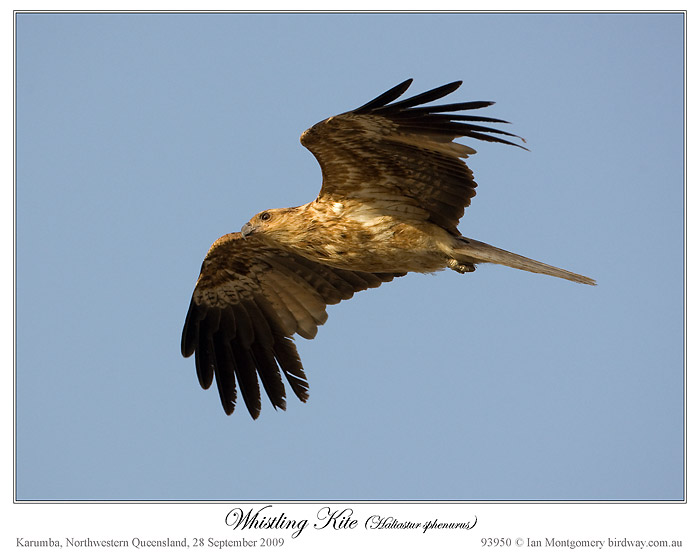
Whistling Kite (Haliastur sphenurus) by Ian
At 50-60cm/20-24in in length and with a wingspan of about 1.2m/47in, the Whistling Kite is just one of about a dozen Australian species of raptors in this size range and with colours in varying shades of coffee. So, leaving size and beverages aside, identification relies on other features particular underwing pattern, relative sizes and shapes of wings and tail and style of flight. As you can see in the first two photos, Whistling Kites have distinctive wing patterns, with the most notable feature being the contrasting outer very dark primaries*, very pale 3 or 4 inner primaries and very dark secondaries. The resulting pattern is a white spot on the trailing edge of the wing and a pale right-angle formed by the leading under-wing coverts and the pale primaries. This is diagnostic: other raptors have pale patches – windows or bull-eyes – but usually in the ‘palm’ of the hand or the leading edge and lack an abrupt right-angle.
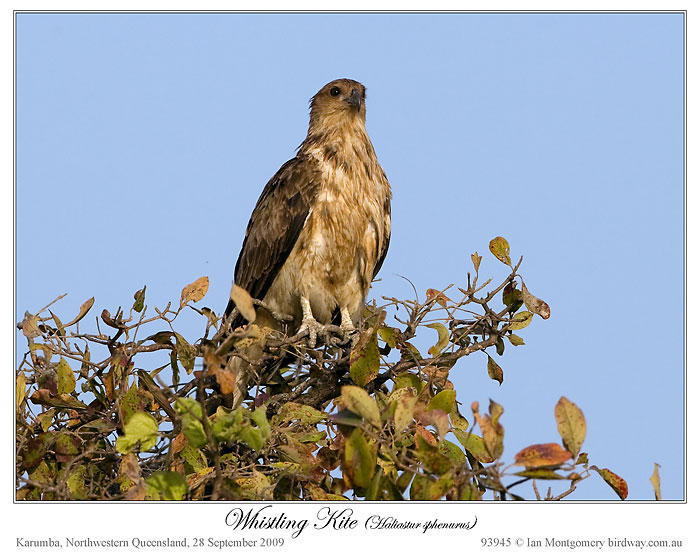
Whistling Kite (Haliastur sphenurus) by Ian
*The primary flight feathers, usually numbering 9 -11 inmost species of birds (except Grebes, Storks and Flamingos – 12 – and Ostriches – 16) and are attached to the ‘hand’ part of the wing (metacarpals and phalanges of the large second digit). The secondaries, very variable in number, are attached to the ulna of the ‘forearm’ between the ‘elbow’ (not obvious in birds as the humerus is short and thick for attachment of the large pectoral muscle) and the ‘wrist’ – the forward-pointing angle in the middle of the leading edge.
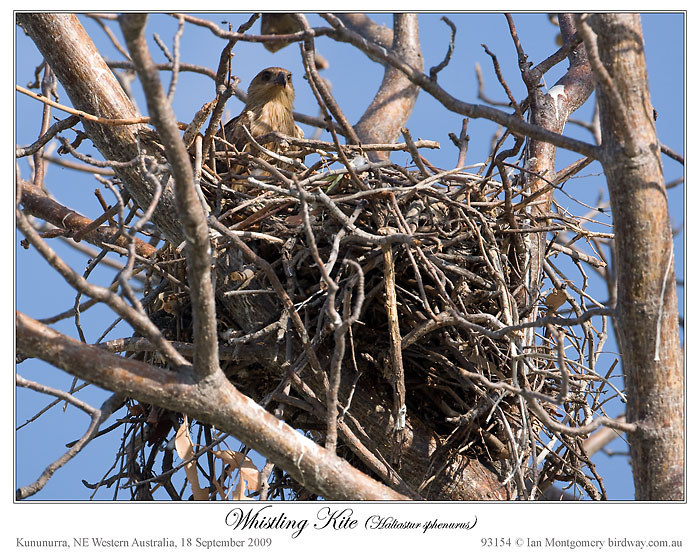
Whistling Kite (Haliastur sphenurus) by Ian
The tail of the Whistling Kite is characteristic too: long, latte coloured and paddle-shaped with a rounded and you can see in the first that the Whistling Kites swivel the tail like a paddle for steering. Most other raptors have darker tails with barring – the Whistling Kite has faint, barely visible bars. Whistling Kites glide with horizontally curved – rather than flat or angled wings – a bit like seagulls one draws as a kid and have a rather floppy untidy flight. When perched, they usually do so in an upright stance, rather like a Brown Falcon, as in the third photo. They build a typical raptor nest – bulky, with large sticks – high in a tree and re-used so that it gets very large after a number of years.
The Whistling Kite gets its name from its distinctively un-raptor-like call. Its is common throughout Australia except in the driest areas of western South Australia and eastern Western Australia. They take live prey including fish, so they are frequenty found near both fresh and salt water, but also feed on carrion and are often seen cruising along highways, along with Black Kites, Brahminy Kites and Wedge-tailed Eagles, looking for road-kills. Their only close relative is the Brahminy Kite, and these two species comprise (globally) the genus Haliastur.
Back at the website, I’ve applied the new format to the Cockatoos and Estrildid Finches, both also popular targets:
Lee’s Addition:
Ian has been working hard on his website and it is really looking good. Ian, I like the new format. Click on his links for some really nice photographs of birds and other critters. Birdway.com.au From his site, “28 May 2010: this site contains more than 5,000 photos of 1,234 bird species in the wild – 596 of these are on the main Australian list of Christidis & Boles, 2008 – and 83 photos of 23 species of reptiles and Australian mammals.”
And the vulture, and the kite after his kind; (Leviticus 11:14 KJV)
The Kite is a member of the Accipitridae Family and has 250 members. They are in the Accipitriformes Order. The family has Kites, Hawks, Eagles, and their allies. The Kite is also one of the Birds of the Bible and is in the “unclean” list of birds not to be eaten.
The Hummingbird – The believing believer.. – by a j mithra
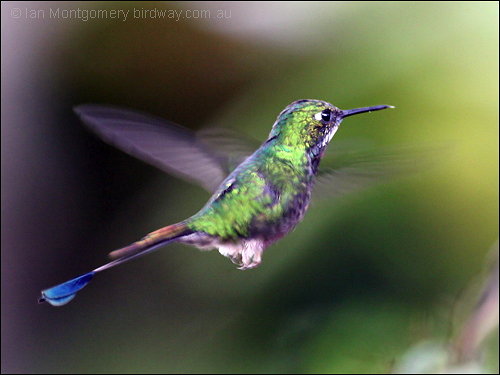
Booted Racket-tail (Ocreatus underwoodii) by Ian
Number 1500 is ‘PHOS’ which means LIGHT in Greek.. Number 1500 is YHVH (10x5x6x5), which means GOD in Hebrew…
Maybe the Hummingbird knew this, that’s why it visits about 1500 flowers everyday for nectar…..
What about us? Do we seek THE LIGHT at least once a day?
Then spake Jesus again unto them, saying, I am the light of the world: he that followeth me shall not walk in darkness, but shall have the light of life. (John 8:12)
The size of one of the curtains of the Tabernacle is 1260 square cubits…
The heartbeat of the Hummingbird is 1260 per minute..
This identical number of 1260 which is the area of one of the curtain of the Tabernacle and the heart beat of the hummingbird seems to convey a divine message.. Maybe the Hummingbird’s heart beats for the Lord?
For whom does our heart beat?
It has to feed every ten minutes, and would die if it starves for a few hours. But still, the Hummingbird has the energy to fly 500 miles nonstop to cross the Gulf of Mexico during migration….
If GOD can provide so much energy for a tiny little bird, will HE not strengthen us to cross every gulf in our lives?
After all, HE has created us in HIS own image…
With GOD our limited energy turns unlimited…
And he said unto me, My grace is sufficient for thee: for my strength is made perfect in weakness…….. (Psalm 2Corithians 12:9)
The more sugar we take, the more the chances of turning into a Diabetic… The Hummingbird feeds every ten minutes on nectar and drinks almost double its weight of nectar in a day.. Yet, it isn’t a Diabetic! Its cos, it burns its energy through its 53 per minute wing beat…
The word of the LORD is sweeter than honey… THE WORD is our LORD… Well, are we a Spiritual Diabetic? So much of GOD’S WORD enters our system but, we don’t seem to exercise… Do we?
How sweet are thy words unto my taste! yea, sweeter than honey to my mouth! (Psalm 119:103)
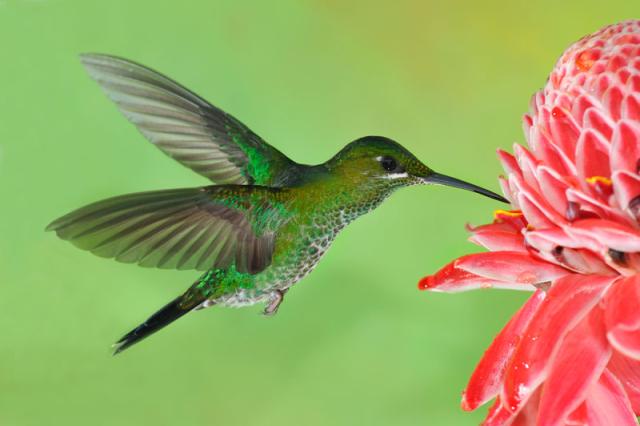
The Hummingbird gets attracted towards RED color.. Maybe it knows that its creator, the Rose of Sharon is RED….
We all know that RED in a traffic signal means, Stop right away… RED color can also mean Danger..
For years together, we have been seeing Bloody RED on the cross. But, the question is, have we stopped sinning yet?
And I said unto him, Sir, thou knowest. And he said to me, These are they which came out of great tribulation, and have washed their robes, and made them white in the blood of the Lamb. (Revelation 7:14)
Moses used Hyssop’s stem for purification of sacrifices in the Tabernacle… David prayed to GOD to cleanse all his sins with Hyssop..
Did the Hummingbird choose Hyssop’s nectar to live holy? Cos, it gets its favorite nectar from the flowers of Hyssop.
What do we choose to live holy?
Purge me with hyssop, and I shall be clean: wash me, and I shall be whiter than snow. (Psalm 51:7)
With my whole heart have I sought thee: O let me not wander from thy commandments. (Psalm 119:10)
The tree of Life has twelve fruits in store for us. Hyssop-the Hummingbird’s favorite is a twelve inch spiked flower for which, the Hummingbird migrates 500 miles… The Bird seems to ask, “How far do you people run for those twelve wonderful fruits of the Tree of Life?”…
It made me think hard about it… What about you?
In the midst of the street of it, and on either side of the river, was there the tree of life, which bare twelve manner of fruits, and yielded her fruit every month: and the leaves of the tree were for the healing of the nations. (Revelation 22:2)
When it faces danger or if its frightened or if its confused, the Hummingbird immediately flies upward…..
In our dark times or in times of trouble, whom and where do we look for help? Do we look up to GOD instantly or do we look up to HIM when we find no other way?
My voice shalt thou hear in the morning, O LORD; in the morning will I direct my prayer unto thee, and will look up. (Psalm 5:3)
The eyes of Hummingbirds are attuned to wave lengths of light which is outside the visible range of human…
Tuning our spiritual eyes to the wave length of THE LIGHT unseen is FAITH…
Well, it is time for us to go for an eye check-up to check if we can see the unseen..
And he that doubteth is damned if he eat, because he eateth not of faith: for whatsoever is not of faith is sin. (Romans14:23)
The Mountain Bluebird – The Zealous Bridegroom.. – by a j mithra
Mountain Bluebird (Sialia currucoides) by Daves BirdingPix
The Mountain Bluebird is a common inhabitant of open areas, such as ranchlands, in the Western parts of America. Mountain Bluebirds are a monogamous breed. The males of this specie have been known to assertively guard their mates from other unattached males. When the male mountain bird has to go away to collect food it makes sure that it stays in contact with the female bird by calling out and engaging in various visual displays.
The Mountain Bluebird is known for its strange feeding behavior. In fact their feeding behavior is so unusual that it makes the Mountain Bluebird quite distinguishable from the other species of bluebirds. Mountain bluebirds like to hover low around open fields where they hunt for their food. Upon seeing an insect the hovering birds quickly briefly drops to the ground to snatch their prey and then return to their flight or go to a perch.
Even when seemingly resting on a perch mountain bluebirds are actually usually on the lookout for insects and when they spot one again suddenly briefly drops to the ground to catch the insect before returning to the perch to feed. This strange behavior is called ground sallying. Though other bluebirds hover above ground at times they do not do this as often as mountain bluebirds does.
Mountain Bluebird (Sialia currucoides) by Ian Montgomery
The mountain bluebirds diet is primarily made up of insects although they do eat berries too. Insects that mountain bluebirds like to feed on include beetles, weevils, ants, wasps, bees, cicadas, flies, caterpillars, grasshoppers, katydids, and crickets. Mountain bluebirds do eat berries but not as much as other species of bluebirds. They eat more berries during winter since insects are harder to find. The varieties of berries they most prefer to eat come from mistletoe, juniper and hackberry plants.
Mating season starts with the male Mountain bluebird singing loudly on treetops to attract female mountain bluebirds. The mating song though serves another purpose, which is to mark of his territory and warn other male birds nearby. The male bluebird begins its song at dawn just as the sun rises and continues until a female mountain bluebird is spotted.
Our praises would announce our neighbors of the authority JESUS has over our lives…
It is easy to say, “if God be with us, who can be against us”, but the question is, do you think that our Lord would dwell among our silence?
Our Lord dwells among praises and not silence; which means, our praises in the morning invites the presence of the Lord, so that His goodness and mercy would follows us all through the day..
Did you announce your neighbors about the authority JESUS has over your life? Do we praise Him until we spot HIS presence? Or just praise Him for the sake of it? Remember, God has created us to just praise, praise and praise….
This people have I formed for myself; they shall show forth my praise. (Isaiah 43:21)
Once the male bird sees a female mountain bluebird it starts exhibiting various kinds of behaviors as it tries to attract the female bird and entice it to look at the available nesting cavities in the area, so that the female bird can choose one in which to lay eggs.
Some mating behaviors of the male mountain bluebird include flicking its wing(s) open at a moderate pace, poking its head in and out of a nest hole again and again, and perching on the side of a nest showing off with a wing-wave. When a female mountain bluebird is interested it will follow the male bird into the nesting cavities and even enter some of them to inspect those offered. It isn’t until both birds go inside one nesting cavity several times though that they are considered to be paired. They, of course use the nesting cavity that they had entered several times. After choosing the nesting site the female mountain bluebird promptly begins to build the nest….
In the most sensational courting display, our Lord Jesus Christ hung on the cross And poured every single drop of blood, to attract us, His mate…
In spite of this amazing gift of salvation, how many of us really follow Him…
The female Mountain Blue bird follows the male several times, inside one nesting cavity before it builds its nest..
If Eve had been with Adam, she wouldn’t have sinned…
The day she left Adam and went around the garden, she fell into satan’s snare..
Do we, the bride follow Jesus, our eternal bridegroom?
..: let the bridegroom go forth of his chamber, and the bride out of her closet. (Joel 2:16)
Mountain Bluebird (Sialia currucoides) by Ian Montgomery nest
It is the female mountain bluebird bird that chooses the nesting site and builds the nest. Throughout the entire process the male also keeps himself busy staying close by to guard the female mountain bluebird. They do help sometimes by bringing some nesting material to the female bird but they do not actually participate in the placement of the material on the nest itself. The male mountain bluebird stays attentive during the entire nest building process and stays close by to guard its mate from other unattached males. Male mountain bluebirds are known to be zealous in protecting their mate.
During this time the male also collects food and feeds it to the female bird while spends most of her time just building the nest. This behavior is called mate-feeding.
Like these male birds, Jesus, our Bridegroom is so zealous that He is busy staying close by to guard us and guide us in all that we do for His glory…
Of the increase of his government and peace there shall be no end, upon the throne of David, and upon his kingdom, to order it, and to establish it with judgment and with justice from henceforth even for ever. The zeal of the LORD of hosts will perform this. (Isaiah9:7)
Like these female birds, we the bride, are given the responsibility of building the nest, which is the kingdom of the Lord…
He feeds those who are hungry and quenches those who are thirsty, this privilege is only for the bride, who work on building the Bridegroom’s kingdom…
No weapon that is formed against thee shall prosper; and every tongue that shall rise against thee in judgment thou shalt condemn. This is the heritage of the servants of the LORD, and their righteousness is of me, saith the LORD. (Isaiah 54:17)
Bluebirds are held in very high esteem. This is shown in the many times it is mentioned in poetry and prose. Bluebirds are often depicted as a symbol of love, happiness and renewed hope. As another sign of peoples high regard for the bluebird the Mountain Bluebird was chosen as the state bird of both Idaho and Nevada…
Jesus holds us in very high esteem that is the reason He bought us by His blood…
God expects us to show the love which He showed on the cross of Calvary..
In fact, He sees us the symbol of love, happiness and hope…
That is why He calls us as His love…
He brought me to the banqueting house, and his banner over me was love. (Song of Solomon 2:4)
The Mountain Bluebird is part of the Turdidae Family which includes not only the Bluebirds but also Thrushes, Geomalia, Omao, Kamao, Puaiohi, Olomao, Solitaires, Veery, Blackbirds, Cochoa, Fruithunter, Shortwings and Alethes, for a total of 184 members. They are Passerines.
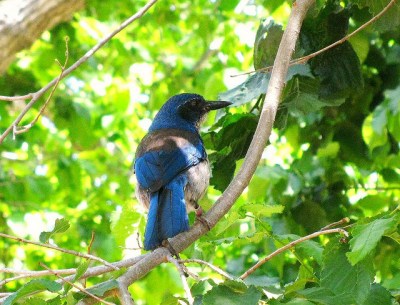
Island Scrub Jays are monogamous and may stay with a mate for their entire lives. Unlike some Aphelocoma species, the Island Scrub Jay is not a cooperative breeder, meaning that pairs do not rely on other related jays to help them raise their young…
Divorce has become the order of the day…
Spouses getting separated for flimsy reason, sometimes for no reason has become a fashion..
Even churches encourage divorce..
But,through these birds, GOD shows us that HE has created every spouse to mate for life..
It hath been said, Whosoever shall put away his wife, let him give her a writing of divorcement: But I say unto you, That whosoever shall put away his wife, saving for the cause of fornication, causeth her to commit adultery: and whosoever shall marry her that is divorced committeth adultery. (Mathew 5:31,32)
And most importantly Kids are gifts from GOD..
HE trusts is us that we would take care of these gifts and that is the reason HE has given us kids..
How well do we take care of them?
Or do we rely on some one else to raise them for us?
For if a man know not how to rule his own house, how shall he take care of the church of God? (1Timothy 3:5)
Both the male and the female help build nests three to 25 feet high in trees and shrubs. They use small oak branches that they break off trees and they never use sticks that fall to the ground These branches form the cup of the nest, which the parents line with grass and small roots…
We need to provide a home filled with love and care for our kids and not a house of luxury…
Females lay 3 to 5 eggs in a nest that they incubate for about 20 days. While the female sits on the eggs, the male spends his time hunting and defending the nest from snakes, hawks, foxes, and other Island Scrub Jays.
The male is also responsible for bringing the female food so she can be with the eggs as long as possible each day.
Husbands, love your wives, even as Christ also loved the church, and gave himself for it; (Ephesians 5:25)
Observations suggest that the more time parents spend near their nest, the higher their chances of defending their young ones against nest predators….
Now a days parents spend more time in their offices than with their kids..
The excuse is that they are working hard to give a comfortable future..
But, we parents cannot protect our children if we don’t spend time with them..
How can we claim that GOD has created us in HIS own image when we fail to protect our kids the way HE protects us?
It is time for us to learn from these Island Scrub Jay
s about how to spend time with our children so as to defend them from predators…









 Lee's Birdwatching Adventures Plus