Golden Eagle – Coming For A Meal

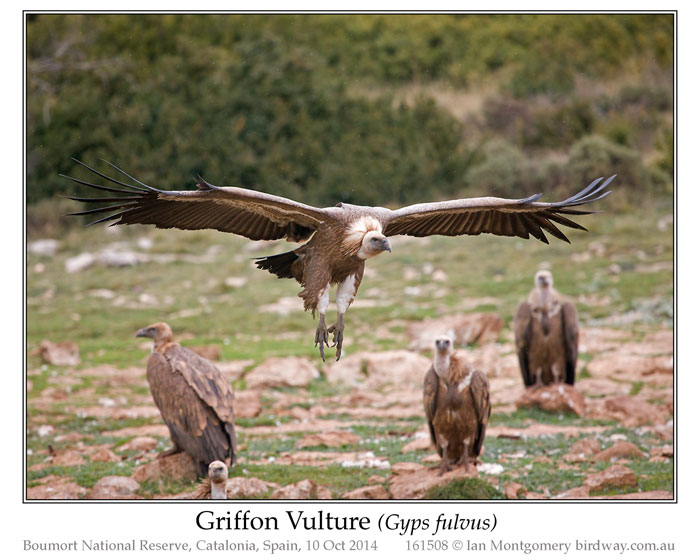
Griffon Vulture (Gyps fulvus) by Ian

Griffon Vulture (Gyps fulvus) by Ian

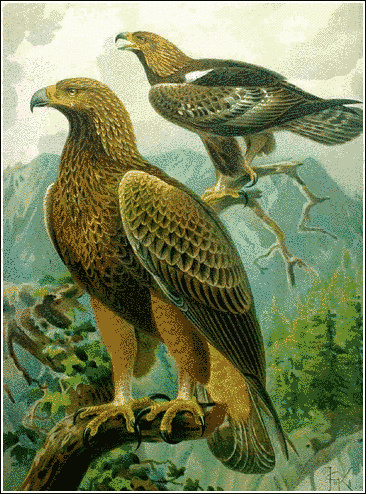
Golden Eagle ©PD

Golden Eagle ©PD

This is the Golden Eagle flying in for another communication. Are you guys keeping your journals? Do you have any bird stories to share with us? Some of you will be heading back to school soon! I need to share another Bible verse with you all!

And I saw an ANGEL standing in the SUN; and he cried with a loud voice, saying to all the fowls (birds) that fly in the midst of heaven, Come and gather yourselves together unto the supper of the great God: that ye may eat the flesh of kings, and the flesh of captains, and the flesh of mighty men, and the flesh of horses, and of them that sit on them, and the flesh of all men, both free and bond, both small and great. (Revelation 19: 17-18)

Kiss the Son (Jesus), lest he be angry, and ye perish from the way, when his wrath is kindled but a little. BLESSED ARE ALL THEY THAT PUT THEIR TRUST IN HIM (JESUS).” Psalm 2:12

Boy, you don’t what to be on the wrong end of that SUPPER! We don’t what to end up on the bird’s plate! You and I need to treat Jesus Christ the right way! We need to treat His day the right way (Sunday) and , in fact, each and every day the RIGHT way! We need to treat His Word the right way, the BIBLE. Kiss the Son means treating the Son of God with respect and with the worship that He deserves! You and I were created to know and to ENJOY GOD forever! And you know what? Jesus Christ is God, or He could never have come out of the grave on the third day! His Resurrection proves that He is God and He promised to return to this Earth that He made to set up His very own Kingdom!

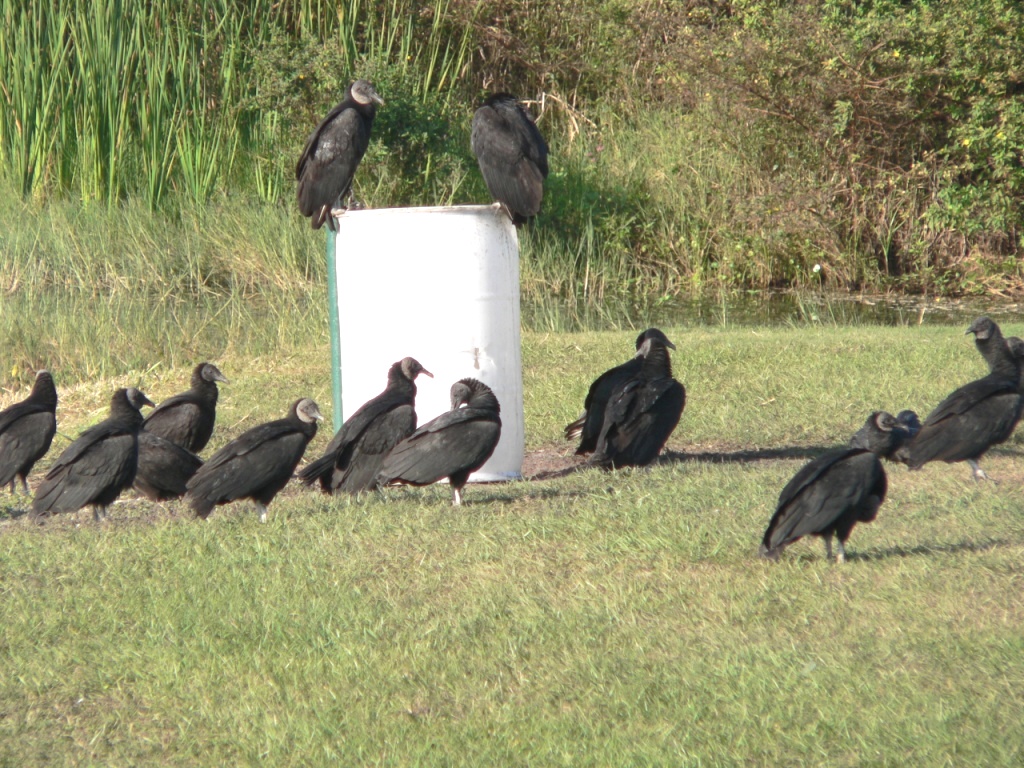
Black Vultures at Saddle Creek by Lee

Black Vultures Looking For A Meal at Saddle Creek

The heat of the sun, and the birds of the sky help to break down dead plants and animals that lie around on the ground. They, along with other critters. act like God’s clean-up crew! And that is a great thing! Eventually, God is going to clean up this old earth! He will get rid of all the unsaved sinners and evil people of the world! PLEASE MAKE SURE THAT YOU HAVE TRUSTED JESUS CHRIST AS YOUR OWN PERSONAL SAVIOR, AND THAT YOU ARE TRUSTING HIM FOR SALVATION ALONE! Bye, for now, I have to feed my little ones their supper! Smile: Remember, God loves you!!!

*

More from Golden Eagle

*


Golden Eagle – Birds Are Free

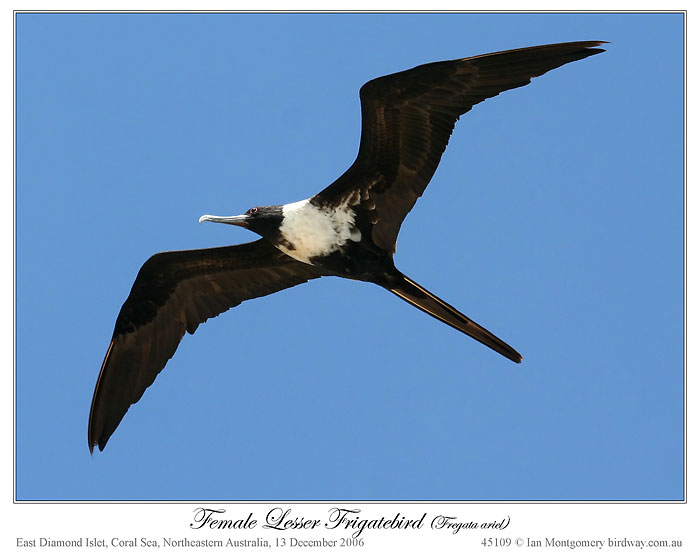
Lesser Frigatebird (Fregata ariel) female by Ian

Lesser Frigatebird (Fregata ariel) female by Ian

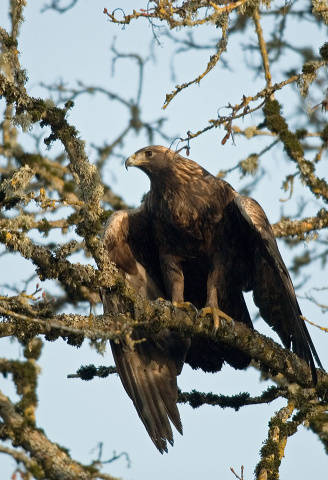
Golden Eagle ©PD

Golden Eagle ©PD

Hey kids! What do birds bring to your mind? To me, the Golden Eagle, they are free from this old world. I mean that they are free from gravity! They can soar above the trees and above the beautiful mountains that God created! Speaking of gravity-Jesus walked on water! Peter walked on water and Jesus was taken away in the clouds when He went back to Heaven!

And when Jesus had spoken these things, while they beheld, he was taken up; and a cloud received him out of their sight…THIS SAME JESUS, WHICH IS TAKEN UP FROM YOU INTO HEAVEN, SHALL SO COME IN LIKE MANNER AS YE HAVE SEEN HIM GO INTO HEAVEN” (Acts 1:9,11)


Jesus and the Bible has promised that He will return to this very earth someday in the future! It might even be today! Please make sure that you are born again, that you are saved, that you have received Him, a free GIFT OF ETERNAL LIFE from the Father! I for one want to live forever.

 Birds are free, they can soar to new heights, they are very colorful, and just full of beautiful colors! They make their nests in many different places! Sometimes in a tree, yes in a nest that they have made. Sometimes they live on the side of a cliff or they burrow a whole in the ground like some owls. Some birds will nest right on the ground. The cool thing is that God takes care of them and He takes care of us every day.
Painted Bunting (Passerina ciris) ©©Flickr

Painted Bunting (Passerina ciris) ©©Flickr

Hey, how’s that journal coming along? Have you spotted any birds? Have you entered that in your journal? Have you run across an interesting bird story? Do any of you have a question for the Golden Eagle? Free flight, fantastic colors, and fun builders of nests! The amazing creation of birds shows us the amazing ability of an awesome God! If you look around your room or you house, do you see any material things? Of course you do. And you know that each thing you see and touch, somebody made the things that you are looking at. They did not get there by pure chance, did they? Well, this earth, the Universe, you and me, the birds did not just get here by chance! That is what evolution teaches, but that doesn’t even make any sense. Nothing happens by pure chance. If that was true, there would be no purpose or reason for being in existence at all. The Bible teaches us that God made everything.

 For in six days the Lord made heaven and earth, the sea, and all that in them is… (Exodus 20:11)
That means that God made EVERYTHING and that He controls everything. There are no accidents with God. God is in control of each thing that happens around us and each thing that happens through us! Keep your eyes open, your ears alert, and watch today for the things that God is doing in your life and around you. I am certain that Jesus Christ, who is God, will be working TODAY!
Bye until the next adventure, I see a fish in my pond and I am hungry.
*

More from Golden Eagle

The Wordless Book

*

Golden Eagle – Goodness of God

Golden Eagle (Aquila chrysaetos) ©USFWS

Golden Eagle ©PD

Golden Eagle ©PD

Hi! Gals and Guys, this is Golden Eagle flying in for a few minutes. I remembered when I woke up this morning that this is my Father’s World. The gold is His , the silver belongs to Him, and He owns the cattle on a thousand hills. I rolled out of my nest early this morning and everything was wet. You know it rained really hard yesterday night. I stretched my wings out so the glistening sunlight could warm them up. I began to preen my feathers, sometimes they get really messy in the morning. I heard the melodious songs of other birds and smiled when I thought of the goodness of God. You know, some things are so simple that we often miss them. God is spelled G-O-D and good is spelled G-O-O-D. They’re almost the same. For you see, God is good all the time. He sends the rain and the sunshine on the saved and the lost.

Jesus said “Consider the lilies of the field, how they grow; they toil not, neither do they spin: And yet I say unto you, That even Solomon in all his glory was not arrayed (dressed) like one of these.”(Matthew 6:28-29)

Jesus also said “Behold the fowls of the air: (the birds) for they sow not, neither do they reap, nor gather into barns; yet your heavenly Father feedeth them. Are ye not much better than they?” You see, the Bible tells us of the Creator-God . He says that we were created just a “little lower than the angels.” You humans are much better than us birds. You really didn’t evolve.

Hey kids, we all have our troubles and problems. When Jesus says to think about the lilies, the flowers, the fowls, and the birds He is telling us to think about God. Put your mind on the Lord Jesus Christ. We do this by reading the Bible, the Word of God. Every day we should read the Bible. And with God’s help we should believe the Word of God and try to obey the Word of God.

Psalm 2:2-3 says that “his delight is in the law of the Lord (the Word of God): and in his law doth he meditate day and night.”

He delights in the Bible and thinks about God. In my nest I have ice-cream every night because that’s what I delight in! Jesus continues, “And he shall be like a tree planted by the rivers of water, that bringeth forth his fruit in his season; his leaf also shall not wither; and whatsoever he doeth shall prosper.” Thinking about God will make you a success every time!

Focus on God, the Lord Jesus Christ, and He will work a miracle in you. Get saved and His life will flow through you and He will pour out His blessings on all the people you come in contact with. This is my Father’s world.

See ya!!!

Goldie

*

Golden Eagle

Wordless Birds

Bible Birds

*

Introduction to Bible Birds

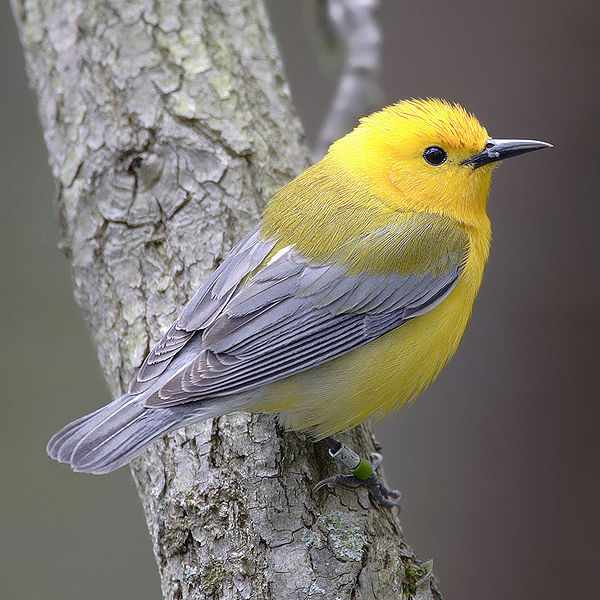
Prothonotary Warbler (Protonotaria citrea) ©WikiC

Prothonotary Warbler (Protonotaria citrea) ©WikiC

Introduction to Bible Birds

This is an Introduction to the Bible Birds. We have been adding many things about the birds in the Bible and other birds that are not named in the Bible, but the Lord made all the birds.

On Day Five (5) of creation, the birds were created. They didn’t just happen. They were designed by God and each one is different. Each one was given just what it needs to live, eat, and make more birds.

Genesis 1:20-23 NKJV
(20) Then God said, “Let the waters abound with an abundance of living creatures, and let birds fly above the earth across the face of the firmament of the heavens.”
(21) So God created great sea creatures and every living thing that moves, with which the waters abounded, according to their kind, andevery winged bird according to its kind. And God saw that it was good.
(22) And God blessed them, saying, “Be fruitful and multiply, and fill the waters in the seas, and let birds multiply on the earth.”
(23) So the evening and the morning were the fifth day.

I know there are some big words in those verses, but the bold letters help find important words.

Did you see the “let birds multiply”? That doesn’t mean they do math. It means that they were to have baby birds, then the baby could grow up and have more baby birds. Then there would be lots of birds.

We will be telling you more soon. Come back and find out about the many birds in the bible.

See:

Bible Birds

Birds of the Bible

Wordless Birds

*

(Sept 1 – Opened up a new section of the blog called Kids Section – Bible Birds. This is the Introduction for their Bible Birds section, which has links to easier reading articles or ones written for the younger folks.

Some of these articles were here already and others were written just for the Birds of the Bible For Kids blog.  We are placing a copy of all articles on this blog. This will save much duplications. Also, the younger readers will also have the benefit of the wealth of information here also.

Expect to see more articles for both our regular readers and our younger readers. You might be surprised how interesting they can be.

Ian’s Bird of the Week – Great Frigatebird

Great Frigatebird (Fregata minor) Male by Ian

Ian’s Bird of the Week – Great Frigatebird ~ by Ian Montgomery

Newsletter – 8/28/14

This week’s good news is that the ebook Where to Find Birds in Northern Queensland is now available on the iTunes store (in 51 countries). So if you have an iPhone, iPad, iPod Touch or Mac (running OS X Maverick) this is for you! Here is the link: https://itunes.apple.com/au/book/where-to-find-birds-in-northern/id912789825?mt=11&uo=4. To make a connection with this week’s bird, the Great Frigatebird, here is a screen shot from iBooks to show you what you can expect. All the text items highlighted in purple and links to either other places in the book – typically places, birds or lists – or external websites. The images are the same size as the ones that are included in the bird of the week, so if you double-click, or double-tap, on them, you can enlarge them to full size.

Great Frigatebird (Fregata minor) by Ian

If you think about birds in northern Queensland, perhaps iconic rainforest species like the Cassowary or Victoria’s Riflebird come to mind. Fair enough, but there is much more to this region than rainforest, important though that is.The area also has wonderful wetlands, tropical savannah forest, mountain ranges, dry country habitats and, last but not least, the coast with its Barrier Reef, beaches, mangroves, mudflats, continental islands and coral cays. So it should be no surprise that over 400 species of birds occur here and you need a reference devoted to the region to do it justice. I’ve chosen a dramatic seabird to make the point.

The term ‘frigate’ was first applied in the 17th century to warships built for speed and manoeuvrability and frigates were often used by pirates to attach merchant shipping. Frigatebirds, also called Man o’ War Birds, got their name for their piratical habitats of harrying other seabirds like boobies and tropicbirds to make them drop their prey. In fact, studies have shown that piracy accounts for perhaps only 20% of their food, and they are expert fishers as well. They fish by snatching prey, such as squid and young turtles, from the surface of the sea or in flight, in the case of their favourite prey, flying fish.

Great Frigatebird (Fregata minor) Female by Ian

Despite their naval name, frigatebirds are wonderfully adapted for flying and are poor swimmers to the extent that they are reluctant to land on water, as they can take off only in strong winds and their plumage is not waterproof. They have very light bones making up only 5% of the body, huge pectoral muscles, enormous wing area, long forked tails for rudders and streamlined bodies with small heads. Despite their size, they are very light, soar effortlessly in good winds and are very acrobatic. Female Great Frigatebirds, larger than males, are about 1m/40in long, have a wingspan to 2.3m/90in but weight only 1.2-1.6kg/2.6-3.5lb.

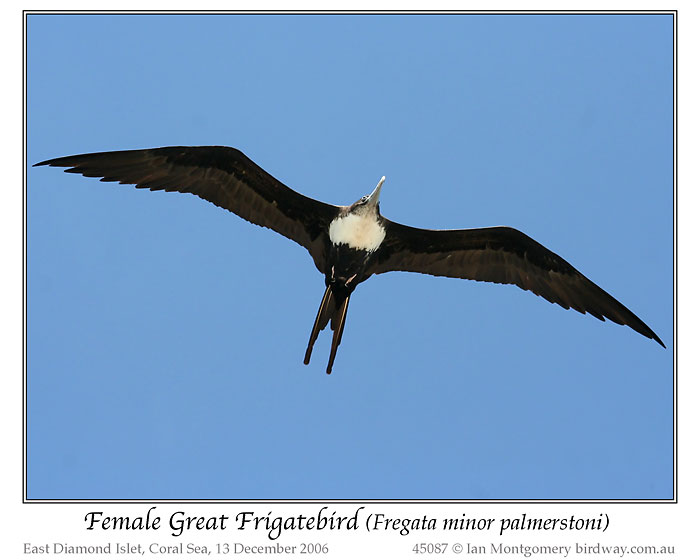
Great Frigatebird (Fregata minor palmerstoni) Female by Ian

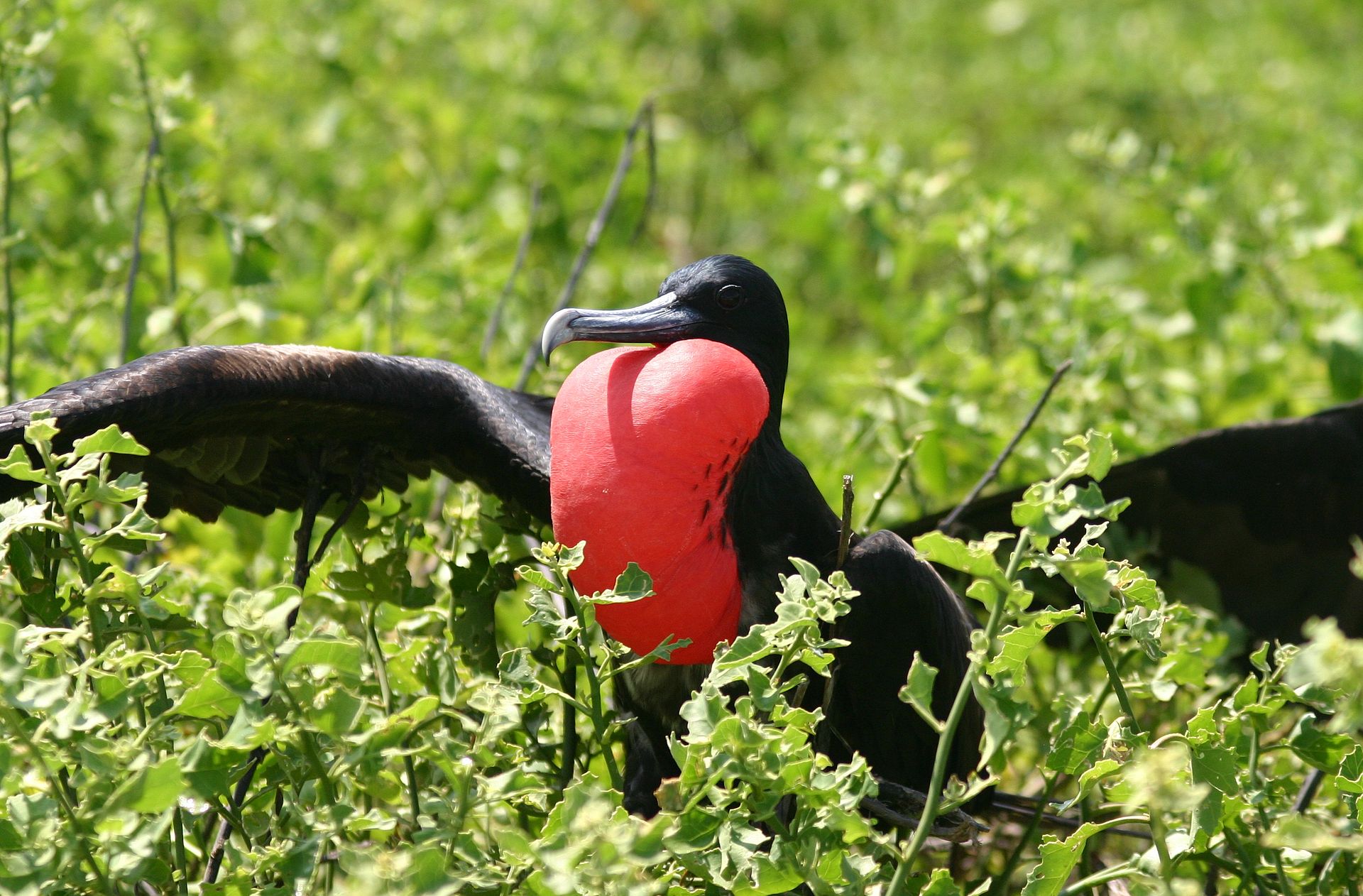
The male Great Frigatebird, first photo, is the only all-black frigatebird occurring in Australia – the other all-black males are the Magnificent Frigatebird of Atlantic Ocean and the eastern Pacific and the Ascencion Frigatebird of the east Atlantic. Frigatebirds are unusual among seabirds in drinking freshwater if they can get it, and this male is drinking at the mouth of freshwater stream on Christmas island by snatching a beak-full of water in flight. Frigatebirds also bathe in flight by splashing into the surface of the water and flying off. You can also see its red gular pouch. This is inflated to enormous size to impress females during courtship. I haven’t got a photo of displaying Great Frigatebird, but you can see a Magnificent Frigatebird doing so here: Magnificent_Frigatebird.

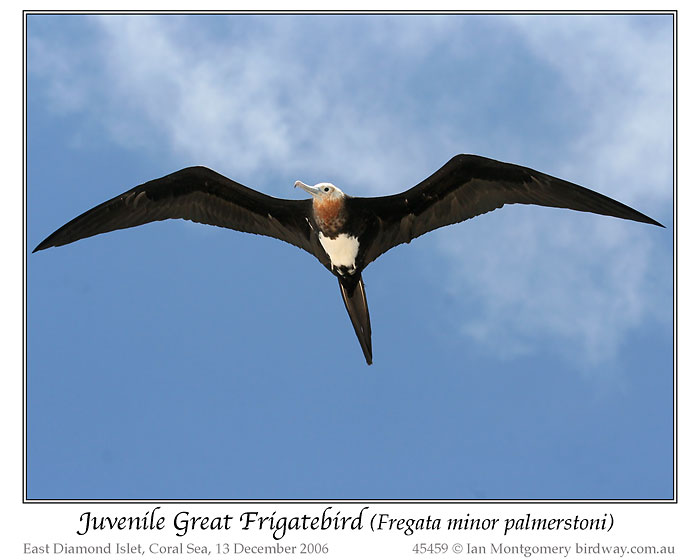
Great Frigatebird (Fregata minor palmerstoni) Juvenile by Ian

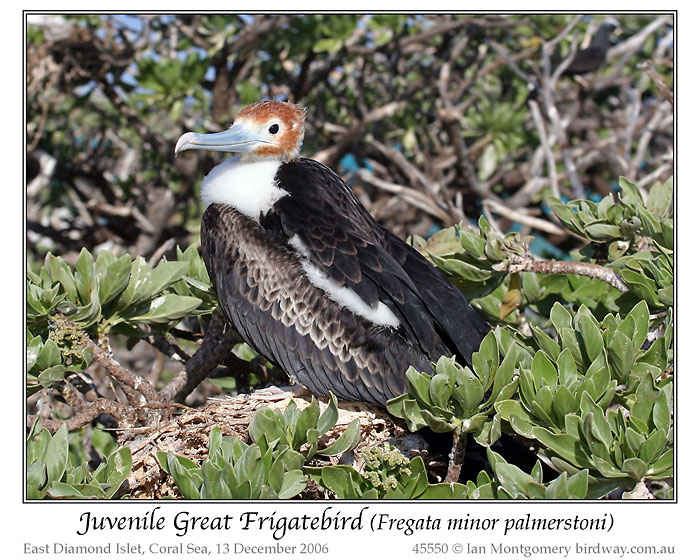
Female Great Frigatebirds have white breasts and care needs to be taken in distinguishing them from other female and juvenile frigatebirds – Lesser Frigatebirds of both sexes have white ‘spurs’ in the axil of the underwing, and Christmas Island Frigatebirds of both sexes, have white bellies. Birds in Indian Ocean waters in Australia belong to the nominate race minor, distinguished by the females having pink eye-rings, second photo. Birds in the Pacific belong to palmerstoni and usually have blue eye-rings, third photo, though doubt exists as to the validity of the races and the reliability of the fieldmarks.

Great Frigatebird (Fregata minor palmerstoni) Juvenile by IanBecause of their need for consistent winds, frigatebirds are restricted to tropical waters where they can rely on the trade winds. Adults are sedentary and remain close to their roosting sites and breeding colonies, mostly on small isolated islands. Non-breeding birds and immature birds are pelagic and move over huge distances. Trade winds are unusual in that they form cumulus clouds and hence thermals over water both by day and night, and frigatebirds make great use of these to soar as high as the cloud base and will fly at night if conditions are right. Pelagic frigatebirds use the front of storms to move around and can cope with high winds very well. This is why they appear in coastal areas after cyclones and are supposed to be called ‘rain-brothers’ by Australian aborigines, though I haven’t been able to verify this.

Great Frigatebird (Fregata minor palmerstoni) Juvenile by IanThe range of the Great Frigatebird includes the tropical Pacific, southern tropical Indian and western Atlantic Oceans. In Australia it breeds colonially on islands along the outer Great Barrier Reef, in the Coral Sea and on Christmas and Cocos (Keeling) Islands in the Indian Ocean, usually in mangroves. The juvenile in photos five and six was photographed on East Diamond Islet, about 600km east of Cairns http://www.satelliteviews.net/cgi-bin/w.cgi?c=cr&UF=34304&UN=456541&DG=ISL. Breeding birds form pair bonds and both parents share in the incubation and feeding of the young. The young develop very slowly. This is thought to adapt them to periods of starvation when the adults have trouble finding food, and remain under parental care for many months.

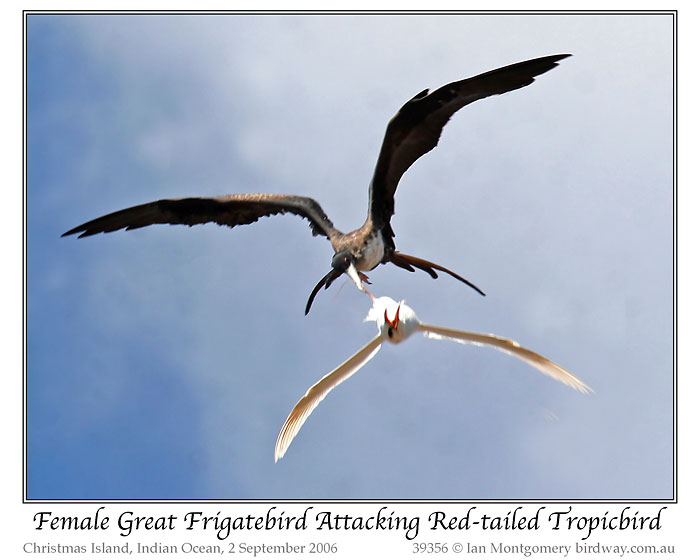
Great Frigatebird (Fregata minor) Female attacking Red-tailed Tropicbird by IanThe last photo shows a hapless Red-tailed Tropicbird near Christmas Island being harried by a female Great Frigatebird who has grabbed it by the tail-streamers. Frigatebirds hang out near seabird colonies waiting for birds carrying prey or with full crops returning to feed their young. It’s hard enough work being a parent without having to put up with this!

Greetings
Ian

**************************************************
Ian Montgomery, Birdway Pty Ltd,
454 Forestry Road, Bluewater, Qld 4818
Tel 0411 602 737 ian@birdway.com.au
Bird Photos http://www.birdway.com.au/
Recorder Society http://www.nqrs.org.au


Great Frigatebird (Fregata minor) Male Displaying ©WikiC

Great Frigatebird (Fregata minor) Male Displaying ©WikiC

Lee’s Addition:

but those who trust in the LORD will renew their strength; they will soar on wings like eagles; they will run and not grow weary; they will walk and not faint. (Isaiah 40:31 HCSB)

Thanks again, Ian, for introducing us to another interesting bird. We have seen the Magnificent Frigatebirds here in Florida, but these Great ones are also amazing. That fact about only 5% of their weight being the bone structure is another fantastic design from their Creator.

Frigatebirds belong to the Fregatidae – Frigatebirds Family which only has five species in it.

*
Ian’s Bird of the Week

Ian’s Bird of the Week – Lesser Frigatebird

Fregatidae – Frigatebirds Family

Great Frigatebird – Wikipedia

*


Eagles and Ravens

Bald Eagle (Haliaeetus leucocephalus) by PattiKru

Bald Eagle (Haliaeetus leucocephalus) by PattiKru

EAGLES AND RAVENS

He is Very Brave

He is Very Brave


“Some white-tailed eagles were boasting one day of their bravery,” commenced daddy. “They were also saying how fine they were in every way and that their very name meant something splendid and free and strong.

“As a matter of fact, though the white-tailed eagles won’t admit it, they are less brave than any of the eagle families.
“The ravens are not kindly at all and they love to fight. They had often thought it would be great sport to have those ‘silly white-tailed eagles,’ as they called them, admit that they were not brave and have their leader beg for mercy from General Raven.
“And, as you can imagine, when Brother Black Raven heard the eagles boasting he knew it was high time to begin and frighten them.
“So he called all the ravens together. Some of them were having their naps, but as soon as Brother Black Raven called them, up they got in a great hurry, spread their wings and drilled a little bit just like soldiers. Only instead of marching they flew.
“As General Raven came near the nest of the white-tailed eagles, he said in a very queer, croaking sort of voice:
“‘Good-morning!’ That was rather mean of him to say, for, of course, he didn’t really wish them a ‘Good-morning.’
“‘Do you want to fight?’ asked General Raven.
“Still not a sound from the eagles. There was a slight fluster and trembling, which the ravens could hear and which made them grin with delight, but the eagles never said a word. They didn’t even look at the ravens! For they were so frightened they didn’t dare look at them, and they kept thinking, ‘Oh, won’t those awful ravens and their ugly old general go away?’ The eagles, of course, thought the ravens were very ugly because they were so afraid of them.
“‘For the last time, do you want to fight us, eh?’ asked General Raven. And still the eagles said not a word—nor made a sound. ‘Well, let me say then for all of us,’ said General Raven, ‘that we think you’re very cowardly, and we heard you talking before we came of your bravery. We wouldn’t fight you because you’re afraid of us, but you’ll have to admit it after this,’ and with a deep chuckle off went General Raven and his followers.
“The eagles did not go on boasting, but they were very contented that the ravens had gone away!”

Northern Raven (Corvus corax) by Kent Nickell

Northern Raven (Corvus corax) by Kent Nickell

Lee’s Addition:

For I say, through the grace given to me, to everyone who is among you, not to think of himself more highly than he ought to think, but to think soberly, as God has dealt to each one a measure of faith. (Romans 12:3 NKJV)

By pride comes nothing but strife, But with the well-advised is wisdom. (Proverbs 13:10 NKJV)

We should be careful not to think too much or ourselves or boast. We can have confidence through Christ, but should never get “proud.”

*

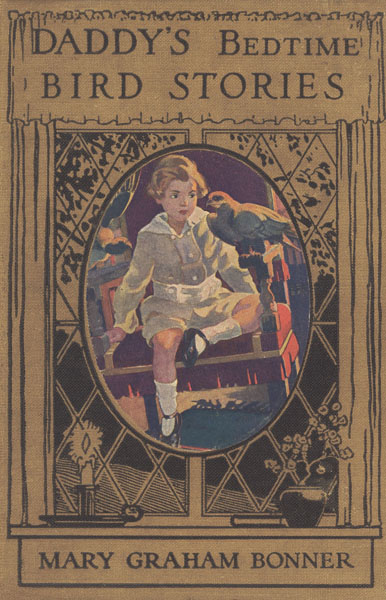
From Daddy’s Bedtime Bird Stories – Gutenberg ebooks By Mary Graham Bonner With four illustrations in color by Florence Choate and Elizabeth CurtisDaddys Bedtime Story ImagesThese stories first appeared in the American Press Association Service and the Western Newspaper Union.


Many of the sketches in this volume are the work of Rebecca McCann, creator of the “Cheerful Cherub,” etc.Daddy's Bedtime Bird Stories by Mary Graham Bonner - 1917Daddy’s Bedtime Bird Stories by Mary Graham Bonner – 1917

*

Links:

Painted Bunting (Passerina ciris) ©©Flickr


  Bird Tales


  Daddy’s Bedtime Bird Stories


Spanish Sparrow (Passer Hispaniolensis) female ©WikiC


  Wordless Birds


*

Sunday Inspiration – Smiling

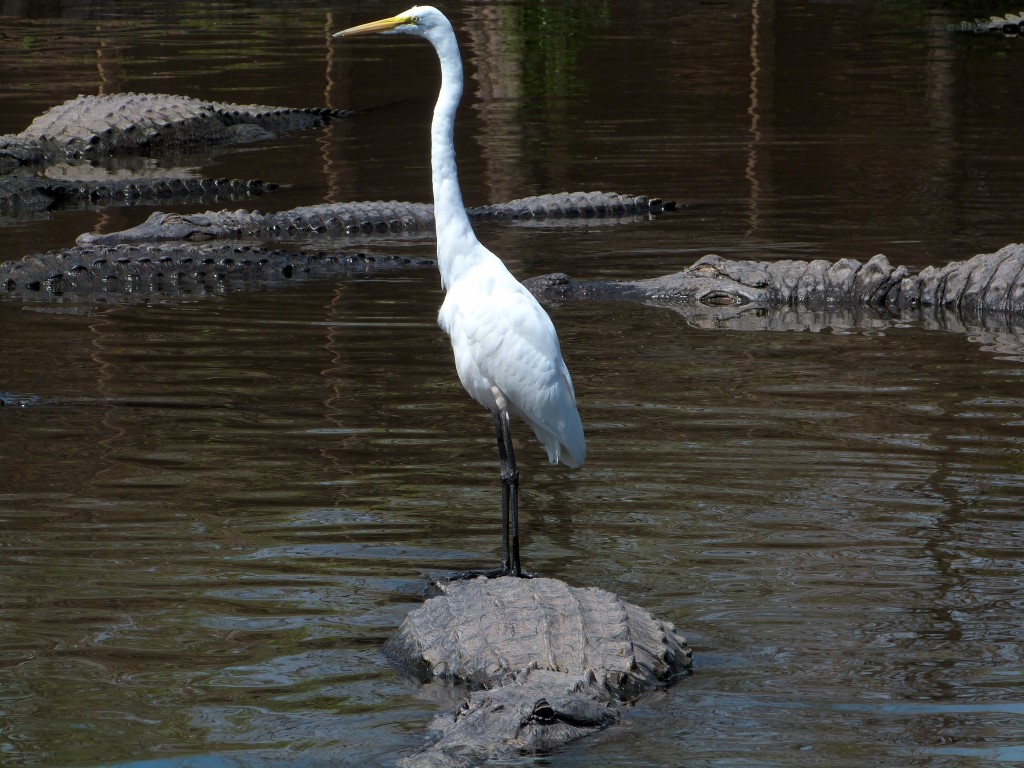
Gators at Gatorland - Great Egrets catching a ride

Gators at Gatorland – Great Egrets catching a ride

The LORD looks from heaven; He sees all the sons of men; (Psa 33:13)

The LORD looks down from heaven upon the children of men, To see if there are any who understand, who seek God. (Psa 14:2 NKJV)

Today’s Inspiration is just a collection of photos that have been used before. Most are on the lighter side. Some to make you smile, others just to help us enjoy the Lord’s critters. I especially enjoy the three ladies singing “Smile On Me Gracious Lord.”

I trust we all want the Lord to smile on us. Knowing the Lord as your personal Savior and accepting Him will definitely put a smile on His Face.

This slideshow requires JavaScript.

“Smile On Me Gracious Lord” – Special by Amy, Dakota and Christina

*

More Sunday Inspirations

Wordless Birds

*

(WordPress is having a problem at this time and adding new photos is too frustrating to bother with.)

*

Ian’s Bird of the Week – Masked Woodswallow

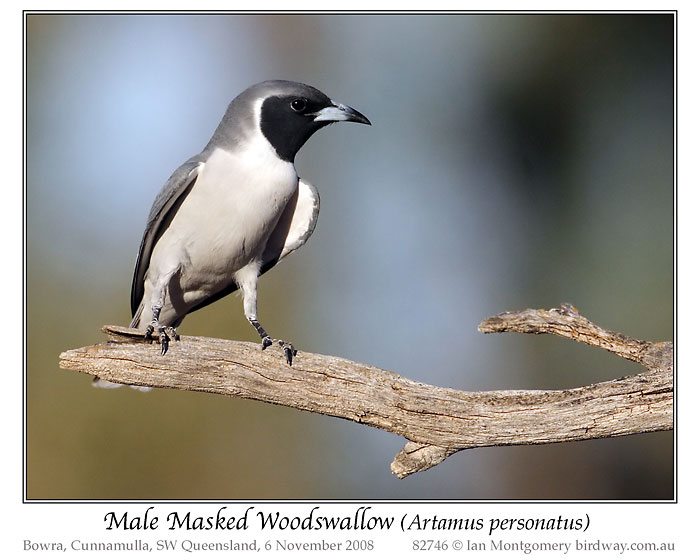
Masked Woodswallow (Artamus personatus) by Ian

Ian’s Bird of the Week – Masked Woodswallow ~ by Ian Montgomery

Newsletter – 8/14/14

When I was taking location photos along the inland route to Paluma several weeks ago, I came across a mixed flock of a couple of hundred Masked and White-browed Woodswallows. The White-browed featured as bird of the week in 2005, but the Masked hasn’t so here it is. The males in particular, first photo, are very elegant with a sharply defined, very black mask, soft grey back, almost white underparts and a white crescent between the mask and the back of the head.

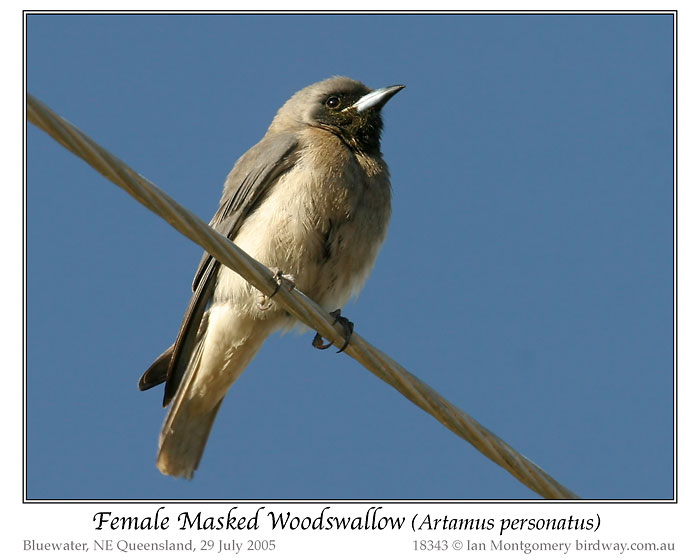
The females, second photo, are similar to the males with less contrasting plumage, only a subtle crescent, and a buff wash to the upper breast. The yellow specks on the mask and breast of this female are pollen – these primarily insectivorous birds also feed on nectar, particularly in northern Australia in winter.

Masked Woodswallow (Artamus personatus) by Ian
The female in the second photo and the juvenile in the third photo were in a mixed flock of Masked and White-browed that spent a week or so feeding on the locally common Fern-leaved Grevillea near where I live in 2005. The juveniles are similar to the females, but with browner plumage with pale spots and streaks.

Masked Woodswallow (Artamus personatus) by Ian

The ‘swallow’ part of the name comes from their buoyant, gliding flight and not because they are related to real swallows (family Hirundinidae). Rather, they are related to the Australian Magpie, Butcherbirds and Currawongs, usually combined in the one family, the Artamidae. There is an obvious similarity to the Magpie and Butcherbirds in their general form and bi-coloured bills and they are also quite aggressive, Woodswallows being quick to mob raptors in flight. The ‘personatus’ part of the scientific name comes from the Latin persona, meaning mask, a derivation that amused me when I though of show business ‘personalities’.

The White-browed and Masked Woodswallows are very closely related species, even though their respective plumages are quite distinct. They are both very nomadic and occur throughout mainland Australia, though not Tasmania. They often occur together in large mixed flocks. In eastern Australia, the White-browed predominates; in Western Australia, the Masked is more numerous and may occur alone. The two species will even nest together in small mixed colonies and occasionally interbreed.

Links:
Artamidae
Masked Woodswallow
White-browed Woodswallow

Greetings
Ian

**************************************************
Ian Montgomery, Birdway Pty Ltd,
454 Forestry Road, Bluewater, Qld 4818
Tel 0411 602 737 ian@birdway.com.au
Bird Photos http://www.birdway.com.au/
Recorder Society http://www.nqrs.org.au


Lee’s Addition:

“Even the stork in the heavens Knows her appointed times; And the turtledove, the swift, and the swallow Observe the time of their coming. But My people do not know the judgment of the LORD. (Jeremiah 8:7 NKJV)

What a neat looking bird. I especially like the clean line around his “mask”. We have seen Woodswallows in a zoo, but not this kind and not in the wild. That last photo is a super photo. Thanks, Ian, for sharing with us.

Swallows and Woodswallows are in two different families. Woodswallows are in the Artamidae – Woodswallows Family while the Hirundinidae Family has the Swallows and Martins.

Here is a photo of  White-breasted Woodswallows that we saw at Zoo Miami:

White-breasted Woodswallow (Artamus leucorynchus amydrus) by Lee ZM

White-breasted Woodswallow (Artamus leucorynchus amydrus) by Lee ZM

*

Universe: Life Anywhere Else?

Golden Eagle (Aquila chrysaetos) Flying ©WikiC

Golden Eagle (Aquila chrysaetos) Flying ©WikiC

Universe: Life Anywhere Else?

Golden Eagle ©PD

Golden Eagle ©PD

Hi again! This is Golden Eagle flying in to talk about some more important info for this journey of life! Last time we talked about the fact that the God of Creation, the Lord Jesus Christ, created birds on day number five. In fact, we have seven days each and every week. Where does that come from? In my previous flights I have come to realize that the moon goes around the Earth in a few days and we get a month. The Earth goes around the sun in 365 and a quarter days and we get a year. But, in all of my flying, I did not realize where the week came from. And then it dawned on me, the 7-day week comes from the fact that God created everything in a 7-day week. You guys know that seven on a roll of the dice is a LUCKY number. Did you know that in the biggest atoms there are seven electron shells and no more. I have flown over six continents; however, all together there are seven continents on the Earth. There are seven colors in the rainbow. The last book of the Bible, Revelation, is full of the number 7! It seems like seven is a number that represents completeness. Well, enough of the number seven. The point is, boys and girls, the Bible is packed full of very interesting and useful information for our journey of life.

Black Vulture Tree by Lee Myakka SP

Black Vulture Tree by Lee Myakka SP

I don’t like vultures very much. Whenever I fly over central Florida, I see black vultures and turkey vultures. I have heard some birders call turkey vultures – TVs. When you see a vulture soaring around with wings on a warm thermal in the Summer-time and you see mostly black with a little gray at the end of the wings, that’s a black vulture. Vultures have a keen sense of smell. If an animal dies, they can smell their next dinner meal. God has created them for a very specific purpose. They are God’s clean-up crew. They also help lower the spread of disease and bacteria! Usually people feed birds. Did you know that at least one time in history birds fed people?

Northern Raven (Corvus corax) by Kent Nickell

Northern Raven (Corvus corax) by Kent Nickell

Elijah, the prophet of God, was experiencing a drought in the land of Israel. And God told Elijah to “get thee hence, and turn thee eastward, and hide thyself by the brook Cherith, that is before Jordan. And it shall be, that thou shalt drink of the brook; and I have commanded the RAVENS TO FEED THEE there.” (I Kings 17: 3-4) “And the ravens brought him bread and flesh in the morning, and bread and flesh in the evening…” (I Kings 17: 6)

*

Yellow-headed and Red-winged Blackbirds: Living on the Inside or the Outside?

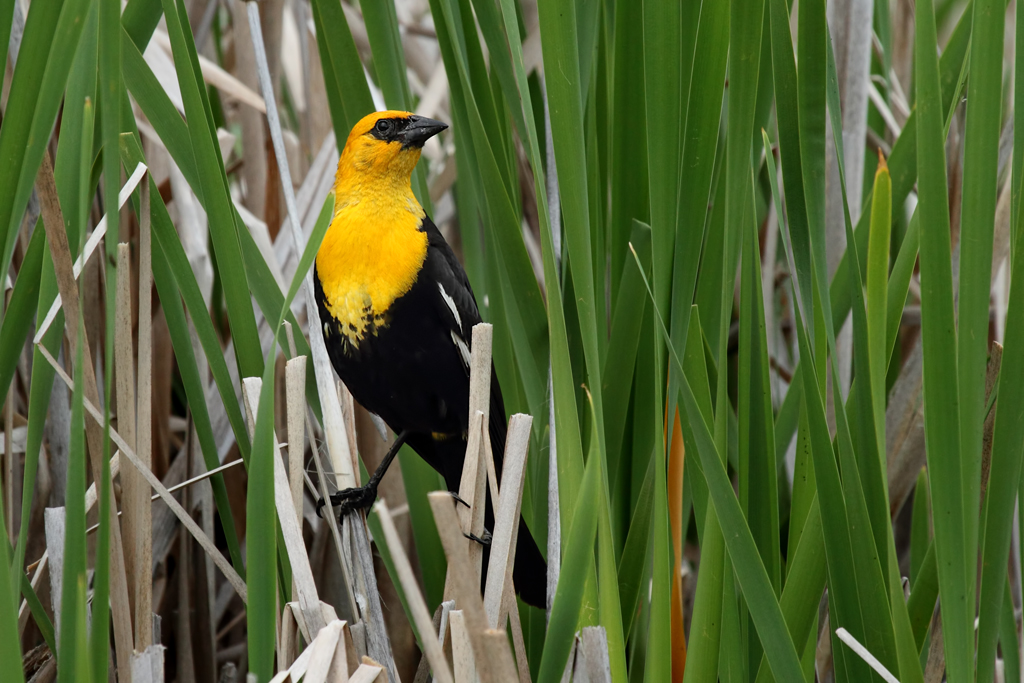
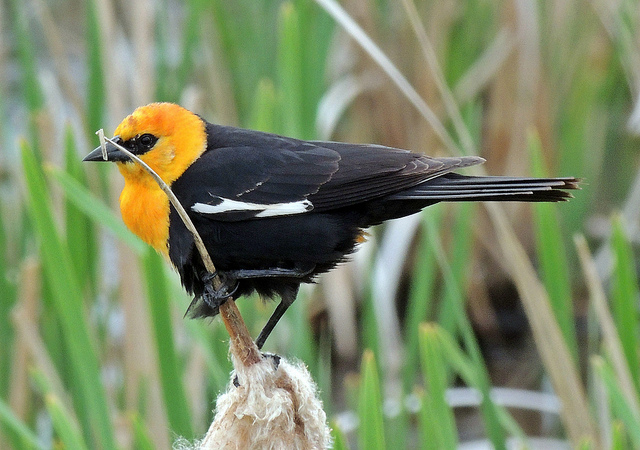
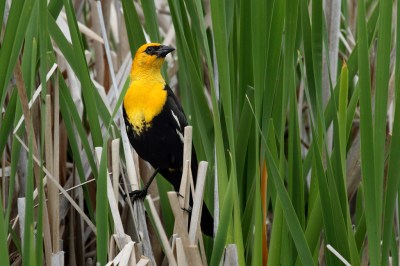
Yellow-headed Blackbird (Xanthocephalus xanthocephalus) ©WikiC Alan Vernon

Yellow-headed Blackbird (Xanthocephalus xanthocephalus) ©WikiC Alan Vernon

Draw nigh to God and He will draw nigh to you. (James 4:8)
Luzon Bleeding-heart by Dan

Orni-Theology

The Visitor Center at Jackson Hole, Wyoming (“Jackson Hole & Greater Yellowstone Visitor Center”), is a good place to go to for information on Grand Teton National Park, which borders the more-famous Yellowstone National Park.  Yet for bird-lovers, the visitor’s center itself is an attraction, in summer, because the marshy ponded area next to the building hosts a congregation of blackbirds, both Red-winged Blackbirds (Agelaius phoeniceus) and Yellow-headed Blackbirds (Xanthocephalus xanthocephalus).

If you are helping city kids to see these passerine icterids, tell them to “look for the tall corny-dogs growing in the wild” (cattails – Typha species, tall-stemmed wetland plants topped by a sausage-shaped flowering “spike”), around the pond.

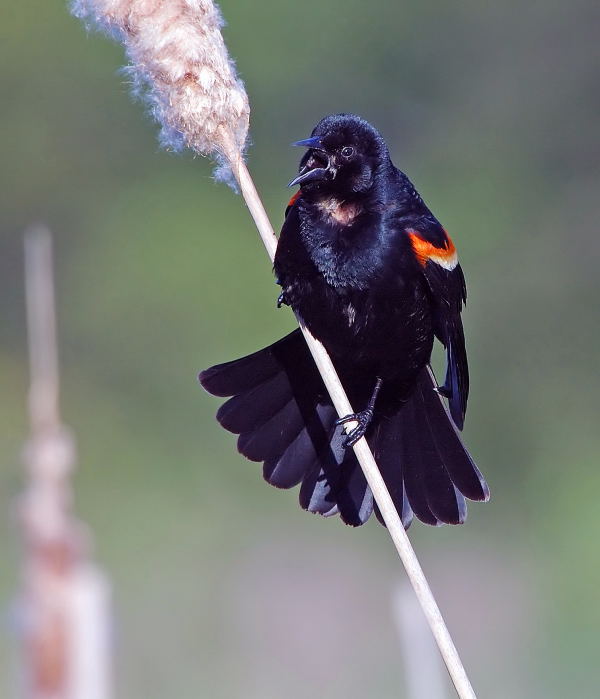
As in many other lacustrine marshlands, red-winged blackbirds are often found perched among the cattails that grow as emergents among the wavy shoreline of pond.  For a redwing this is “prime real estate”, until the yellow-heads move in. How so?  In cattail dominated marsh-ponds, if both yellow-heads and red-wings are both present, the innermost places of the cattail “ring” are routinely occupied by the yellow-headed blackbirds, leaving the “outer” cattail positions (i.e., slightly farther away from the pond-water) for the redwings.

Why?  I have no idea why, but others have notice this. [E.g., see W. Braun’s observations in Blackbirds In Cattail Marshes , saying “The YHBs [yellow-headed blackbirds] clearly are the rulers of the cattails. They often, but not always, nest in the same marsh as the Red-winged Blackbird and the Common Grackles. The larger Yellow-headed Blackbird is dominant to the Red-winged Blackbird and displaces the smaller blackbird from the prime nesting spots.”]
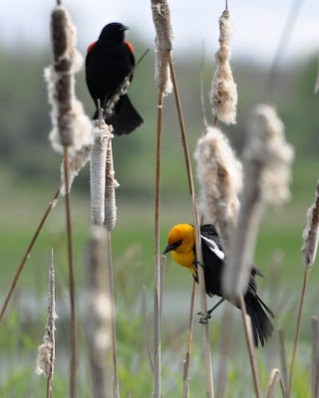
Red-winged and Yellow-headed Blackbirds on Cattails ©Orcawatcher.com

Red-winged and Yellow-headed Blackbirds on Cattails ©Orcawatcher.com

Photo credit Orcawatcher.Com

But it reminds me of the dramatic difference between the apostle Peter and the Pharisee Nicodemus.  Peter was (almost) always close to Christ, and often so, but Nicodemus mostly kept his distance from Christ, at least publicly.

Far from being infallible, Peter is infamous for his cowardice that was indicted by a rooster crowing thrice (Luke 22:54-61).  Peter is also remembered for getting distracted, and becoming fearful, and sinking into the Sea of Galilee, after having miraculously walked on water for only a few steps (Matthew 14:24-33).  But Peter was wise enough to immediately cry out “Lord, save me!”  (And Jesus did.)  At least Peter did some walking on water (at Christ’s command, of course), which is a lot better than the other disciples who just stayed in the boat, as mere spectators, wonderfully how Jesus was enabling Peter to walk on water.
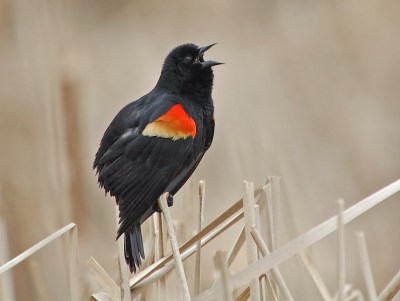
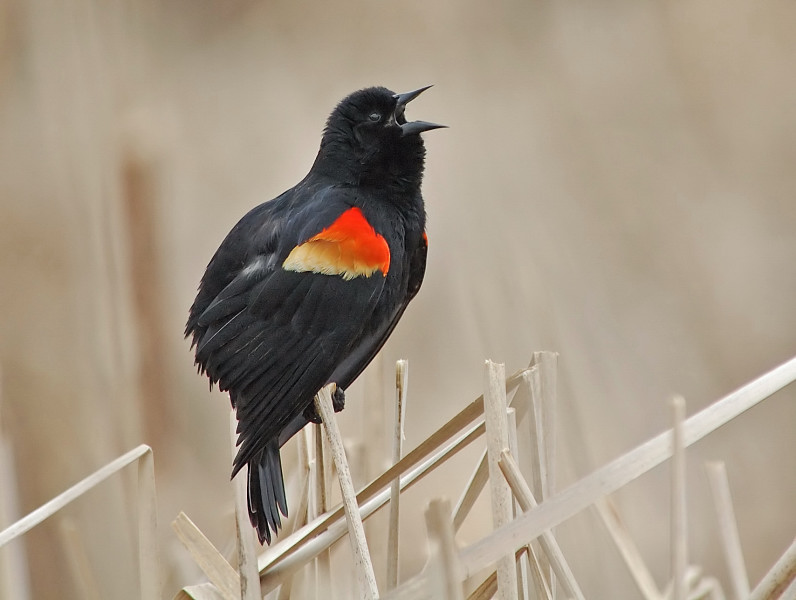
Red-winged Blackbird (Agelaius phoeniceus) by Ray

Red-winged Blackbird (Agelaius phoeniceus) by Ray

Likewise, Peter had the courage to step up and speak up – to call Jesus “the Christ, the Son of the living God” – a deed that the Lord Jesus commended Peter  — and God the Father —  for doing (Matthew 16:15-17).  And Peter did what he could to defend Jesus, in the Garden of Gethsemane, as Jesus was being arrested – Peter used a sword to chop off one man’s ear (Luke 22:49-51; John 18:10-11)!  (But unlike the Orcadian Viking known to history as Thorfinn Skull-splitter, Peter missed most of his victim’s head.)  It’s the thought that counts, right?

Yellow-hooded Blackbird (Chrysomus icterocephalus) ©Flickr Bob

Yellow-hooded Blackbird (Chrysomus icterocephalus) ©Flickr Bob

So you really have to love Peter.  (Jesus certainly did!)  Peter was one of the “inner” circle of three  –  just James, John, and Peter  — who were invited to witness the Lord Jesus Christ being glorified upon the Mount of Transfiguration (Matthew 17:1-8).  What an unforgettable privilege that was (2nd Peter 1:16-18)!  Jesus later invited the same “inner circle” of three to pray for Him in the Garden of Gethsemane (Matthew 26:37-38).  With all his faults, Peter was a truly privileged member of Christ’s “inner circle”.

But Peter’s privileges are not so high that we should feel sorry for Nicodemus.  Not at all!
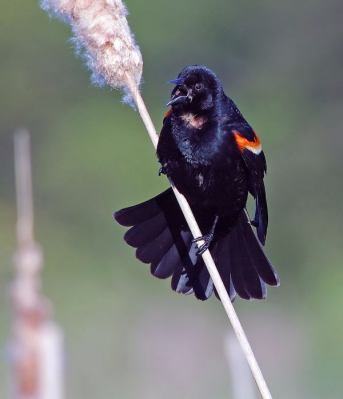
Red-winged Blackbird (Agelaius phoeniceus) by Ray

What a privilege it was for Nicodemus to be the first listener to hear, what we now read in, John’s third chapter (John 3:1-9), including the everlastingly famous promise of John 3:16, spoken by Jesus Himself!  Later Nicodemus took a modest stand for Jesus (John 7:50-52), and in time Nicodemus had an official role in Christ’s burial (John 19:39-40) three days before Jesus rose triumphantly from the grave!

Even so, if one had the choice, why visit Christ, in secret, keeping a distance from Him in public, when the opportunity to belong to His “inner circle” is available?

Am I more like Peter or Nicodemus?  Maybe that question will come to mind next time you see a group of “inner circle” yellow-headed blackbirds, perching on cattails, as the “outer circle” of cattails hosts the red-winged blackbirds. And, if you like the idea of being in the Lord’s “inner circle”, you might sing this as a prayer:  “Just a closer walk with Thee…”

James J. S. Johnson, with his family, has repeatedly visited Wyoming’s Jackson Hole Visitor Center, in summer, to admire the yellow-headed and red-winged blackbirds that congregate on and among the pond-ringed cattails there. (And a very special thank-you to Lee for teaching me how to edit the typos in this blog.)

*
Ian’s Bird of the Week – Australian King Parrot

Ian’s Bird of the Week – Australian King Parrot ~ Ian Montgomery

Newsletter – 7-31-14

Mea culpa again for the long delay since the last bird of the week. The good news is that, apart from dotting a few i’s, my current obsession Where to Find Birds in Northern Queensland is finished, so with luck you may get more frequent BotWs in the future. Here is an attractive and surprising omission from the BotW series, the Australian King Parrot. It’s one of the most spectacular Australian parrots and deserves the ‘King’ moniker. The French call it la Perruche royale.

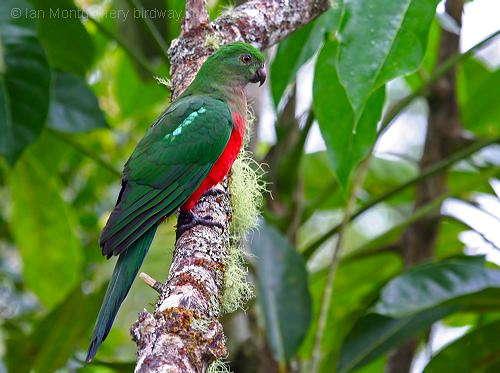
King Parrot by Ian

King Parrot by Ian


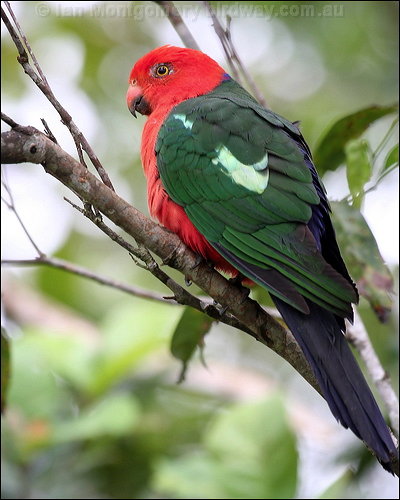
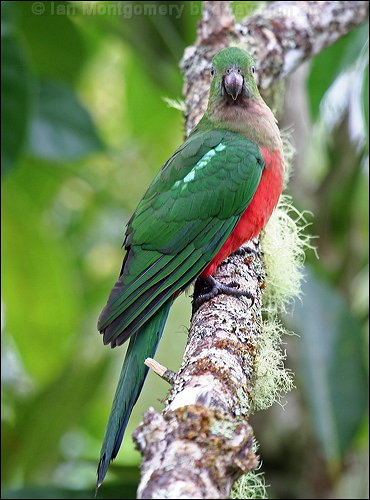
It’s quite common along the eastern seaboard of Australia, with a preference for fairly dense coastal and highland forests including rainforest. That can make it hard to see but it’s quite vocal and the whistling call of the males is a very characteristic sound of eastern forest. It responds readily to being fed and can get quite tame. The one in the first photo was taken at O’Reilly’s in Lamington National Park, where the birds will perch on arms and shoulders and pose happily for photos. The males are distinguished from the females by the brilliant scarlet of the breast extending onto the head and having a conspicuou peppermint green blaze on the wings.


Australian King Parrot (Alisterus scapularis) Male by Ian

Australian King Parrot (Alisterus scapularis) Male by Ian

The females are gorgeous too with scarlet lower breast and belly, green heads and pinkish necks. The one in the second photo was busy exploring hollows in trees, but it was hard to imagine that she was contemplating nesting in May. Both sexes have blue backs, third photo, but this is usually hidden by the folded wings. The wing blaze may be missing or inconspicuous in females.


Australian King Parrot (Alisterus scapularis) Female WikiC

Australian King Parrot (Alisterus scapularis) Female WikiC

It’s usually just called the King Parrot in Australia and I used to wonder vaguely about the ‘Australian’ qualification. The reason for it is that is a Papuan one in New Guinea and a Moluccan one in western New Guinea and the islands of eastern Indonesia. Both these are rather similar to the Australian one, but smaller and differ mainly in the colour or lack of the blaze on the wings, and the amount of blue in the plumage.

Australian King Parrot (Alisterus scapularis) Male Closeup by Ian

Australian King Parrot (Alisterus scapularis) Male Closeup by Ian


There are two races of the Australian species. The larger nominate race occurs along most of the east coast, while the smaller race minor (obviously) occurs in northeastern Queensland. The literature doesn’t say much about minor except that it’s smaller, and there’s disagreement in the field guides about how far south it occurs: choose between Cardwell, Townsville and Mackay. I suspect Townsville is correct as there a big gap between the Paluma Range population and the Eungella/Clark Range one near Mackay. Anyway, the male in photo 4 and the female in photo 5 were photographed on the Atherton Tableland and are certainly minor.

Australian King Parrot (Alisterus scapularis) by Ian

Australian King Parrot (Alisterus scapularis) by Ian

It seemed to me from the photos that I took there that the northern males had brighter and more extensive blue hind collars and the females had brighter wing-blazes than southern birds. My sample size was small, but it might be an interesting project to check out whether these differences are consistent and to establish the exact geographical ranges of the subspecies. In northeastern Queensland it is mainly a highland species, with some movement to the lowlands in winter and I have seen them very occasionally near where I live.

Links:
Australian King-Parrot (I should have put hyphens in the photo captions)
Red-winged Parrot

Anyway, back to dotting i’s. The next stage in the book is to check out publishing via Apple iBooks, Google Play, etc. That’s something I know nothing about, so it will be interesting to find out how it’s done.

Greetings

Ian
**************************************************
Ian Montgomery, Birdway Pty Ltd,
454 Forestry Road, Bluewater, Qld 4818
Tel 0411 602 737 ian@birdway.com.au
Bird Photos http://www.birdway.com.au/
Recorder Society http://www.nqrs.org.au


Lee’s Addition:

Now unto the King eternal, immortal, invisible, the only wise God, be honour and glory for ever and ever. Amen. (1 Timothy 1:17 KJV)

What beautifully created Parrots! They are just fantastic. Also, I was beginning to worry about Ian. It has been over a month since his last newsletter, Plum-headed Finches.

These parrots are members of the Psittacidae – Parrots Family. There are approximately 365 members, depending on whose list. The greatest diversity of parrots is in South America and Australasia.

Checkout all of Ian’s Parrot photos (around 50 species)

King Parrot at Wikipedia

Psittacidae – Parrots Family

*
Sunday Inspiration – “King” Birds

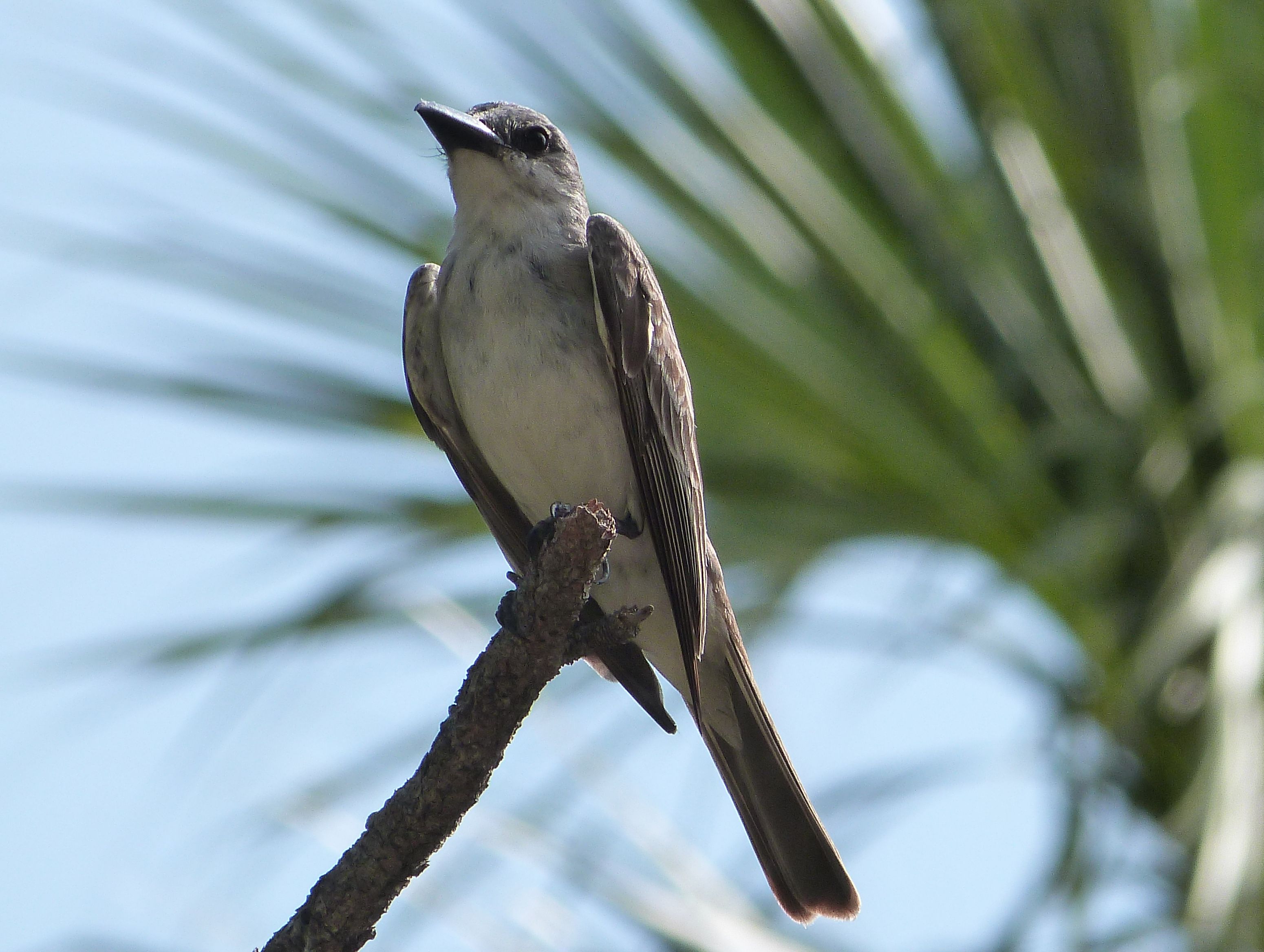
Grey Kingbird (Tyrannus dominicensis) by Lee at Honeymoon Is SP

Grey Kingbird (Tyrannus dominicensis) by Lee at Honeymoon Is SP

Rejoice greatly, O daughter of Zion! Shout, O daughter of Jerusalem! Behold, your King is coming to you; He is just and having salvation, Lowly and riding on a donkey, A colt, the foal of a donkey.
(Zechariah 9:9 NKJV)

‘TELL THE DAUGHTER OF ZION, ‘BEHOLD, YOUR KING IS COMING TO YOU, LOWLY, AND SITTING ON A DONKEY, A COLT, THE FOAL OF A DONKEY.’ ” (Matthew 21:5 NKJV)

Since writing about the Grey Kingbird last week, I have been thinking about birds that have “King” in their name. Here are some of the ones, plus many of the “King”fishers.

This slideshow requires JavaScript.

*
Both our Choir with the Orchestra and the Hyssongs did great and I couldn’t decide so here are both of them.

“The King is Coming” – Faith Baptist Choir and Orchestra. Intro by Pastor Osborne

Jesus answered, My kingdom is not of this world: if my kingdom were of this world, then would my servants fight, that I should not be delivered to the Jews: but now is my kingdom not from hence. Pilate therefore said unto him, Art thou a king then? Jesus answered, Thou sayest that I am a king. To this end was I born, and for this cause came I into the world, that I should bear witness unto the truth. Every one that is of the truth heareth my voice. (John 18:36-37 KJV)

“The King is Coming” – ©Hyssongs

*

The Gospel Message

More Sunday Inspirations

Faith Baptist Church

*