PARROT DENIES EVOLUTION
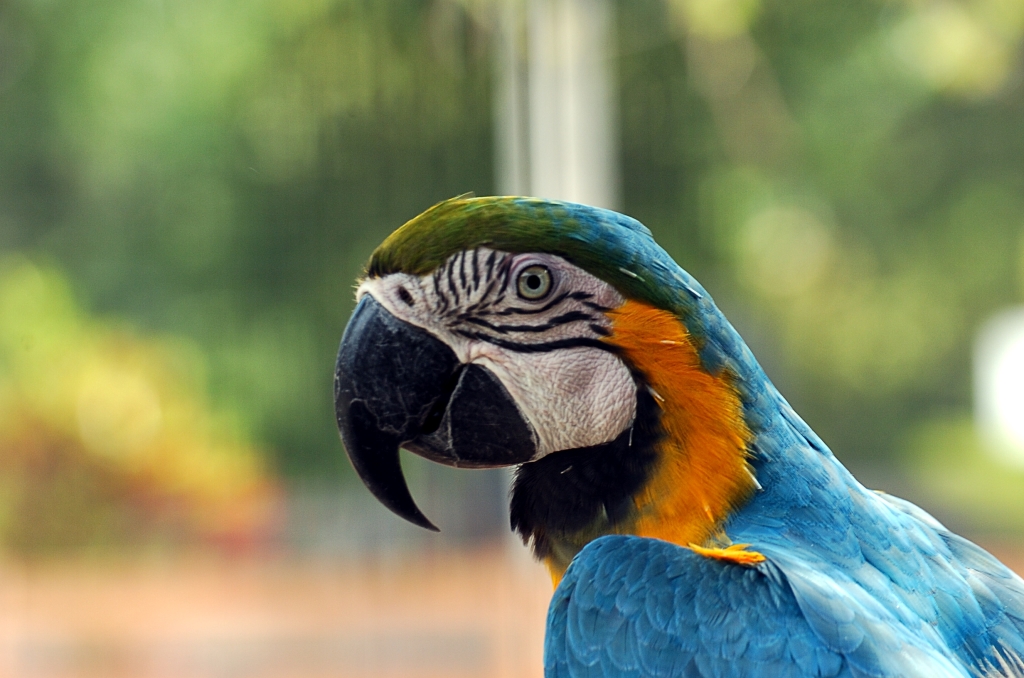
MaCaw by Dan at Gatorland
“And every living substance was destroyed which was upon the face of the ground, both man, and cattle, and the creeping things, and the fowl of the heaven;.” Genesis 7:23a
According to evolution theory, birds should not have been around at the time of the dinosaurs. This is especially true of the parrot, which is supposed, by those who believe in evolution, to be a more highly-evolved bird.
A fossilized parrot’s beak was dug up 40 years ago, but ignored. It was recently rediscovered at the University of California, Berkeley, by a graduate student. The problem, for evolutionists, is that they date the rock in which the beak was found as coming from the Cretaceous period when the dinosaurs lived and birds had not yet evolved. X‑ray study of the fossilized beak shows that the beak has the same blood vessel and nerve channels as a modern parrot. But it is not just one parrot’s beak that has been found in rocks from the age of dinosaurs. Loons, frigate‑birds and other shore bird fossils have also been found in rock that was supposedly laid down during the time of the dinosaurs!
Fossils are remains of living things rapidly buried, we believe, at the time of the Genesis Flood. However, it is perhaps not too surprising that bird fossils and dinosaur fossils are generally not found together; indeed, bird fossils in any part of the earth’s strata are extremely rare. This is because while dinosaur bones are very robust, bird bones and beaks are extremely fragile and would not have survived the turmoil of the Genesis Flood. The very few that have been fossilized tell us of very rapid and deep burial that would be expected during the Biblical Flood.
Prayer: I thank You, Lord, for making Your Word trustworthy in everything. Amen.
© 2022 Creation Moments. (Used with permission)

Scarlet Macaw (Ara macao) by Lee
Other Articles from Creation Moments


 In a previous Creation Moments program, we talked about DNA and other cell material found unfossilized in what was otherwise a fossilized T. rex. Since then, a hadrosaur leg bone with intact blood cells has also been found. Then there is the mummified hadrosaur that was the subject of a television special. Even its internal organs were intact. According to evolutionists, we are supposed to believe that this mummy had not crumbled to dust in 77 million years. That claim is not credible, given our experience with the best preserved Egyptian mummies that are only a few thousand years old. Segments of DNA have also been found from Neanderthals, supposedly prehistoric mammals, plants and even bacteria. According to evolutionary dating, these samples range in age from 40,000 to 250 million years. Yet, we know that DNA is totally decayed in 10,000 years. Enough color pigment cells remain in a fossilized feather that you can still see the color pattern. Yet, it is supposedly more than 100 million years old.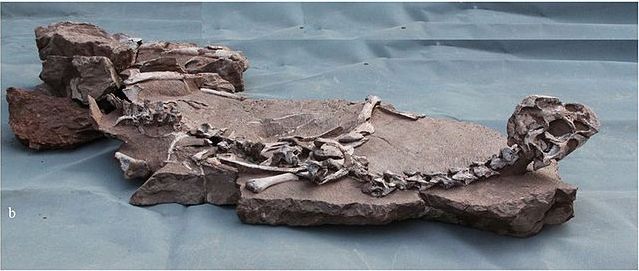
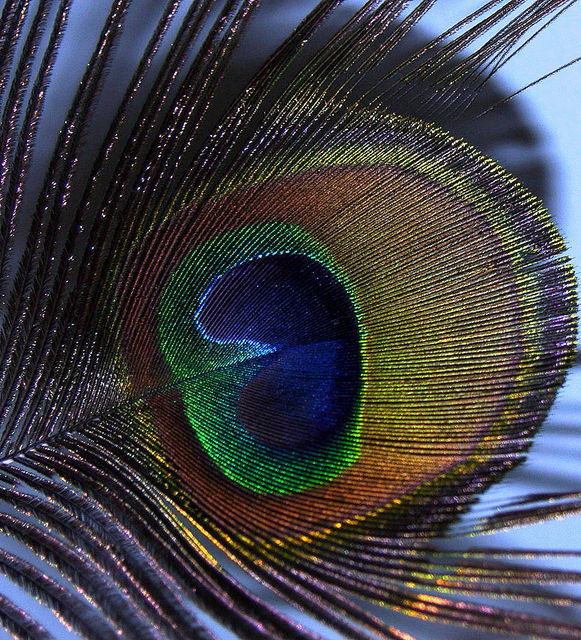
 Today, we often see pictures of dinosaurs covered in feathers, which used to be represented with bare scales. Why has this change occurred? There is a preconceived notion, held by many evolutionists, that birds evolved from therapod dinosaurs, such as tyrannosaurus and the smaller raptor dinosaurs.


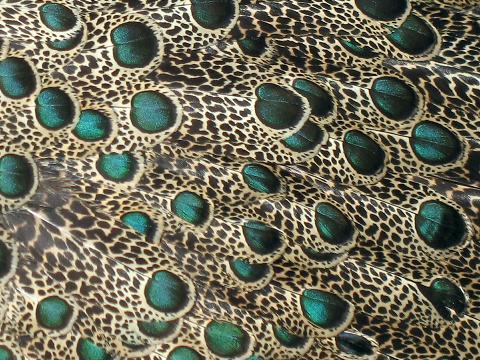
 The Encyclopaedia Britannica describes feathers as “the component structure of the outer covering and flight surfaces of all modern birds”, and goes on to say: “Unique to birds, feathers apparently evolved from the scales of birds’ reptilian ancestors”.



 Lee's Birdwatching Adventures Plus